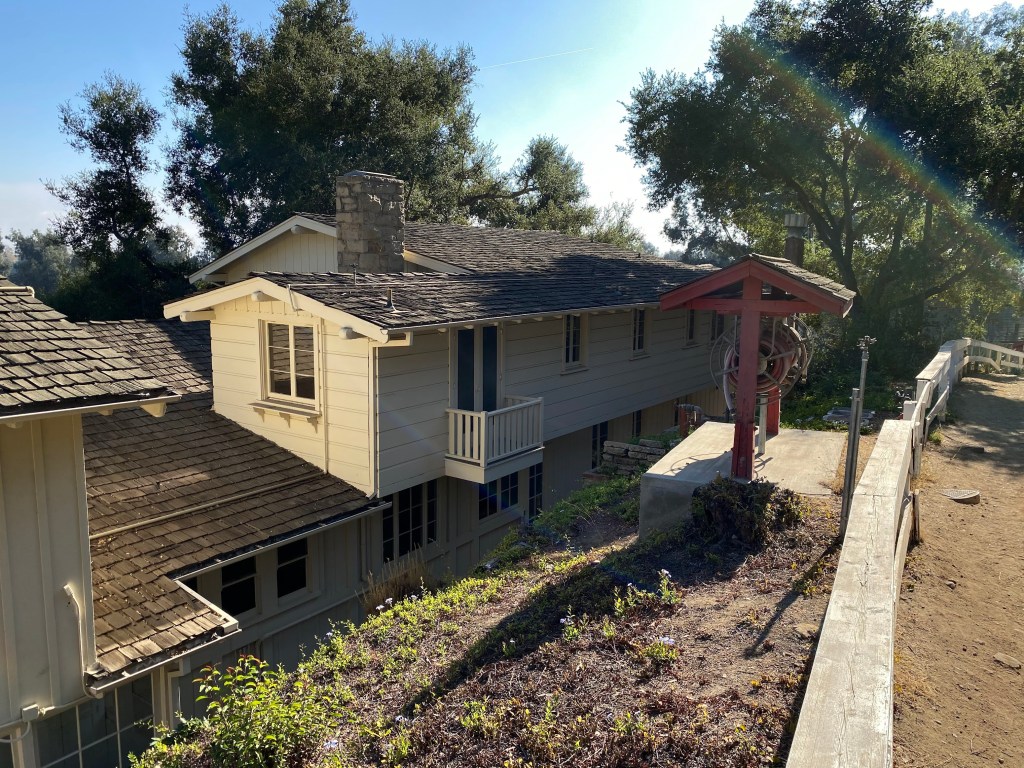
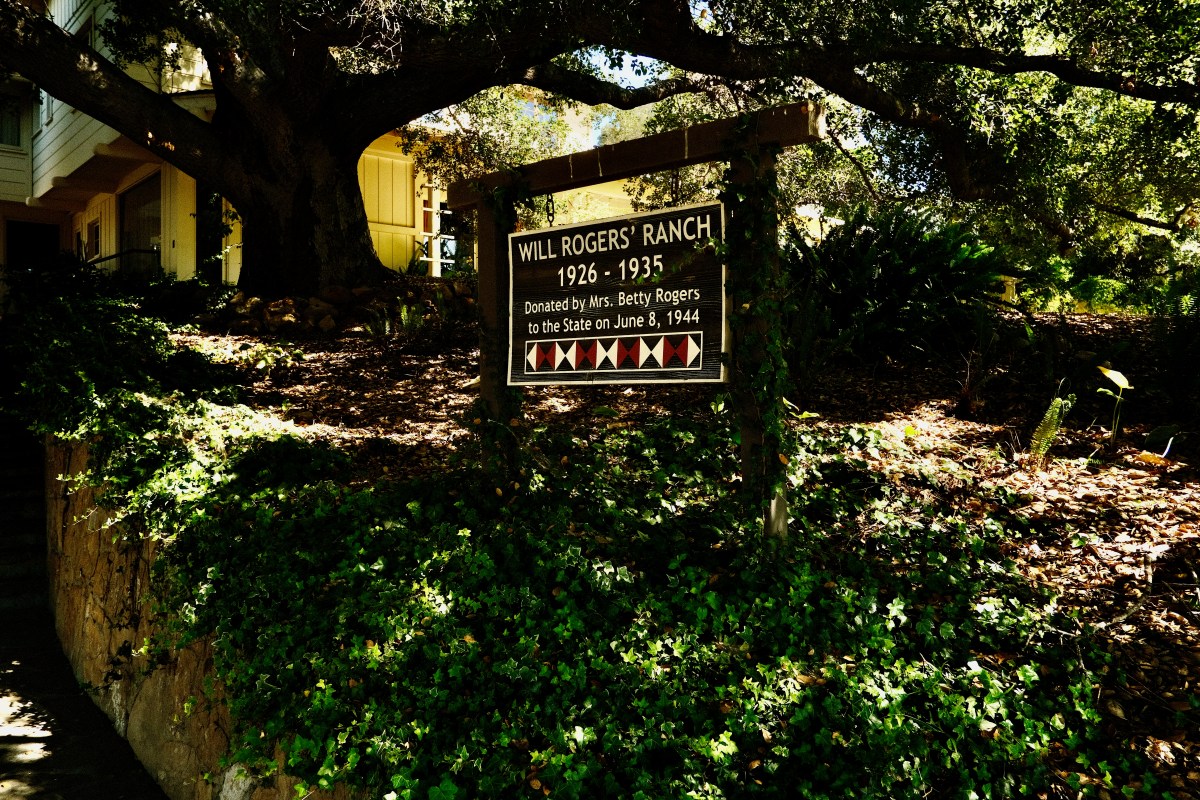
One of the first places I remember visiting, when I moved here in 1994, was Will Rogers State Historic Park.
I went on a hike with my television production company friends, up in the hills there, and there was a young woman named Justine who had a crush on me, and I liked her, but not that way, and we all met there.
There was the owner of our doc shop, a well-to-do, tall, green-eyed lady named Lois who drove a dark green Range Rover. She was cheerful and lived nearby, and presented herself with the relaxed ease of a native Californian who grew up well-connected and well-protected. And she loved Will Rogers.
It was a time of iceberg salads with little pieces of ham and croutons, and Gelson’s Market, and unauthentic Italian restaurants where they served meatball sandwiches and cheddar cheese pizzas and diet sodas. That was some of what we might eat after we had hiked Will Rogers.
The decades passed and occasionally I would visit Will Rogers.
But it only seemed like a sanctuary from tumult, tragedy and protest after 2020 when the world closed in, and the things I took for granted, like movies, restaurants and visiting friends, were now forbidden.
We returned to Will Rogers in 2020, masked then unmasked, and went there to breathe in the cool foggy air, to walk up the paths and look out over the gorgeous homes nestled into the womb of the Pacific.
In back of us, to the east, a nation went mad. A lunacy descended from the highest to the lowest rungs of life. And each minute brought something unthinkably un-American into our lives, a passion for self-destruction, hate, crudeness, stupidity and conspiracies that knew no bounds. An earthquake of ignorance shook America and everything was ripped down, from statues to statesmen, from medicine to the media. And we ate the poison and we threw up.
We still are lying helpless on the ground, with metaphorical and real guns pointed at our heads, all in the name of nihilism.
We drove here to get away from protests that threw shopping baskets off of bridges, held up signs of hate, pitched tents on campuses, marched on freeways, and ignited parks in flames and set underpasses on fire.
Every day there was something to feed despair. The helicopters and the sirens, and the nightmares of what else might go wrong. On screen, in my head, sometimes imaginary, sometimes not.
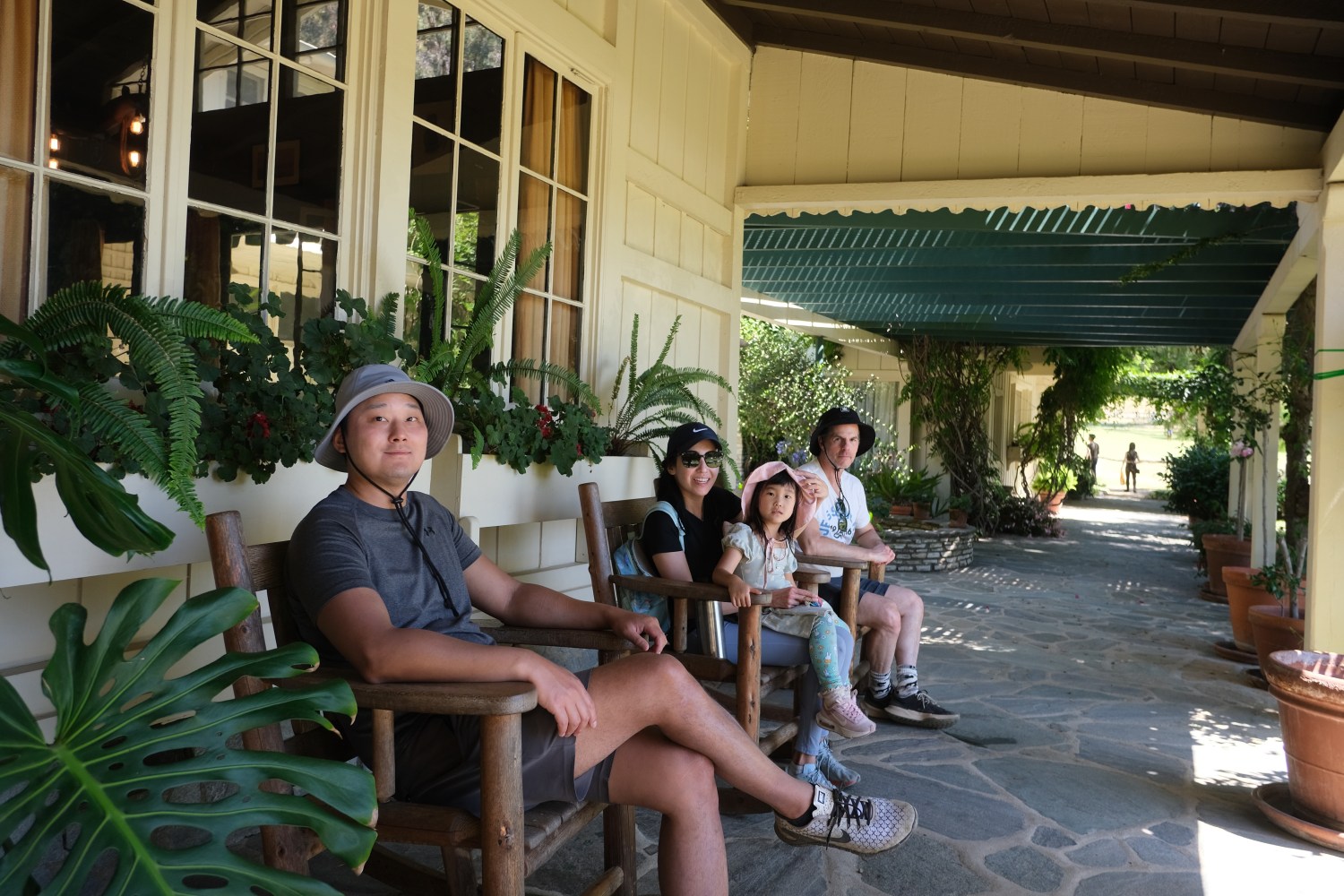
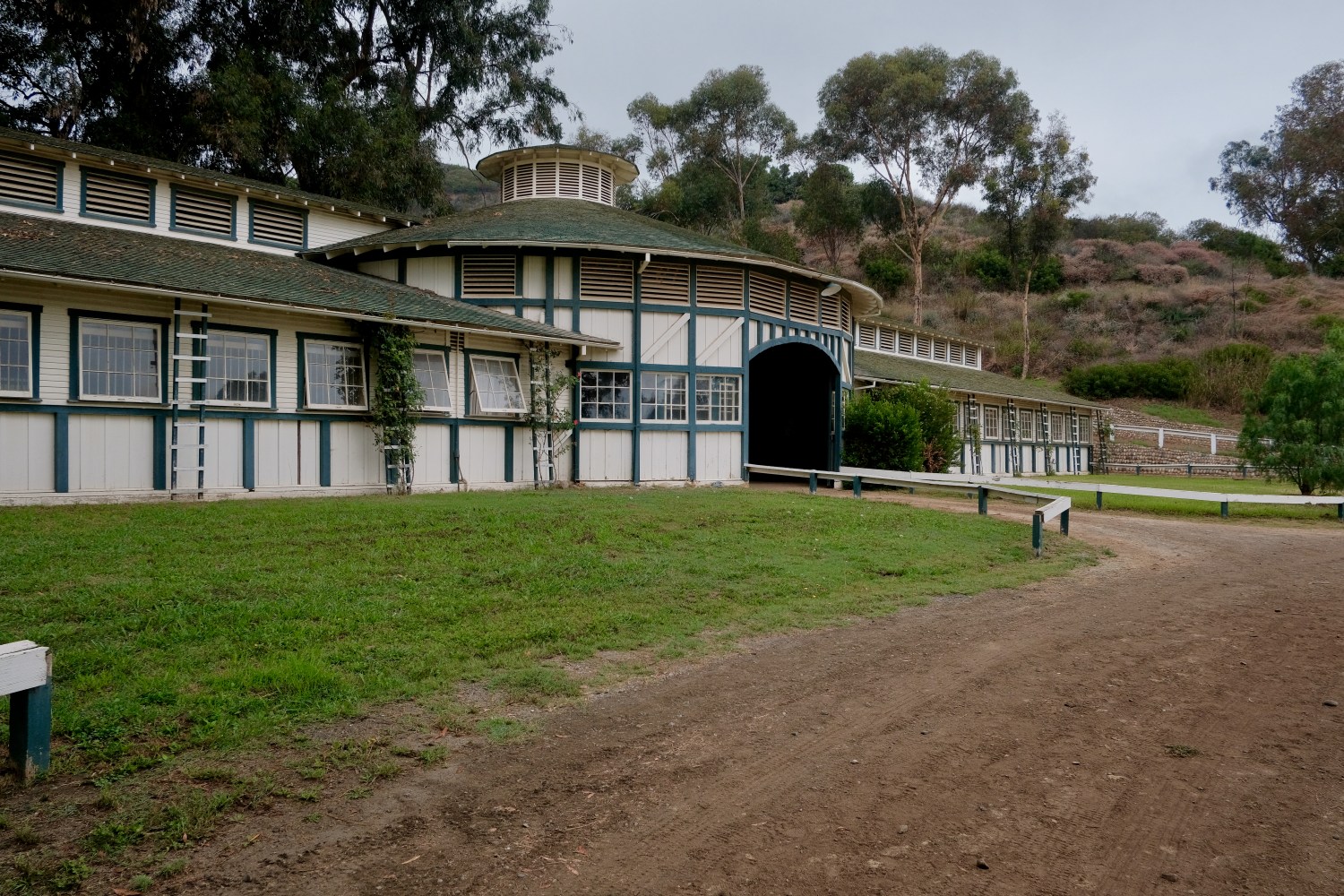
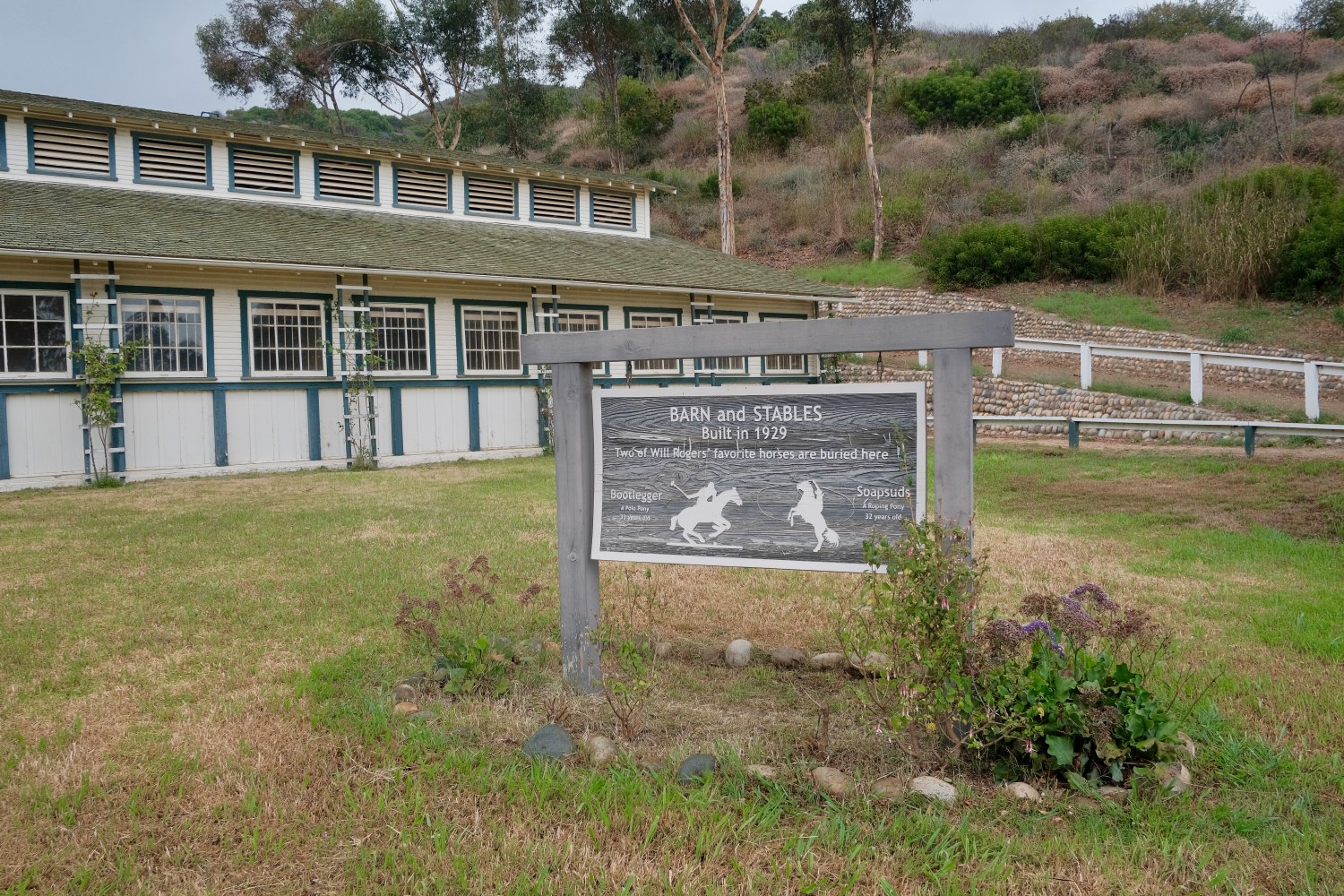
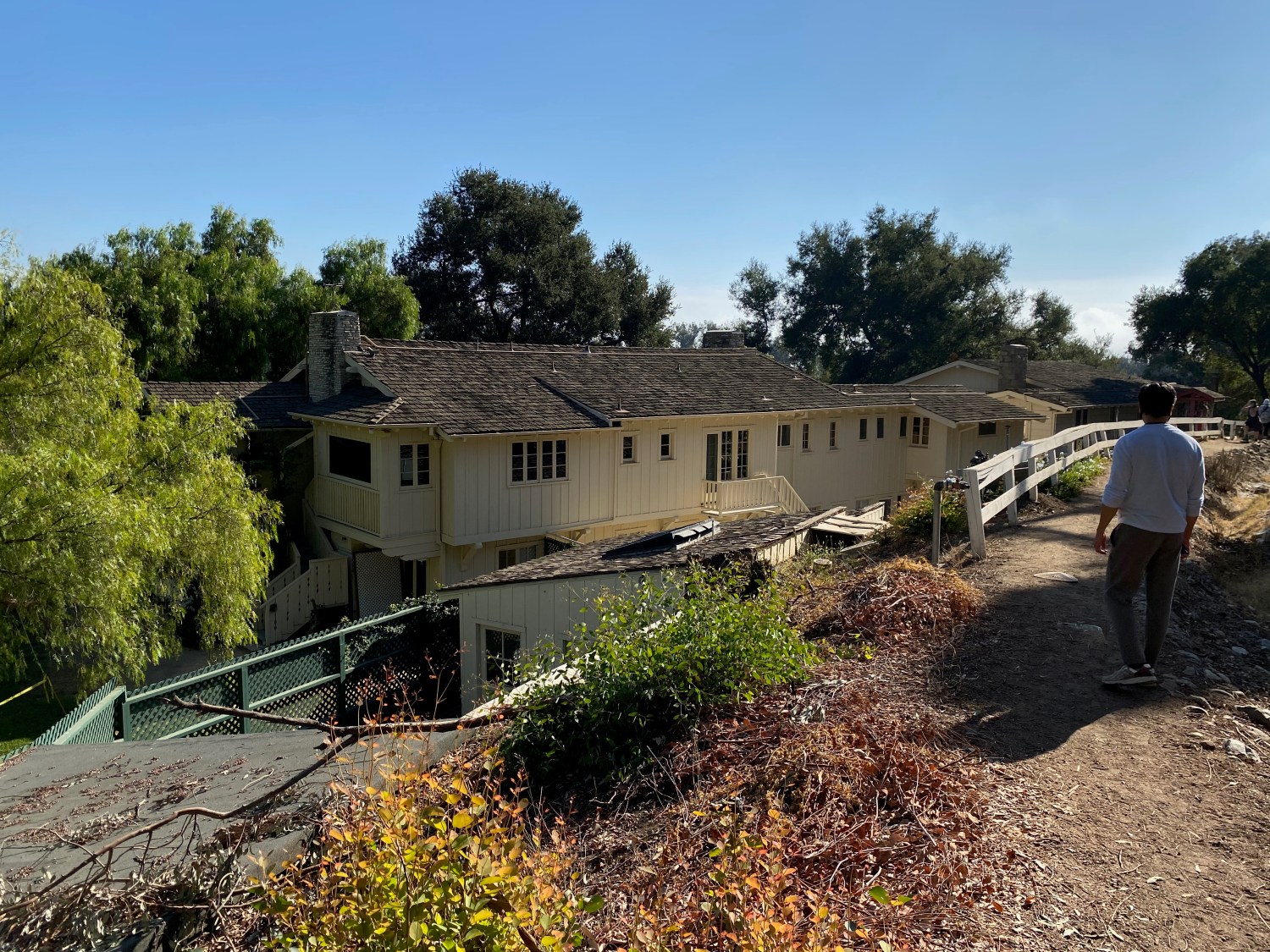
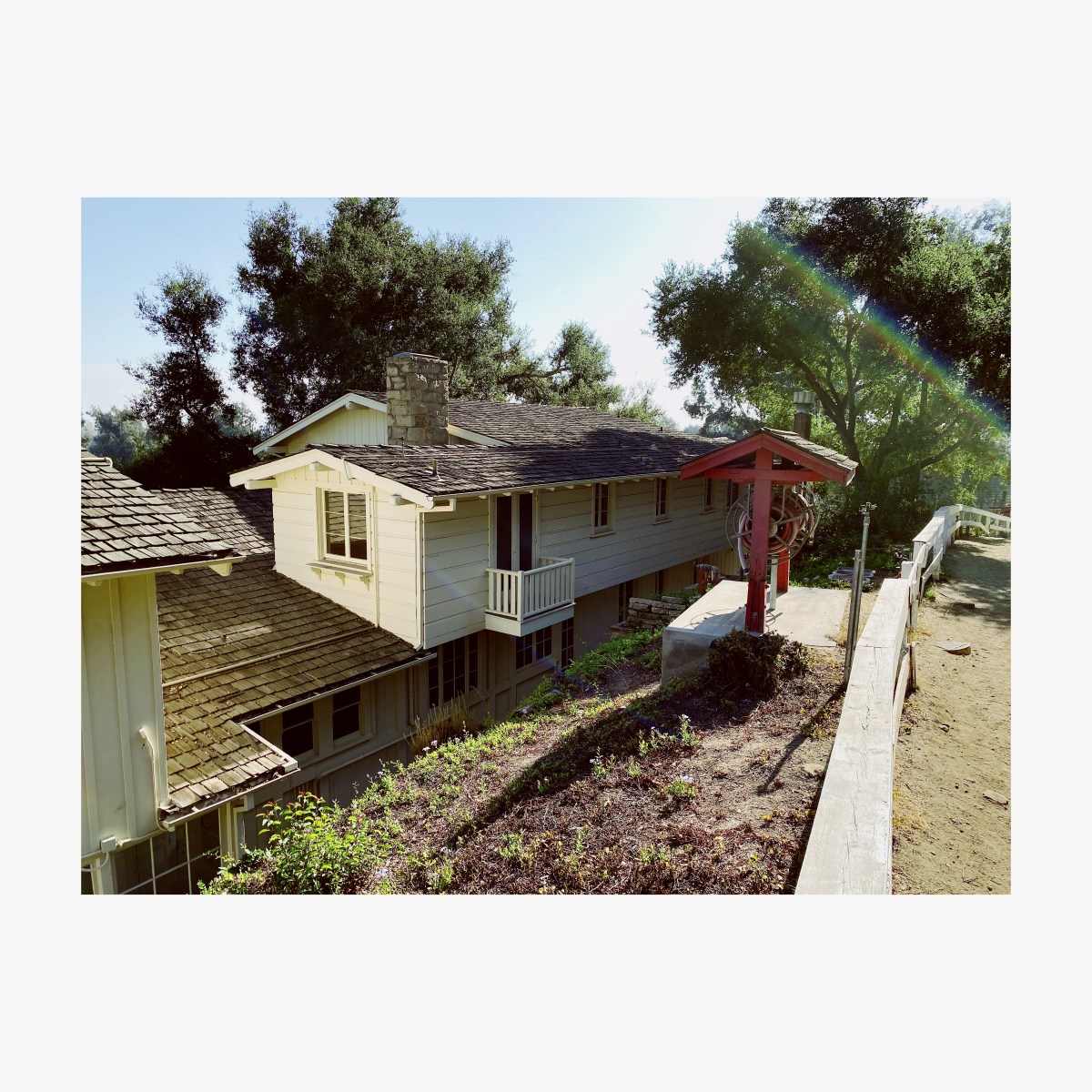
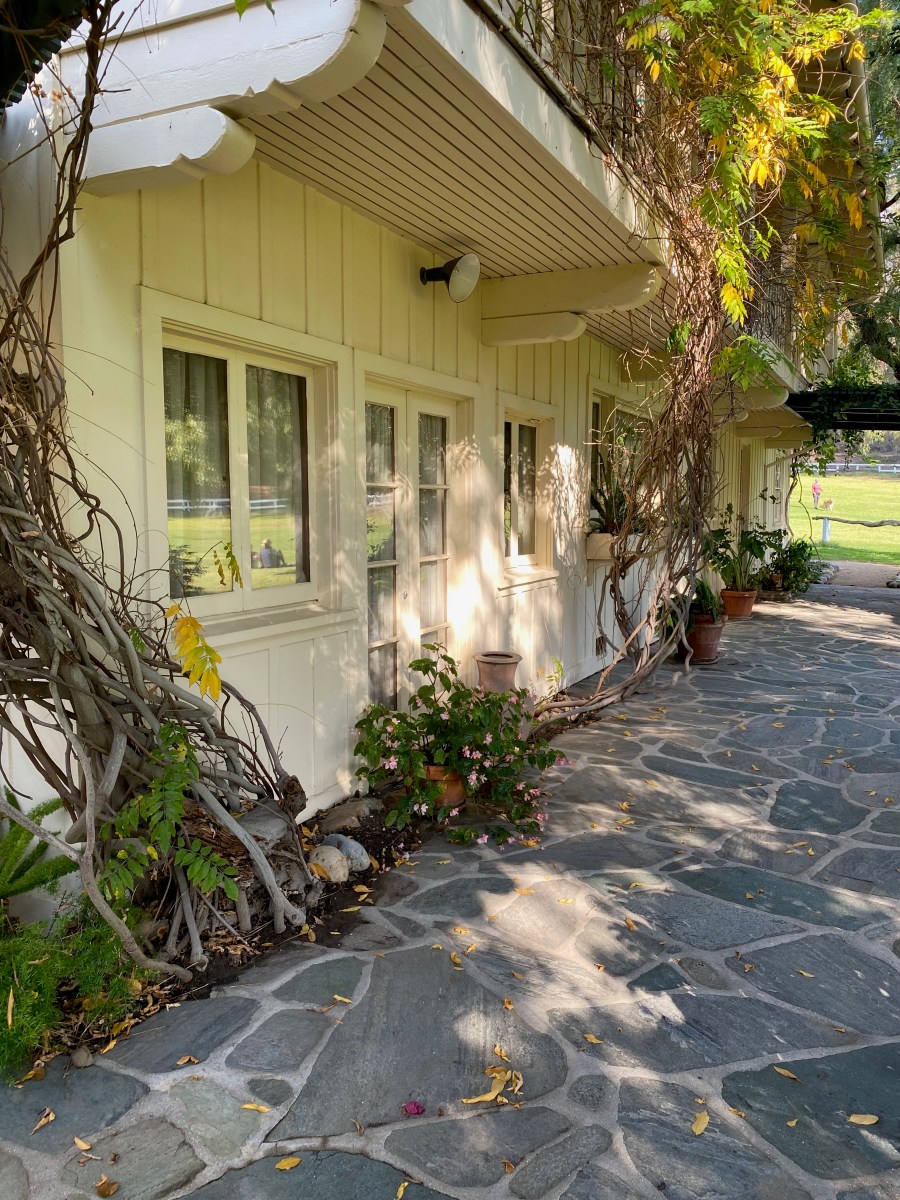
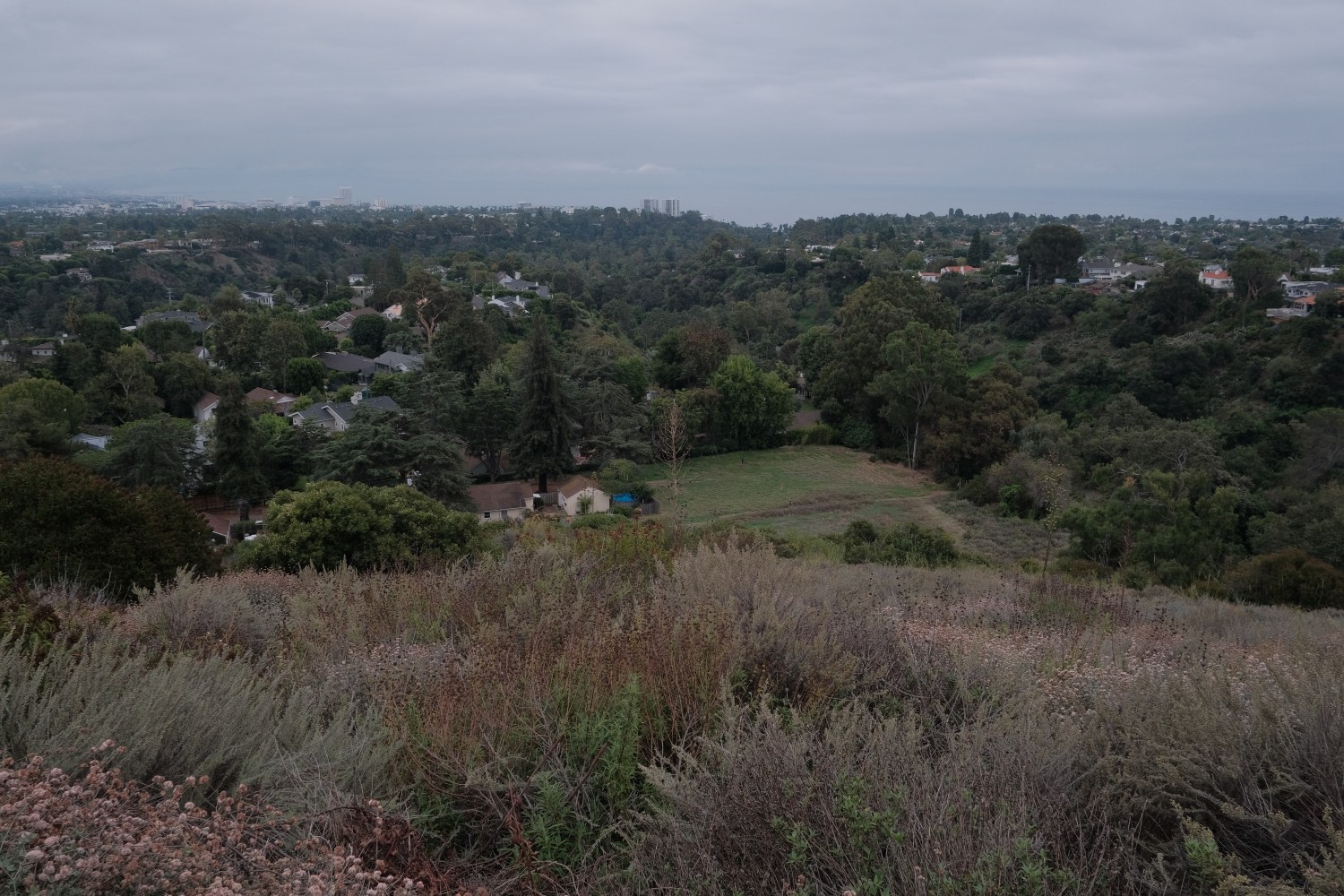
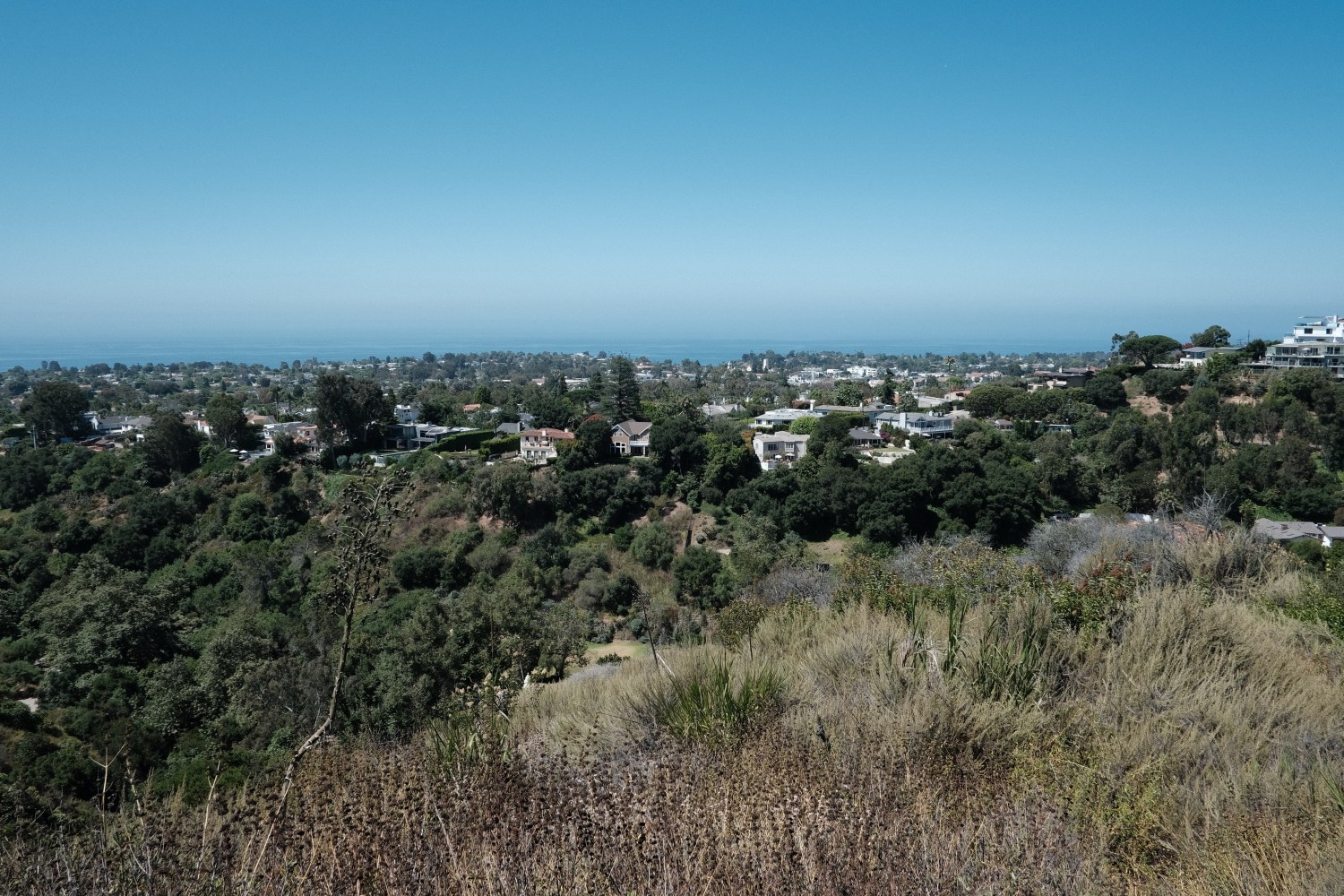
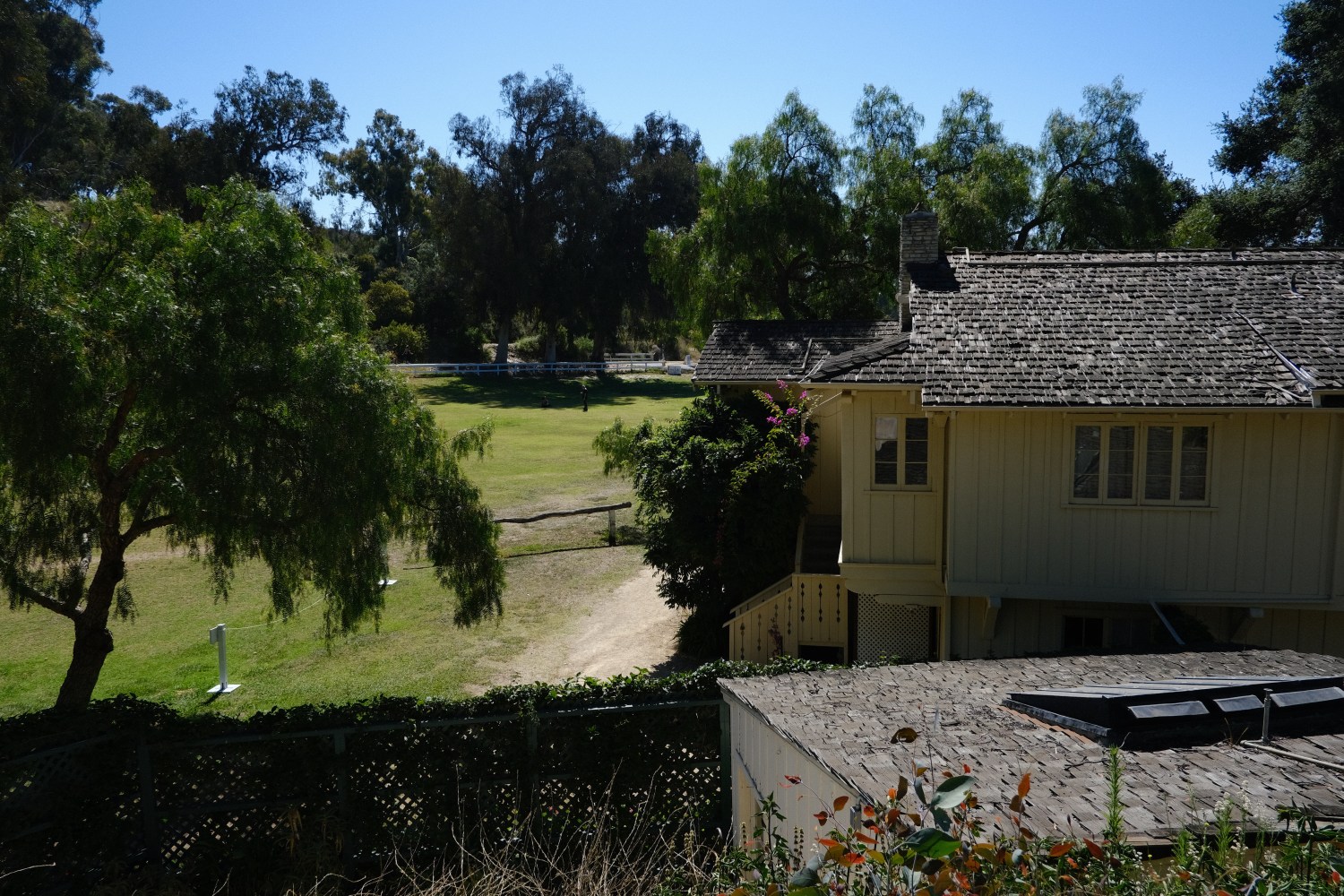
And then there was Will Rogers State Historic Park, nothing bad could ever happen there, not among the eucalyptus and the oaks, the horses in the paddocks, the rustic stone house with the wood shake roof and the twin chimneys with bougainvillea trailing up the sides and the rocking chairs on the front porch.
But that bad also came burning to the Rogers home.
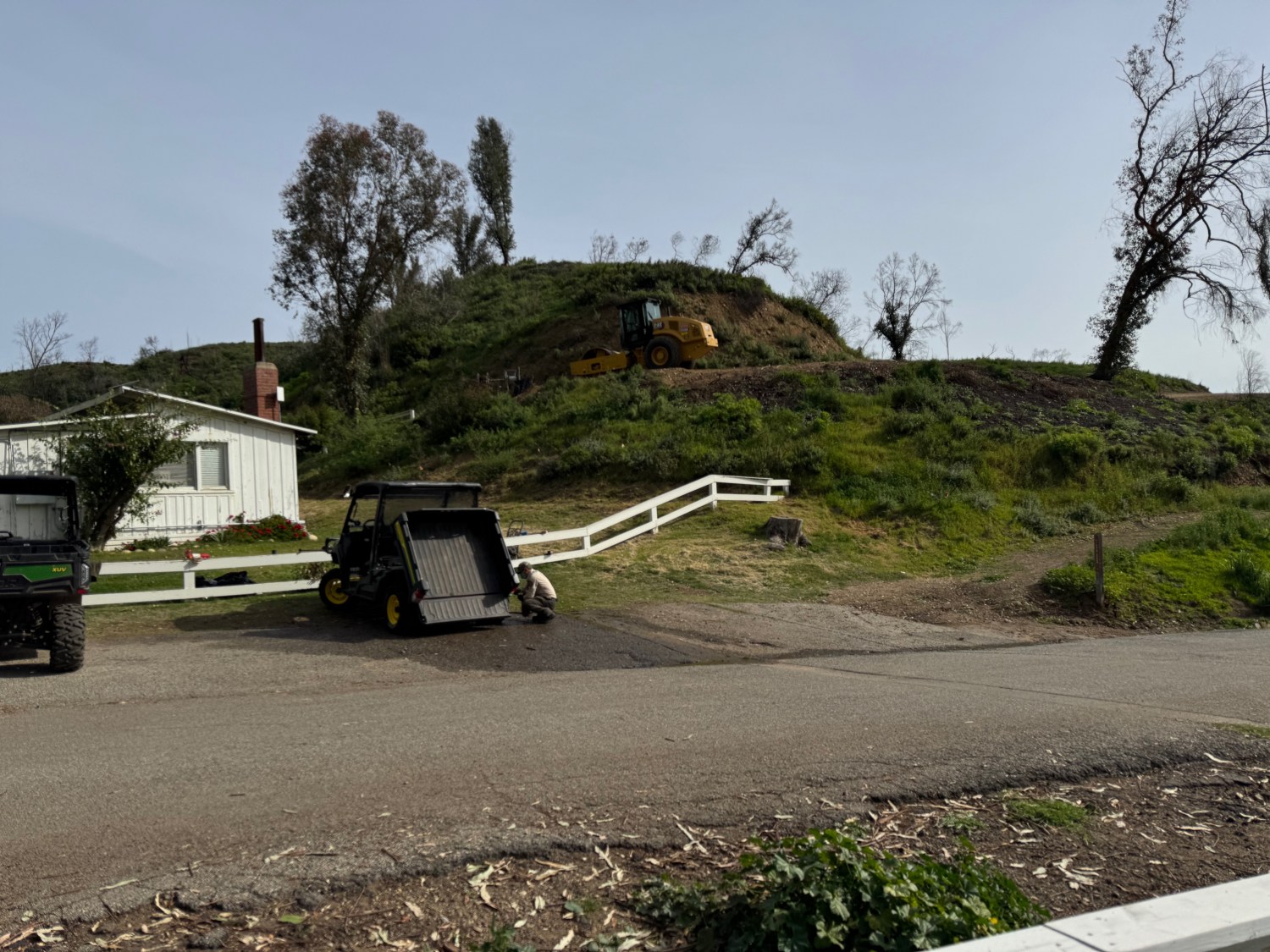
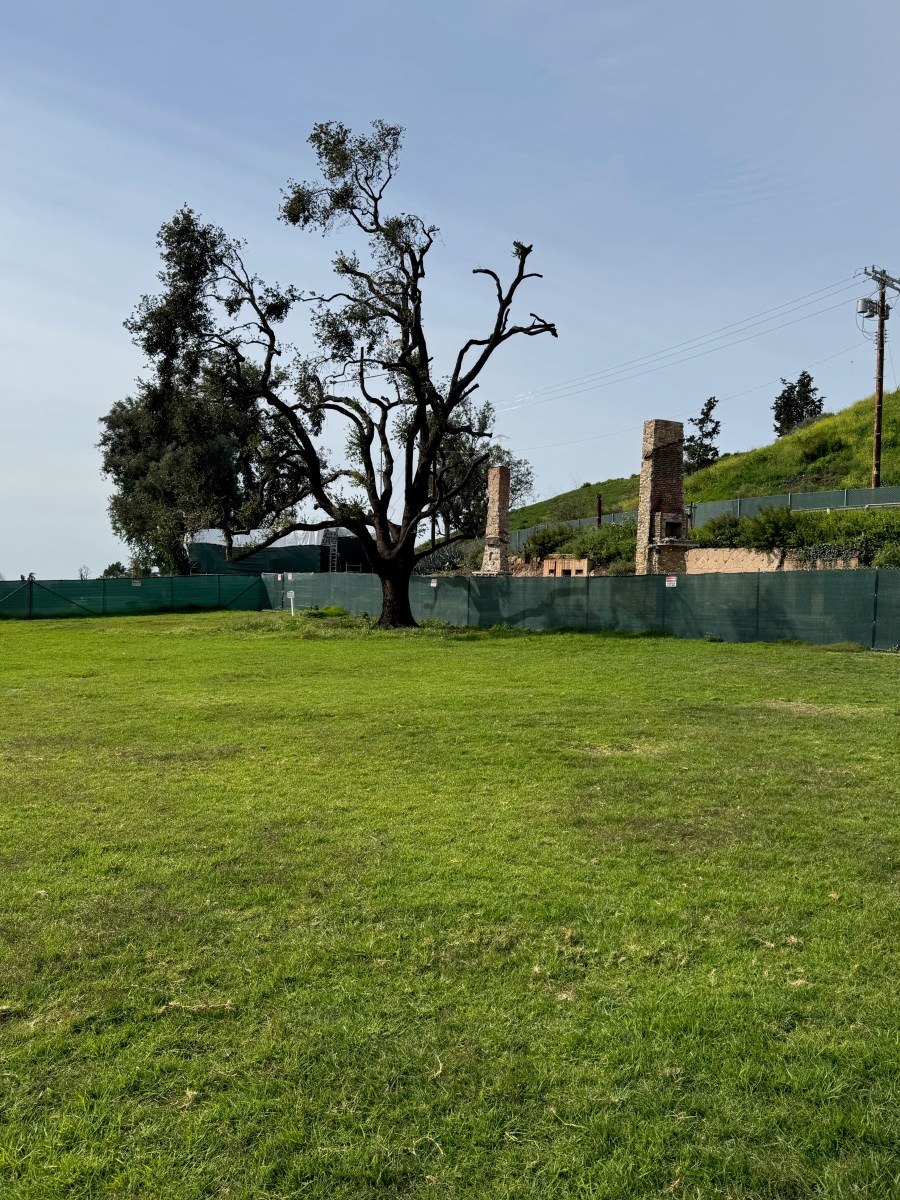
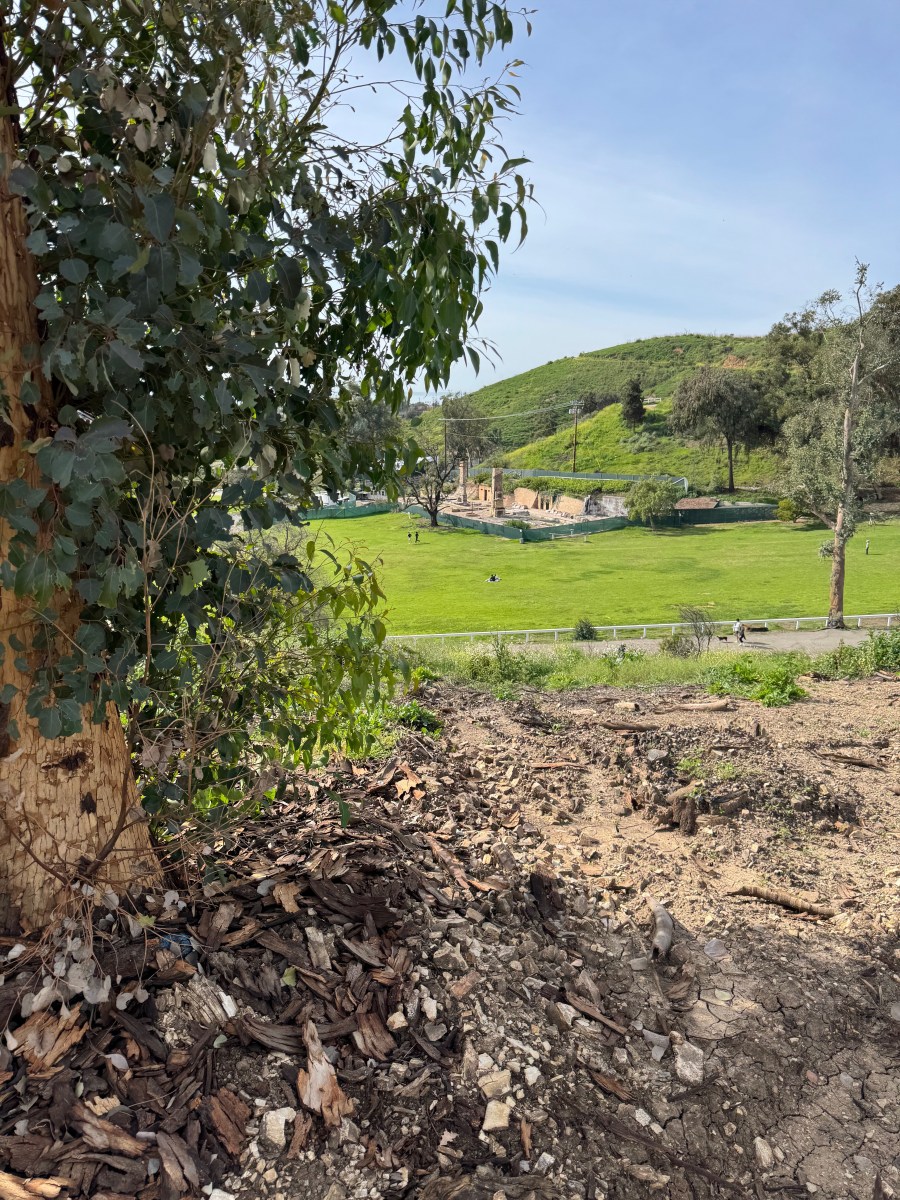
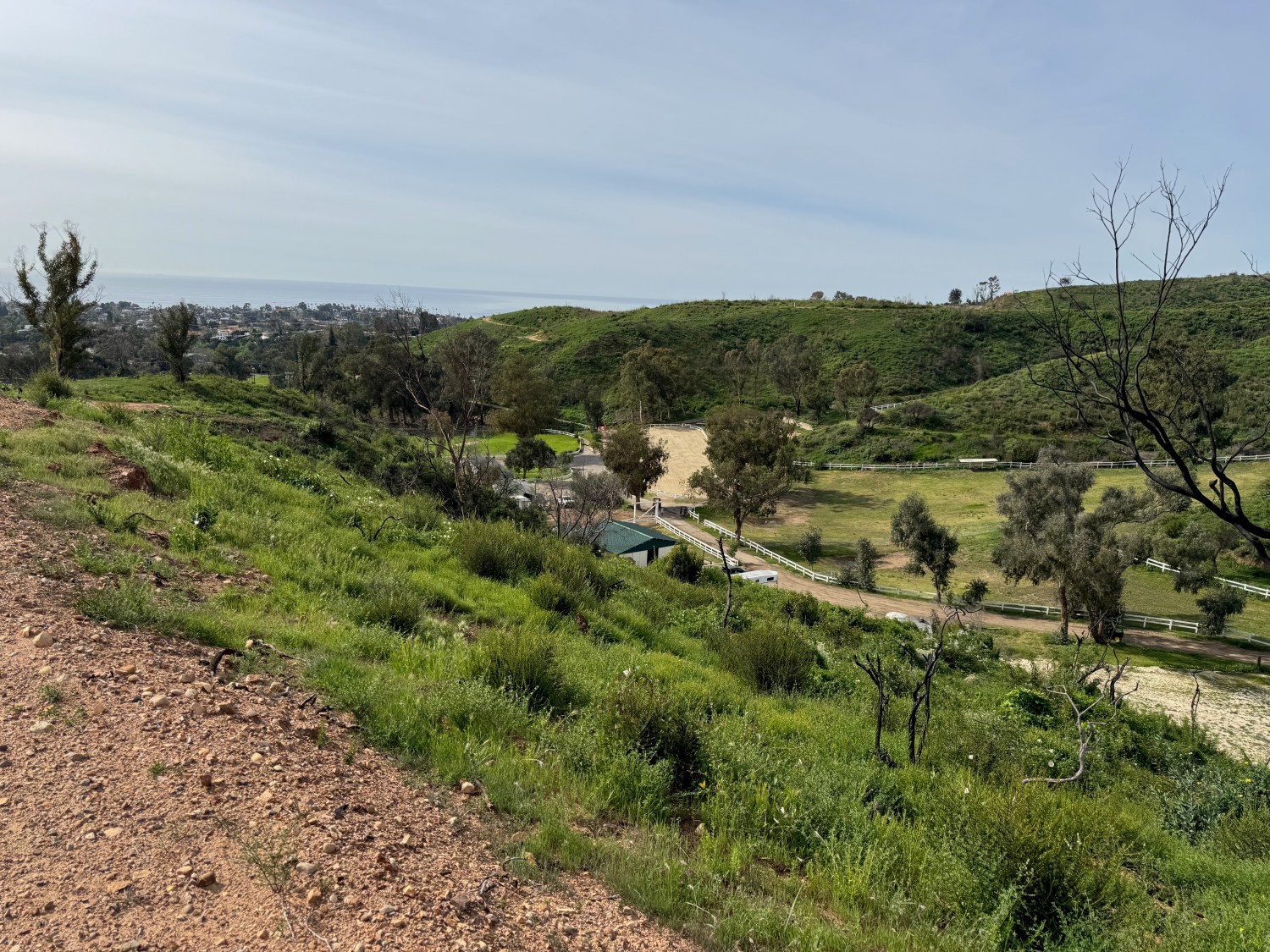
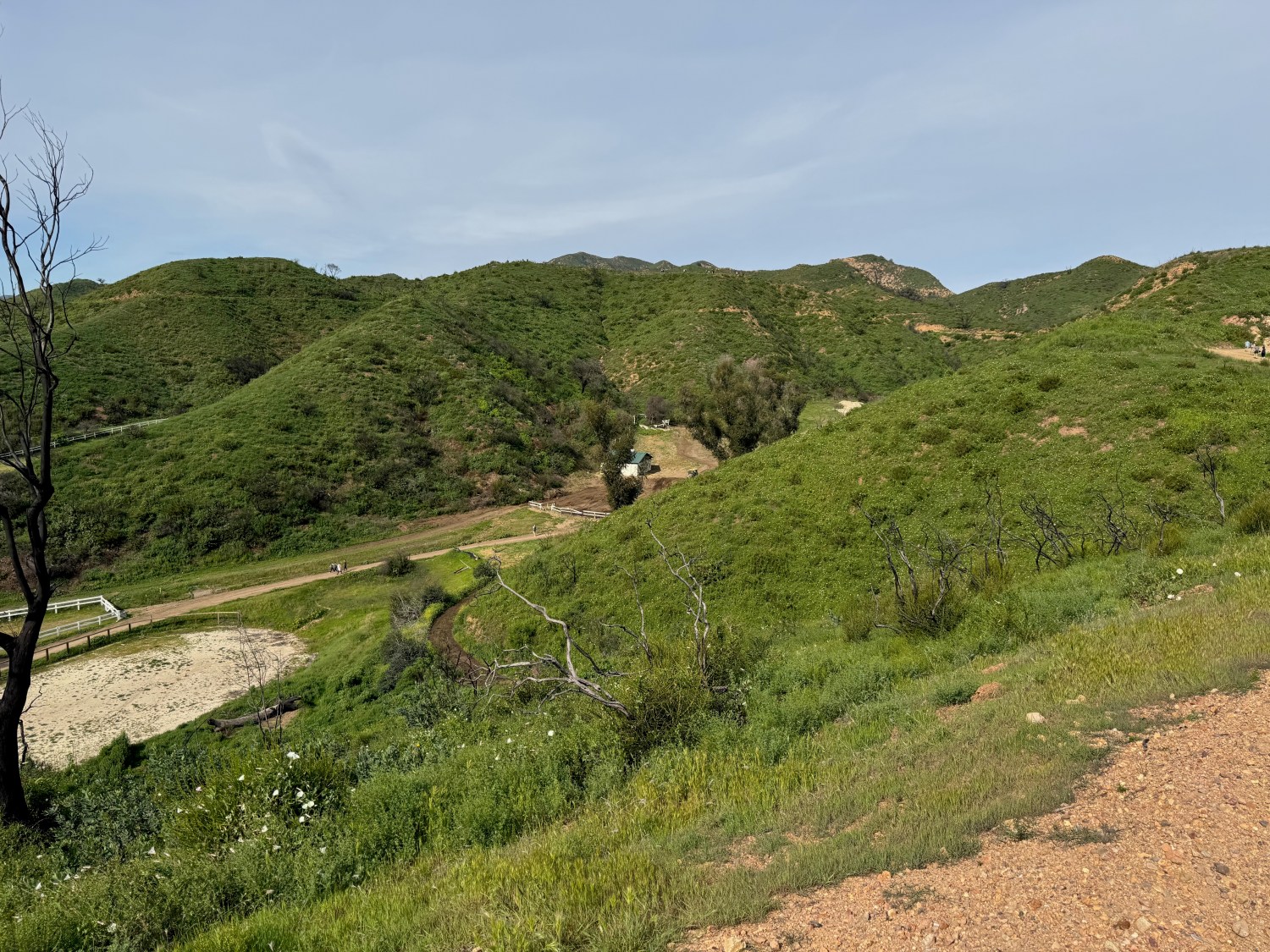
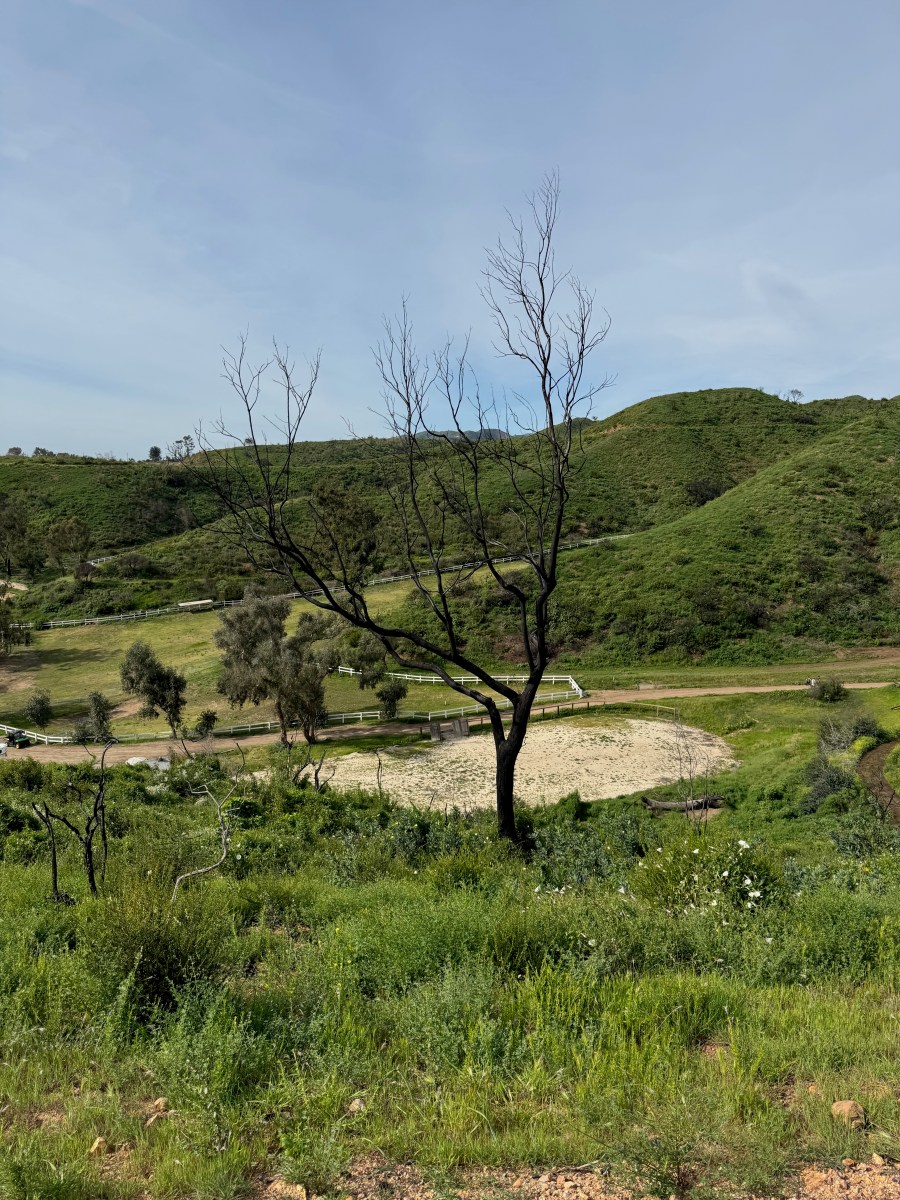
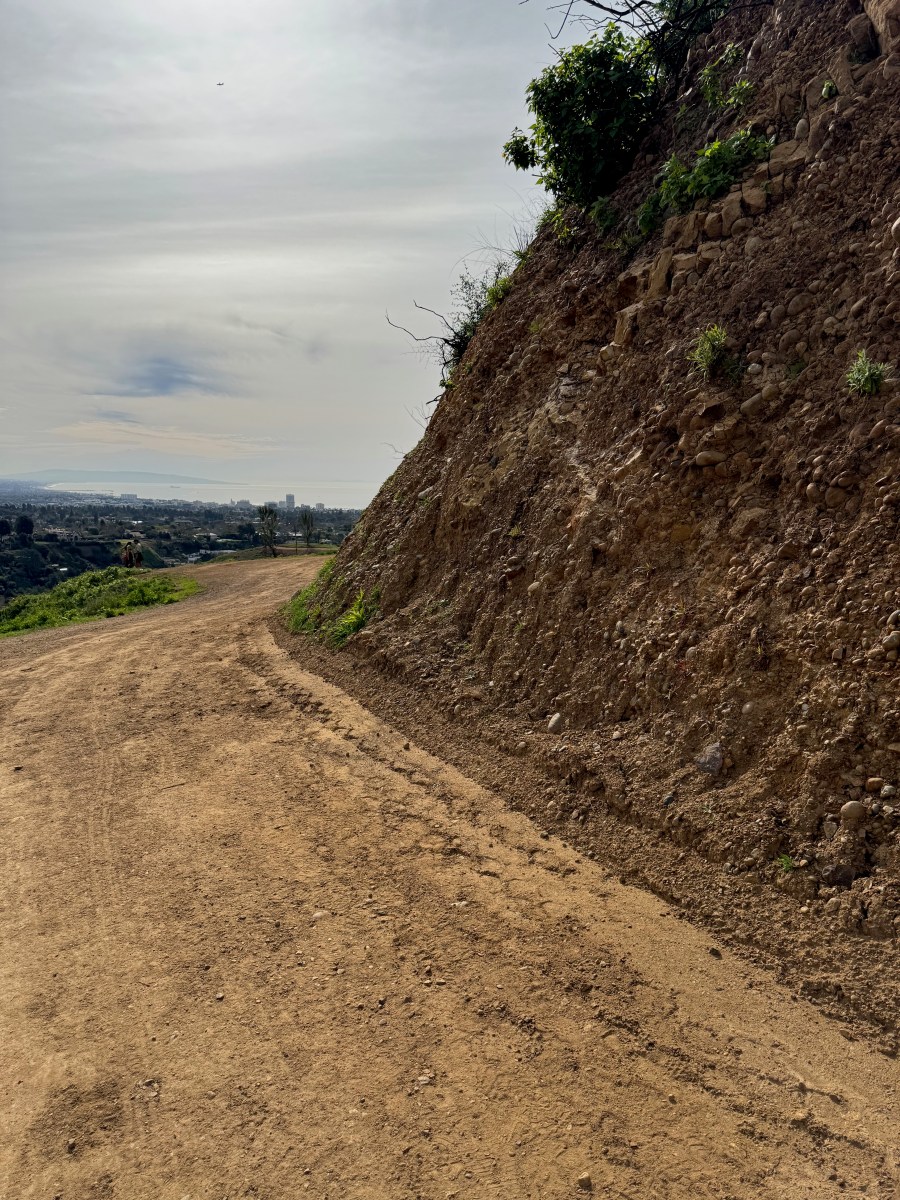
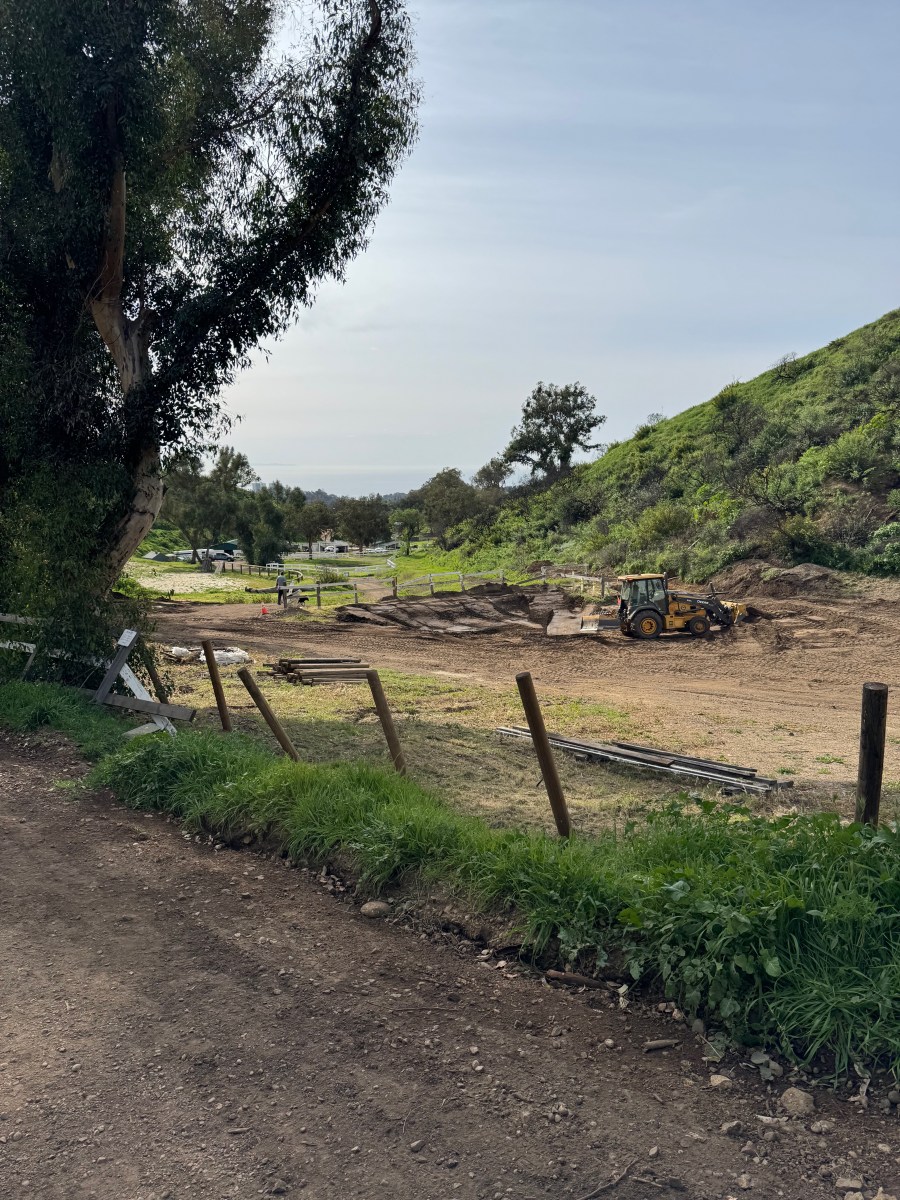
Yesterday, more than a year after the fire that destroyed 10,000 houses, we were again at Will Rogers.
The house, the stables and the history burned down, but something wondrous remains, nature and the renewal of life and hope.
There was a lot of clearing and cleaning up that went on here. Perhaps in a ridiculous way, it compares to Berlin in 1946, with neat paths next to empty lots where glorious old buildings once stood.
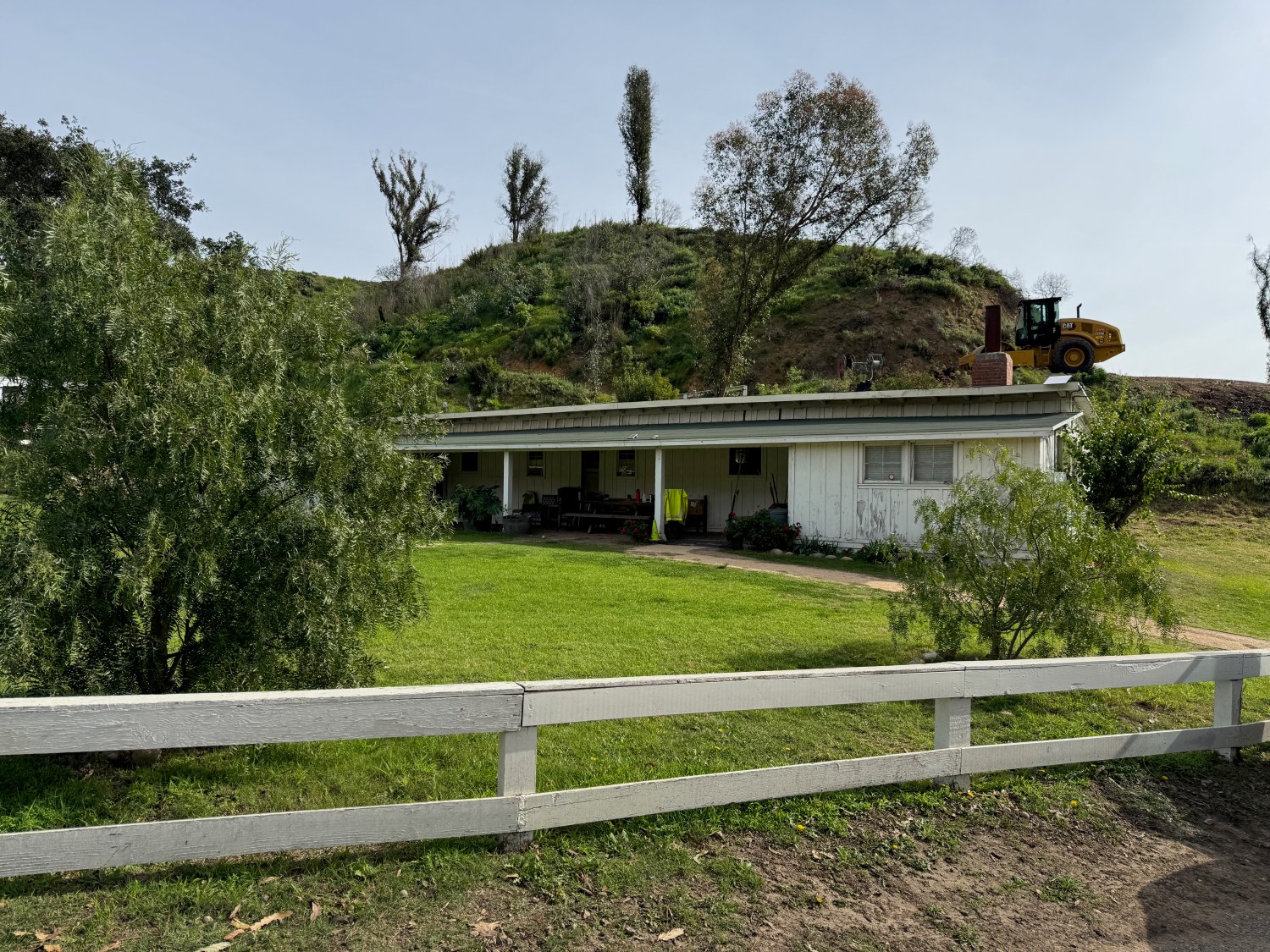
The workers’ house, a modest ranch with Western fencing, survived. Above the little place a bulldozer sat on a hill, occupying a god-like position over the property.
There were other visitors yesterday, and if wholesomeness is a real condition, it exhibited itself with smiles, and people saying “good-morning” and behaving as if they had gratitude for something free and magnificent; the Western sky, the Santa Monica Mountains, the liberty to spend a quiet Sunday climbing up a hill to look out to shoreline.
Coming here was a needed antidote for a self-destructive time, a release from digital enslavement, a happier reality.

 Here in Van Nuys