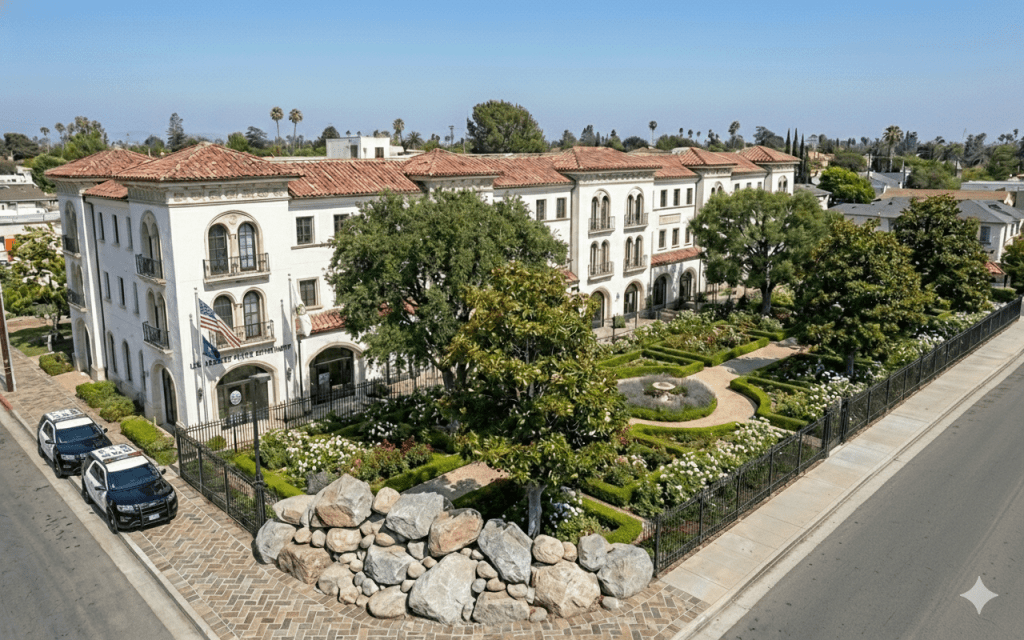
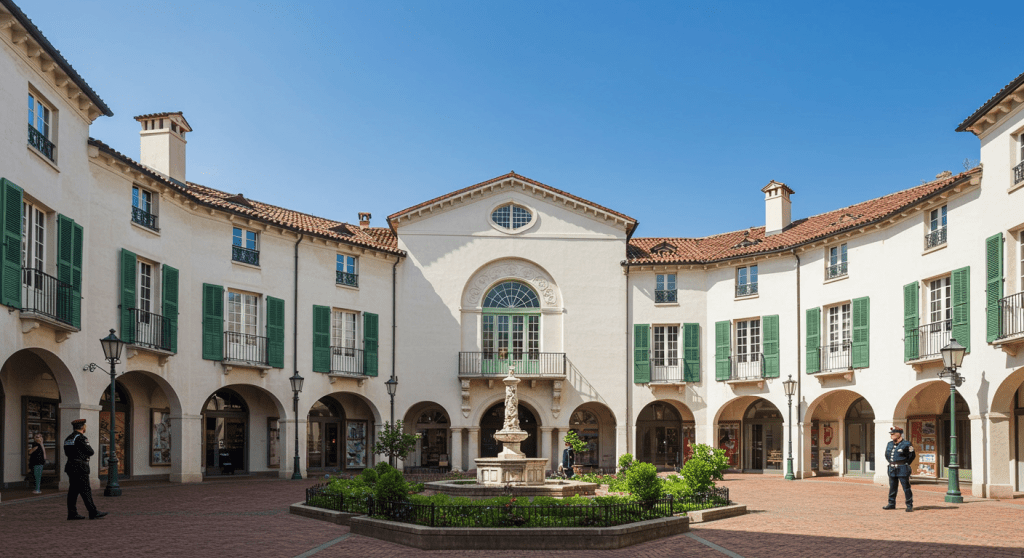
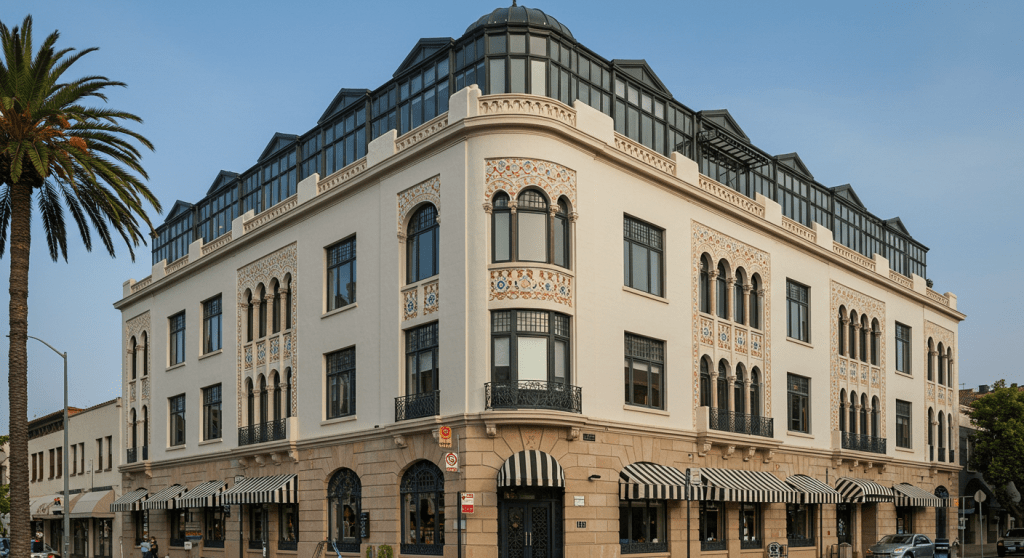
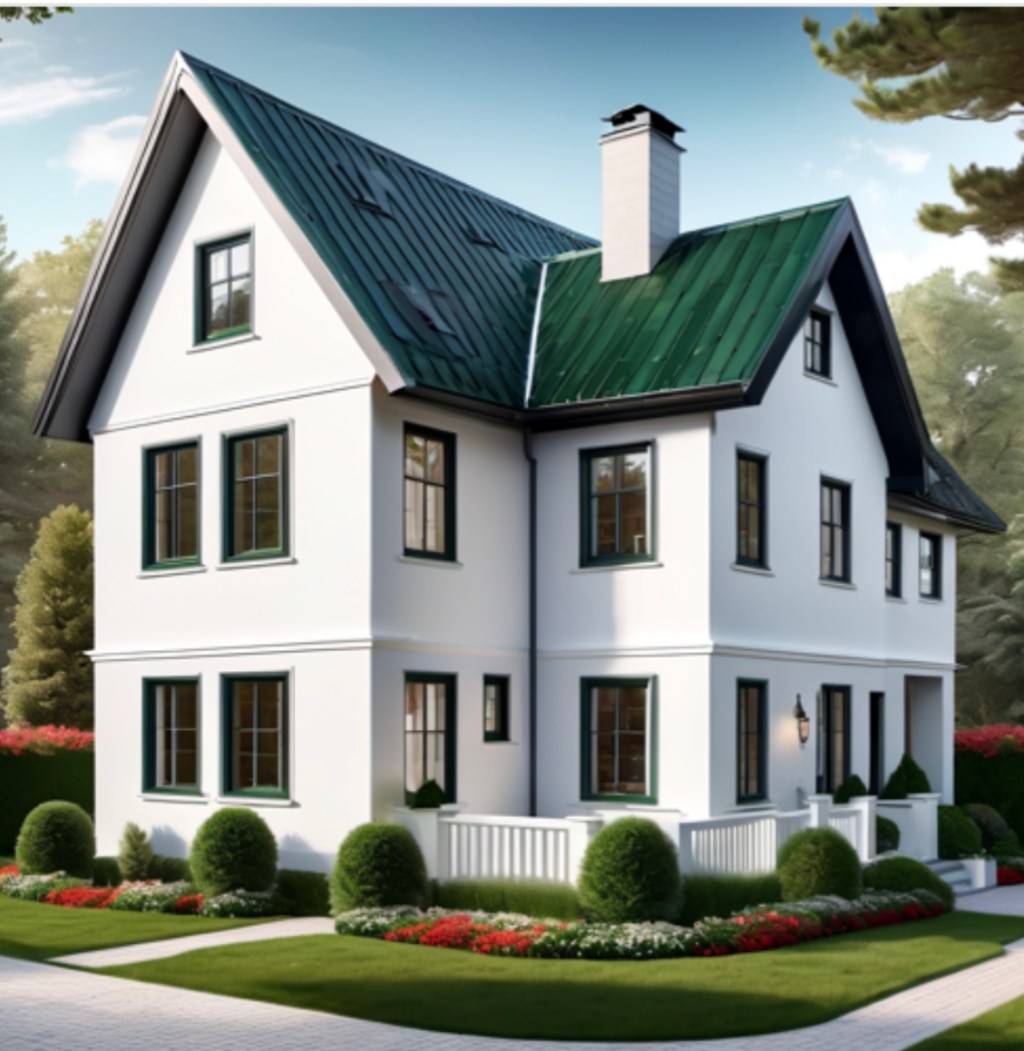
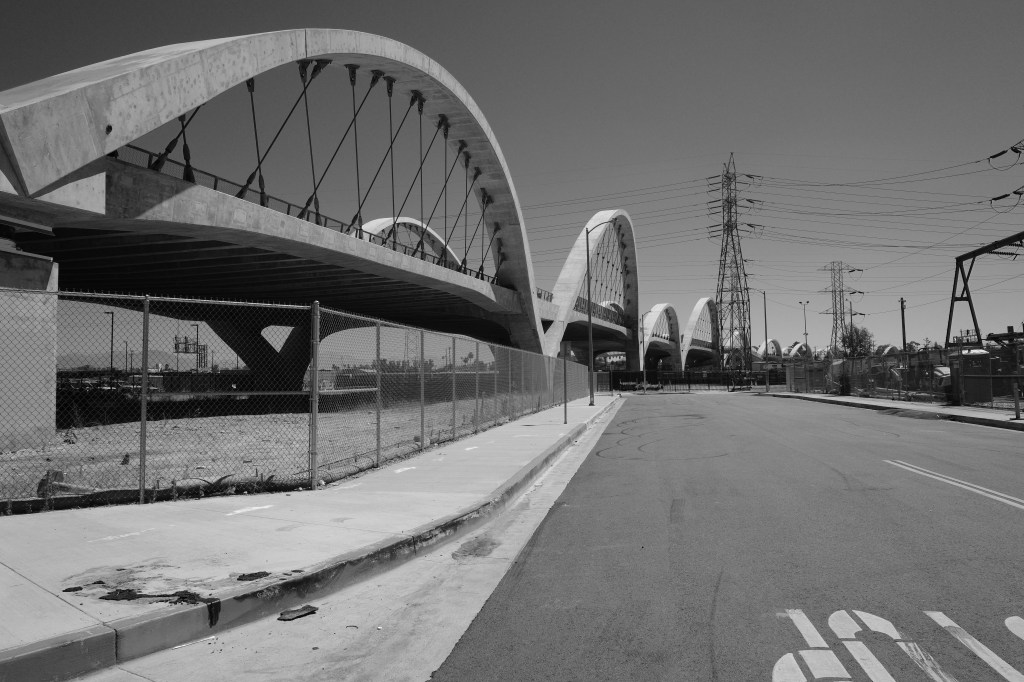
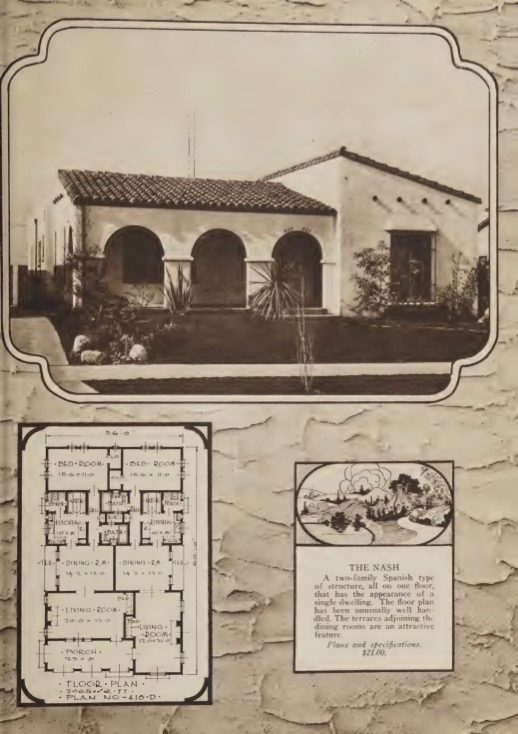
Turin Style Architecture in Van Nuys.


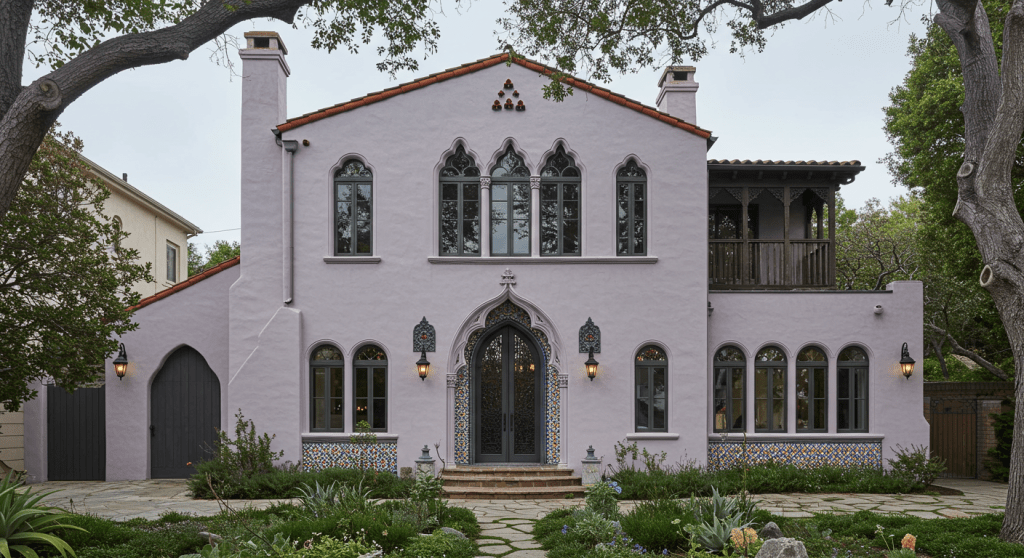
Above illustrations by Gemini AI


Much of commercial Van Nuys is in the worst condition of its 115-year-old history. There are empty stores, enormous parking lots with no cars, and trash camping everywhere.

What could replace all this and what kind of architecture would protect us from hot sun and occasional rain? The answer might come from Southern Europe.

Last year I spent five days in Turin, Italy, a metropolitan city of 841,600 in the NW of the country.

It has remarkable architecture, which was mostly built in the 18th and 19th Century by the Savoy Family in a unified, Neo-classical style.

The city has a series of arcades and long, shaded passageways, that protect from rain and sun. The arches along the ground floor provide a unifying effect that harmonizes all the buildings and anoints the urban environment with a regal and practical building style.

There are numerous courtyards, public and semi-private, which are encased by three and four story buildings.

Here are some photos I took in October 2024:

Traditional Designs for Apartments.


Here are some concepts for rebuilding Pacific Palisades.

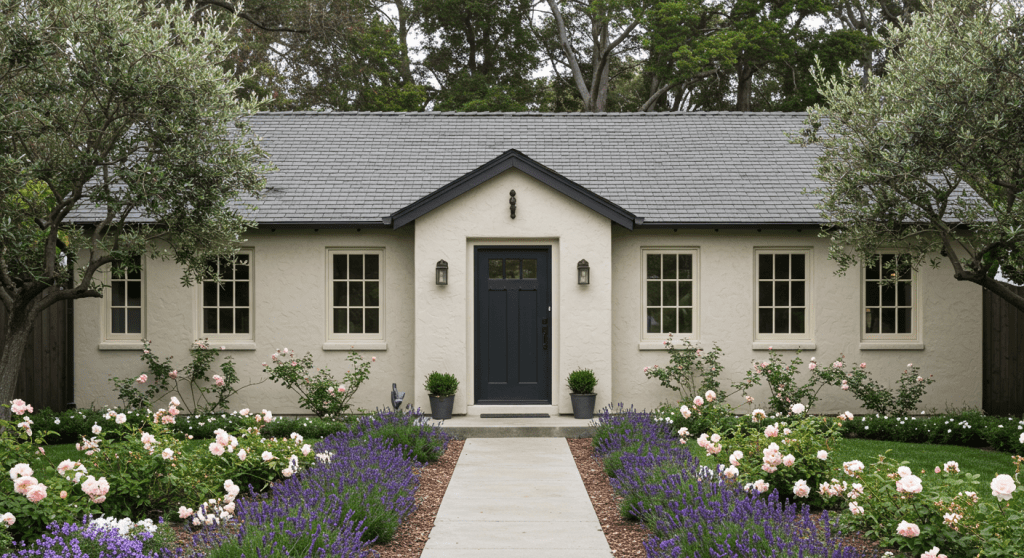
Neo-Classical Houses


When you have a house that is classical, symmetrical, ordered; architecturally many different styles can fit inside the geometry of the facade.

Architects knew this up until the Second World War. Old neighborhoods in Pasadena, Hancock Park, and many survivors in the West Adams, Hollywood and even Beverly Hills districts carry an eclectic and imaginative grouping of ingredients: Italian, Moroccan, Spanish, French, English, etc.

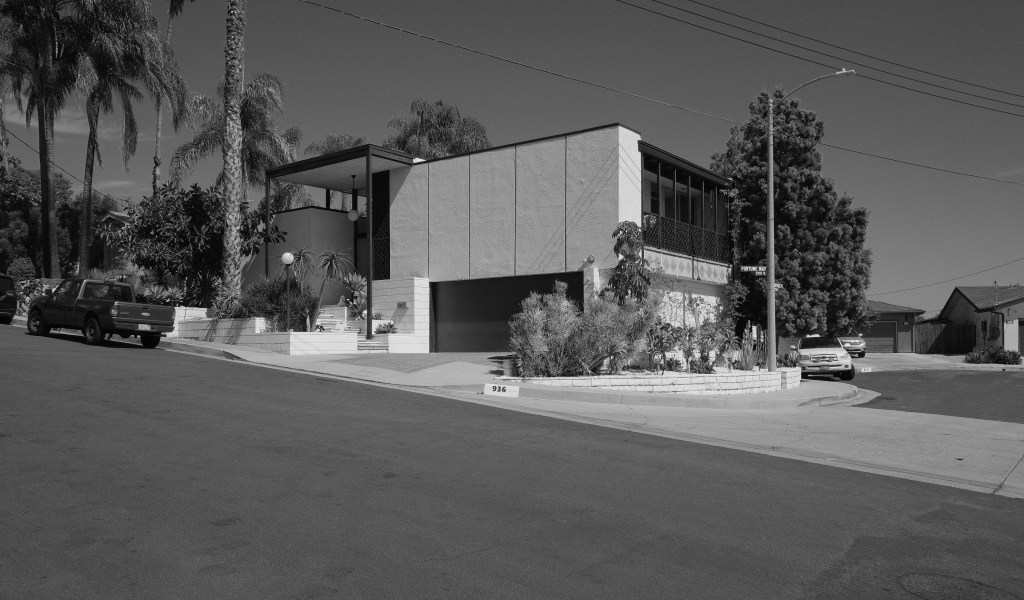
The gruesome invasion of oversized boxes without any balance, proportions or beauty is an ugly fact of life in modern Los Angeles. These atrocities pop up everywhere, and whole sections of once charming Studio City are now shoulder to shoulder, oversized, white Cape Cods or oversized white coke dealer McMansions. The last type always has a flat roof for parties that never happen and enormous rooms with egregiously visible wine galleries for sober owners, multiple flat screen TVs and no books for their Ivy League educated residents.

It’s probably fantasy to imagine that wealthy people will read this blog and see the lovely houses below and decide to build in this style in Pacific Palisades.

But maybe (in the vein of wishful thinking) the ten wealthiest Angelenos can get together and fund the construction of Neo-Classical houses in Altadena. 1,000 of these would cost $100,000,000 and would also be a welcome addition for the next 100 years.

Ok guys, how about it?

Patrick Soon-Shiong ($20.4 billion), Sean Parker ($16.9 billion), David Geffen ($14.2 billion), John Tu ($11.1 billion), Edythe Broad ($9.2 billion), Edward Roski Jr. ($8.7 billion), Steven Udvar-Hazy ($6.8 billion), Bobby Murphy ($7.9 billion), Stewart Resnick ($7.2 billion), and Evan Spiegel ($6.7 billion). (source: LA Business Journal)

The Old Way of Seeing.


It’s not likely that we will live to see Pacific Palisades or Altadena constructed in a way that evokes the traditional styles that were wiped out in January’s fires.

There is first the economics of the disaster. Many people will never have enough money to rebuild their homes. Some bought them many years ago, some inherited them. They had lower property taxes whose rates are based on what the original purchase price was.

For some, it was affordable to live in a paid-off home with grandfathered low taxes, next to the Pacific. That accident of time and fortune is gone forever.

The crisis in insuring homes, the cost of materials, the fragility of the economy, the flight of good paying jobs in entertainment, all of it has added up to a disaster that will be hard to climb out of.

There is also the problem of zoning. Where multi-family houses could be built, the powerful will step in (especially in Pacific Palisades) to mandate that every home be single family. And that will invite everyone to construct the ugly, laboratory like boxes that have proliferated on small lots around Southern California in the last 15 years. White, with black windows, unused balconies for joyous parties that never transpire. And security fencing, SUVs and artificial turf.

In Altadena, the destruction is tragic for other reasons. This was a neighborhood amenable to Black residents, and a place where multi-generational households built up wealth and security which was often difficult to obtain when your parents and grandparents were restricted from owning homes in other locations.

The integration of Altadena, the artistry of the homes, the beauty of the setting in the mountains, with many trees, old gardens, and the viability of churches, schools, and craftspeople with unique creations, was stamped upon this town.

Driving yesterday afternoon in 98 degree heat, through the dusty, hot, burned out districts of Altadena, we saw the vast ruins, but also the armies of trucks and workers hauling away the debris, towing away stacks of burned up vehicles, and the neat signs from the government on newly bulldozed and graded empty lots pronouncing them “clean.”

Architecturally, what will Altadena look like in the next ten or twenty years? Will there be a plan to rebuild in a harmonious and humane way, the method that Santa Barbara used after the 1925 earthquake?

“Before the earthquake, a considerable part of the center was built in the Moorish Revival style. After the earthquake, the decision was made to rebuild it in the Spanish Colonial Revival style. This effort was undertaken by the Santa Barbara Community Arts Association, which was founded in the beginning of the 1920s and viewed the earthquake as the opportunity to rebuild the city center in the unified architectural style.”-Wikipedia

Who will protect the Black history and the Black future of Altadena, an ingredient of the larger program of reconstruction that must proceed without killing off that which made Altadena a shining exception?


I’m fairly certain that Pacific Palisades will rebuild faster than Altadena. There is always governmental assistance for the most privileged.

The atrocity of public vagrancy, however, will continue to be pervasive under the current mayoral regime. Here passivity and resignation in the midst of homelessness is considered a virtue in the progressive wing of the Democratic Party.

Mayor Karen Bass has allowed, like her predecessor, the proliferation of trash camping, and is now looking forward, obscenely, to the 2028 Olympics which will place the gruesomeness of Los Angeles in a Potemkin village face lift. She never misses a photo opportunity to speak in her melodious, soothing, sweet, dulcet tones, imploring patience, incrementalism and understanding as 1 building permit a month is approved and 5,900 are in limbo.

Mayor Bass, Billionaire Rick Caruso, Hairdresser Gavin Newsom, are all eager to showcase the vast wealth, power, glamour and celebrity of the city to aid in the reconstruction of the western district of LA. Newsom even stepped up today to actually use the law to remove the trash camps around California. After billions of dollars, the patience of the governor has worn thin, and he has decided it is not a good image for the state to host burning trash fires along the freeways.


But what will the end results of the new post-fire houses look like? Will we once again have to endure architectural experimentation in the cheap, novel, grotesque, ostentatious style that pervades every corner of the region? Will the crumpled up, aluminum foil design of Gehry be our model for the city of the future? Perhaps not, as architects are often not even present in the construction of new houses. Only the general contractor in his pickup truck with his aesthetic refinements.

Will the oppressive sterility of the white box triumph? Or can we have the kind of California dream Will Rogers built? Can we have a piece of gentleness and civilized loveliness please? Or does everything that is built have to be the choice of the sports stadiums, the shopping center developer, the studio honchos? If that is the only way forward, then California is dead; spiritually, culturally, ethically, and economically.

Will Rogers State Park, July 2024. Destroyed January 7, 2025.


Perhaps the old way of seeing, the classical way of designing, the architecture of pre-modernist California, could help heal the disfigurement of the Golden State.

Imagine if you found these types of houses in the rebuilt lots of the fire zones? Could you fall in love with California all over again?

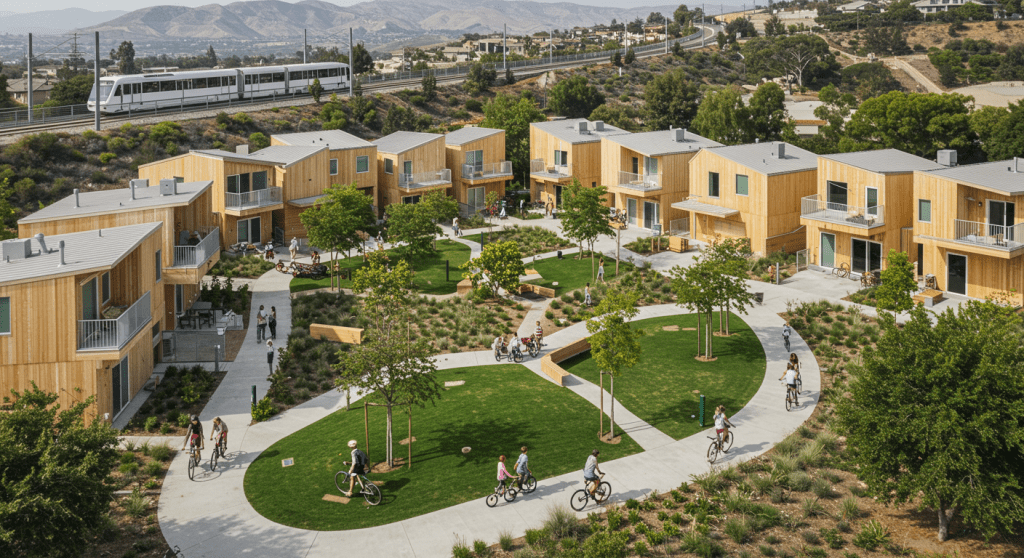
Concepts for Clustered Houses Near Light Rail.


Orange Line Metro Parking Lot at Sepulveda/Erwin

There are currently vast expanses of unused asphalt parking lots that run along the Metro Orange Line. One of the largest of these is near Sepulveda and Erwin.

This area could be developed as a lovely, walkable, residential area.

Instead of the hot sun beating down on asphalt, wouldn’t it be nice to see the houses below which could be an enhancement to the community instead of the current blighted condition of the fenced off concrete?

A Controlled Destination


I hadn’t been to ROW DTLA/ SmorgasburgLA since the pandemic. 

This past Sunday was cool and it seemed like a good day to go down there, so we drove to the weekly event, parked in the commodious and well-ordered concrete car park, and walked across to the food trucks and cheerful carnival of Smorgasburg.

I ate a type of goat cheese and beet Chivadilla (a mulita style Quesadilla)  from The Goat and later had pulled pork on a roll at Battambong BBQ, a Cambodian American joint. I tried a fresh fruit drink from another Cambodian seller, Sweet Grass. Everything was delicious and affordable (to a point).

The crowd was varied, and dressed colorfully, some pushing baby strollers. 

I stopped to speak to one man at Lost in LA, selling embroidered knitwear. He had recently returned from Japan which he had visited a few times. We both admired the public civility of that nation and wished we had more of it here.

“Their kids clean their own classrooms!” he said.

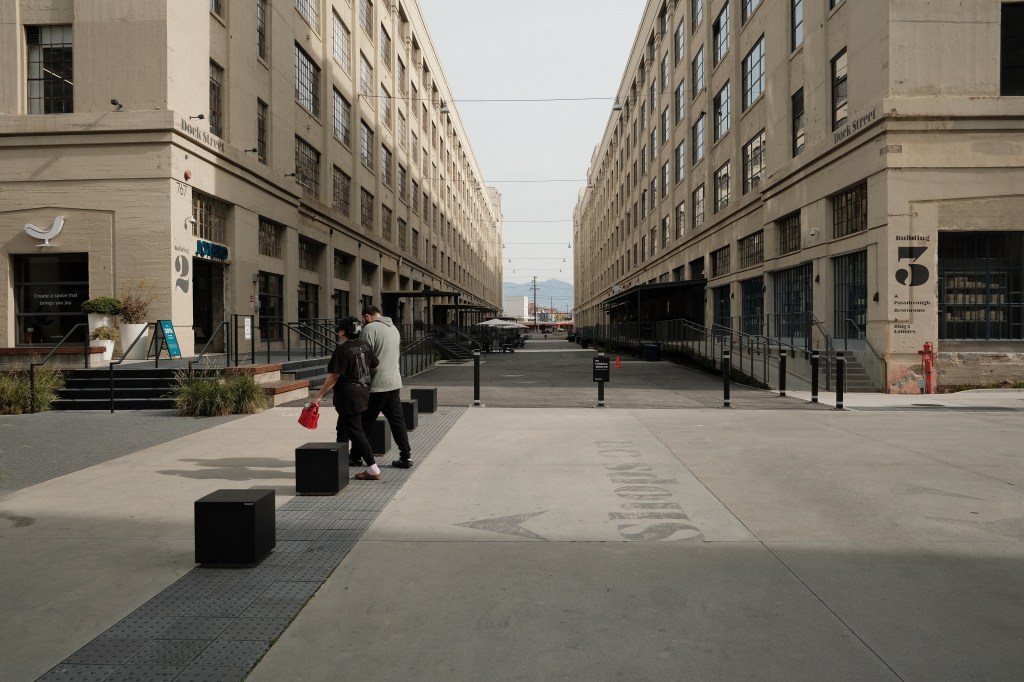
Later we walked along the landscaped, manicured and well-swept symmetrical street of shops where they sell luxury perfumes, furniture, clothes, liquors, coffee drinks, pottery and jewelry.  This is a kind of “downtown” you might find in Zurich or Singapore, a controlled destination where crime is rare and all the social ills are absent.

But this is Los Angeles, so we make do with an artificial representation of urbanity other cities take for granted. Because we don’t have civilized choices downtown or in Hollywood where our safety is sacrosanct. We instead find walkable and safe spaces under private ownership, guarded by for hire security forces.

On the route back home, we drove along Alameda and past tents where human beings reside along old railroad tracks next to shuttered industrial buildings that are awaiting new, more profitable uses. Piles of garbage and debris lined the road. And this wasn’t even the worst example of vagrant life in our city. There are many worse places nearby, skid rows by the dozens all over the Southland and a paucity of humanity and public policy to house and minister to people who are down on their luck and their circumstances.

There is not a park, a freeway underpass, a river, bus stop, library, 7/11 or a major street without RVs, tents, shopping carts, and piles of garbage. Wilshire Boulevard from downtown to Wilton for example.

Wilshire Boulevard! The once prime and pristine example of the glory of this city! Can it be that Los Angeles will soon host the 2028 Olympics? What can this city do in 48 months to become what it should be and disavow what it should not be?