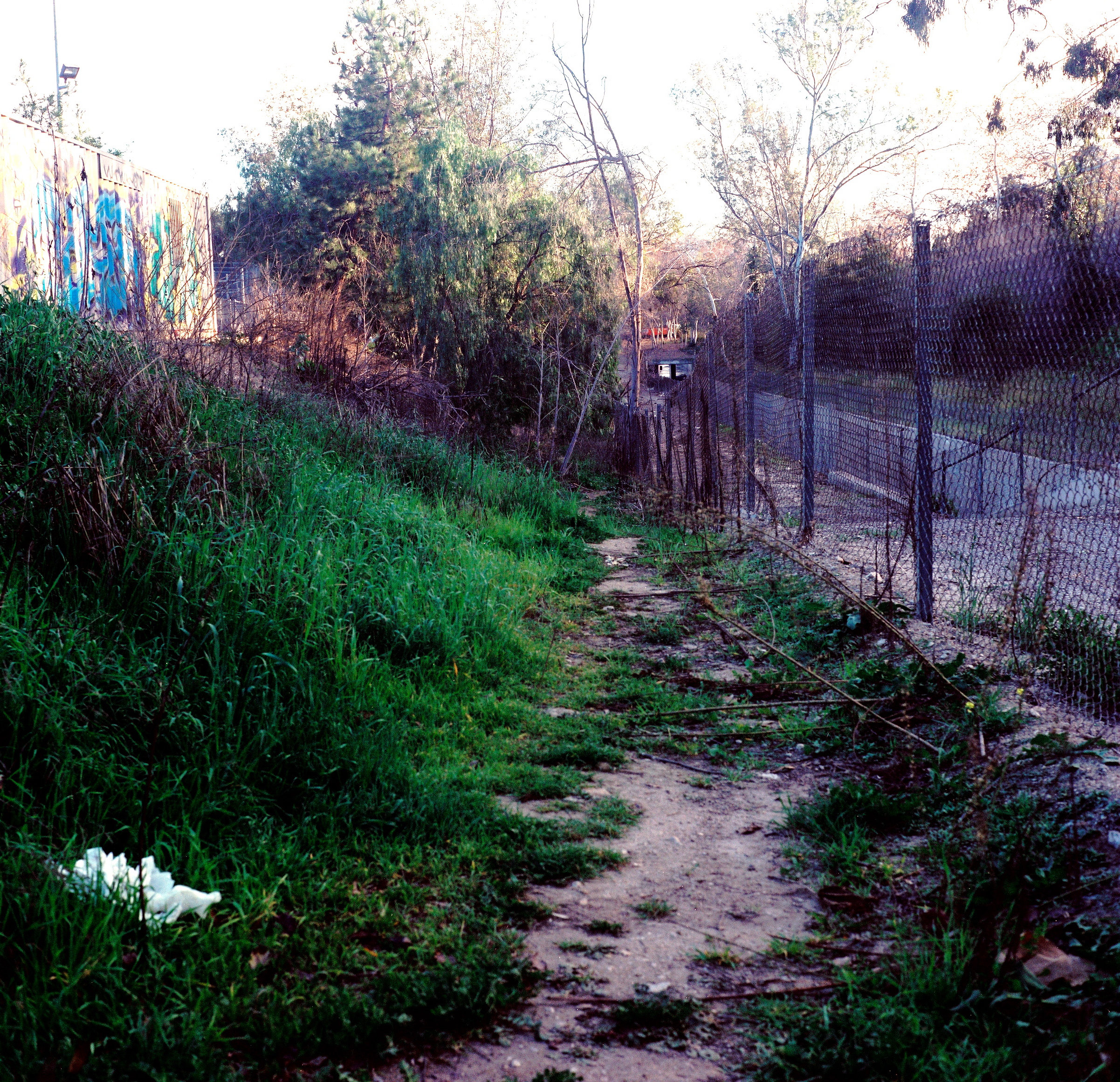
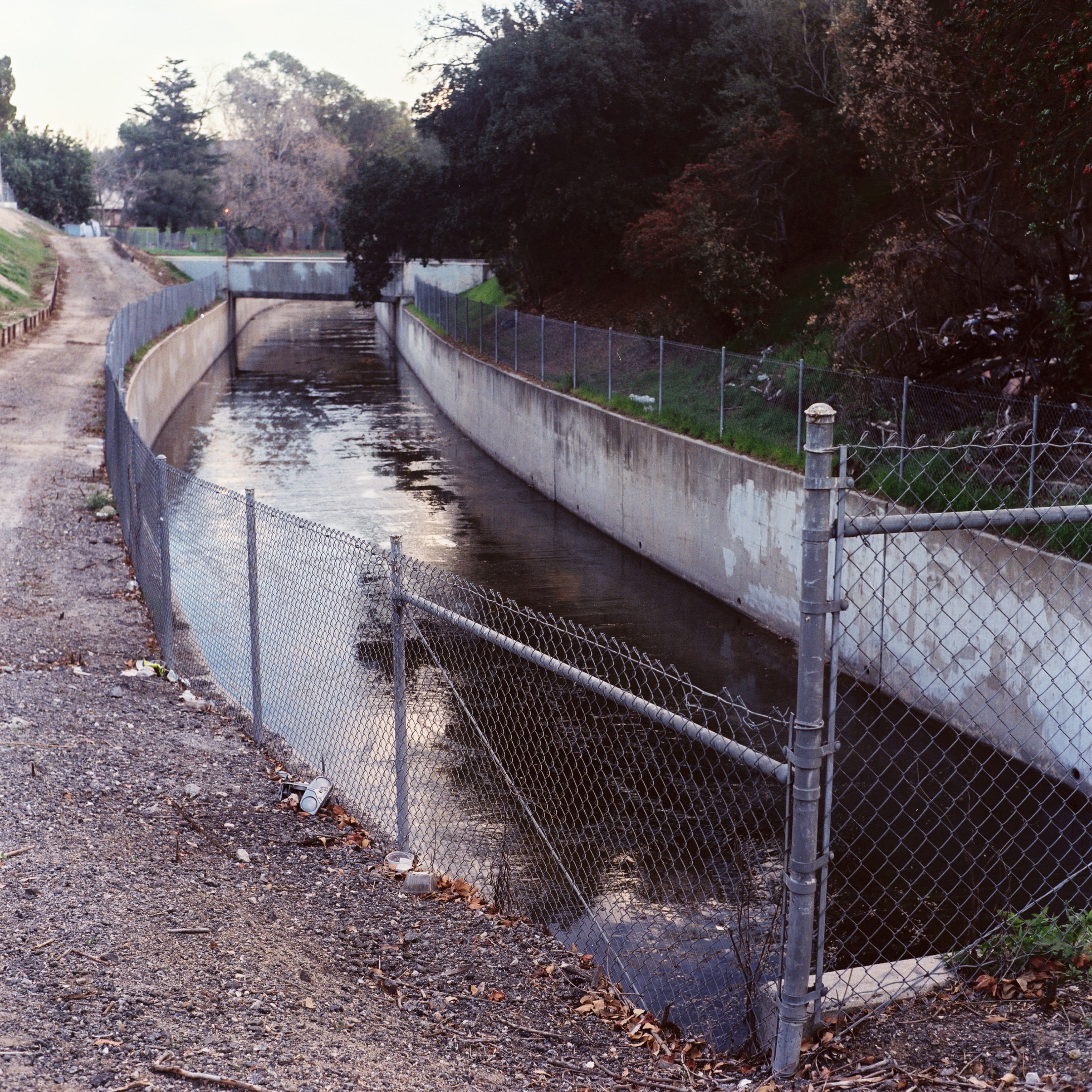
Come to the Vista Hermosa Park.


This slideshow requires JavaScript.

Just NW of downtown Los Angeles, at 100 North Toluca Street Los Angeles, CA 90026, the Vista Hermosa Park is a new, 10 acre park, landscaped with native plants and trees, walking trails, picnic areas and playing fields.

The park also offers unparalleled architectural views: brand new schools, gigantic playing fields, arched concrete bridges, Disney Hall, downtown Los Angeles’ skyline, and historic Victorian houses.

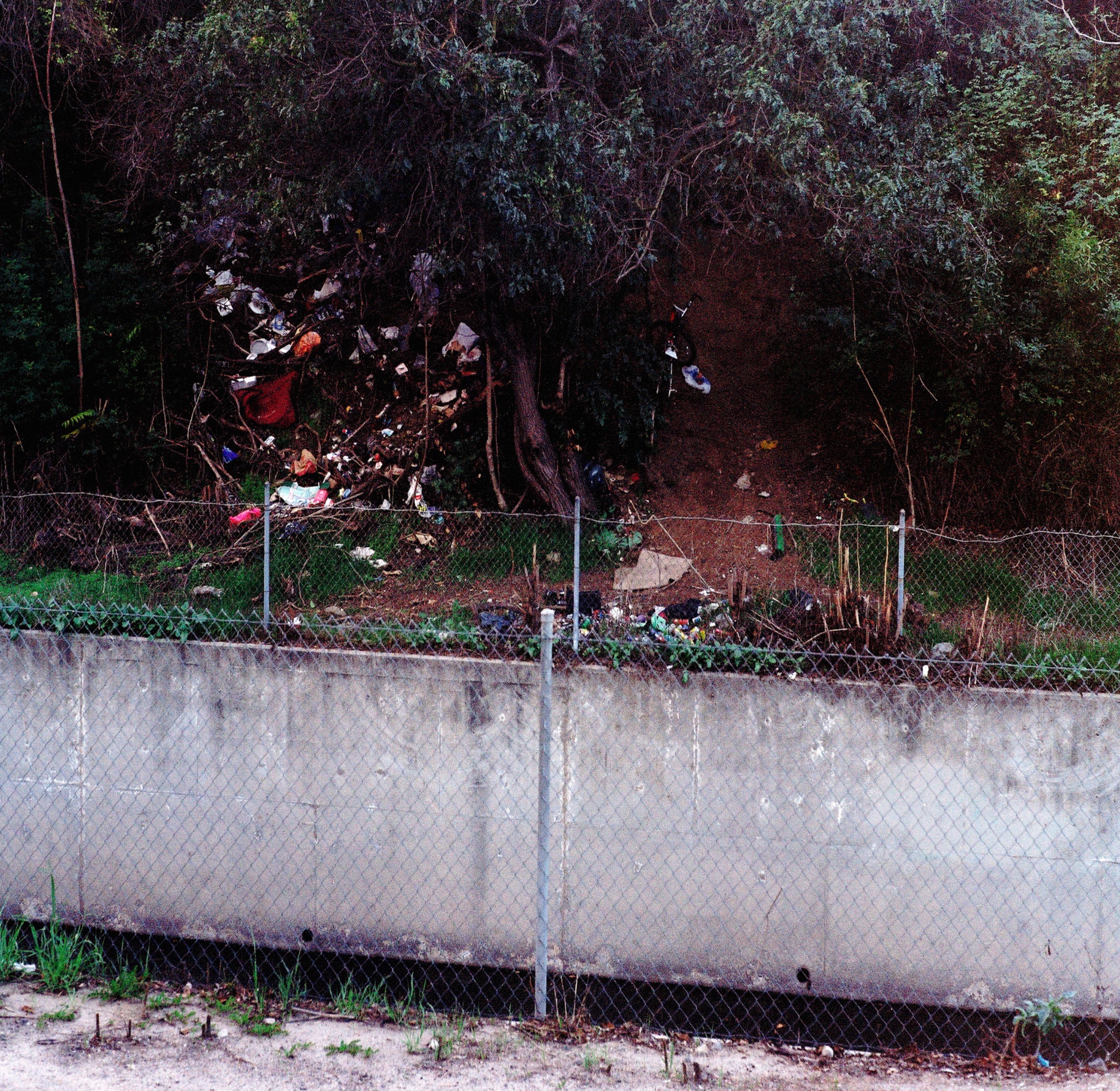
For those who are terrified of downtown and the inner city, I can also attest that the park was one of the most clean, civilized and gracious places I’ve seen in LA. There were no barbecues, graffiti, loud music, litter, mattresses, illegal dumping or the usual markers of urban abuse that infect our city.

Glassland: A Photo Essay.


I rode the bus and the train to downtown Los Angeles today. And later sat, with feigned enthusiasm, for a job interview inside a concrete-floored, high-ceilinged art gallery.

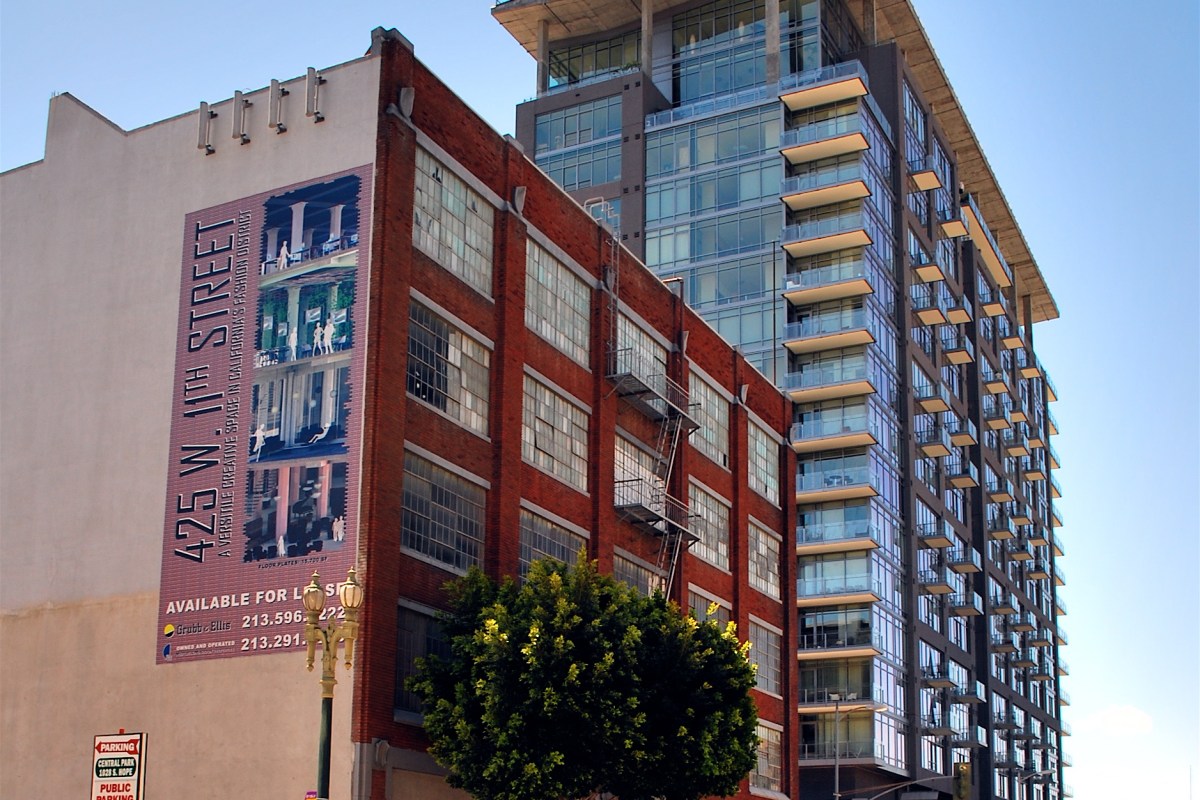
The subway exit was 7th and Hope. The weather was violently windy, blindingly sunny. White fluffy clouds tore fast across the sky. I walked into a shimmering, sparkling, glassy, washed and Windexed world of brand-new, spotless, sleek, shiny and radiant glass towers.

I was in an area east of Staples Center, south of Olympic. Yet its structural newness and callow glibness felt like jejune, milk-fed, blond-haired, salty-breezed San Diego.

Amidst the asphalt, glass, steel and aluminum, I discovered a fair-sized green-park surrounded by tall, right-angled, balcony faced skyscrapers.

Inside the grassy park: an estrogen feast.

Women students from a nearby fashion college, FIDM, smoked cigarettes as they sat along benches and on top of concrete walls. Brimming with energy and youth. A parade of citrus perfumes, vanilla scented shiny hair, shaved and polished slender legs owned by naïve young faces.

Laughing, running, hurrying.

At an empty retail space, intended for future yoga use, I stopped to talk with a workman, renovating and cleaning. He told me he stood on the sidewalk everyday and watched these gorgeous girls walk by.

“90% of them are hot,” he said.

The strong winds continued as I reached the gusty corner where the art gallery stood. Next door, I discovered a Danish bakery where the smell of butter, fruit pastries, chocolate-topped cookies and hot coffee blew out onto the sidewalk.

I arrived at the appointment an hour early, so I continued walking around the neighborhood and found more newness.

Epic spic and span newness.

This slideshow requires JavaScript.

It was Noon, here in downtown Los Angeles, and there were few cars and almost nobody on foot.

Buildings reflective, orderly, tidy: landscaped with fabulously colored flowers, prickly succulents, willowy grasses and rows of upright young trees, water fountains, and little pocket parks unpopulated with humans. Amidst this constructed urban paradise were rows of empty benches.

A wine bar, with outdoor seating, was open on a corner. And not a single person occupied any seat.

A great concept, a superb image, a winking nod to richness, that’s what they built around here.

Those great hypes, of 2004 and 2005: the unlimited prosperity, the exploding stock market, the cheap money, the hustle and con of the hucksters who sold America real estate, stocks, derivatives, credit. These empty, fresh, unfilled, immaculate, twinkling edifices of glass, these are tactile creations and hard monuments of a false and corrupt national binge. Blessed by tax breaks and corporate lies. Unpunished by Washington. Unconscionable billions for bail outs.

Now these resplendent, lustrous buildings sit here, underused and unfulfilled, their once loud voices and enthusiastic promises of urban excitement, muted.

This is just one district of downtown Los Angeles: a great glassy area of spacious, broad streets and tall, unspoiled, spotless, reflective vertical condominiums.

Like everything in this city, it starts out young and full-of-promise.

Matt Jalbert on North Hollywood and the Toxic Arrangements of Streets


North Hollywood.

Matt Jalbert writes:

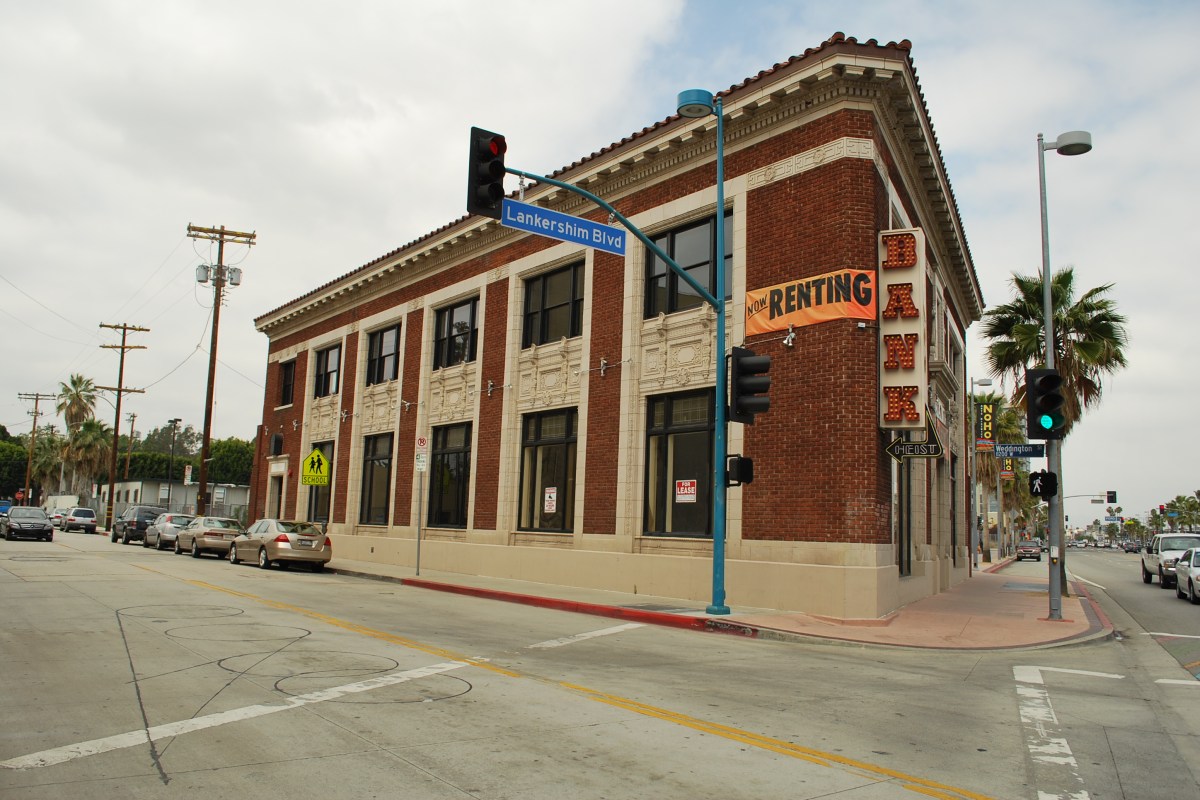
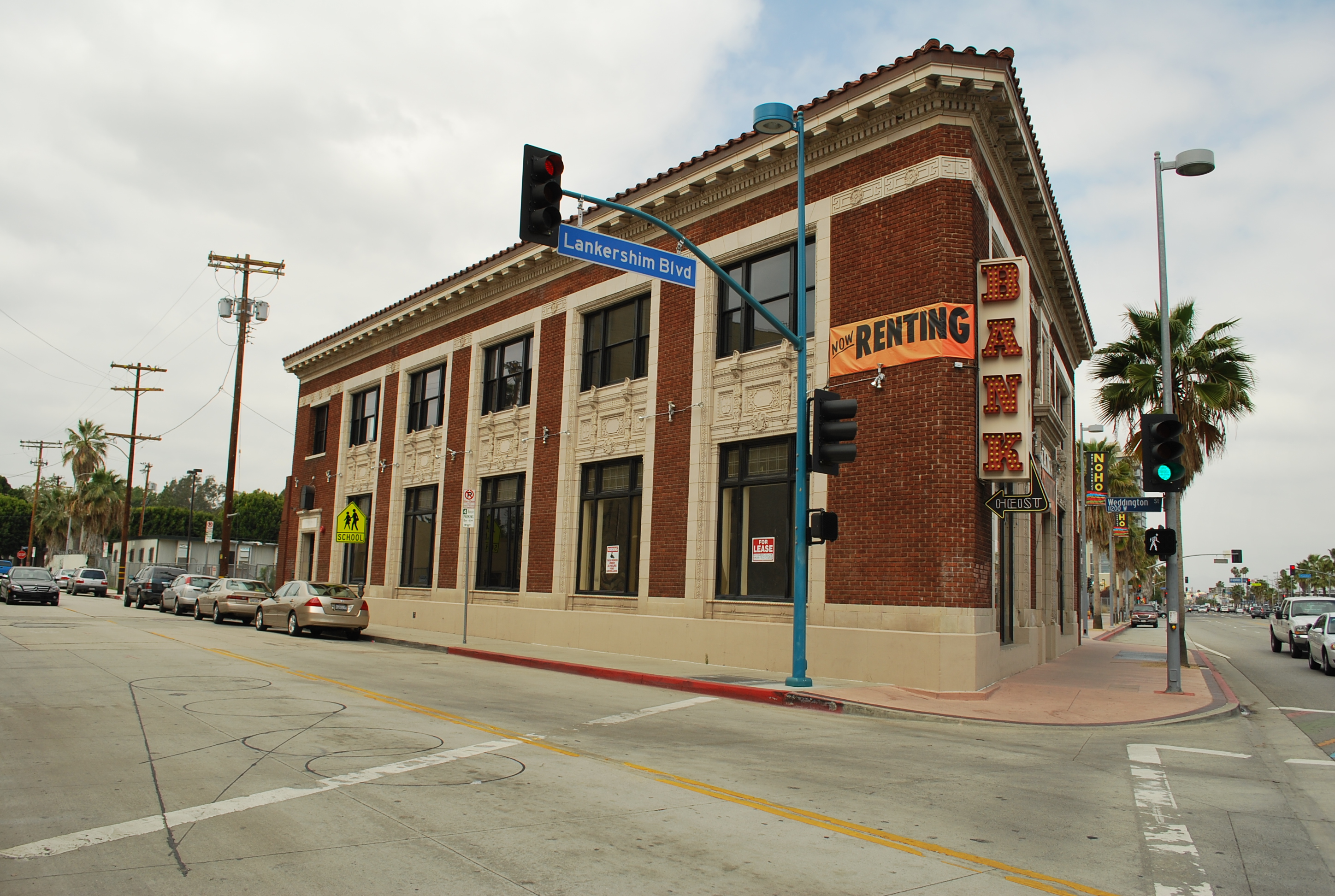
“I recently spent a short time in “NoHo,” aka North Hollywood (around Lankershim and Magnolia) where I was reminded of how utterly hopeless the sprawling project of Los Angeles is. There, in a “neighborhood” marketed to a new round of real estate suckers as an “arts district,” my overriding sense was of endless pavement, aggressive drivers, frightened and forlorn pedestrians, mostly lousy food choices, and a huge oversupply of commercial space. The same holds true for much of the San Fernando Valley.

Whatever promises were made to the American middle class by the developers of such living arrangements have been proven to be outright frauds. The L.A. pattern of car-centric living, especially in the post-WWII San Fernando Valley, is a cancer on society, evident on most of the citizenry, even some of those who profit from this arrangement.

North Hollywood in 2010 is yet another example of the failure of automobile-suburbs to result in healthy communities. Unfortunately, a few pretty buildings do not save this area, like the rest of the San Fernando Valley, from the toxic arrangements of streets designed for one mode only: vast flows of automobiles. That these areas are only a few generations old, yet are well advanced in their decay and social dysfunction, is all the proof any of us should need to recognize that the great experiment has failed and it’s time to make other arrangements now.

My sense is that people are starting to wake up to the lie they’ve been fed through the mass media — the lie that their car would set them free. (Stimulated by endless AM radio advertisements for leased Mercedes that would somehow make driving more bearable?)

Drivers are frustrated and angry, because no matter how rich they are, no matter how fat their asses grow, no matter how black and shiny their car is, no matter how witty the texts they write while negotiating the racecourse that is Lankershim Boulevard — they are imprisoned in a mobile prison cell, living an attenuated existence where every action they take is bludgeoned on both ends by a soul-killing automobile trip.

Better to rip the whole place down and rebuild it in a smaller, denser space. Keep a few of those fine old buildings, but otherwise, start from scratch, because what’s left on the ground for us all at this moment is simply not worth keeping.

God help Los Angeles. 26 years into my California experience and I’m finally understanding just how truly awful that place has been handled by the hands of man — in the service of automobiles. “

River of Plastic/ Rio de Plastico


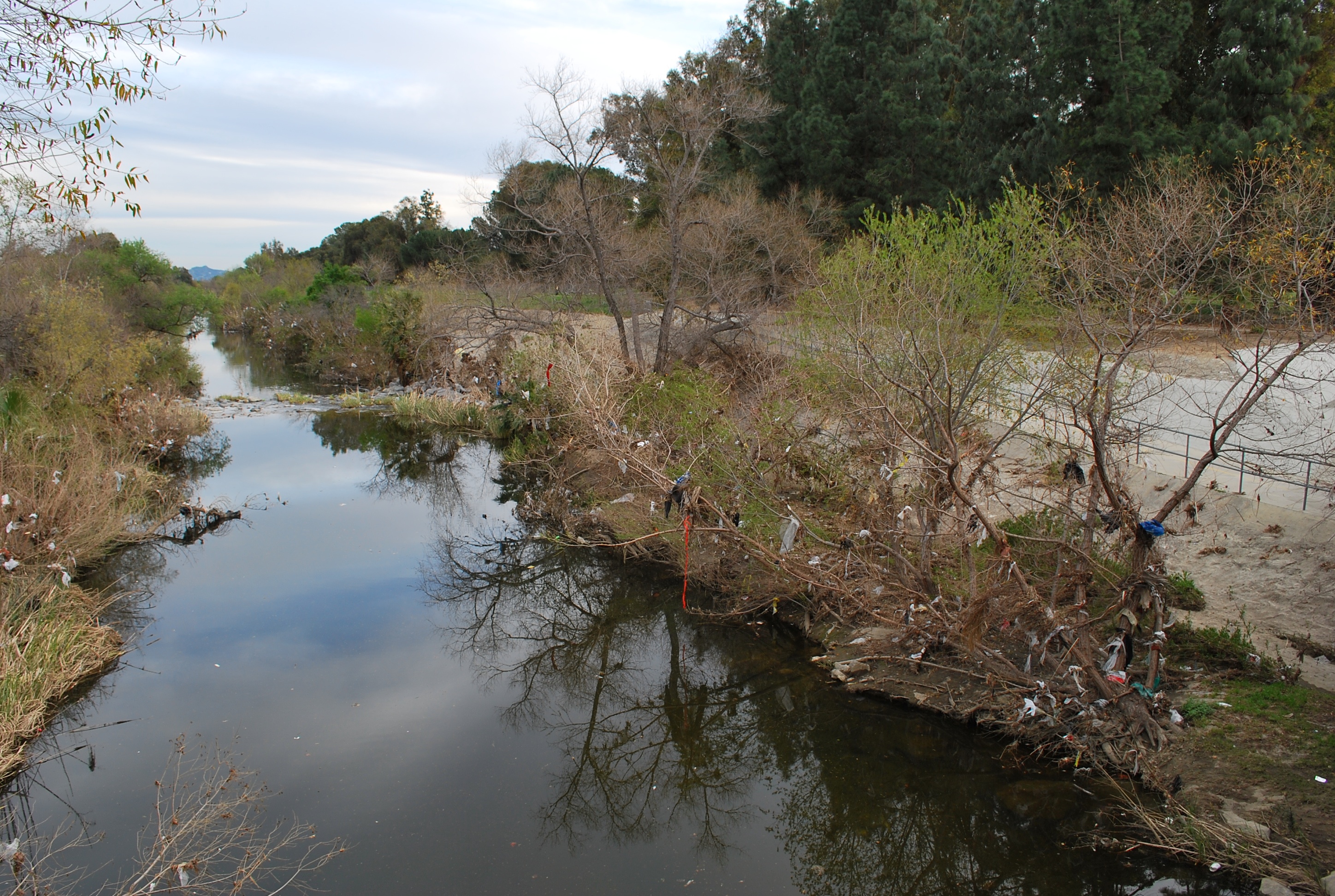
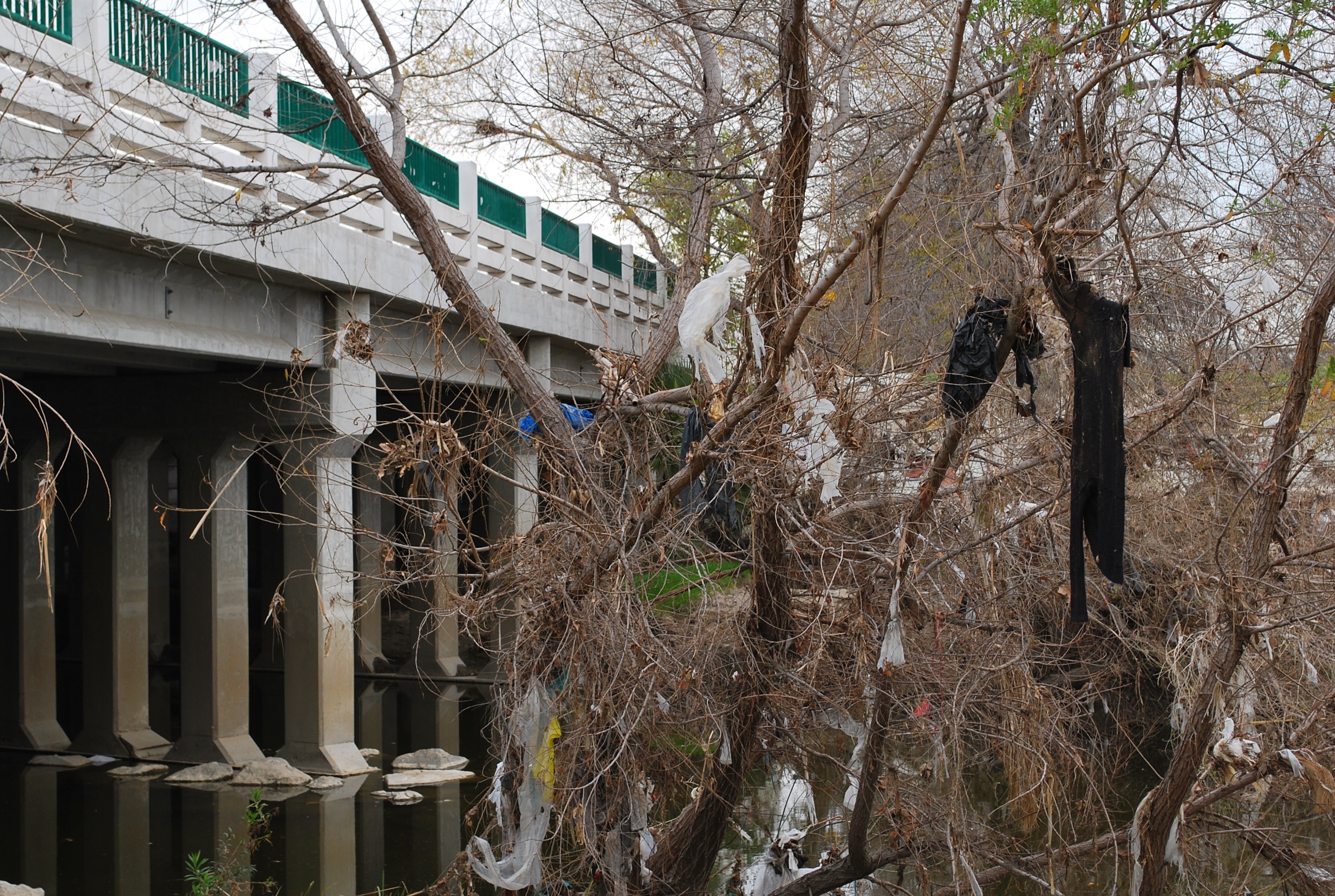
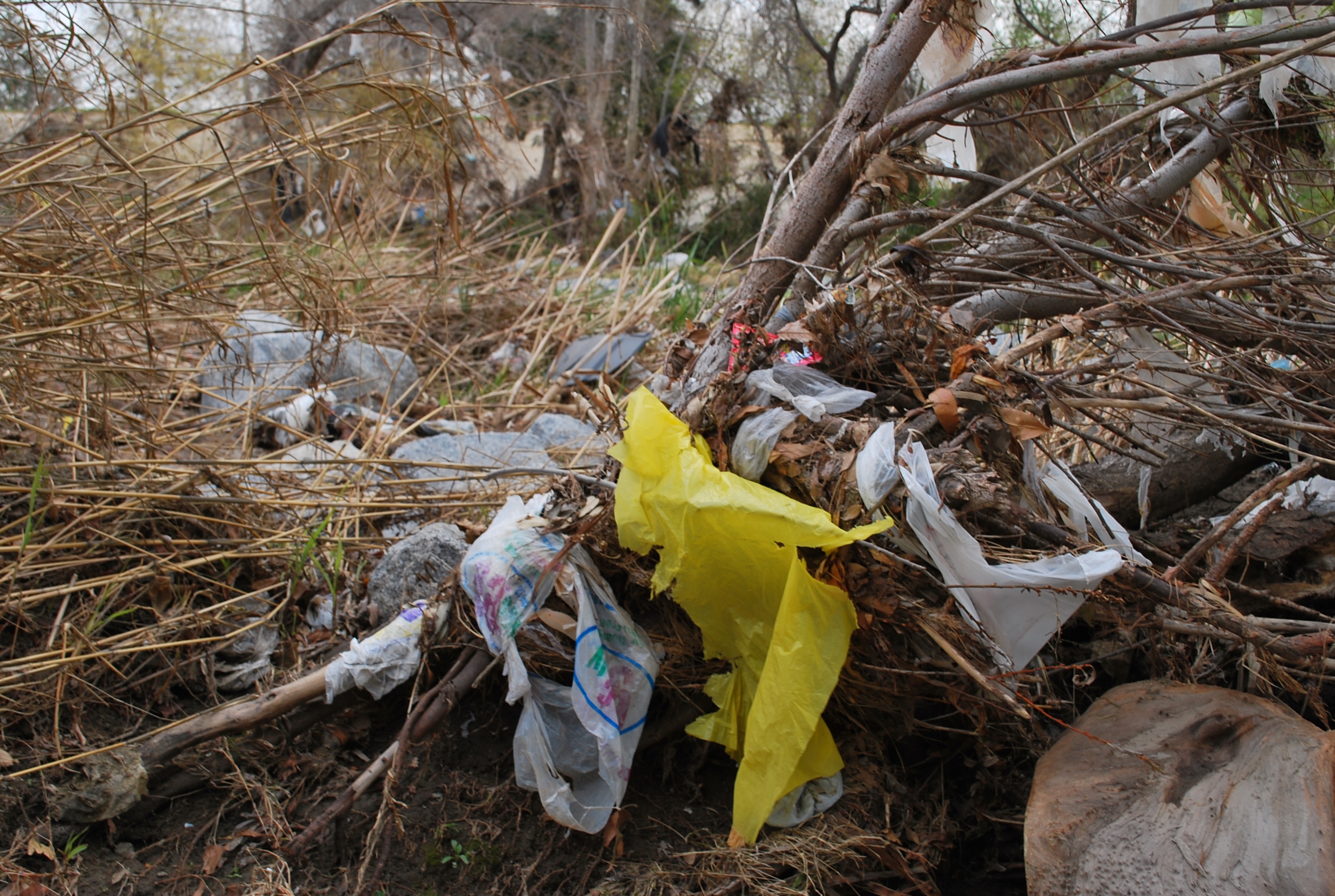
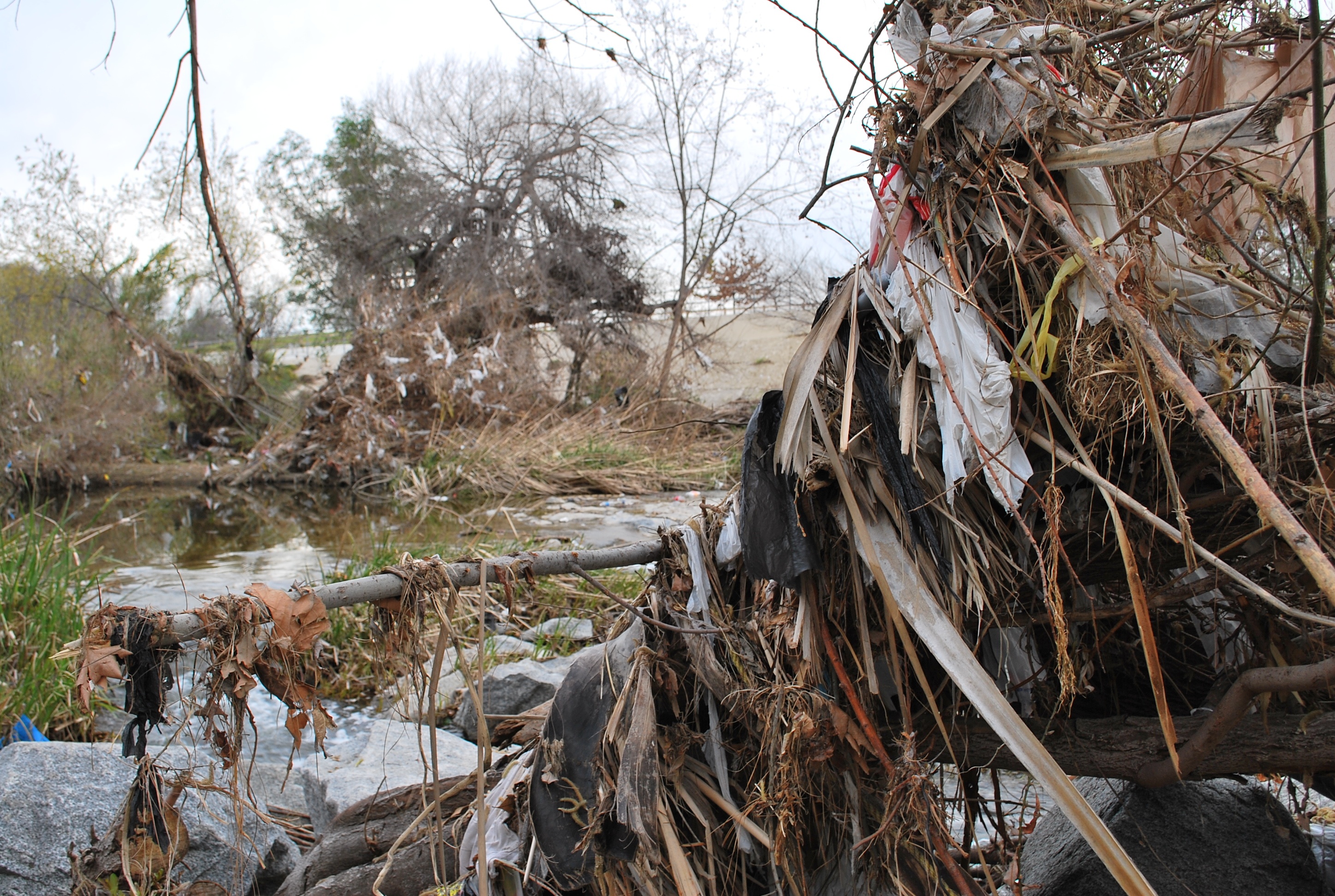
Riding my bike around the Sepulveda Basin today, I was startled and sickened to see a river lined with trash.

Plastic bags literally covered every branch, every limb, and every single tree along both sides of the banks; devouring, like some gruesome movie monster, nature.

The amount of garbage is so extreme, so massive, so overpowering, that the camera’s lens is unable to completely capture the visual tragedy.  Like Haiti after its quake, a photographer must decide whether to shoot wide angle, thus diminishing the particular atrocity, or to go close-up, possibly denying the vast destruction all around. I shot these images both far and close to record the appalling filth and criminal neglect of the river.

There are other sections of the LA River, formerly encased in concrete, now undergoing naturalization. This area of the river, which meanders gently through the San Fernando Valley acts as a flood basin and wildlife preserve.

The City of Los Angeles has abrogated its moral and legal responsibility by allowing and ignoring this environmental catastrophe.

One weekend of box office receipts, from the theaters showing AVATAR in the nation of Moldavia, would probably be enough to pay for a LA River clean-up. Two weeks of Ellen DeGeneres’ paychecks might finance the annual salary of 20 city workers assigned to protect the river. 1/44th of suspected comedian Conan O’Brien’s $44 million dollar pay out might save the lives of thousands of birds.

The pictures on this page were shot around Balboa Boulevard in Encino.

Along the Wash.


Banks of the LA River: Near the 101 and Vineland

A few weeks back, I explored some of the LA River as it meanders under concrete overpasses and alongside freeways.

There is a paucity of decent parkland in Los Angeles, as anyone who lives here can attest. Looking at an overhead map of the San Fernando Valley, one sees blocks and blocks of development, only sometimes interrupted by a small park.

Chandler Near Tujunga Park N Hollywood

The great freeway builders of the 1950s rammed their roads through the parks because it was easier and cheaper to do than buying up private property. As a result, North Hollywood, with its river and public green spaces, now plays host to an eternal hellish drone of smoke, noise, litter, violent driving and environmental catastrophe.

In Van Nuys, the 405 slices through parks, a wildlife sanctuary, past the Sepulveda Dam and through the Woodley Park area.

There are forces now, benevolent ones, like the Friends of the LA River, who are trying to reverse the damage done by the entombing of the river in the early 1940s, and the paving over by traffic engineers in the 1950s and 60s. They are planting trees, promoting walking and nature, and building bike trails. The most affluent area of the San Fernando Valley, Studio City, has seen the most upgrades along the LA River.

The Wash Near Vineland &101

But mostly the river and water and wash is ignored, standing mute, alongside the vehicles and the onslaught of cars and trucks, whose main goal is getting somewhere faster.

Oakie estate in Northridge acquired by city – LA Observed


Finally, some positive news…..

Oakie estate in Northridge acquired by city – LA Observed.