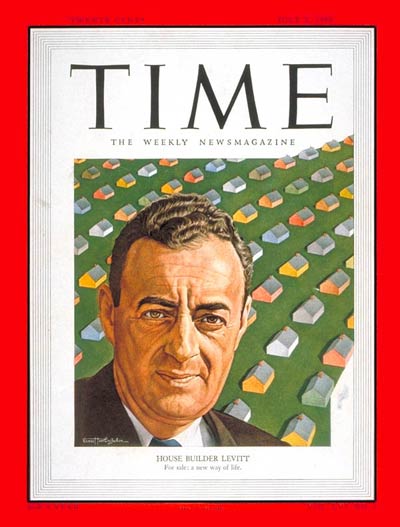
Builder William J. Levitt/Time Magazine/ July 3, 1950
The NY Times speculates that speculation in housing today may not produce future gains, such as those enjoyed by our parents and ourselves over the last 40 years.
In Los Angeles, housing is extremely overpriced in a few areas of the city, mostly near the beach. And there are factors that will keep some areas very affordable for many years, undesirable facts that include: bad schools, unsafe streets, illegal immigration, hot weather, bad air and sparse public transportation.
If the economy was healthy, and unemployment was lower (it is now 12.5%, third highest in the US), the housing market might be OK.
But real estate reflects an unethical past. Loans were handed out regardless of income. Lying was built into the system. A fake, subsidized increase in values, brought on by mortgage-backed securities, produced a bubble.
If you walk around Van Nuys, you encounter unexpectedly graceful and forgotten pieces of architecture.
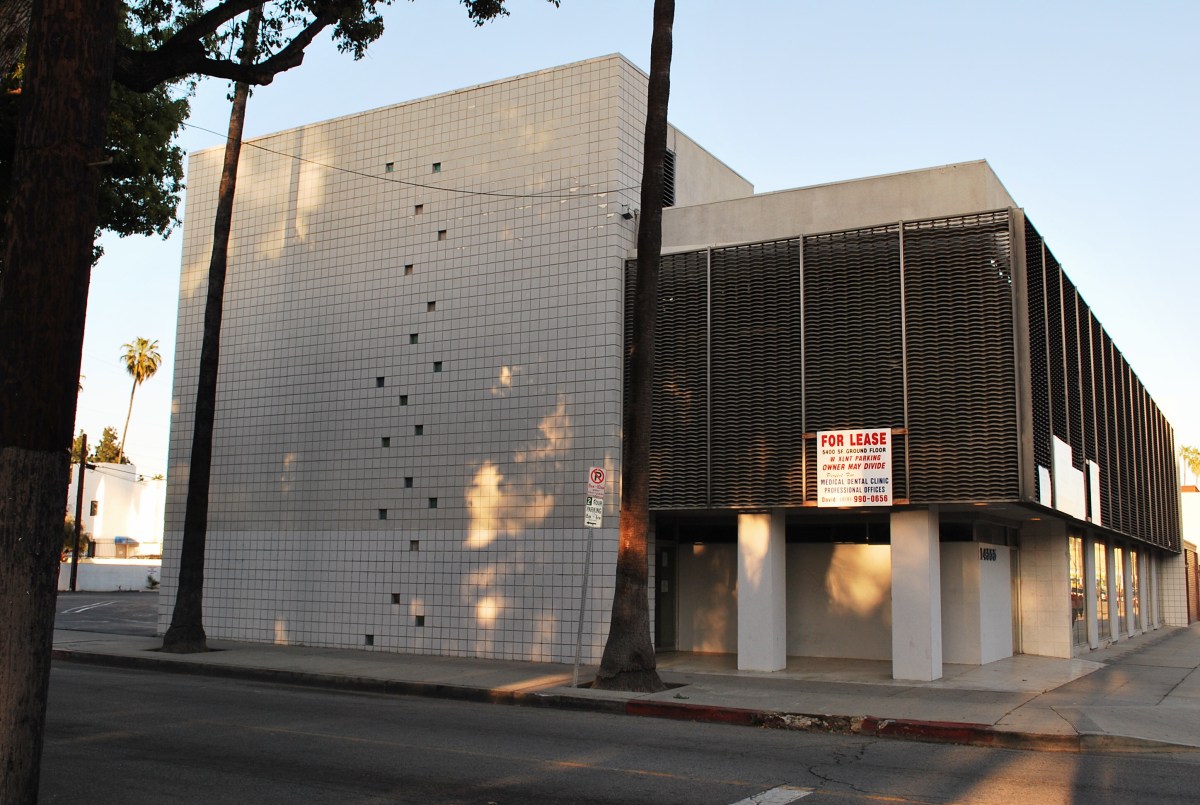
I noticed this white bricked office building, most likely constructed in the early 1960s. This is the type of structure that would excite an architect in Silver Lake, and one could imagine a young firm setting up shop here. Instead, the building sits underutilized, begging for tenants.
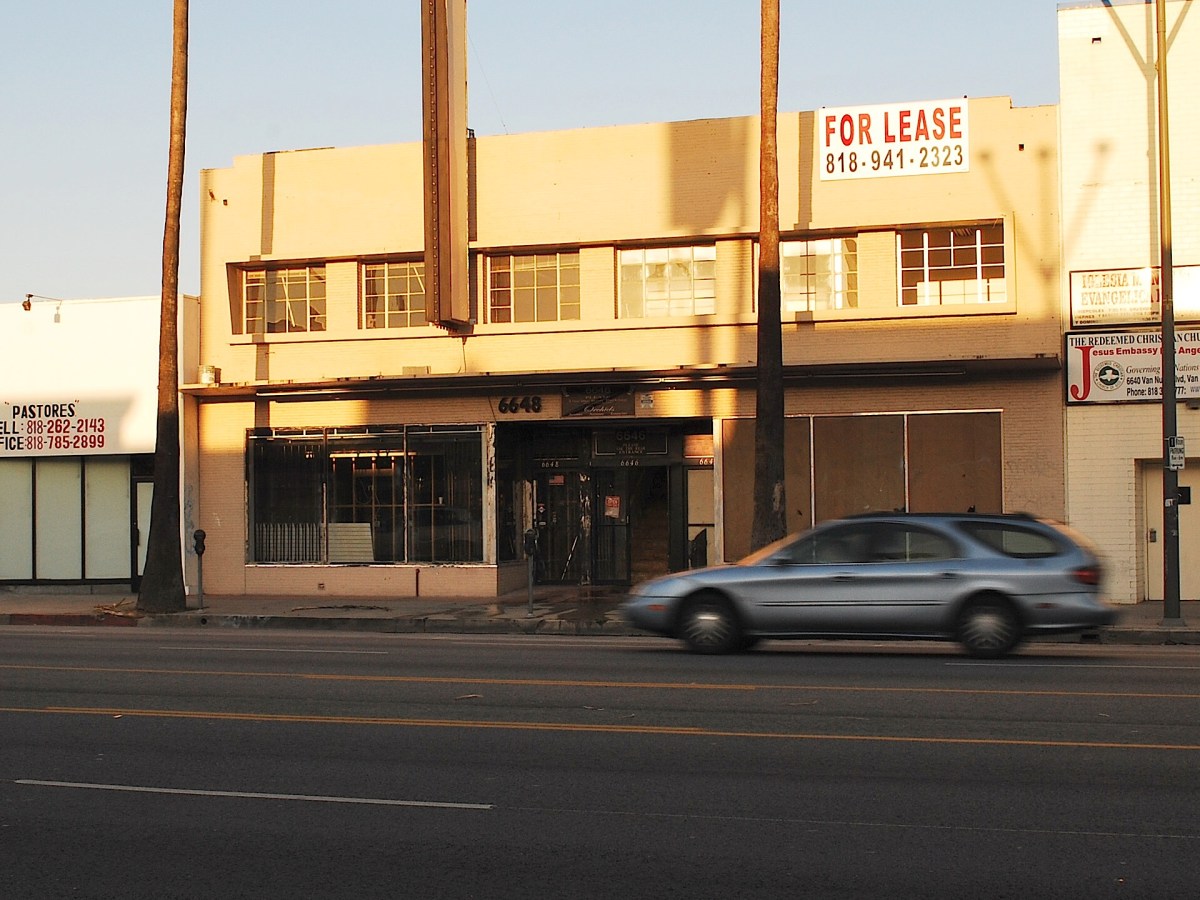
Along Van Nuys Boulevard, just south of Vanowen, is a two-story commercial building, the kind they built in the late 1940s, with steel casement windows and retail space on the ground floor. This might have originally been an optometrist’s office on top, a respectable location for a doctor or perhaps a CPA. If this building were on Rowena and Hyperion it would be a cheese shop, an art gallery or maybe a Cuban cafe. Instead, it sits empty on Van Nuys Boulevard.
It takes some vision and guts to imagine that the failures of Van Nuys can be reversed and that this down and out and street may once again have vibrant commerce, cleanliness and vitality. I do fervently believe that the future of Los Angeles will once again come down to these old, neglected places.
I can see a Van Nuys Boulevard where a light rail system runs down the middle and the street is lined with thriving cafes, apartments and small businesses. I imagine a place where the ugly cobra lights have been dismantled and replaced with decorative lampposts. A Van Nuys where there are cops walking the beat, and people waving hello to their neighbors.
Where are the visionaries? Where is the money that is sitting tightly in the banks, which should be invested in this very community?
And why is there such a paucity of the imagination in changing and rebuilding the real Los Angeles? Why are our politicians and leaders like old clunkers in Detroit, waiting for the federal government to bail us out, when we have the resources and money and to do the work ourselves?
The old buildings are visible reminders that, not so long ago, Van Nuys had optimists who believed in and built up the future of this area.
They came here to create, not to retreat.
Conservative writer David Brooks now critiques Obama’s potential infrastructure investment plans for their lack of imagination:
“It would be great if Obama’s spending, instead of just dissolving into the maw of construction, would actually encourage the clustering and leave a legacy that would be visible and beloved 50 years from now.
To take advantage of the growing desire for community, the Obama plan would have to do two things. First, it would have to create new transportation patterns. The old metro design was based on a hub-and-spoke system — a series of highways that converged on an urban core. But in an age of multiple downtown nodes and complicated travel routes, it’s better to have a complex web of roads and rail systems.
Second, the Obama stimulus plan could help localities create suburban town squares. Many communities are trying to build focal points. The stimulus plan could build charter schools, pre-K centers, national service centers and other such programs around new civic hubs.
This kind of stimulus would be consistent with Obama’s campaign, which was all about bringing Americans together in new ways. It would help maintain the social capital that’s about to be decimated by the economic downturn.
But alas, there’s no evidence so far that the Obama infrastructure plan is attached to any larger social vision. In fact, there is a real danger that the plan will retard innovation and entrench the past.”
But alas, Mr. Brooks, what you don’t understand is that Mr. Obama was elected not on his specifics, but for his slogans, and any specificity regarding his new programs will be withheld for as long as possible.
Every day, the news reports indicate that home prices are falling. And here in Los Angeles, the price of a single family home has supposedly dropped 26.7%
So I wonder, as always, if it is finally possible to find a decent home in a decent neighborhood where your neighbors are not a pack of pit bulls, and the kids might be able to walk to school, and your wife (if you have one) might be able to walk around outside at night?
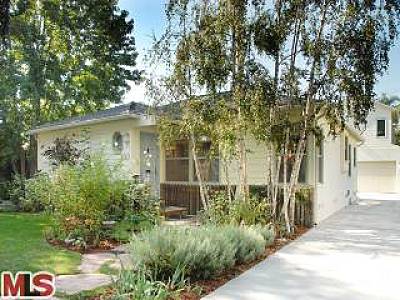
And then I find a three bedroom, two bathroom home in bland but increasingly hip Culver City, a town that has always reminded me of Burbank. The residence looks in the advertisement like so many 1950’s starter houses, the ones that G.I.’s bought for $15,000 with $3,000 down and mortgage payments of $150 a month.
What might they be asking for this modest little nothing house? $1,050,000



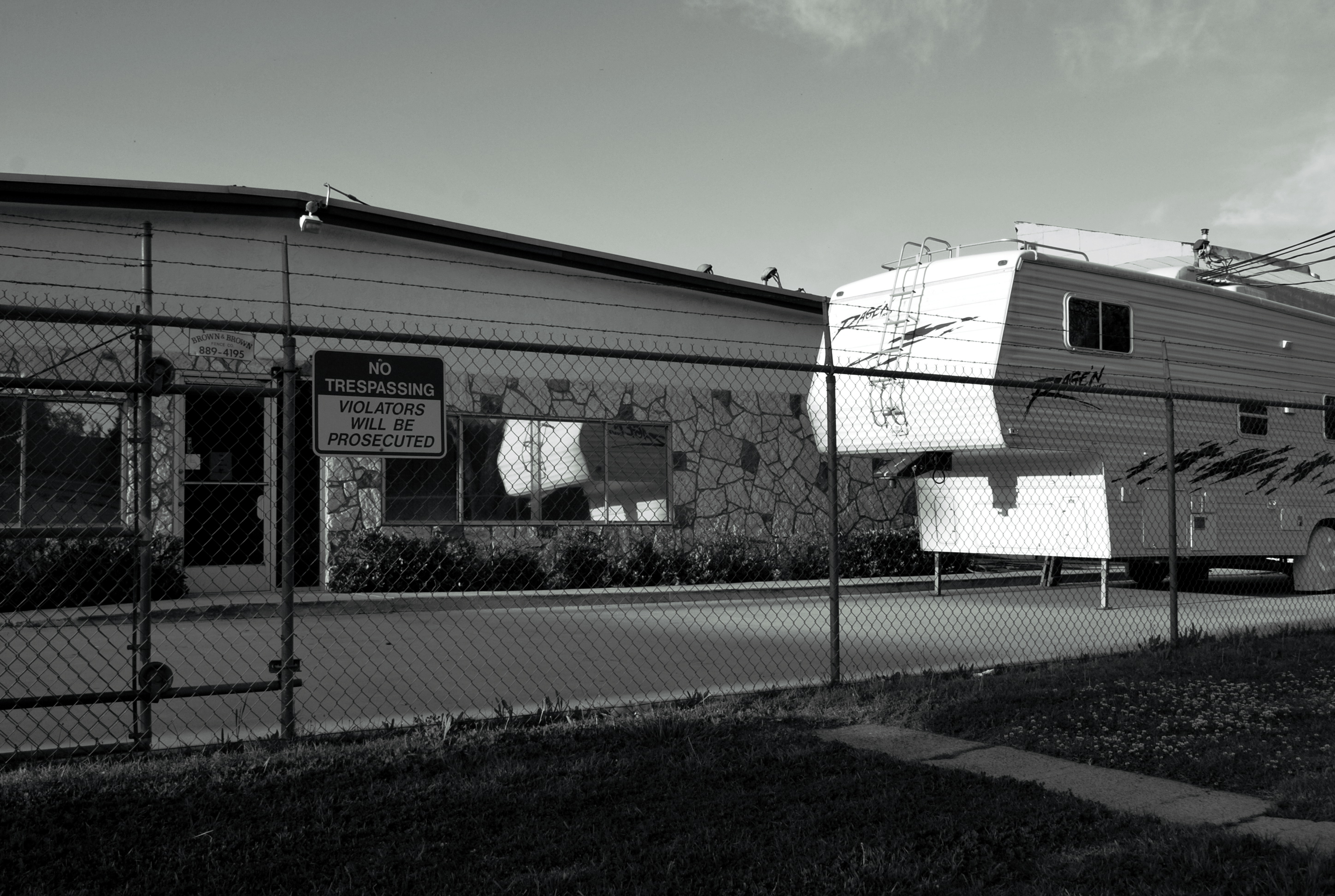
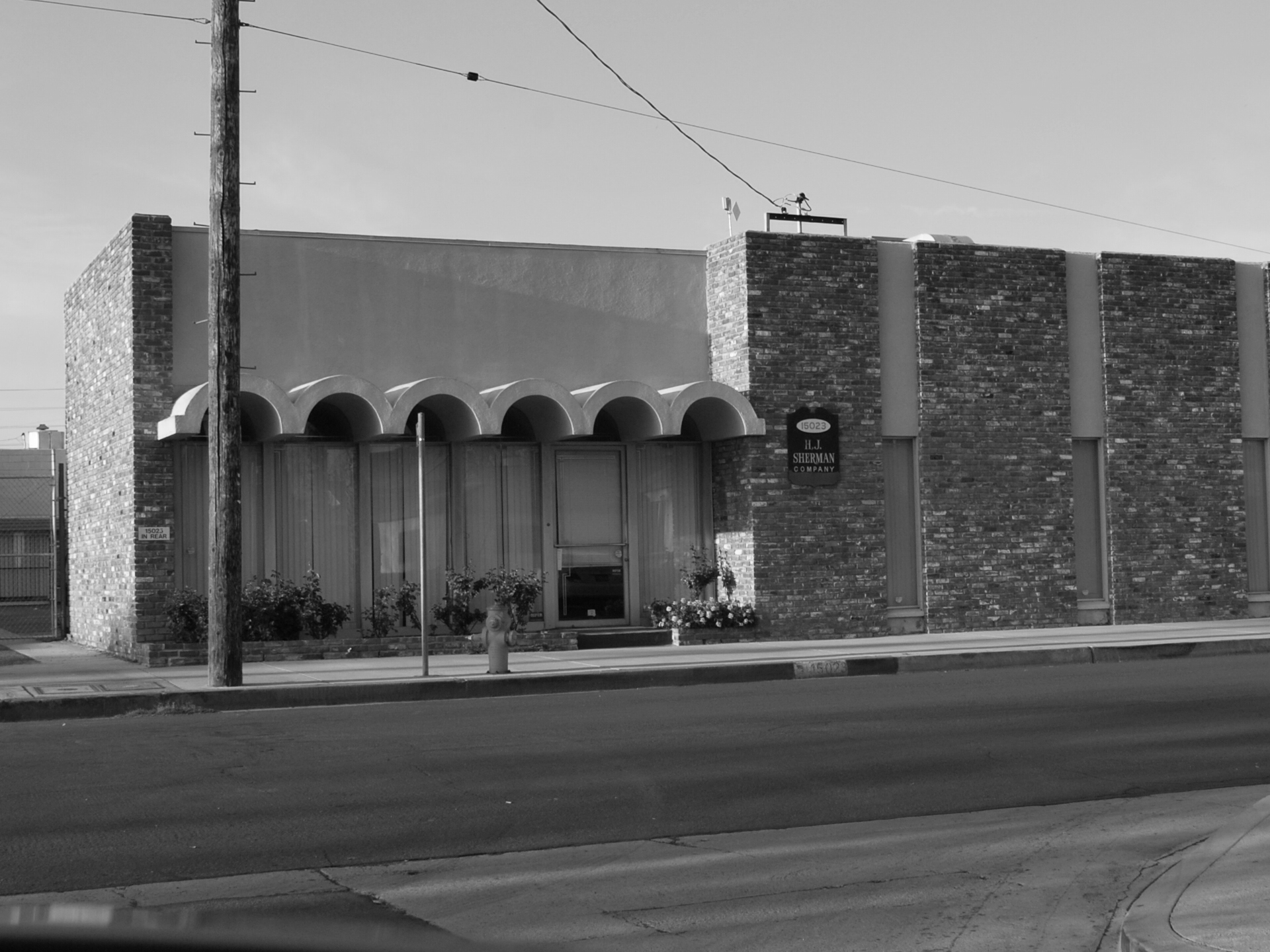
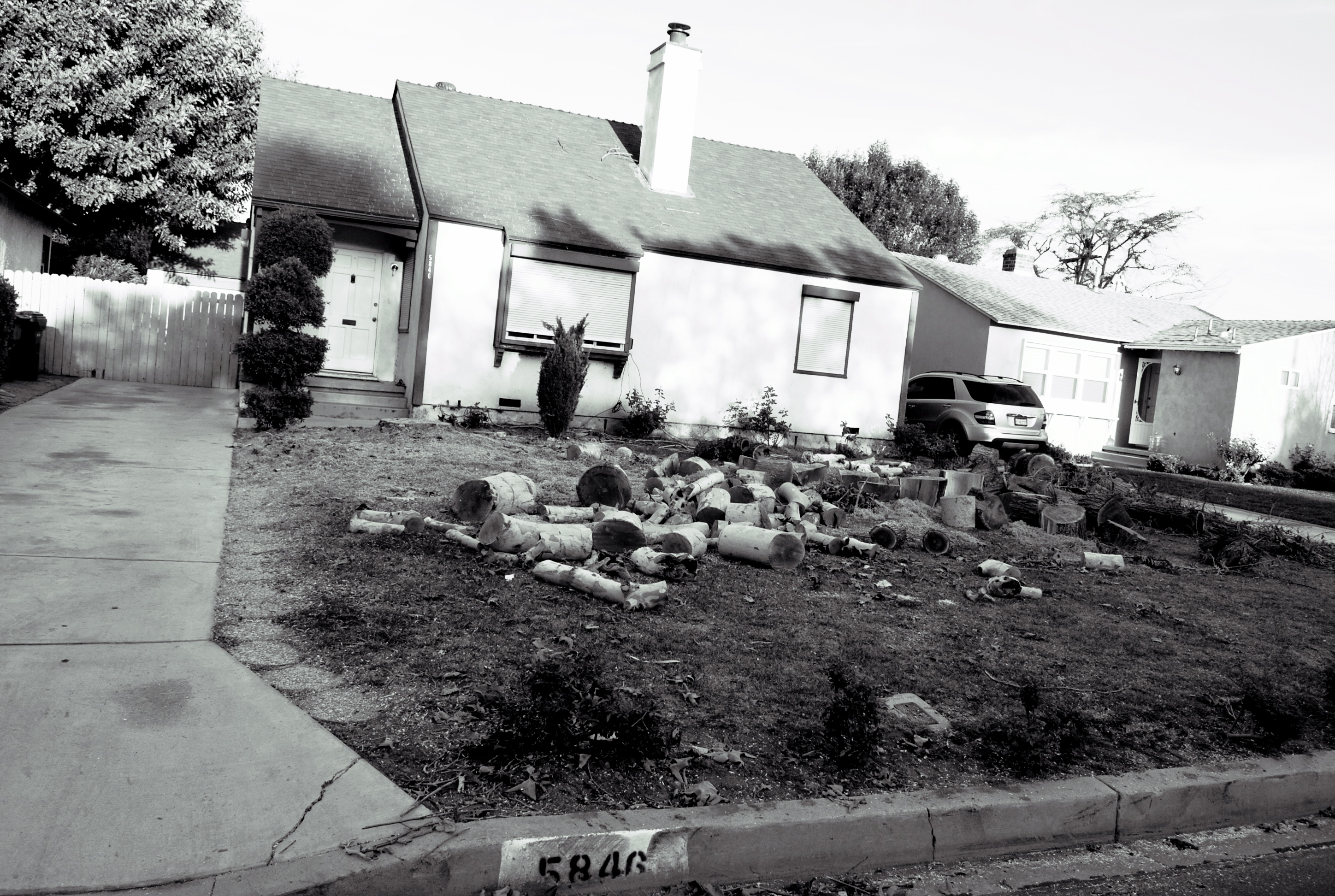


 Here in Van Nuys
You must be logged in to post a comment.