Spring is Here: Short Story


a photographer meets a man on a hiking trail

3,413 words/ 11 minute read

by Andrew B. Hurvitz

On a Wednesday morning, last March, in our house in Woodland Hills, California, my parents were seated at their usual table in the kitchen overlooking the pool. Red tulips had returned under the bay window. Spring was here.

“Where are you going?” mom asked, her voice hoarse from oral surgery, Earl Grey tea dripping down her whiskered chin. Dad was reading the Daily News.

“Hiking,” I shouted.

“A Hispanic man drove 80 miles an hour through a red light at Victory and Topanga and killed a woman and baby crossing the street. Victor Gomez, 54, was arrested at the scene,” Dad added.

I had been walking, sneaking, escaping to the front door. But from their chairs they could see down the red brick tiled hall lined with floor to ceiling glass windows, potted plants, and an open tread staircase, added in 1972, the year before I was born. Those same stairs went up to my wood beamed bedroom, carpeted in pink, and a brown and yellow bathroom.

“I’m going for a hike. I told you last night, I told you again this morning. I’m taking my camera. I should be back around 1,” I said.

“Where is this place? A woman alone on a trail, you better be careful,” my mother said.


I took the 101 to Thousand Oaks and exited Borchard Road onto winding Wendy Drive whizzing past sixties stucco ranches and many churches (Church of Glory, Church of the Nazarene, Agape Christian, Latter Day Saints, St. Matthews) a residential and ecclesiastical gathering marching all the way to the end at Satwiwa Native American Indian Natural Area, with trails, oaks, mountains and many mile wide vistas. 

Hiding beyond the mountains was the Pacific.

I sat in the car, put on my sunscreen and my canvas khaki sun hat. 

My legs were pale. Did they look 49? Would any man know my age it if they looked at my legs? Why was I thinking of them?

I had my water bottle, mosquito repellent. My phone was charged. My camera with wide angle lens and leather strap went around my neck.

I was uneasy. I had taken my medication. I had a few glasses of wine the night before.

Lexipro? Cabernet? Me?

Seeking calm and tranquility I traversed anxiety.  I got out of the car, locked it three times and said to myself: “The car is locked.”

I set out to walk, promising myself to ignore my phone, to only look through the camera lens. 

I concentrated on nature: oak trees and yellow wildflowers. The ridge was gentle, the vistas enormous. There were several trails: one went higher, one went lower, one went around and I took that one. 

And that has made all the difference in this story.

I was the only one around, on a loop that went on for a mile or so. The only human in sight.  I walked and photographed and took in deep breaths. 

Then, after 20 minutes of euphoria, I got panicky. I thought I was lost, my old agoraphobia came in. I stopped on the trail, crouched down and took some deep breaths. 

What if I fainted here?

What if I ran out of water?

What if I got bitten by a snake?

I walked more and found some stables with horses. And a fenced yard where a few brown mares trotted around. They were content and calm equines, manes blowing in the breeze, muzzles up and muzzles down, without worry, free of humans, unsaddled and unbridled. They wandered and meandered, like free horses do when controlling men don’t ride them.

A group of middle-aged guys rode their bikes past, they were all dressed in spandex and helmets, and vanished before I could take a photo. 

What were they doing here on a Wednesday morning? Didn’t they work? They provoked my anger, resentment, fear.

When Ryan and I were married we lived in Studio City on Valleyheart Drive. I worked at Greystone Entertainment on Laurel Canyon. But he stayed home, “writing screenplays,” but on most days riding his bike. 

“It’s how I think Katie. How I get my ideas. Biking is work, research, inspirations.”

Men.

I walked down the trail to the Satwiwa Native American Indian Cultural Center, a wood house with solar panels near a dry creek. A female park ranger smiled at me. She understood. I went inside to look at the gift shop and use the restroom. 

When I came out something beautiful, walked in.

An astonishingly handsome blue-eyed man, shirtless with shaved head, and carved physique. He wore running shoes, banded cotton shorts, lime green sports watch. Sweat poured off his forehead. He must have run far. He grabbed a cold bottle of water, a candy bar, dropped four dollars on the register, and bit into the chocolate like a TV commercial.

He was perfect from every angle. His inverted nose was proportional to his prominent forehead. His jaw was covered in stubble. And his eyes were alive, like a Caracal, a wild cat, on the hunt, electric and darting.

I looked at him and he looked back at me. I looked away and he came close. My heart pounded. 

“Is that a Fuji XE-3?” he asked.  

“Yes, it is,” I answered, looking up at him. He smelled of musk and metal.

“I had one. Loved it. I traded it in for their GFX 50S. Medium format. Dumb move,” he said. 

I knew the model. It was nearly $4,000. 

“Can I hold it?” he asked, of my camera, and I said yes, and he took it off my neck, examined and caressed it with his hands.

“You run here often?” I asked.

“Yeah, every day. Twice a day, 7 miles each time. I bring my boys here before dinner. I make them run. Well actually Henry is one year old so I push him along and I run, but the other boy, Elvis, is 6 and he outruns me. Are you from around here?” he asked as he rehung the strapped camera around me.

“Woodland Hills. I came to shoot pictures,” I said.

He wiped his face with a white rag, and twisted his torso, fingers intertwined in front, stretching and rotating his hips. He went down to touch his toes, self-absorbed, tending to his exquisite physique. I was mesmerized. 

My nerves directed my tongue.

“I think I have to start running. I used to do it in high school, like ten years ago,” I said, shaving 20 years off my age. How stupid and fake I sounded.

“Running is best for mental health,” he said.

 Why mental health? Could he tell?

“Do you take pictures professionally?” he asked.

“Yes, I do. I mean I don’t always. I live with my parents, their caretaker. And I get jobs, of course, you know these days everyone is a photographer, but I learned my craft on film, in darkrooms, real photography with chemicals, not digital, but you’re too young to know what those are. But when the agency calls of course I work. Ralph Lauren, H&M, 7-11,” I said, lying, lying, lying.

“Fashion photographer huh? I need some photos. How much do you charge?” he asked.

“Charge? I don’t know. What do I have to charge as a professional?” I asked, stammering stupider.

“Do I need to contact your agency? Or can you just get paid by me and take my photo?” he asked.

He wanted to hire me!

“What do you have in mind. Do I need to rent lights or hire a stylist and makeup artist?” I asked.

“Hardly. I’ll go over to that wooden bridge and you take me standing there. And we go up to the stables and I put on a denim shirt, jeans, boots, and snap, snap; and then I change and put on running shorts and shoes and you get me flying past, snap, snap. Done. I mean only if you want to,” he said.

“I charge $1,200. But I will do you for $1,000,” I said.

“Fine, fine. Next week? That will give me time to get in better condition. Elvis is in school and Henry is with mom so if you want to look me up on Instagram, I’m LukeLonestar4390. DM me!” he said.

We went outside and he jogged off.

“Wait, wait. I’m Katie McCann! When I DM you’ll need to know my name! Katie!” I yelled.

And fast he went, on foot, pounding through a trail of dust.


At night I made beef stew for the folks and sat there and made conversation just like all other nights of all these years.

“Whatever happened to Kay Ogata you knew at Taft?” my mother asked.

“She lives in Calabasas. She has two kids. Her husband owns a plumbing company,” I said.

“Where did you go today?” my father asked.

“I went hiking in Thousand Oaks. Beautiful place. Indian lands. Didn’t I mention that?” I asked.

“You should have stopped by Aunt Julie’s place and said hello. Old woman alone in a house. Why she never sold it who knows,” he said.

“Who went to Thousand Oaks?” my mother asked.

“I went there!” I said, rising to start clearing the dishes.

“St. Julie’s is the church your Aunt Julie went to and your aunt was no saint. They wanted to deny her communion for divorce but she had connections in Rome,” my mother said.

“You always made fun of Aunt Julie,” I said rinsing the plates and stacking them in the dishwasher.

“She told me I was too old when I got pregnant with you. Very cruel. I was only 42. She said I would be dead before you were 40. Now you’re almost 50! And I’m still here. Can you believe it? Aunt Julie was always devout, prayed every day. That’s why she’s still alive,” she said.

“I know mom. And you’re seven years older than her and you don’t pray. And I know my age. Can you stop reminding me of it?” I pleaded.

“Stay out of that park. I don’t think it’s safe for you to go hiking alone,” my father interjected. 

“Oh, you’re going to love this. I’m going back there to take pictures of a man I met there today! He’s a very handsome model and actor and I’m going to photograph him!” I said.

I showed them Luke’s Instagram. My mom put on her glasses and looked with disapproval at his shirtless photos.

“This isn’t a nice story. You got yourself picked up by a very smooth operator. What line did he use on you?” my mom asked.

“Do you think this gorgeous guy, 30 years old, model and actor with a famous wife and her own show on HGTV is going to have the hots for me? Look at me! Look at your fat, middle-aged, nearly 50-year-old daughter, who lives upstairs and cooks your meals, and does your housecleaning and medical runs. Do I look like Luke Higgins’ dream girl?” I asked. 

“How do you know all that about him? Did he tell you all that today? What man blurts out all that private information to a woman he doesn’t know?” my father asked.

“It’s on Instagram! Instagram is the font of all knowledge. Google Luke Higgins and Carla Brioni,” I said.

“Who? Who are these people?” my mother asked.

“Show us how to use Google!” my father demanded.

“Never mind. I want to go upstairs and take a shower,” I said.

Later at night, snuggled in bed, I reviewed Luke’s page. He was a graduate of USAF Flight Training Academy. A certified physical fitness instructor. He was married to a gorgeous chef and had two adorable blond boys. The family kept a prop plane at Camarillo Airport. In the winter they skied in the Sierras. And in the summer, they went to stay with her family in Sardinia. All summer long.

His photos proved it.

He was the paid endorser of many athletic brands: cashmere sweaters, nutritional supplements and running shoes.

I felt insignificant and inconsequential to even look at him online.

I went into the bathroom to take my last pee before sleeping. And then I cried as I washed my face thinking of Luke and his life and that bed I slept in alone. 


Wednesday, October 28th was a cloudy day, the kind they predict a week ahead in Southern California, warning of bad storms that never make rain.

Getting out of the house was an ordeal.  As usual.

They had to know where I was going, know what time I was returning, and they went back and forth in their own arguments about who took what medicines, and their wishes about the dinner I would make that night.

“You should make that beef stew you made last week. It was delicious. Where did you get the beef?” Dad asked.

“Whole Foods,” I said.

“Whole Foods! Are you crazy? They charge a fortune! You better not shop there,” he said.

“I spent maybe ten bucks for beef. And we all ate very well,” I answered.

“Ten bucks!” he said. 

I filled up their protein shakes, fluffed their couch pillows, laid out the remote control for the TV. I folded a beige mohair throw for my mother, smelling it for urine. I put their mobile phones in the phone basket and turned on the indoor and outdoor cameras so I could monitor their house and activities from my phone. 

“Don’t open the door for solicitors. And don’t answer any text calls from people you don’t know!” I said as I walked out of my eternal entanglement.


And then I was in the presence of God, a cool God, a fit God, a gymnastic God who jumped over fences, sprinted across fields, dropped on the ground for pushups and stood up on the hill posing and flexing.

He laughed, he spit, he smiled, he joked. He said he hated work, loved being a dad, loved his wife. He had many toys: a 1978 red Porsche convertible, a 1967 Harley Davidson, a 1971 twin engine Piper Comanche. He met Carla at a fashion show in Dallas, she got pregnant that same first night, he married her two months later. Balenciaga photographed their Corsican honeymoon for a 2014 campaign.

He had three guns at home, kept them safely locked up, of course. He had two German Shepherds, and his wife was a Judo instructor.

“You have every base covered,” I said.

We shot for about two hours. Time flew. 

We walked to my car. I put my camera gear into the trunk. And he paid me $1,000 in cash. 

“Thank you so much. It’s been a complete pleasure. I feel honored. I still have to honestly say I don’t know why you picked me. How did you know I could even take a photo?” I asked.

He just shook his head. He patted me on my shoulders as if he believed in me. In his presence I was lifted up. 

“I go by instinct,” he said.

His cryptic terseness seemed earnest. He truly believed in me. Maybe my flaws were an asset.

If only I had his self-esteem. His surplus of self-confidence was so great he could loan it out without interest, just give it away for free.

I worked on his photos for a few days, but honestly, I didn’t have to do much, for the raw material of Luke Higgins was superb. All the physical enhancements on him were his own.

I went into Instagram and reviewed my pathetic page with 49 followers and compared it to his 176,000 followers. 

That old feeling of worthlessness came over me, the sensation of lifelong loser. That sinister, bullying voice in my head belittled me: fat, divorced, failed, old maid, childless, unemployed, emotional, undirected, lonely, depressed, medicated, self-pitying, below average, pear shaped, pimpled, dependent, childlike; controlled by your parents, caretaker for your parents, babied by your parents.

“You live in your childhood bedroom and you’ve never amounted to anything!”

Why didn’t I kill myself? Why didn’t I drink or do drugs? Why didn’t I murder my ex-husband?

I even lacked the ambition to destroy myself.

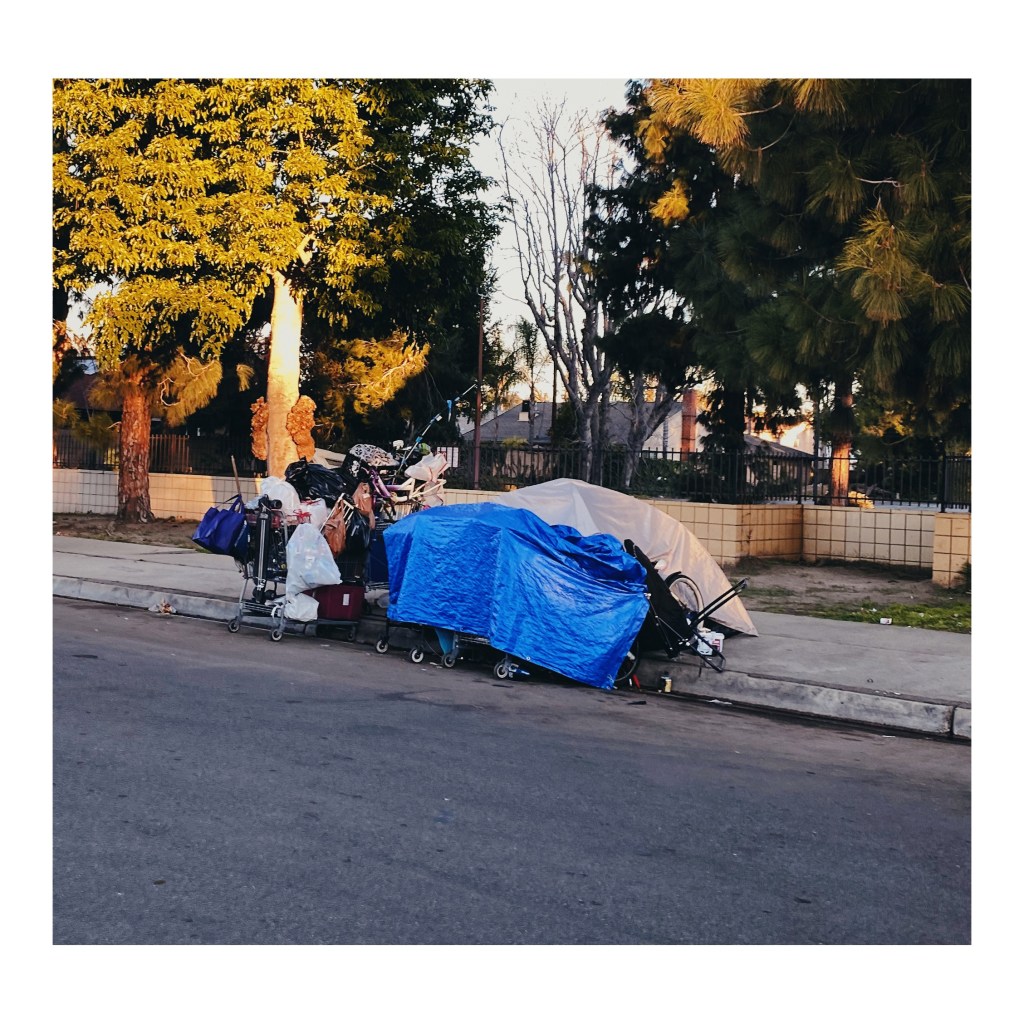
I thought of the thousands of homeless people who slept in cars, under bridges, on bus benches.  People in dire straits who didn’t have sympathetic and generous parents.

Everything I had was given to me: a three-million-dollar home in Woodland Hills to inherit, the low property taxes, the money my parents would leave me. 

I cursed my good fortune as a silent killer who took away my free agency to live a fulfilling and independent life.

I sent Luke a link to the edited photos. A week later there was no answer.  And I waited but he never responded.

Again, I went into sadness and imagined him with his gorgeous wife laughing at me, poking fun at the fat woman from the park who lustfully photographed him and thought she had made a friend with perhaps the most handsome man she had ever met.

Months went by and he never responded to my messages. I tried to contact him on Instagram but his page had been removed. Or more likely, he blocked me.


One day Aunt Julie called me up from Newbury Park. I’m sure she heard something sad from my parents about my state-of-mind.

“Why don’t you go to St. Julie’s? They’re having a women’s spiritual meeting. Monday evenings 7-9. You might meet some nice people and also find some comfort. You can eat dinner with me beforehand,” Aunt Julie said.

I started to cry. 

“I don’t need God. Thank you for your call. What I need is a man who appreciates me. Someone like Luke Higgins,” I said, confident that my delusion and citing of a stranger’s name would not register an iota of recognition in her.

“Did you say Luke Higgins? The Luke Higgins who lived on my street and was married to Carla Brioini the HGTV star?” she asked.

“Yes, yes! Don’t tell me you know him too. If you see him, Aunt Julie, pardon my French but tell him and his bitchy wife to just fuck off!” I said.

“Honey, honey. Luke Higgins had the most adorable children and a loving wife. I don’t know if you heard: he shot himself to death a few days before Christmas. Horrible story. He had everything and he was suffering from very bad manic depression. A beautiful man. Heartbreaking,” she said.

“Oh, my God! My God! No, no, no!” I screamed.

“Nobody expected it. I see Carla walking with her boys past my house, pushing the youngest in a stroller, the most stunning family, without a dad, and I think what a tragedy, what a loss,” she said.


“Katie, drink the tea. You’ll feel better. Do you want some Bushmills?” my father said, hovering over me, now tending to me the way I tended to him. 

“Dad you must think I’m ridiculous. I didn’t know this man but my heart breaks for his family. And I feel guilty for thinking he was ignoring me when he was only dead,” I said.

My mother had gone to bed. I sat in the den with my father, just as I had for nearly five decades, searching for meaning in the death of a stranger I idolized and invented a story of.

“Do you think this man was strong because he had muscles and a beautiful wife and hundreds of thousands of people followed him online? You didn’t know him. You met him at a park and took his photos. The most perfect people are often the most fucked up,” he said.

Maybe I was better off than Luke Higgins, luckier in many ways, and had yet to realize it.

I have not since returned to the Satwiwa Native American Indian Natural Area. Nor have I wanted to. I think of him and imagine saving his life. Meeting him again and resurrecting our brief conversation.

But what could I say even if I could go back in time? There was nothing dismal or hopeless in his life. He had the best life, the best of everything.

I could go on and on and talk and talk but I have to go downstairs and fix them lunch. I bought some organic turkey, provolone cheese and sourdough bread. I think I’ll make them sandwiches and heat up a can of pea soup.

END

Paris in Van Nuys: 1958.


“Photograph caption dated April 2, 1958 reads “George Fenneman, new honorary mayor of Sherman Oaks, center, places ‘Montmarte’ sign at Van Nuys and Ventura boulevards to create Paris atmosphere for community’s April in Paris Festival. Assisting him are, from left, Allen Rabinoff, Wilma Posen, Lylis Mason and Ted Levey.”

Cruel joke still unfunny 64 years later.

Small Minds


For 22 years I’ve had front row seats to the shit show that is Van Nuys.

I moved here in 2000 and started this blog in 2006. My purpose: to apply creative writing and photography to the realities around me. 

I walked around and photographed Van Nuys, from the alleys to the houses to the buildings. Vanowen, Victory, Kester, Sepulveda.

At times my blog gave some visibility and notoriety, and I was brought in to observe the workings of the Van Nuys Neighborhood Council. 

But I never cared to swim in sewers of public life. I saw how small minds functioned, the old fools who fought against housing, and always pushed for more parking lots and wider streets.

“Hey Andrew, what do you think about naming the Van Nuys Post Office the Marilyn Monroe Van Nuys Post Office?”

“Hey Andrew, can you help us fight to preserve that parking lot behind the going out of business furniture store? We want to make sure they don’t build apartments there!”

“Hey Andrew, they want to build a five-story apartment on Vanowen and Hazeltine. That’s too much!”

The VNNC was strangely absent with the modern representatives of Van Nuys, it seemed to be the preserve of old white people who fought to preserve in their imaginations a city that no longer existed.

“My parents bought my house for $11,000 in 1956 and I used to ride my bike to Tommy’s for a chili dog. Gosh, those days are gone forever. I still live there. Yeah I pay $312 a year in property taxes. Thank God I have a pension from the post office.”

There was Councilman Tony Cardenas. He wanted to tear down the Art Deco era fire station on Sylvan. Under his watch Van Nuys further disintegrated, a decade before this pandemic started, and from what I’ve read Van Nuys has been in decline since about 1975.

Nury Martinez replaced Cardenas in 2014, and I often communicated with her office, and met with her people, and got her help cleaning up the streets, picking up dumped sofas, pushing to get traffic lights installed, pedestrian crossings painted, or illegal cars towed.

She was a great ally in defending dozens of small businesses from the 2017 threat of demolition when Metro proposed a 33-acre bulldozing of hundreds of industrial buildings between Kester and Van Nuys Bl. North of Oxnard. This blog acted as an advocate for small business owners who employed locals serving as an economic incubator for new immigrants to prosper in Van Nuys. 

We had a wonderful Senior Lead Officer, Erika Kirk, the kind of woman you would want to work as a police officer. She drove around here and involved herself in matters large and small, but you felt safer with her presence.

The councilwoman, the cop, the council people: everything impersonated order, law, safety, and well-being.

But the reality of Van Nuys, (and greater Los Angeles) is that nothing nice stays nice without the constant threat of law enforcement. 

You must fight every single day to keep homeless encampments out, marijuana farms from the houses down the street. You have to fear for your life from criminals robbing your house, from mentally ill people in the shopping mall parking lot, from the car speeding 80 miles an hour through the red light as you begin to make your left turn. 

Nothing unlocked is left untouched: bicycles, decorative lights, cactuses, cars, mail, pumpkins, packages are stolen around the clock, from every lawn and every stoop, by every type of criminal. Most every crime is recorded on camera and hardly anybody is arrested.

Is this the fault of Nury Martinez?

I don’t think so. 

She spoke her mind in private, in a cigar filled room with other hacks and dealmakers, and she is no worse than anybody else who criticizes her for blatant bigotry. 

Is she worse than Mike Bonin who allows hundreds of violent, destructive, drug abusing and criminal people to camp out in West Los Angeles while flying the flag of compassion, and egregiously ignoring his constituents because he is on a morally higher plane of governance? When the pandemic emptied the streets of legitimate commerce he made sure that vagrants took over the sidewalks.

But in all fairness to him nobody recorded him making bigoted remarks in a room.

The truth is that Los Angeles is a primitive, ugly, violent, disorderly, hateful, self-centered, grotesque city of billboards, blight, traffic, fires, bad air, bad food and bad actors. It is a city that promotes promoters, celebrities, and fake makers of merriment in Hollywood. 

It’s a city where the Hollywood Walk of Fame is populated by people shitting on the sidewalk, fighting with knives and guns, or walking around stoned and drunk and looking for a reason to kill.

If you are rich or famous or the child of someone rich or famous both are considered markers of high achievement.

LA takes comfort in its privileged folk in the cozy and winding streets of Pacific Palisades, Brentwood, Santa Monica and Westwood, Bel Air and Beverly Hills.  People here must have been shocked that to the small minded leaders of Los Angeles the city is still divided into pieces of pie: South Central, Pacoima, Westside, White, Latino, Black, Armenian, Oaxacan, Korean, Jewish. 

“Why that little bitch got LAX?”

As they say on Yelp, in every single sentence, “How amazing!”

The loudest liberals who cry the loudest about injustice drive their kids ten miles away to the whitest schools.

All the broken hearts on Twitter who heard what Nury and the bad men said about the little boy, how sad they are to know that hatreds and provincialism and ethnic warfare are the foundation of the great leaders of Los Angeles. 

And why is it that we still are shocked when a Latina refers to Oaxacans as ugly and short and can call a little Black boy a monkey? Have we not heard, ad nauseum, that Nury was to be praised because she was our first Latina city council president?

“She grew up poor and her family is from Zacatecas!”

Don’t judge her.

She’s what the American Dream is all about.

And a woman too.

And a mom.

And a LATINA!

LATIN-X!

If you think it’s worthy of praise to cite someone’s accidental ethnicity as an accomplishment don’t be surprised if that same person speaks and acts as only a representative of that identity!

All the identities who regularly label themselves by their identities, divide this nation, this state and this city into even more identities, and victimized identities. All the ones who think it’s modern, progressive and praiseworthy to admire ethnicity (instead of character), they too share blame for tearing apart our city and our country.

“The first transgender fireperson! The first movie with an all-Asian cast! The first Pacific Islander marathon winner!”

“I go to that coffee stand, even though I hate their coffee, because it’s Black owned!” 

Hooray!

Is there anyone who looks at this city and wonders how it might be built to benefit all its inhabitants humanely and environmentally? 

If you were in power, like Nury, wouldn’t you burn with passion to rebuild, to clean, to beautify the ugliness of the San Fernando Valley? Would you arrive at work every day like Nury and walk down Van Nuys Boulevard and think that you had accomplished something?

The conversations we heard in that room were vile. 

But what we have seen with our own eyes on the streets of Los Angeles is worse. 

A Love Affair with Reseda Boulevard.


For a while I’ve had a photographer’s love affair with Reseda Boulevard.

It’s bright, toxic, saturated, crowded. 

There are signs in every language on Earth:

Thai, Farsi, Spanish, Mandarin, Korean, Hebrew, Arabic.

There’s shit food every five feet: Domino’s, donuts, Arby’s, KFC.

You can buy anything a car or human might consume. 

Everything looks unlicensed, illegal or poisonous, like it just slipped past the eyes and hands of the law. 

Smoke shops, ramen, foot massage, dentists, orthodontists, auto body shops, tire repair, Chinese seafood, Pep Boys Auto, liquor, paint, car wash, 7Eleven, pizza, Korean soup, check cashing, smoke shops, eyebrow threading, and eyeglasses. 

Every sign combined is guaranteed to induce vomiting.

Oil changes and scrambled eggs and kim chi, chocolate milk shakes and boiled dumplings and hookah. Bagels and tampons, cigars and french fries.

All of it is stretched out and burns in the sun for miles.

Yet I have a love affair with Reseda Boulevard.


It rekindled again last week.

I started a class at CSUN that meets Thursday afternoons from 4-6:45pm. 

When I left the school after the first class we were in the second night of our 108 degree heat wave.

I walked up the stairs in the B5 concrete parking garage, N95 still affixed to my face, water bottle hooked to my belt, gasping for air and thirsting for iced drink.

I drove south, down Reseda Boulevard, as the sun was setting, past the stores with burning oranges and vibrant greens and deep reds written in the languages of many different nations.

The air was brown with fire smoke, and it was like a filter over my eyes, intensifying everything, driving and stopping, braking and accelerating in a rush hour jam of cars, trucks, pedestrians, bikes, motorbikes and the soundtrack of Franz Waxman playing “Agony” in “Beloved Infidel.”

I was watching a movie at every stop light. “Paris, Texas” in the smog. Billboards and signs and on and on and on.

It was so vile but I could not take my eyes off it.

The only hope for me, for our city, is to look at it like a film, a story we are starring in, set in an urban hellscape, temporary and eternal.

September 6th Through the Years.


Let us pick one day off the calendar and compare the weather in Los Angeles on September 6th for every ten years since 1950.

It’s hot today, (nearly 100 in Van Nuys) and we’ve had days in the last week when it was 106, 110, 113 and only dropped below 90 well after midnight. All of the western US is under a heat dome, and even San Francisco is sweltering at 91F at 2pm.

Los Angeles weather readings were taken at LAX (thank you Orca), which is different than what it might be in Marina Del Rey, Woodland Hills or Van Nuys.

I perceive that Los Angeles is a hotter and more humid city than it was before. And the old “dry heat” is disappearing as the Pacific Ocean heats up and the cooling effect of that once frigid body of water dissipates and weakens.

I came here in 1994 and the air was dirtier but there was a certain monotonous regularity to the weather, dependably hot in the Valley in the summer, and dry and windy and then rainy in the winter. It was still hot in September or October.

But not this hot..

I found some weather charts for comparison on Weatherspark. You can look up any day of the year historical weather here.  I pulled up LAX temperature graphs from Septemeber 6th: 1950, 1960, 1970, 1980, 1980, 1990, 2000, 2010 and 2020.

If I’m reading them correctly things were quite pleasant for almost every decade until 2010.

9/6/70: high 81, low 61


9/6/80: high 72, low 62

In 2020, we knew we lived in hell.

Now we need to get out of hell.

But how?

POSTSCRIPT:

Reader Orca pointed out to me that the charts above were taken at LAX not downtown.

I apologize for that mistake.
Here are temperature readings taken at Burbank Airport from September 6th every decade except 1980:

Apartments Over Ground Floor Stores: January 1929


In the January 1929 Architectural Record are these photos of a retail/residential development in Evanston, IL on the corner of Chicago and Grove.

This is exactly what they should be building on the corner of Vanowen and Van Nuys Blvd.