Where Have All the People Gone?


It has been some two and a half years since the pandemic began, and somehow it is sort of (not) over. In that time, since March 2020, America has been in a slow-motion meltdown, proceeding quickly, an epoch unlike any other with riots, lockdowns, and a lunatic who would not and will not accept that he is no longer President.


There was always Santa Monica for me. 

Since I came here in 1994, that always cooler place near the ocean was a destination for dining, drinking, shopping, biking, and hiking. It was where you took out-of-town guests, where you went to show them, half truthfully, that LA was just as walkable, vibrant, urbane and enjoyable as New York.

I went down there yesterday to cool off and what remains on Third Street is deserted. Gone are the crowds, and gone are the stores: J Crew, Banana Republic, Bloomingdales, Barneys, Barnes and Noble, Old Navy, and Levi’s.

The sun still shines brilliantly. The buildings, for the most part, are well-kept. But the life and the crowds are absent. Benches, outdoor dining, storefronts, are lifeless. There are “for lease” signs everywhere. 

In some ways it feels as if the clock has spun backwards before gentrification, when Third Street was awaiting revitalization, when JC Penney was the big store. 

We walked, expecting to come to that fancy outdoor mall with the wine bar on the floor and Bloomingdale’s, the blowout salon, Jonathan Adler, Starbucks and CB2, but all of it was gone, shuttered, closed down, papered over windows and nothing. All the jobs, all the merchandise, all the interactions between people and goods, work and profit, and millions in tax revenues for the City of Santa Monica, wiped out.

This is August! This the height of tourist season! This is when thousands of families come to Santa Monica to partake and enjoy everything this city has to offer! And hardly anybody was there on a Saturday morning! Except for the Farmer’s Market.

The low point for me was May 31, 2020 when mayhem and looting destroyed many businesses, the murder of George Floyd acting as irrational justification for mass robbery, fires and stealing. I remember the BMWs and Audi’s pulling up to Vans, the broken glass, the fat, young, tattooed trash in black leggings, with boxes of sneakers getting into their cars and driving off. I saw the mobs work their way up the street and hit everything they could get their hands on. 

And now Santa Monica is a quieter and dying version of its pre-pandemic, pre-George Floyd self. Will it come back? Detroit, Newark, The South Side of Chicago, Watts, 1965, 1967, 1968…are they somehow the ancestors of Santa Monica’s fate? Or does Santa Monica belong with Beverly Hills, often assaulted, but easily available to afford plastic surgery, police protection, and investment capital?

Will Santa Monica slowly fade off the way so much of Los Angeles has, all the places that once held joy and nice stores and nice memories: Miracle Mile, Westwood, Bullocks, 7th Street, Van Nuys Boulevard, the May Company?

Los Angeles is fickle, people dispose of anything inconvenient or unpleasant if it does not offer amusement or distraction. A destination without anything to offer is DOA.

Poppy Days and other festivities.


Today, I came across this colorful poster advertising Poppy Day at Van Nuys, Saturday, April 12, 1913.

For fifty cents, round trip, you could board a Pacific Electric streetcar and ride from downtown to the new community of Van Nuys, where developer  and sales manager, WP Whitsett, promised frolicking amongst the thousands of beautiful, golden poppies, a free barbecue by the famous chef Jose Romero (“served promptly at six o’clock”), free auto tours in and around the “wonder city of the valley,” music by the Long Beach Municipal Band, and athletic sports “for the amusement of young and old alike.”

Wholesome, exciting, festive, and an occasion for visitors to buy many buildable lots for $350 each.

For a few years this was an annual event, and WP Whitsett, with the assistance of the entire apparatus of government and media (LA Times) was devoted to the promotion and development of Van Nuys, not only for housing, but agriculture: beets, walnuts, oranges, lemons, limes, sugar beets, and many chicken farms.  All these products would be profitably and efficiently shipped to locations around the United States on the Southern Pacific.

Schools and churches sprouted up and a very diverse population of lean and hard-working, starched and sin-free, Methodists, Congregationalists, Lutherans, Baptists, Presbyterians, and Episcopalians moved in.

Everyone was a winner in the new town watered by the Owens Valley Aqueduct. 

In time, the idea of selling off every square inch of Van Nuys, paving over all the orchards, widening all the roads and cutting down all the magnificent trees, to build ever more housing; the destruction of walkable, safe and pleasant streets, all of it was actually a plan from the beginning, for Van Nuys only existed as a product for its promoters. 

In 2022, living in the reality of a melting, dying Earth, we are still hostage to vehicles that kill, roads that swallow us up, backyards paved over for ADUs, front yards cemented over to conserve water and to park yet more vehicles who cannot fit into garages crammed with junk.

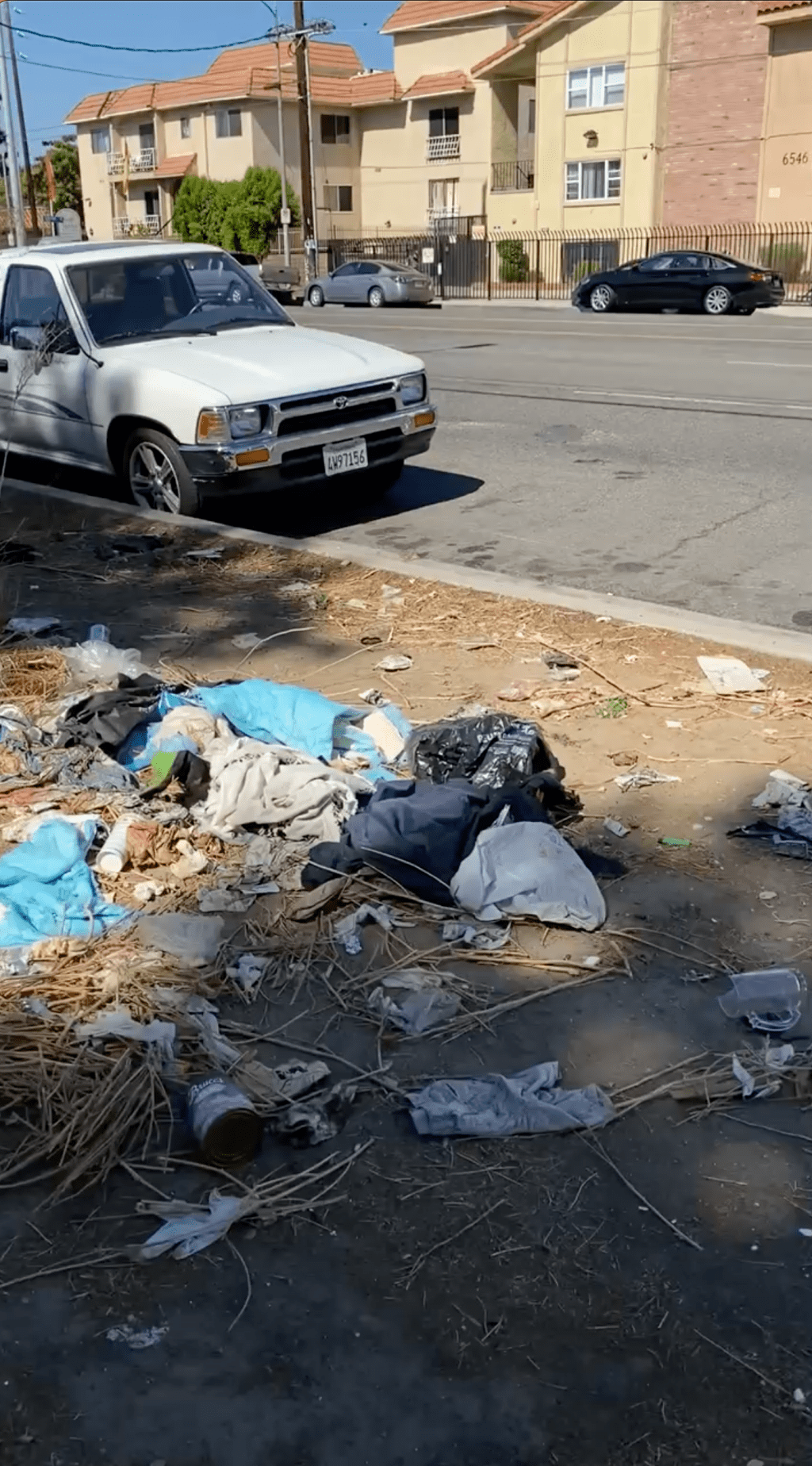
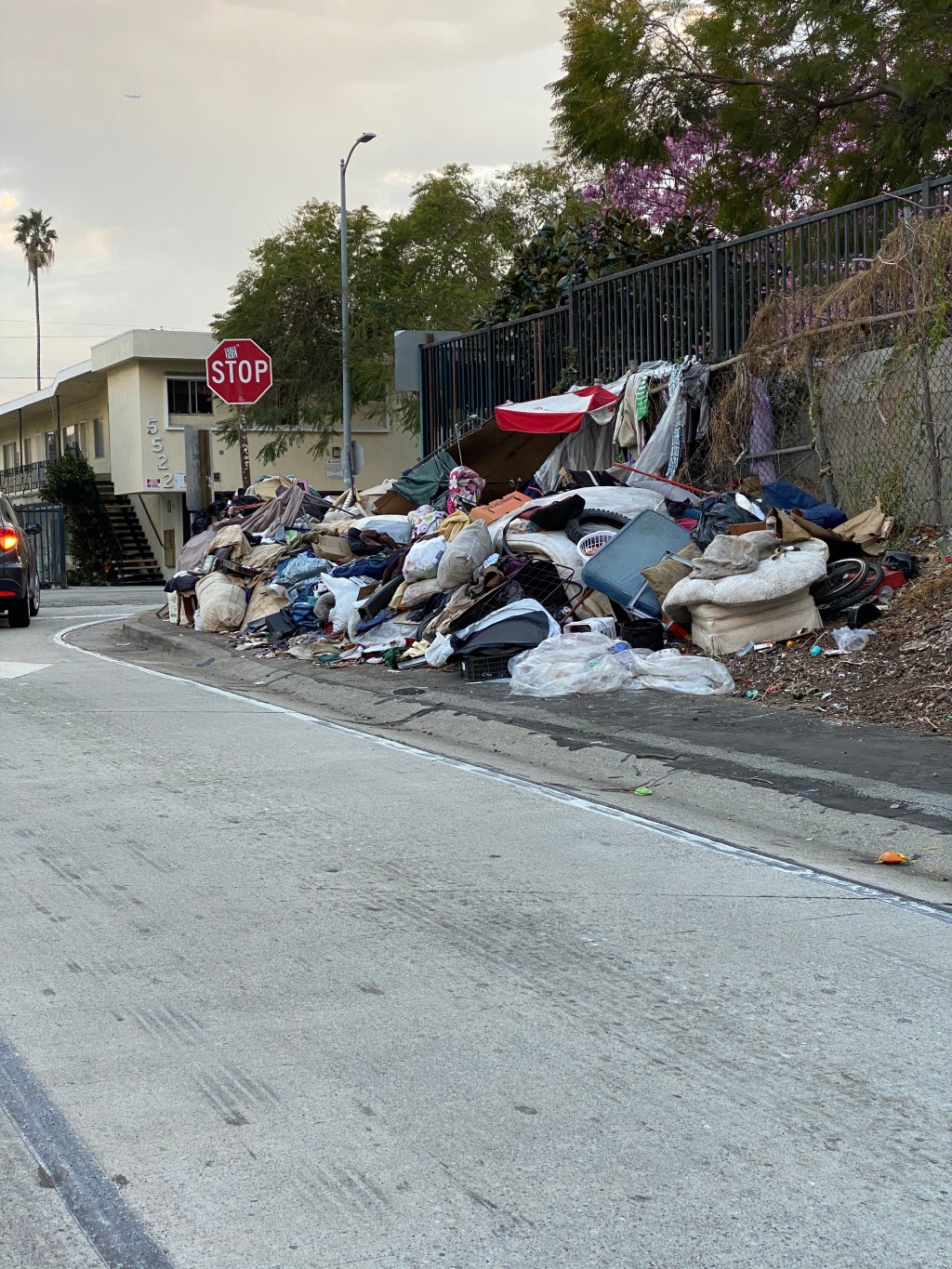
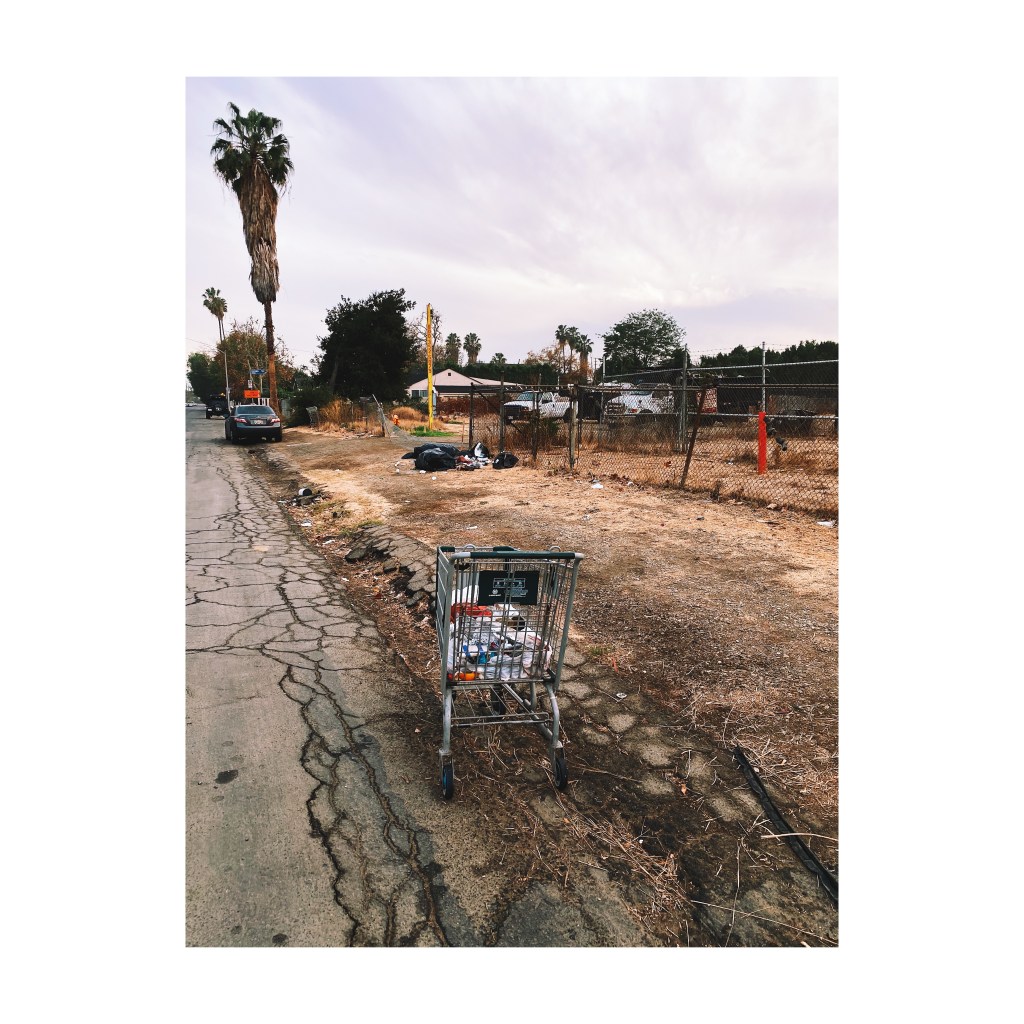
Woodley Park along Victory is a trash camp of tents and boxes and shopping carts, homeless encampments that seemingly procreate faster than the building plans of WP Whitsett. But you can’t carry your groceries home in plastic or drink from a plastic straw. You can’t burn garbage in an incinerator and haven’t been able to since 1946. Maybe we need to bring back the incinerators and clean up our parks?

How clean Chandler Bl. was in 1928! How sparkling it was before catalytic converters and filtered cigarettes. How ever did people survive when their meals came from their backyard chicken coops and fruit trees?


In 2022, the evening news celebrates the tragedy of a famous actress of multiple sexualities who drove 90 MPH into a house, nearly killing the tenant, burning it down, and we must “pray” for her to recover, just as we “pray” that the nurse who murdered 6 people in her 90 MPH adventure down LaBrea is sentenced to life in prison.

Fame, money, luck, blonde hair or black skin: Los Angeles always gives everyone an equal chance. 

If you, like Whitsett, had the gumption to get water to the San Fernando Valley and divide it up into buildable lots, you have a place in time and legend that nobody will equal again. He lived well, but if he were resurrected upon this location, say Victory at Sepulveda, he would probably die on the spot from the horror of our gruesome Frankenstein of a community.

As for Van Nuys, like the rest of Los Angeles, those who end up living here have to make do with whatever negligent government or avaricious investors sought for their own personal ambitions. 

The public good has always been the advertisement without the result.

Portraits of Dovid K. and “Kester Ridge.”


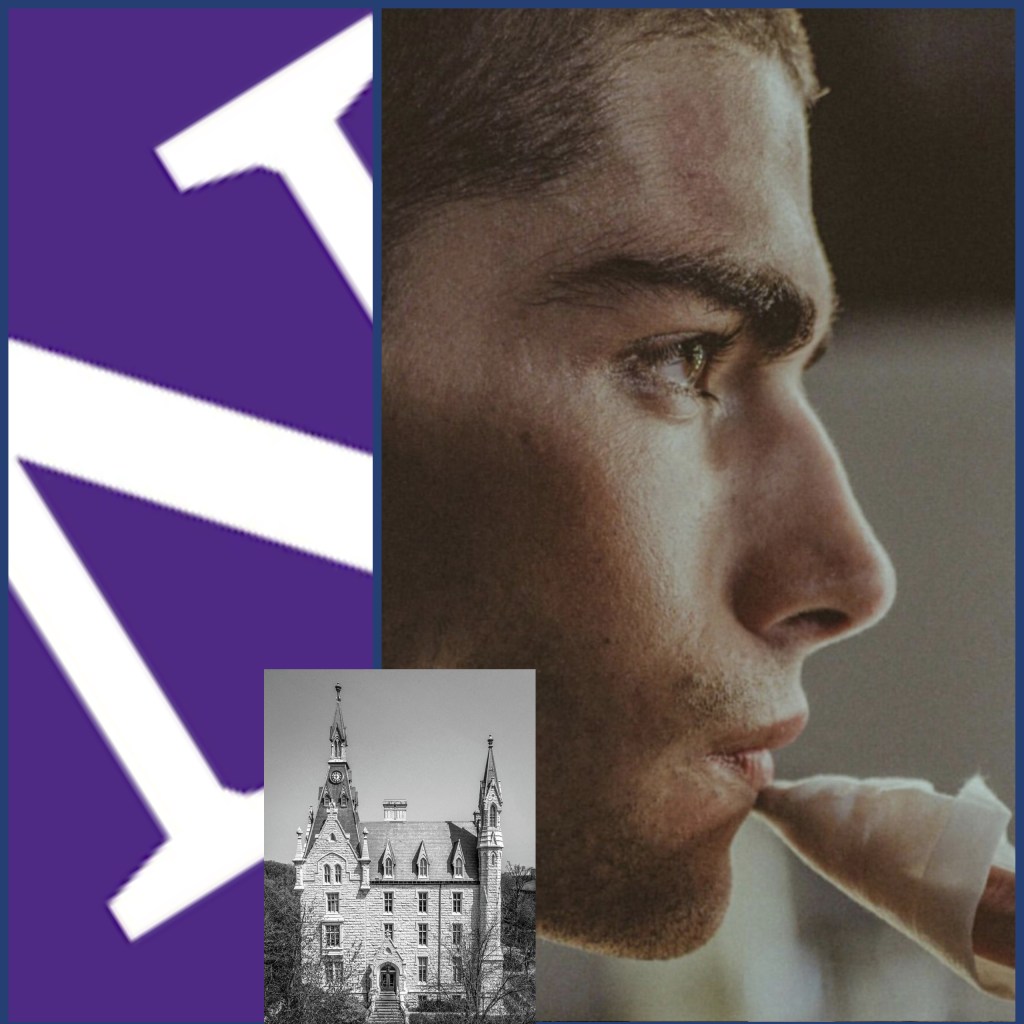
Actor Dovid K. was raised in Los Angeles, and he came over to our neighborhood last week for some agency photos.

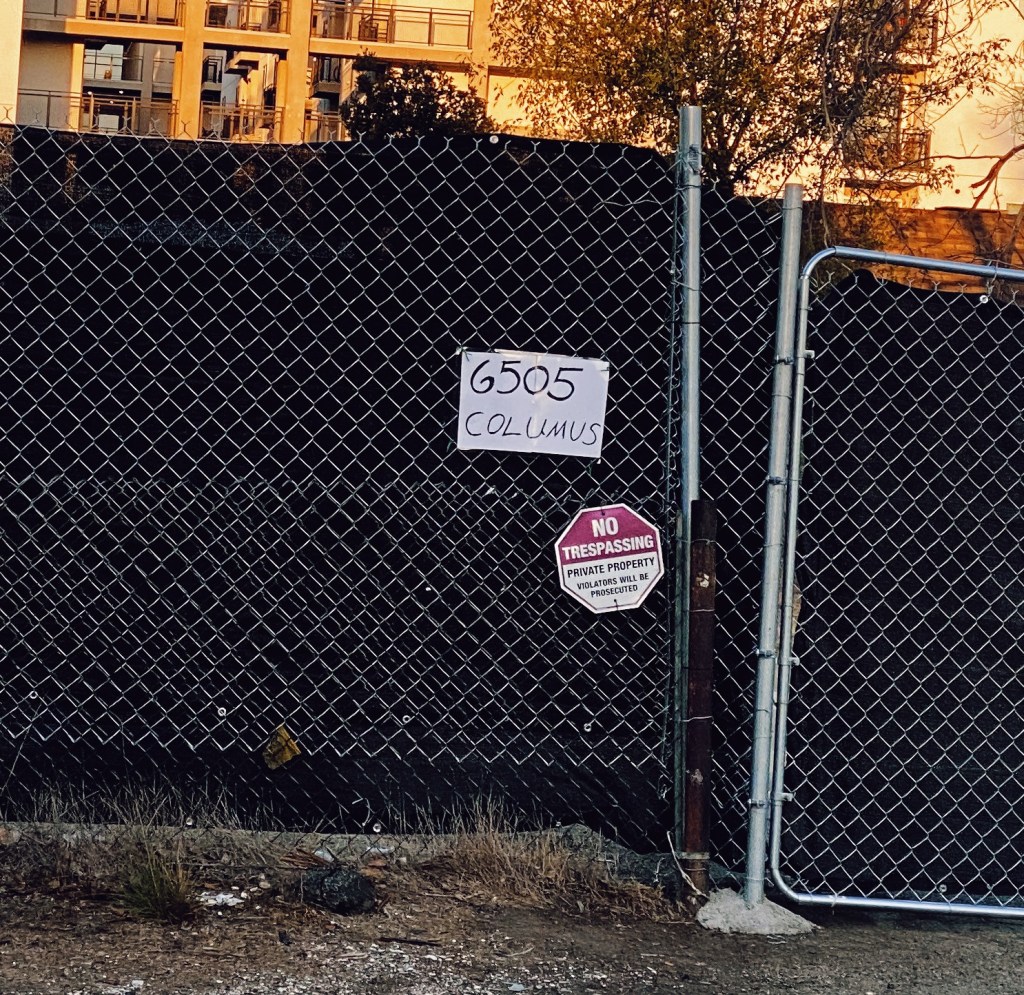
The houses in our area (Victory/Kester/Columbus/Vanowen) were built in the 1950s, and due to the modesty of the neighborhood, many look roughly the same. There are the criss-crossed windows, the board and batten siding, the pastiche of architectural decorations that mid-century developers affixed to facades to make them warmer and more appealing.

The vintage styles have weathered six or seven decades and endured as archetypes of the San Fernando Valley. This section of Van Nuys was ideal because it was walkable, just across the road from the high school, near the shopping centers along Sepulveda. Those were the days when children rode bikes and walked to school and there was always someone home to greet them at 3pm.

Times change. Children don’t walk, they are driven.

Behind the house on the right someone is building an ADU out of an old garage. They installed solar panels like many of their neighbors.

This sign belongs in the archival collections of Valley Relics.

This totem statue was erected by a previous owner and still stands.

This house will have a new ADU in front, an adaptive revitalization of a classic Valley ranch house from the early 1950s.

There is something about the middle 1950s that endures in many of the houses, a cozy casualness of not so big houses with big lawns, semi-circular driveways, trees, hedges, and decorative lampposts. A lot of it is not so up-to-date. If this were Studio City or Brentwood these houses would have been long gone, demolished and replaced with white faced behemoths and tall gates and enormous SUVs on every property.

Sadly, many of these houses sell for over a million and are not quite starter homes. But they are home for many who inherited them from parents, with low property taxes and little or no mortgage payments. For the lucky ones who got lucky, this is kind of a paradise, guarded by NextDoor and patrolled by helicopter, seemingly an American paradise on the ground.

And it makes a good backdrop for a young man who channels the 1960s.

Lost Opportunities.


I once wrote about The McKinley Home for Boys (1920-1960) which stood on the present day land of Fashion Square in Sherman Oaks. It was torn down when the Ventura Freeway plowed through.The powers that be (bankers, developers, councilmen) decreed a shopping center to be the the only economically viable usage for that land.

What we have now, is a martian landscape of disconnected large buildings which themselves are nearing the end of their life form. The shopping mall is a fading attraction, but what might replace it?

At Riverside and Hazeltine there is an enormous project to excavate the property around the former Sunkist office building, an early 1970s brutalist structure that swam in a sea of asphalt and whose redeeming qualities were fully grown fir trees which have now been completely wiped off the landscape. The name “Sunkist” was a cruel joke referring to orange groves in the San Fernando Valley that were long ago destroyed. The inverted pyramidal office will remain in the heart of the new apartment community, now renamed “Citrus Commons” and again, real estate wins, and the community loses, except to get more “luxury” units nobody without parental inheritance or assistance can afford.

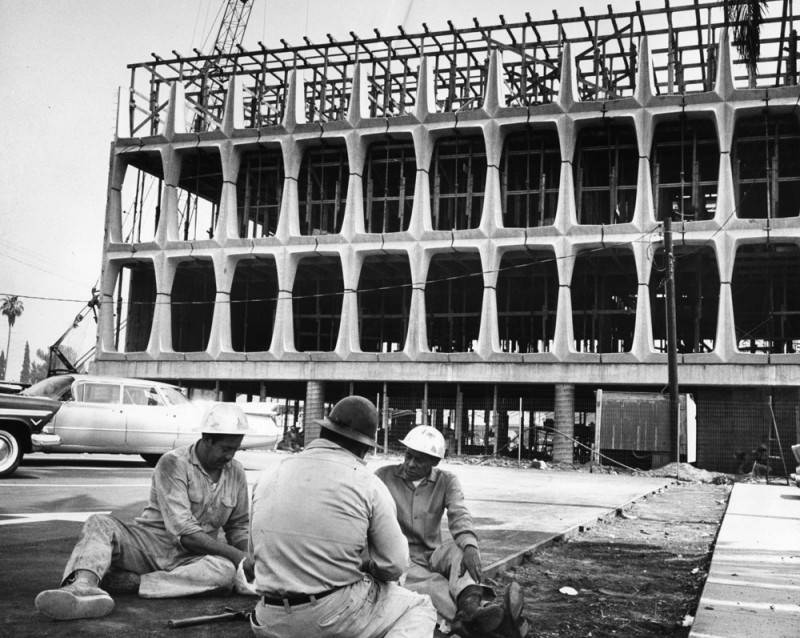
In the archives of the USC Libraries are these remarkable 1932 black and white photographs of the intersection of Riverside and Woodman when they were just rural roads in the middle of ranch lands. To the right of one of the images are benches and what might be the playing fields for The McKinley Home for Boys. Photographer was Dick Whittington.

The air was clean. Traffic was non-existent. The landscape was a tabula rasa for dreamers.

What do we have today, 90 years later?

The corner of Riverside and Woodman is four corners of disconnected “architecture.”

The NW is a late 1960s office tower in gold panels with an adjoining parking lot. Each floor of the sealed windows, mid-century “skyscraper” has unusable balconies, unaccessible from any office, just protruding forms signifying nothing, a decorative embellishment to make the tower fancier.

NE is the Spanish colonial high school Notre Dame with its good looking students from good families and good homes destined for good jobs and good colleges and good times.

SW is the ugliest shopping center in the San Fernando Valley with a covering of asphalt, outdated giraffe light posts on concrete posts, and a smattering of cheap and unnecessary stores: Bank of America, Pet Smart, Sports Authority and Ross. A parade of oversized vehicles with tinted windows and distracted drivers, and oversized people in black leggings; shoplifters, bank robbers, angry women, vapers and hucksters, actors and influencers, aggrieved SUVs, nearly deceased elderly drivers; pours in and out, all day, in the 100 degree heat, honking and pushing their way into a parking space.

SE is a 76 gas station, the kind that always has the highest per gallon price in the city, and several large billboards.

Everything else at this intersection is all about getting on or off the 101 freeway. Nobody would walk here willingly: burned by the sun, threatened by speeding cars, buffeted by air pollution and visual discordance.

What would this area look like if there had been a plan put in place for development with coherent architecture, walkable streets, trees, etc? Why do we think that mediocrity, ugliness, and environmental destruction are the best we can hope for?

Advertising For Church and Everlasting Life


A friend told me he had gone for drinks in Glassell Park at a bar in a restored building, a renovated Spanish traditional like they once had all over Los Angeles.

I was curious if I could find out anything about the history of 3501 Eagle Rock Blvd. in the Los Angeles Times. I went online to the archives of the paper at the library and found out nothing.

I wasn’t really trying very hard. 

Instead, I got distracted by 1930s church advertising, display ads for places like Temple Baptist Church, April 15, 1933, “Was God Blowing Soap Bubbles When He Created a Sea!” 

There were Christian Scientists, Theosophists, Episcopalians, Presbyterians, Catholics, Congregationalists, Lutherans, and Swami Yogananda who would give a free lecture on “How to Analyze People at Sight.”

The variety, the selections, the choices were endless, a feast for the soul and the imagination. Out there, beyond you and the mirror and your mind, was a divine world of love and community.

Day Memorial Church said Jesus Christ, son of God, God the son, was not crucified on Friday, according to the scripture.  That church was Independent- Fundamental-Baptist Doctrines. Dashes and precepts.

First Methodist Episcopal advertised itself as “The Church with the Revolving Cross” on December 5, 1931. On that day you could also go to the First Unitarian Church on West Eighth Street, just east of Vermont to hear a lecture by Dr. John R. Lechner about Communism in America and “The Dilemma of the Liberal.”

July 30, 1932 advertised Dr. G.A. Briegleb from St. Paul’s Presbyterian. “Another Mountain Peak From Acts,” KFVD radio, Fridays at 10pm.

Electric signs, radio broadcasts, neon lit dreams and full color visions; everlasting life, the answers to life, the origin of life, the meaning of life; the answers to why we are here and where we are going and how we can get there.

It was all over Los Angeles, all you had to do was go and get it. 

“You’ll Fell a Little Bigger and Better!” proclaimed the LA Times, “When the church bells peal out Sunday morning, select your church and attend it. Don’t consider yourself a stranger, you’re not. The church owes you spiritual enlightenment and instruction. It’s your duty to receive it.”

The Nest Nightmare.


A few months ago, our HVAC company, Around the Clock, told me they would install a free Nest Learning Thermostat in our home. Free. And there was also a $185 LADWP gift card that would be sent for registering the device with the utility.

The tech came to our home. He installed the beautiful modern device on the wall. He waited as I opened the Nest App on my iPhone. Then he showed me how to turn the thermostat to enter the wifi password, which was a tricky kind of maneuver of rotating the dial of the device and punching each number, each letter, each symbol, each CAPITAL LETTER, of my wifi password.

After I opened the app, and tried to connect it to the thermostat, a message came up:

Cookies are disabled.

Your browser has cookies disabled. Make sure your cookies are enabled and try again.

These words would haunt me.

The Nest App on the iPhone would not work unless I enabled all cookies. Whatever that meant.

The tech could not wait around, he had to go to his next appointment, and to be fair, why should he spend his free time as I tried to install the app and make it work and connect it to the thermostat?

So that first afternoon with the new Nest Learning Thermostat, I called Apple and called Nest, and four hours later Nest had me sit down at my desktop computer and sign into Nest.login.com and register the app and the thermostat there. Then, finally, my iPhone app worked with my thermostat.


A week later, I signed onto LADWP to register my Nest Learning Thermostat (NLT), to get my $185 gift card. But LADWP said “You have not installed the NLT.” I sent an email to them, and they sent me one back and said there was nothing they could do, that I had to call Nest to get them to connect my thermostat to LADWP.

NLT is an “approved thermostat” and I should be able to register it without any problem online at LADWP.

I called a Nest tech to finally see if someone could troubleshoot the app. The tech had me stand in front of the thermostat and completely erase all the settings, including the tricky, laborious and irritating wi-fi password which had to be entered once again. I had to find the serial number of the device, by turning the dial of the thermostat, and read it over the phone to the tech, and then he guided me, over 45 minutes, in connecting the thermostat to my Nest App on my iPhone.

“Sir, I assure you theez prublem eez soulved,” he said in accent unknown.


Mid-May I had to replace my 2014 home computer router.

And, of course, after installing the router, when I opened my Nest App, the thermostat was missing from the Nest app. Was there any reason that replacing my home router should somehow be connected to the Nest Thermostat? I had to input the wifi password back into the thermostat, with the tricky, ridiculous, rotating dial and the CAPITAL LETTERS, SYMBOLS, lower case letters, and numbers that comprise my home wifi.

And when I went to reinstall the Nest App. The same error message came up!

I had enough! I no longer would use the Nest App on my iPhone.

Instead I used the thermostat on the wall, as if it had no smart features, as if it were 1975 and this was the only way to turn it on.


In the past week, the temperatures have gotten hot, there is monsoonal moisture, and the climate is crazy, as we all know.

To save money, I set the thermostat to COOL 78.

But it kept going to COOL 75.

I would turn it to COOL 78.

And it would COOL 75.

I never cool at 75 because I don’t want to pay $3,000 for electricity!

So again, today, I had to call the Nest Tech, on the phone, and he had me once again read my name, my phone number, my email, my Nest Learning Thermostat to him, as if I had never called before.

Turns out I had to go into SETTINGS, to HOME AWAY/ASSIST and choose OFF. The thermostat was “learning” and learning to COOL 75 because this “smart” setting was ON. But I had never turned it ON. I never used anything HOME AWAY/ASSIST.

How could I use a feature HOME AWAY/ASSIST without an APP?

He had me RESET the Thermostat, and said I should “wait 24 hours” to see if the thermostat was unlearning what I had never taught it to learn, and if there were any other problems, he was sending me an email, with a case number to call back to troubleshoot the problem if there were any other problems.

If there is any more trouble, now I know what to do………