Postmistress of Van Nuys


Among the charming relics of the past is a look to what people cared about 62 years ago.

In 1960, the United States Postal Service issued a limited edition of stamps to commemorate the Golden Jubilee (50 years) of the Camp Fire Girls.

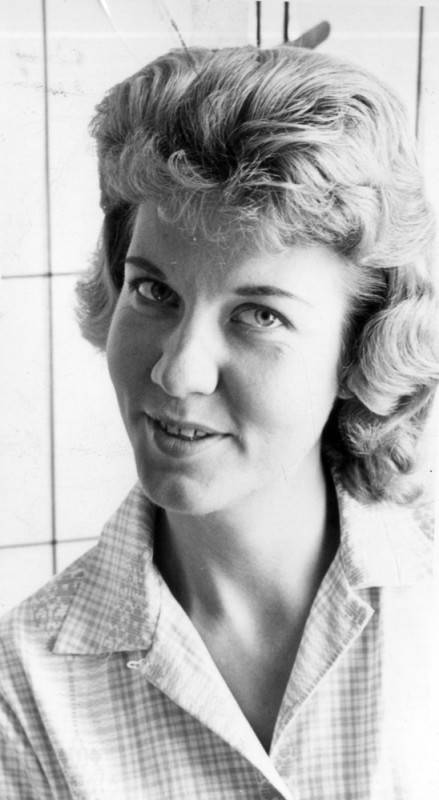
Readers of the Valley Times would see the postmistress (yes, that is what she was called) Mrs. Kay Bogendorfer selling stamps to two young Camp Fire girls, Christine Hughes, 8 and Leana Holman, 12.

The girls’ home addresses are listed in the photograph.

The listing of facts, the honorary titles, the respect for young women, the admiration for the post office, all of it was taken for granted.

North Hollywood After WWII


Of all the areas of the San Fernando Valley, perhaps North Hollywood has undergone the most drastic changes, for better and worse.

The Los Angeles Public Library has thousands of images online of North Hollywood.

I pulled a few from the period 1948-1962.

California was undergoing convulsive expansion as the state population skyrocketed, and millions moved here for a better life. Freeways, schools, housing, shopping centers, all of it exploded in only one decade.

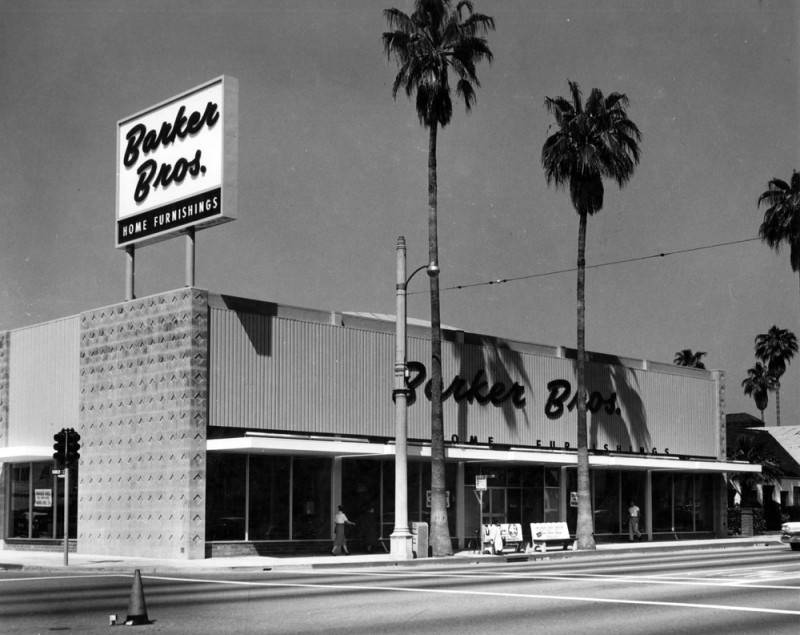
After WWII North Hollywood’s commercial area was centered along Lankershim Blvd. There were many locally owned shops, and they took pride in their windows and customer service.

The 1950s was also a time when public presentation of improvements was staged and photographed.

The widening of a street, a freeway that blasted through a park, an orange grove obliterated with thousands of new houses, the demolition of old houses for shopping centers, these were all accompanied by ceremonies with well-dressed men in suits, and the ladies in their hats, veils, dresses, pearls, earrings, lipstick, high heels.

In that time, 75 years ago, nobody imagined that one day parks would become homeless encampments, that vagrants would live in libraries and sleep on sidewalks, that marijuana would be as common as soda.

There was still an innocence about this country, a belief that people in power had the best interests of everyone in mind.

Obama Fundraiser: Silverlake, October 4, 2008.


For ten years a dead external hard drive lay abandoned in our garage, a device that once backed up our desktop computer from 2007-2012 and then suddenly died.

We cleaned our garage last month and found the dead drive. We took it to a tech in Toluca Lake who retrieved everything for $150.

Now we have tens of thousands of revived photos, seemingly taken yesterday, but actually 14 years old. I’m going through the files now and labeling them.


One folder contained a memorable evening from October 4, 2008. 

On that night, we attended an Obama fund raiser at a private home in Silver Lake along a winding street above Sunset.

There is my 36-year-old brother Rick with his wife, Pri, and her 27-year-old sister Rue. Muscular, smiling, shirtless Jeremiah and his girlfriend Ivy.

There are good friends and acquaintances in floor dragging denim and long t-shirts under short ones. Fun includes John McCain, Sarah Palin and Dick Cheney piñatas, lots of Shepard Fairey designed HOPE t-shirts with Obama’s face, and me in an Obama mask. There are masks of Biden too.

There is food and drink and Ivy in with her Smart Women Vote Obama button.  

The crowd is gay and straight, black, white, asian, male, female. There are high tech devices like digital cameras that are strictly digital cameras, not smartphones.

There are cute young kids and old dogs snuggled up on the sofa.

What I remember most from the event is that one of the guys there wanted to sleep with me, and a woman who had a high position in production wanted to hire me for photography but never hired me.

Through time all the famous faces from that night are connected in our long political show that never ends, jumping from event to event, begging for analysis, but often falling into irrationality, emotionality and missed opportunities.

Lemay, west of Kester


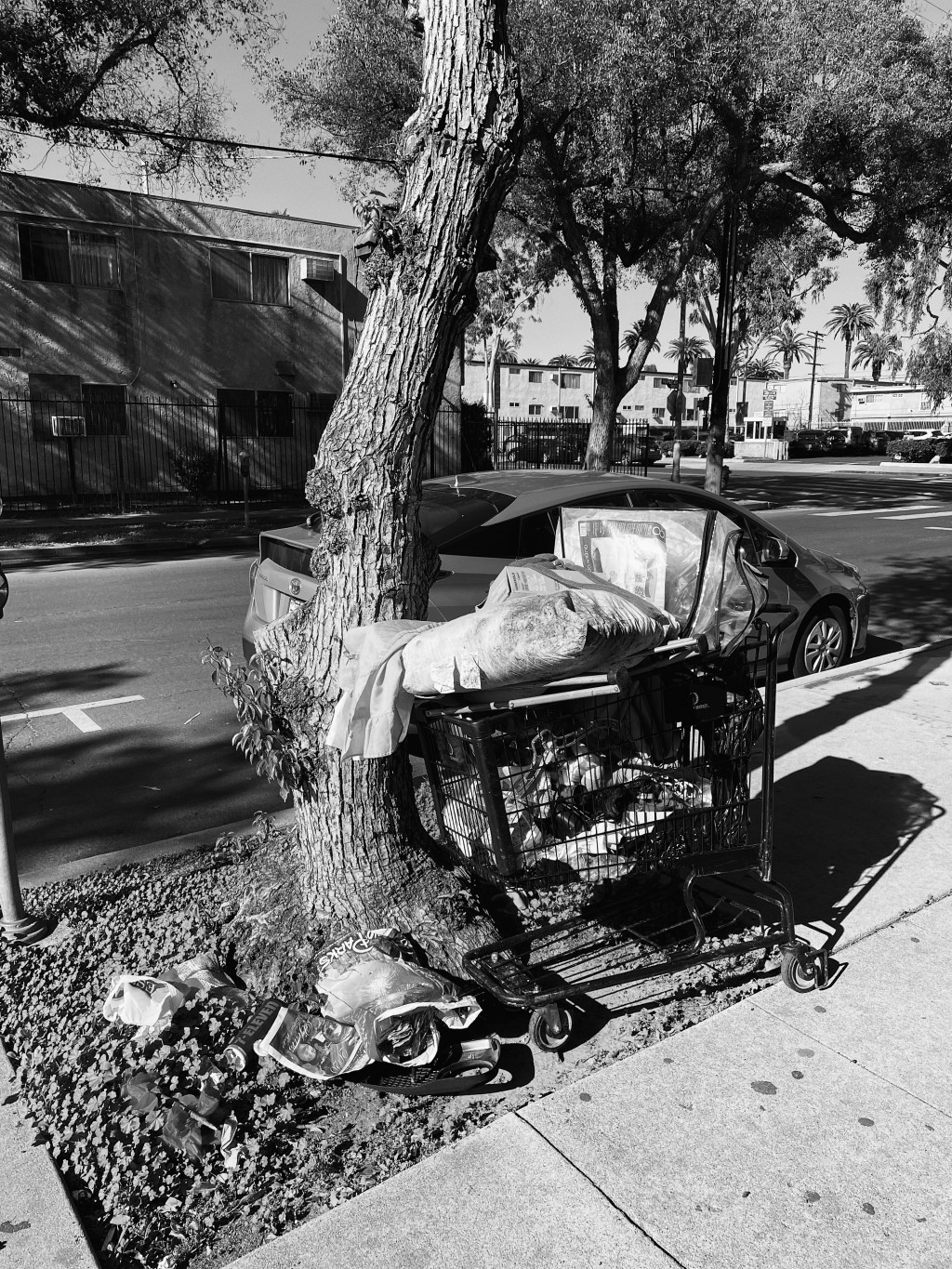
On Lemay St. just west of Kester, a trash camp has been removed, then put back, then removed, then allowed back.

Residents of this tidy and pleasant section of Van Nuys know their area is not unique in the suffering brought on by government negligence.

Countless calls, emails, Zoom meetings and tweets have not changed a thing. The trash camps are a steady reminder of how far California has fallen, how pathetic the situation of law and order is.

Three months ago, the LAPD Van Nuys division held their monthly talk and all the Senior Lead Officers spoke. Our man proudly stated he had removed this trash camp, which previously was unhoused on the SE corner of Vanowen and Kester.  The camp then moved itself, shopping baskets and cars, to Lemay.

I don’t blame him or law enforcement for “allowing” the trash camps. This one, like many, has been cited for prostitution, drug dealing, and indecent exposure. The police are handcuffed by law.

A neighbor on NextDoor wrote that her granddaughter was playing outside when one male vagrant came up to the little girl and pulled his pants down.

He allegedly still lives in a tent along Lemay. Why?

There are many reasons to be depressed about life in Los Angeles today. In fact, progressive, thoughtful, sensitive Councilman Mike Bonin, who famously allowed murders, trash fires and thousands of vagrants to camp out and cause mayhem during the pandemic, has said he will not run for reelection, citing his personal battles with depression.

Bless him. But let him be gone to serve his emotions first so millions in our city can awaken happier tomorrow. 

Lest people who read this essay think I am advocating against the Democrats or liberalism, I instead am posturing for a middle ground of care for the addicted, and housing for the lost and beaten down. 

You can arrest them, jail them, deport them, or kill them, but only if you live in China or Russia. For those of us who still believe in American ideals, the law constrains us from revenge, even as we seethe in anger and contempt for the disorder and crime around us. 

But we also need local laws that apply to the entire city. We cannot stop enforcing with exceptions. Like near a school or hospital or homeless services building.  

It categorically must be completely illegal to camp out and live in a public park, on a public sidewalk, to urinate and defecate outdoors. Anywhere.

We cannot parse our laws to such inanities as prohibited “within 500 feet of a school.”

Imagine if we said you could drive blindfolded, stone drunk at 100 miles an hour, if you never drove past a school?

One of the bitter ironies of Los Angeles is the amount of wasted space that exists where civilized, regulated and sanitary communities could be erected to house the unhoused.

Next to the encampment on Lemay is the sprawling parking lot of the Casa Loma College which used to be a building that was the home to the American Automobile Association.

99% of the time the parking is empty. The entire lot, building and parking, is 112,994 square feet, 18 times larger than a 6,000 square foot “single family lot.”

Home Depot sells a backyard studio building that is 10’x 12’. It costs about $45,000.

Even if that is overpriced, imagine if within the bounds of the Casa Loma parking lot an agency or non-profit built 25 of these and there was a full-time security officer overseeing this community? What if this model town became a blueprint for other humane towns throughout Los Angeles?

There are, to be sure, many objections to this, but they are often imaginary, created in the minds of fearful residents who object to new types of supportive communities which are actually superior to the “free market” ones that currently exist.

The Skid Row Housing Trust is an exemplary non-profit which “provides permanent supportive housing so that people who have experienced homelessness, prolonged extreme poverty, poor health, disabilities, mental illness and/or addiction can lead safe, stable lives in wellness.”

They built 13604 Sherman Way, designed by architect Michael Maltzan, in 2014. It is houses 64 people but was bitterly opposed by the community before it went up. Yet it is perhaps the most attractive building built in the entire San Fernando Valley in the last 50 years.

But there is not enough of the good stuff. The trash camps are more numerous than these white paneled residences.

For now, the trash camps along Lemay, and everywhere else in the city, are a daily dose of depression for millions who live in Los Angeles and a barbaric and cruel way to treat people who must, through choice or circumstances, live under plastic tarps along the road. 

The Bright Place


We went down to Santa Monica last weekend to walk around the parks and the beach.

The weather was sunny and windy and the skies were clear.

There were people outside: runners, bikers, exercisers.

On the sands there were volleyball games, soccer games.

In the water, there were people in wet suits on surfboards, paddling.

It was Southern California and we were happy to be here. (Even if I look serious.)

“Dad Got Mill”-a short story


“Dad Got Mill” is a new short story about a middle-aged man who opens a luxury men’s store
on the brink of the pandemic.

Set in Silverlake and the San Gabriel Valley, the story explores the underlying conflicts of economic
inequalities, racial tensions and the demands of marital and family life.

Please read it on my short story page.
And let me know what you think.