Classical Houses.


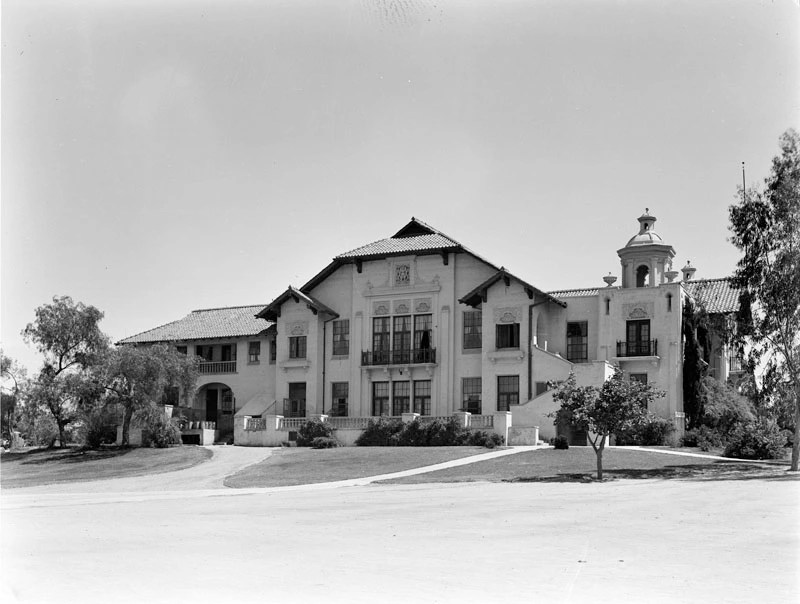
It’s been perhaps 90 years since Americans built well proportioned classical houses.

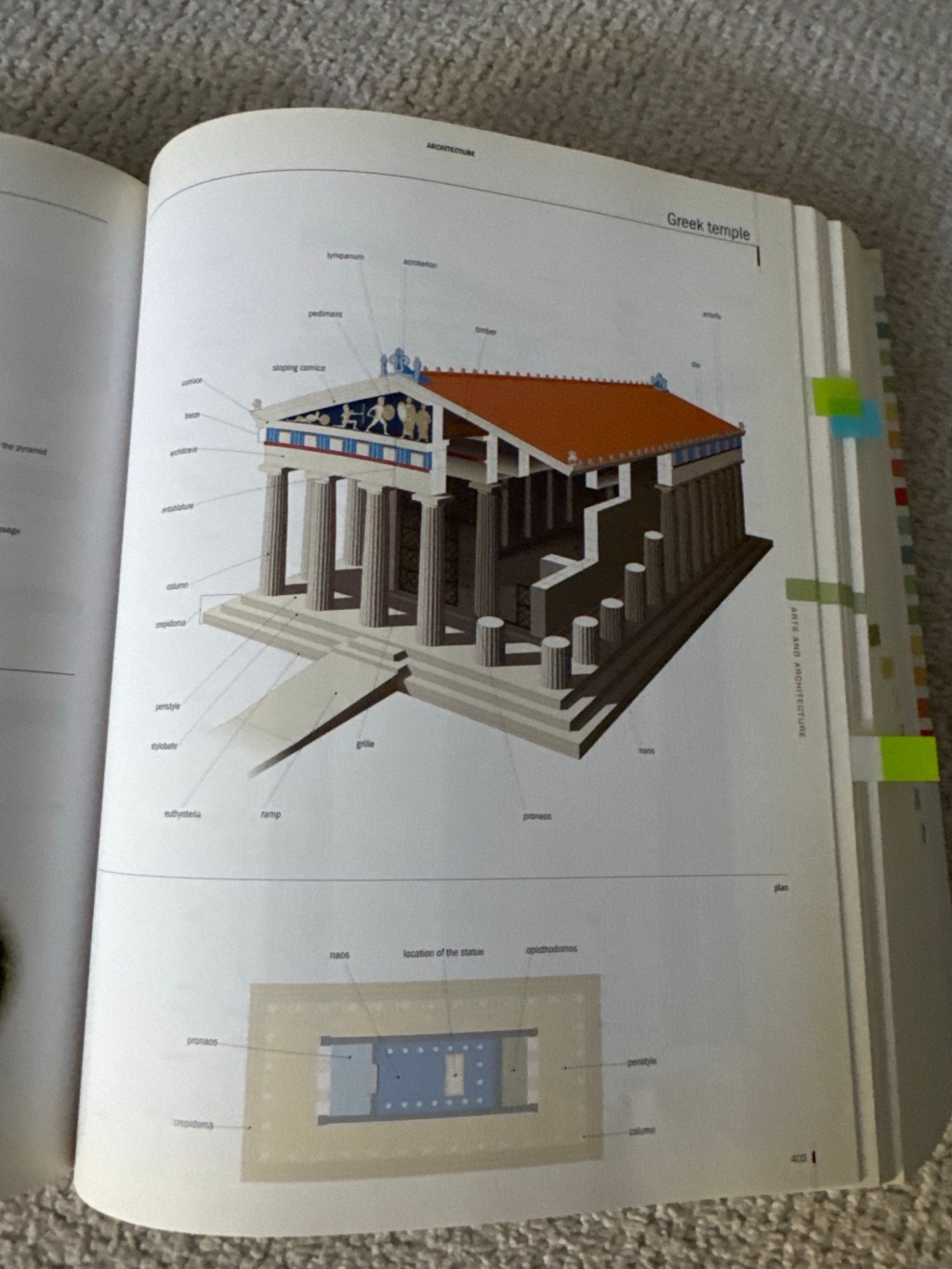
These are houses where the elements are pre-ordained: the windows are aligned with each other, and are placed within the facade to achieve balance and symmetry. The doorway is defined, frequently in the center, and around it are placed ornamental designs originating in Greece and Rome.

Columns in the Doric, Ionic or Corinthian orders have specific instructions as to their placement. They aren’t just slapped onto a facade as we see in modern day Encino.

In California, when builders put up spec houses they are never able to afford classic design because the intrusion of garages destroys the facades. Ironically most garages never store vehicles but are a repository for storage.

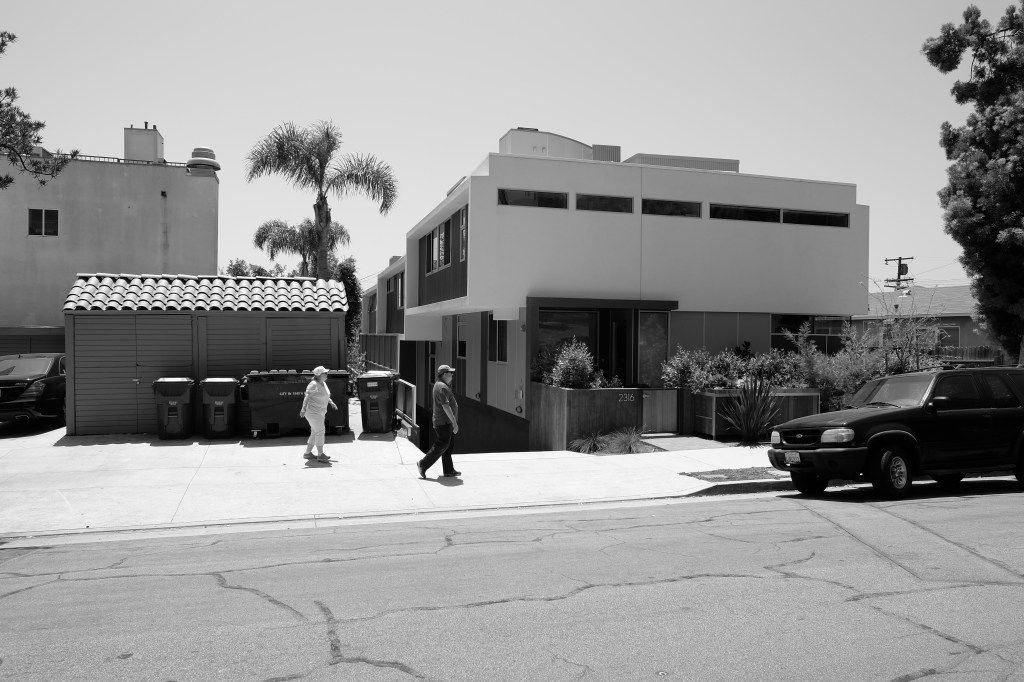
The plain white stucco house with vinyl windows is the lowest and most ubiquitous type of spec house. About a dozen of these have sprouted up in my neighborhood in the last ten years.

There is obviously no attempt in these cases to make the houses attractive in a classical sense. They are rafters and insulation and stucco made for desperate times. Nobody can really afford to build them, and nobody can afford to buy them, so we have a sad story of expensive prices for crap.

The one on top is three bedrooms with astroturf patio and rents for $7,000 a month next to a graffiti splotched alley.

The exploitation of land to build exploitative housing that hardly houses anyone is one of the ills of Los Angeles. For there are enormous plots of parking lots and open land, especially near the Orange Line, where walkable, civilized and attractive housing can be built.

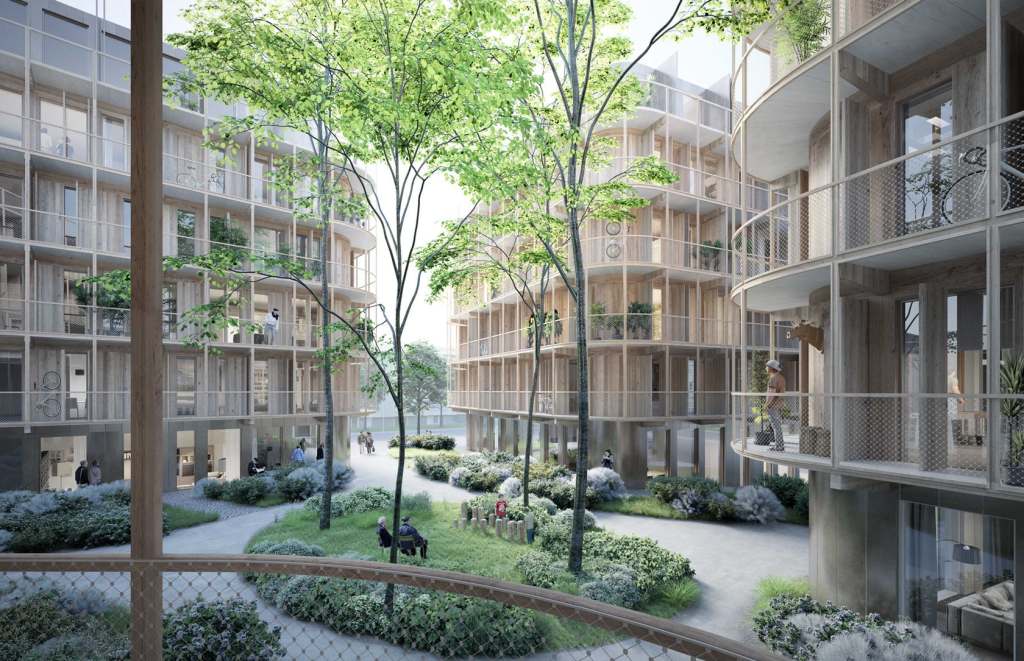
After spending time in Switzerland last year, I came back thinking of how well things are built there. Not only are they solid, but the housing is meant to enhance the community. Sometimes it’s starkly modern, other times it’s traditional, but it always makes the environment better.

Bremgarten, CH.
Merenschwand
Zurich
Lucerne

Why in this city, which invented Hollywood, are the visual arts of architecture and design so lacking in public view? Why do we live amongst so much ugliness?

LA Fitness, Sepulveda Bl.

Is there perhaps something in the past we can look to as we rebuild Los Angeles for the future? Perhaps we need Elon Musk to siphon off $5 billion dollars from somewhere and employ an AI architect to make LA lovely again.

Here are some designs from AI Google, architects:

The Folks Who Moved in Next Door.


For about five years, an encampment of vagrants, with cars and trucks full of bikes, shopping carts, electronics, blankets, and various junk, spread their filthy circus along the corner of the Vanowen and Kester.

There were men and women in parked cars, and drugs, and women in the back seats of the vehicles. The sidewalk was taken over by them. They had complete autonomy and seemingly the blessing of the city to live outside.

Our senior lead officer, whose name I don’t care to name, cleared them away. He appears monthly on a Facebook chat room to brag about the latest clearance. “Happy to say they are gone,” he will say on Zoom.

But the camp of tramps always comes back.

They next set up their junk show on Lemay, in a quiet residential area, where they lived along the parking lot that borders the Casa Loma College.

Day and night they sat out on lawn chairs or slept on mattresses behind trees. One man danced with his dick out for an 8-year-old girl who rode her bike past. Complaints flooded LA311. Ms. Nury Martinez, Latin-X Councilwoman, got letters, emails, phone calls. LAPD Van Nuys was called numerous times. Yet the trash camp endured.

Outdoor urination, pot smoking, liquor, prostitution, dumping, disorder, noise, none of it mattered. It stayed in place, just like the homeless circus that has played on for 3,000 days and nights at the NW corner of Gault and Sepulveda. 

After six months, their crap was cleared. 

Two weeks later the tarps and the shopping carts went up along Lemay near Norwich. That took dozens of calls to remove. Then it was gone.

Then they came back to Saloma and LeMay. That lasted a few months.

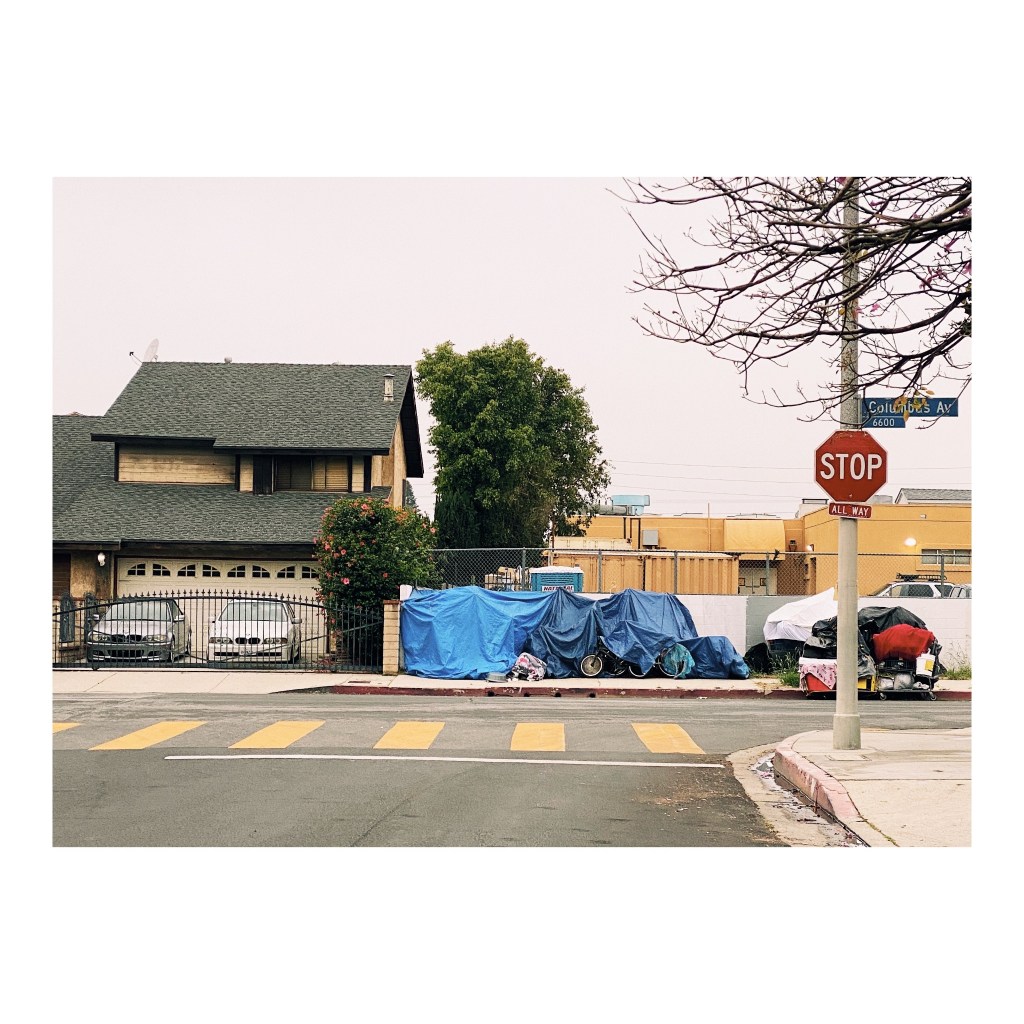
Now they have reappeared along Columbus Avenue across from the grammar school. While it’s doubtful anyone is actually learning grammar in that one-starred rated school, what’s certain is that the garbage camp is illegally set up in full view. 

When people wonder what drives Angelenos mad, it is this: there is no control on the disorder and criminality of this city and state. 

San Francisco, true jewel of the west, has gone to hell.

Los Angeles, costume jewel of the west, has followed suit.

And when mayoral candidates go on podcasts and talk ad nauseum about their humane and expensive solutions for the poor people who are homeless, you want to scream!

Why should the suffering of private persons, their addictions and mental illness, be allowed such a prominent and destructive place in the lives of all law-abiding citizens in the State of California?

“One of my proposals is to create a $1 billion revolving private equity fund with which to build permanent supportive housing. That’s housing that’s been costing $600,000-800,000 a unit. That can be cut to a third of that cost using a private equity model that has worked on the streets of Los Angeles,” says Mayoral Candidate Mike Feuer.

Is anyone knocked-up on drugs and alcohol going to sober up in a new, unsupervised housing unit?  

Here’s an idea: use the billions in homeless funds to send $100 Visa gift cards to legally housed residents, home owners and renters, who report trash camping in their neighborhoods. Top off the yearly payments to those who report the vagrants at $2,000. Thousands of Angelenos, short on money for gas and groceries, would be impelled to report vagrancy and clean up dumps that have destroyed our city.

Do the people burning down parks and sleeping under tarps on bus benches care to move into a new studio apartment? 

Trash camping?

Don’t permit it. Don’t allow it. Don’t normalize it.

Burning parks, setting fires along freeways, camping out on public sidewalks and streets. This is the state of California, the most technologically advanced region on the planet.

So much money, so much talk, so little results.

The Bright Place


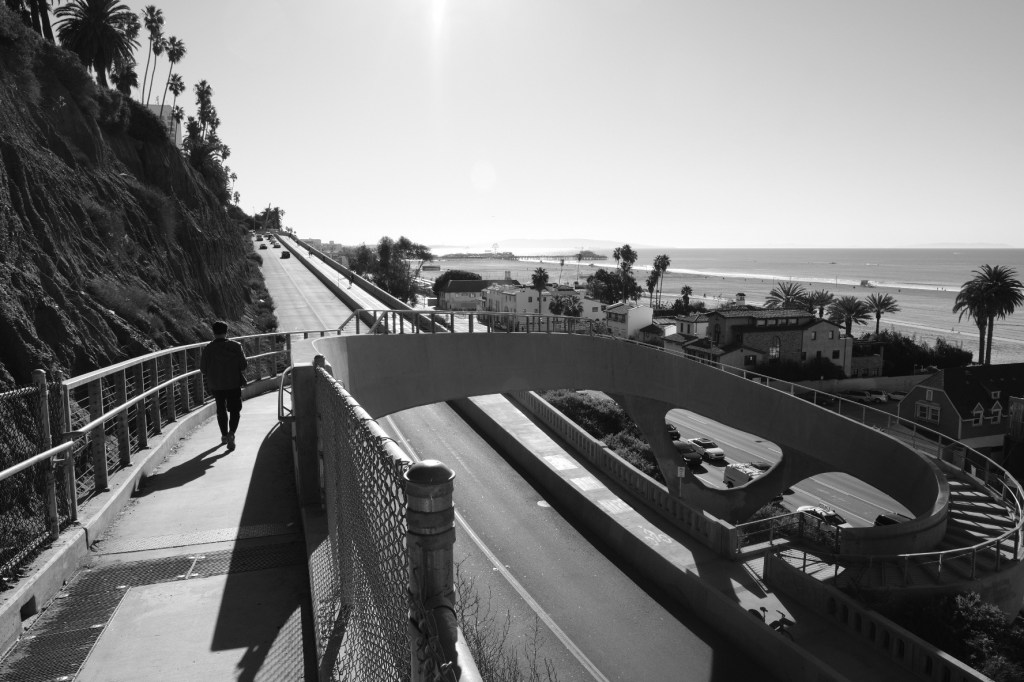
We went down to Santa Monica last weekend to walk around the parks and the beach.

The weather was sunny and windy and the skies were clear.

There were people outside: runners, bikers, exercisers.

On the sands there were volleyball games, soccer games.

In the water, there were people in wet suits on surfboards, paddling.

It was Southern California and we were happy to be here. (Even if I look serious.)

The Pink Oasis: Time Magazine, July 4, 1949.


“That amazing mechanism, the human eye, adjusts itself to Los Angeles in a matter of hours. The optic nerves grow submissive before the red glare of geraniums, the flash of windshields, the sight of endless and improbable vistas of pastel stucco. Even on his first, casual, hundred-mile drive the pilgrim achieves a kind of stunned tranquillity, and gazes unblinkingly at palace-studded mountains, rat-proofed palms, and supermarkets as big as B-2Q hangars.

This surrender of the senses is seldom averted by the city’s more conventional scenery. Downtown Los Angeles has genuine smoke-stained old brick and stone buildings, jammed together as tightly as those of Philadelphia or Baltimore. Hundreds of old-fashioned clapboard houses stand uneasily in the sun along its older residential streets. But the visitor in 1949 is apt to stare at them less in recognition than in disbelief, like a wanderer pushing through the vine-hung ruins of Angkor-Thorn.

They are obviously the work of a dead race—the people who thought Los Angeles was going to be a Cleveland with orange trees. After four frantic years of war and four wild years of peacetime boom, it is plain that Los Angeles will never be like anything else on earth.

More Fish then Boston.

By now it is probably the third biggest city in the U.S. —more than 2,000,000 people live within its far-flung city limits, more than 4,000,000 in its metropolitan area—and it has gotten pinker, more sprawling, more like a Los Angeles promoter’s dream with every advancing mile.

It has given the lie to the starched double-doubters who had cried that Los Angeles was a gaudy but impractical contraption which would inevitably collapse, trapping swarms of blondes and bare-toed yogis in its wreckage. It has become an industrial giant, has attracted not only new people (949,585 in Los Angeles County since Pearl Harbor), but new money, new business, and $450 million in factories and machinery since V-J day.

Its economy no longer depends directly on its basic industries—oil, oranges, motion pictures and aircraft. It lands more fish than Boston or Gloucester, makes more furniture than Grand Rapids, assembles more automobiles than any other city but Detroit, makes more tires than any other city but Akron. It is a garment center (bathing suits, slacks, sports togs) second only to New York. It makes steel in its backyard. Its port handles more tonnage than San Francisco.

It has built 240,000 new houses and apartment units in the last four years. Whole new villages have sprung from its brown plains, some lush and expensive, others as starkly laid out as well-planned graveyards, all equipped with their own highly colored, glass-heavy shops and markets. Enormous, gleaming new branch department stores have sprung up, not only along Wilshire Boulevard’s fabulous Miracle Mile, but in virtually every suburban area. A city ordinance requires that new stores have parking lots; most are as big as football fields.

Los Angeles has finally forced the East to go West and do business. Many firms have surrendered to it completely, have moved their headquarters to Los Angeles. Among them: Rexall Drug, Inc., Carnation Co., American Potash & Chemical Corp. With all this, Los Angeles is the richest agricultural county and the most productive dairying county in the nation. As an afterthought it raises 3,000,000 rabbits, 10,000 chinchillas and most of the country’s cymbidium orchids.

In a Little Spanish Town.

It has reached this state of supercharged development through a process as astonishing as a Cecil B. DeMille production. Los Angeles began life in 1781 as the Spanish pueblo of Nuestra Señora la Reina de Los Angeles de Porciúncula —a comatose village of 44 souls, surrounded by arid plains and arid mountains. It dozed for a century, hardly opening an eye when four square Spanish leagues of its dusty ground was incorporated into a U.S. city.

Then the West-reaching railroads got to Los Angeles—the Southern Pacific in 1876, the Santa Fe in 1885. New settlers came in expecting an oasis and found none. They set out to build an artificial one. They dug wells with imported picks, planted imported palms and eucalyptus trees, cultivated lemon, orange and nut groves and a thousand and one foreign flowers, grasses and grains. They built with imported brick and lumber. They had no domestic material but sunshine.

A city sprang up where no city seemed to belong. It built a 233-mile aqueduct, ruthlessly sucked away the water of the distant Owens River—a project which turned the verdant Owens Valley to desert and stirred its farmers to rebellion. It constructed an artificial harbor, hatched the motion-picture business and raised oil derricks and searchlight beams. Its full-voiced Chamber of Commerce ballyhooed to climate. The city gulped in armies of aging lowans, land-hungry Oklahomans and dazzled tourists.

It grew without inhibitions. It was fascinated by space, color, the vehement sermons of real-estate sharks and the horticultural efficacy of powdered cow manure. It developed into a new kind of city—a sprawling confederacy of villages, with five branch city halls and 932 identifiable neighborhoods, in which life is dedicated to the sun, the lawn sprinkler and the backyard grill, and in which the swimming pool is the mark of success and distinction.

Over the years it developed a new breed of Big Man. They were plungers, they were impatient of tradition, and they were fascinated by newness, bigness and the sound of battle. Director D. W. Griffith demonstrated that the jerky, flickering motion picture could be a dramatic form with sweep and magnificence. M.G.M’s Louis B. Mayer ran a cheap variety theater in Haverhill, Mass, into a cinema empire. Oilman Edward L. Doheny, a gold prospector from Tombstone, Ariz., found a fortune beneath his feet and exploited the vast oil wealth of Los Angeles. Donald Douglas and “Dutch” Kindel-berger built air armadas, and restless Henry Kaiser, fabricator of dams & ships, gave southern California its first complete steel plant.

City on Wheels.

Los Angeles became the first big city of the automobile age. Its citizens worship the fishtail Cadillac, use their cars for almost all transportation (there is one car for every 2.6 persons—the nation’s highest average), drive up to traffic lights like ballplayers sliding into second, and regard the pedestrian with suspicion and distrust.

A pearly industrial smog now hangs embarrassingly over the city for days at a time, dulling the sun and stinging the eyes of the population. It is no longer the great open-shop town—labor unions, which cracked its defenses during the war, have consolidated their gains in the years since. It has a new leavening of industrial workers. But its tone, spirit and huge aspirations are unimpaired.

Rich, booming, and afloat with dull-eyed suckers, it is an irresistible target for shady operators, con men, burglars, jewel thieves and tired Eastern torpedoes—all of whom slip into sport coats and slacks on arrival. Murders are often bizarre. Elizabeth Short, nicknamed the “Black Dahlia,” became the most highly publicized corpse in the country after a citizen left her slashed body on a vacant lot. A Mrs. Mary James was dispatched with more finesse—her husband thrust her foot into a box containing a rattlesnake, gave her a drink of whisky and then drowned her in the bathtub.

Los Angeles has its own odd set of local customs. It has few basements and fewer furnaces and almost every house has an “incinerator” in the backyard—a reinforced concrete stove with a screened stack for burning rubbish and gaper. Its real-estate men still hang up strings of flags to advertise a house for sale. Its love of the unusual extends even to the young —high-school boys at Van Nuys began dyeing their hair green this spring, to the dismay of parents and teachers.

It is movie struck, and its residents imitate and envy the stars of the screen— though members of “downtown” society and the rich of Pasadena enjoy bristling at them and Los Angeles society pages go out of their way to avoid printing a motion-picture person’s name. It is a city full of people from somewhere else and it still has little sense of tradition or of unity.

Dreadful Joy.

It has hordes of critics, and they damn it like Victorian belles stabbing a masher with hatpins.

Intellectuals, Easterners and British writers, many of whom have lived happily in its sunshine for decades,of Dreadful Joy [where] conversation is unknown.” H. L. Mencken handed down a one-word verdict: “Moronia.”

But Los Angeles has its own brand of magnificence. It is amazingly clean, awesomely spacious. It has ramshackle houses, but in comparison with other big cities, no slums. Its great boulevards wind through miles of windblown trees, bright flowers and sweeping, emerald-green lawns. It is a Western town, with the memory of Deadwood and Virginia City in its bones; in its love of display, its detachment from the past and its obsession with its own destiny, it is simply striking the attitude of the gold seeker and the trail blazer.

Nothing about the city is more surprising, at first glance, than the man it has elected and re-elected its mayor. This week he will be sworn into office for the fourth time.

Peace & Quiet.

At 61, after ten uninterrupted years in office, plump, greying, long-winded little Fletcher Bowron often seems oddly like a preacher running a wild-animal act. He is obviously appalled by the way his charges snap and yelp, and he says so—his remonstrative cliches have antagonized not only the City Council (a group which he is certain is plotting the city’s Downfall), but virtually every civic organization in town.

In throbbing, booming Los Angeles, he is a man who hankers after peace & quiet. Said he, sadly, last week: “The good Lord didn’t intend this to be an industrial city.” He is still apt to speak of automobiles as “chug wagons” and to recall with a reminiscent sigh the good old days when Santa Monica Boulevard was nothing but a dusty lane running between outlying farms.

He is the antithesis of the type which even Los Angeles fondly believes typical of its executives—the flamboyant figure in a shaggy sports jacket who barks decisions into three telephones. Fletcher Bowron wears dark suits, black shoes, and rimless spectacles. His desk, in Los Angeles’ 32-story City Hall (the 13- story limit in earthquake-conscious Los Angeles was relaxed to make it the highest building in town) is a hopeless clutter of papers and reports.

He is the slow-moving despair of complaining citizens, committees intent on getting information and newspapermen with deadlines to make. Three red chairs stand at attention before his desk: interviewers often sink into them like dental patients steeling themselves for a long, tedious inlay job.

Bowron listens politely to a question, tilts back, forms his hands into a steeple on his paunch, and answers —sometimes for half an hour without a stop. He seems to forget time, and his voice rises and falls as soporifically as the sound of distant surf. Said one defeated interrogator: “Asking him questions is like trying to bail out the ocean with a teaspoon.”

But for all this, Fletcher Bowron is the people’s choice. The town often ignores him—only three days before he was re-elected last month, the Los Angeles Examiner put him and his campaign back on an inside page, ran a Page One banner line which read ALY KISSES RITA’S FOOT. But his constituents know he loves them.

He is a fiercely honest man, and is eternally intent on protecting Los Angeles from itself. Last week, when one Brenda Allen, queen of Hollywood’s call girls, charged (from jail) that Los Angeles cops had accepted bribes from her, Bowron reacted less like an injured politician than a father whose children have been caught smoking cigars behind the barn.

Despite his misgivings about its didoes, he is fantastically proud of the city, and works 14 hours a day at his trying job. He seldom sees his wife, or his 15-year-old adopted son, Barry, except at breakfast. His most vehement critics agree that he would scrub City Hall down with a toothbrush if he decided, after thorough investigation, that the gesture would help Los Angeles.

Honest Mayor.

He became mayor almost by accident. A native son, he had started out in the world as a reporter on the San Francisco Sun after graduating from the old Los Angeles High School (now being torn down to make way for Hollywood Freeway) and spending two years at the University of California at Berkeley. He achieved his biggest youthful ambition in 1917; after years of studying law in his spare time, he was admitted to the California bar.

He joined the Army in 1917, served through World War I in a San Francisco Army office. In 1922 he got a job as a state deputy corporation commissioner; it seemed that he might jog on through life as an inconspicuous public servant. But California’s Governor Friend Richardson, impressed by his thoroughness, appointed him to the Superior Court bench. In twelve years as a judge his homely virtues and his obvious distress at civic corruption attracted the interest of Los Angeles reformers.

On Jan. 14, 1938, a tough, red-faced private detective named Harry Raymond indirectly did Bowron a good turn. Raymond, who had been loudly threatening to “blow the lid” off the city, walked out to his car, got in, stepped on the starter and detonated a bomb which someone had unkindly hidden under the hood. Bomb, car, detective and all went up in a fearful explosion. Raymond was not killed—although surgeons had to dig 122 separate slugs out of his torso.

Enemies. A police captain named Earle Kynette and another officer were sent to San Quentin for the crime, and the administration of Mayor Frank Shaw was doomed. Bowron was pressed into service as a reform candidate; he was elected on his 16th wedding anniversary in 1938,

Cautiously, but conscientiously, he set out to clean up a Los Angeles that had 300 gambling houses, 1,800 bookies, 23,000 slot machines and 600 brothels. He waited for seven months before he took steps to remodel the police department, but when he did, he kicked out 23 high-ranking officers. He appointed a college graduate as police chief, and a Rhodes scholar as fire chief.

He banished slot machines and pinball games—though most of them reap peared outside the city limits. He abolished other municipal evils—the sale of civil-service promotions and the use of the city zoning ordinance to squeeze bribes from commercial enterprises.

None of this was accomplished without Bowron’s tramping on sensitive toes; he made scores of enemies. He was accused of being arbitrary, tactless and indecisive, and was variously described as ‘Chubby Cheeks,” “Fumbling Fletch,” and “Bottleneck Bowron.” He was even attacked by Cafeteria Owner Clifford Clinton, a vociferous reformer and the man who spent $72,000 to put Bowron into office. “Drab . . . colorless … far from inspiring . . .” cried Clinton. “We were misled . . .” Clinton ran against him;—and lost.

To the majority of the citizens Bowron seemed to be just the fellow for City Hall —a man who would keep the city clean, cry out at its enemies, real and imaginary, and stay up nights worrying while it went about its noisy and exuberant business.

Last week, for all the forced-draft accomplishments of the years since V-J day, the city and its satellite towns were still grappling with a multiplicity of problems. The prosaic business of supplying new homes with gas, sewage lines and electricity had taken on the breathless urgency of a serum flight to Nome. Under Bowron’s administration 50 miles of cast-iron water mains had been laid every month to keep up with the city’s mushrooming growth. Los Angeles had built 34 new schools in ten years and still needed “a new one every Monday morning.” Though the Pacific Telephone & Telegraph Co. had installed 416,338 telephones since V-J day, it was 41,405 orders behind last week.

Los Angeles still had a vast supply of its most precious and vital commodity—water. It drew 255 million gallons a day from the Owens River. With its adjoining towns it sucked too million gallons through a 392- mile aqueduct from the Colorado River; despite the bitter interstate dispute between California and Arizona over the river’s output, Los Angeles expected to tap the Colorado more freely in the future.

But in common with the rest of arid Southern California, Los Angeles lusted for more. Its County Board of Supervisors eyed the ocean—it suggested a prize of a million dollars for the man who could provide a process for distilling sea water cheaply enough to make its use practical. It got letters from prison inmates, housewives, inventors, crackpots, from all over the country, from Holland, India, England, Australia and half a dozen other foreign lands.

None of them gave the right answer. But Angelenos were sure that the problem —and all the rest of the city’s problems—would be solved in good time. They had to be. City planners expect a population of 6,000,000 in greater Los Angeles by 1970. Less cautious citizens call the planners pikers, are certain that the city will eventually be the biggest in the world. And after that? Undoubtedly, its boosters mused, it would have another boom.”

Copyright 1949, © 2014 Time Inc. All rights reserved.

The New Fire Station


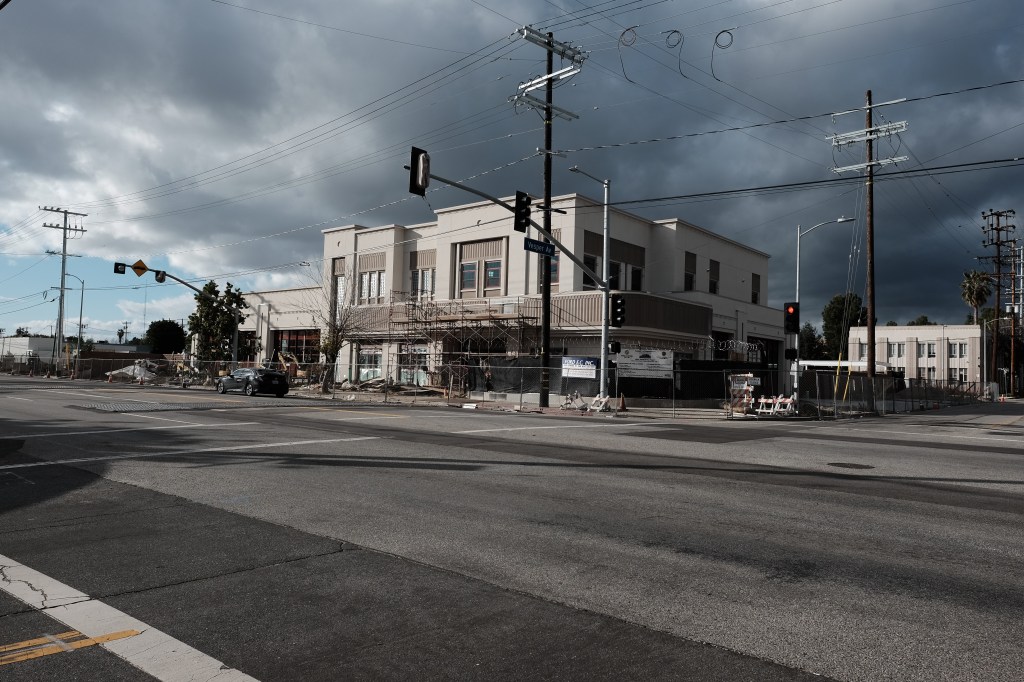
Long fought, both for and against, a new No. 39 fire station is nearing completion at 14615 Oxnard at Vesper, west of Van Nuys Boulevard.

It replaces a smaller, historic one on Sylvan Street across from the Valley Municipal Building. The older one is from the 1930s, and was a fine looking structure in the Art Deco design of that era. Perhaps a new brewery can move in there when the fire fighting folks vacate.

The new one, picks again from the era of the 1930s, but also borrows from nearby: to an obscure but beautifully designed 1938 structure on Aetna and Vesper, a crisp, elegant, dignified building that once belonged to the DWP.

The new $20 million dollar fire station, an 18,533-square-foot facility, was vigorously objected to, in lawsuits and protests, by residents who live south of the project. They feared noise from the fire engines, and a degradation of housing values.

Just a few years before, this area of Van Nuys emigrated in name to Sherman Oaks, and home prices shot upwards. 

Lost in the din of rebellion was the very low-rent characteristics of the area along Oxnard St. which is a gathering place for homeless people, undocumented day workers and also abuts the over lit and monstrously illuminated car dealerships on Van Nuys Boulevard.  If housing values were not endangered by these facts on the ground, the homeowners believed the proposed fire station would surely be even more detrimental. 

So now, along the south side of Oxnard Street, a new, very tall cinderblock noise wall (future outdoor urinal?) shields homes from the upcoming engine company sirens.  A pedestrian crossing, along with new sidewalks and road improvements upgrades the area.

Modern fire equipment trucks require bigger storage areas, and the old fire station on Sylvan only allowed trucks to back into the station. The new one has garages that the trucks can drive forward into which will add both speed and safety to the operation of mobile equipment.

The only egregiously aesthetic missteps in the new fire station are the cheap looking, burgundy, double-hung windows that look like they were ordered from a Chinese supplier on Amazon Prime. They are squat and graceless and ruin the rhythm and vertical linearity of the design. 

Architecturally, the station takes its place in the old tradition of civic grandeur when buildings such as libraries, police stations, and schools were dignified and placed squarely on the street.

Aerial Views: Van Nuys in the 1920s


1930s Map of the San Fernando Valley (DWP)

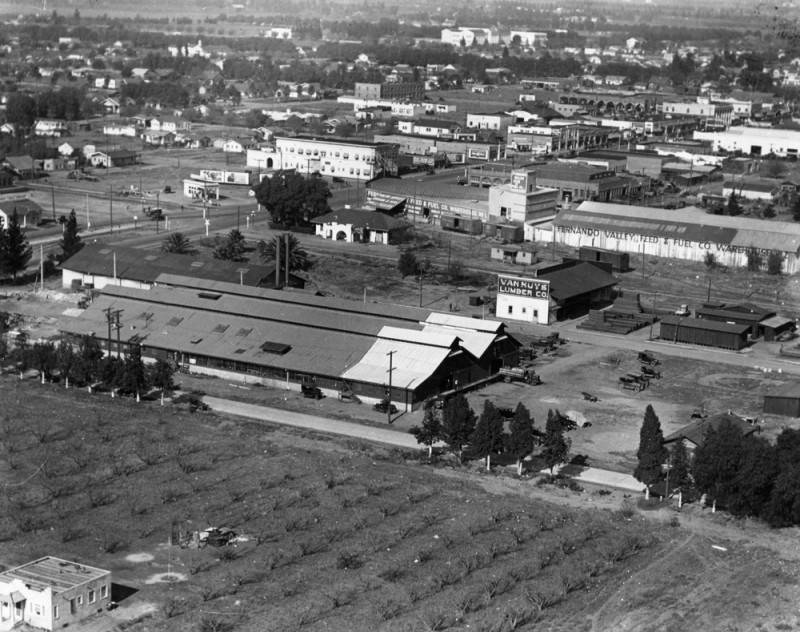
Van Nuys was established in 1911, and soon after people settled here to work and live.

The Southern Pacific freight trains ran along tracks which are now the location of the Metro Orange Line.

An agricultural economy supported citrus packing plants, animal feed for horses, cows, chickens; and the burgeoning development of the San Fernando Valley brought lumber suppliers to Van Nuys.

These 1924 images of Van Nuys come from the Los Angeles Public Library Archives.


In the first photo below, we are standing near Oxnard and Van Nuys Blvd. looking north with the train tracks and crossing signals visible in the middle left side. The town has the air of a farming village with rows of fruit trees planted and open space between structures. In the very top of the photo one can make out Van Nuys High School which was badly damaged in the 1933 Long Beach earthquake and rebuilt in an Art Deco style afterwards.

In the second photo, below, we are flying over the area near Oxnard and Van Nuys Bl. looking NE towards the site of our present day government buildings. Small, humble houses dot the landscape immediately adjacent to the industrial area along the rail tracks. Van Nuys Lumber Co. was probably located on Aetna St. one block north of Oxnard. One can also make out small rows of pitched roof dense houses in the middle right area. Perhaps these were “worker” housing for the people who loaded the trains, and did the manual labor which was required to move goods from Van Nuys to the freight trains.

Oxnard and VNB 2018

2018: Aerial View of Oxnard at VNB looking NE.


In the third image, below, from 1925, we have an overview of Adohr Dairy Farms (18000 Ventura Bl) and Runnymeade Poultry Farm.  This is in Encino west of White Oak.

CSUN has a large collection of Adohr Farms Images. On their website they have a brief bio of the Adohr story:

“The Adohr Farms milk dairy was located in Tarzana, California at Ventura Boulevard and Lindley Avenue. The dairy was established by Merritt Adamson 1916, and named for his wife, Rhoda (spelled backwards). During the Depression, the Adamson’s sold off most of their land. In the late 1940s, Adohr Farms moved to Camarillo, and was eventually sold to Southland Corporation in the mid-1960s.”
Photo below: Adohr Farms, 1937. Notice unusual udder-shaped topiary along road.

print
Aerial view of Adhor Certified Farm at 18000 Ventura Boulevard, Reseda, circa 1937. (CSUN)

SaveSave