At Bedside.


On the day my mother was inducted into home hospice care, after the oxygen machine was delivered, and the table on wheels positioned over her bed, she asked me to sit down and go over a few things.

She said she woke up every morning, not thinking of death but gradually, as the day wore on, realized she was not going anywhere. Her cancer was in Stage #4.

Inoperable, untreatable, unceasing, spreading and unstoppable.

She asked me to hold her hand. And we spoke of what I would do with the apartment after she died. And I told her how I would keep the photo albums and place them in my house for posterity. She said that my brother and his wife might want her sofa. I knew they didn’t. But I kept silent and listened.

She wanted to know if the money was holding out, and she warned about overspending.

I broke down, as I do often, sometimes for much lesser reasons, and told her that I would write about her, and those sacrifices she made; the long, hard, uncompensated work of a woman who was a wife and mother for 54 years and often neglected her own pleasures waiting and tending to others.

Does it count for something if you remember your mother throwing a ball back and forth with your retarded brother? Running up and down the stairs carrying laundry? Screaming at me for crashing a car? Telling my dying father that she had so much to say to him.

She told me she did not want me to cry and she tried to steer the conversation back to where I was going that night, and what I might do on the way back to Van Nuys.

She spoke next of what she might wear when she was dead and laid out. A Bathing Suit is what she proposed. But then I reminded her that she would be cremated and there would be no casket and no outfit to consider.

Calmly and tearfully, eloquently and closely we tread on an event not far in the future, a dark and silent condition, irreversible.

That most feared moment, interrupting the pressing banalities and bills of life.

 The Young and the Restless tivoed.

Red grapes on sale at Ralph’s.

 Can you put another pillow behind my head?

 Can you get a glass of water for me?

 No I don’t want oxygen!

 When will the landlord be told that his tenant had died?

 Why should you care who visited your mother as she lay ill?

For now, the woman who gave birth to me still spoke.


Anesthetized.


spellbound-1945-alfred-hitchcock-ingrid-bergman-gregory-peck-train-station

There were 120 narcotic “Norco” tablets in the prescription bottle on March 31st.

Six days later there were seven.

The medicine was supposed to be administered to an elderly cancer patient, bedridden, in pain.

But the physical therapist probably stole the medications, stuffing 100 or more pills into his pockets.

And yesterday that was the morning news, in my life, at 5:30am. Later I drove down to Marina Del Rey and reported the “burglary” to the sheriff and filed a police report.

A mollusk on a mattress: my mother.

Unable to lift, eat, or wash herself.

A cancer victim.

A crime victim.

Dependent on live-in home care workers, visiting nurses; tethered in fragility to life, eaten away by lung and bone cancer, yet strangely alert and intelligent to her bodily decay and the circumstances around her.

I was angry, nervous, agitated, betrayed. And my mother spoke from her horizontal position and said, “The important thing is to remain calm.”

My command center was my phone, electrified with texts.

Dr. G refilling the L-Dopa.
Dr. H refilled the thyroid.
The handrails were delivered.
How could the PT spend 14 hours in five days on physical therapy?
Who lost the Access Transport card?
We need eggs.
They won’t refill the Norco without a police report.
The premium blue disposable underpads arrived.

___________________________________________________________________

The day was hot and windy and blinding.

And then the sun slipped down and left the last hues of light over Venice.

Calmed by a glass each of beer and wine I walked on Abbot Kinney after 7pm, moving past shop windows, past bored clerks staring into cellphones.

Everything at that hour distracted as I wandered in and out of pretty stores.

Lubricated and intoxicated, I went into Elvino Wine Shop. I tasted a Croatian Red and walked out with a French Bourgueil Cabernet Franc.

I was wandering involuntarily now, sadness sedated, lulled into a dark gray perfume store furnished like a laboratory, lined with clear glass bottles.

Roses
Oranges
Cedar
Vanilla
Violet
Leather

“Spray the Santal on your left hand,” she said.

_________________________________________________________________________

And then I was in my car driving in darkness over Beverly Glen.

The love theme from Spellbound played.

I saw Ingrid Bergman holding onto Gregory Peck, wrapping him in love, rescuing him from collapse, guiding him through danger, analyzing his dreams, fighting his delusions, saving his life.

The Virtual World


20140311-171241.jpg

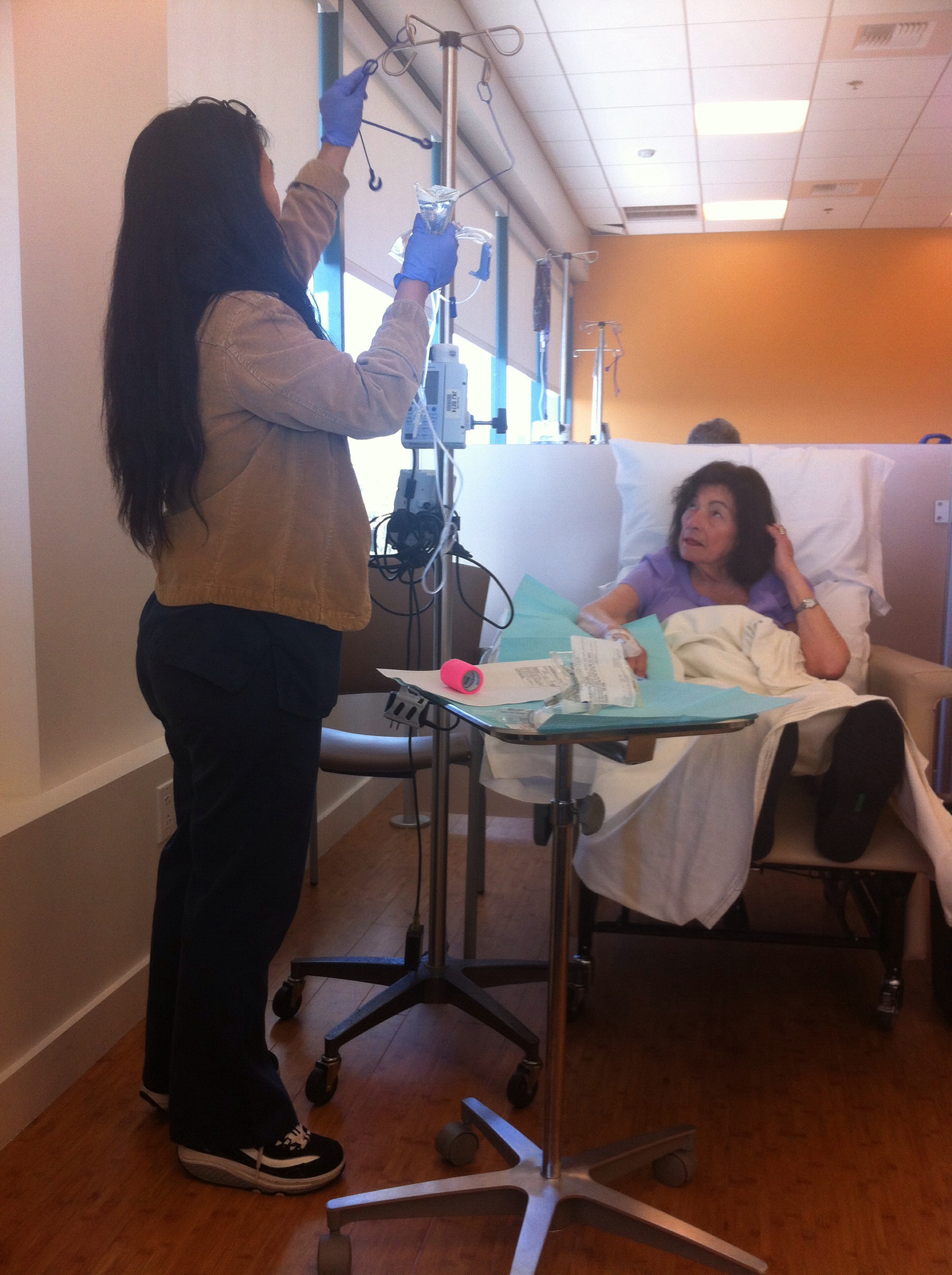
Yesterday was a beautiful day up on the sixth floor of UCLA’s Santa Monica Oncology Center as we brought my mom up into a sun-filled room with dozens of reclining leather chairs and she was connected by vein into chemo.

The wall of glass windows looked west to the shimmering ocean as the 80-degree sun blew hot and the palms swayed in the wind.

Instead of needles, blood, screams and suffering, there were copies of Martha Stewart Living, November 2010: beautiful show dogs photographed in sepia, apple pies set on wood tables, silver and purple leaves pressed onto canvas for a do-it-yourself art project. I saw Calvados and potatoes au gratin, buttery grilled beans on 18th Century Limoges china, tulip bulbs laid into the soil on a Connecticut farm.

In my hands were two bags from FLOR, full of colored carpet samples I had gathered for a client, purple and brown, green and yellow squares, laid out on the wall ledge so my mom could tell me which ones she liked.

My brother was listening to a podcast, partly; answering emails, talking to his wife, and texting his business partner as the medical anti-cancer fluid dripped and dripped, into my mother’s bloodstream, and he talked of idiot entertainment execs and the virtues of a new calendar app.

The nurse, an Asian-Californian woman, in a tan Levi’s corduroy jacket over dark brown scrubs, came to change the tube; her long, straight black hair shining in the bright sunlight, her smile warm and genuine, caring, here in the chemo spa; where all voices were subdued, all expressions were smiles, and all expectations were high.

To combat nausea, the doctor prescribed the Martian sounding Onandestron.

After the tube came out, my mother said, “That’s it?”

And the caregiver, the nurse, and the two sons wheeled her out of the sun, and into the dark elevator, down to the red Ford Focus waiting in the garage.

2/19/14


52 years ago, in Park Ridge, IL, a 28-year-old woman labored in Lutheran General Hospital for 20 hours and gave birth to me.

Yesterday, we were together again, at 8:30am, inside UCLA Medical in Santa Monica, CA to hear the news that her cancer had spread from lung to bone and most likely would kill her within months.

There were tears in the office, and treatment talked of but not promised, because there was not much that could be done to arrest and blockade a disfiguring and painful disease. Aggressive killing cells, moving fast, were taking over every bodily pathway and steering this woman, my mother, into death.

Back at the apartment, I called 90-year-old Aunt Millie, my mother’s sister in Chicago, to tell her a grave prognosis. Simultaneously, we burst out crying, she wailing that her little sister was not supposed to die before her.

Later on, in the sun, I sat with my mother in the open door of her apartment, by her knee, as she spoke of her disbelief. I told her I didn’t want to see her in any pain, that if she had to die, it should be quickly.

To wish your mother to die faster seems obscene, blasphemous, selfish.

But every choice pondered, in treatment or without, lead into the same dead end: 2 months, 4 months, 8 months…

A vulture phoned later, a cousin who traffics in crystals and angelic communications. He spoke, like an infomercial, of “amazing” cures down in Mexico, and “unbelievable” results.

Topped in yarmulke and baptized in mysticism, he droned on in monologue, flavoring his pitch with prestige (“Harvard” and “M.I.T”), cliche and promise (“Think outside the box” and “alternative treatment”). Gross and unrelenting in salesmanship and insanity, the voice of this bearded charlatan claimed godlike knowledge that might save a dying person.

But the huckster claiming the miracle cure has no power over us.

Our immediate family was inoculated in skepticism, disbelieving in the afterlife, doubtful of religious fervor, resigned to believe that death is death and without merit except in its extinction of pain.

Dreams of heaven were not on my mind, only the distant past.

I saw again the Super 8 movies taken by my father as my mother pushed a stroller around Indian Boundry Park in Chicago in early Spring, her black hair and skirt blowing in the March winds. I saw days spent with my younger mother in love, the warm breath of life, memory, kisses, spaghetti sauce cooking on the stove, the days spent on the porch watching the rain pour down on Birchwood Drive; I also recalled the explorations into old neighborhoods, the angry fights, the dramas and battles over bad report cards, the shame when I came out and my eventual acceptance and her grudging respect, the fierce warrior who always thought my best days were still to come; she with her inexhaustible conversations and inability to stay silent long, how can her voice go away! How can my mute words replace life itself, extinguished cruelly and helplessly by the biological necessity of dying?

2/19/14: a dark day, an unforgettable birthday. It ended, as many days in Los Angeles do, eating sushi. Me, my brother, my sister-in-law and my 7-year-old nephew went out to dinner, drank sake and split raw fish rolls. And I blew out a single candle on top of vanilla ice cream and fried bananas as the entire restaurant sang Happy Birthday.

Day of the Oncologist.


DSC_3862
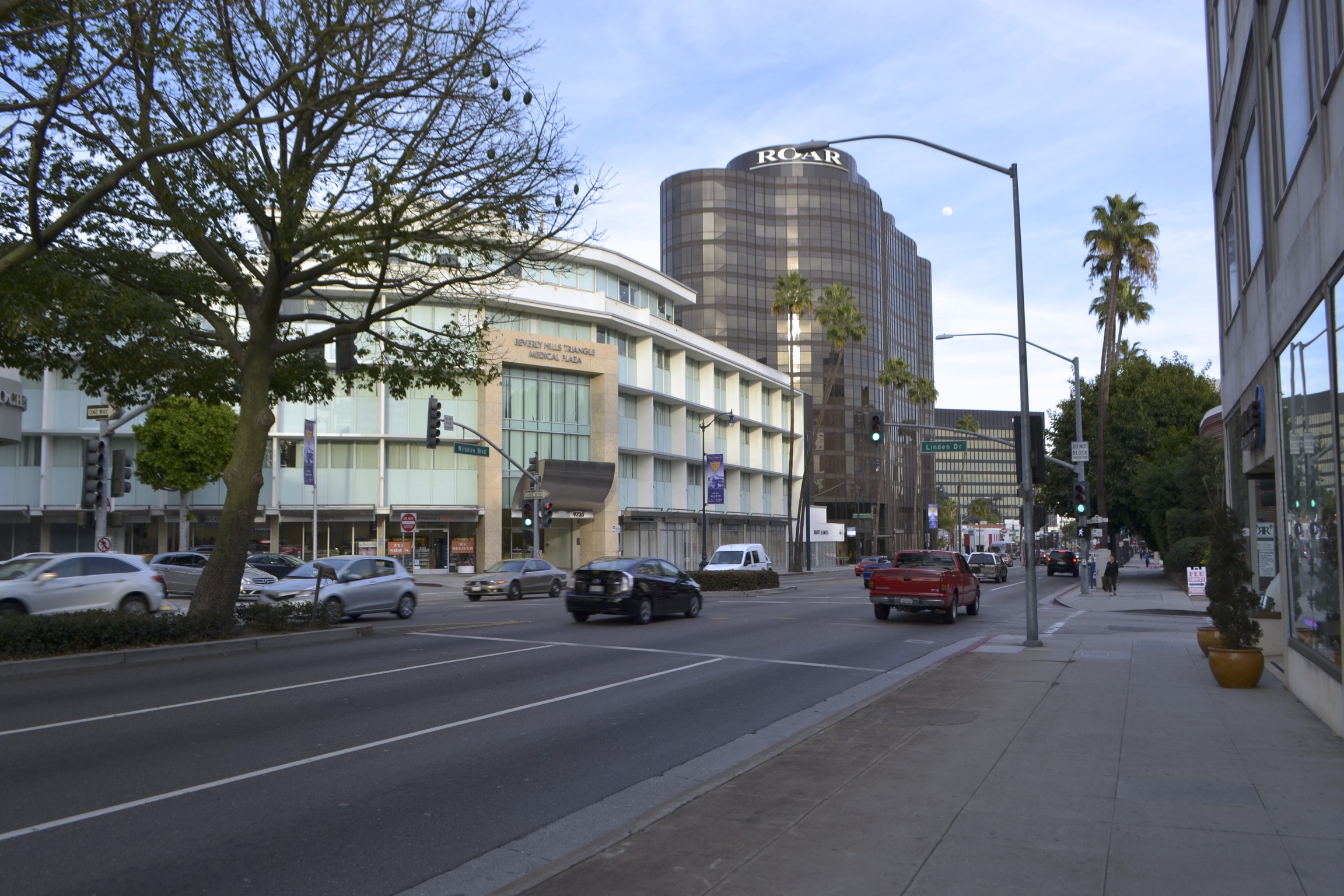
On Tuesday, February 11, 2014, the Los Angeles sun rose at 6:41am and the sunset at 5:33pm. And I was driving east on Wilshire, through Beverly Hills, in the last hour of daylight, transfixed at the odd lull of creamy illumination, under gauzy skies, light that lasted long; accompanied by slight winds, cool and oceanic.

That day I had gone with my mother, a homecare worker, my brother and a nurse to visit two doctors, one an oncologist, the other GP.

The oncologist was down in El Segundo, a Japanese-American in slim gray khakis, and thin herringbone tie tucked under a natty Tattersall shirt. He spoke, quietly, unpromisingly, about six weeks of radiation and how cancer might be attacked in the lung, how its curative program might weaken the body. He advised two scans: a PET and an MRI to further determine if the malignancy had travelled to brain and bone or beyond.

But as much as he knew, he admitted he didn’t know everything. And what course my mother’s lung cancer might take, he could not say. His understated reverence for discreet diagnosis drowned out by his patient’s unceasing, hoarse, gurgling, sick cough.

The day was full of wheelchairs and waiting rooms, insurance cards and doctors smiling with closed lips.

Later on, I was trapped in my car, on the 405, sitting in a vast unmoving ribbon of automobiles stretching from Culver City to Bel Air, so I got off at Santa Monica Boulevard and drove east, just to move.

And it was in Beverly Hills, a place I despise, that I found solid peace under partly cloudy skies.

DSC_3883

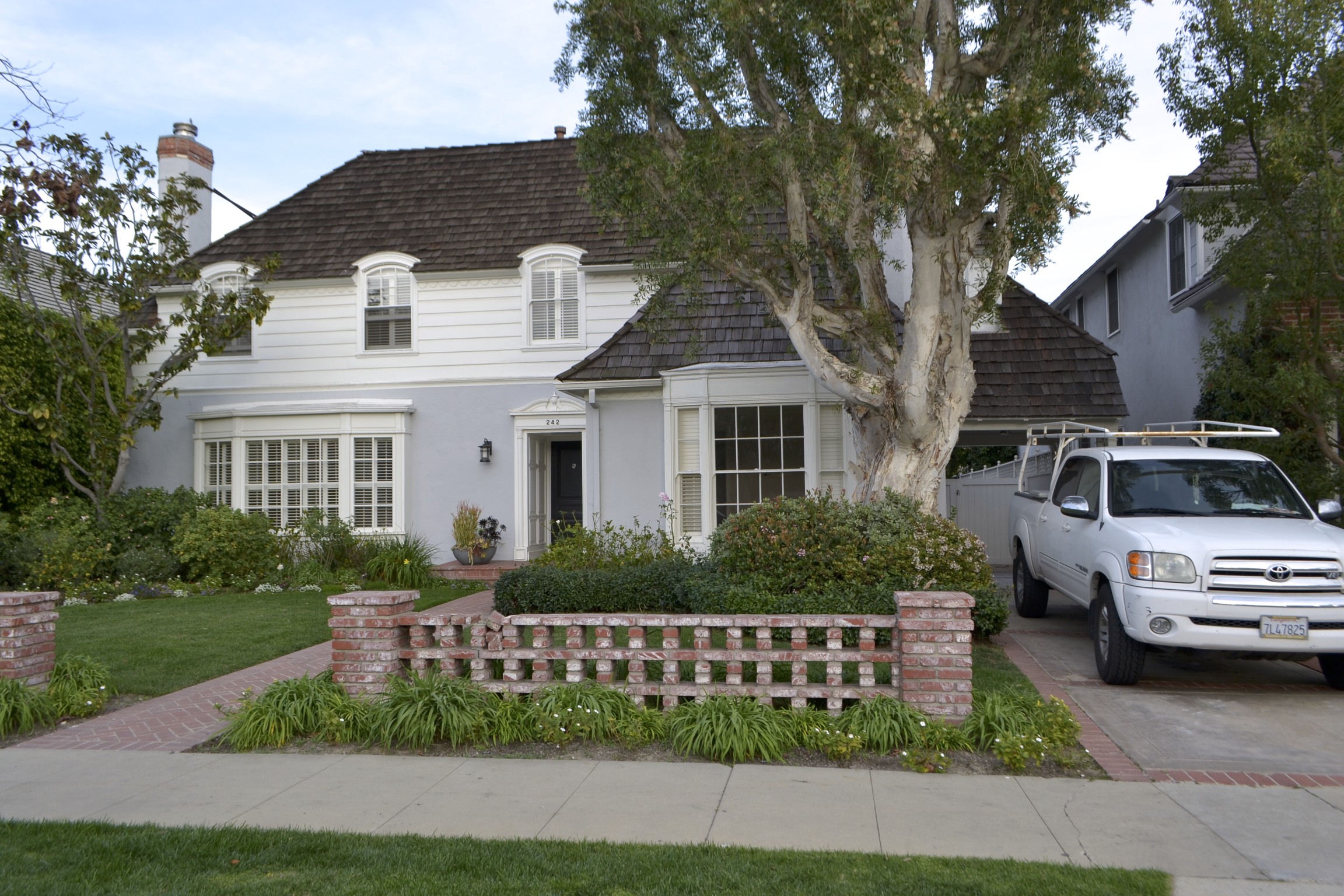
On Linden and McCarty Streets, there are many old, lovely houses, well mannered, and discreetly elegant, some with small libraries behind bay windows, white siding and wood shake roofs, and old Spanish houses, not small, not grandiose, comfortably gracious and visually palliative.

I walked and looked, and found a few signs that said, “No Subway under BHHS”. Surprisingly none said “I Love Global Warming” or “Let’s Drive More SUVs and Promote Lung Cancer”.

This habit, of looking at nice houses, I inherited from my mother, an old hobby, learned in Chicago, driving past center-hall colonials she wished she lived in; then later on, in the 1980s, driving in her 1972 Delta 88 convertible down President Nixon’s street in Saddle River, New Jersey, not far from her new home in Woodcliff Lake, past that wooded estate where the 37th President lived.

Beverly Hills, CABuilt 1927

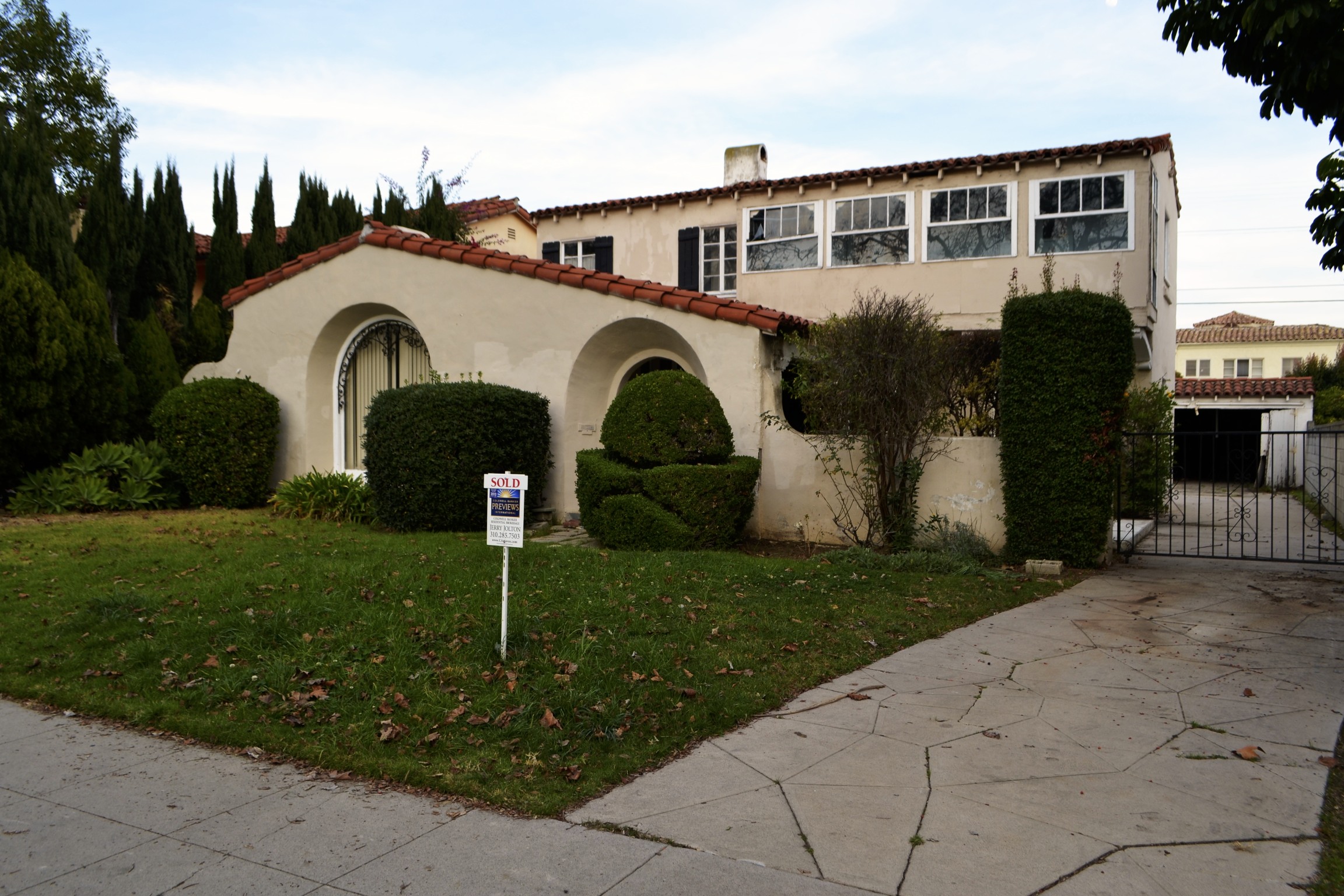
My walking tour of Beverly Hills ended near 220 S. Linden Drive, in front of an empty 1927 house, recently sold, where a cracked driveway, open garage and sagging second-floor window porch left evidence of past life. Silent, abandoned, a lot on the street.

Who owned it? Who valued it? Who furnished it? Who made love here? Who woke up and who went to bed here? Who drove up its driveway every night imagining that those nights coming home would go on forever?

On Hold


Sometime around Noon on Monday, January 13th my mother, 80-years-old, scoliotic but sentient, walked from her bed to bathroom, and tripped over a blanket.

She lay on the floor, fully conscious, within reach of her Life Alert. Her phone rang multiple times, mostly from her daughter-in-law trying to reach her to confirm a Tuesday medical appointment. She tried to pull herself up but could not. Her pride stopped her from pushing the green button.

20 hours later, wrapped in pillows and suffering dehydration and two fractured vertebrates, emergency services found her alive and took her, by ambulance, to Marina Del Rey Hospital.

A scan later revealed a spot on her right lung. Then a biopsy confirmed aggressive “poorly differentiated” adenocarcinoma or lung cancer stage 2, in her lymph nodes as well, not removable by surgery or treatable by pill, and perhaps not (pending oncology appointments) by chemotherapy or radiation.

For a few weeks, prior to her fall, she had a hacking cough, something many people in dry and smoggy Los Angeles suffer from. Her weight loss seemed to come from paltry eating. Now the benign explanations are stricken from our memory.

After her hospitalization, next to a vigorous and beautiful California woman of 90, she went to the Mar Vista Country Villa, a palm shrouded facility where the nearly dead lay in rooms along hallways sprayed with chemical air fresheners, and nurses are summoned, slowly, by red button, to change patients, bathe them, puff up their pillows, and place beige trays of tan food in front of weak hands, or feed them, as they did my mother, when the sick are too sick to lift a fork.

There was no sleep at Mar Vista Country Villa, interrupted day and night by screams, moans, florescent lights, coughs and agony. The torturously and humorously named “rehab” center assigned a doctor who never met my mother, a man named Sheikh, who stormed into her room one night, woke her up from a deep sleep and yelled, “Hurvitz! Hurvitz! I read your report. Not good. I give you two years at most. I think maybe the Parkinson’s drug you took gave you cancer.”

As she lay in her bed for two weeks we (my brother, his wife, and I) furiously ran defense, interviewing and hiring home care workers, making appointments with doctors, gathering her financial information and assuming power of attorney over her life, financial and medical. Furniture was removed from her apartment, replaced by walkers, wheelchairs, bedpans, shower chairs, elevated toilet seats, grab bars and adult diapers.

And insurance, that lethal octopus of life entangled with death, the overseer of it all, it went into production, turning out bills and invoices and records, demanding attention for its deadlines and payments and vendors, doctors, lab tests, and deductibles.

And we are only now three weeks and two days since the fall.

And I cry almost every day, sitting in traffic on Sepulveda, walking through Ralphs, riding down in the elevator from her apartment, confronting dread and loss, preparing for that unthinkable and uninvited hour, when the woman who gave me life, dies.