Navigating Public Space in Marina Del Rey.


In the 1960s, the swamps of south Venice became a multi-million dollar building project that culminated in what we now call Marina Del Rey.

Pleasure boats, yacht clubs, nautical facilities, circular high rises with balconies overlooking the harbor, landscaped roadways with palm trees, office buildings, pharmacies, tennis courts, a hospital, a fire station, a library; and many restaurants overlooking the yachts, sailboats and motor boats.

A district devoted to tanning, drinking, carousing, love making, and living the good life amongst airline pilots, stewardesses, restaurant workers, aspiring actors, and retirees. The 1960s dream of accessible pleasure for anyone white with a convertible.

They even built the 90 Freeway to get people in fast, before the boat left the dock. Imagine the high quality of life 60 years ago, when a new freeway was affordable and considered the highest and best use of land.

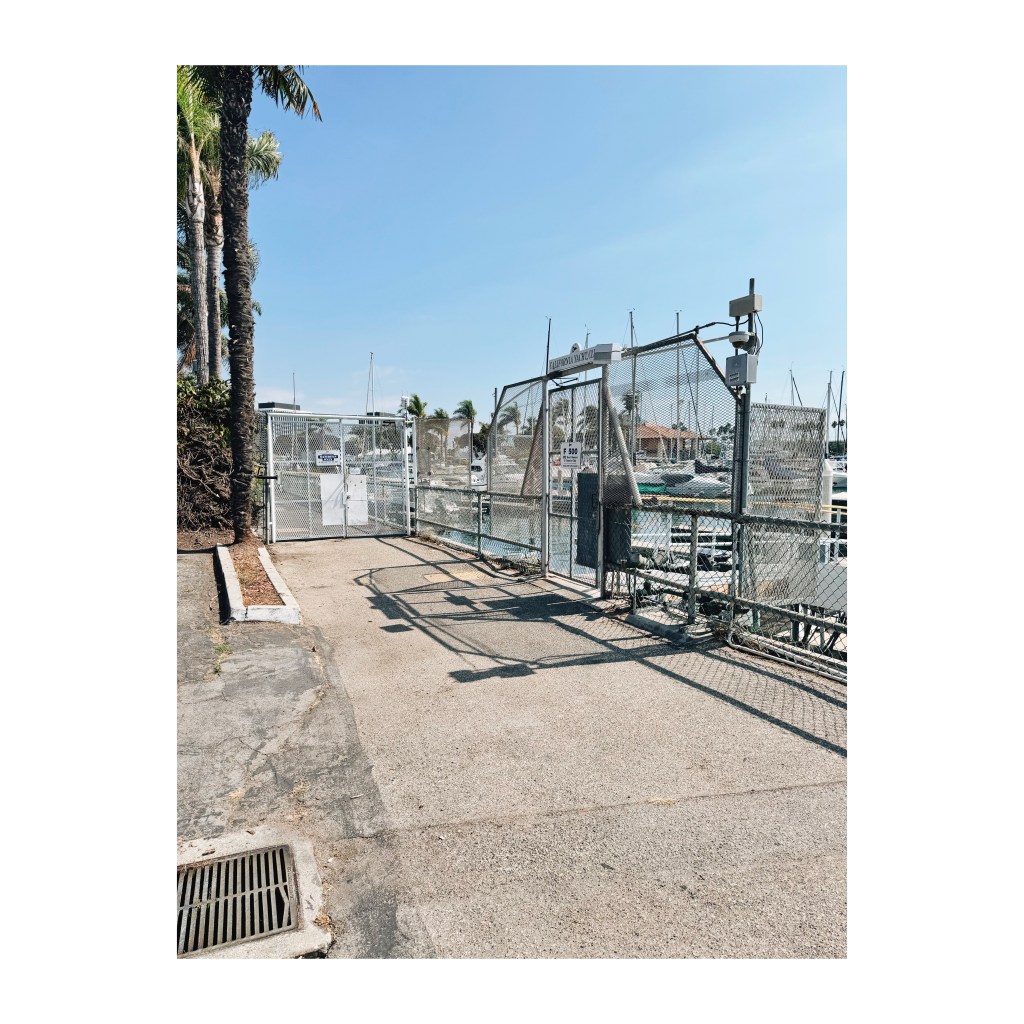
From its inception, Marina Del Rey feigned a public purpose while raking in the dollars fencing off the best parts for private use of yacht clubs and apartment dwellers. Docks are locked up and there are many barriers to prevent the use of the harbor for the general public unless you are there to purchase a dinner and drinks on a boat, bar or restaurant.

Over the years, there have been community projects to create usable public space, such as Yvonne B. Burke Park on the north side of Admiralty Way which has athletic equipment, bike roads and jogging paths. That park too has recently been incarcerated when Bay View Management built a cinder block wall that closed a public access point behind a Ralph’s store on Lincoln Boulevard. 

God forbid a pedestrian in a park might access a supermarket on foot.

Other luxury apartments, understandably fearful of crime, vagrancy and violence, have illegally built obstructions along their land to prevent the park from becoming a way to enter their properties.

Every few hundred feet, the green parks become parking lots. An athlete running, riding a bike or rolling skating will eventually stop at a busy road where vehicles speed by at 60 miles an hour. And other cars and trucks will be entering the parking lots or exiting, creating additional hazards for the non-driver.

The big, popular restaurants, anchored in seas of asphalt, offering seafood, steak, alcohol, valet parking, and private parties to corporate diners and red nosed, melanomatous men in Tommy Bahama, have all gone out of business. Café Del Rey and Tony Ps with their crumbling, dated, Brady Bunch style restaurants are empty. The cigarettes, cigars, Aramis and lounge singers gone with the wind.

The great pandemic meltdown which has stolen our lives, taken our movie theaters, pillaged our department stores, and defecated upon our civic dignity, has now obliterated the big dining establishments of Marina Del Rey.

These popular places, that seemed immune to time, forever serving enormous plates of grilled lobster, prime rib, baked potatoes, cheesecake, ice cream sundaes and voluminous cocktails are now dead. Silent as Hiroshima after the bomb, these outposts of high on the hog, intoxicated living were ailing, out of fashion, and are now exiled from our spartan, self-consciously healthy era.


For a pedestrian who is trying to stroll one mile of the harbor west from Bali Way to Palawan Way, with the boats in view along the south walkway, there are several private obstructions that make it impossible to complete the walk.

I speak from experience as my friend Danny and I did the walk today.

The California Yacht Club locks up the walkway with their own use of the property. 

One is forced to detour to Admiralty Way with the unused parking lots of the long-gone restaurants on one side, and the near-death experience of speeding cars on the other.

To reenter the harbor walkway, you find the Los Angeles County Fire Department Station #110 (4433 Admiralty Way) and walk behind the building to rejoin the path along the water to once again enjoy the public recreational qualities that are supposedly there for everyone to enjoy, not just yacht members.

The Marina City Club encompasses three early 1970s high rises which are entered securely by several guarded driveways on Admiralty Way. This complex has swimming pools, tennis courts, a convenience store, but is threatened by similar structural defects that brought down the Surfside, Florida condominium in 2021, killing 98 persons.

For now, residents who own property there pay high HOA fees, and even those who bought in cheaply face repairs that will surely cost collectively in the hundreds of millions of dollars to make these three, 55-year-old buildings safer in a location where tsunamis and earthquakes are always visiting unexpectedly.  

Concluding the walk today, we went north along a dirt path on the west side of the Oxford Basin “Wildlife Refuge” which connected to Washington Boulevard.

As we passed a vagrant man sprawled on wall, shopping cart and garbage nearby, my friend Danny shouted, “Get going, walk faster.”

Danny had spotted a handgun in the vagrant’s hand.  

Just another reminder, if any is needed, that nobody should assume that this is a safe area, regardless of how much homes sell for. The demoralizing and unsanitary aspects of Los Angeles are all around, because we live in perhaps the dirtiest metropolis in the United States, one that believes public trash camping is a civil right and mental illness is only a danger after it kills.

How this city will present during the 2028 Olympics is something Orwell would have pondered.

The New Fire Station


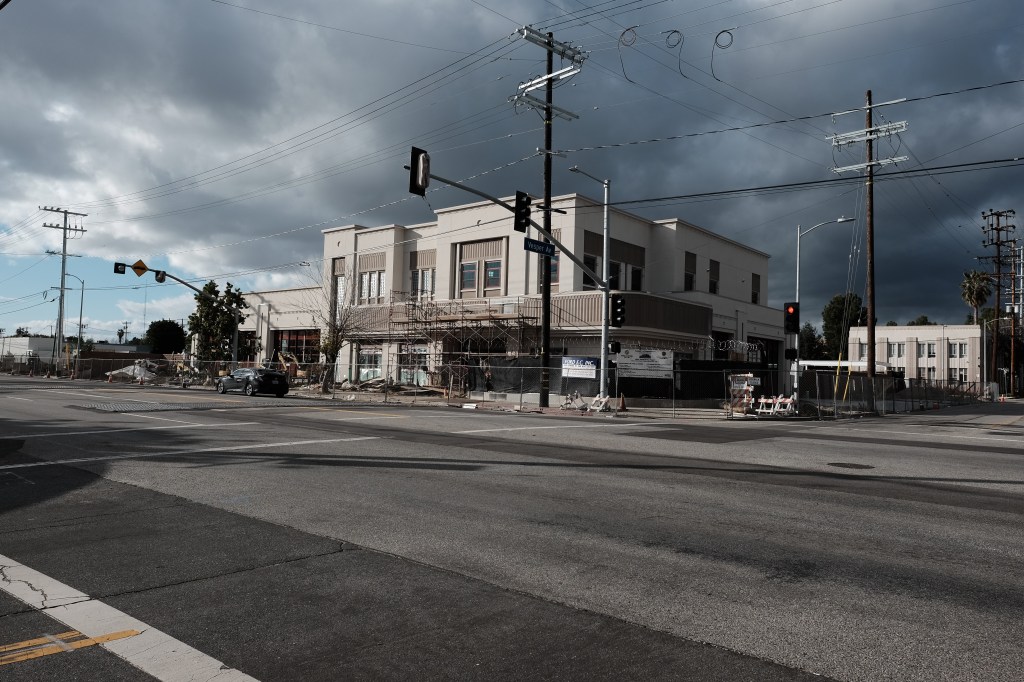
Long fought, both for and against, a new No. 39 fire station is nearing completion at 14615 Oxnard at Vesper, west of Van Nuys Boulevard.

It replaces a smaller, historic one on Sylvan Street across from the Valley Municipal Building. The older one is from the 1930s, and was a fine looking structure in the Art Deco design of that era. Perhaps a new brewery can move in there when the fire fighting folks vacate.

The new one, picks again from the era of the 1930s, but also borrows from nearby: to an obscure but beautifully designed 1938 structure on Aetna and Vesper, a crisp, elegant, dignified building that once belonged to the DWP.

The new $20 million dollar fire station, an 18,533-square-foot facility, was vigorously objected to, in lawsuits and protests, by residents who live south of the project. They feared noise from the fire engines, and a degradation of housing values.

Just a few years before, this area of Van Nuys emigrated in name to Sherman Oaks, and home prices shot upwards. 

Lost in the din of rebellion was the very low-rent characteristics of the area along Oxnard St. which is a gathering place for homeless people, undocumented day workers and also abuts the over lit and monstrously illuminated car dealerships on Van Nuys Boulevard.  If housing values were not endangered by these facts on the ground, the homeowners believed the proposed fire station would surely be even more detrimental. 

So now, along the south side of Oxnard Street, a new, very tall cinderblock noise wall (future outdoor urinal?) shields homes from the upcoming engine company sirens.  A pedestrian crossing, along with new sidewalks and road improvements upgrades the area.

Modern fire equipment trucks require bigger storage areas, and the old fire station on Sylvan only allowed trucks to back into the station. The new one has garages that the trucks can drive forward into which will add both speed and safety to the operation of mobile equipment.

The only egregiously aesthetic missteps in the new fire station are the cheap looking, burgundy, double-hung windows that look like they were ordered from a Chinese supplier on Amazon Prime. They are squat and graceless and ruin the rhythm and vertical linearity of the design. 

Architecturally, the station takes its place in the old tradition of civic grandeur when buildings such as libraries, police stations, and schools were dignified and placed squarely on the street.

LA TIMES: A burning desire to save Van Nuys’ Station 39


fire_department

Photo Credit: http://www.you-are-here.com/building/fire_department.html

A burning desire to save Van Nuys’ Station 39

Los Angeles’ oldest operating fire station is outmoded for today’s equipment and needs, officials say. Its fans seek to rescue the classy, Depression-era building.

By Catherine Saillant

October 27, 2009

Station 39 is cramped and outdated. It’s a tight squeeze getting the trucks in, and there’s not enough room for the larger rescue ambulances that have become standard over the decades. There isn’t any on-site parking, forcing firefighters to walk three blocks from another city lot.

But the firefighters at the oldest operating station in Los Angeles could soon be moving to new digs, sparking concern about what will happen to the Depression-era building in Van Nuys and raising questions over whether a new location is even needed.

Critics worry that the edifice, built as a public works project in 1939 and now adding a touch of elegance in an otherwise tired neighborhood, could wind up as little-used business offices, another drug rehab facility or — even worse — torn down.

Ron Hay, who is on the local neighborhood council, wonders whether it doesn’t make more sense to modernize and enlarge the station rather than relocate it.

“It’s a densely populated area. There are a lot of apartments,” Hay said of Station 39’s current location. “When you get a lot of people packed in and sleeping together, there is always the possibility of increased incendiary events.”

Dr. Robert Fields, whose dental office has operated half a block from the station for 38 years, thinks Van Nuys has grown so much that Station 39 should stay put and another firehouse should be added somewhere else.

“We’ve gotten to the point where we need a second location,” Fields said.

Los Angeles Fire Department officials say relocation is necessary because Station 39 is too small and outdated to accommodate modern firefighting equipment and resources. An internal analysis of the department’s aging firehouses placed it at the top of the list for replacement.

Services to the community would be enhanced by a move, fire officials say, because a larger building would allow the station to expand its emergency medical response. The current quarters on busy Sylvan Street sometimes make it difficult for trucks just to get in and out.

“It’s the oldest operating station in the city,” said Battalion Chief Jose Cronenbold, who oversees department facilities. “It’s too cramped for the apparatus there.”

Across the street from another Valley landmark, the Art Deco-style Valley Municipal Building, Station 39 cuts a graceful profile on a street otherwise filled with bail bond offices, insurance outlets and low-budget attorneys’ offices.

From the start, it was a busy station. During its dedication July 29, 1939, fire wagons screamed out of the building three times to put out flames, according to an account in the Los Angeles Times.

A city advisory committee last summer recommended that the station be moved to a new building to provide needed space for emergency medical squads, more parking for firefighters and upgraded truck bays, storage and kitchen facilities.

“It’s operational 24 hours a day, 365 days a year. That takes a toll on infrastructure that’s already old,” Cronenbold said. “You’ve got 14 to 16 guys in there every single day.”

Councilman Tony Cardenas said he expected the mayor and the City Council to authorize a new station based on the fire committee’s recommendation. The cost of the project, estimated at $37.1 million, would come out of the Proposition F fire facilities bond issue approved by voters in 1998.

Cardenas said fire officials are looking for land close to Station 39’s current location near the Civic Center. Land that faces Van Nuys Boulevard would be ideal, he said, because trucks could easily pull in and out of traffic.

“We have some car lots within two to three blocks that are vacant,” Cardenas said. “There are a lot of buildings that are for lease. There is more opportunity today because of the economy.”

The city has replaced 19 other fire stations using bond money but had enough cash and interest left to build one more, the councilman said.

“We have the bond funds and the ability to improve the station, and it’s the lucky winner,” Cardenas said.

Residents say that if Station 39 does move, the city should preserve the building and perhaps convert it into a restaurant, or even a museum. Joel Horowitz, whose family has run a bail bond operation next to the firehouse for 60 years, thinks a Valley museum would be great.

Valley College and Cal State Northridge have collections of historical photographs and documents, but there is no central location where visitors can learn about the Valley’s agricultural past, its epic battles over water rights and its distinction as the nation’s first hub of suburban living, he said.

“We need our own cultural identity,” said Horowitz, whose shop includes large black-and-white historical photographs of the fire station, the municipal building and his bail bond business.

Cardenas, a former real estate broker, said the city probably would put conditions on the original property to ensure that its historical value is not destroyed. After a new station is built, in about two years, the old building would be declared surplus property by the city.

The city could then convert it into public offices or some other public facility. Or it could opt to sell the property to a third party, Cardenas said. Other retired firehouses have successfully been converted into restaurants and offices while preserving historical character, he noted.

Fields, the dentist, is among the local residents who say preservation is vital.

“It’s something we really can’t replace,” said Fields, who brought his children, and now brings his grandkids, to the station open house each year. “It would be very sad to lose a lovely old building to something that is cold and austere.”

catherine.saillant@latimes.com

Copyright © 2009, The Los Angeles Times

Destroying an Architectural Gem in Van Nuys.


Facade Engine Co 39.jpg
3948817675_8973867d92
Sylvan St. Van Nuys

At a MODCOM meeting last night, I learned that an Art Deco architectural gem in Van Nuys may be destroyed.

Engine Company No. 39 was built in 1939 and has all the dignity, solidity and beauty of governmental buildings from that era. It sits just across the street from the Valley Municipal Building and is a handsome civic structure.

An article in the Contra Costa Times quotes Councilman Tony Cardenas:

“Councilman Tony Cardenas said he appreciated the beauty of the building, which was built in the Art Moderne style, but added the time had come to replace it.

“Today, probably as much as ever, people can appreciate how important it is for us to have the best — the best equipped, best-manned fire department in the country,” Cardenas said.

“This is an opportunity for us to invest in the community of Van Nuys and to replace the 70-year old station,” he added. “Not that everything that is at least 70 years old needs to be replaced, but I think it’s important that we do our responsible duty when it comes to facilities.”

This quote, by Councilman Cardenas, shows a very short sighted and appalling ignorance of both history and community. While nobody would argue for the need to have the best fire protection available, why does this necessitate destroying a historically significant building?

During Mr. Cardenas’ tenure, the old Whitsett Home, built by the man who founded Van Nuys in 1911, was bulldozed and now there is an empty lot on the site. Now Mr. Cardenas wants to literally remove one of the finest examples of 1930’s streamline design in Van Nuys.

The secession of a neighborhood of Van Nuys which now calls itself “Sherman Oaks” was a recent embarrassment to Mr. Cardenas. But how and why would people want to live in Van Nuys, which remains, at least on its main thoroughfares, filthy and unspeakably ugly and wears its badge of shame without shame? Is Mr. Cardenas on a mission to bring down Van Nuys or build it up? One has to wonder….

Van Nuys was once the jewel of the San Fernando Valley. It’s civic pride was embodied in buildings like the Fire Station No. 39. Along with the old library, the old post office and the municipal building, these were walkable and civilized arrangements for conducting one’s daily business.

Are there not acres of empty parking lots, underutilized industrial lots, and vast acres of crappy broken down ugliness lining such streets as Sepulveda, Van Owen and Kester? You mean, Mr. Cardenas, that the only possible location for a new fire station is on the site of one that dates back to the administration of FDR?

Van Nuys is crying out for someone with a vision, and a sensitivity to beauty, and instead we are under the administration of a boor who would allow the destruction of one of the finest examples of streamline moderne architecture in Los Angeles.