Link

4419 Fulton Terrace


Huntington Archives

Image

Image

Image

I have often passed this apartment at 4419 Fulton, north of Moorpark, and noticed its unique and graphic address sign.  While searching through the archives of photographer Maynard Parker (1900-1976) housed at the Huntington, I came across photos he made in 1963.

Masculine and modern, the squat and flattened lettering, ingeniously aligned with the low slung horizontality of the building, is as much architecture as the architecture itself.   Almost cartoonish and leading into pop-art, it leaves behind the decorative scrolling that marked 1950s apartments whose builders slapped their daughter’s names on building fronts (“Debby Ann”, “Stacy Lynn”) or borrowed from faraway places (Tahiti, Hawaii or Fiji).  The indoor entrance, private and serene, concrete slabs floating across water, marries Japan to Southern California.

If this building is not on a historic preservation list- it should be.

Title:Fulton Terrace Apartments. Exterior. Los Angeles, CA

Architects: Burlew and Liszt.

Creator/Contributor:

Parker, Maynard L., 1901-1976.

1963 May

Contributing Institution:Huntington Library, Photo Archive

Craig House


Craig House, originally uploaded by Here in Van Nuys.

On Monday I attended an LA Conservancy meeting at the Craig House in Chatsworth. It was designed by Paul R. Williams in 1939 on many acres of then rural land.

The house, sheathed in flagstone, is a diagonally shaped ranch with an outdoor covered veranda whose arms swing around a pool. One enters through an outdoor entrance opening into a courtyard.

Idyllic and cozy, grand and understated, it reaches back into the old San Fernando Valley of gracious living and modern convenience for a lucky few.

Los Angeles Back Then


Image

Image

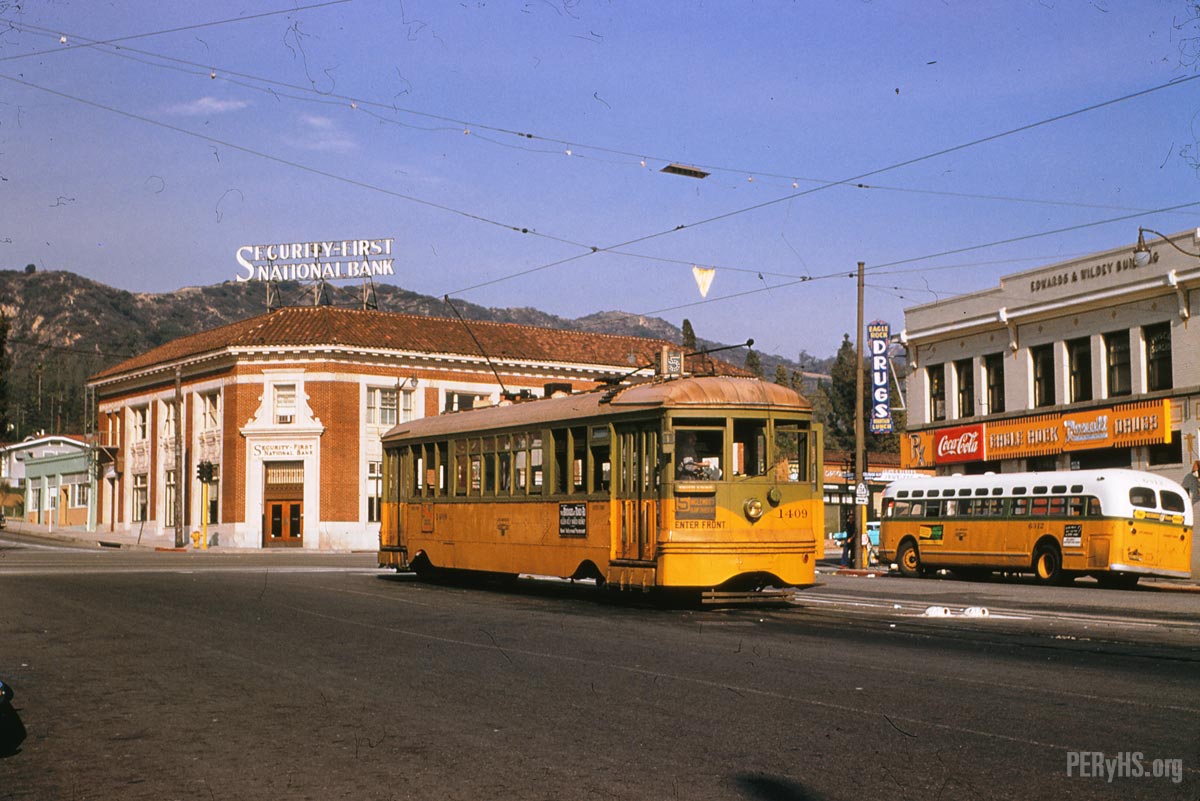
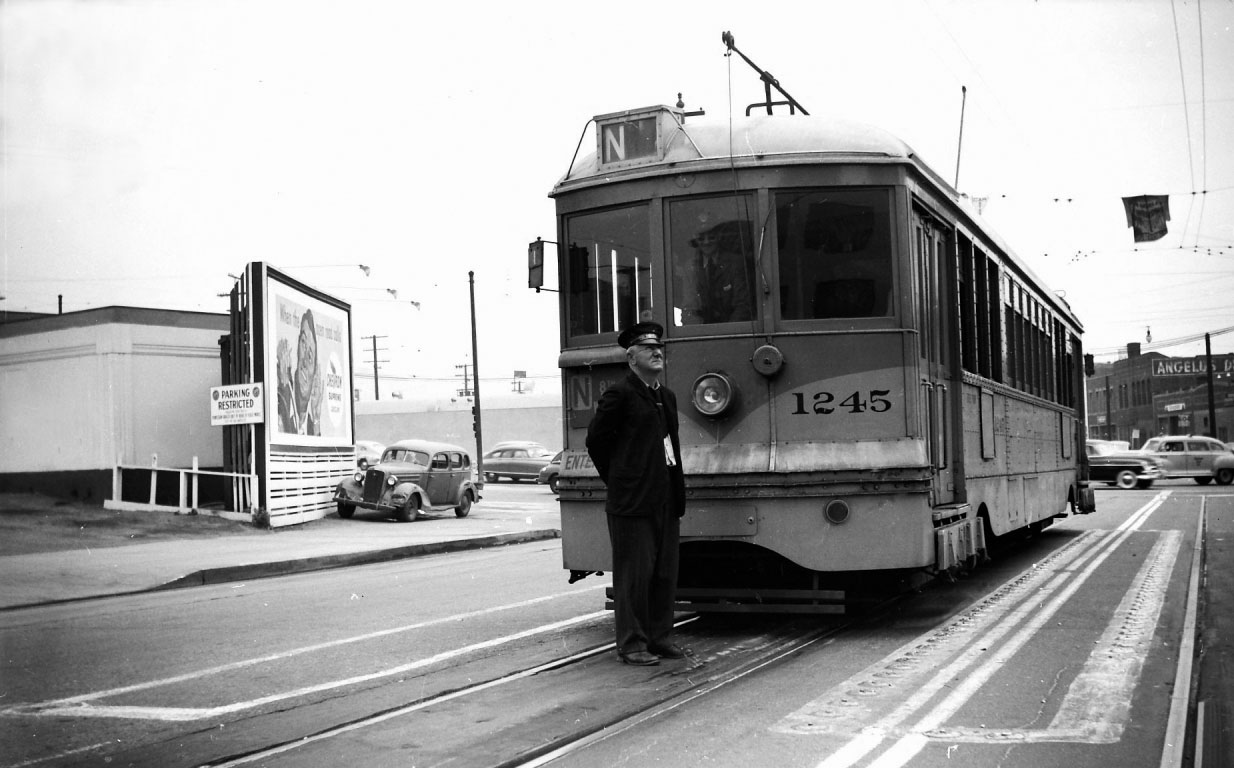
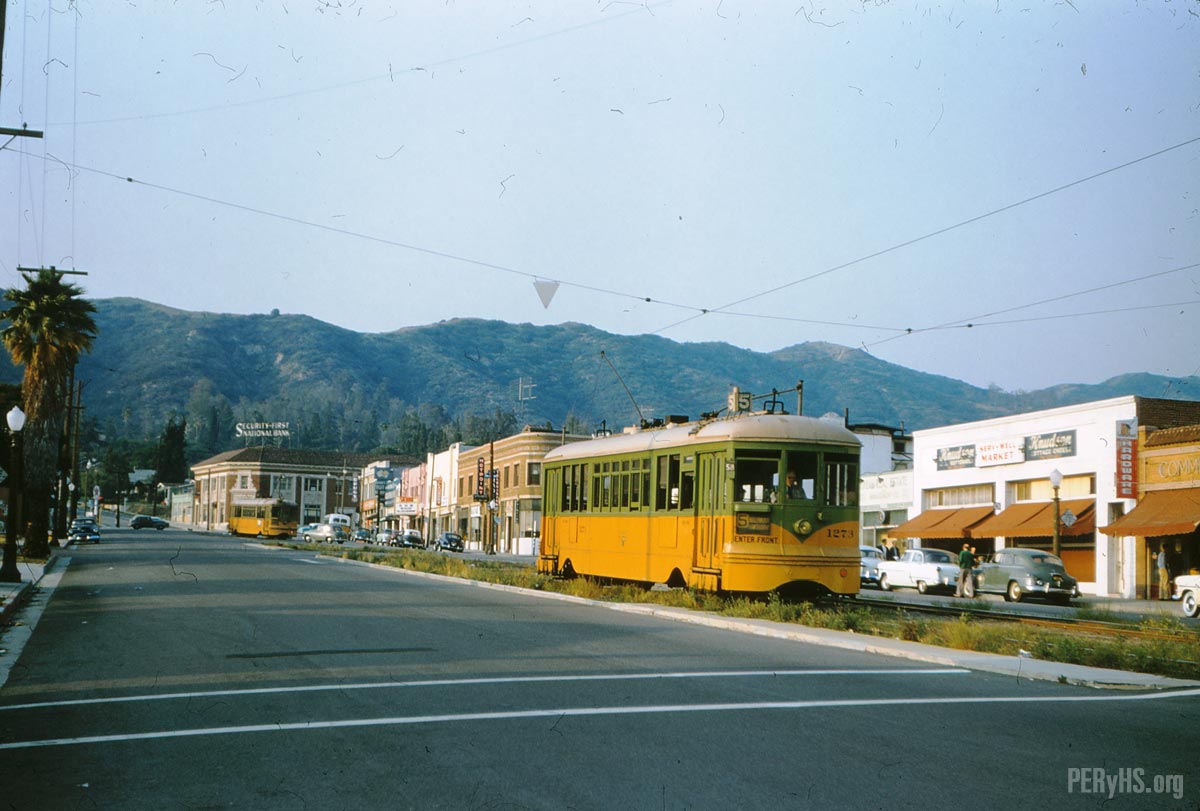
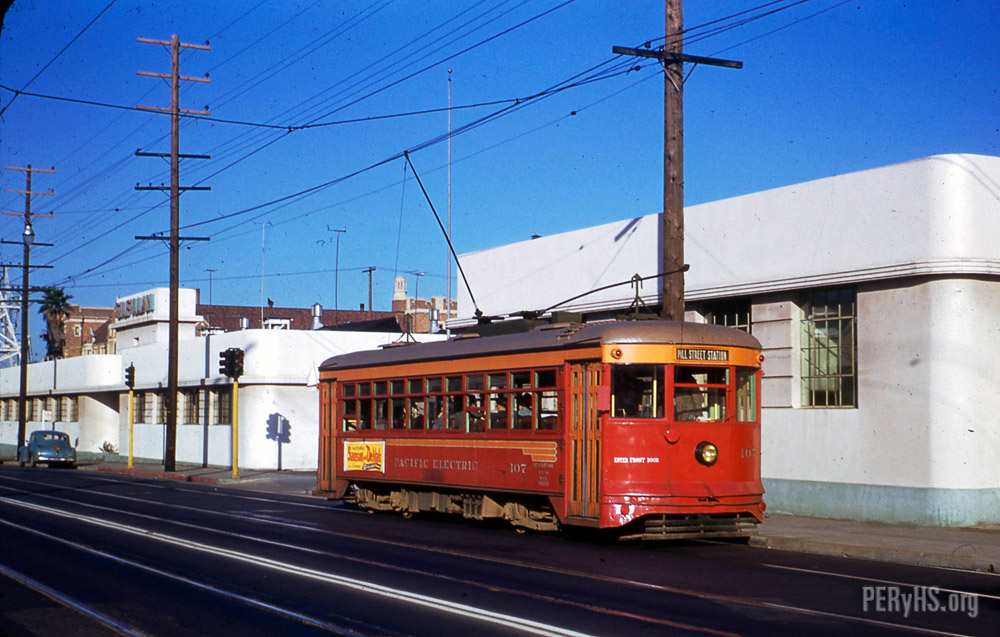
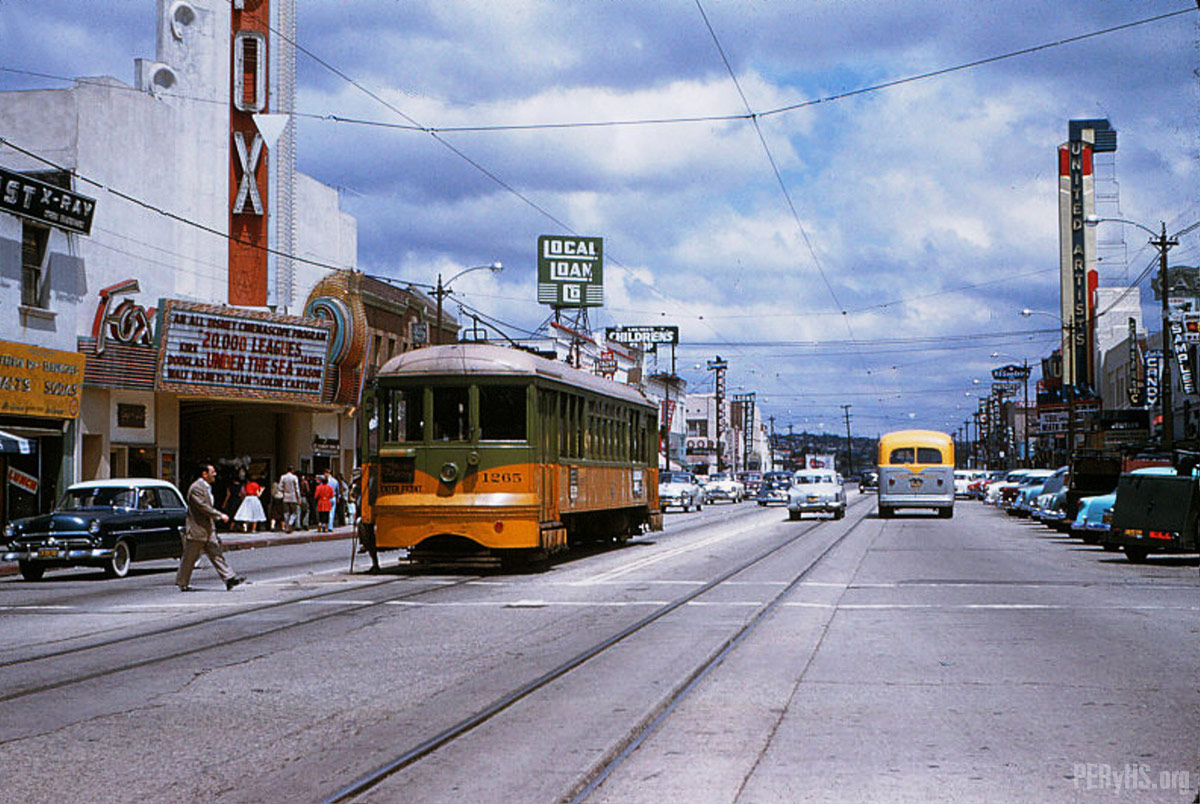
The old Los Angeles, the city of streetcars, steel signs, orange trucks, red cars, brick buildings, men in hats, ladies in skirts and high heels; the city of overhead wires, decorative lampposts, cops and conductors, kids on bikes, corner drugstores, ice cream parlors, neighborhood movie theaters; they are all alive and bustling and visible on the pages of the Pacific Electric Railway Society.

 Image

The dismantling and destruction of public transportation and the elevation of the automobile to the status of a deity has destroyed the richness and civility that once characterized the City of Angels.


Go visit the page, make a contribution, and gain some understanding of what we lost and what we might try to rebuild as we again go back to trains.

 Image

In the words of the organization:


“It is a non-profit association dedicated to the preservation of the memory of the Pacific Electric Railway. The goals of the PERyHS are: to preserve and maintain historical documents, visual images, oral histories, and historical studies; to make these materials available to the general public via publications (monographs), presentations and displays to non-profit groups and organizations and to assist other non-profit organizations in their efforts to preserve the legacy of the Pacific Electric Railway.”

Image

Vietnam War Photographs.


This slideshow requires JavaScript.

Steven Curtis is a Hollywood based photographer and Vietnam War veteran. I met him a few years ago and spent an afternoon touring his house, inspecting his vintage camera collection, and learning about his experience as a soldier and shooter (pun intended) in that long ago, but never forgotten conflict.

His photographs can be found here.

Hidden Hills: 1957.


Hidden Hills, CA/1957

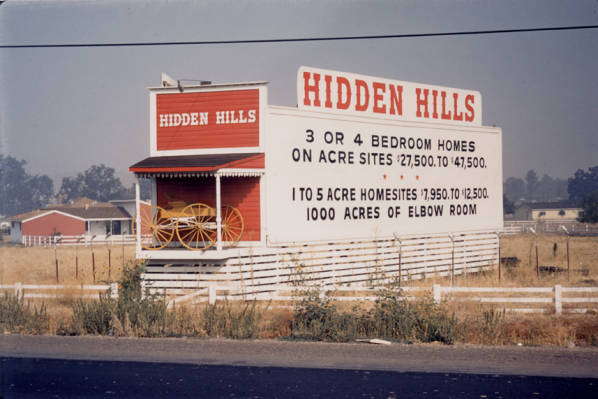
From the fantastic archives of CSUN’s Oviatt Library Digital Archives are two color photographs, by Bob Copsey, of Hidden Hills, under development, in 1957.

The exclusive horse and ranch-oriented neighborhood, west of Woodland Hills, was offering home sites from $7950 to $12,500 and 3-4 bedroom homes from $27,500-$47,500.

Today, homes in this gated area have sold for $1.6-$5.7 millions.

Adjusted for inflation, $30,000 in 1957 would be worth $226,000 today.

$226,000 is probably what some homeowners in Hidden Hills have spent to remodel their kitchen.

Van Nuys: Walking History.


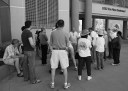
This past Saturday, May 7th, Richard Hilton led a group of people, on an English-speaking tour, around historic Van Nuys center.

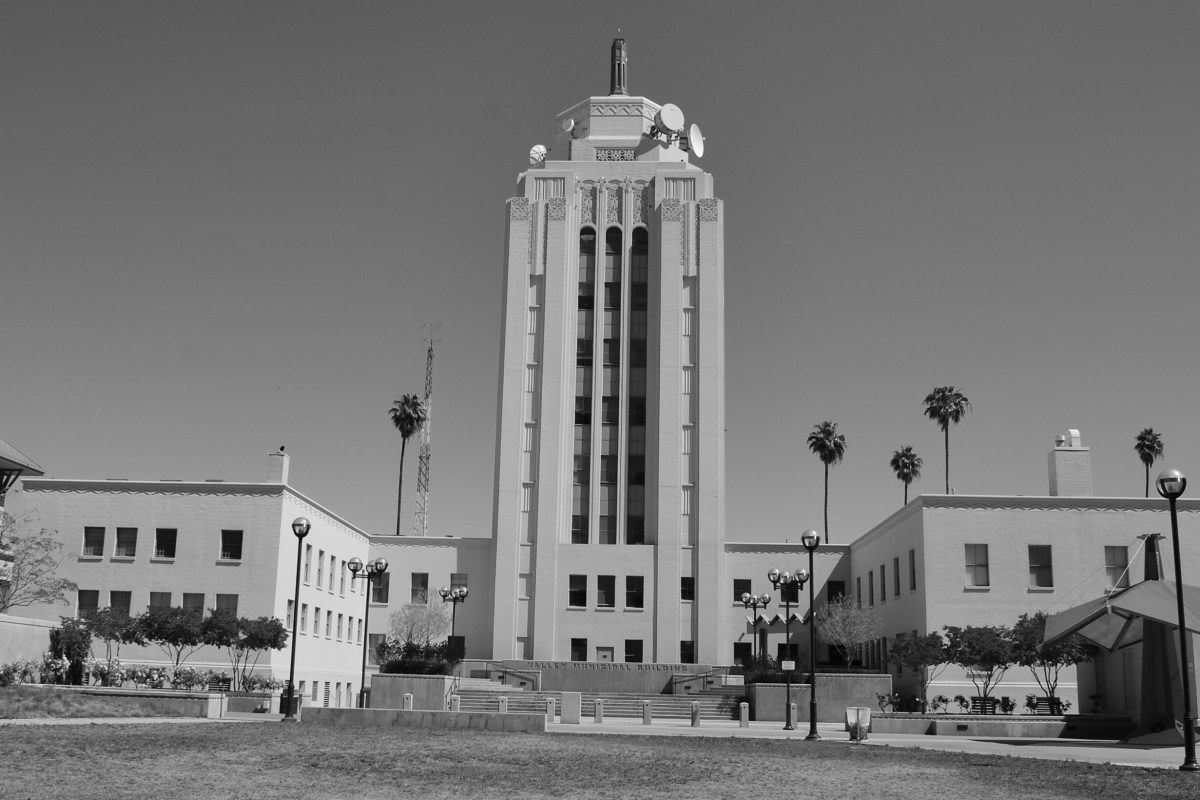
Radiating from the intersection of Sylvan and Van Nuys Boulevard, within three blocks, is an outstanding collection of architecture and history.

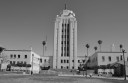
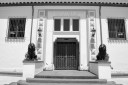
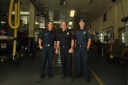
These include: the Art Deco tower of the Valley Municipal Building (1933); the glass and marble, Reagan era, Superior Court (1985); the spindly Mid-Century modern Van Nuys Library (1964); the LAPD Van Nuys Division (1965) with its decorative concrete façade and curtain wall windows; the post-war First Methodist Church (1957); the magnificent Engine Co. #39 Fire Station (1939) with its carved moderne columns and still functioning fire company; the Depression era Van Nuys Post Office (1936); and the old Spanish styled Van Nuys Library (1927) which has now been lavishly and intricately renovated for use as a law office.

Van Nuys has all the building blocks of a civilized small town, accessible by walking, near to public transit.

Since 1945, it’s obliteration by a vast unintentional conspiracy of outside forces has rendered some of it almost uninhabitable.

Illegal immigration, the destruction of historic homes (700 were bulldozed for the civic center mall in the 1960s), the widening of streets which encourage speeding and violent driving; asphalt, junk food, utility pole and billboard-blighted boulevards—these are only some of the items on a long, long list of reasons why people drive through this historic place and hope to never come back to it.

Fortunately, there are now some small and barely funded voices of enthusiasm for Van Nuys, such as Mr. Hilton’s, who hope that people can see what excellence exists in this area’s history, buildings and civic idealism.

Luigi, a tailor, whose shop on Sylvan Street is celebrating its 50th year, said Van Nuys was a sunny, beautiful, prosperous place when he came here in 1960. The GM plant and other machine, electronic, and defense industry companies once provided a solid living for middle class families.