The White City.


Many times have I passed the cement yard and concrete loft building on Romaine at LaBrea, never stopping or walking around the remnants of 1930s industrialism still present in present-day Los Angeles.


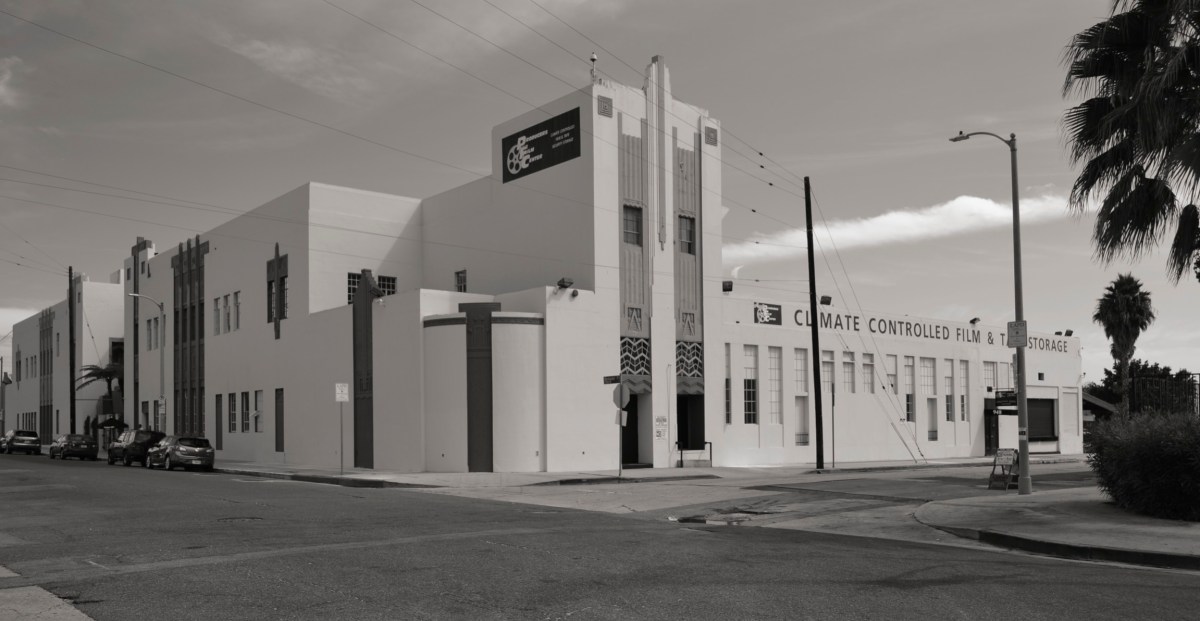
This past Saturday, I did stop, and parked on Romaine at Sycamore, behind the cement yard, in front of the Producer’s Film Library, housed in two story 1930s streamline building. Bold letters along the side announce CLIMATE CONTROLLED FILM AND TAPE STORAGE, already an industry preserving archival, not current media.

Without fanfare or specialness, there is a march of architectural glory along Romaine, a grouping of white structures; grand and confident, living, eternally young and confident, glistening and glorious against the blue sky, standing mutely on treeless streets and sidewalks.


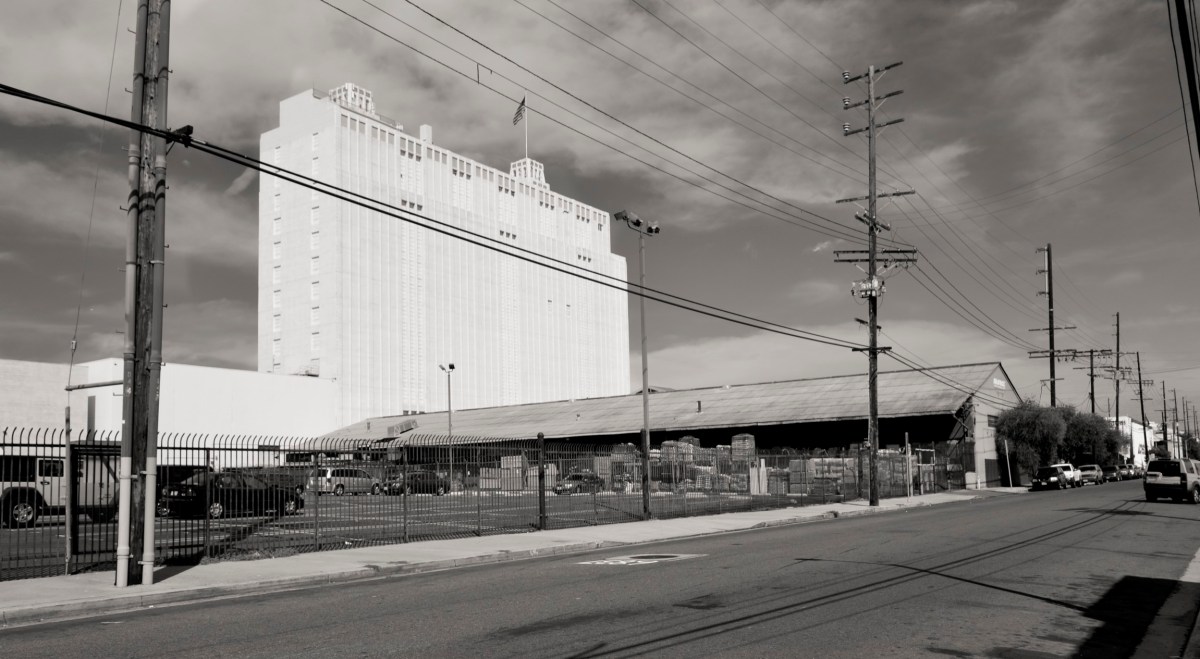
Walk east on Romaine towards Highland and you will see a ten-story tall, long and narrow block of verticality towering over asphalt.

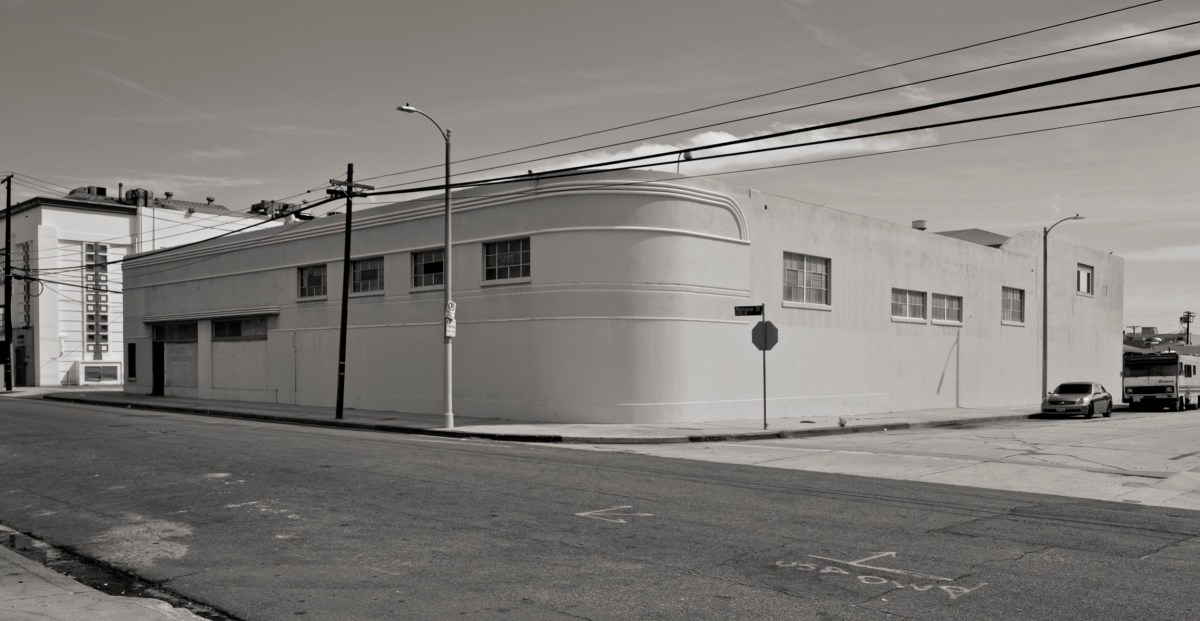
To your right, you will pass a one story curved building, gracefully and slickly embellished with rounded lines, rhythmic and functional steel windows.


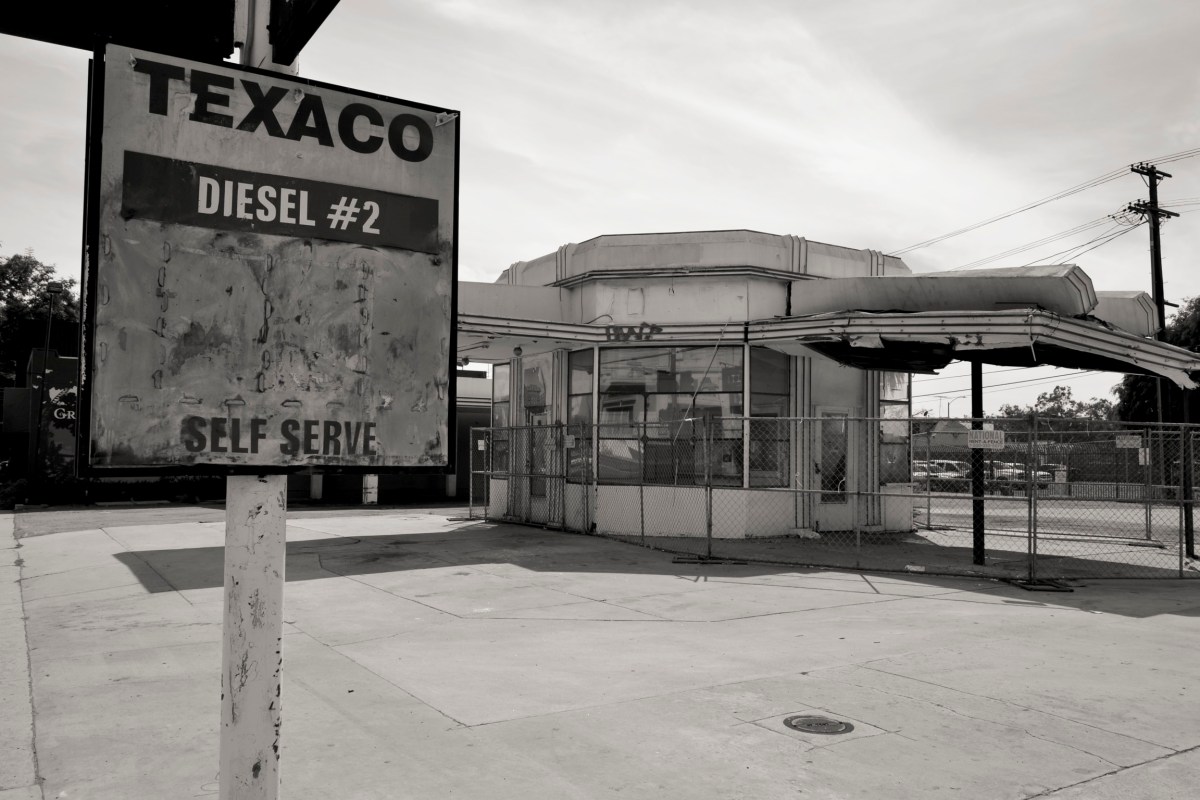
At Highland, go south and stand under the crumbling grace of the old hexagonal Texaco station, a perfect jewel of Art Deco design, ravaged with cancerous vandalism, overhangs melting and dying.

On the east side of Highland at Willoughby, the magnificent white soap bubbles of the two story tall ALSCO factory speak of industrial architecture unafraid of plain spoken ornament.

No signs or guidance, no official sanction seems to value this district. Only the intelligence and intuition of the individual can detect the beauty, the drive, the fire and the dreams of old Los Angeles, the place that built for beauty 80 years ago atop bean fields and lettuce farms.

Get out and walk. Get out of the car. A city awaits.

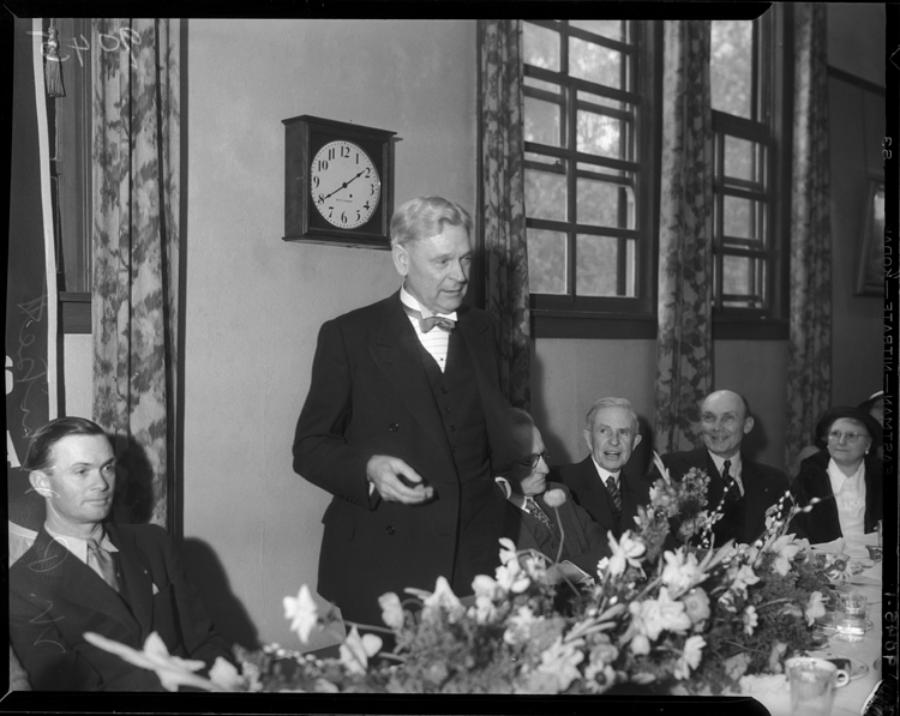
Mr. Whitsett, Van Nuys Founder, 1934


“W.P. Whitsett recounts the tale of the founding of Van Nuys at the city’s 23rd birthday party. February 22nd, 1934.”
UCLA Library, Digital Collections.

If he could only see it now, the great progress Van Nuys has made, culturally, aesthetically, economically……

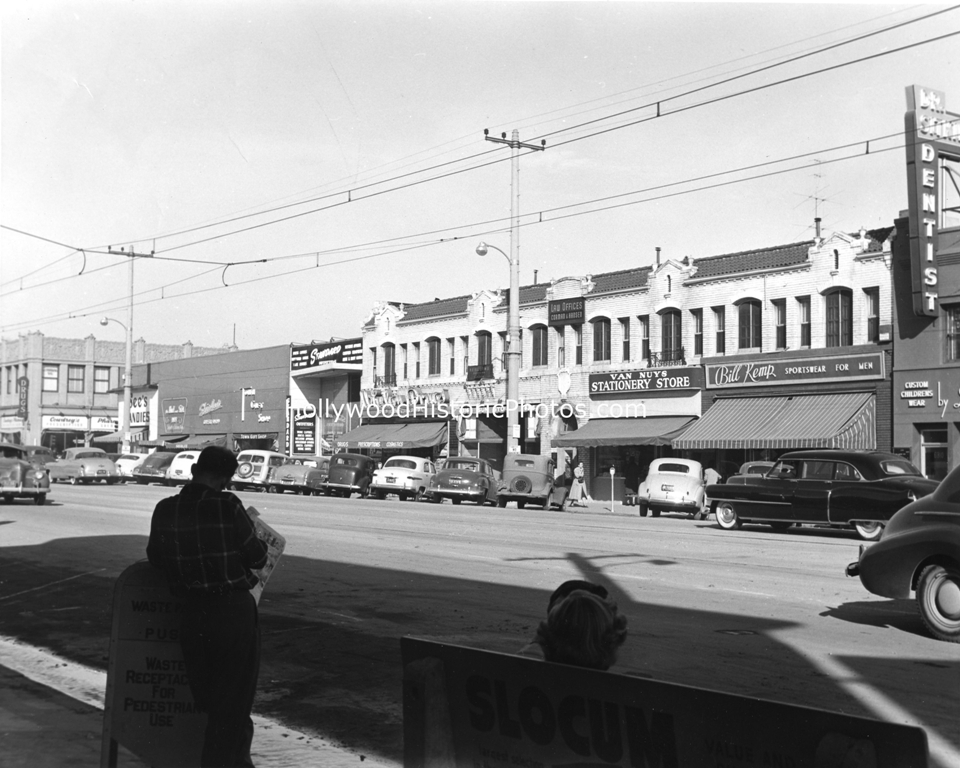
Van Nuys Blvd. at Friar, Van Nuys, CA, 1950


Image

Here is a great old photograph of Van Nuys Blvd at Friar St. in 1950.

In 1950, there was still diagonal parking along the boulevard, an arrangement that helped to create a sense of enclosure and neighborliness.   Some of the signs along the street were Whelan Drugs, Van Nuys Stationery Store and Bill Kemp Sportswear for Men. On the left side of the photo:  a See’s Candies and other small retailers whose facades have been modernized behind flat slabs.

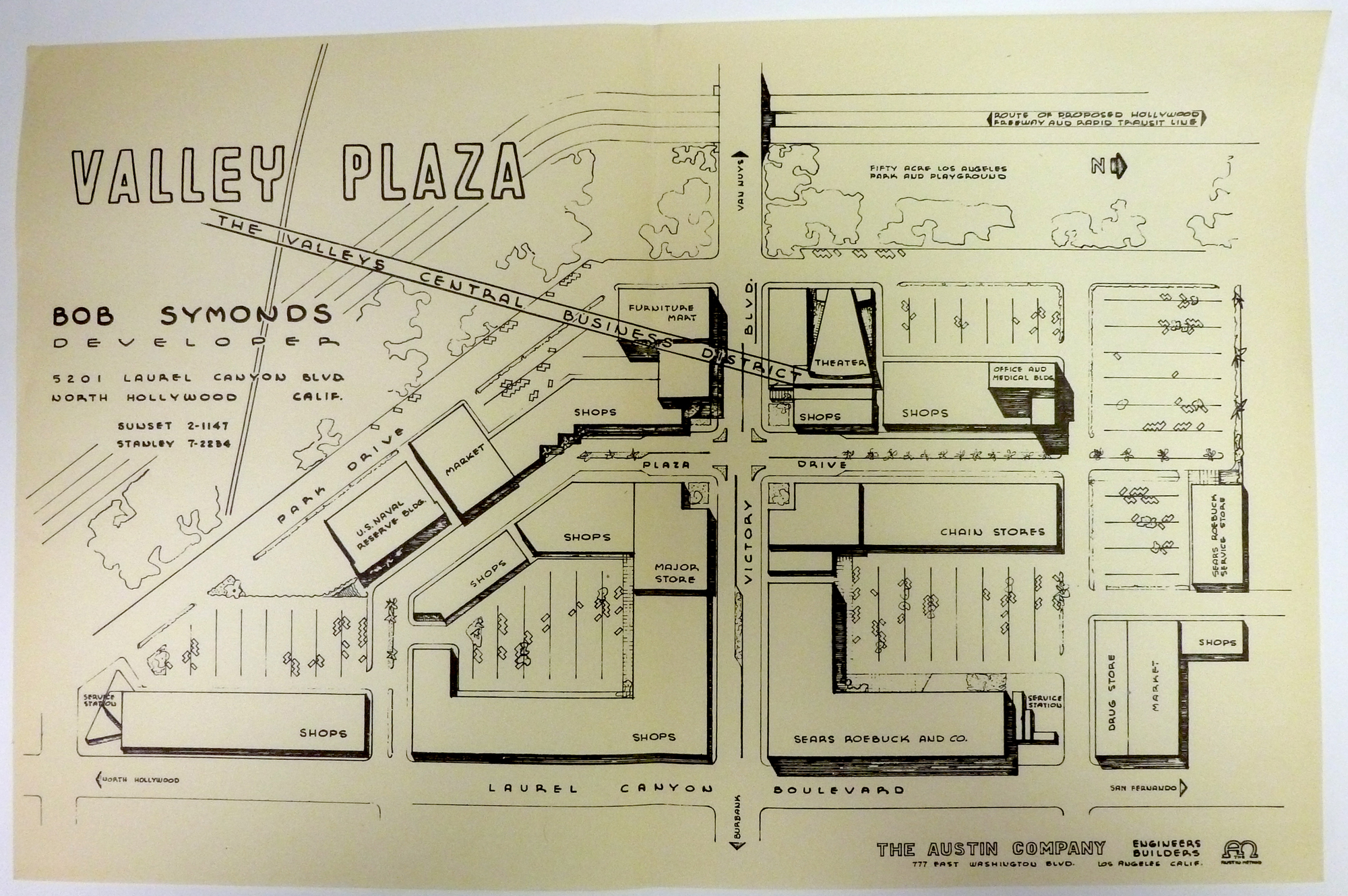
This bustling scene was already on the way out as regional shopping centers, such as Valley Plaza (1951), made their way into the San Fernando Valley and lured customers with lots of parking and giant stores.

While the massive migration of illegal immigration has certainly changed Van Nuys, the post-war decisions of Los Angeles, her government, her people and her power brokers, to widen streets and remove streetcars, to build freeways not trains, and to develop every last square inch of orange grove and meadow, these are the true killers that robbed us of our historic inheritance.

Life was more civilized back then and we can only look back in awe.

This photograph is offered for sale at DECOR ART GALLERIES   12149 Ventura Blvd. Studio City, CA 91604   (818) 755-0755

“It Was So Much Better Back Then…”


Image

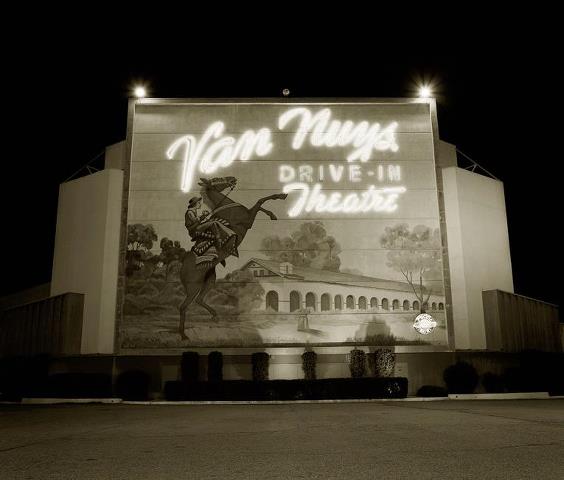
There is a virtual place online where middle-aged mourners can gather to express their memories of a locale where towheaded youngsters, Brycreamed dads, and aproned moms drove in $4,000 Caddies along spotless streets and empty freeways and sent their kids to brand-new schools and inexpensive colleges, swam in sunny swimming pools, consumed burgers in drive-thrus, and went to happy factories in Van Nuys where cars popped off the assembly line like cookies in a bakery.

Valley Relics was started by Burbank native Tommy Gelinas and, in his words, “is a personal collection of rare photos, yearbooks, documents, postcards, toys, photo negatives, vintage signs, books, antiques, and artifacts from the 1800′s to present, from the San Fernando Valley.”

His Facebook page mirrors the website with daily updates and photos and comments on long gone places that once dotted the San Fernando Valley.

One of their most recent additions is from Gregg and Davida Symonds of Agoura. Gregg’s father, Bob Symonds, owned Sunset Farms in Sylmar and was the developer of Valley Plaza in North Hollywood.

Image

Valley Relics seems to be enormously successful with 27,185 likes on FB.

It preserves the past and shows us what the San Fernando Valley looked like at one point in time.

Historic Van Nuys: The Jue Joe Clan.


This slideshow requires JavaScript.

The Internet is a strange thing.

Yesterday, while Googling for “Bike and Van Nuys Blvd.” in a search for a bike store, I came upon a family blog about a Chinese immigrant, born 151 years ago, who came to California to work on the railroad and ended up owning hundreds of acres of agricultural land and running a successful asparagus farm in Van Nuys in the 1930s.

“Descendant of the 2nd emperor of the Song Dynasty (Zhao Gunagyi), Jue Joe was born and raised in a chicken coop, in 1860. He grew up dirt poor and vowed that his descendants would never suffer as he had. So at the age of 14 he sailed alone to California, working as a cabin boy, and jumped ship in San Francisco. He sailed with 16 lbs of rice and landed with 1/4 lb left. So he went to the Chinese Six Companies for help. They sent him to St. Helena and Marysville to work the vineyards. Then he found work on the Southern Pacific Railroad. In the Mojave Desert he met Otto Brant who was hoboing his way to L.A. They became friends and together hoboed to that destination. According to San Tong, Jue Joe learned business from Otto Brant and what land and water would mean to future settlers of the L.A. Basin. “ – written by Auntie Soo-Yin.

In 1913, California passed a law that forbid aliens (Non-Americans) from purchasing land in the state. The openly racist ALIEN LAND ACT was aimed at a growing and prosperous Asian population whose success threatened white hegemony in the Golden State.

But Chinese born Jue Joe was friends with the very powerful Otto Brant. The fascinating story of how Otto Brant helped his Asian friend purchase land, in spite of the restrictive law, is retold by Auntie Soo-Yin:

“Jue Joe’s friend was Otto Brant, a prominent member of a Los Angeles land syndicate. Jue Joe discussed with Brant his desire to own and farm land in the San Fernando Valley.

“The name of Otto Brant’s land syndicate was the “Los Angeles Suburban Homes Company,” formed in 1909. It had 30 members all prominent leaders of L.A. (Harrison Otis and Harry Chandler of L.A. Times newspaper, Wm. Mulholland the L.A. Water Commissioner, M.H. Sherman, Grant the founder of Santa Fe Railroad and California Bank, H.J. Whitley the sub-divider, I.N. Van Nuys, to name a few).

Together the Syndicate controlled Tract 1000. In it Brant reserved 850 acres for his Title Insurance and Trust Company and, within the acreage, platted Van Nuys, Marian (Reseda), and Owensmouth/a.k.a. Canoga Park).

You could buy a small farm 1 to 10 acres, or a large farm 100 to 600 acres. In 1920 he reserved a large parcel for Jue Joe: 300 acres of prime property from Vanowen St to Haynes, and from Hayvenhurst to Balboa Blvd. It was segregated from a large ranch owned by Mr. Van Nuys, later was part of the Anderson Ranch, then bought by Mr. Dickey who later sold to Jue Joe.

Brant ( and later Brant’s estate after his death in 1922) held the Jue Joe property as Trustee for the benefit of Corrine and Dorothy until they came of age. When they came of age the land was deeded to them pursuant to the original trust documents.”

Auntie Soo-Yin fondly remembers her time in the 1930s growing up and living on a large agricultural ranch in Van Nuys, whose boundaries today sit just west of the Van Nuys Airport along Vanowen:

“I loved our homestead. Our ranch was self-sustaining. We had our own gas pump, an auto- and repair shop, fruit trees of nectarines, oranges, pears, apricots, lemons, figs, walnuts, etc. We grew strawberries, grapes, corn, and vegetables of all kind. Behind the big red barn that faces Vanowen St. we had a large chicken coop.”

The story of one American family in the San Fernando Valley, who didn’t let little obstacles like racism and the Great Depression get in their way…….

The Young Bostonian.


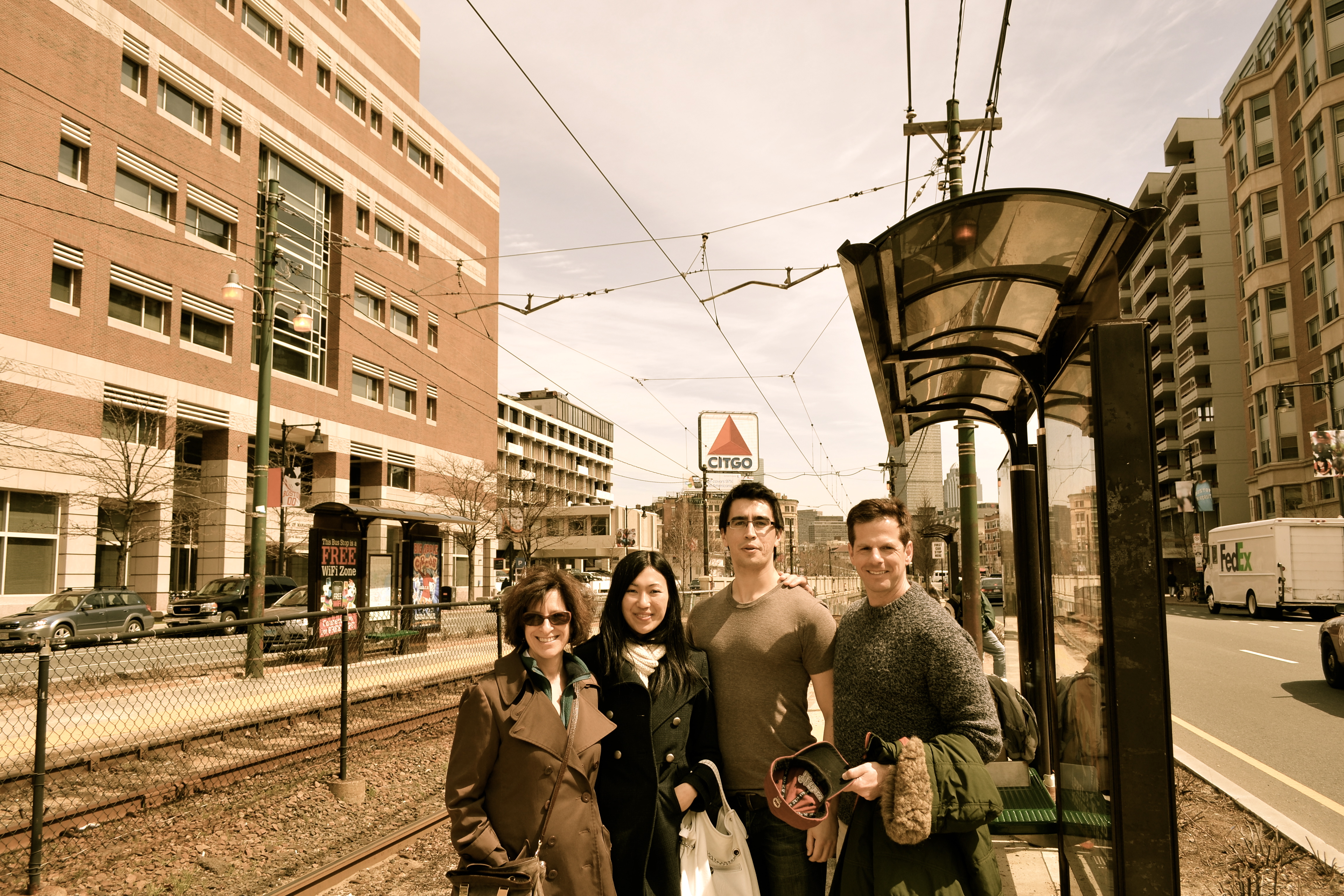
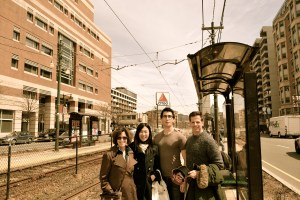
For a few days, last week, I reprised a role I had once played, three decades ago, in the city of Boston.

Some friends of mine, residents of Los Angeles, will soon relocate near Boston University and one of them will enter graduate school and study physical therapy.

Thanks to a very generous cousin in Cambridge, who opened up her home and heart, we three had a place to stay, in an old neighborhood north of Harvard University, where old frame houses, brick colonials and crooked streets are intersected by Irish taverns, old firehouses, new bakeries and shabby gas stations.

I love Boston as much as I despise Los Angeles, so I eagerly jumped on the chance to bring them around to the places I had last lived in when Ron and Nancy were in the White House.

Fulfilling President Reagan’s fondest dreams, the wealthy and powerful are even more so today, and well-endowed, luxury-priced Boston University (tuition:$39,000), once a homely, forlorn and gray place along the streetcar tracks, is now full of edifying and prestigious piles of brick colleges, ornate lampposts, decorative sculptures, landscaped meridians, cobblestone sidewalks and a frenetic energy of the young, stressed and indebted.

The sun shone every day of our visit, in a weird evocation of the city we were in exile from. Spring was evident in the flowering dogwoods, crocuses and tulips and on the tinted green lawn of the Public Garden. A season earned by those who had worked through a cruel and harsh winter. A spring deserved and appreciated, as spring should be. The scarcity of something wonderful is wonderful to behold.

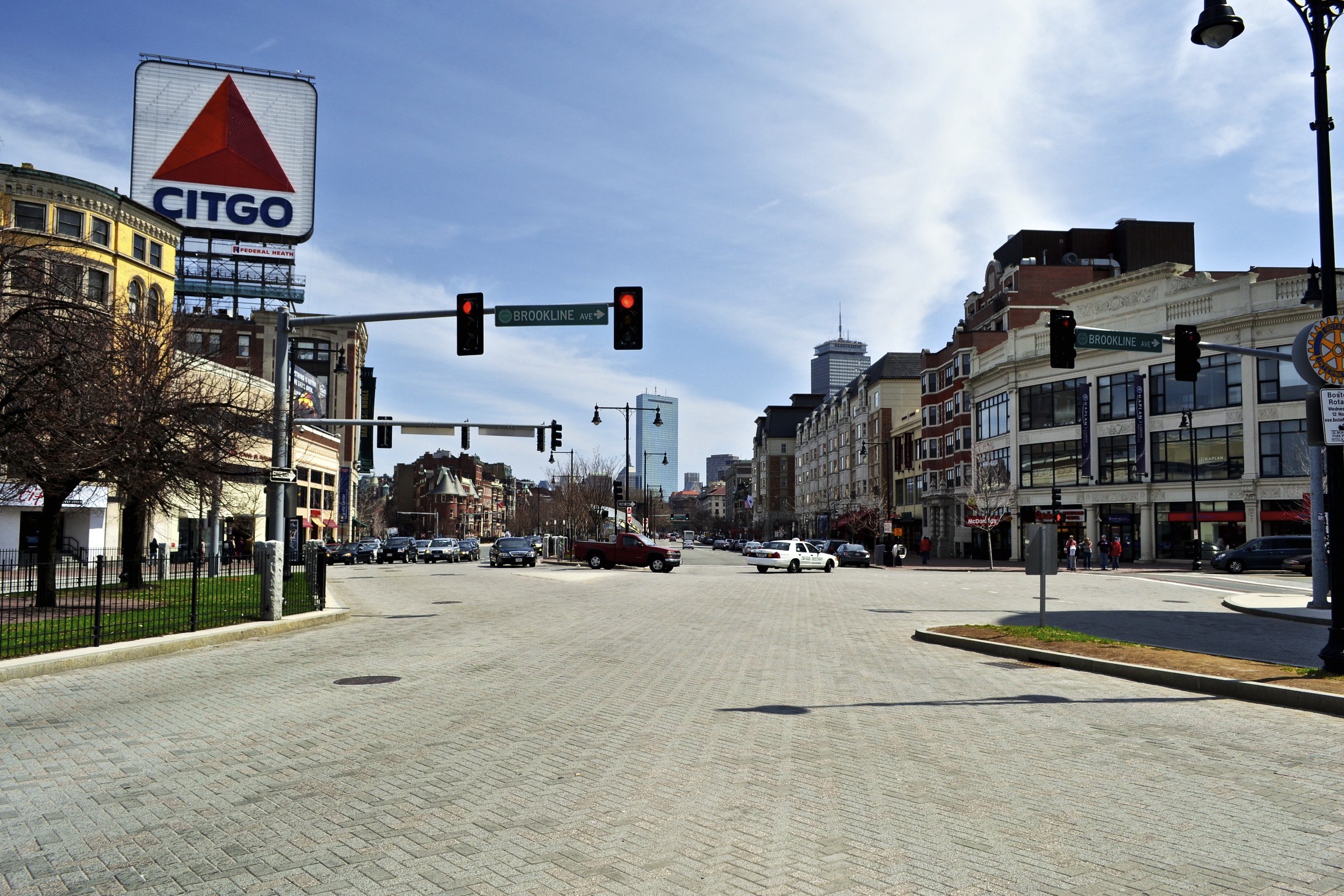
And there was the new, gleaming Kenmore Square, which I remembered as the ass end of the Back Bay, where broken beer bottles, Sunday morning pee-in-the-alley, and angry musicians once held court. It was now a sanitized and Disneyfied collection of luxury hotels, smart restaurants; and a ridiculously oversized twin-peaked, mansard-roofed building suited for a studio back lot.

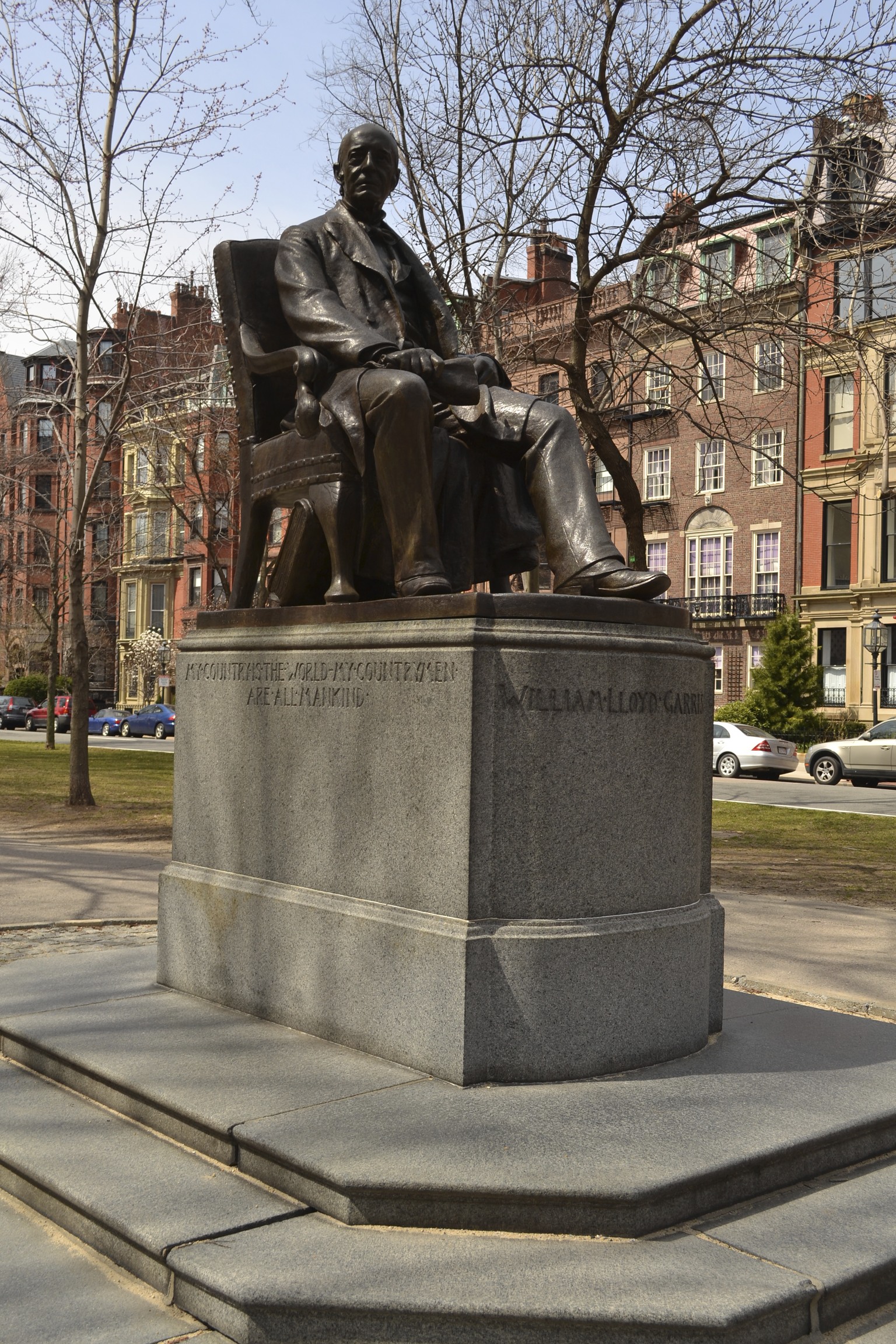
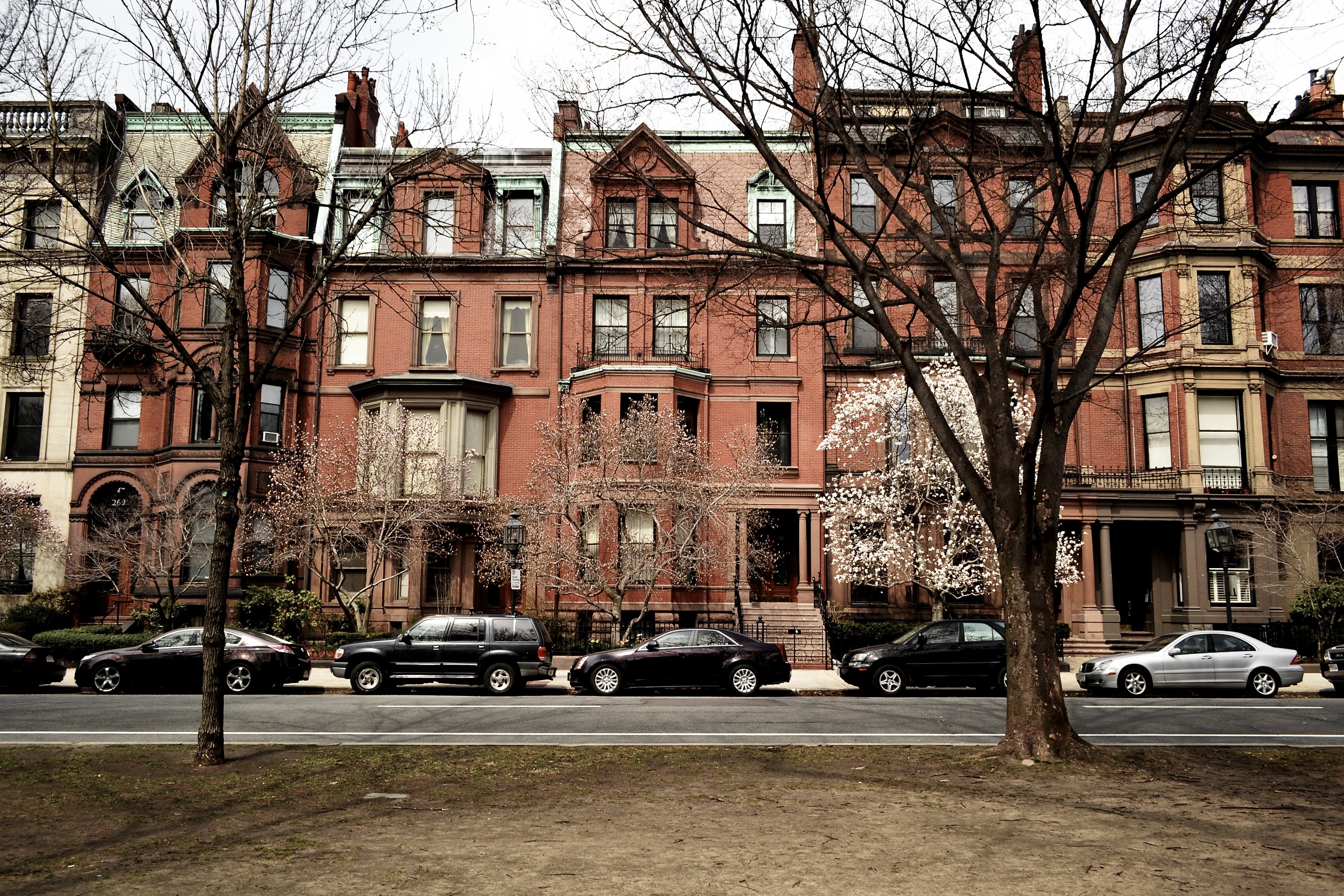
In my old Boston days, I had always walked and dreamed and wandered along Commonwealth Avenue, under the trees and past the statues of great dead men. And my favorite was William Lloyd Garrison, the abolitionist, whose quote I memorized to fire up my own integrity:

“I am in earnest — I will not equivocate — I will not excuse — I will not retreat a single inch — AND I WILL BE HEARD.”

He was fighting against the national evil of slavery, and this writer was only speaking up, pathetically, in defense of his own sexuality. Perhaps that is not entirely true, but when I walked there 30 years ago, I did so in the shadows, without self-knowledge, trapped in a dream and a nightmare of unfulfilled carnality.
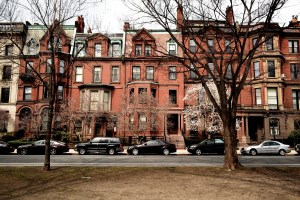
Transcendentalism. Unitarianism. John F. Kennedy.
Paul Revere. Honey Fitz. Marky Mark. The Late George Apley.
Henry Cabot Lodge. Ted Kennedy.

Faneuil Hall. Samuel Adams. The North End. The Public Garden. The T.
Copley Square. Brookline. Charles River. Myles Standish Hall.
Concord and Lexington. Martha’s Vineyard and Nantucket.

Isabella Stewart Gardner. Emily Dickinson. John Silber. Nick DeWolf.

Thirty years ago, and three days ago, my mind’s awhirl with what I saw and what I learned and who I might become. Thirty years have passed. But they have not diminished my passion for the people, places and philosophy of the Bay State.

Boston was the first moment, at 18, when my conscious mind came into existence.

And I felt it again, last week, that I belonged to Boston, in its fervor and trembling intellect, in its profundity and promise, and I know that I have barely scratched the surface of my own potential when I return to the place where youth crashed into adulthood and I picked up the pieces…. sculpting life anew.