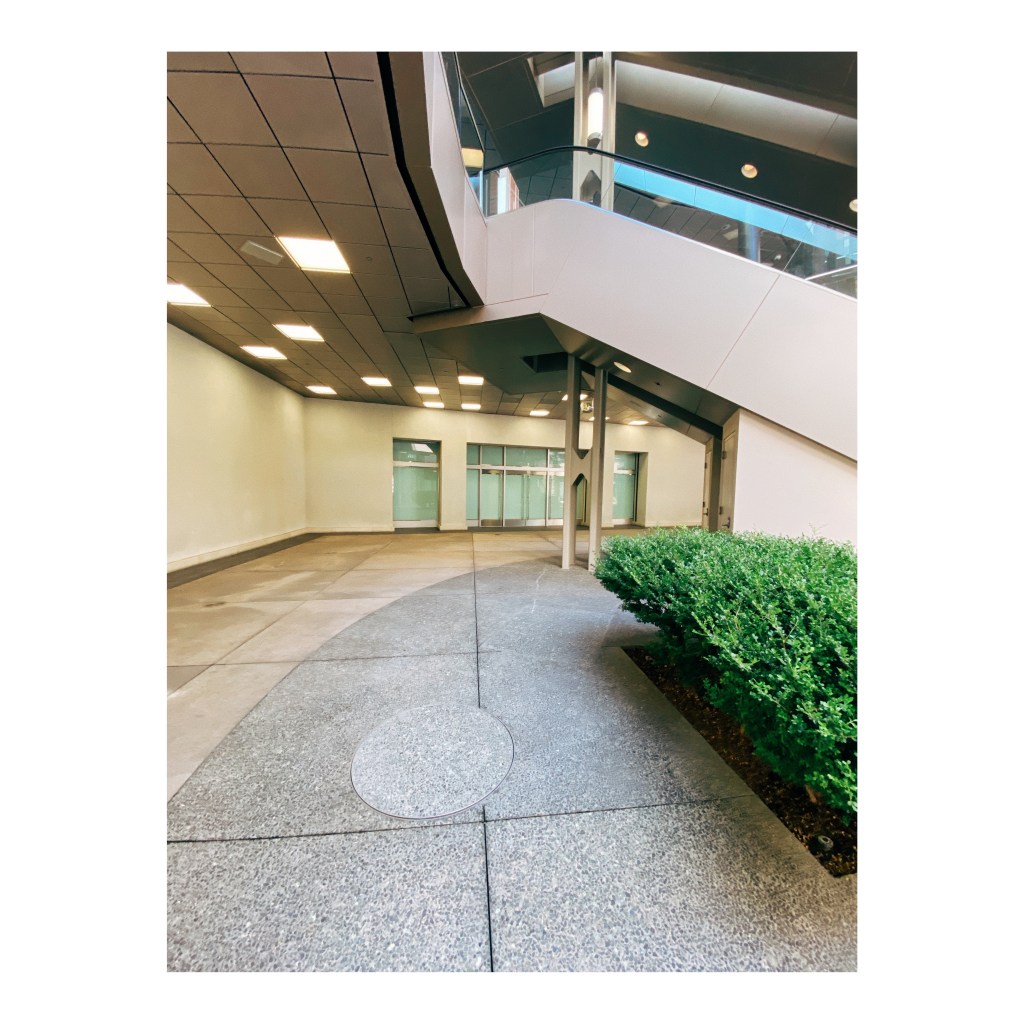
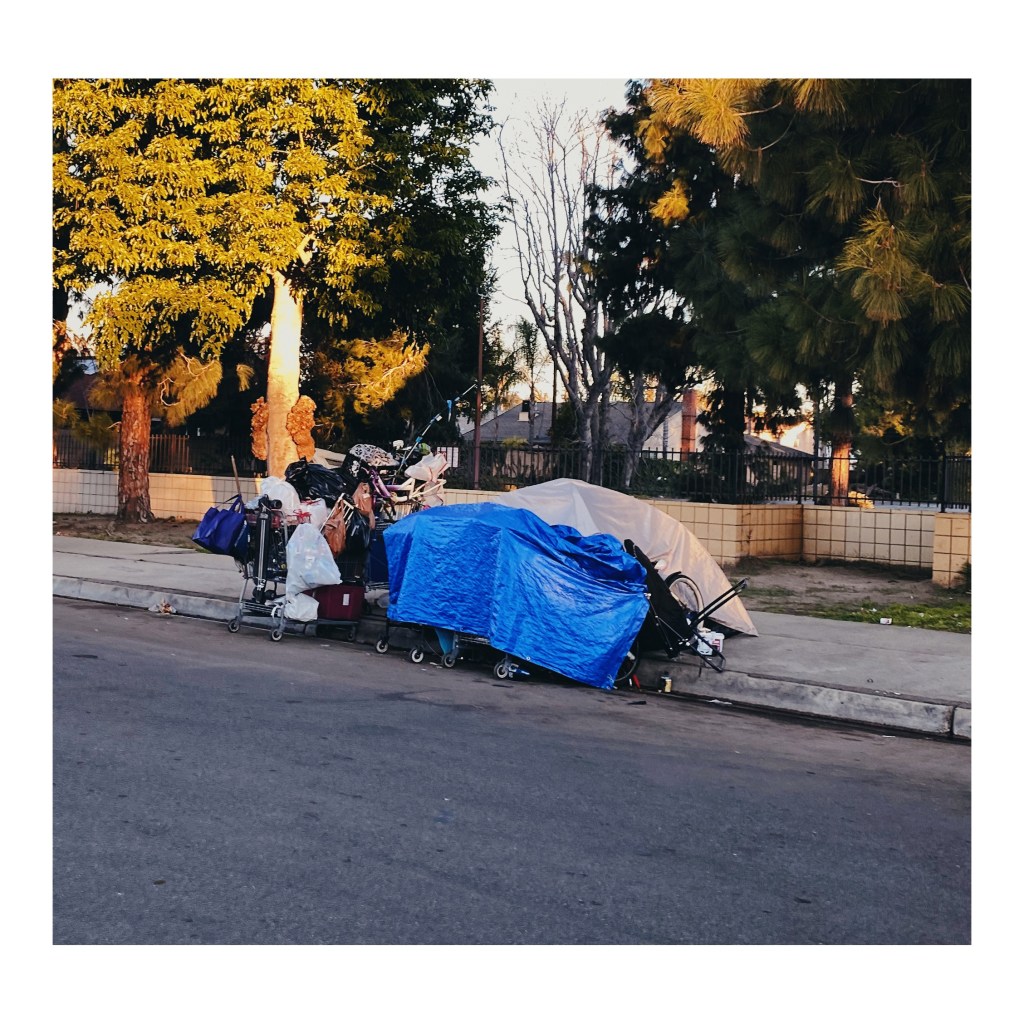
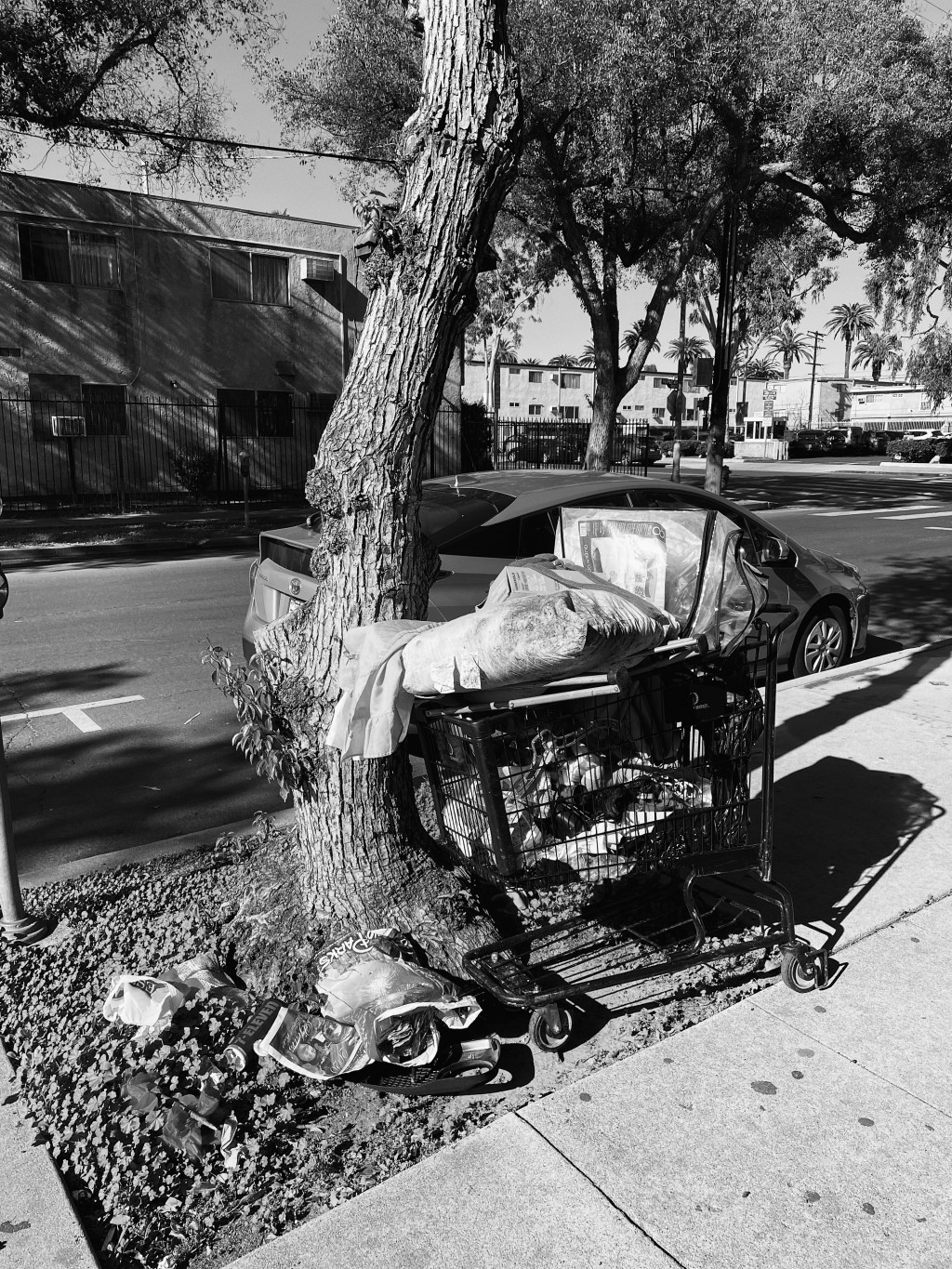
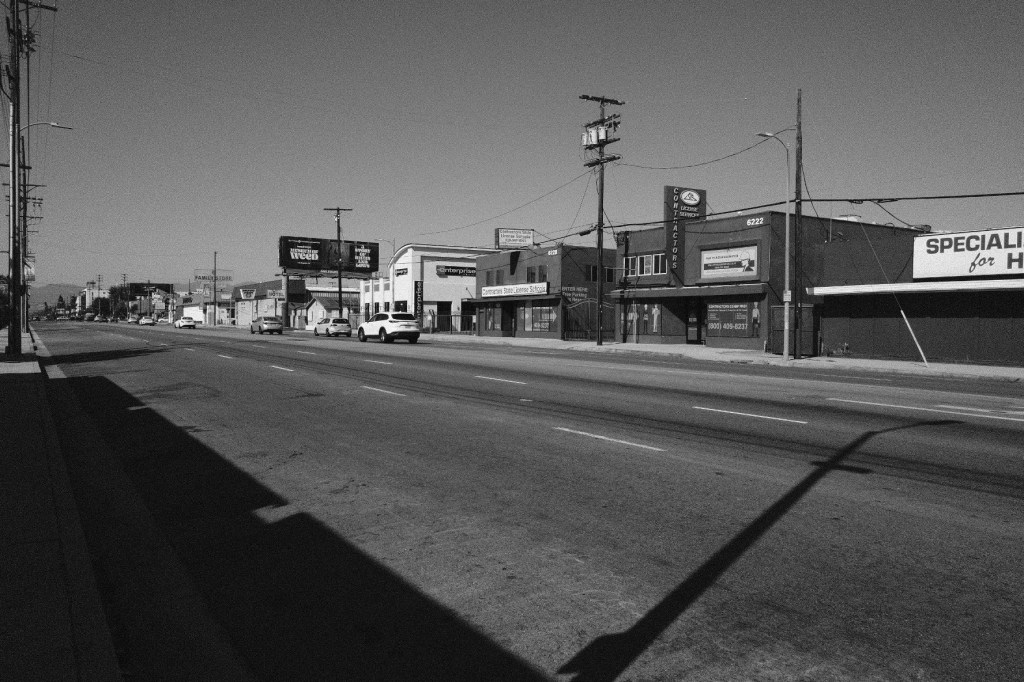
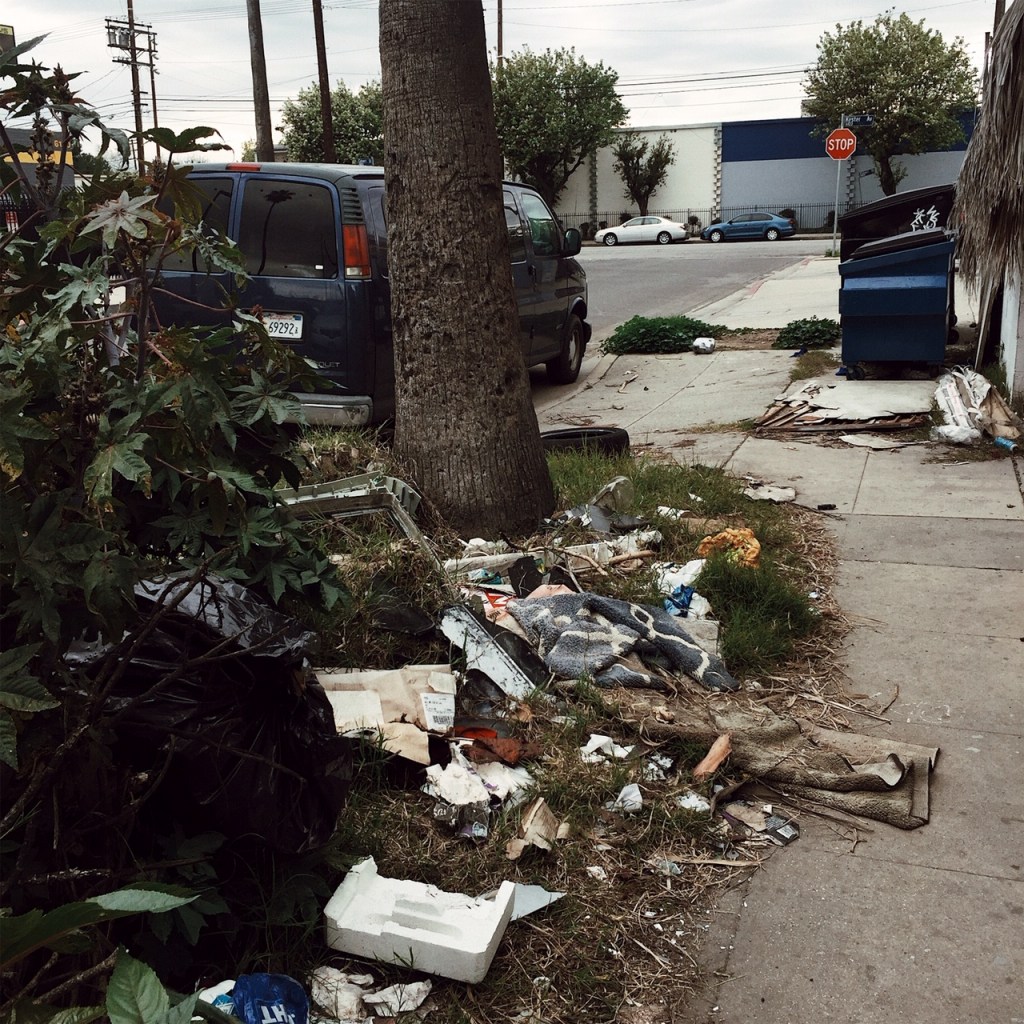
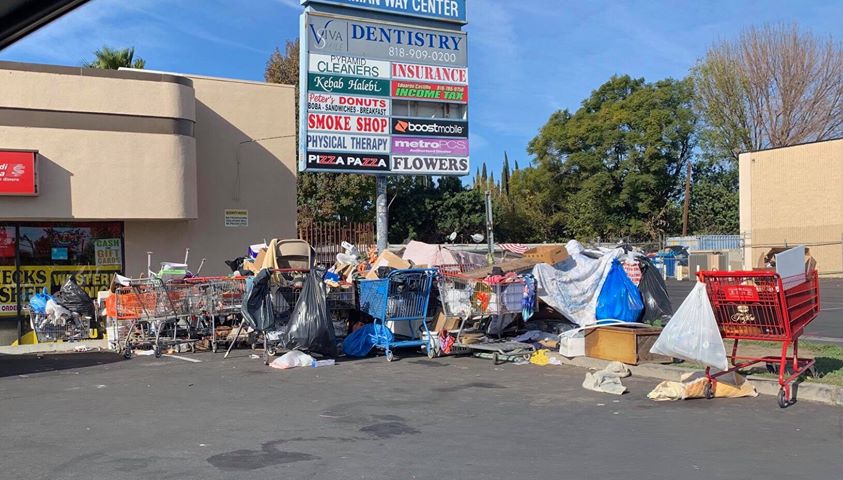
Much of commercial Van Nuys is in the worst condition of its 115-year-old history. There are empty stores, enormous parking lots with no cars, and trash camping everywhere.
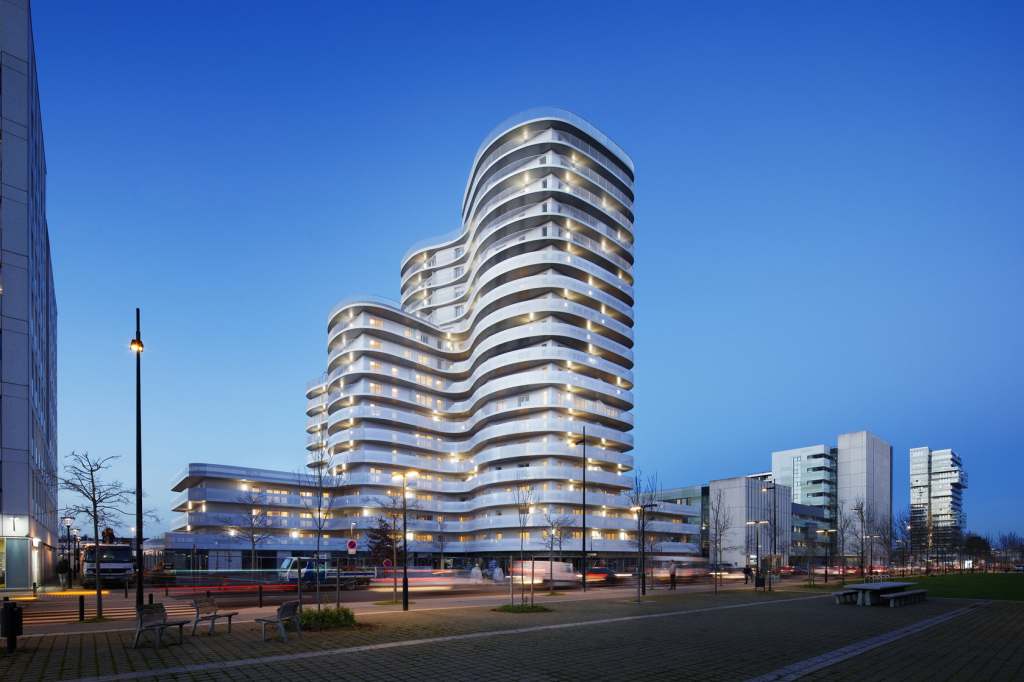
What could replace all this and what kind of architecture would protect us from hot sun and occasional rain? The answer might come from Southern Europe.
Last year I spent five days in Turin, Italy, a metropolitan city of 841,600 in the NW of the country.
It has remarkable architecture, which was mostly built in the 18th and 19th Century by the Savoy Family in a unified, Neo-classical style.
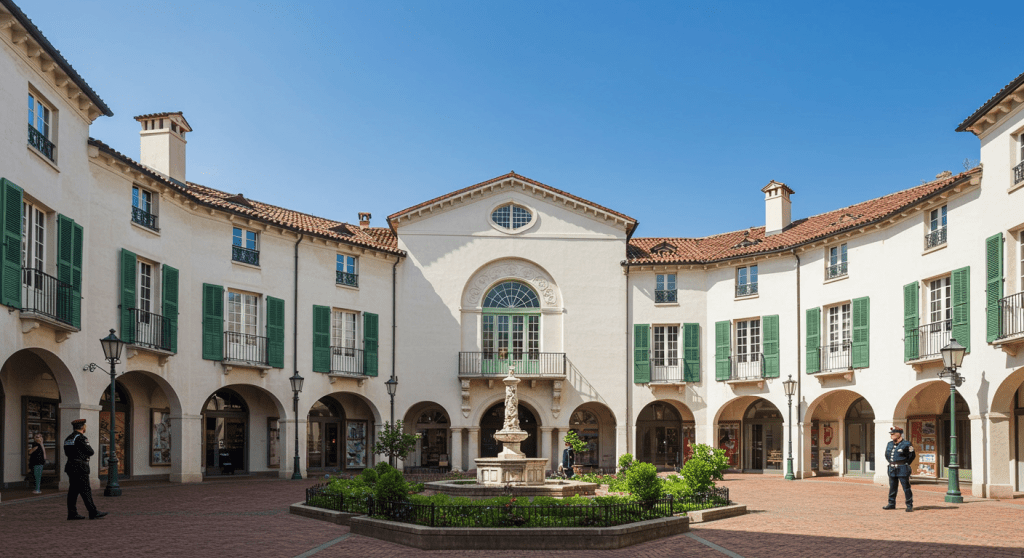
The city has a series of arcades and long, shaded passageways, that protect from rain and sun. The arches along the ground floor provide a unifying effect that harmonizes all the buildings and anoints the urban environment with a regal and practical building style.
There are numerous courtyards, public and semi-private, which are encased by three and four story buildings.
Yesterday, after eating lunch at Myung Dong Noodle House on Wilshire, we got into our car and drove south on Irolo St. and went east, along West 8th Street, for about two and a half miles.
Words cannot produce images that could equal the utter filthiness, horror, inhumanity and decay of the street. There were 10 foot high piles of garbage in alleys, people sleeping on sidewalks and bus benches. Shopping carts of trash in front of every store. Lost men and women, high, drunk, dirty, forgotten, mixed in with others who were not. And sidewalks full of new arrivals in the city, walking, working, eating; selling clothes on blankets or food from carts; pushing kids in strollers; striving to get by and survive in one of the most unpleasant and dystopian cities in the Western world.
As the road curved into the underpass that runs under the 110 freeway, dozens of people were living in encampments on each side of the street. A Ritz-Carlton luxury hotel glass tower loomed in the nearby downtown. Was this a joke?
It seemed that God had taken a leave of absence and left Satan in charge.
This is Los Angeles. This is California. This is the United States of America. In 2024.
What kind of government that is even half-awake, half-sentient and semi-moral allows an entire city to fall into a condition that might only exist in a place of war or extreme impoverishment?
There’s a baseline of governance. You keep the streets clean. You try and employ a sense of order and reason to public activities to ensure that life is reasonable, safe and decent.
You don’t allow chaos to reign knowing that revolution will surely follow.
In the depths of the Great Depression, in the 1930s, when 25% of this country was out of work, Los Angeles, west of downtown, the same place we drove in yesterday, looked like this:
Photograph of West 9th Street and South Hobart Boulevard intersection, Los Angeles, CA, 1931. “S. Hobart [ilg]” — intersection signage.
Photograph of intersection of West 8th Street and South Carondelet Street, Los Angeles, CA, 1932. “[ilg] Market” — signage on building. “[South] Ca[ronde]let St[reet]” — on street sign.
Photograph of the intersection of West 9th Street and South Berendo Street, Los Angeles, CA, 1940. “[ilg]feway; M[a]rgy’s” — signage on buildings. “S. Berendo St., 900 Blk.” — on street sign. “7C 54 10” — on license plate.
Photograph of intersection of West 6th Street and South Hobart Boulevard, Los Angeles, CA, 1932. “safety first” — on road.
Photograph of intersection, West 6th Street & South Grand View Street, Los Angeles, CA, 1933.
Photograph of intersection of West 8th Street and South Carondelet Street, Los Angeles, CA, 1932. “7V 29 81” — on license plate. “Stop, Auto Club of So[uthern] Cal[ifornia]” — on street sign. “Slow” — on street.
Photograph of Union Oil service station, West Eighth Street and South Western Avenue, Los Angeles, CA, 1933. “Washington B[ui]ld[in]g” — on billboard. ” ‘Stop Wear’, lubrication service, using union friction-pr[ilg] lubricants exclusively; Station no. 956; Stop your motor, no smoking; Union Co[mpany], 17 ¢ gasoline” — on signage. “Union Service Stations Inc[orporated]; – Wear, [ilg]ation service, batteries” — on station front. “Unoco gasoline, 4 tax; Union 76, 4 tax” — on gas pumps.
Photograph of building on northwest corner of West 8th Street and South Western Avenue, Los Angeles, CA, 1931. “Beverly Arms; Manhattan Market P[hon]e F15617, Challenge Butter, [ilg] Milk; Beauty Parler; [ilg] Bottle Supply Co.; Hand Laundry” — singage on building. “Asable[ilg]; Shasta, [ilg]; Western [ilg]; Drugs” — street level signage on building. “[S]tandard Oil Products; [ilg] Atlas [ilg]; No Smoking, Stop Your Motor; Standard Gasoline” — signage at station. “Keep Your Eye on Chevrolet; Arrow Hits The S[ilg], Sandwich[ilg]” — signage in background. “Stop” — signage along street.
Credit: USC Archives/ Dick Whittington Collection.
It has been some two and a half years since the pandemic began, and somehow it is sort of (not) over. In that time, since March 2020, America has been in a slow-motion meltdown, proceeding quickly, an epoch unlike any other with riots, lockdowns, and a lunatic who would not and will not accept that he is no longer President.
There was always Santa Monica for me.
Since I came here in 1994, that always cooler place near the ocean was a destination for dining, drinking, shopping, biking, and hiking. It was where you took out-of-town guests, where you went to show them, half truthfully, that LA was just as walkable, vibrant, urbane and enjoyable as New York.
I went down there yesterday to cool off and what remains on Third Street is deserted. Gone are the crowds, and gone are the stores: J Crew, Banana Republic, Bloomingdales, Barneys, Barnes and Noble, Old Navy, and Levi’s.
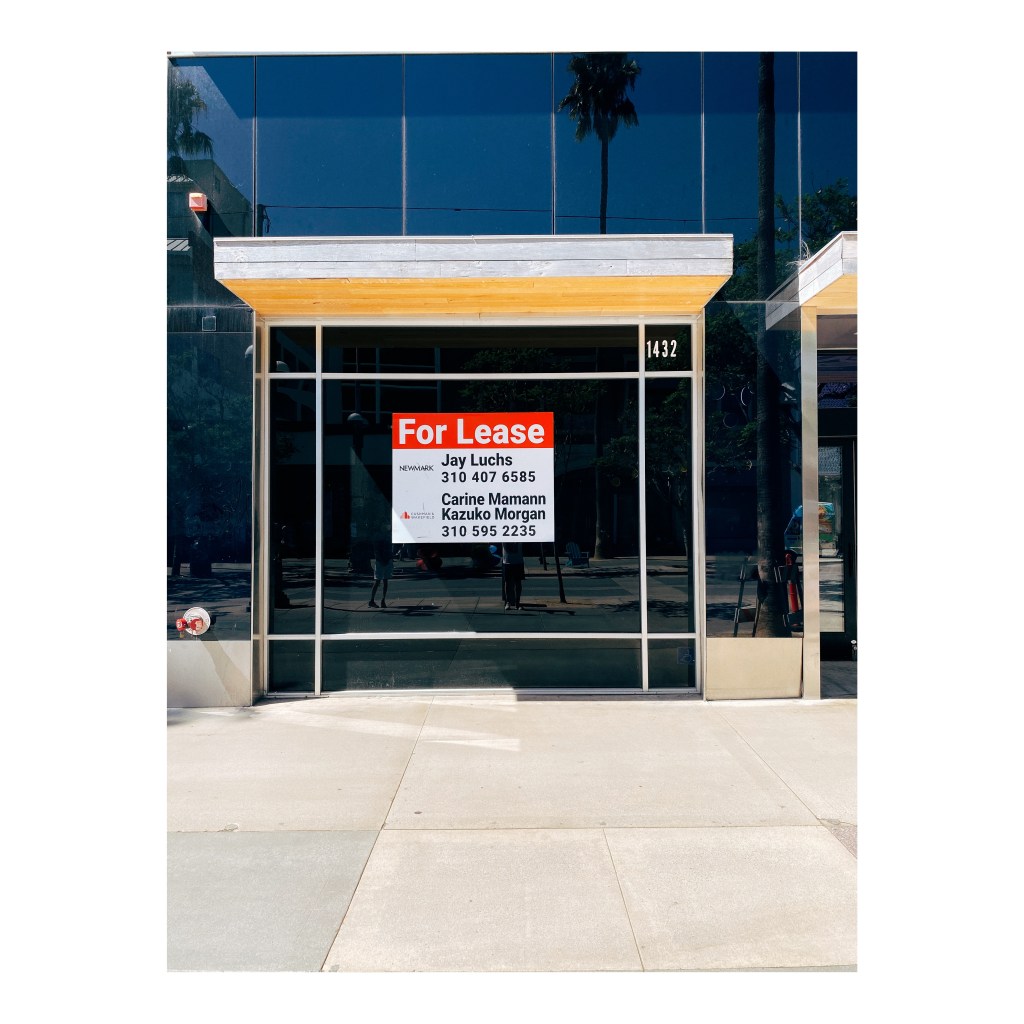
The sun still shines brilliantly. The buildings, for the most part, are well-kept. But the life and the crowds are absent. Benches, outdoor dining, storefronts, are lifeless. There are “for lease” signs everywhere.
In some ways it feels as if the clock has spun backwards before gentrification, when Third Street was awaiting revitalization, when JC Penney was the big store.
We walked, expecting to come to that fancy outdoor mall with the wine bar on the floor and Bloomingdale’s, the blowout salon, Jonathan Adler, Starbucks and CB2, but all of it was gone, shuttered, closed down, papered over windows and nothing. All the jobs, all the merchandise, all the interactions between people and goods, work and profit, and millions in tax revenues for the City of Santa Monica, wiped out.
This is August! This the height of tourist season! This is when thousands of families come to Santa Monica to partake and enjoy everything this city has to offer! And hardly anybody was there on a Saturday morning! Except for the Farmer’s Market.
The low point for me was May 31, 2020 when mayhem and looting destroyed many businesses, the murder of George Floyd acting as irrational justification for mass robbery, fires and stealing. I remember the BMWs and Audi’s pulling up to Vans, the broken glass, the fat, young, tattooed trash in black leggings, with boxes of sneakers getting into their cars and driving off. I saw the mobs work their way up the street and hit everything they could get their hands on.
And now Santa Monica is a quieter and dying version of its pre-pandemic, pre-George Floyd self. Will it come back? Detroit, Newark, The South Side of Chicago, Watts, 1965, 1967, 1968…are they somehow the ancestors of Santa Monica’s fate? Or does Santa Monica belong with Beverly Hills, often assaulted, but easily available to afford plastic surgery, police protection, and investment capital?
Will Santa Monica slowly fade off the way so much of Los Angeles has, all the places that once held joy and nice stores and nice memories: Miracle Mile, Westwood, Bullocks, 7th Street, Van Nuys Boulevard, the May Company?
Los Angeles is fickle, people dispose of anything inconvenient or unpleasant if it does not offer amusement or distraction. A destination without anything to offer is DOA.
On Lemay St. just west of Kester, a trash camp has been removed, then put back, then removed, then allowed back.
Residents of this tidy and pleasant section of Van Nuys know their area is not unique in the suffering brought on by government negligence.
Countless calls, emails, Zoom meetings and tweets have not changed a thing. The trash camps are a steady reminder of how far California has fallen, how pathetic the situation of law and order is.
Three months ago, the LAPD Van Nuys division held their monthly talk and all the Senior Lead Officers spoke. Our man proudly stated he had removed this trash camp, which previously was unhoused on the SE corner of Vanowen and Kester. The camp then moved itself, shopping baskets and cars, to Lemay.
I don’t blame him or law enforcement for “allowing” the trash camps. This one, like many, has been cited for prostitution, drug dealing, and indecent exposure. The police are handcuffed by law.
No Stopping Any Time.
A neighbor on NextDoor wrote that her granddaughter was playing outside when one male vagrant came up to the little girl and pulled his pants down.
He allegedly still lives in a tent along Lemay. Why?
There are many reasons to be depressed about life in Los Angeles today. In fact, progressive, thoughtful, sensitive Councilman Mike Bonin, who famously allowed murders, trash fires and thousands of vagrants to camp out and cause mayhem during the pandemic, has said he will not run for reelection, citing his personal battles with depression.
Bless him. But let him be gone to serve his emotions first so millions in our city can awaken happier tomorrow.
Lest people who read this essay think I am advocating against the Democrats or liberalism, I instead am posturing for a middle ground of care for the addicted, and housing for the lost and beaten down.
You can arrest them, jail them, deport them, or kill them, but only if you live in China or Russia. For those of us who still believe in American ideals, the law constrains us from revenge, even as we seethe in anger and contempt for the disorder and crime around us.
But we also need local laws that apply to the entire city. We cannot stop enforcing with exceptions. Like near a school or hospital or homeless services building.
It categorically must be completely illegal to camp out and live in a public park, on a public sidewalk, to urinate and defecate outdoors. Anywhere.
We cannot parse our laws to such inanities as prohibited “within 500 feet of a school.”
Imagine if we said you could drive blindfolded, stone drunk at 100 miles an hour, if you never drove past a school?
One of the bitter ironies of Los Angeles is the amount of wasted space that exists where civilized, regulated and sanitary communities could be erected to house the unhoused.
Next to the encampment on Lemay is the sprawling parking lot of the Casa Loma College which used to be a building that was the home to the American Automobile Association.
99% of the time the parking is empty. The entire lot, building and parking, is 112,994 square feet, 18 times larger than a 6,000 square foot “single family lot.”
Home Depot sells a backyard studio building that is 10’x 12’. It costs about $45,000.
Even if that is overpriced, imagine if within the bounds of the Casa Loma parking lot an agency or non-profit built 25 of these and there was a full-time security officer overseeing this community? What if this model town became a blueprint for other humane towns throughout Los Angeles?
There are, to be sure, many objections to this, but they are often imaginary, created in the minds of fearful residents who object to new types of supportive communities which are actually superior to the “free market” ones that currently exist.
The Skid Row Housing Trust is an exemplary non-profit which “provides permanent supportive housing so that people who have experienced homelessness, prolonged extreme poverty, poor health, disabilities, mental illness and/or addiction can lead safe, stable lives in wellness.”
They built 13604 Sherman Way, designed by architect Michael Maltzan, in 2014. It is houses 64 people but was bitterly opposed by the community before it went up. Yet it is perhaps the most attractive building built in the entire San Fernando Valley in the last 50 years.
But there is not enough of the good stuff. The trash camps are more numerous than these white paneled residences.
For now, the trash camps along Lemay, and everywhere else in the city, are a daily dose of depression for millions who live in Los Angeles and a barbaric and cruel way to treat people who must, through choice or circumstances, live under plastic tarps along the road.
“In a motion entitled “Building a Livable City,” Martinez instructs the Planning Department and LADOT to take stock of the number of parking spaces needed to serve Van Nuys City Hall and other government functions in the Van Nuys Civic Center, and lay out a plan for consolidating parking onto a smaller footprint. This would clear the path for redevelopment of the complex’s remaining parking lots with a mixture of affordable housing, open space, retail, and other community serving uses. Likewise, Martinez proposes that any scheme also incorporate amenities for pedestrians and cyclists.”
Must we endure these promises again? Here is what they were writing 31 years ago this month:
January 27, 1991Van Nuys Blvd. at Friar (circa 1950). Notice diagonal parking and streetcar wiring.
Downtown Van Nuys, due to 70 years of misguided “redevelopment”, has obliterated itself and now crawls along at the lowest condition in its history. Homelessness, abandoned storefronts, and an eight lane wide highway are what it looks like.
Ms. Martinez has occupied her office, figuratively and literally, for over 7 years and during that time she has spoken up about all the ills of Van Nuys and the NE SFV: human trafficking, crime, housing, drugs, homelessness.
Yet, still the tent cities remain. The shopfronts are no more. The entire area looks like hell.
Building the LAPD Van Nuys 1962.LAPL: 1958 plans for Valley Administrative Center in Van Nuys
And at the center is the 1958 planned Van Nuys Civic Center, a ghost land of courthouses, library and police station all populated by vagrants, trash, emptiness and hopelessness. Surrounding the area are many tens of thousands of parking lots, enormous concrete fiascos erected 50 years ago to provide dignified places for vehicles to live. They are mostly empty now, and should be destroyed and replaced with housing, housing, housing!
But this requires a plan, an architectural plan, and there is never, ever any architectural thought put into any structures that go up in Van Nuys. Instead, a crooked and semi-literate group of grifters with dough show up at planning board meetings and offer up the shit boxes that are shoved into the poor streets nearby. And VNB remains the center of dysfunctional governance in the SFV.
In past “great plans”, the Orange Line bus and and bike path was supposed to revive Van Nuys. But next to the path, are parking lots, rented out by nearby car dealers to store their unsold vehicles. This land, paid for with public tax dollars, is instead being exploited by for profit auto dealerships.
Orange Line Metro Parking Lot at Sepulveda/Erwin
So I’m cynical.
Our present condition as a city, due to the horrendous tenure of Mayor Garcetti, normalized everything wrong, illegal, dirty and dangerous.
But let’s try again. Keep trying. We have nothing to lose. But our minds.
You must be logged in to post a comment.