Neighborhood Safety Meeting.


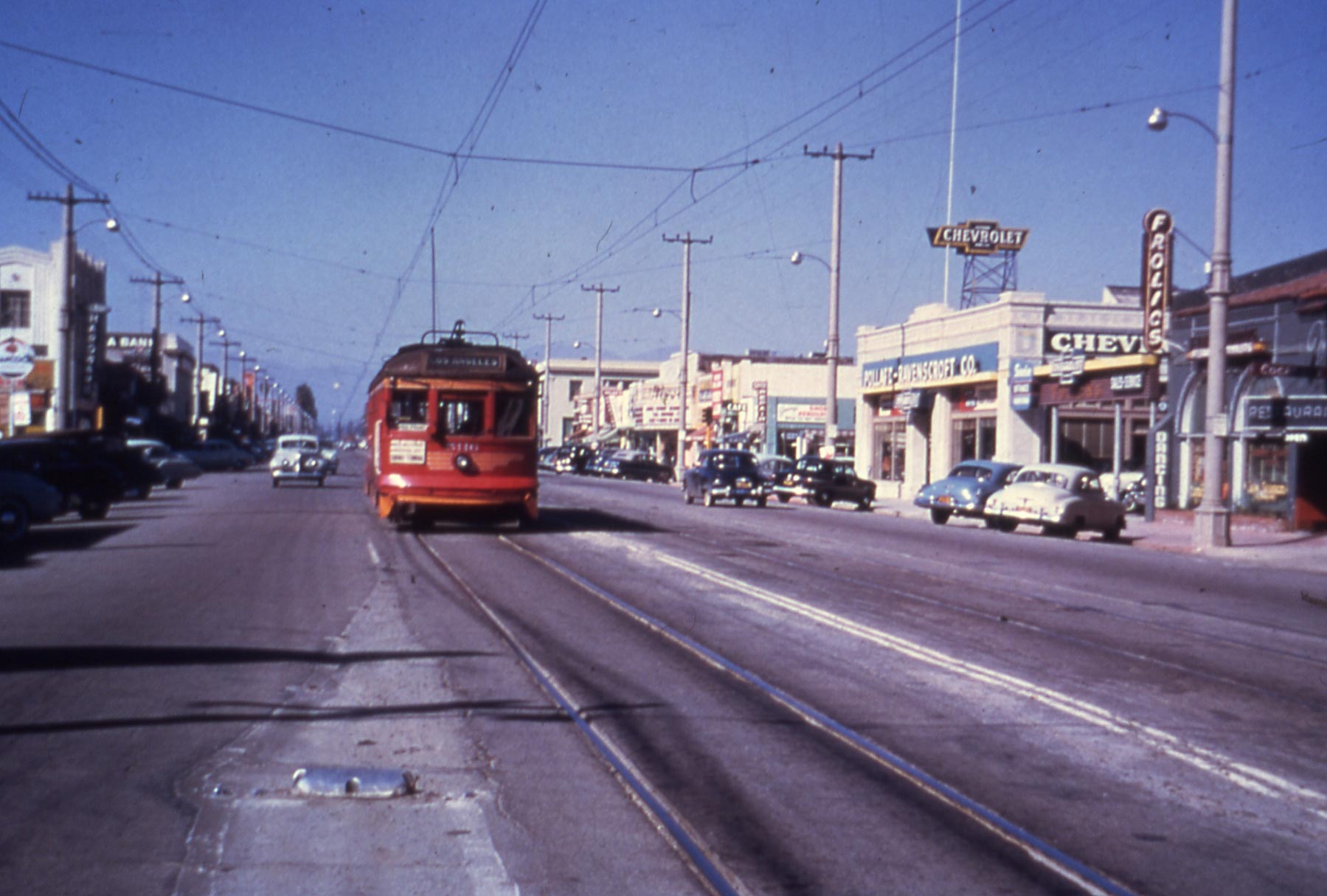
Van Nuys, 1952.

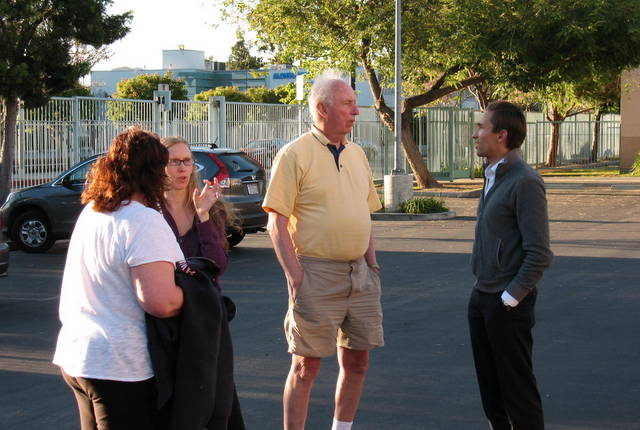
Last night, I attended a small neighborhood safety meeting with a group of perhaps seven neighbors and our LAPD Senior Lead Officer.

It was held at a home of the new liason between the cops and the community, a woman who speaks up and speaks often on issues affecting her street such as lighting, crime and people who don’t retrieve their trash cans after pickup.

I usually avoid these meetings out of trepidation. The ones I’ve gone to at the local school or hospital are full of anger and irrationality.

Not last night, but on other nights, I heard:

“Someone put a stoplight on my street at Vanowen and Columbus and now we have more traffic!”

 “They planted these oak trees along the curb to provide shade and now they have cars parked there with people smoking and drinking. I say cut down the trees!”

 “I’m completely against providing transitional housing for homeless veterans in our neighborhood. They get enough free stuff!” says the 65-year-old woman who inherited a 4-bedroom house from her WWII veteran father and pays $1,300 a year in 1967 rated property taxes.

 “These developers are putting up apartments everywhere. I didn’t move to Los Angeles to be surrounded by crowds!”

Yet, last night, the mood was polite. A well-fed group of rouged and perfumed women from the Eisenhower Era gathered in an early American style den where dainty finger sandwiches with the crusts cut off were served.

Period references, for example, to Mrs. Kravitz from “Bewitched” (1964-72) were understood and appreciated.

Our petite and pomaded Sr. Lead Officer, wore a dark navy uniform and a very big silver badge, holster, gun and unobtrusive body camera. She spoke intelligently and sometimes ironically about the insoluble issues plaguing our community.

She broke the news that we seven folks in the den were probably not going to solve 100,000 homeless on the streets of Los Angeles or 10 million illegal aliens inhabiting our state of 40 million.  Our system is so broken, so wrecked, our state so adrift in chaos and bad governance, that India, Nigeria and Pakistan seem models of order and stability.

She admitted that even her own husband often speeds down side streets, even as she enforces the laws against speeding while on duty.

She told us that 80% of major crimes such as assaults, murders, rapes and burglaries now come from the homeless community. She said that because Van Nuys has the only jail in the San Fernando Valley, when convicts are released they stay local.

She talked about Proposition 47, a voter passed initiative from 2014, to reduce penalties for certain non-violent crimes that now makes it nearly impossible to lock up the heroin user who shoots up in front of the grammar school. It’s now a misdemeanor to inject narcotics.

She said the homeless issue, which has now supplanted the prostitution issue, is a bigger problem than just our community. She advised electing officials above Councilwoman Nury Martinez, who would be devoted to law and order.

Whether her inference spells Democrat or Republican she did not say, but she seems to have a distaste for taggers, gang bangers, felons, and mentally ill murderers roaming the streets.

Mayor Garbageciti are you listening?

The host who invited us then passed out sheets of paper on which were shown our individual streets and the addresses that every block captain is assigned.

“Mona Castor Doyle[1], you have Columbus. Serena Pimpel you have Kittridge. Becky Shlockhaus you have Noble from Lemay to Kittridge. Miranda Beagle-Pinscher you have Lemona. Maria Copay you have Norwich. Sarah Choakhold you have Lemay!”

The methods advised were to go door to door and introduce oneself and say to each resident: “I am Zoe Bluddhound, your block captain and here is my LAPD letter and my contact information.”

Other methods of crime prevention were to send out group texts, say if you were home and heard an alarm, thus alerting your neighbors to a nearby illegality.

Living in Van Nuys requires a full time commitment to staying home and guarding your property 24/7.

Looking around the room I realized that everyone is trapped in their lives. These are women, now middle-aged or older, many of whom came here 30, 40 or 50 years ago and chose, for whatever reason, to stay here in Van Nuys. Some bought cheap, some inherited, nobody could afford to buy here now.

For some living here is an economical proposition when you bought your home for $35,000 or $126,000 and your yearly taxes are less than someone pays for the average ($2800 a month) two-bedroom rental in Los Angeles.

Yes, the environment beyond the little pockets of ranch houses is demoralizing, dirty, unsafe, ugly, violent, hideous, un-walkable and un-breathable. There are dumped couches, mattresses, fast food wrappers, cars and trucks speeding by, running red lights; there are grotesque billboards, car washes, parking lots, dog dumpings, discarded condoms and donut shops.

Nobody dines al fresco on Sepulveda Boulevard or drinks wine at an outdoor café on Van Nuys Boulevard.  The Van Nuys Neighborhood Council, alive like a corpse, ensures that no progress is ever made on any community improvement and that all members are backstabbing  one another.

So the community meeting, between neighbors, low-key and humble, without ego, is seemingly a better way to self-govern.

Last night, under the spiritual leadership of the Senior Lead Officer, an attempt at normality, order, safety, reassurance and camaraderie was attempted.

This is not Paris or Zurich or even Cleveland Heights. But we are not yet Aleppo.

[1]Personal names, not streets, have been changed.

The Parking Police


Sorry, garage is full at this time.


A few years ago, informally, someone named our section of Van Nuys, “Kester Ridge” even though there is no elevation here, only a continuation of the same elevation that runs from Victory to Vanowen and from Kester west to Sepulveda.

But everyone believes and uses the imaginary name, invoking it to conjure up community coherence.

The area is generally well-kept, anchored by grander houses along Hamlin St. that were built in the late 1930s when 18 acres were carved out of walnut groves. Now many of these homes are being carved into concrete ranchettes with car repair in the garage, and backyards denuded of trees and replaced with driveways and black Hummers. But the bucolic air of the recent past still remains if you drive down Hamlin without looking right or left.

To the north are well-maintained, solid ranch houses along such streets as Kittridge, Haynes, Saloma, Lemona, Norwich, Noble and Burnet.

These are tree-lined streets and the people who live here try to keep their homes clean. The average price of a house is somewhere around $800,000, though they rarely go over a million or less than $600,000.

Most houses have security cameras and alarms, and almost every home has been burglarized, but people are vigilant.


The recent developments along Sepulveda, the tearing down of old prostitution motels like The Voyager, would seem to foretell something positive, but new, 200 unit apartments, five stories tall, with hundreds of new parking spaces and modern, looming architecture, has instead created unease and worry in this area.

Last night, at Valley Hospital, in the community room, representatives from Councilwoman Nury Martinez’s office and a gentleman who works for the City of Los Angeles government and advises on parking restrictions, spoke about potentially creating permitted parking on our single-family residential streets.

This action would, homeowners hoped, stop the proliferation of cars and other vehicles that are now crowding the curbs, especially on streets closer to apartment buildings.

But in order for the licensed, fee-based system of placards and registration to take place, 75% of all the residents in the area would have to agree that paid parking by permission only was their preference.

That blew the gasket and infuriated attendees. They now understood that 75% of apartment units on Victory, Sepulveda, Vanowen and Kester would have to join in the clean curb party and sign a petition saying they wanted to rent out annual permits to park along formerly free streets. That will never happen.

Apartment dwellers depend on nearby streets to store their cars at night and get to work in the morning. Just like everyone who stays in a house.

There is no way to reason with people in Los Angeles who want unclogged streets, nobody parking on their street, the ability to get downtown in 20 minutes, and enough parking for every trip to the gym, Costco, 99 Ranch Market and Trader Joes.

Explain to them that $4,000 a month rental houses and $3,000 a month apartments will require perhaps four or five adults to split the rent, each with their own car.  The less rentable housing that exists, the less apartments that are built, the more these rents will increase.

Victory Bl. east of Sepulveda, Van Nuys, CA 5/10/18

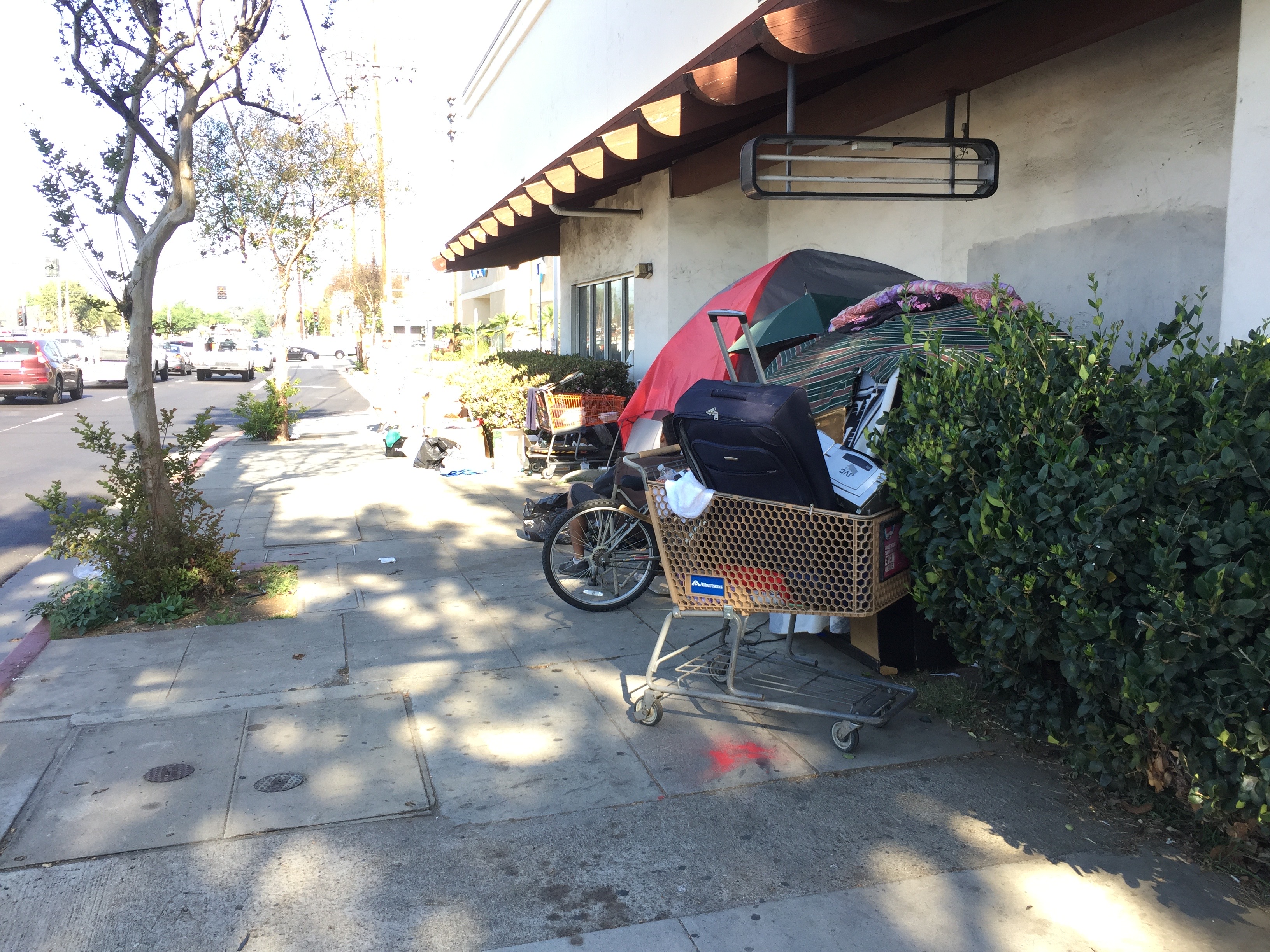
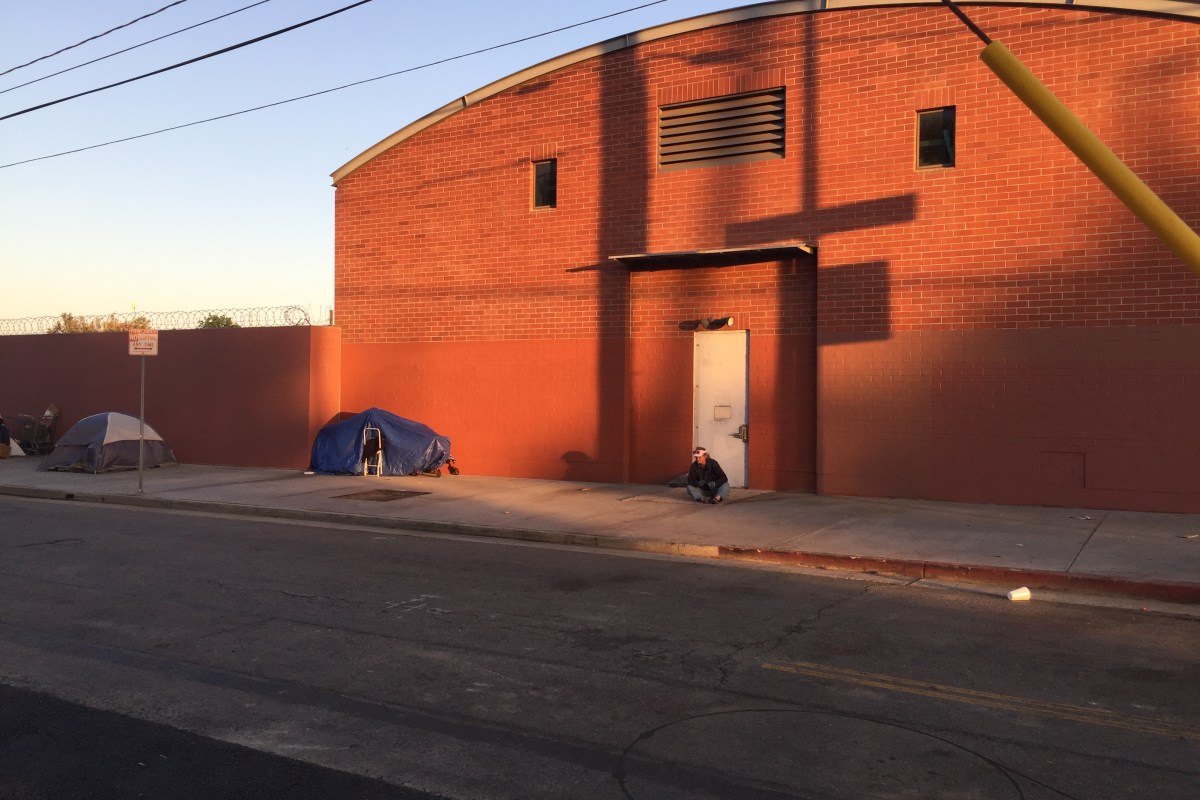
Why are some people sleeping in tents? Or cars? Or RVs?

Every political and social problem evaded ends up costing us in other ways.

Along Victory Boulevard, west of Sepulveda, as along many other streets, I witness the morning rush hour of single occupancy drivers sitting still as they wait for the light to change at Sepulveda, right in the midst of “Midvale Estates” where there are only single-family houses.  If apartments cause congestion, why is this picket-fenced bastion of Ozzie and Harriet clogged?

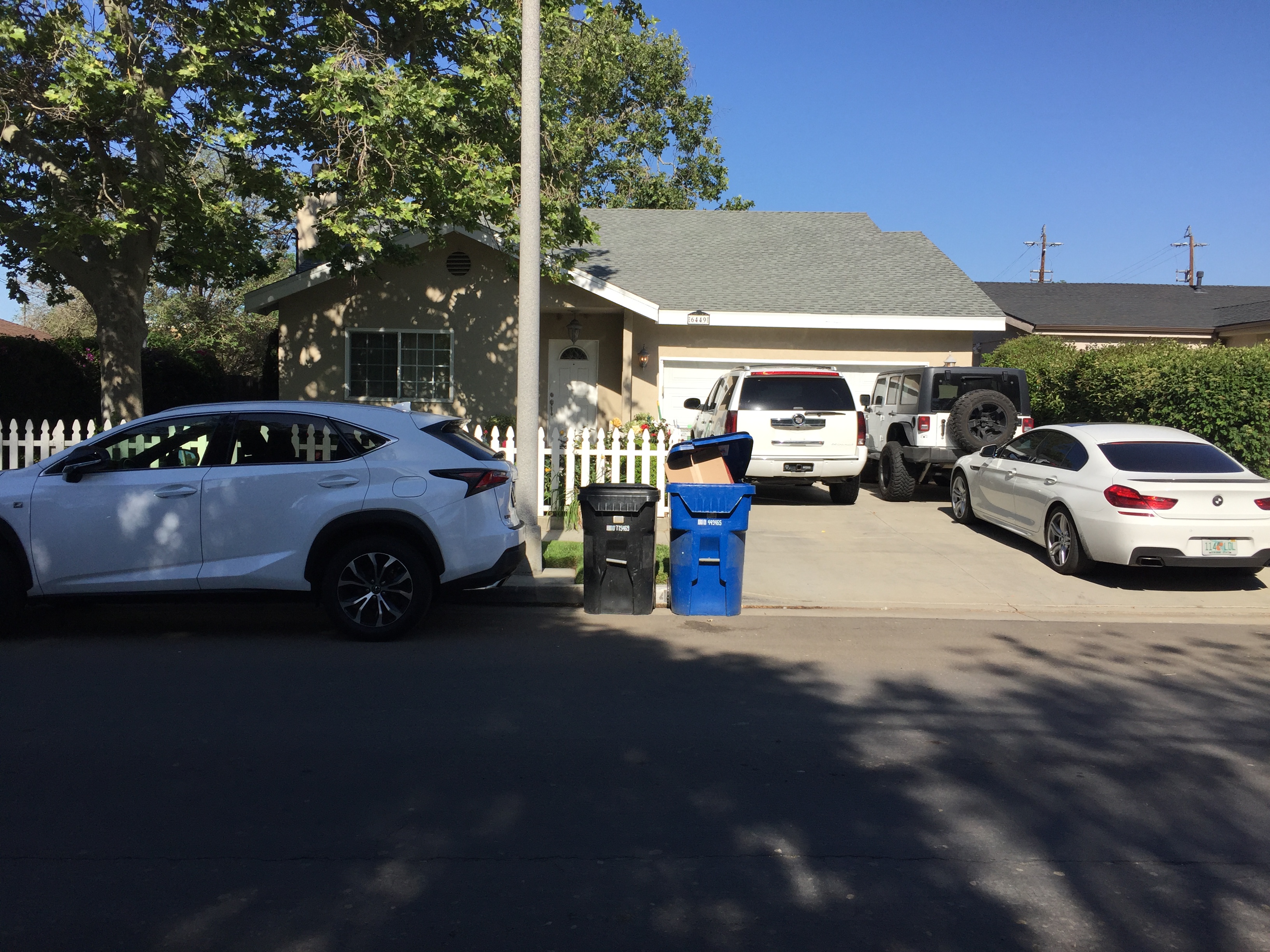
As for parking, there are very few people who still park their car inside their garage. The garage is now a storage unit for boxes, belongings, etc. The cars that are once sat inside are now on the driveway, and perhaps the curb.

Sorry, garage is full at this time.

A tiny, white house is rented. And the people who live there have four cars, and none of them are parked inside the home.

There is also conspicuous consumption in this city, a style of showing off cars that means that vehicles are put outside where everyone can see you are making it with your BMW and Mercedes even though you haven’t held a full-time job in three years.

That is repeated all over Los Angeles.

Los Angeles is the second largest city in the United States, yet many who live here cling to the vision that it should function like an efficient, low-density town in the Midwest.

The car should be everywhere, at our disposal every hour of the day, yet it should somehow disappear if it belongs to someone else.

When visionaries present a city of road diets, bike lanes, denser housing near transit lines, that’s when the panic starts.

And we go back to planning our lives around everything for the car. And idle in rage.

SaveSave

SaveSave

SaveSave

A Community Meeting.


Dan Stroncak
Dan Stroncak

IMG_4596

Derek Waleko

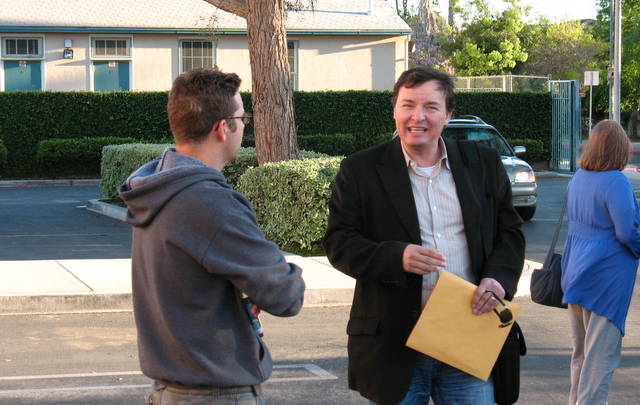
Cat White, Andy Hurvitz, Dan Stroncak

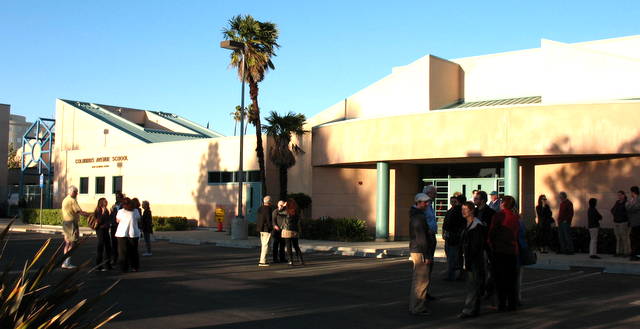
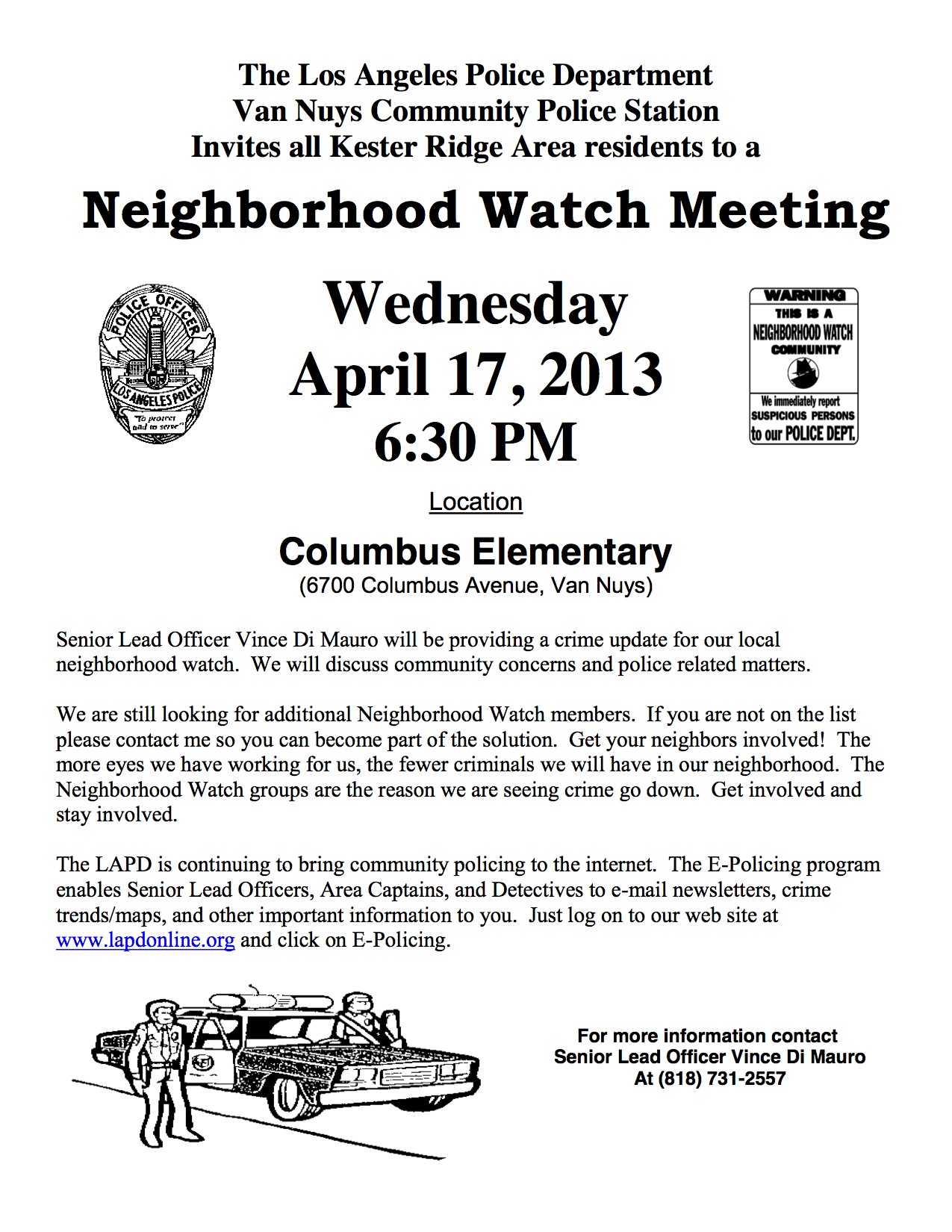
Not often is Van Nuys convinced it is a community, but last night, about 40 of us pretended it was, and gathered in the Columbus Avenue School to hear LAPD’s Senior Lead Office Vince DiMauro talk about the crimes that are a trademark of our district: prostitution, gangs, tagging, noise, and vacant properties.

Two political candidates for the special City Council District #6 Election (May 21, 2013) showed up: Derek Waleko and Dan Stroncak.

We were in a well-ordered academic hall, which I had last seen at my elementary school, Lincoln Hall in Lincolnwood, IL some four decades ago.

An upright piano, lunch tables stacked into the walls like Murphy beds, a state and a national flag on either side of the stage, a cop speaking kindly to attentive citizens, present among us were these venerable elements of American civic life and values.

And then Donna from the Mary Magdalene Foundation got up to present her plea for the prostitute as victim, which set off some incendiary cerebral explosion in one of the candidates, who found her characterization of whore as human indefensible. His outburst provoked some other outbursts, but the uproar lasted only briefly, and back into good manners we went.

Middle-aged and older women provided, as they usually do, the moral backbone of the meeting. Voices, articulate, erudite, educated, spoke of grating and gross indecencies in the hood: thumping boom-box music parties, tagging, pot smoking derelicts, trash, litter, burglaries. Looking around at the room, at some of the carefully lip-sticked pale faces, nice tailored burgundy jackets and lovely little pink cardigans, one temporarily forgot that outside these school doors life was grosser, poorer and coarser.

Some of the attendees last night came out and admitted to being long-time residents of Van Nuys. One man moved here in 1958, others had been here since 1965, 1973, 1979. They had stayed here, lived and loved it, every bit as much as Sandra Tsing-Loh hated it. And it was those lovers of Van Nuys who go to community meetings. And dare to imagine that life can lawful and orderly, clean and respectful, decent and courageous.

Optimism, inserted into despondency, can be revolutionary.

Image

Van Nuys Prostitution Meeting with the LAPD


April 17, 2013
April 17, 2013

The Small Illegalities.


15137 Gilmore St. Van Nuys, CA 91411

A ridge is defined as a small, narrow hilltop. It is also one half of Kester Ridge, our growing neighborhood Facebook group that seeks to build a consensus on improving Van Nuys radiating from Victory/Sepulveda.

We gathered, about 20 of us, last night, at my neighbor’s house. The participants are homeowners, of all ages, all white. A few had just moved in, fixed up their houses, told stories of planting grass seed instead of sod, soliciting HGTV for a kitchen remodel.

Quite a few are “looking for work”, “between jobs”, “working from home”, all the tender euphemisms for the unemployed.

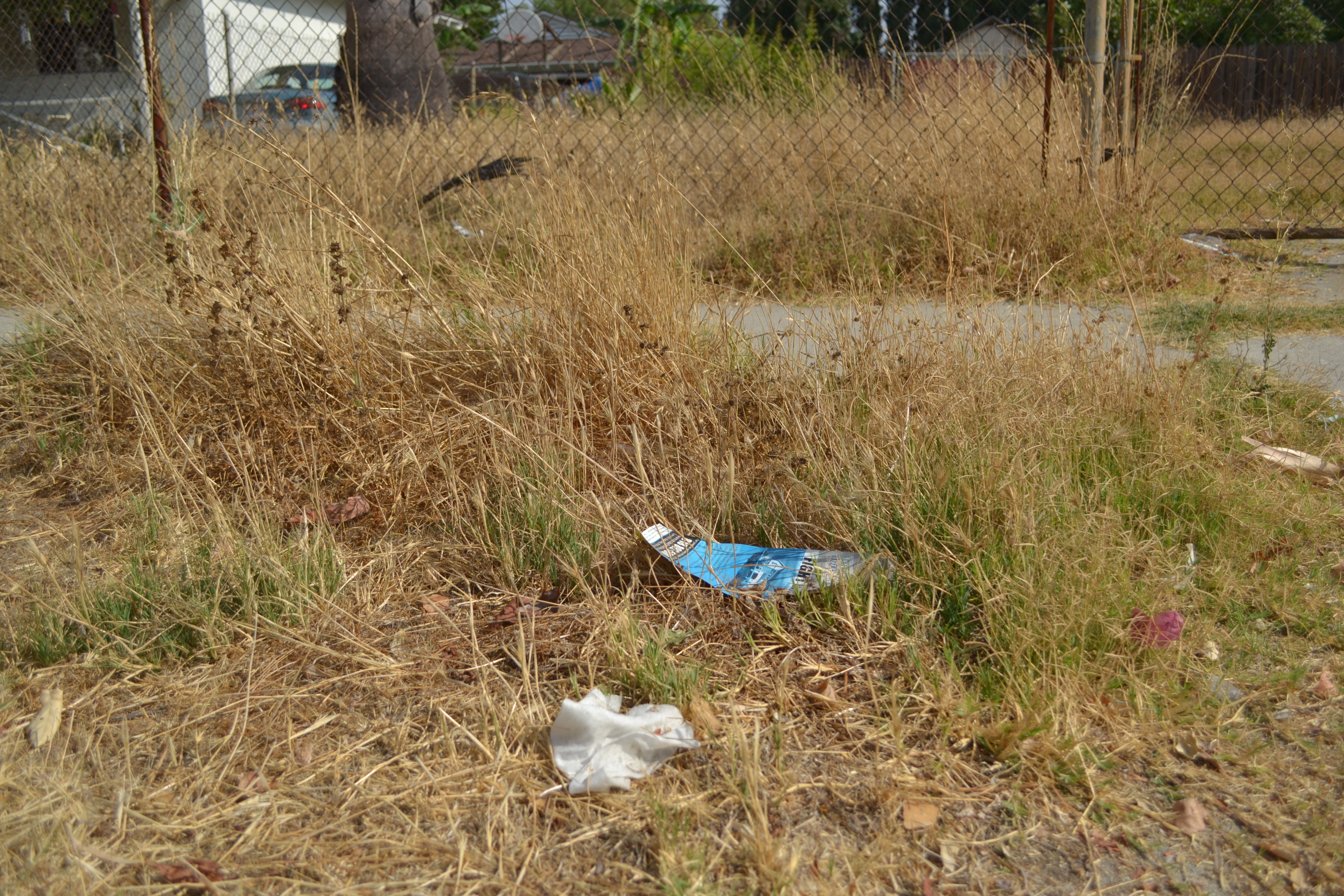
At home, all day, in the Valley heat, they bear witness to the pathologies of the area, the small illegalities: discarded food wrappers, pot smoking kids in cars, taggers, barking dogs, dog shit.

A block captain, a longtime resident here, spoke of walking her beat, her conversations with LAPD SLO Rich DeMauro, the calls about prostitution, the whores who walk up and down, the johns who pick them up, the discarded condoms.

The whore talk took up most of the time, an issue as endemic and real to Van Nuys as Botox is to Beverly Hills.

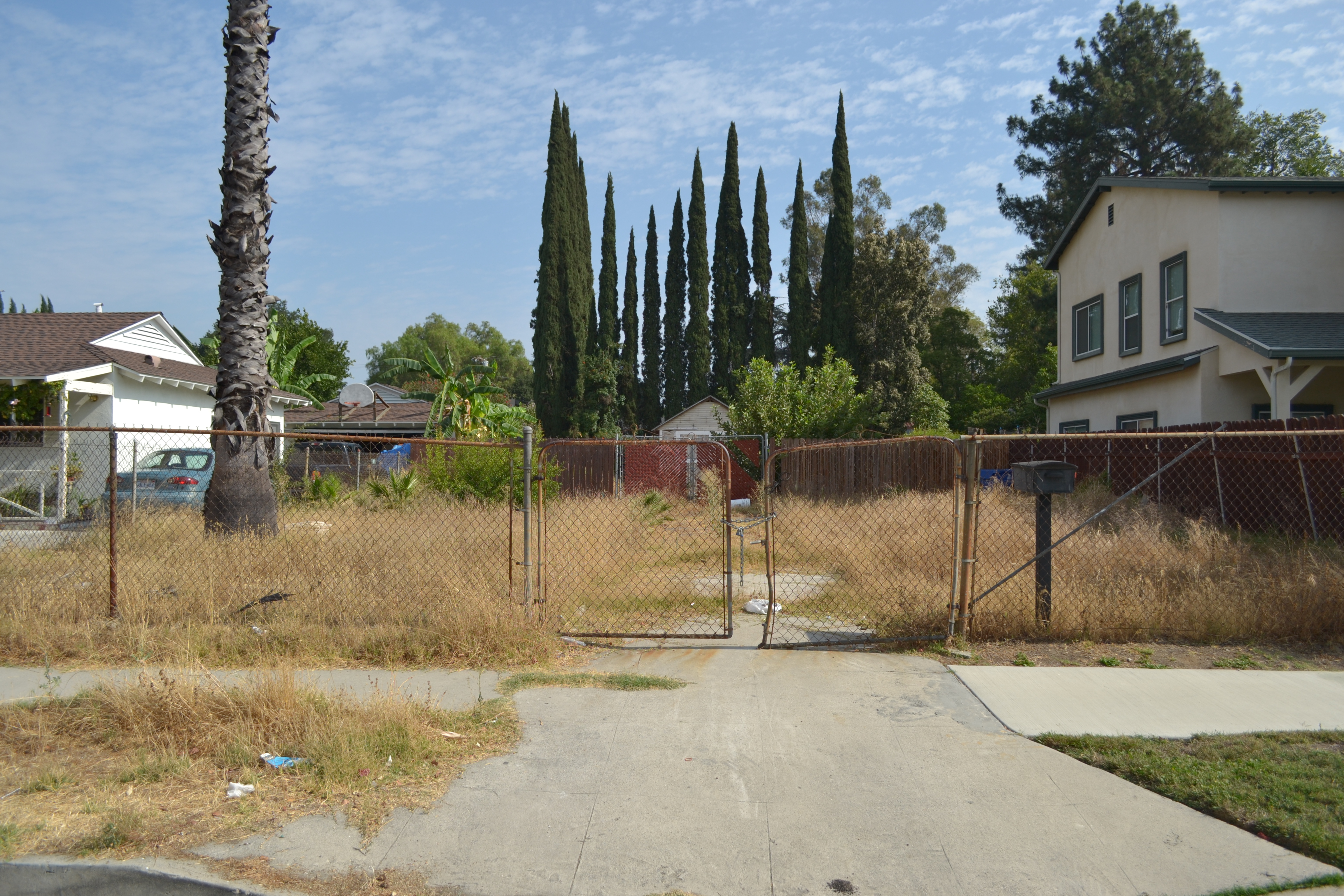
We talked about the slum mall at 14851 Victory at Kester, a commercial property of seven thriving businesses whose trash has piled up on the side of the street for years. A $10 broom would cure this cancer.

The trash pickers, the ones who go through recyclables and rip open bags, they also were decried. It is illegal to steal from the blue recycle bin, but in modern California, tolerance, not statute is law.

We spoke of the wig and costumed prostitutes who go around in their cars and change into new outfits to escape arrest.

A real life crime story too…

A new homeowner had captured, in his driveway, a man in a pick up truck, loading up a stolen whole house air-conditioning condenser. The victim  grabbed onto the driver, holding his neck, but the thief escaped and drove off, was later arrested and is now paying off his theft.

Overall, looking at these respectable, articulate, thoughtful, nice neighbors, so at odds with the image of Van Nuys, one yearns for a real government of real laws, responsive to constituents, a government intolerant of the small illegalities.

All anyone wants is a quiet, peaceful, safe, sane place to live.