Letter From a Homeless Man


From the LA Times article, “Garcetti’s A Bridge Home Homeless Problem Has Mixed Results.”

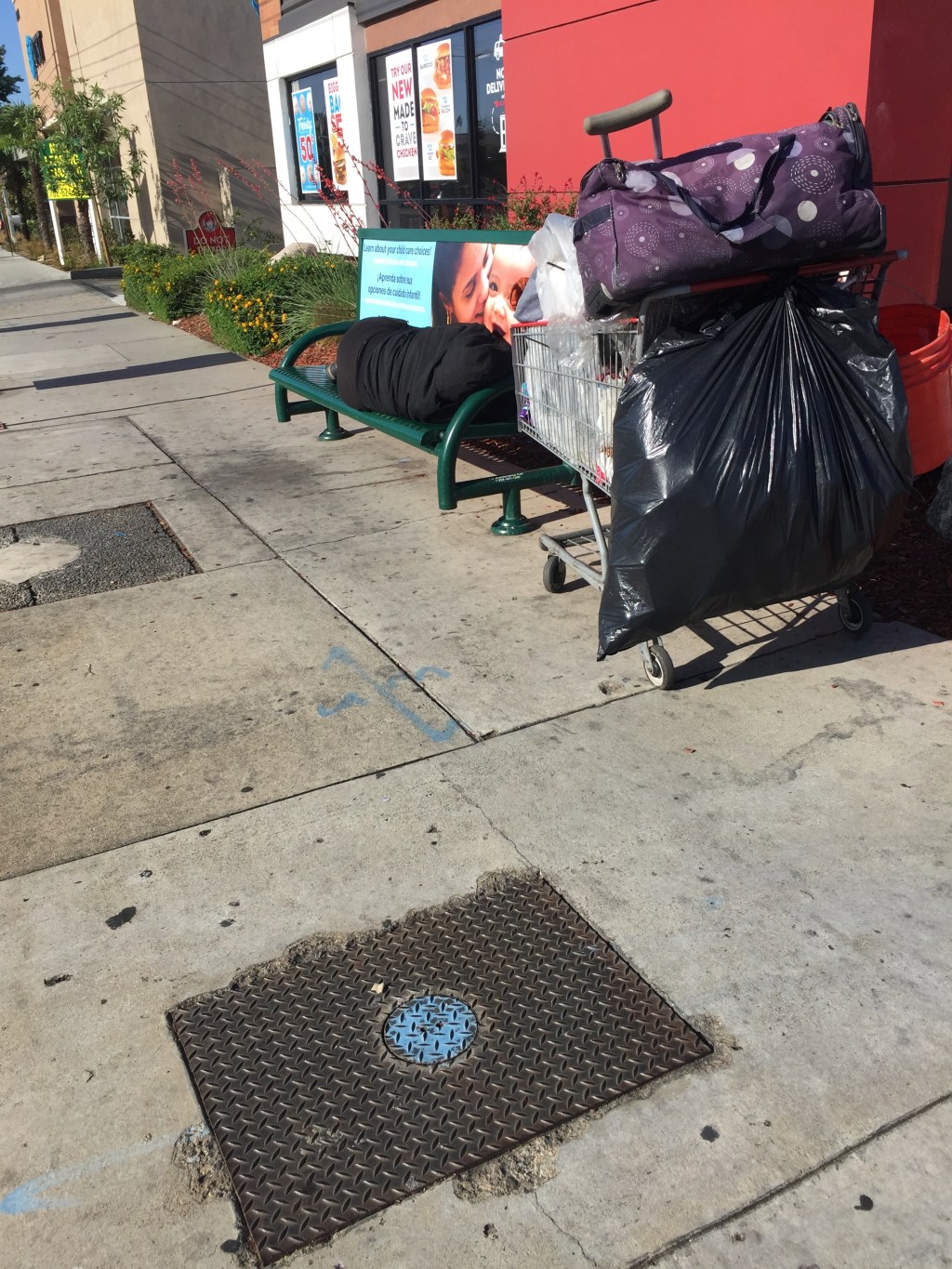
A formerly homeless addict refutes all the tolerant and feel-good ideas that are bandied about by Garcetti and other enablers. Here is what WEHO LIBERAL said in a letter to the LAT:

“I’m someone who once was homeless multiple times, but always stayed in shelters no matter what. NEVER, ever camp outside! It’s a dead end and that behavior is only for people with serious behavioral problems, alcoholism, drug addiction and mental illness. If you lose your housing? You do NOT camp outside. Period.

I’ve posted multiple times about homelessness on LAT over the years. The last time I did, Nita Lilyveld (not sure if I spelled her name right) wrote about 2 young homeless people in their early twenties that I reached out to offering support and even to take them to dinner. After 2 or 3 texts between one of them where they kept saying they’d follow up with me, they flaked. No more texts. They didn’t follow up or stay in touch.

I am done with this nonsense. And I say that as a liberal Democrat who supported all of these shelters being built. Enough is enough. My mother was mentally ill her entire life and constantly refused treatment.  Even when I was struggling with my own addiction, I ALWAYS made sure I had shelter.

I live in Hollywood.  You see these people every day.  I see them sitting or lying around their campsites when I leave for work. I come home from work and they’re still there, doing nothing but eating, urinating, defecating, some listening to the radio or watching TV on their phones. But they are always there and they make zero effort to change their lives or better their situation.

They ask me for cigarettes, they ask me for money. Their laziness and refusal to change infuriates me. I was homeless, multiple times. I’m sick and tired of LAT columnists like Steve Lopez and Nita Lilyveld pleading to help people who simply do not want to help themselves–or in the case of Lopez, only interested in finding a charity case that they can champion in press and on TV for his own ego.  No, I do not care to hear about how hard Nathanial Ayers’ life is when he refuses to take his medication that would help save his life and better his living situation. My own mother refused treatment for years so I have zero sympathy for people like him who literally are victims of their own refusal to simply do what could get them housed and improve their lives.

Look, being homeless and living in either a shelter or housing provided by local government was no picnic and no fun. I was miserable. My addiction was my responsibility and I deal with it and take responsibility for it. But Lopez, Lilyveld and others like them have their own faults and shortcomings, too.  It’s morally right to have compassion for others, absolutely.  But people who refuse to help themselves even when others try to help them and move Heaven & Earth to do it are not worthy or deserving of compassion.  They are not money pits; they are emotional black holes who will drain the time, energy and resource of everyone around them because they refuse to do what they need to do.

I’m living paycheck-to-paycheck. Yes, I’ve been lucky and yes, I have white male privilege. But as an incest survivor and an HIV+ positive drug addict in recovery, I no longer buy what Lopez, Lilyveld, LAHSA and others like them keep preaching. It is infuriating and it’s becoming obscene. I tried to help 2 homeless young people less than half my age last year after reading about them here.  For God sakes, I offered to feed them more than once. They kept making excuses and then just stopped reaching out to me.

I am done with supporting this policy and their behavior. We all need help sometimes. God knows I spent years exhausting people and it took me a long time to get my act together. But sooner or later, you have to reach deep down inside yourself, confront your problems and change your behavior as much as possible to save your own life.

I am not perfect and all of my problems are not solved. But as someone who sees homeless people every day who sit around all day doing nothing, my compassion for all but a select few is pretty much drained and gone.”

New Housing at Old Bank.


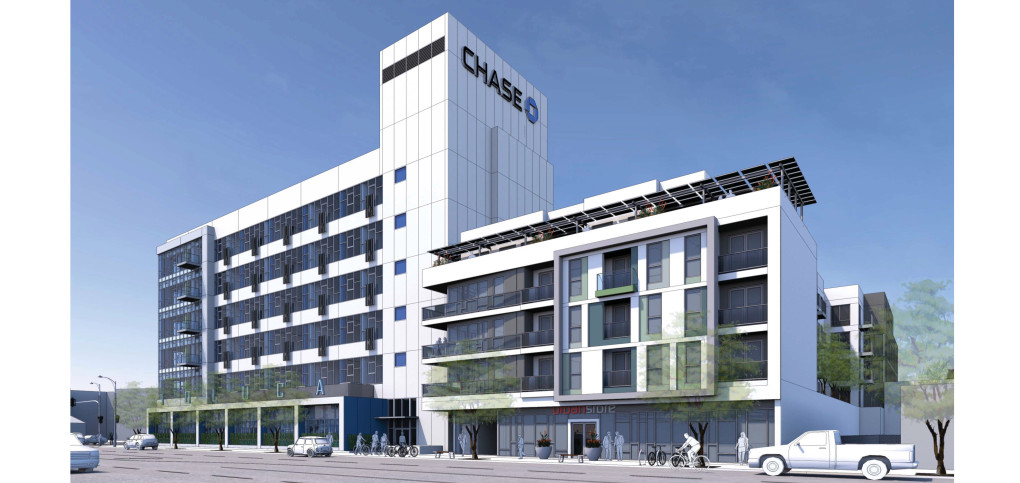
Last week, the LA Planning Commission approved 179 townhomes and 8 low-income apartments built partially out of the old North Hollywood Savings and Loan (later Chase) Bank at 4445 Lankershim Bl. at Riverside Dr. according a recent story in the Daily News.

The 1961 building will be readapted for residential use, and include over 5,000 SF of ground floor commercial space along with 263 car spots and 237 bike spaces. The architect is Winston Chang, principal of Next.

For years I have driven past this building as I traveled on the 134 or along Riverside Drive. 

Curious about its history, I dug up some old LA Times articles.

Roscoe W. Blanchard, Sr. (1882-1977) owner of the Blanchard Lumber Company, founded the North Hollywood Savings and Loan in 1923 when the San Fernando Valley was in its earliest boom days. 

Here is his 1977 obituary:

After WWII (1945), the boom in residential building made the bank prosperous, and in 1960, with over $40 million in assets, they announced a new $2 million dollar, six-story tall skyscraper with 73,810 SF of space. Earthquake resistant and fireproof, it was also the tallest structure in the San Fernando Valley. 

In a 1963 ad, the bank stated they would pay depositors 4.80% interest, a tidy amount for the time. In 1969, they promised 5% interest for new deposits.  Those were the days when a person could save money by opening a savings and loan account, and count on a guaranteed level of annual growth.

But the go-go 1960s ended with a decline in the Los Angeles realty boom. And the days of a secure savings and loan specializing in residential housing loans was numbered.

A Feb 9, 1969 LA Times article entitled, “Realty Boom is Fading as Prices Stay Stable” lamented high interest rates of 7-8%, and the inability of many families to afford the average $25,000-$35,000 SFV home, with more than 2/3 of SFV families earning less than $10,000 a year.

Overbuilding in 1965-66 had resulted in rental vacancies of 22% and almost 2,000 new homes unsold. One-third of the new, un-bought homes in Los Angeles were in the San Fernando Valley.

In 1969, both rents and residential prices fell as supplies increased, a widely accepted fact of economics which seems to have been forgotten by modern Angelenos who believe that building more housing is only for “greedy developers.” 

But back when the developers were allowed to develop, this was the result:

1970: In Woodland Hills, the average rent was $172, the highest in the Valley. 

Encino had the most expensive homes, averaging $50,000 in value.[1]

Today we have this:

According to CoStar, the price of an average apartment in the Woodland Hills sub-market—which includes Warner Center—stood at $2,200 per month. 

In 2018, Redfin said the average Encino home was $980,000.

In 1979, Proposition 13 froze property tax rates at the original level a home was sold at, not currently assessed at. Lucky owners of homes bought in 1974 for $40,000, which became $300,000 properties in 1980 (or $3,000,000 in 2019) were still taxed at 1974’s $40,000 purchase price. 

The tax rebellion was partially a white reaction against the increase in illegal migration and resentment in paying taxes for darker complexioned students. Today, most people who can, drive their children out of “bad” school districts to “good” ones thus exacerbating our air pollution and traffic problems. 

People who once rode the bus now take Uber or Lyft, thus exacerbating our air pollution and traffic problems.

We don’t build enough housing. Our housing is in short supply because many of the occupants here don’t legally have a right to be here. But that is stating what should not be said.

Part of our hypocrisy is being liberal and being racist and wanting good education for our children. And none of these traits can co-exist in modern Los Angeles without being hypocritcal. This is not an indictment, just merely a statement of fact from speaking to white parents who live on my street in Van Nuys and drive their kids out of the area to attend school.

The great shortage of homes in Los Angeles began its 40-year ascent and has now culminated in the lovely sight of human beings, unable to afford shelter, sleeping under bridges and along sidewalks. 

Mental illness is blamed for some of this but I wonder how mentally healthy I would be after eating out of garbage cans and sleeping in an alley for a year.

That some of the fortunate inheritors of parental properties, and low property taxes, are also some of the biggest opponents of new residential construction, especially in wealthy sections of Los Angeles, is a cruel irony. 

In the 1980s, the Savings and Loan crisis, brought on by government policies that bankrupted local S&Ls, resulted in the consolidation of many small banks into the large regional ones such as Chase or Bank of America.

In 1976, North Hollywood Savings and Loan was incorporated and merged into San Diego’s Central Federal Savings and Loan Association. 

So in the next few years, a building that once housed a savings and loan which played an instrumental role in lending money to young families buying homes in the San Fernando Valley, will become itself a home for some 179 families, (and 8 units or 4% of the total units will be low income).

Los Angeles, here in Van Nuys, and here in North Hollywood, and all around the city, will move along and build expensively and sluggishly until its leaders accept that it must become denser, higher, and less car dependent. An enormous push for more affordable and multi-modal transport accessible housing is paramount for our survival as a viable metropolis. 

Because we don’t build enough housing, we cannot afford to live in areas we might want to, which leads to more segregation and more bitterness and more helplessness in a city where homelessness is never far off and being housed is conundrum of insanity and indebtedness.

That we need to build more was something Roscoe W. Blanchard, Sr. would have understood with his expertise and success in building materials and financing homes 100 years ago.

We are trapped between the reality of our city and our dreams of its potential. We know what it is. We see this place with our own eyes.

But we really don’t want to accept its degraded condition, or the responsibility for how grotesque, unequal, cruel, barbaric and sadistic it often is. To look at the ugliness in this city we would have to accept that ugliness in ourselves. And why we make illogical and self-destructive choices and choose prerogatives that hasten the decline of Los Angeles.


[1]Valley Population Near Million; Growth Slows

–LA Times, April 29, 1971

1956: Crazy Times


These are a selection of violent news stories from just a few months in 1956, mostly related to people in Van Nuys, but also in Canoga Park and Burbank.

It is common to look back at the 1950s, especially in Los Angeles, as a less violent and less chaotic era. Old-time residents of the San Fernando Valley remember it as a verdant, peaceful, fun, and safe place. 

But there was actually a 62% increase in crime in the SFV from 1954-55.[1]

More Police Asked for West Part of Valley

True one could buy a house for $14,000. But the average US household income in 1956 was $5,000 a year or about $96 (before tax) dollars a week.  And nobody drove their children to school in Los Angeles. The kids walked or biked. Affordable houses and children on foot: two extinct attributes of life in Southern California.

Then, as now, the horrors of sudden death were attributable to two beloved things profuse in our city: cars and guns. 

1/9/56: Burbank motorcycle officer, William Catlin, 44, said he owes his life to citizens who helped him subdue youth he said threatened to kill him during questioning. Reginald Lemon, 18 was booked on suspicion of assault with intent to commit murder.

5/14/56: Three persons were shot to death, a fourth critically wounded, at 19859 Saticoy St., Canoga Park. Regis Johnston, 35 went berserk and killed his wife Jean, 30 and Bessie Mungall, 35 and wounded Bessie’s husband John, 40. Regis Johnston then took his own life by shotgun.

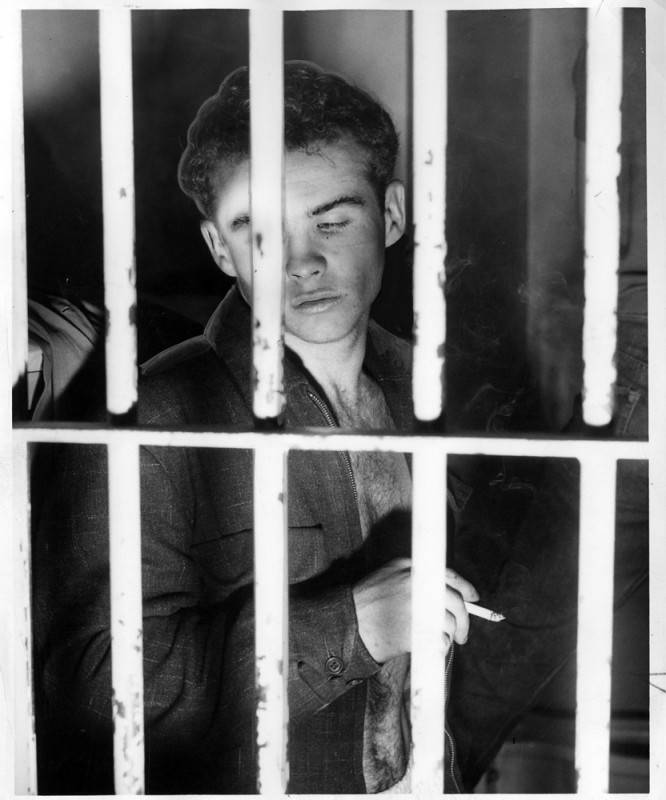
6/18/56: Rudolph Liberace, 24, of Van Nuys, brother of pianist Lee Liberace, is shown in jail after his arrest as a burglary suspect.

9/30/56: Protecting the mid 1950s’ 600,000 residents of the San Fernando Valley (2018: 1.75 million) were 418 LAPD officers who were crammed into the 1933 Van Nuys City Hall which was designed to only house 45 cops. The new regional police buildings that were later built around the San Fernando Valley in the late 1950s and early 1960s helped alleviate the primitive conditions of the old headquarters.

10/18/56: In the midst of a strike by laborers at Hydro-Aire, Inc. in Burbank, a striker’s wife in Van Nuys, Mrs. Patricia Laszlo, 21, of 9920 Saticoy St. was cooking dinner when a masked, leather jacketed thug entered the house and beat her and knocked her out. He struck her in the abdomen and threatened to burn her fingers on a stove if her husband, James Laszlo, 22, a machinist, did not return to work. The International Association of Machinists, Lodge 727 is the union picketing the plant at 3000 Winona St. Burbank.

10/23/56: Twenty-one juveniles were arrested for vandalism including Robert E. Farmer, 18 of 15001 Paddock St., Van Nuys who was apprehended by custodians as he and a friend attempted to crack a safe in the student store at San Fernando High School, 11133 O’Melveny St. Both were booked on suspicion of burglary.

11/23/56: A 31-year old mother of a 10-year-old boy took a 22-caliber rifle, shot her son to death and then killed herself. Julia McIrvin of 7240 Woodman Ave., Van Nuys, died in the Valley Emergency Hospital along with her son. Twice divorced, she suffered from mental issues.

11/30/56: A Youth Dies, 4 Hurt in 3-Car Smashup on Sepulveda. The youth was a native of Germany, Karl Schmidl, 21, who was driving southbound in his lightweight, imported car when he plowed into a northbound car with four people driven by Leonard W. Kraska, 30, of 14259 Vanowen St. Van Nuys; James Robert Parker, 48 of 9261 Wakefield Ave, Van Nuys; and Earl Schapps, 53, of 8850 Tyrone Ave. Van Nuys.


[1]10/4/1956 LA Times: “More Police Asked For West Part of Valley”

When John Wayne Came to Van Nuys High School.


john-wayne-1

jw2

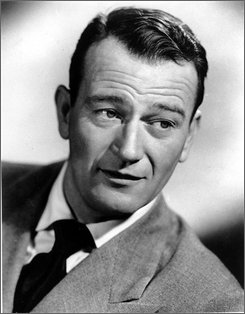
John Wayne, 42, actor, father of four school age children, went to Van Nuys High School in November 1949 to get a tour of one of the city’s first mandatory driver’s ed programs.

In a November 28, 1949 LA Times article, Mr. Wayne learned that Van Nuys was equipped with a fleet of driving school automobiles, donated by local dealers. 285 students in their sophomore year were enrolled in the instruction program. The school was in the vanguard of teaching drivers ed, the first to do so.

It was a time when education in Los Angeles partially derived its pedagogy from auto dealers. They supplied the tools. The schools provided the teachers and the students.

The driving instruction course was now mandatory across the city of Los Angeles, which was the most automotive centric place on Earth.

Mr. Wayne’s appearance at the school caused fluttering female hearts to beat faster, and provoked admiration from the boys.

So complete was the coming transformation of Los Angeles that eventually all the streetcars would be ripped out and replaced with wide boulevards and freeways and we would all get to breathe that brown air and sit in traffic for the next 80 years.

General Motors, Ford, Chrysler, Packard Studebaker and Hudson were like Honda is today: they made it their mission to help the community advance towards gridlock, smog and sprawl.

And Van Nuys, once a walkable little town with nice little shops, would find its instructional lessons applied in destructive ways.


1991: “OLD VAN NUYS’ NEW NAME GETS MIXED REVIEWS”


Los Angeles Times

August 10, 1991, Saturday, Valley Edition

OLD VAN NUYS’ NEW NAME GETS MIXED REVIEWS;
ADDRESSES: SOME CHARGE THE SECESSIONISTS WITH ELITISM. OTHERS ARE UNAWARE OR DON’T CARE THAT NEIGHBORS ARE NOW IN SHERMAN OAKS.

BYLINE: By JOCELYN Y. STEWART, TIMES STAFF WRITER

On the streets of Van Nuys and what once was Van Nuys, reactions to the announcement of yet another San Fernando Valley name change fell into three distinct categories Friday:

A) “I don’t care.”

B) “More money for me.”

C) “They changed the name??”

One day after Los Angeles City Councilman Zev Yaroslavsky declared that a 40-block section of southern Van Nuys will be officially absorbed by Sherman Oaks, some Van Nuys community leaders charged the secessionists with elitism. But many residents were either unaware of the change or did not care that their neighbors opted for the ostensibly more prestigious address.

Standing in the driveway of his house on Vesper Avenue, which remains in Van Nuys, it was clear Allan (Red) Jenman fit comfortably into category A.

“I’m not included, so I’m crushed,” he said, laughing with good-humored sarcasm. “Other than that, I personally don’t care.”

Jenman, who has lived in the Valley for all of his 70 years and in Van Nuys for 18, said he does not recall the days when the newly seceded portion of Van Nuys was called Sherman Oaks, as the secessionist residents maintain.

Still he said of the name change: “It isn’t going to make any difference.”

For Rebecca Urias, who has lived in her house on Tobias Avenue in Van Nuys for only two weeks, the homey feel of her new neighborhood — regardless of the name — is a welcome change from the urban life of Santa Monica.

“Van Nuys, Sherman Oaks, it doesn’t matter,” she said, holding her son, Christopher. “It’s a nice neighborhood. It’s quiet here. We hear the crickets at night.”

Debi Akin moved from Sherman Oaks to Van Nuys four months ago. She was unaware of the name change, and found it meaningless but not in the least offensive.

“If they’re going to use all this taxpayers’ money to make the change, I think it’s stupid,” she said, holding her daughter, Zoey. But she added, “It doesn’t bother me at all.”

It does bother Don Schultz, president of the Van Nuys Homeowners Assn.

“For the most part, people feel abandoned,” Schultz said. “Here are people who think the easiest way to solve those problems is to get a community name change,” he said of the former Van Nuys residents.

People should work together to rid the area of the problems that have given Van Nuys its declining reputation, rather than distancing themselves from it, Schultz said.

Developer David Honda, past president of the Mid-San Fernando Valley Chamber of Commerce, which once was the Van Nuys Chamber of Commerce, said the move was “carving the nice sections out of Van Nuys.”

But proponents of the name change argue that the area was actually Sherman Oaks until 1963, when the Post Office instituted ZIP codes. Residents were confused because the deeds on some houses said Van Nuys while others for houses on the same street said Sherman Oaks.

Yaroslavsky said the decision to make the change for the 2,000 residents between Magnolia and Burbank boulevards was based on a detailed analysis of the situation. “There is a history to this area,” he said. “A history of association with Sherman Oaks and not Van Nuys.”

The change will clear up the confusion surrounding the area and help residents get mail quicker, he said.

Schultz disagreed. “I don’t think the real issue was so much clearing up confusion as it was getting rid of the Van Nuys address and getting a Sherman Oaks address which is going to increase property values,” he said.

Residents of affluent Chandler Boulevard, now part of Sherman Oaks, bore him out. Money, not mail, was on their minds.

“I’m very pleased,” said Barbara Caretto, standing in her house on Chandler. “With a mere stroke of a legislative pen someone has increased my property value by about $20,000. Could I complain?”

Florence Later, who has lived in the area for 35 years, said she also expected property values to increase and welcomed the change.

“Sherman Oaks has a better, more savory reputation,” Later said.

Standing in front of a vacant Van Nuys house on Cedros Avenue with an “Open House” sign in the yard, Realtor associate Robert Heinstedt likened the change to others that have occurred in the Valley recently.

“West Hills, North Hills, Valley Village and now Sherman Oaks,” he said. “A name change to try to latch on to more affluent, expensive areas.”

Some in the newly named area may see an appreciation in home values, Heinstedt said, but he questioned the sanity of it all.

“I have a Mazda,” he said. “If I apply to have the name changed to a BMW does that make my car worth more money? That’s what they’re doing.”

Van Nuys Airport Noise Complaints: 1958.


Complaints about noise at Van Nuys Airport are nothing new.

By way of Larry Harnisch’s Daily Mirror blog in the LA TIMES.