One Story Town, Again


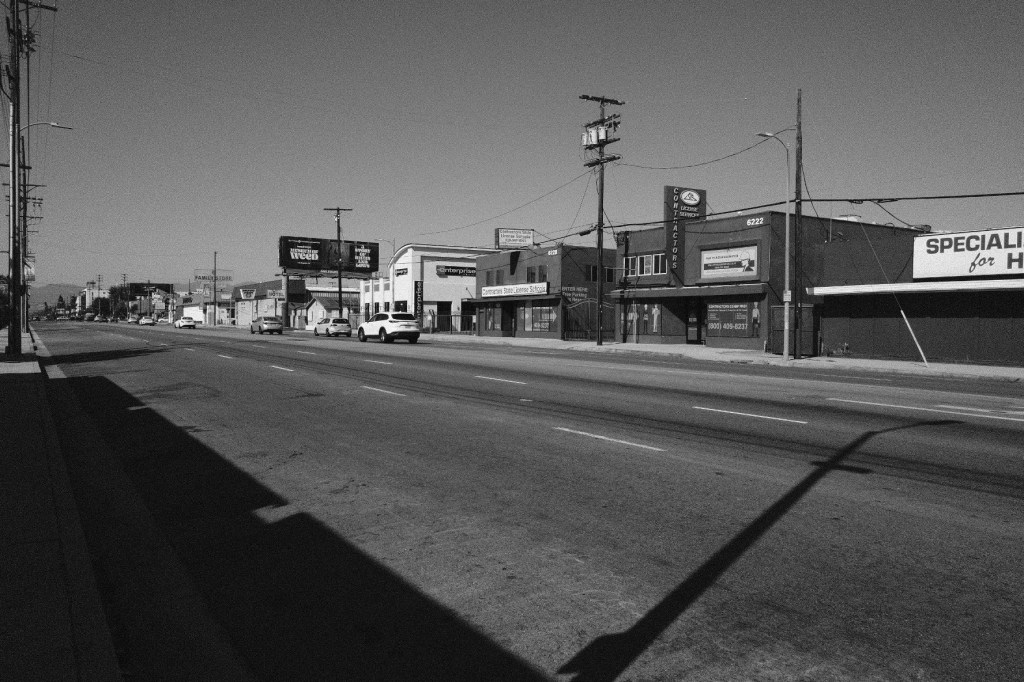
Earlier in the year, the Salvation Army store at 6300 Sepulveda went out of business. The lot it occupied, building and parking lot, is some 45,000 square feet.

It sits along a row of Sepulveda that is seemingly zoned for only commercial use, even though it runs along a heavily traveled bus route and is but minutes from the Orange Line.

Salvation Army
Salvation Army, former location, now closed.

Here is an example of a critical issue that somehow escapes the gaze of Councilwoman Nury Martinez, Chief Design Officer Christopher Hawthorne, and Mayor Eric Garcetti.

Why are there unused or underused vast parcels of land in a place which is starved for housing, where homeless people roam without help, and people cannot find affordable housing?

The Mayor recently wrote an open letter to President Trump asking for more help on a variety of issues, including veterans who are without shelter:

“If you and your Administration would like to help Los Angeles and other American cities confront our homelessness crisis, I urge you to take the following actions immediately and work with America’s communities to bring all Americans home:

  • Support the bipartisan Fighting Homelessness Through Services & Housing Act, S. 923 and the End Homelessness Act, H.R. 1856 which further expand the housing safety net with new grants and mental health programs to help cities combat homelessness over the next five years;
  • Uphold the Veteran Administration’s vision to build at least 1,200 units of housing for homeless veterans on the West LA VA Campus by providing capital funding for new housing development and addressing the severe infrastructure needs of this federal land;
  • In your FY2021 Budget Request, build up the nation’s housing safety net and support higher appropriations for the programs that have been proven to solve homelessness and create economic opportunities for hard-working Americans. Some of those critical programs are: U.S. Department of Housing and Urban Development’s (HUD’s) Homeless Assistance Grants, HUD’s block grant programs (HOME, CDBG, HOPWA, and ESG), HUD’s project-based and tenant-based rental assistance programs (including HUD-VASH), capital and operating funds for the nation’s dwindling supply of public housing, the Affordable Housing Trust Fund, and the VA’s Supportive Services for Veteran Families (SSVF) program;
  • Rescind HUD’s proposed rules to evict mixed-status immigrant families from assisted housing and prevent transgender homeless people from accessing federally funded shelters; and
  • Protect critical fair housing laws by upholding the previous administration’s “Affirmatively Furthering Fair Housing” and “Disparate Impact” rules.”

Yet nobody in this city or nation imagines that anything will come from President Trump to “end homelessness.” Asking President Trump to accept funding “mixed-status immigrant” families with Federal money? Is it possible Mayor Garcetti actually believes that undocumented immigrants will also find federal housing money from the Trump administration? And transgender persons?

The second largest city in the United States has an extreme shortage of housing and the the Mayor puts the needs of “undocumented” residents and transgenders at the top of his list of federal funding requests?

The tragedy of Los Angeles is that it has no leadership and no courage, and it only pays lip service to trendy, lefty, wacky pleas rather than mounting the Herculean task of building massive amounts of housing through free market methods. We don’t need to house every person from other countries who end up in Los Angeles by using federal money. Is that wrong to say? Does it make sense that American taxpayers are asked to fund the disastrous policies and ideologies of this city and state?

We need, as a city and a state, to get moving to build on land which is badly underused, which sits along public transit lines, which could be remade as many thousand units of housing. It’s called re-zoning, and we need to open up and liberate land so that more development can come in and we can build denser, taller, higher apartments to flood the market in California with cheaper housing.

The Devil Dressed Like an Angel.


On October 8, 2014,  the County of Los Angeles officially agreed to give $551,250 to the Village Family Serices “for acquisition of a real property to serve as an emergency shelter to house homeless transitional age youth”.

That property is 14926 Kittridge Street, Van Nuys. It is a single family home on a single-family street, surrounded by other well-kept and solid ranch houses. It will now house young men who will rotate in and out of the house, for six months at a time.

dscf0427

In and of itself, this is not necessarily a bad thing. There are many thousands of homeless young people, on the streets, living under bridges, sleeping in cars, suffering from starvation, sickness and indifference.

resize_image.php

Last week, I toured Village Family Services, a large health facility in North Hollywood, where Charles Robbins, CFRE – Vice President, Communications & Development, showed me how young people could drop in, get mental health counseling, meet with guidance advisors, receive job placement help, wash their clothes, clean up in shower rooms, and find help on everything from domestic violence to treatment for sexually transmitted diseases.

Literature provided by Mr. Robbins to me explained programs offering foster care, adoption services for neglected youth, and a “wraparound program” providing counseling services directly to families in their homes.

DSCF1016 DSCF1015

DSCF1013 DSCF1017

20% of youth in Los Angeles live in poverty, and there are an estimated 10,000 young people without a place to live. Many of these are gay children thrown out of less tolerant homes in small towns. Other children are victims of drug and alcohol addicted parents, and the whole situation of drugs, poverty and hopelessness has been multiplied since 2008.

The dire state of life for many people, especially young people in Los Angeles, is indisputable.

The Village Family Services, with its $13,000,000 budget, has received donations of $100,000 each from Supervisor Zev Yarislovsky and the WM Keck Foundation.[1]

Supervisor Mark Ridley-Thomas, the Johnny W. Carson Foundation, Wells Fargo, and the Hollywood Charity Horse Show have all donated between $10,000-$99,000.

More than 2,500 children and families have been helped by VFS.

With all these good things, why would anyone care to stop this well-funded march of kindness from opening up a house next door?

DSCF1020


For an organization that administers to the most vulnerable members of society, the Village Family Services came into the Kester Ridge neighborhood remarkably callously, without informing the community about the insertion and establishment of a new group home.

Secretively, subversively, the funds to buy the home, more than half a million, were meted out and provided to VFS, and then a short escrow, of 18 days, was allocated, to transfer the house quickly, before any community opposition intensified.

Maria Scherzer, community activist, heard of the home and was shocked that notifications were never provided to other residents of the forthcoming facility. She wrote to the County of Los Angeles, inquiring about the funding agreement, and was sent a copy of the agreement providing $551,250 for the Village Family Services to buy a house.

screenshot_405 screenshot_406

Monica Alexnko, who lives near the (not open yet) new emergency shelter, set into motion a petition to stop the home from opening. She contacted Councilwoman Nury Martinez’s office, the Van Nuys Community Council, and she attended the LA City Council hearings on 12/5/14 to present her petition opposing the 14926 Kittridge emergency shelter.

While the Van Nuys Community Council might be expected to have sympathy to the concerns of its residents, it also found a place to make a new seat on its board for VFS’ Charles Robbins, who will now oversee issues of homelessness on the exact board who should be overseeing his project! A conflict of interest seems apparent.

Mr. Robbins, is, above all, a rainmaker of money for the Village Family Services.

His biography of professional fundraising explains it:

“Prior to arriving at The Village, Mr. Robbins was the CEO of The Trevor Project, a national organization focused on suicide prevention among lesbian, gay, bisexual, transgender and questioning youth. He was at the helm from 2007 to 2011 and during his four-year tenure, the full-time staff grew from five to 24, the annual budget quadrupled to nearly $4 million, and the organization received acclaimed national visibility. His professional experience also includes serving as development director for the National Gay and Lesbian Task Force, various senior fundraising roles at the Gay & Lesbian Alliance Against Defamation (GLAAD) and founding Project Angel Heart, a Denver-based HIV/AIDS nonprofit organization. A Colorado native, Mr. Robbins holds a bachelor’s degree in Business Management from Western Governors University, a certificate in nonprofit administration from the University of Colorado, Denver, and he is a longtime member of the Association of Fundraising Professionals (AFP) where he achieved accreditation as a Certified Fund Raising Professional (CFRE).”

Here is a hypothetical to ponder:

Is it possible that Mr. Robbins may raise $4 or even $7 Million Dollars for the Village Family Services allowing them to purchase 14 homes in Van Nuys for at risk youth? Why not? If he is successful in his job, he may not only find new properties to purchase, but he will increase the real estate portfolio of Village Family Services, completely paid for by Los Angeles taxpayers, which would be one of the most lucrative and desirable outcomes for the “non-profit”.

The City of Los Angeles Zoning Manual describes exactly the type of home opening up here in a few months:

“Small family home” means any residential facility, in the licensee’s family residence, that provides 24-hour care for six or fewer foster children who have mental disorders or developmental or physical disabilities and who require special care and supervision as a result of their disabilities. A small family home may accept children with special health care needs, pursuant to subdivision (a) of Section 17710 of the Welfare and Institutions Code. In addition to placing children with special health care needs, the department may approve placement of children without special health care needs, up to the maximum capacity.”

The definition is defined by code. But with the blessing of the city, there may be no limit to how many new places of this type might open in one neighborhood. Especially one with depressed property values.

If a lone house can go shelter, so can dozens, even hundreds.

So far nobody has come up with a way to answer the fears that this project has engendered.


One of the quandaries of modern Los Angeles is that we live amidst great extremes of wealth and poverty. People with hearts and empathy want to help the down and out.

Non-profits exist partially to ameliorate these tragedies of people without homes, health care and hope.

And churches and synagogues, schools and hospitals, individuals and corporations have stepped up and funded programs providing services for the suffering.

The Village Family Services is one of these.

Because VFS is administering aid to the most fragile, they also have a mandate of behaving with integrity, openness and candor about what they do, how they do it, and how they might come into a neighborhood to transform a formerly private home into a quasi-public shelter.

They have failed in communicating honestly with the residents who will live next door to the shelter. They went about their project in a way that was surreptitious and underhanded and when they were caught they said they were doing something that nobody should object to.

People who live, here in Van Nuys, have a right and even a duty to object to those elements of change that will undermine our neighborhood, and which may adversely affect property values.

Homeowners depend upon their homes for not only shelter, but retirement income. And the addition of yet another public service house into the area degrades and depresses the surroundings, even if the grass is mowed, even if the residents are “monitored”, even if flowers are planted along the curb.

A rotating group of strangers next door, living on the margins, faces and names who will come and stay and then leave forever, imagine this kind of neighborhood, multiplied and duplicated throughout Van Nuys, turning single family streets into quasi motels where all the pathologies that roam Sepulveda Boulevard are just over the wall from your kitchen window.


FOOTNOTE:

[1] Village Family Services Annual Report 2013-14