Rebuilding Photos from Pacific Palisades.


After the catastrophic fires in January 2025 that burned down over 6,500 structures in Pacific Palisades (and over 9,400 in the Eaton Fire), I restrained my photographic urges and did not run to shoot images of someone else’s loss.

Today, I reasoned that photographing the ongoing rebuilding in the Palisades was not immoral or exploitative, only documentary.

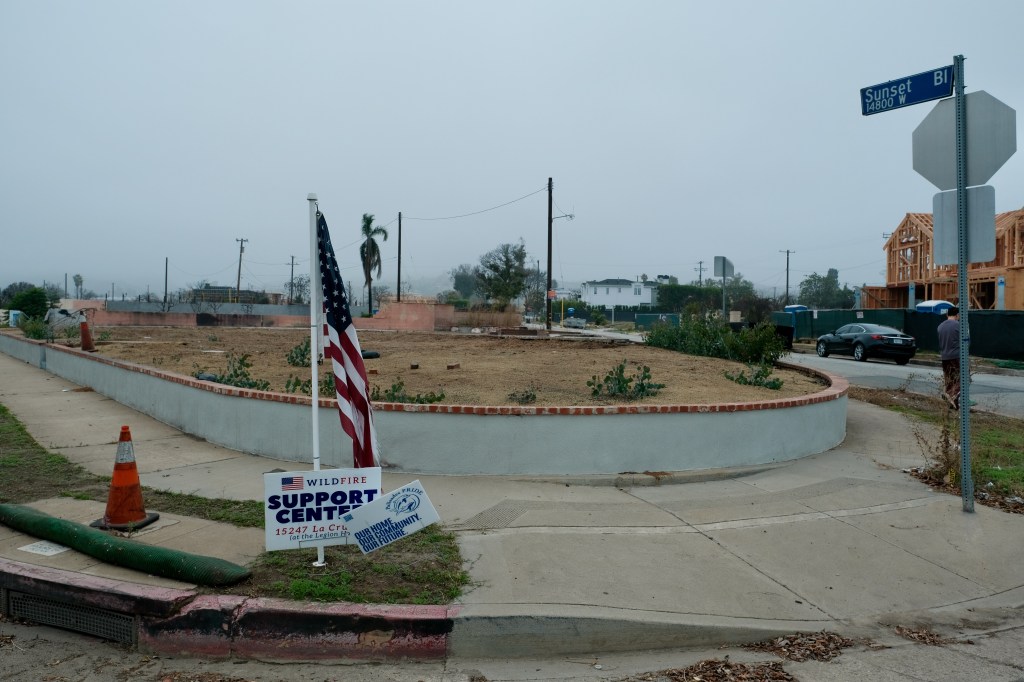
It was a cool, foggy Sunday morning with almost no traffic along the 700 Block of North Hartzell St, just off Sunset. I could stand in the middle of the road without fear.

Around me was a vast emptiness of empty lots, but with quite a few houses under construction, not only on Hartzell, but on nearby streets like Drummond, Carey, and Calloway. You could see through to many streets beyond the one you were standing on, looking at lumber boards on joists hundreds of yards away, just as if you had gone back 100 years to the very birth of Pacific Palisades.

Though there were no people, only a few construction workers hammering and drilling, the presence of the law was everywhere. There were signs against trespassing, US Army Corps of Engineers “California Wildfires Response Debris Removal Support,” NOT FOR SALE, PROTECT THE PALISADES, “This Home Will Rise Again,” #palistrong, Palisades Patrol. I felt the security presence of cameras, cops and Mr. Rick Caruso.

Everywhere there were signs for construction companies, architects, interior designers, garden designers, and realtors. Everyone with a skill to sell had a sign to show.

American flags were planted in soil like a Veteran’s Day cemetery. United in mourning, resolved in moving forward, the spirit of the Palisades shined. Or perhaps it was the spirit baptized in buckets of insurance money.

On all the blocks I walked today the metal street signs on posts survived. No burn marks, no damage, nothing but white letters on dark blue metal.  

How could the fires incinerate automobiles, trucks, refrigerators, washing machines, and hot water heaters? But somehow leave the proper names of the avenues, drives and roads intact? It is one of God’s strangest mysteries, perhaps she knows better than us the value of these named lots.

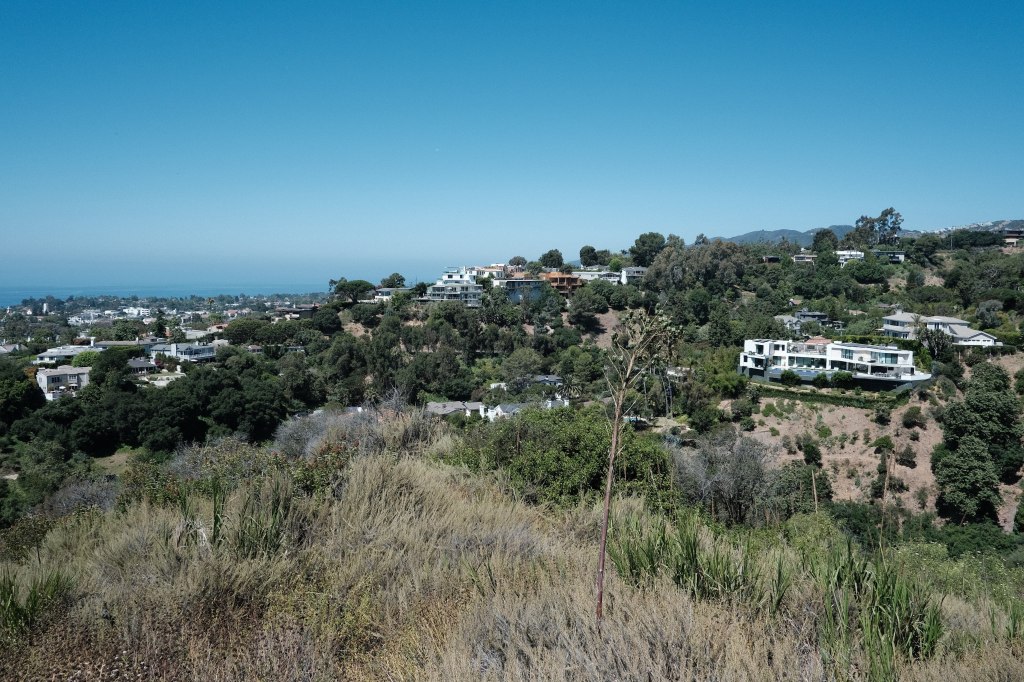
Further west on Bollinger Drive were some burned up vehicles with a big white house across the street. Every other house was consumed, and the lots everywhere were cleared, save for some with front door steps leading up to the sky; empty driveways, brick chimneys in fields, and sediment logs along the edges of lots to trap debris before it clogged drainage systems.

Walking in districts obliterated by now extinguished flames is a ghostly privilege of survivors. The living can never know the whole truth of what this was before. I hope I was respectful to those who lost everything. I am in no position to know their pain.

And now that the new houses are coming up, who knows what they will endure in the coming years, and even if the American nation and government that they are born into will endure and survive an epoch which seems more horrific each passing day.

Who Can Imagine This?


The continuing obliteration and destruction of the Sepulveda Basin area, with daily encampment fires, the hundreds of addicts camping out in garbage dumps of trash;with dogs, vehicles, bicycles, and shopping carts; is still ongoing.

Does anyone remember that this is a bird sanctuary, a watershed area, a lost jewel for the preservation of the ecology of the San Fernando Valley, and a park created for the recreational enjoyment of the community?

The sainted mayor with the dulcet voice, Karen Bass, had shown up last month for one of her photo ops, as the other trash camp on the east side of the 405 near Oxnard was cleared after five years.

50-75 people had been living there in Burning Man style until the orders came from City Hall that the news media was making a story out of it. This being LA, a problem that couldn’t be solved for five years, was magically disappeared in one bulldozing day.

The mayor spoke intellectually and philosophically, articulating something that perhaps nobody had noticed before:

“This is a notorious encampment,” Bass said. “This is such a dangerous location. I saw propane canisters all over the place. This has been a place of fires. This is dangerous.”

Yet she did nothing about it until it hit Instagram, KCAL and provided yet more catnip for her political enemies.

To live in Los Angeles right now is to inhabit a mental asylum where all officials, from the police, courts, and local government, all deny that they have any legal control over the removal of lethally destructive vagrants from public property. They are powerless, simply without any authority, to stop what any cop on the beat would have jailed in 1962.

Of course, the dark cloud over all this, is the spector of Trump sending in some army to “clean up the city.” The tanks and the soldiers will arrive, and then they’ll be stationed around federal buildings, and the trash camp parties of the Sepulveda Basin will continue. People will launch protests, and the mayor will say, “How dare he [Trump] send in federal troops to patrol LA when we are doing just fine without them!”

The obese ones of the City Council standing behind her will nod in agreement, proclaiming their legal and constitutional rights to run Los Angeles the way they have always run it, with liberty for anyone, all the time, no matter who they are, what they’ve done, or if they even have the legal right to stand on American soil.

Liberty to burn parks! Freedom to destroy public property! Let our glorious experiment in city government live for eternity!

Rebuilding for Sustainable Reasons


The fire ravaged hills of Pacific Palisades and Altadena not only cry out for rebuilding. But cry to rebuild in a better way.

Especially in Pacific Palisades, the only way back (as imagined by those in power) is to rebuild the gargantuan single family home. How these can be afforded, let alone insured, is the new mystery of 2025, for very few will want to spend the next decade constructing McMansions that may burn down in the next fire.

Insurers are fleeing California, as the pool of “safe” properties dwindles, and the rates they can charge are understandably limited. A low cost insurance would not even replace a burned down tool shed.

And then there are the philosophical and political battles raging from those who only want luxury housing to those who believe it is a moral imperative to provide a percentage of “affordable” housing to Angelenos.

Somewhere in the middle is the moderate case to be made for developments that mix commercial and residential in the same walkable community. For here, there may be defensible lines for firefighters to use to battle the next conflagration. Up in the hills, next to the wild lands, is where the greatest danger lies.

The safer alternative is a denser community of pleasant surroundings with apartments and homes near stores, and walkable streets with cafes, restaurants, hardware, shoe repair and bookstores. Yes, we have to make room for Lululemon, Alo and skin clinics, but they should not occupy the entirety of every single commercial space.

There should be a plan for rebuilding in an architecturally coherent way, one that actually puts living residential spaces above the stores along the sidewalk, rather than fake windows as one sees in The Grove and Disneyland.

And if a plan is selected, it should be in styles that evoke what made old California beautiful.

What follows are imagined architectural designs for rebuilt fire zones in Pacific Palisades and Altadena.

The Old Way of Seeing.


It’s not likely that we will live to see Pacific Palisades or Altadena constructed in a way that evokes the traditional styles that were wiped out in January’s fires.

There is first the economics of the disaster. Many people will never have enough money to rebuild their homes. Some bought them many years ago, some inherited them. They had lower property taxes whose rates are based on what the original purchase price was.

For some, it was affordable to live in a paid-off home with grandfathered low taxes, next to the Pacific. That accident of time and fortune is gone forever.

The crisis in insuring homes, the cost of materials, the fragility of the economy, the flight of good paying jobs in entertainment, all of it has added up to a disaster that will be hard to climb out of.

There is also the problem of zoning. Where multi-family houses could be built, the powerful will step in (especially in Pacific Palisades) to mandate that every home be single family. And that will invite everyone to construct the ugly, laboratory like boxes that have proliferated on small lots around Southern California in the last 15 years. White, with black windows, unused balconies for joyous parties that never transpire. And security fencing, SUVs and artificial turf.

In Altadena, the destruction is tragic for other reasons. This was a neighborhood amenable to Black residents, and a place where multi-generational households built up wealth and security which was often difficult to obtain when your parents and grandparents were restricted from owning homes in other locations.

The integration of Altadena, the artistry of the homes, the beauty of the setting in the mountains, with many trees, old gardens, and the viability of churches, schools, and craftspeople with unique creations, was stamped upon this town.

Driving yesterday afternoon in 98 degree heat, through the dusty, hot, burned out districts of Altadena, we saw the vast ruins, but also the armies of trucks and workers hauling away the debris, towing away stacks of burned up vehicles, and the neat signs from the government on newly bulldozed and graded empty lots pronouncing them “clean.”

Architecturally, what will Altadena look like in the next ten or twenty years? Will there be a plan to rebuild in a harmonious and humane way, the method that Santa Barbara used after the 1925 earthquake?

“Before the earthquake, a considerable part of the center was built in the Moorish Revival style. After the earthquake, the decision was made to rebuild it in the Spanish Colonial Revival style. This effort was undertaken by the Santa Barbara Community Arts Association, which was founded in the beginning of the 1920s and viewed the earthquake as the opportunity to rebuild the city center in the unified architectural style.”-Wikipedia

Who will protect the Black history and the Black future of Altadena, an ingredient of the larger program of reconstruction that must proceed without killing off that which made Altadena a shining exception?


I’m fairly certain that Pacific Palisades will rebuild faster than Altadena. There is always governmental assistance for the most privileged.

The atrocity of public vagrancy, however, will continue to be pervasive under the current mayoral regime. Here passivity and resignation in the midst of homelessness is considered a virtue in the progressive wing of the Democratic Party.

Mayor Karen Bass has allowed, like her predecessor, the proliferation of trash camping, and is now looking forward, obscenely, to the 2028 Olympics which will place the gruesomeness of Los Angeles in a Potemkin village face lift. She never misses a photo opportunity to speak in her melodious, soothing, sweet, dulcet tones, imploring patience, incrementalism and understanding as 1 building permit a month is approved and 5,900 are in limbo.

Mayor Bass, Billionaire Rick Caruso, Hairdresser Gavin Newsom, are all eager to showcase the vast wealth, power, glamour and celebrity of the city to aid in the reconstruction of the western district of LA. Newsom even stepped up today to actually use the law to remove the trash camps around California. After billions of dollars, the patience of the governor has worn thin, and he has decided it is not a good image for the state to host burning trash fires along the freeways.


But what will the end results of the new post-fire houses look like? Will we once again have to endure architectural experimentation in the cheap, novel, grotesque, ostentatious style that pervades every corner of the region? Will the crumpled up, aluminum foil design of Gehry be our model for the city of the future? Perhaps not, as architects are often not even present in the construction of new houses. Only the general contractor in his pickup truck with his aesthetic refinements.

Will the oppressive sterility of the white box triumph? Or can we have the kind of California dream Will Rogers built? Can we have a piece of gentleness and civilized loveliness please? Or does everything that is built have to be the choice of the sports stadiums, the shopping center developer, the studio honchos? If that is the only way forward, then California is dead; spiritually, culturally, ethically, and economically.

Will Rogers State Park, July 2024. Destroyed January 7, 2025.


Perhaps the old way of seeing, the classical way of designing, the architecture of pre-modernist California, could help heal the disfigurement of the Golden State.

Imagine if you found these types of houses in the rebuilt lots of the fire zones? Could you fall in love with California all over again?

Classical Houses.


It’s been perhaps 90 years since Americans built well proportioned classical houses.

These are houses where the elements are pre-ordained: the windows are aligned with each other, and are placed within the facade to achieve balance and symmetry. The doorway is defined, frequently in the center, and around it are placed ornamental designs originating in Greece and Rome.

Columns in the Doric, Ionic or Corinthian orders have specific instructions as to their placement. They aren’t just slapped onto a facade as we see in modern day Encino.

In California, when builders put up spec houses they are never able to afford classic design because the intrusion of garages destroys the facades. Ironically most garages never store vehicles but are a repository for storage.

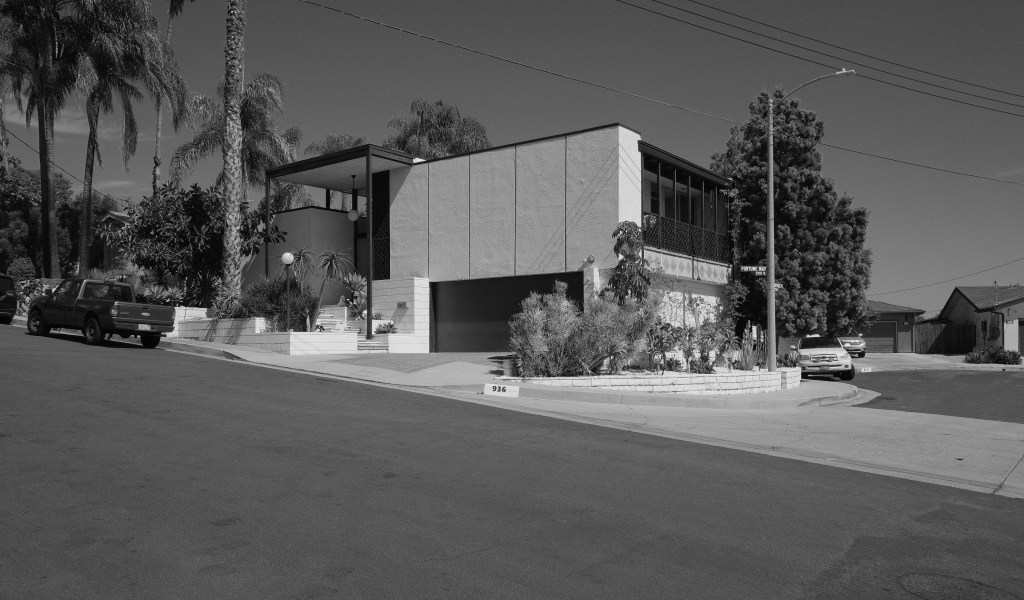
The plain white stucco house with vinyl windows is the lowest and most ubiquitous type of spec house. About a dozen of these have sprouted up in my neighborhood in the last ten years.

There is obviously no attempt in these cases to make the houses attractive in a classical sense. They are rafters and insulation and stucco made for desperate times. Nobody can really afford to build them, and nobody can afford to buy them, so we have a sad story of expensive prices for crap.

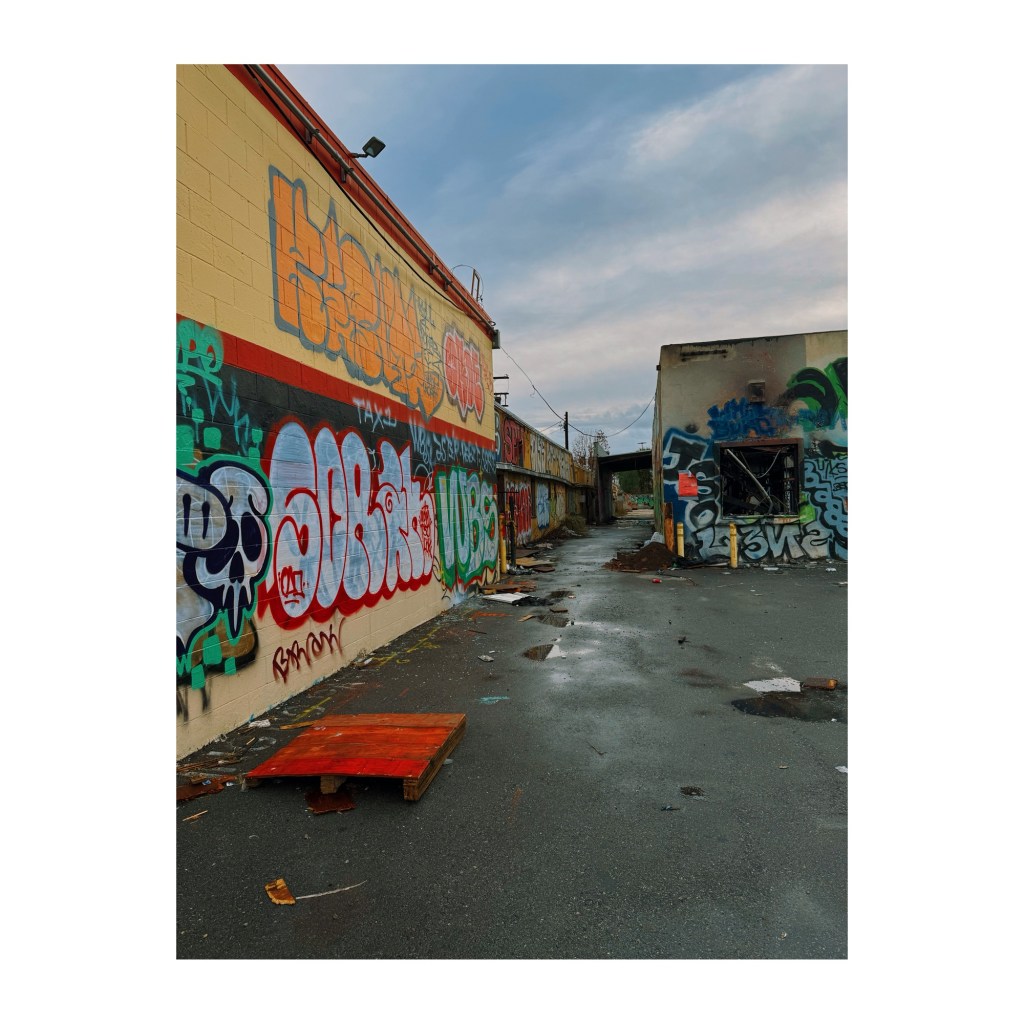
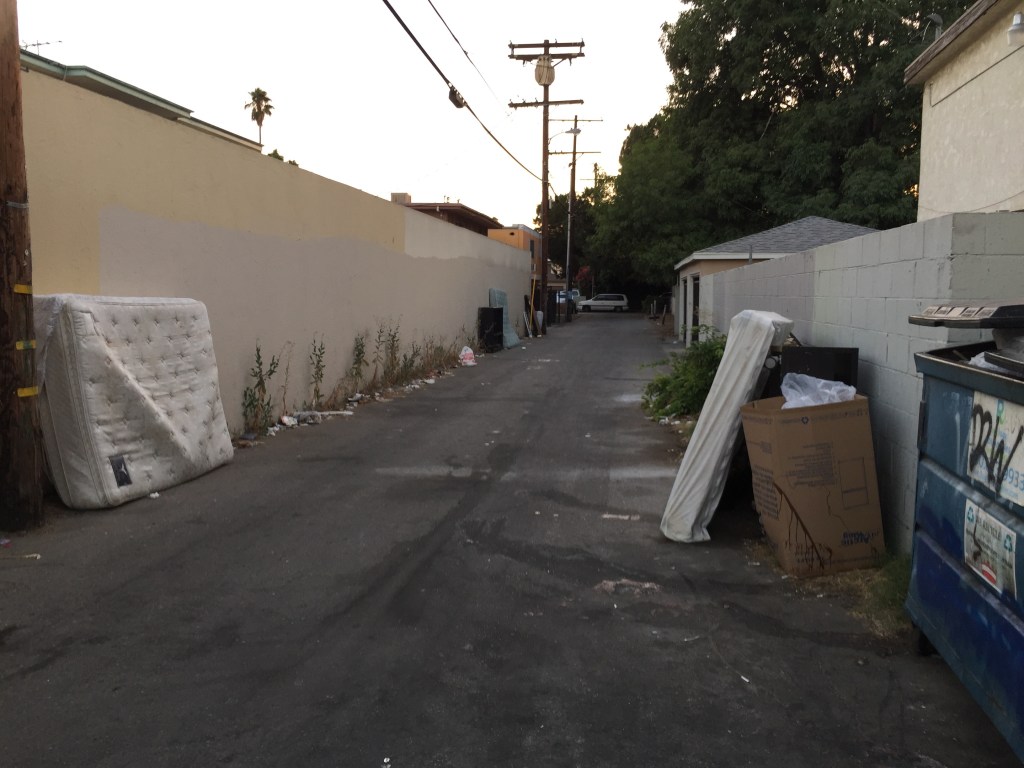
The one on top is three bedrooms with astroturf patio and rents for $7,000 a month next to a graffiti splotched alley.

The exploitation of land to build exploitative housing that hardly houses anyone is one of the ills of Los Angeles. For there are enormous plots of parking lots and open land, especially near the Orange Line, where walkable, civilized and attractive housing can be built.

After spending time in Switzerland last year, I came back thinking of how well things are built there. Not only are they solid, but the housing is meant to enhance the community. Sometimes it’s starkly modern, other times it’s traditional, but it always makes the environment better.

Bremgarten, CH.
Merenschwand
Zurich
Lucerne

Why in this city, which invented Hollywood, are the visual arts of architecture and design so lacking in public view? Why do we live amongst so much ugliness?

LA Fitness, Sepulveda Bl.

Is there perhaps something in the past we can look to as we rebuild Los Angeles for the future? Perhaps we need Elon Musk to siphon off $5 billion dollars from somewhere and employ an AI architect to make LA lovely again.

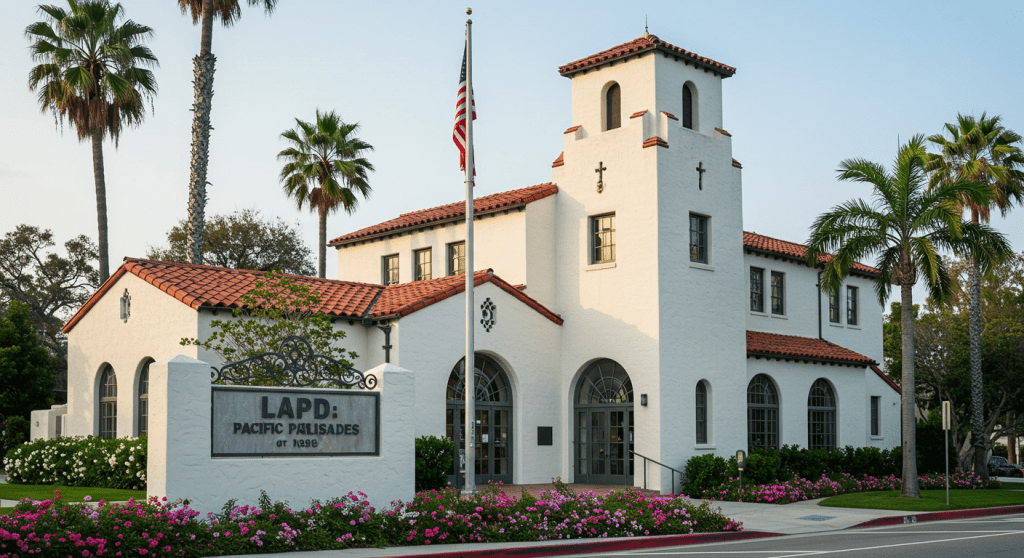
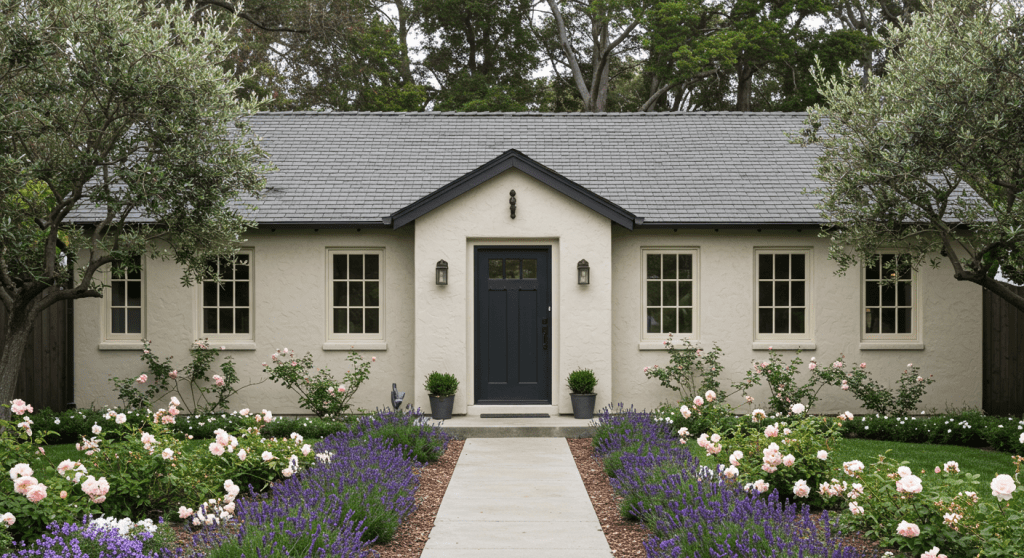
Here are some designs from AI Google, architects:

The Social Disaster


In all the days since the disastrous fires destroyed vibrant and sparkling communities of people and their houses and businesses in Altadena and Pacific Palisades, flat and socially unpopular Van Nuys, miles from any combustible forests, sat silent, its empty parking lots and vacant stores along Van Nuys Boulevard mute and abandoned, its daytime as empty and lifeless as its nighttime. 

You live here and just like people anywhere yearn for the same normal things that civilized places provide: safety, cleanliness, affordability, and lawfulness. But all you get are sirens, speeding cars, helicopters at 2am, Woodley Park set ablaze monthly.

After nearly 25 years here I see nothing but decline in the environment around Van Nuys. 

The same neglected mini-mall that I complained about in 2009 is still the same trash strewn dump it always was. Its owner used to live in Bel Air. He complained about my criticism when all I asked him to do was hire a $10 an hour worker to sweep the sidewalk weekly and install a security light on the side of the building so people didn’t sleep and urinate and tag the walls. 

The stores that line Van Nuys Boulevard from Vanowen to the Oxnard are largely empty, many are built with gigantic parking lots behind them that are also empty, parking for thousands of cars that once shopped here, but those shoppers have left or died.

The Valley Municipal Building is where CD 6 Councilwoman Imelda Padilla reigns over the neglect and the ugliness. She replaced Nury Martinez who had to resign in disgrace after she was recorded by covert means saying ethnically insulting things about other Angelenos. Martinez came after Cardenas who went to Congress where he now serves.

Cardenas, Martinez, Padilla. It sounds like a nursery rhyme with its melodic Spanish surnames. It might well be a soundtrack set to an ever- present social disaster of Van Nuys with its hundreds of homeless sleeping in the plaza, along the Orange Line, or in the parking lot of the CVS on Erwin Street. 

How is it that the so-called heart of the San Fernando Valley, the place that once bustled with prosperity and good infrastructure, including light rail and neatly tended homes and businesses, has been allowed to die for so many decades? 

Victory Bl. east of Sepulveda, Van Nuys, CA 5/10/18

Is it callous to also point out that Van Nuys is less prone to fire than other areas that have boomed in recent decades? Would Van Nuys Boulevard, lined with 13-story tall Park Avenue apartment houses be a higher fire risk than thousands of wooden McMansions shoved up canyons in Bel Air, Brentwood, Malibu and the Palisades?

And when Van Nuys gets light rail, might it be possible to imagine a walkable, pleasant, less expensive part of Los Angeles where the vaunted word diversity can be used equitably as all types of inclusion would occur with young, old, well-off, not so well-off, living in nice apartments with patrolled and orderly parks and streets? 

Perhaps some of the displaced people would live in well-maintained buildings if such a thing existed in Van Nuys. 

With so much focus on rebuilding Los Angeles a good place to start an experiment in civilization would be Van Nuys. It’s the only corpse that has been screaming for rescue for decades.