Before the Luck Ran Out.


The first job I had in Los Angeles was working at Barley Corn Entertainment, a small documentary production company in Valley Village.

It was the summer of 1994. OJ had just not killed his ex-wife and the young waiter who was returning her sunglasses. I was living in Studio City for $400 a month, and the new job as a PA paid $450 a week.

The woman who hired me, Lisa, was in her mid 30s, married to one of the owners, Sean. She was green eyed, tall, broad shouldered and drove a dark green Range Rover from her home in Pacific Palisades.

She brought along a little white Pomeranian dog to the office every day, a novelty to me, being from the Middle West and the East Coast where dogs were large and stayed at home.

Lisa was a line producer, a job she mastered in daily calm, always even tempered, even when she got cross. She commanded runs and released funds, met with producers, writers, editors, and researchers, and still had time to walk across the street to Gelsons for a cup of coffee and a large spinach salad. Her day ended at 5 or 6, and she would go down to the parking garage and drive an hour back to her enchanted life on Enchanted Way in Pacific Palisades.

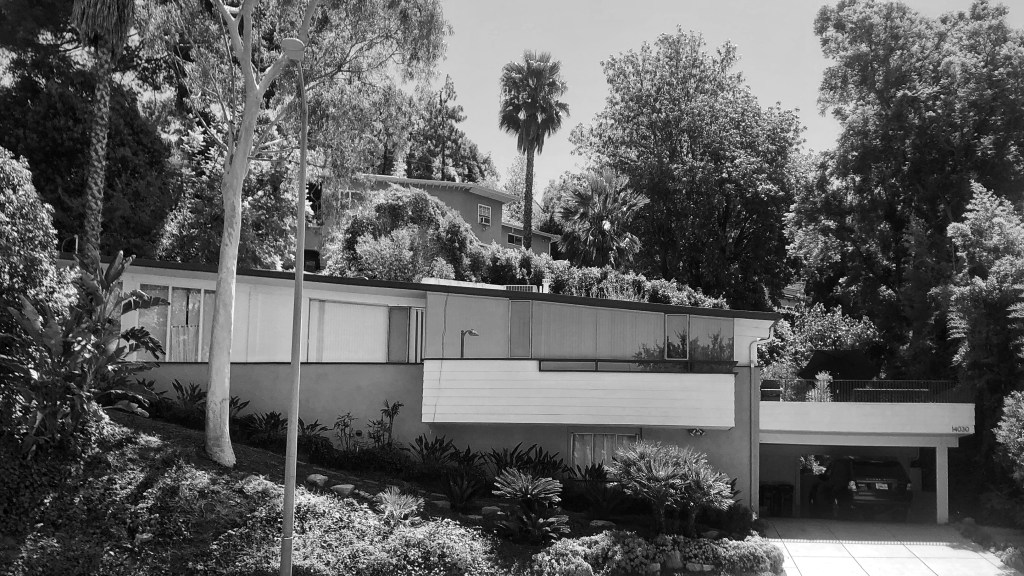
There was a Christmas party at their home in 1994. I arrived at the 1960s ranch house, built on a terraced lot, like every other house, little plots of splendor overlooking the Pacific, lots along a hilly street stacked and placed like many dinner plates on the arms of a hash house waitress. 

We were all young and in awe at the $600,000 home with sliding glass windows that opened to a small patio that overlooked the mist and the ocean. 

I drank a lot, and Lisa forbade me to drive home.

I went to bed on the white sectional in the living room, and awoke under a baby blue cashmere throw with a headache. Lisa made coffee, and then Sean invited me to leave “when it was convenient.”

Lisa and Sean, Sean and Lisa, Pacific Palisades. Range Rovers, small dogs, lovely houses that always sat in the temperature range of 58-68 degrees. 


My co-worker, Julie, was the daughter of two negligent Marin County hippies and had gone to live with her maiden aunt in Santa Monica during high school. She adored Lisa and Sean and hoped that one day she too would live in Pacific Palisades, perhaps leveraging her BA from UCLA and weekly production check to buy a house on Enchanted Way.

A few years later Julie met Aaron, a wealthy man who lived on Lachman Lane in the Palisades. She moved into his house, and they made plans to marry. I went to their house, sat by the pool, and talked with Julie about a reality show idea we never produced.

Aaron wanted Julie to sign a prenuptial agreement before marriage. Julie asked her friends what they thought, and the consensus was “he doesn’t really love you.” They broke up and Aaron married someone else, a compliant wife who signed an agreement, and they may have lived happily ever after.

Julie met a hard drinking Missouri man on a production shoot in Wisconsin, married him, had a baby girl, moved to Kansas City, got divorced after a year, and spent the next 15 years in Missouri pining for the lifestyle she lost. She and her teen daughter moved back to the aunt’s condo in Santa Monica last year.


Kevin, circa 1995, was a producer at Barley Corn, a year older than me, married to Cori, and they lived in a house in Pacific Palisades. 

He looked like a young Dick Nixon, was kind of a dick swinger at times, bragging about his $400,000 house bought with the wife’s parental endowment. 

I hadn’t seen him in 28 years, but there was a reunion of Barley Corn folks last summer. I asked him about his house, his $400,000 house. 

“It ain’t $400,000 anymore! We sold it and bought a much larger place near the village in Pacific Palisades!”


In the 1990s I also took a comedy writing class at the home of Bill Idelson on Brooktree Lane in Rustic Canyon.

It was a mid 1950s wood house in a redwood grove next to a creek. It was designed by Mario Corbett and photographed by Julius Shulman. (his photo below).

Idelson, an actor, also had a successful career penning sitcoms, and he had a formula, much of which I forgot, except for his drawing of a man and a moon. “How he gets to the moon is your story!” he said.

We would sit on the patio next to the creek, and with the sounds of water and nature, get instructed.

Idelson had a grown son, a handsome, athletic blond guy who said he would ride the creek during rains in his raft straight down to the ocean.

That was Pacific Palisades: the successful sitcom, the gorgeous house, the beautiful surroundings, the happy-go-lucky son who rode the rain water for fun.


Pacific Palisades does things to people who live there and people who don’t.

For those of us who only live there vicariously, it is sprinkled with celebrities, hiking trails, valet parking, croissants, gourmet coffees and cheeses, blond boys in collared shirts, hot yoga, scented candles, soccer matches, Will Rogers, polo ponies, Eucalyptus trees, gardeners and caterers, brand new big white houses with black windows and electric steel gates, and smooth faced women in sunglasses driving large SUVs 60 miles an hour down Sunset on their way to Lululemon. There is never smog, heat, homelessness or obesity. The maids commute two hours to clean 10,000 square foot houses that are empty because their owners live in New York City. 

It was, until a few days ago, something you venerated and worshipped, like Harvard University (before October 7, 2023), Berkshire Hathaway, or inheriting ten acres of land atop Mulholland. If only you had that Ivy League degree, or ten $677,000 Berkshire Hathaway shares, or lived on El Medio Avenue so you could walk to the Temescal Canyon Trailhead. You might someday hit it big, marry that blonde girl, date the personal trainer stepson of that HBO celebrity with a lot of fame and money, sell that show, invent that software sold for millions to Meta, or become a partner of that law firm in Century City, if only you had one of these or that you could be the happiest person on Earth and live in Pacific Palisades.


Since I moved to LA in 1994, there was always a sense to me that people migrated to places rather than improve the ones they lived in. They sometimes did this by changing names, from North Hollywood to Valley Village, or Valley Glen; or converting West Van Nuys into Lake Balboa.

To this day, Los Angeles, for miles and miles, is neglected, filthy, violent. It has no nice parks, hardly any real neighborhoods to walk around. It costs a fortune to live here, to rent or buy is oppressive. People sleep in tents, or on bus benches, they rob stores, and start fires because they are so lost and miserable. 

Seemingly not so in Pacific Palisades. Charming, safe, family friendly, delightful. Nothing catastrophic or out of control. The powers that be lived here and kept it well-tuned and well-functioning. Until January 7, 2025.

Once in a generation weather. Except it happens around the globe every week in different horror scenes. One month it’s Lahaina, the next month it’s Greece, Spain, Western Canada.

But Pacific Palisades? Our Pacific Palisades? Where we go for hikes, where my nephew goes to school, where my gentle, wine sipping bosses lived, where I brought my parents to Rustic Canyon so they could see “the real California?”

We kid ourselves thinking our good luck is our own doing, that we may escape losing our health or our home. We really do live by the whims of fate.

There is one migration that seems innocent, but it is, in a sense malignant, many people of means seeking to escape the bad air hellhole of greater Los Angeles, and it leads to Sunset at PCH where there is no more land, paradise promised at the end of the continent.

Now it is temporarily destroyed. 

Thank God for those who have survived. Life matters most.

We have seen these fierce wind driven fires and their atomic destruction. 

How one small spark can end one era and perhaps usher in another one that may be more humane and sustainable. 

Fortune Way.


Returning from Pasadena last Sunday, we crossed into Highland Park and randomly drove up N Avenue 66, a street along the Arroyo. 

There were old houses, once gracious houses, that a century or more ago were single family residences with wide gardens and porches and plantings. Most had been disfigured and broken up into rooming houses or torn down for crappy apartments in the 1950s.

Climbing into the hills we entered into another sub-district of mid-century ranches on small plots on curving streets, one, perhaps jokingly named Easy Street.

Then we stopped to admire 936 Fortune Way, a 1966 home built for $40,600 by architect PJ McCarty. 

A box on concrete blocks with decorative panels and metal screens, it has a large, flat roofed portico supported by two tall steel posts with hanging globe light, concrete steps and a second floor balcony shaded by the overhanging roof and privacy screens along the rail. 

Though there are palms and desert plants implanted into the blocks, the overall effect of the surroundings of the home is one of deadness in the hot, blinding, relentless sun; lifeless streets without pedestrians, enormously wide for maneuvering and parking enormous vehicles; and the strange, atomized artificiality of suburban numbness, a place where the people are inside in darkness and air-conditioning, on digital devices, high, drunk or napping.

Trained by media to desire and salivate for now unaffordable homes like this one, we don’t often think how very weird and self-destructive LA is, where multi-million dollar houses can exist without anywhere nearby to walk to, without any sense of community, only a coming together to fight crime or development, actions which make people feel better without accomplishing anything significant, lasting or beneficial. 

Artificial Intelligence Plans a Three-Day Itinerary to Van Nuys 


AI knows everything about Van Nuys. But it has no opinions about Van Nuys. 

It hasn’t lived here 20 years, woken up under helicopter patrol, been robbed, assaulted, attacked or killed. 

It hasn’t driven down Victory Boulevard on a Saturday afternoon in the summer heat when there isn’t a soul walking down the street, just eight lanes of vehicles speeding past trash, ugly apartments, homeless encampments and mini malls. It hasn’t witnessed charming ranch houses with flower gardens, mature oaks and picket fences turned into concrete paved, iron fenced, security camera rentals with dozens of SUVs and strangers smoking weed next door. 

It knows nothing about the way Van Nuys was in the 1950s when every boy and girl was blond haired and rode their bicycle to school and lived on fifteen cent hamburgers and never gained a pound.

So perhaps ignorance, absent biases and prejudices, is the best approach to exploring Van Nuys.  

Why not give Van Nuys a chance to succeed in fantasy where it has failed in reality?

Magictravel is artificial intelligence for travel planning. I asked it to come up with a three-day itinerary for a visit to Van Nuys, and it supplied me with a refreshing, cynicism free, daily calendar of events.  

Blithely ignorant but well-informed, practical minded in suggestions, woefully dumb in logistics, it served me up activities and destinations timed for travel and visits.

Day One: 

For breakfast they recommended Nat’s Early Bite and I do like that place. I’ve eaten there many times. French toast and coffee for two in 2017 was about $20 so I assume that will be $45 now. 8-9am.

Breakfast would be followed by a shopping tour of the Sherman Oaks Galleria, which, if pre-pandemic memory serves me, has about three shops, many vacancies, and twelve places to eat, eleven of them frozen yogurt. 9-10:30am

Exhausted by so much shopping there, I would drive for 36 minutes to have lunch at Tokyo Fried Chicken in Monterey Park. 12-1:30pm.

Then I would get back on the freeway, drive 25 miles, all the way from the San Gabriel Valley to Encino, to spend three hours in 5-acre Los Encinos State Historic Park with its 19th Century Adobe House. I would spend three hours here, walking around in the hot summer heat, from tree to tree, truly stimulated by this fascinating place. 2-5pm

For dinner I would dine at The Front Yard on Vineland Avenue in the Beverly Garland Hotel. I only know from a recent visit there, that this is (shockingly) a quite lovely place with flowers, trees, fountains and a very civilized atmosphere quite unlike that which exists on Vineland under the freeway. 6-7:30pm

After dinner I would return to Woodley Park and take a nighttime stroll from 8-9:30pm. There are no cafes, no breweries, no dessert places, just many parking lots, a duck pond, and darkness. A little boring but this is considered top notch in Van Nuys. 

I didn’t ask for a suggestion on where to stay, so just assume I spent it at my home in Van Nuys. 

Day Two: 

We are eating breakfast (from 8am to 9am) at Crumbs and Whiskers 7924 Melrose Avenue. I leave my house at 7am because I know traffic is heavy over Laurel Canyon.

But now, after coffee with cats, I have a sneezing attack. Crumbs and Whiskers was (surprise!) a cat café and I am highly allergic to felines.  No worries. I will take a Claritin.

Magictravel.ai does not suggest post-breakfast activities near this restaurant, such as walking around Melrose, visiting Farmers’ Market, exploring Hollywood, LACMA or the Petersen Automotive Museum.

Being LA it suggests more driving.

We will get back in the car and drive 15 miles, 35 minutes away, to Woodley Park and walk around The Japanese Garden. 9-10:30am.

Lunch will be at Mariscos Los Arcos at 14038 Victory Bl. Family-run Mexican seafood. This sounds really delicious. ….12:30-1:30pm

After eating I’m anxious to get going to arrive at my next destination which is the Van Nuys Airport Observation area on Waterman Avenue, just west of Woodley and south of Roscoe. Yet another activity which takes place on hot asphalt, this is a delightful suggestion in the 100-degree heat. 2-3:30pm

After the thrill of watching jets tax, land and takeoff, there is refreshment at The Great Wall of Los Angeles (12900 Oxnard) where a 2,754 foot mural painted on the concrete wall of the LA River near Valley College seduces you with its depictions of women and minorities who helped build our stunning state of California. From 4:00-5:30pm I will walk back and forth along the dry concrete river and enjoy the artwork from the other side of the sewage channel. It cannot be seen up close by pedestrians, only by high sewage waters.

Finally, from 7:30-9pm we are having dinner on Sepulveda Boulevard in a very charming section of Van Nuys near Saticoy at Mercado Buenos Aires. Speeding cars, police sirens, car washes, and nowhere to walk add to the feeling of an endless vacation in paradise.

Exhausted from driving back and forth all day, I retire to bed in my house in Van Nuys. I may ask Magictravel for a body wash suggestion.

Day Three: 

The last day of touring in Van Nuys. Visitors can leave after today.

Unluckily, for me, I have to live here full time.

Here is my itinerary: 

8am-9am: Breakfast at Sabor and Sazon 14540 Vanowen St. I arrive there to find it is no longer in business but is now a marijuana dispensary.

Still hungry from not eating breakfast, I rush over to the Woodley Park Archery Range where I will spend the next hour and a half wandering around an archery range without a bow and arrow. 9-10:30am.

But I’ve got lunch plans. Picnic lunch at the Sepulveda Basin Wildlife Reserve. I will eat here (consuming the lunch I haven’t bought) surrounded by shopping carts, charred plants burned by hundreds of encampment fires, and try not to watch men having sex nearby. 12-1:30pm

Still in the park, I plan to play golf which seems nice enough since there are trees and irrigated lawns watered with recycled H20. 2-3:30pm.

Nearly my entire second day in Van Nuys has been spent inside the confines of Woodley Park.  Then I’m off to a more glamorous destination: Valley Glen.

Being a real foodie, I’m excited to eat authentic mid-century American “Italian” food at Barone’s Italian Restaurant at 13276 Oxnard St. with its retro vinyl booths and wood paneled rec room. I will probably order Fried Zucchini, Frank’s Special Pizza with Barone’s Famous Cheesecake and a few beers. 6-7:30pm.

After this great meal I will drive over, in the still hot, humid, smoggy night, to the Skyzone Trampoline Park 7741 Hazeltine 8-9:30pm where I plan to jump up and down with my stomach full of pizza, cheesecake, fried zucchini and three beers until I barf all over the trampoline.

Small Minds


For 22 years I’ve had front row seats to the shit show that is Van Nuys.

I moved here in 2000 and started this blog in 2006. My purpose: to apply creative writing and photography to the realities around me. 

I walked around and photographed Van Nuys, from the alleys to the houses to the buildings. Vanowen, Victory, Kester, Sepulveda.

At times my blog gave some visibility and notoriety, and I was brought in to observe the workings of the Van Nuys Neighborhood Council. 

But I never cared to swim in sewers of public life. I saw how small minds functioned, the old fools who fought against housing, and always pushed for more parking lots and wider streets.

“Hey Andrew, what do you think about naming the Van Nuys Post Office the Marilyn Monroe Van Nuys Post Office?”

“Hey Andrew, can you help us fight to preserve that parking lot behind the going out of business furniture store? We want to make sure they don’t build apartments there!”

“Hey Andrew, they want to build a five-story apartment on Vanowen and Hazeltine. That’s too much!”

The VNNC was strangely absent with the modern representatives of Van Nuys, it seemed to be the preserve of old white people who fought to preserve in their imaginations a city that no longer existed.

“My parents bought my house for $11,000 in 1956 and I used to ride my bike to Tommy’s for a chili dog. Gosh, those days are gone forever. I still live there. Yeah I pay $312 a year in property taxes. Thank God I have a pension from the post office.”

There was Councilman Tony Cardenas. He wanted to tear down the Art Deco era fire station on Sylvan. Under his watch Van Nuys further disintegrated, a decade before this pandemic started, and from what I’ve read Van Nuys has been in decline since about 1975.

Nury Martinez replaced Cardenas in 2014, and I often communicated with her office, and met with her people, and got her help cleaning up the streets, picking up dumped sofas, pushing to get traffic lights installed, pedestrian crossings painted, or illegal cars towed.

She was a great ally in defending dozens of small businesses from the 2017 threat of demolition when Metro proposed a 33-acre bulldozing of hundreds of industrial buildings between Kester and Van Nuys Bl. North of Oxnard. This blog acted as an advocate for small business owners who employed locals serving as an economic incubator for new immigrants to prosper in Van Nuys. 

We had a wonderful Senior Lead Officer, Erika Kirk, the kind of woman you would want to work as a police officer. She drove around here and involved herself in matters large and small, but you felt safer with her presence.

The councilwoman, the cop, the council people: everything impersonated order, law, safety, and well-being.

But the reality of Van Nuys, (and greater Los Angeles) is that nothing nice stays nice without the constant threat of law enforcement. 

You must fight every single day to keep homeless encampments out, marijuana farms from the houses down the street. You have to fear for your life from criminals robbing your house, from mentally ill people in the shopping mall parking lot, from the car speeding 80 miles an hour through the red light as you begin to make your left turn. 

Nothing unlocked is left untouched: bicycles, decorative lights, cactuses, cars, mail, pumpkins, packages are stolen around the clock, from every lawn and every stoop, by every type of criminal. Most every crime is recorded on camera and hardly anybody is arrested.

Is this the fault of Nury Martinez?

I don’t think so. 

She spoke her mind in private, in a cigar filled room with other hacks and dealmakers, and she is no worse than anybody else who criticizes her for blatant bigotry. 

Is she worse than Mike Bonin who allows hundreds of violent, destructive, drug abusing and criminal people to camp out in West Los Angeles while flying the flag of compassion, and egregiously ignoring his constituents because he is on a morally higher plane of governance? When the pandemic emptied the streets of legitimate commerce he made sure that vagrants took over the sidewalks.

But in all fairness to him nobody recorded him making bigoted remarks in a room.

The truth is that Los Angeles is a primitive, ugly, violent, disorderly, hateful, self-centered, grotesque city of billboards, blight, traffic, fires, bad air, bad food and bad actors. It is a city that promotes promoters, celebrities, and fake makers of merriment in Hollywood. 

It’s a city where the Hollywood Walk of Fame is populated by people shitting on the sidewalk, fighting with knives and guns, or walking around stoned and drunk and looking for a reason to kill.

If you are rich or famous or the child of someone rich or famous both are considered markers of high achievement.

LA takes comfort in its privileged folk in the cozy and winding streets of Pacific Palisades, Brentwood, Santa Monica and Westwood, Bel Air and Beverly Hills.  People here must have been shocked that to the small minded leaders of Los Angeles the city is still divided into pieces of pie: South Central, Pacoima, Westside, White, Latino, Black, Armenian, Oaxacan, Korean, Jewish. 

“Why that little bitch got LAX?”

As they say on Yelp, in every single sentence, “How amazing!”

The loudest liberals who cry the loudest about injustice drive their kids ten miles away to the whitest schools.

All the broken hearts on Twitter who heard what Nury and the bad men said about the little boy, how sad they are to know that hatreds and provincialism and ethnic warfare are the foundation of the great leaders of Los Angeles. 

And why is it that we still are shocked when a Latina refers to Oaxacans as ugly and short and can call a little Black boy a monkey? Have we not heard, ad nauseum, that Nury was to be praised because she was our first Latina city council president?

“She grew up poor and her family is from Zacatecas!”

Don’t judge her.

She’s what the American Dream is all about.

And a woman too.

And a mom.

And a LATINA!

LATIN-X!

If you think it’s worthy of praise to cite someone’s accidental ethnicity as an accomplishment don’t be surprised if that same person speaks and acts as only a representative of that identity!

All the identities who regularly label themselves by their identities, divide this nation, this state and this city into even more identities, and victimized identities. All the ones who think it’s modern, progressive and praiseworthy to admire ethnicity (instead of character), they too share blame for tearing apart our city and our country.

“The first transgender fireperson! The first movie with an all-Asian cast! The first Pacific Islander marathon winner!”

“I go to that coffee stand, even though I hate their coffee, because it’s Black owned!” 

Hooray!

Is there anyone who looks at this city and wonders how it might be built to benefit all its inhabitants humanely and environmentally? 

If you were in power, like Nury, wouldn’t you burn with passion to rebuild, to clean, to beautify the ugliness of the San Fernando Valley? Would you arrive at work every day like Nury and walk down Van Nuys Boulevard and think that you had accomplished something?

The conversations we heard in that room were vile. 

But what we have seen with our own eyes on the streets of Los Angeles is worse. 

September 6th Through the Years.


Let us pick one day off the calendar and compare the weather in Los Angeles on September 6th for every ten years since 1950.

It’s hot today, (nearly 100 in Van Nuys) and we’ve had days in the last week when it was 106, 110, 113 and only dropped below 90 well after midnight. All of the western US is under a heat dome, and even San Francisco is sweltering at 91F at 2pm.

Los Angeles weather readings were taken at LAX (thank you Orca), which is different than what it might be in Marina Del Rey, Woodland Hills or Van Nuys.

I perceive that Los Angeles is a hotter and more humid city than it was before. And the old “dry heat” is disappearing as the Pacific Ocean heats up and the cooling effect of that once frigid body of water dissipates and weakens.

I came here in 1994 and the air was dirtier but there was a certain monotonous regularity to the weather, dependably hot in the Valley in the summer, and dry and windy and then rainy in the winter. It was still hot in September or October.

But not this hot..

I found some weather charts for comparison on Weatherspark. You can look up any day of the year historical weather here.  I pulled up LAX temperature graphs from Septemeber 6th: 1950, 1960, 1970, 1980, 1980, 1990, 2000, 2010 and 2020.

If I’m reading them correctly things were quite pleasant for almost every decade until 2010.

9/6/70: high 81, low 61


9/6/80: high 72, low 62

In 2020, we knew we lived in hell.

Now we need to get out of hell.

But how?

POSTSCRIPT:

Reader Orca pointed out to me that the charts above were taken at LAX not downtown.

I apologize for that mistake.
Here are temperature readings taken at Burbank Airport from September 6th every decade except 1980:

The Folks Who Moved in Next Door.


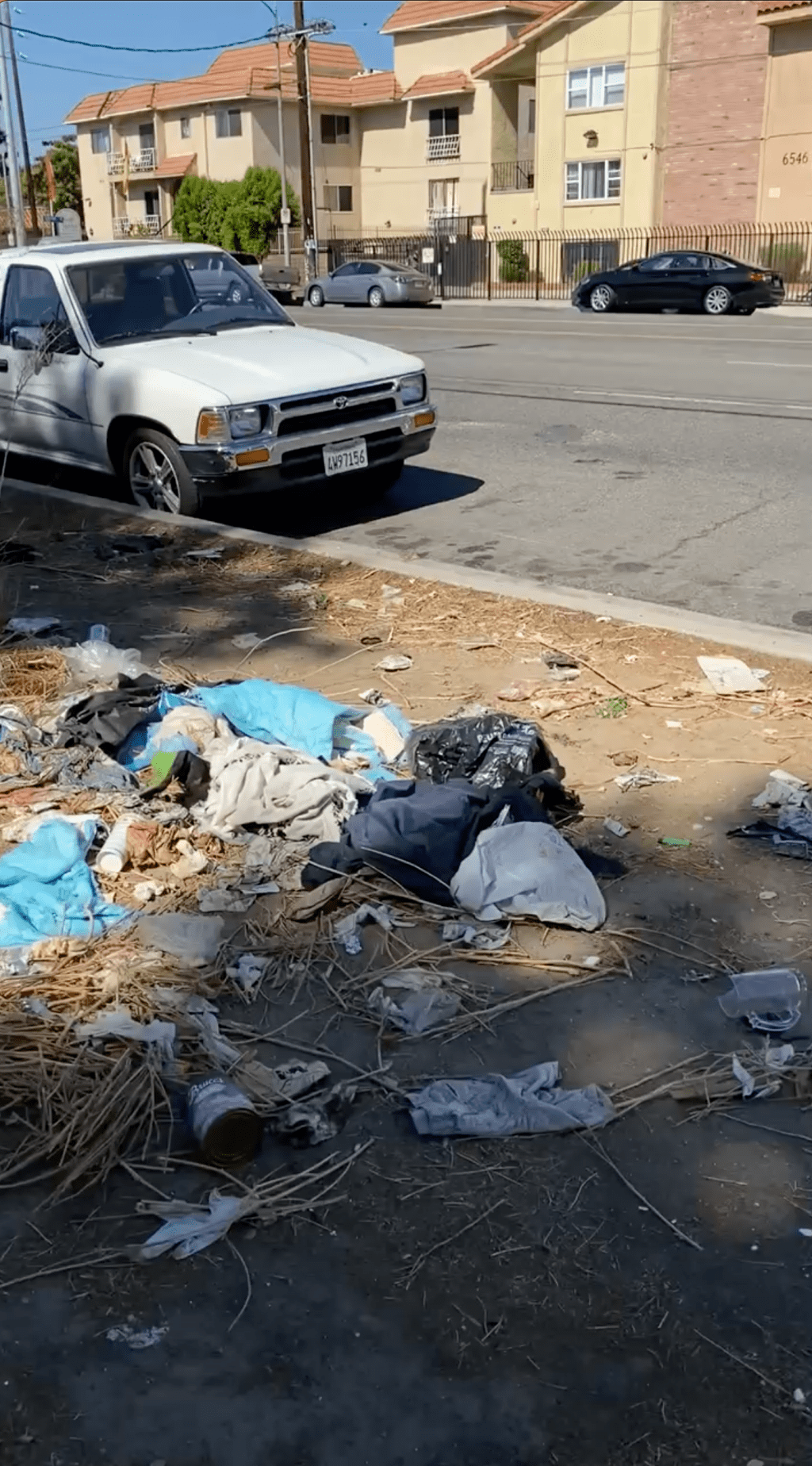
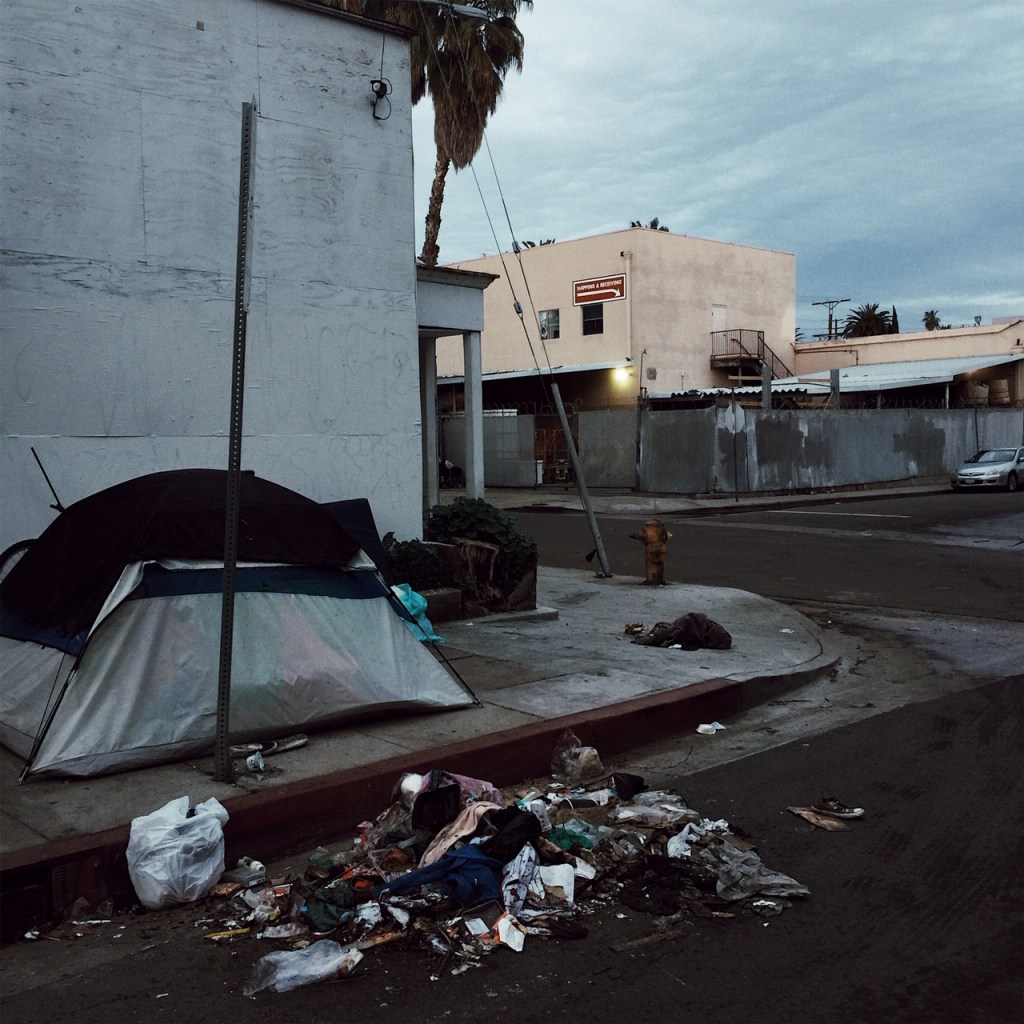
For about five years, an encampment of vagrants, with cars and trucks full of bikes, shopping carts, electronics, blankets, and various junk, spread their filthy circus along the corner of the Vanowen and Kester.

There were men and women in parked cars, and drugs, and women in the back seats of the vehicles. The sidewalk was taken over by them. They had complete autonomy and seemingly the blessing of the city to live outside.

Our senior lead officer, whose name I don’t care to name, cleared them away. He appears monthly on a Facebook chat room to brag about the latest clearance. “Happy to say they are gone,” he will say on Zoom.

But the camp of tramps always comes back.

They next set up their junk show on Lemay, in a quiet residential area, where they lived along the parking lot that borders the Casa Loma College.

Day and night they sat out on lawn chairs or slept on mattresses behind trees. One man danced with his dick out for an 8-year-old girl who rode her bike past. Complaints flooded LA311. Ms. Nury Martinez, Latin-X Councilwoman, got letters, emails, phone calls. LAPD Van Nuys was called numerous times. Yet the trash camp endured.

Outdoor urination, pot smoking, liquor, prostitution, dumping, disorder, noise, none of it mattered. It stayed in place, just like the homeless circus that has played on for 3,000 days and nights at the NW corner of Gault and Sepulveda. 

After six months, their crap was cleared. 

Two weeks later the tarps and the shopping carts went up along Lemay near Norwich. That took dozens of calls to remove. Then it was gone.

Then they came back to Saloma and LeMay. That lasted a few months.

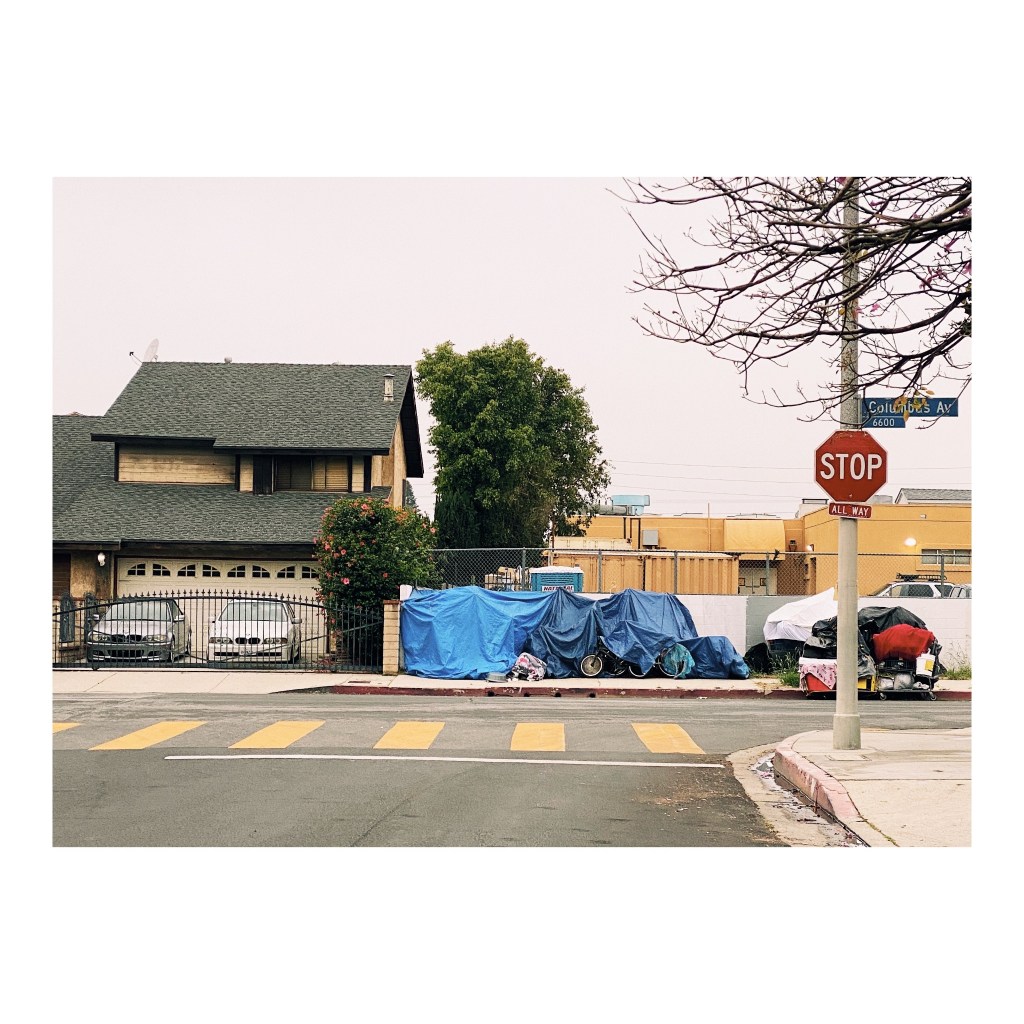
Now they have reappeared along Columbus Avenue across from the grammar school. While it’s doubtful anyone is actually learning grammar in that one-starred rated school, what’s certain is that the garbage camp is illegally set up in full view. 

When people wonder what drives Angelenos mad, it is this: there is no control on the disorder and criminality of this city and state. 

San Francisco, true jewel of the west, has gone to hell.

Los Angeles, costume jewel of the west, has followed suit.

And when mayoral candidates go on podcasts and talk ad nauseum about their humane and expensive solutions for the poor people who are homeless, you want to scream!

Why should the suffering of private persons, their addictions and mental illness, be allowed such a prominent and destructive place in the lives of all law-abiding citizens in the State of California?

“One of my proposals is to create a $1 billion revolving private equity fund with which to build permanent supportive housing. That’s housing that’s been costing $600,000-800,000 a unit. That can be cut to a third of that cost using a private equity model that has worked on the streets of Los Angeles,” says Mayoral Candidate Mike Feuer.

Is anyone knocked-up on drugs and alcohol going to sober up in a new, unsupervised housing unit?  

Here’s an idea: use the billions in homeless funds to send $100 Visa gift cards to legally housed residents, home owners and renters, who report trash camping in their neighborhoods. Top off the yearly payments to those who report the vagrants at $2,000. Thousands of Angelenos, short on money for gas and groceries, would be impelled to report vagrancy and clean up dumps that have destroyed our city.

Do the people burning down parks and sleeping under tarps on bus benches care to move into a new studio apartment? 

Trash camping?

Don’t permit it. Don’t allow it. Don’t normalize it.

Burning parks, setting fires along freeways, camping out on public sidewalks and streets. This is the state of California, the most technologically advanced region on the planet.

So much money, so much talk, so little results.