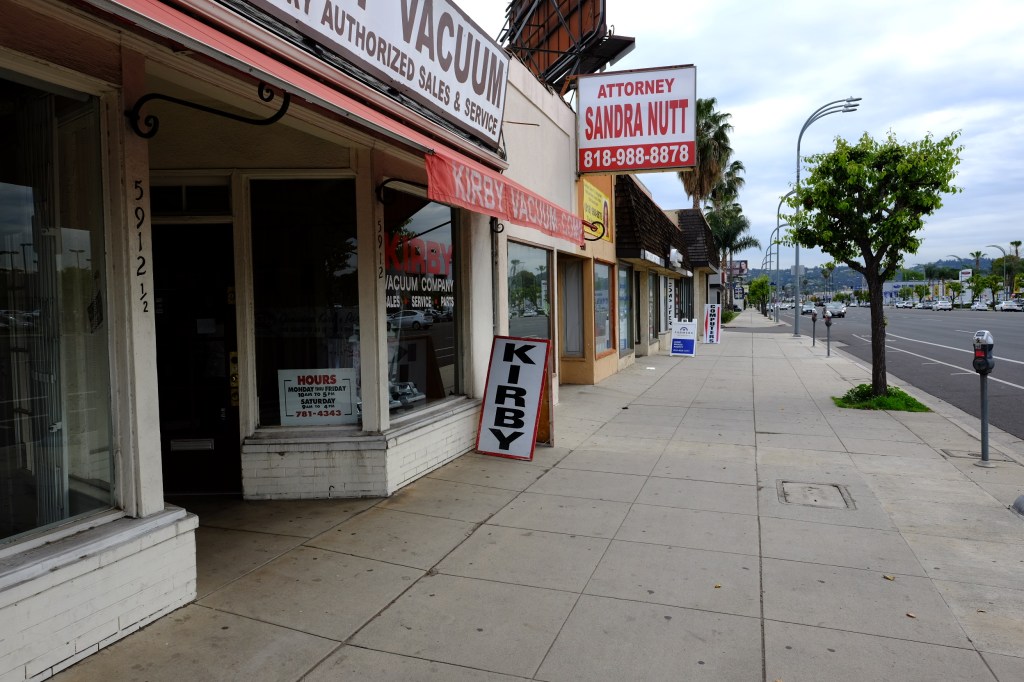
Today’s Uber ride starred Anthony, formerly of Spanish Harlem, who picked me up at a neighbor’s house in his gray Toyota Prius on Hamlin St. for the 35-minute pool ride to Studio City.
A friendly, chatty, 40-year-old New Yorker in dreadlocks, he started off by ignoring an incoming phone call from “my best friend” who he said never returns phone calls.
But his friend, he explained, was a stand-up guy, a former addict who was spending the weekend up in Santa Barbara to help his sponsor who had fallen off the wagon, gotten back into drugs and alcohol and whose sister was illegally selling the house from under him.
We turned up Calvert Street to pick up a second rider, Ryan, a tanned, curly haired guy from Santa Clarita who worked as “an outdoor cinematographer.” On the ride down to his apartment on Valleyheart Drive he bemoaned the lack of money in his profession, but he also said his friends who travel the world and post about it on Instagram are mostly paid with products, not money.
After Ryan left, we picked up a ride at Fashion Square. This time it was a lanky, tall, black cigarette smoker, Albert, who threw out his butt before he got into the backseat of the car carrying his bag of new shoes. He was on his way down to Studio City to do some vintage shopping at Crossroads. He wore long red basketball shorts and had a dead-eyed expression on his young face.
He said he was short on funds, but made good money as a restaurant delivery worker, as well as getting Social Security money from the government and food stamps. His ambition was to work in fashion, either in films or TV. He wanted to buy a car, but he was also struggling to pay his $1,000 a month rent.
The driver said he made great money as an Uber driver, as much as $1500-$1800 a week, and that he could pay himself up to five times a day as funds came in. He was working to achieve success as a standup comedian. He was excited when I told him he had picked me up in front of the Workaholics House where the owner currently has monthly comedy shows in the backyard for $20 a head attended by hundreds of people.
Finally, we got to Peet’s Coffee and inside there was a regular: Actor/Comedian Jane Lynch (Glee, Best in Show).
In early 1993, I was visiting Larry and Kay, who lived in a beautiful home in Woodland Hills, south of Ventura, of course. They were around the corner from the last large orange grove in the San Fernando Valley.
They were Hollywood people, who had moved out to the SFV, in the late 1960s, from Michigan.
The husband was a TV producer who had success on ABC in the 1970s. The wife played tennis with “Happy Days” star Marion Ross. They had three children. I was friends with their middle daughter Beth, who I had gone to college with.
Their house was up on a hill, atop a long driveway, in a bed of ivy and surrounded by mature trees. There was a large, life-sized cow in front, so you were assured this was a place of wit and irony.
The expansive, beamed, rustically casual interior with a wall of patio facing French doors was paved with polished bricks. A two-story tall front hall, with plants growing up to the ceiling along an open riser staircase, extended back into an amorphous pool that was surrounded by terraced, green hillside and more vintage signs from old roadside advertising.
That year I was considering moving from New York City to Los Angeles. And then, the next year, I did.
The husband was a gregarious, self-confident, big Midwesterner who liked practical jokes, loved making television, and loved Los Angeles. He would have made a good poster child for the LA Chamber of Commerce: family man, in a spectacular house, having fun earning a living in entertainment.
During one conversation Larry said he liked LA because when you drove to the airport “you never had to go through a bad neighborhood.”
Kay said she loved LA because she loved her house, “It’s paradise here in my home and garden,” she said.
I thought then, 26 years ago, how odd and how normal these remarks were, how characteristic of Los Angeles, and a certain kind of person these impressions of life here were. For who would argue, especially in 1993, that a nice home was not the entire object of life and the culmination of Los Angeles dream?
Who cared if there was nowhere to walk, if “Main Street” was a 15-mile-long wreckage of parking lots, junk food, car washes, shopping centers and ugliness; and your downtown was a vacated, forgotten and despised urban renewal zone, strangled by bad air and wide freeways, where lost people wandered aimlessly?
And you never knew your neighbors’ names, and you only saw them from behind your tinted, electric windows.
If you bought a nice ranch house south of Ventura Blvd. you were really set. The city and its attributes or lack thereof were of no importance. The sun always shined on your pool and your garden.
I have lived in this city more years than other city, and still I wonder what I am doing here.
Like Larry and Kay I have a nice house, perhaps not on the scale of their house, but it’s a good, clean, comfortable house, and I like it.
But beyond this house, a few houses down, here in Van Nuys, one encounters a city where 58,000 people live on the streets, and traffic, billboards, mini-malls, illegal dumping, air pollution, and crime are profuse.
A great house would be a great if it were in a great city that took great care of its environment.
The Perfect House could never exist in a city where 90% of the people who can, drive their children to schools in other school districts, because the local schools are inferior, because the nearby, walkable schools are populated by less advantaged kids. What fine city sends its’ kids far away to go to schools in other places?
In our city, desperate for housing, people with homes protest housing for homeless seniors. It reminds me of a man with epilepsy, and an autistic boy, who protested a memory care facility for Alzheimer’s patients near his home in NJ.
The Perfect House would not exist in a city with scattered, garbage-filled carts on sidewalks. And a bus bench shelter was not for bus riders, but a bed for a man without a bedroom.
Los Angeles promotes self-destruction of self and city as public policy. It allows vagrancy, dumping and human defecation into local rivers that empty into the ocean. And its leaders ask you to understand and accept the degradation of a city as the natural order of business.
Straws are banned, smoking is banned, but tens of thousands of trash campers can set up their tents anywhere in Los Angeles.
How are we not calling this an emergency?
14030 Valley Vista, Sherman Oaks, CA. by Gal Harpaz.
In the photo above is a version of The Perfect House at 14030 Valley Vista, Sherman Oaks, CA by Gal Harpaz, photographer.
The architect was born in Ferrara, Italy, a Jew who escaped when Mussolini came to power. Edgardo Contini, (1914-90) who was a founder of Gruen Associates and a planner in many projects in this city including the Pacific Design Center, the Fox Hills Mall as well as President of the Urban Innovations Group, the practicing arm of the UCLA Graduate School of Architecture and Urban Planning. He worked with Architect Charles Moore and participated in the Grand Avenue proposal for California Plaza on Bunker Hill.[2]
And during his lifetime in Los Angeles, Mr. Contini seemed to think that this city was in need of urban preservation, reuse of older buildings rather than outward sprawl. He wanted to end our wasteful, continual destruction of historical structures and our voracious consumption of wild lands and agricultural fields beyond the city.
He saw Los Angeles as more than the ideal house. He imagined a city where the health and well being of all was the optimal.
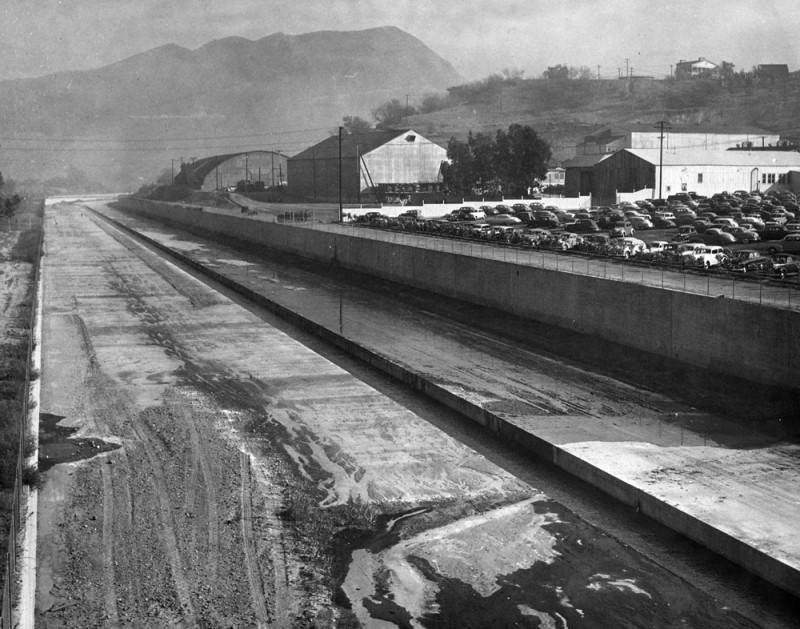
What would he think of Studio City today where $3 million dollar houses are constructed steps away from people sleeping on mattresses along the LA River? Or of Van Nuys Boulevard with its’ boarded up businesses, homeless encampments, and dismal condition?
In 1972, he wrote, “We should place the emphasis on recycling, no further withdrawl from our resources of open land would be required/ and we will not leave urban litter behind.”
Are we better off today than we were in 1972? Or are we still, like Mayor Garcetti, just talking a virtue game and living in a cesspool?
Where are all the big plans for humane and just architecture to heal all the atrocities of modern Los Angeles? Can we just survive and continue to build a city of flat-topped McMansions, backyard garage add-ons and $3500 a month apartments?
Is any large city in America as dirty as Los Angeles? Is any booming and billionaire saturated city in Europe? One looks to India to imagine our dystopian future.
The Perfect House is beyond most of our reach, but the better city should not be.
[2]Obituaries: Edgardo Contini, Architect, Urban Planner; by Leon Whiteson; LA Times, May 1, 1990.
Here is a rundown of some upcoming ballot initiatives Los Angeles voters will decide in 2020.
Red Light Running: Inconvenient but let’s not shame red light runners.
MEASURE RLR
In recent years there has been an epidemic of red light running in Los Angeles.
To understand the problem, which is not solvable by law enforcement or red light shaming, a $6 million study was conducted by the California Therapists Union (CTU) to try and understand the emotional reasons behind running red lights.
A shocking 88% of red light running drivers were found by CTU to have personal worries. Some were stressed at work, others were unemployed, many were anxious about historical events and current debt. Family problems including abandonment by parents and helicopter parenting were also cited.
A new ballot measure, which will tax red citrus fruits with a 1% per pound fee, will help pay for a new 100 person therapy unit of the LAPD to meet with drivers who found, through no fault of their own, that they drove through red lights. $40 million is expected to be raised by the tax.
Mayor Garcetti and the CTU both strongly support this.
A Treeless Pacoima Home, through no fault of its owners.
MEASURE TREE EE
It is no secret that there is a great inequality between citizens in the amount of trees on private property. In one area of Sherman Oaks, wealthy homeowners have, on average, 18 trees, even with only one or two residents on a property. In a more just and fair nation this arboreal injustice would be intolerable!
In Pacoima, many homes have one or two trees and their front lawns are covered in asphalt. And one tree sometimes must often work overtime, day and night, to shade 8-16 people living in a house. It is unfair, that simply because of wealth, some homes are more shaded than others.
Measure TREE EE will tax each tree $100 on properties over $1,200,000 in value, to go into a general fund that will finance whatever the city needs from social services to street art.
Silent Meow No More!
MEASURE LGBTPET
Queer pets, including dogs, cats, and goldfish have been widely ignored until now, after a $10 million dollar Bill and Melinda Gates Foundation study found high rates of depression and early death in pets whose sexuality was unacknowledged by humans and other animals.
Depressed gay cats, for example, are often seen alone, on window sills, sleeping on sofas, hiding from their owners, and exhibiting symptoms of repressed anger, hissing and clawing. Yet socializing these cats, with other cats of their declawed gender, showed promising improvements.
Gay or bi-sexual goldfish, shockingly, suffer most from sexuality issues, and many live less than five years in an environment of drowning purposelessness and tabletop ennui.
A Life With Purpose Thanks to LGBTPET.
A $2.00 a gallon tax on orange soda will help pay for 100, on call psychiatric veterinarians to visit homes of distressed animals. LGBTPET will raise some $75 million and help support all mental health programs for non-human Angelenos.
The Great Depression was in full swing and Los Angeles was a place where people also struggled to make a living, even though photographs show new buildings, apartments, public works, farms and industries. It seems everyone was working and the city was thriving despite hard times.
One thing that stands out is the spectacularly tidy streets with swept sidewalks, clean curbs, and not one sign of shopping carts filled with garbage or mountains of trash.
Mouth of Santa Monica Canyon, looking northeast, early 1930s.
Looking north from Palmer Drive
E 11th and Crocker
This was during the most severe economic downturn in American history, yet Los Angeles functioned as a functioning city, where the presentation of tidiness, order, and cleanliness was foremost.
There were many poor, destitute people in the 1930s. But Los Angeles did not create a dystopian city where people shit in the streets, or lived along the road, or slept on bus benches, or roamed mentally ill in parking lots, or set up tents on residential streets for outdoor trash camping.
Cheap structures on Eagle Rock Boulevard, looking east from north of York Boulevard
There was a crisis and it was called the Great Depression, but government and people, here in this city, were not seized in panic and unable to respond or knocked over by circumstances.
They ran the city well, with pride, and these photographs of ordinary life in the City of Angels, 85 years ago, should fill our modern, jaded hearts with shame for what we have allowed Los Angeles to become under Mayor Garbageciti.
Wilshire Bl.
Drive-in market, northeast corner of Wilshire Boulevard and Hamilton Drive
Someone recently was very excited because there is a new slate of young, female, diverse people who are running for the Van Nuys Neighborhood Council. She is one of the contestants and wanted some input on what I thought about the VNNC.
I rolled my eyes. Nothing good has ever, ever come out of the Van Nuys Neighborhood Council, and if you don’t believe me, take a walk up Van Nuys Boulevard today and see the boarded up shops, the homeless, the filth and the neglect.
Maybe I should expand that to the office of Nury Martinez, a city councilwoman who has been in that job for some five years and has presided over the further decline and frightening expansion of homelessness that plagues our city and our district in particular.
Often young aspirants seeking election will roll out first, those labels which they think matter. You are queer, you are a woman, you came from Honduras. And you are under 30. That last designation is the most important because you have “fresh ideas”, ideas which only those people born after 1989 have thought of. And you care, you really care about this community because you are queer, you are woman and you came from Honduras.
And you are also against: exploitation, triggering, cruelty, bigotry, and policies that discriminate against homelessness, against the undocumented, and against those who have been convicted of crimes and are unjustly punished.
Fine. All fine. All open for debate, though you may not ever agree to debate these issues because you are right and I should know you are right.
But I have one thing to say to you, candidate for political office: I don’t care about your identity.
I know you are angry because growing up you wanted role models and when you looked on TV or in the movies you were given maids and gang-bangers instead of entrepreneurs and philosophers. Pity. You didn’t model yourself after Marsha Brady or Samantha Stephens so you went into a tailspin.
Your identity is your fortress, your crowing achievement, because, after all, you’ve worked hard to acquire that DNA.
But running on a platform of DNA, gender, or preference labels doesn’t stop crime, bad schools, illegal dumping, trash camping, random violence.
Woodley Park.3/5/18 Bessemer at Cedros.3/5/18 Bessemer at Cedros.
The Cuban-American dad who lives with his daughter near Burbank and Kester takes his Sunday morning off to ride bikes with his daughter through a trash-filled bike path along the Orange Line. Does he care if the representative who neglects this park is Latina? No, he cares if the park is clean and safe.
The Guatemalan born, American history professor who takes the bus from Van Nuys to teach at CSUN stands at a bus shelter where a homeless person has placed six shopping carts and has made a home there for three months.
The lesbian mom from Mexico who lives on Vanowen with three school age children still has to drive them from her bad school district to a better one five miles away and she helps, unwittingly, to contribute to traffic and school segregation. Would it matter if she were Irish-American, born in Indianapolis and married to a man?
Illegally parked cars on Victory during rush hour.Empty, weed-filled parking lot within walking distance of mass transit and downtown VN.Homeless.
The broadcasting of identities is like a theater of the absurd because it presents a chimera, an illusion of a person who comes into the public realm advertising her external labels instead of presenting her internal ideas.
I’m reminded me of Jussie Smollet’s words after creating his hoax, he used his “gay, black” identities to hide the true nature of his fabrications. By trotting out the ingredients on his label he sought the mantle of believability and righteousness. But the content of his true character remains.
I don’t care about your identity. I care about facts, about telling the truth, about pursuing equal justice under the law. And that applies to aspirants for political office as well.
The two little boys, Diego, 5, and Eddie, 7, who live on Delano, whose grandparents emigrated from El Salvador, cannot ride their bikes down to Bessemer, two blocks away, because 20 homeless people, some drug addicts, some mentally ill, live on the street there.
If Diego and Eddie were named Diego and Eddie Moskowitz and they couldn’t ride their bikes in their own neighborhood would their ethnic identities matter more?
Bus Bench: Sepulveda at Victory.Sepulveda Bl.Along Sepulveda at LA Fitness.
I don’t care about your identity. Nury Martinez has a great duo of identities: female and Latina and really, truly, what does that matter for the well-being of Van Nuys?
Being a Latina, doesn’t make you a more effective thinker, leader, community organizer any more than being a Canadian from Haiti does.
Your identity won’t bring in new investment, it won’t appeal to developers, it won’t clean up the streets, it won’t lessen traffic, it won’t purify the air, it won’t make food healthier.
Van Nuys needs a dose of old fashioned law and order and political and police muscle to let the law-abiding citizens of this district know that we will not fall apart and disintegrate into factions of identities who then will be unable to come together to work as a community to fight our common problems.
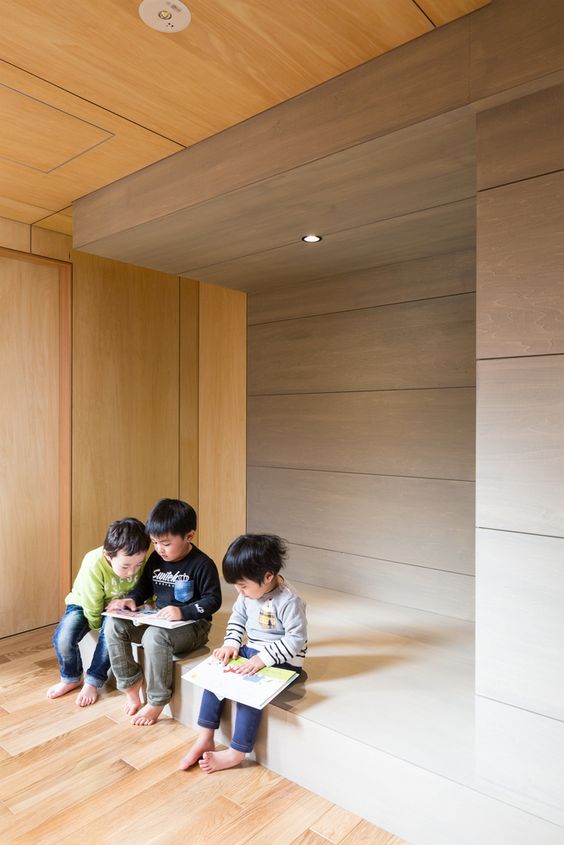
Van Nuys 2030?Van Nuys 2030?Small Homes, Not Homelessness.Small Homes, Not Homelessness.JapanJapan
Within the collections of the Los Angeles Public Library there are city, business and phone directories going back to 1873.
Among the historic books can be found The Armenian Directory of The State of California, 1932, related to the Armenian community of Los Angeles, at that time, numbering a few thousands, many of whom were settled in Pasadena, and throughout the Southland.
The first wave of emigration from Armenia came after the First World War when Turks murdered millions of Armenians during the breakup of the Ottoman Empire. Most of the refugees came from Western Armenia near Turkey.
Here in Los Angeles they established an industrious, skilled, hard-working community. They built churches, founded benevolent societies, and created cultural and social institutions centered on music, food, and dance.
Their professions in their new adopted city were many and varied and included dentists, physicians, attorneys, tailors, grocers, bakers and funeral homes.
The Standard Crate Co., Inc. built fruit boxes and gave “special attention to Japanese customers” many of whom grew citrus. Ten years later these same clients were rounded up and put into detention camps, a tragic and historical irony the Armenian advertisement could not foresee or imagine.
The Hollywood movie industry was already famous worldwide when the Antranik Dramatic Company advertised their actors. Mastery of frivolity has always been important in this city.
It seems that many Armenians did well here.
The Altoonian Family, and their sedan, is seen below in a 1926 photograph. The 1933 directory lists an “Altoon Apartments” at 2405 S. Hoover, and several Altoonians who lived at that address.
At Joe’s Garage, 2505 E. 4thSt. the motto was “Once a customer, always a customer.”
A magnificent Art Deco ad for signs is a last breath of the 1920s with its rhythmic patterns and syncopated layout.
The Luther Eskijian family is shown in 1924, perhaps in front of their home at 1738 Bridgen Rd., Pasadena. Boys are in knickers, those short pants that children wore up into the mid 1930s.
The Constantinople Cigarette Shop at 356 South Broadway made special monogrammed cigarettes “which makes [a] splendid gift or present for your friends and relatives for their birthdays.”
The International Grocery Co at 134 N. Main St. had such Armenian foods as aghy banir, lablebi, boulgour, chadana and fistuhk. Or cheese in brine, roasted chickpeas, crushed wheat, pine nuts and pistachios. A one-gallon tin of olive oil was an enormous luxury item priced at $2.50 ($25.68 today).
Elegant tailoring was the province of Gregory H. Chashoudian at 4562 Beverly Blvd east of Western Avenue. His skills were endorsed by B.R. Ware, Attorney, who said Mr. Chashoudian’s suits were “entirely satisfactory” and reasonably priced.
The world was in the midst of the Great Depression.
Yet looking through the pages of the Armenian Directory in 1932 one feels a sense of pride and admiration for these industrious people who overcame such grueling tragedies and unjust cruelties.
They somehow made it to Los Angeles, CA and established stable and prosperous lives in a new and unfamiliar land.
You must be logged in to post a comment.