It is probable and likely and arguable that Los Angeles is perhaps the dirtiest large city in the United States.
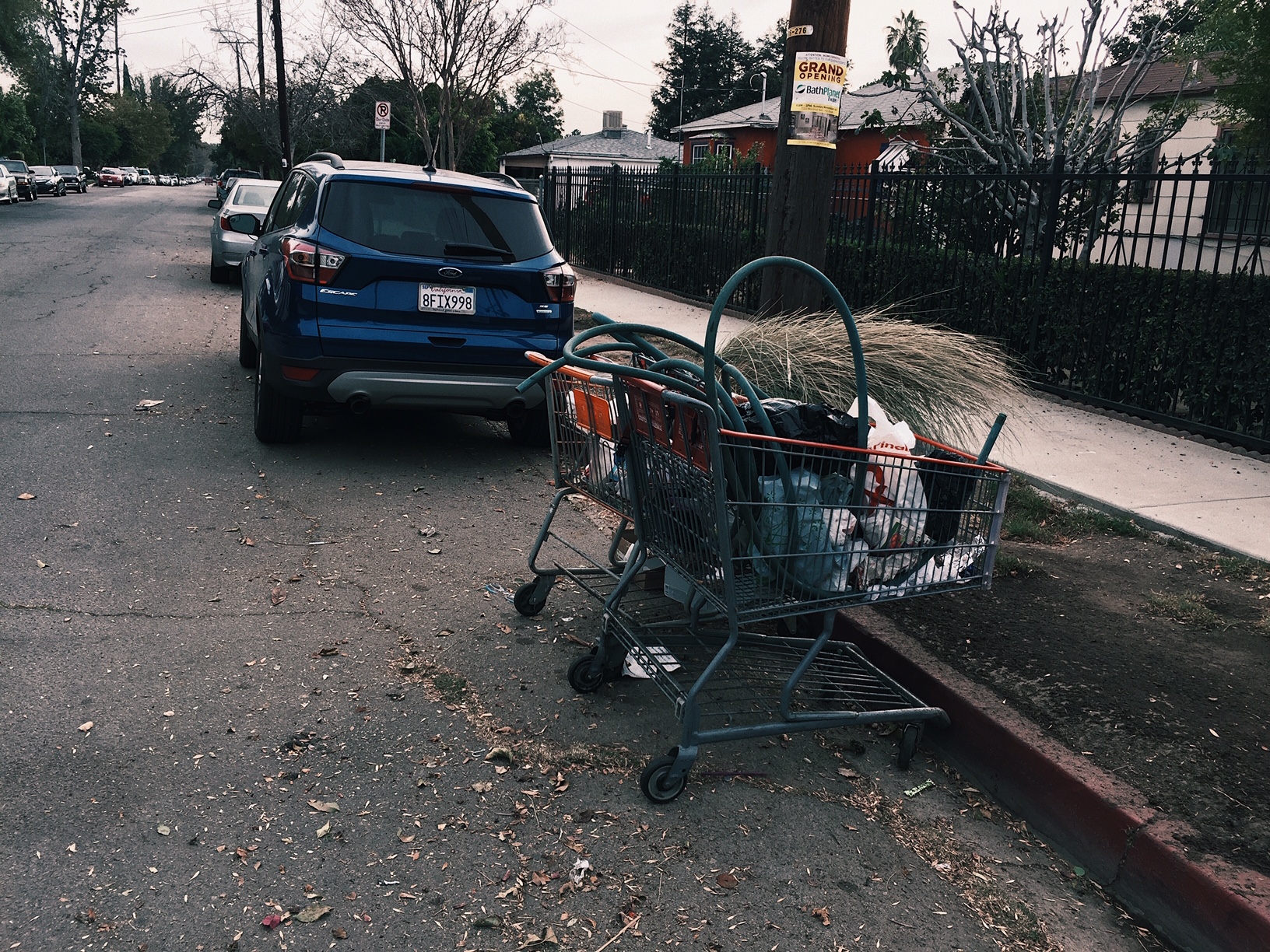
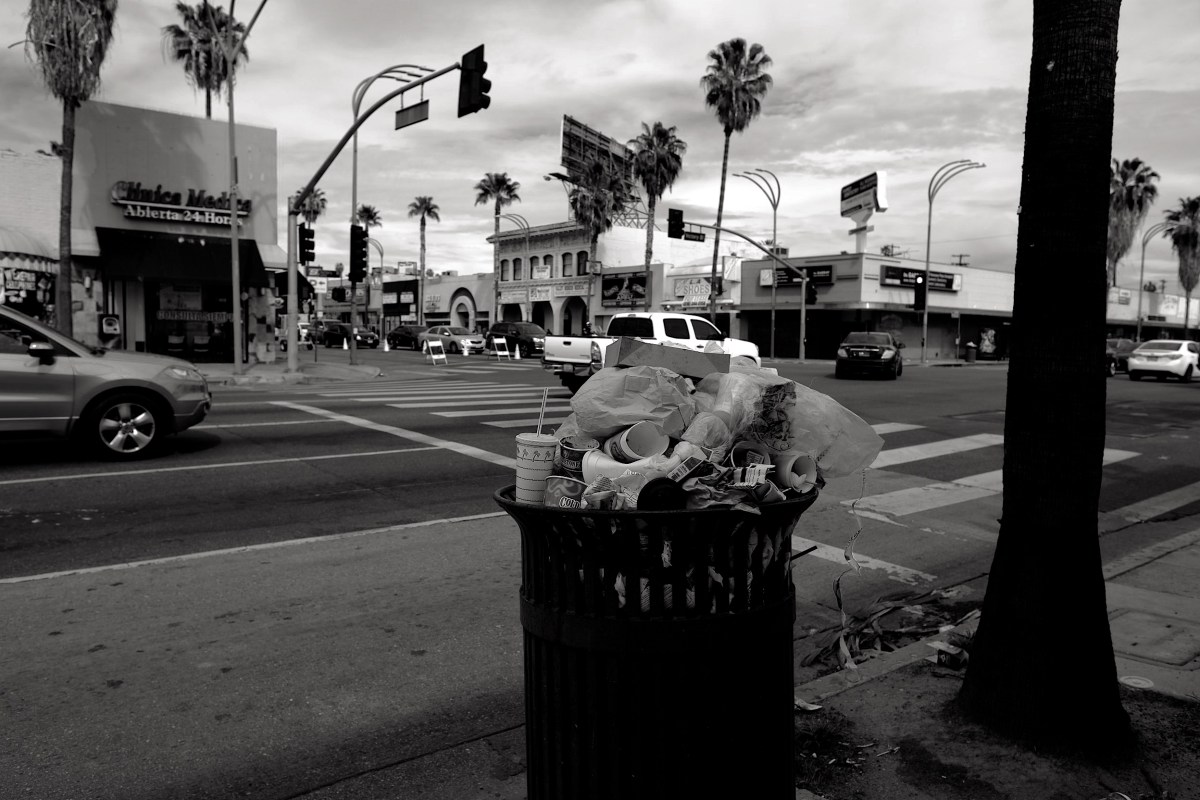
Gilmore near Columbus, Van Nuys, CA.
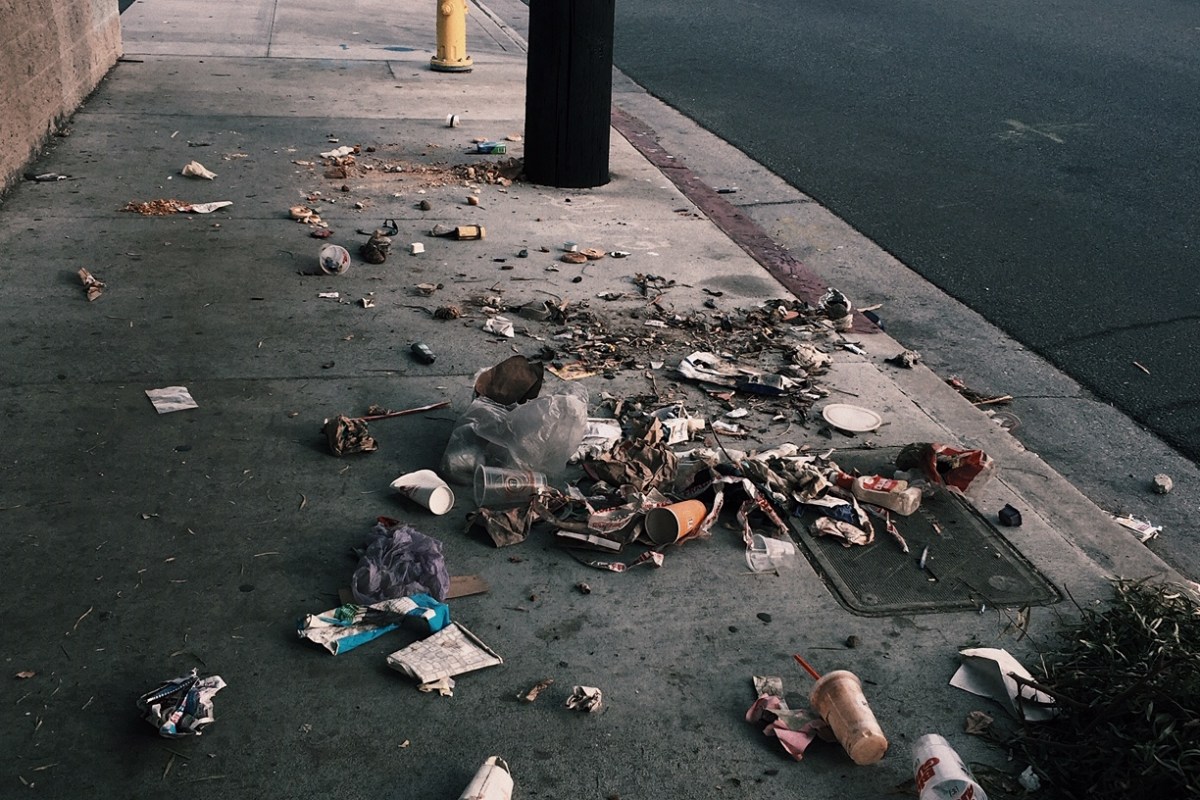
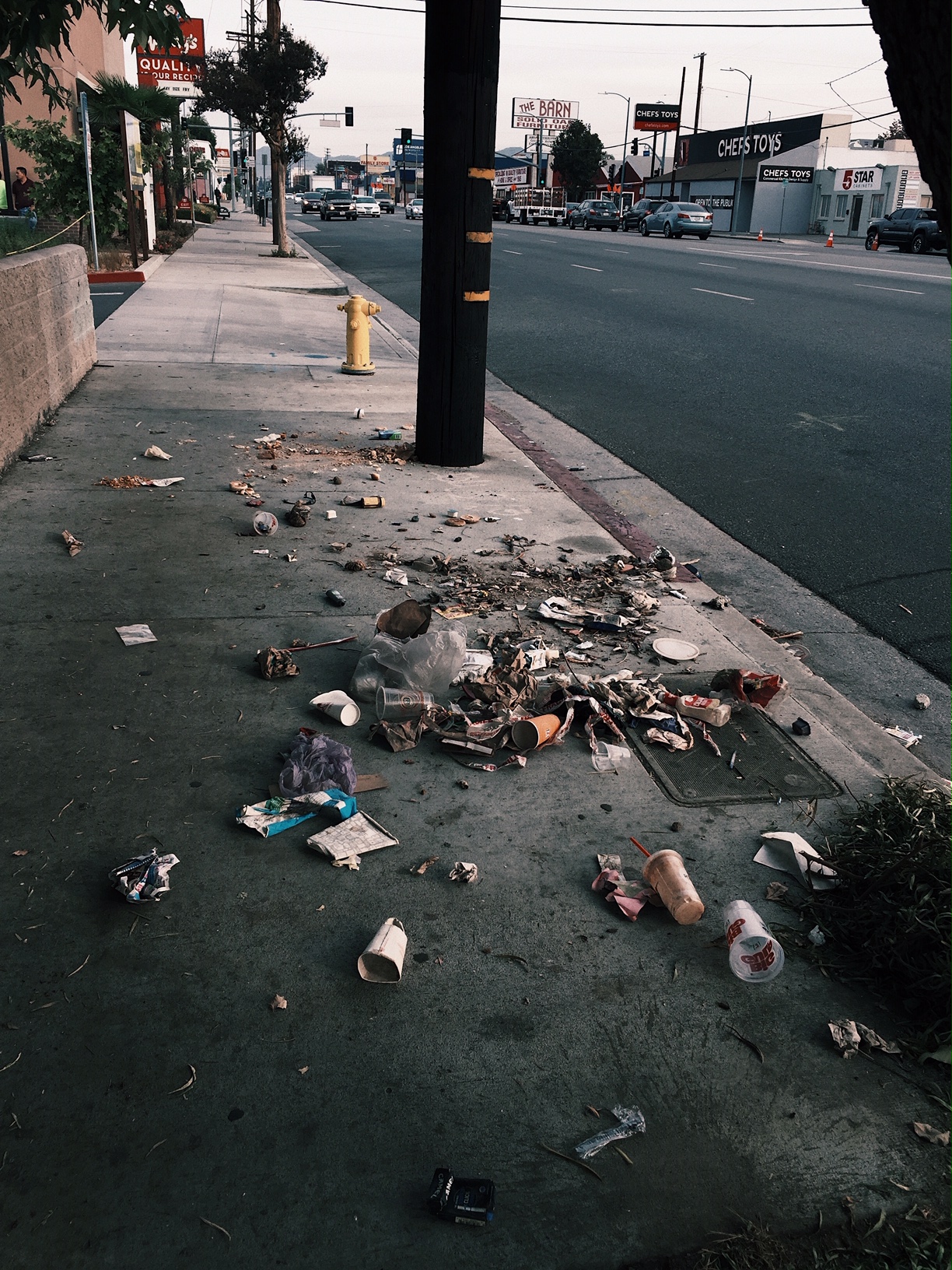
Near LA Fitness, Sepulveda Bl. Van Nuys, CA.
New York, Chicago, Houston, Atlanta, Denver, Dallas, Miami: they do not have the amount of illegal dumping, trash, shopping carts of garbage, furniture, mountains of debris and litter in every park, street, and parking lot.
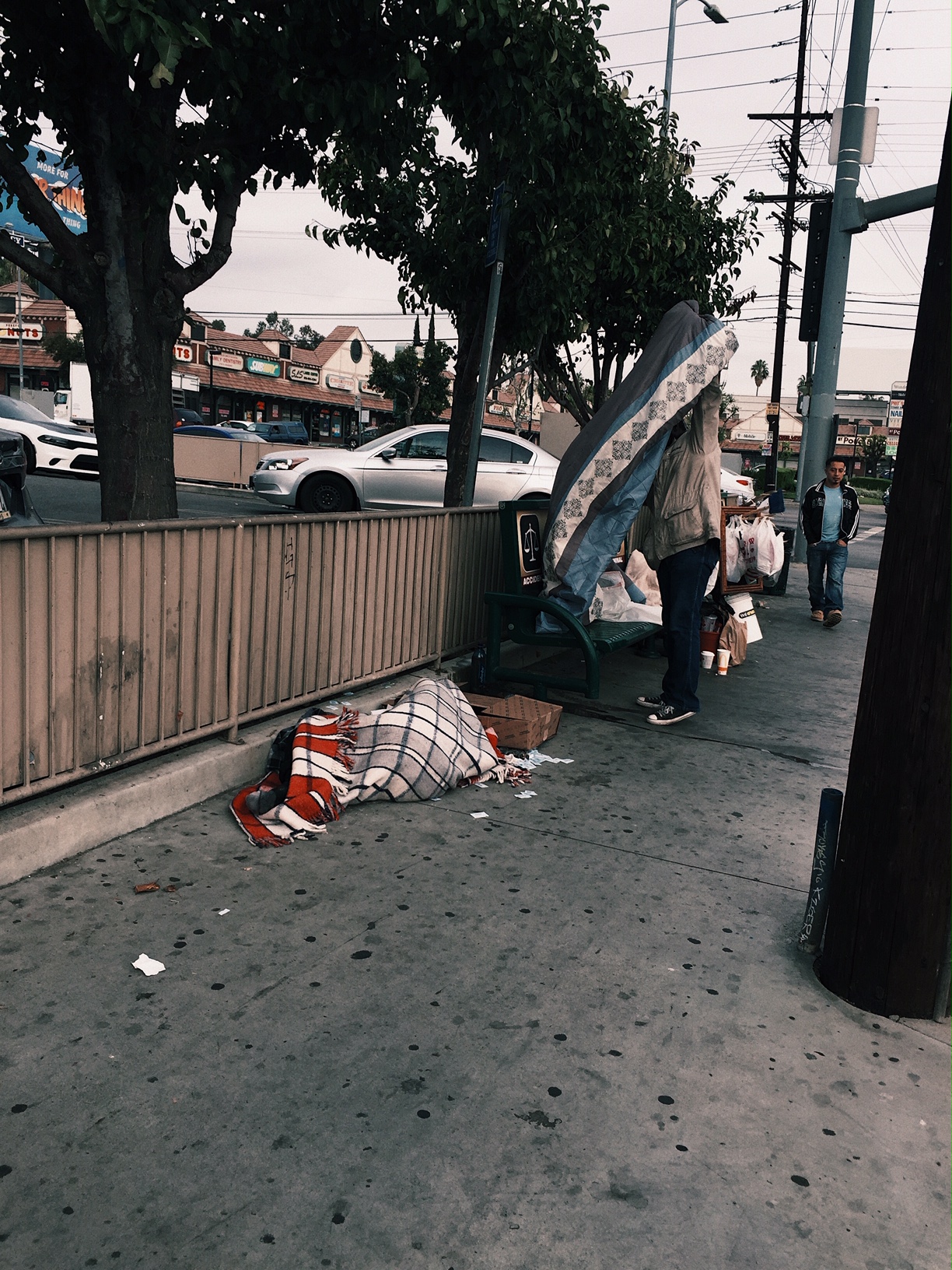
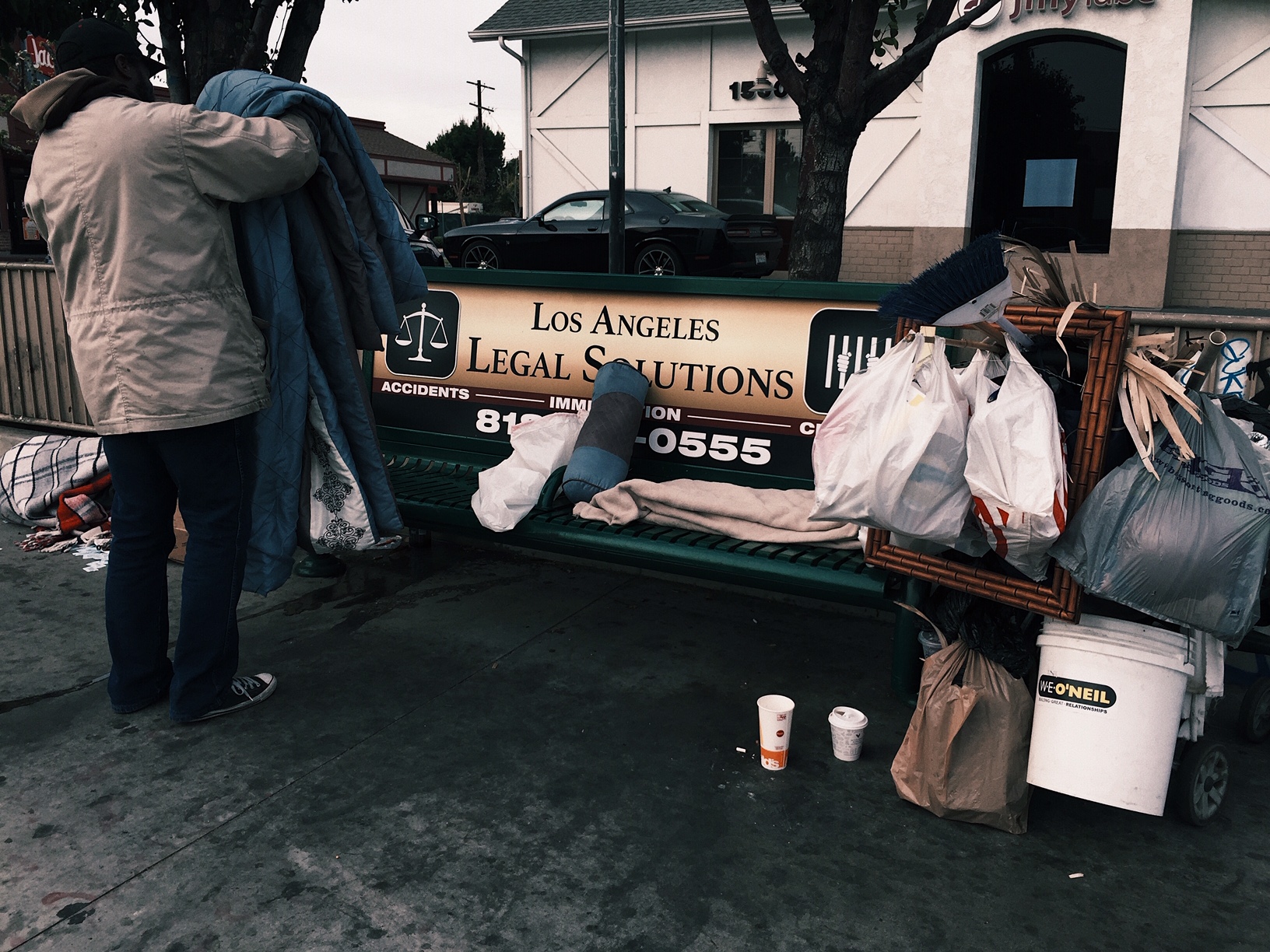
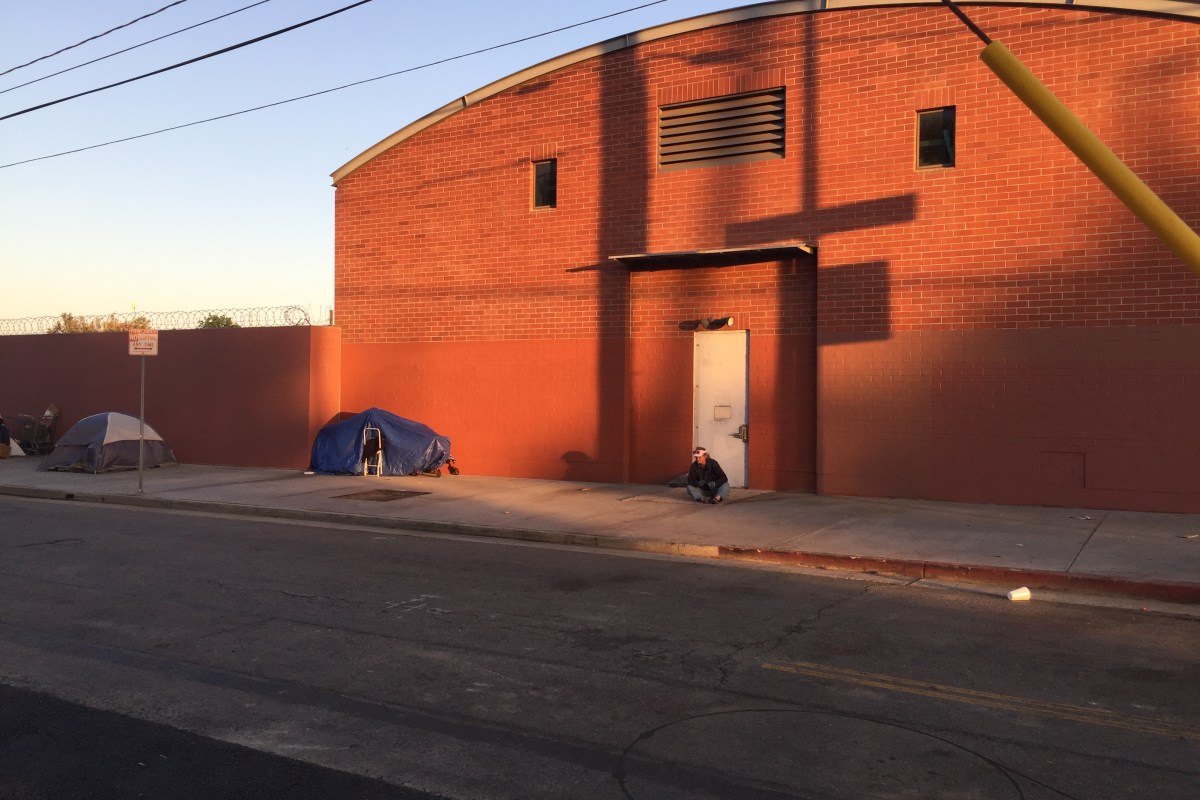
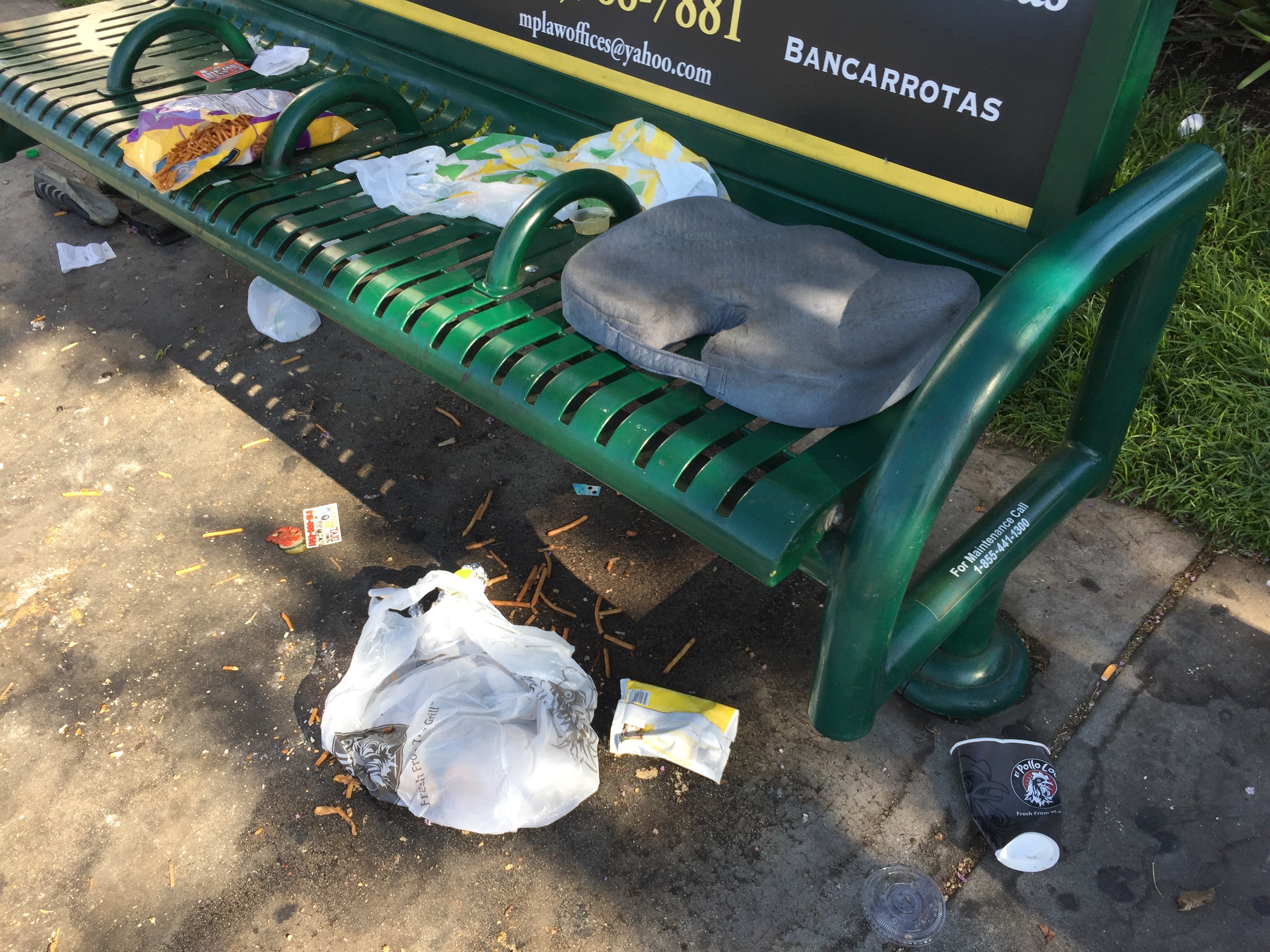
A morning walk to the gym, encompassing half a mile along Columbus, Victory and Sepulveda in Van Nuys brings one past neglect on a large and small scale, from the homeless taking over bus benches, to the non-homeless indifference to sanitation which is a hallmark of Los Angeles.
Los Angeles does not present a picture of a civilized city to anyone. Besides our nightly news of shootings and car chases, we have transformed our environment into a city where it is embarrassing to show visitors around, where the infrastructure, from pollution to transportation to parks, is sub-standard.
Put aside the yellow air, and the starter homes for $1.2 million next to a freeway. Put aside the sprawl of mini-malls and billboards and car washes and marijuana clinics and muffler shops and junk food. Put aside the speeding cars running red lights, the people, one to a car, driving to work at 5 MPH. And, of course, little spoken of…. the morning rush hour of white parents taking their kids to a school 25 miles away from home because the local school is too darkly complexioned for many liberals to bear.
The Bus Bench Near Victory at Sepulveda
Normality in Modern Los Angeles.
Yes, dismiss all that and just focus on the trash, the trash everywhere, the trash that is all around us.
Are you listening Mayor Garbageciti? Or are you on a flight to somewhere to lay the groundwork for your presidential run?
Last night, I attended a small neighborhood safety meeting with a group of perhaps seven neighbors and our LAPD Senior Lead Officer.
It was held at a home of the new liason between the cops and the community, a woman who speaks up and speaks often on issues affecting her street such as lighting, crime and people who don’t retrieve their trash cans after pickup.
I usually avoid these meetings out of trepidation. The ones I’ve gone to at the local school or hospital are full of anger and irrationality.
Not last night, but on other nights, I heard:
“Someone put a stoplight on my street at Vanowen and Columbus and now we have more traffic!”
“They planted these oak trees along the curb to provide shade and now they have cars parked there with people smoking and drinking. I say cut down the trees!”
“I’m completely against providing transitional housing for homeless veterans in our neighborhood. They get enough free stuff!” says the 65-year-old woman who inherited a 4-bedroom house from her WWII veteran father and pays $1,300 a year in 1967 rated property taxes.
“These developers are putting up apartments everywhere. I didn’t move to Los Angeles to be surrounded by crowds!”
Yet, last night, the mood was polite. A well-fed group of rouged and perfumed women from the Eisenhower Era gathered in an early American style den where dainty finger sandwiches with the crusts cut off were served.
Period references, for example, to Mrs. Kravitz from “Bewitched” (1964-72) were understood and appreciated.
Our petite and pomaded Sr. Lead Officer, wore a dark navy uniform and a very big silver badge, holster, gun and unobtrusive body camera. She spoke intelligently and sometimes ironically about the insoluble issues plaguing our community.
She broke the news that we seven folks in the den were probably not going to solve 100,000 homeless on the streets of Los Angeles or 10 million illegal aliens inhabiting our state of 40 million. Our system is so broken, so wrecked, our state so adrift in chaos and bad governance, that India, Nigeria and Pakistan seem models of order and stability.
She admitted that even her own husband often speeds down side streets, even as she enforces the laws against speeding while on duty.
She told us that 80% of major crimes such as assaults, murders, rapes and burglaries now come from the homeless community. She said that because Van Nuys has the only jail in the San Fernando Valley, when convicts are released they stay local.
She talked about Proposition 47, a voter passed initiative from 2014, to reduce penalties for certain non-violent crimes that now makes it nearly impossible to lock up the heroin user who shoots up in front of the grammar school. It’s now a misdemeanor to inject narcotics.
She said the homeless issue, which has now supplanted the prostitution issue, is a bigger problem than just our community. She advised electing officials above Councilwoman Nury Martinez, who would be devoted to law and order.
Whether her inference spells Democrat or Republican she did not say, but she seems to have a distaste for taggers, gang bangers, felons, and mentally ill murderers roaming the streets.
Mayor Garbageciti are you listening?
The host who invited us then passed out sheets of paper on which were shown our individual streets and the addresses that every block captain is assigned.
“Mona Castor Doyle[1], you have Columbus. Serena Pimpel you have Kittridge. Becky Shlockhaus you have Noble from Lemay to Kittridge. Miranda Beagle-Pinscher you have Lemona. Maria Copay you have Norwich. Sarah Choakhold you have Lemay!”
The methods advised were to go door to door and introduce oneself and say to each resident: “I am Zoe Bluddhound, your block captain and here is my LAPD letter and my contact information.”
Other methods of crime prevention were to send out group texts, say if you were home and heard an alarm, thus alerting your neighbors to a nearby illegality.
Living in Van Nuys requires a full time commitment to staying home and guarding your property 24/7.
Looking around the room I realized that everyone is trapped in their lives. These are women, now middle-aged or older, many of whom came here 30, 40 or 50 years ago and chose, for whatever reason, to stay here in Van Nuys. Some bought cheap, some inherited, nobody could afford to buy here now.
For some living here is an economical proposition when you bought your home for $35,000 or $126,000 and your yearly taxes are less than someone pays for the average ($2800 a month) two-bedroom rental in Los Angeles.
Yes, the environment beyond the little pockets of ranch houses is demoralizing, dirty, unsafe, ugly, violent, hideous, un-walkable and un-breathable. There are dumped couches, mattresses, fast food wrappers, cars and trucks speeding by, running red lights; there are grotesque billboards, car washes, parking lots, dog dumpings, discarded condoms and donut shops.
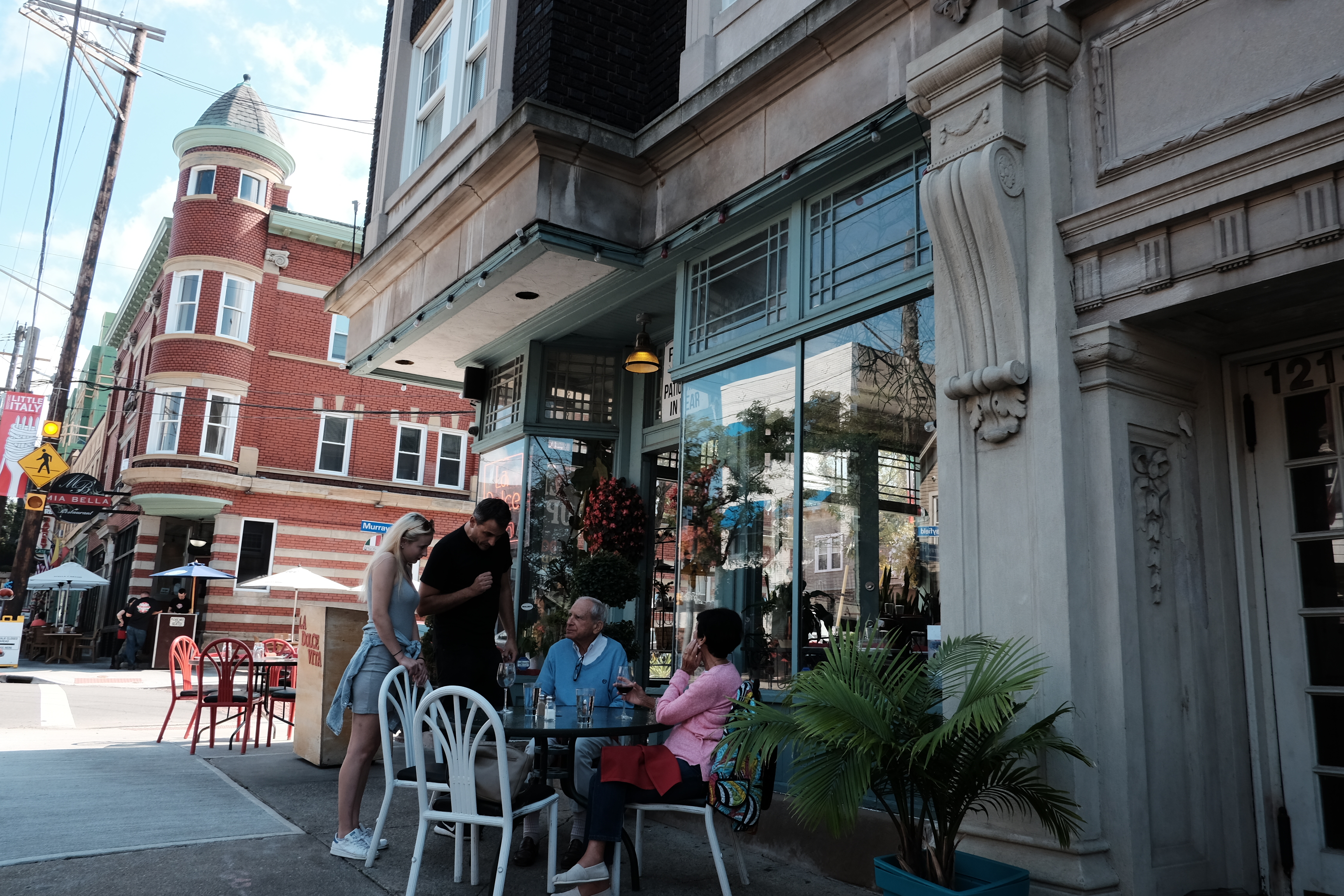
Nobody dines al fresco on Sepulveda Boulevard or drinks wine at an outdoor café on Van Nuys Boulevard. The Van Nuys Neighborhood Council, alive like a corpse, ensures that no progress is ever made on any community improvement and that all members are backstabbing one another.
So the community meeting, between neighbors, low-key and humble, without ego, is seemingly a better way to self-govern.
Last night, under the spiritual leadership of the Senior Lead Officer, an attempt at normality, order, safety, reassurance and camaraderie was attempted.
This is not Paris or Zurich or even Cleveland Heights. But we are not yet Aleppo.
[1]Personal names, not streets, have been changed.
I recently spent a few days in Cleveland, OH on an exploratory trip, visiting a city I’ve never been to before to see how I liked it.
Cleveland has had a long, slow, drain of population, and it is now about 270,000. Less than the size of Glendale (200,000) and Pasadena (142,000) put together.
I stayed in Cleveland Heights, outside of the city, in an AIRBNB run by two guys who bought a half acre estate for $146,000 four years ago, and make some extra income hospitably renting out rooms in their home.
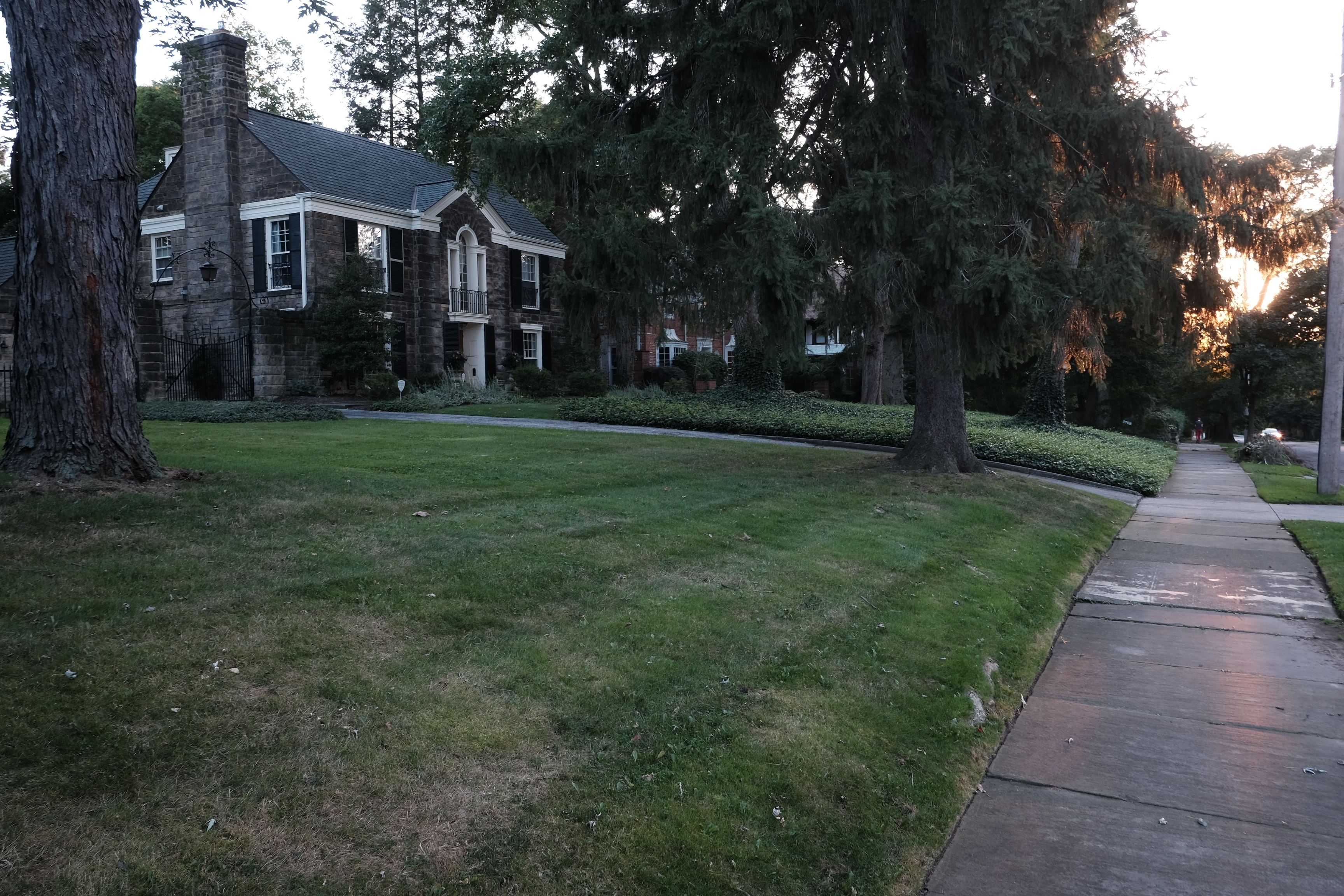
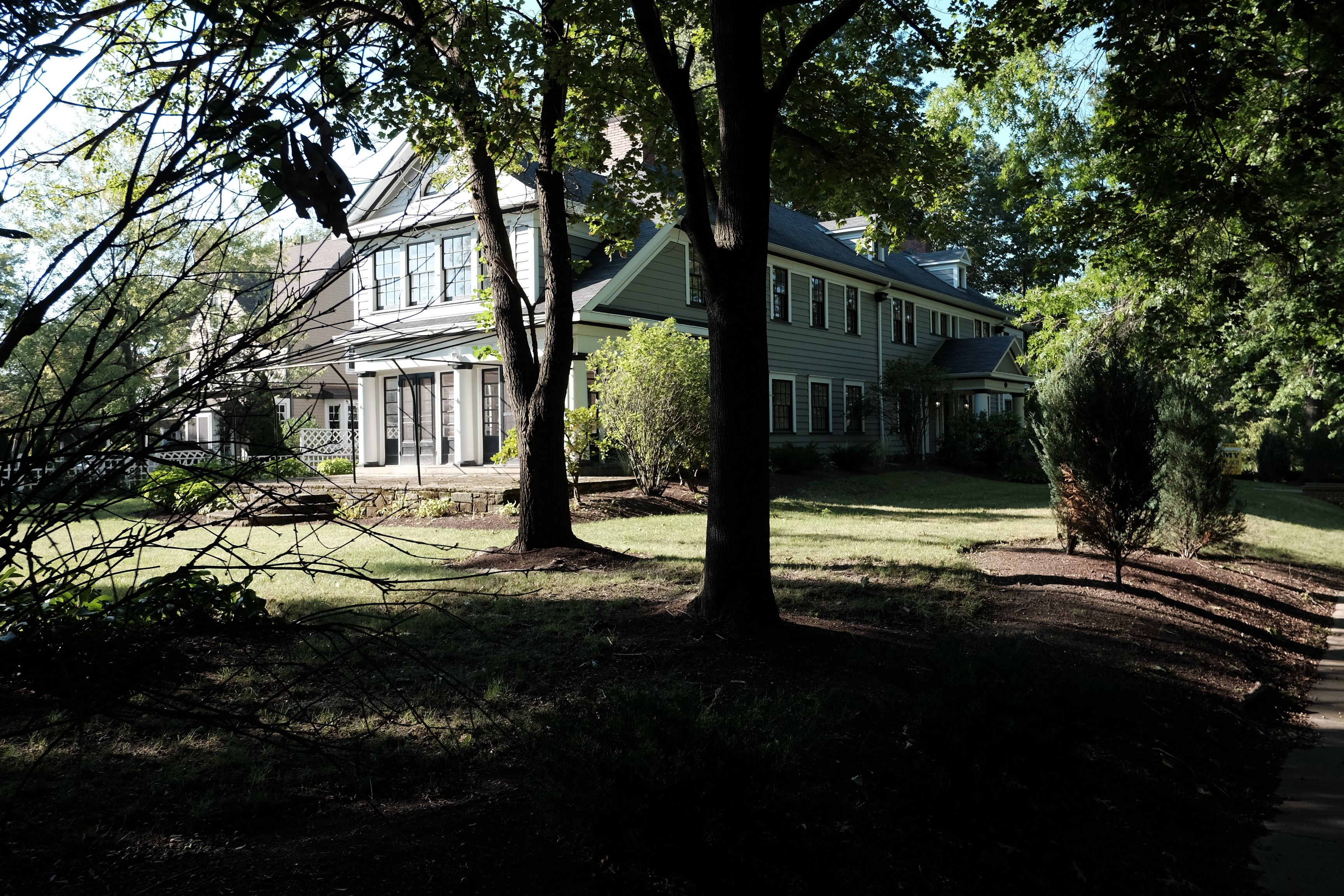
For me, I relished the time away from Los Angeles in an environment of lush greenery, green lawns, deer, and clean streets.
Overlook Rd. Cleveland Heights, OH.
$599,000 asking price for home in Cleveland Heights, OH.
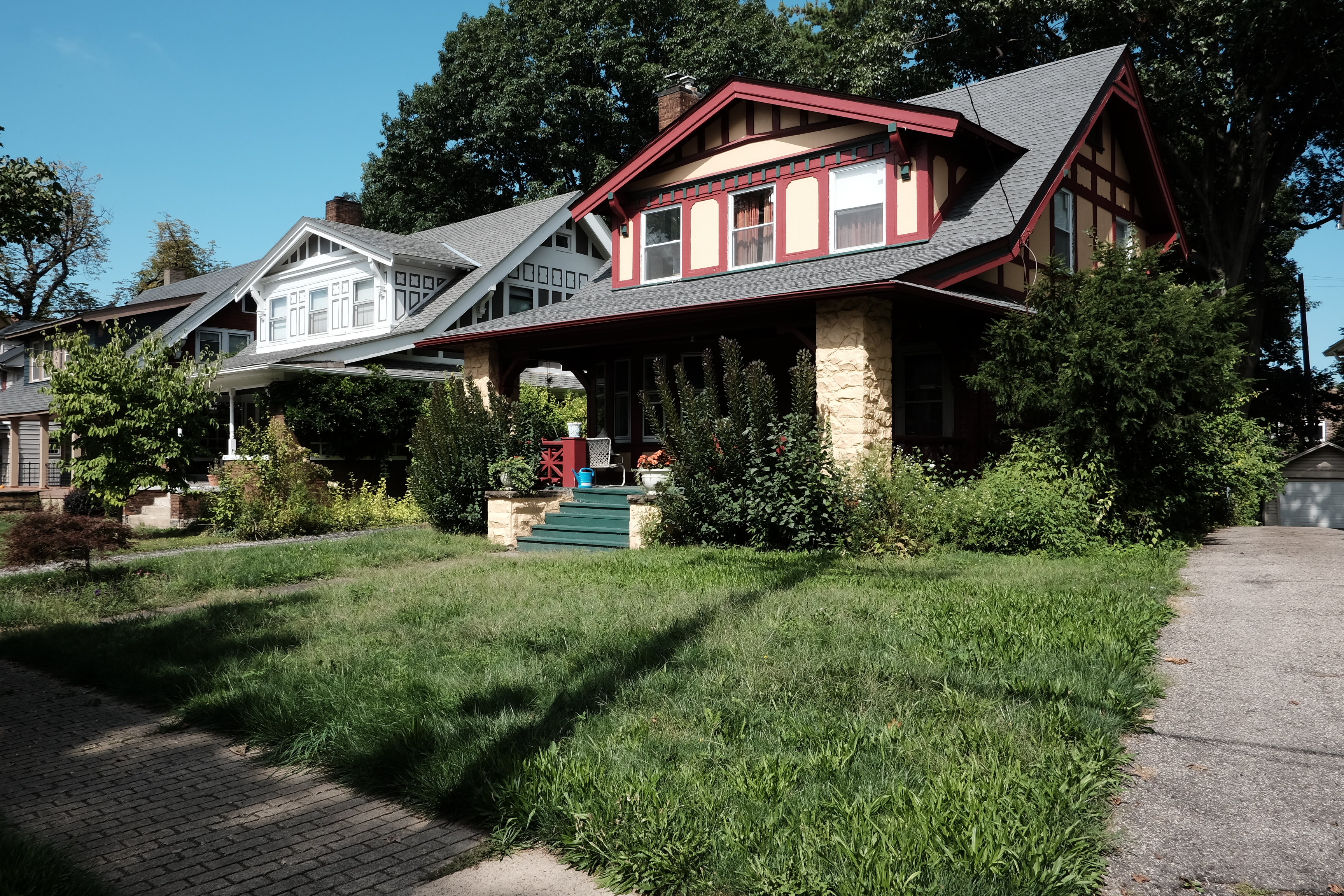
Lee Rd. Cleveland Heights, OH.
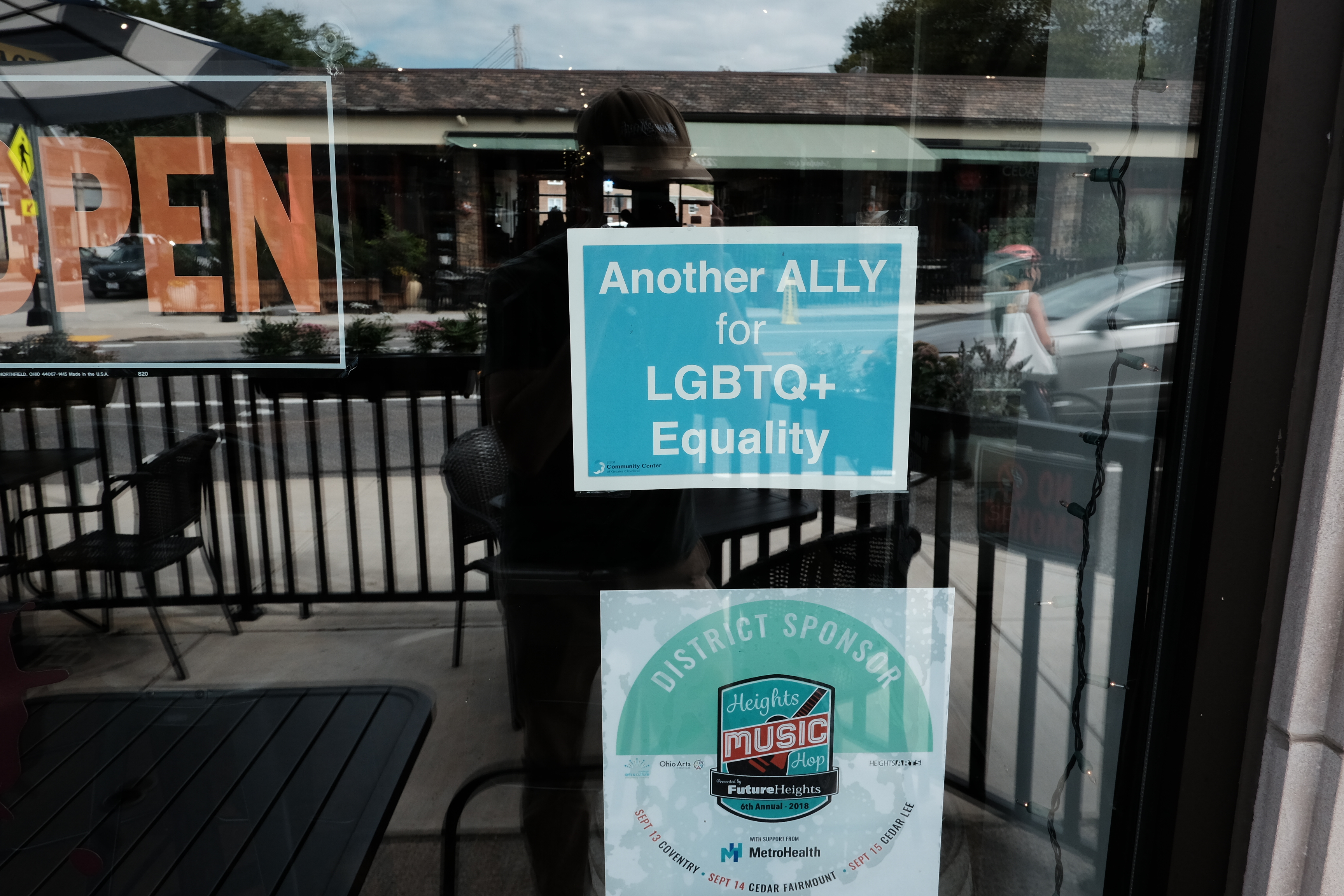
Sign in window on Lee Rd. Cleveland Heights, OH.
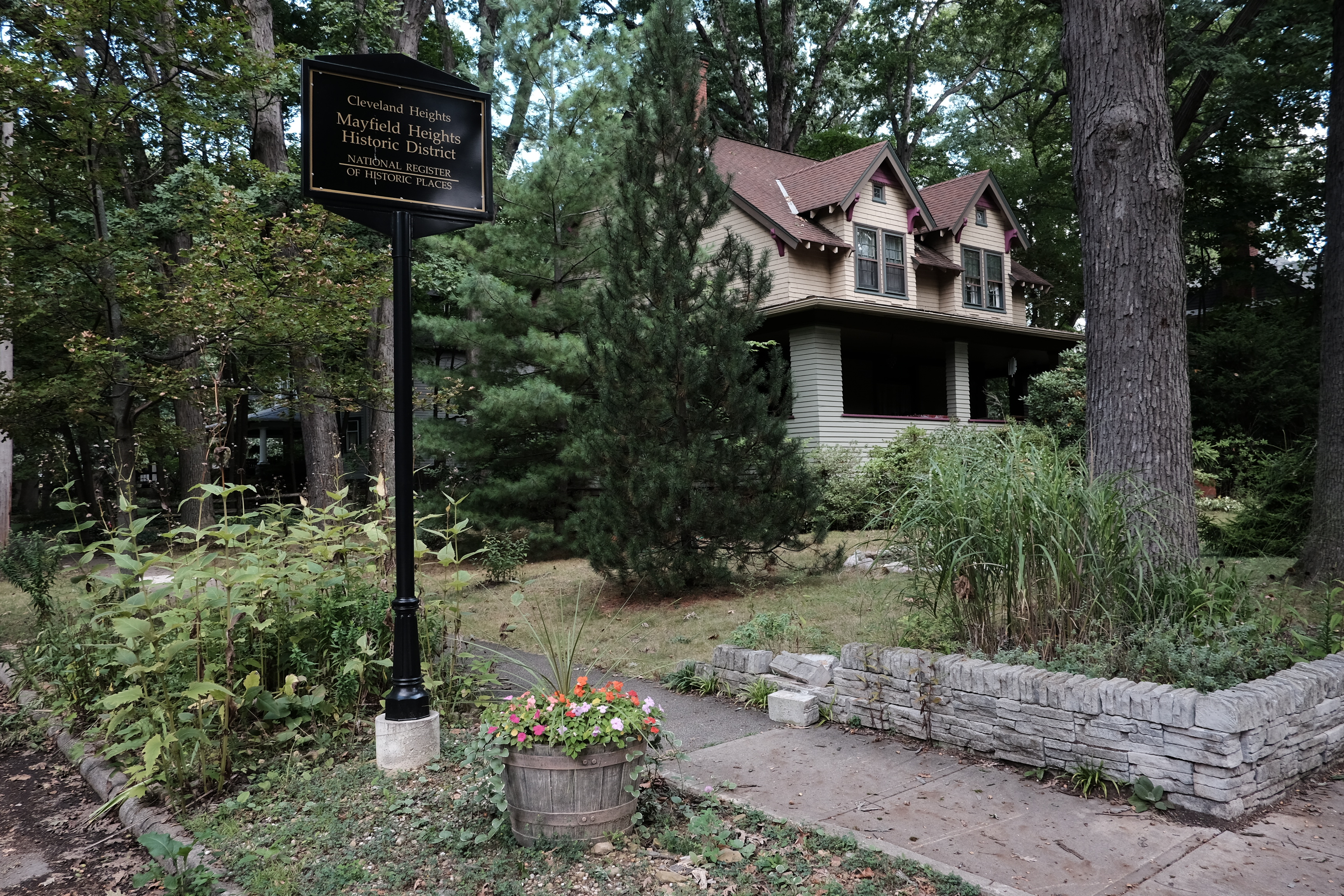
Homes in the Mayfield Heights section of Cleveland Heights.
Mayfield Heights section of Cleveland Heights.
Cleveland Heights is also a historic city, full of blocks of homes from the 1880s to the 1940s, a rich, well-maintained, lovingly cared for collection of architecture, punctuated by churches, parkways, and museums. Case Western University and Cleveland Clinic are just outside its borders, to the south is Shaker Heights, an elegant town developed in the 1920s, laid out with nature preserves, winding streets, gracious mansions and a languid Midwestern grace.
There are many homes for sale in Cleveland Heights and you can buy one for as little as $79,000 with most in the $140,000-$250,000 range. If you are starved for a Hancock Park type mansion there is one I liked for $599,000.
Many miles of interior Cleveland are empty. They were abandoned, bulldozed and cleared away. And what’s left are vast green spaces where the grasses and woods are reclaiming the land.
Even in the poorest neighborhoods, I did not see garbage dumps, shopping carts full of trash, littered streets, graffiti, or dumped furniture.
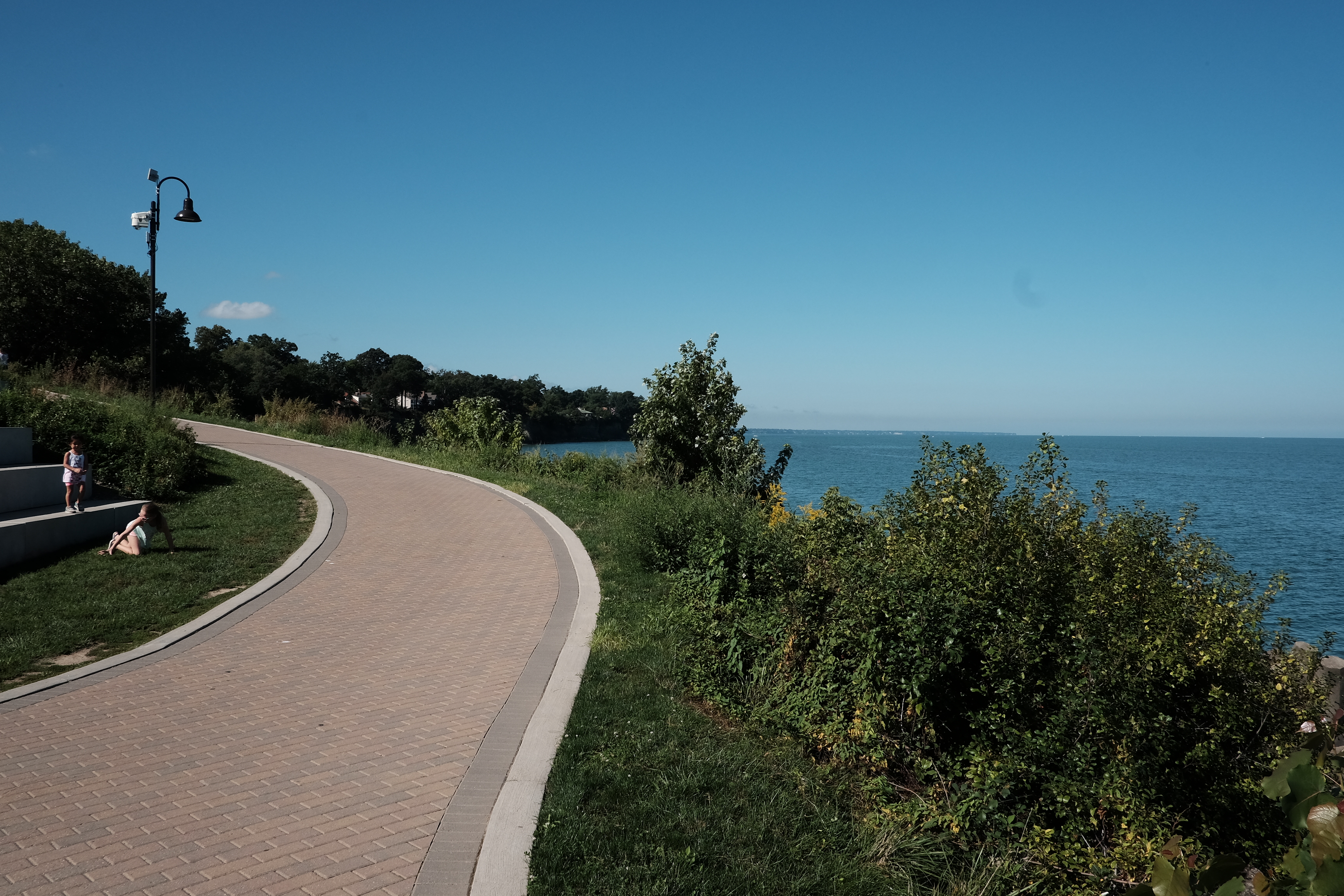
Lakewood Park, Lakewood, OH.
Lakewood, OH.
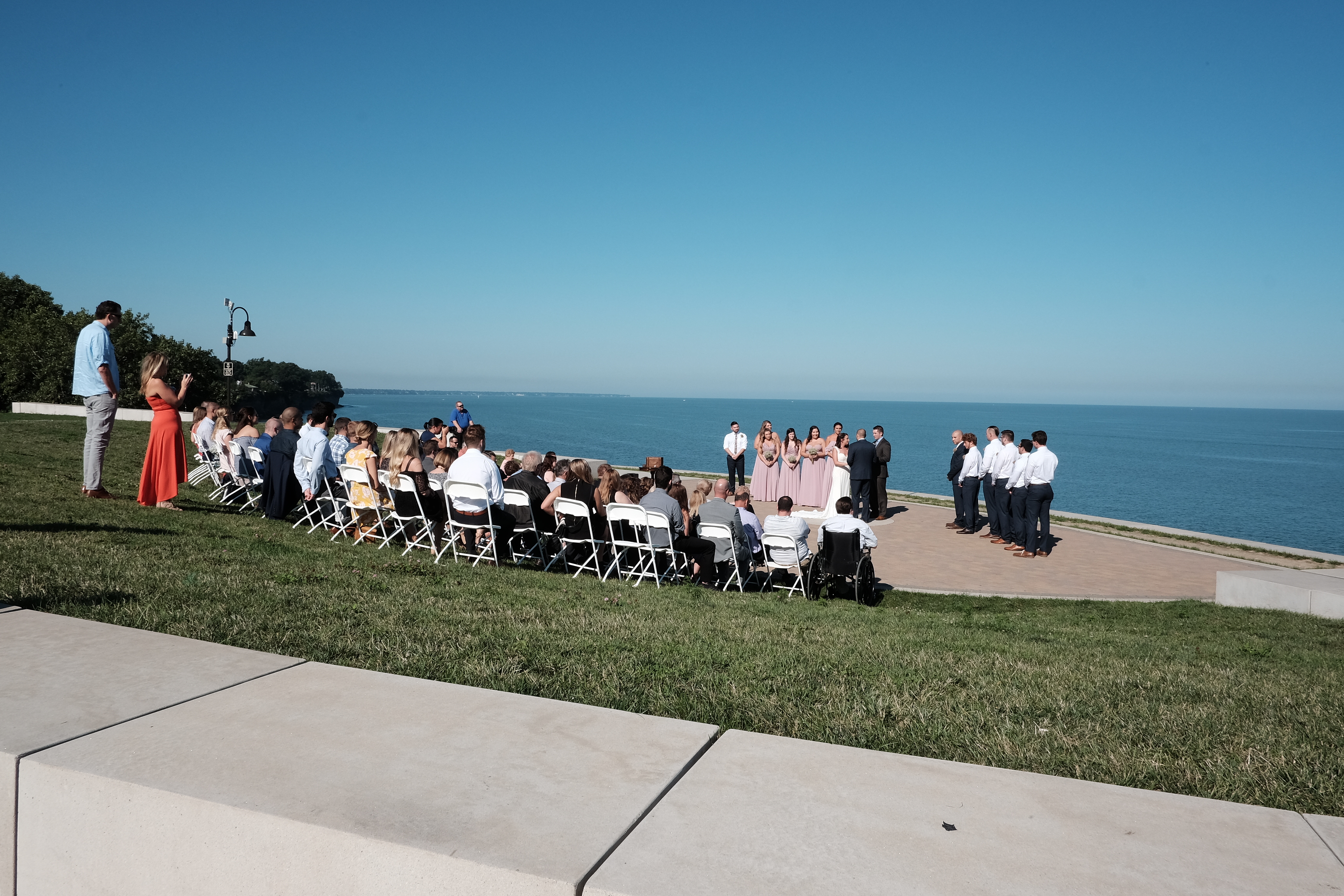
Wedding in Lakewood.
In Lakewood, OH, just west of Cleveland, a little town on Lake Erie has rows of neat bungalows, leading up to a gorgeous park on the lake where a wedding (between a man and a woman) was taking place in the sunshine overlooking a bluff. I walked around the park, full of bicyclists, walkers, joggers, tennis players and people sitting on benches socializing. Nobody was intoxicated, high, homeless, destructive, or neglectful. And if someone were, I have no doubt they would be arrested.
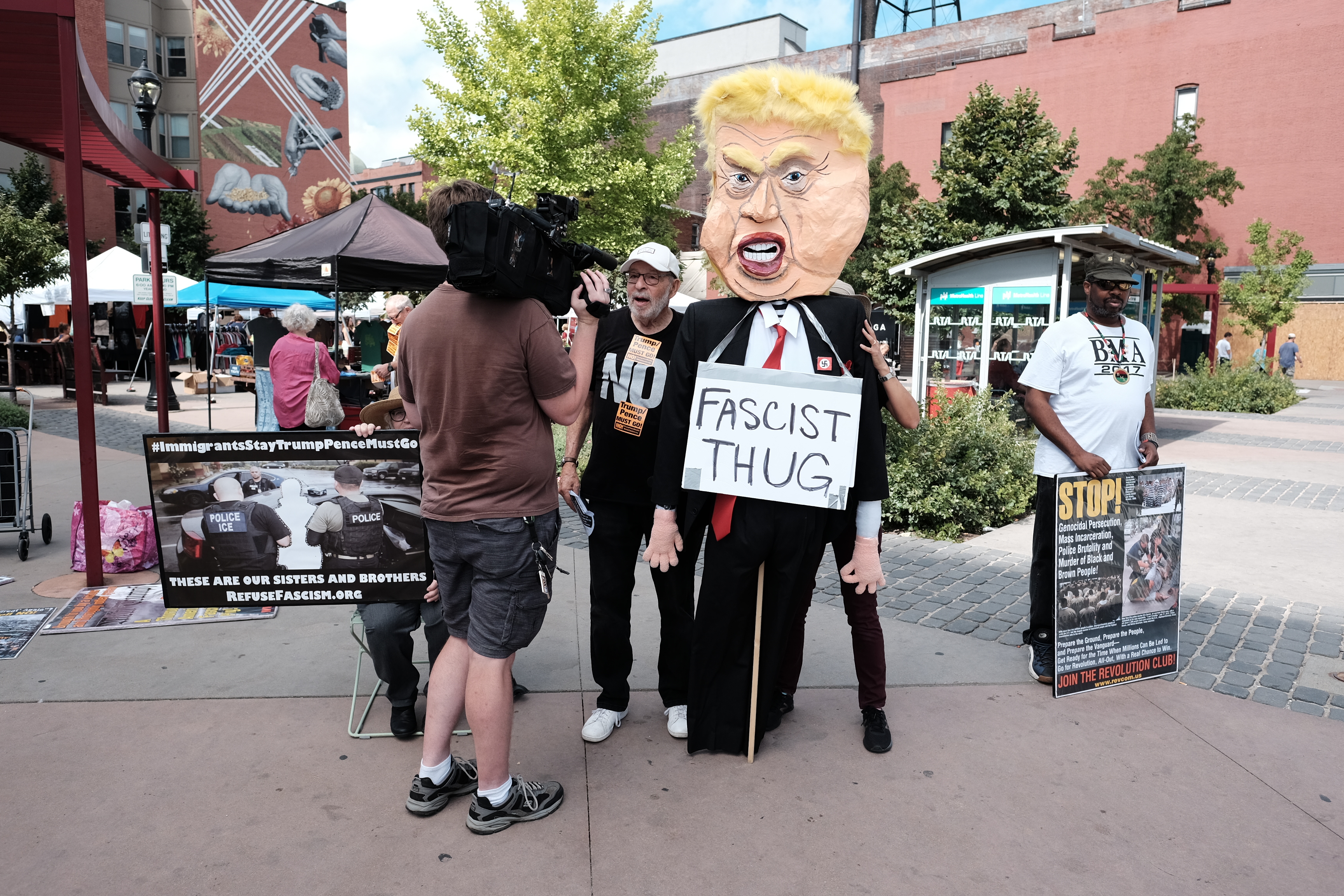
Lakewood is also “gay friendly” with rainbow flags, anti-Trump posters, tolerance banners, welcoming immigrant signs. I saw liberalism all over Cleveland, but it did not need to co-exist with uncared for mentally ill camping out on bus benches, mountains of debris, urinating and defecating and injecting.
You can hate Trump and still have a clean park system.
Anti-Trump demonstration in Market Square, Cleveland, OH.
Tremont section of Cleveland.
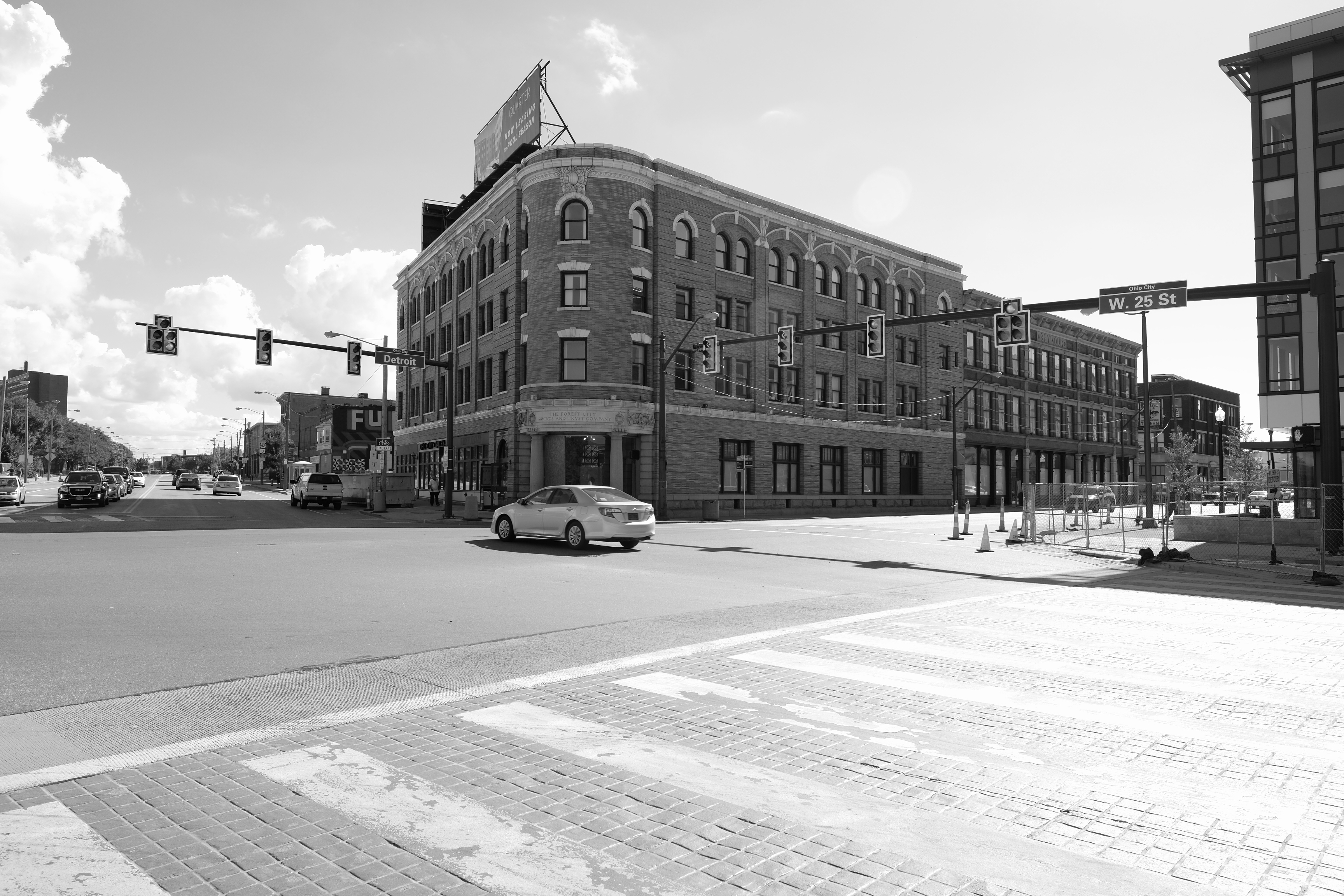
Ohio City, Cleveland, OH.
Ohio City, Cleveland, OH.
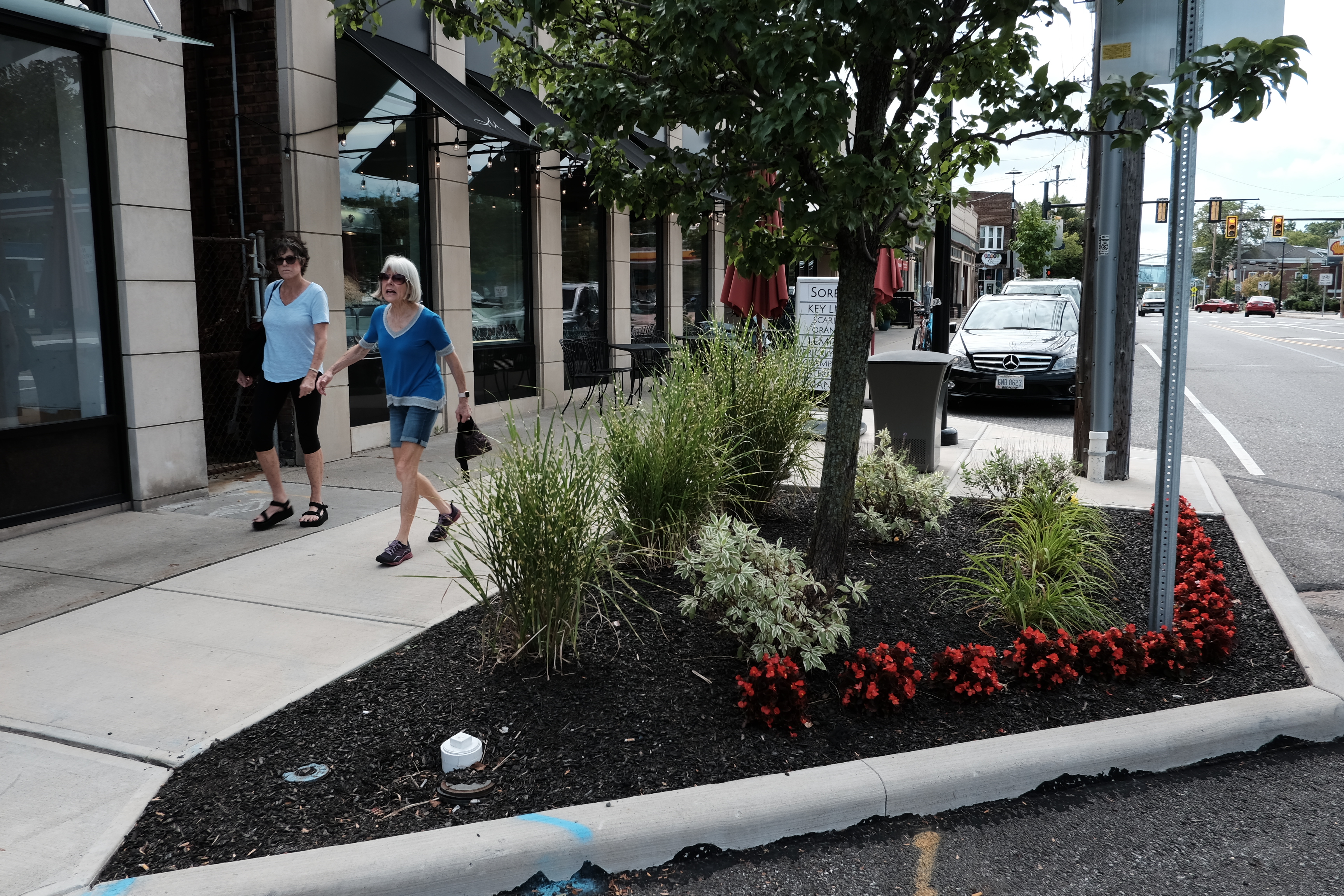
You can champion diversity and still enjoy people who say hello to you on the street and sweep their sidewalks every single morning.
In Cleveland, they still prohibit using the sidewalks and parks to sell old underwear and moldy shoes and sweat stained t-shirts and rancid socks on blankets. Nobody calls it discrimination to adhere to a standard of sanitation and order completely absent in cities such as Calcutta and the MacArthur Park district of Los Angeles.
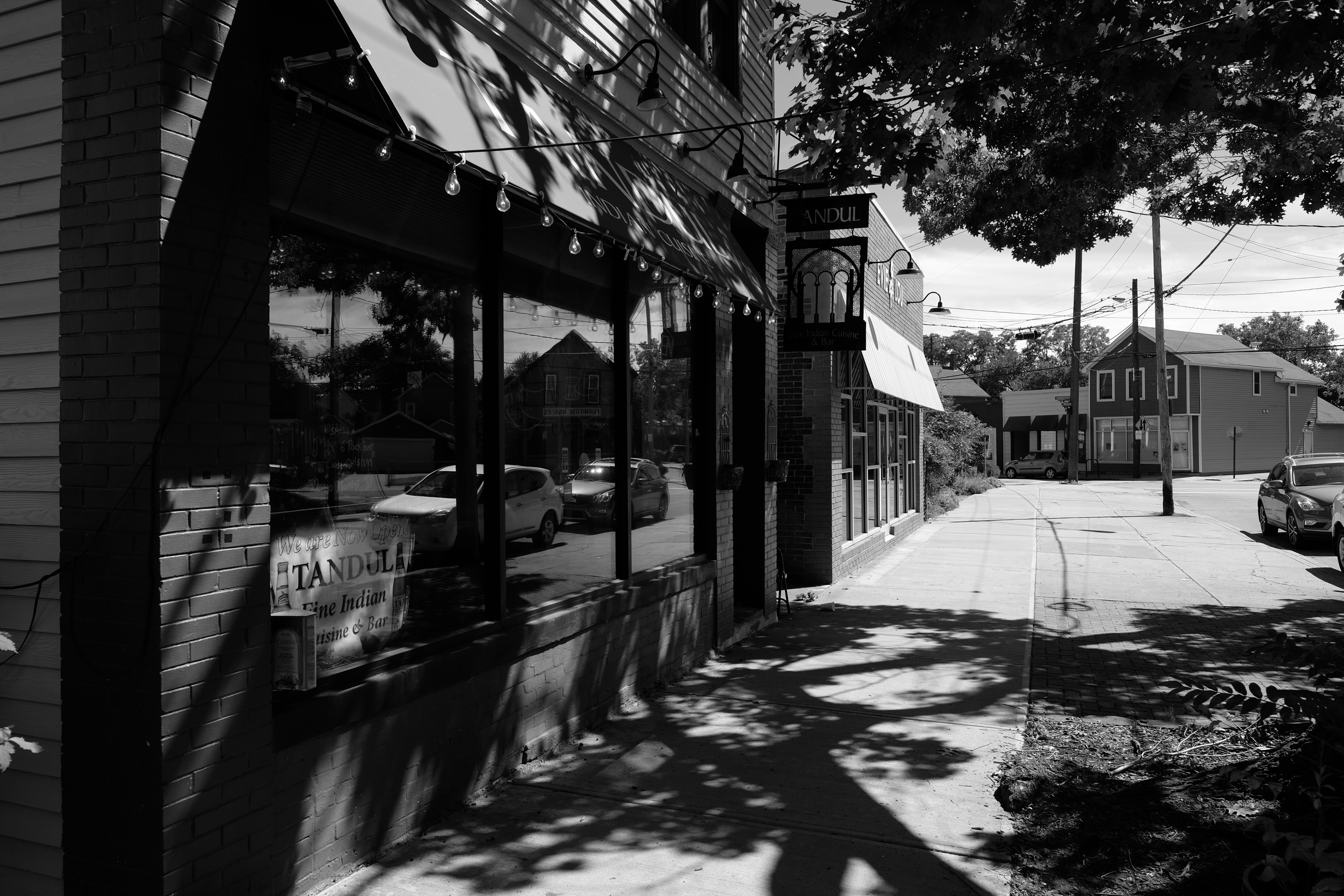
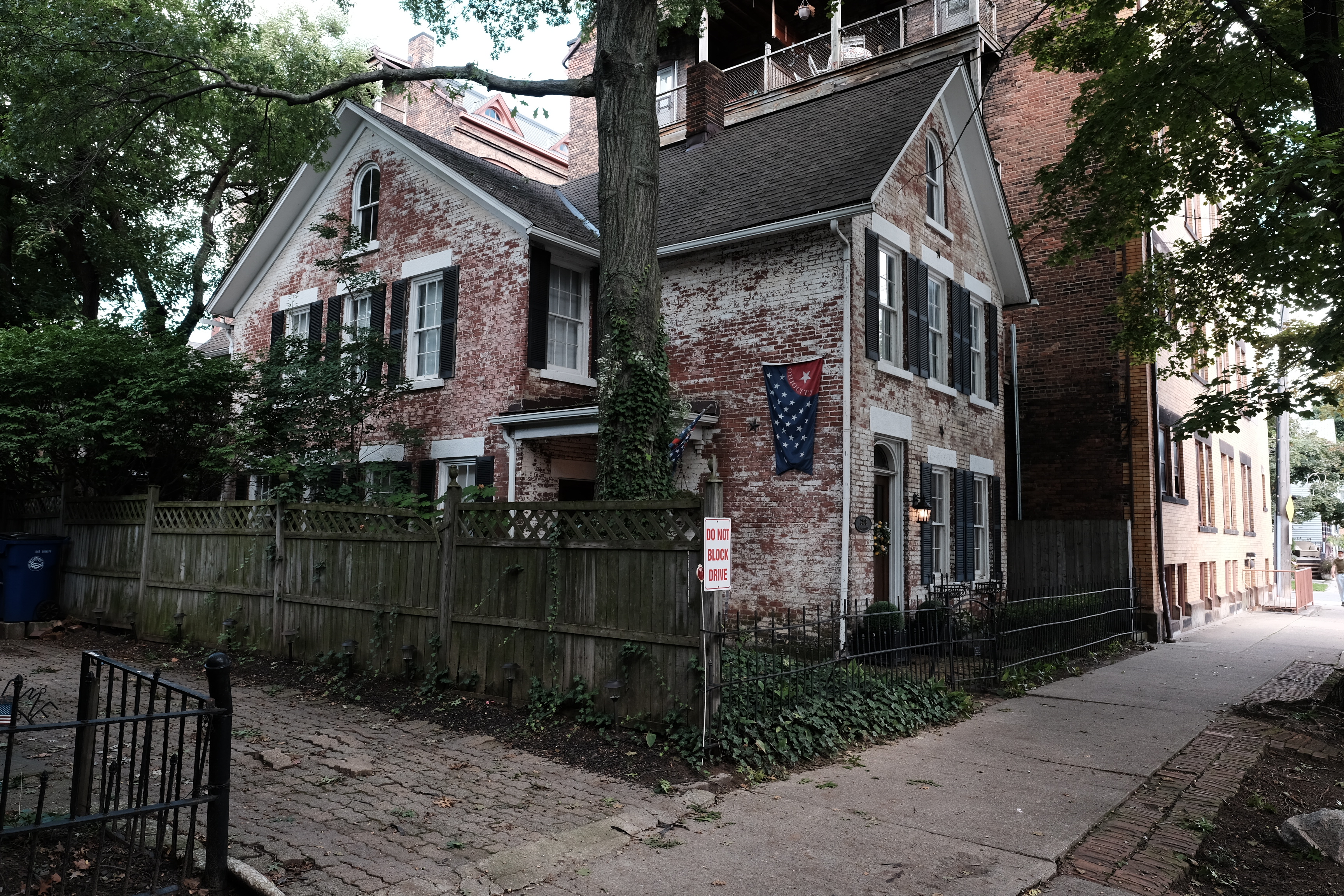
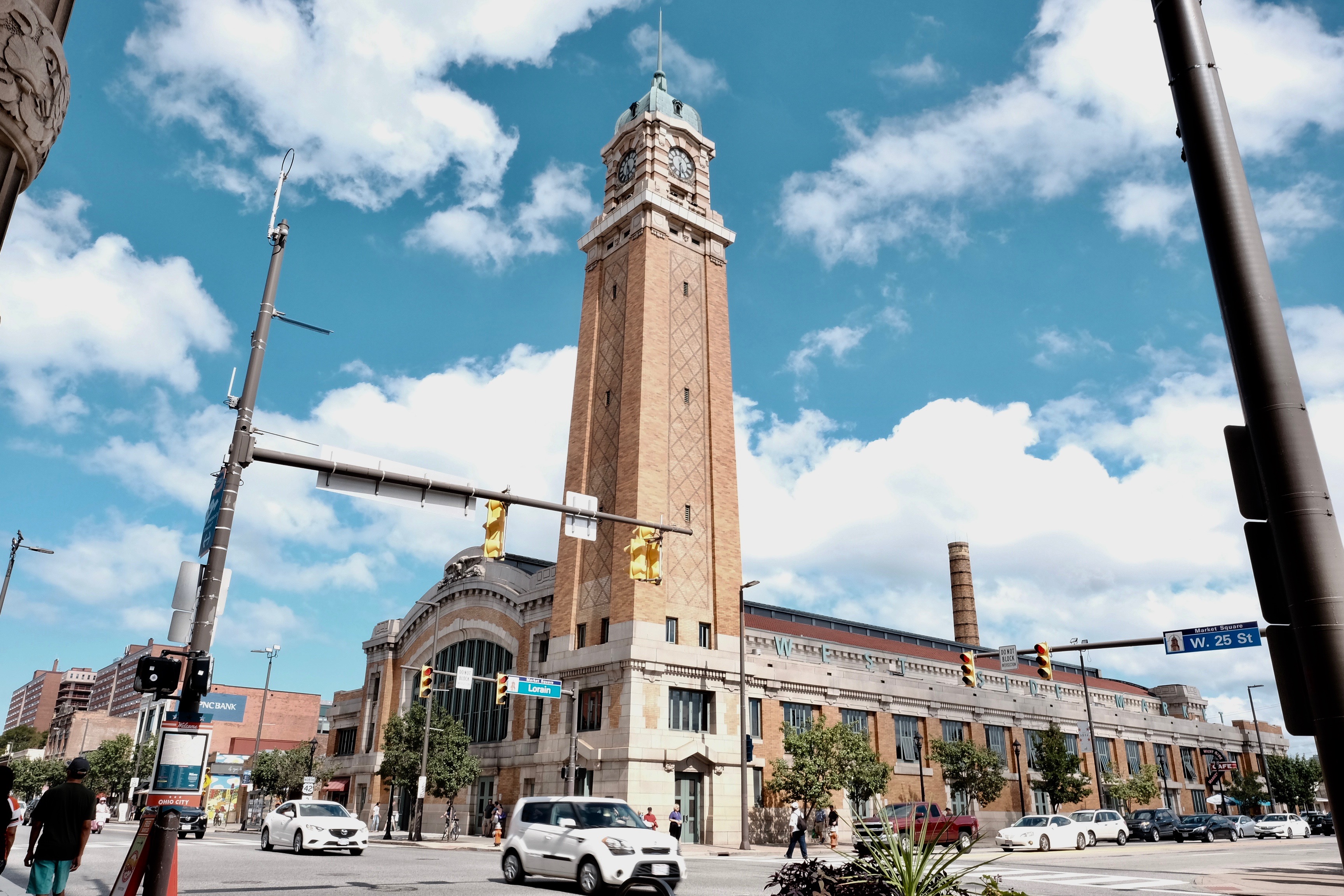
I went to the Rock and Roll Hall of Fame. I ate cannoli in Little Italy. I visited the historic West Side Market with its food sellers and ethnic hawker stands. I went to Ohio City, a restored section of Cleveland with brick houses, and Victorian mansions, loft buildings and yoga studios.
I didn’t step over feces, walk down alleys that smelled like toilets, stare at intoxicated men on the ground. And nobody asked me for money.
How cruel to enjoy such freedoms away from the rot of Mayor Garbageciti’s Los Angeles.
West Side Market, Cleveland, OH.
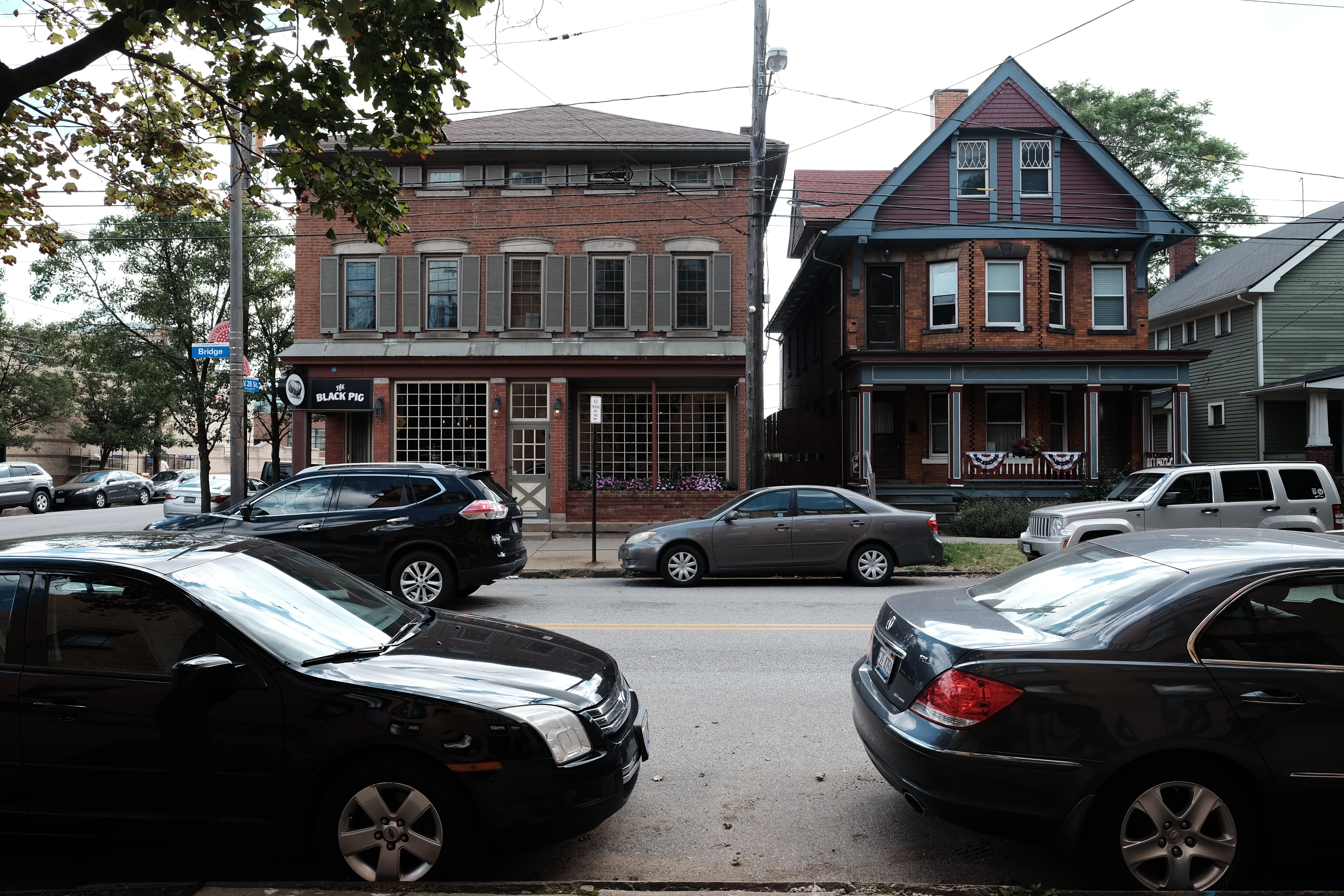
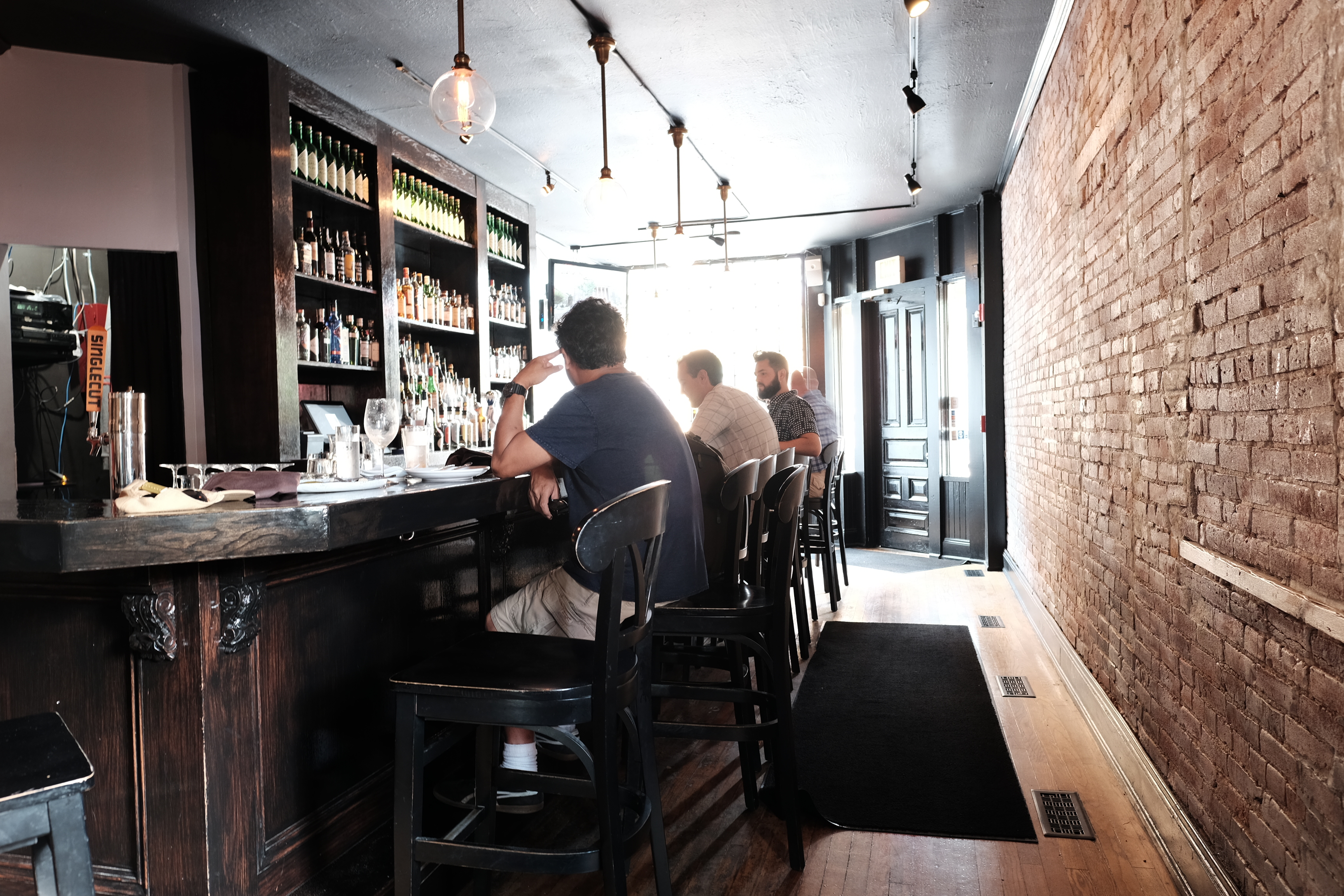
“The Black Pig” pub and restaurant in Ohio City.
Ohio City, Cleveland, OH.
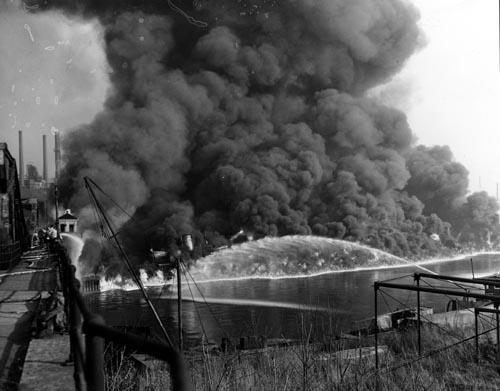
6/22/69- Fire on the Cuyahoga River.
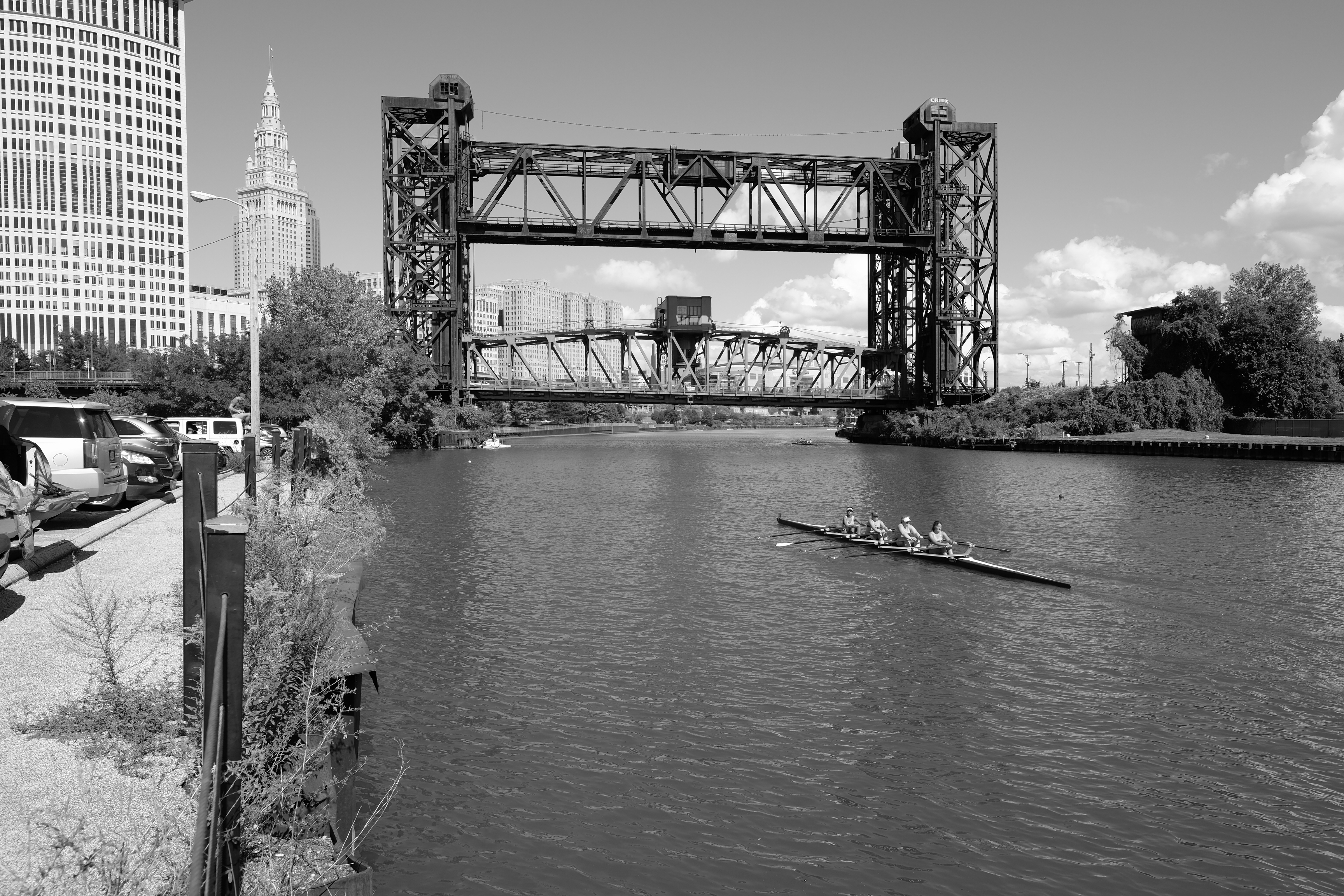
Cuyahoga River
Ohio City.
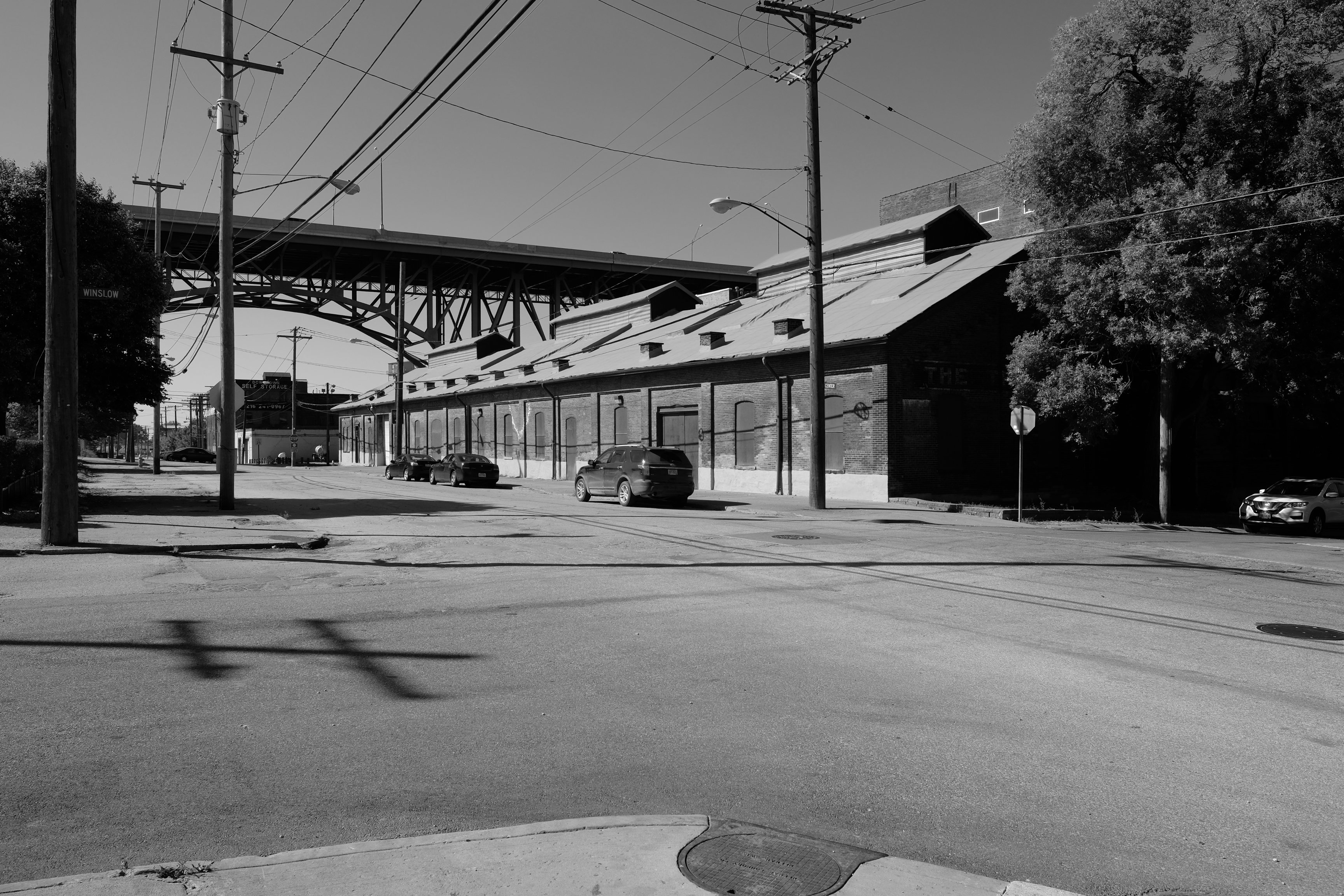
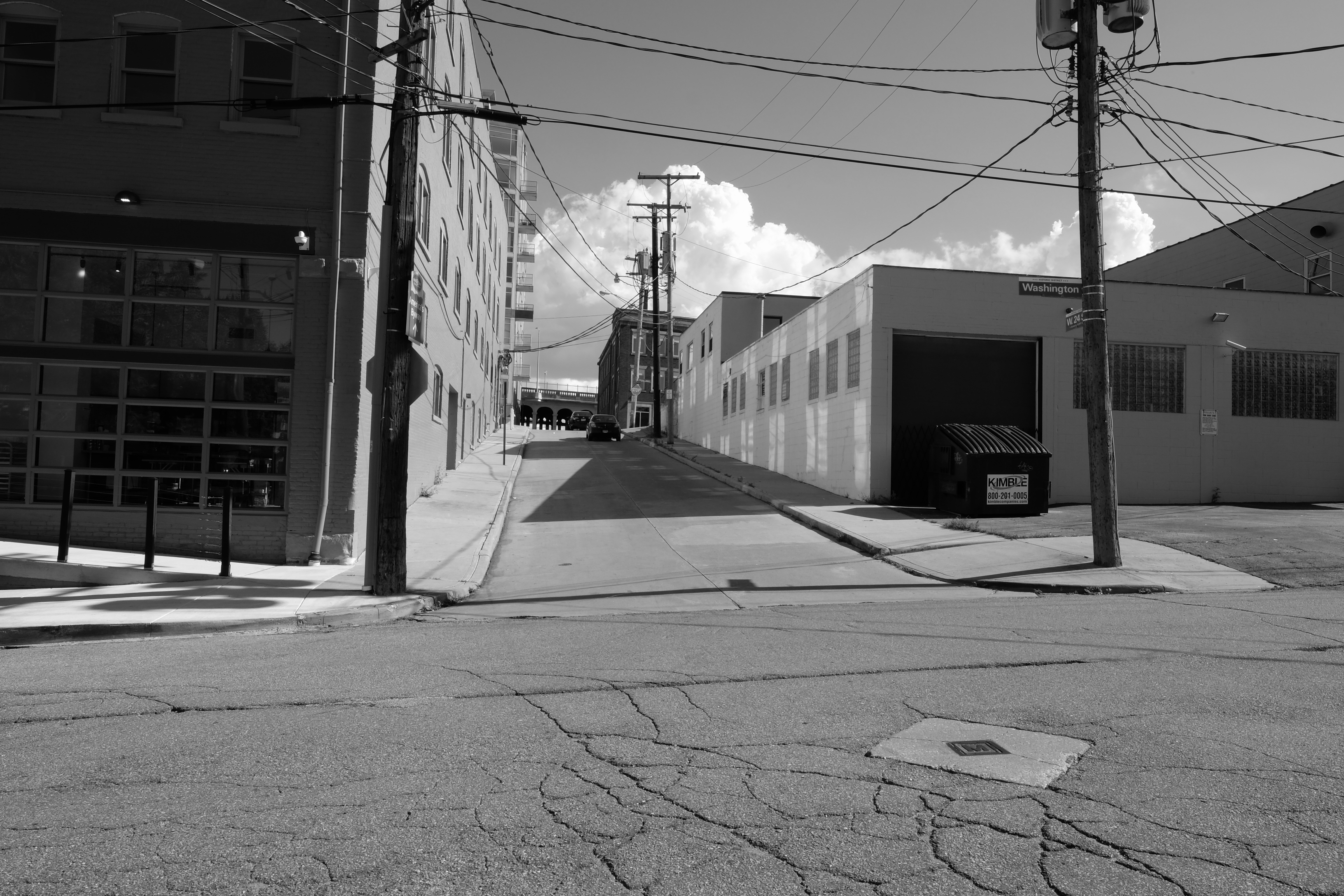
Spotless streets in Ohio City, Cleveland, OH.
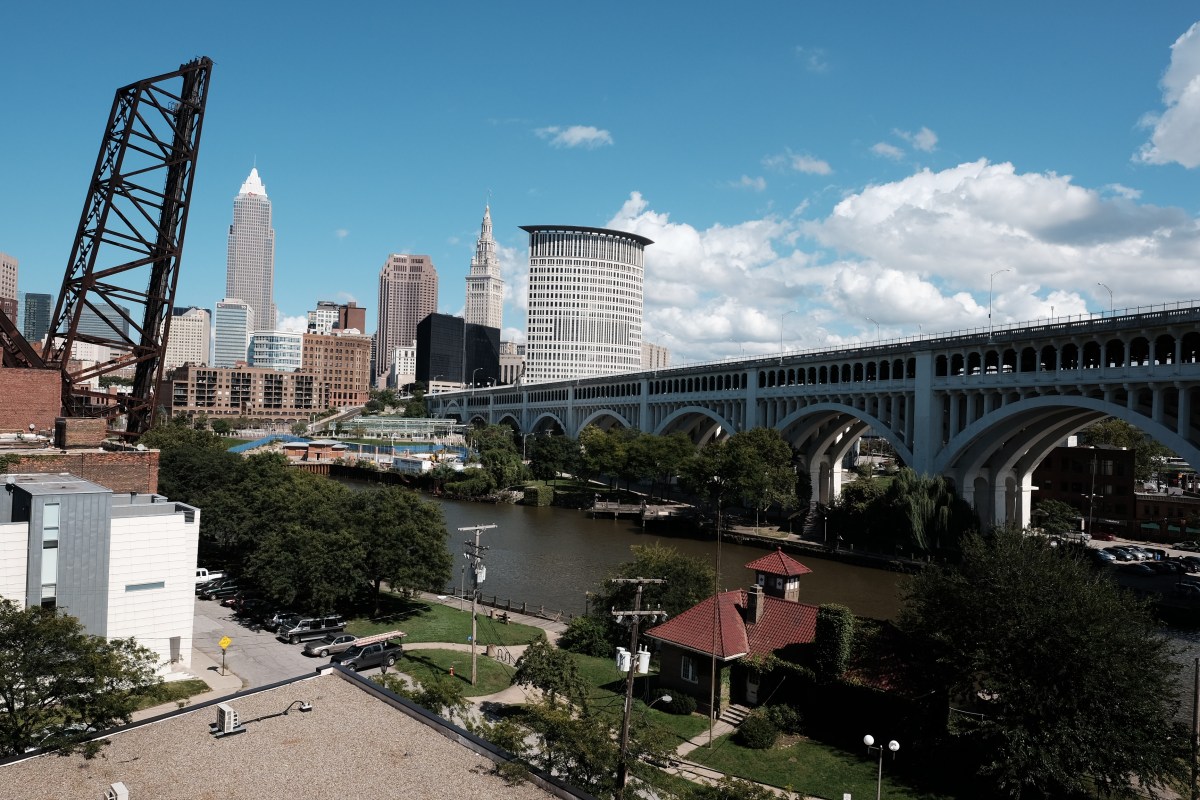
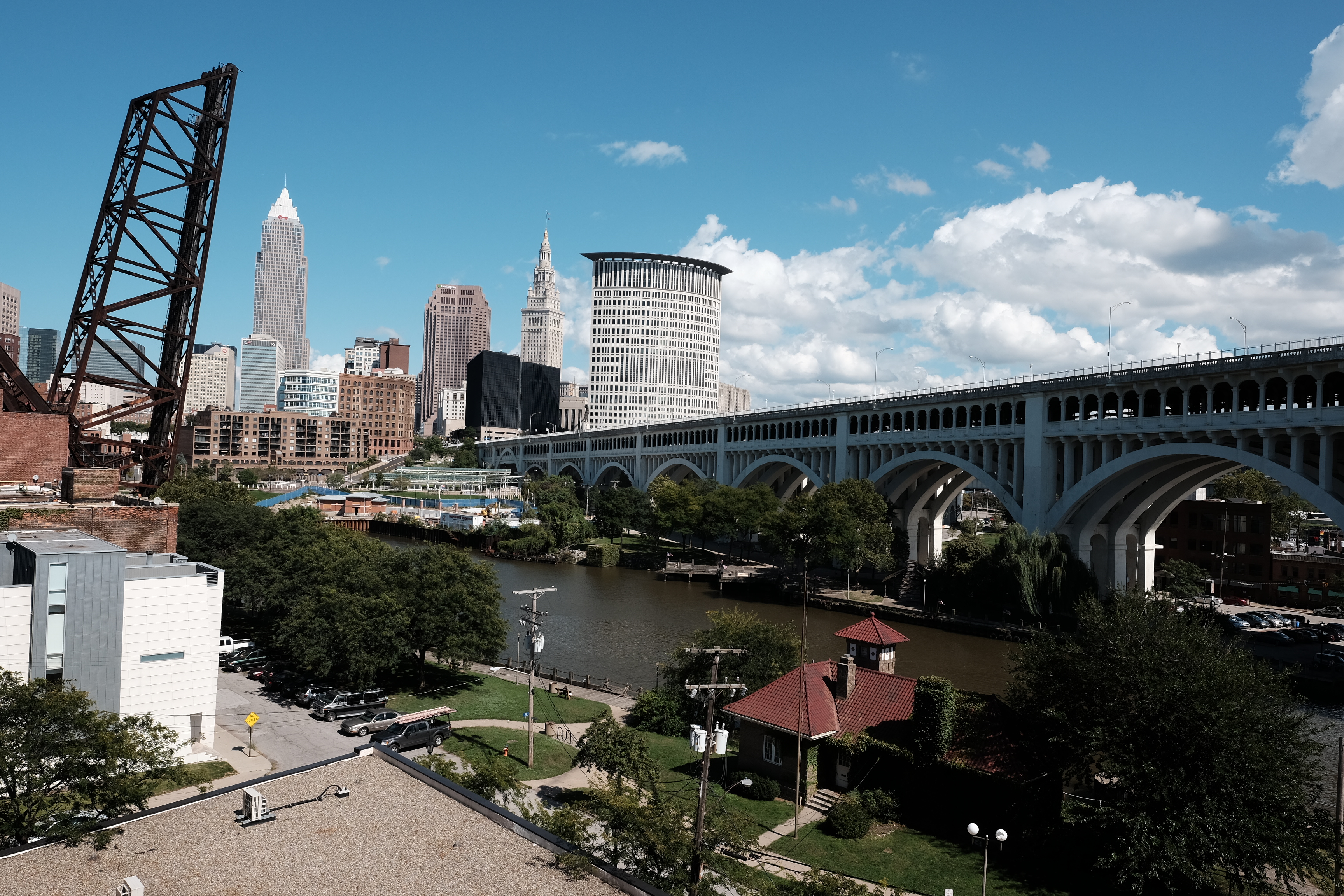
Bridges and Parks and Skyline: Cleveland, OH.
I walked down to the Cuyahoga River, a body of water that infamously caught fire on June 22, 1969, spurring a cleanup.
In September 2018, I watched a race of college rowers in the now sparkling waters.
Crossing the river are many bridges, a spectacular symphony of rail and road, steel and concrete, which once provided Cleveland with efficient delivery systems of raw materials and finished goods.
Today the industries are gone. One might expect decay, litter, neglect, and illegal dumping to move in.
Yet the parks were pristine. They were clean. There were no visible homeless. There were no mattresses, sofas, or piles of garbage as one sees in every single neighborhood of Los Angeles. I did not see tent cities of despondency in Cleveland.
I was impressed with the civic pride of the city. I was taken with the normalcy of expecting that parks, streets and neighborhoods would be well kept and looked after.
Last night we went down to Koreatown and found a cheap, excellent sidewalk café serving fresh dumplings at the corner of 6thand Catalina. Golden Pouch has tables and benches along the sidewalk. You walk up and pay at an Ipad and you sit down and wait for your name to be called. Within 20-25 minutes you are eating delicious, steamed, pork, shrimp, vegetable, chicken or spicy taco dumplings.
And as you sit and wait, or sit and eat, you are accosted by a revolving cast of homeless men who come up to your table, some incoherently, and ask for money, or sit beside you and talk about a conspiracy involving mind control, and you try and shoo them away, but they might stay or they might go and you have no control over your private conversation and your evening out. Some lose their temper, they scream, and you have to endure it.
It was a night when Koreatown was bustling, as usual. You could walk from places serving rolled ice cream, fried chicken, yakatori, oysters, cold noodle soup, a cornucopia of Korean, Japanese; bars, coffee restaurants and cafes.
There was a large amount of younger men and women with middle-aged adults, I assume parents, taking their kids out for an evening, possibly kids newly arrived at college, going to USC or UCLA and persuading their parents to go down to Koreatown, a normal experience for any Angeleno, and probably a treat for mom and dad from suburban Columbus, OH.
Yet, all over, sleeping in tents, along sidewalks, in shopping carts full of belongings, are homeless.
Imagine the impression Los Angeles gives to visitors who see this.
This is just Koreatown. Go downtown and you enter a Twilight Zone of lost people in the thousands sleeping on boxes, untreated, uncared for, defecating and urinating and creating mountains of garbage along streets, under bridges, along the river, everywhere.
Mayor Garbageciti is more popularly called Mayor Garcetti but he is truly the mayor who has made this city the American capital of garbage. Under his leadership, parks are garbage dumps, prosperous business districts are garbage dumps, everywhere from Woodley Park in Lake Balboa to Pershing Square are garbage dumps.
He is the Mayor who thinks we should increase the incentive to allow street vending too. Decriminalize it.So sidewalks near Westlake are now full of anybody and everybody selling unlicensed anything on the sidewalk. Every alley near the sellers is full of shopping baskets piled high with garbage.
A champion of public transportation, he allows homeless to set up homes on bus benches, causing paying riders inconvenience and discomfort and discouraging and diminishing ridership.
On these days of summer, when the heat is at record setting temperatures and the new humid reality of warmer Pacific Ocean moisture drifts over the city, we must breathe a combination of smog, vomit, dog and human shit, and traipse over streets where the lawful act of walking is less important than unlawful, open air, Calcutta markets.
Nobody is patrolling the streets. Nobody is enforcing the laws. If they are, showing me where it’s working.
Mayor Garbageciti.
There are rumors he is thinking of running for President of the United States.
He can’t do anything about the gross and filthy condition of the city he alleges to represent. Imagine him in office, a cipher hologram of a human, a smiling projection on the wall of an official office, pretending to do progressive things.
Clean up the garbage and the madness in Los Angeles and then you can offer up your national celebrity candidacy.



 Here in Van Nuys
You must be logged in to post a comment.