Navigating Public Space in Marina Del Rey.


In the 1960s, the swamps of south Venice became a multi-million dollar building project that culminated in what we now call Marina Del Rey.

Pleasure boats, yacht clubs, nautical facilities, circular high rises with balconies overlooking the harbor, landscaped roadways with palm trees, office buildings, pharmacies, tennis courts, a hospital, a fire station, a library; and many restaurants overlooking the yachts, sailboats and motor boats.

A district devoted to tanning, drinking, carousing, love making, and living the good life amongst airline pilots, stewardesses, restaurant workers, aspiring actors, and retirees. The 1960s dream of accessible pleasure for anyone white with a convertible.

They even built the 90 Freeway to get people in fast, before the boat left the dock. Imagine the high quality of life 60 years ago, when a new freeway was affordable and considered the highest and best use of land.

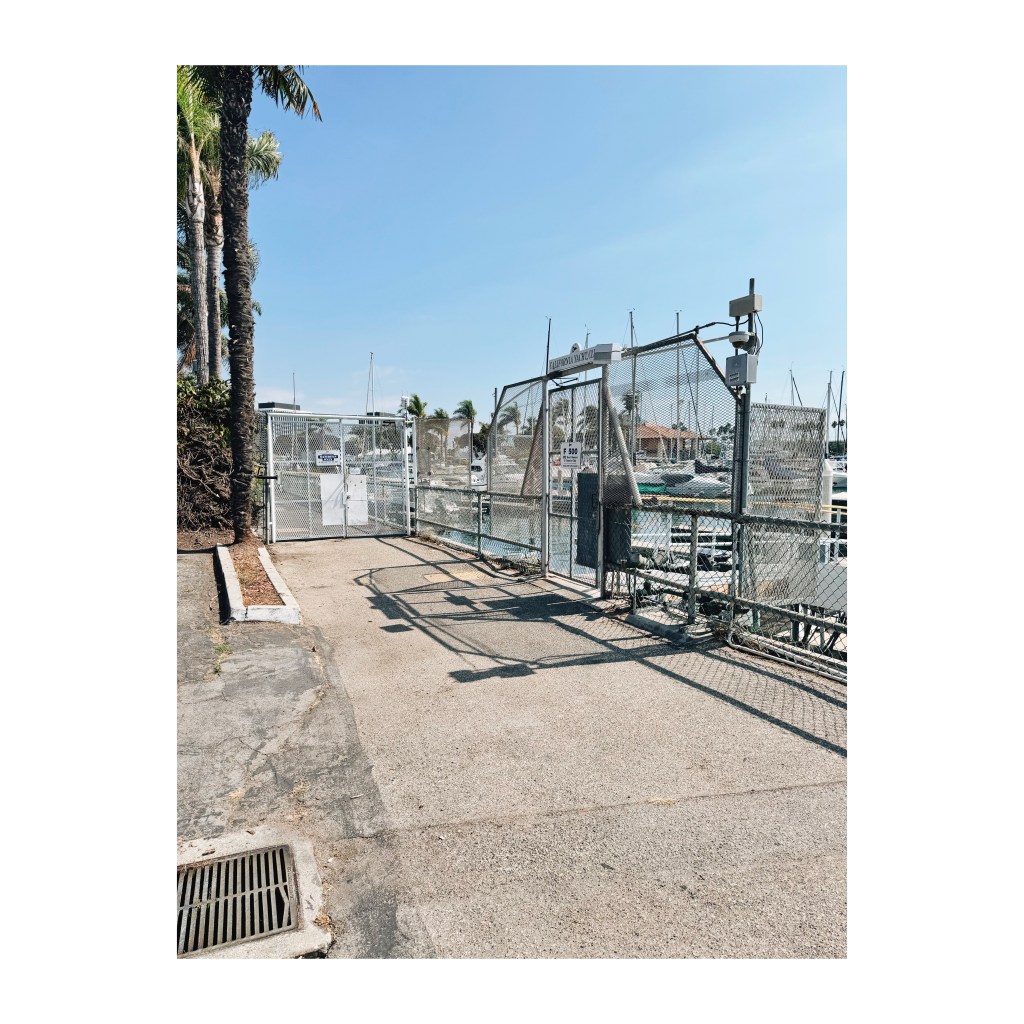
From its inception, Marina Del Rey feigned a public purpose while raking in the dollars fencing off the best parts for private use of yacht clubs and apartment dwellers. Docks are locked up and there are many barriers to prevent the use of the harbor for the general public unless you are there to purchase a dinner and drinks on a boat, bar or restaurant.

Over the years, there have been community projects to create usable public space, such as Yvonne B. Burke Park on the north side of Admiralty Way which has athletic equipment, bike roads and jogging paths. That park too has recently been incarcerated when Bay View Management built a cinder block wall that closed a public access point behind a Ralph’s store on Lincoln Boulevard. 

God forbid a pedestrian in a park might access a supermarket on foot.

Other luxury apartments, understandably fearful of crime, vagrancy and violence, have illegally built obstructions along their land to prevent the park from becoming a way to enter their properties.

Every few hundred feet, the green parks become parking lots. An athlete running, riding a bike or rolling skating will eventually stop at a busy road where vehicles speed by at 60 miles an hour. And other cars and trucks will be entering the parking lots or exiting, creating additional hazards for the non-driver.

The big, popular restaurants, anchored in seas of asphalt, offering seafood, steak, alcohol, valet parking, and private parties to corporate diners and red nosed, melanomatous men in Tommy Bahama, have all gone out of business. Café Del Rey and Tony Ps with their crumbling, dated, Brady Bunch style restaurants are empty. The cigarettes, cigars, Aramis and lounge singers gone with the wind.

The great pandemic meltdown which has stolen our lives, taken our movie theaters, pillaged our department stores, and defecated upon our civic dignity, has now obliterated the big dining establishments of Marina Del Rey.

These popular places, that seemed immune to time, forever serving enormous plates of grilled lobster, prime rib, baked potatoes, cheesecake, ice cream sundaes and voluminous cocktails are now dead. Silent as Hiroshima after the bomb, these outposts of high on the hog, intoxicated living were ailing, out of fashion, and are now exiled from our spartan, self-consciously healthy era.


For a pedestrian who is trying to stroll one mile of the harbor west from Bali Way to Palawan Way, with the boats in view along the south walkway, there are several private obstructions that make it impossible to complete the walk.

I speak from experience as my friend Danny and I did the walk today.

The California Yacht Club locks up the walkway with their own use of the property. 

One is forced to detour to Admiralty Way with the unused parking lots of the long-gone restaurants on one side, and the near-death experience of speeding cars on the other.

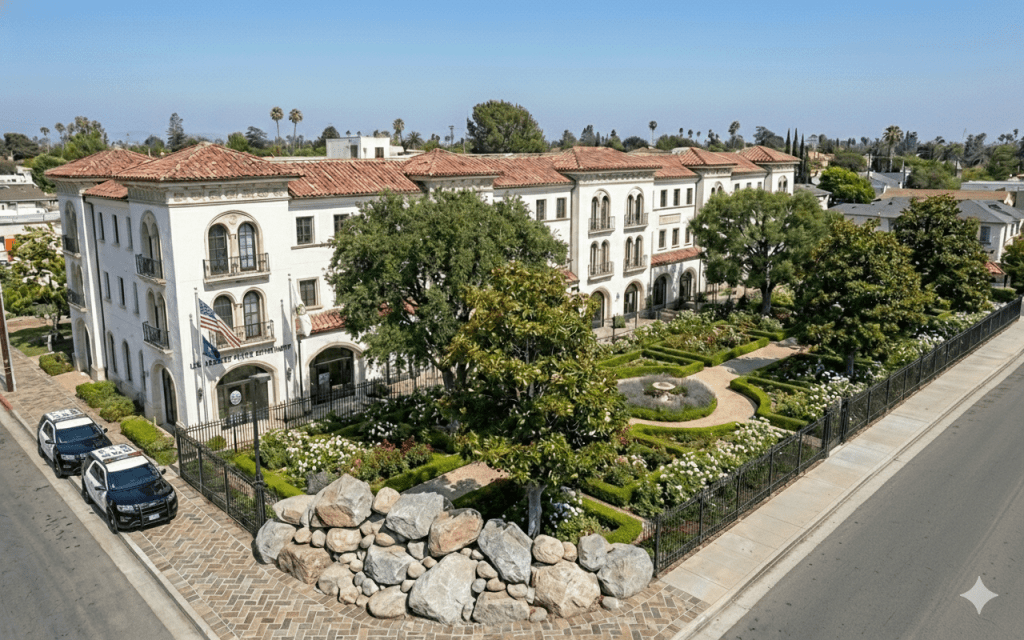
To reenter the harbor walkway, you find the Los Angeles County Fire Department Station #110 (4433 Admiralty Way) and walk behind the building to rejoin the path along the water to once again enjoy the public recreational qualities that are supposedly there for everyone to enjoy, not just yacht members.

The Marina City Club encompasses three early 1970s high rises which are entered securely by several guarded driveways on Admiralty Way. This complex has swimming pools, tennis courts, a convenience store, but is threatened by similar structural defects that brought down the Surfside, Florida condominium in 2021, killing 98 persons.

For now, residents who own property there pay high HOA fees, and even those who bought in cheaply face repairs that will surely cost collectively in the hundreds of millions of dollars to make these three, 55-year-old buildings safer in a location where tsunamis and earthquakes are always visiting unexpectedly.  

Concluding the walk today, we went north along a dirt path on the west side of the Oxford Basin “Wildlife Refuge” which connected to Washington Boulevard.

As we passed a vagrant man sprawled on wall, shopping cart and garbage nearby, my friend Danny shouted, “Get going, walk faster.”

Danny had spotted a handgun in the vagrant’s hand.  

Just another reminder, if any is needed, that nobody should assume that this is a safe area, regardless of how much homes sell for. The demoralizing and unsanitary aspects of Los Angeles are all around, because we live in perhaps the dirtiest metropolis in the United States, one that believes public trash camping is a civil right and mental illness is only a danger after it kills.

How this city will present during the 2028 Olympics is something Orwell would have pondered.

A Clean, Well-Cared For City.


Bridges and Parks and Skyline: Cleveland, OH.

I recently spent a few days in Cleveland, OH on an exploratory trip, visiting a city I’ve never been to before to see how I liked it.

Cleveland has had a long, slow, drain of population, and it is now about 270,000. Less than the size of Glendale (200,000) and Pasadena (142,000) put together.

I stayed in Cleveland Heights, outside of the city, in an AIRBNB run by two guys who bought a half acre estate for $146,000 four years ago, and make some extra income hospitably renting out rooms in their home.

For me, I relished the time away from Los Angeles in an environment of lush greenery, green lawns, deer, and clean streets.

Overlook Rd. Cleveland Heights, OH.

$599,000 asking price for home in Cleveland Heights, OH.

Lee Rd. Cleveland Heights, OH.

Sign in window on Lee Rd. Cleveland Heights, OH.

Homes in the Mayfield Heights section of Cleveland Heights.

Mayfield Heights section of Cleveland Heights.

Cleveland Heights is also a historic city, full of blocks of homes from the 1880s to the 1940s, a rich, well-maintained, lovingly cared for collection of architecture, punctuated by churches, parkways, and museums. Case Western University and Cleveland Clinic are just outside its borders, to the south is Shaker Heights, an elegant town developed in the 1920s, laid out with nature preserves, winding streets, gracious mansions and a languid Midwestern grace.

There are many homes for sale in Cleveland Heights and you can buy one for as little as $79,000 with most in the $140,000-$250,000 range. If you are starved for a Hancock Park type mansion there is one I liked for $599,000.

Many miles of interior Cleveland are empty. They were abandoned, bulldozed and cleared away. And what’s left are vast green spaces where the grasses and woods are reclaiming the land.

Even in the poorest neighborhoods, I did not see garbage dumps, shopping carts full of trash, littered streets, graffiti, or dumped furniture.

Lakewood Park, Lakewood, OH.

Lakewood, OH.

Wedding in Lakewood.

In Lakewood, OH, just west of Cleveland, a little town on Lake Erie has rows of neat bungalows, leading up to a gorgeous park on the lake where a wedding (between a man and a woman) was taking place in the sunshine overlooking a bluff. I walked around the park, full of bicyclists, walkers, joggers, tennis players and people sitting on benches socializing. Nobody was intoxicated, high, homeless, destructive, or neglectful. And if someone were, I have no doubt they would be arrested.

Lakewood is also “gay friendly” with rainbow flags, anti-Trump posters, tolerance banners, welcoming immigrant signs. I saw liberalism all over Cleveland, but it did not need to co-exist with uncared for mentally ill camping out on bus benches, mountains of debris, urinating and defecating and injecting.

You can hate Trump and still have a clean park system.

Anti-Trump demonstration in Market Square, Cleveland, OH.

Tremont section of Cleveland.

Ohio City, Cleveland, OH.

Ohio City, Cleveland, OH.

You can champion diversity and still enjoy people who say hello to you on the street and sweep their sidewalks every single morning.

In Cleveland, they still prohibit using the sidewalks and parks to sell old underwear and moldy shoes and sweat stained t-shirts and rancid socks on blankets. Nobody calls it discrimination to adhere to a standard of sanitation and order completely absent in cities such as Calcutta and the MacArthur Park district of Los Angeles.

I went to the Rock and Roll Hall of Fame. I ate cannoli in Little Italy. I visited the historic West Side Market with its food sellers and ethnic hawker stands. I went to Ohio City, a restored section of Cleveland with brick houses, and Victorian mansions, loft buildings and yoga studios.

I didn’t step over feces, walk down alleys that smelled like toilets, stare at intoxicated men on the ground. And nobody asked me for money.

How cruel to enjoy such freedoms away from the rot of Mayor Garbageciti’s Los Angeles.

West Side Market, Cleveland, OH.

“The Black Pig” pub and restaurant in Ohio City.

Ohio City, Cleveland, OH.


6/22/69- Fire on the Cuyahoga River.

Cuyahoga River

Ohio City.

Spotless streets in Ohio City, Cleveland, OH.

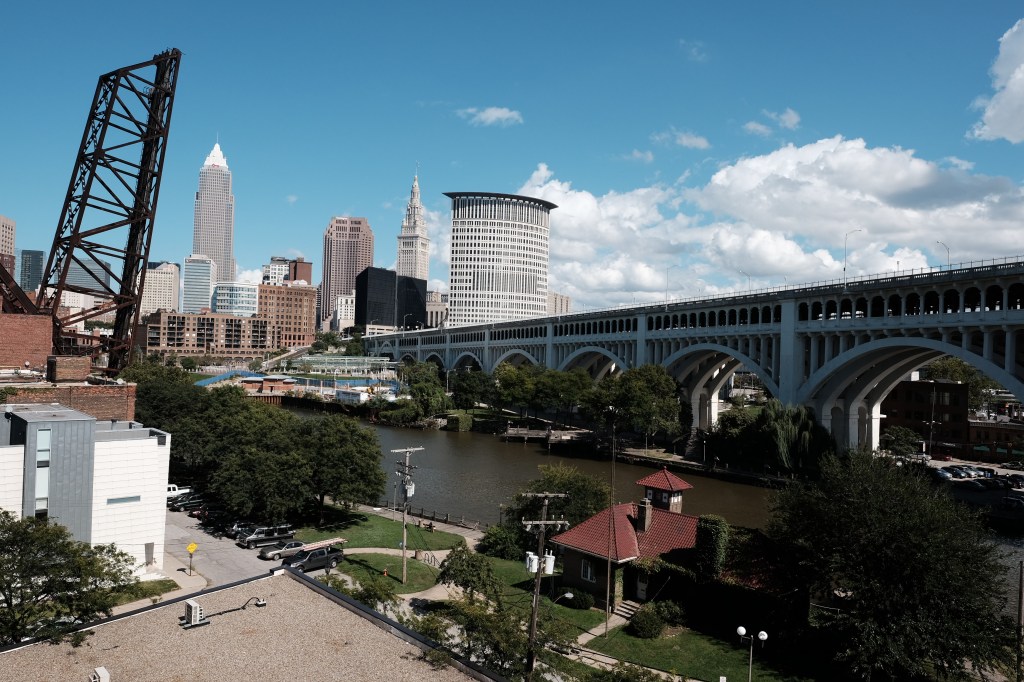
Bridges and Parks and Skyline: Cleveland, OH.

I walked down to the Cuyahoga River, a body of water that infamously caught fire on June 22, 1969, spurring a cleanup.

In September 2018, I watched a race of college rowers in the now sparkling waters.

Crossing the river are many bridges, a spectacular symphony of rail and road, steel and concrete, which once provided Cleveland with efficient delivery systems of raw materials and finished goods.

Today the industries are gone. One might expect decay, litter, neglect, and illegal dumping to move in.

Yet the parks were pristine. They were clean. There were no visible homeless. There were no mattresses, sofas, or piles of garbage as one sees in every single neighborhood of Los Angeles. I did not see tent cities of despondency in Cleveland.

I was impressed with the civic pride of the city. I was taken with the normalcy of expecting that parks, streets and neighborhoods would be well kept and looked after.

Could I live happily in Cleveland?

Cautiously, advisedly, I think so.

Little Italy, Cleveland, OH.


Ohio City, OH. Yard sale.


Future Gardens of Van Nuys?


One of the continuing themes of this blog is to look at what we are and imagine what we might be.

I think about that as I walk around Van Nuys, a misbegotten and deformed district.

But also an oddly lucky place where land is abundant and cheaper, yet frequently and usually, neglected and wasted.

DSCF0093

At 14550 Sylvan St., between Van Nuys Blvd. and Vesper, there is now an empty courtyard surrounded by buildings on three sides. They once fixed cars here. This is a street full of fine old buildings, including the former Van Nuys Library (now a law office) and the former post office. There are also small stores: a tailor, a barber, a school, and a storefront church.

This is where a garden belongs.  Buildings are small scale and human, within walking distance of every important building in downtown Van Nuys.

I took photos (with permission) from England. The  ‘London Permaculture’ Flickr page shows urban gardens transforming bleak and hostile spaces into fertile and green growing areas.

Brown brick, beer guzzling, working-class England can be drab, but these gardens are a morale booster for their users.

4875262608_37ee8bed18_o 4875232792_63e85a5525_o


DSCF0090
Sylvan near Van Nuys Bl.

Our alleys, behind Van Nuys Boulevard, can be fixed up with cafes, bars, trees, plants and lights. Eating, drinking and socializing can replace public urination, rats, tagging and trash.

DSCF0042
14526 Victory near VNB

At 14526 Victory Boulevard, the NCJW (National Council of Jewish Women) has a donation center which again, is a North facing forecourt that would also do nicely as an outdoor beer garden, pocket herb garden, etc.

4875185840_23295da3e0_o

Friar St.
Friar St.

At Friar and Van Nuys Boulevard there is a large parking lot, which is across the street from another large parking structure, in an area with too much parking. Why does Van Nuys, in this ramshackle location, with its empty storefronts and dead buildings, need 2,000 parking spaces?

There are wasted opportunities of land and development all over Van Nuys.

We live in an environment built for the lowest common denominator of mediocrity and exploitation.

DSCF0009
West of Van Nuys Blvd. near Hamlin St.

Who can marshall the resources to bring money and planning into Van Nuys?

4875151558_205265f2d0_o