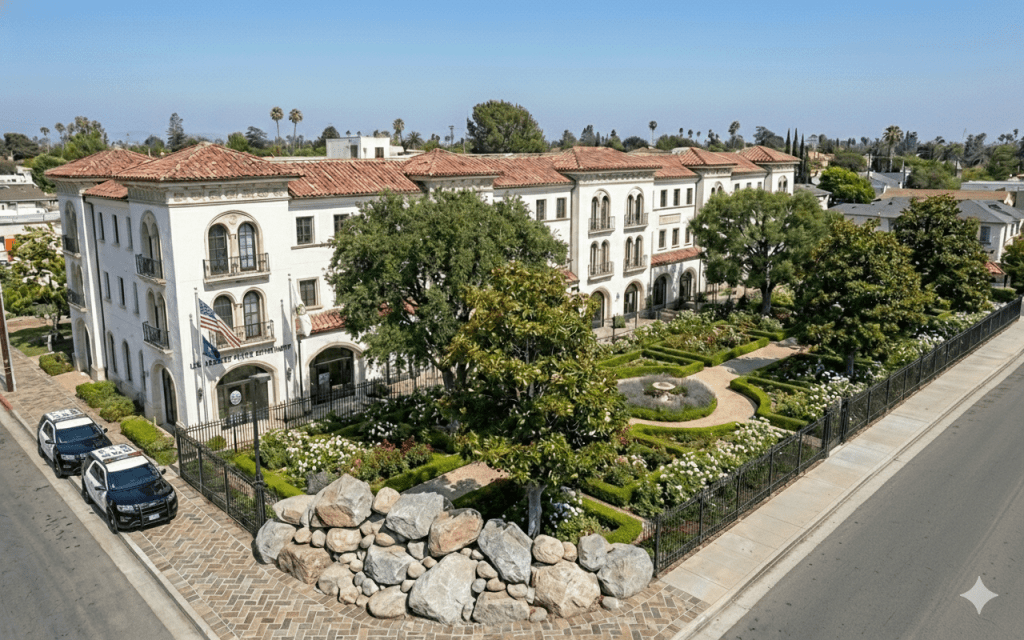
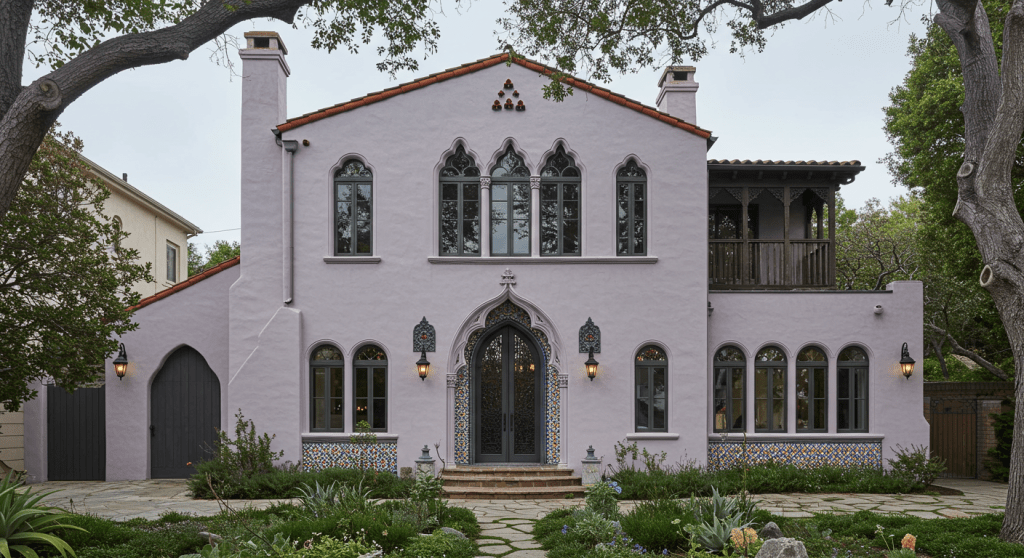
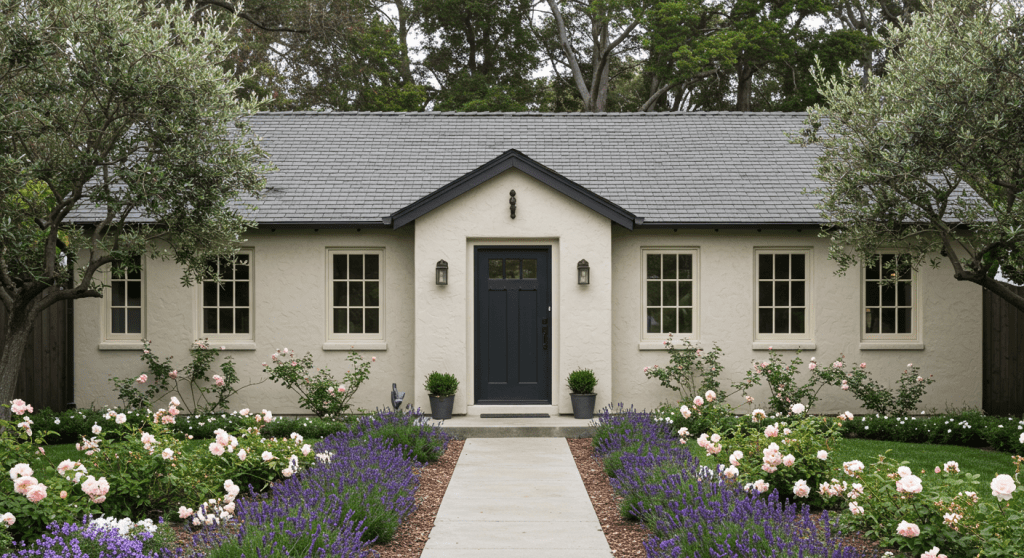
When you have a house that is classical, symmetrical, ordered; architecturally many different styles can fit inside the geometry of the facade.
Architects knew this up until the Second World War. Old neighborhoods in Pasadena, Hancock Park, and many survivors in the West Adams, Hollywood and even Beverly Hills districts carry an eclectic and imaginative grouping of ingredients: Italian, Moroccan, Spanish, French, English, etc.
The gruesome invasion of oversized boxes without any balance, proportions or beauty is an ugly fact of life in modern Los Angeles. These atrocities pop up everywhere, and whole sections of once charming Studio City are now shoulder to shoulder, oversized, white Cape Cods or oversized white coke dealer McMansions. The last type always has a flat roof for parties that never happen and enormous rooms with egregiously visible wine galleries for sober owners, multiple flat screen TVs and no books for their Ivy League educated residents.
It’s probably fantasy to imagine that wealthy people will read this blog and see the lovely houses below and decide to build in this style in Pacific Palisades.
But maybe (in the vein of wishful thinking) the ten wealthiest Angelenos can get together and fund the construction of Neo-Classical houses in Altadena. 1,000 of these would cost $100,000,000 and would also be a welcome addition for the next 100 years.
Ok guys, how about it?
Patrick Soon-Shiong ($20.4 billion), Sean Parker ($16.9 billion), David Geffen ($14.2 billion), John Tu ($11.1 billion), Edythe Broad ($9.2 billion), Edward Roski Jr. ($8.7 billion), Steven Udvar-Hazy ($6.8 billion), Bobby Murphy ($7.9 billion), Stewart Resnick ($7.2 billion), and Evan Spiegel ($6.7 billion). (source: LA Business Journal)
It’s not likely that we will live to see Pacific Palisades or Altadena constructed in a way that evokes the traditional styles that were wiped out in January’s fires.
There is first the economics of the disaster. Many people will never have enough money to rebuild their homes. Some bought them many years ago, some inherited them. They had lower property taxes whose rates are based on what the original purchase price was.
For some, it was affordable to live in a paid-off home with grandfathered low taxes, next to the Pacific. That accident of time and fortune is gone forever.
The crisis in insuring homes, the cost of materials, the fragility of the economy, the flight of good paying jobs in entertainment, all of it has added up to a disaster that will be hard to climb out of.
There is also the problem of zoning. Where multi-family houses could be built, the powerful will step in (especially in Pacific Palisades) to mandate that every home be single family. And that will invite everyone to construct the ugly, laboratory like boxes that have proliferated on small lots around Southern California in the last 15 years. White, with black windows, unused balconies for joyous parties that never transpire. And security fencing, SUVs and artificial turf.
In Altadena, the destruction is tragic for other reasons. This was a neighborhood amenable to Black residents, and a place where multi-generational households built up wealth and security which was often difficult to obtain when your parents and grandparents were restricted from owning homes in other locations.
The integration of Altadena, the artistry of the homes, the beauty of the setting in the mountains, with many trees, old gardens, and the viability of churches, schools, and craftspeople with unique creations, was stamped upon this town.
Driving yesterday afternoon in 98 degree heat, through the dusty, hot, burned out districts of Altadena, we saw the vast ruins, but also the armies of trucks and workers hauling away the debris, towing away stacks of burned up vehicles, and the neat signs from the government on newly bulldozed and graded empty lots pronouncing them “clean.”
Architecturally, what will Altadena look like in the next ten or twenty years? Will there be a plan to rebuild in a harmonious and humane way, the method that Santa Barbara used after the 1925 earthquake?
“Before the earthquake, a considerable part of the center was built in the Moorish Revival style. After the earthquake, the decision was made to rebuild it in the Spanish Colonial Revival style. This effort was undertaken by the Santa Barbara Community Arts Association, which was founded in the beginning of the 1920s and viewed the earthquake as the opportunity to rebuild the city center in the unified architectural style.”-Wikipedia
Who will protect the Black history and the Black future of Altadena, an ingredient of the larger program of reconstruction that must proceed without killing off that which made Altadena a shining exception?
I’m fairly certain that Pacific Palisades will rebuild faster than Altadena. There is always governmental assistance for the most privileged.
The atrocity of public vagrancy, however, will continue to be pervasive under the current mayoral regime. Here passivity and resignation in the midst of homelessness is considered a virtue in the progressive wing of the Democratic Party.
Mayor Karen Bass has allowed, like her predecessor, the proliferation of trash camping, and is now looking forward, obscenely, to the 2028 Olympics which will place the gruesomeness of Los Angeles in a Potemkin village face lift. She never misses a photo opportunity to speak in her melodious, soothing, sweet, dulcet tones, imploring patience, incrementalism and understanding as 1 building permit a month is approved and 5,900 are in limbo.
Mayor Bass, Billionaire Rick Caruso, Hairdresser Gavin Newsom, are all eager to showcase the vast wealth, power, glamour and celebrity of the city to aid in the reconstruction of the western district of LA. Newsom even stepped up today to actually use the law to remove the trash camps around California. After billions of dollars, the patience of the governor has worn thin, and he has decided it is not a good image for the state to host burning trash fires along the freeways.
But what will the end results of the new post-fire houses look like? Will we once again have to endure architectural experimentation in the cheap, novel, grotesque, ostentatious style that pervades every corner of the region? Will the crumpled up, aluminum foil design of Gehry be our model for the city of the future? Perhaps not, as architects are often not even present in the construction of new houses. Only the general contractor in his pickup truck with his aesthetic refinements.
Will the oppressive sterility of the white box triumph? Or can we have the kind of California dream Will Rogers built? Can we have a piece of gentleness and civilized loveliness please? Or does everything that is built have to be the choice of the sports stadiums, the shopping center developer, the studio honchos? If that is the only way forward, then California is dead; spiritually, culturally, ethically, and economically.
Will Rogers State Park, July 2024. Destroyed January 7, 2025.
Perhaps the old way of seeing, the classical way of designing, the architecture of pre-modernist California, could help heal the disfigurement of the Golden State.
Imagine if you found these types of houses in the rebuilt lots of the fire zones? Could you fall in love with California all over again?
East of the 405, south of Erwin, west of Sepulveda, north of the Orange Line are 12 acres of asphalt paved parking which was constructed in 2004 by Metro Los Angeles to accomodate a large of amount of parked cars that never arrived. These vehicles were, illogically, imagined to be driven by those bus riders who would then park their cars and take the Orange Line!
For many years, the car dealers of Van Nuys Boulevard rented the parking lots of Metro, in an obscene arrangement of prioritizing automobile storage over the needs of Angelenos who are ravenous for housing, parks and other uses of land which are not parking lots.
The auto dealers’ cars are gone. But the parking lots, weed-filled, empty, and providing nothing of aesthetic or functional use to the community, just sit and decay in the sunshine.
The environment around the parking lots is lovely to the north where the frequently filmed street of Orion Avenue presents an imaginary vision of Americana with its ye olde New England architecture, picket fences, and abundant rose bushes.
But Sepulveda is a mess. CVS (Erwin/Sepulveda) is a rundown, ugly, homeless encampment drug store, on its last legs, with empty shelves and anything on the shelves frequently swiped by shoplifters.
The 405 is the noisy, polluting, cancerous fact of life that provides deafening, daily helicopter, truck and automobile noise and air pollution to the community. It has been blocked out by sound walls to assure our waning sanity.
And to the south of the site where the empty parking lots sit, is the Orange Line Bus Route, soon to be turned into electric light rail line when a new transportation line is completed connecting Van Nuys Boulevard to Pacoima.
Everywhere there is trash, homeless, RVs, illegal dumping, tent cities, discarded fast food wrappers. The usual tale of Van Nuys and greater Los Angeles.
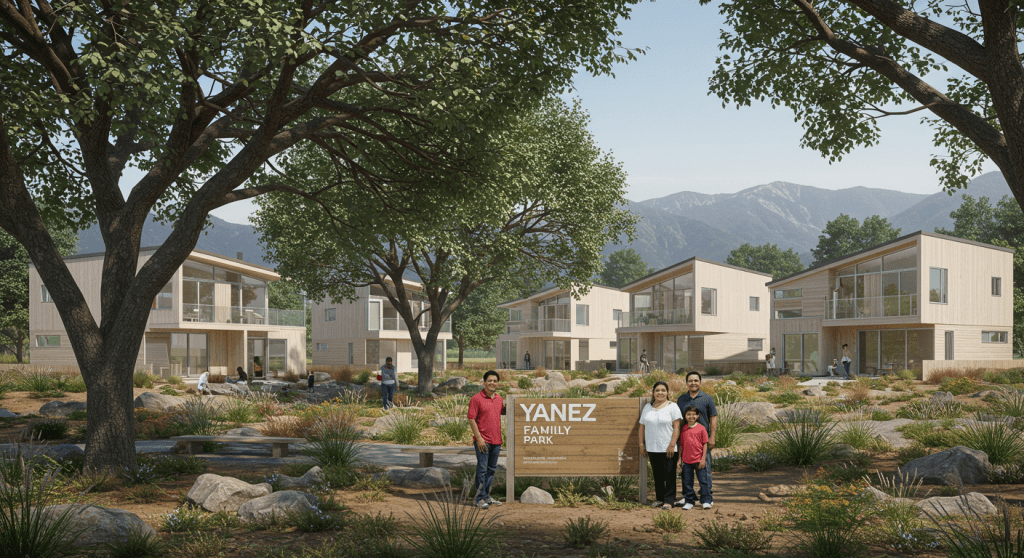
What can be done to transform 12 empty acres into something that enhances and uplifts our community instead of just using it for exploitation and degradation?
A possible answer is a residential area with parkland. These would be architecturally designed and environmentally friendly, and become an asset because their residents would assist in the care of this new neighborhood.
Family Run Parks
If the city were to devise a plan to have a family (which lived in one of the homes) run the upkeep of the park for a salary, based on a performance review, then it is more likely that the parkland would be cleaner, safer, and better maintained, unlike the sickeningly disgusting public parks that bring Los Angeles ridicule and shame like MacArthur and Westlake.
Having the people who use parks or schools clean the parks or schools they use, is something that the Japanese practice in their spotless country. It is an imported idea that could bring an upgrade to our city.
In any case, the transformation of the 12 acre parking lots should be done with sensitivity, care, and with the idea of providing recreation, housing, shade, and pleasant surroundings within a walk of public transportation.
To make these architectural renderings a reality, there will need to be rules, enforced rules, about what kinds of behavior will not be tolerated. This will perhaps be the most difficult part of the experiment, for we are far down on the road to hell in a city of red light runners, loud music, all night parties, marijuana moms, pizza boxes and McDonalds thrown along the curb, and the vagrants who ignite fires in the parks. To see discarded sofas and mattresses on the grass, or shopping carts with cans and bottles, and refrigerators on balconies will obliterate the possibilities of paradise.
It’s been perhaps 90 years since Americans built well proportioned classical houses.
These are houses where the elements are pre-ordained: the windows are aligned with each other, and are placed within the facade to achieve balance and symmetry. The doorway is defined, frequently in the center, and around it are placed ornamental designs originating in Greece and Rome.
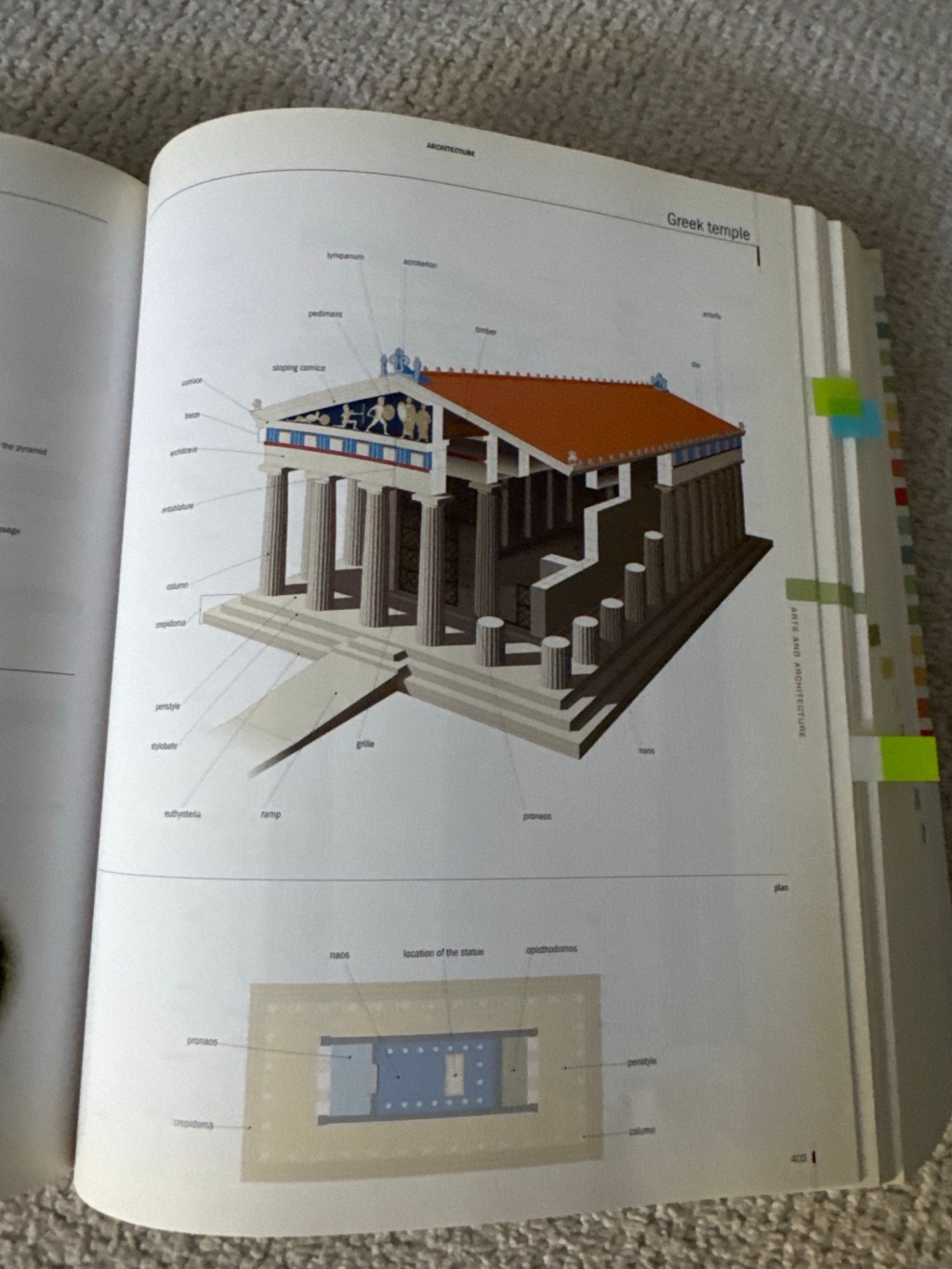
Columns in the Doric, Ionic or Corinthian orders have specific instructions as to their placement. They aren’t just slapped onto a facade as we see in modern day Encino.
In California, when builders put up spec houses they are never able to afford classic design because the intrusion of garages destroys the facades. Ironically most garages never store vehicles but are a repository for storage.
The plain white stucco house with vinyl windows is the lowest and most ubiquitous type of spec house. About a dozen of these have sprouted up in my neighborhood in the last ten years.
There is obviously no attempt in these cases to make the houses attractive in a classical sense. They are rafters and insulation and stucco made for desperate times. Nobody can really afford to build them, and nobody can afford to buy them, so we have a sad story of expensive prices for crap.
The one on top is three bedrooms with astroturf patio and rents for $7,000 a month next to a graffiti splotched alley.
The exploitation of land to build exploitative housing that hardly houses anyone is one of the ills of Los Angeles. For there are enormous plots of parking lots and open land, especially near the Orange Line, where walkable, civilized and attractive housing can be built.
After spending time in Switzerland last year, I came back thinking of how well things are built there. Not only are they solid, but the housing is meant to enhance the community. Sometimes it’s starkly modern, other times it’s traditional, but it always makes the environment better.
Bremgarten, CH.Merenschwand ZurichLucerne
Why in this city, which invented Hollywood, are the visual arts of architecture and design so lacking in public view? Why do we live amongst so much ugliness?
LA Fitness, Sepulveda Bl.
Is there perhaps something in the past we can look to as we rebuild Los Angeles for the future? Perhaps we need Elon Musk to siphon off $5 billion dollars from somewhere and employ an AI architect to make LA lovely again.
It has been some two and a half years since the pandemic began, and somehow it is sort of (not) over. In that time, since March 2020, America has been in a slow-motion meltdown, proceeding quickly, an epoch unlike any other with riots, lockdowns, and a lunatic who would not and will not accept that he is no longer President.
There was always Santa Monica for me.
Since I came here in 1994, that always cooler place near the ocean was a destination for dining, drinking, shopping, biking, and hiking. It was where you took out-of-town guests, where you went to show them, half truthfully, that LA was just as walkable, vibrant, urbane and enjoyable as New York.
I went down there yesterday to cool off and what remains on Third Street is deserted. Gone are the crowds, and gone are the stores: J Crew, Banana Republic, Bloomingdales, Barneys, Barnes and Noble, Old Navy, and Levi’s.
The sun still shines brilliantly. The buildings, for the most part, are well-kept. But the life and the crowds are absent. Benches, outdoor dining, storefronts, are lifeless. There are “for lease” signs everywhere.
In some ways it feels as if the clock has spun backwards before gentrification, when Third Street was awaiting revitalization, when JC Penney was the big store.
We walked, expecting to come to that fancy outdoor mall with the wine bar on the floor and Bloomingdale’s, the blowout salon, Jonathan Adler, Starbucks and CB2, but all of it was gone, shuttered, closed down, papered over windows and nothing. All the jobs, all the merchandise, all the interactions between people and goods, work and profit, and millions in tax revenues for the City of Santa Monica, wiped out.
This is August! This the height of tourist season! This is when thousands of families come to Santa Monica to partake and enjoy everything this city has to offer! And hardly anybody was there on a Saturday morning! Except for the Farmer’s Market.
The low point for me was May 31, 2020 when mayhem and looting destroyed many businesses, the murder of George Floyd acting as irrational justification for mass robbery, fires and stealing. I remember the BMWs and Audi’s pulling up to Vans, the broken glass, the fat, young, tattooed trash in black leggings, with boxes of sneakers getting into their cars and driving off. I saw the mobs work their way up the street and hit everything they could get their hands on.
And now Santa Monica is a quieter and dying version of its pre-pandemic, pre-George Floyd self. Will it come back? Detroit, Newark, The South Side of Chicago, Watts, 1965, 1967, 1968…are they somehow the ancestors of Santa Monica’s fate? Or does Santa Monica belong with Beverly Hills, often assaulted, but easily available to afford plastic surgery, police protection, and investment capital?
Will Santa Monica slowly fade off the way so much of Los Angeles has, all the places that once held joy and nice stores and nice memories: Miracle Mile, Westwood, Bullocks, 7th Street, Van Nuys Boulevard, the May Company?
Los Angeles is fickle, people dispose of anything inconvenient or unpleasant if it does not offer amusement or distraction. A destination without anything to offer is DOA.
For about five years, an encampment of vagrants, with cars and trucks full of bikes, shopping carts, electronics, blankets, and various junk, spread their filthy circus along the corner of the Vanowen and Kester.
There were men and women in parked cars, and drugs, and women in the back seats of the vehicles. The sidewalk was taken over by them. They had complete autonomy and seemingly the blessing of the city to live outside.
Our senior lead officer, whose name I don’t care to name, cleared them away. He appears monthly on a Facebook chat room to brag about the latest clearance. “Happy to say they are gone,” he will say on Zoom.
But the camp of tramps always comes back.
They next set up their junk show on Lemay, in a quiet residential area, where they lived along the parking lot that borders the Casa Loma College.
Day and night they sat out on lawn chairs or slept on mattresses behind trees. One man danced with his dick out for an 8-year-old girl who rode her bike past. Complaints flooded LA311. Ms. Nury Martinez, Latin-X Councilwoman, got letters, emails, phone calls. LAPD Van Nuys was called numerous times. Yet the trash camp endured.
Outdoor urination, pot smoking, liquor, prostitution, dumping, disorder, noise, none of it mattered. It stayed in place, just like the homeless circus that has played on for 3,000 days and nights at the NW corner of Gault and Sepulveda.
Gault and Sepulveda. Another long running blight on the neighborhood ignored by government officials.
After six months, their crap was cleared.
Two weeks later the tarps and the shopping carts went up along Lemay near Norwich. That took dozens of calls to remove. Then it was gone.
Then they came back to Saloma and LeMay. That lasted a few months.
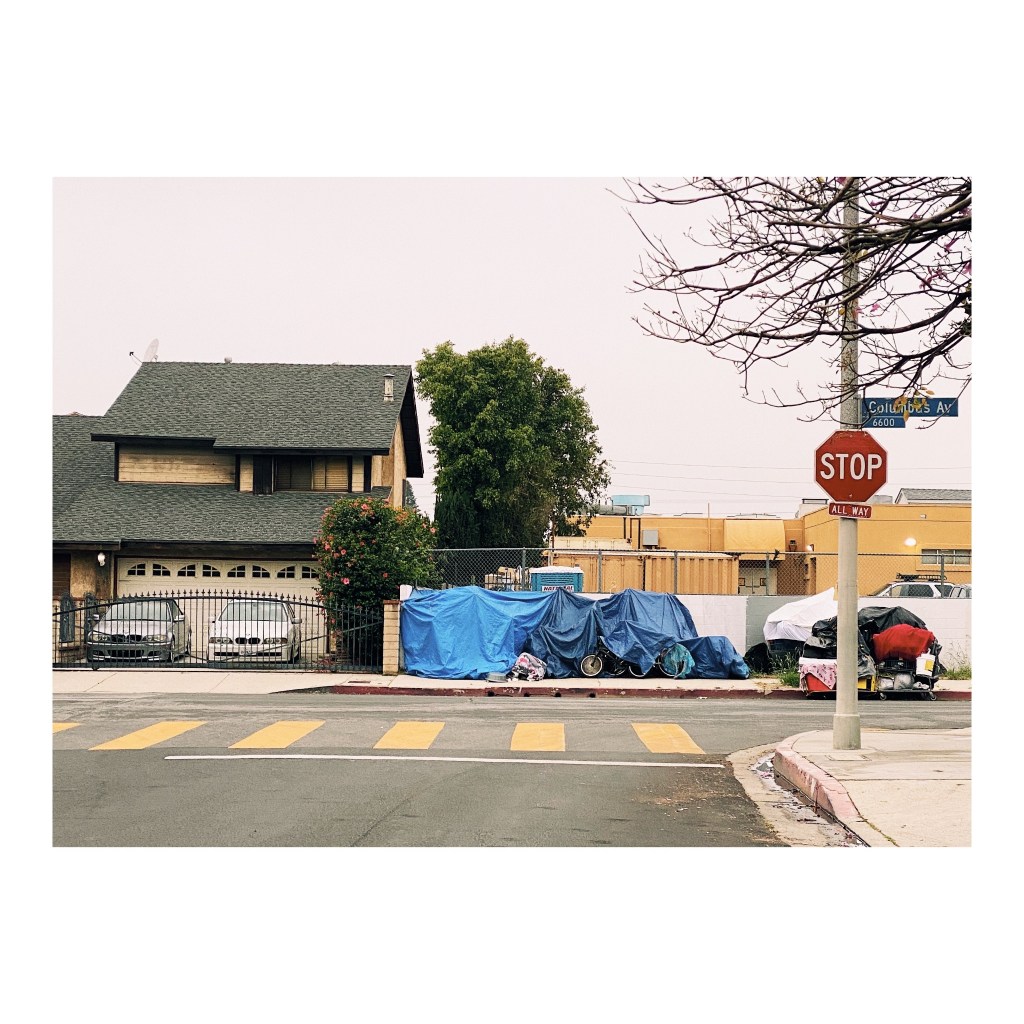
Now they have reappeared along Columbus Avenue across from the grammar school. While it’s doubtful anyone is actually learning grammar in that one-starred rated school, what’s certain is that the garbage camp is illegally set up in full view.
When people wonder what drives Angelenos mad, it is this: there is no control on the disorder and criminality of this city and state.
San Francisco, true jewel of the west, has gone to hell.
Los Angeles, costume jewel of the west, has followed suit.
And when mayoral candidates go on podcasts and talk ad nauseum about their humane and expensive solutions for the poor people who are homeless, you want to scream!
Why should the suffering of private persons, their addictions and mental illness, be allowed such a prominent and destructive place in the lives of all law-abiding citizens in the State of California?
“One of my proposals is to create a $1 billion revolving private equity fund with which to build permanent supportive housing. That’s housing that’s been costing $600,000-800,000 a unit. That can be cut to a third of that cost using a private equity model that has worked on the streets of Los Angeles,” says Mayoral Candidate Mike Feuer.
Is anyone knocked-up on drugs and alcohol going to sober up in a new, unsupervised housing unit?
Here’s an idea: use the billions in homeless funds to send $100 Visa gift cards to legally housed residents, home owners and renters, who report trash camping in their neighborhoods. Top off the yearly payments to those who report the vagrants at $2,000. Thousands of Angelenos, short on money for gas and groceries, would be impelled to report vagrancy and clean up dumps that have destroyed our city.
Do the people burning down parks and sleeping under tarps on bus benches care to move into a new studio apartment?
Trash camping?
Don’t permit it. Don’t allow it. Don’t normalize it.
Burning parks, setting fires along freeways, camping out on public sidewalks and streets. This is the state of California, the most technologically advanced region on the planet.
You must be logged in to post a comment.