Image

Eggs and Chickens for Sale: Van Nuys, CA, 1932


Residence of George Krug, 7140 Van Nuys Bl. Van Nuys, CA, 1932

Driveway_entrance_residence_of_George_King_7140_Van_Nuys_Boulevard_Van_Nuys_CA_1932_image_3

(USC Digital Archives/ Dick Whittington Studio)

Sunday in Van Nuys (Part 2)


screenshot_281

Sunday in Van Nuys (Part 2)

In my writing and photography I try to stay as true as possible to my own observations and impressions.

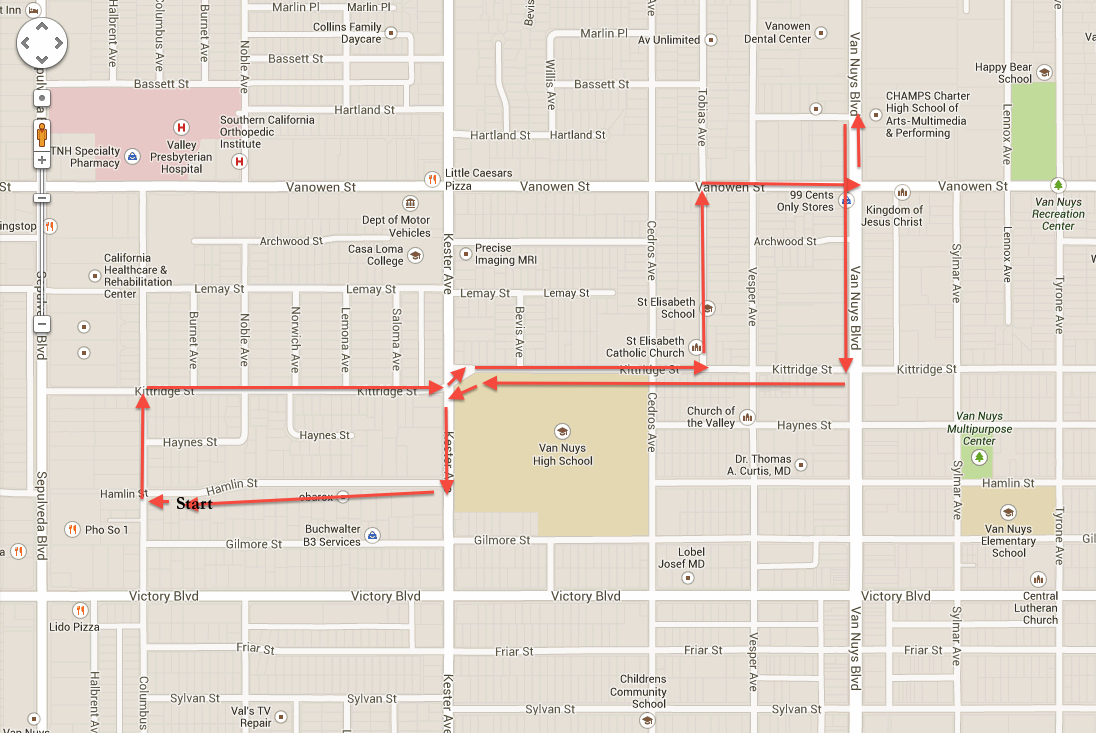
Such was the case when I took a long walk through one small portion of Van Nuys, encompassing an area roughly from Columbus on the West, Kittridge on the South, Vanowen on the north and Van Nuys Boulevard on the south.

What I write and show today is just how I saw it.
DSC_3650

DSC_3654

DSC_3656

DSC_3657

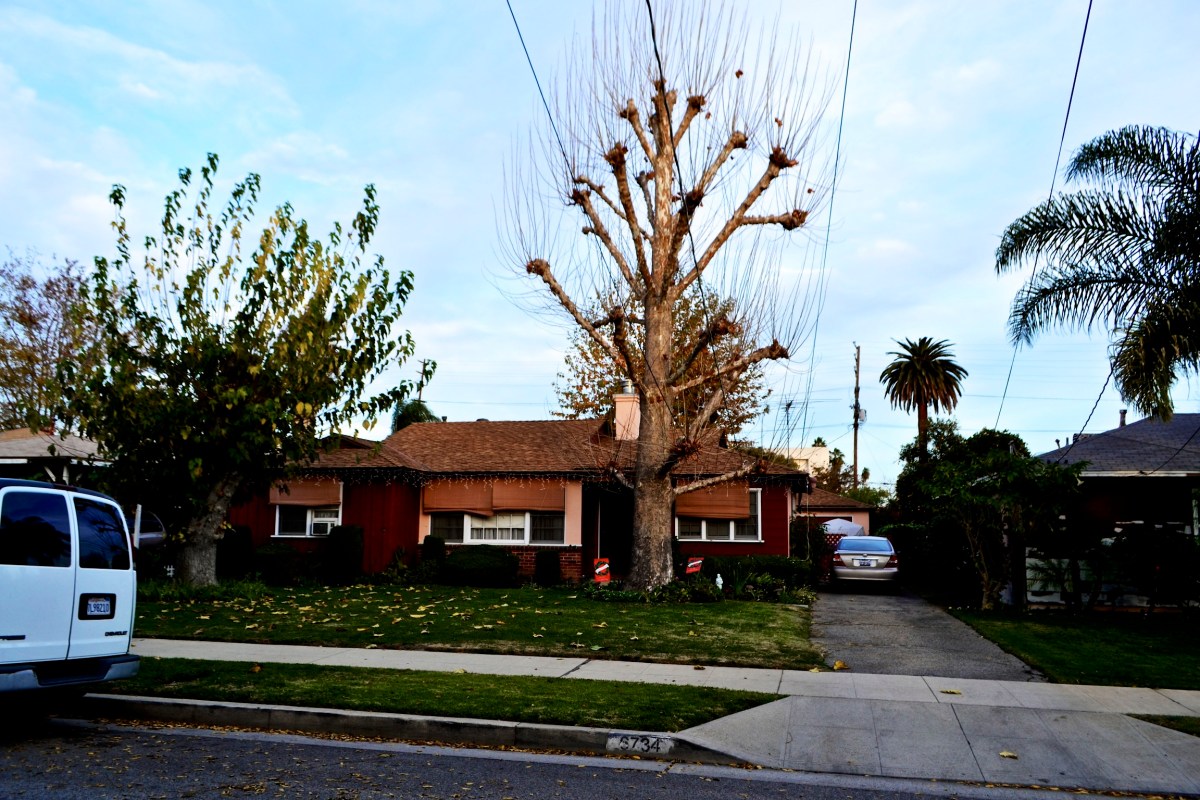
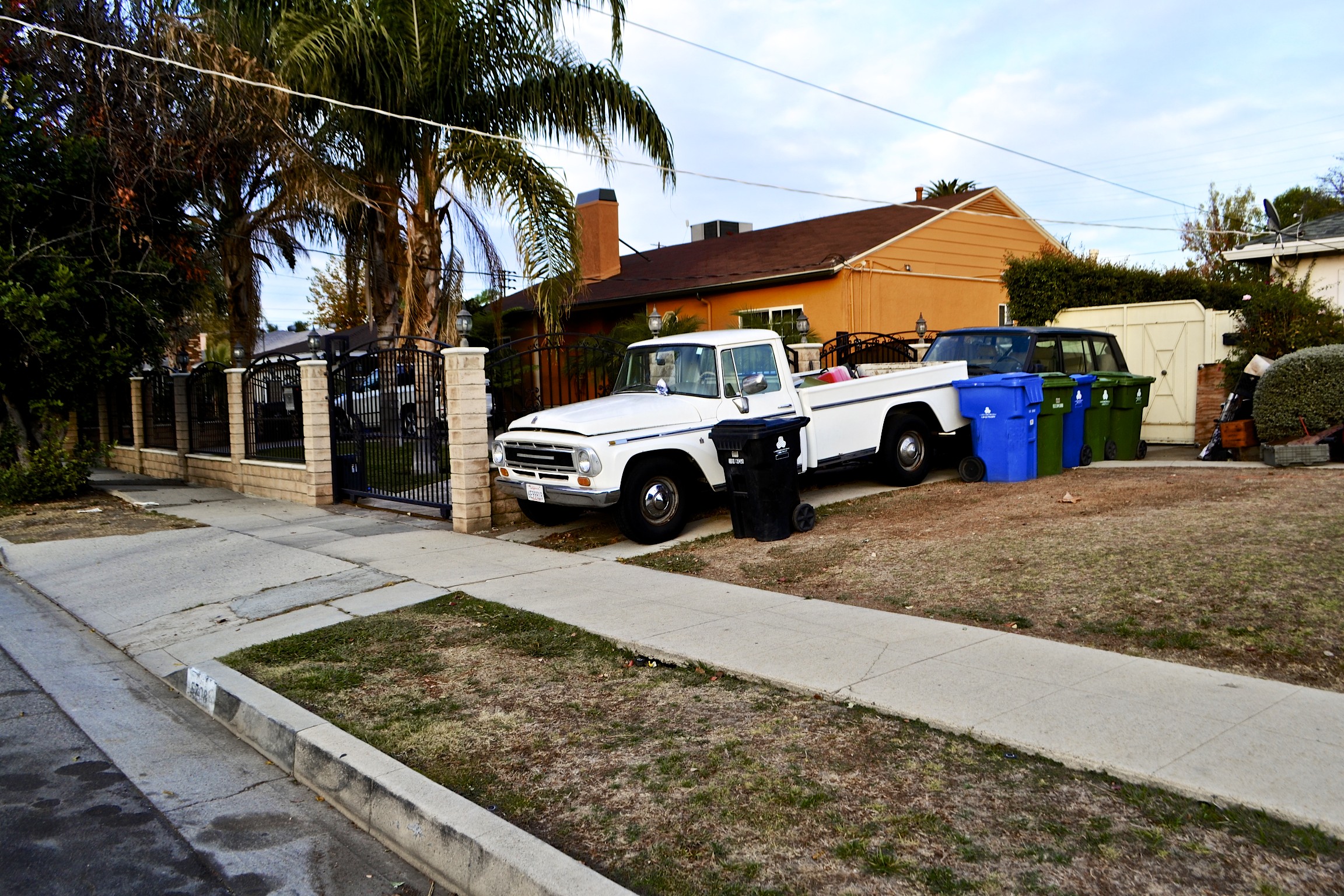
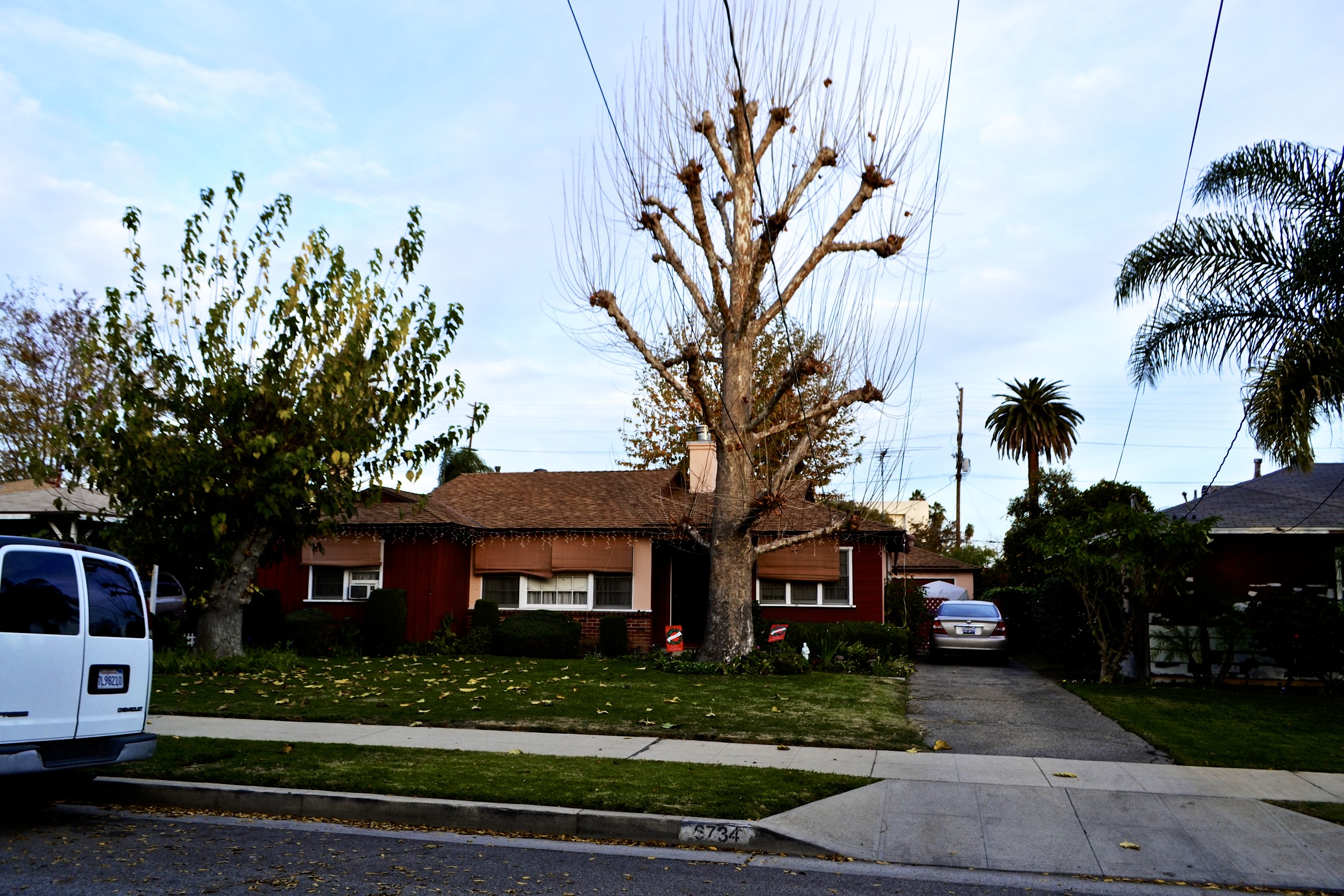
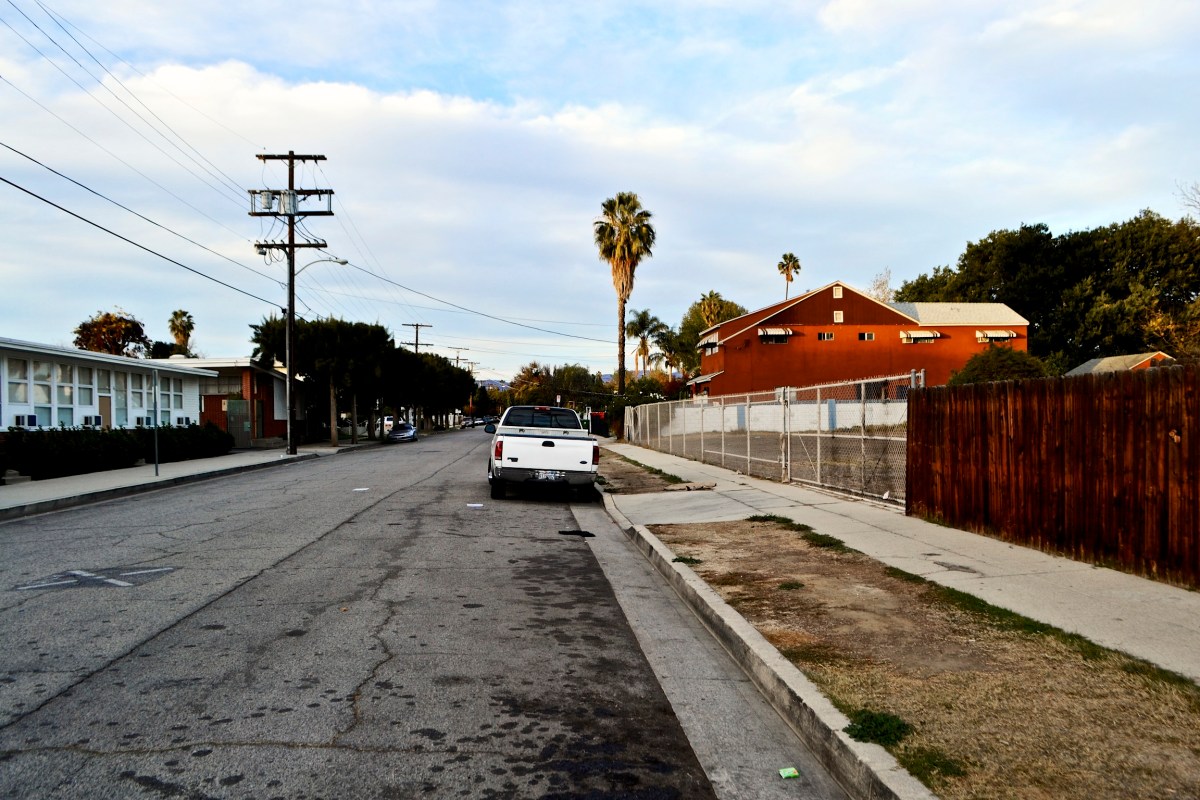
Tobias Avenue , north of Kittridge, south of Vanowen, is a not-so-shabby street of single family houses, mostly quiet and mostly homely, some with open lawns, others encased in iron and cinderblock. The population is quite diverse, with surnames that include Beasley, Bowser, Lange, Cohen, Funes, Moran, Lucas, Suh, Phung, Avetisyan and Ayanyan.
DSC_3664

DSC_3668

DSC_3672

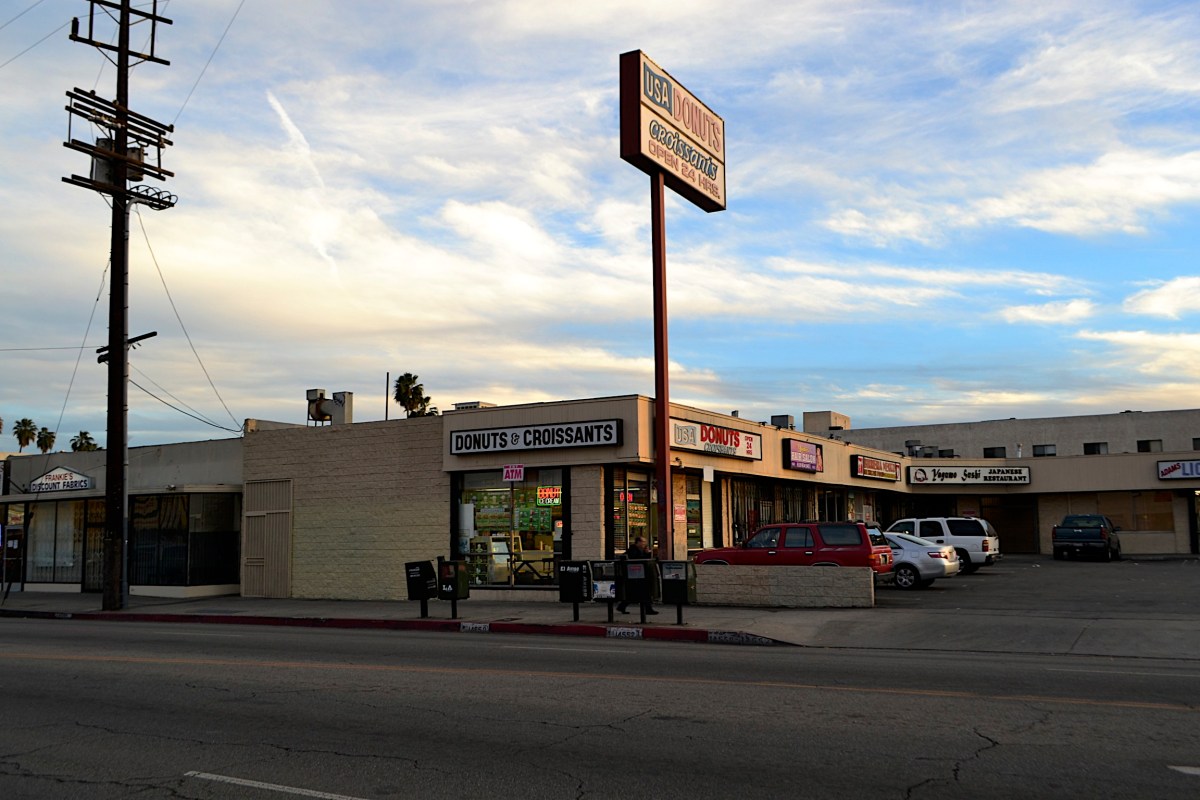
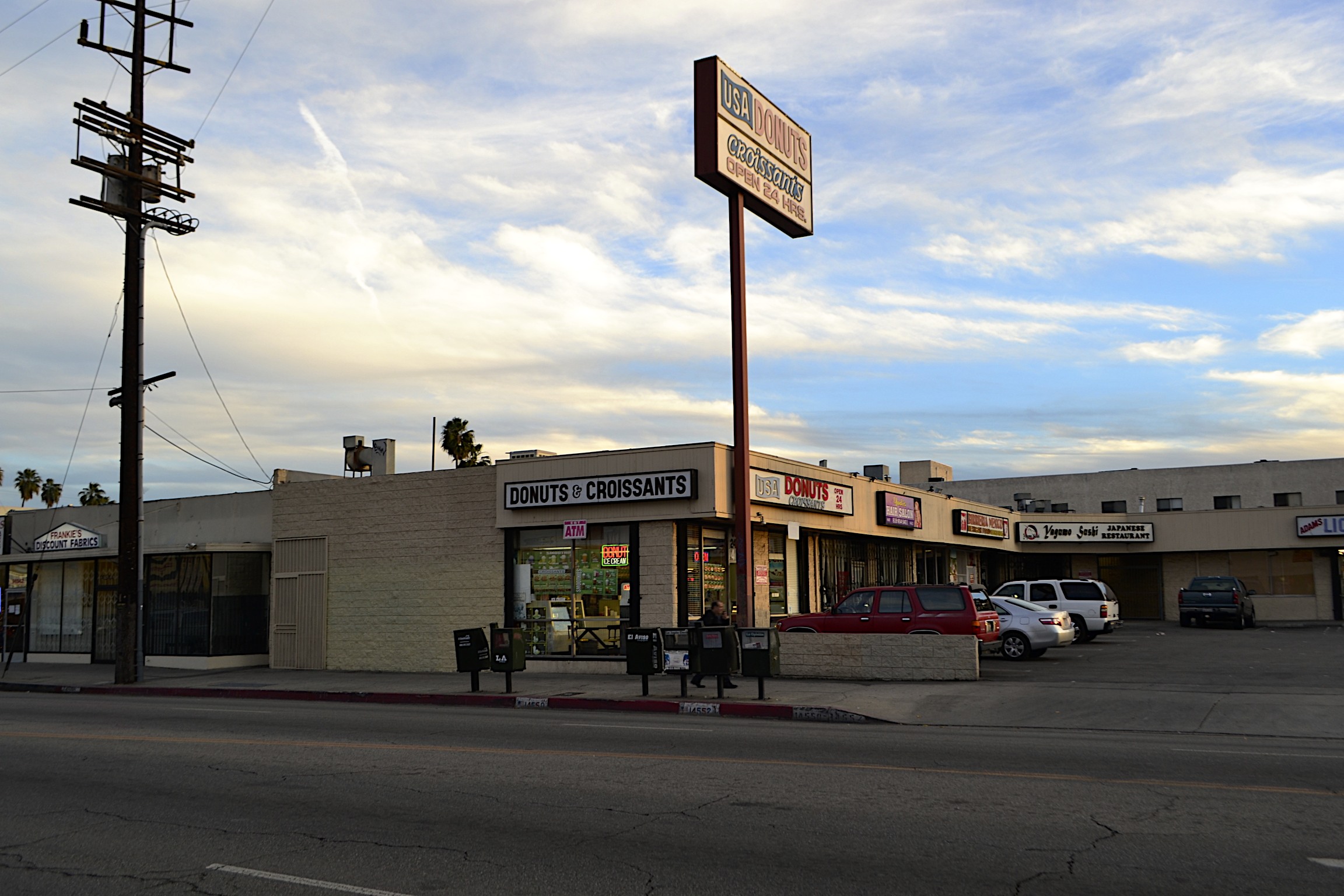
USA Donuts

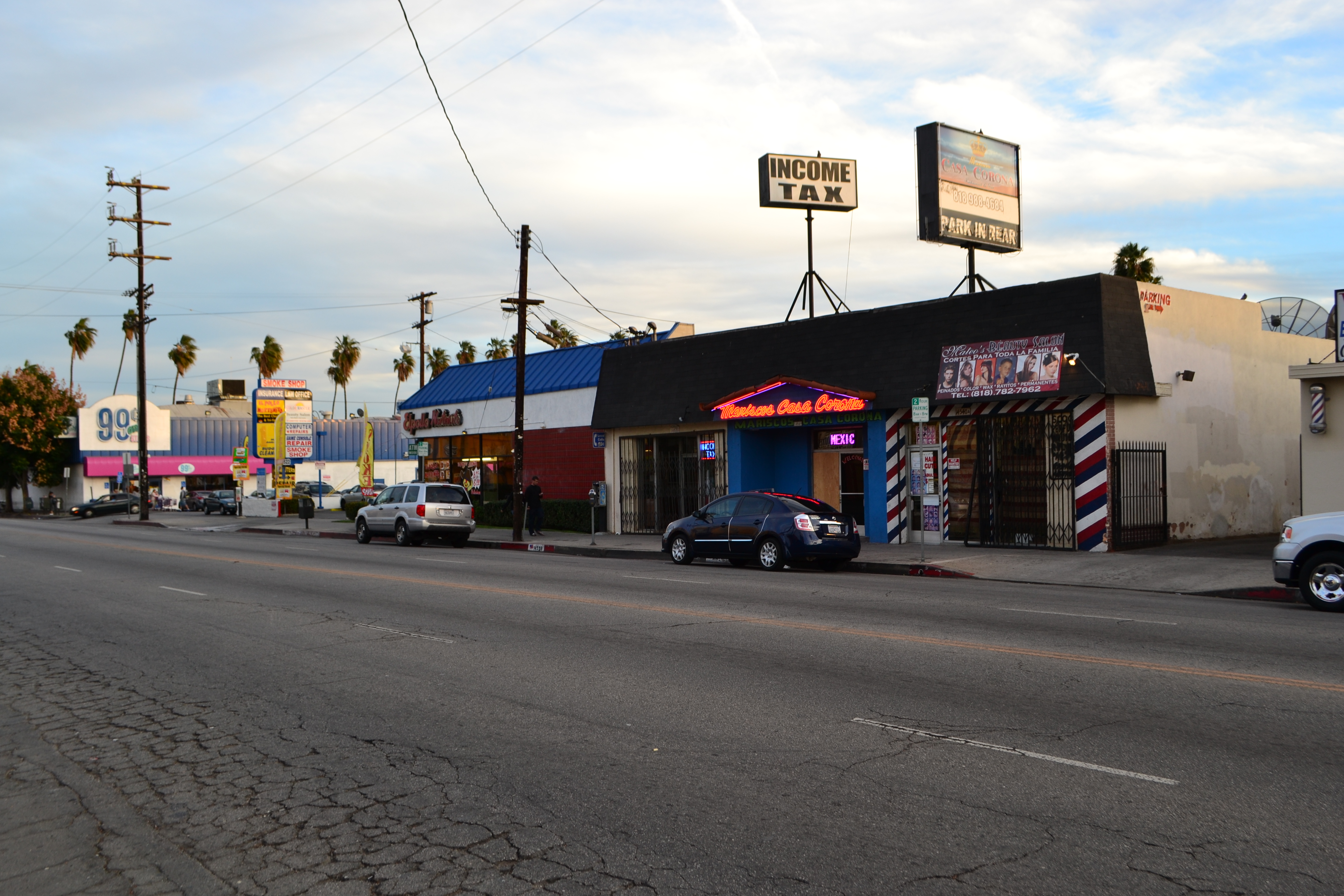
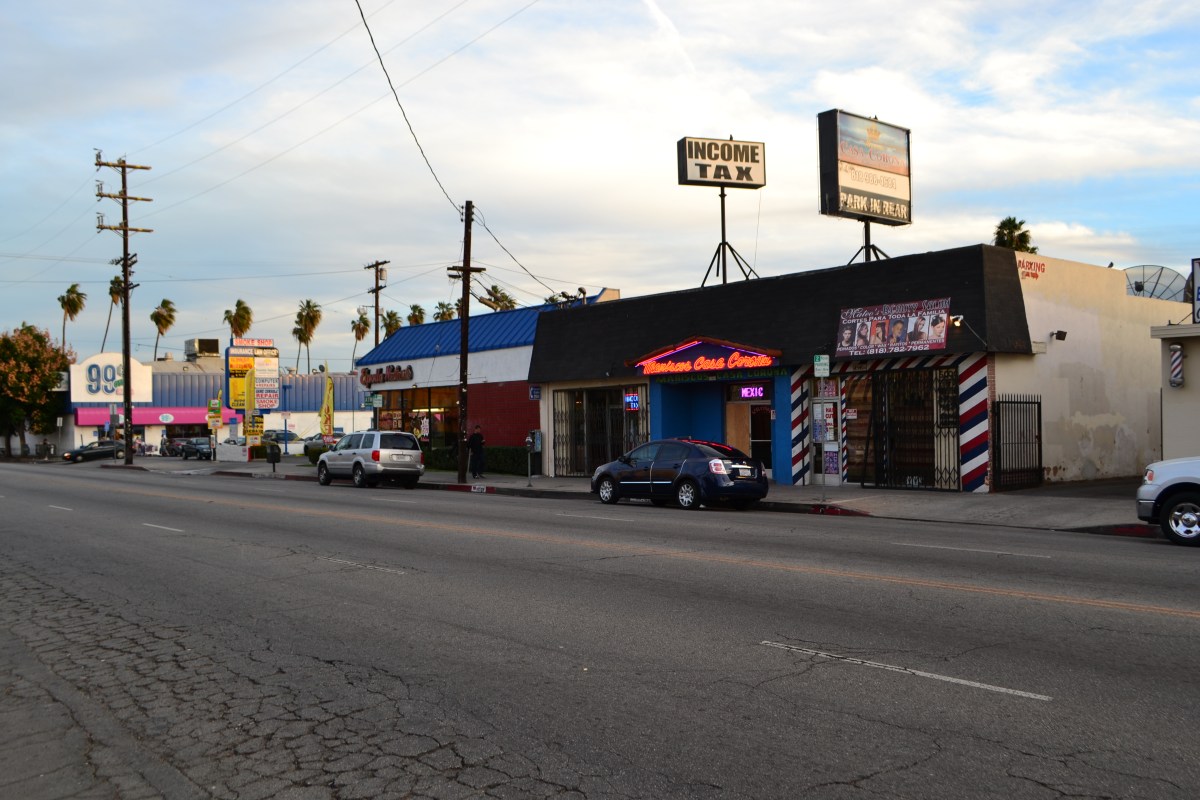
On Vanowen, between Tobias and Vanowen, the stores are packed closely together, up to the sidewalk, and commercial Van Nuys is at its epicenter.

It was Sunday afternoon, so the loudest noise was coming from the open doors of a storefront Spanish church, where the indoor parish was singing. There was little pedestrian traffic, other than those few waiting for buses at trash littered Metro stops.

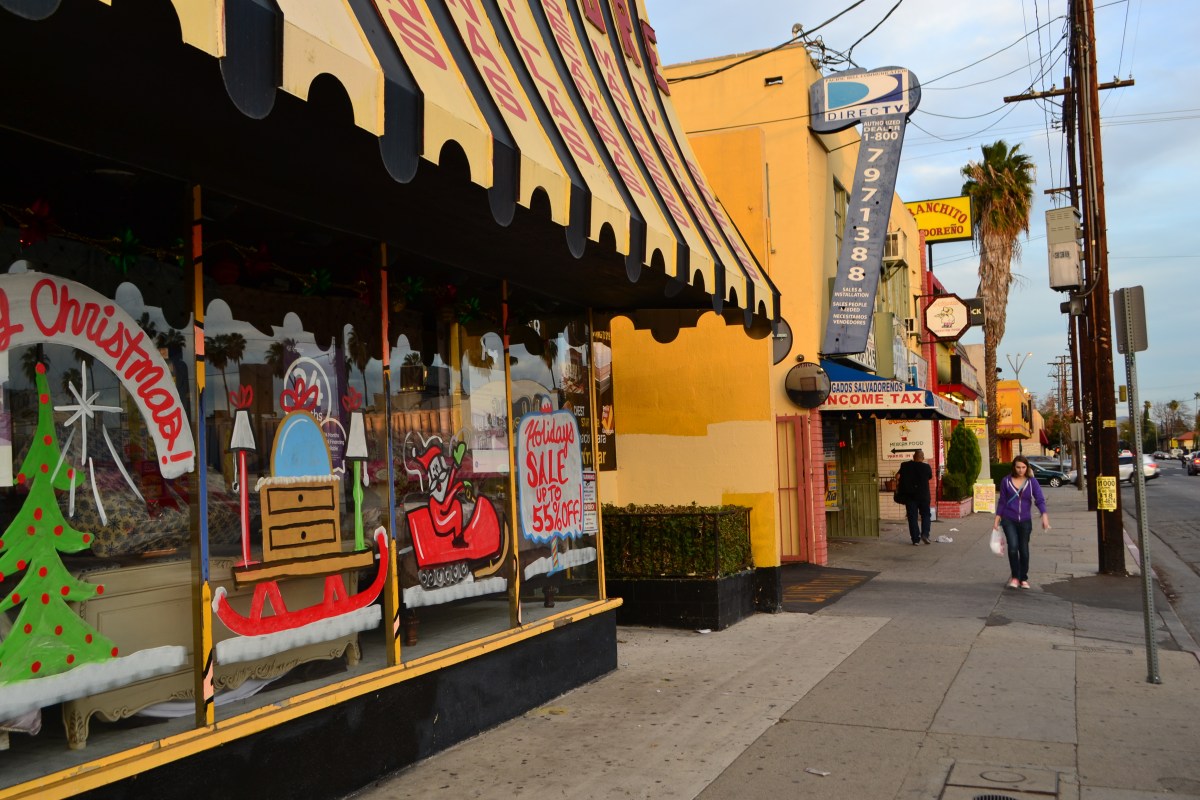
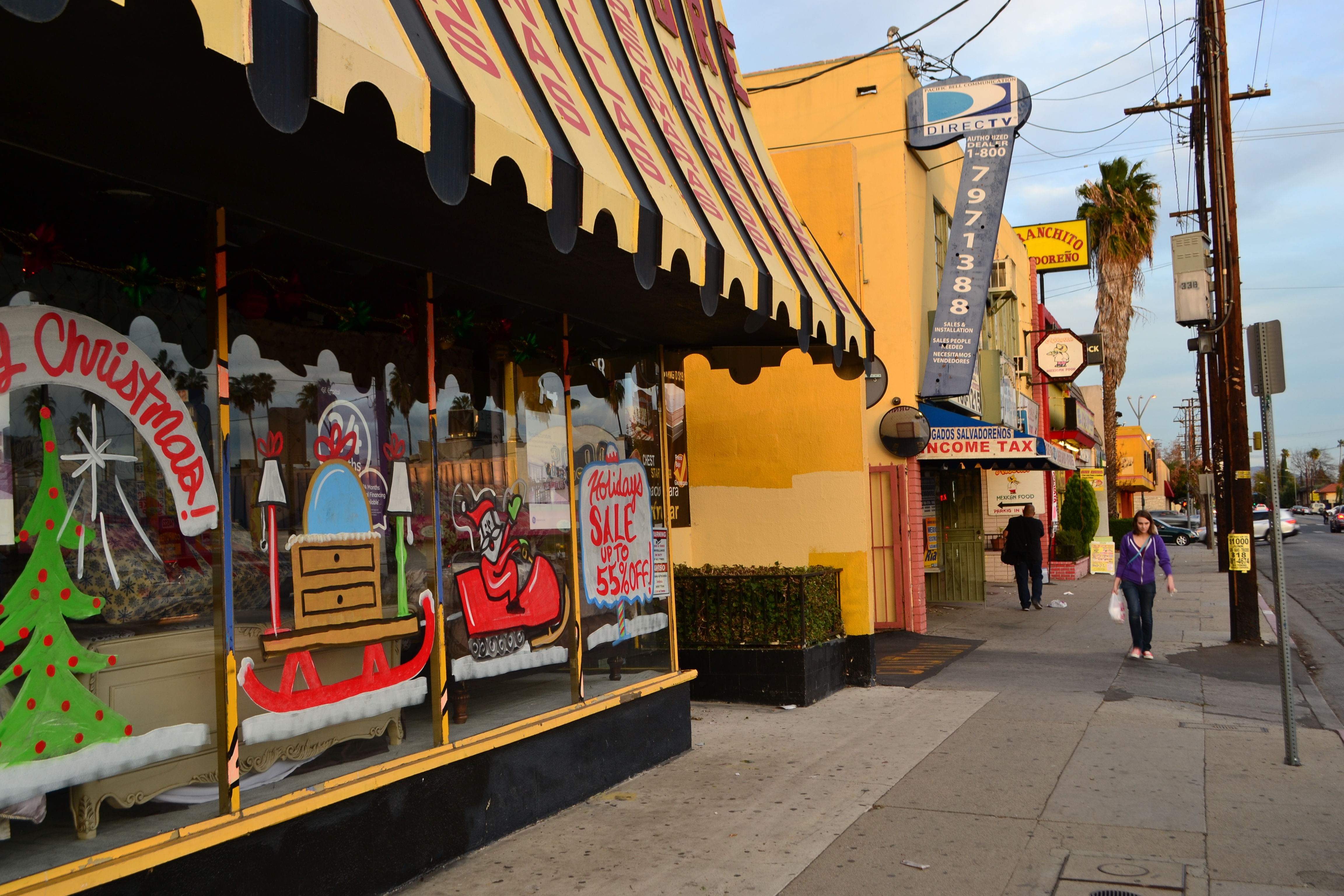
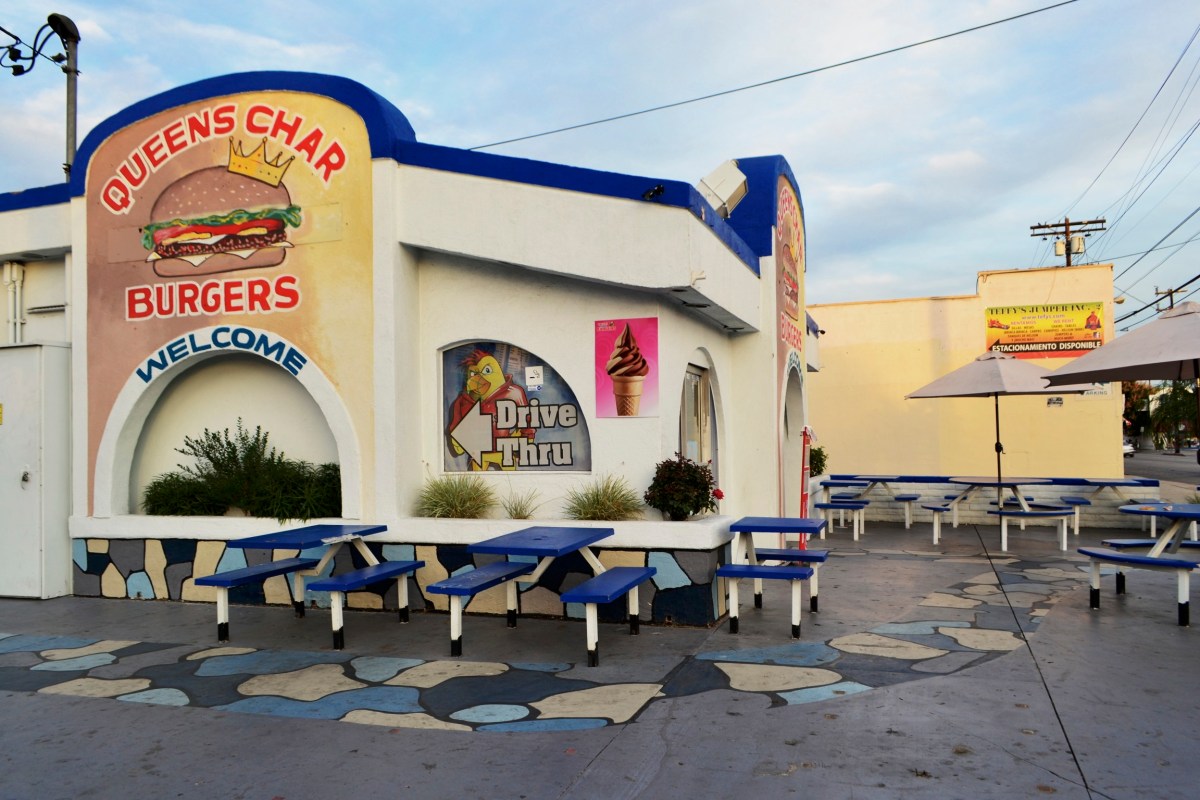
The businesses along here cater to Spanish speakers, advertising income tax for Salvadorenos, party rentals at Teffy’s Jumper, Inc. and dining at Mi Ranchito Salvadoreno (14523 Vanowen St.) Buildings are painted exuberantly in vivid sunshine yellow with red lettering.
DSC_3680

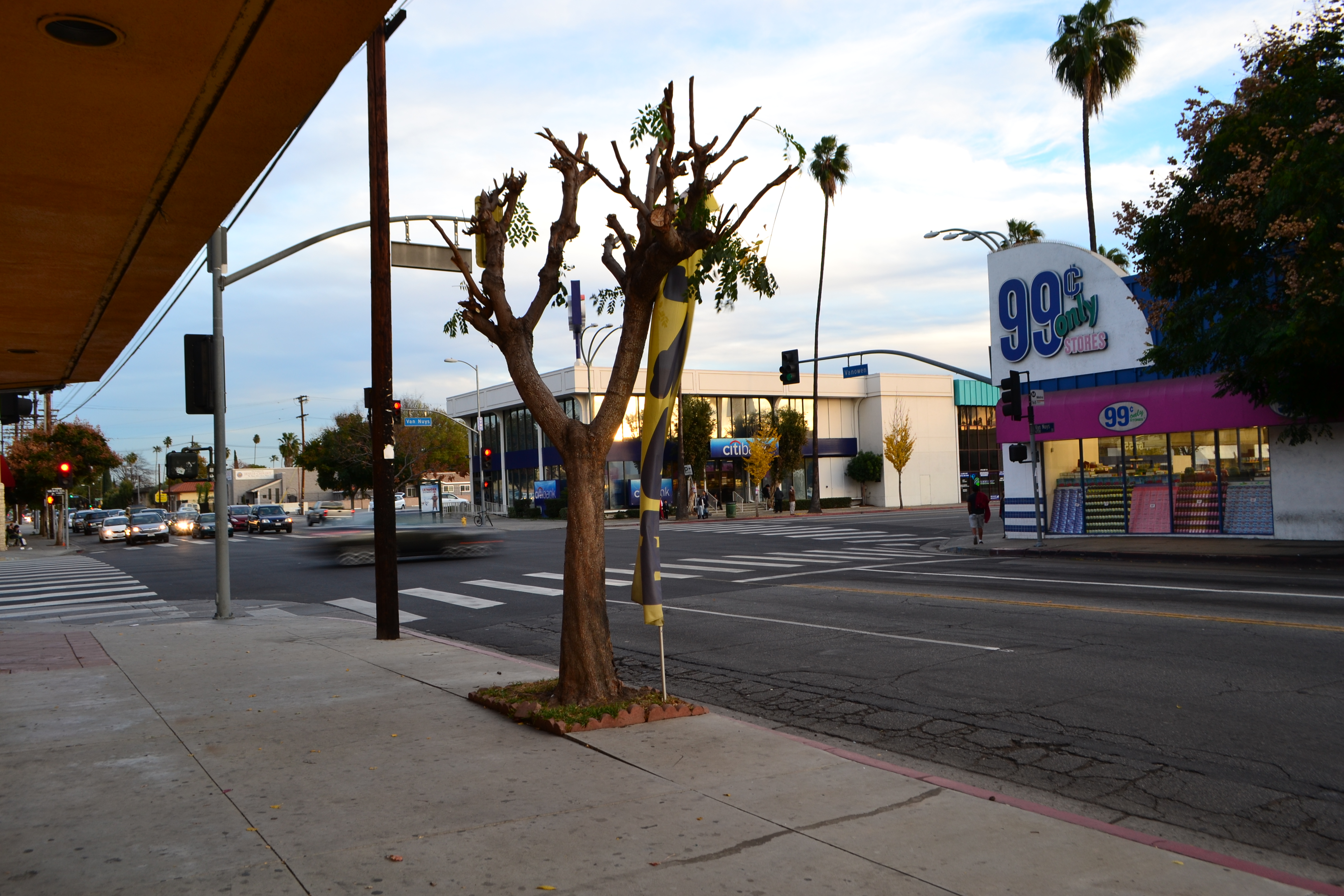
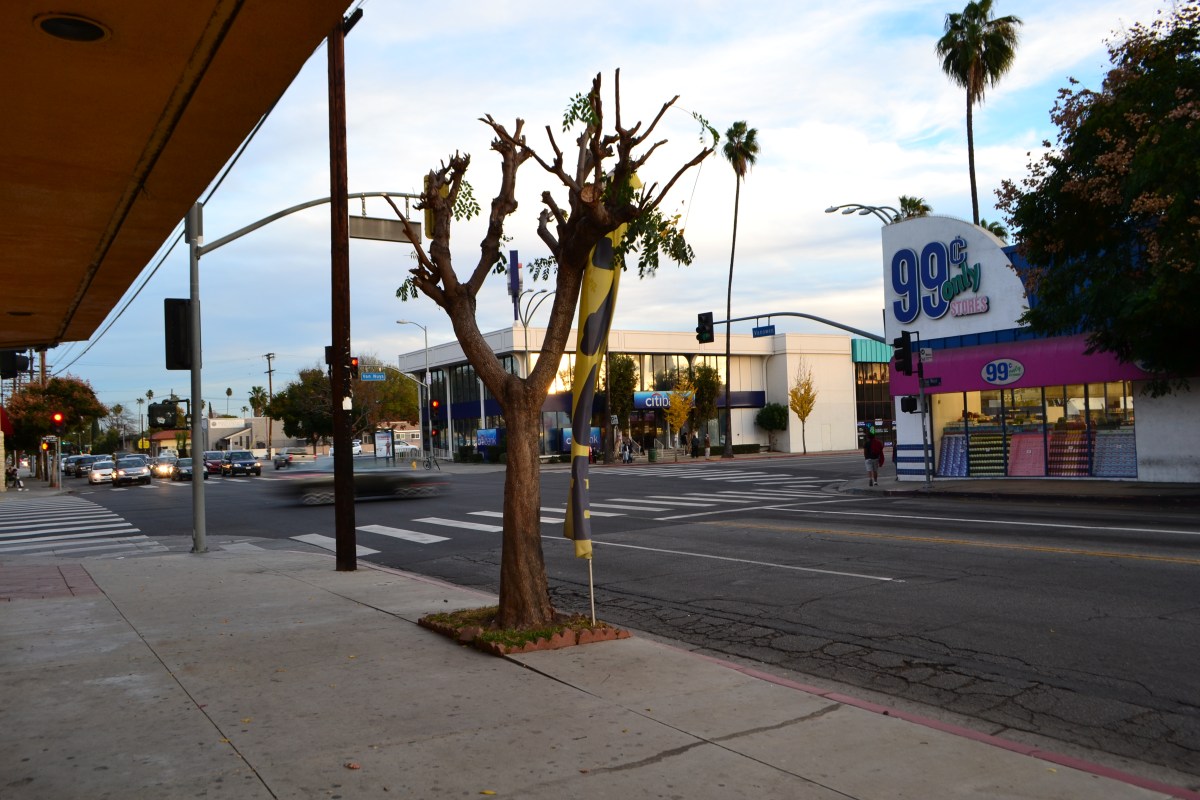
A dismembered tree, its limbs hacked off by ignorant tree trimmers, stood near the corner of Vanowen and VNB. The disfigurement of trees all over Los Angeles is characteristic of this city, an appalling sight for nature lovers and for those who respect arboreal rights.

Trees are needed most in this area of Van Nuys, for the streets are overly wide, and the sun beats down here, making the district hellish during the long hot summer.
DSC_3682

DSC_3683

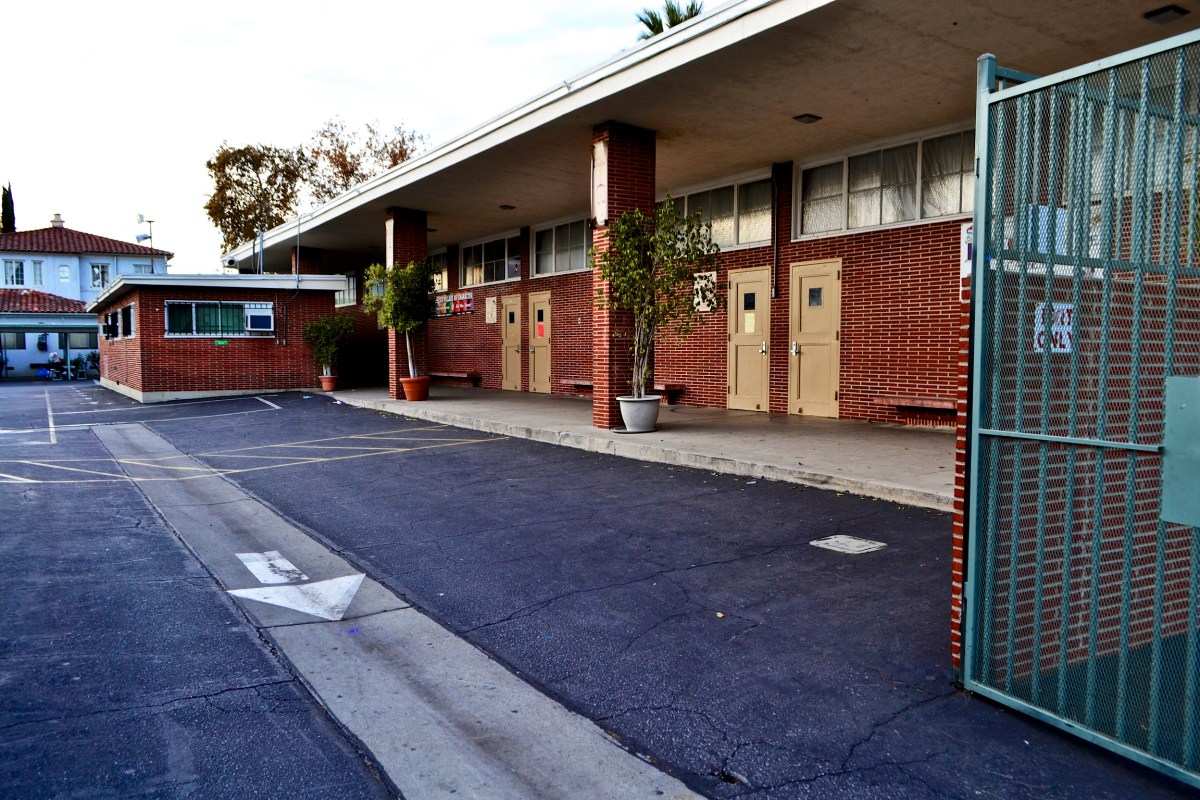
6842 Van Nuys Boulevard is the new home of Champs High School of the Arts, a charter school which makes its home in a 1963 mid-century office building. The structure has been jazzed up on the exterior, with new lighting, stone and chrome to appeal to the more luxuriant expectations of modern Americans.

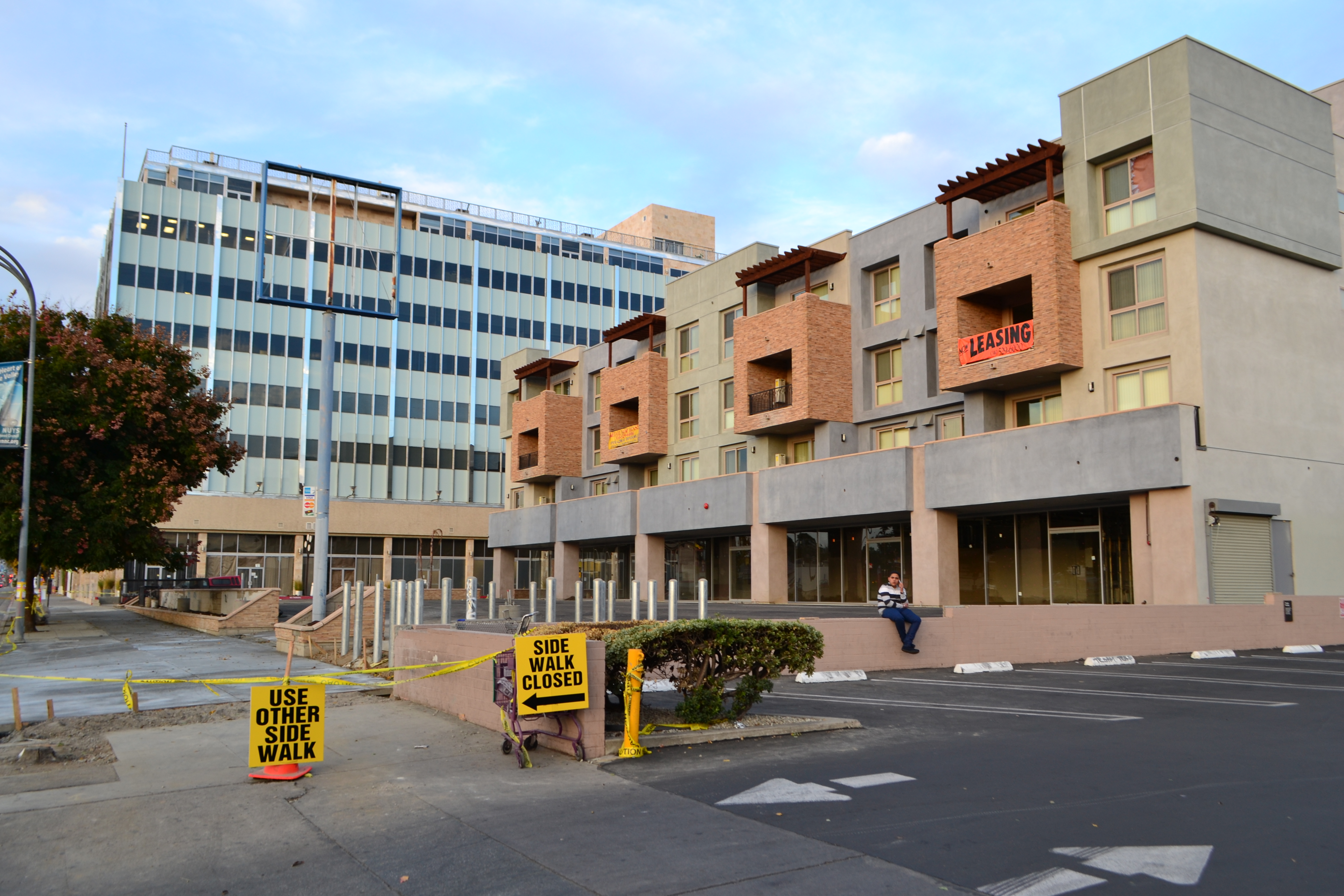
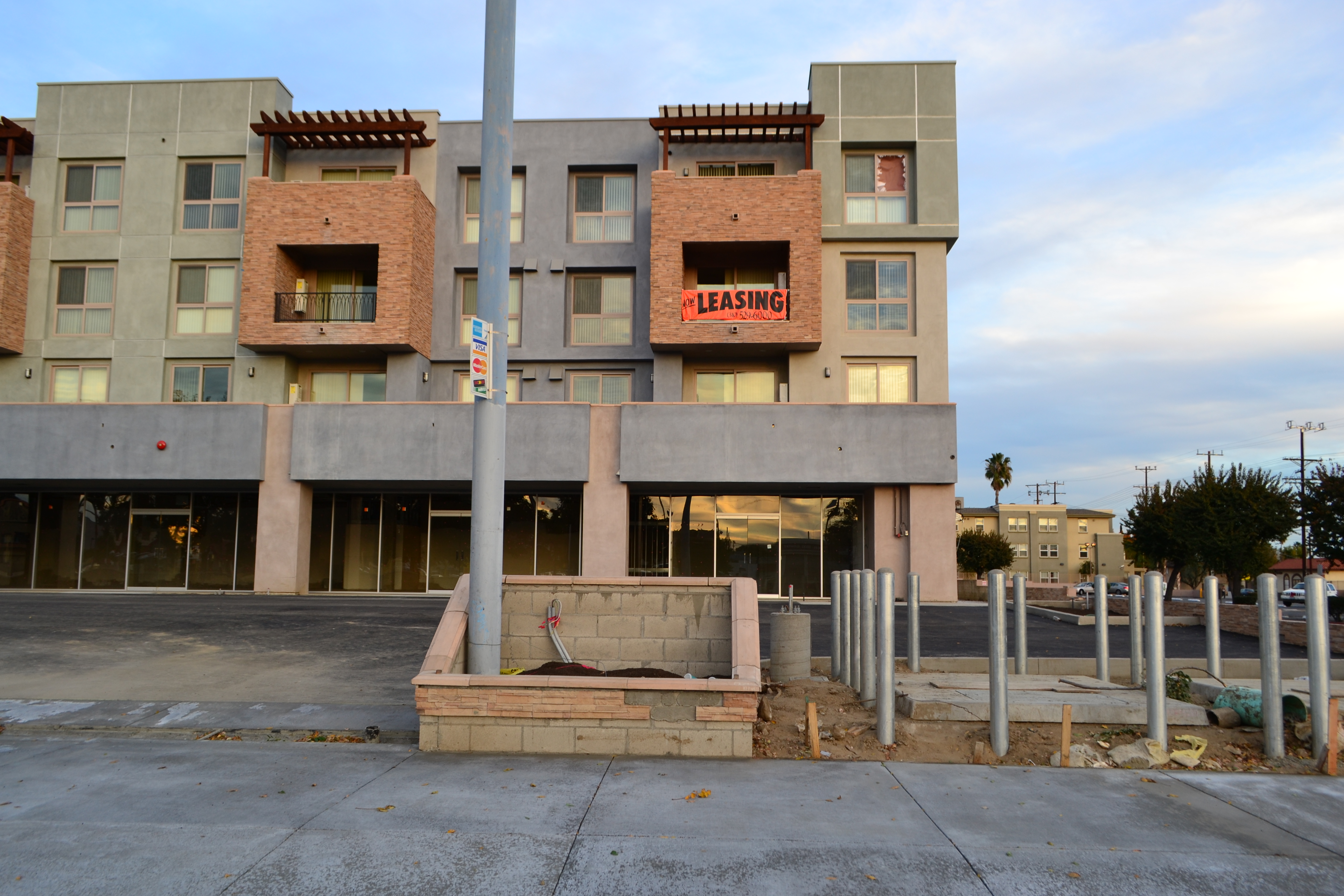
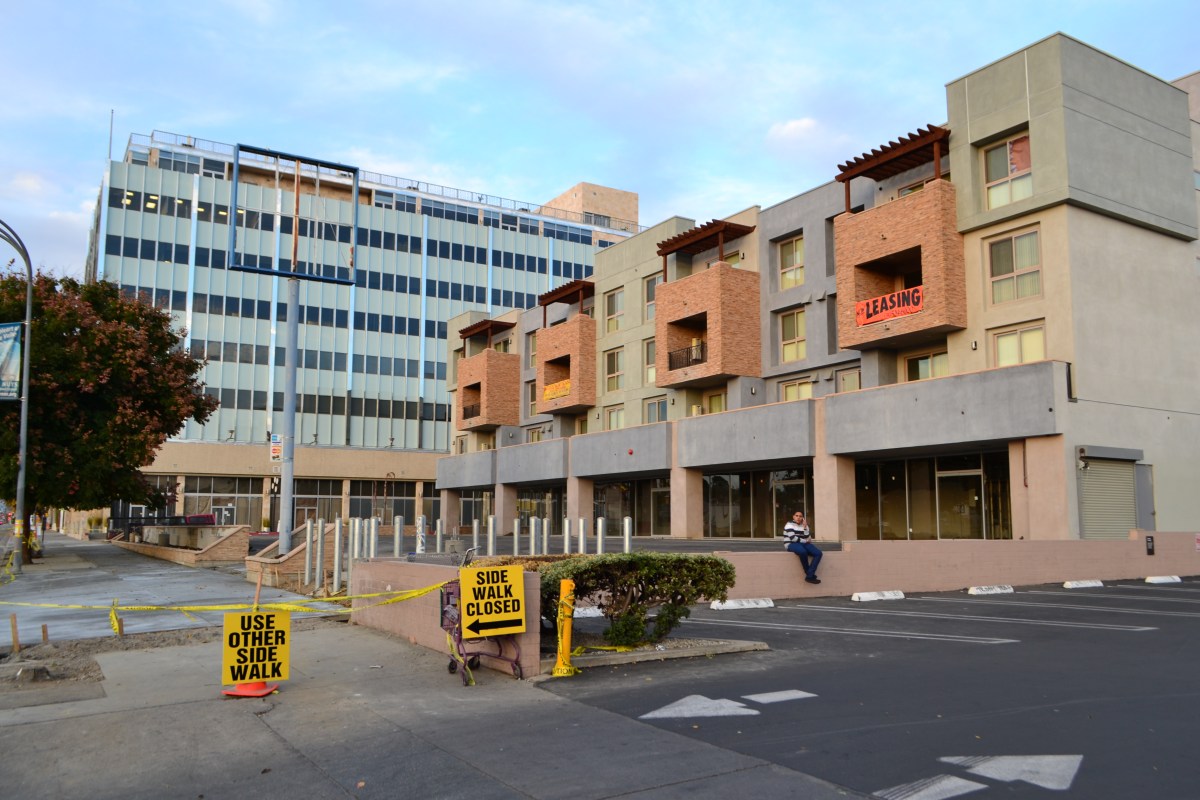
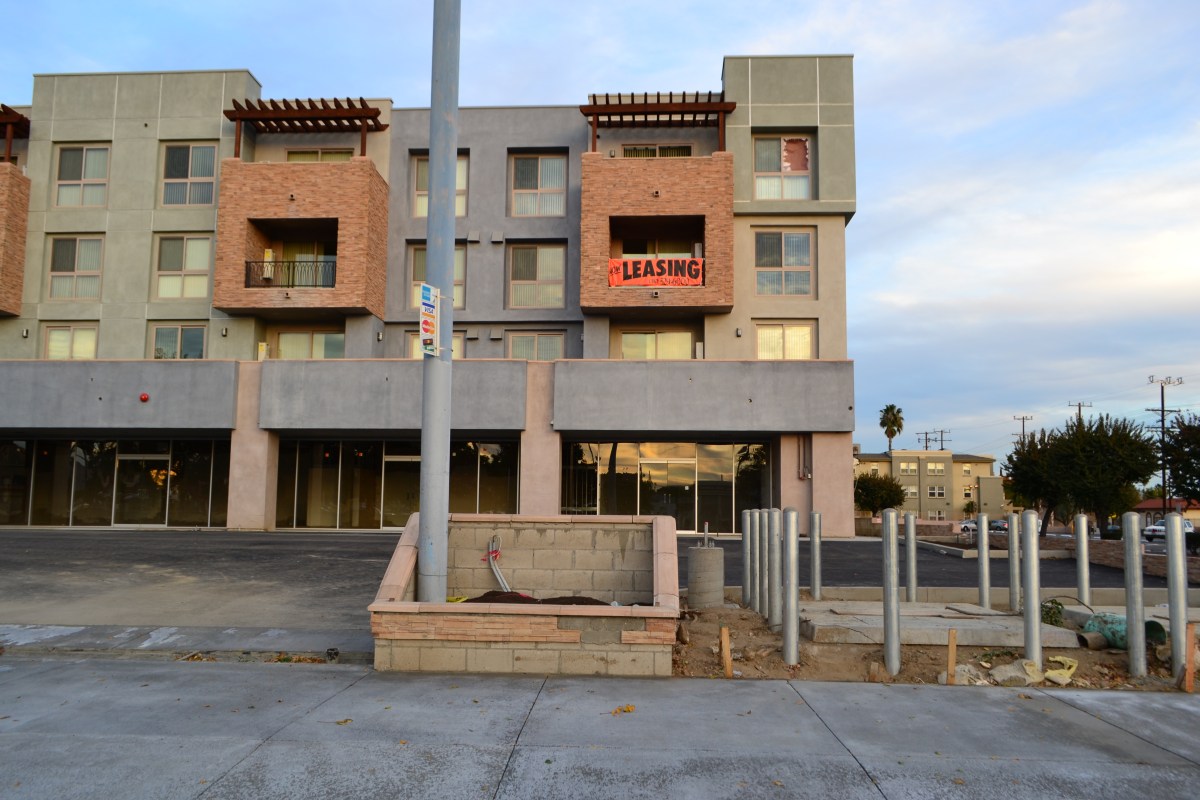
Hacked onto the south end of 6842 is an inexplicably ugly new structure, set back from the street, like an awkward wallflower at a high school dance.

Here again is where urban Van Nuys always go wrong. Hundreds of millions of dollars were spent to erect a building that does not participate in the architecture or functioning of the boulevard at all, but rather sits back, in boxy ugliness, behind an asphalt parking lot, its untenanted stores and unoccupied apartments begging for respect, with broken and boarded up windows already advertising its failure.

Van Nuys Boulevard is six lanes wide. So setting a new building back only reinforces the funereal deadness of the street. In order to bring pedestrians back, you need to make an environment that encourages pedestrianism.

The new building is banal, striped in bands of colors that are supposed to reduce the imagined bulk of the façade, but instead reduce it to insipid sections of paint strips. All over Los Angeles, the “rule” is that every large structure has to be divided into multi-colored bands of hues. If the White House were ever rebuilt in Los Angeles it would be drenched in six Dunn-Edwards earth tones.
Van Nuys, CA

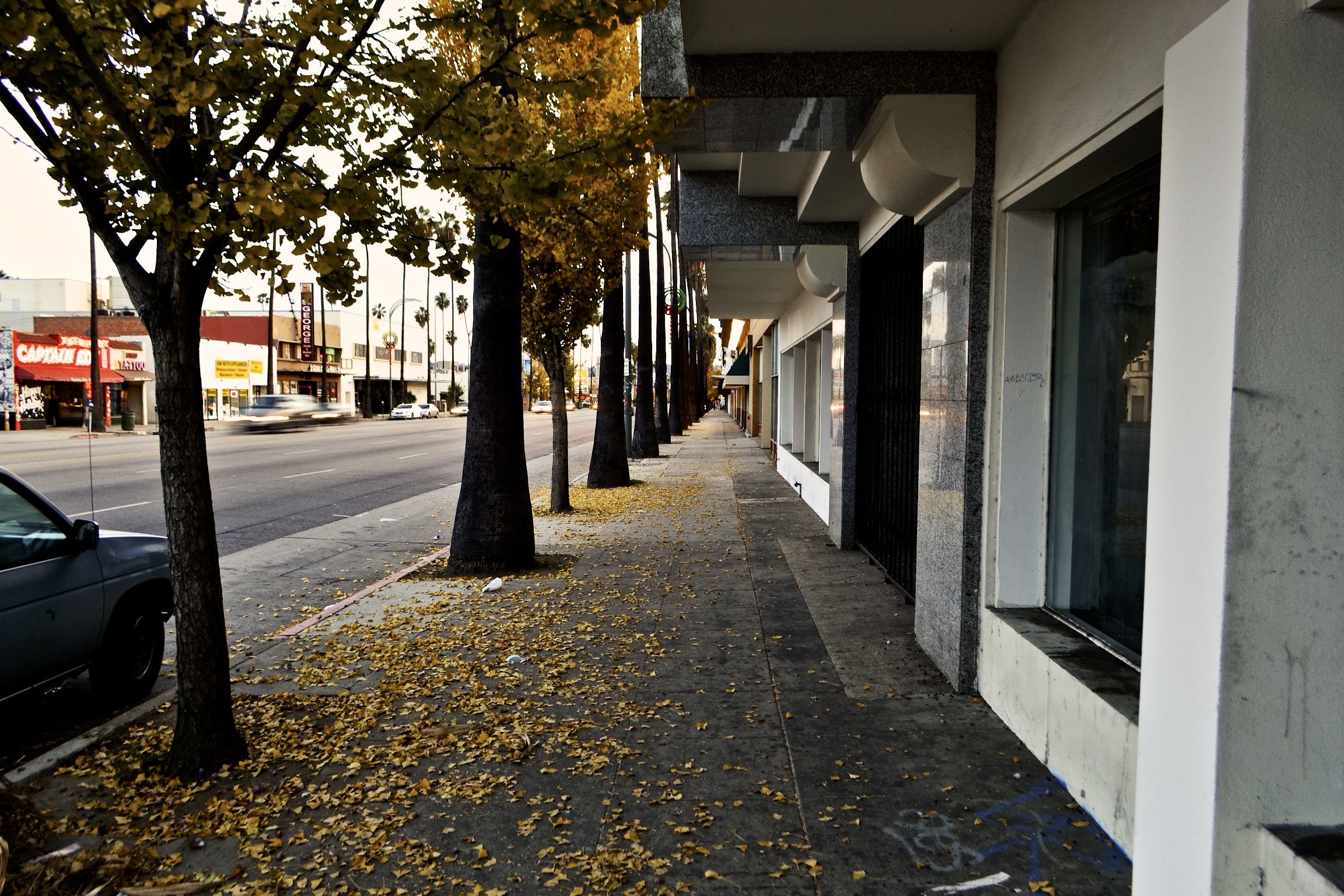
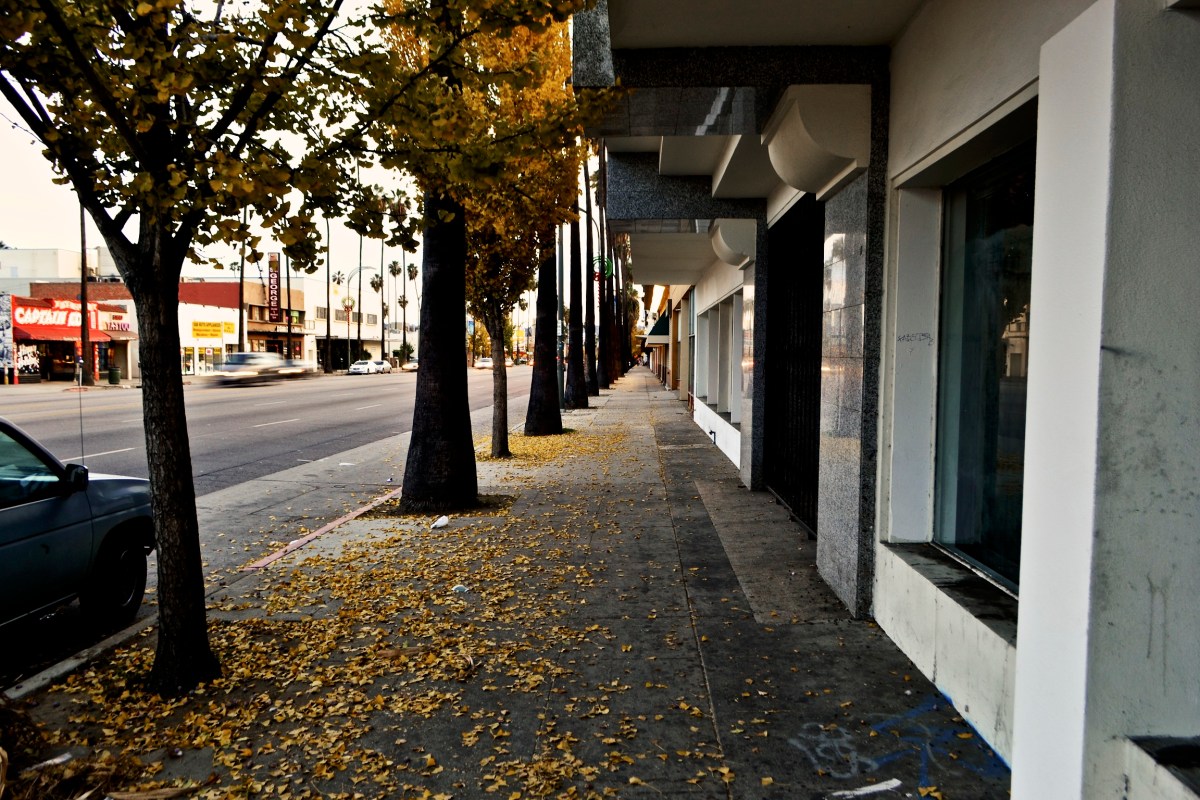
I wrapped up my daylight walk in urban Van Nuys, by going south down Van Nuys Boulevard, on the west side of the street, where empty storefronts met fallen leaves on a cloudy and cold autumn afternoon. There was not a single man or woman walking from Vanowen to Kittridge, and I did not encounter humans until I turned right, and found a lively bunch of food carts in the back parking lot.

Spanish speaking people, who now predominate in Van Nuys, prefer enclosures, such as small streets, landscaped and illuminated alleys, and places where people walk. The much sought after revitalization of Van Nuys Boulevard will never occur because the street is too wide. The plazas of Spain, Mexico, Guatemala and El Salvador, not to mention the courtyards of any place other than the US, are the gathering places of urban dwellers, who come on foot to congregate, to shop, to watch, and to walk.

And so it was on a Sunday afternoon, when Van Nuys Boulevard was dead, the life of the city was conducted in back of stores, near the church, in places where the walls and the buildings provided enclosure, safety and structure.

In any plan for the future, the planners should try to reduce the size of the streets, bring back small parks, small lanes, and narrow streets where a sense of community and walkability can be fostered.

Sunday Afternoon on Kittridge St.


It was late Sunday afternoon in December, here in Van Nuys.

The air was brisk, the sun was low, a pork butt simmered in the slow cooker.

This is the time of the year when you can see the mountains beyond the orange trees.

Days are brief and what gets done gets done quickly. The Christmas season is sewn in living threads joyous and melancholy, lonely and familial; aching, sad, reverent and intoxicating.

Football, films, electronics envy; shopping, eating, packing presents; drinking orange beer under red lights where the smell of pine, vanilla and chocolate is pervasive, these are some of the elements placed here annually.

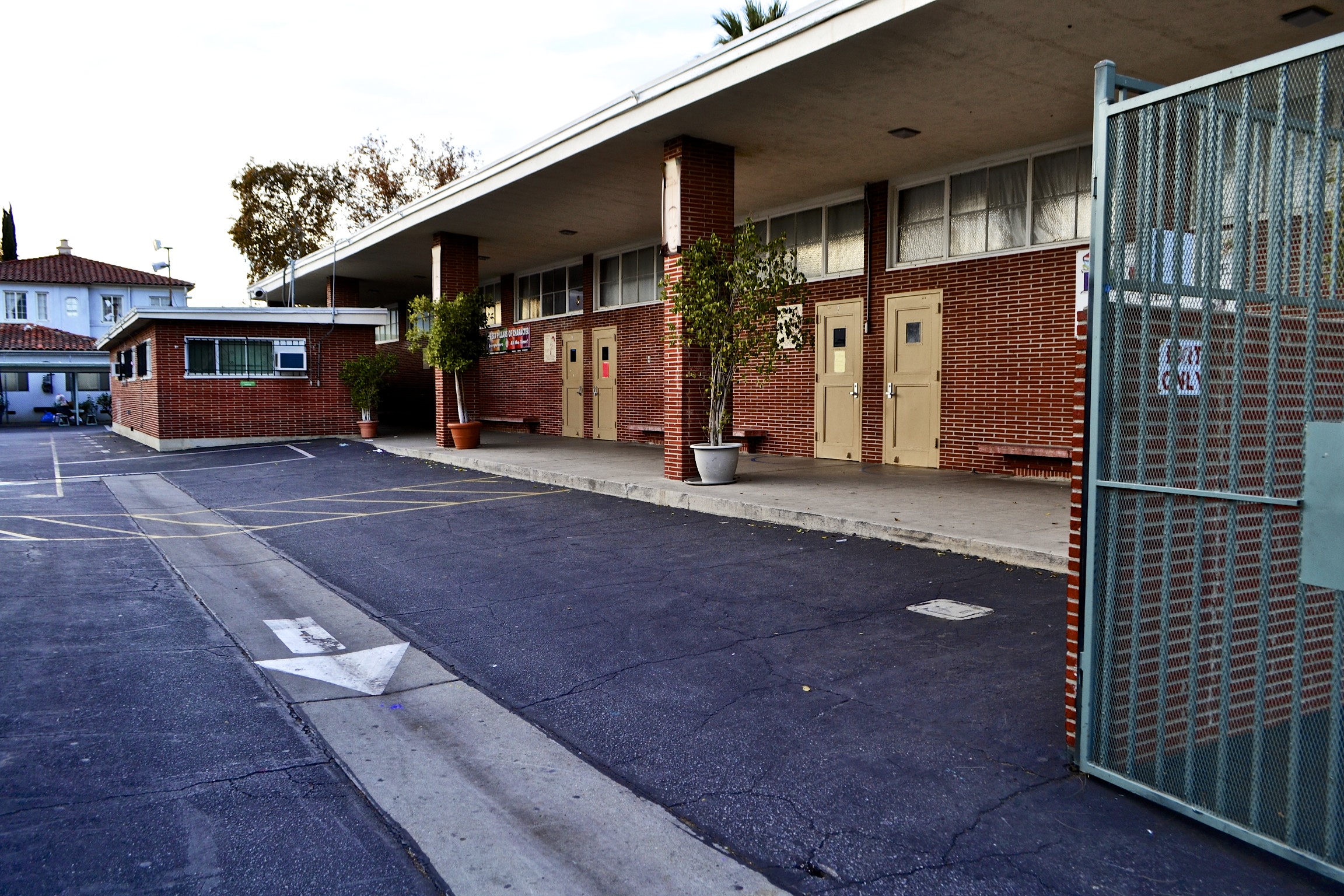
DSC_3617

DSC_3615

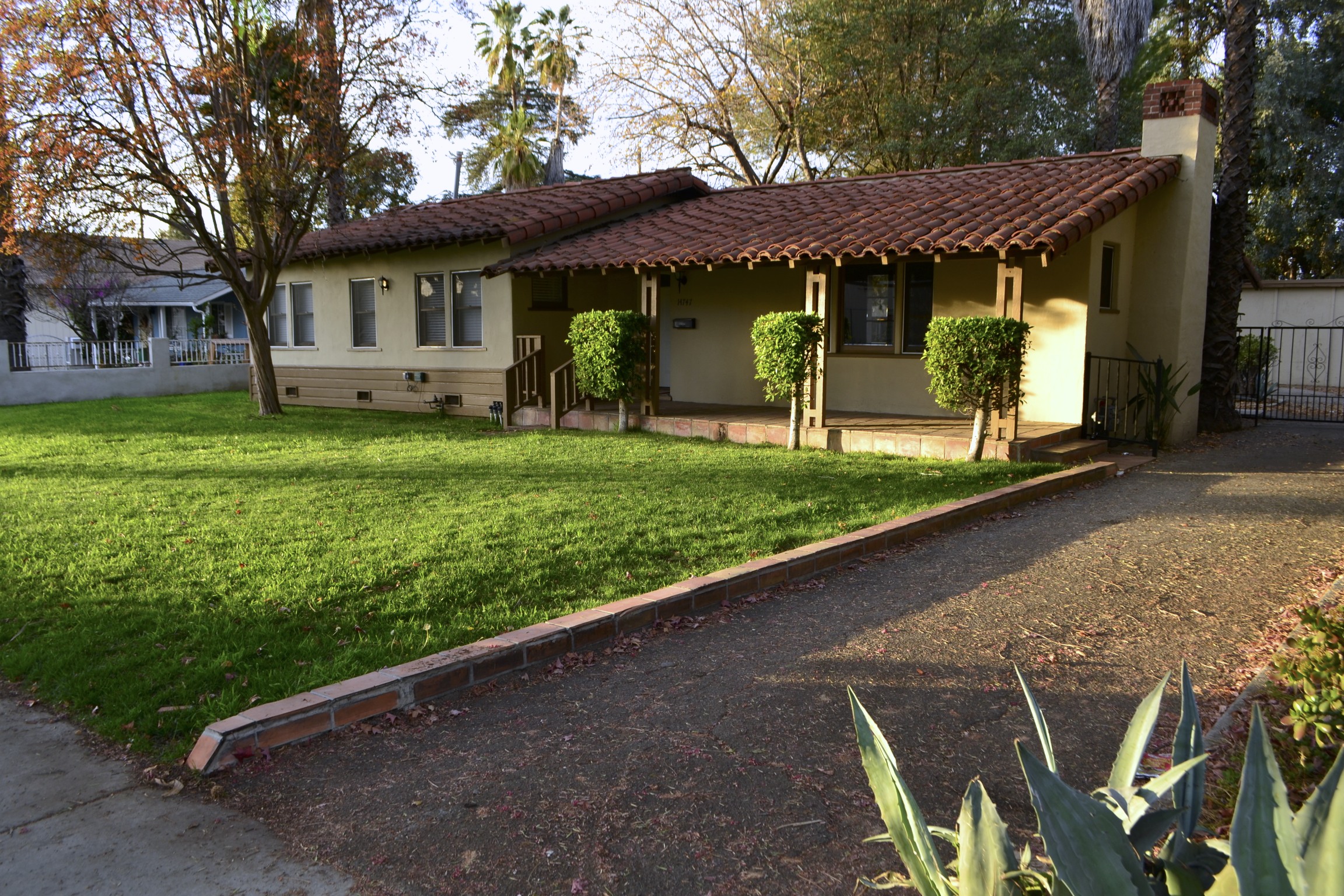
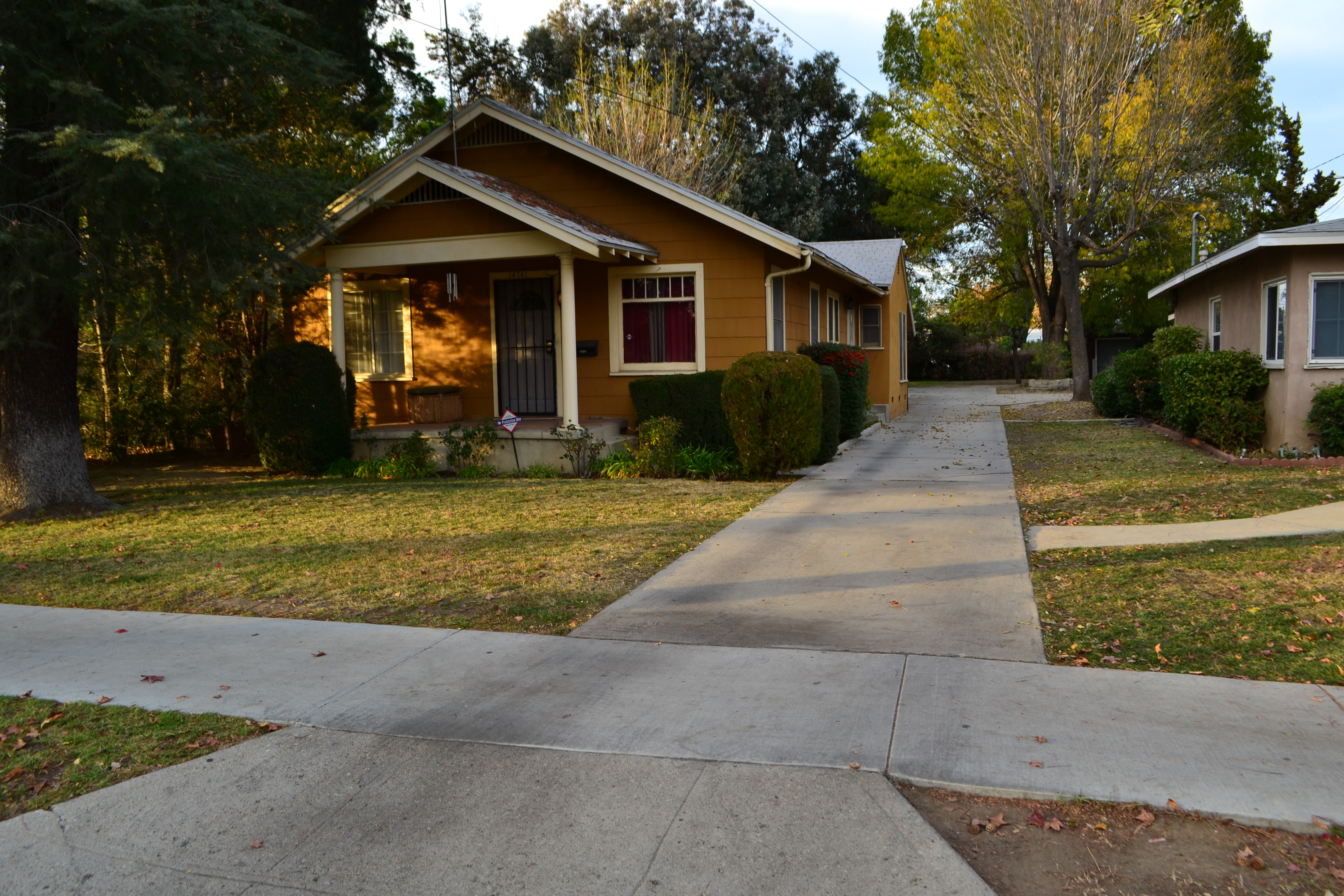
I walked yesterday, in waning light, along Kittridge, a neat and well-kept street of homes between Columbus and Van Nuys Boulevard.

West of Kester, Kittridge is a ranch house neighborhood entirely built up after World War Two. Within living memory of some, this area was once entirely agricultural. What lay west of Van Nuys High School was the vast beyond of walnut and orange trees, ranch lands and open spaces. Within 15 frantic years it was developed or destroyed, depending on your viewpoint. And by 1960, it was the Valley we know today, structurally, not demographically, of course.

The homes here are solid, the lawns (mostly) cut. The flat streets and sidewalks recall a Chicago suburb, a place where American flags are flown, and bad news and bad behavior is kept quietly behind drawn drapes.

Van Nuys, CA 91405

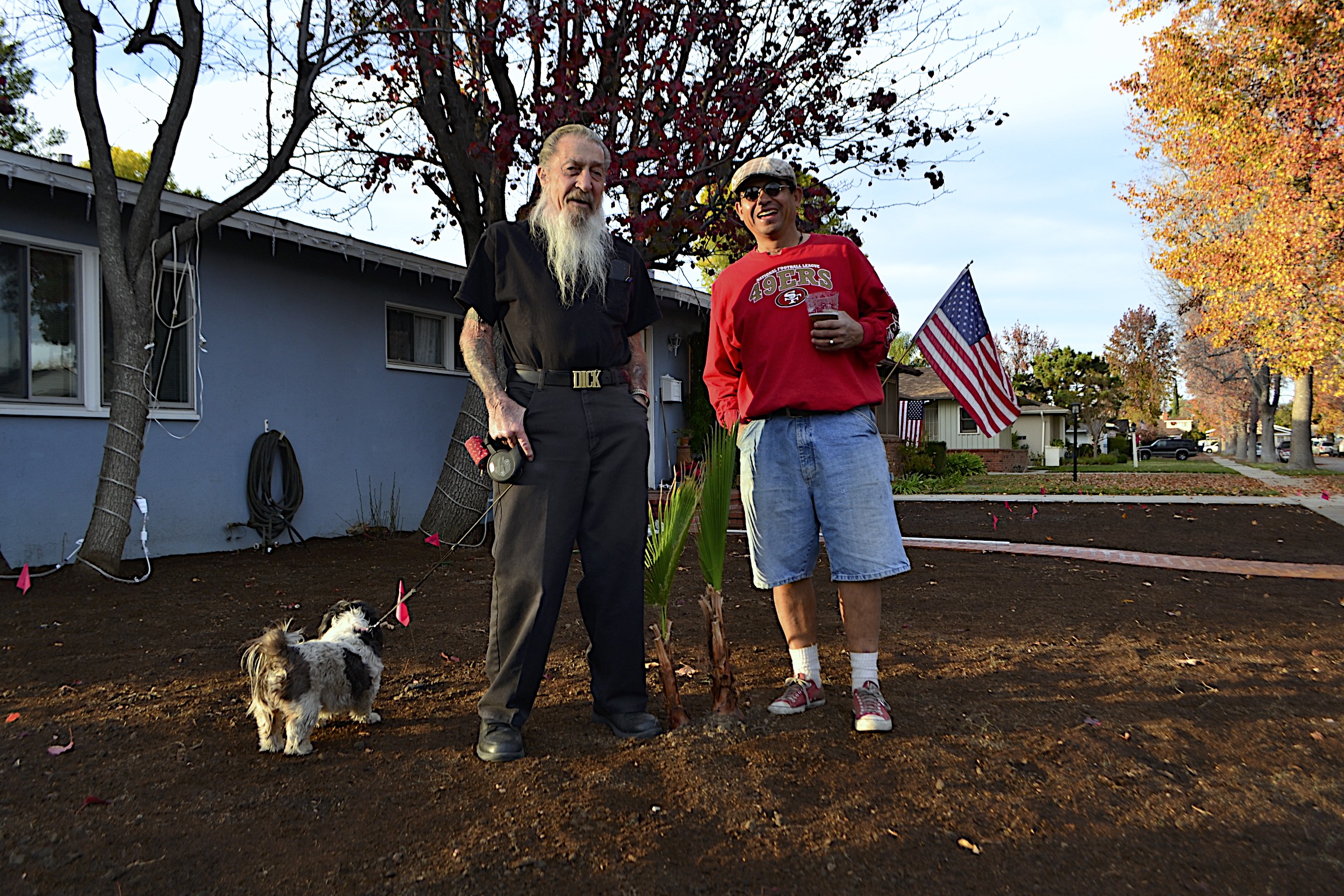
Two friendly eccentrics were outside yesterday: a man who looked like Fidel Castro with an engraved “RICK” metal belt buckle, and his beer mug holding friend. They stood on the corner of Kittridge and Lemona as workmen re-sodded Rick’s lawn.

I spoke to them briefly, repeating my infernal line. “I write a blog about Van Nuys called Here in Van Nuys.”

“Here in what?” asked the beer mugger.

Here in Van Nuys,” I said.

“You work for the government?” he asked.

“No. Let me take your photo,” I said.

“No. You got a card?” he asked.

I handed him my printed business card.

“So you write what?” he asked.

“A blog, called Here in Van Nuys,” I said.

The older man with the Fidel Castro beard knew exactly what a blog was. He also complimented my camera and my quilted jacket.

I moved on after that, and crossed to the east side of Kittridge.

DSC_3627

DSC_3629

DSC_3630

DSC_3632

DSC_3634

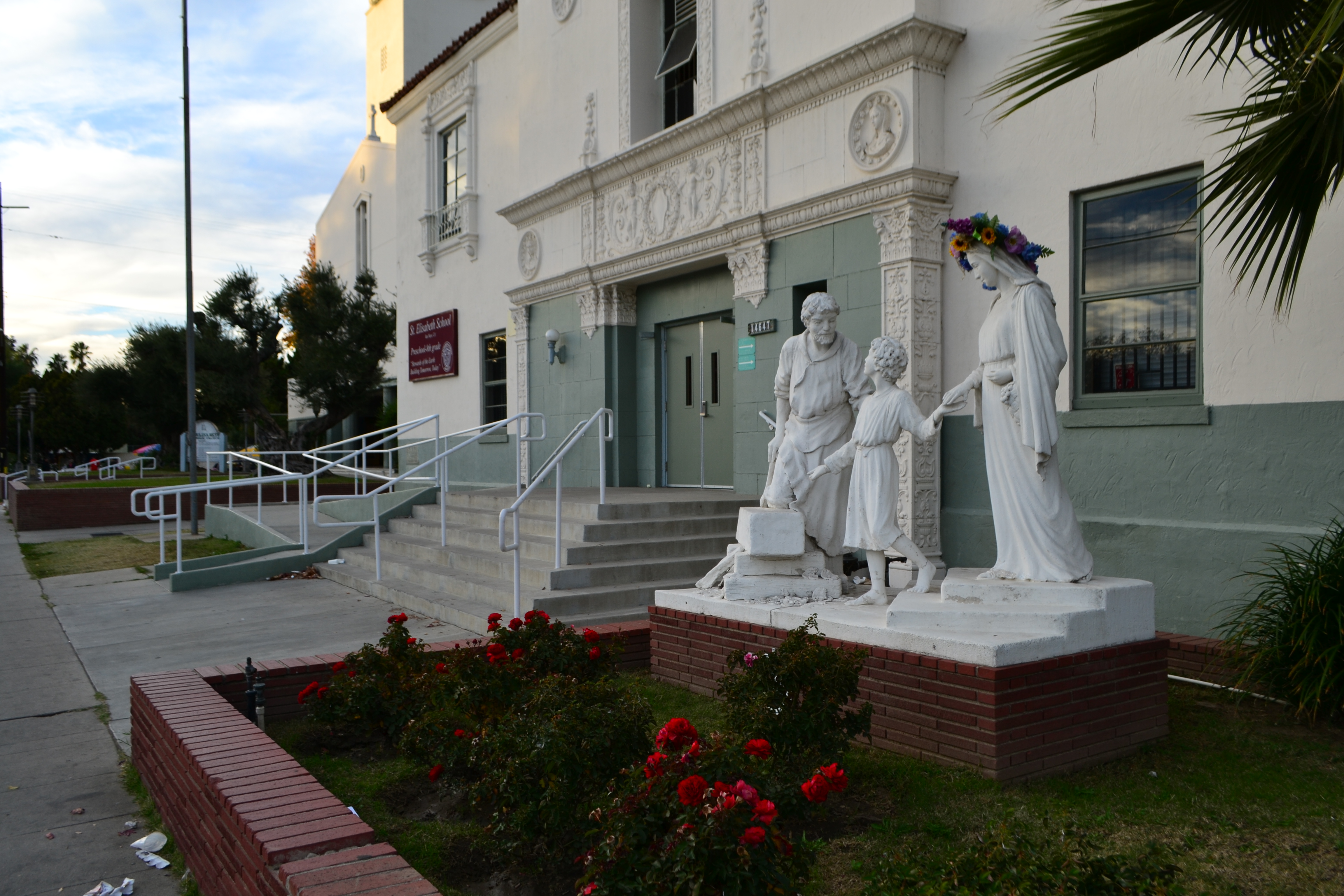
On the east side of Kittridge, north of Van Nuys High School, the street is grounded in civic and religious solidity by the presence of St. Elisabeth’s Catholic Church and the enormous VNHS.

Rod Serling might have come here to film an episode of The Twilight Zone, so awash in normalcy and Americanism that one could be dropped here and think that nothing had changed in Van Nuys since the Eisenhower administration.

Notably eccentric and interesting collections of houses line the street, ranging from neat bungalows to sprawling pre-war ranches. They are placed on long, narrow lots, going back far, into deep yards, but they seem to have been immunized from the decline into squalor infecting some older streets in Van Nuys.

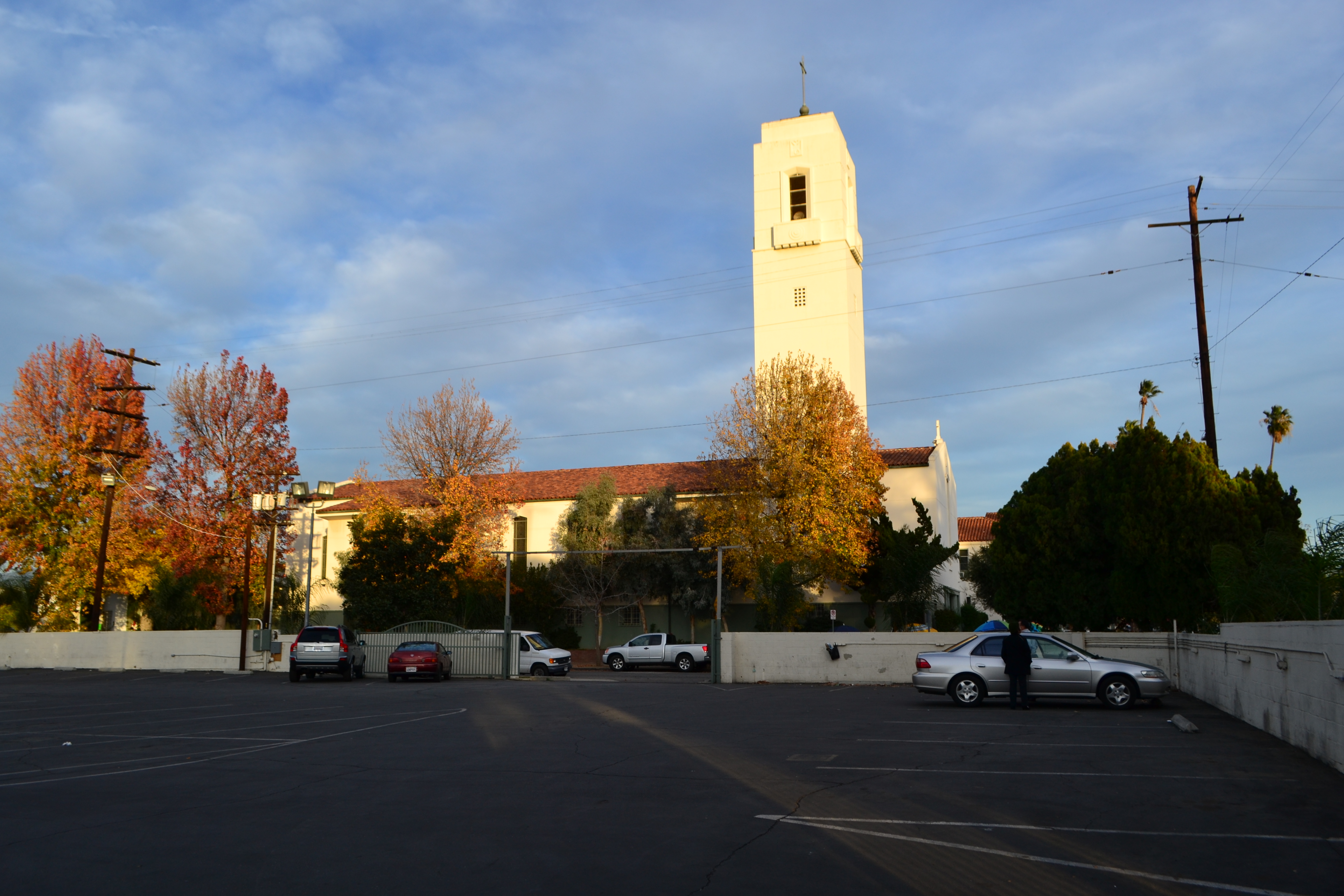
I stopped and stood in the parking of St. Elisabeth’s across from a tall white spire bathing in the remaining daylight. People were gathered, under umbrellas, for an event involving food and prayer.

And the second part story of my Sunday walk will continue in another essay….

DSC_3638

DSC_3648

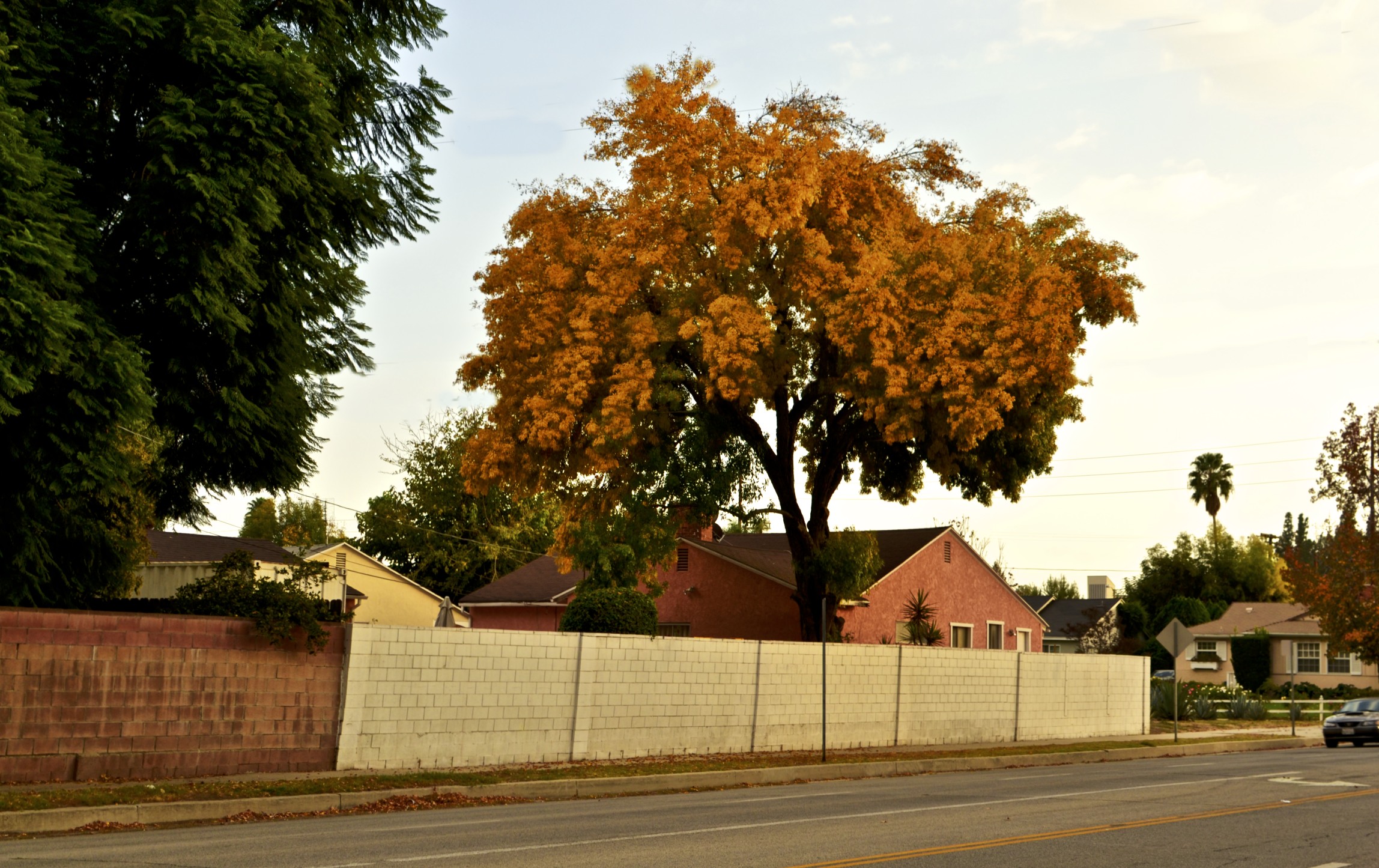
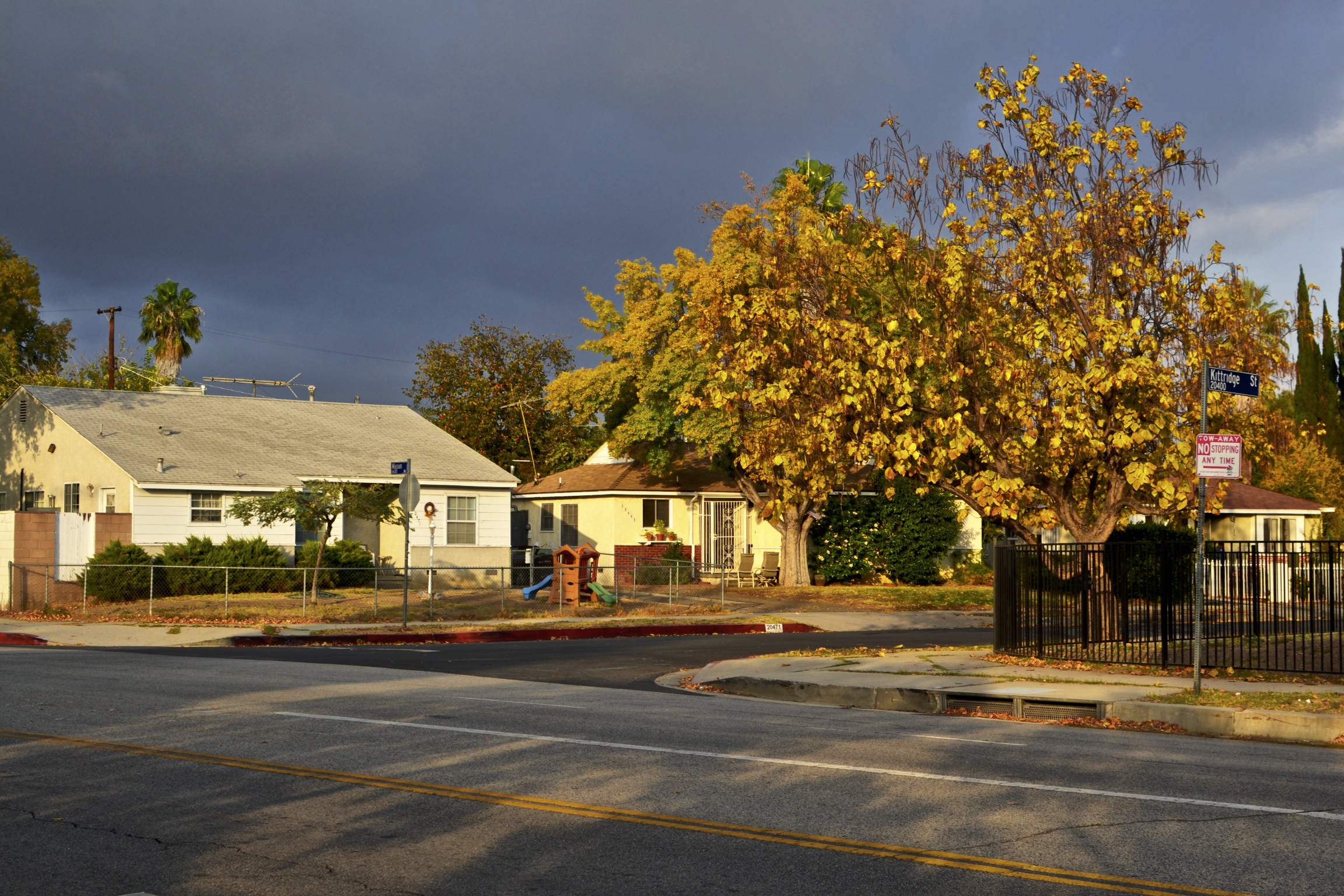
Autumn.


Mason St.

20400 Kittridge St.

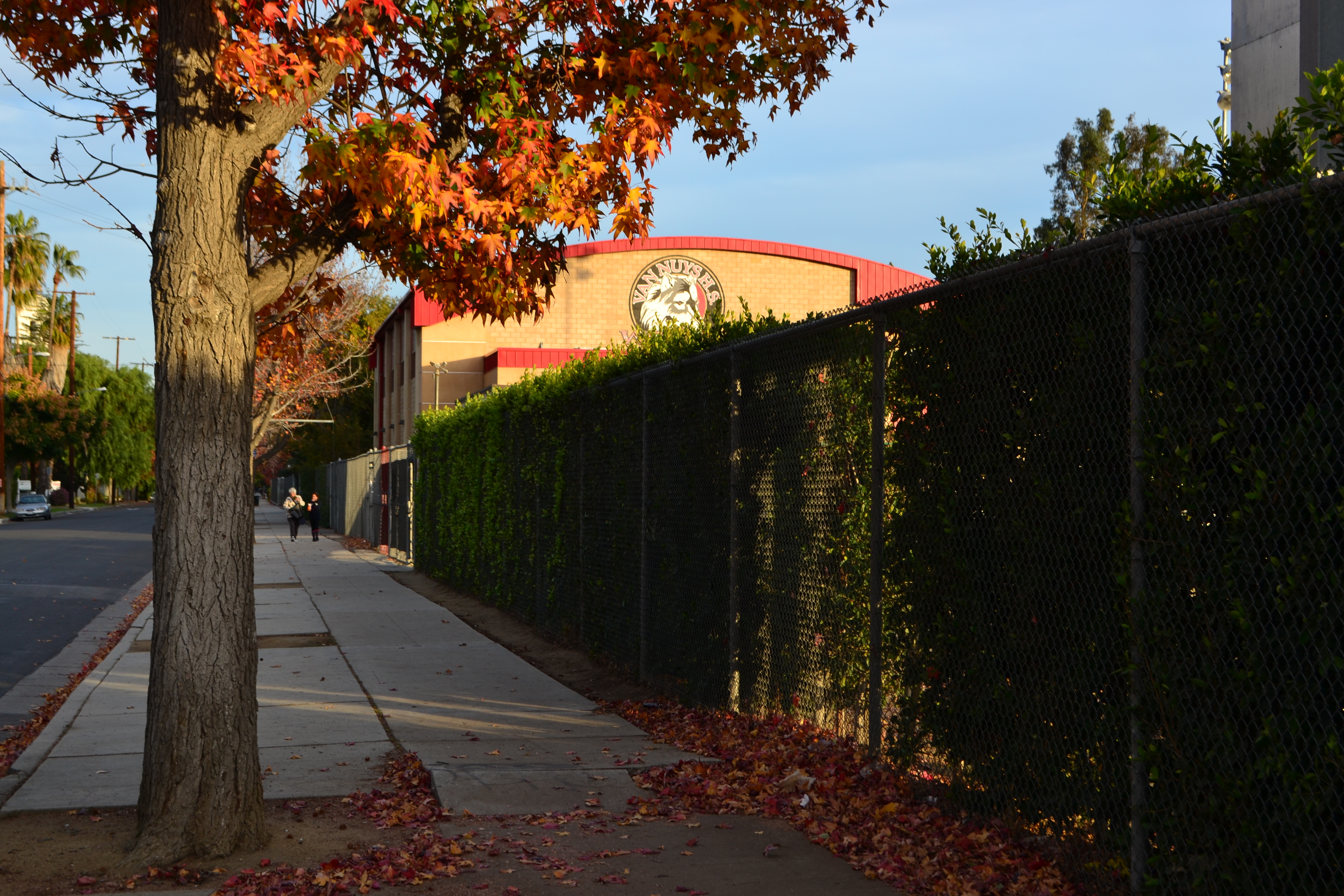
Autumn scenes near Pierce College in Winnetka along Mason and Kittridge Streets.

Lovely 24 Hours in the San Fernando Valley…


http://northhollywood.patch.com/groups/police-and-fire/p/former-disney-star-lee-thompson-found-dead

http://northhollywood.patch.com/groups/police-and-fire/p/man-shot-to-death-on-laurel-canyon-in-north-hollywood

http://losangeles.cbslocal.com/2013/08/18/pedestrian-35-fatally-struck-in-studio-city-hit-and-run/

http://www.latimes.com/local/lanow/la-me-ln-sherman-oaks-hit-and-run-20130818,0,1155543.story

Cindy vs. Nuri


On Tuesday, July 23rd, two women, Cindy Montanez and Nuri Martinez, will face off in a special election to decide the next leader of LA’s 6th District which includes Van Nuys, Arleta and Sun Valley.

After a dozen non-productive and self-destructive years of Councilman Tony Cardenas, the district is still one of the least appealing areas of the San Fernando Valley. Downtown Van Nuys is dying, its post office closed, its shops vacant. The Van Nuys Neighborhood Council is a long-running joke, producing theatrics and anger instead of cleaning up the streets.

Why Van Nuys should continue to suffer is one of the strange mysteries of our city.

It is centrally located, adjacent to North Hollywood and Sherman Oaks, an easy commute to Woodland Hills, Studio City and Hollywood. It is served by buses and three freeways, so it certainly does not lack transportation. On many streets there are stunningly beautiful homes often used for filming movies and commercials.

The downfall of Van Nuys, which was established in 1911, began after WII when regional shopping centers replaced mom and pop stores. The widening of Van Nuys Boulevard and Victory, the elimination of diagonal parking, the ripping down of old houses to make way for large government buildings, the influx of immigrants who were poorer and less educated, the slumlords who bought up apartments and let them decay, the emptying out of legitimate business to make way for pot shops, massage parlors and bail bonds, all of these contributed to the El Crappo aura. And basically El Crappo is all one sees driving along Van Nuys Boulevard.

Whomever wins on Tuesday, Ms. Montanez or Ms. Martinez, both ladies (I like that word) will have to dig in her heels and bring shovel-ready action to Van Nuys, and concentrate with all her might in rebuilding a civilized and thriving district that is no longer the laughing stock of Los Angeles.