1986 LAPD Bomb Squad Killings


On Friday, July 18, 2025, three LA Country Sheriff’s deputies, handling explosive material taken from an apartment garage in Santa Monica, were killed in an explosion at the department’s Biscailuz Center Training Academy in East Los Angeles.

The deputies had been called to 800 Bay Street last Thursday after the Santa Monica police requested assistance in safe removal of the explosives. The FBI and LAPD’s bomb squad are assisting with the investigation.


This tragedy reminded me of a documentary I had worked on about 18 years ago for the History Channel called “North Mission Road,” concerning true crime investigations inside the LA County Coroner’s Office.

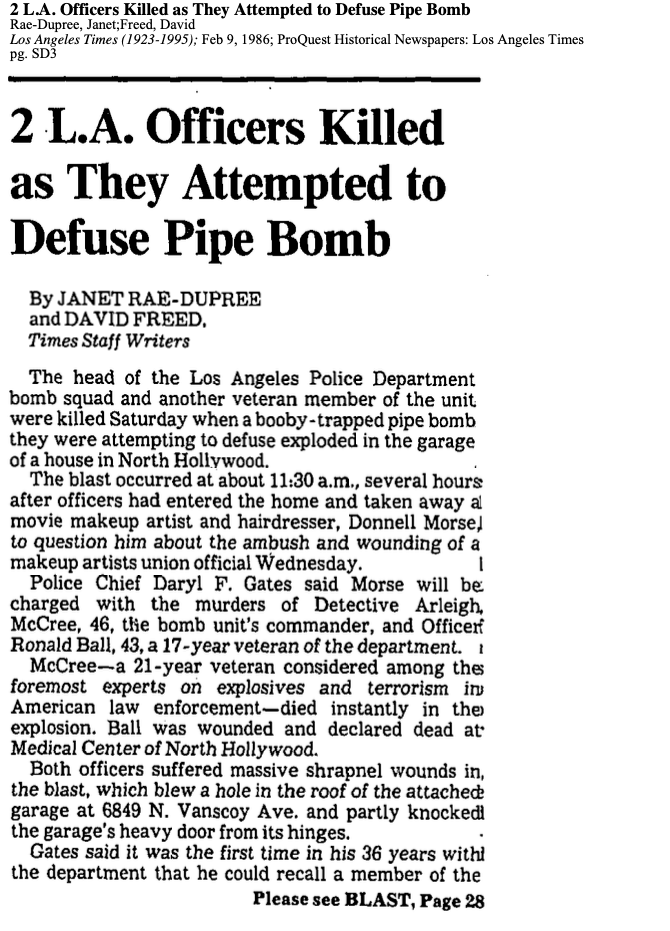
The story involved the February 9, 1986 deaths of two highly experienced LAPD Bomb Squad officers who were defusing a homemade pipe bomb in a home garage at 6849 N. Vanscoy Avenue in North Hollywood. 

Detective Arleigh McCree, 46, the bomb unit’s commander, and Officer Ronald Ball, 43, a 17-year veteran of the department, suffered massive shrapnel wounds and died instantly in the explosion.

McCree headed the Police Department’s bomb squad unit for seven years. He was head of security for the 1984 Summer Olympics and had been an investigator in the 1983 US Marine Corps bombing in Lebanon which killed 241 marines and sailors, the largest loss of life for the Marines since WWII.

It was the first time LAPD bomb squad members had been killed in the line of duty.

The bomb had gone off in the garage of a home where a suspect lived, a man named Donnell Morse, 36, a disgruntled makeup artist who was suspected of an ambush shooting against Howard Smit, the 74-year-old business manager of the Makeup Artists and Hair Stylists Union Local No. 706 as Smit left headquarters on Chandler near Tujunga at midnight. Smit was wounded by sniper, who fired several shots and then drove off, and who police believed was Morse. 

In 1989, Morse was sentenced to life in prison without parole for the deaths of the two officers, and possession of explosives.

When we made the 2007 documentary, we recreated the investigation and the explosion, using our rudimentary low budget actors and non-union special effects. I cast dozens of young actors, rented police uniforms, and booked my neighbor’s house to recreate the deadly event. PAs built a realistic, non-functioning homemade pipe bomb from an illustration inside a 1960s anarchist book found at a used bookstore in Glendale.

As associate producer I also had to find the experts, family members and living victims of the crime to interview.

We took a crew up to the Studio City home of elderly Howard Smit, then about 96, who still lived in the late 1940s Blairwood Drive home he built during his long, illustrious career that included The Wizard of Oz (1939), The Birds (1963), Marnie (1964) and Planet of the Apes (1968). 

He was gracious and entirely lucent, recalling every detail of his bizarre brush with death outside of the Chandler Boulevard offices of his union.


The bomb squad was shaken by the deaths of the two men, and some of the department could not quite grasp the horrific fact that an amateur bomb making criminal, who worked as a makeup artist, could somehow kill the top police experts in bomb making and bomb defusing. 

The effeminate, artificial image of make-up artistry was contrasted with the brutality of war, as if the power of movie illusion had somehow fought a real-life battle with veterans from law enforcement ….and won.

I have pasted some LA Times articles about the 1986 murder investigation and bomb squad killings below:

What the Hell Has Happened to Santa Monica?


Where Have All the People Gone?


It has been some two and a half years since the pandemic began, and somehow it is sort of (not) over. In that time, since March 2020, America has been in a slow-motion meltdown, proceeding quickly, an epoch unlike any other with riots, lockdowns, and a lunatic who would not and will not accept that he is no longer President.


There was always Santa Monica for me. 

Since I came here in 1994, that always cooler place near the ocean was a destination for dining, drinking, shopping, biking, and hiking. It was where you took out-of-town guests, where you went to show them, half truthfully, that LA was just as walkable, vibrant, urbane and enjoyable as New York.

I went down there yesterday to cool off and what remains on Third Street is deserted. Gone are the crowds, and gone are the stores: J Crew, Banana Republic, Bloomingdales, Barneys, Barnes and Noble, Old Navy, and Levi’s.

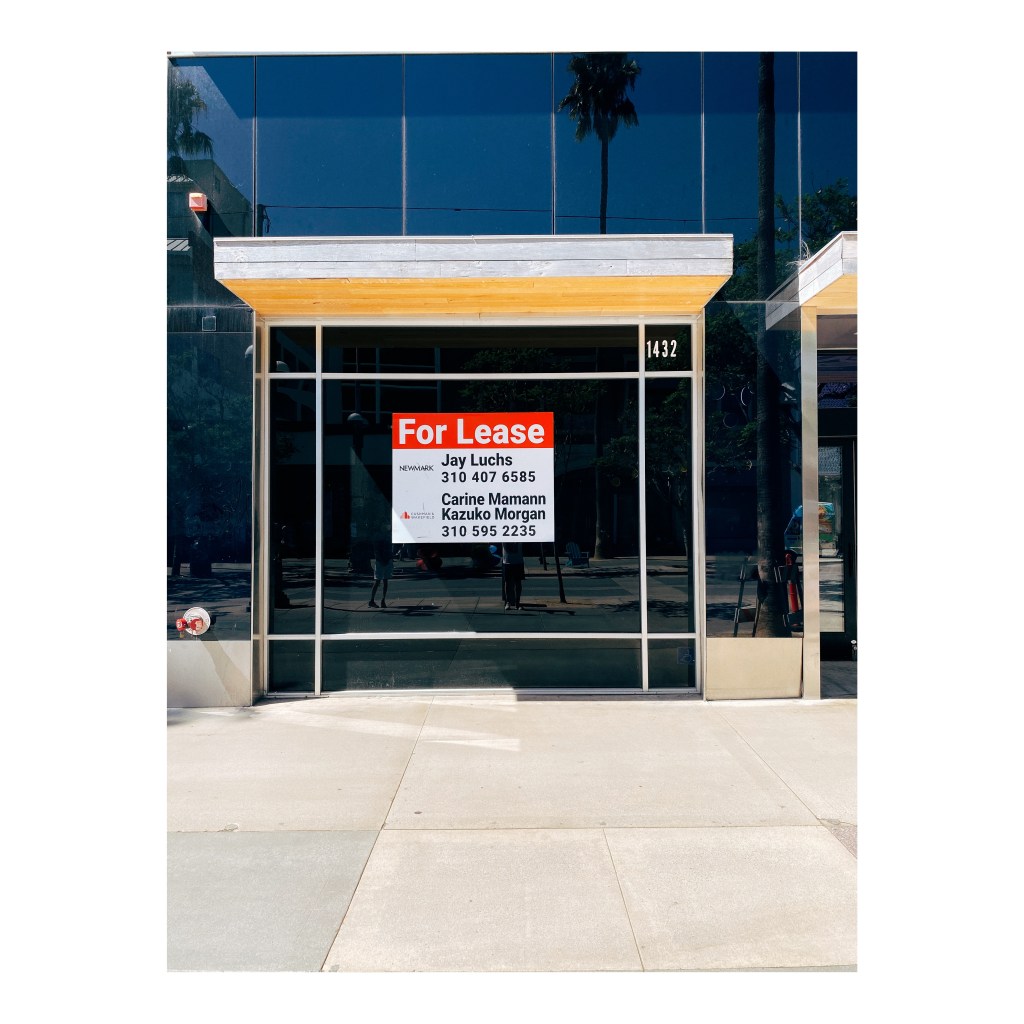
The sun still shines brilliantly. The buildings, for the most part, are well-kept. But the life and the crowds are absent. Benches, outdoor dining, storefronts, are lifeless. There are “for lease” signs everywhere. 

In some ways it feels as if the clock has spun backwards before gentrification, when Third Street was awaiting revitalization, when JC Penney was the big store. 

We walked, expecting to come to that fancy outdoor mall with the wine bar on the floor and Bloomingdale’s, the blowout salon, Jonathan Adler, Starbucks and CB2, but all of it was gone, shuttered, closed down, papered over windows and nothing. All the jobs, all the merchandise, all the interactions between people and goods, work and profit, and millions in tax revenues for the City of Santa Monica, wiped out.

This is August! This the height of tourist season! This is when thousands of families come to Santa Monica to partake and enjoy everything this city has to offer! And hardly anybody was there on a Saturday morning! Except for the Farmer’s Market.

The low point for me was May 31, 2020 when mayhem and looting destroyed many businesses, the murder of George Floyd acting as irrational justification for mass robbery, fires and stealing. I remember the BMWs and Audi’s pulling up to Vans, the broken glass, the fat, young, tattooed trash in black leggings, with boxes of sneakers getting into their cars and driving off. I saw the mobs work their way up the street and hit everything they could get their hands on. 

And now Santa Monica is a quieter and dying version of its pre-pandemic, pre-George Floyd self. Will it come back? Detroit, Newark, The South Side of Chicago, Watts, 1965, 1967, 1968…are they somehow the ancestors of Santa Monica’s fate? Or does Santa Monica belong with Beverly Hills, often assaulted, but easily available to afford plastic surgery, police protection, and investment capital?

Will Santa Monica slowly fade off the way so much of Los Angeles has, all the places that once held joy and nice stores and nice memories: Miracle Mile, Westwood, Bullocks, 7th Street, Van Nuys Boulevard, the May Company?

Los Angeles is fickle, people dispose of anything inconvenient or unpleasant if it does not offer amusement or distraction. A destination without anything to offer is DOA.

The Bright Place


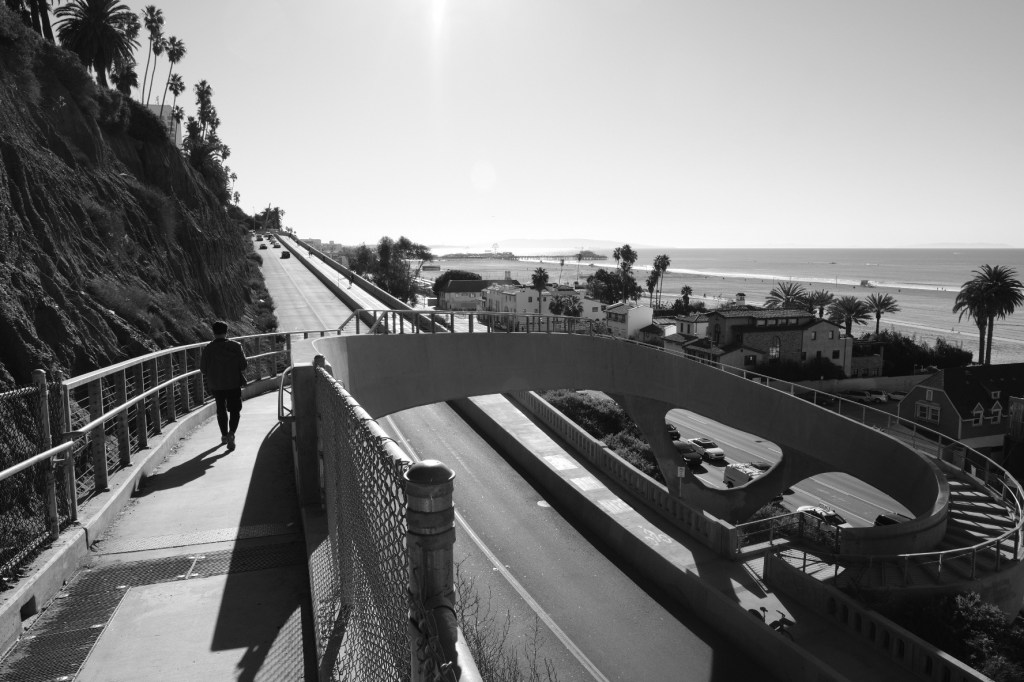
We went down to Santa Monica last weekend to walk around the parks and the beach.

The weather was sunny and windy and the skies were clear.

There were people outside: runners, bikers, exercisers.

On the sands there were volleyball games, soccer games.

In the water, there were people in wet suits on surfboards, paddling.

It was Southern California and we were happy to be here. (Even if I look serious.)

Return to East Rustic Road.


One sweltering day, sometime in July 2012, I left Van Nuys with my camera to escape the 105 degree heat.

I got off the 405 and drove west, towards the ocean, along San Vicente, until I came into a picturesque canyon, shrouded in fog. I parked my car and ventured on foot to photograph the trees and the architecture in cool, refreshing tranquility.

I walked up East Rustic Road where there was, indeed, rusticity in nature and architecture. I stopped on the sidewalk along the street and beheld the glory of clouds coming down from the hills. All around were birds and flowers, fragrance and song.

And then, suddenly, a shrill voice yelled at me, “Why are you photographing mailboxes on this street!” 

Dazed, stunned, I was speechless. 

Who the hell was screaming at me? I looked around and an old woman came out of a garage of a house.

“I was driving up the street and saw you taking pictures of all the mailboxes! What are you doing here!” she demanded.

Now pissed off that I was being interrogated, and my right to walk and photograph on a public street was being infringed upon; appalled at her lying and false charges; I talked back. I said something like who are you to ask me? Did I need a permit to take a photo? Did I need to ask your permission to photograph a cloud?

“I have a right to know!” she screamed again.

Then an old man (her husband?) came out the front door and yelled, “If you don’t get off our street we are calling the Santa Monica Police!”

Not eager to incite, I walked away.

My beautiful, serene, moment of enjoyment was spoiled by these two irrational people.

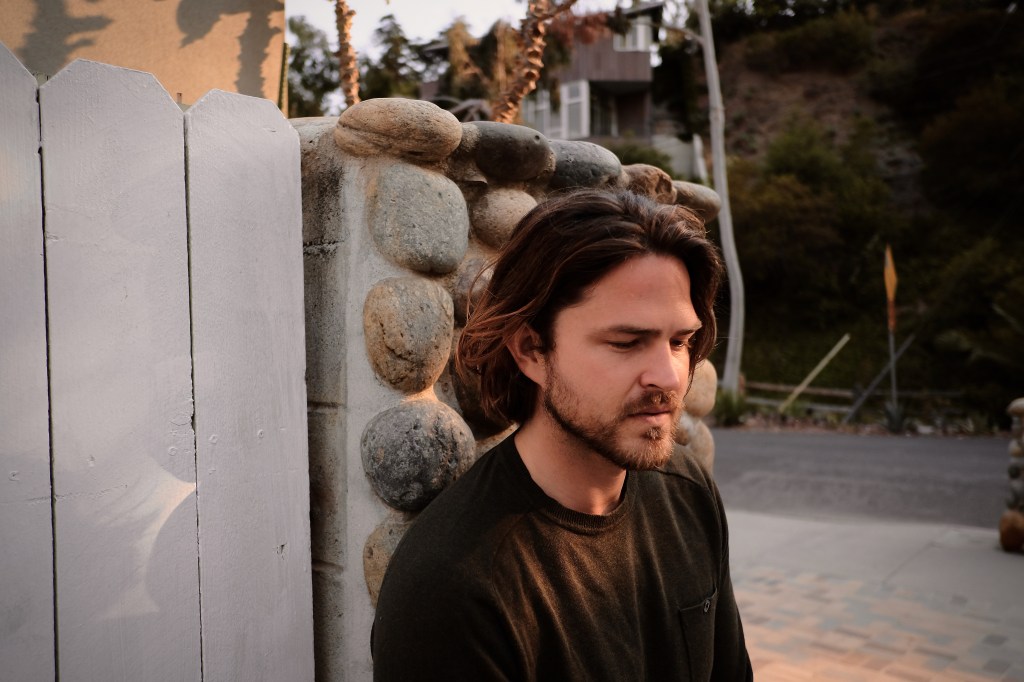
I vowed that one day I would come back here and shoot photos again, perhaps some portraits of an actor.

This past weekend, nine years later, I did just that. Without incident.

Model: Cheyne Hannegan

Escaping the Haze

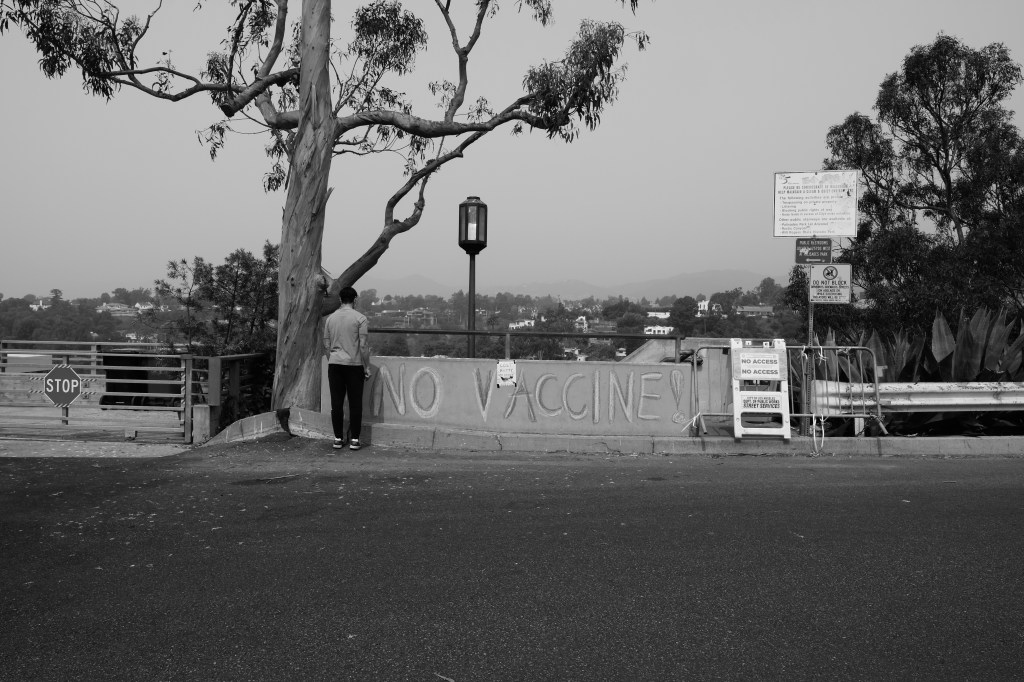
No Vaccine, Adelaide Dr.

Seeking to escape the haze and home confinement, we went where we used to go on Sunday in normal times: Santa Monica.

We parked on one of the wide, flat streets north of Montana, away from crowds. And we walked in masks that we imagined shielded us from dangers visible and invisible.

At Adelaide and 4th, where a palm lined grass island ends at a cliff and now blockaded stairs, someone had written “No Vaccine” on a wall.

This year everything is No: no work, no travel, no movies, no dining out, no socializing, no school, no hugs, no kisses, no bars, no strangers, no baby visits, no old people, and, of course, no vaccine.

Before the pandemic there were many runners here, and they would run up and down the stairs, but the virus put an end to that, and now the bad air ensures it.

This part of Santa Monica is grand, with large houses, of every style and decade from the past 100 years, but everything, under the grayish, smoky skies seemed tired, out of breath, defeated; like the city and the state and the nation.

There were Porsches parked in driveways, and Mercedes speeding past, but there seemed no respite from thoughts of ruin and gloom. Who will save us? Will we burn down? Will we be safe when fascism takes over? Or will the lawless sack the mansions and the stores while hated cops stand by and watch? Will a smart leader emerge? Or shall we suffer under Q-Anon and the conspiratorial voices on Next Door?

Who shall live and who shall die and who shall find the most followers on Instagram? 

Only the Shadow Knows.

Along Ocean Avenue at Georgina there is a restoration of a grand mansion, with construction illustrations of the elegant plans, and other photographs of historic and happier Santa Monica. Why there’s Mr. Pepper Gomez, Muscle Beach Contest Winner, 1950.

On Georgina there are yard signs, some of them angry. “Elect a clown, expect a circus” says one placed inside a long olive tree lined forecourt of a gated house.

Sometime from the 1940s through the 80s, this area was not so rich. There were large houses, but they weren’t expensive, so developers came in and tore down some of the historic ones and put up cheap apartments. 

A 1971 apartment at 129 Marguerita is emblazoned with a strange sign: 129 Career. A door or two off Ocean Avenue, the 2-story building is remarkably plain and homely, with a side alley of individual garage doors, stucco wall and steel windows. Balconies are big and full of plastic furniture. The good life was once available at bargain prices.

And at 147 Adelaide (built 1926) there is a mysterious, long, downsloping, concrete driveway that leads into an old, wood door garage with a five-panel utility door next to it. Two spotlights were on at Noon, and in the distance, haze covered the canyon and the hills and the houses.