Journey to Intelligentsia


I hate the place but I agreed to meet a friend who lives in Silver Lake down at the expensive, pretentious coffee house where there are many nice dogs and many mean people.

It was a random Tuesday in Los Angeles. The 101 was packed with cars and trucks. But when I drove down Hollywood to Sunset, I passed less than five people walking on the streets.

They were repairing the electrical wires on Sunset, on the year 1888 wooden poles, so I turned up Hyperion and found parking across the street from a man sleeping on the sidewalk in front of the two-million-dollar wooden bungalow.

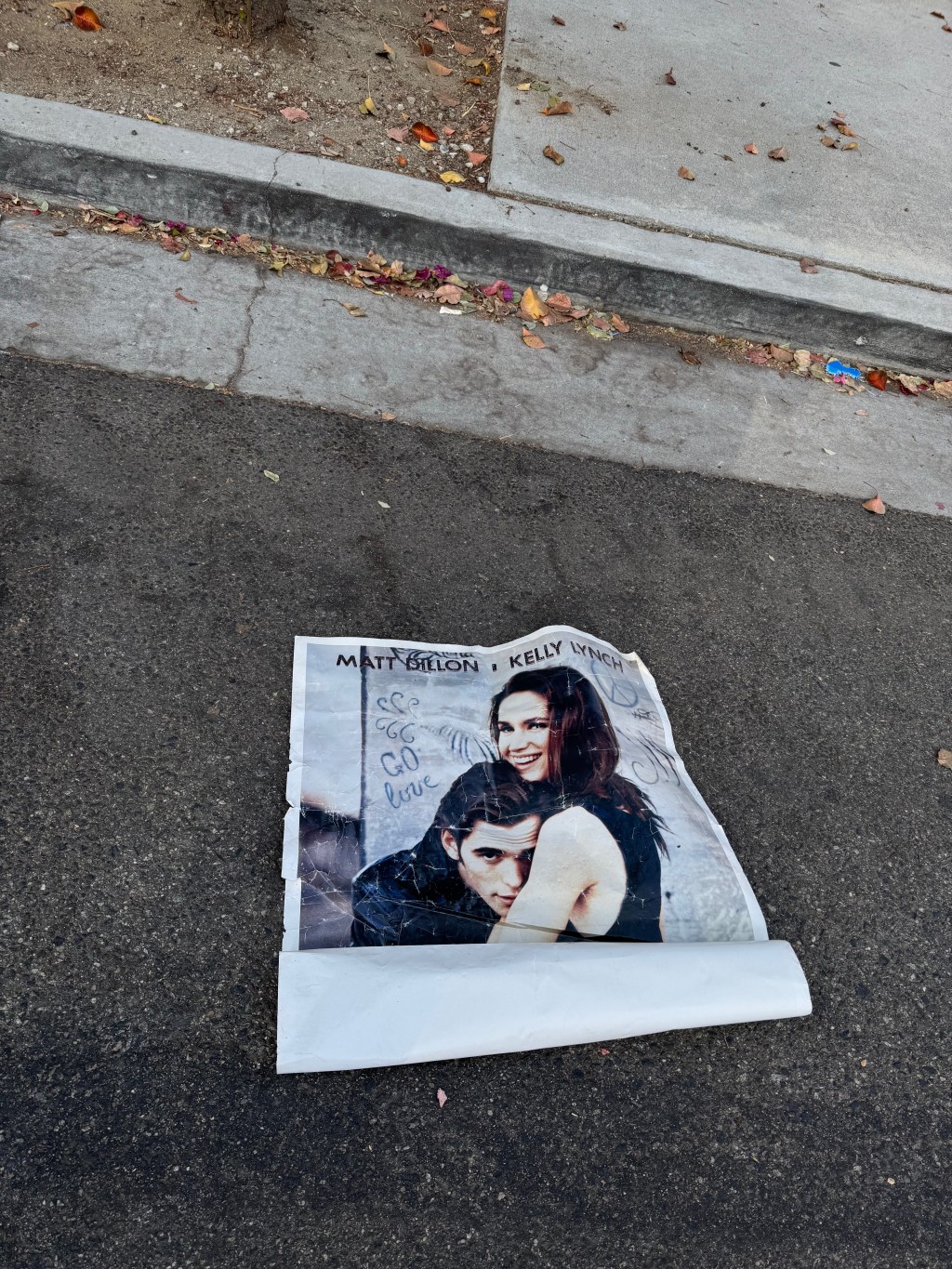
A discarded, half rolled out movie poster from the Matt Dillion/Kelly Lynch picture, “Drugstore Cowboy” (1989) was thrown on the street. An unemployed, 60-year-old gaffer on that film probably threw it out before moving back to Naperville.

I had to pee badly so I made a mad dash to Intelligentsia and found that the bathrooms were allegedly out of service. Quick thinking and I ran down to the other coffee place, La Colombe, which has better coffee, nicer servers and a clean, open restroom. I bought a croissant which was pretty good and walked back down to Intelligentsia to meet my friend.

There were angry political posters taped to every pole I passed:  

We need and demand a whole new way to live, a fundamentally different system.

LA’s Best Restaurants Are Feeding You a Lie.

And there was even a quotation from Black Conservative Thomas Sowell:

“The fact that so many politicians are such shameless liars is not only a reflection on them, it is also a reflection on us.”

      Perhaps the progressive person who posted Sowell’s quote didn’t know that Sowell is an ardent opponent of racial quotas.

      Two artfully outfitted Japanese guys were taking photos of the coffee shop exterior to document their visit to this legendary place. I felt excited for them being so excited.

      I found a seat outside across from a large black French Poodle and his bearded owner in a baseball cap imprinted with the flag of a foreign country.

      A small, middle-aged man emerged carrying an espresso cup balanced on a saucer, carrying a pastry, holding a dog leash attached to a large, gray Weimaraner.

      “Do you mind dogs?” he asked as he sat down and attempted to fit his large animal between the petite table and the flat wood bench.

      I was still waiting for my friend as more dogs arrived. It was an excellent seat for dog watching, looking at their fur colors, admiring their leashes, listening to their barking. The whole patio was dogs, tied up to the table legs, emptied of their owners who were inside ordering drinks.

      Finally, my friend arrived. He is about 50, a short Filipino graphic designer who carried Age of Revolutions: Progress and Backlash from 1600 to the Present by Fareed Zakaria. 

      He told me he had a crazy dream about losing expensive camera equipment. It inspired me to tell him about a camera store in St. Moritz I had recently seen that kept hundreds of thousands of dollars of electronics in their store window overnight without fear of theft.

      We got our coffees and new seats and sat on the outdoor patio where no loud humans could be heard, only the occasional bark from one of 12 dogs.

      Suddenly, a foul faced young woman holding a saucer of water for her rust bulldog threw the water bowl liquid on the patio inches from where we were sitting. She might have walked to the numerous plant containers and politely dumped her dog water there, but since this was Los Angeles, not Switzerland, consideration for others was highly unlikely. 

      We talked more about travel, politics, international affairs, apartments, real estate, and everything that might have involved Donald Trump, but his name was never mentioned. My friend asked if I wanted to walk down Sunset, perhaps to a park, to sit and talk, so we left Intelligentsia, the dog motel with coffee drinks.

      “Are you still hungry?” he asked. I assumed he was going to buy me a sandwich.

      We walked into Bravo Toast, a place with gourmet toasts. He ordered one with thin slices of bananas and a power drink. He paid for his sandwich and drink and got a number.

      “Hey, should I order something Ross?” I asked.

      “Oh, I’m sorry Andrew. Go ahead,” he said.

      But since this was Los Angeles, not Switzerland, consideration for others was highly unlikely.

      I got one with ricotta cheese for $12.50, plus $1.50 tip, my treat, for me.

      We were conversing, quietly, enjoying our food and ruminating about life, ideas, dreams.

      Then the noise began. 

      Two skinny, female presenting things somewhere north of 20 with many piercings and 18-inch waists sat down nearby. As they screamed and laughed not even the fire engines with sirens speeding down Sunset could be heard. I briefly considered asking them to talk softer, but since this was Los Angeles, not Switzerland, consideration for others was highly unlikely.

      We left Bravo Toast and said good-bye on Sunset.      

“Next time I’ll come up to Van Nuys and you can show me around,” Ross said. 

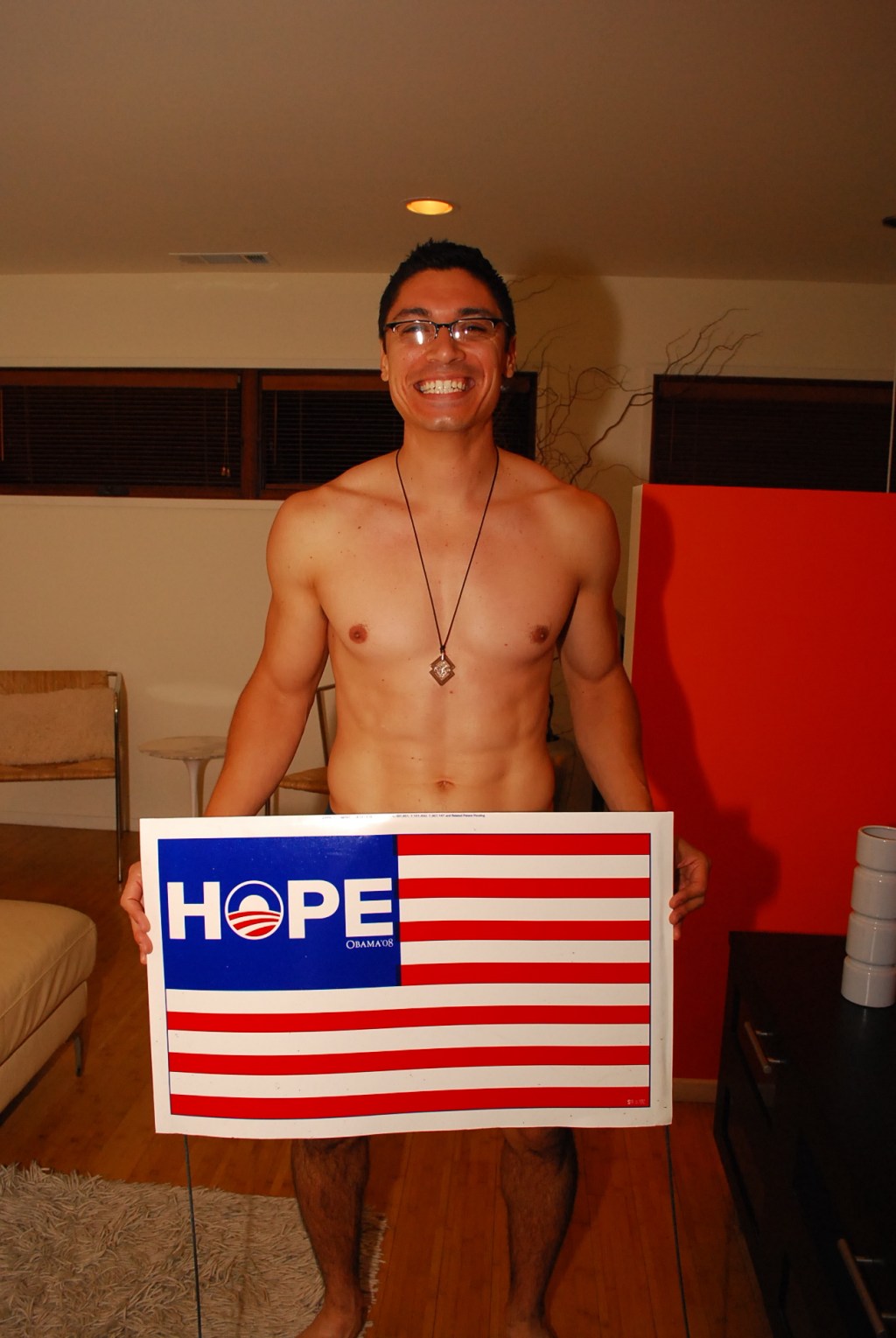
Obama Fundraiser: Silverlake, October 4, 2008.


For ten years a dead external hard drive lay abandoned in our garage, a device that once backed up our desktop computer from 2007-2012 and then suddenly died.

We cleaned our garage last month and found the dead drive. We took it to a tech in Toluca Lake who retrieved everything for $150.

Now we have tens of thousands of revived photos, seemingly taken yesterday, but actually 14 years old. I’m going through the files now and labeling them.


One folder contained a memorable evening from October 4, 2008. 

On that night, we attended an Obama fund raiser at a private home in Silver Lake along a winding street above Sunset.

There is my 36-year-old brother Rick with his wife, Pri, and her 27-year-old sister Rue. Muscular, smiling, shirtless Jeremiah and his girlfriend Ivy.

There are good friends and acquaintances in floor dragging denim and long t-shirts under short ones. Fun includes John McCain, Sarah Palin and Dick Cheney piñatas, lots of Shepard Fairey designed HOPE t-shirts with Obama’s face, and me in an Obama mask. There are masks of Biden too.

There is food and drink and Ivy in with her Smart Women Vote Obama button.  

The crowd is gay and straight, black, white, asian, male, female. There are high tech devices like digital cameras that are strictly digital cameras, not smartphones.

There are cute young kids and old dogs snuggled up on the sofa.

What I remember most from the event is that one of the guys there wanted to sleep with me, and a woman who had a high position in production wanted to hire me for photography but never hired me.

Through time all the famous faces from that night are connected in our long political show that never ends, jumping from event to event, begging for analysis, but often falling into irrationality, emotionality and missed opportunities.

Dreaming of Exile


DSCF2360Even if you have given up on LA, cursed its tackiness, screamed at its traffic, revolted from its inanities, choked on its air and dreamed of exile from its toxicities, you might be seduced on Sunday afternoon, as I was yesterday, by a place hidden away that seems like a small town in the Poconos.

I accompanied a friend on an errand. She manages properties, and was cleaning up after renters at a small house on a street called Lake Shore Avenue.

East of Glendale Blvd, south of the 2, west of Elysian Park, it sits snuggly into a hill that blocks the setting sun. Shady, built with little bungalows, it bisects, at Effie, an institution: Gateways Hospital and Community Mental Health Center.

A mid-century sign sits at the entrance to the facility.

Egregious, garishly lettered in big vertical typeface, it announces, creepily, its authoritative medicinal mission (rehabilitation, research, hospital) as if they were triple feature films from the 50s like “I Want to Live”, “The Creature from the Black Lagoon” and “The Blob.”


DSCF2348

DSCF2354

DSCF2351

We parked on Effie and looked ahead at a wide dirt path climbing up a steep hill where nets were laid down to trap water and debris that may pour down here fiercely.

My friend went to work on her property, and I climbed up the trail.

Around me were dried, parched grasses, the remnants of homeless blankets and bags of clothes, and, at the top of the hill, a stucco shack of a house, with a pitted asphalt driveway, and a wooden deck. It was guarded by ziggurat cinder block walls and reinforced steel window bars.

The dilapidated home was a find, unusual in its state of disrepair. For we live in a city of brutally competitive property investment, where every top elevation has been captured by someone richer. This mountain hideaway lacked the hidden cameras, the expensive cars, the pool, and the pretense to architecture. An eccentric hermit might inhabit it.

Moby if he had no money might live here.

Its views stretched out to Silverlake, downtown, and tall radio towers across the way. Yet it was an uneasy isolation. It felt dangerous, not reassuring.

Bucolic and rustic in Los Angeles never exists in purity.

Helicopters and sirens in the distance, the threat of fire, the presence of people without homes, the surprise of events that might end our life erupting from the deepest earth, or from a violent intrusion through an open window. These are the sights, sounds and conjurations of the imagination haunting happy moments.

That is how that house and hill felt.


DSCF2361

Back down on Lake Shore Avenue I walked past institutional houses, illuminated by industrial floodlights, set along the street, behind gates. Two older men were on the stoop of one place, smoking. They nodded to me and I waved back.

Outside the property of Gateways, dominating the bright part of the hill on Lake Shore Avenue, was a tall, two-toned, red and white brick house looming over a row of old garages. Homely, graceless, squinting in the sun, it refuted the lovely myth that everything historic is charming. The white “sanitary” bricks, glossy and washable, were often used in the 1920s on building facades for bakeries and cleaners.

A small signifier of community well-being, a landscaped traffic circle, ended my walk up Lake Shore.

That idea that a street could come together in a circle, unified by architecture, common purpose, cafes and conversation, there was something of that here, but I saw no other pedestrians. The only movement was daylight in retreat, shadows moving over the street.

After walking around, I came back to my friend’s property and went inside. We stacked dishes in the dishwasher, carried out bags of food from the refrigerator, and a basket of dirty towels. She turned on the alarm and locked the door. We got in the car and left to return to the real city beyond.