If you walk around Van Nuys, you encounter unexpectedly graceful and forgotten pieces of architecture.
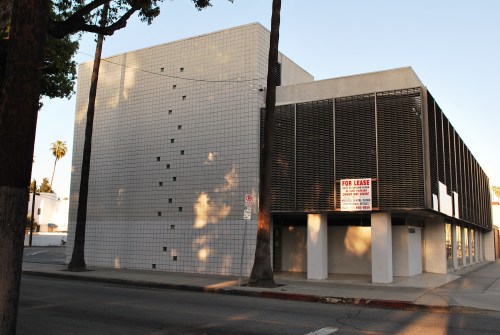
I noticed this white bricked office building, most likely constructed in the early 1960s. This is the type of structure that would excite an architect in Silver Lake, and one could imagine a young firm setting up shop here. Instead, the building sits underutilized, begging for tenants.
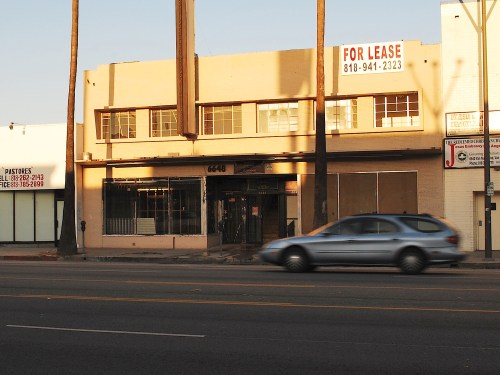
Along Van Nuys Boulevard, just south of Vanowen, is a two-story commercial building, the kind they built in the late 1940s, with steel casement windows and retail space on the ground floor. This might have originally been an optometrist’s office on top, a respectable location for a doctor or perhaps a CPA. If this building were on Rowena and Hyperion it would be a cheese shop, an art gallery or maybe a Cuban cafe. Instead, it sits empty on Van Nuys Boulevard.
It takes some vision and guts to imagine that the failures of Van Nuys can be reversed and that this down and out and street may once again have vibrant commerce, cleanliness and vitality. I do fervently believe that the future of Los Angeles will once again come down to these old, neglected places.
I can see a Van Nuys Boulevard where a light rail system runs down the middle and the street is lined with thriving cafes, apartments and small businesses. I imagine a place where the ugly cobra lights have been dismantled and replaced with decorative lampposts. A Van Nuys where there are cops walking the beat, and people waving hello to their neighbors.
Where are the visionaries? Where is the money that is sitting tightly in the banks, which should be invested in this very community?
And why is there such a paucity of the imagination in changing and rebuilding the real Los Angeles? Why are our politicians and leaders like old clunkers in Detroit, waiting for the federal government to bail us out, when we have the resources and money and to do the work ourselves?
The old buildings are visible reminders that, not so long ago, Van Nuys had optimists who believed in and built up the future of this area.
They came here to create, not to retreat.


 Here in Van Nuys