On Hold


Sometime around Noon on Monday, January 13th my mother, 80-years-old, scoliotic but sentient, walked from her bed to bathroom, and tripped over a blanket.

She lay on the floor, fully conscious, within reach of her Life Alert. Her phone rang multiple times, mostly from her daughter-in-law trying to reach her to confirm a Tuesday medical appointment. She tried to pull herself up but could not. Her pride stopped her from pushing the green button.

20 hours later, wrapped in pillows and suffering dehydration and two fractured vertebrates, emergency services found her alive and took her, by ambulance, to Marina Del Rey Hospital.

A scan later revealed a spot on her right lung. Then a biopsy confirmed aggressive “poorly differentiated” adenocarcinoma or lung cancer stage 2, in her lymph nodes as well, not removable by surgery or treatable by pill, and perhaps not (pending oncology appointments) by chemotherapy or radiation.

For a few weeks, prior to her fall, she had a hacking cough, something many people in dry and smoggy Los Angeles suffer from. Her weight loss seemed to come from paltry eating. Now the benign explanations are stricken from our memory.

After her hospitalization, next to a vigorous and beautiful California woman of 90, she went to the Mar Vista Country Villa, a palm shrouded facility where the nearly dead lay in rooms along hallways sprayed with chemical air fresheners, and nurses are summoned, slowly, by red button, to change patients, bathe them, puff up their pillows, and place beige trays of tan food in front of weak hands, or feed them, as they did my mother, when the sick are too sick to lift a fork.

There was no sleep at Mar Vista Country Villa, interrupted day and night by screams, moans, florescent lights, coughs and agony. The torturously and humorously named “rehab” center assigned a doctor who never met my mother, a man named Sheikh, who stormed into her room one night, woke her up from a deep sleep and yelled, “Hurvitz! Hurvitz! I read your report. Not good. I give you two years at most. I think maybe the Parkinson’s drug you took gave you cancer.”

As she lay in her bed for two weeks we (my brother, his wife, and I) furiously ran defense, interviewing and hiring home care workers, making appointments with doctors, gathering her financial information and assuming power of attorney over her life, financial and medical. Furniture was removed from her apartment, replaced by walkers, wheelchairs, bedpans, shower chairs, elevated toilet seats, grab bars and adult diapers.

And insurance, that lethal octopus of life entangled with death, the overseer of it all, it went into production, turning out bills and invoices and records, demanding attention for its deadlines and payments and vendors, doctors, lab tests, and deductibles.

And we are only now three weeks and two days since the fall.

And I cry almost every day, sitting in traffic on Sepulveda, walking through Ralphs, riding down in the elevator from her apartment, confronting dread and loss, preparing for that unthinkable and uninvited hour, when the woman who gave me life, dies.

Exit Grace.


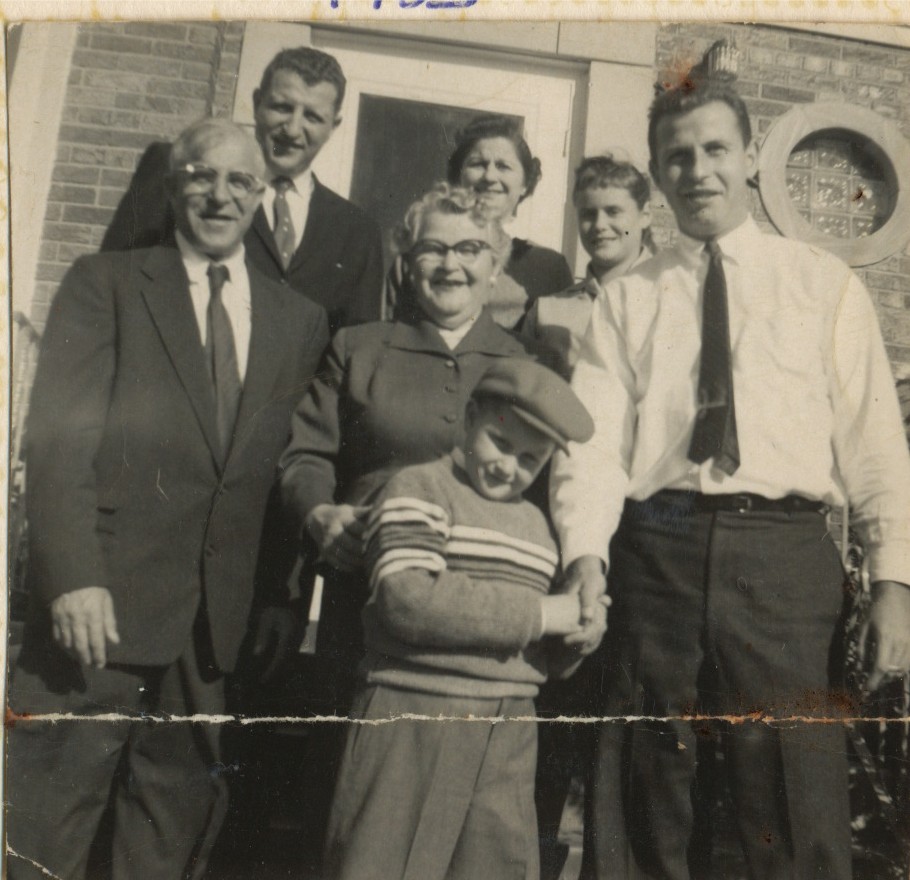
4117770226_eb64f38407_o
1955 Chicago Hurvitz, originally uploaded by Here in Van Nuys.

The 20th Century died 11 years ago, and now some of my most beloved family from that epoch, are dying, fading off, and exiting. And I hardly had a chance to get acquainted.

Born two years after the Versailles Treaty ended WWI, before Lindbergh crossed the Atlantic, before penicillin, direct dial telephone, credit cards, air-conditioning, television and the discovery of the planet Pluto, Harold Hurvitz (1921-2011) was the eldest of three born to Harry and Fanny Hurvitz, who were also the parents of Frances Cohen (1923) and my father Sol (1932-2009).

Harold’s life, biographically and chronologically, encompassed engineering, WWII, husband-hood and father-hood and the building of a successful, multi-generational heating and air-conditioning company that outfitted the many steel and glass buildings anchored low and towering high in the City of Big Shoulders.

Tall, blue-eyed, sharp, intelligent, and possessed of a calm fortitude and self-assurance befitting a man who knew his place in the world, Uncle Harold was for years the gold standard in our family for character, kindness and an inability to be disloyal.

He was married, in 1943, to a woman he had already known for perhaps a decade, (Aunt) Evey. They lived on the South Side, in those intact Jewish neighborhoods of apartment houses, synagogues, delis and social clubs. Those were the days, of Benny Goodman and Drexel Avenue, Hyde Park and Maxwell Street, of black cows and red meat, shvartzes and Chinamen, Inland Steel and the Outer Drive, the Union Stockyards, Soldier’s Field, Irv Kupcinet, the Chicago Daily News, Dad’s Root Beer and Jack Brickhouse.

After the war, Harold and Evey had three kids: Adrienne, Michael and Bruce, and these three went on, under the benevolent leadership and example of their father and mother, to create families of their own, made up of people who have mostly worked to build prosperity, build family connections and create a unity and purpose for life.

How I imagine I fit into my own family, and how my father imagined he fit into his family are curiously and strongly connected to the life of Harold Hurvitz.

I found, after my father died in 2009, that I was more cautious about the mythology of autobiography. A human being creates his own story, and he adheres to it, whether true or false. Let three children come out of the same womb, and each child will have his own version of family life and how well he was raised.

The death of Uncle Harold is strange, strange because his tenure on Earth was so long, and his presence, like the columns holding up the Parthenon: structural and eternal, resistant and real.

My own relationship to Uncle Harold was fashioned by the mythologies and stories filtered to me through my parents who thought Harold and Evey and their progeny had it made…..

They were going on a cruise. They were getting married. They just had a baby. Simi and Mickey, Evey and Harold, the two Mikes, the two Sues. It was a drum-roll of hearing about family through the stories of other people, rather than experiencing them yourself. And through many years, my father, in NJ, spoke on the phone with his brother through artful dissonance and polite chit-chat.

The good news that emanated from the golf course, from Rancho Mirage and Lake Shore Drive, from Deerfield and Highland Park….the stories that I heard, were stories of laughter and success, of camaraderie and closeness, procreation and prosperity illuminated by the floodlights of the Palmolive Building, orchestrated by a band playing in the Drake Hotel, for the majesty of a candlelit apartment in a high-rise, accompanied by many well wishers and lots of food.

In every photo: baby-faced boys and well-fed girls, golf courses and cruise ships, summer camp, yarmulkes, bar mitzvahs and bat mitzvahs, Water Tower Place and Frango Mints, Scottsdale, Boca Raton; Filet Mignon, and chopped liver; enormous platters of cold cuts on silver trays. This is how it seemed. And one never knew the tedious, back-breaking and time-consuming labor that built it all inside a windowless warehouse somewhere north of Touhy.

And sometimes the image of Harold’s family stood in opposition to the hard times we had in our smaller family of Sol. I had thought, maybe unfairly, that my own father minimized himself and aggrandized his older brother, to his own detriment. But my father relished his own artistic and independent streak. And he was not the first-born, but raised to idolize and respect and look up to the first- born.

My father had epilepsy, difficulty earning a living, back problems and a disabled child. And finally he succumbed, quite early, to a degenerative cerebral illness that robbed him of the ability to speak and walk. But if he were alive, he would tell me not to write any of this and just to remember that he was a good father and a good husband.

After my father died, I went out to Rancho Mirage and visited Uncle Harold, 11 years older than my father, but still alive and smiling. He was attached to his own plastic oxygen tube . And wheeled, by a home care aide, around a vaulted ceiling desert ranch house where he and Aunt Evey had spent thirty summers, and were now confined year around.

Uncle Harold said he was “an anomaly” because he had almost died earlier that year. He said he believed mostly in “blind dumb luck”.

And luckily, he was born a Jew, not in Poland or Germany, but Chicago; and luckily he met a woman he loved and stayed with for seven decades; and luckily he had great children who venerated and adored their father; and luckily he lived to see and touch and kiss grand-children and great-grandchildren.

And despite his time spent in the West, Harold, like my father Sol, was a Chicagoan, raised to think that if you just worked hard, thought logically, did the right thing, told the truth, you might just succeed.

He had absorbed the ethos of Chicago, a self-confident city of fighters and survivors, given to powerful winds and brutal snowstorms, blinding rain and suffocating summers, violent crime and astonishing wealth, yet boisterously productive, practical, energetic and hopeful.

Harold managed to endure and to leave to the rest of us, a lesson that success is not about mastering the latest technology, but by living according to those codes of honor that never die.

And family….above all… The Family. It stands supreme, and is there for those who are weak or falling down, and for those who are strong and on their way up, young and naïve, old and wise, middle-aged and stressed out. They all have a place in this family.  And they must not forget that they are not alone.

My Father’s Wallet


My father died April 13, 2009.
Since that day, I have kept his wallet inside a white ceramic vase on a square table next to my bed.

To hold another person’s wallet, without their consent, even when they are dead, seems a violation.

And what possession is more personal than a wallet?

Like the expired man, his wallet contains expired credit cards.

I read the business cards stuffed into the wallet pockets.

One card is The Valley Hospital in Ridgewood, NJ where I saw him on the morning of October 14, 2006 after I flew into Newark on a red eye from LA. He had suffered some sort of a small stroke. And I cried at his bedside.

A Department of Veterans Affairs ID, created only a few months before he died.

A card from a Speech Pathologist who would help him pronounce words at age 75 that he once could say without practice.

He was a painter and took art lessons at The Ridgewood Art Institute. A green paper card, frayed at the edges, was valid through August 31, 2007.

AARP, Medicare, Costco, American Express, AAA, Master Card and Visa: the cards of a modern living American male. Pieces of plastic to insure, to protect, to provide, to make credit for any activity on Earth.

In his last week of life, I remember he was breathing with difficulty as he sat on a bar stool bench, at the kitchen counter in his apartment, going over his taxes, which were due in mid-April.

He was fatally and incurably ill and knew he would die from this inexplicable illness called Multi-System Atrophy.

But he was no different than any of us in his belief that he would continue to live.

My father’s wallet still seems to belong to a living person. And no amount of time or loss can diminish it.

Another Date on the Calendar


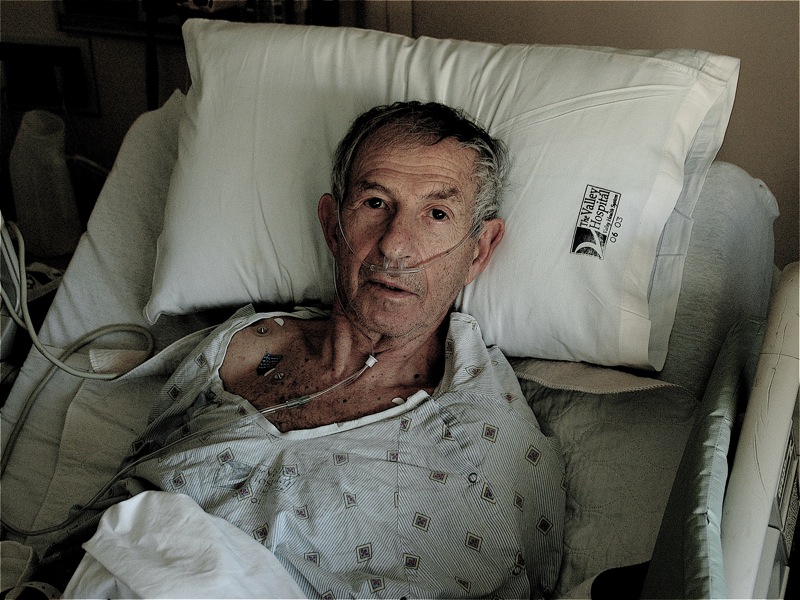
270849182_a03e7ab27a_o

Dad in hospital., originally uploaded by Here in Van Nuys.

Three years ago, October 13, 2006, I was on a plane traveling from Los Angeles to New Jersey to see my father and mother.

My father, at that time, was battling a neurological illness that was slowly robbing him of his ability to speak and walk.

There was, and is, no cure. And it eventually killed him.

But that October, back east, there was a slight glimmer of pharmaceutical hope: some drug that was given to Parkinson’s patients seemed to help my father. He was on it for a few weeks, progressing. And then he was not. One morning, he suddenly went into a stroke like condition and then into the hospital.

I took the red-eye the night of October 12th, and before I boarded the plane at LAX, my brother Rick sent me a text and said that his wife, my sister-in-law Pri, was giving birth. She went into labor that same night, the night I was on the plane traveling back east, back in time, back to Ridgewood and Woodcliff Lake and all those towns in Bergen County where my parents had lived since 1979.

When I landed around 6am at Newark, a car picked me up and took me directly to Valley Hospital in Ridgewood. I found my mother sitting next to my father, who was awake and resting in a room, in a bed, next to a north-facing window.

I broke down and cried and I think all of us were crying. I was so tired, and so happy to see my father alive, even as I was ripped up about his weakened condition.

I had just bought my first camera, a Nikon D70. I picked it up and shot a second of my father’s life in that weak and delicate sunlight that barely illuminated the room.

That he left this hospital within a few days was miraculous. Back at home, he had the after effects of the episode, and at times his hands would tremble like a post-earthquake after shock. Yet he would look down at his shaking with dispassionate objectivity and a faint smile.

In Los Angeles, my nephew Ravi entered the world and there was joy and new life on the other coast. But that October is indelibly marked on my calendar as a season of impending grief and the realization that an epoch and life and existence would end quite soon.

One Sunday, we took a car ride with my father, who could not walk, but used the walker and a portable wheel-chair. We drove across the Tappan Zee to Armonk and stopped for lunch in a town filled with pumpkins, white houses and children on bicycles.

Then we drove up some wooded road, lined with stone-walls, passing horse farms and parkland preserves. We were heading up to see where Bill and Hillary Clinton lived, in Westchester County, just as we once had stalked Nixon in Saddle River, NJ.

I apologize to Los Angeles, where I now make my home, but despite the efforts of “Mad Men” to create a fictional pathology of life in the suburbs on New York, there is still a sublime and natural beauty there, historic and meaningful towns and an un-crowdedness that soothes souls in pain. When you are sad back there, you can take a drive in the country past reservoirs, farms and fields. And that is just what we did that Sunday afternoon.

Those days, spent in autumn with my late father, were among the most meaningful of my life. I meant something to him and I will never ever have the time to spend with a living father again.

Trail of Tears.


One thing we have never been short of here, in this family, especially concerning my mother and me, are tears. So many events, large and small, are emotional. We cry easily, our feelings are worn right on the surface, for all to see. We do not have poker faces, nor are we cheery people. We do laugh, but underneath our joy, is the tempered sadness, the ever present feeling that life is short, and perhaps destined to end tragically or painfully.

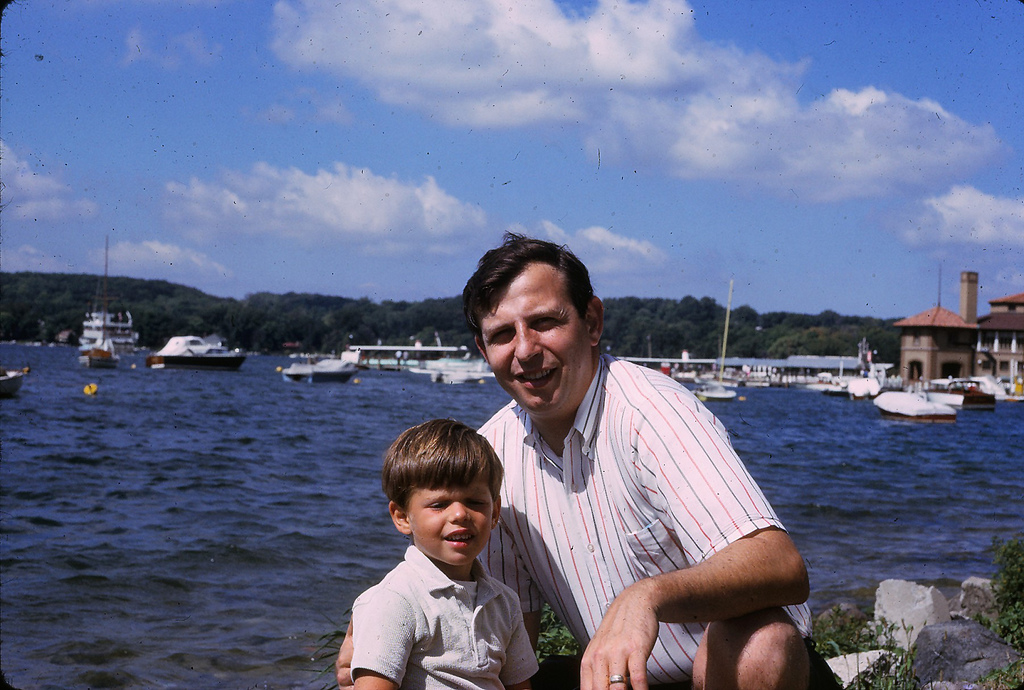
So I found these slides from 1983, that seem to show me in Woodcliff Lake, NJ during a college break from my studies at Boston University.

I am packed up, suitcase and brown bag full of lunch, ready to get into the car for a trip to Newark Airport and onto the People’s Express plane. Notice that even 25 years ago I was looking backwards to the 1950s for sartorial inspiration.

Someone (most likely my father) snapped the poignant and pained expression of my mother as I left her to get on a flight that only brought me 60 minutes away from Bergen County.

Anticipation.


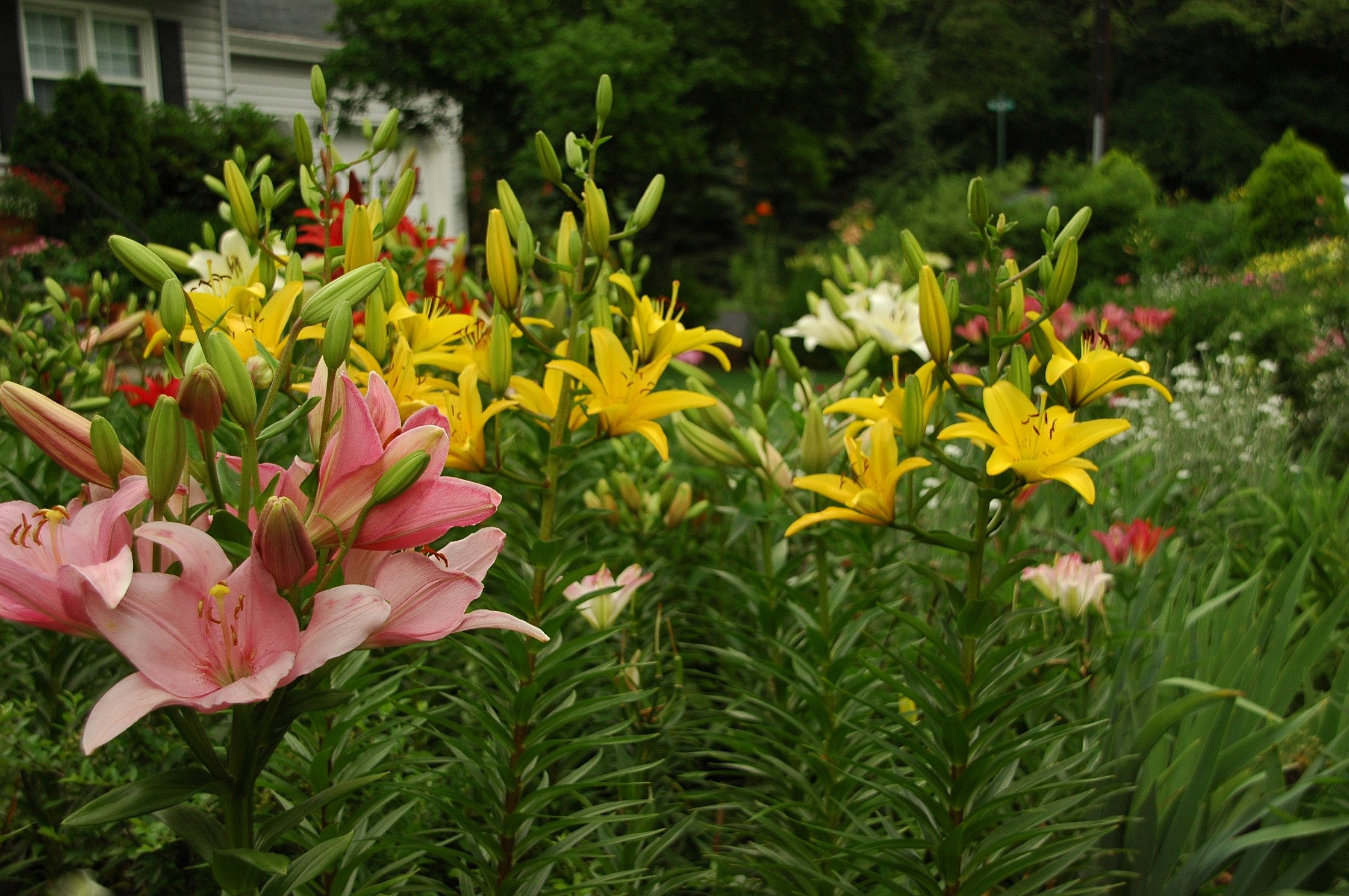
2607464218_98ef6b3213_o

Lillies., originally uploaded by Here in Van Nuys.

Every summer, the lilies pop up in this part of the country, and bring their bright colors to a mostly shaded background of dappled woods and stone walls.

This was the high point for me, the most glorious moment in the short summer. A few weeks after they bloomed, the lilies would fade, and then we would be in August, anticipating autumn, and school, Halloween, Thanksgiving, Christmas, winter.

That is why living in Southern California is so very strange. The guideposts of American life, the seasonal markers, are missing. Life and spring, with their promise of renewal and rebirth, go on month after month. The roses bloom in December, the leaves drop in February and reappear in March. Nature is marinated in formaldehyde, and the living things, humans and plants, are retouched, as if by digital process, to stay in bloom year around.

I don’t think this is natural. The “depressing” months, back East, if one chooses to think that way, when the leaves and temperatures drop and the ice and snow and slush surround us, are a breather for the planet. We need cold weather, yes we do. It is unnatural and unhealthy to live in heat and sun all the time.

That’s why I relish every thunderstorm this summer in New Jersey. Because when I return to Los Angeles in August, I will leave the rain and the short lived lilies behind in New Jersey.