Clearing Away Parks and Houses for the Hollywood Freeway.


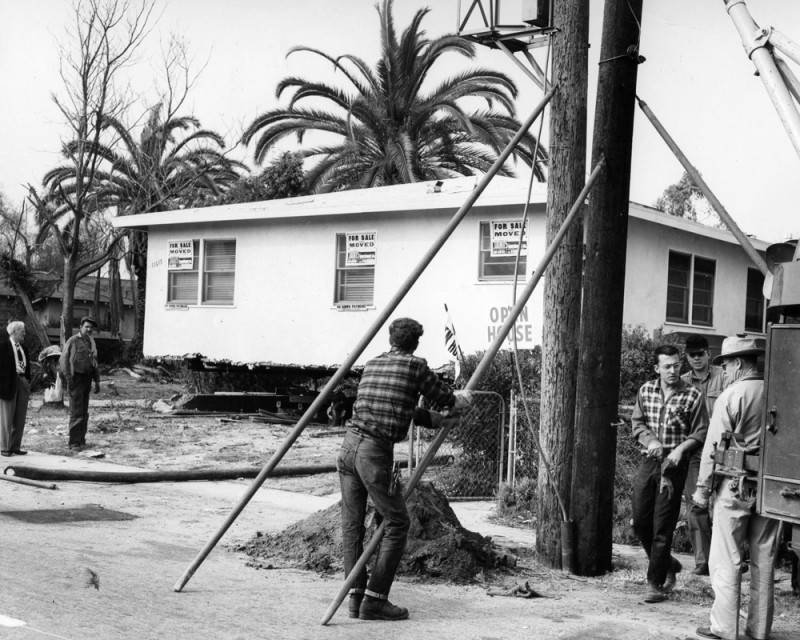
In the 1950s and early 60s, the expansion of the Ventura and Hollywood Freeways was accomplished by massive bulldozing of parks and houses.

North Hollywood, never rich in parkland, suffered the loss of some 20 acres of parkland to accommodate the construction of the 170 which today slices through and forms a new border between more affluent “Valley Village” and less wealthy North Hollywood.

It was cheaper to take parks than pay private property owners to seize land for the highways. Yet there were also many thousands of buildings moved or destroyed when California embarked on its mad program to make us completely dependent on motor vehicles.

Today we live in a reality that we think is normal but was paved and paid for by our elected ancestors. Car chases, global oil with wars and climate change, air pollution, shopping centers that took away orange groves, every five-minute traffic reports, the self-defeating obsession with oil prices, the decline of walking and the promotion of obesity are all linked in some way to the freeway system.

Our fervor to ride our cars to the Starbucks and drop our kids off at school, empowers Saudi Arabia, Russia, Iran. 

Our question for every apartment building and every house built in California: where will they park? Nothing architectural or aesthetic, nothing about the urgency of housing, only one thing on everyone’s minds:

Where will they park? Where will they park? Where will they park? Where will they park?

If by some miracle there was a proposal to build Rockefeller Center in the middle of a parking lot in Van Nuys behind rows of empty storefronts, there would still be only one question: where will they park?

We would rather live in environmental degradation than rethink our freeway and road addictions.

But in the 1950s every destructive program was considered an improvement.

Photo credits: LAPL/Valley Times.


North Hollywood After WWII


Of all the areas of the San Fernando Valley, perhaps North Hollywood has undergone the most drastic changes, for better and worse.

The Los Angeles Public Library has thousands of images online of North Hollywood.

I pulled a few from the period 1948-1962.

California was undergoing convulsive expansion as the state population skyrocketed, and millions moved here for a better life. Freeways, schools, housing, shopping centers, all of it exploded in only one decade.

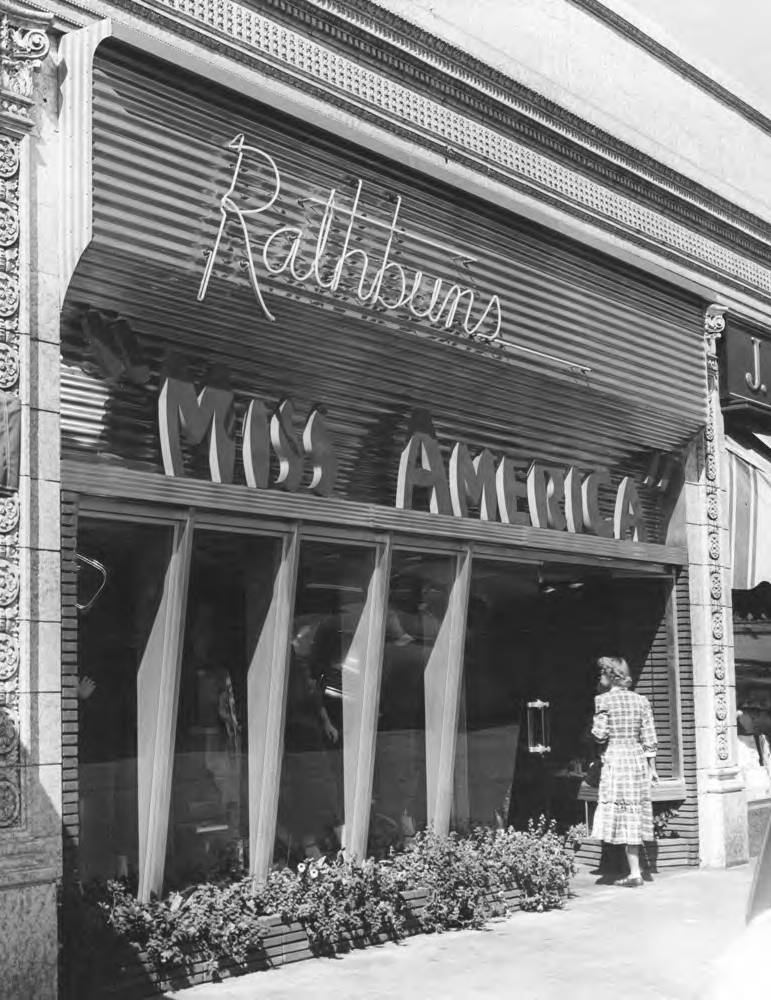
After WWII North Hollywood’s commercial area was centered along Lankershim Blvd. There were many locally owned shops, and they took pride in their windows and customer service.

The 1950s was also a time when public presentation of improvements was staged and photographed.

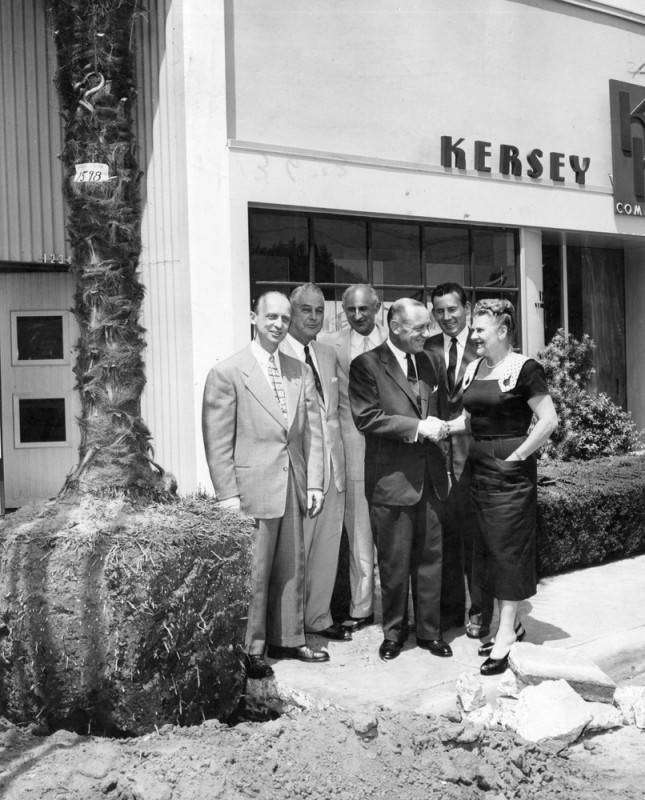
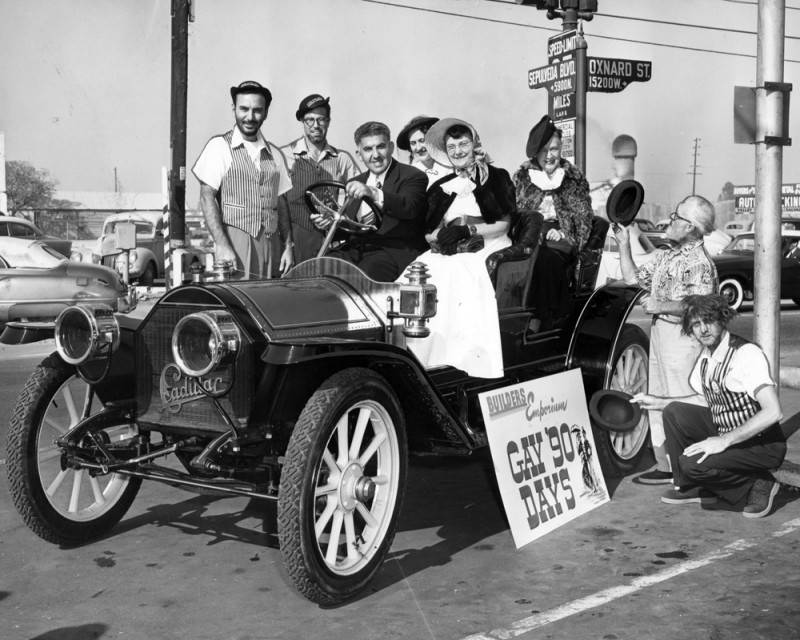
The widening of a street, a freeway that blasted through a park, an orange grove obliterated with thousands of new houses, the demolition of old houses for shopping centers, these were all accompanied by ceremonies with well-dressed men in suits, and the ladies in their hats, veils, dresses, pearls, earrings, lipstick, high heels.

In that time, 75 years ago, nobody imagined that one day parks would become homeless encampments, that vagrants would live in libraries and sleep on sidewalks, that marijuana would be as common as soda.

There was still an innocence about this country, a belief that people in power had the best interests of everyone in mind.

Thanksgiving Archives.


In the archives of the Los Angeles Public Library are many old photographs from defunct newspapers such as the Valley Times and the Herald Examiner.

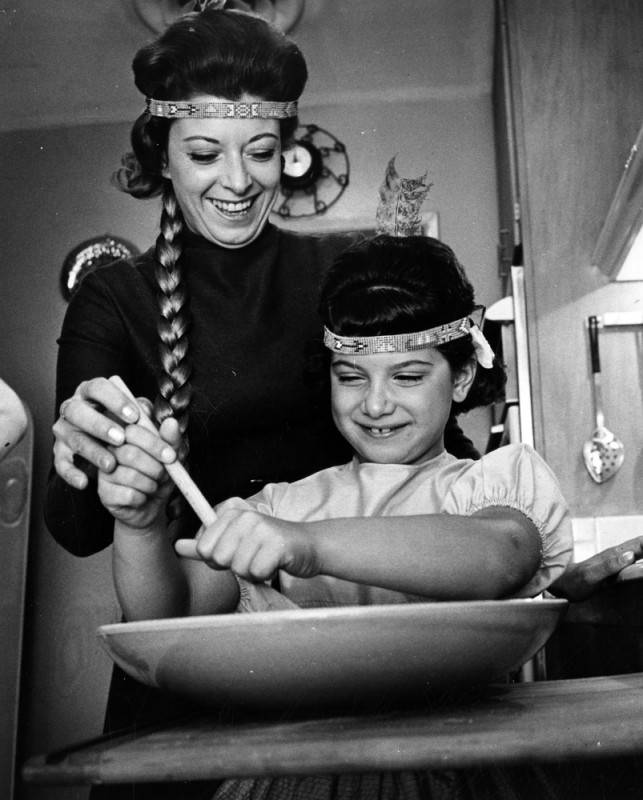
Thanksgiving is always a holiday where family, togetherness, food, and feeding the hungry are foremost.

The old ways of thinking about this holiday are on display in some of the images below, taken in the 1950s and 60s.

Furniture Stores, Van Nuys, mid 1950s.


One of the fastest growing categories of business in 1950s Van Nuys, CA, was the modest priced furniture retailer.

The opening of a store on Van Nuys Boulevard was an event for the whole family. Mom, Dad, Janet, Billy and Sally would come down to see dinette sets, bunk beds, and wall-to-wall carpet that would soon cover the San Fernando Valley from Burbank to Hidden Hills.

Van Nuys was prosperous, white, middle-class, with excellent schools, clean streets, strictly policed, and full of new families in new houses. All these ranch houses and young families needed furniture. And here it was!

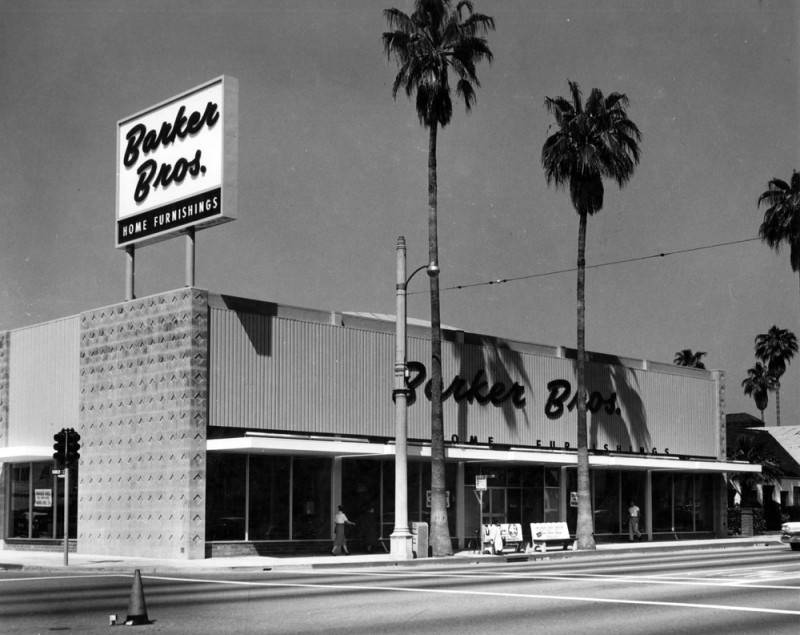
The widening of Van Nuys Boulevard in 1954 to a six-lane wide highway offered builders of furniture stores the opportunity to erect big signs atop big box stores fronting the street.

In the archives of the Los Angeles Public Library are these photographs taken from the pages of the Valley Times from 1955-61.

The 1958 Barker Brothers store still stands at 6505 Van Nuys Bl. It appears to be empty, along sidewalks where only the saddest and most desperate wander.

Mementos From a 1950s Girlhood in Van Nuys


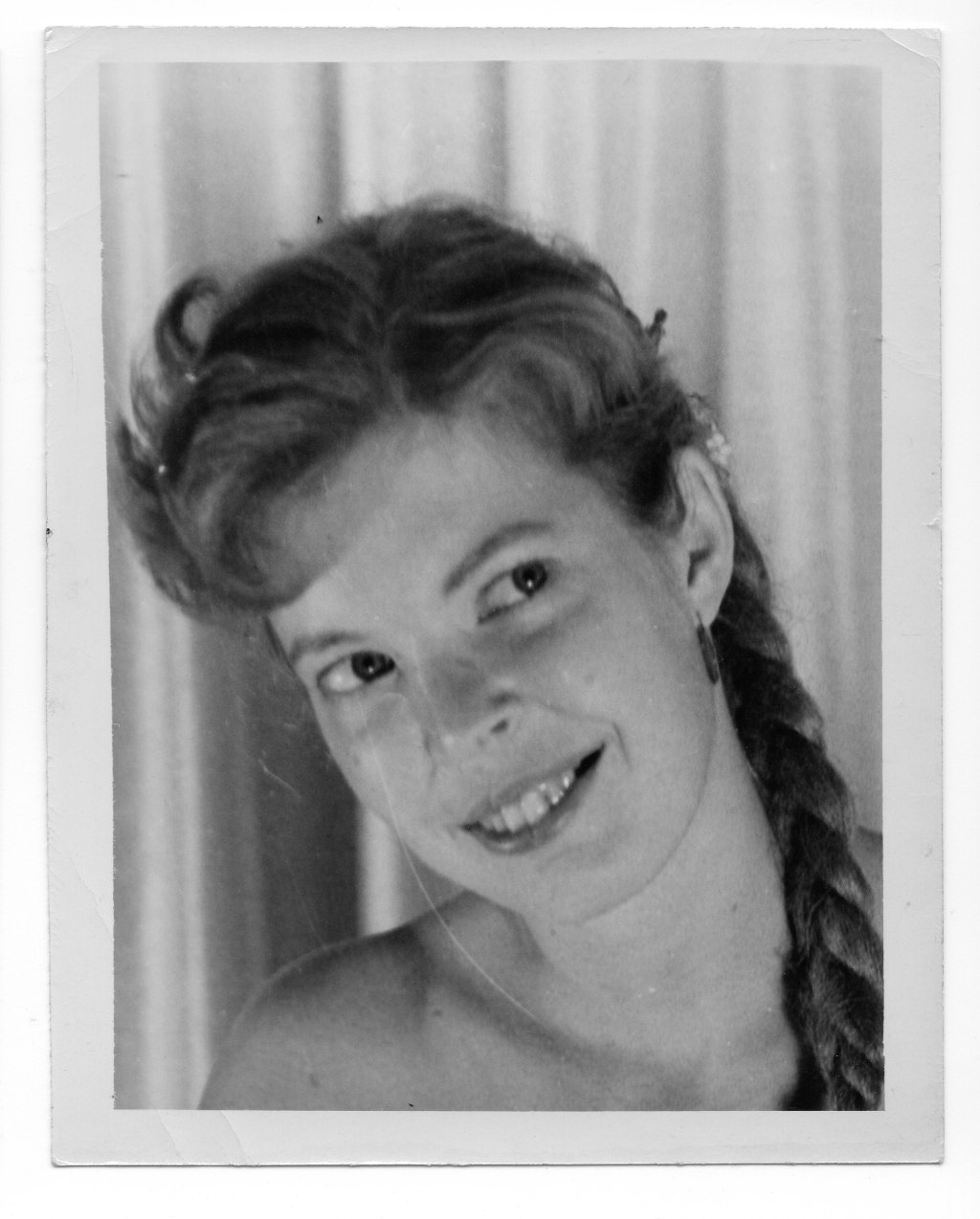
Anne Clark Seidel (1936-2018) was born in Ft. Smith, AR and moved with her parents to Los Angeles in 1942.  The family owned a house at 14936 Camarillo in Sherman Oaks where Anne grew up. 

An obituary from 2018 summarized her life.

Her son, Dave Cox, is a vintage dealer of antiques, cameras, and thrift store items and now lives in Maine and Florida. He graduated from Valley College. He has a Flickr page which I found years ago and in it he has archived thousands of photos, including his mom’s scrapbooks from her days as a teenager in 1950s Van Nuys and greater Los Angeles. 

There is a lot to look at in the sentimental and wonderful notes, photographs and souvenirs she saved from that time.

These include: a 1955 Van Nuys High School Graduation Commencement, a 1950 award for “Am I My Brother’s Keeper” from B’nai Brith, her 1954 interim California Driver’s License, a “Grease Monkey’s” membership card from Van Nuys High School, a ticket from “Crew Cut and Curls” a musical comedy performed at VNHS, a typed up sheet of rah-rah yells from that school, and a May 27, 1953 poster from “The Man Who Came to Dinner” also performed by the Van Nuys High School Drama Department.

Anne had nicknames too: Butch, Clark, Corkey and Muggsy. Her 9/15/52 book cover is emblazoned with them. 

It was a corny time of ridiculous humor, intentionally juvenile, feather-brained, nitwit, amusingly dumb and G-rated, naughty jokes that would pass the test of censors.

“They do say,” John said, “that kisses are the language of love.” 

“Well speak up!”

There were heartfelt, self-correcting mottos Anne wanted to embody: 

When I have lost my temper, I have lost my reason too. I’m never proud of anything that angrily I do.

It was an era of apologies, given by children to adults, students to teachers. There was morality in movies and songs, and wrongdoing and scandal were wrong and scandalous. 

She had a crush on hazel-eyed, curly-haired Richard Walter Peck, 6’2, whose favorite foods included ham and eggs and minced meat pie and whose hobby was model airplanes. He drove a ’41 Buick and worked at Hammond Electronics in Studio City, CA.

There are clippings from newspapers with advertisements for stores in Van Nuys such as Ceil Miller at 15243 Victory Bl.(STate 07921) which sold dresses, suits and gifts; and the Ru-Mae Shoppe at 14511 Sylvan St. with plaid, print or plain short, long or sleeveless dresses.  

There was Easter at Central Christian Church on April 2, 1953 with cut out photos of Minister RL Pryor and Youth Director Daniel M. Immel. There is the 1956 Van Nuys Mirror paper with presidential candidates Dwight D. Eisenhower and Adlai E Stevenson as headliners, and another story explaining plans for the upcoming conversion of Birmingham Hospital into a Junior High School.

There was Johnson’s Ice Cream Store, newly located at 6127 Sepulveda Bl. in Valley Market Town which was next to the Sepulveda Drive-In Theater. All of this was on the site of our present day LA Fitness and Orange Line Metro (Keyes Storage) Parking Lot. 

Those days are full of colorful events: sports, theater, holidays, miniature golf, friends, clubs, work, and crushes. The times were rambunctious and goofy, young and exciting. 

And Van Nuys was its epicenter, it contained everything needed for a happy and fulfilling life, its promises were delivered in productivity, positivity, and personalities.

I will let the visuals speak for themselves. And show more of Anne Clark Seidel’s life in future posts. 

My gratitude and appreciation to Dave Cox for his permission to use these images from his mom’s life in this blog.

Crossing Ventura.


Sometime in late 2018, early 2019, I’m not sure exactly when, they created a pedestrian crosswalk, with flashing lights, across Ventura Boulevard. at Ventura Canyon Avenue.  The crossing is about a block east of Woodman and a few doors down from Yok Ramen at 13608 Ventura where I go about once a week.

This is in the heart of Sherman Oaks, where stores that paint your nails, sell used records or live birds are sprinkled along the boulevard along with massage, dry cleaners, and laser skin treatments. And Floyd’s 99 Barbershop where every customer from 18-80 is a rock star.

I’m familiar with this area and its friendly banalities.

About 20 years ago, I knew a divorced woman in her 40s, with a little girl’s voice, who spent most weekday mornings at the location where the ramen place is now. 

Back then it was a bakery and a coffee shop with big muffins and big mugs, chocolate croissants and caloric treats. She sat at a table with her journal and wrote music and poems. Today she is retirement age, married and living in rural England.  And that’s how I got to think about the time passing and the way people pass time on Ventura Boulevard. 

As Orson Welles once said, “The terrible thing about L.A. is that you sit down when you’re 25 and when you stand up you’re 62.”  

And if you spent a couple of decades eating chocolate chip muffins on Ventura Boulevard what have you got to show for it?

To keep people alive, and moving, mostly in cars, the people and “leaders” of Los Angeles have devised, through the years, the same kinds of ideas to make safer the naked and shameful stunt of walking across Ventura Boulevard.  These include longer pedestrian signals, traffic islands, and painting the street with lines or figures to indicate that humans on foot also roam in the land of cars.

We tweet in seconds about trivialities like nuclear war, impeachment or the fires in Australia but we cannot assume that six decades will correct the urban failures of Los Angeles. Photographs from the past prove my point.

On November 30, 1959, Dr. Louis Friedman, Dentist, painted his own crosswalk, with a corn broom, on the pavement at Murietta and Ventura, to protect his patients. He had unsuccessfully asked the city to do so but his requests were ignored. So he took the initiative and laid down the lines.

That same year, Carl Stezenel, 10, of North Hollywood stood at the corner of Radford and Ventura and tried to cross in the time allotted, 9 seconds. If a 10-year-old boy found that challenging, imagine the typical woman of that era in high-heeled shoes, gloves, hat and a cigarette pushing a baby buggy?

Carl Stezenel’s plight may have influenced a December 1, 1960 dedication for a new landscaped traffic island at that same location. Men in suits (a sure sign of importance) attended the event, in a district whose distinguished architecture featured auto dealerships and gas stations. 

Five years earlier, in 1955, motorists on Ventura near Dixie Canyon Avenue were warned that they were approaching a nearby school by a painting on pavement of a running boy with a ball. 

People who worked and shopped in the area did care about how it looked. Years before it was considered normal and decent to allow tens of thousands of intoxicated and mentally ill people to live on the streets with garbage filled shopping baskets, the issues of why there was no tree cover on the boulevard haunted the civic minded. 

The palm tree, with a trunk so skinny it could never crowd out a Cadillac at the curb, was the obvious solution.  

Studio City is now lined with palm trees, a species that provides no shade to sidewalks that are baked in sunshine 350 days of the year. In 1954, the first palm trees were planted as part of a beautification scheme. Fully grown, their trunks look like posts without billboards, a perfect style for this city.

The sameness of businesses in the late 1950s along Ventura Boulevard presented problems. We, who are of CVS, Starbucks and Chipotle, may understand that historical plight.

Studio City and Sherman Oaks had a competitive streak. 

To bring customers between the two districts, a special free bus was introduced on February 18, 1959. If you had a watch that needed repair, wanted to purchase panty hose, a typewriter ribbon, or a cigarette case, now you had a no fare bus to take you up and down Ventura Boulevard, opening up a world of possibilities. 

That bus must have been cancelled after 10 episodes.

Further east, at Balboa and Ventura in Encino, the traffic situation was already dire in late 1953 when work-bound suburban residents were forced into only two lanes of eastbound road, while the westbound, going into less populated Tarzana and Woodland Hills was free of congestion. The solution: three lanes in the morning, and then move the cones and make it three lanes westbound at night. 

Eventually, the current road was widened into three lanes in each direction, with an advanced staring-into-the-sun design for morning and afternoon drivers. 

High rise office buildings sprung up in the 1960s and 70s, some as high as 15 stories, but nobody in the single-family neighborhoods nearby cared because the occupants were white and well-paid. Today, a four-story tall apartment with 130 apartments, and 3 affordable units is considered social engineering and overcrowding by many in Encino.

We are now into the third decade of the 21st Century and Ventura Boulevard still lacks safe pedestrian crossings because most drivers and pedestrians are looking into their mobile devices.

Photo Credits: LAPL/ Valley Times Collection