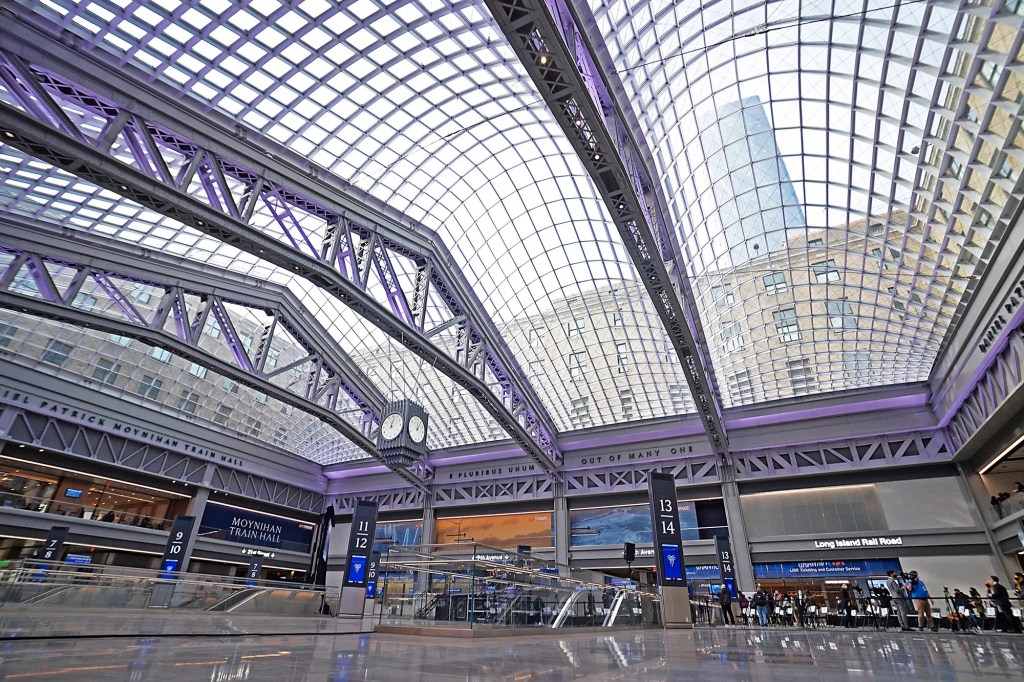
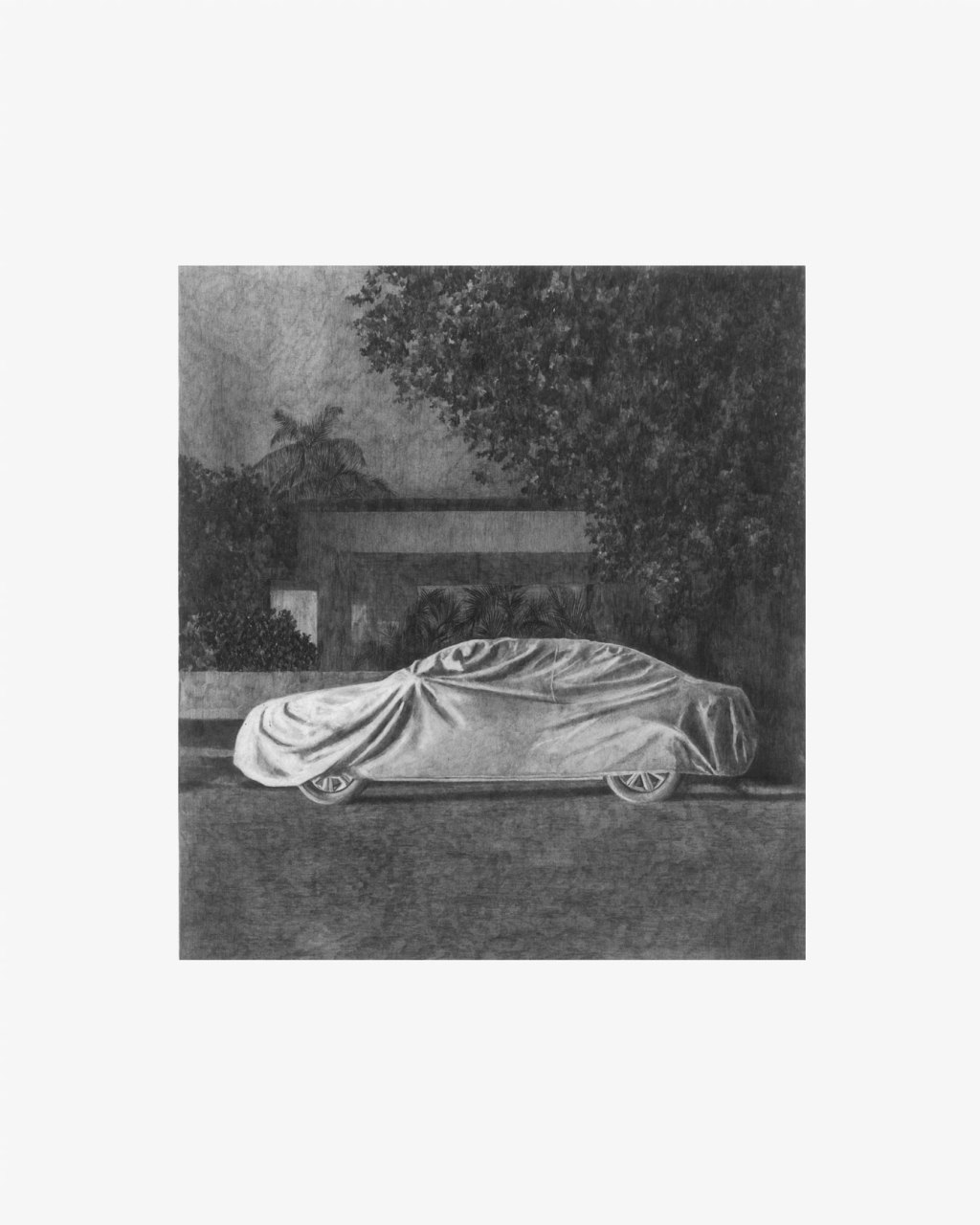
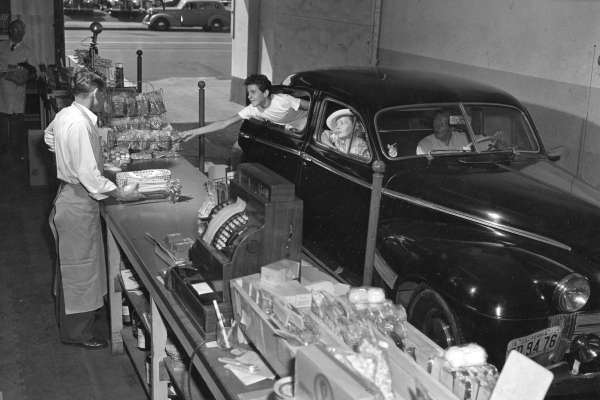
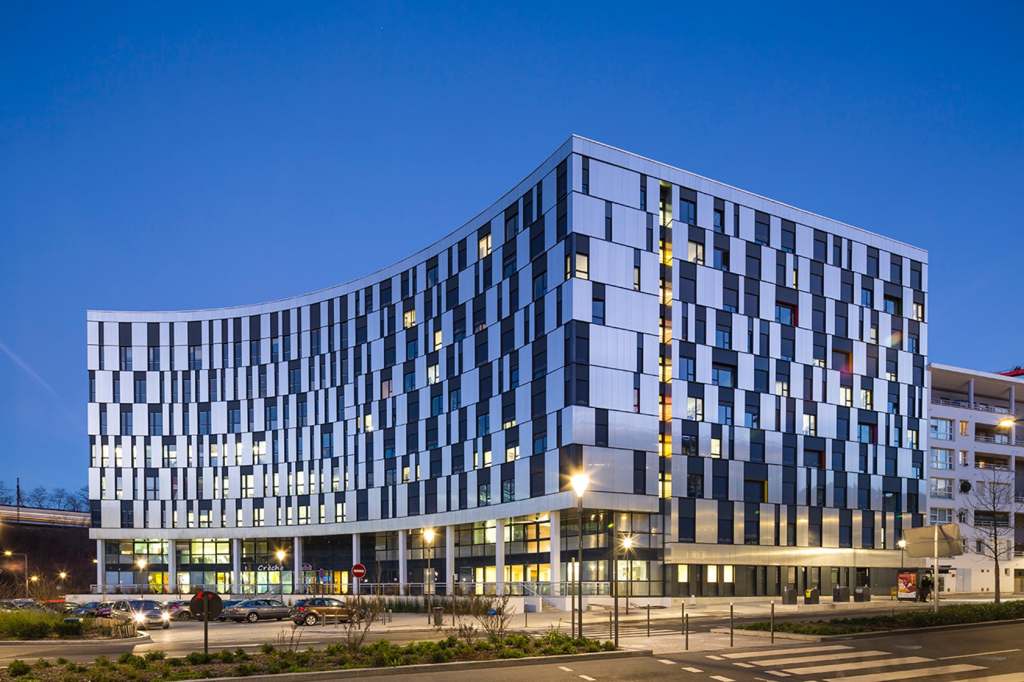
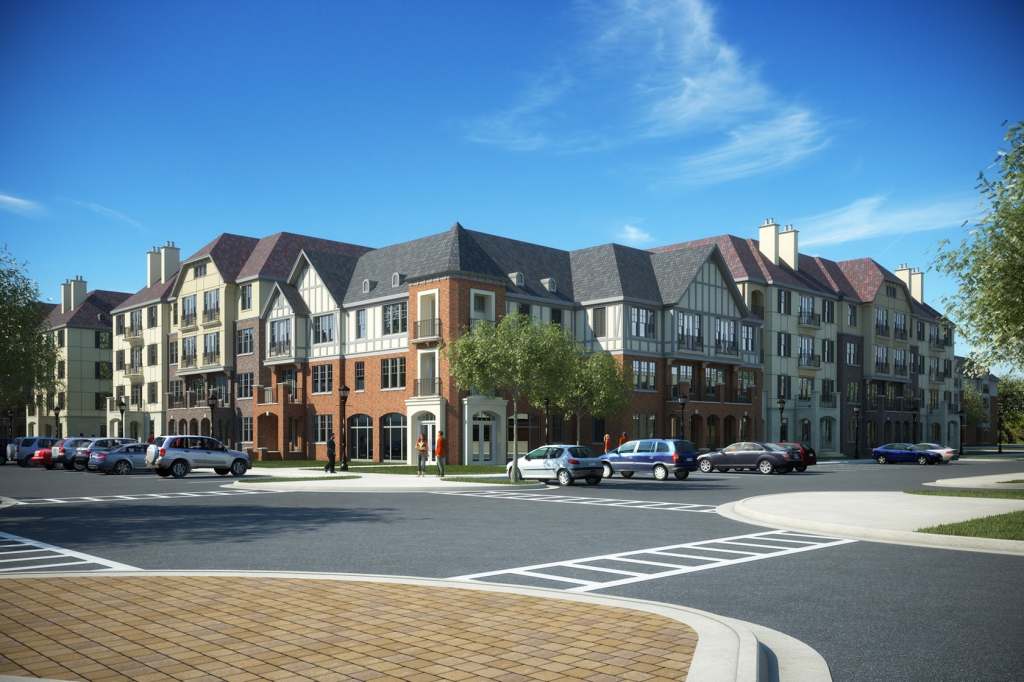
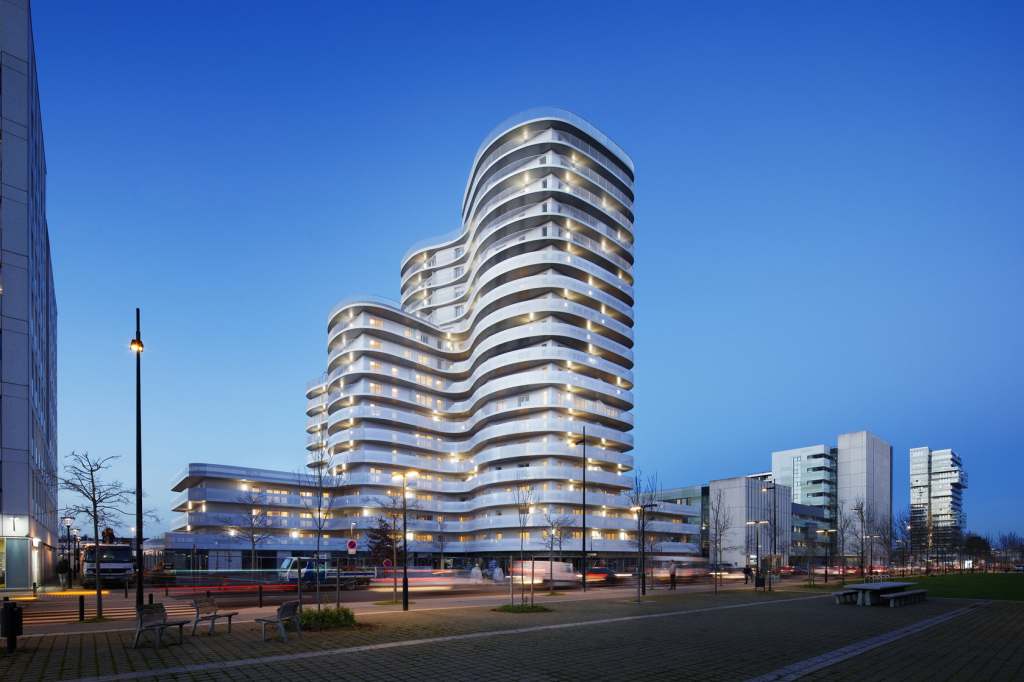
In the January 1929 Architectural Record are these photos of a retail/residential development in Evanston, IL on the corner of Chicago and Grove.
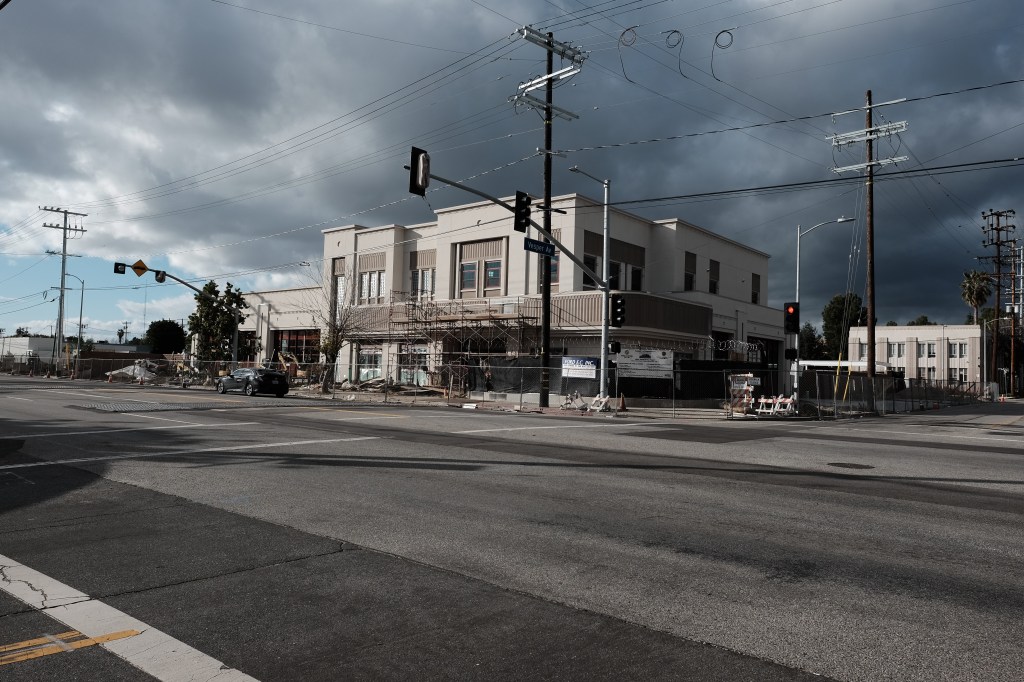
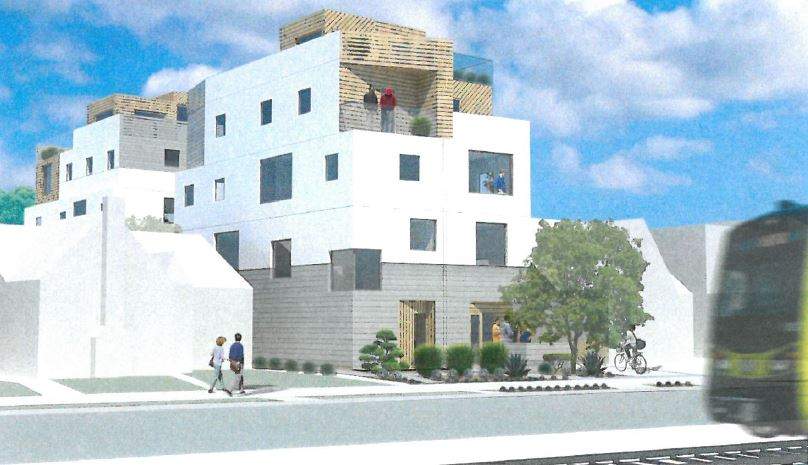
This is exactly what they should be building on the corner of Vanowen and Van Nuys Blvd.


About, but not limited to, Van Nuys, CA.

Actor Dovid K. was raised in Los Angeles, and he came over to our neighborhood last week for some agency photos.

The houses in our area (Victory/Kester/Columbus/Vanowen) were built in the 1950s, and due to the modesty of the neighborhood, many look roughly the same. There are the criss-crossed windows, the board and batten siding, the pastiche of architectural decorations that mid-century developers affixed to facades to make them warmer and more appealing.

The vintage styles have weathered six or seven decades and endured as archetypes of the San Fernando Valley. This section of Van Nuys was ideal because it was walkable, just across the road from the high school, near the shopping centers along Sepulveda. Those were the days when children rode bikes and walked to school and there was always someone home to greet them at 3pm.

Times change. Children don’t walk, they are driven.
Behind the house on the right someone is building an ADU out of an old garage. They installed solar panels like many of their neighbors.

This sign belongs in the archival collections of Valley Relics.

This totem statue was erected by a previous owner and still stands.

This house will have a new ADU in front, an adaptive revitalization of a classic Valley ranch house from the early 1950s.

There is something about the middle 1950s that endures in many of the houses, a cozy casualness of not so big houses with big lawns, semi-circular driveways, trees, hedges, and decorative lampposts. A lot of it is not so up-to-date. If this were Studio City or Brentwood these houses would have been long gone, demolished and replaced with white faced behemoths and tall gates and enormous SUVs on every property.
Sadly, many of these houses sell for over a million and are not quite starter homes. But they are home for many who inherited them from parents, with low property taxes and little or no mortgage payments. For the lucky ones who got lucky, this is kind of a paradise, guarded by NextDoor and patrolled by helicopter, seemingly an American paradise on the ground.
And it makes a good backdrop for a young man who channels the 1960s.

Matot Construction Co. produced many thousands of homes in the Western United States in the 1920s.
In a 1928 book of designs, there are many homes which feature styles characteristic of Los Angeles neighborhoods, the little bungalows in Spanish, Tudor or Colonial which used to dot the streets all over our city, especially in the Fairfax District.
Of course, many of these houses have been knocked down and replaced by gargantuan modern ones which destroy any semblance of character or charm on a street.
Such as this maximum security prison inspired beauty:

Interestingly, in the Matot booklet, there are several “two-family” designs which emulate single family houses but house two distinct families under one roof.
This kind of architecture was widely used in Los Angeles when new arrivals came here. These dwellings were the opposite of the brutal tenements that made up New York City. They evoked fantasy and escapism, but also brought a gentleness to life in California which incorporated sunshine, nature and relaxed living.
It would be interesting if Los Angeles could build these two family houses, in groups of courtyard arrangements, on land where parking lots and mini-malls stand, on decaying and abandoned shopping centers in Van Nuys, etc.


East of Vineland Avenue, along or near Burbank Blvd, North Hollywood has a collection of small businesses, creatives, prop houses, and studio related companies that turn out goods and services, real and virtual.

On a windy, clear, cool Saturday we came to walk around. We explored Satsuma, Chandler, Cumpston and Riverton Avenues.

At 5453 Satsuma, a small, white, mission style stucco church was transitioning to secular renovation for a company called Spacecraft. The site was an otherworldly juxtaposition of architectural divinity and outer space travel.

In the 1946 North Hollywood Street guide, it seems that Santa Susana Catholic Church was the center of a Spanish speaking community along Satsuma that was strictly encased (segregated) between Chandler and Burbank, but not one house north of Burbank, or one house south of Chandler. All the old houses were knocked down and replaced by industrial concerns in the 1950s. Only the church survived but not as a church.


At 5416 Satsuma, a black and pink cinderblock building stood behind a chain link fence laced with reeds. A decapitated palm tree and wooden power pole completed the scene.

We walked along the Chandler bike path, next to a Robert Spiewak mural painted on a building in 2000, during the reign of Mayor Richard Riordan (1993-2001).This Angeleno themed artwork is a dystopian, militaristic vision of power poles, mountains, sky, missiles, and skyscrapers entangled in traffic or the internet.
My masked, hand sanitized friend Danny stood in front of the mural, marking our own pandemic time as we are poised on the brink of a potential world war and nuclear holocaust.

On the north side of Chandler, a half-completed structure (for USPS?) is going up with lots of steel and diagonals, in an aggressive, edgy, industrial style that looks like what they were building in West Los Angeles twenty-five years ago.


At 10747 Chandler, one story buildings from the 1950s, for lease, are neighbors with a homeless tent. And adjoining the block is a clay-colored stucco, streamline modern building, with mean little windows guarded by frilly iron bars, also for lease.

Praxis Custom Frame & Upholstery is housed, anonymously, in a deep teal and decoratively topped structure with brown awnings at 10717 Chandler.
This was once the location of Triple C Polishing and Plating Company according to a 1946 North Hollywood Phone Directory.
A matte finish, gray, Toyota Tacoma 4 x 4, pumped up and preening, was parked in front.


Steel Lighting is a new design on an old building, crisp and clean, black and white, with a cornice of black barn lights extending across the facade.

Martin Iron Design (est. 1990) is hidden away at 10750 Cumpston. An American flag droops over a wall like a sad, lonely dog. HOLLYWOOD is crafted in metal over a steel walled security gate.

Curving Riverton Avenue is half industrial, half little houses from the 1940s, a street like a small town, with tiny (million-dollar) residences that face west, into the sun and the new sidewalk, the parking lots and the shadow emitting steel plates that protect VFX Video Services at 5543.


Arxis Design Studio is at 10800 Burbank Blvd. corner of Riverton.
WE ARE ARCHITECTS!
They shout.
Their firm is housed in a torturously proportioned building punctured with a whacko assemblage of exaggerated, protruding windows with monstrous, robotic, tinted glass eyes that scan a parking lot.
All who look up at the misshapen, off-kilter windows know they are entering a hallowed kingdom of architecture.
That concludes a sampling of North Hollywood, High and Low.

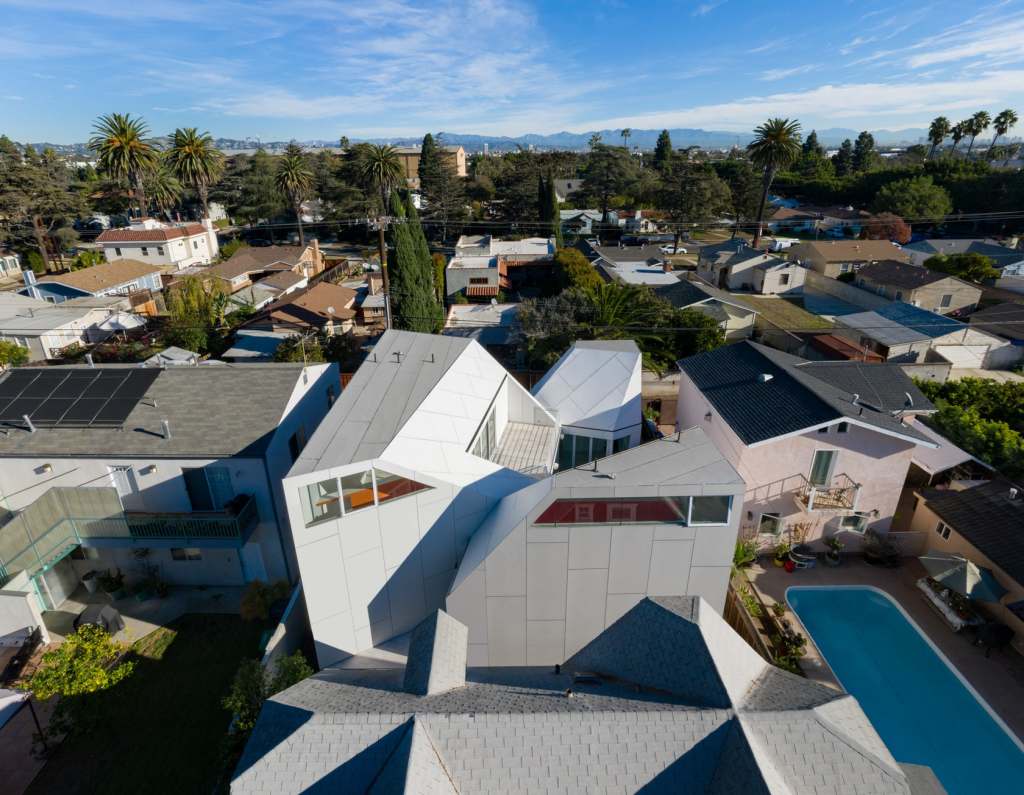
From Dwell Magazine, an example of a tight, urban house in a densely populated area of Osaka.
As I have asked many, many times: why can’t this type of housing be constructed in the commercially zoned areas of Van Nuys? Near the Orange Line? Near the Civic Center?
Imagine this fitted behind an alley in Van Nuys? As a modern, clean, civilized upgrade for the slum housing one sees along Bessemer, Calvert, Delano, Cedros, Erwin, Friar.


“At first glance, it can be hard to spot the Toolbox House. Tucked away on a long, narrow lot in the downtown area of Osaka, Japan, the silvery home sits much lower than its high-rise neighbors. Yoshihiro Yamamoto of the local firm YYAA designed the dwelling for a couple and one of their mothers, who sought a single-story house that is “compact and easy to use, like a toolbox.”-Dwell Magazine.


After a long hiatus, we ventured Sunday morning down to Culver City to walk around the new buildings and the architectural oddities.
Once a stronghold of flat, inland dullness, a largely white town peppered in a monotony of starter ranches and stucco apartments, barber shops, taco stands, model trains, gun stores, and typewriter repair shops, Culver City has undergone a two-decade long makeover into a town of light rail, bike and bus lanes, restaurants, lofts, luxury restaurants, furniture, art displays and wine bars.
29 is the median age for work, and 69 is the median age for owning a house. And everyone else of any age is welcome as long as you wear yoga pants and carry a small dog.
In the last two years, all the formerly open parking lots near the Expo Line have been filled in with large, modern architecture: residential and commercial.
The Helms Bakery area used to be the only area that imitated urbanity, but today we walked through it, and there were few pedestrians. But all the old furniture stores were open, and Father’s Office was getting ready for service. An electric bike was parked outside of the Kohler Store, a man and a woman conversed next to a fountain, and through my camera’s viewfinder 1930s Hollywood was alighted in 2022.


Washington Bl. is now a multi-use roadway with specific lanes for cars, buses, bikes and pedestrians, an oddity of our region that takes some mental and focal readjustment.
A thin, blond woman in mask carried a shopping bag and waited for the light to change near Shanti Hot Yoga (“We’re open again! 7 Days of Yoga for $7”).

On the corner of Washington and National, adjacent to the elevated rail, there were new buildings, each one different but not too different: modernism with steel, glass, angles, some wood and some plants, and strong, assertive street walls.

On National Blvd with its spotless sidewalks and young trees, we walked, tranquilized and medicated, by train sounds and light breezes. A paved bike path coexisted with a train that hummed down the tracks high up on a concrete overpass.
Sunshine was rampant and inescapable.
We were the only pedestrians.

I had that disembodied sensation one only finds in Los Angeles: isolation and excitement, boredom and anticipation, urban exploration in a landscape of sunshine and emptiness.
At “Nike Corp – Extention Lab”, 3520 Schaefer St. steel girders and compressed lumber presented an incomplete cathedral of construction. The wood was blond and warm. The materials seemed ready to be pounced on by that shoe brand’s rubber sneakers.

We walked south one block to Hayden Avenue, to a junction of ugly brilliance: Samataur by Eric Owen Moss, the architect whose offices and deconstructed designs decorate the entire street.
Before the pandemic I would have hated this discordant scene, but now I rejoiced, for the chained off tower and the accompanying office blocks survived intact: startling, grotesque; yet unique in their ambitious awfulness: empty parking lots, cinderblock walls, dark glass windows.
And a sign called “Clutter.” Without any.

These are the workhouses for young, multi-cultural creatives of dazzling imaginations whose languages are only taught at MIT or art colleges. I’m sure these well-compensated bees have worked on my brain many times as I play video games or buy a bottle of gin with the most gorgeous and award-winning fonts, or scroll through Netflix. They are all 29, tall, and play frisbee on the roof and bring their dogs to walk and I really do hate them all.
They work for companies where Tyler, Dylan, Ashley and Rebecca, must list their preferred pronouns after their names and every company has a mission statement that begins with “we believe every human being has the right to…”


On the west side of Hayden, 3535 is another Eric Owen Moss, a multi-story stucco structure from 1997 with protruding supports that fly out of the building, angled walls angled for entertainment. Everything is decorative irony, not form follows function, but form for forms sake. Tenants are graphic design and media companies. This is a perfect setting for sons-of-bitches startups, Tesla influencers, wellness lubricants, Armani jackets and collectible sneakers.


At 3585 was Sidlee. This conglomeration was perhaps the most interesting of all the oddities along Hayden Avenue.
The company, which describes itself in the most inscrutable and amorphous ways[1] has seemingly vacated this arrangement of forms and textures scattered along a parking lot like a museum of sculptures.
Vespertine, (dinner for two: $650) a luxury restaurant of museum like dishes, was the tenant of a tall glass building encased in protruding, undulating sheets of horizontal and vertical steel. It was built next to a river of concrete rocks like a dry stream; nearby, a four-story tall steel tower sculpture supported rows of steel cactuses in steel pots suspended 40 feet in the air; a concrete park was furnished with cushy concrete seats and shaded by shaved down cats tails.
If the ghosts of director Michelangelo Antonioni, and actors Monica Vitti, and her still living co-star Alain Delon came to film a sequel to “L’Ecclisse” (1962) this would be their location.


Another strange fact of 2022 was the absence of security guards. I could walk up to any building and take photos. This was impossible from exactly September 22, 2001 to March 20, 2020, when Fear of Arab Terror was replaced by Fear of Invisible Virus.
There were signs everywhere for masks and Black Lives Matter, and everywhere I looked I knew I was living in the here and now of 2022, poised somewhere between the past and the present, never quite certain of reality, but walking in it every step of the way.
END
[1] “Deep-rooted in the United States since 2012, Sid Lee Los Angeles has become a thought-leading hot shop for the country’s most iconic brands. With an extensive network reaching all the way to New York, our L.A. team delivers work that matters for a global clientele. This multi-faceted team at the epicenter of content and innovation offers fully integrated solutions supported by the weight of Sid Lee’s global collective.”
You must be logged in to post a comment.