Beware of Big Promises: 1963


Community leaders, developers, planners, business people, and boosters are forever promising a brighter day tomorrow.

So it was in Van Nuys nearly 60 years ago.

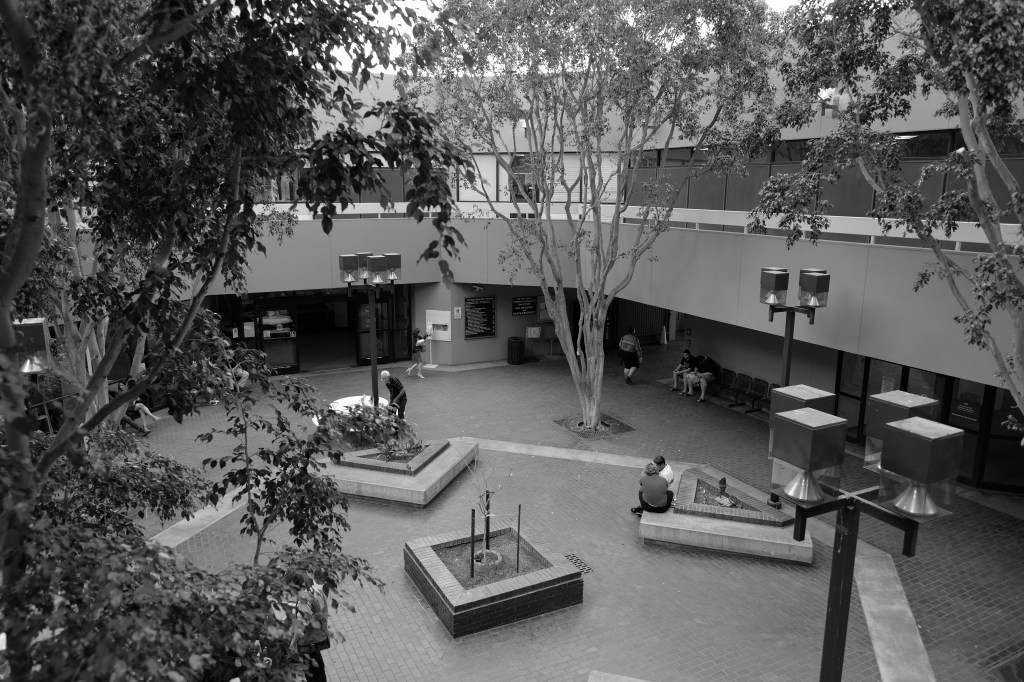
The new police station, a striking piece of $5 million dollar architecture, whose inspiration appears to be many vertically positioned Philco televisions, was nearing completion on March 29, 1963. The grand civic center, a pedestrian promenade, a library, and several court buildings would complete the ensemble.

On February 16, 1963, 400 well-groomed white people gathered at the Masonic Temple Lodge on Sherman Way to view the exciting land use plans unveiled by the Los Angeles Planning Department governing the future development of Van Nuys.

A mystery remains: Why was a law enforcement structure removed from the street and shoved way back behind a deserted pedestrian mall?

The idea that a police station, whose presence is ostensibly there to prevent crime, should be buried far from the streets where officers patrol, is one of the confounding results of architectural planning which often presents glorious schematics but fails to consider practical results. Van Nuys Boulevard today is a ghost town, except for those who are there to make crime. A cop or two might reassure diners, drinkers, and those who are out for a nighttime stroll.

And the plans for Van Nuys? What have they produced in the last six decades? Probably the largest conglomeration of urban ugliness, environmental catastrophe and social upheavals within the entire United States.

Our surroundings are here to serve only the needs of cars, our air is dirty, our parks few and overrun with garbage and homeless, and we live under the daily and nightly sounds of gunfire, fireworks, sirens and patrolling helicopters. Our rivers are concrete, our boulevards are decorated with billboards and wooden traffic poles, our corner stores are marijuana outlets or parking lots, and the sidewalks are festooned with shopping carts, discarded sofas and tents.

Though most everything along the wide streets looks like impoverished crapola, the rents are exorbitant, and a “starter” home is $800,000. Any efforts to build higher than four stories brings out the angry loudmouths on NextDoor, and developers are maligned and despised by the general public while bearing ridiculous regulations that require onerous fees and expensive construction that inflates costs and discourages new housing. The little old lady, who inherited the three bedroom ranch house from her parents, and pays $300 a year in property taxes, is usually the bitterest one of all.

“I pay taxes! Why does everything look like shit!” she screams.

What kind of city do we live in? What is wrong with us?

Our system of life on Earth is failing globally, and especially here in Van Nuys.

The lesson: beware of great promises made by the powerful for they only care about themselves.

Credit: LAPL/Valley Times Photo Collection

Return to East Rustic Road.


One sweltering day, sometime in July 2012, I left Van Nuys with my camera to escape the 105 degree heat.

I got off the 405 and drove west, towards the ocean, along San Vicente, until I came into a picturesque canyon, shrouded in fog. I parked my car and ventured on foot to photograph the trees and the architecture in cool, refreshing tranquility.

I walked up East Rustic Road where there was, indeed, rusticity in nature and architecture. I stopped on the sidewalk along the street and beheld the glory of clouds coming down from the hills. All around were birds and flowers, fragrance and song.

And then, suddenly, a shrill voice yelled at me, “Why are you photographing mailboxes on this street!” 

Dazed, stunned, I was speechless. 

Who the hell was screaming at me? I looked around and an old woman came out of a garage of a house.

“I was driving up the street and saw you taking pictures of all the mailboxes! What are you doing here!” she demanded.

Now pissed off that I was being interrogated, and my right to walk and photograph on a public street was being infringed upon; appalled at her lying and false charges; I talked back. I said something like who are you to ask me? Did I need a permit to take a photo? Did I need to ask your permission to photograph a cloud?

“I have a right to know!” she screamed again.

Then an old man (her husband?) came out the front door and yelled, “If you don’t get off our street we are calling the Santa Monica Police!”

Not eager to incite, I walked away.

My beautiful, serene, moment of enjoyment was spoiled by these two irrational people.

I vowed that one day I would come back here and shoot photos again, perhaps some portraits of an actor.

This past weekend, nine years later, I did just that. Without incident.

Model: Cheyne Hannegan

A Motley Crew: The New ADUs


“The Los Angeles Department of Building and Safety (LADBS) implemented the Standard Plan Program to provide LADBS customers a simplified permitting process for the design and construction of ADUs that are built repeatedly. The use of standard plans reduces the time required for plan check resulting in faster permit issuance.

Under the Standard Plan Program, plans are designed by private licensed architects, and engineers to accommodate various site conditions. Plans are then reviewed and pre-approved by LADBS for compliance with the Building, Residential, and Green Codes. When the applicant selects an approved Standard Plan, LADBS staff will review site-specific factors for your property, including compliance with the Zoning Code and foundation requirements.” -LADBS


Mayor Eric Garcetti and Christopher Hawthorne, Chief Design Officer.

Under the authority of Mayor Garcetti’s Chief Design Officer Chris Hawthorne, a whimsical man, a new menu of backyard house designs, produced by various local architects, has appeared like magic. Mr. Hawthorne was previously involved in architecture writing at the Los Angeles Times and in the re-design of our civic lampposts. He is a frequent guest speaker at international architectural events from New Zealand to Miami and a recurring guest on KCRW Frances Anderton’s radio show on design.

Rather than concentrate on coming up with emergency housing for 100,000 unhoused Angelenos who live in trash piles and tents inside parks and along freeways, mayoral efforts were waged to come up with ironic design concepts in lighting.

The International House of ADU Menu seems to be an attempt to inject some fashionable urgency, flavored with irony, into the critical need of providing housing for a city where it is expensive and rare.

Pre-designed and pre-approved, these ADU (Accessory Dwelling Units) are intended to hurry up the construction of the second house in back of the first house transformation of Los Angeles.

Let’s look at what the architects have come up with.

Welcome Projects “The Breadbox”

Is a play on the traditional mission house with an oversized arched roof. Perhaps the closest to classic of all the designs, it has a cute appeal for those who are tired of the box.


Abou

A 1967 Laurel Canyon type intoxicated with rough wood siding and a slanted roof, not especially pretty to look at, but outfitted in white interior with blond wood floors. Picture Janis Joplin in a hot tub drinking whisky out of the bottle with Abby Hoffman and Jimi Hendrix.


Taalman Architects’ IT House

Perhaps the most Bauhausian of the group, this glass and steel box will allow its inhabitants full exposure to sunshine during the day and illuminate inside activities for outside spectators and neighbors at night.


Amunátegui Valdés ADU

Los Angeles zoning allows ADU’s to be built four feet from the back of property line.

So imagine how delightful it will be for neighbors who encounter a 15’ foot high building with an outdoor roof deck allowing partygoers and drunk revelers to float above all adjoining backyards like devilish angels? Here the architect has abandoned all pretense to privacy by designing a house where dozens of people can look down other people’s backyards from the top of a badly conceived back house. Imagine a house of YouTube influencers living here. What fun!


LA Más 

“is a non-profit based in Northeast Los Angeles that designs and builds initiatives that promote neighborhood resilience and elevate the agency of working-class communities of color.”

Here virtue signaling meets up with 1980s post-modernism in gaily painted houses whose designs look like fast food outlets along the boulevard. The golden arches, the multi-colored column (kids eat free?), the decorative woodwork, these are FUN places with bright colors. And even if they are not especially attractive, and look like Walmart brand doll houses, they are immune from criticism by a vaccine of political correctness. 


When Los Angeles is done bulldozing every backyard to “produce more housing” will the net effect be to put more cash in the pockets of those who already own houses?

Why not up-zone the miles and miles of one-story commercial buildings and huge parking lots that blight our city?

Why not leave in place the gardens, which are the only park system we have, and really ramp up the production of moderately priced residential units near public transportation? 

Something to think about. 

Below, in B&W, are current aerial photos of “downtown” Van Nuys.

Around the Neighborhood.


Since the pandemic began, in earnest, last March, one of our routines is the morning walk around our neighborhood.

The fact that most of us live and work at home, self-incarcerated by choice or duty, has produced a strange life. Beside the societal disasters that befell our nation in 2020, the ordinary existence of the citizen is to wander out and wander back in.

Wandering out, in the morning, or when the light is beautiful in the late afternoon, I captured some images of our area with my mobile and edited these on VSCO.

Kester Ridge is basically a 1950s creation of good, solid ranch houses between Victory and Vanowen, Sepulveda and Kester. On Saloma, Lemona, Norwich, Noble, Burnett, Lemay and Archwood the houses have endured, and only a few have been completely demolished or aggrandized. 

But the persistent trend is the ADU, the conversion of garages and backyards to multi-family dwellings. Many of these houses are rentals, and the ones that are owned also rent to others who may live beside the owners.

A few years ago this seemed problematic, and the idea that our backyard behind would sprout a second house four feet from our property line was unimaginable. But now we also have a gray box 4 feet behind us, 30 feet long and 15 feet high and we are OK with it, as long as the dogs, the noise, and the marijuana don’t also move in. 

Meanwhile, the ranch houses, the sidewalks, and the garages without cars stand silently and passively, unaware of their portraits.

Penn Station and Moynihan Train Hall.


In the midst of a very bleak and confounding time of depression, pandemic and attempted coup, the Moynihan Train Hall has opened in New York, inside the James Farley Post Office on 8th Avenue, carving out a glass vaulted space for Amtrak, to atone for the destruction, one block east, of the entire old Pennsylvania Station which only lived from 1911-1966.

The ugly toilet of Madison Square Garden, and the underground rats maze of Penn Station are still there, sucking up and spitting out hundreds of thousands of commuters who still must scuttle in and out of Manhattan via the subway and the Long Island Rail Road.

By fantastic coincidence, at the same time McKim, Mead and White were building Penn Station, they also designed and constructed the Central Postal Office Building of New York City. It was a logical time in America. If mail went by train, put the post office next to the train station. It made sense.

When the train station was torn down in the early 1960s, this post office, which did not impinge on private revenue, survived. Now it is the very columned home of the new Moynihan Train Hall, and at over a billion dollars, it has gathered praise for introducing late 19thCentury improvements into the horridly barbaric early 21st Century Amtrak system.

What is the architecture like? 

Well….. it is big, bright and full of art and signs, including an oversized, identifying name plate: “Moynihan Train Hall.” Buildings of lesser distinction often use signs to shout their individual grace which is otherwise hardly distinguishable. 

Its not very artful trusses, travertine and glass could be the train hall for any medium sized city in China or Japan. If it had no sign who would know where it was? It seems to have been designed in a boardroom, with a panel of consultants, designers, architects, and engineers who worked over the design until it finally had the assembly line craftsmanship of a Banana Republic men’s suit.

For solace and bewitchment, I found some glorious old photographs of the original Penn Station when it was alive, and the stone and the glass and the steel aligned in exquisite, thrilling harmony; here was the penultimate, the grace of classical architecture, the tested and proven proportions of ancient Rome resurrected in Manhattan. It looked as if it would last 1,000 years. But its time was up in 1963.

Then I pulled some old photographs of the destruction of the station, a cheap and shitty time in New York when every mouth carried a cigarette, you drank your lunch, and your girl answered your phone.

The capacity of Americans to believe the best of our nation when facts point opposite is one of our most salient characteristics. Lie, cheat, tear apart, riot, threaten, then pray and watch CNN and hope the sun rises tomorrow. The bulldozer trumps the sculptor, the highway rams through the park, the baby in the womb becomes the addict on the street. And we think it all inevitable. But it isn’t. It is our own doing. Collectively. Like the tear down of a great and noble edifice.

When you see the magnificence of the old station, you again see this nation at its best. But is the old Penn Station who were really were?

Or are we, at our heart, a self-destructive project which seeks to destroy those systems, values, traditions, projects and edifices which bring us joy, contentment, fulfillment and freedom?

Beauty in Banality


The Drawings of Martinet and Texereau

Zoé Textereau (b.1986) and Pauline Martinet (b.1987) are two artists from Paris, France whose oeuvre is composed of graphite drawings of many places they have visited, among them Los Angeles.

I found their work on Instagram. Their architectural drawings of Los Angeles find beauty in banality. Perhaps because there are no people in these images, they have an affinity with our present time of desolation and isolation.

They are all something marvelous, an illustration of our city, seen through the eyes of two French artists, a revelation of form, geometry, shadow, texture and shape.

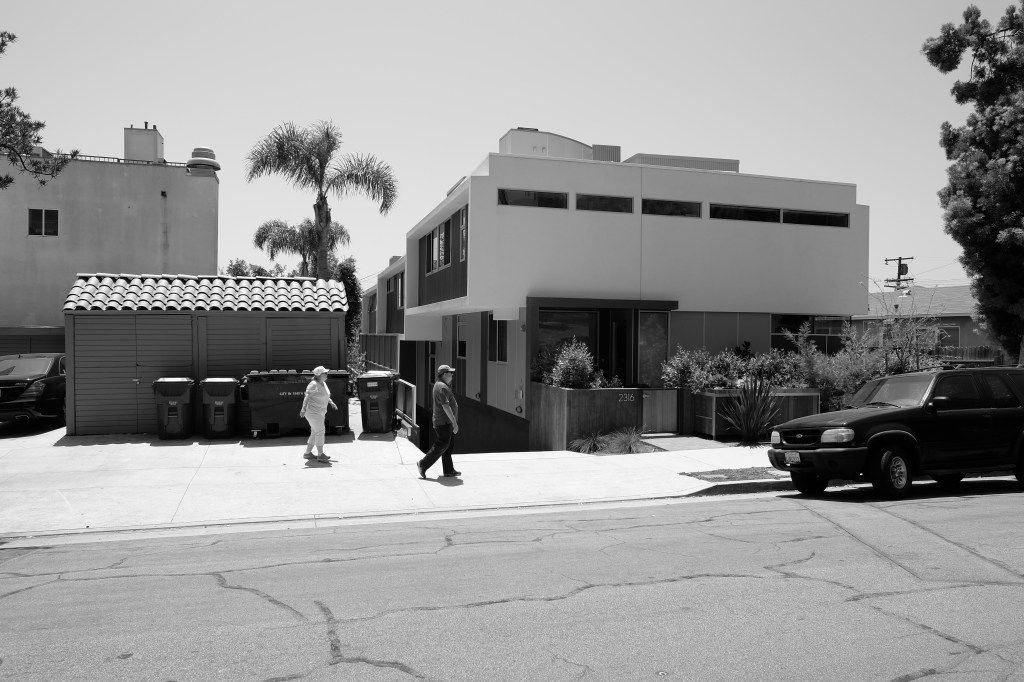
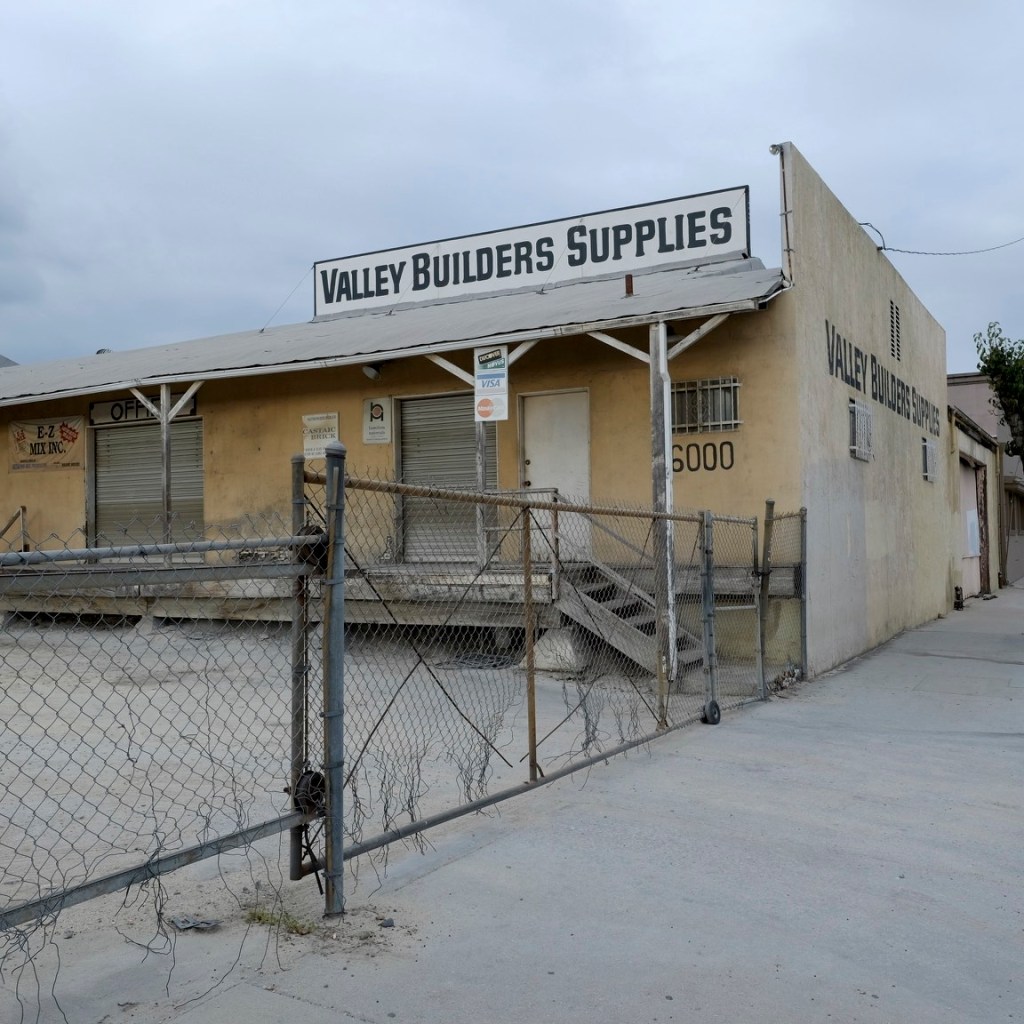
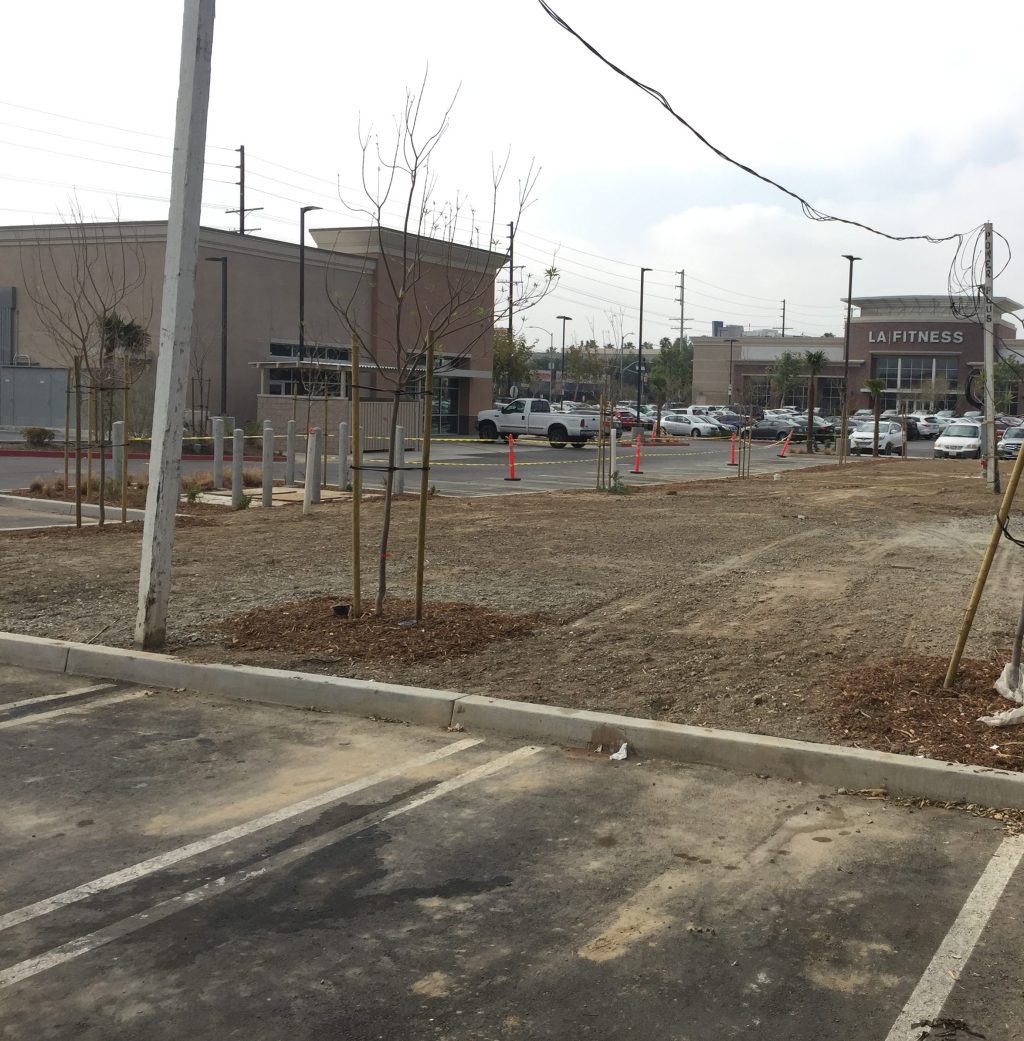
Our built mistakes: the round driveways, the fake pillars, the long awninged walk into an apartment house, the vinyl window and vertical blinds on a stucco wall, the landscaped lake of gravel around a palm tree, the steel security door, the tarp covered car in the driveway of the deluxe house with arched porch and glued on stone walls, and the randomly laid flagstone wall illuminated at night; these are their subjects.

Los Angeles is an artificial encampment watered by imported irrigation, stitched together by freeways and endless streets, baked in sunshine, built in discordance, promoted and extolled for no good honest reason. We have no ensemble of unity in our buildings, no public squares, no grand arches, no central gathering place. Tens of thousands are camped out in trash along the roads and under the overpasses. Those who own property pave their gardens, puncture the skies with revenue producing billboards; they construct monstrosities and guard them with guns and security cameras, they venture out from patrolled properties in tinted windows, sunglasses, and breathing masks.

But Textereau and Martinet find beauty in our banality. We can too.