Culver City Awakened.


After a long hiatus, we ventured Sunday morning down to Culver City to walk around the new buildings and the architectural oddities.

Once a stronghold of flat, inland dullness, a largely white town peppered in a monotony of starter ranches and stucco apartments, barber shops, taco stands, model trains, gun stores, and typewriter repair shops, Culver City has undergone a two-decade long makeover into a town of light rail, bike and bus lanes, restaurants, lofts, luxury restaurants, furniture, art displays and wine bars.

29 is the median age for work, and 69 is the median age for owning a house. And everyone else of any age is welcome as long as you wear yoga pants and carry a small dog.

In the last two years, all the formerly open parking lots near the Expo Line have been filled in with large, modern architecture: residential and commercial.

The Helms Bakery area used to be the only area that imitated urbanity, but today we walked through it, and there were few pedestrians. But all the old furniture stores were open, and Father’s Office was getting ready for service. An electric bike was parked outside of the Kohler Store, a man and a woman conversed next to a fountain, and through my camera’s viewfinder 1930s Hollywood was alighted in 2022.

Washington Bl. is now a multi-use roadway with specific lanes for cars, buses, bikes and pedestrians, an oddity of our region that takes some mental and focal readjustment.

A thin, blond woman in mask carried a shopping bag and waited for the light to change near Shanti Hot Yoga (“We’re open again! 7 Days of Yoga for $7”).

On the corner of Washington and National, adjacent to the elevated rail, there were new buildings, each one different but not too different: modernism with steel, glass, angles, some wood and some plants, and strong, assertive street walls.

On National Blvd with its spotless sidewalks and young trees, we walked, tranquilized and medicated, by train sounds and light breezes. A paved bike path coexisted with a train that hummed down the tracks high up on a concrete overpass. 

Sunshine was rampant and inescapable.

We were the only pedestrians. 

I had that disembodied sensation one only finds in Los Angeles: isolation and excitement, boredom and anticipation, urban exploration in a landscape of sunshine and emptiness. 

At “Nike Corp – Extention Lab”, 3520 Schaefer St. steel girders and compressed lumber presented an incomplete cathedral of construction. The wood was blond and warm. The materials seemed ready to be pounced on by that shoe brand’s rubber sneakers.

We walked south one block to Hayden Avenue, to a junction of ugly brilliance: Samataur by Eric Owen Moss, the architect whose offices and deconstructed designs decorate the entire street.  

Before the pandemic I would have hated this discordant scene, but now I rejoiced, for the chained off tower and the accompanying office blocks survived intact: startling, grotesque; yet unique in their ambitious awfulness: empty parking lots, cinderblock walls, dark glass windows. 

And a sign called “Clutter.” Without any.

These are the workhouses for young, multi-cultural creatives of dazzling imaginations whose languages are only taught at MIT or art colleges. I’m sure these well-compensated bees have worked on my brain many times as I play video games or buy a bottle of gin with the most gorgeous and award-winning fonts, or scroll through Netflix. They are all 29, tall, and play frisbee on the roof and bring their dogs to walk and I really do hate them all. 

They work for companies where Tyler, Dylan, Ashley and Rebecca, must list their preferred pronouns after their names and every company has a mission statement that begins with “we believe every human being has the right to…”

On the west side of Hayden, 3535 is another Eric Owen Moss, a multi-story stucco structure from 1997 with protruding supports that fly out of the building, angled walls angled for entertainment. Everything is decorative irony, not form follows function, but form for forms sake. Tenants are graphic design and media companies. This is a perfect setting for sons-of-bitches startups, Tesla influencers, wellness lubricants, Armani jackets and collectible sneakers.

At 3585 was Sidlee. This conglomeration was perhaps the most interesting of all the oddities along Hayden Avenue. 

The company, which describes itself in the most inscrutable and amorphous ways[1] has seemingly vacated this arrangement of forms and textures scattered along a parking lot like a museum of sculptures. 

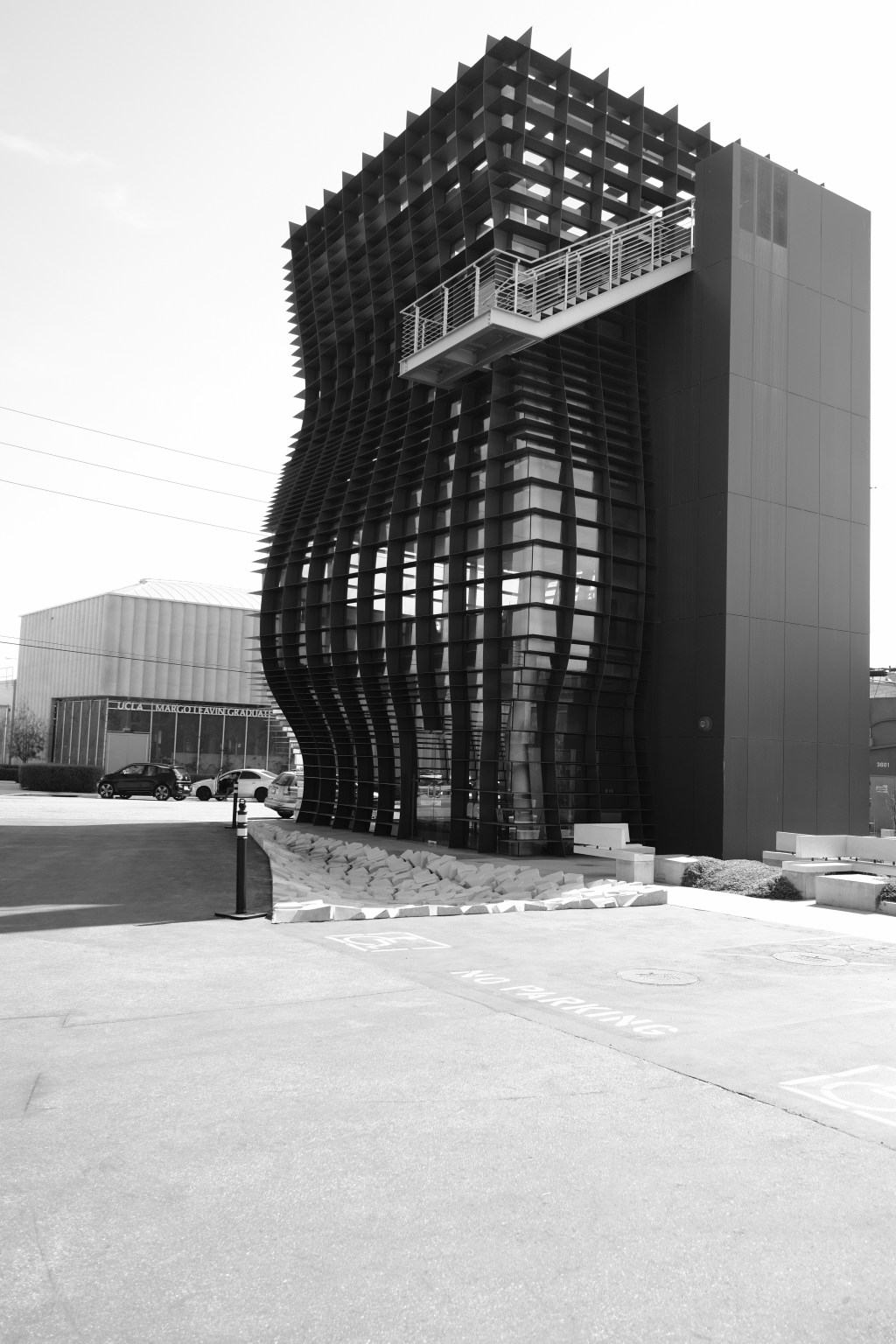
Vespertine, (dinner for two: $650) a luxury restaurant of museum like dishes, was the tenant of a tall glass building encased in protruding, undulating sheets of horizontal and vertical steel. It was built next to a river of concrete rocks like a dry stream; nearby, a four-story tall steel tower sculpture supported rows of steel cactuses in steel pots suspended 40 feet in the air; a concrete park was furnished with cushy concrete seats and shaded by shaved down cats tails. 

If the ghosts of director Michelangelo Antonioni, and actors Monica Vitti, and her still living co-star Alain Delon came to film a sequel to “L’Ecclisse” (1962) this would be their location.

Another strange fact of 2022 was the absence of security guards. I could walk up to any building and take photos. This was impossible from exactly September 22, 2001 to March 20, 2020, when Fear of Arab Terror was replaced by Fear of Invisible Virus

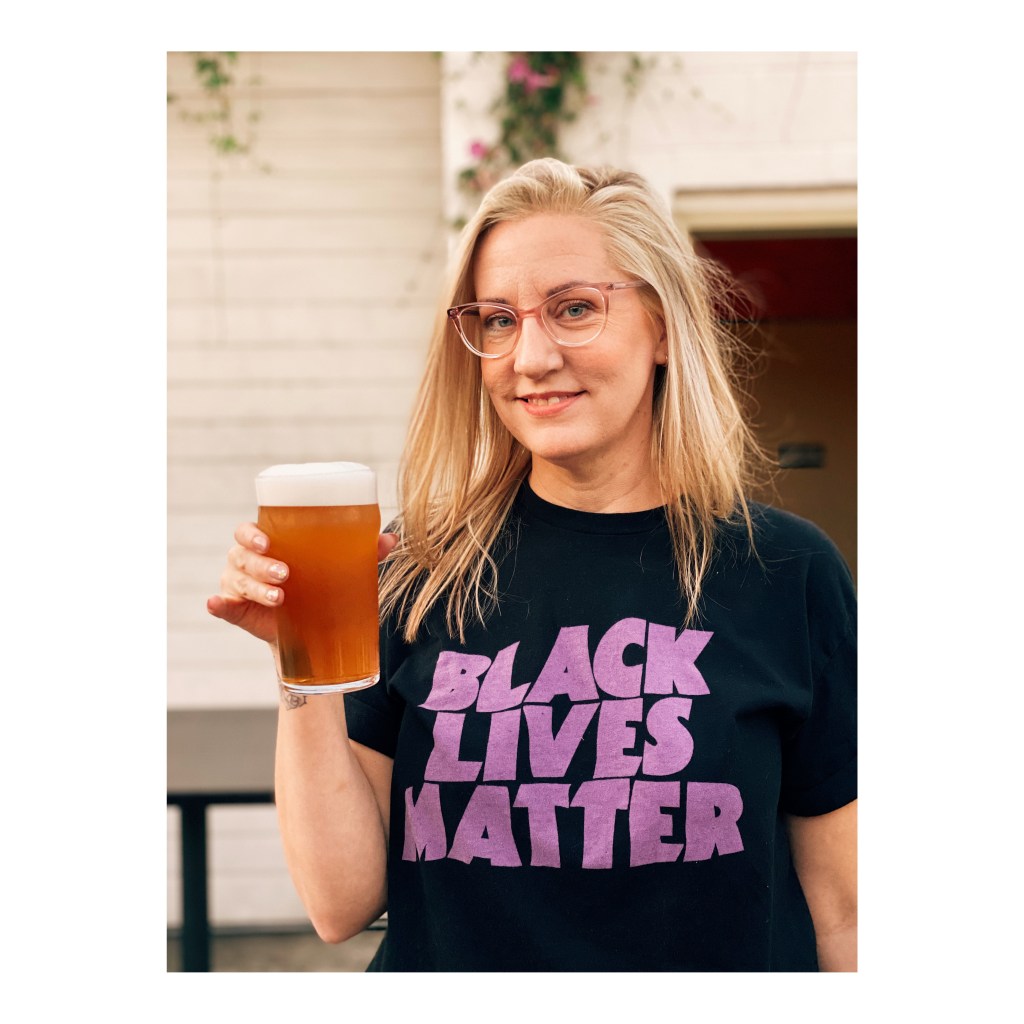
There were signs everywhere for masks and Black Lives Matter, and everywhere I looked I knew I was living in the here and now of 2022, poised somewhere between the past and the present, never quite certain of reality, but walking in it every step of the way.

END


[1] “Deep-rooted in the United States since 2012, Sid Lee Los Angeles has become a thought-leading hot shop for the country’s most iconic brands. With an extensive network reaching all the way to New York, our L.A. team delivers work that matters for a global clientele. This multi-faceted team at the epicenter of content and innovation offers fully integrated solutions supported by the weight of Sid Lee’s global collective.”

Reunion


Last night was a reunion at MacLeod Ale, the first time all of us had gathered since last March 2020.

Times have changed.

There was a large area outside under tents where many could gather. Let’s hope they keep this pandemic innovation.

Some pizzas are spicier, some beers are smaller, some people are larger.

After 15 months, everyone looks a few years older, including this writer.

As night fell, the place got more crowded, and that familiar loudspeaker announcement came on to have someone move a car blocking other cars on the driveway. There has never been enough parking here, which is a good thing for those who want people to walk, Uber or bike here. Bad for those who measure the quality of life in Los Angeles by how much parking there is.

Anyway, it was good to see friends. Again.

Fashion Entanglement


Last year, in early 2019, before all hell swept over the Earth, I was working as a photographer.

Seeking to refresh my portfolio, I contacted a model on Instagram who was a striking looking Black male. He had close to 20,000 followers. He agreed to a “trade for print” (TFP) which is just a term for a barter arrangement where a model and photographer work for free in a mutually beneficial arrangement.

I thought about how I might shoot this person, and I found a start-up clothing company that was just gearing up. The designer founder, a middle-aged white, who had 20 years of experience in fashion, had just moved from New York. He made rugby shirts, well-tailored trousers and other prep clothes that were locally manufactured in downtown Los Angeles to high quality standards.

I contacted the designer and drove down to his perfectly decorated art deco apartment in Hancock Park where he had selected and neatly folded jackets, pants, and shirts to photograph. Again, the arrangement was just to “tag” his products on Instagram and he would get credit and some free advertising and I would have loaner clothes for my model.

The model came over to my house. I shot him in the clothes as he stood in my backyard, and in a chair in my living room. And then he left. And all was fine. The Black guy with the green eyes in the colorful shirts looked wonderful. (I have erased his face to protect his identity.)

I felt some compassion for the model, who was, of course, also pursuing acting. I gave him a couple of leads of directors or producers I knew and said he should follow them online. He sent me texts of thanks. And that was the end.

Then the designer saw the gratis, no charge, promo photos. 

And for whatever reason, he hated, despised, and was completely revolted by the good-looking young Black male. He gave no reasons, but it seemed that he preferred a “preppy, All-American” (WASPY) male.  He was aghast at the free photographs and not at all appreciative of the pro-bono work. He told me he wished that I never put this Black man in his clothes.

A day later the model contacted me and asked why the designer had (unknown to me) blocked him on Instagram. I had no answer. My heart broke because I could not understand why. I could only guess racial animosity. But could not prove it. Why the hostility directed against this dark-skinned man? He had done nothing wrong other than wear the designer’s clothes!

I had, in my initiative, promoted a new clothing line, and an upcoming model, and all I had were some very fine photos. It had cost me nothing, except for the gasoline driving 30 miles roundtrip to Hancock Park.

Then a few months ago, about a year after the shoot, the model, whom I hadn’t communicated with, sent me a DM on Instagram. It read something like this: 

“You do not have the right to TFP my name to promote your friend’s clothing company! You are OLD! Why don’t you go fuck your Chinese boyfriend!”

I didn’t answer. The attack was completely unprovoked. It did not matter to the model that he got free, edited, professional photographs that he could use to promote himself. And that my “friend” was not a friend at all, just a brand I found on Instagram. I guessed that the pandemic had made him just a bit more crazy as it had all of us.

Today, out of curiosity, I went to see whatever happened to that promising start-up company that made the very colorful rugby shirts and high-quality khakis. 

I couldn’t see it. The clothing company designer had blocked me on Instagram. 

I’m recounting this story because I had the best of intentions all around in producing this small shoot. Everyone was treated fairly, courteously, respectfully. Nobody was mistreated in any way.

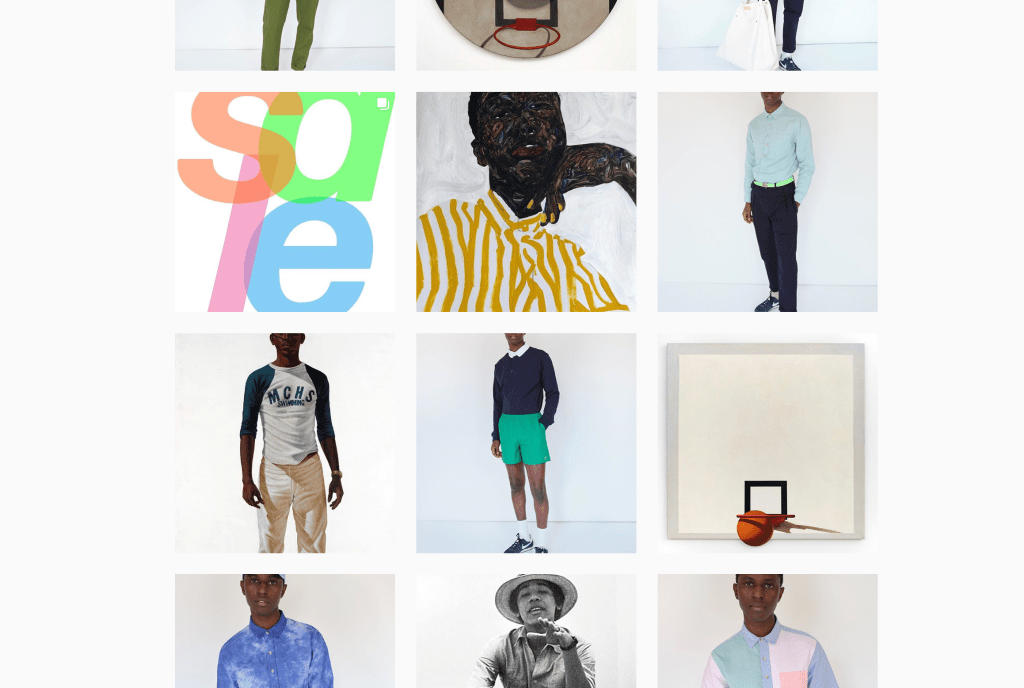
I found an alternative way to look at the website of the designer’s IG page. He has one Black model in every single photo. And dozens of boxes of “Black Lives Matter” and all sort of salutes to racial justice and racial equality. 

Of course, it’s past May 25, 2020. George Floyd is dead. Black Lives Matter. Everyone must show social media empathy for the cause. The company that sells the $200 khakis makes sure that its’ images are on the appropriate side of compassion.

I see the kind posts this year. I remember the mean actions of last year.

Today, in fashion, we salute Black Lives.

What about next year?