Vote NO on Propositions 26 and 27


The following has been reprinted from the LA TIMES, September 11, 2022.

“ELECTION 2022; Vote no on Propositions 26 and 27; California doesn’t need the massive expansion of gambling under either proposition.

Since the U.S. Supreme Court ruled in 2018 that states can allow sports betting, legal gambling has exploded across America — leaving some predictable problems in its wake.


Many of the more than 30 states that permit sports betting — including Michigan, Virginia and Connecticut — have seen spikes in demand for services to help people addicted to gambling, often without resources to respond adequately. Online gambling has become prevalent among high school students, even though the age for legal betting ranges from 18 to 21 depending on the state. And the amount of money some Americans now blow on sports bets should raise concerns about their financial health. In just one month last year, sports gamblers wagered $7 billion — a 20-fold increase from three years earlier. That’s money they’re not spending in other parts of the economy, or worse, money they borrowed that they may not be able to pay back.

If the companies that own betting platforms and the tribes that run casinos have their way, California will be the next state to embrace this foolish scheme. Voters should prevent that from happening by rejecting Proposition 26 and Proposition 27 on the Nov. 8 ballot. These two competing measures would allow sports betting in California, though in different ways, and both would usher in a troubling expansion of gambling.

Proposition 26, backed by several Native American tribes that run casinos including Pechanga and Agua Caliente, would allow sports betting in person at four privately owned horse-racing tracks and at tribal casinos that reach agreements with the state. It would also expand the types of games allowed at Indian casinos to include roulette and craps.

Proposition 27, backed by several betting platforms including Draft-Kings and FanDuel, would allow sports betting online on sites run by California tribes or large companies that partner with them. It would also allow wagers on awards shows and other nonathletic competitions.


That would essentially turn every cellphone, tablet and computer into a legal casino where bets could be placed with a few taps on an app.

The pervasiveness of the technology and the familiarity many people feel with sports may make online sports betting more addictive than other types of gambling, experts have found. First there is the ease of pulling a gambling device out of your pocket compared with the hassle of traveling to a casino. Then there’s the fact that people who follow teams tend to believe they have superior knowledge that compels them to bet more than they might at a card table or slot machine. Research comparing people who bet on sports with people who place other types of wagers “found that sports bettors are at greater risk of problem gambling,” according to a study published in the Journal of Gambling Studies.

Proposition 26 avoids the issues with internet-based gambling but presents other problems. A provision that makes it easier for card rooms to be sued amounts to the latest salvo in a long-standing feud between Indian tribes and card room operators over which venue has the rights to offer a certain type of game. Advocates for the humane treatment of animals are concerned that by allowing sports betting at horse racing tracks, Proposition 26 would prop up a cruel industry that has waning public support.

Although Proposition 26 aligns with California voters’ past support for allowing gambling on tribal land, the measure amounts to a toxic brew of industry interests designed not only to enrich the funders but also to push away their competitors. If California ever decides to embrace sports betting, it should be with a framework that is as evenhanded as possible, and not one that so blatantly picks winners and losers.


One argument from supporters of both measures is that sports betting is happening everywhere, whether legal or not, so California would be better off regulating and taxing the practice rather than relegating it to the shadows. Legalization will tamp down the black market, they say, and create a gusher of tax dollars for the state.


This sounds good, but California’s experience legalizing cannabis shows there is reason to be skeptical.

The same arguments were made in 2016, when voters approved recreational marijuana. But in the six years since then, the black market has continued to thrive. About three-quarters of the weed sold in California is illegal, and legal sellers say all the taxes they face make it hard to compete with illicit drug dealers.


Though Proposition 27 aims to reduce illicit betting by making people who use illegal websites pay penalties and creating a new enforcement unit at the state Department of Justice, an expert at the UCLA Gambling Studies Program said he’s not convinced it will meaningfully curb the black market. Other states that have allowed online sports betting still contend with a lot of unregulated online betting, said psychiatry professor Timothy Fong, and he does not think it will go away in California.


Continued activity on the black market could mean the tax dollars generated by sports betting would be more of a trickle than a gusher. Again, we are reminded of the cannabis legalization campaign, which promised that taxing weed would deliver loads of new funding for programs to help youth and prevent substance abuse. In fact, tax revenue has come in lower than expected and the state just lowered tax rates because the legal marketplace is such a mess.


The amount of new tax money that would be generated under Proposition 26 is uncertain, the nonpartisan legislative analyst says, “but could reach tens of millions of dollars annually.” It would be spent on schools, gambling addiction programs, sports betting enforcement and the state’s general fund. Racetracks that offer sports betting would pay the state 10% of the bets made, while tribes would negotiate their tax payments in agreements with the state.


Proposition 27 is likely to yield more tax revenue — potentially up to $500 million a year, according to the legislative analyst — but the figure is also uncertain. Tribes and companies that offer sports betting would pay a 10% tax on bets made. They would also pay licensing fees pegged at $10 million for tribes and $100 million for corporations. The taxes generated would first go toward regulating the sports betting industry. Remaining funds would be used primarily to address homelessness, by, for instance, subsidizing affordable housing, emergency shelters and navigation centers. A sliver of the funding — 15% — would go to tribes that are not involved in online sports betting. Voters are rightfully upset about the huge number of Californians who don’t have a roof over their heads. But don’t be fooled into thinking that Proposition 27 is going to solve homelessness. As the state budget overflowed with surplus dollars the last two years, California lawmakers committed $13.5 billion to provide shelter and services to people who lack homes. Taxes from sports betting would provide an ongoing source of funding, but the amount may not wind up being a game-changer.


What’s worse, it’s possible that legalizing an addictive form of gambling could lead more people into penury and needing government services, which would erode how much the state actually nets. “Online sports betting could make it more difficult for people with gambling addictions to avoid placing bets,” the legislative analyst wrote. “This could increase the number of people who might need government assistance.”


Sports betting has become more socially accepted in recent years, so some might look at Propositions 26 and 27 as indicative of a cultural evolution. Perhaps. But it’s an evolution spurred by greed.
The normalization of sports betting has been egged on by betting platforms, athletic leagues and media companies, which see profit in convincing people to gamble away their dollars. That’s why gambling interests are pouring hundreds of millions of dollars into Propositions 26 and 27 — blasting through past spending records on state ballot measures.

If both measures pass, it’s possible that both could take effect. However, there would likely be a protracted legal fight over whether California can run two different sports betting systems.
California doesn’t need more gambling or more lawsuits. Propositions 26 and 27 present more risks than benefits, which makes both of them a bad bet. Vote no.”

See all of our endorsements at latimes.com/endorsements.

Illustration Credit: https://calmatters.org/california-voter-guide-2022/propositions/prop-26-sports-betting-tribal-casinos/

Columus Day.


There is new construction fencing and green tarps in front of 6505 Columbus. A building permit has been created for a new single-family house on the one-acre site of the former Rancho Perfecto which I wrote about in 2019. 

The idea that the land will be graced with just one single house is ludicrous. Every property in the neighborhood is stuffed to the gills with accessory dwelling units, vehicles or marijuana gardens. And, in 2021, any one house on a given lot in Los Angeles must self-procreate.

The property is near the corner of Columbus and Hamlin. It is across the street from the blue sign, “Columbus.” Mrs. Tweddle, a writing teacher, resides opposite this lot and runs a school for writers, You Tell Yours . A couple of blocks north is the Columbus Avenue School. All around there are signs, schools, teachers and the word Columbus

Columbus is everywhere.

But the new sign is 6505 Columus.

A bad omen for that architectural phrase: God is in the details.

Given the paucity of refined signage what will the new house look like? 

I expect high walls, cinderblock and iron, and a lot of concrete to park large vehicles, Hummers, SUVs, dump trucks, and monster trucks. There will be high security cameras and floodlights all around, and perhaps a triple story, double front door leading into a vast marble hallway with plastic seating and a pool table. The style will be Home Depot on the Range.

This was once a pretty nice place to live, before the city and state went to hell.

On January 15, 1950, this property and original house was listed in the LA Times at $22,500. 

Large 6 rm ranch type with 1 ½ ba. plus guest house, rumpus room & bath, laundry house, tool house, large double garage with storage closets. Patio, lighted badminton court, bbq and plenty of shade and fruit trees and roses. 

Does anybody these days desire a badminton court?

Maybe badminton would improve the neighborhood.

Letter From a Neighbor to Councilwoman Nury Martinez


My neighbor, who has lived in Van Nuys since 1979, is aghast at its condition and appalled at the utter lack of leadership in correcting its continuing decline.

She wrote a letter, intended for Nury Martinez our Councilwoman and now the President of the City Council.

I agree with everything in it. Our community is dying with rampant lawlessness and political leaders who mouth platitudes but have no guts to fight for the forgotten taxpayers and residents of Van Nuys.

Here it is:

“As a long time resident of Van Nuys, 42 years, I have watched its steady decline with dismay.

Among my many concerns is the appalling lack of investment in upgrading and maintaining the city center. All the city buildings are here: the courthouse, the police station, the library, train/bus stops etc. This should be a center of pride for the city, but instead it is a fenced off desert with no landscaping, few trees, garbage and litter everywhere.

Old Post Office

I understand that the homeless problem has impacted all, but other than DTLA or Venice, we are the worst.

3/5/18 Bessemer at Cedros.
Van Nuys, CA 90401 Built: 1929 Owners: Shraga Agam, Shulamit Agam

At one point, a few years ago, Van Nuys Blvd. received a grant titled something like “Beautiful Streets.” There were plans afoot to utilize that money to help VNB from Oxnard to Victory but nothing ever was accomplished. What happened to that money?

In the past I have been to several Van Nuys City Council meetings and found them to be a joke. Most of the Council members seemed preoccupied with eating pizza, nothing was accomplished and many did not even live in Van Nuys.

Once upon a time Van Nuys was a charming little town with thriving shops, and restaurants and a pretty City Center. Now it is a filthy, sad and neglected relic. Come take a drive Along Van Nuys Blvd from Oxnard to Roscoe and tell me if you would feel any pride in living here?

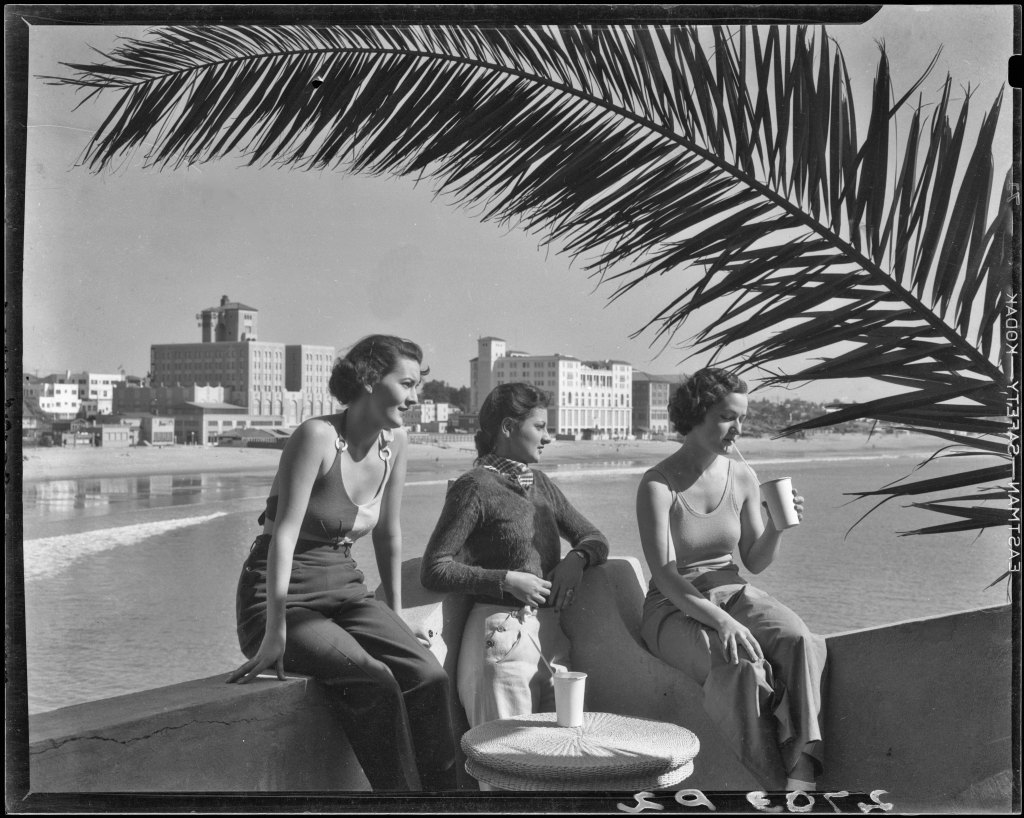
Van Nuys, 1938


At least clean up the median on Sepulveda Blvd between Haynes and Le May. Clean it, plant trees and maintain it. Clean up the constant trash along the streets.

This list could go on and on but it would show that you care if you would just do this much, it is the least you could do and it’s a start.

And is it not illegal to litter? What about a litter free campaign and enforcement of the law? LA used to be one of the cleanest cities in the country now it is the filthiest.

My heart is breaking. Please help us!

And if you cannot, let us know whom to vote for who can.”

Work From Home, Help the Homeless


Sofa by Kardiel

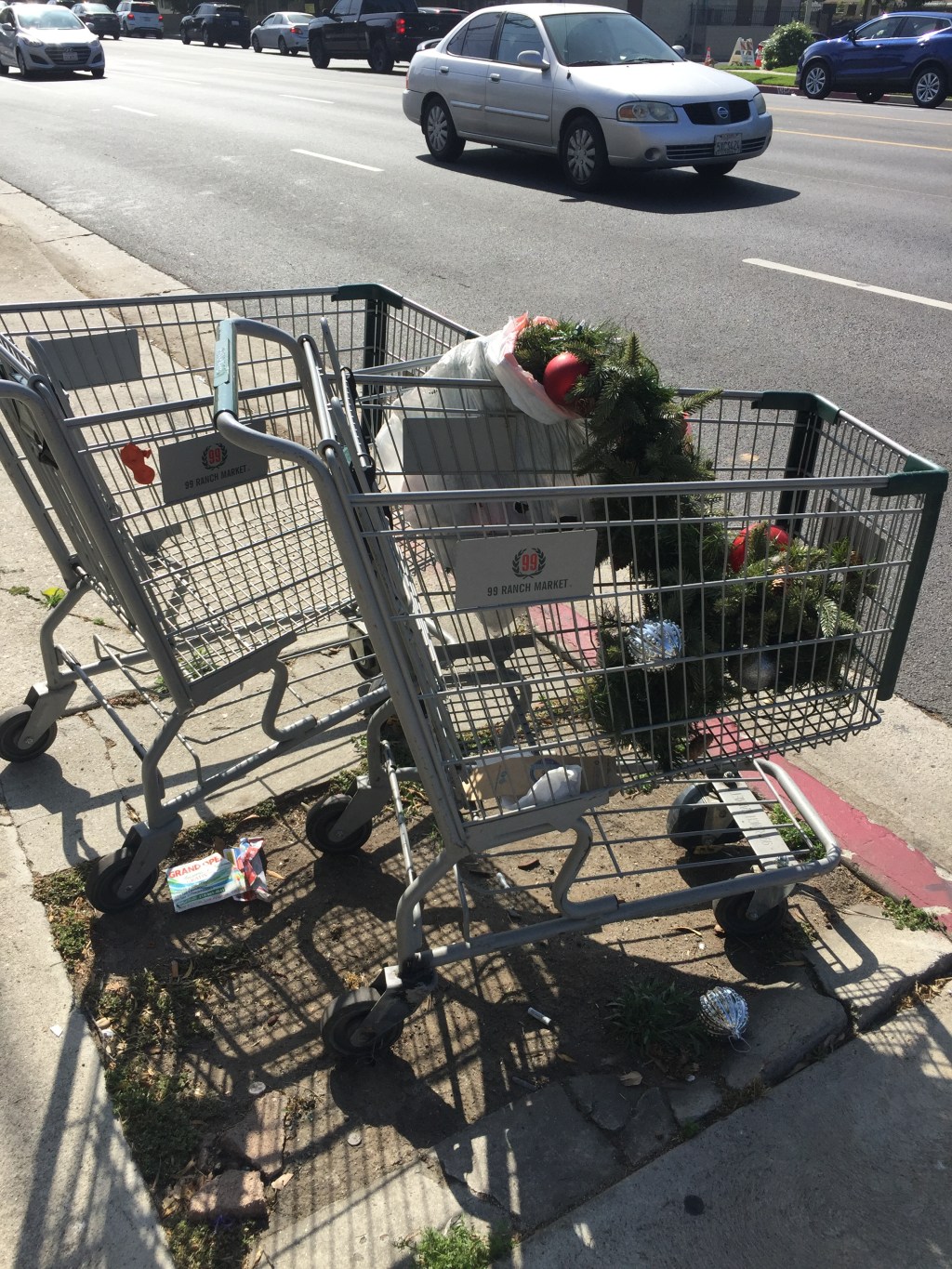
They live in trash camps beside the freeways, under bridges, or along the train tracks. You know they are around when fire trucks speed down the street to put out their fires. Perhaps you’ve seen their gardening, the charred acres of blackened trees in Woodley Park?

But you are happy because you work from home, perhaps in your condo in Studio City, or in a rented house in the Hollywood Hills, earning $85,000 a year to assist a non-profit in expediting relief programs for unhoused individuals.

Flush with money from Mayor Garbageciti, (now in his seventh year of misadministration) blessed by the kind intentions of Washington, applauded by those who imagine that a city and state that allows vagrancy of 100,000 people, is somehow going to end the blight and destruction of the Golden City; this is the shining hour when, at last, the absolute desecration of urban life by filth, trash, feces, squalor, crime and disorder ends. 

For the erection of storage sheds behind high fences on freeway offramps will persuade those who have fallen into drug and alcohol abuse to move their dozens of trash filled carts and begin reform!  

To perpetuate the madness of a declining civilization, there are now many executive positions in a new industry that will keep you; college educated, highly skilled, they/them/he/she; comfortably employed with benefits for years to come.

The homeless crisis is now a permanent industry, as real as the movie studios and oil wells once were. It is the new future of California. And it fits in perfectly with performance virtue signaling, to pretend to be doing socially beneficial acts while skimming public money into private pockets. 

Common sense would have once required all homeless persons to register with the police. Then they would have been monitored. The sick ones would be sent to mental hospitals or treatment centers. The bad ones would be sent to jail. The single ones would be sent back to Kansas. The ones who refused help would be arrested.  

And nobody would sleep on the sidewalk. 

But to maintain law and order, a special type of government worker, with a blue uniform, badge and gun is required. And they, my friend, are not welcome.

For now, the word police itself is toxic, a derogatory word to describe beasts. Let us, try then, to live in a nation without any law enforcement, to erect a new country where 400 million people are self-policing.

The experiment in lite, invisible policing is well underway in Los Angeles, and we lucky ones who live here in 2021 are now under strict rules as to how we may express ourselves, and what words we may not use. But those who wreck, defile, and implode in their own life are invited to perform in public to bring down the rest of us to live inside their mental and physical hell. 

In this modern era, private words are punishable but public acts that endanger life, health and security are permissible. It’s enough to make housed people want to set their own houses afire. 

But don’t fret about it. There are high paying executive jobs, working from home, snuggled up on your couch, in the air-conditioning, attending Zoom meetings and sending out memos to government entities who are earnestly working to end the very thing that keeps them employed. 

As they say on Instagram, it’s so amazing!

Around the Neighborhood.


Since the pandemic began, in earnest, last March, one of our routines is the morning walk around our neighborhood.

The fact that most of us live and work at home, self-incarcerated by choice or duty, has produced a strange life. Beside the societal disasters that befell our nation in 2020, the ordinary existence of the citizen is to wander out and wander back in.

Wandering out, in the morning, or when the light is beautiful in the late afternoon, I captured some images of our area with my mobile and edited these on VSCO.

Kester Ridge is basically a 1950s creation of good, solid ranch houses between Victory and Vanowen, Sepulveda and Kester. On Saloma, Lemona, Norwich, Noble, Burnett, Lemay and Archwood the houses have endured, and only a few have been completely demolished or aggrandized. 

But the persistent trend is the ADU, the conversion of garages and backyards to multi-family dwellings. Many of these houses are rentals, and the ones that are owned also rent to others who may live beside the owners.

A few years ago this seemed problematic, and the idea that our backyard behind would sprout a second house four feet from our property line was unimaginable. But now we also have a gray box 4 feet behind us, 30 feet long and 15 feet high and we are OK with it, as long as the dogs, the noise, and the marijuana don’t also move in. 

Meanwhile, the ranch houses, the sidewalks, and the garages without cars stand silently and passively, unaware of their portraits.

Letter From a Homeless Man


From the LA Times article, “Garcetti’s A Bridge Home Homeless Problem Has Mixed Results.”

A formerly homeless addict refutes all the tolerant and feel-good ideas that are bandied about by Garcetti and other enablers. Here is what WEHO LIBERAL said in a letter to the LAT:

“I’m someone who once was homeless multiple times, but always stayed in shelters no matter what. NEVER, ever camp outside! It’s a dead end and that behavior is only for people with serious behavioral problems, alcoholism, drug addiction and mental illness. If you lose your housing? You do NOT camp outside. Period.

I’ve posted multiple times about homelessness on LAT over the years. The last time I did, Nita Lilyveld (not sure if I spelled her name right) wrote about 2 young homeless people in their early twenties that I reached out to offering support and even to take them to dinner. After 2 or 3 texts between one of them where they kept saying they’d follow up with me, they flaked. No more texts. They didn’t follow up or stay in touch.

I am done with this nonsense. And I say that as a liberal Democrat who supported all of these shelters being built. Enough is enough. My mother was mentally ill her entire life and constantly refused treatment.  Even when I was struggling with my own addiction, I ALWAYS made sure I had shelter.

I live in Hollywood.  You see these people every day.  I see them sitting or lying around their campsites when I leave for work. I come home from work and they’re still there, doing nothing but eating, urinating, defecating, some listening to the radio or watching TV on their phones. But they are always there and they make zero effort to change their lives or better their situation.

They ask me for cigarettes, they ask me for money. Their laziness and refusal to change infuriates me. I was homeless, multiple times. I’m sick and tired of LAT columnists like Steve Lopez and Nita Lilyveld pleading to help people who simply do not want to help themselves–or in the case of Lopez, only interested in finding a charity case that they can champion in press and on TV for his own ego.  No, I do not care to hear about how hard Nathanial Ayers’ life is when he refuses to take his medication that would help save his life and better his living situation. My own mother refused treatment for years so I have zero sympathy for people like him who literally are victims of their own refusal to simply do what could get them housed and improve their lives.

Look, being homeless and living in either a shelter or housing provided by local government was no picnic and no fun. I was miserable. My addiction was my responsibility and I deal with it and take responsibility for it. But Lopez, Lilyveld and others like them have their own faults and shortcomings, too.  It’s morally right to have compassion for others, absolutely.  But people who refuse to help themselves even when others try to help them and move Heaven & Earth to do it are not worthy or deserving of compassion.  They are not money pits; they are emotional black holes who will drain the time, energy and resource of everyone around them because they refuse to do what they need to do.

I’m living paycheck-to-paycheck. Yes, I’ve been lucky and yes, I have white male privilege. But as an incest survivor and an HIV+ positive drug addict in recovery, I no longer buy what Lopez, Lilyveld, LAHSA and others like them keep preaching. It is infuriating and it’s becoming obscene. I tried to help 2 homeless young people less than half my age last year after reading about them here.  For God sakes, I offered to feed them more than once. They kept making excuses and then just stopped reaching out to me.

I am done with supporting this policy and their behavior. We all need help sometimes. God knows I spent years exhausting people and it took me a long time to get my act together. But sooner or later, you have to reach deep down inside yourself, confront your problems and change your behavior as much as possible to save your own life.

I am not perfect and all of my problems are not solved. But as someone who sees homeless people every day who sit around all day doing nothing, my compassion for all but a select few is pretty much drained and gone.”