Prayers and Pharmaceuticals.


What day was it on the calendar?

I did not know.

I only know I was speaking with my mother, pushing her along in the wheelchair along the Marina path. The sky was bright, the boats were anchored along the dock, she said she was hungry and wanted a steak.

It was last Monday, August 18th and Linda brought her a burger from In N’ Out. My mother said it was delicious.

The next night she asked for pizza.

The steroids that she had gone back on seemed to be making her hungrier, putting food for life back into the body of a woman in Stage 4 cancer.

Linda came and said mother is looking better. Vital signs were good. Blood pressure 102/59, pulse 62, temperature 98.6.


I was back on Thursday, August 21st.

Caregiver Bertha, a Guatemalan woman who is a fireball of energy and love, cooking up soups, cleaning windows, massaging oil into my mother, rolling her out of bed into the wheelchair, said my mother had been up all night screaming, “Help! Help! Help!”

I blamed the steroids. They were keeping her up.

My mother told me she was dying. She said this was it.

Bertha laughed and said “Miss Lou you are not dying. Your face has color. This is not death!”

My mother said that Anisha was in the other room. I said Anisha is gone. She said she saw her. She said it over and over again. We were conversing, but the conversation was repetition. I was speaking to her, as I had for the last half century, but the words were going into a mind going into death.

My mother said I was sick. I told her I was not. “Why are you sick?” she asked. She said something about a concussion.


On Friday, my sister-in-law Pri visited and spoke with my mother. Later I came over and found my mother asleep. When she awoke, her eyes were watery, and she asked for her sister Millie. “Millie, Millie, Millie, Millie, Millie…” And I dialed the phone, 90-year-old Millie in Chicago answered, and on speaker she spoke to my mother, “Lou I love you. You are my favorite sister.”

The nurse from Skirball came, cheery, on her last call of the day, before she went off work for the weekend. As she had, all along, the hospice nurse offered empathy and most of all, pharmaceuticals. She had no explanation for my mother’s descent into half-life. She wanted to make sure my mother was “comfortable” in her “transition”, the words as soft and false and phony and amorphous as the hospice treatment, a kind of strange medicine offering prayers from amateur rabbis, talk therapy from retired therapists, and weekly visits from drug dispensing nurses pouring morphine and Lorazepam into the mouths of the dying.

My mother asked me to close the drapes in the room. She said the light was blinding her. She said her head hurt. She said she ached all over. I pulled the drapes shut, and we sat in the dark, which felt ominous, a portent of death, shutting out light.


On Saturday, August 23rd, I went down to the apartment to welcome a new caregiver, Marta, who would be there in the last days of my mother’s life. Bertha stayed, until 3 O’Clock, training the new woman.

A blonde, middle-aged female rabbi came to the apartment, ludicrously dressed, to my eyes, in a doily lace yarmulke, offering exuberant compliments about the 8th floor view. She sat down next to my mother and asked if she was ready to go. She said it was Ok to go. My mother was now dead to spirit, but alive, incoherent, the silly, improvised, bedside portable Judaism lite blew over her like the breeze.

The rabbi left, her utterances to the all-mighty were no match for the wonders and miracles of morphine. True peace and acceptance were swallowed every four hours.

“I give your mother La Morfina. She sleep well,” Bertha said.

 La Morfina.

The patron saint of cancer.


And I returned on Sunday, August 24, 2014 to her apartment. The front door was open and a wind blew through the living room, rustling the newspapers and sucking the drapes into the open sliding doors.

Danny and I sat next to her, one on each side of her bed.

“Do you know who I am?” Danny asked.

“Danny,” she said.

“Good!” he said.

She said my name and then fell back into her world. And whatever she said next had no meaning. They were only words, coming out, weakly.

“Clicker, clicker, clicker…” referring to the TV remote.


Lovely 24 Hours in the San Fernando Valley…


http://northhollywood.patch.com/groups/police-and-fire/p/former-disney-star-lee-thompson-found-dead

http://northhollywood.patch.com/groups/police-and-fire/p/man-shot-to-death-on-laurel-canyon-in-north-hollywood

http://losangeles.cbslocal.com/2013/08/18/pedestrian-35-fatally-struck-in-studio-city-hit-and-run/

http://www.latimes.com/local/lanow/la-me-ln-sherman-oaks-hit-and-run-20130818,0,1155543.story

Lost.


This slideshow requires JavaScript.

The death of Elizabeth Taylor, and the flash of early photos of her, circa 1950, brought fresh to my mind a transcendent and poetic grace, captured on film, a sparkle of femininity and loveliness, forever lost.

To see her pivot around the pool table, wasp-waisted and ruby lipped, as Montgomery Clift loses his cool, is to live one’s own youth again. That is the moment when you find yourself uncontrollably attracted to another person. But also inhibited, scared, shaking.

There once was a beautiful young girl whose physical beauty was emulated and admired all over the world. And she rode a wave, a crest, and a hysteria; a tornado of fans, yet somehow she managed to keep her dignity intact.

And now we live in the age of Gaga.

My Father’s Wallet


My father died April 13, 2009.
Since that day, I have kept his wallet inside a white ceramic vase on a square table next to my bed.

To hold another person’s wallet, without their consent, even when they are dead, seems a violation.

And what possession is more personal than a wallet?

Like the expired man, his wallet contains expired credit cards.

I read the business cards stuffed into the wallet pockets.

One card is The Valley Hospital in Ridgewood, NJ where I saw him on the morning of October 14, 2006 after I flew into Newark on a red eye from LA. He had suffered some sort of a small stroke. And I cried at his bedside.

A Department of Veterans Affairs ID, created only a few months before he died.

A card from a Speech Pathologist who would help him pronounce words at age 75 that he once could say without practice.

He was a painter and took art lessons at The Ridgewood Art Institute. A green paper card, frayed at the edges, was valid through August 31, 2007.

AARP, Medicare, Costco, American Express, AAA, Master Card and Visa: the cards of a modern living American male. Pieces of plastic to insure, to protect, to provide, to make credit for any activity on Earth.

In his last week of life, I remember he was breathing with difficulty as he sat on a bar stool bench, at the kitchen counter in his apartment, going over his taxes, which were due in mid-April.

He was fatally and incurably ill and knew he would die from this inexplicable illness called Multi-System Atrophy.

But he was no different than any of us in his belief that he would continue to live.

My father’s wallet still seems to belong to a living person. And no amount of time or loss can diminish it.

River of Plastic/ Rio de Plastico


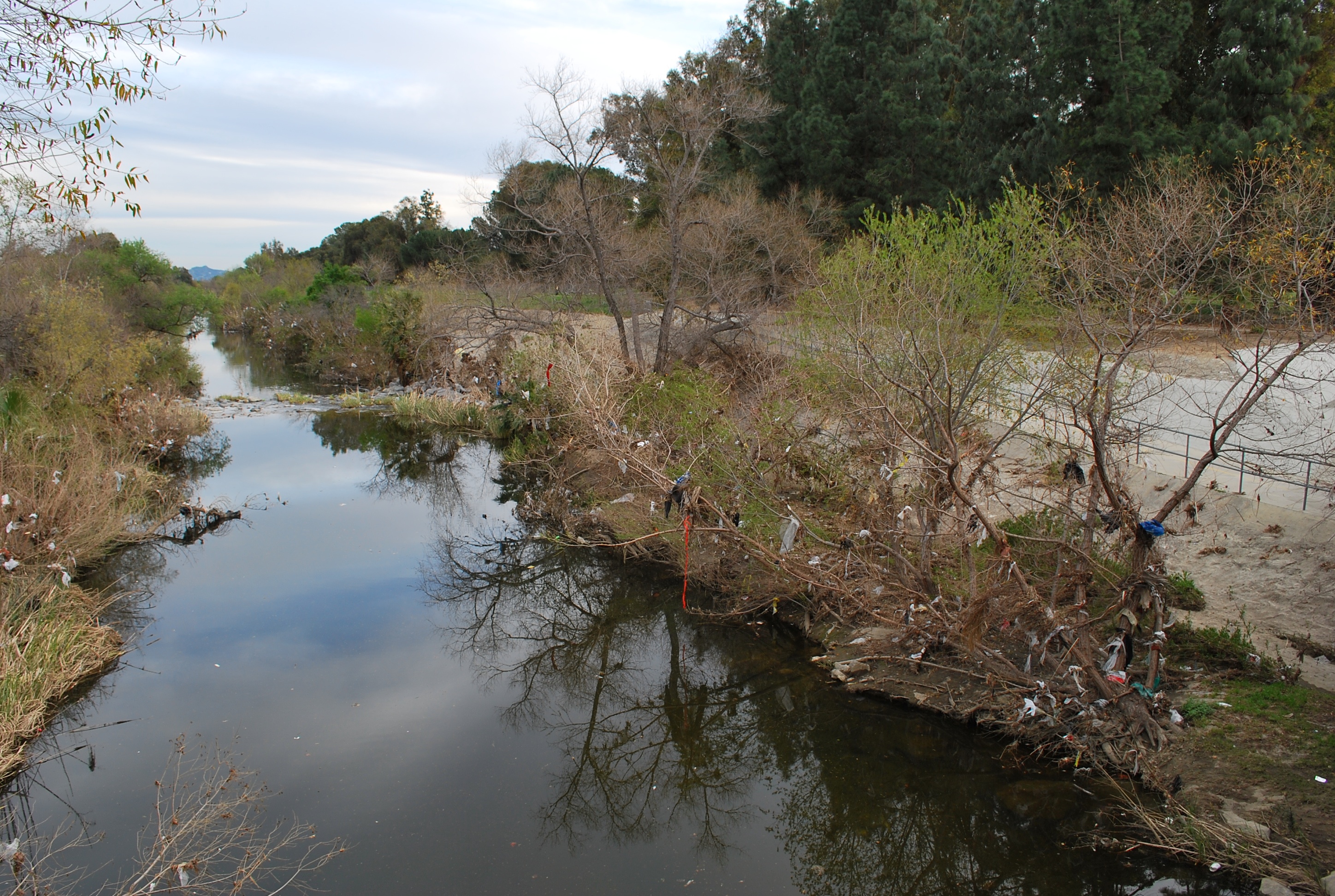
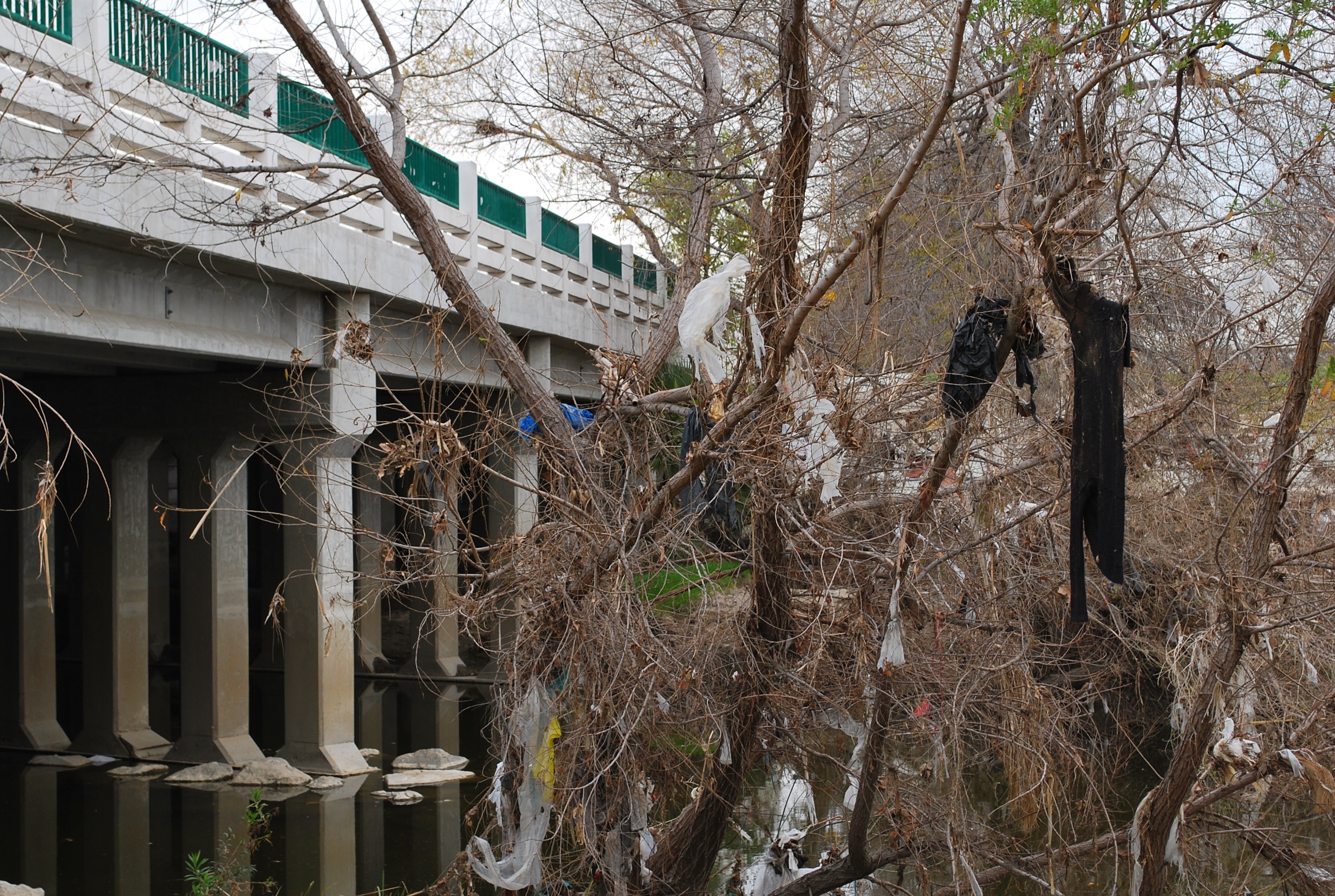
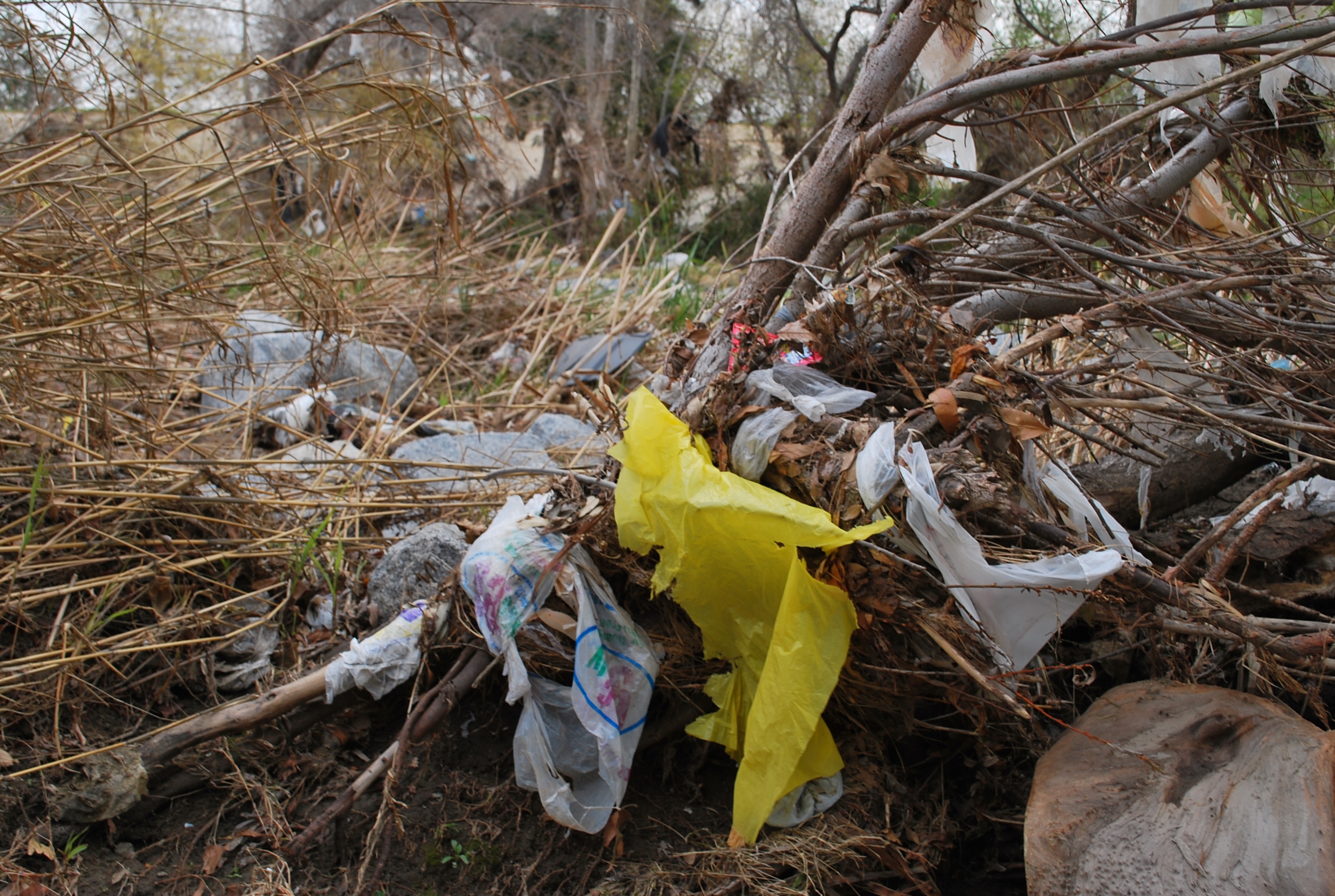
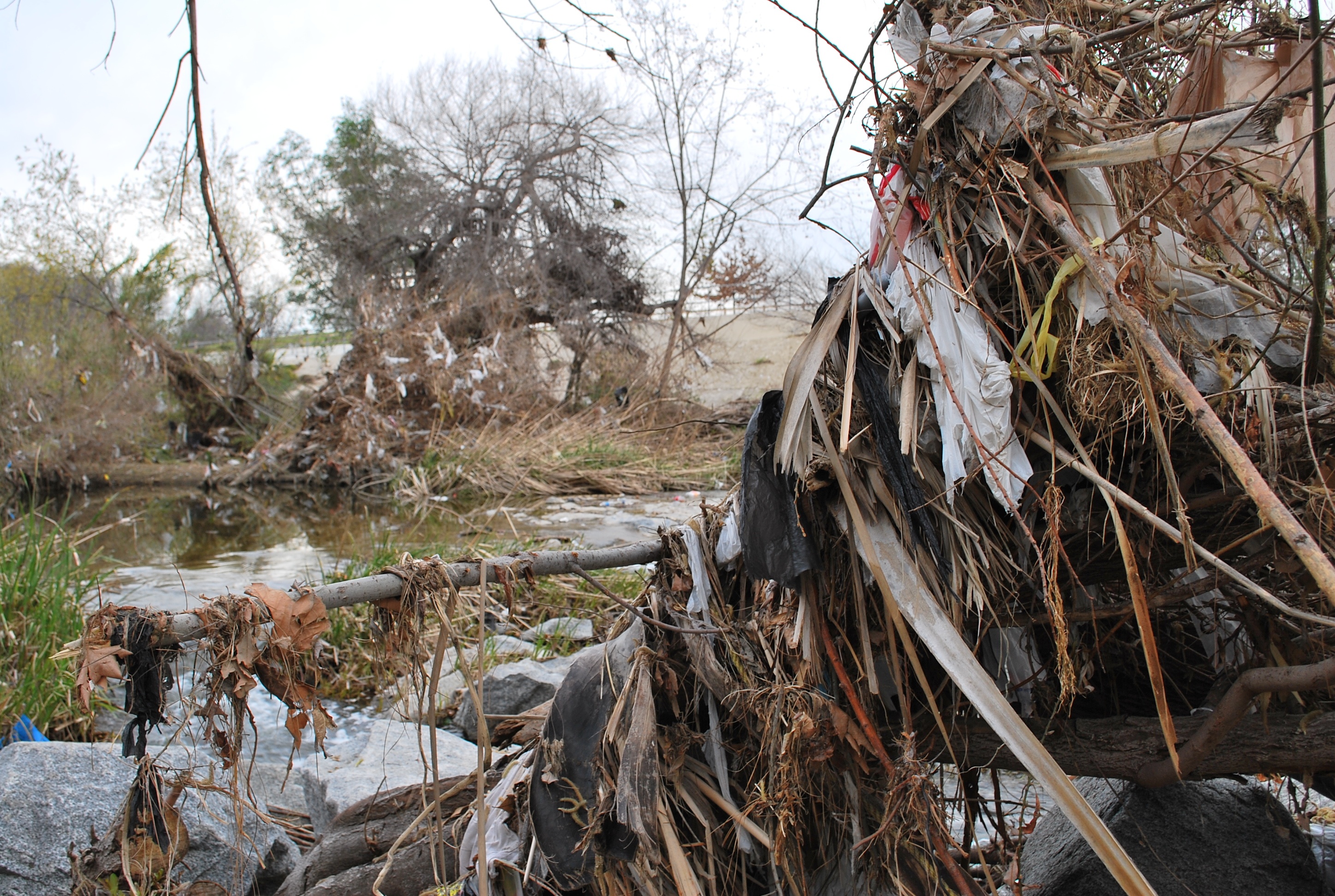
Riding my bike around the Sepulveda Basin today, I was startled and sickened to see a river lined with trash.

Plastic bags literally covered every branch, every limb, and every single tree along both sides of the banks; devouring, like some gruesome movie monster, nature.

The amount of garbage is so extreme, so massive, so overpowering, that the camera’s lens is unable to completely capture the visual tragedy.  Like Haiti after its quake, a photographer must decide whether to shoot wide angle, thus diminishing the particular atrocity, or to go close-up, possibly denying the vast destruction all around. I shot these images both far and close to record the appalling filth and criminal neglect of the river.

There are other sections of the LA River, formerly encased in concrete, now undergoing naturalization. This area of the river, which meanders gently through the San Fernando Valley acts as a flood basin and wildlife preserve.

The City of Los Angeles has abrogated its moral and legal responsibility by allowing and ignoring this environmental catastrophe.

One weekend of box office receipts, from the theaters showing AVATAR in the nation of Moldavia, would probably be enough to pay for a LA River clean-up. Two weeks of Ellen DeGeneres’ paychecks might finance the annual salary of 20 city workers assigned to protect the river. 1/44th of suspected comedian Conan O’Brien’s $44 million dollar pay out might save the lives of thousands of birds.

The pictures on this page were shot around Balboa Boulevard in Encino.

The Most Beautiful Woman on Earth.


She was once the most beautiful woman on Earth, if there can be such a grossly simple categorization.

If you were a teen guy in the middle 1970s, you had her poster hanging in your room. She was the American ideal. She was fresh, athletic, tanned, and you dreamed of her just-washed hair lying on your pillow next to you.

She had the most stunning smile, the most electrifying eyes, and a sweet, vulnerable naturalness. She was the essence of a herbal Aryan, a Texas beauty who danced across our television stage and then slowly descended into the human tragic zone of Tabloidland. Her public life was then so often dramatized by drugs, drinking, and cruel abuse by men and the media. Cancer stalked and sickened her.

Aaron Spelling had made her star, but she propelled herself into a trajectory of show business legend. She had talent, she could act, and she possessed that essential quality of stardom: the ability to mesmerize millions.

The frantic, famous, money and fame hungry world looked upon her with envy. She had it all for one brief moment in time. An angel of grace and feminine fortune.

And now she is dead.