SB 79 and Our Hood


SB 79 is a new law, authored by State Senator Scott Wiener, approved by the legislature, and recently signed by Governor Gavin Newsom, to allow the state to overrule local zoning laws and permit the construction of multi-family housing on lots which are zoned for single family housing when these properties are within a half or quarter mile of a bus or light rail stop.

In Los Angeles, the law will allow much denser and higher development along not only wide boulevards, but inside old, intact, single-family streets, “side streets” which never had apartments or multi-unit housing.


A guide to the law along with maps is here.

Tiered density: The allowable height and density for projects are determined by the quality of the transit stop and the project’s proximity to it.

Tier 1: Applies to projects near high-frequency commuter rail or heavy rail transit, like BART and LA Metro.

Tier 2: Applies to projects near light rail and bus rapid transit lines.

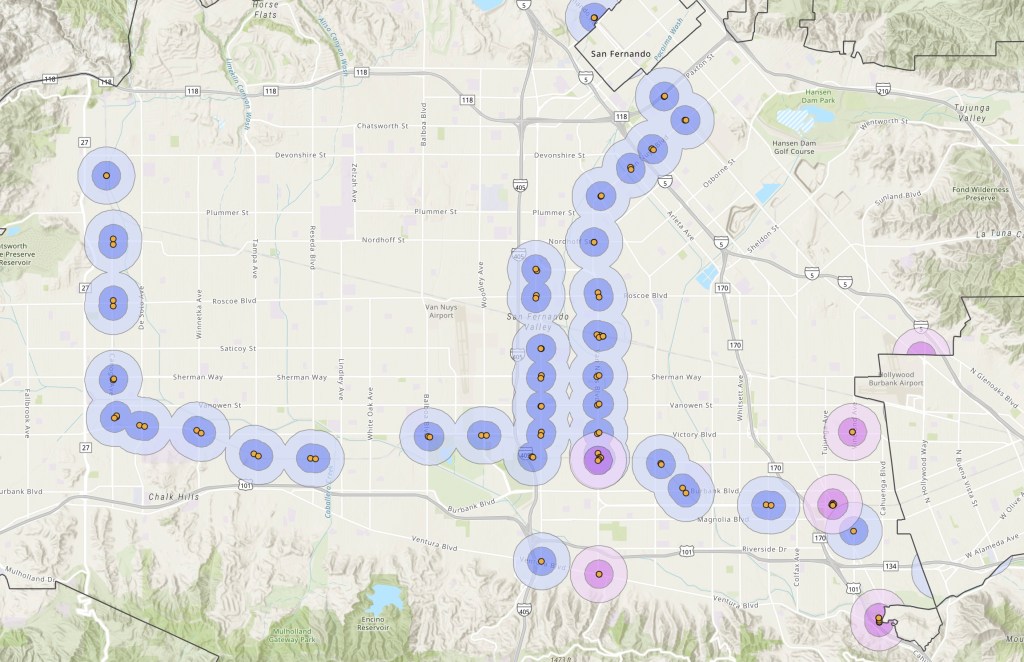
Along Sepulveda and Van Nuys Boulevard the proposed zoning map looks like purple bullet holes that radiate from transit stops. These circles are centered around the transportation stops and take no consideration into the historic or local character of any neighborhood. 

For example, I live on Hamlin Street which is a “Tier 2” zone because we are within a ¼ of Sepulveda Boulevard bus stop. My street, built on old walnut orchards, from 1936 onwards, is lined with palm trees, and then curves along with oak trees. The street has two-hour parking because of its proximity to Van Nuys High School.

If the law succeeds, my section of Hamlin Street would allow 65-foot-high buildings (six and half stories).

But the part of Hamlin Street a few hundred feet east from me would remain single family.

West of Sepulveda, south of Victory, is the beautiful and often filmed Orion Avenue with large colonial style houses planted with rose bushes and ranch fences, the location for many commercials seeking “a typical American street” that doesn’t exist anymore. With SB 79, the east side of the street could be obliterated with apartments that destroy the very beauty residents and film makers pay dearly for.


Yesterday, I had a real life encounter of what Hamlin St. and other locations nearby could become when I parked my car near 3052 West Boulevard in the Jefferson Park neighborhood of Los Angeles, east of Culver City. I was there to visit a new, multi restaurant creation, Maydan Market.

This area was given an economic boost by the Expo Line, a light rail system that connects downtown with Santa Monica. The good parts are investment, cleaner streets, the lowering of crime and the raising of the cultural and civic activities. 

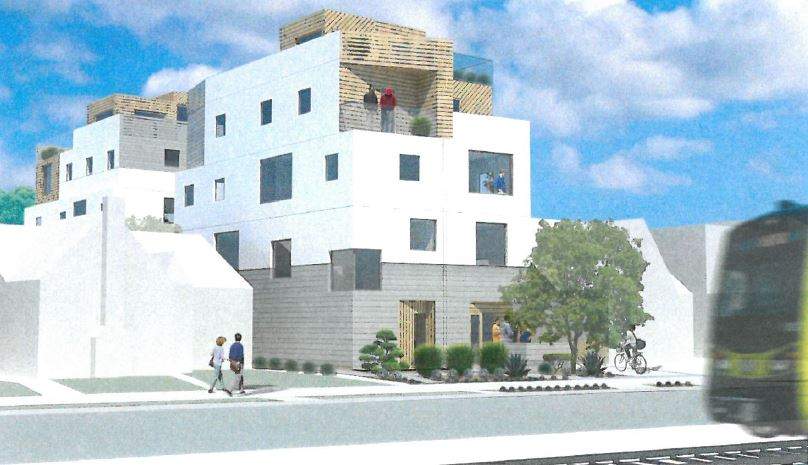
The ugly parts are the disfiguring, ad hoc apartments that pop up on formerly coherent streets of 1920s bungalows. My eyes hurt looking at 3045 West Boulevard, a black and gray box suspended over a cinderblock faced garage, with a massive four story high open-air staircase on the side of the building. It looms like a monster over the street, with no respect or sensitivity to the vernacular that had existed here for 90 years.

Am I a hypocrite for decrying liberalized zoning that will change my backyard? Yes, I am. Sort of.

This blog has argued for years for the construction of new, multi-family buildings to replace unused parking lots behind abandoned shopping centers, or where there is a sea of asphalt like the Orange Line parking area along Sepulveda which was constructed for thousands of vehicles and is now empty.  I have fought for the idea of an architectural, coherent, community wide style that would incorporate history and embrace modernism but do it without destroying but enhancing the community of Van Nuys. 

And I’ve always cast a cold, unforgiving, forensic eye on the political neglect of Van Nuys by elected officials who seem to always be performing social media acts of kindness for oppressed groups while neglecting the needs of residents in this district. 

There are commercial zones galore that cry out for taller residential buildings along the wide boulevards of Van Nuys and greater Los Angeles. The one-story tall shops with parking lots in front are so defunct and useless that their very presence destroys civilized life and endangers the health of pedestrians. 

There are blighted buildings, such as this one at 7101 Sepulveda, that have been empty for years, packed with derelicts, unable to be demolished, yet crying out for replacement. As a bitter pill, the residents in the tree lined, charming, quiet streets behind must now expect multi-family housing to replace their 1940s ranchettes.

What do our elected leaders in Sacramento do with the quandary of building more housing? They embrace a fantasy of destroying single family homes and backyards. 

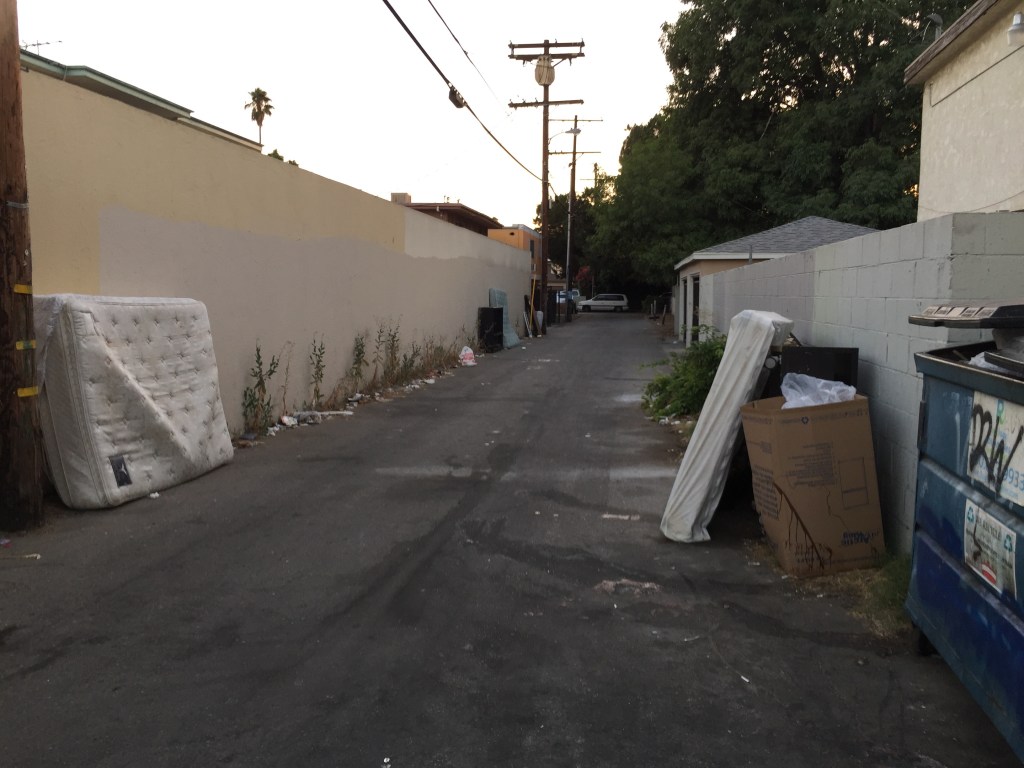
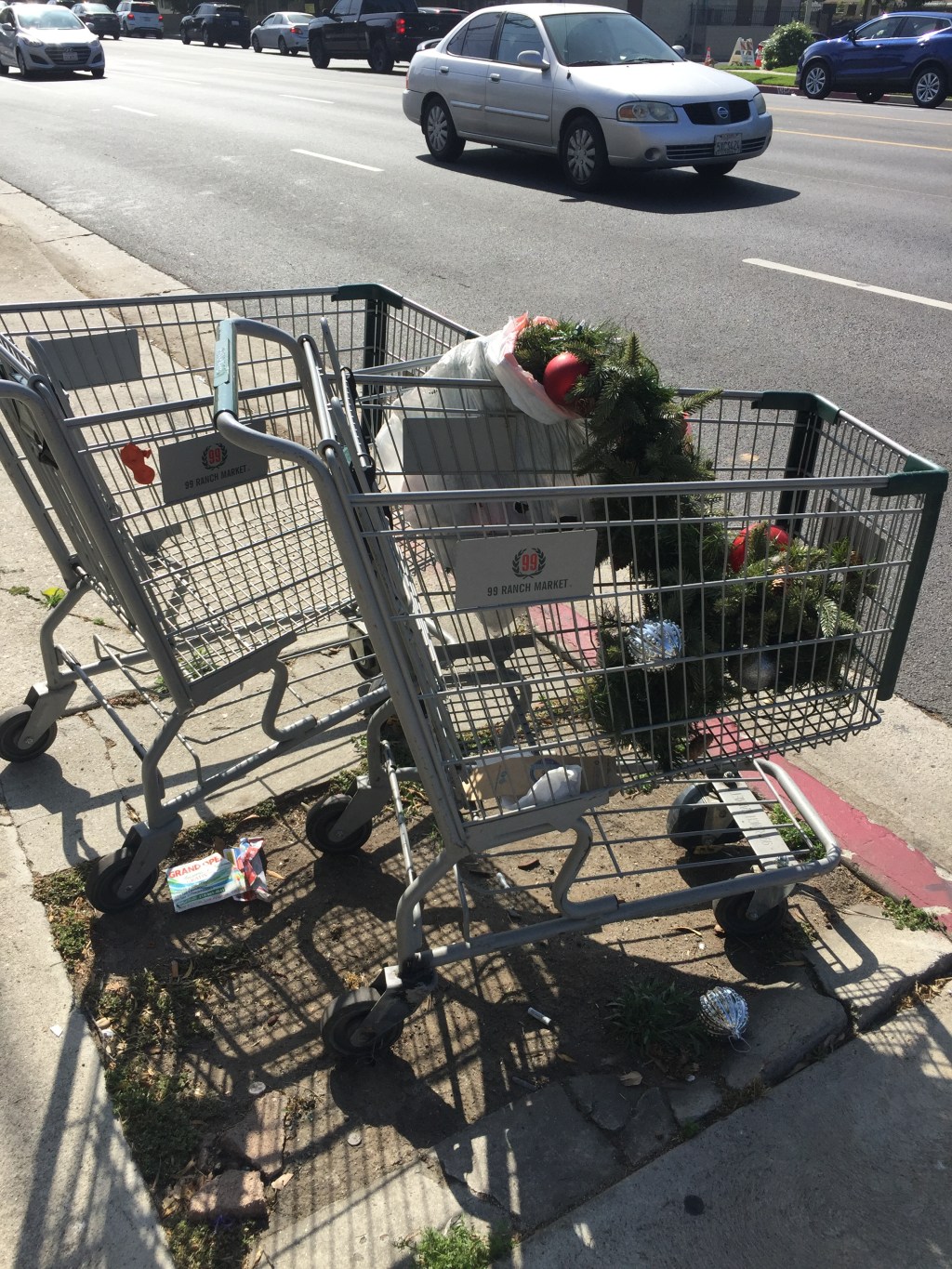
Will your neighbors and you, the elderly couple in the corner house, desire to ride buses (with homeless, drug addicts, crime?) and come home, late at night, from a bus stop on Sepulveda, and enter a new world of yet more cars, loud music, marijuana, dumped mattresses, and YouTube/TikTok/OnlyFans influencers smoking on the balcony next door? I doubt it.

Is that the paradise of tomorrow? Circles on a map, purple splotches of political malfeasance, indicating nothing but more mayhem, disorder and chaos.

I hope I’m long gone, either from life or Van Nuys, before this happens. 

Classical Houses.


It’s been perhaps 90 years since Americans built well proportioned classical houses.

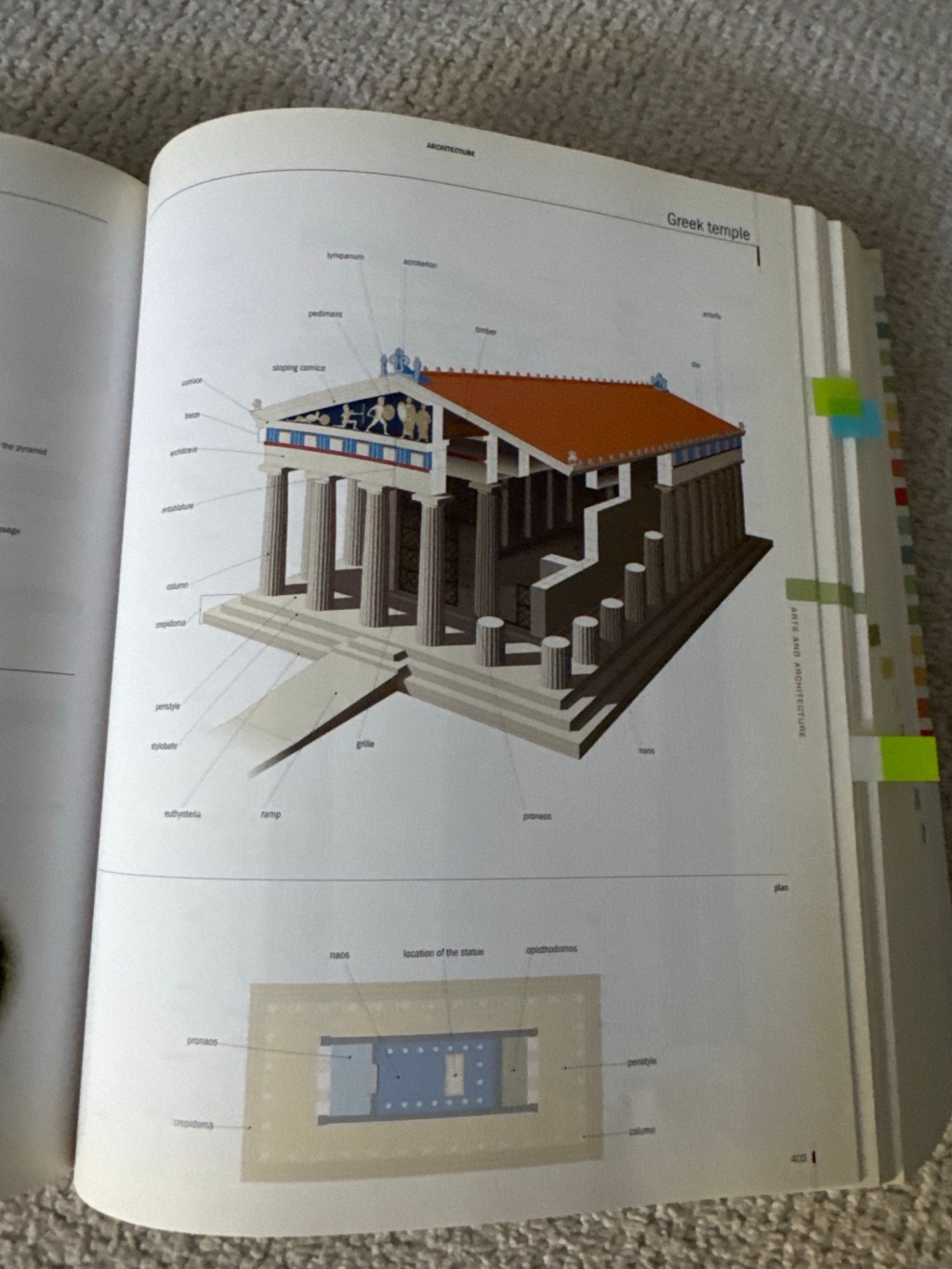
These are houses where the elements are pre-ordained: the windows are aligned with each other, and are placed within the facade to achieve balance and symmetry. The doorway is defined, frequently in the center, and around it are placed ornamental designs originating in Greece and Rome.

Columns in the Doric, Ionic or Corinthian orders have specific instructions as to their placement. They aren’t just slapped onto a facade as we see in modern day Encino.

In California, when builders put up spec houses they are never able to afford classic design because the intrusion of garages destroys the facades. Ironically most garages never store vehicles but are a repository for storage.

The plain white stucco house with vinyl windows is the lowest and most ubiquitous type of spec house. About a dozen of these have sprouted up in my neighborhood in the last ten years.

There is obviously no attempt in these cases to make the houses attractive in a classical sense. They are rafters and insulation and stucco made for desperate times. Nobody can really afford to build them, and nobody can afford to buy them, so we have a sad story of expensive prices for crap.

The one on top is three bedrooms with astroturf patio and rents for $7,000 a month next to a graffiti splotched alley.

The exploitation of land to build exploitative housing that hardly houses anyone is one of the ills of Los Angeles. For there are enormous plots of parking lots and open land, especially near the Orange Line, where walkable, civilized and attractive housing can be built.

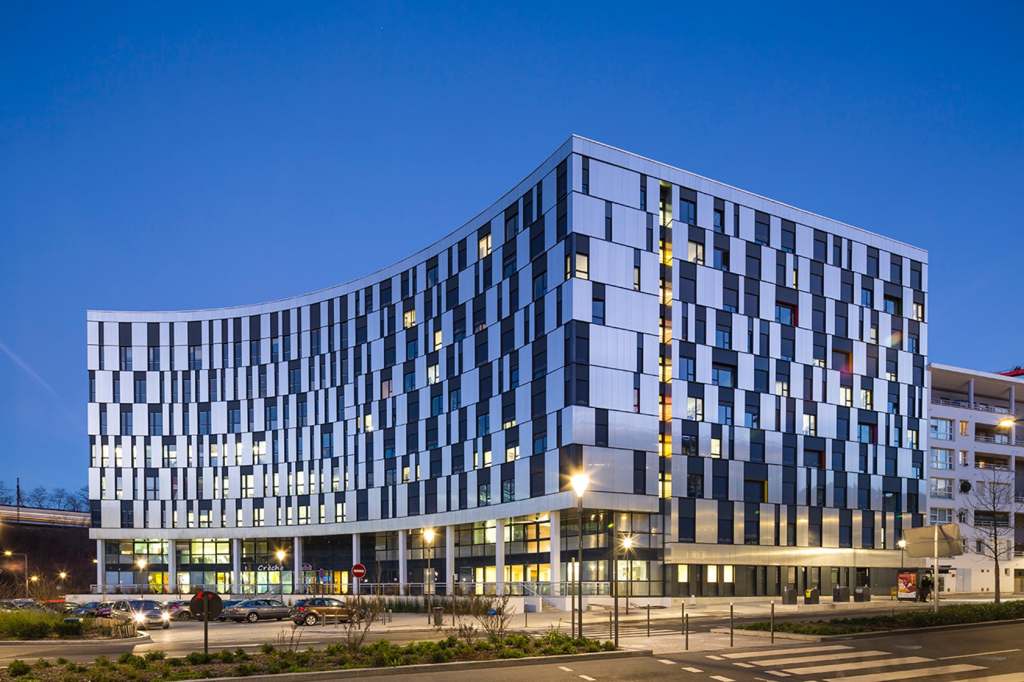
After spending time in Switzerland last year, I came back thinking of how well things are built there. Not only are they solid, but the housing is meant to enhance the community. Sometimes it’s starkly modern, other times it’s traditional, but it always makes the environment better.

Bremgarten, CH.
Merenschwand
Zurich
Lucerne

Why in this city, which invented Hollywood, are the visual arts of architecture and design so lacking in public view? Why do we live amongst so much ugliness?

LA Fitness, Sepulveda Bl.

Is there perhaps something in the past we can look to as we rebuild Los Angeles for the future? Perhaps we need Elon Musk to siphon off $5 billion dollars from somewhere and employ an AI architect to make LA lovely again.

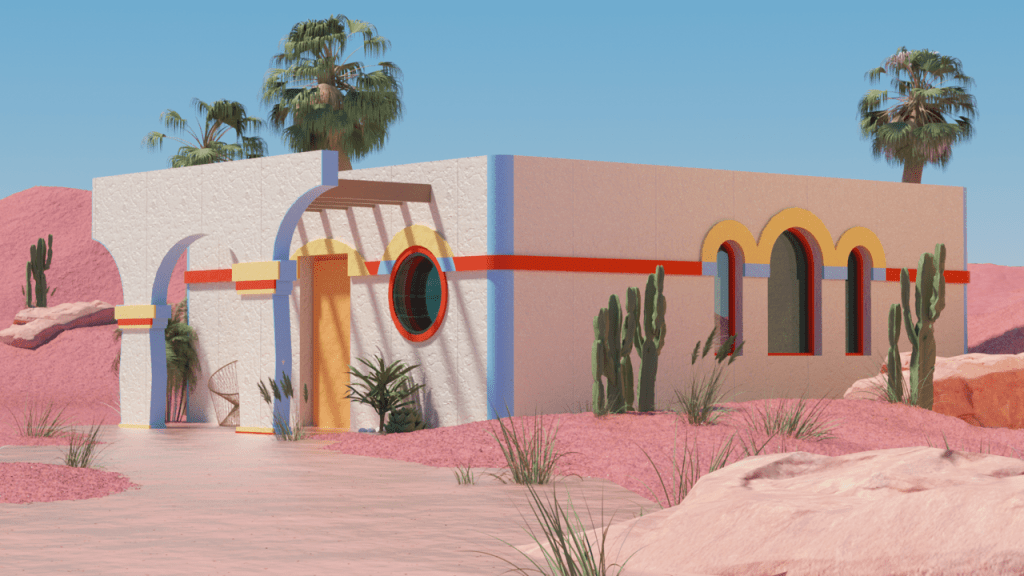
Here are some designs from AI Google, architects:

The Social Disaster


In all the days since the disastrous fires destroyed vibrant and sparkling communities of people and their houses and businesses in Altadena and Pacific Palisades, flat and socially unpopular Van Nuys, miles from any combustible forests, sat silent, its empty parking lots and vacant stores along Van Nuys Boulevard mute and abandoned, its daytime as empty and lifeless as its nighttime. 

You live here and just like people anywhere yearn for the same normal things that civilized places provide: safety, cleanliness, affordability, and lawfulness. But all you get are sirens, speeding cars, helicopters at 2am, Woodley Park set ablaze monthly.

After nearly 25 years here I see nothing but decline in the environment around Van Nuys. 

The same neglected mini-mall that I complained about in 2009 is still the same trash strewn dump it always was. Its owner used to live in Bel Air. He complained about my criticism when all I asked him to do was hire a $10 an hour worker to sweep the sidewalk weekly and install a security light on the side of the building so people didn’t sleep and urinate and tag the walls. 

The stores that line Van Nuys Boulevard from Vanowen to the Oxnard are largely empty, many are built with gigantic parking lots behind them that are also empty, parking for thousands of cars that once shopped here, but those shoppers have left or died.

The Valley Municipal Building is where CD 6 Councilwoman Imelda Padilla reigns over the neglect and the ugliness. She replaced Nury Martinez who had to resign in disgrace after she was recorded by covert means saying ethnically insulting things about other Angelenos. Martinez came after Cardenas who went to Congress where he now serves.

Cardenas, Martinez, Padilla. It sounds like a nursery rhyme with its melodic Spanish surnames. It might well be a soundtrack set to an ever- present social disaster of Van Nuys with its hundreds of homeless sleeping in the plaza, along the Orange Line, or in the parking lot of the CVS on Erwin Street. 

How is it that the so-called heart of the San Fernando Valley, the place that once bustled with prosperity and good infrastructure, including light rail and neatly tended homes and businesses, has been allowed to die for so many decades? 

Victory Bl. east of Sepulveda, Van Nuys, CA 5/10/18

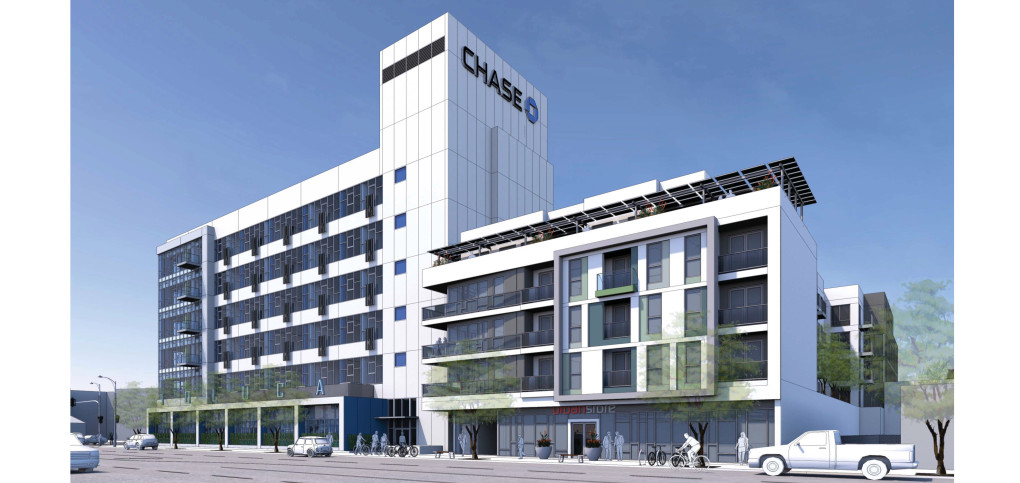
Is it callous to also point out that Van Nuys is less prone to fire than other areas that have boomed in recent decades? Would Van Nuys Boulevard, lined with 13-story tall Park Avenue apartment houses be a higher fire risk than thousands of wooden McMansions shoved up canyons in Bel Air, Brentwood, Malibu and the Palisades?

And when Van Nuys gets light rail, might it be possible to imagine a walkable, pleasant, less expensive part of Los Angeles where the vaunted word diversity can be used equitably as all types of inclusion would occur with young, old, well-off, not so well-off, living in nice apartments with patrolled and orderly parks and streets? 

Perhaps some of the displaced people would live in well-maintained buildings if such a thing existed in Van Nuys. 

With so much focus on rebuilding Los Angeles a good place to start an experiment in civilization would be Van Nuys. It’s the only corpse that has been screaming for rescue for decades.

A Motley Crew: The New ADUs


“The Los Angeles Department of Building and Safety (LADBS) implemented the Standard Plan Program to provide LADBS customers a simplified permitting process for the design and construction of ADUs that are built repeatedly. The use of standard plans reduces the time required for plan check resulting in faster permit issuance.

Under the Standard Plan Program, plans are designed by private licensed architects, and engineers to accommodate various site conditions. Plans are then reviewed and pre-approved by LADBS for compliance with the Building, Residential, and Green Codes. When the applicant selects an approved Standard Plan, LADBS staff will review site-specific factors for your property, including compliance with the Zoning Code and foundation requirements.” -LADBS


Mayor Eric Garcetti and Christopher Hawthorne, Chief Design Officer.

Under the authority of Mayor Garcetti’s Chief Design Officer Chris Hawthorne, a whimsical man, a new menu of backyard house designs, produced by various local architects, has appeared like magic. Mr. Hawthorne was previously involved in architecture writing at the Los Angeles Times and in the re-design of our civic lampposts. He is a frequent guest speaker at international architectural events from New Zealand to Miami and a recurring guest on KCRW Frances Anderton’s radio show on design.

Rather than concentrate on coming up with emergency housing for 100,000 unhoused Angelenos who live in trash piles and tents inside parks and along freeways, mayoral efforts were waged to come up with ironic design concepts in lighting.

The International House of ADU Menu seems to be an attempt to inject some fashionable urgency, flavored with irony, into the critical need of providing housing for a city where it is expensive and rare.

Pre-designed and pre-approved, these ADU (Accessory Dwelling Units) are intended to hurry up the construction of the second house in back of the first house transformation of Los Angeles.

Let’s look at what the architects have come up with.

Welcome Projects “The Breadbox”

Is a play on the traditional mission house with an oversized arched roof. Perhaps the closest to classic of all the designs, it has a cute appeal for those who are tired of the box.


Abou

A 1967 Laurel Canyon type intoxicated with rough wood siding and a slanted roof, not especially pretty to look at, but outfitted in white interior with blond wood floors. Picture Janis Joplin in a hot tub drinking whisky out of the bottle with Abby Hoffman and Jimi Hendrix.


Taalman Architects’ IT House

Perhaps the most Bauhausian of the group, this glass and steel box will allow its inhabitants full exposure to sunshine during the day and illuminate inside activities for outside spectators and neighbors at night.


Amunátegui Valdés ADU

Los Angeles zoning allows ADU’s to be built four feet from the back of property line.

So imagine how delightful it will be for neighbors who encounter a 15’ foot high building with an outdoor roof deck allowing partygoers and drunk revelers to float above all adjoining backyards like devilish angels? Here the architect has abandoned all pretense to privacy by designing a house where dozens of people can look down other people’s backyards from the top of a badly conceived back house. Imagine a house of YouTube influencers living here. What fun!


LA Más 

“is a non-profit based in Northeast Los Angeles that designs and builds initiatives that promote neighborhood resilience and elevate the agency of working-class communities of color.”

Here virtue signaling meets up with 1980s post-modernism in gaily painted houses whose designs look like fast food outlets along the boulevard. The golden arches, the multi-colored column (kids eat free?), the decorative woodwork, these are FUN places with bright colors. And even if they are not especially attractive, and look like Walmart brand doll houses, they are immune from criticism by a vaccine of political correctness. 


When Los Angeles is done bulldozing every backyard to “produce more housing” will the net effect be to put more cash in the pockets of those who already own houses?

Why not up-zone the miles and miles of one-story commercial buildings and huge parking lots that blight our city?

Why not leave in place the gardens, which are the only park system we have, and really ramp up the production of moderately priced residential units near public transportation? 

Something to think about. 

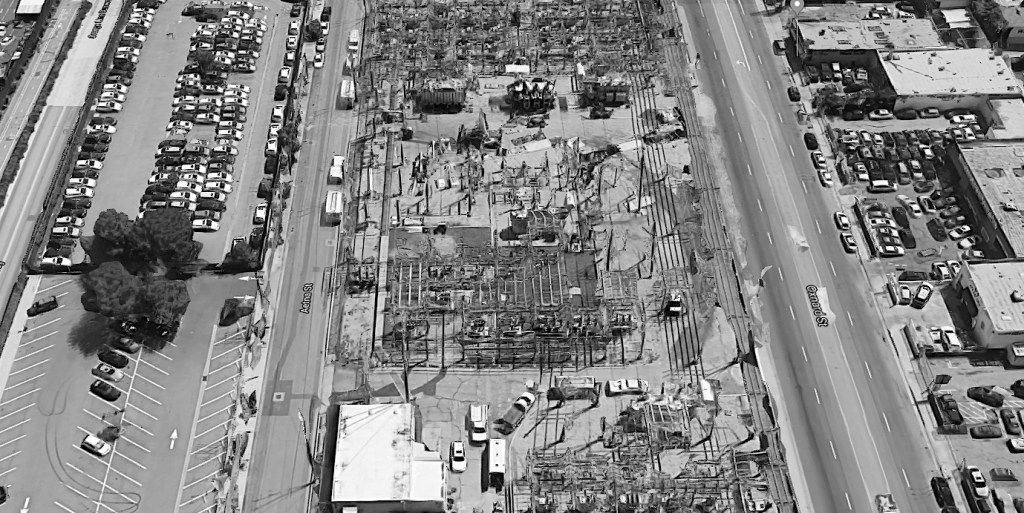
Below, in B&W, are current aerial photos of “downtown” Van Nuys.

Progress Report.


On a brief walk, after dropping off a package at the UPS on Van Nuys Bl. I walked west on Sylvan, south on Vesper, ending this set of photos at the new fire station on Oxnard.

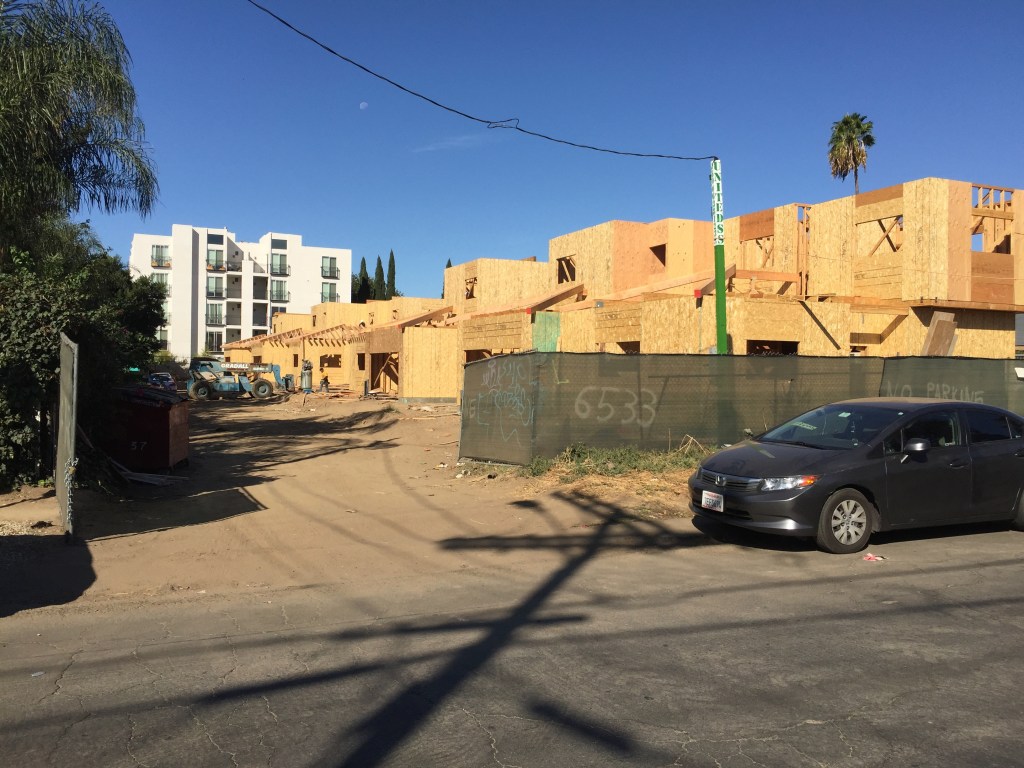
There is a small but significant amount of new apartments going up. They are pleasant additions to the neighborhood and are all in the currently popular white style, blindingly white, with dark windows.  They add some upgraded cleanliness to an area which has long been the sad kingdom of slumlords. 

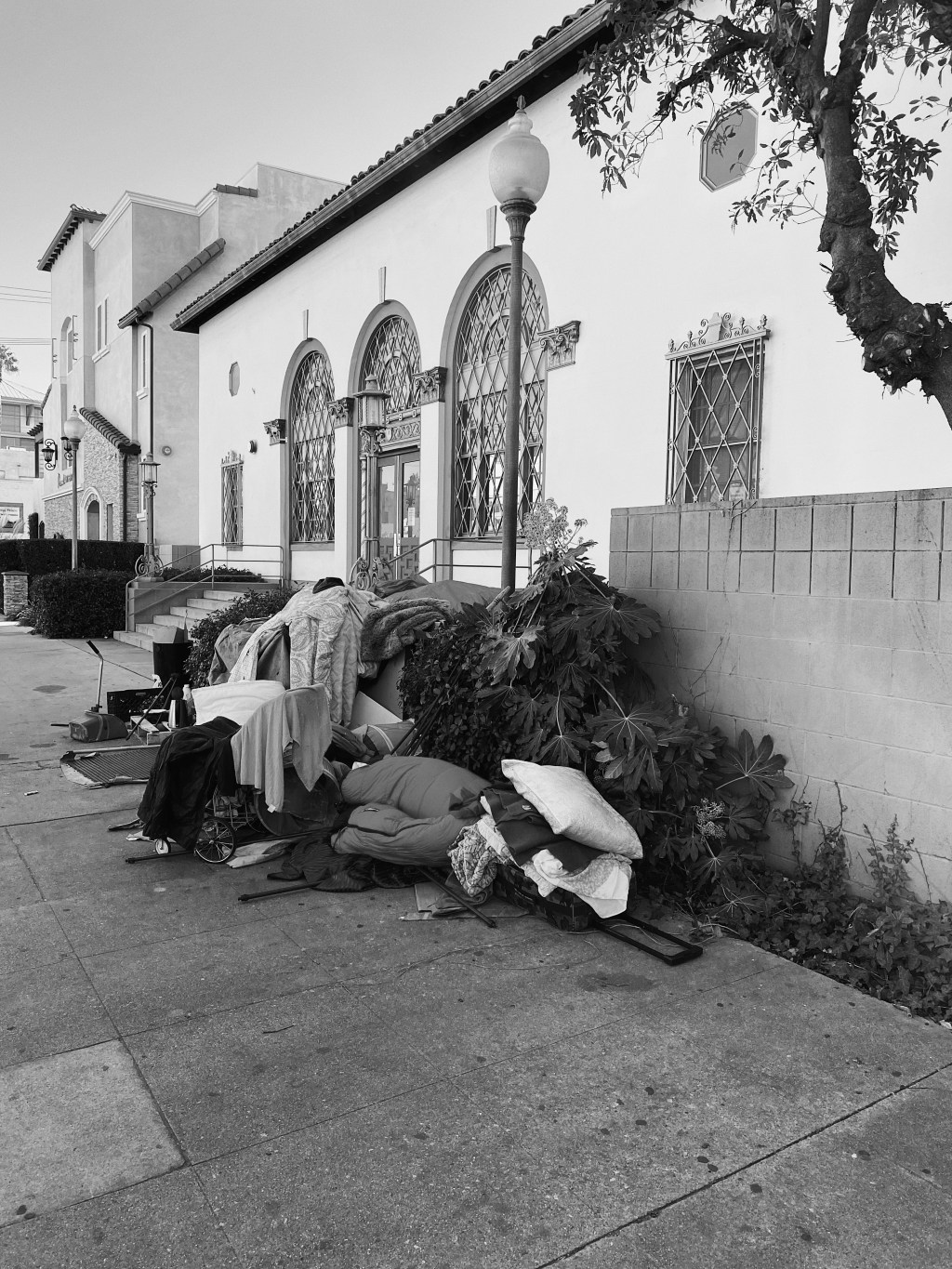
On Sylvan, the former post office, built during the 1930s by the WPA, in a classical style, was later a home for Children of the Night, a non-profit created to fight childhood sexual exploitation. They have since moved out, so the sidewalk outside the gracious building is now a trash camp.

The new fire station (2019) is a great asset for the neighborhood and has significant architectural beauty that recalls the 1930s Streamline Era, and is also conversant with the first fire station on Sylvan (1939) as well as the former DWP building on Aetna and Vesper (1938) just behind the new edifice.

Just to the east of the fire station, Aetna is closed, with a high fence, between Vesper and Van Nuys Boulevard, most likely due to the trash campers who took over the area. They are banished to fly somewhere else, probably to the bird sanctuary in Woodley Park.

Councilwoman Nury Martinez has jurisdiction over this area, and her office is nearby in the Valley Municipal Building. She is now the head of the city council, and the first Latina to hold that position in city history.

We can applaud the justice of diversity, the idea that anyone from any background can ascend the ladder of politics and achieve leadership.

We cannot applaud the failures of Ms. Martinez, and her predecessor Tony Cardenas (who is now a congressman in Washington, DC) for they have had over 20 combined years of allowing Van Nuys to fall into utter disintegration, filth, homelessness and blight. 

Their ethnicity has pushed them up into the spotlight even as their academic records in elected office should be graded D- or F.

The idea that one’s identity deserves praise rather than one’s achievements is a new chapter in our American conversation. If Van Nuys should fall further into the gutter, which seems unimaginable, we will think of the paucity of Ms. Martinez’s and Mr. Cardenas’ accomplishments and recall this verse from Matthew 7:16 “Ye shall know them by their fruits.”

Rotten.

Single Family Home Protest.


Recently, our neighborhood found out that the owner of a vacant parcel of land wants to construct a single-family home in our area of single-family homes.

Frightened, angered, upset, scared were many longtime residents who saw the picture of the house with four bedrooms, three bathrooms and a two-car garage.

And rightfully so, for they have seen that single-family houses are a great blight. They produce divorces, affairs, bankruptcies, child abuse, and unemployment as owners struggle to pay mortgages.

LAPD is often called out, and has been for many years, to answer calls at single-family homes, many of which are occupied by people who are battling addiction, depression, and a lack of joy which comes from keeping up a single-family home.

Many of these single-family homes are contributors to traffic, with five, six or even seven vehicles registered at one house. They are environmental disasters with their wasteful use of water for landscaping, for pools, and for the many long showers people who live in these homes take.

On the news, fire season has seen the burning of these houses, and the many millions of dollars in resources it takes to protect houses. Firefighters and other first responders put their lives on the line defending single-family houses.

Unregulated procreation often occurs behind closed doors and draped windows which produces children who clog our schools and clutter our roads, impeding traffic.  Single family homes, with their many rooms, encourage child production, and this has a negative effect on our ailing schools with their bloated budgets.

News stories often feature drive by shootings at single family homes, as well as hostage taking, and there are neighborhoods all over the Southland which constantly are battling violent incidents at single-family homes.

Some single-family homes have unrelated adults living together in sober living houses, and other single-family houses even have unrelated adults sleeping under one roof, a clear violation of moral and ethical traditions. 

So we are organizing a demonstration next week to try and prevent yet another one of these despicable types of housing from blighting our neighborhood.

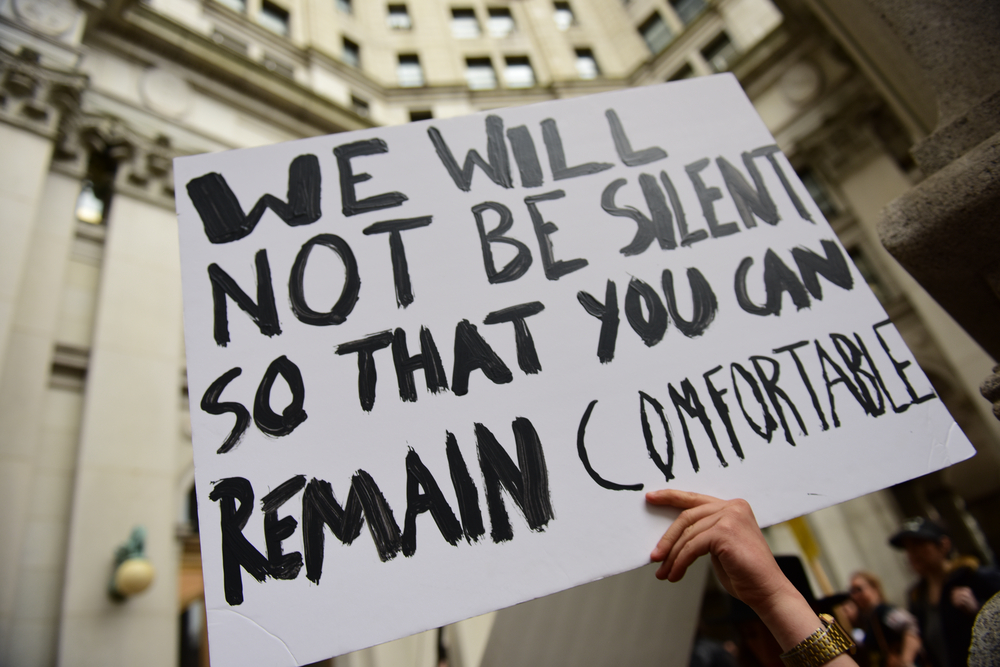
We will have a protest. And many people will come with signs and scream loudly so that we are not subjected to the unwanted intrusion of yet another home, for someone we don’t know and we imagine we will grow to hate.