100,000 New Homes in Los Angeles


Mayor Eric Garcetti has announced (as politicians do) a grand plan.

He wants 100,000 new homes (apartments, houses) built in Los Angeles by 2021.

A few years back, Mayor Villaraigosa had a grand plan to plant one million trees in Los Angeles. Yet one still drives down many treeless streets in Los Angeles. Past 60 year old homes.

Were one million trees planted? Or were they just promised?

Political promises need concrete actions.  Talk is not enough.


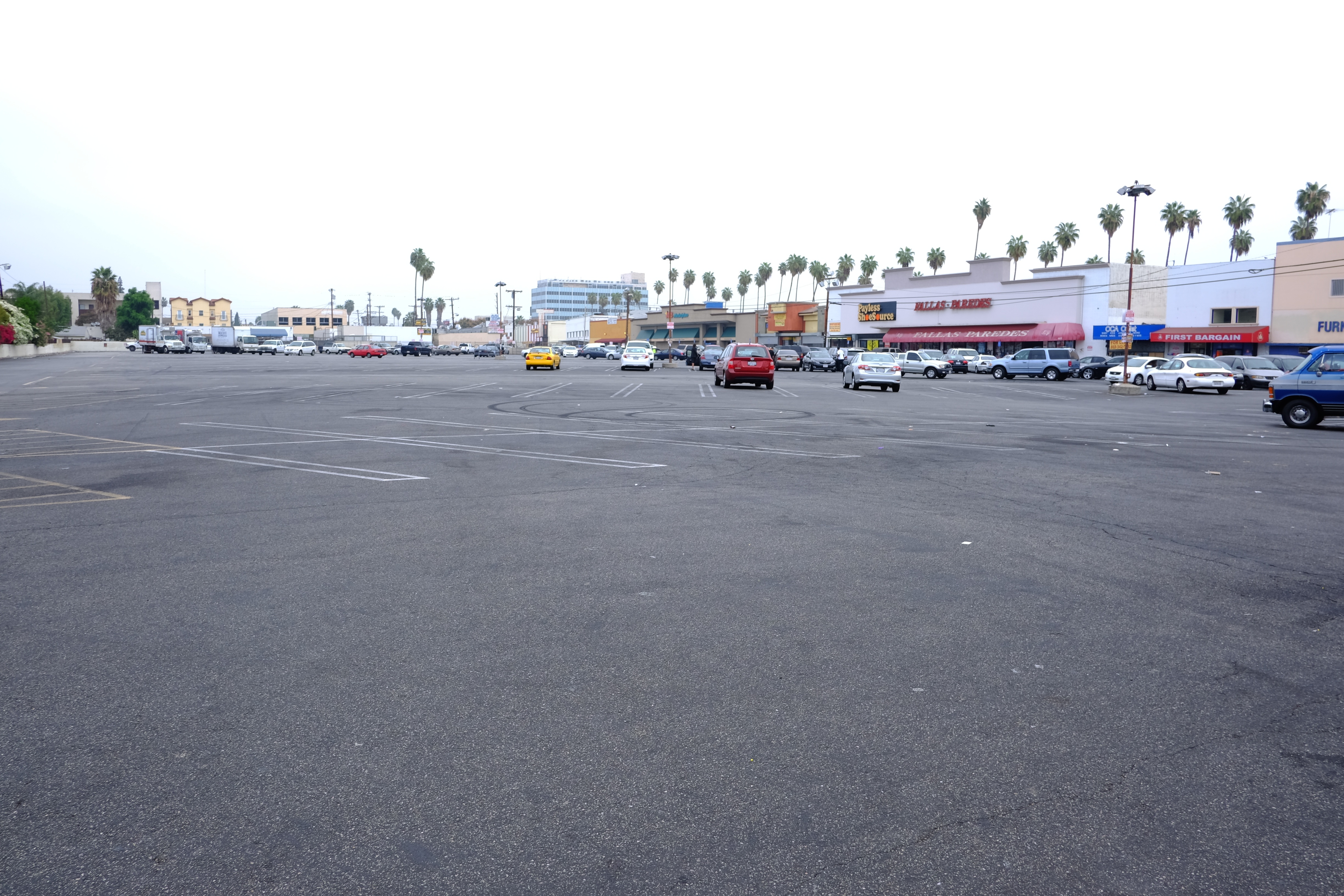
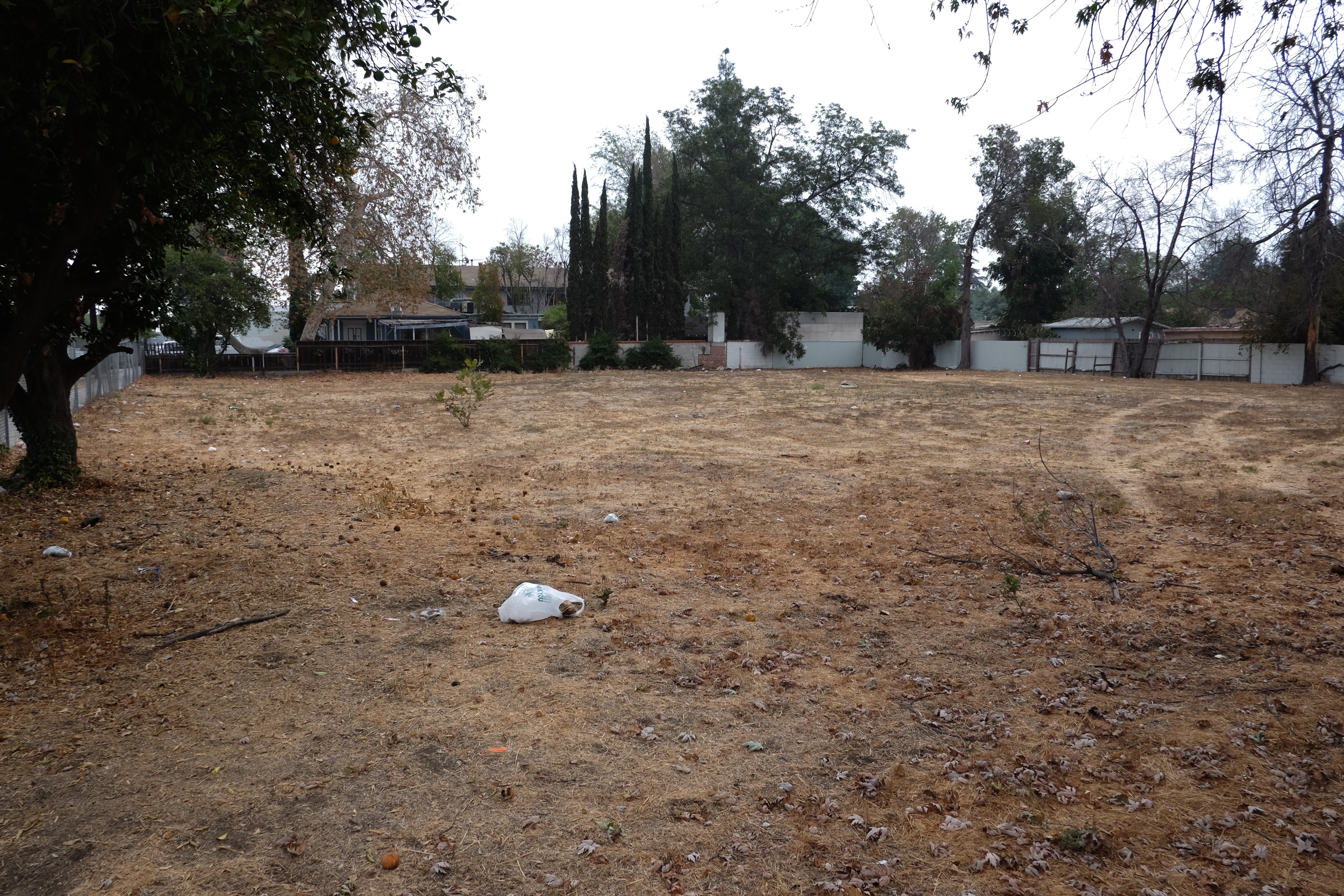
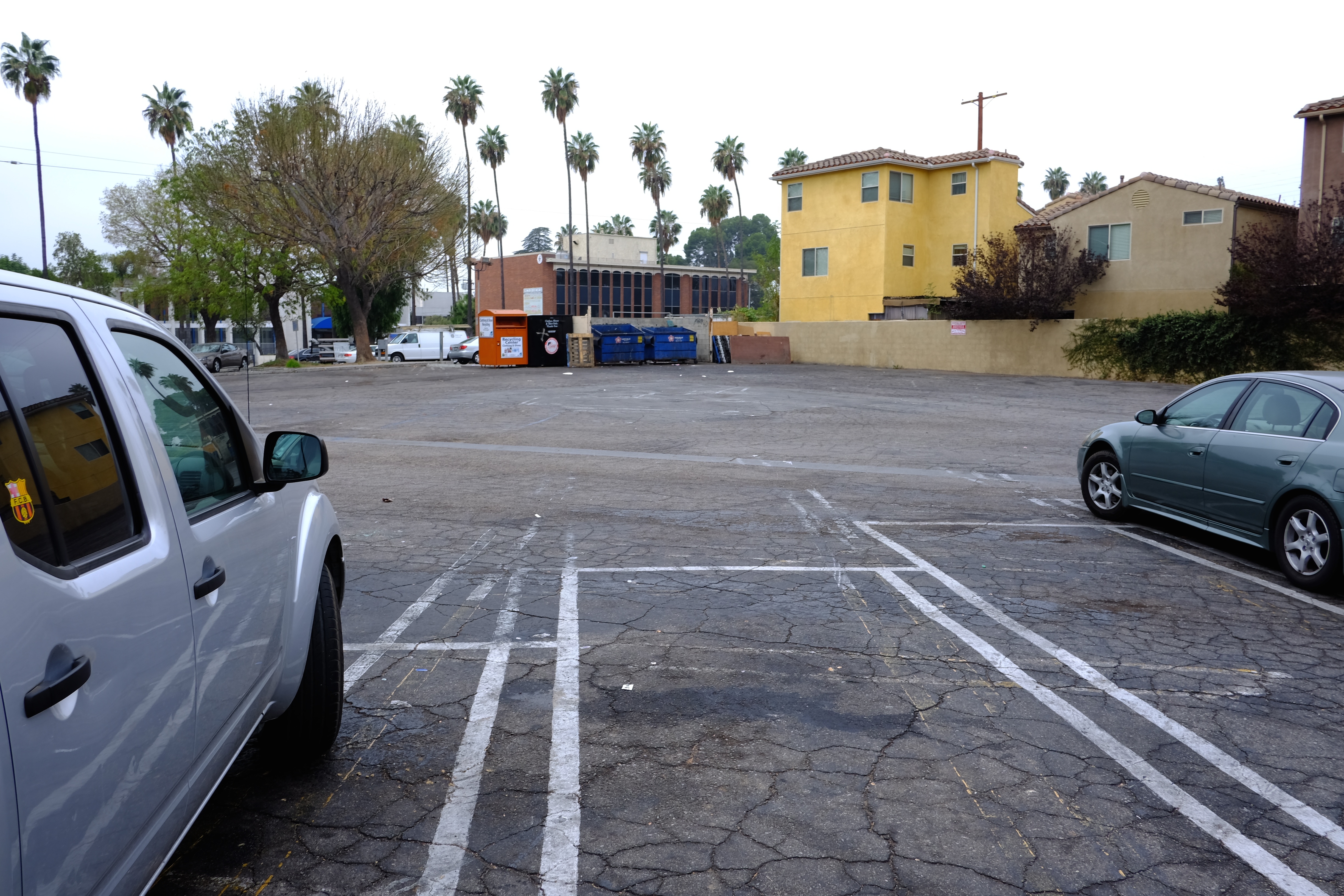
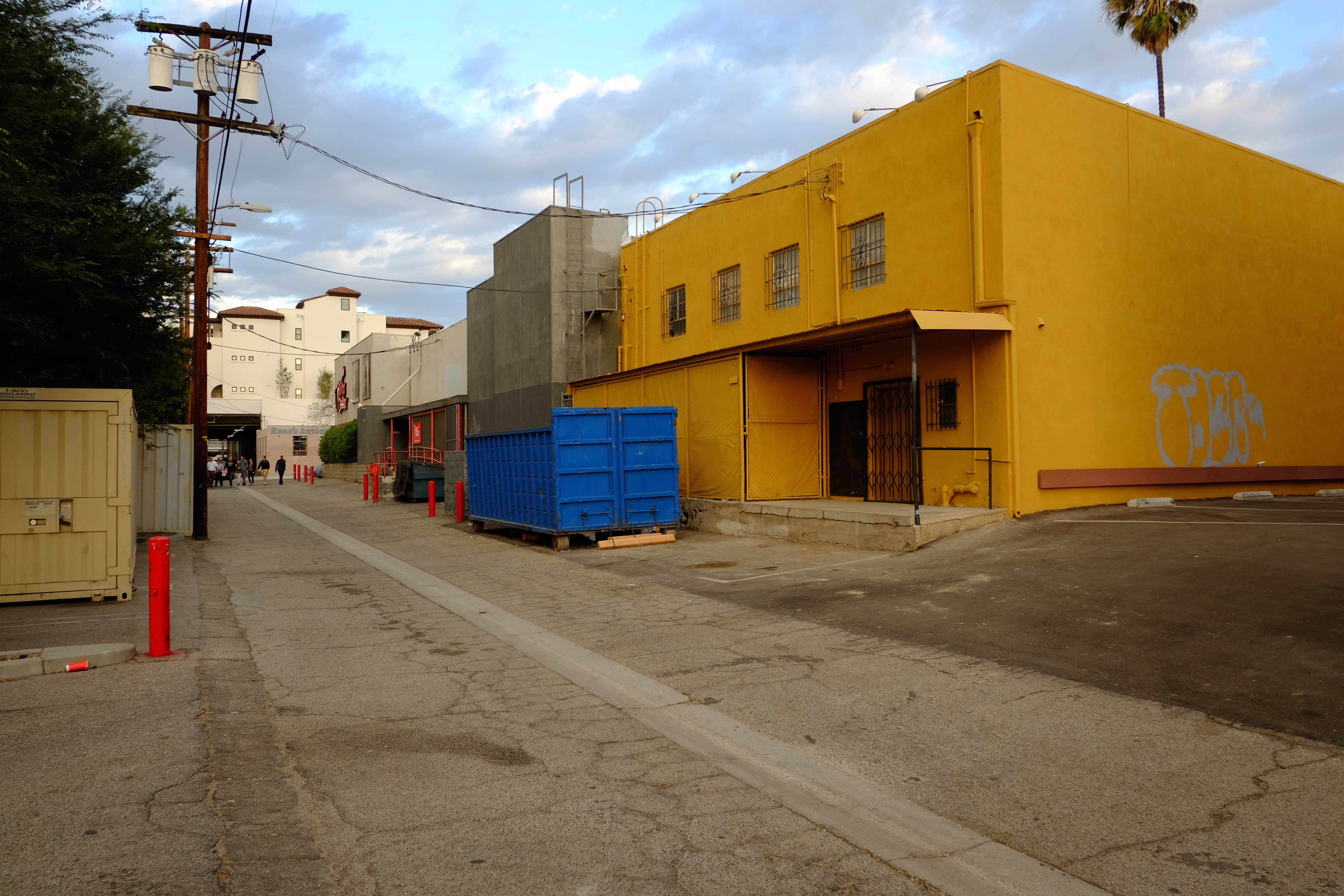
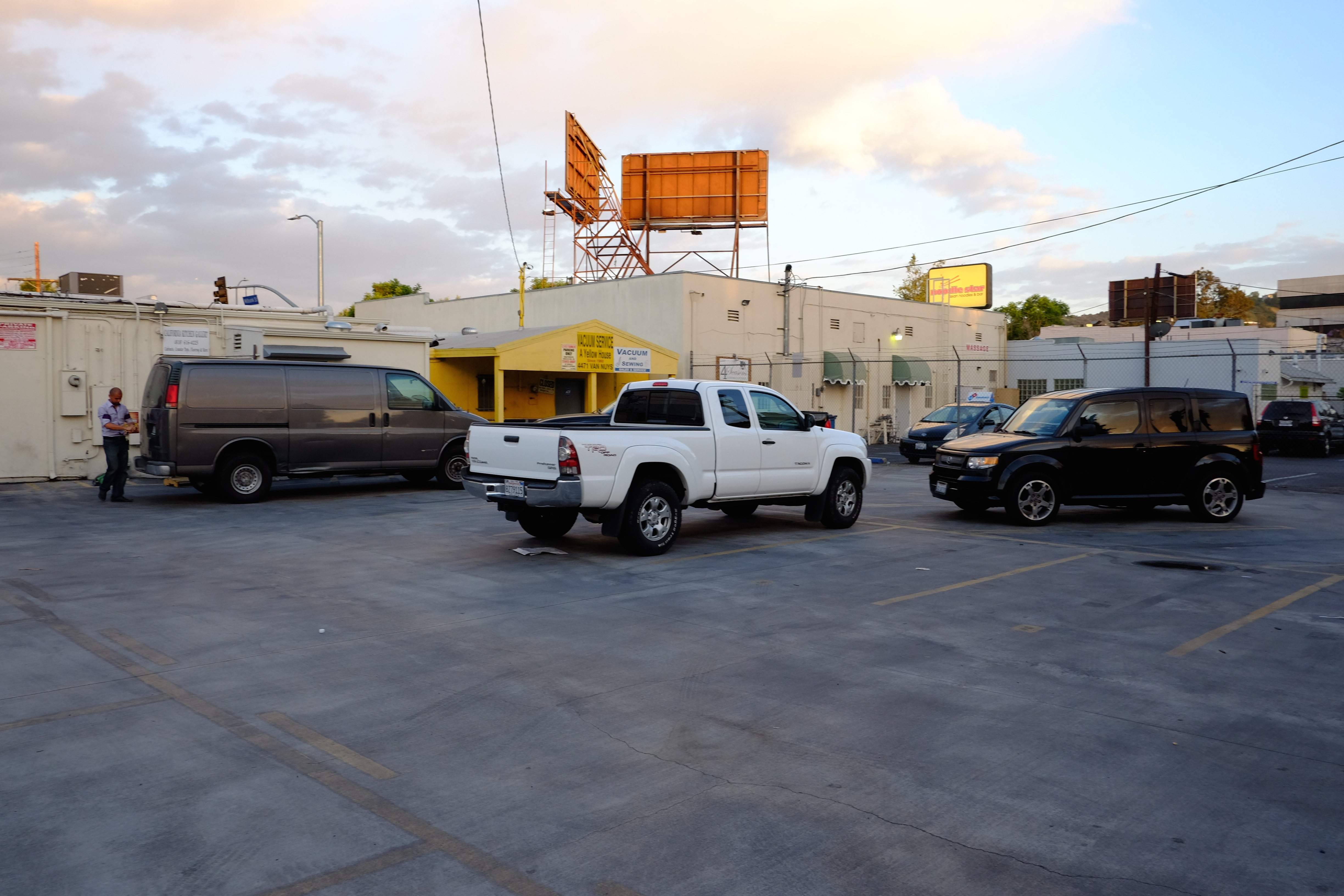
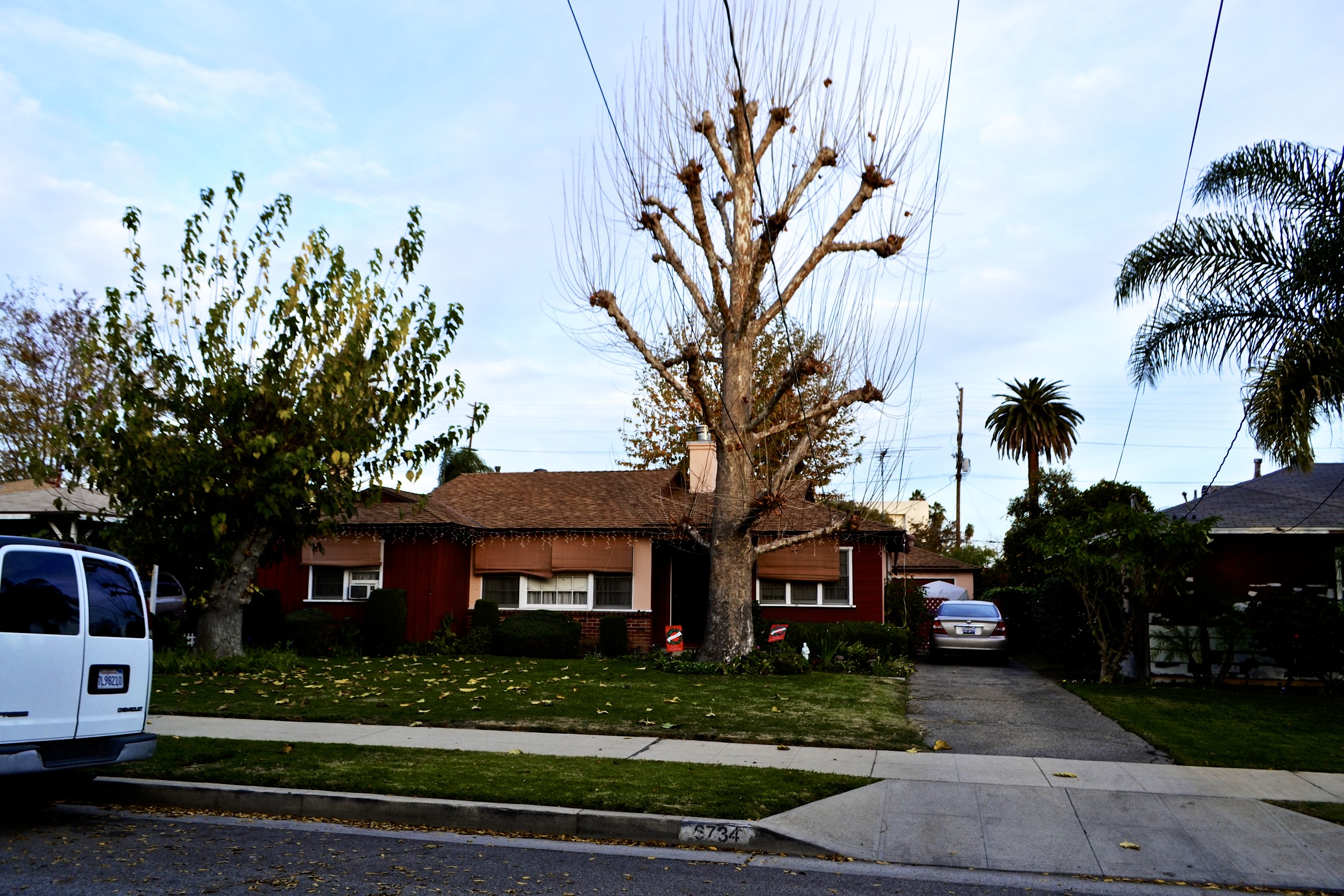
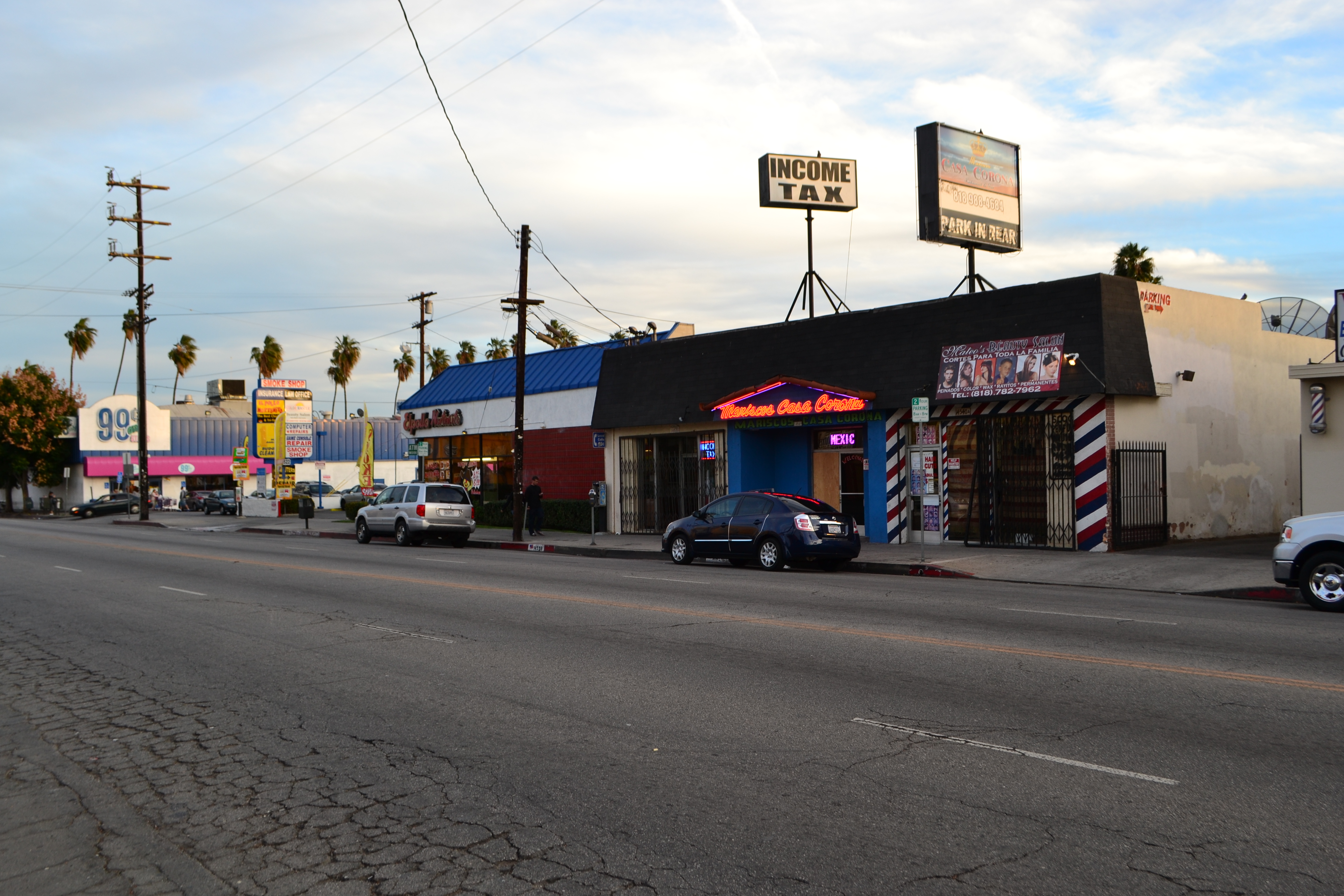
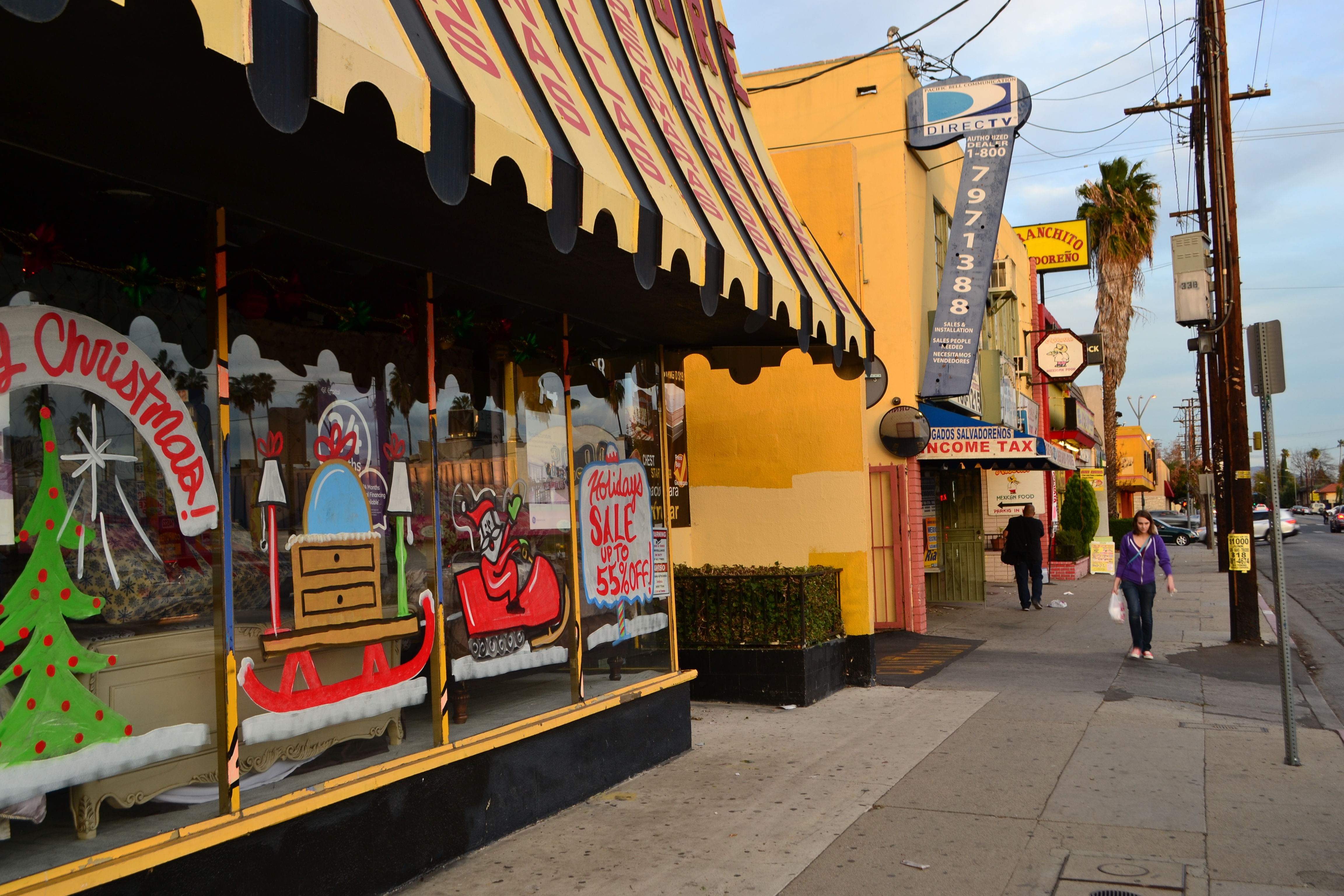
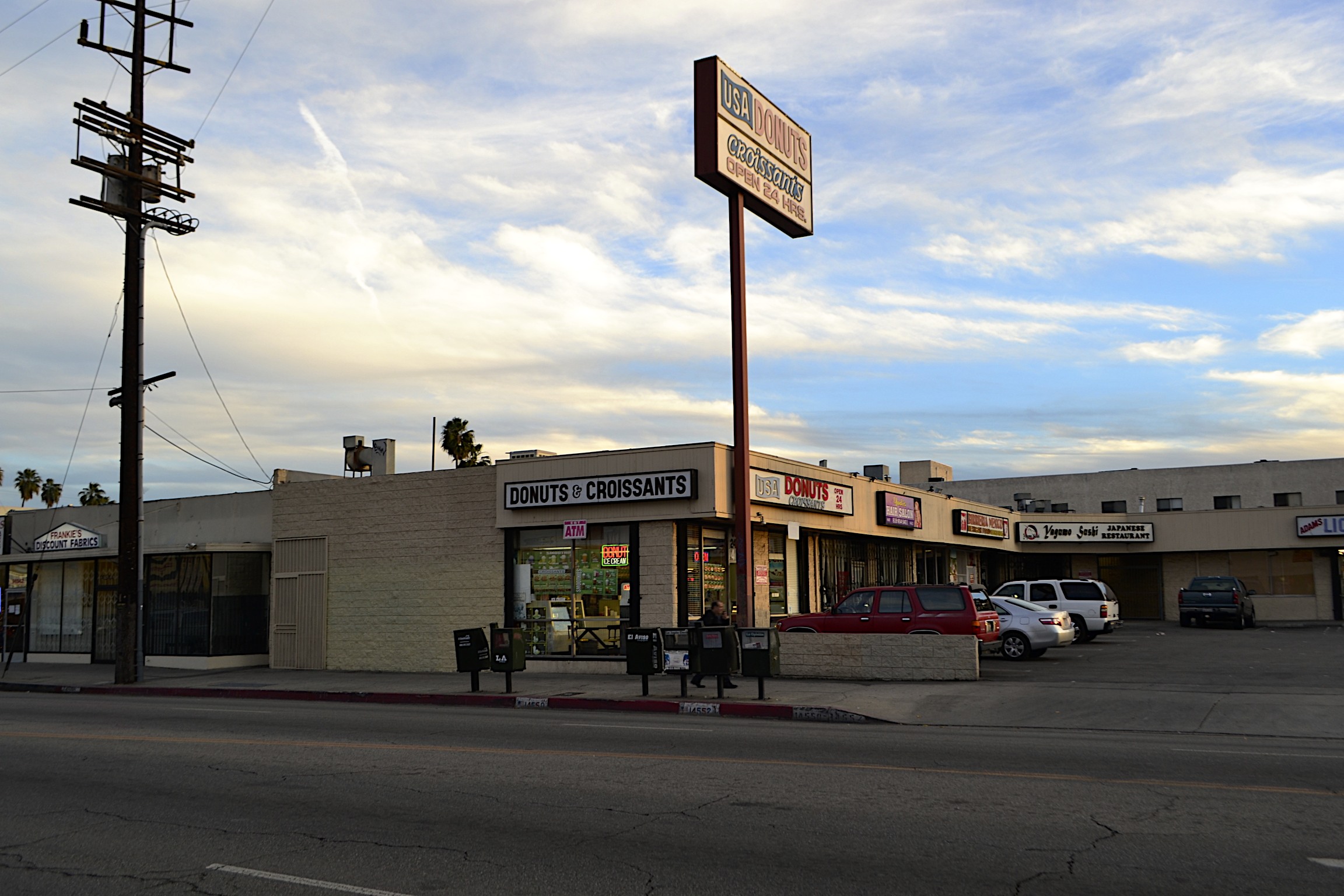
Van Nuys is sitting underutilized and degraded, dead center in the San Fernando Valley, with thousands of acres of asphalt parking lots set behind vacant shops and boarded-up slum buildings.

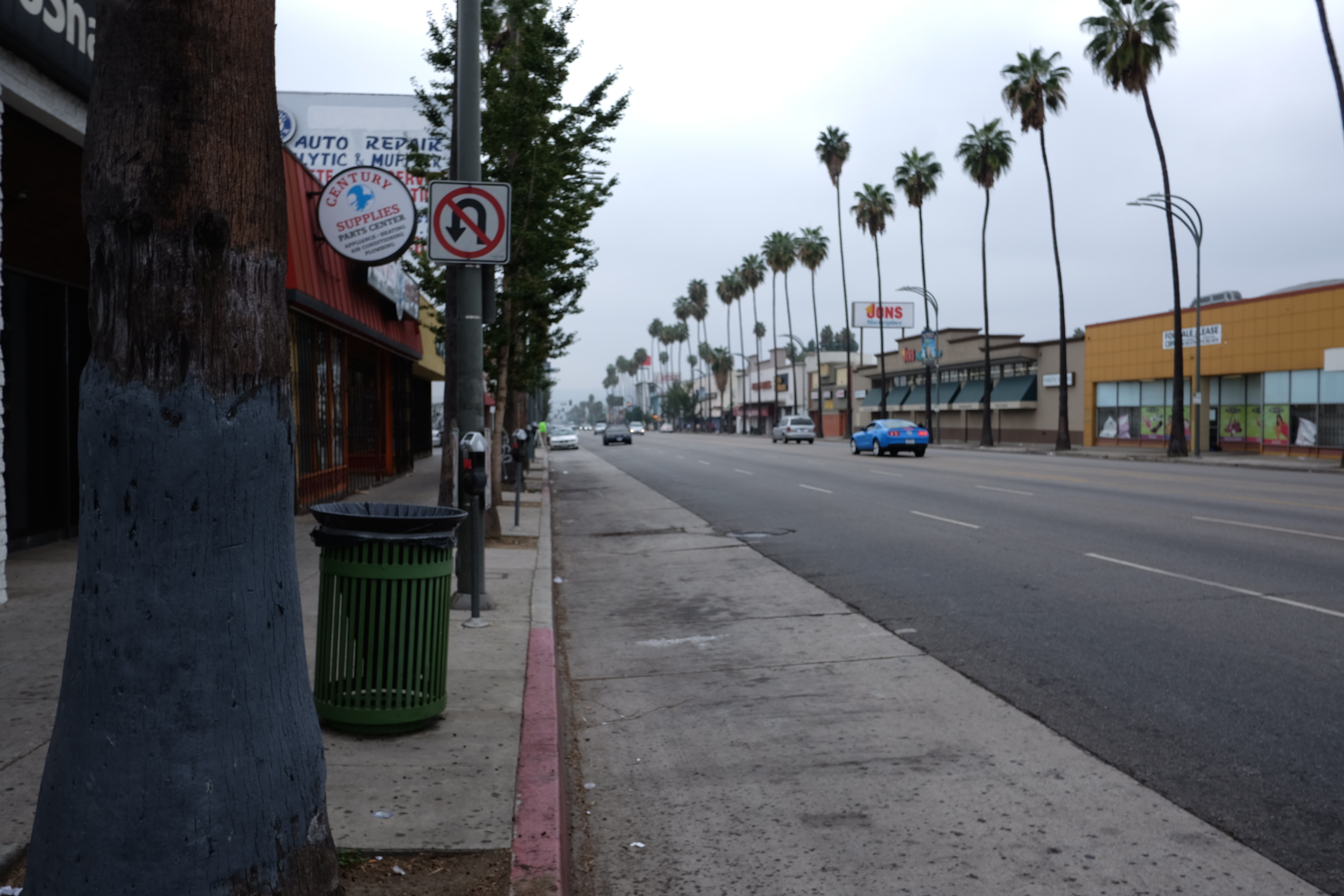
Van Nuys Boulevard is the heart of the slum, a depressing place without architectural vision or urban imagination.

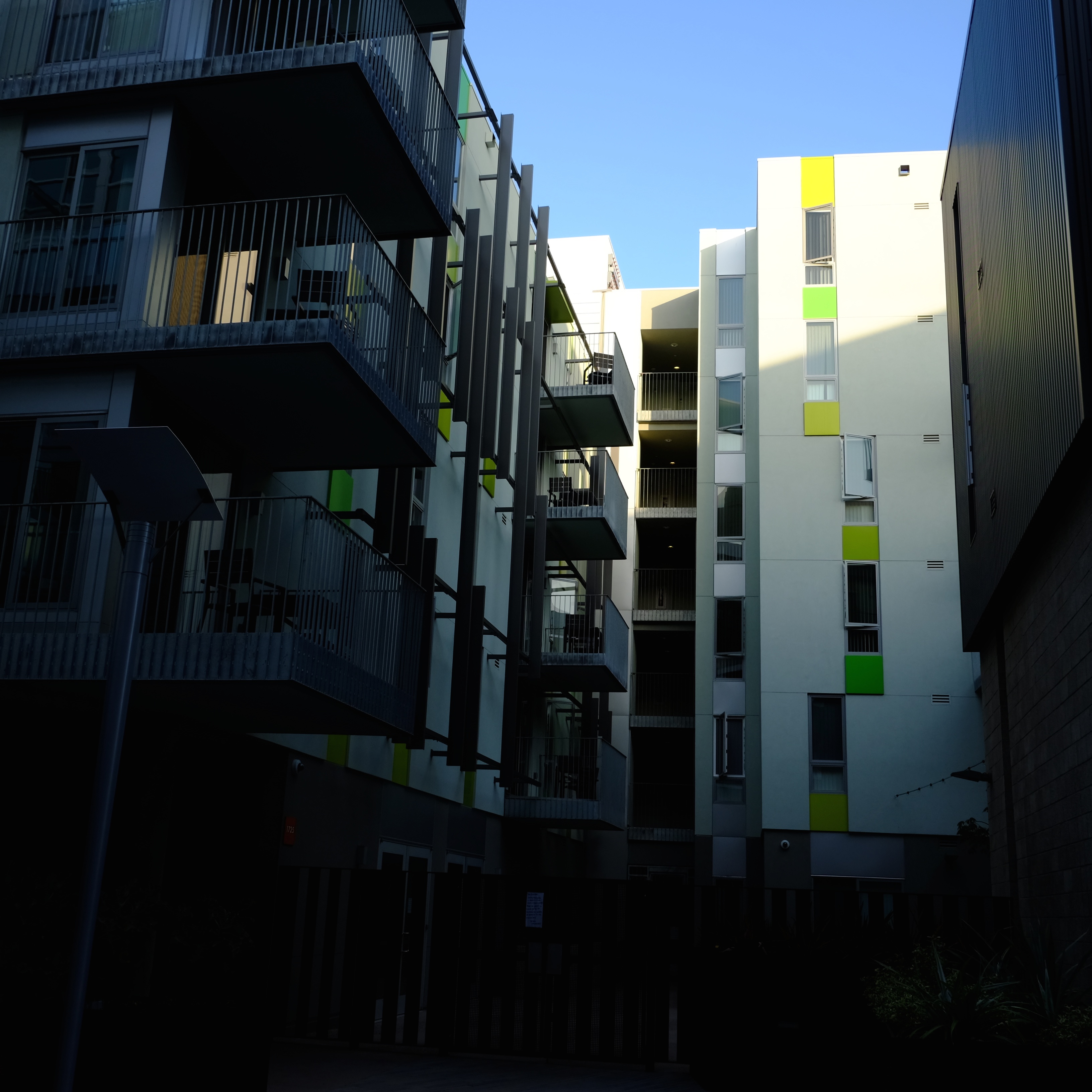
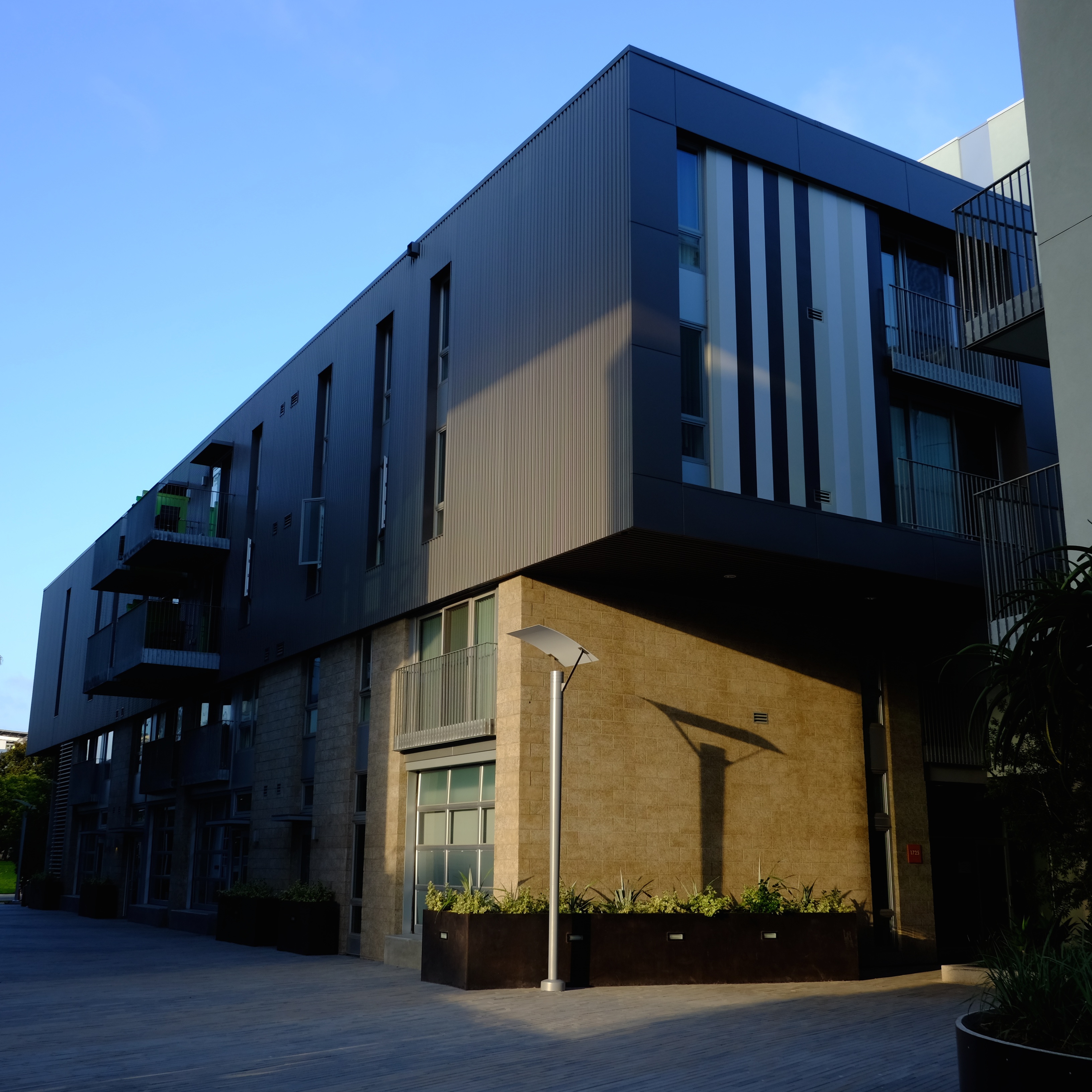
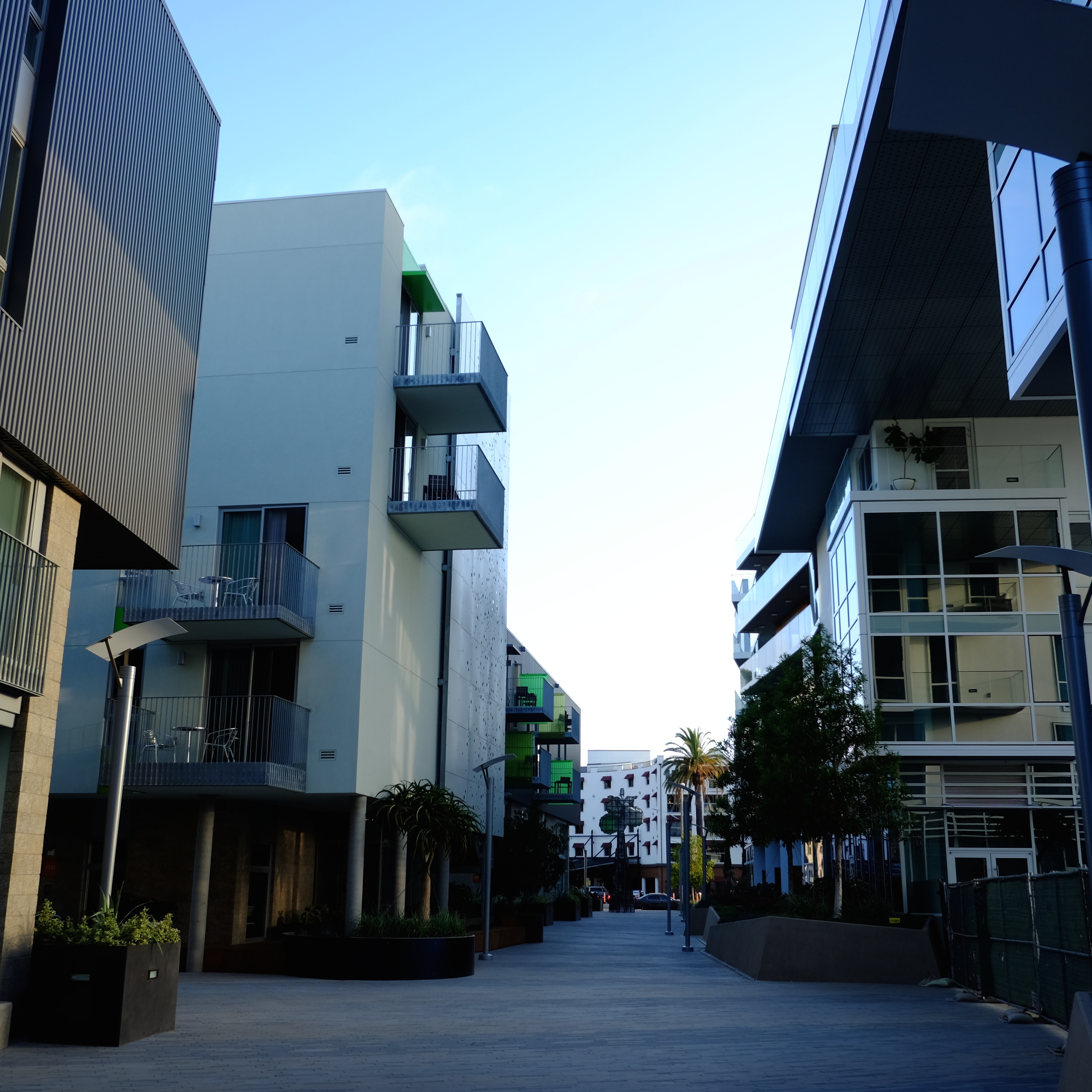
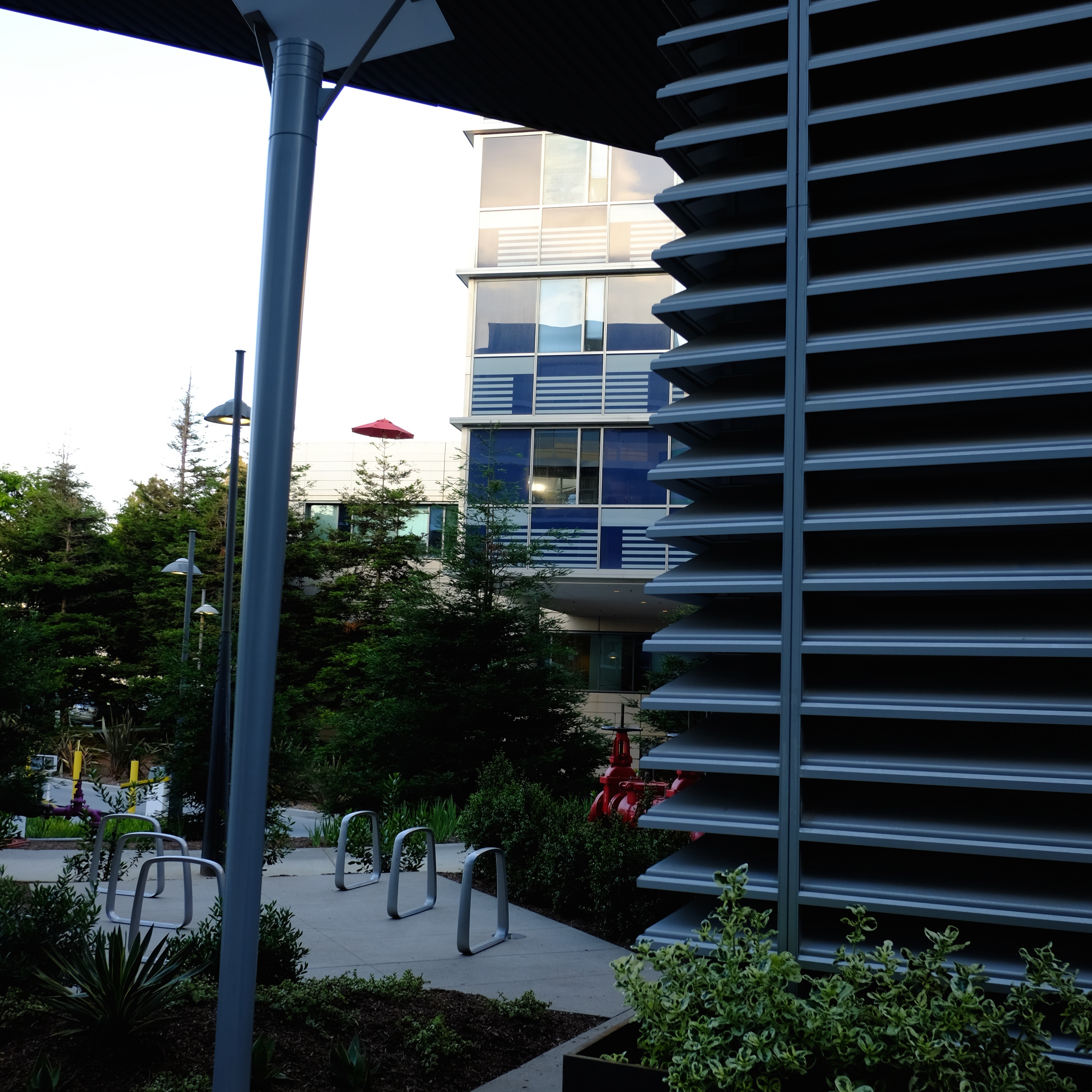
Why not, Mayor Garcetti, start building your walkable, bikeable, modern housing right here?

The Busway is nearby. The infrastructure of public transport is here.

All that is missing is a viable environment surrounding it.

Mayor Garcetti, come visit Van Nuys.

We are right near the intersection of today and tomorrow.

DSCF0009 DSCF0057 DSCF0034 DSCF0012


Historic Van Nuys: Katherine Avenue and Vicinity


screenshot_366 DSCF0070 DSCF0048 DSCF0047 DSCF0046

Is Van Nuys, as some believe, a hopelessly hellish place beyond redemption?

Perhaps not.

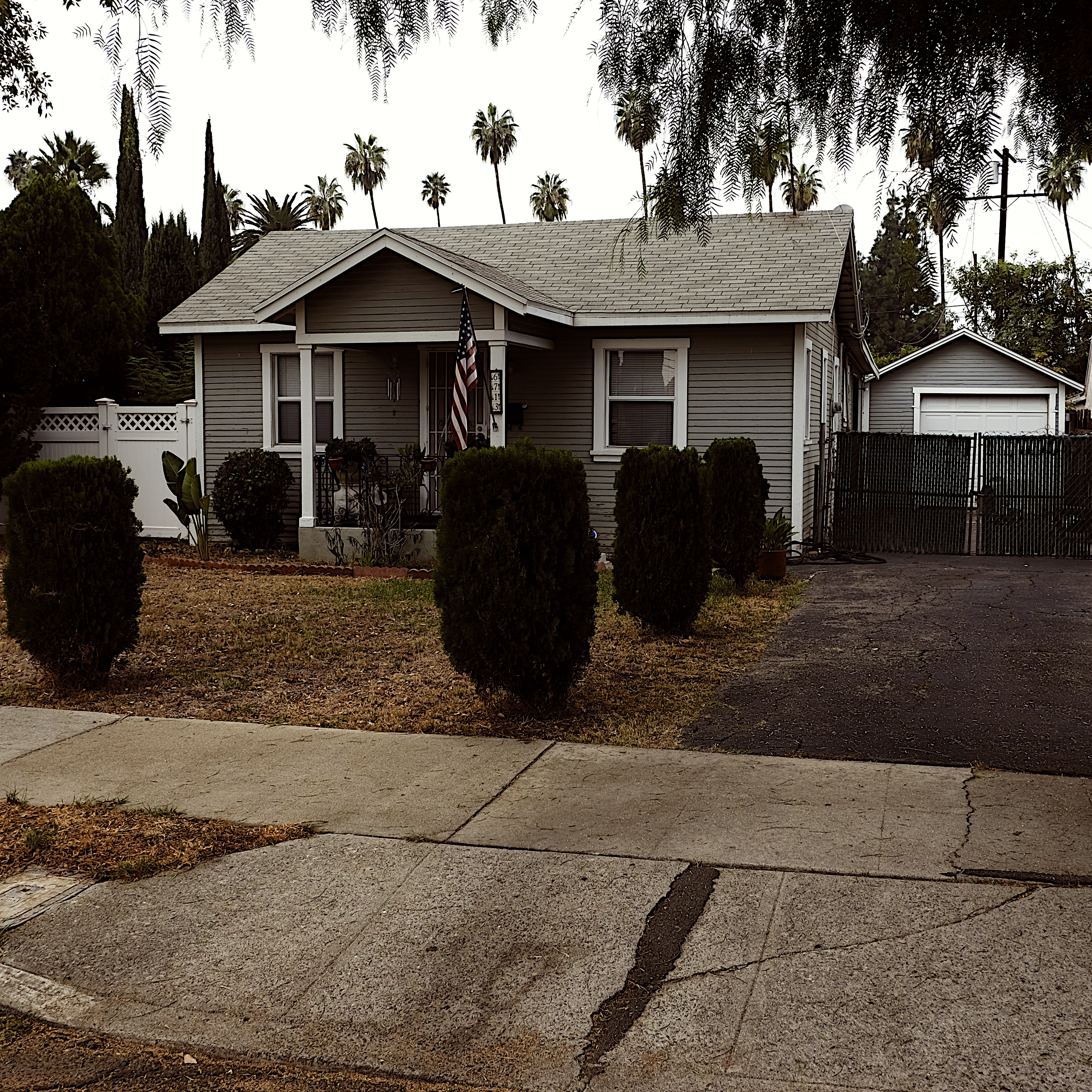
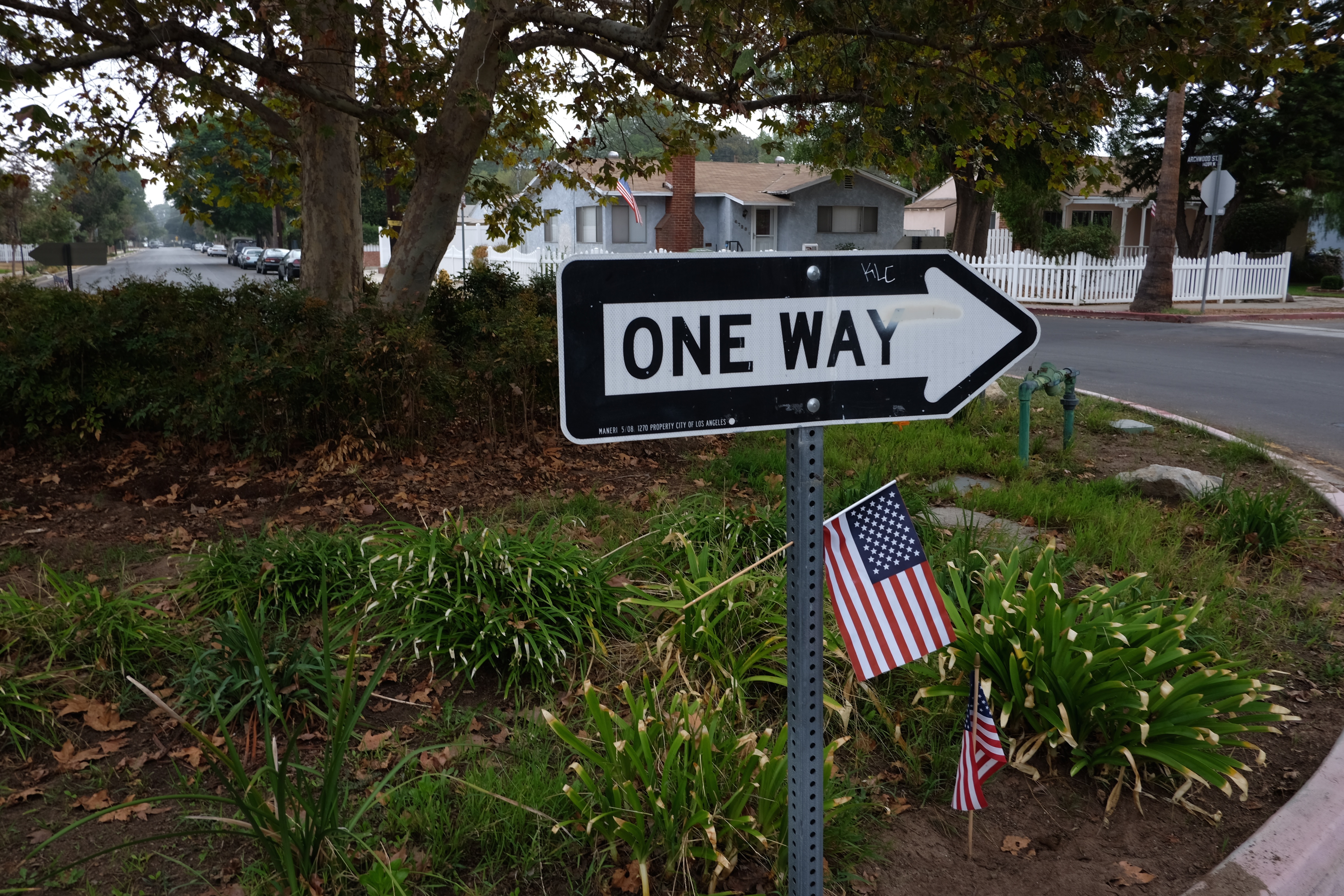
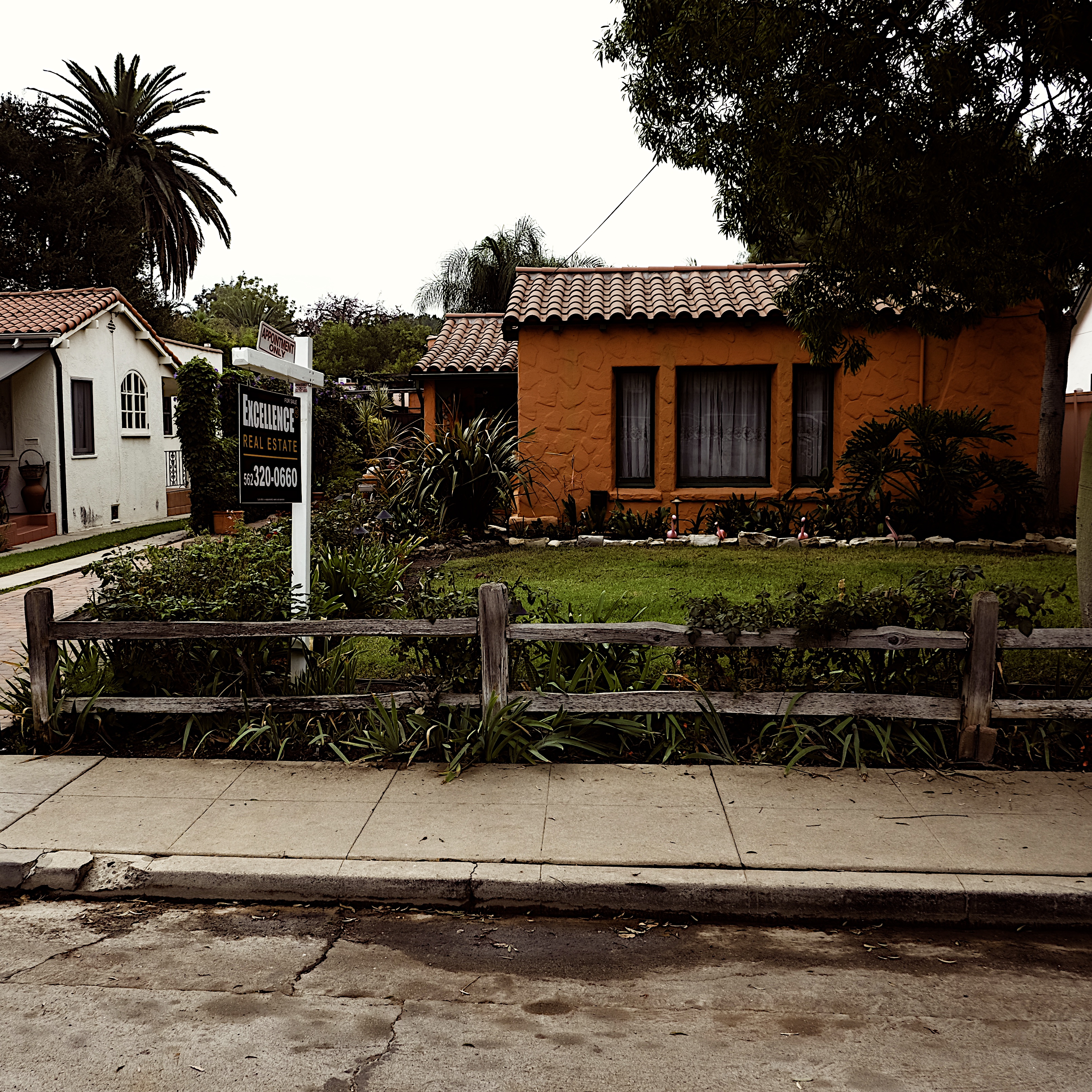
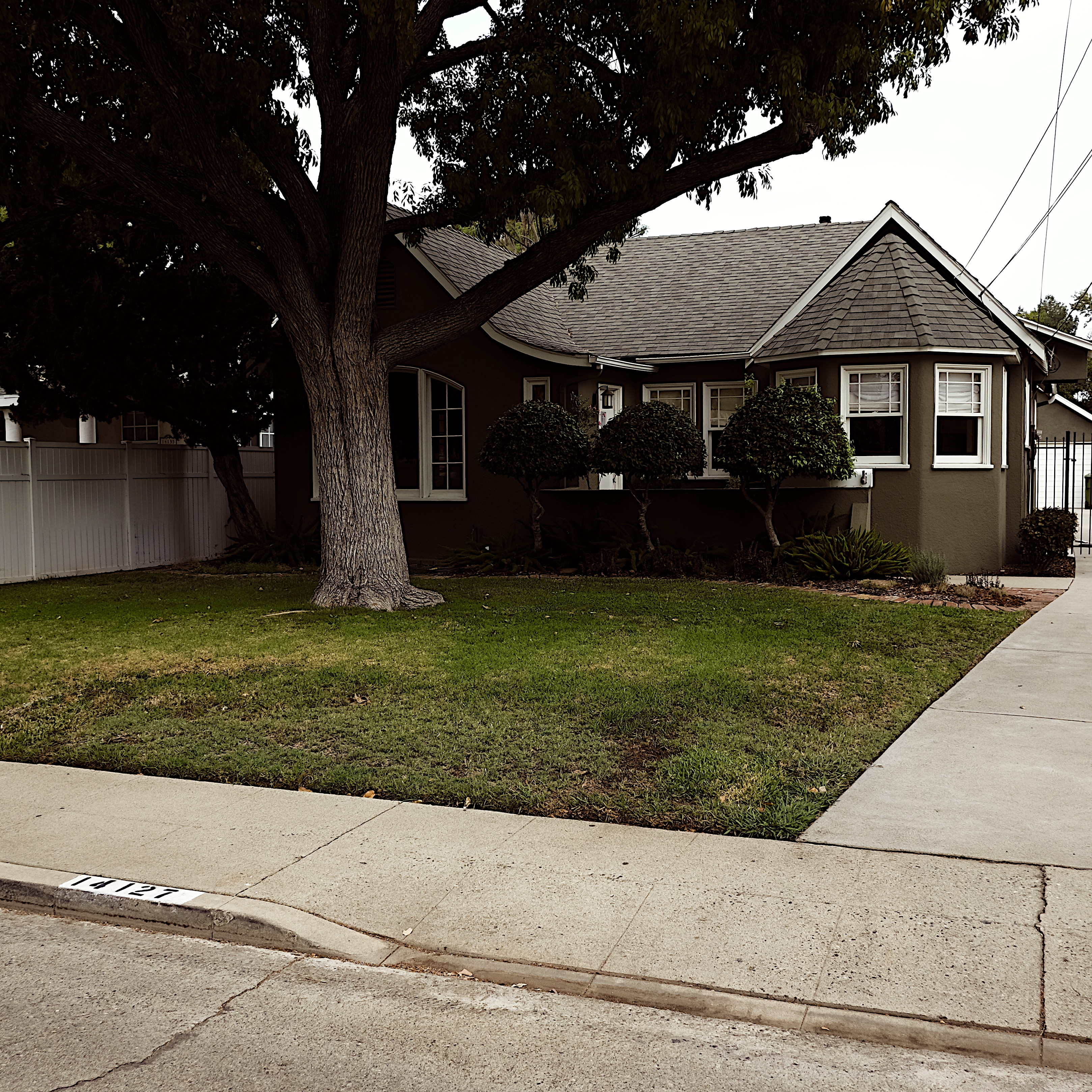
Hidden just east of Van Nuys Boulevard, south of Vanowen, is a secret garden neighborhood of historic houses, quaint architecture and lovely homes. Katherine Avenue is the heart of it, and it has a landscaped traffic circle, a construct of such ingeniousness and calmness that it is a wonder that it is not used everywhere.  Shadier, slower moving, safer, the neighborhood could almost pass for Pasadena.

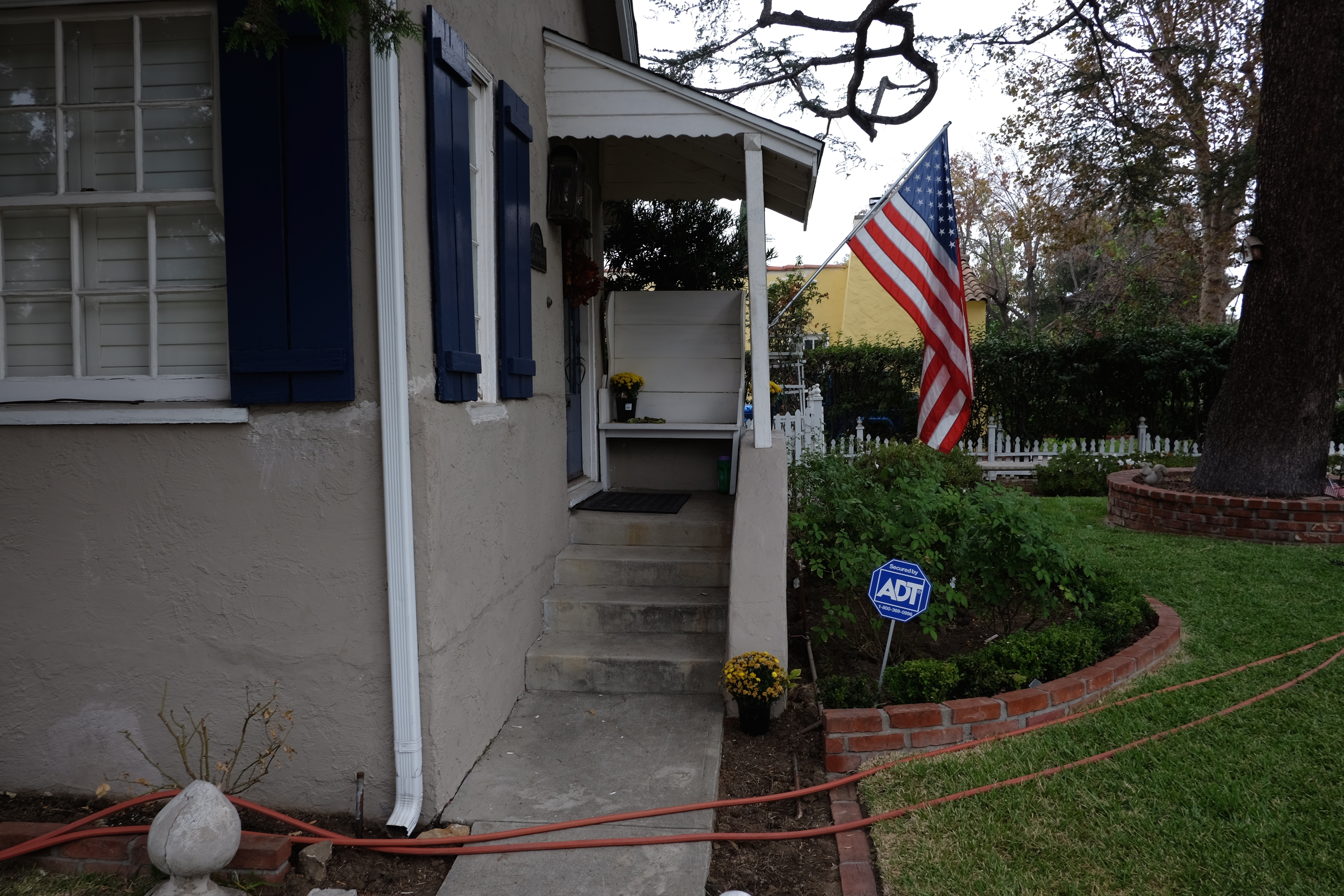
Along Katherine, and down Kittridge, there are many old houses, some dating back to the early 20th Century, with large gardens and an eclectic bunch of styles: Mission, Spanish, Wooden. Many fly the American Flag on a front porch, a marker of civility, pride and patriotism signaling that our best hope for America begins at home.

Writer and comedian Sandra Tsing-Loh lived here for a few years and wrote a satirical novel about her experience: “A Year in Van Nuys”.  Unfortunately, her humor was less remembered than her brutal depiction of the suffering of having to live in Van Nuys. 14132 Kittridge 14127 Kittridge


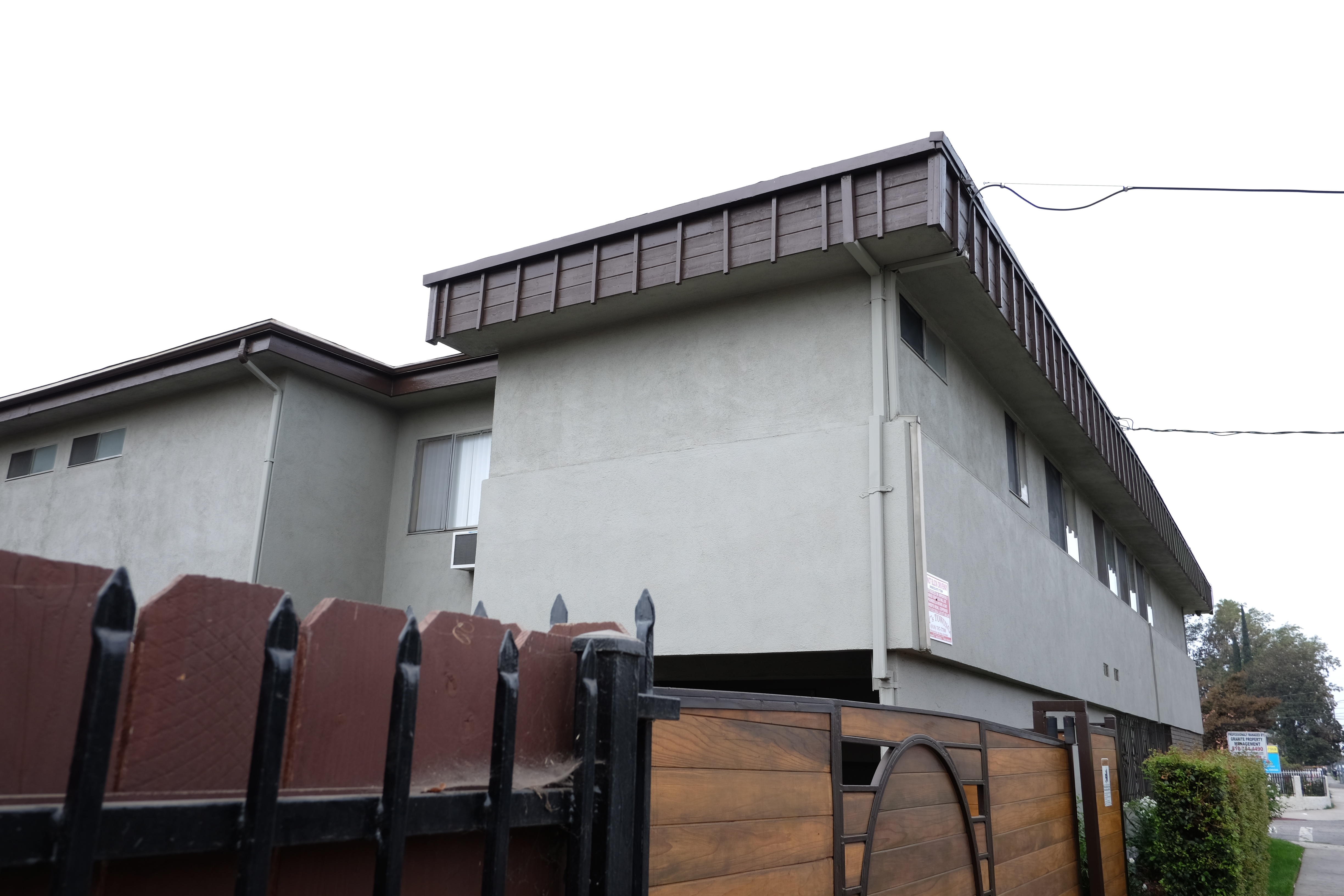
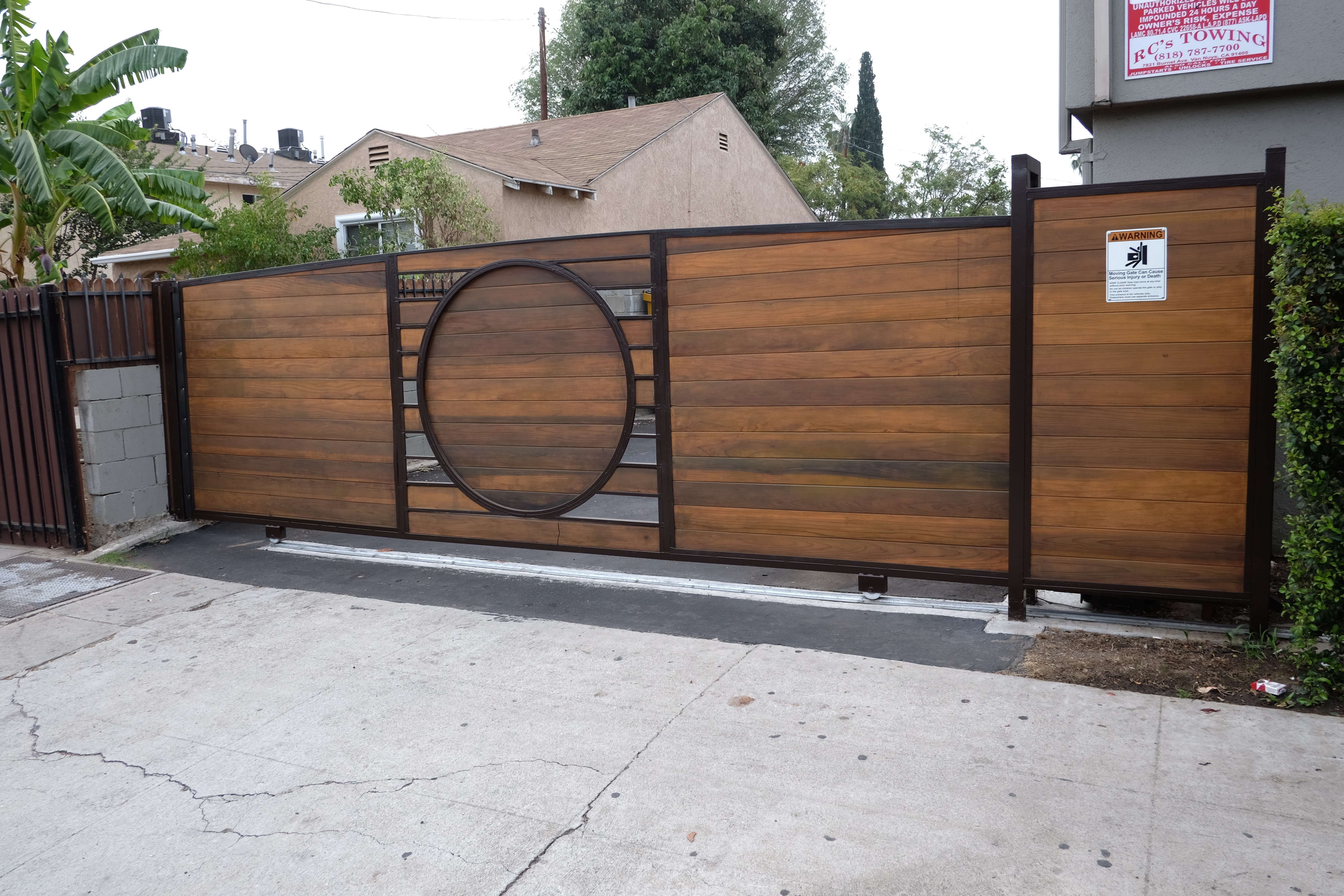
Walking this neighborhood I found a Mid-20th Century apartment building on the corner of Katherine and Vanowen which had been stylishly and subtly updated with a good-looking wood and iron security gate. Roofline edging was added, smartly and economically emphasizing dark horizontal strips of wood.  The whole place was neat and well-maintained with an aura of Japan. DSCF0055 DSCF0054 DSCF0053


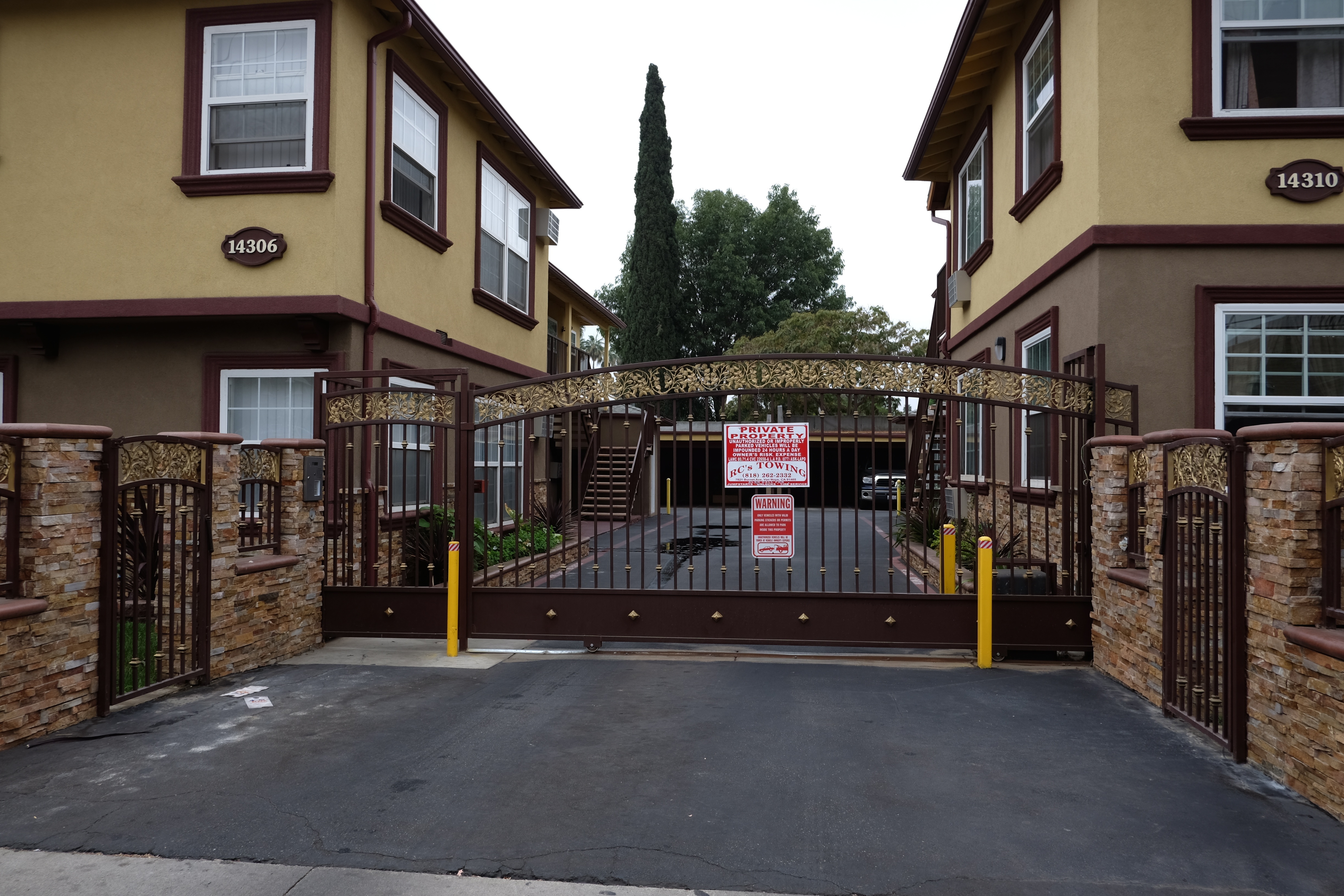
There are also ugly new projects (14310 Vanowen) that some call improvements, including a gross trend, seen around these parts, of painting plain buildings in burgundy and gold, pasting thin stone veneers on walls and the lower parts of structures, and dropping decorative lanterns into the mix. Security lights are on all night illuminating a deluxe prison. I wrote about this trend last year at another desecration: Kester Palace. DSCF0039 14306 Vanowen


DSCF0011 DSCF0014

Again, what is missing in Ms. Nury Martinez’s Sixth District are big investment and big plans. There is gridlock in Van Nuys because the people who live here are not making enough noise. They are not demanding that their community go in a better direction. The passivity of the area is understandable as many who live here are just surviving and trying to get by. But what about the larger city of Los Angeles and the re-development of the San Fernando Valley? Must it be done so poorly and so haphazardly? How many more years will Van Nuys sit with its empty stores, empty parking lots, filthy sidewalks, and battered down signs?

Mayor Garcetti and Councilwoman Nury Martinez will no doubt be attending LA River clean-ups and “pride” events but will they be building the buildings and businesses in an architectural and civic plan worthy of a “great”city? Will the city which counts among its citizens the wealthiest celebrities in the world say it has no money?

If you walk, as I did, along the better parts of Van Nuys, you will learn that there are people and places worth saving. The powers that be must recognize it.

Walking Through an Architectural Plan.


DSCF1807 (1) DSCF1808 (1) DSCF1813 (1) DSCF1814 (1) DSCF1818 (1)

I was in Santa Monica yesterday afternoon. I parked near Pico and Ocean to capture the waning light of day on camera.

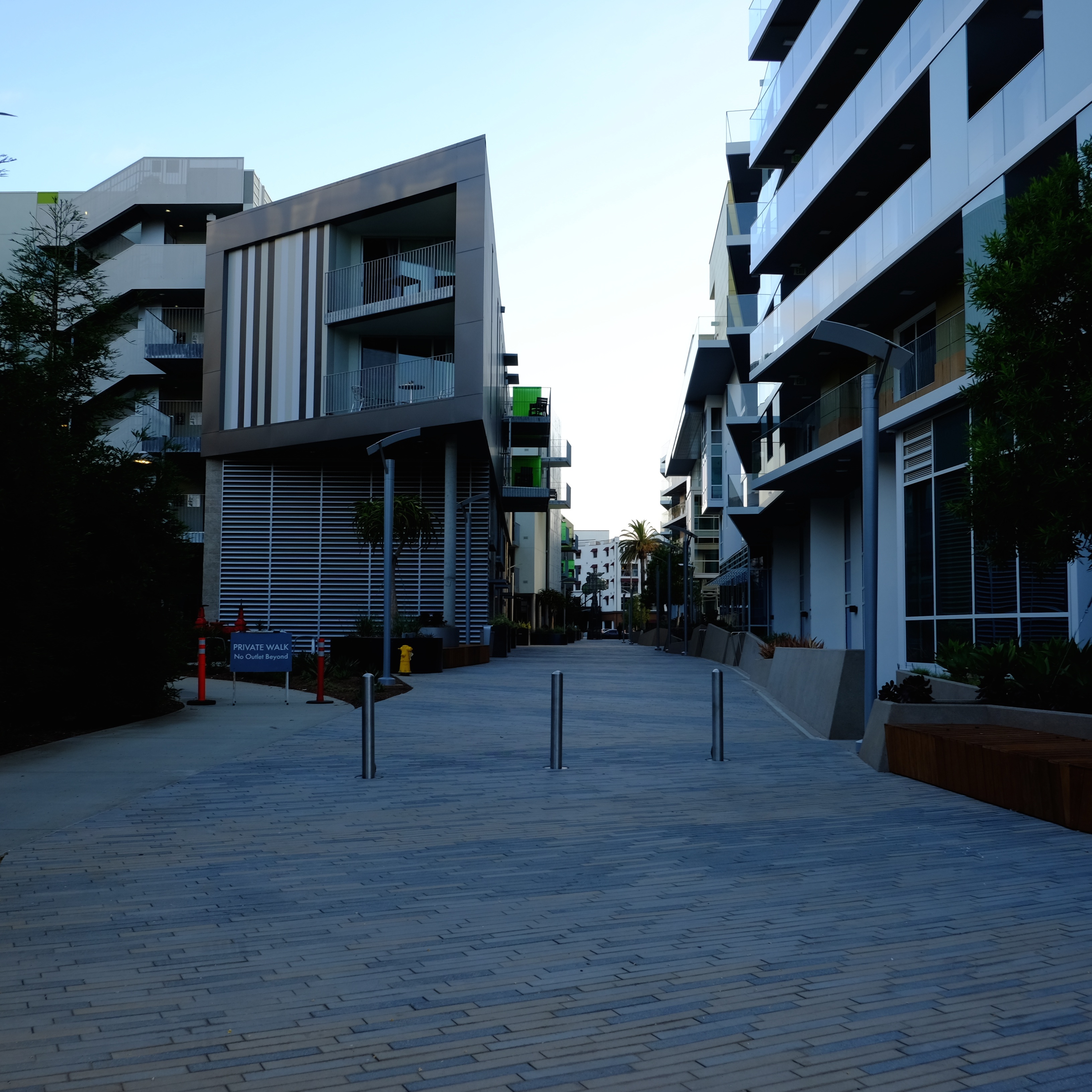
The entire “Civic Center” area, surrounding the toxically secretive Rand Corporation, is undergoing massive redevelopment. There is a new park, a new subway line (arriving 2015), new condos and “affordable housing”, plus promised shops, restaurants and hotels.

The City of Santa Monica has a website describing the project.

“The three-acre site is an urban mix of 160 affordable rental residences and 158 luxury condominiums, 20,000 square feet of retail and restaurants, and walkable plazas and gardens. A walk street was created as a central spine through the site, providing pedestrians with a connection from Main Street to Ocean Avenue through landscaped plazas lined with retail, restaurants and outdoor dining, and public art.”

I went into the walk street yesterday and explored part of the new development.

At 6pm I was the only one.

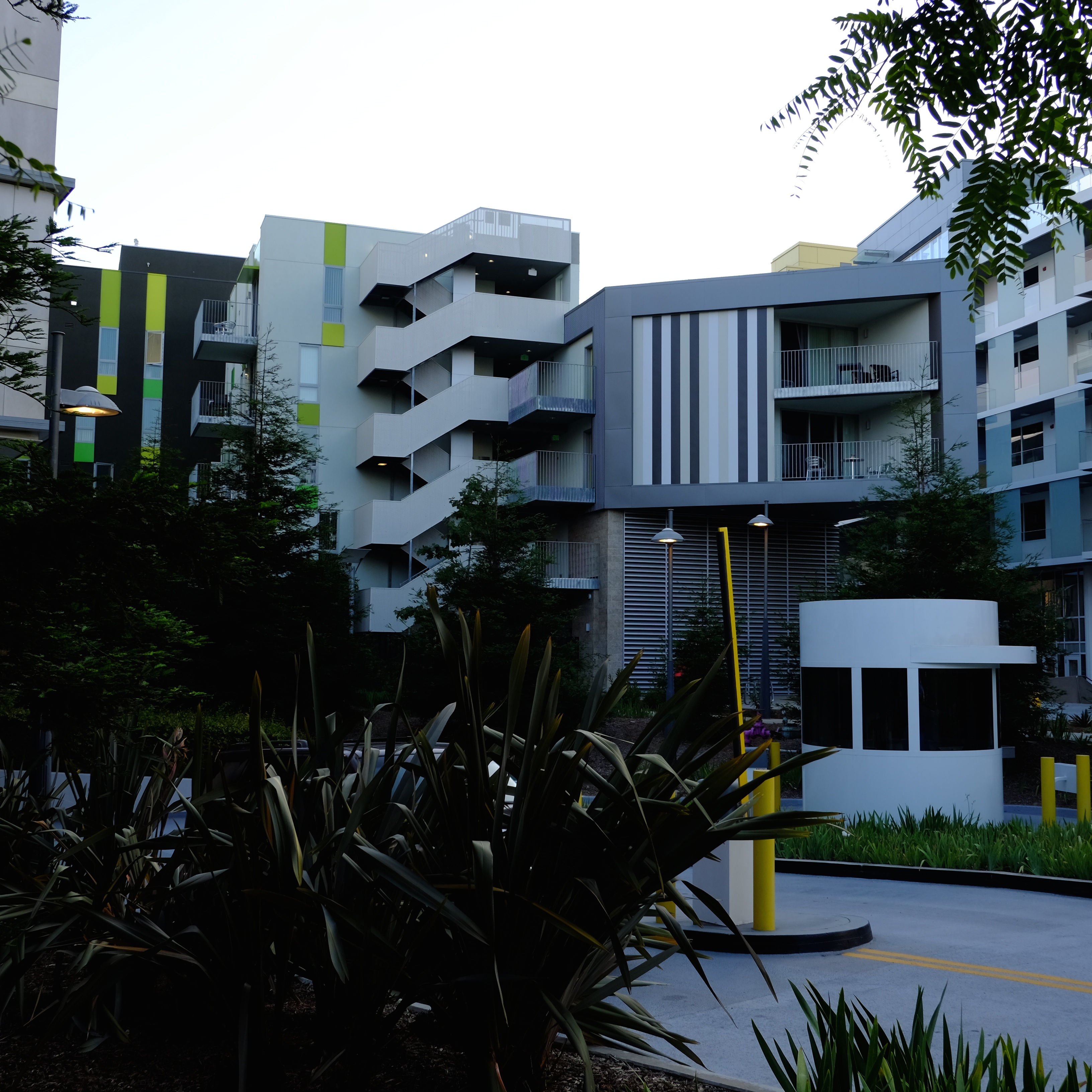
I walked through angles and shadows past empty balconies shaded in darkness. Trapezoids and bands of glass, rectangles and vertical piers jutted out and sliced in, a silent symphony of architecture performing to an empty house. On Main Street, near a guard station, a sign ominously informed:

THIS AREA UNDER VIDEO SURVEILLANCE


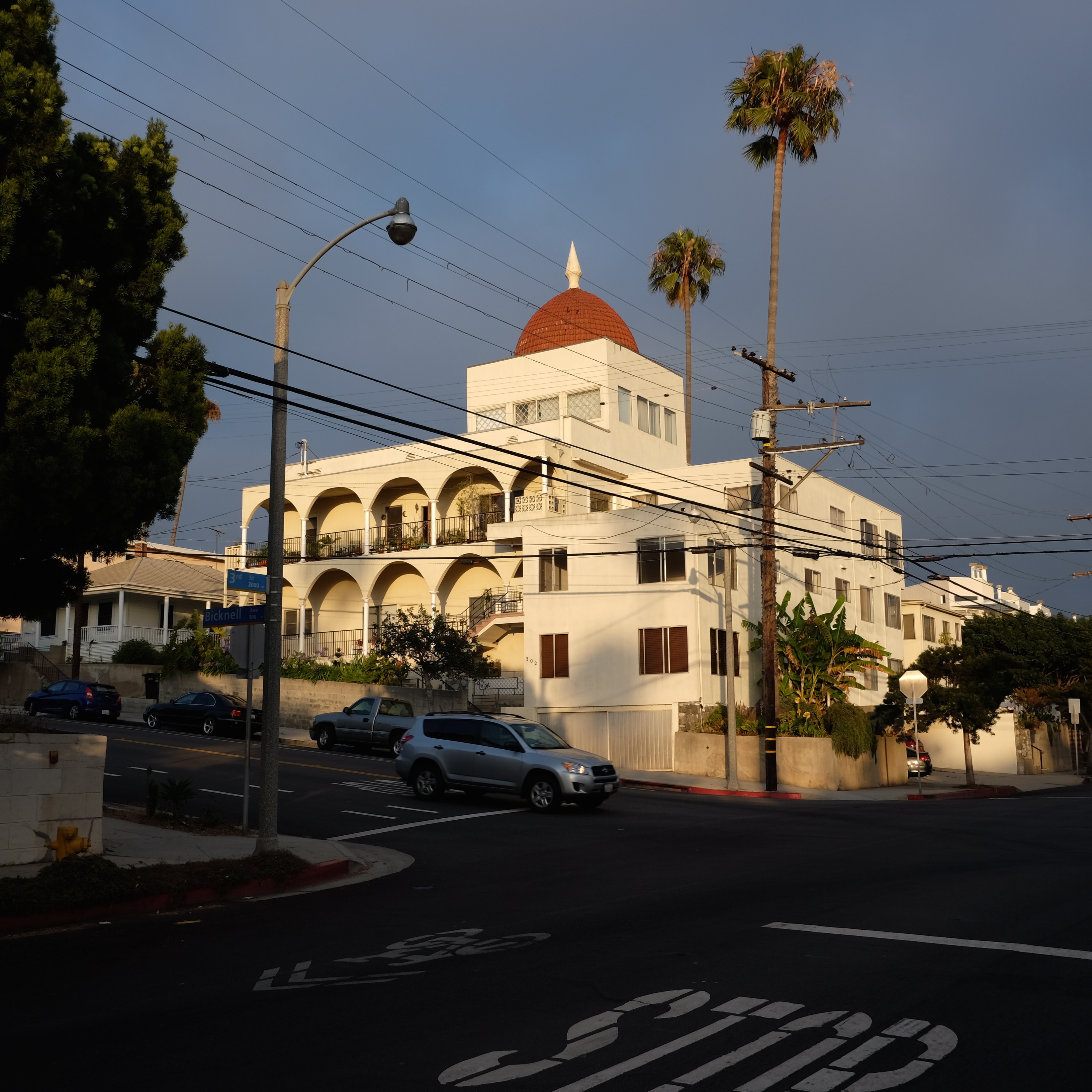
A little while later, I wandered back into an old neighborhood of crummy and cute houses south of Pico, and stopped at the corner of Third at Bicknell.

DSCF1832 DSCF1848 DSCF1849

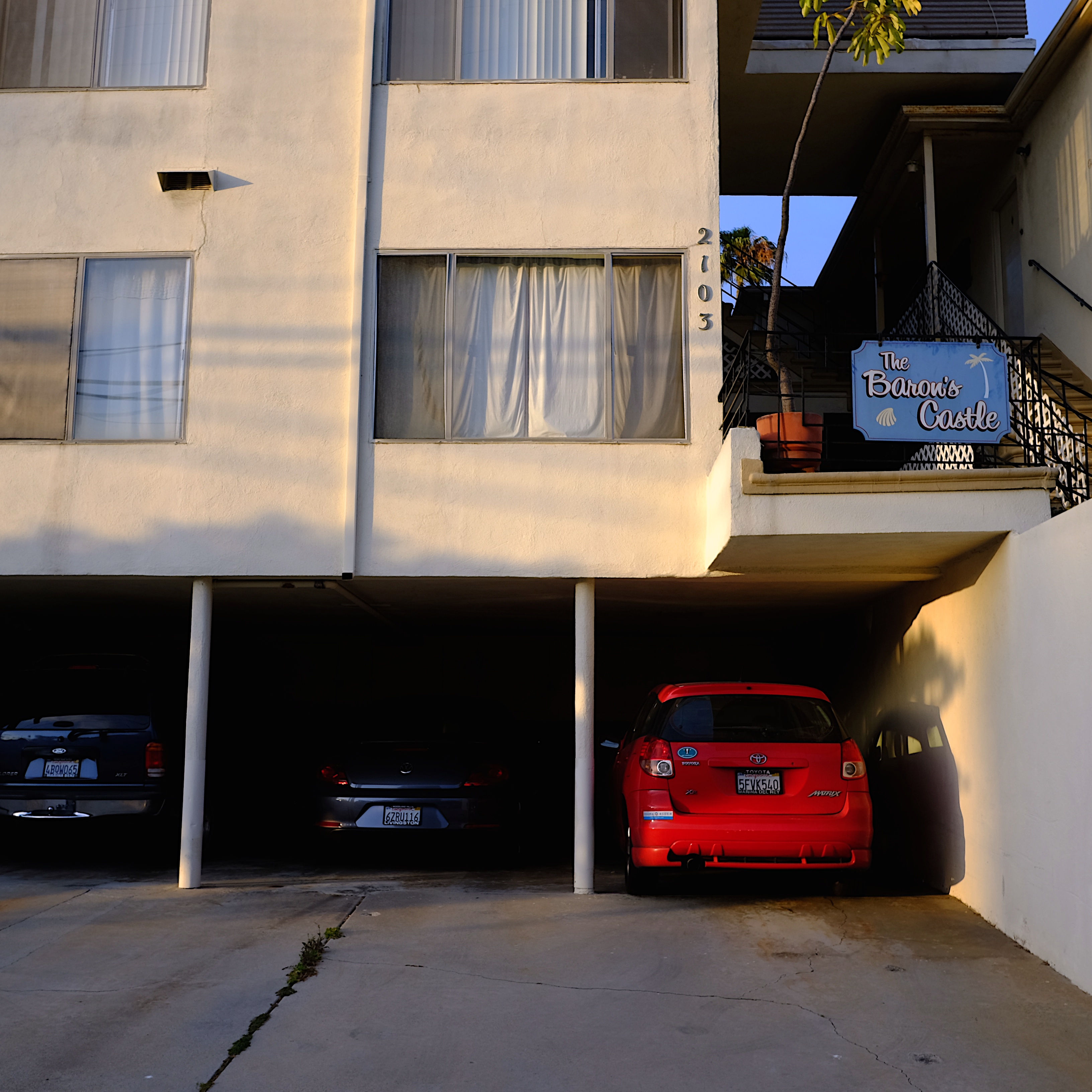
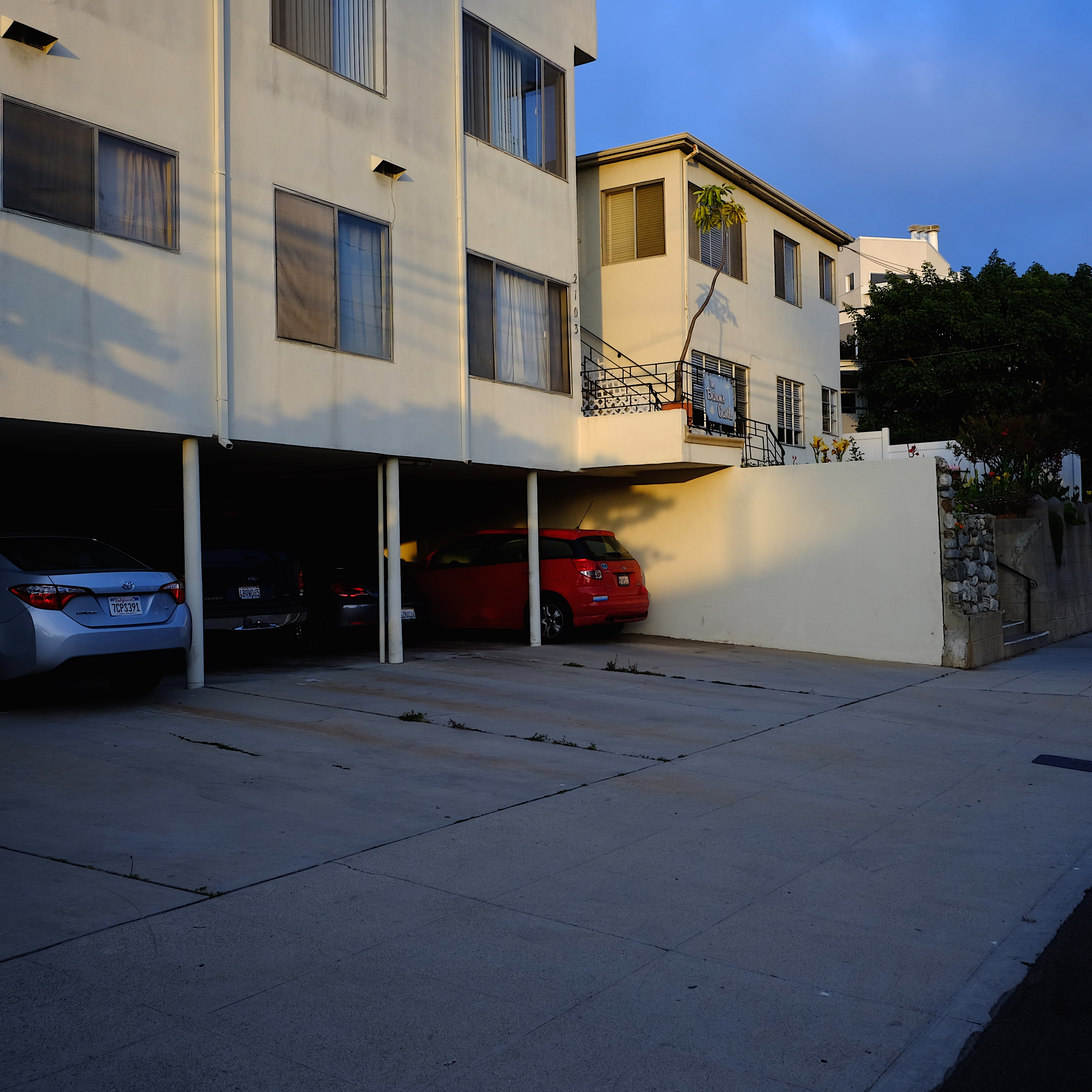
Atop the hilly street stood a strange, red-domed apartment, The Baron’s Castle. Piled above blocky stucco boxes, the exotic building of unknown origins held my eye. Its finial pointed up: leading, concluding, summarizing.

No great architect built this mess. But it felt honest, uncontrived, alive, accidental, human and organic.

With its cars parked under the first floor overhang, its ridiculously flimsy arched balconies, it was a reminder of how good bad architecture sometimes feels.

I was glad to end my walk here, staring up into spiritually redolent kitsch, irreverent and improvised. It reminded me of the people who live here, in exile, in rented costume, temporarily young, broken-hearted, dreaming, intoxicated, high, sober, scraping by, entertained; seduced by sea and sun.

How many tanned generations fucked and broke up and got together inside the many boxes under the red-tiled dome? What accidents of existence brought people here? And how fitting that they settled into a place imperfect and incomplete.

DSCF1820

The great architects who did not build The Baron’s Castle were employed on other places where perfection of form never quite ignited human passion.

Yesterday, I had walked through one perfection of form, a lavishly funded and now completed architectural plan, vetted by the government of Santa Monica, tended to by teams of architects, engineers, landscapers, designers and lawyers.

And found myself hungry.

More is less. Too much is much less.


Alleys and Architecture.


Day 4-Near Hotel Celestine  48 Day 2-Shinjuku-ku 40 Arrival at Hotel Celestine 13

(Photos: Andrew B. Hurvitz)

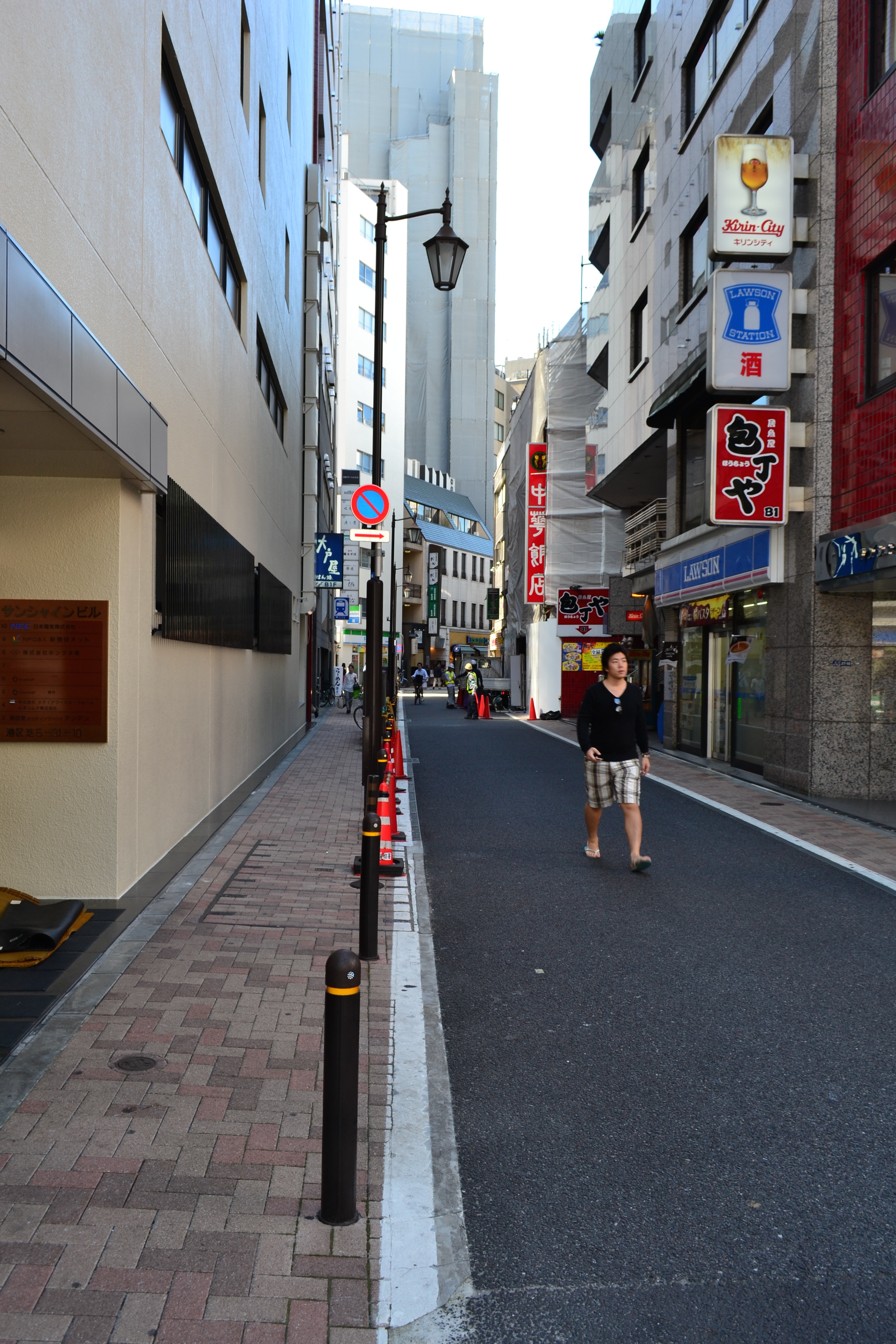
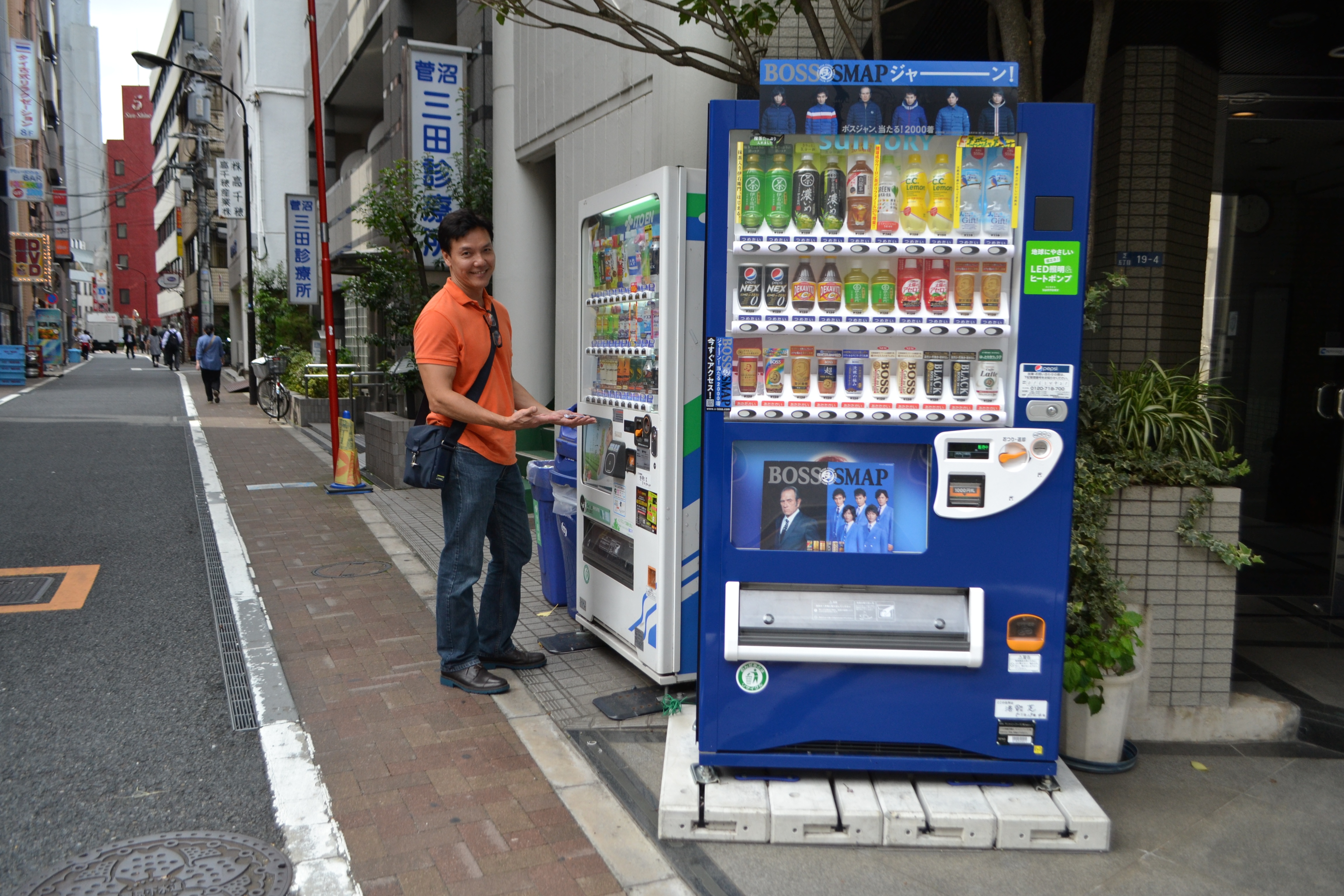
Last year, on a visit to Japan, I discovered alleys that were vibrant, clean and functional.

In a country where 127m live on land mass that is smaller than California, space is put to good use.

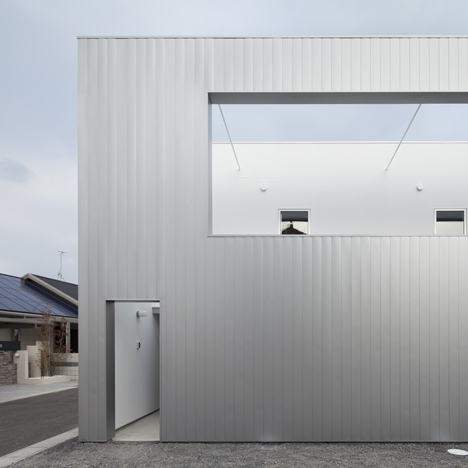
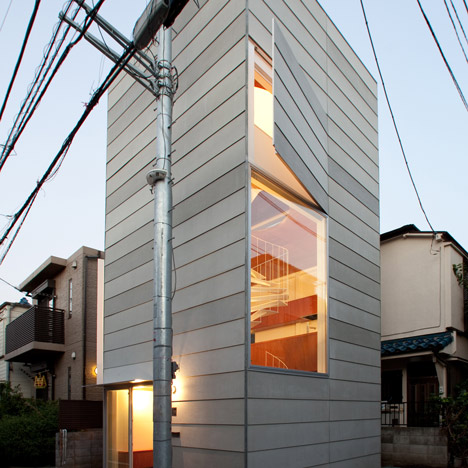
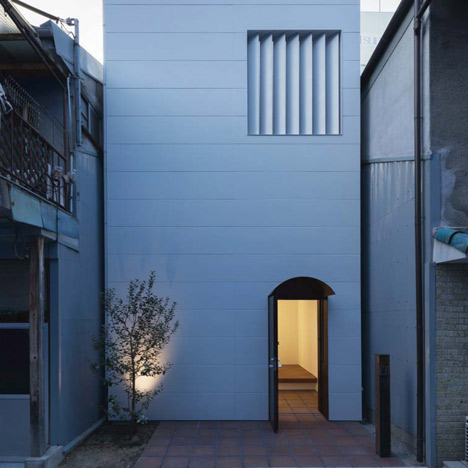
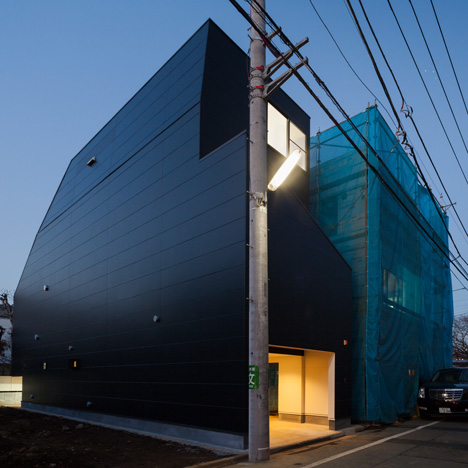
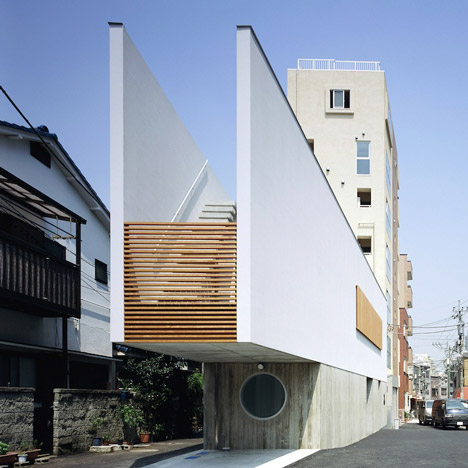
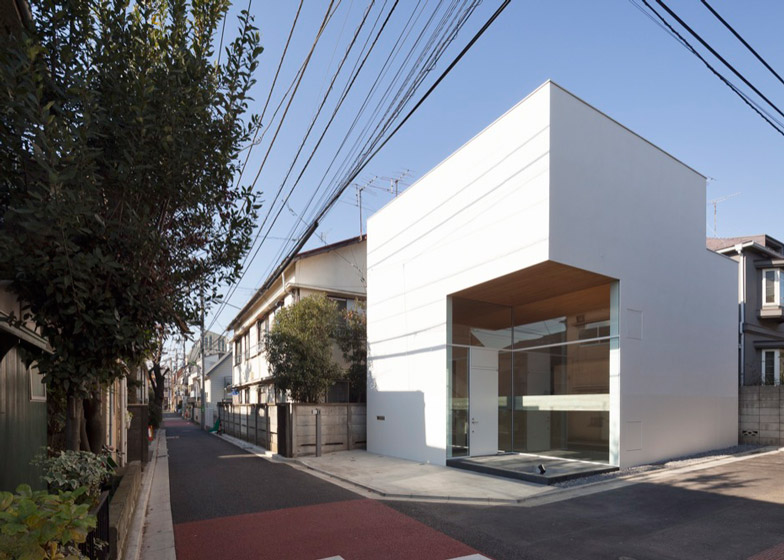
Little houses, imaginatively designed, are integrated into narrow streets and alleys. (Photos: Dezeen)Cave-by-Eto-Kenta-Atelier-Architects_dezeen_1sq dezeen_Small-House-by-Unemori-Architects_0sq House-by-Tsubasa-Iwahashi-Architects_dezeen_1sq House-in-Fukasawa-by-LEVEL-Architects_dezeen_3sqa KKZ-House-by-International-Royal-Architecture_dezeen_ss_50 Monoclinic-House-by-Kazuko-SakamotoAtelier-Tekuto_dezeen_sq Switch-restaurant-and-residence-by-Apollo-Architects_dezeen_3sqa

Whether an entrance is in front or back makes no difference to a Japanese house.

What counts is the integrity and artistry of the architecture.

LA, and the entire state of California, has an extreme shortage of affordable and civilized housing.

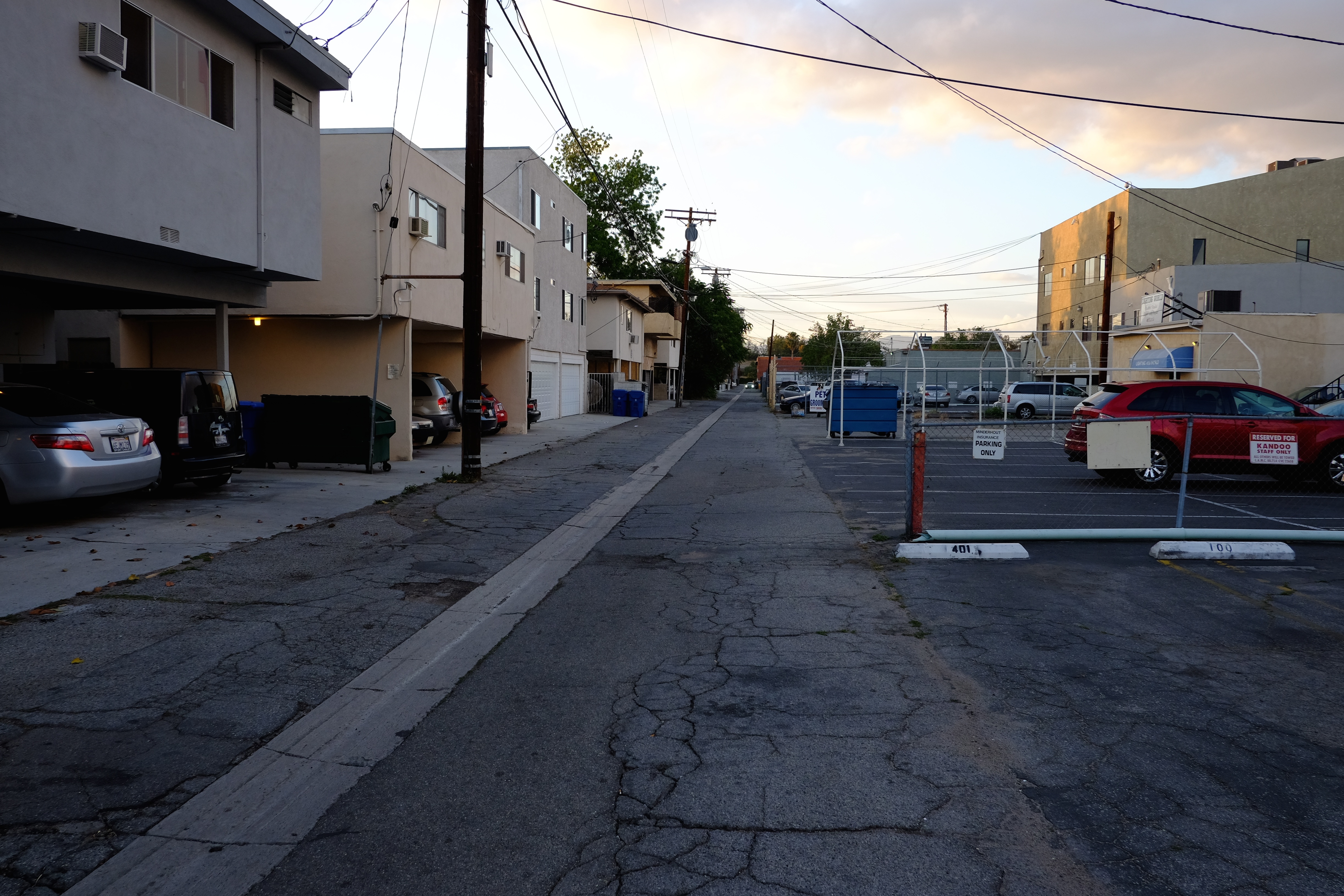
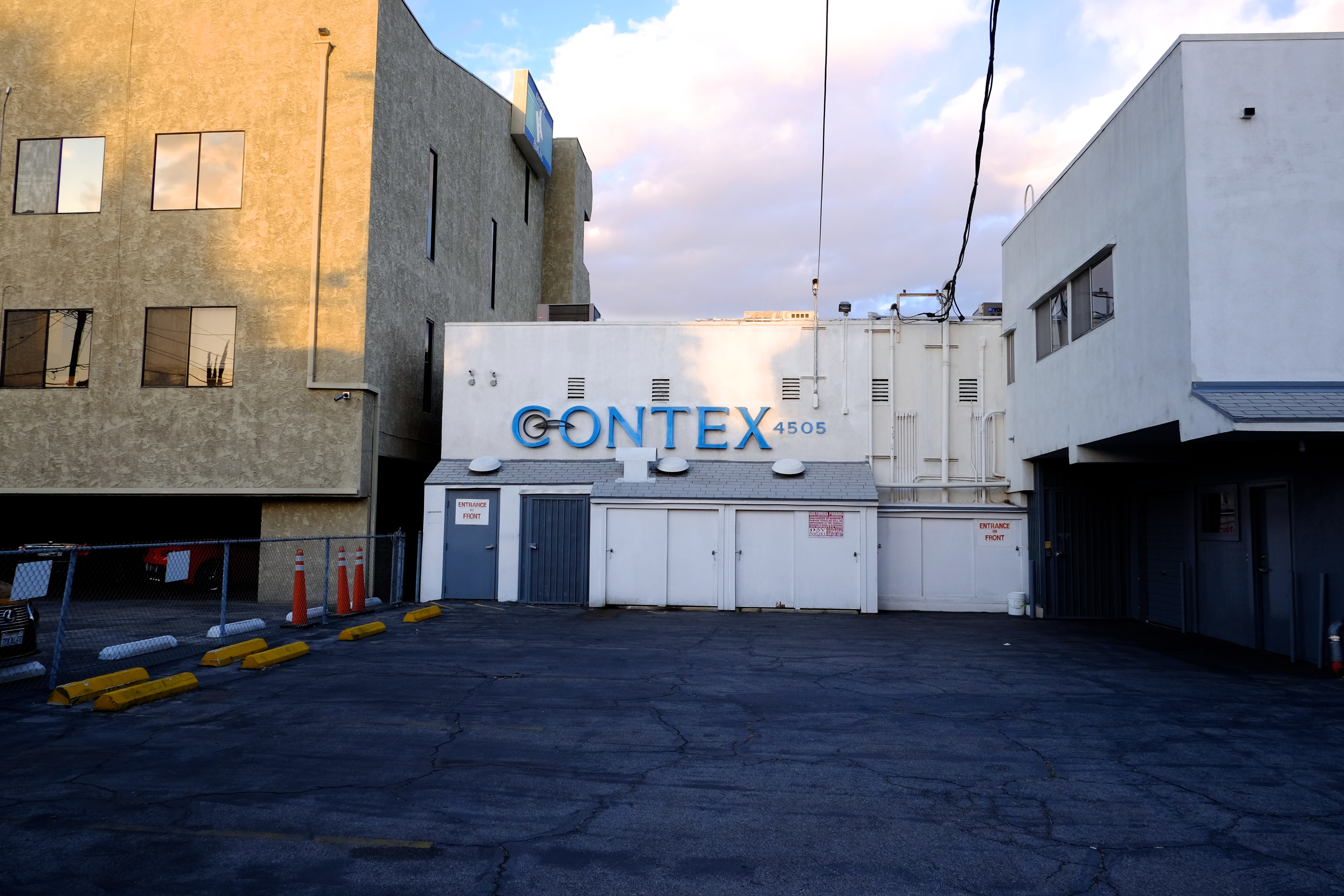
Why not emulate Japan and make use of our alleys, the back of our buildings, and enormous asphalt parking lots to create civilized spaces for residential development?


Sherman Oaks alleys below.

Photo credit: Andrew B. Hurvitz

DSCF0096

DSCF0106 DSCF0105 DSCF0104

The Day Great Architecture Comes to Van Nuys.


Proposed development at 6908 Vesper Avenue goes before the PLUM.

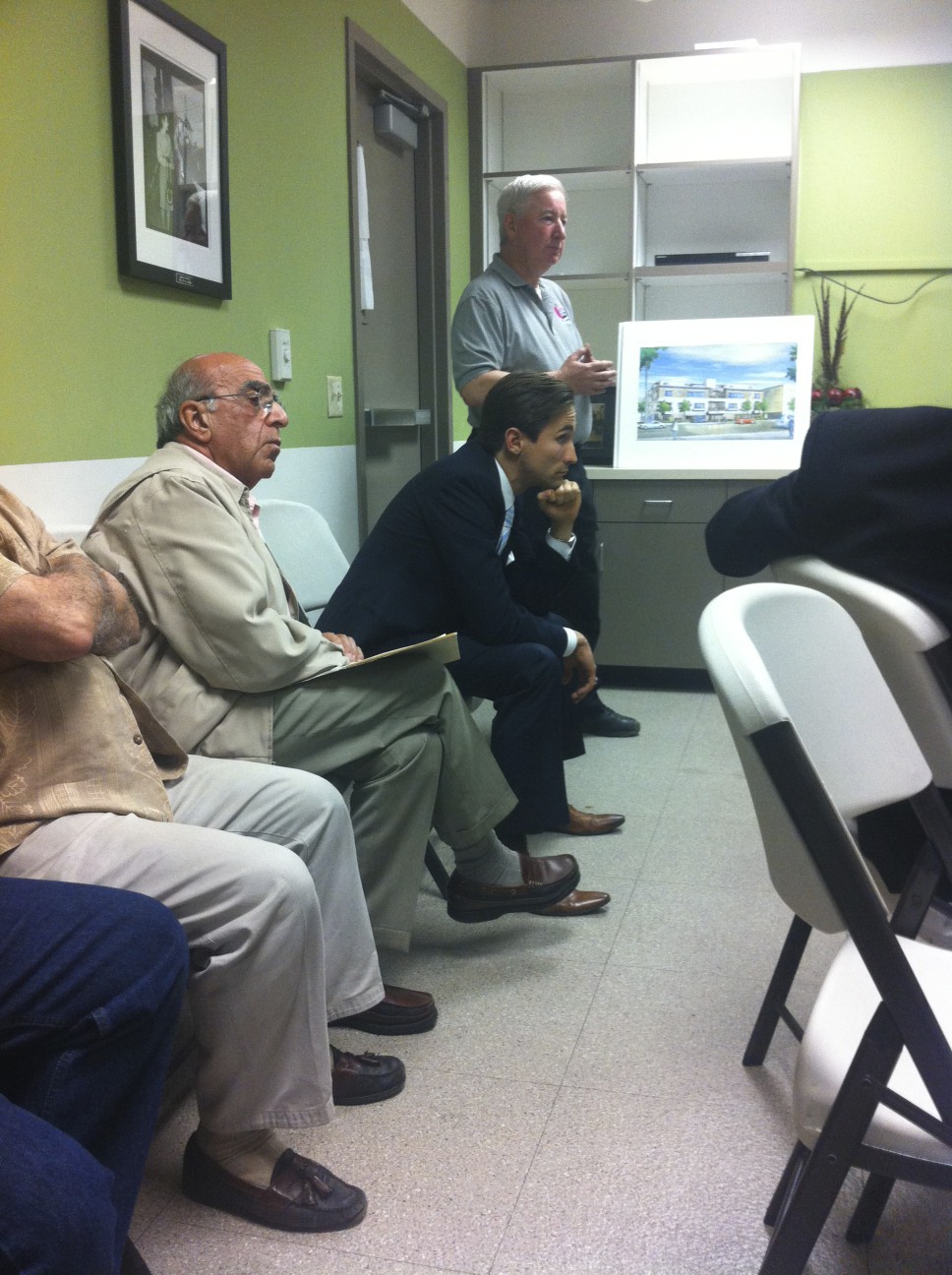
At last night’s Planning and Land Use Meeting a few developers proposed a few developments for review.

A 49-unit apartment building, three stories tall, was characterized as ruinous to a neighborhood of mostly single family homes.

A 5-story senior apartment complex seemed to pass muster, after its parking and setbacks were revised.


In the large land mass that is Van Nuys, there is very little construction.

The downtown is shabby, full of vacancies.  The only new businesses sell pot, massages and bail bonds.

Victory, Vanowen, Oxnard, all compete for the ugliest street awards.


I wondered, after leaving the meeting, what might happen if Mayor Eric Garcetti brought architects, developers, community leaders and the citizens of Van Nuys together to create a Van Nuys Experimental Architecture District.

It makes sense. Land is cheaper. There are vacant lots and substandard buildings. Property could be acquired cheaply and the location is great, right in the center of the SFV.

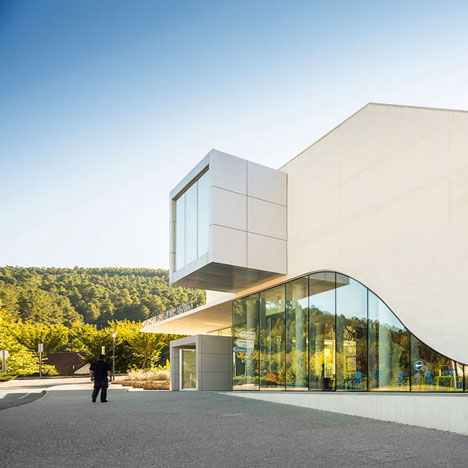
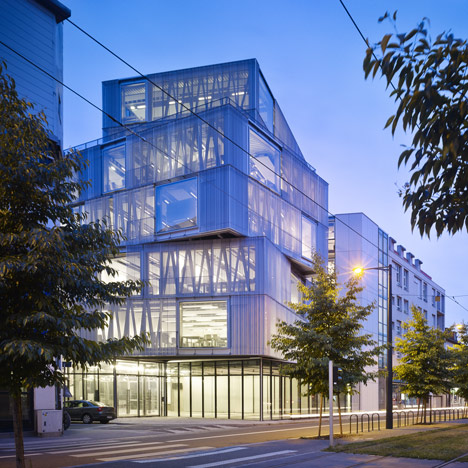
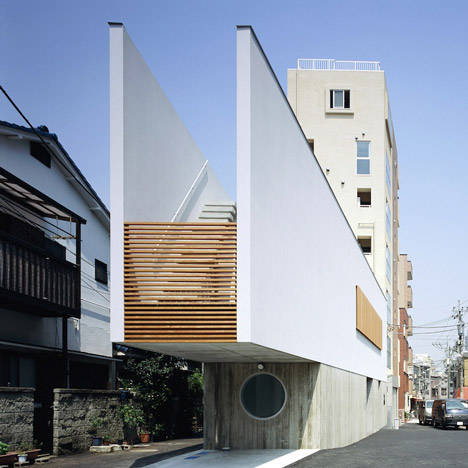
Borrowing photos from the architecture website Dezeen, I came up with some projects that might be built in Van Nuys, and perhaps objections that might be raised.

The-Centro-de-Artes-Nadir-Afonso-by-Louise-Braverman_dezeen_1sq

“Where’s the parking?”

XAN-House-by-MAPA
XAN-House-by-MAPA

“You’ll have a bunch of derelicts hanging out. And that wall is going to be tagged.”

New-North-Zealand-Hospital-by-Herzog-and-de-Meuron

“This is crazy. It’s way too big. And I don’t want my neighbors looking down at my wife when she’s showering.”

Paris-Housing-by-Vous-Etes-Ici

“I mean this is just silly. You have crazy colored windows all over the building. And the angles make me dizzy. What about something more Mission Style?”

Strasbourg-School-of-Architecture

“I agree we need some new buildings on Van Nuys Boulevard. But these should have at least 1,200 parking spaces for cars along the street. That’s how you make a development!”

Switch-restaurant-and-residence-by-Apollo-Architects

“It looks like a toaster to me. And the neighborhood is all 1950s ranch houses. The circle looks like a target and that makes we worried.”

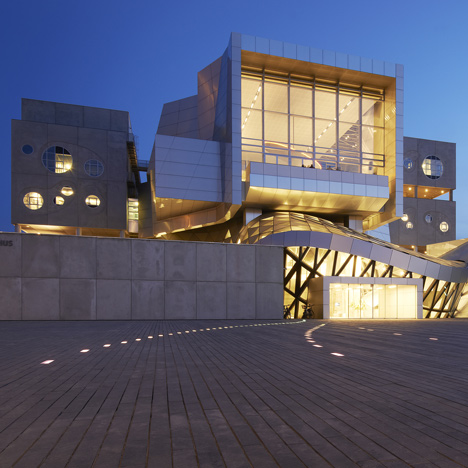
Coop-Himmelblaus-House-of-Music-invites-orchestras-to-Aalborg

“Just because Eli Broad donates $100 million for a Van Nuys Arts Center doesn’t mean he can ram this down our throats.  I object because where are the front porches?”

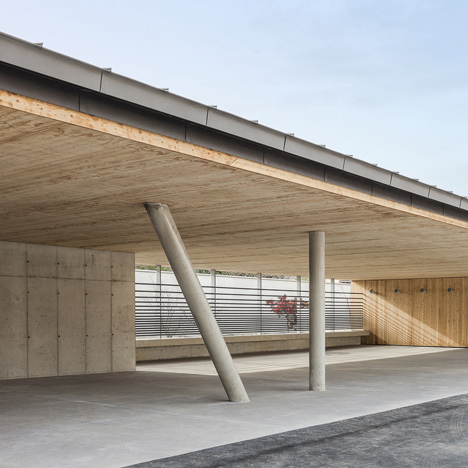
Jaurès-primary-school-by-Yoonseux_

“Why is one column diagonal and the other vertical? To me it seems crazy. And underneath this you’ll have homeless, skateboarders and maybe teenagers making out and doing other things they shouldn’t!”

Siegerland-Motorway-Church

“Ok, it’s a church. I get it. But where is the one steeple? It’s nothing like what you see in Vermont and that’s what I think Van Nuys should look like.”

Sunday in Van Nuys (Part 2)


screenshot_281

Sunday in Van Nuys (Part 2)

In my writing and photography I try to stay as true as possible to my own observations and impressions.

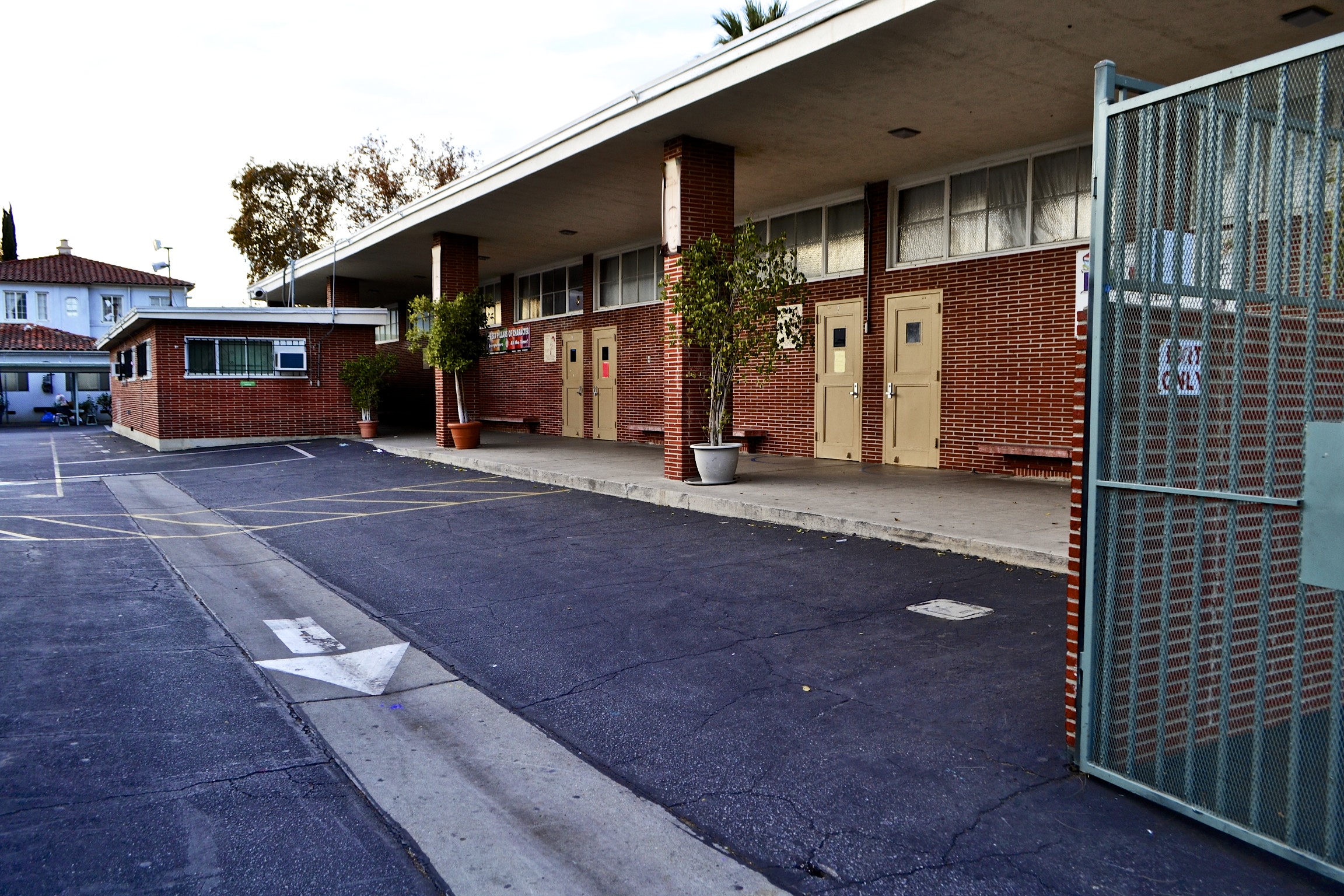
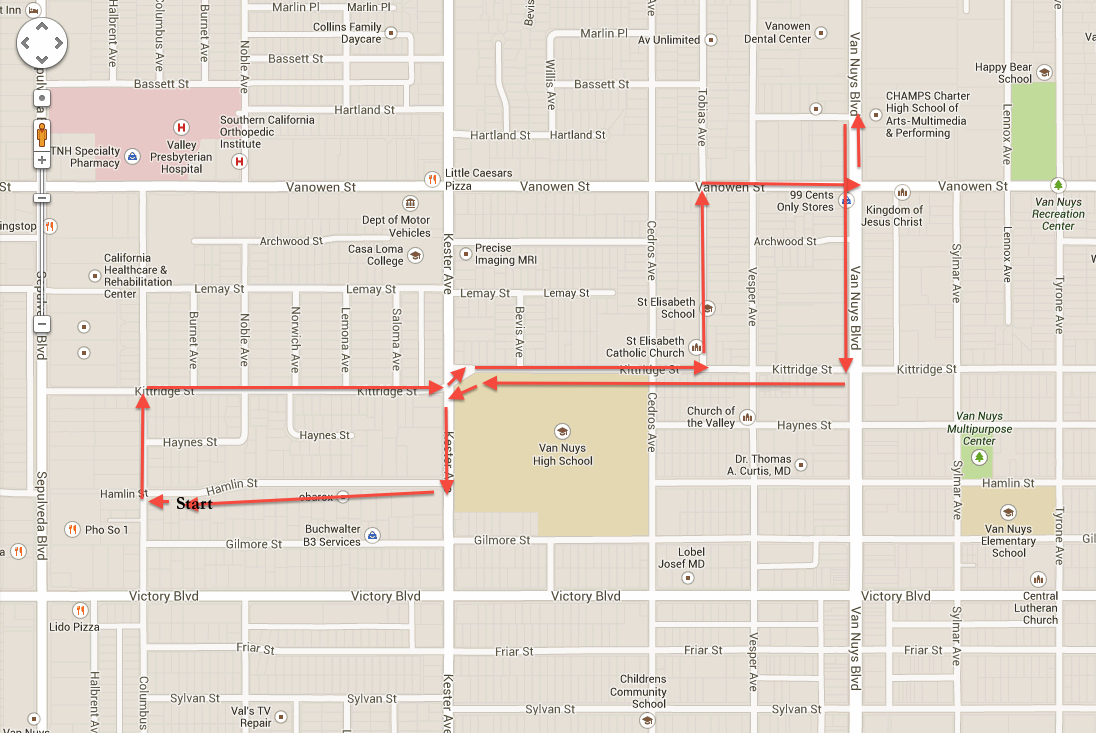
Such was the case when I took a long walk through one small portion of Van Nuys, encompassing an area roughly from Columbus on the West, Kittridge on the South, Vanowen on the north and Van Nuys Boulevard on the south.

What I write and show today is just how I saw it.
DSC_3650

DSC_3654

DSC_3656

DSC_3657

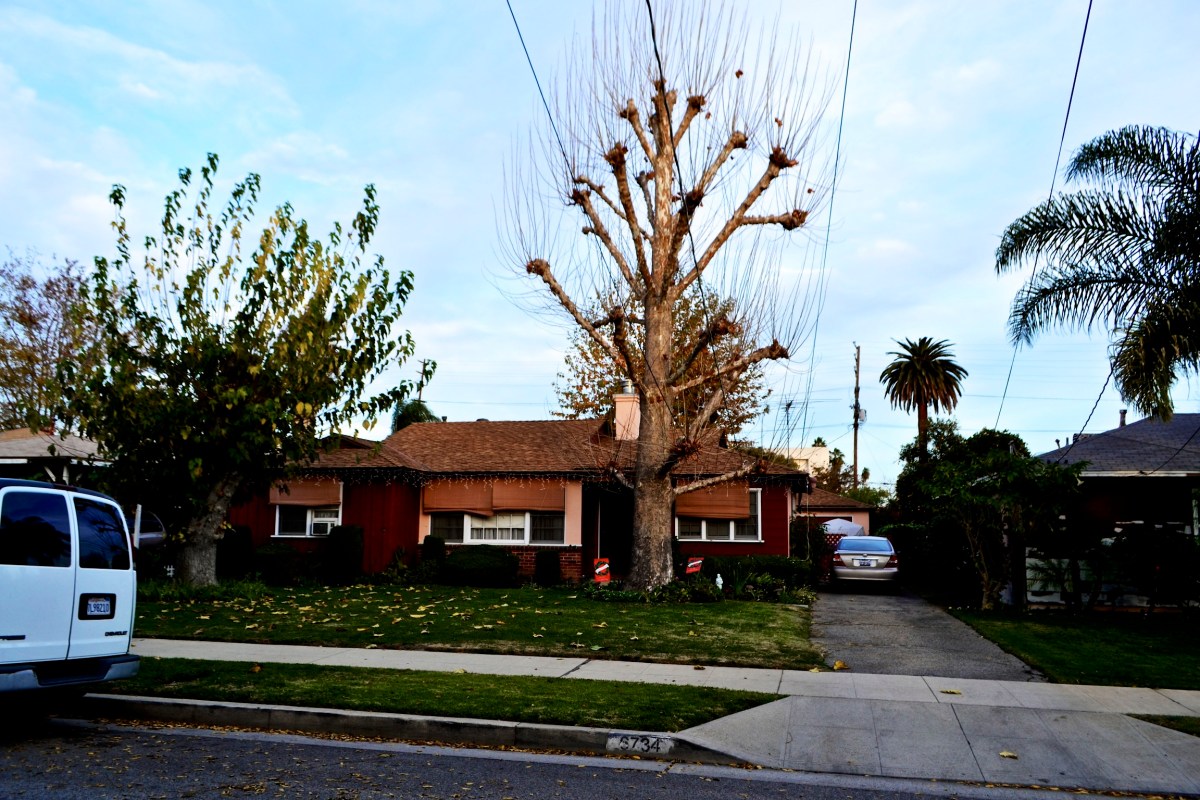
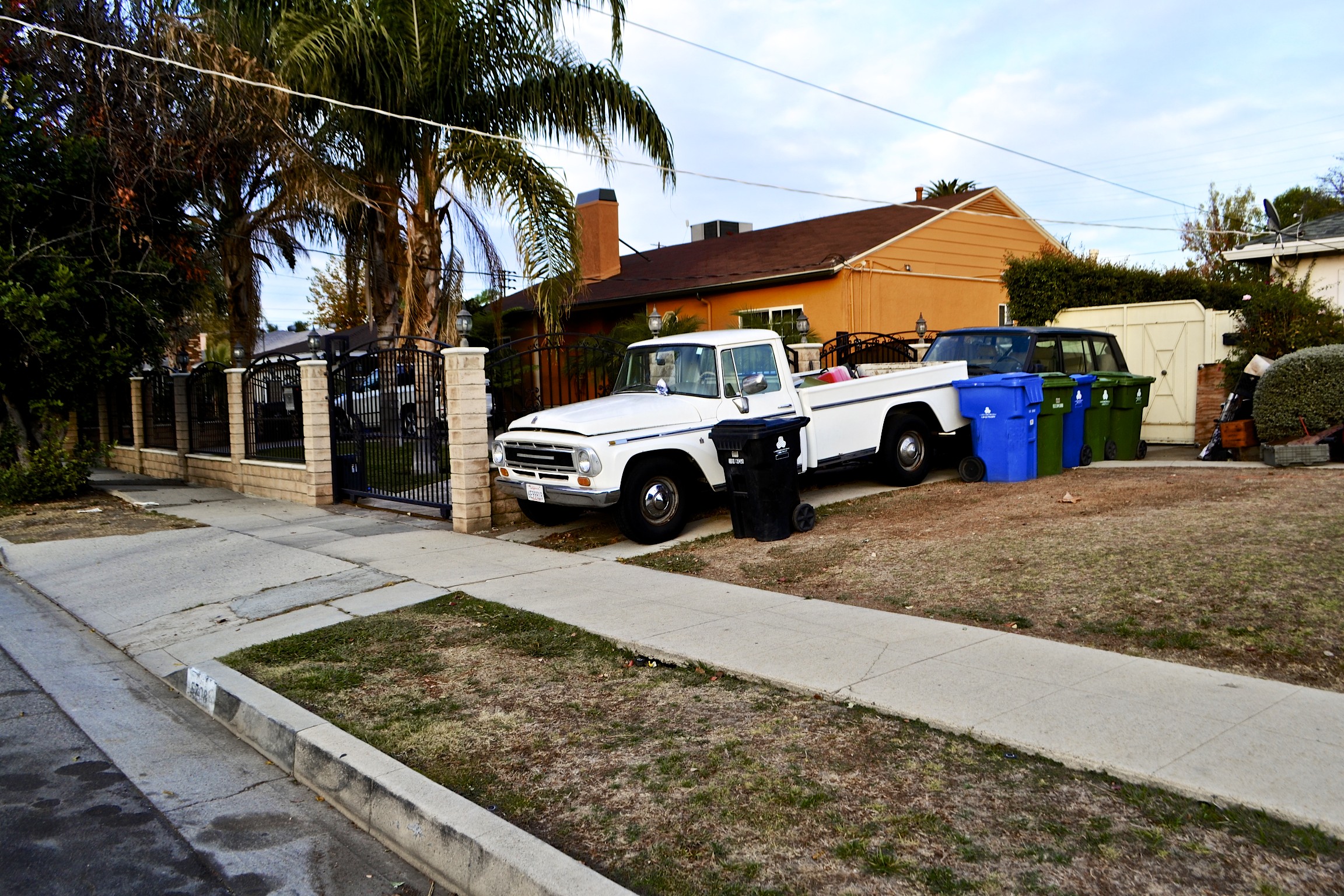
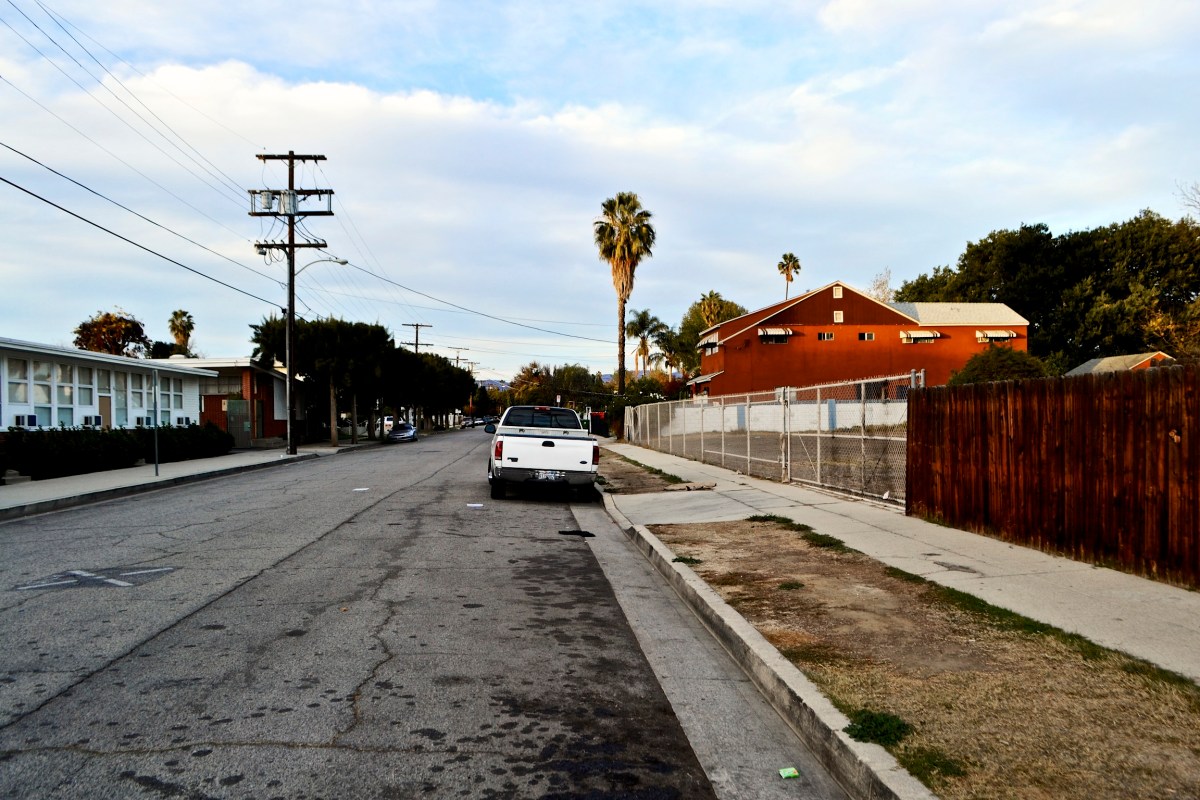
Tobias Avenue , north of Kittridge, south of Vanowen, is a not-so-shabby street of single family houses, mostly quiet and mostly homely, some with open lawns, others encased in iron and cinderblock. The population is quite diverse, with surnames that include Beasley, Bowser, Lange, Cohen, Funes, Moran, Lucas, Suh, Phung, Avetisyan and Ayanyan.
DSC_3664

DSC_3668

DSC_3672

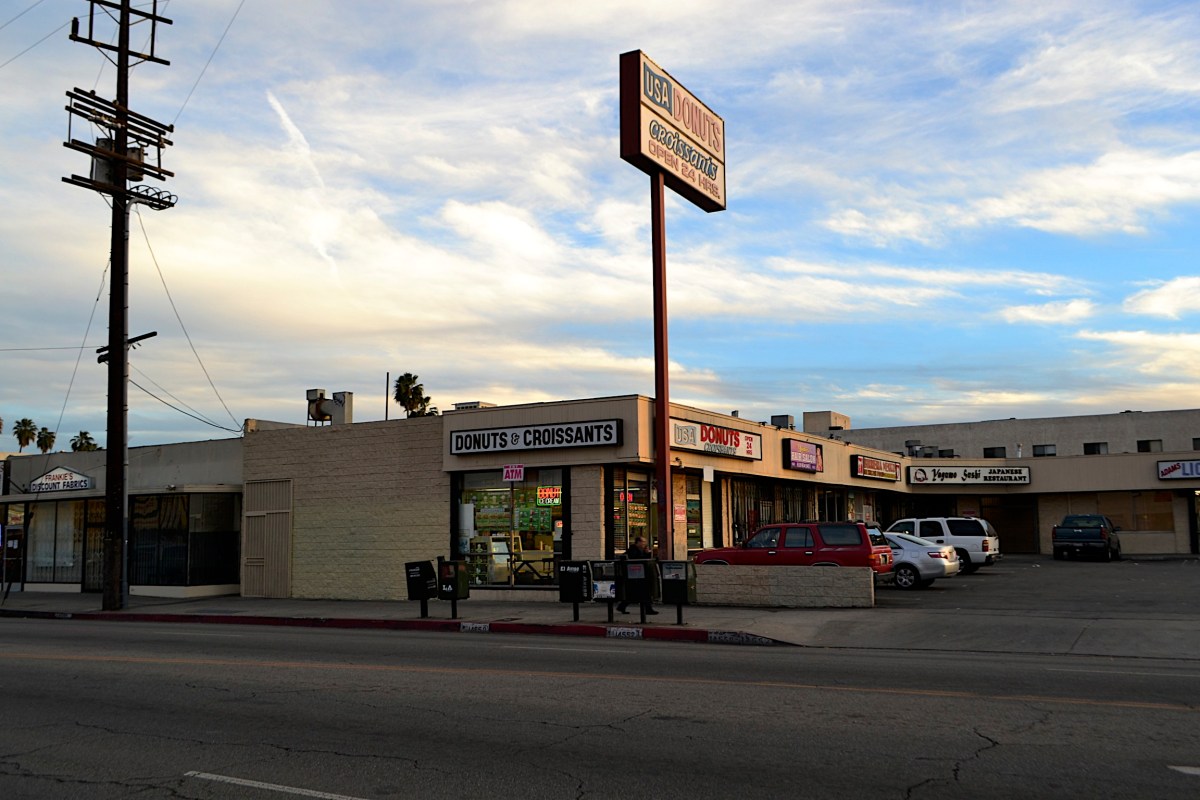
USA Donuts

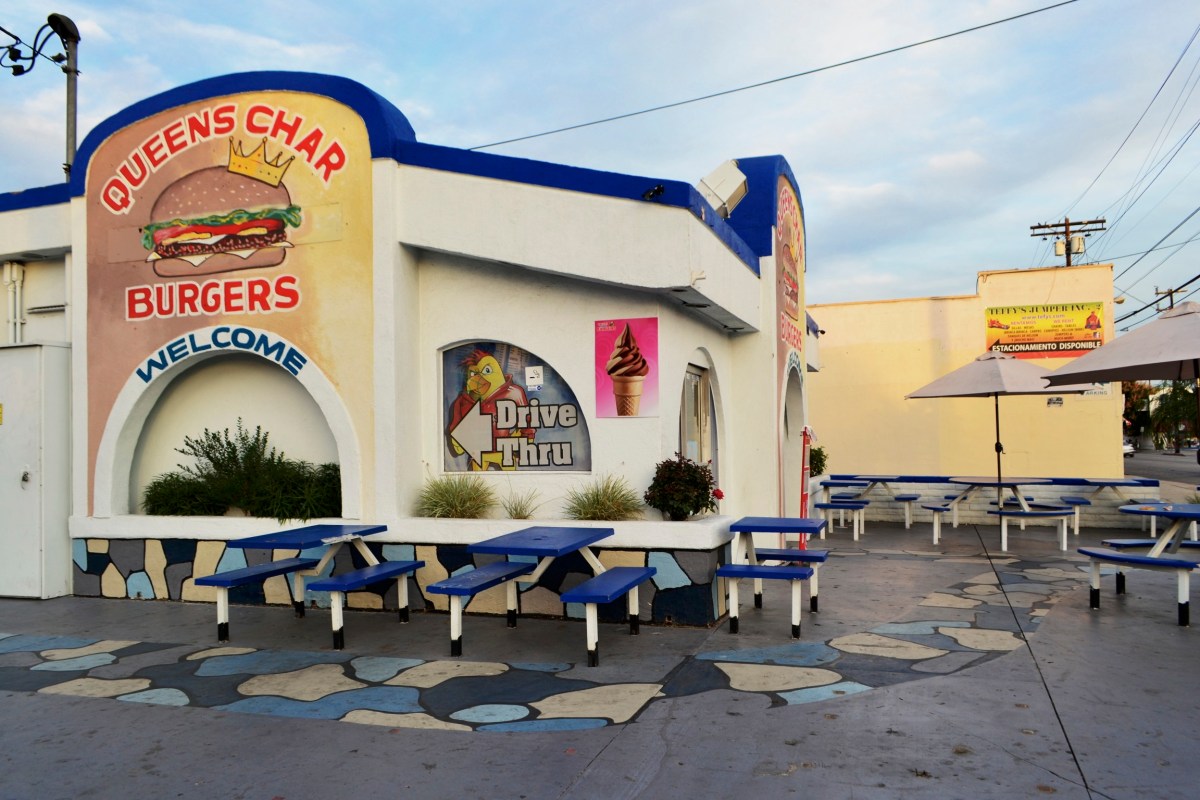
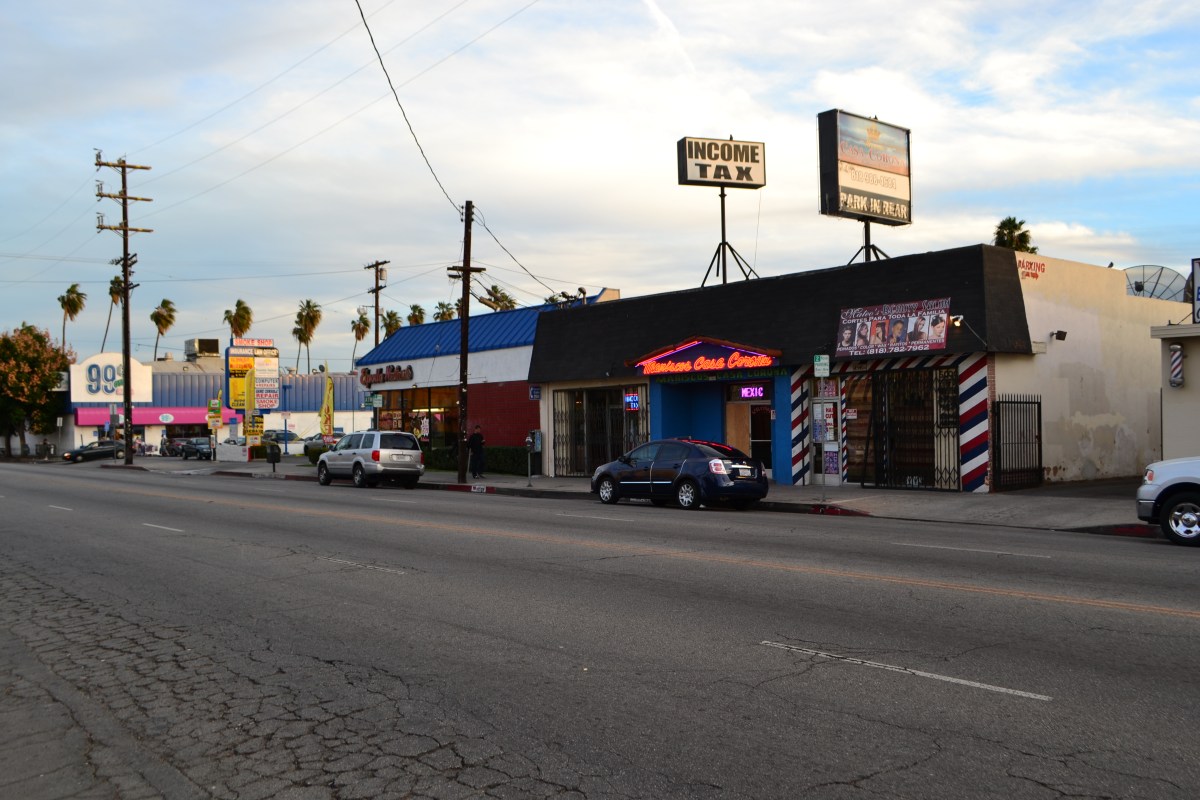
On Vanowen, between Tobias and Vanowen, the stores are packed closely together, up to the sidewalk, and commercial Van Nuys is at its epicenter.

It was Sunday afternoon, so the loudest noise was coming from the open doors of a storefront Spanish church, where the indoor parish was singing. There was little pedestrian traffic, other than those few waiting for buses at trash littered Metro stops.

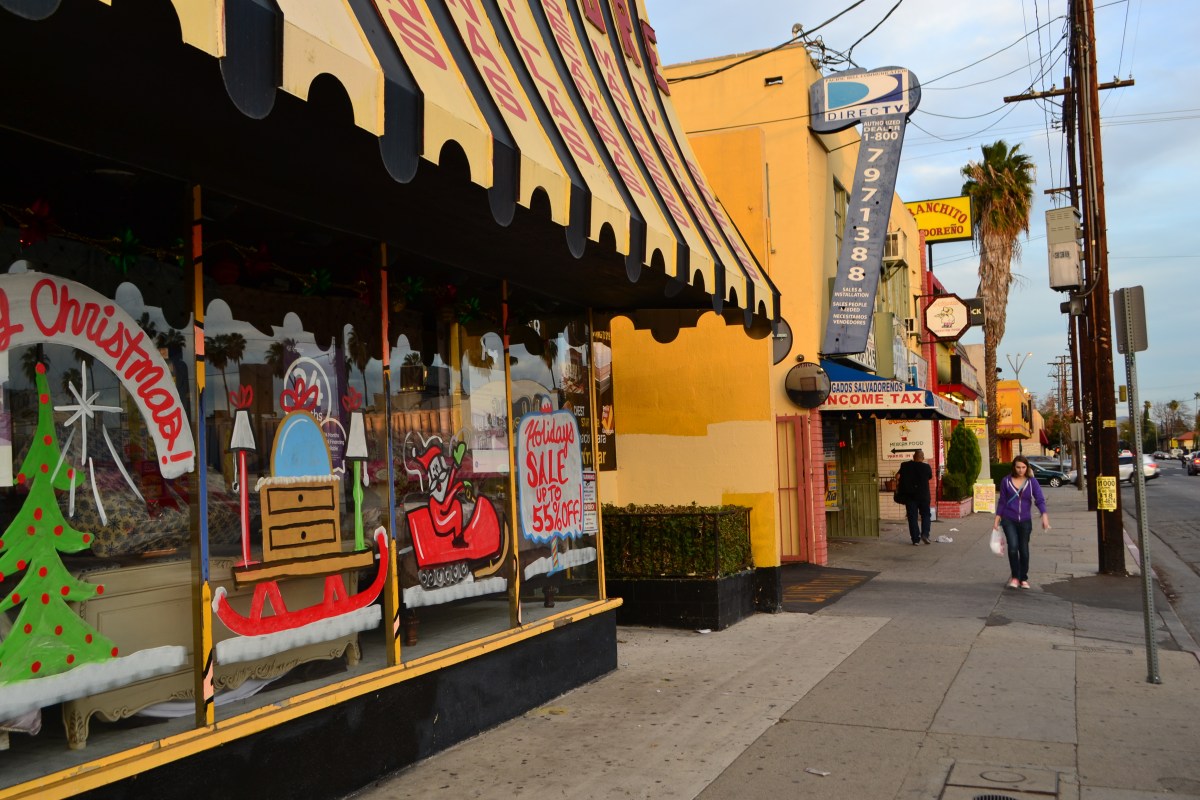
The businesses along here cater to Spanish speakers, advertising income tax for Salvadorenos, party rentals at Teffy’s Jumper, Inc. and dining at Mi Ranchito Salvadoreno (14523 Vanowen St.) Buildings are painted exuberantly in vivid sunshine yellow with red lettering.
DSC_3680

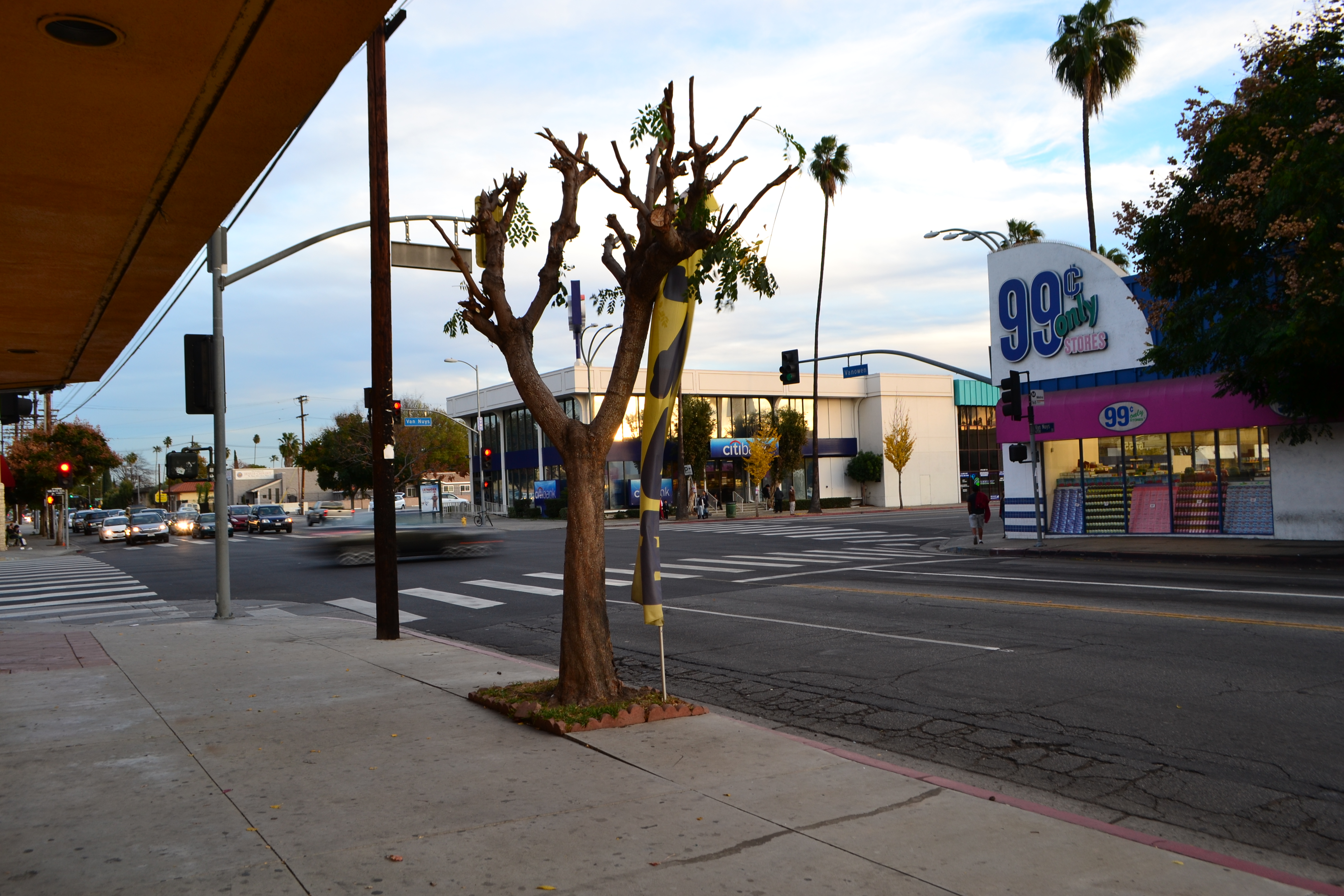
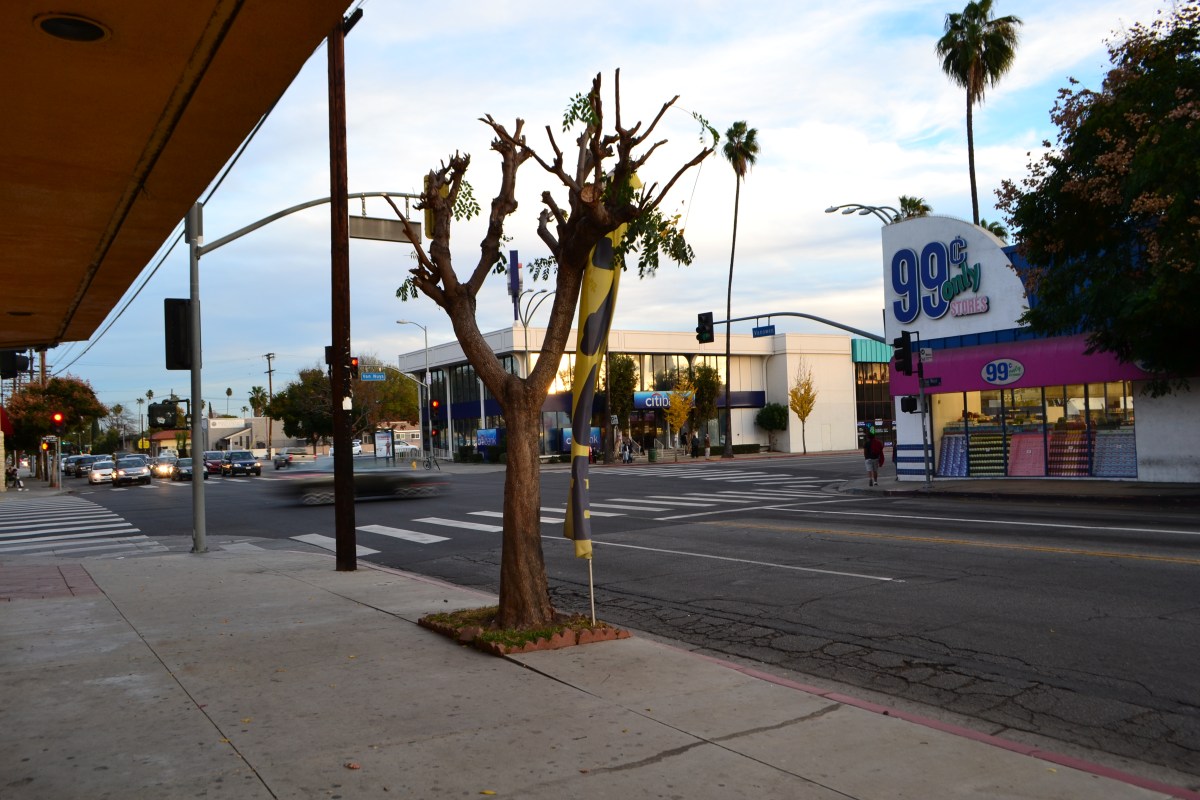
A dismembered tree, its limbs hacked off by ignorant tree trimmers, stood near the corner of Vanowen and VNB. The disfigurement of trees all over Los Angeles is characteristic of this city, an appalling sight for nature lovers and for those who respect arboreal rights.

Trees are needed most in this area of Van Nuys, for the streets are overly wide, and the sun beats down here, making the district hellish during the long hot summer.
DSC_3682

DSC_3683

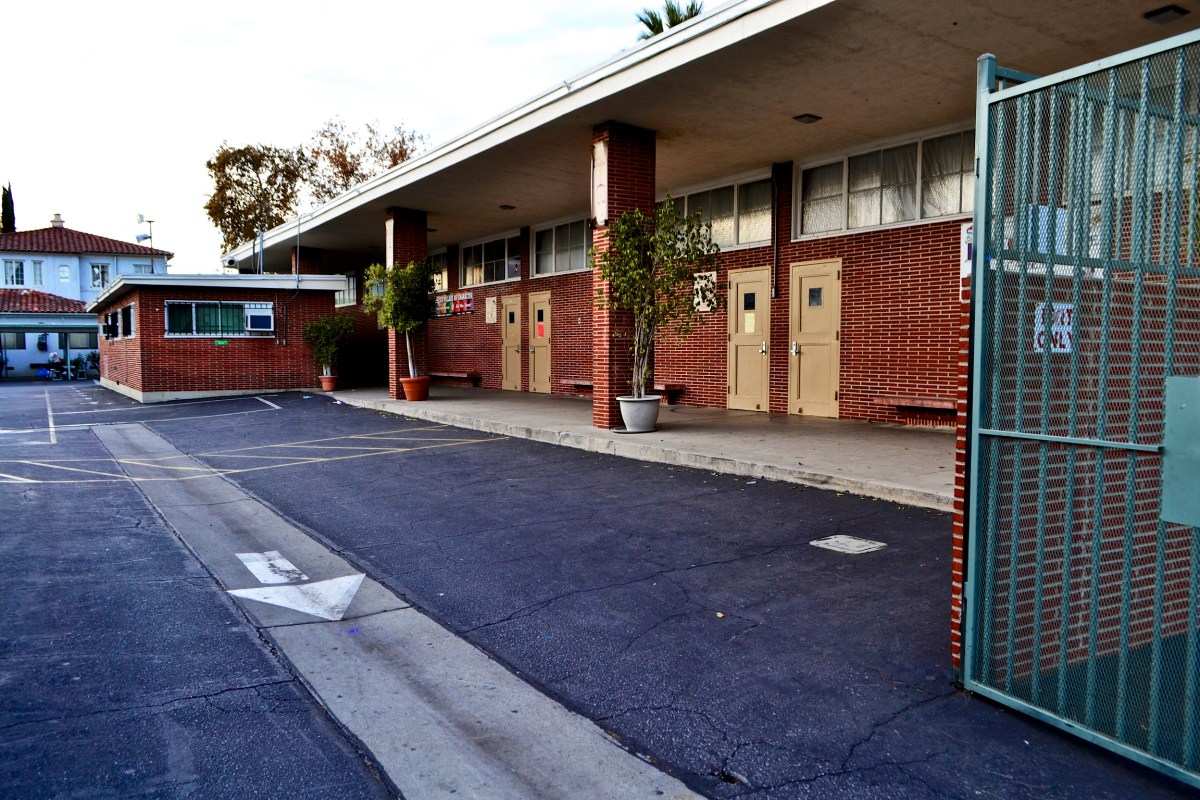
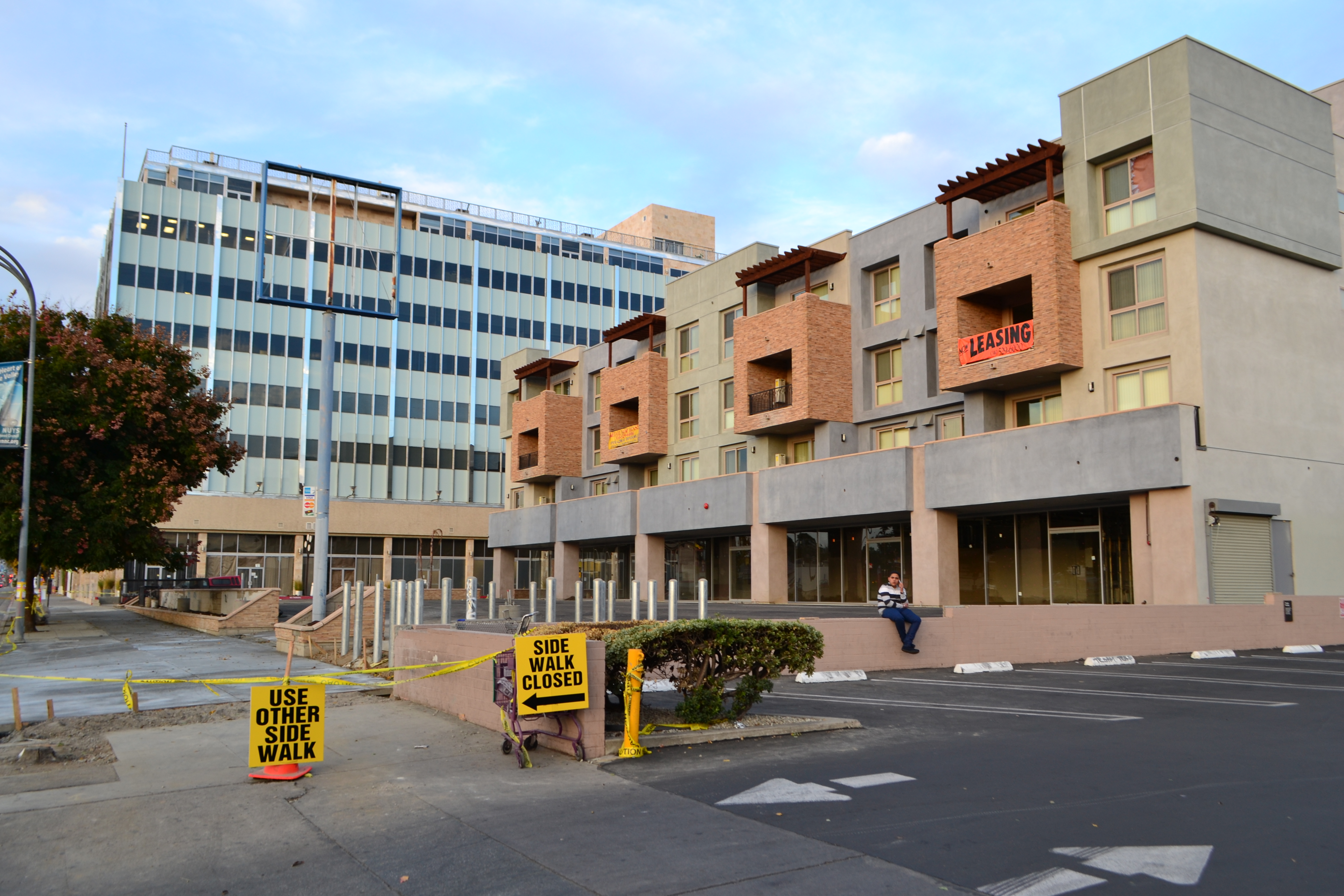
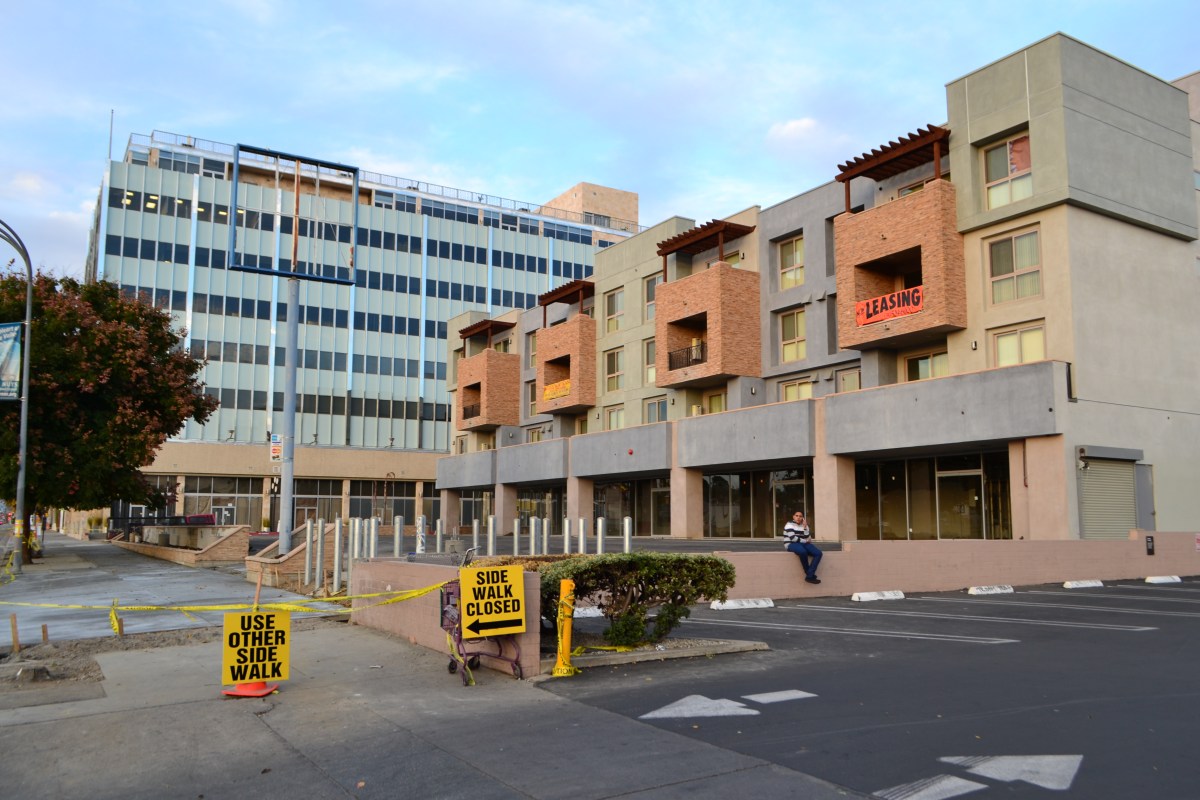
6842 Van Nuys Boulevard is the new home of Champs High School of the Arts, a charter school which makes its home in a 1963 mid-century office building. The structure has been jazzed up on the exterior, with new lighting, stone and chrome to appeal to the more luxuriant expectations of modern Americans.

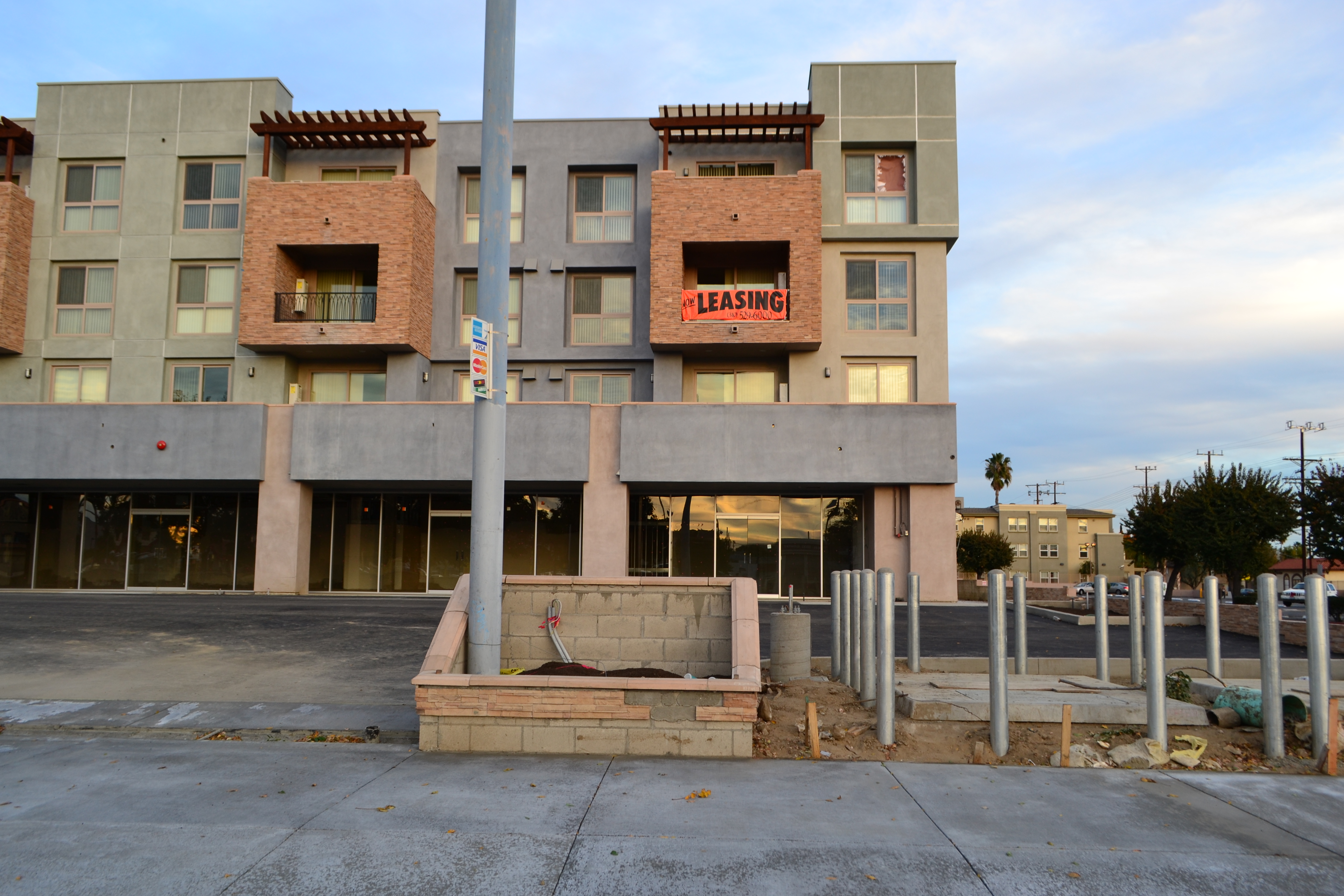
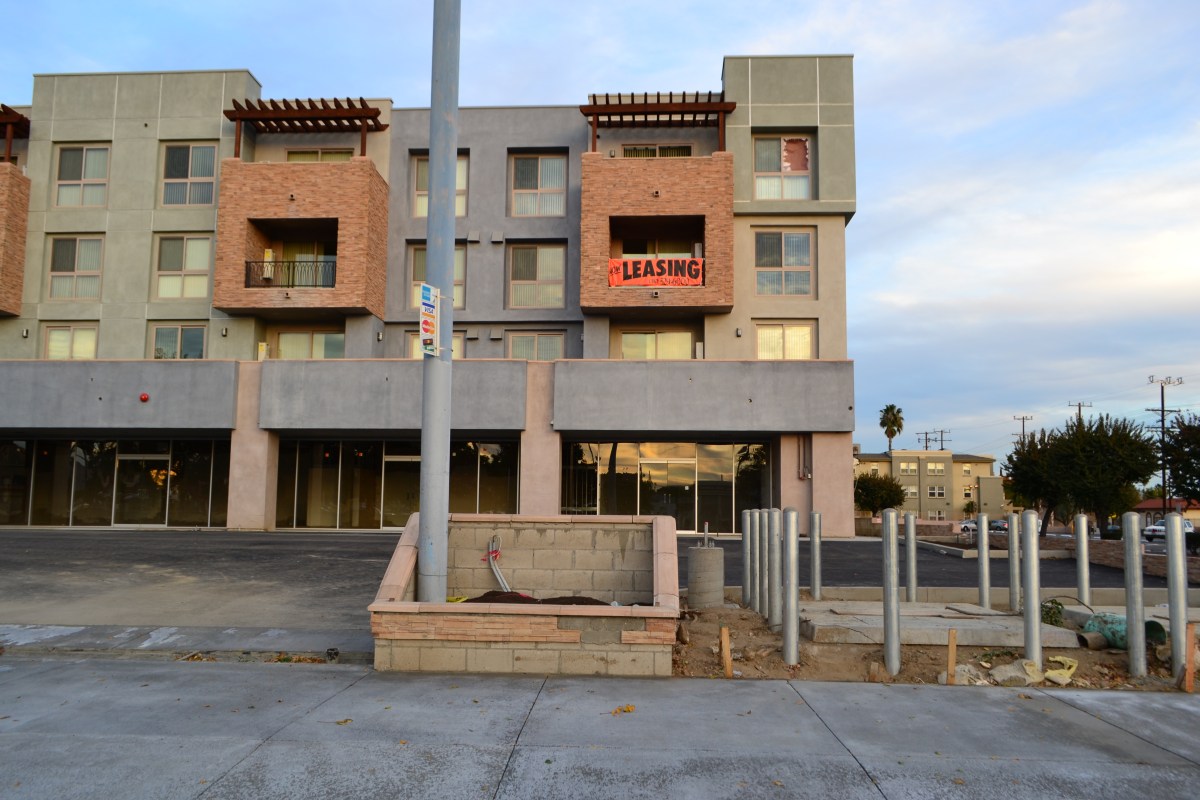
Hacked onto the south end of 6842 is an inexplicably ugly new structure, set back from the street, like an awkward wallflower at a high school dance.

Here again is where urban Van Nuys always go wrong. Hundreds of millions of dollars were spent to erect a building that does not participate in the architecture or functioning of the boulevard at all, but rather sits back, in boxy ugliness, behind an asphalt parking lot, its untenanted stores and unoccupied apartments begging for respect, with broken and boarded up windows already advertising its failure.

Van Nuys Boulevard is six lanes wide. So setting a new building back only reinforces the funereal deadness of the street. In order to bring pedestrians back, you need to make an environment that encourages pedestrianism.

The new building is banal, striped in bands of colors that are supposed to reduce the imagined bulk of the façade, but instead reduce it to insipid sections of paint strips. All over Los Angeles, the “rule” is that every large structure has to be divided into multi-colored bands of hues. If the White House were ever rebuilt in Los Angeles it would be drenched in six Dunn-Edwards earth tones.
Van Nuys, CA

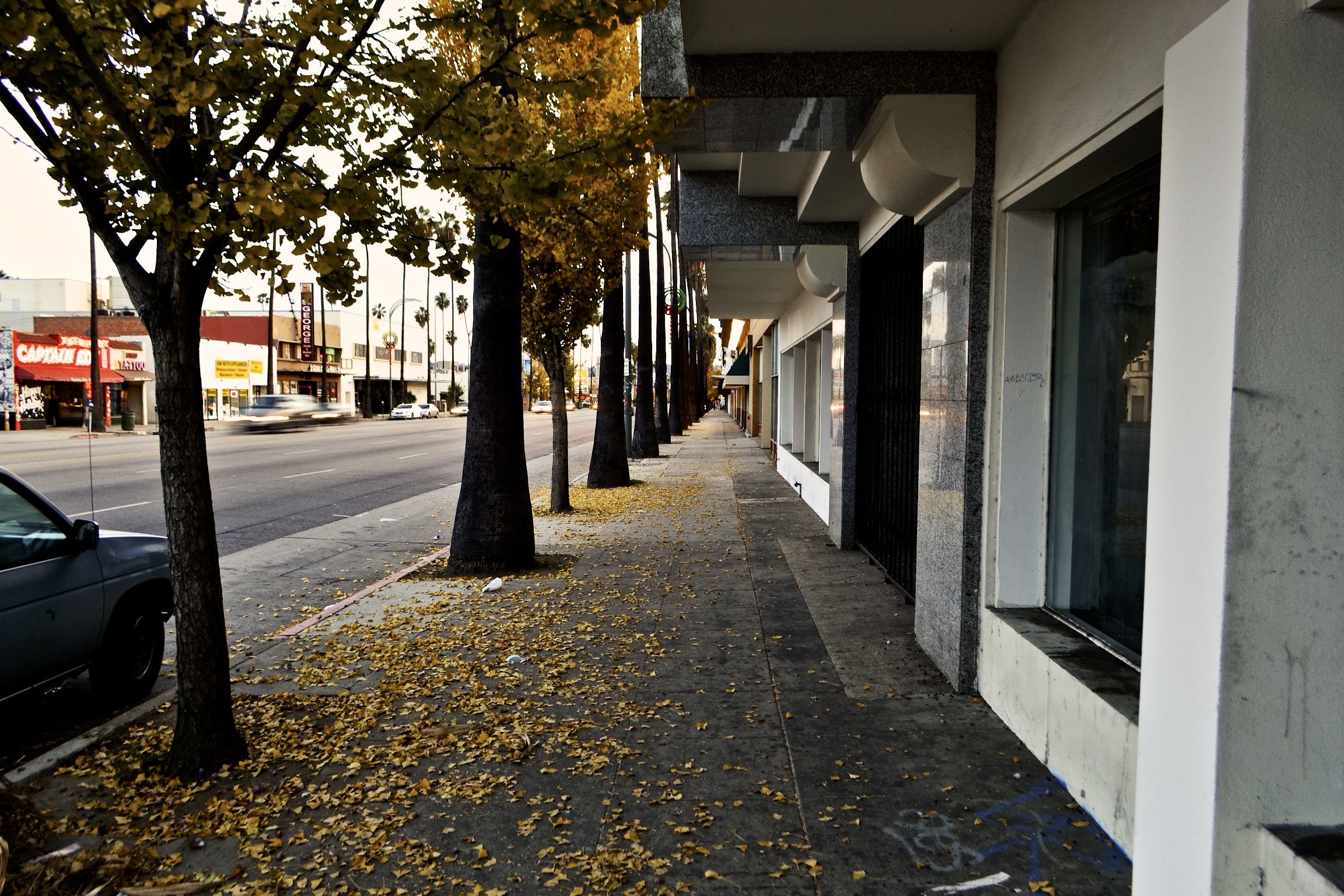
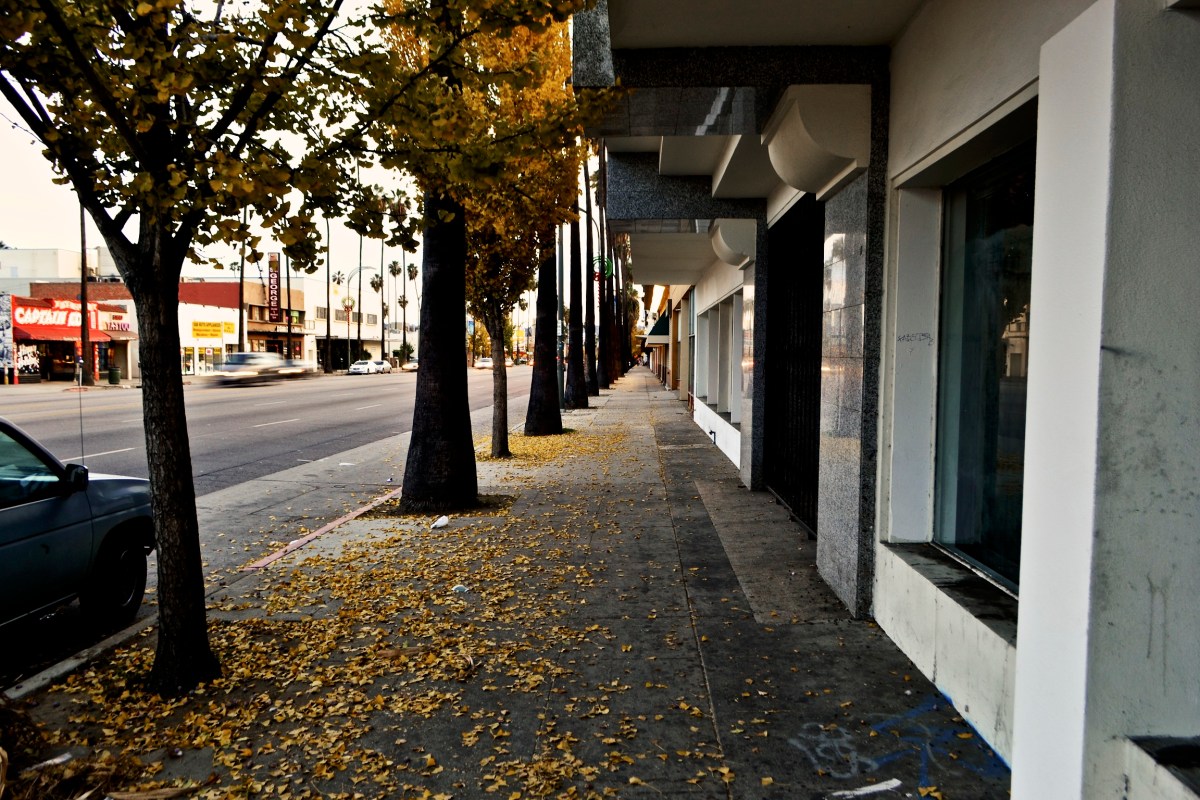
I wrapped up my daylight walk in urban Van Nuys, by going south down Van Nuys Boulevard, on the west side of the street, where empty storefronts met fallen leaves on a cloudy and cold autumn afternoon. There was not a single man or woman walking from Vanowen to Kittridge, and I did not encounter humans until I turned right, and found a lively bunch of food carts in the back parking lot.
Spanish speaking people, who now predominate in Van Nuys, prefer enclosures, such as small streets, landscaped and illuminated alleys, and places where people walk. The much sought after revitalization of Van Nuys Boulevard will never occur because the street is too wide. The plazas of Spain, Mexico, Guatemala and El Salvador, not to mention the courtyards of any place other than the US, are the gathering places of urban dwellers, who come on foot to congregate, to shop, to watch, and to walk.

And so it was on a Sunday afternoon, when Van Nuys Boulevard was dead, the life of the city was conducted in back of stores, near the church, in places where the walls and the buildings provided enclosure, safety and structure.

In any plan for the future, the planners should try to reduce the size of the streets, bring back small parks, small lanes, and narrow streets where a sense of community and walkability can be fostered.