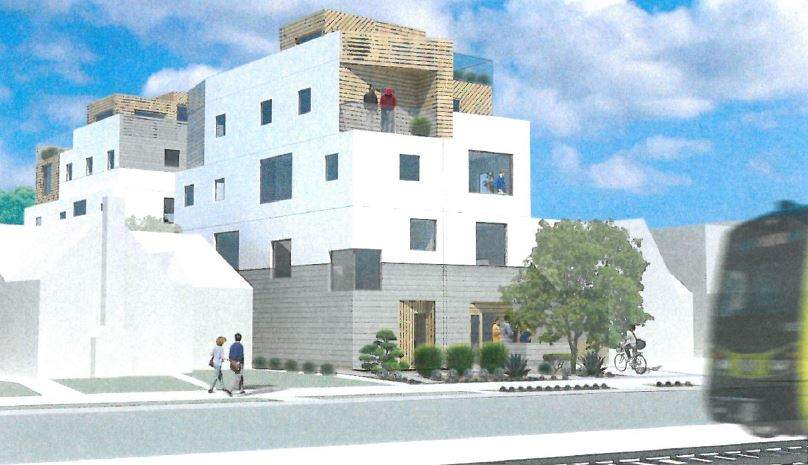
“Next week, the South Los Angeles Area Planning Commission will consider an appeal of Buckingham Crossing, a proposed small lot subdivision near the Expo Line.
The proposed development from Charles Yzaguirre, which would replace a single-family home at 4011 Exposition Boulevard, calls for the construction of four small lot homes. The houses would each stand four stories in height, featuring three bedrooms, two-car garages, and roof decks.
Los Angeles-based architecture firm Formation Association is designing the project, which is portrayed as a collection of boxy low-rise structures in conceptual renderings.
The appeal, which was filed by residents of a neighboring home, argues that the project does not comply with the City of Los Angeles’ Small Lot Subdivision guidelines, and have bolstered their case with a petition signed by nearby residents, as well as a letter of opposition signed by City Council President Herb Wesson, who represents the neighborhood.
However, a staff response notes that the project was filed with the Planning Department before the new regulations were adopted, and are thus not subject to them. The staff report also rejects claims that the four proposed homes would increase traffic congestion and create a “‘wind tunnel’ spreading toxins” through the passing of Expo Line trains.”-Urbanize LA
As this blog has shown, many times, we live in a city of homelessness for those who cannot afford a home, or are too sick to attend to the normalcy of paying rent.
At the same time, the dire need for housing continues to be opposed by vast segments of the city who will take any proposed multi-family dwelling, even one as small as four stories, and attach some fear-mongering lawsuit against it.
The condition of Los Angeles in 2018 is comedic in its insanity, with ostriches of all sorts screaming about “overdevelopment” inside the second largest city in the United States, a spread out sprawl of parking lots and shopping centers where residents complain about lack of space, lack of parking, and too much traffic. Yet lack the political and moral will to remedy an ongoing tragedy.
These same NIMBYs oppose even the tiniest increase in density, along light rail lines and public transport, refusing to allow the city to progress economically and logistically, and also, quite cruelly and callously, perpetuating the expensiveness of all housing, by limiting its supply.
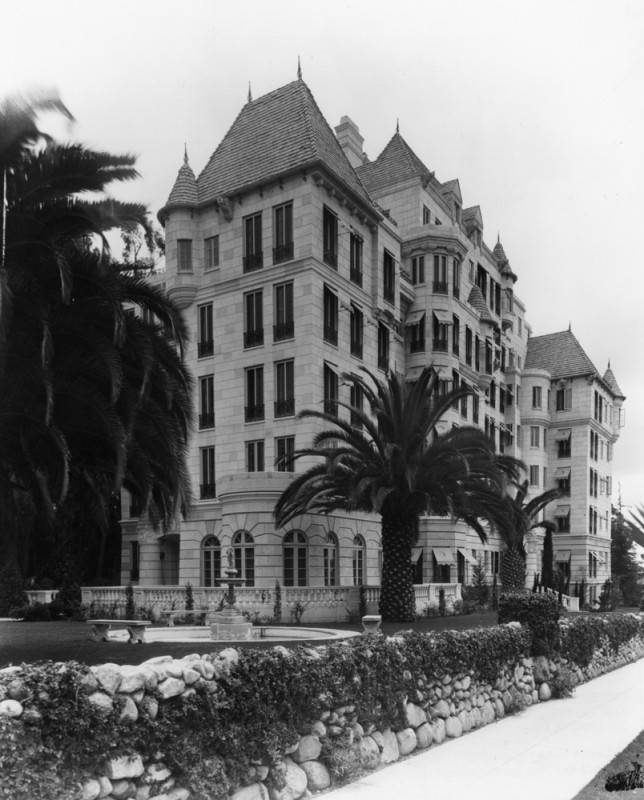
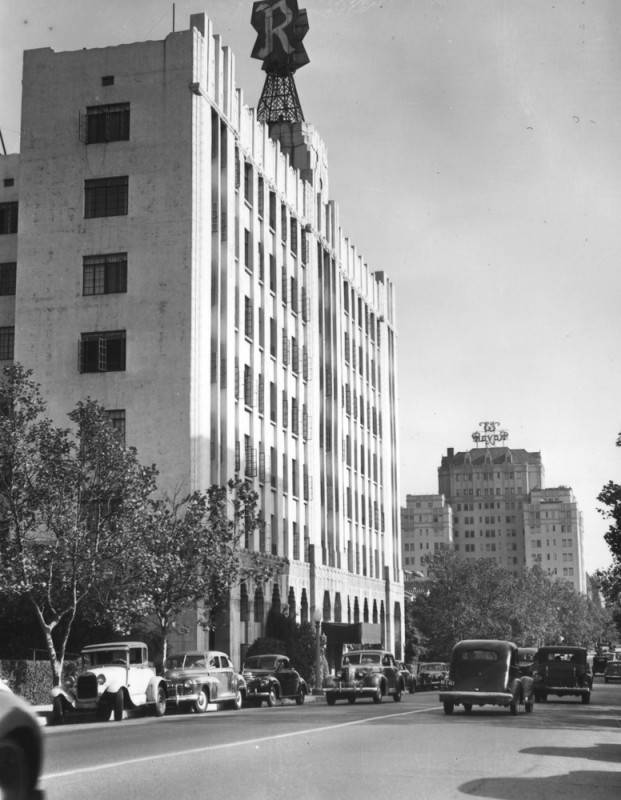
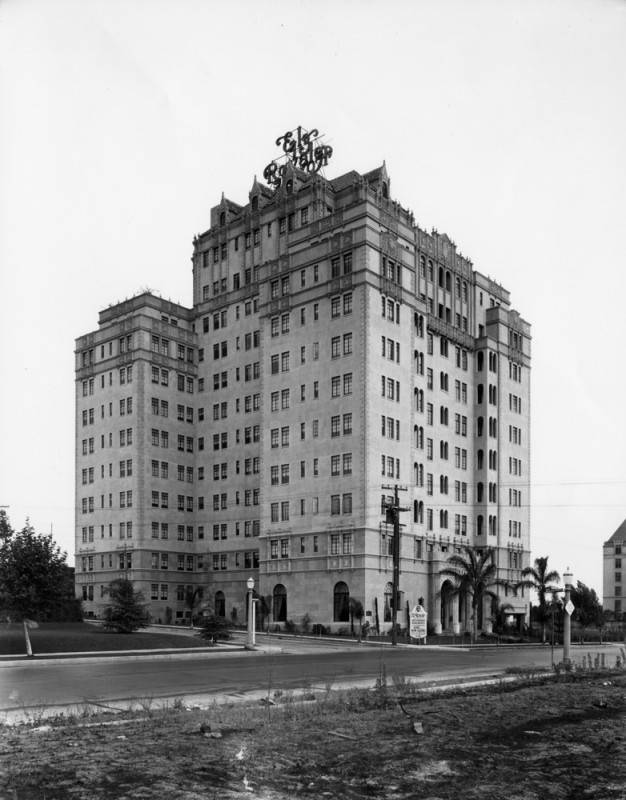
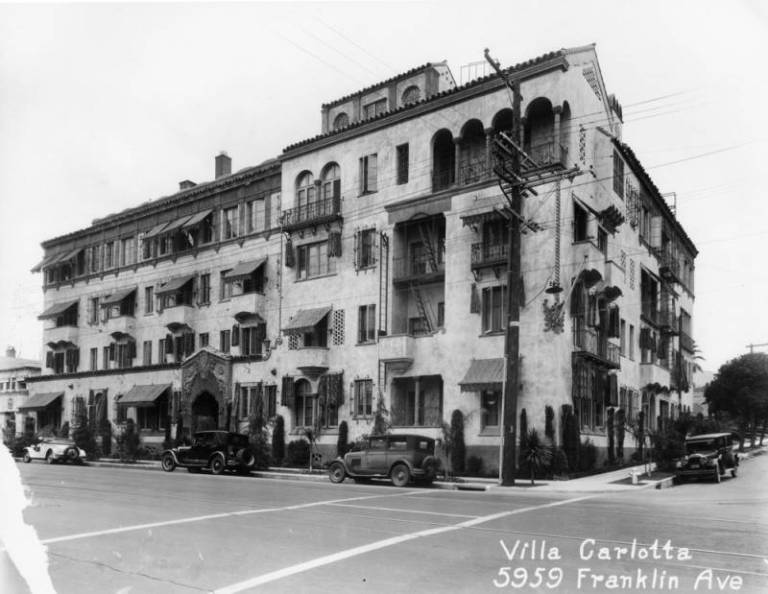
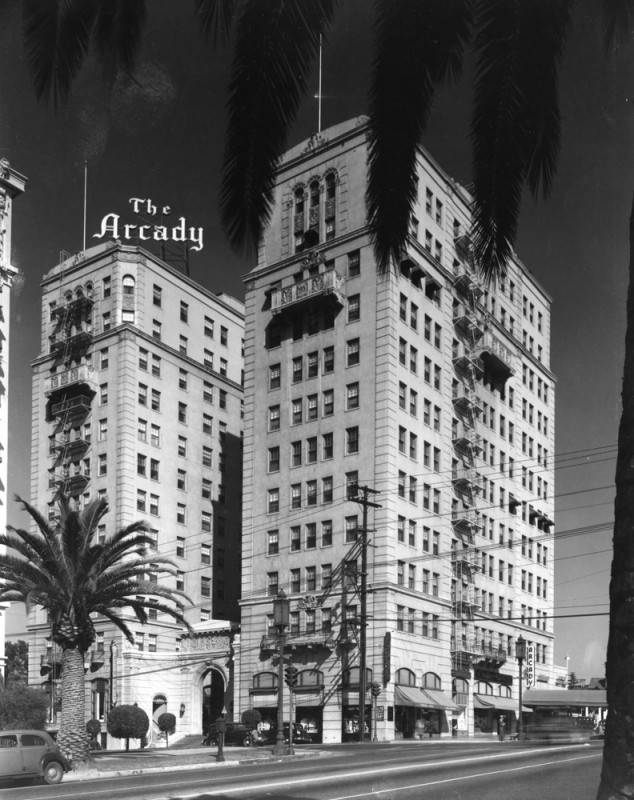
One-hundred years ago, Los Angeles was a much more modern and progressive city than today, a place where tall apartments were welcomed, possibly because they looked aristocratic, well-proportioned, and they brought economic growth and well regarded architecture to a growing city starved for development. They wore their best European tailoring, even if they were overdressed, because they had pride and self-worth and a city which respected those qualities.
By contrast, many of today’s multi-family dwellings are self-effacing, timid, obsequious, broken up into many little pieces to ward off attackers, erased of any individuality or identity. So even when the architects surrender to the bullies, that cannot mollify the attackers. The NIMBY mob wants the city to stay exactly as it is, even if that means that 100,000 people sleep on the sidewalk every single night.
Imagine the screaming in Encino or Palms or West Adams if anybody proposed the old styles seen below next to any existing single family homes. (source: LAPL)
Chateau Elysee
Ravenswood and El Royale, Hancock Park, Los Angeles.
Last night, I attended a small neighborhood safety meeting with a group of perhaps seven neighbors and our LAPD Senior Lead Officer.
It was held at a home of the new liason between the cops and the community, a woman who speaks up and speaks often on issues affecting her street such as lighting, crime and people who don’t retrieve their trash cans after pickup.
I usually avoid these meetings out of trepidation. The ones I’ve gone to at the local school or hospital are full of anger and irrationality.
Not last night, but on other nights, I heard:
“Someone put a stoplight on my street at Vanowen and Columbus and now we have more traffic!”
“They planted these oak trees along the curb to provide shade and now they have cars parked there with people smoking and drinking. I say cut down the trees!”
“I’m completely against providing transitional housing for homeless veterans in our neighborhood. They get enough free stuff!” says the 65-year-old woman who inherited a 4-bedroom house from her WWII veteran father and pays $1,300 a year in 1967 rated property taxes.
“These developers are putting up apartments everywhere. I didn’t move to Los Angeles to be surrounded by crowds!”
Yet, last night, the mood was polite. A well-fed group of rouged and perfumed women from the Eisenhower Era gathered in an early American style den where dainty finger sandwiches with the crusts cut off were served.
Period references, for example, to Mrs. Kravitz from “Bewitched” (1964-72) were understood and appreciated.
Our petite and pomaded Sr. Lead Officer, wore a dark navy uniform and a very big silver badge, holster, gun and unobtrusive body camera. She spoke intelligently and sometimes ironically about the insoluble issues plaguing our community.
She broke the news that we seven folks in the den were probably not going to solve 100,000 homeless on the streets of Los Angeles or 10 million illegal aliens inhabiting our state of 40 million. Our system is so broken, so wrecked, our state so adrift in chaos and bad governance, that India, Nigeria and Pakistan seem models of order and stability.
She admitted that even her own husband often speeds down side streets, even as she enforces the laws against speeding while on duty.
She told us that 80% of major crimes such as assaults, murders, rapes and burglaries now come from the homeless community. She said that because Van Nuys has the only jail in the San Fernando Valley, when convicts are released they stay local.
She talked about Proposition 47, a voter passed initiative from 2014, to reduce penalties for certain non-violent crimes that now makes it nearly impossible to lock up the heroin user who shoots up in front of the grammar school. It’s now a misdemeanor to inject narcotics.
She said the homeless issue, which has now supplanted the prostitution issue, is a bigger problem than just our community. She advised electing officials above Councilwoman Nury Martinez, who would be devoted to law and order.
Whether her inference spells Democrat or Republican she did not say, but she seems to have a distaste for taggers, gang bangers, felons, and mentally ill murderers roaming the streets.
Mayor Garbageciti are you listening?
The host who invited us then passed out sheets of paper on which were shown our individual streets and the addresses that every block captain is assigned.
“Mona Castor Doyle[1], you have Columbus. Serena Pimpel you have Kittridge. Becky Shlockhaus you have Noble from Lemay to Kittridge. Miranda Beagle-Pinscher you have Lemona. Maria Copay you have Norwich. Sarah Choakhold you have Lemay!”
The methods advised were to go door to door and introduce oneself and say to each resident: “I am Zoe Bluddhound, your block captain and here is my LAPD letter and my contact information.”
Other methods of crime prevention were to send out group texts, say if you were home and heard an alarm, thus alerting your neighbors to a nearby illegality.
Living in Van Nuys requires a full time commitment to staying home and guarding your property 24/7.
Looking around the room I realized that everyone is trapped in their lives. These are women, now middle-aged or older, many of whom came here 30, 40 or 50 years ago and chose, for whatever reason, to stay here in Van Nuys. Some bought cheap, some inherited, nobody could afford to buy here now.
For some living here is an economical proposition when you bought your home for $35,000 or $126,000 and your yearly taxes are less than someone pays for the average ($2800 a month) two-bedroom rental in Los Angeles.
Yes, the environment beyond the little pockets of ranch houses is demoralizing, dirty, unsafe, ugly, violent, hideous, un-walkable and un-breathable. There are dumped couches, mattresses, fast food wrappers, cars and trucks speeding by, running red lights; there are grotesque billboards, car washes, parking lots, dog dumpings, discarded condoms and donut shops.
Nobody dines al fresco on Sepulveda Boulevard or drinks wine at an outdoor café on Van Nuys Boulevard. The Van Nuys Neighborhood Council, alive like a corpse, ensures that no progress is ever made on any community improvement and that all members are backstabbing one another.
So the community meeting, between neighbors, low-key and humble, without ego, is seemingly a better way to self-govern.
Last night, under the spiritual leadership of the Senior Lead Officer, an attempt at normality, order, safety, reassurance and camaraderie was attempted.
This is not Paris or Zurich or even Cleveland Heights. But we are not yet Aleppo.
[1]Personal names, not streets, have been changed.
For awhile now, residential modernism has been in charge in Los Angeles.
There was a period, roughly paralleling the 80s and 90s, when ersatz historical structures were the rage. Overdressed, highly embellished and gaudy.
But the stripped down box, the serious architect’s preferred style, is now the only way to build, especially on the west side of Los Angeles, where property is the most expensive, and every single ounce of concrete, glass and steel must pay homage to the gods of inconspicuous consumption.
The Box is King. Long live the Box!
On Memorial Day 2018, I walked from 5thand Pacific in Santa Monica down to Abbot Kinney, observing and photographing select buildings.
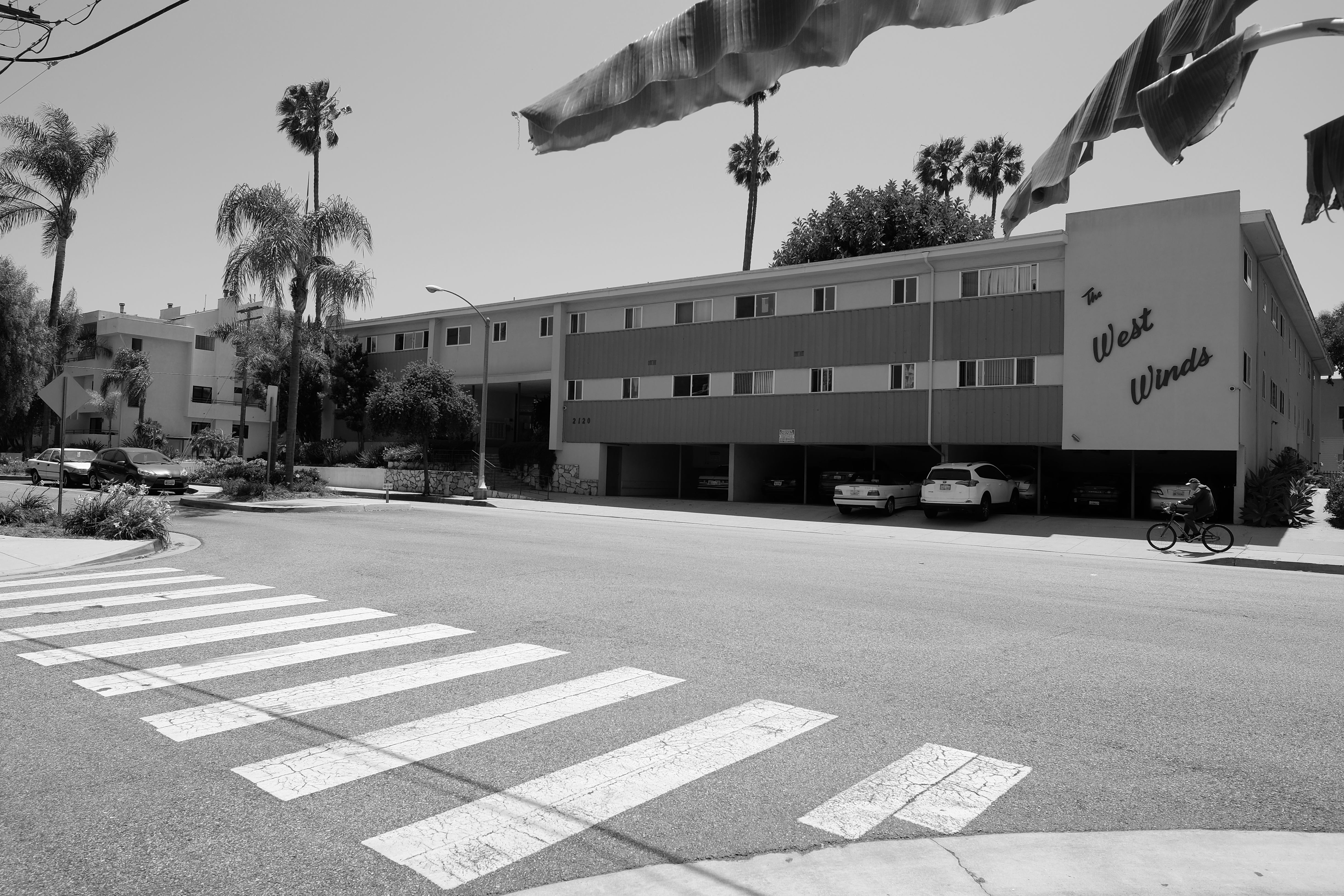
2120 4thSt. The West Winds (1959)
Whimsy from a cursive sign that provides a movie title sparkle to an otherwise dull structure.
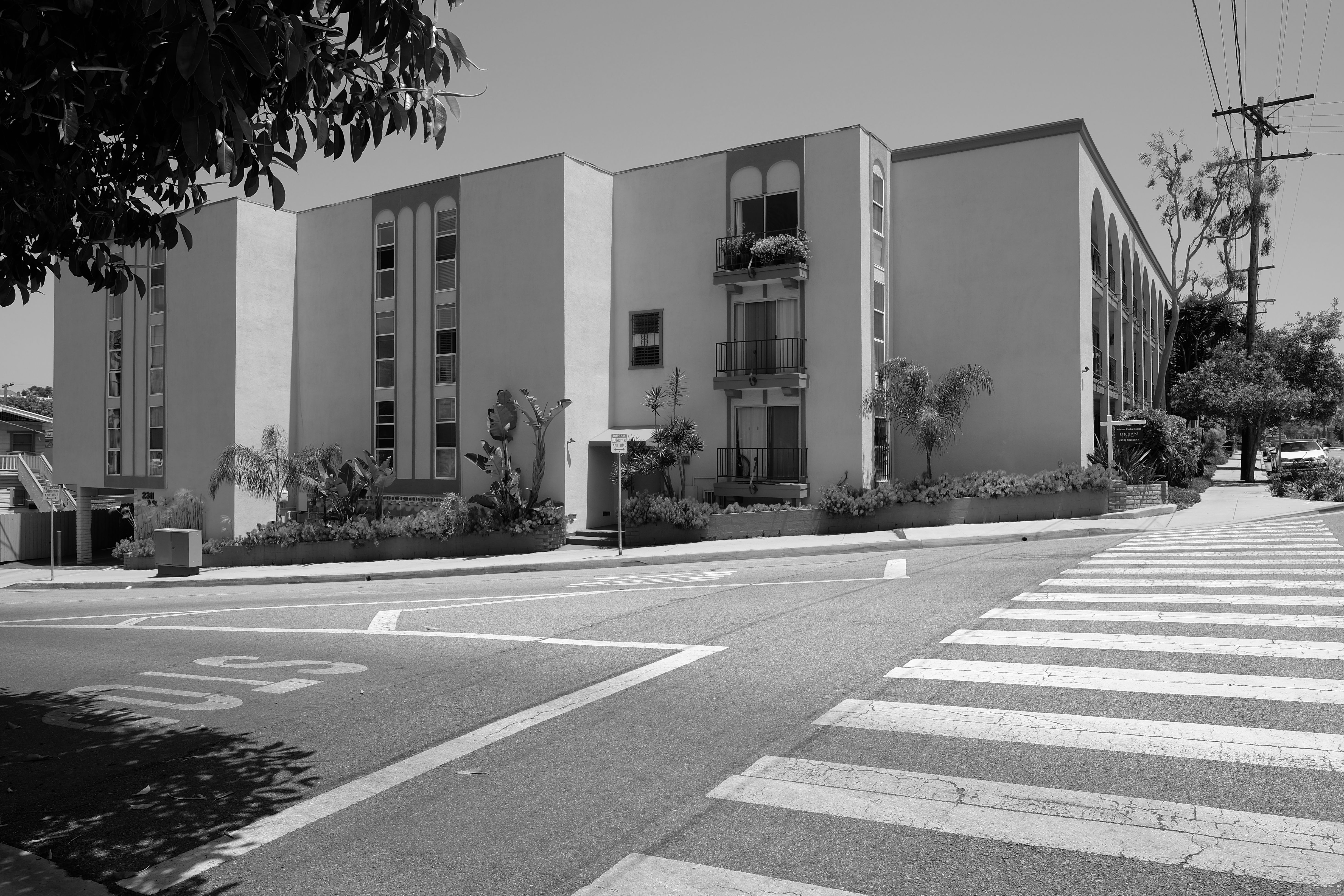
2311 4thSt. Santa Monica (1967)
They charitably called it decorative modernism. It is a cheap way a developer dressed up his building with costume jewelry.
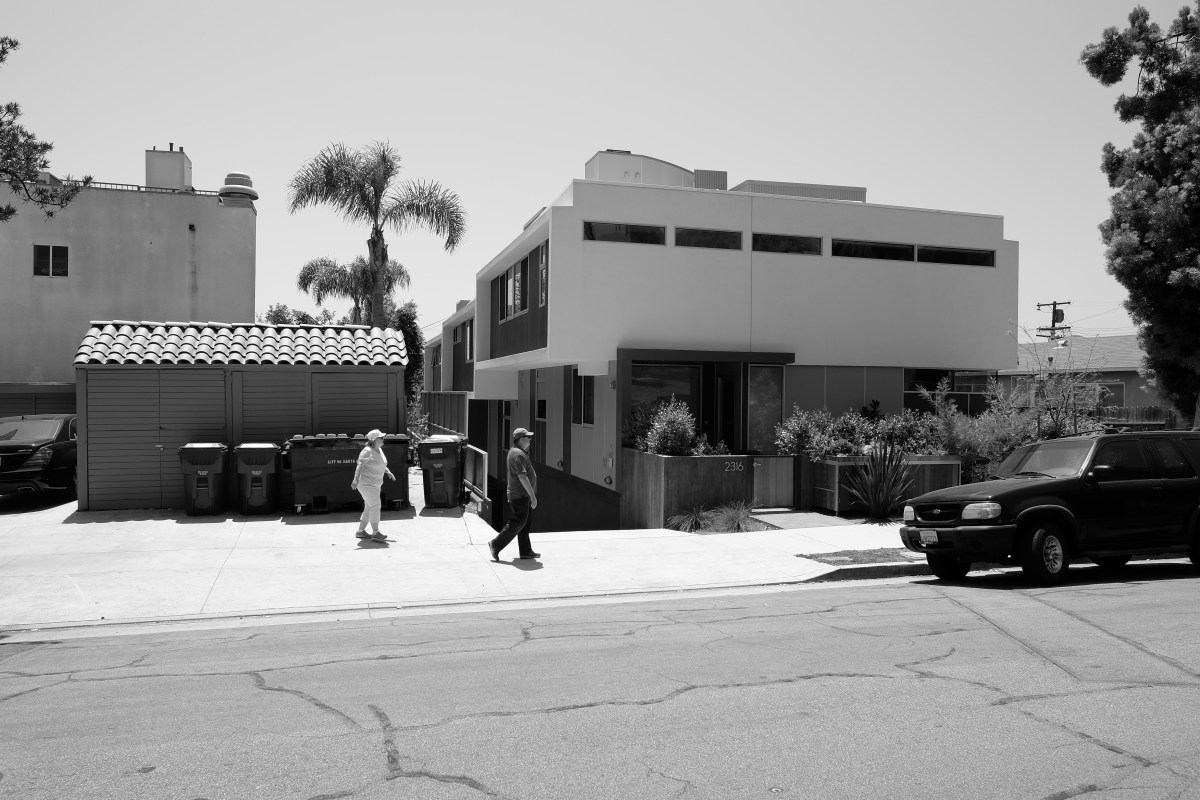
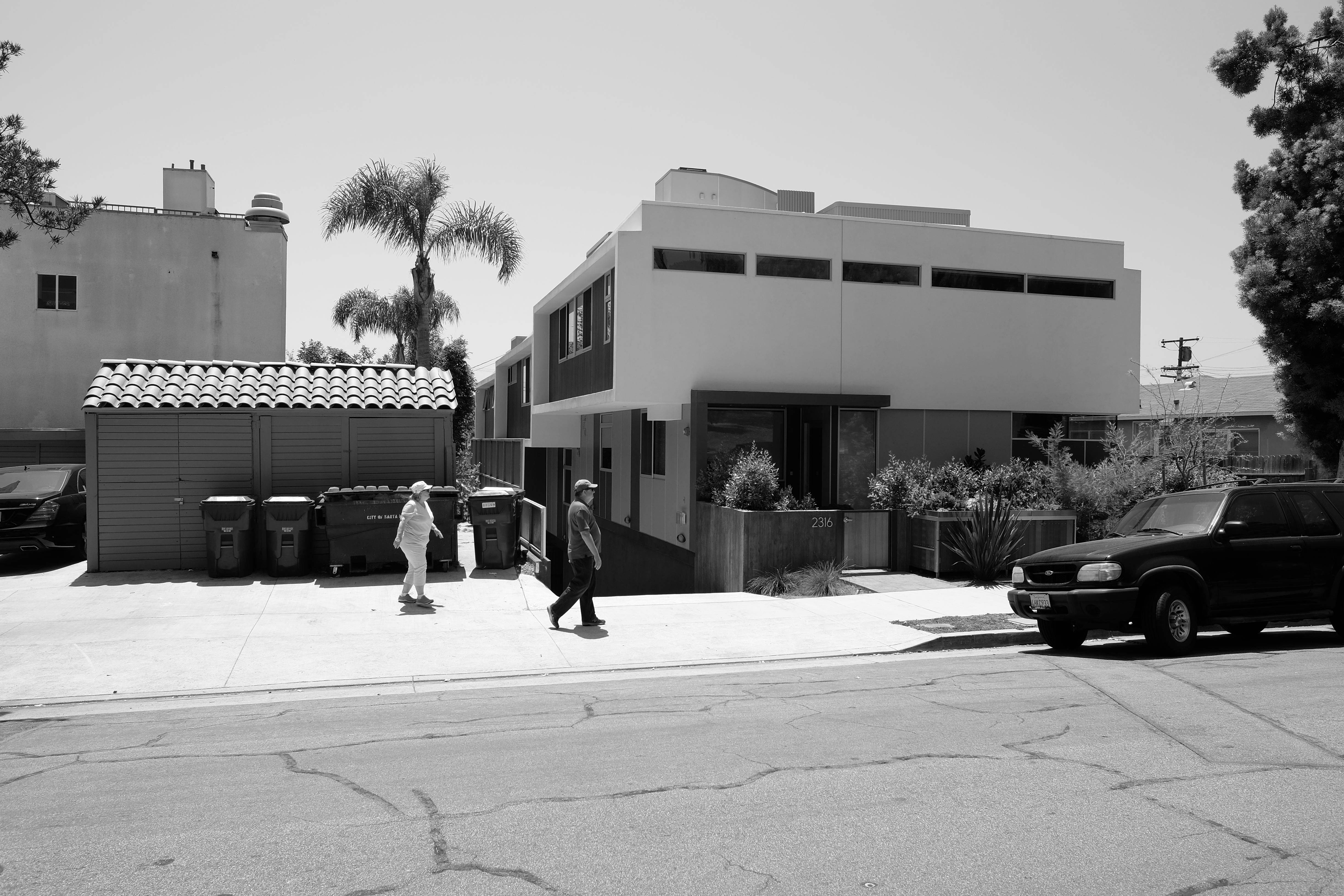
2316 3rdSt. Santa Monica (2017)
These are ultra-serious modernist condos designed by architect Robert Thibodeau. At least one unit sold for $2.6 million last year. They have all the emotionality and personality of a computer processor, but are of this moment in their sanitized, digital perfectionism, one that is scrupulously wired to accommodate residents who might command Alexa to send hot pizza and chilled Riesling by drone.
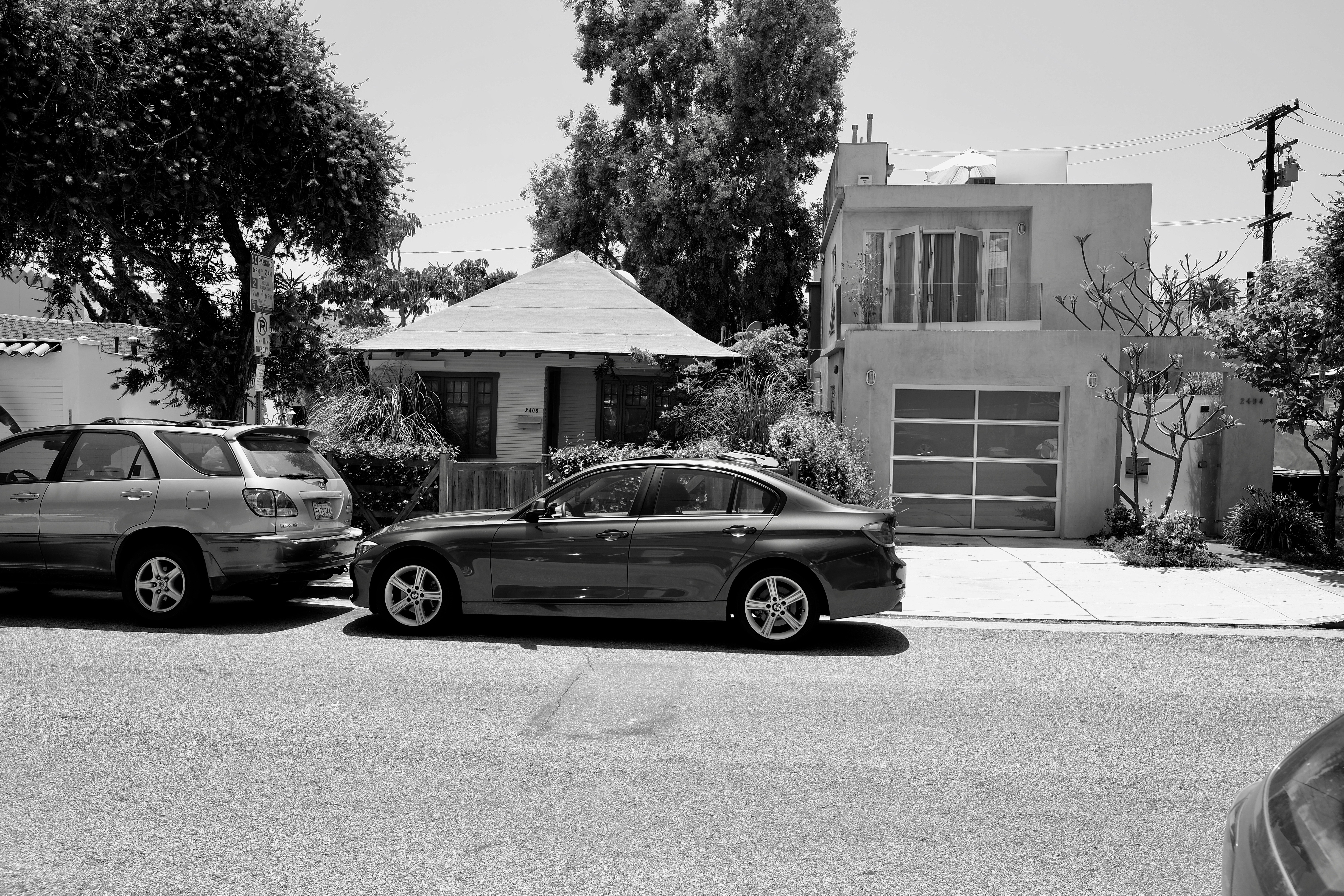
2404 2ndSt. Santa Monica (2006)
Already looking a bit dated with its ultra frozen metallic trim and smooth stucco, it compares awkwardly with its more relaxed and disheveled asphalt roofed neighbor next door.
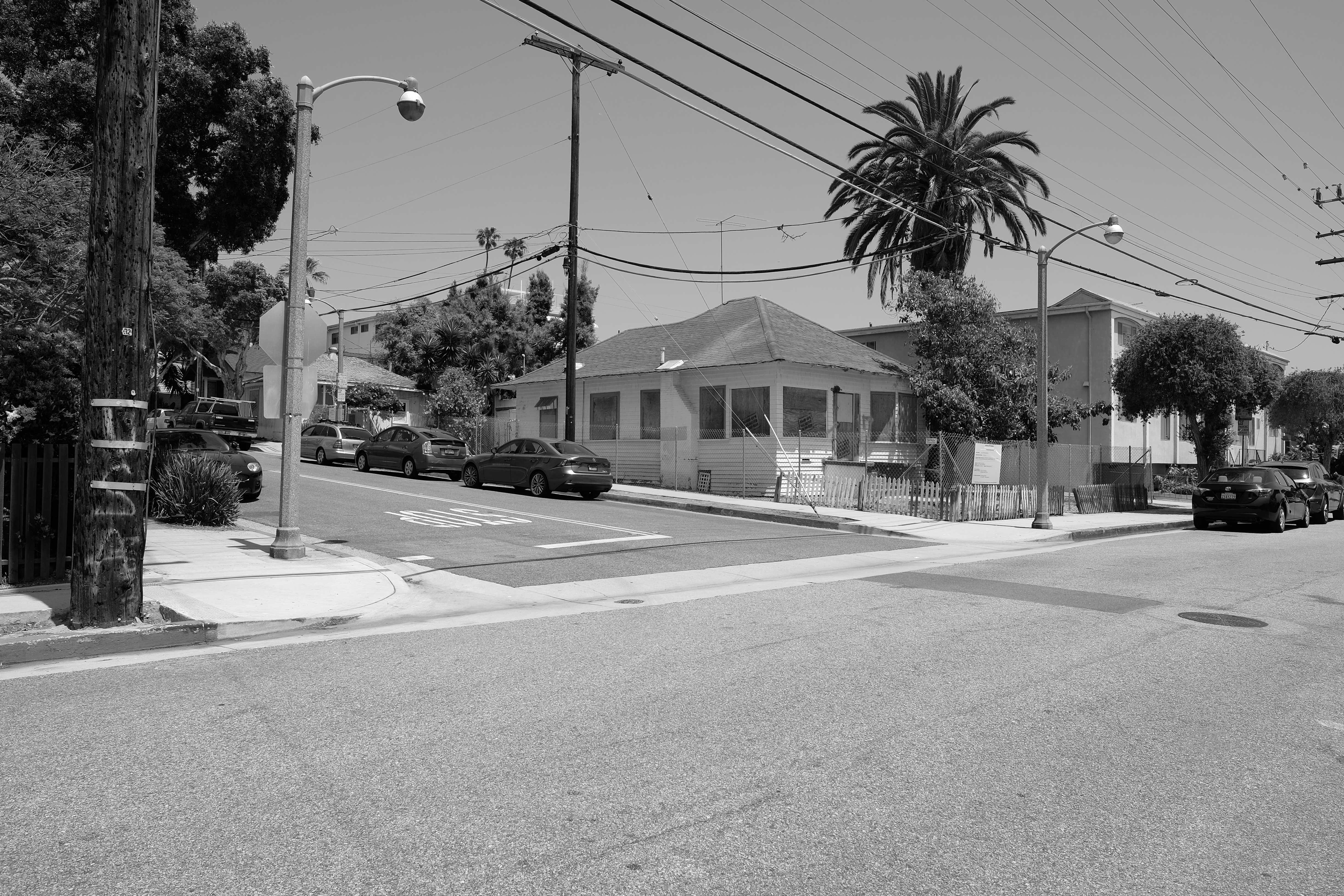
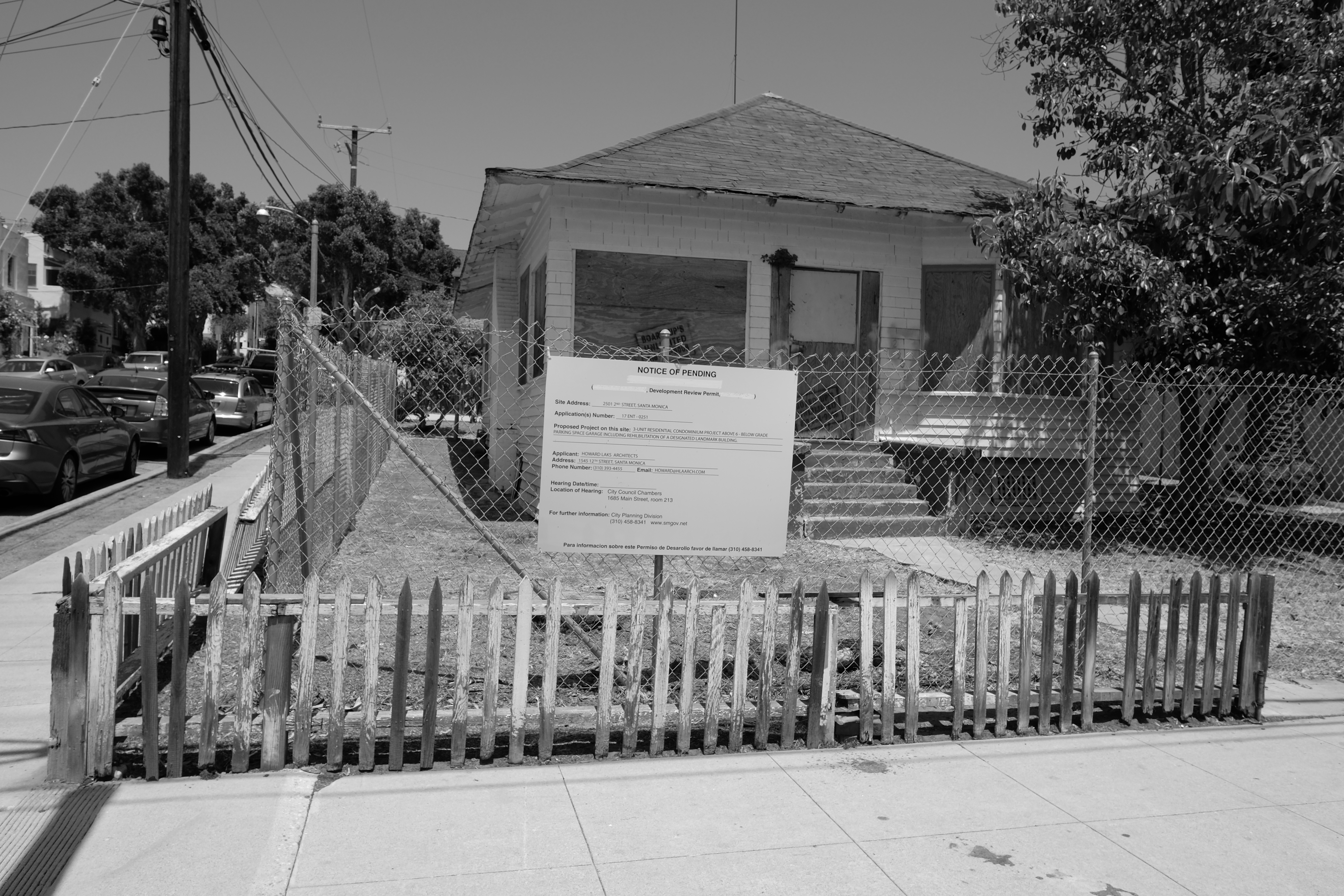
2501 2ndSt. Santa Monica (circa 1902)
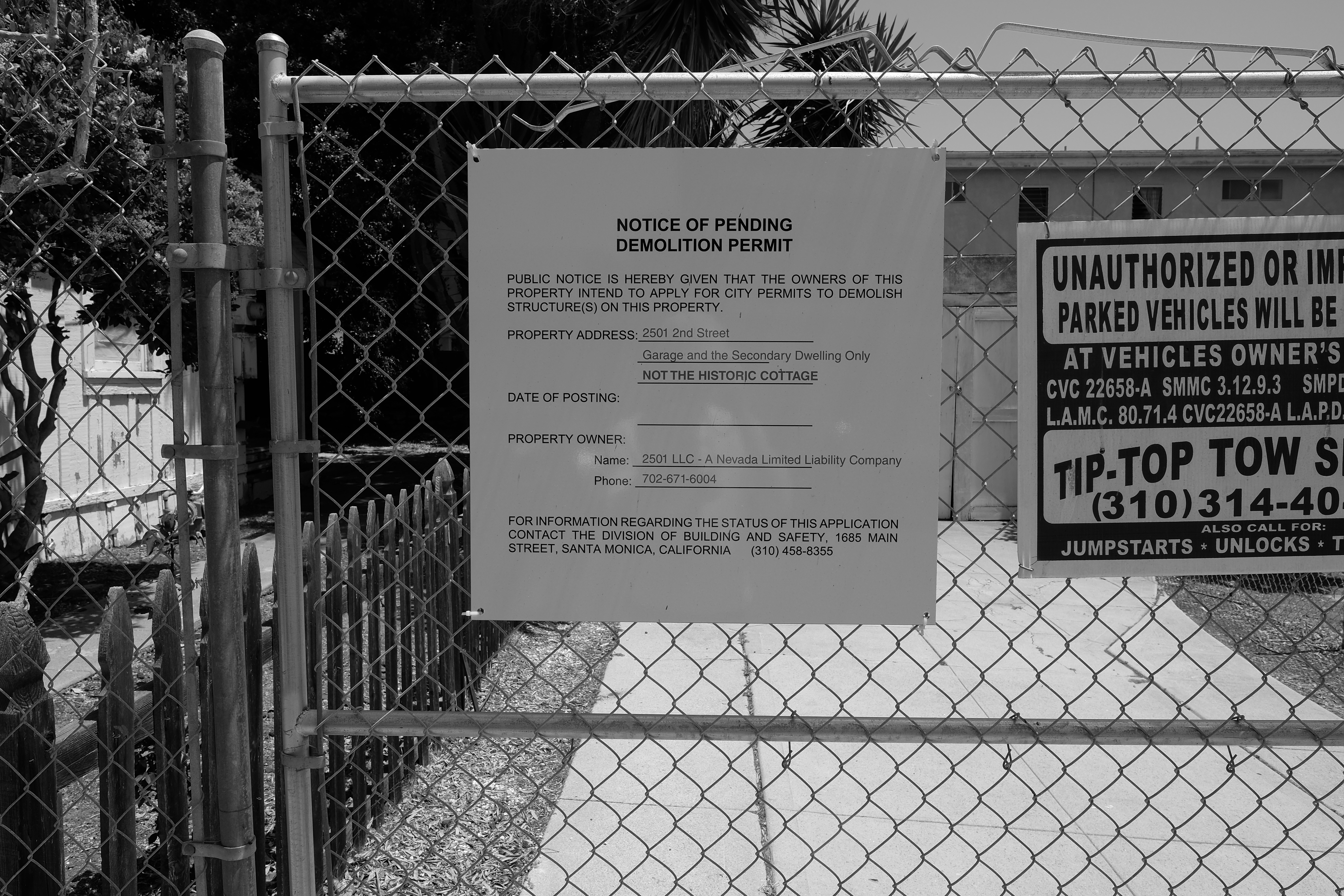
Fear not! This historic house has been under municipal evaluation/debate/conflict/litigation since at least 2010 and there are now plans to demolish only a back garage and guesthouse, and preserve the front structure. An official report by Santa Monica City said this property does not meet standards of preservation accorded to prominent architectural buildings. A casual observer might disagree.
2520 2ndSt. Santa Monica (1900)
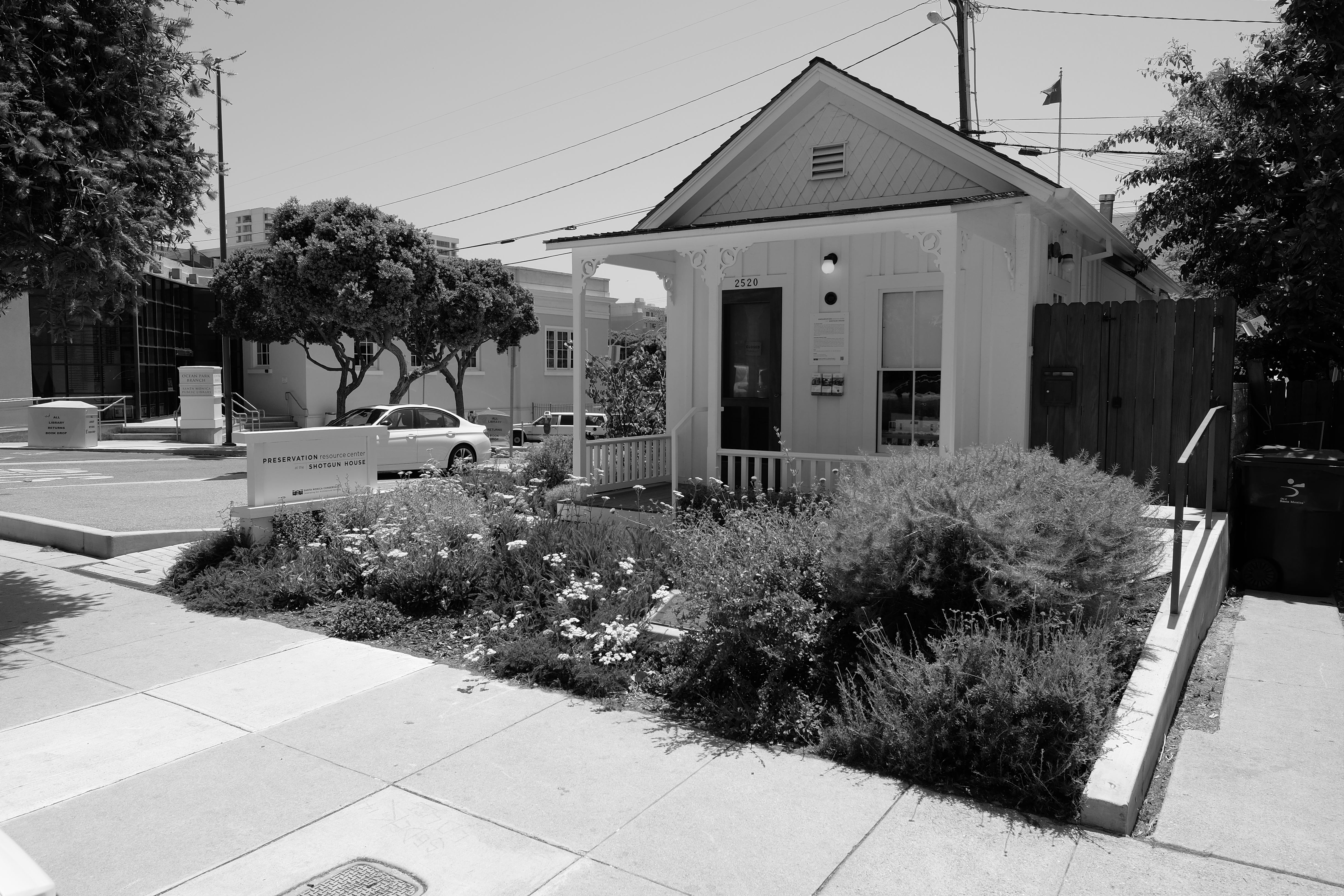
Imagine if Santa Monica were like Martha’s Vineyard, and little beach cottages with front porches were the norm? 2520 sits in exquisite preservation, next to a parking lot, but it is landscaped with wildflowers and drought-savvy plants. In its modesty and kindness, its gentle openness, it serves as an exception, not as the norm.
2543 2ndAve. Santa Monica (1915?)
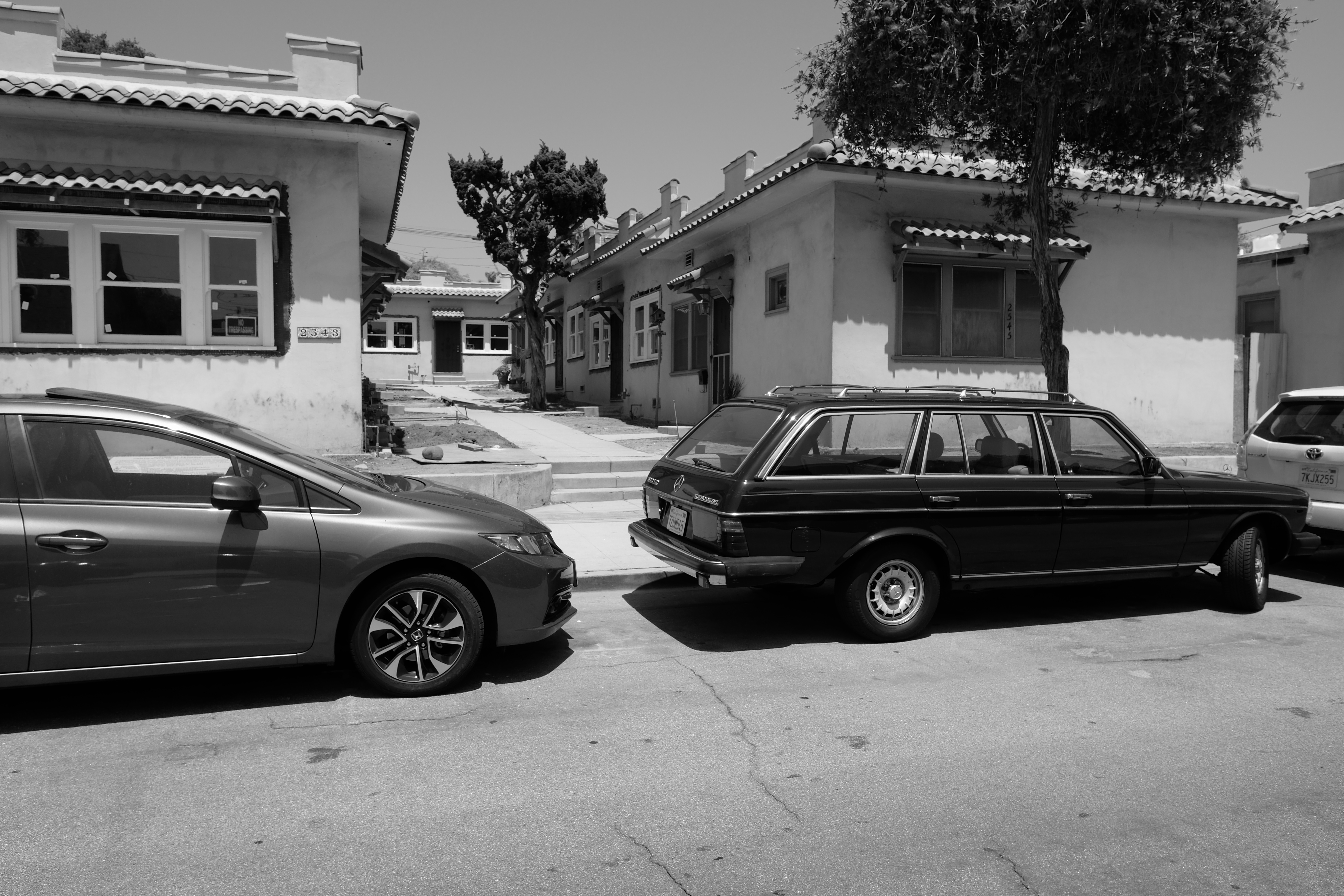
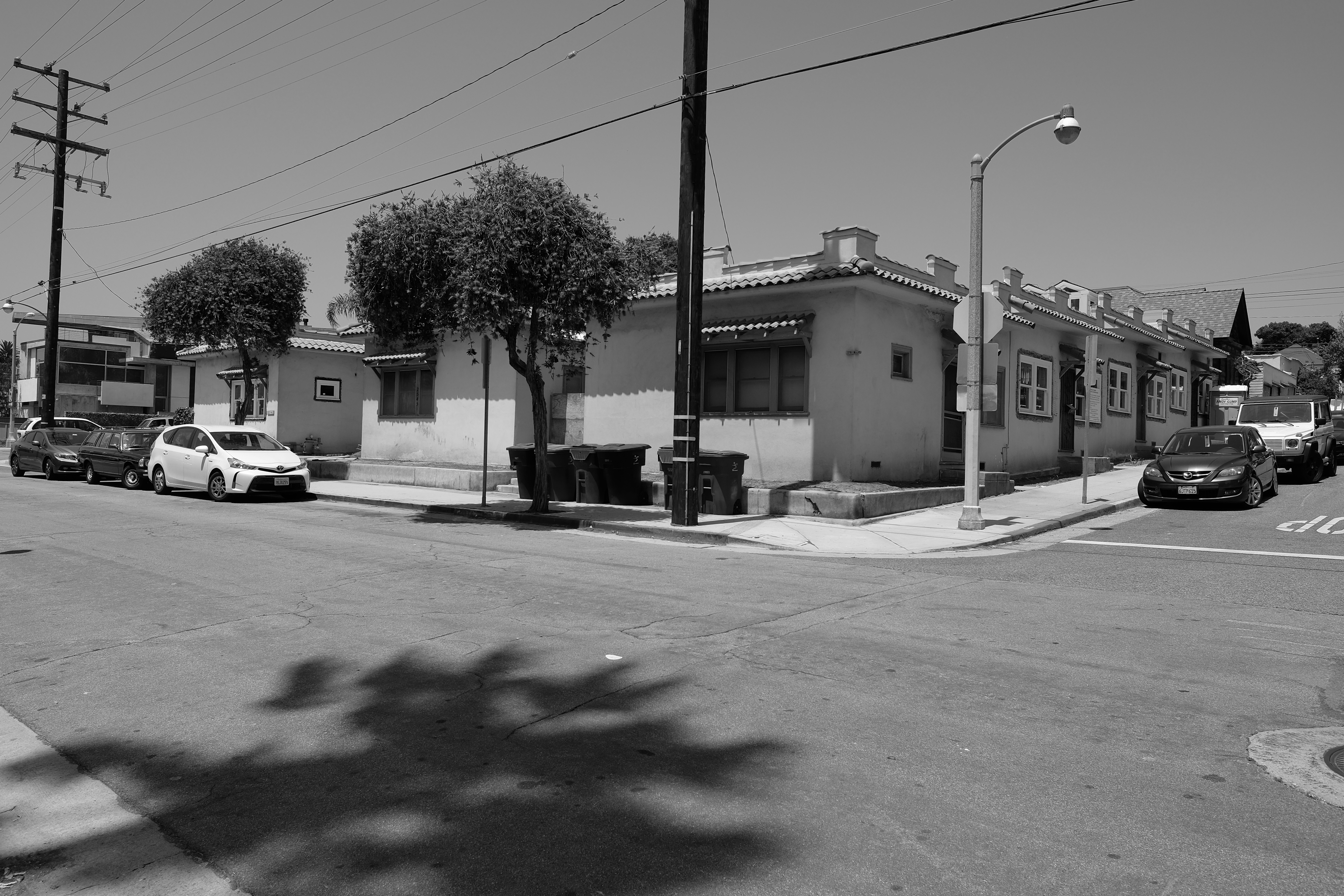
All over Southern California, the courtyard housing of the Early 20thCentury provided modest, enveloping, nurturing neighborhoods for new arrivals to the Golden State. These archetypes made maximum use of land, but did so with landscaping and interior gardens. Unlike today’s crime paranoid structures, this building has windows and doors around the entire perimeter, inviting and friendly. It is under renovation, no doubt destined to be something unaffordable.
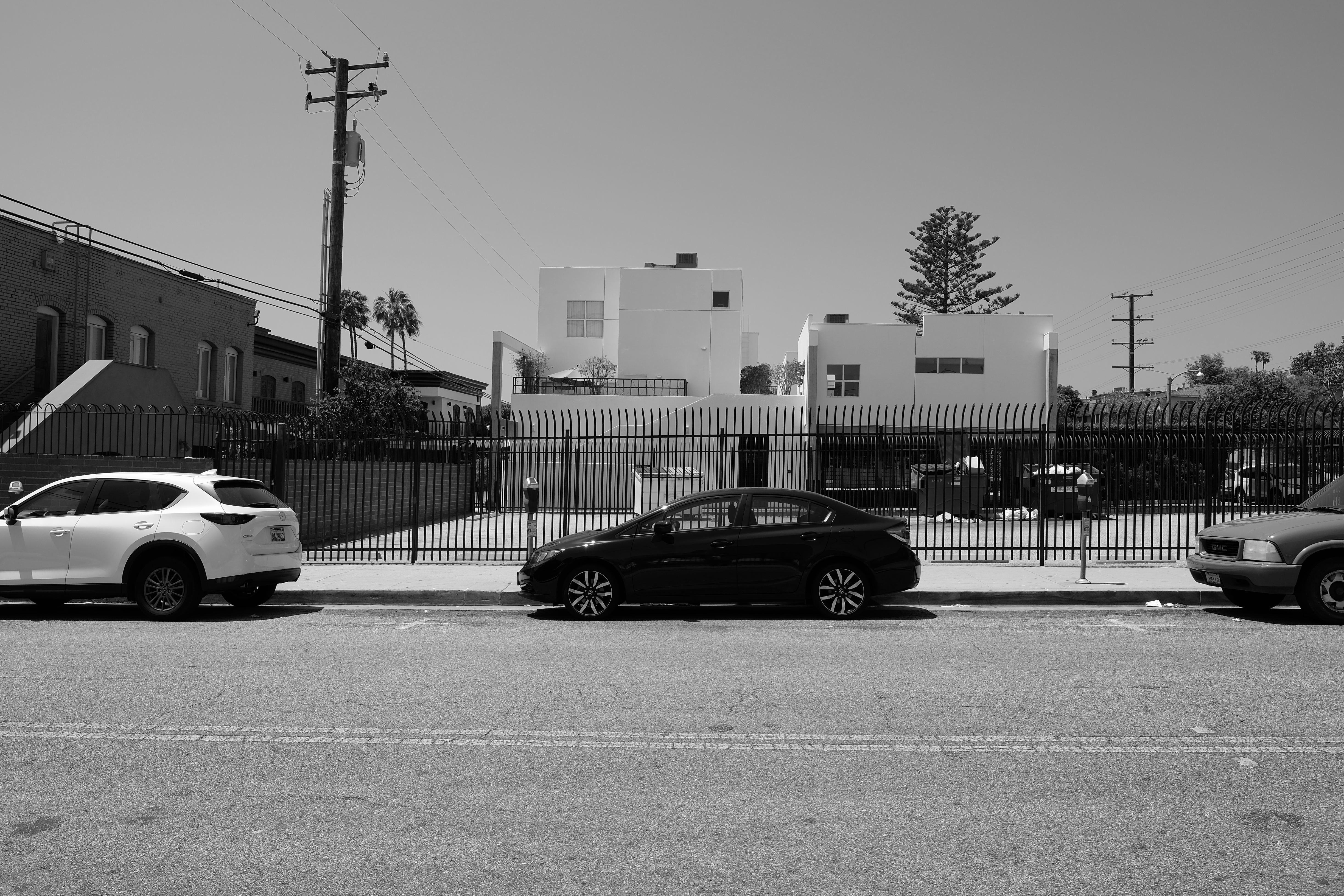
260 2ndSt. Santa Monica, CA (1989)
Now almost 30 years old, this white, modernist, multi-family structure is best appreciated by observing it through steel security fencing and a parking lot. It has the mark of the late 1980s and early 90s in its square paned windows. Private, secretive, hidden, fortified, yet gleamingly bright and stripped down to essentials, this is what investment bankers, psychiatrists and plastic surgeons consider creative living.
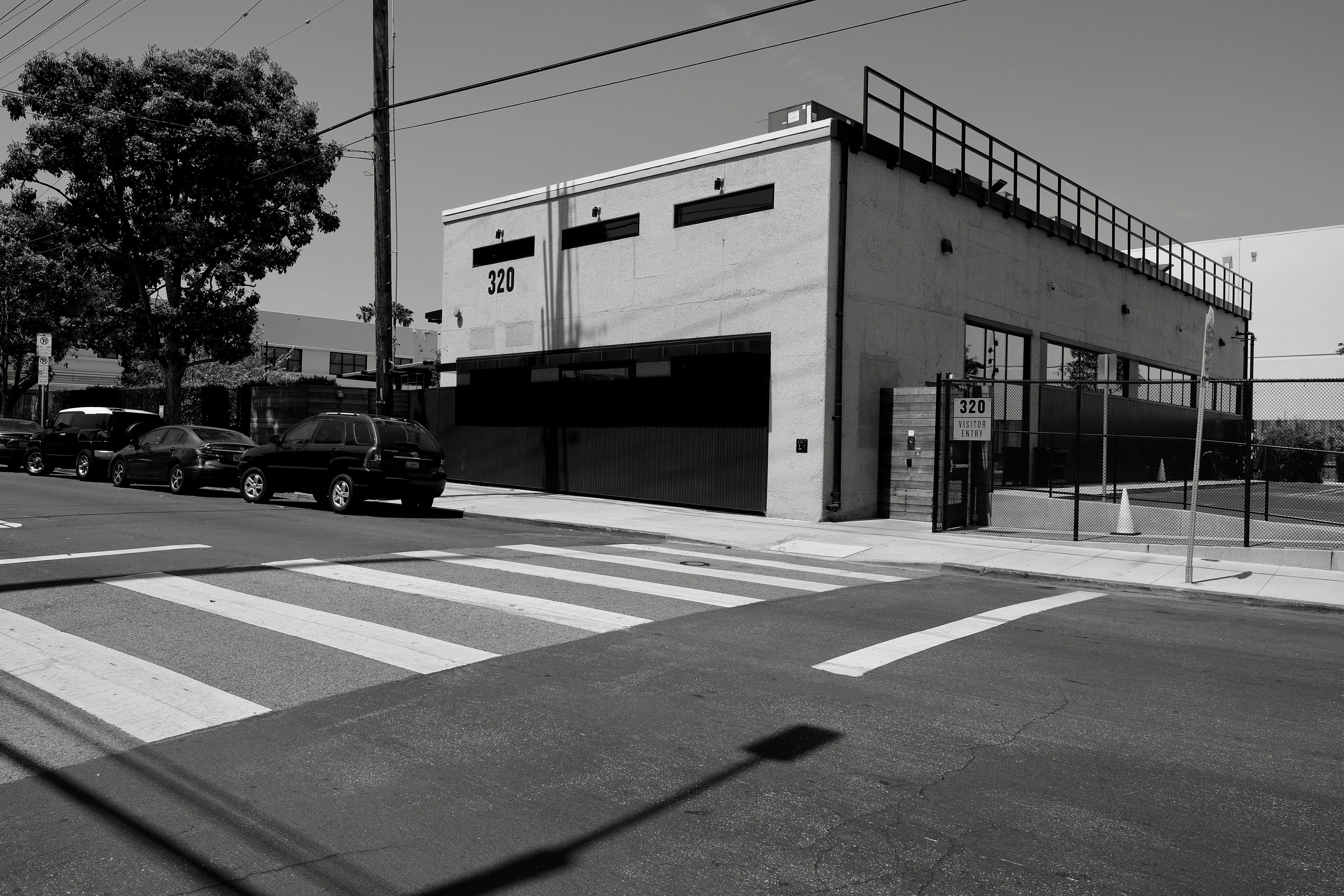
320 Hampton Drive. Venice, CA (2015)
Google, Inc. is worth $600 billion and controls almost every aspect of every person’s life on the Planet Earth. It is more powerful than government, it is wealthier than 90% of all nations. Its infantile interface masks an incredibly complex and manipulative design meant to squeeze dollars out of any enterprise it wishes to.
It enslaves us by promising us ease. It erodes our individuality and uniqueness by herding us into categories assessed and rated by algorithms. It impregnates our dreams and deludes us into waking stupor.
Here is one of the buildings built by the pre-eminent monopoly of our time. It is a box: fortified, secured and undistinguished. Inside, no doubt, young employees bring dogs, tricycles, skateboards to work 18-hour-days, for 24 months, before they scooter over to another company in Silicon Beach.
In another moral riddle for our times, hundreds of homeless men and women sleep on the sidewalks just a few hundred feet away as if no money existed to rescue them from suffering.
“State of the art architectural, new residential compound, right in the heart of Venice. One block from Gold’s gym, Abbot Kinney Blvd and two blocks to the beach. This three story gem has everything, from the rooftop patio with a jacuzzi to huge walk in showers, built in speaker syste and much more. No expense was spared on the construction of this home, it truly is one of the finest homes that Venice has to offer. Perfect for a live work space. 2 car garage plus 2 uncovered parking spaces. Available fully furnished at $25,000.00 or unfurnished at $23,500.00 In addition to the space per public records, there is 500 sq/ft roof top patio that includes an outdoor kitchen and a hot-tub. On the second floor there is a 100 sq/ft balcony, on the main level there are also two decks/patios over 400 sq/ft that allow true indoor out door use total of over 1,000 sq/ft of outside use. LIVE WORK ZONED”
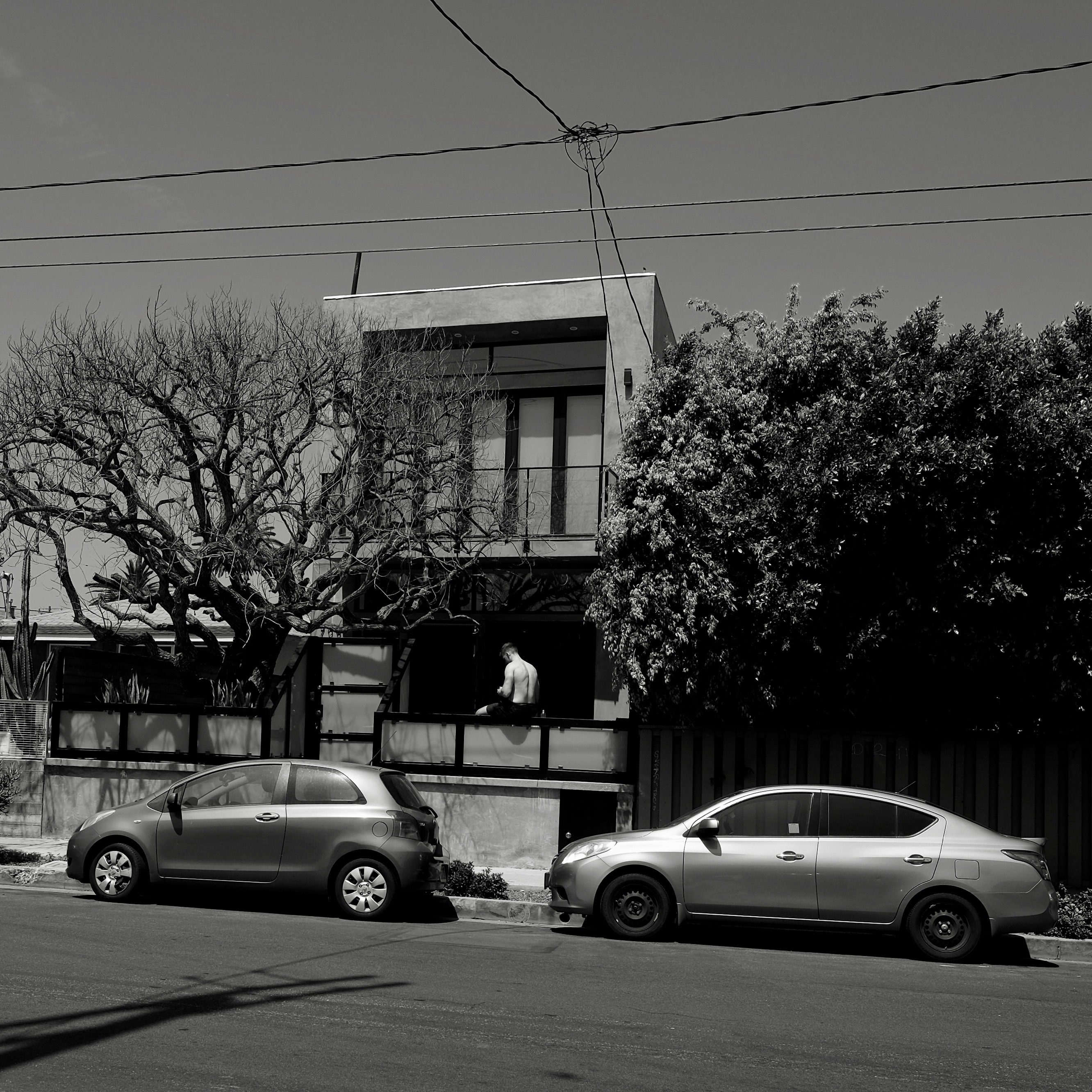
708 Hampton Dr. Venice, CA (2017)
“Perfect for a live work space. 2-car garage plus 2 uncovered parking spaces. Available fully furnished at $25,000.00 [a month] or unfurnished at $23,500.00”
Muscular guy on balcony extra.
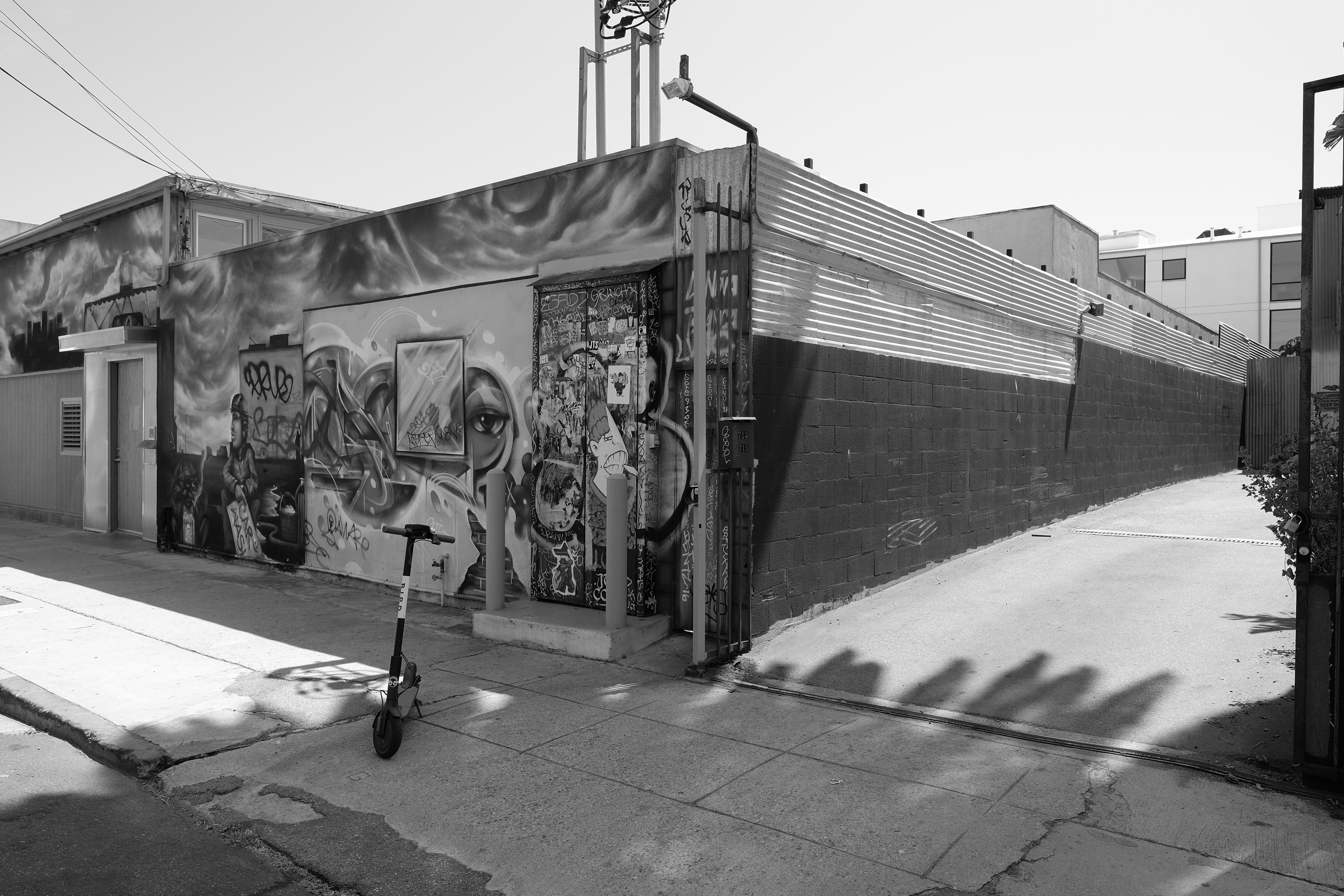
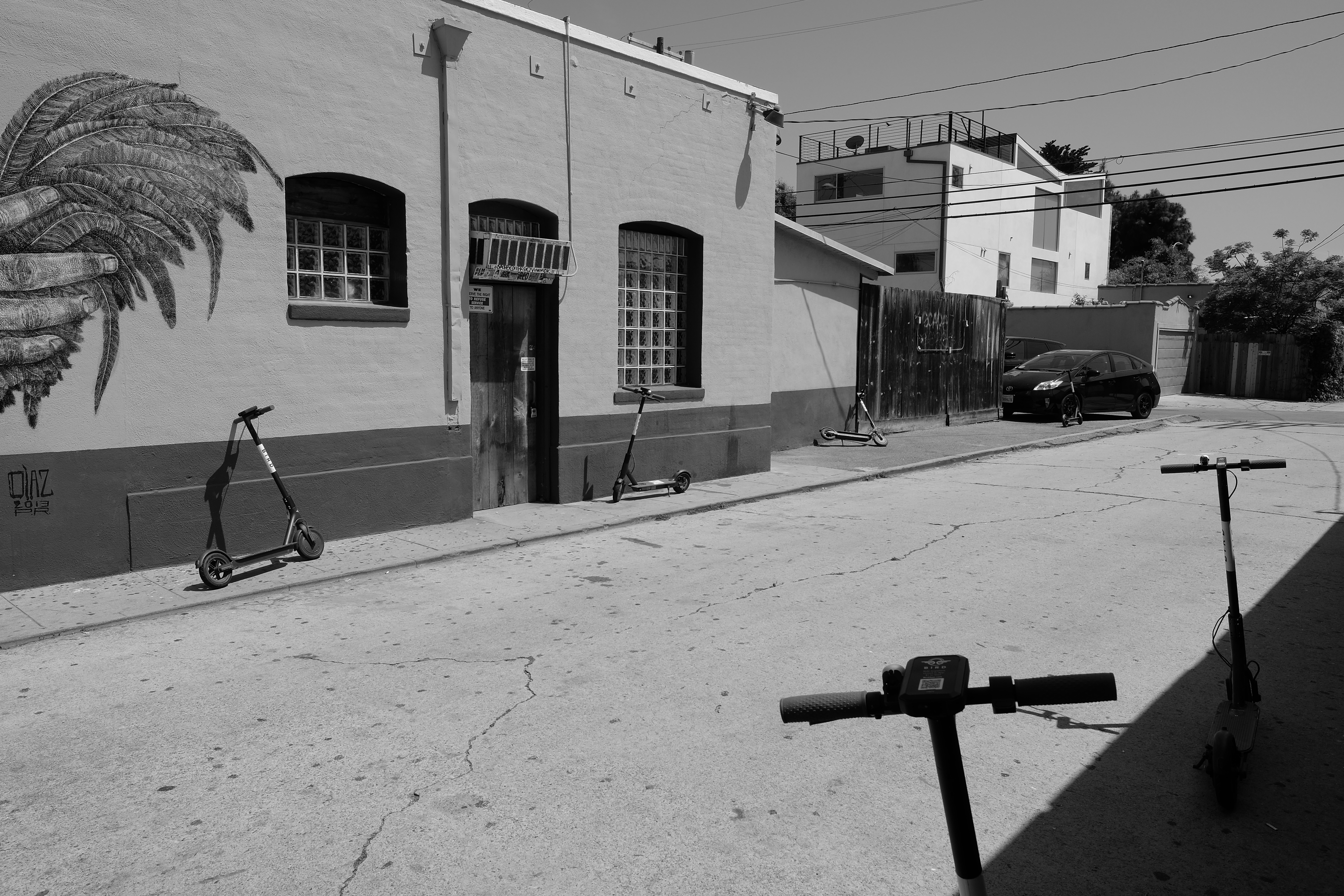
The Bird Scooter
All over Venice, these motorized scooters, unlocked by app, rented by hour, provide another means of transportation which speeds one along without aerobic effort.
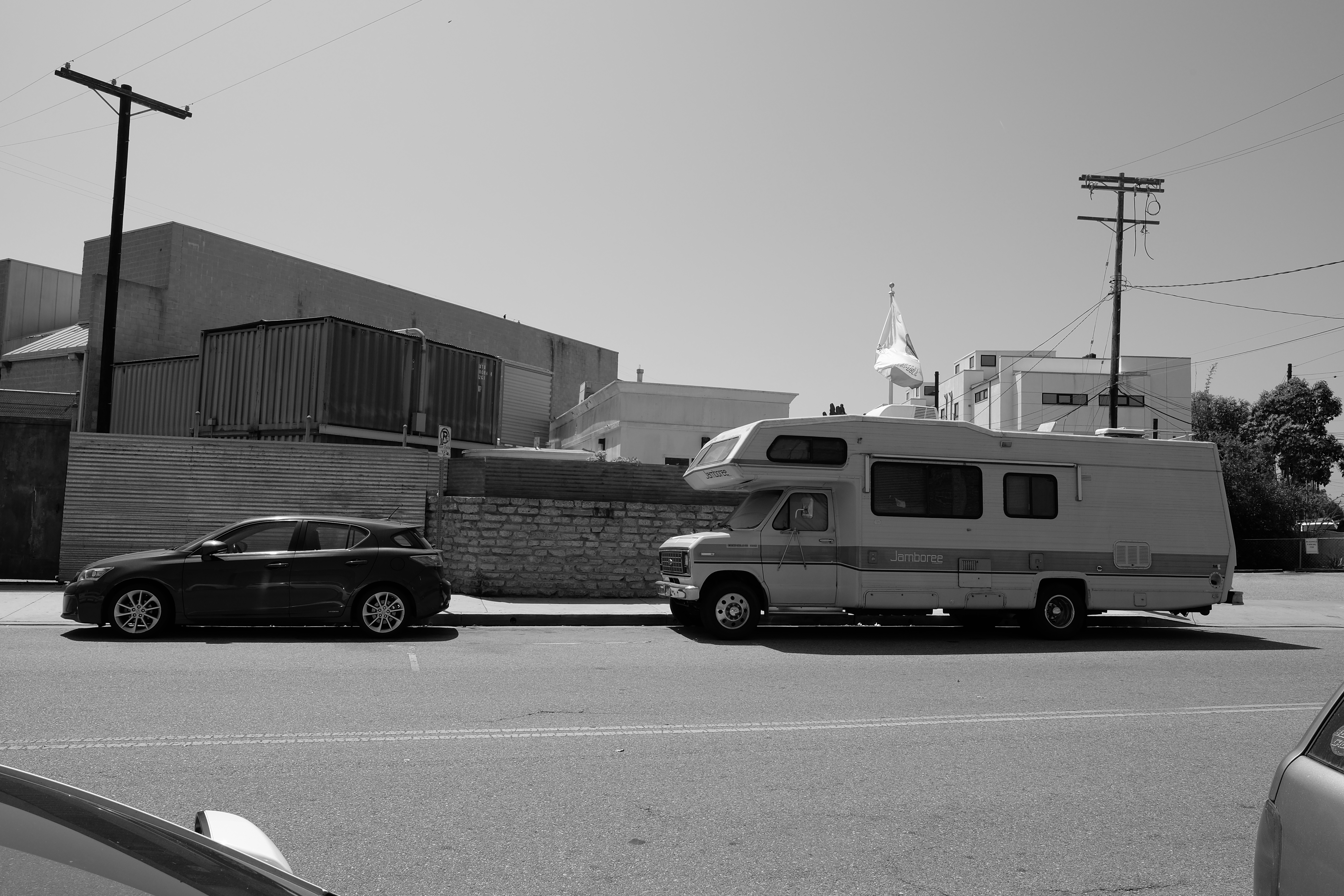
Motor Home Home
This RV is parked at Brooks and Electric. The California Flag flies behind it, fittingly, salutingly. No housing type has grown as fast as the parked recreational vehicle.
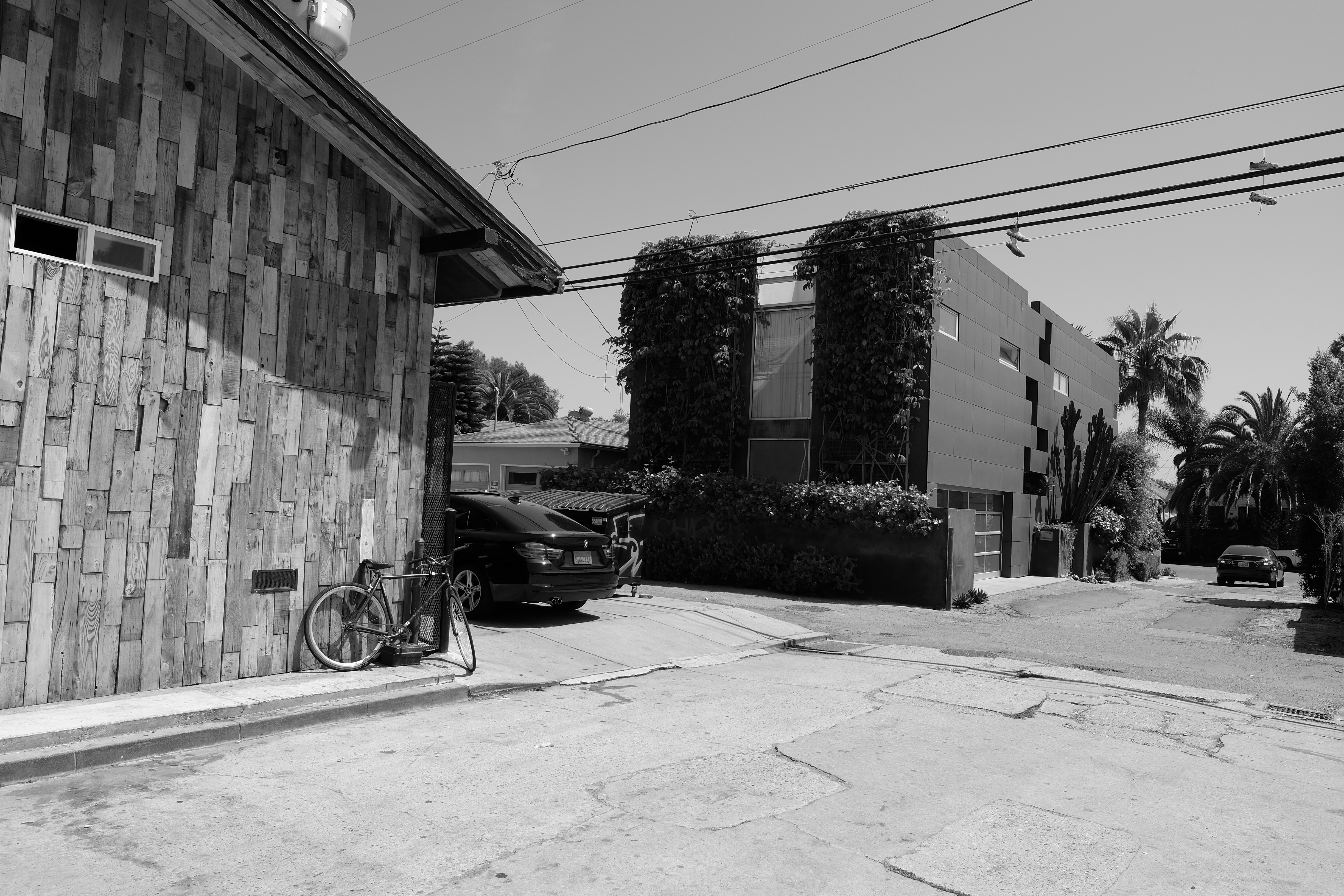
1201 Cabrillo Ave. Venice (2008)
This home sits partly on a street and partly in an alley, both of which help solidify its sculptural presence. Dark, with variegated steel panels, and zig-zag cut outs, it is somewhat softened by vines. Lest it forget its bohemian surroundings, a reminder of drug dealers and gangs is provided by shoes hung on electrical wires nearby; as well as a tagged refuse container in the back alley.
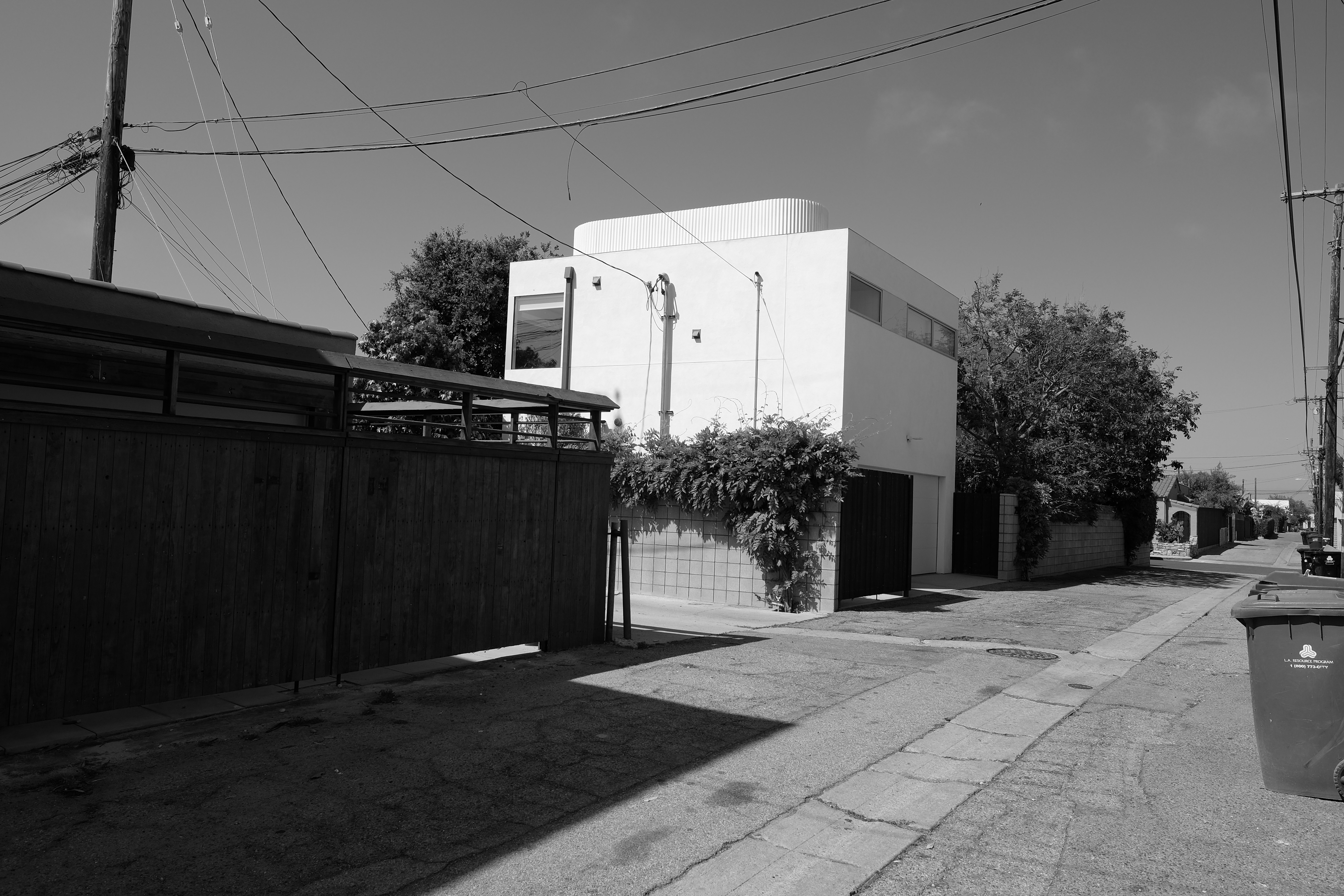
249 Rennie Ave. Venice, CA (2013)
This is just the back guesthouse, but sparkles with a Teutonic crispness, like 1920s Bauhaus. And if this were Japan, there would be many houses just like this one, built along fastidiously maintained alleys.
420 Marine St. Santa Monica (1969)
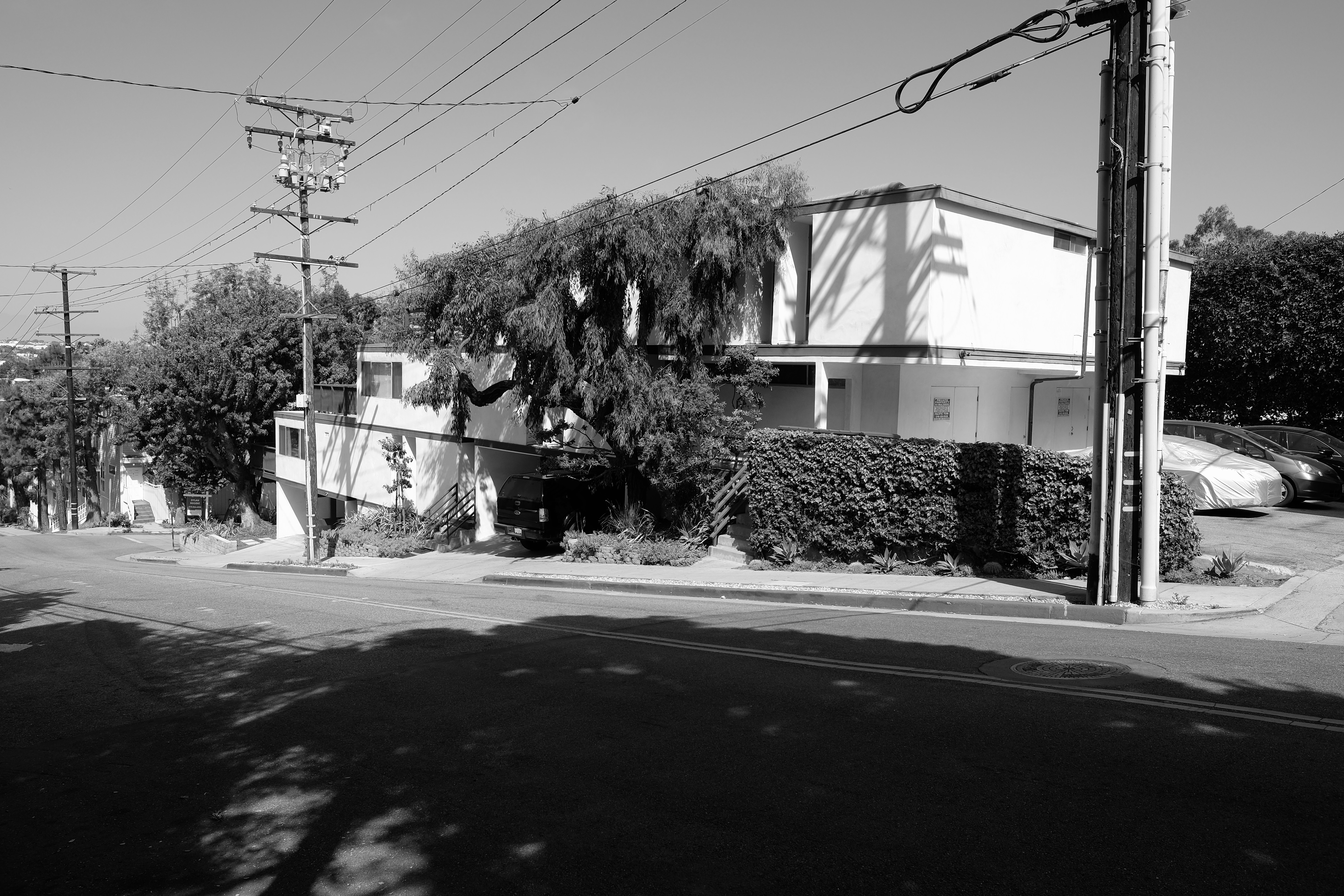
Only 50 years ago they were knocking down quaint neighborhoods in Santa Monica and erecting cheapo, stacked, shoe-boxed units like 420 Marine St. Almost mid-century modern, this late 60s dwelling shoves cars into the back alley, and squeezes one or two under the cantilevered second floor. An overgrown pepper tree grows like a beard to obscure a homely façade.
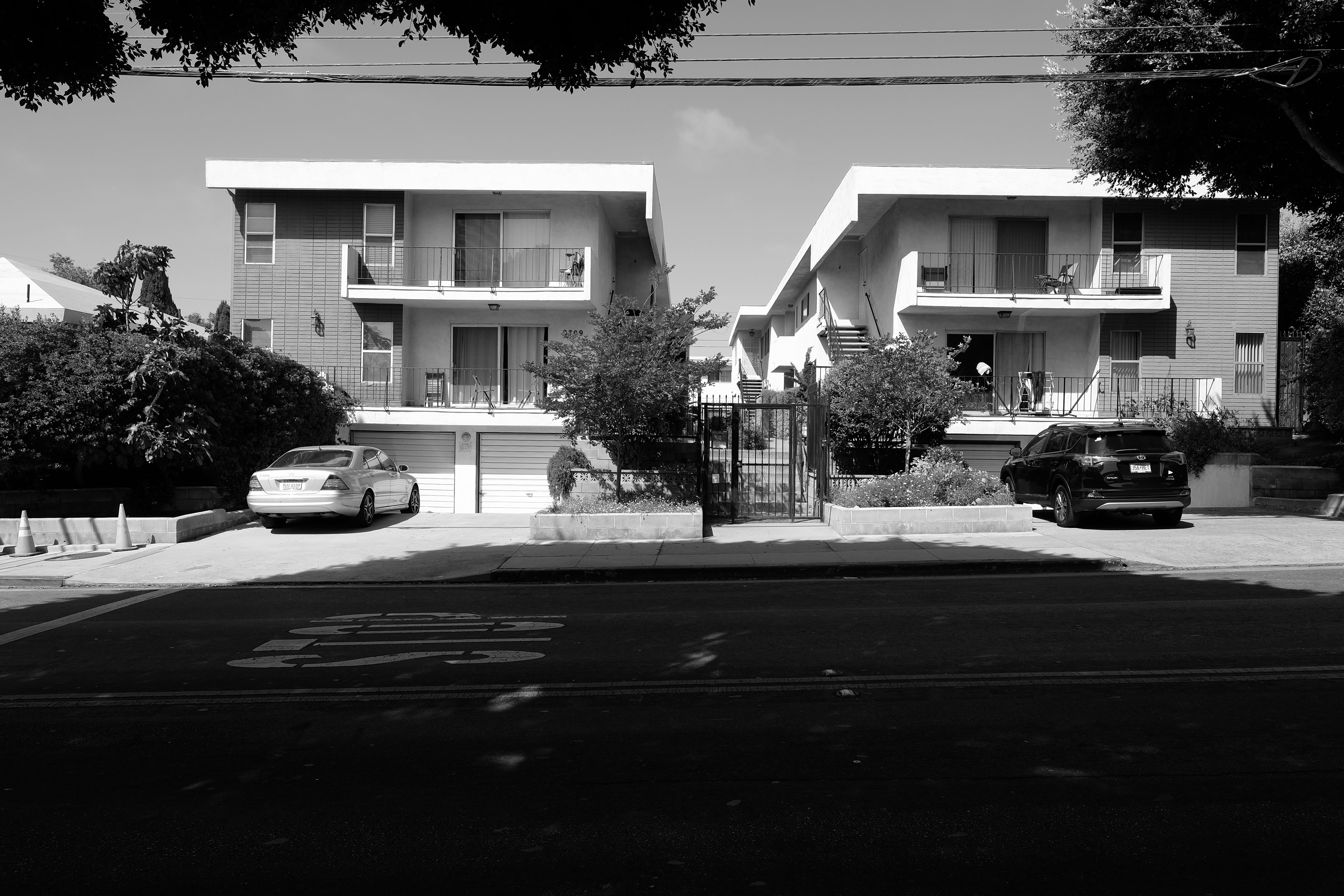
2709 4thSt. Santa Monica (1967)
Still a rental, a recent ad offered a two-bedroom for $3,100 a month. Well-maintained from the exterior, it looks to have been upgraded with steel security gate, garage doors and energy-efficient windows. Considering its date of construction, it’s surprisingly un-ugly.
Los Angeles, it seems, is often in a housing crisis.
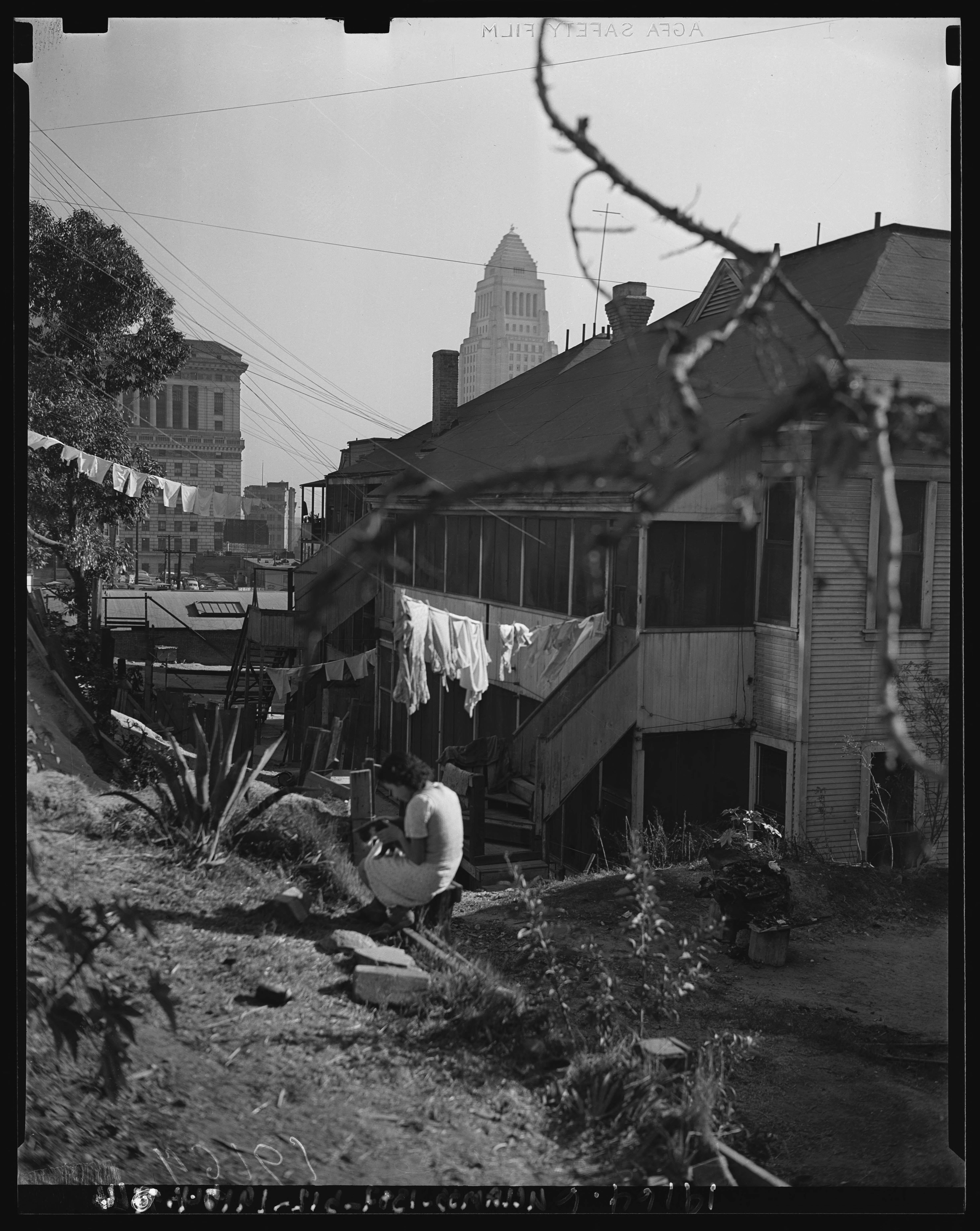
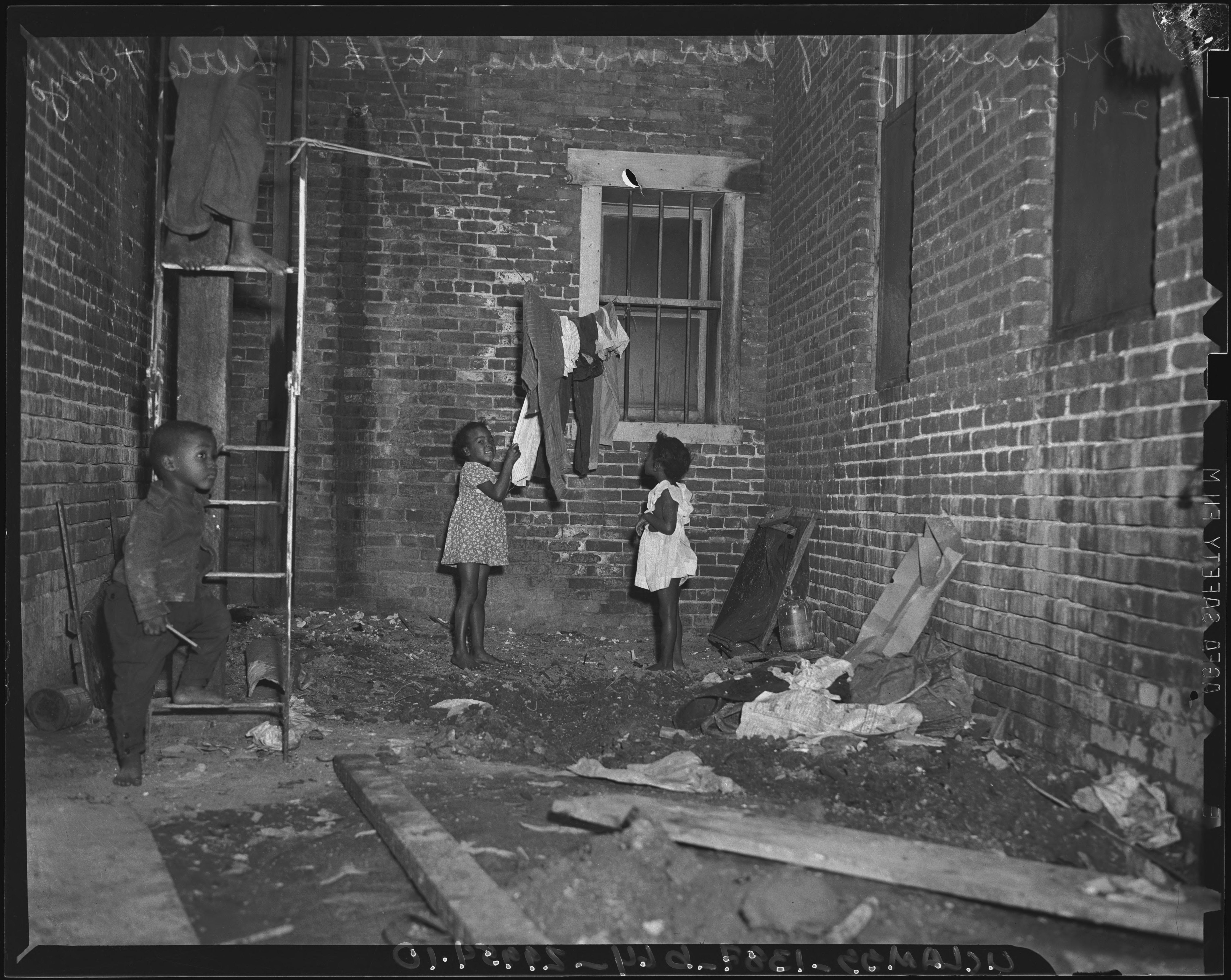
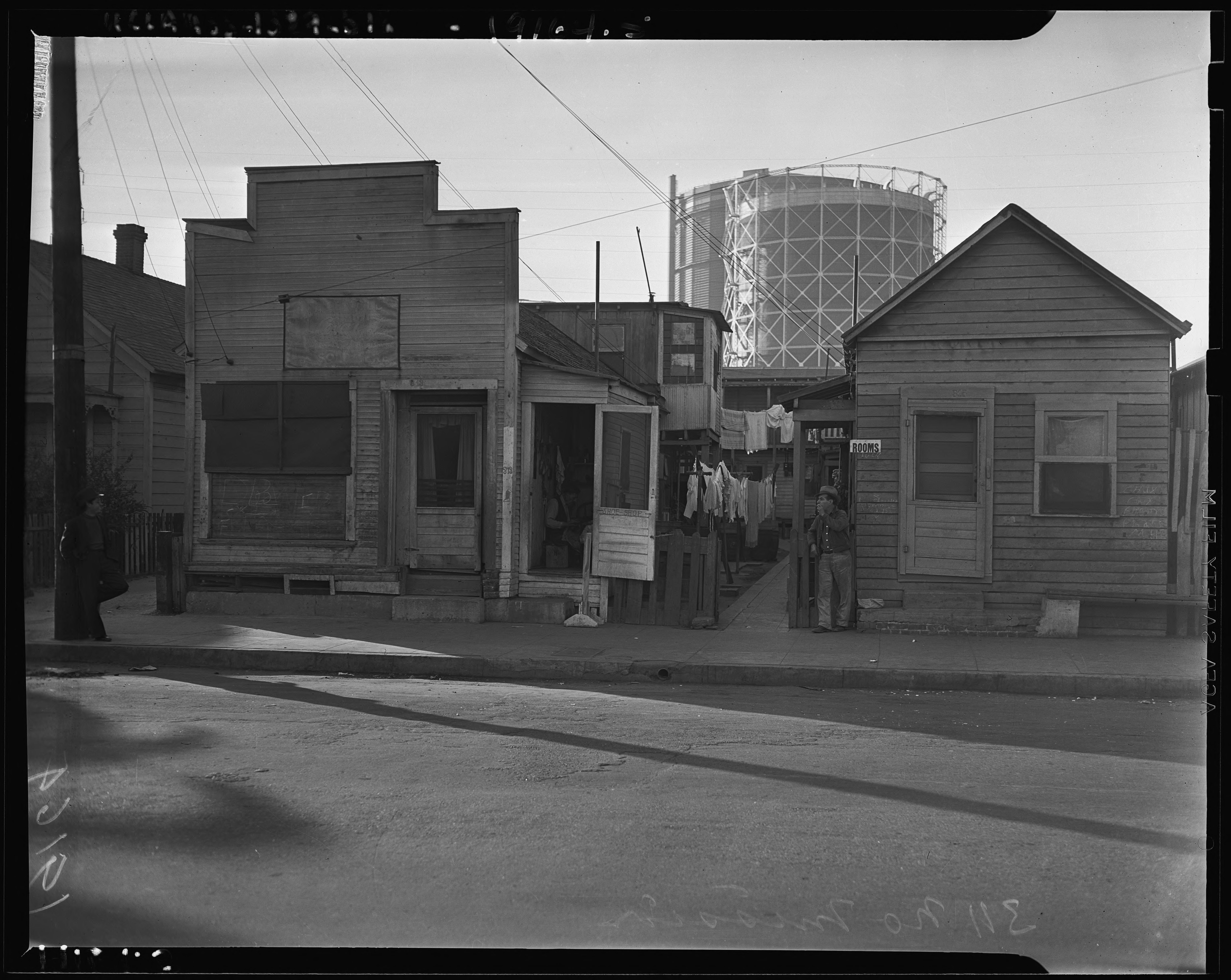
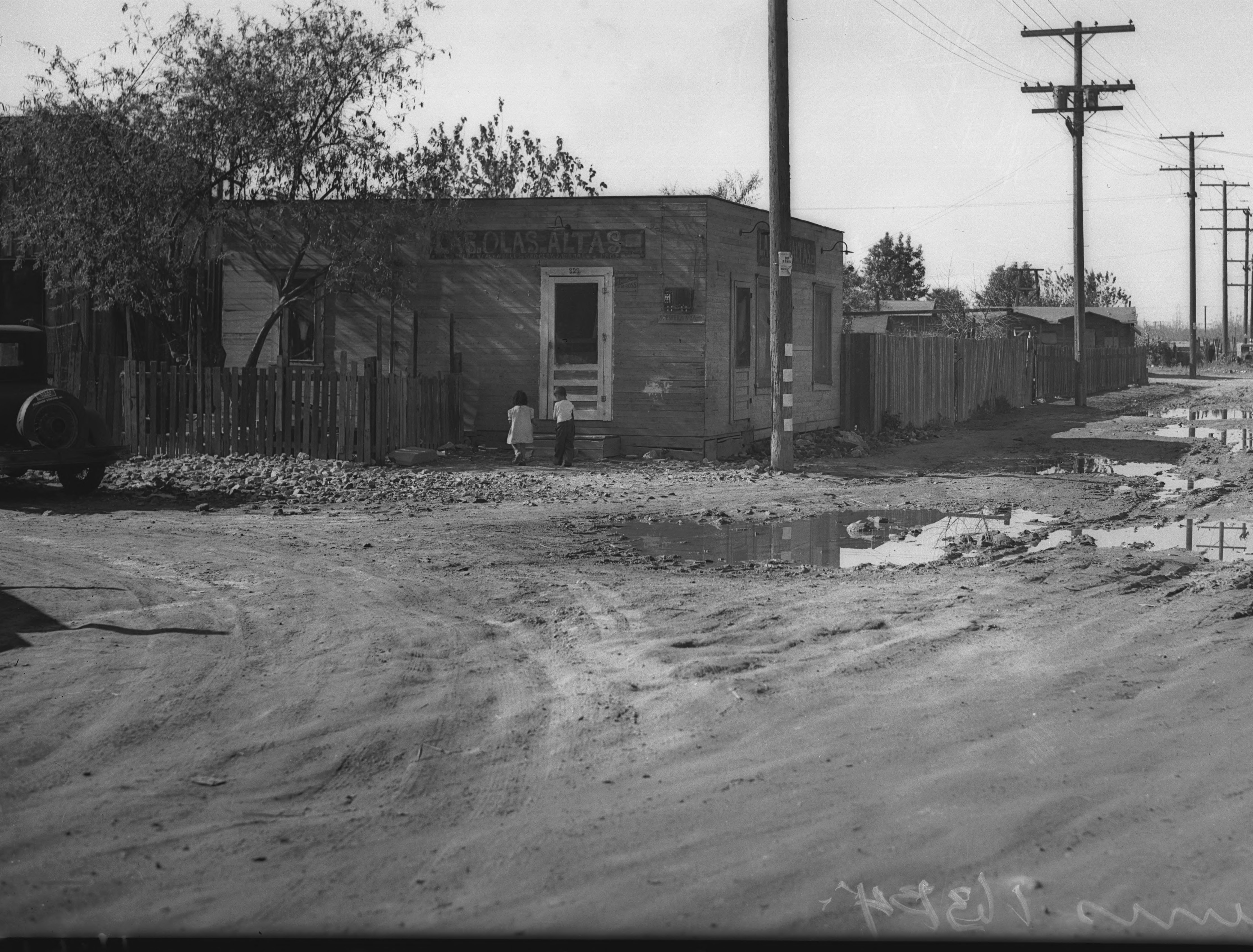
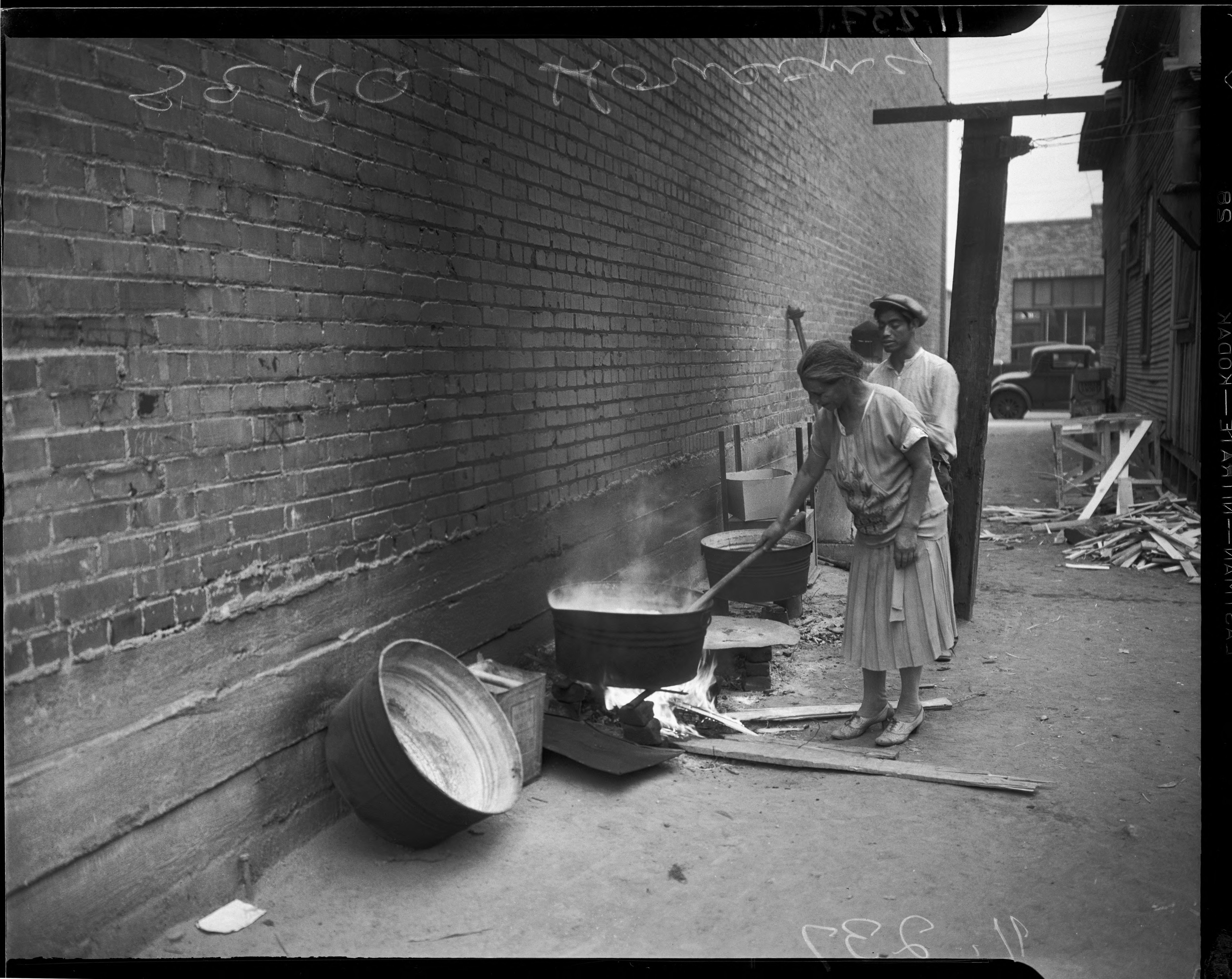
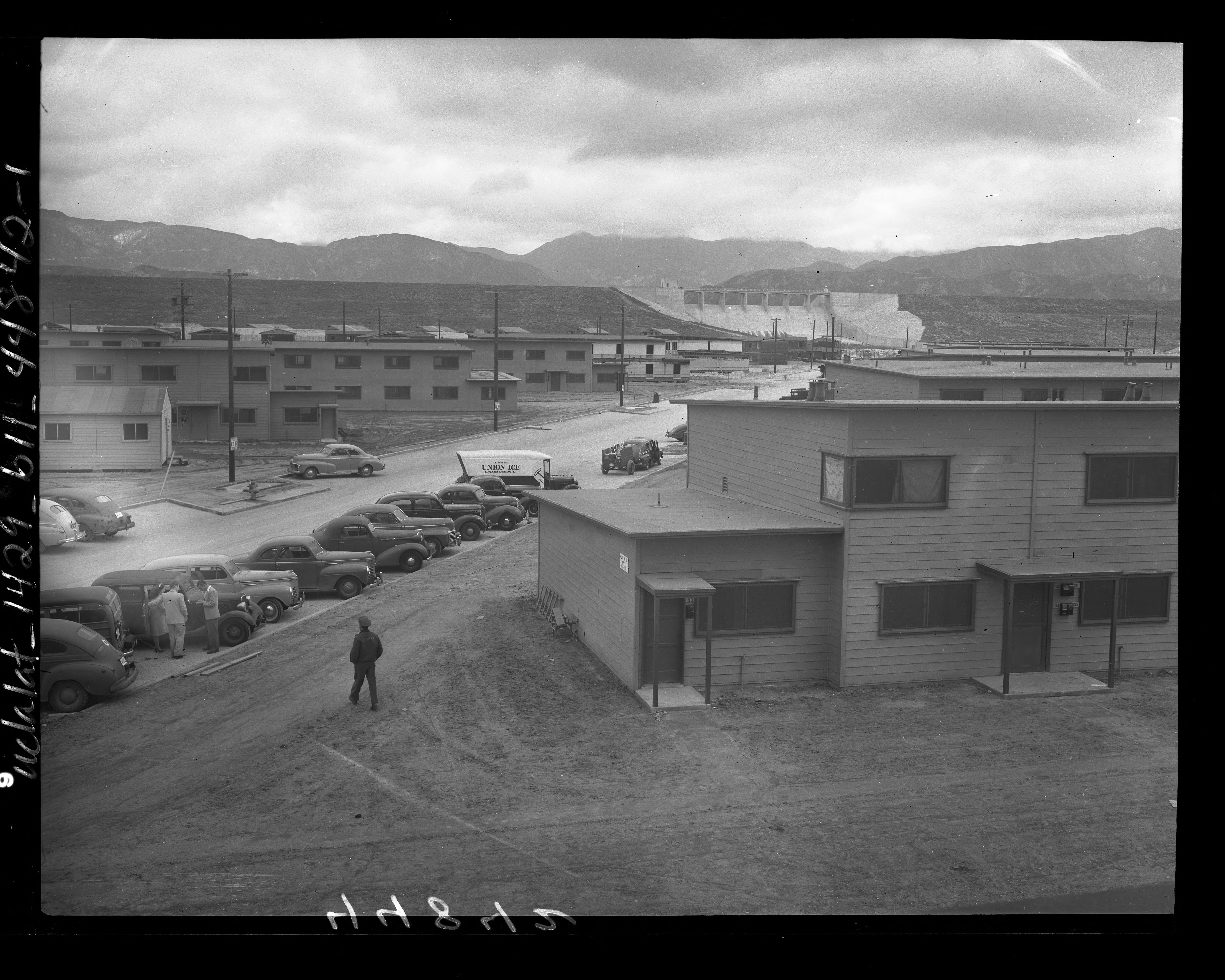
UCLA has a collection of historic photos of our city, and from their extensive archives, I pulled out a few to show that poverty, sub-standard housing, and homelessness, are life conditions that ebb and flow in both good times and bad.
In the 1930s, during the Great Depression, some 25% of American workers had no work at all. No income, no livelihood.
Many picked up their lives and their families, escaping the Dust Bowl farms in Oklahoma and Kansas, and came to Los Angeles which promised, then, as now, some deliverance from suffering near Hollywood, under the warm sun, to get cleansed of sin and pain in salty ocean water.
But Los Angeles was not Eden. It had slums galore. Within sight of City Hall, wooden shacks housed poor people. There were many neighborhoods that still had unpaved streets, mostly inhabited by Mexicans and blacks.
In 1933, the average American earned $29 a week ($4.25 a day or $1,500 a year). A family of five, say mother and father and three children, had to live on that paltry income.
Under the leadership of FDR, the New Deal attempted to ameliorate poverty by sponsoring government work building roads, parks, planting trees, and constructing public works such as dams, bridges and post offices.
When FDR ran for his second term, in 1936, the aristocrat who worked tirelessly for the common poor man spoke these words about the oppressive forces who ruled the land:
“We had to struggle with the old enemies of peace–business and financial monopoly, speculation, reckless banking, class antagonism, sectionalism, war profiteering.
“They had begun to consider the Government of the United States as a mere appendage to their own affairs. We know now that Government by organized money is just as dangerous as Government by organized mob.
“Never before in all our history have these forces been so united against one candidate as they stand today. They are unanimous in their hate for me — and I welcome their hatred.”
What would Trump say to that?
It took World War II, and the enormous engine of wartime defense spending to inject money into Los Angeles. Factories, aircraft plants, steel mills, weapons manufacturers, all of them set up shop in this arsenal on the Pacific Ocean.
After the war ended, the government created housing, highway and school spending programs to provide work and prosperity for the State of California. So much of what we think of as individual initiative was created by the Federal Government so that Americans would have work and income.
31 Years Ago: maureen-kindel-inspecting-homeless-sidewalk-encampment-on-skid-row-in-los-angeles-calif-1987
Now, once again, we are in a new type of housing crisis with people living on the streets. Our new cruelty is compounded by an opulent prosperity that has dropped great real estate riches on many who bought cheap, or inherited property, or by sheer luck ended up in the right favored neighborhood.
But tens of thousands are living in cars, sleeping on trains, camping out under bridges and along rivers.
And how we meet this challenge, which sickens, disgraces and saddens us all, will be the next great test of character in the city of Los Angeles.
Easy answers about arresting people, deporting them, rounding them up and shipping them to desert camps tempt us. We think every dirty, distressed man and woman on the sidewalk is a lazy alcoholic, a lost drug addict, a violent, crazed criminal.
Yes, character counts, that announcer on KNX 1070 intones.
And it is hard not to hate the debasement of our parks, the volume of garbage, of shopping carts, of debris, stacked up like mountains along the freeways, under the overpasses, along skid row, and in every single alley in Los Angeles. Needles, feces, and beer cans are not compatible with little children playing on the swings in Woodley Park.
It is all becoming monstrous. Our city is slipping into a kind of hell.
But where is the humanity and where is the law and where does reason meet mercy so that we come to some guiding policies to end the barbarism of allowing encampments of lost souls to wander and fall down under the blue skies in the City of Angels?
Perhaps we un-officials need to start doing work, to prepare ourselves to heal, to care, to mend, to bring together this grieving metropolis of want, while waiting for deliverance from the Mayor and the Almighty.
But what, dear God, is the way forward?
“For a brief moment I forsook you, But with great compassion I will gather you.”- Isaiah 54:7




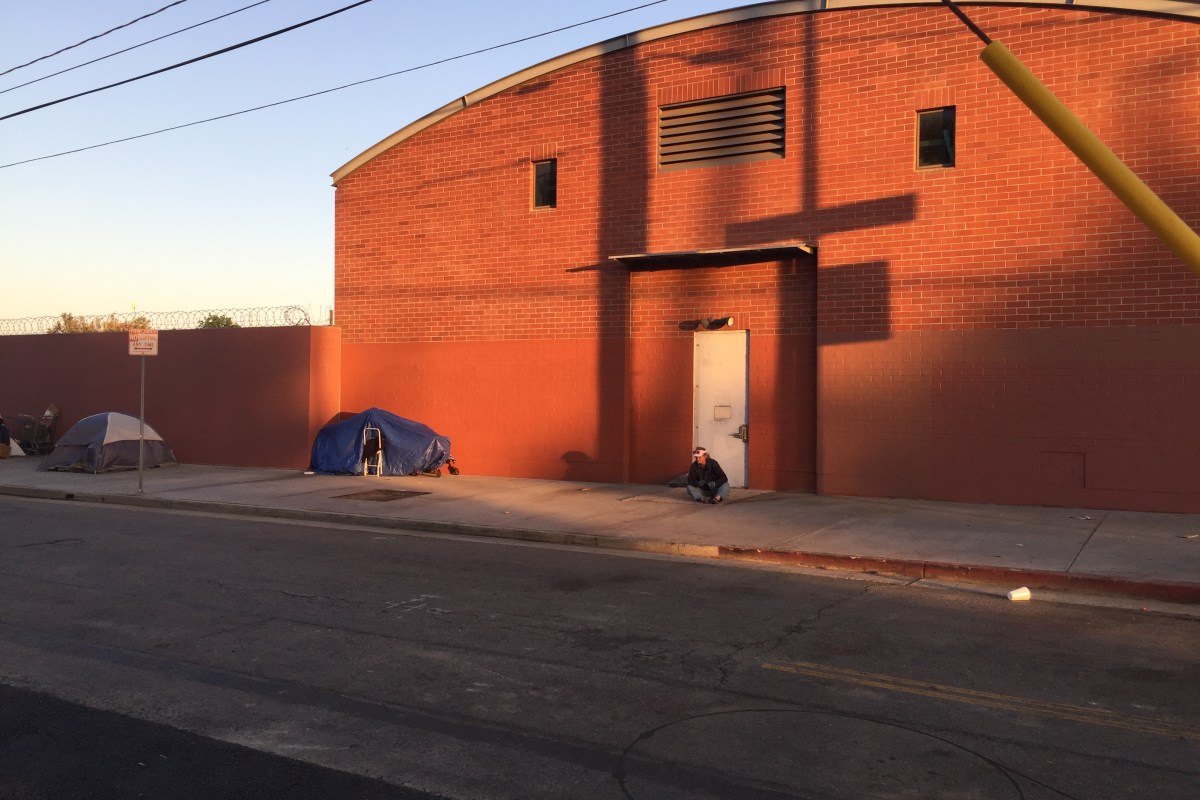
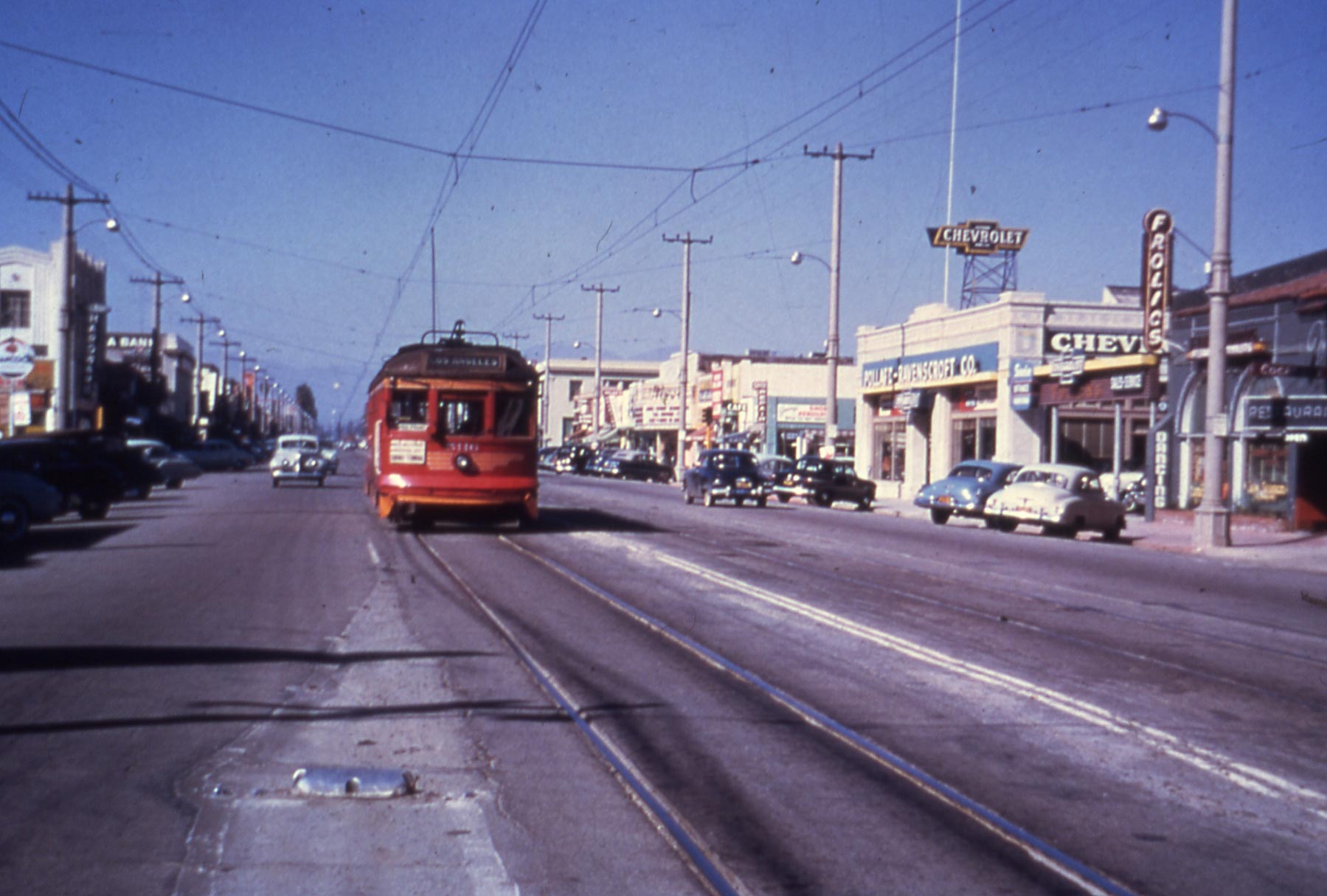
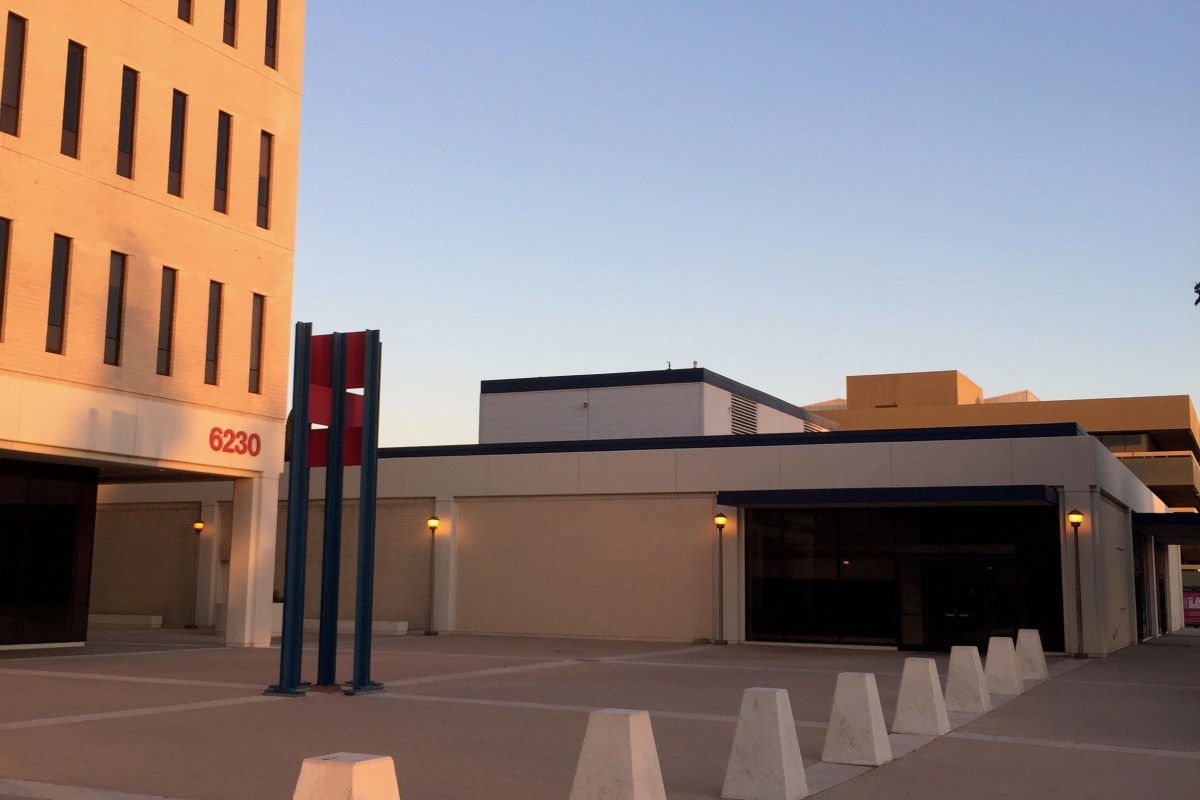
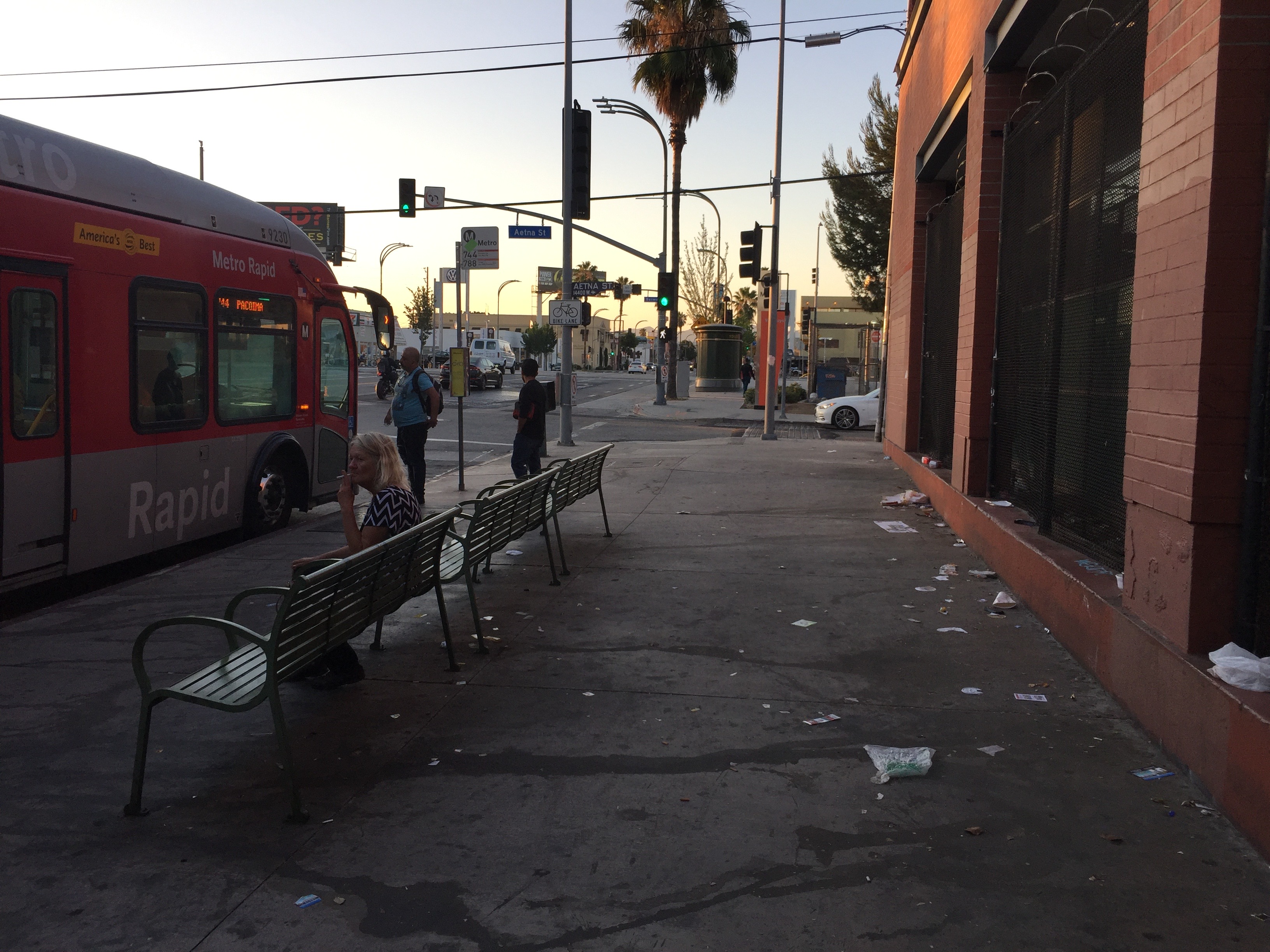
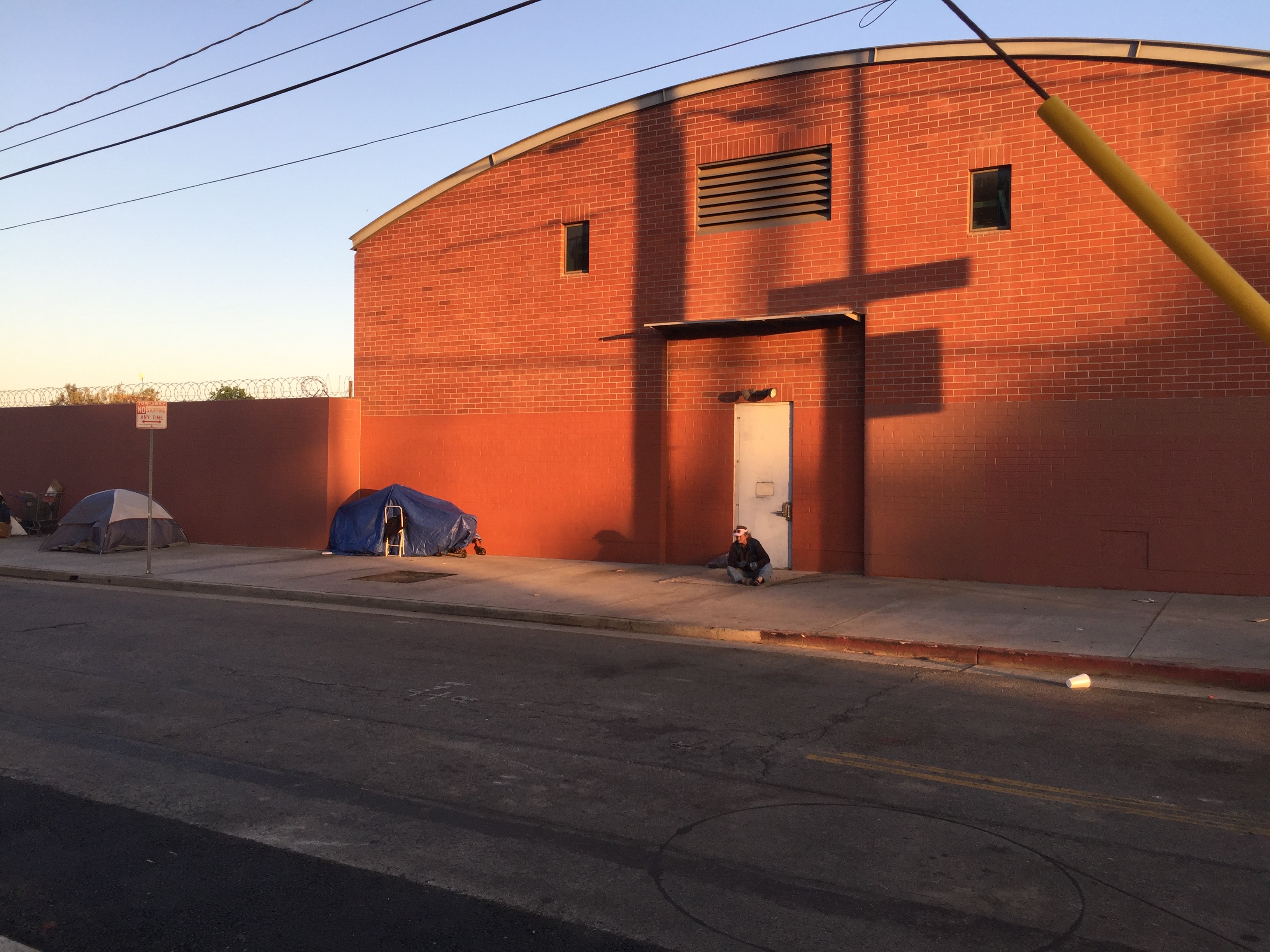
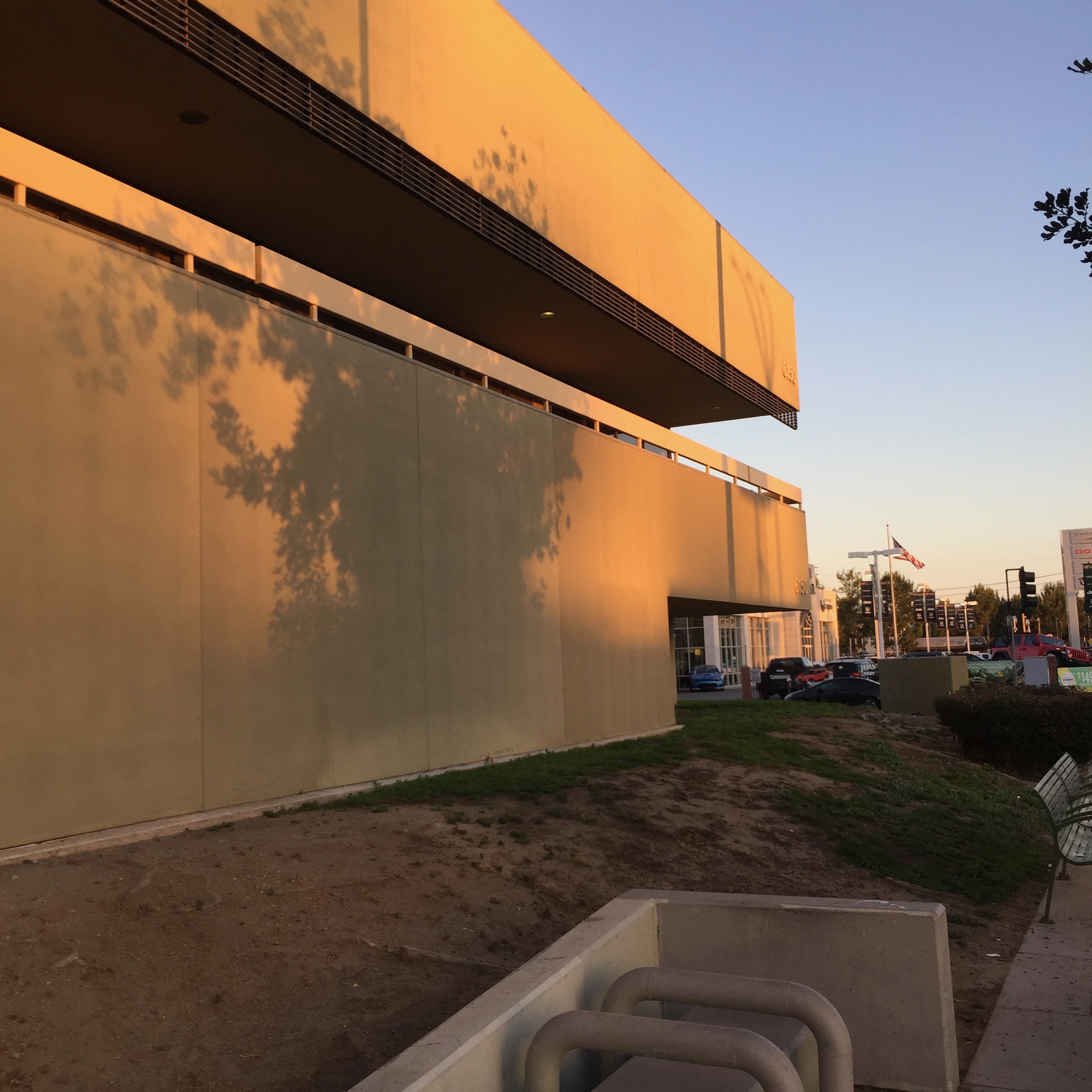
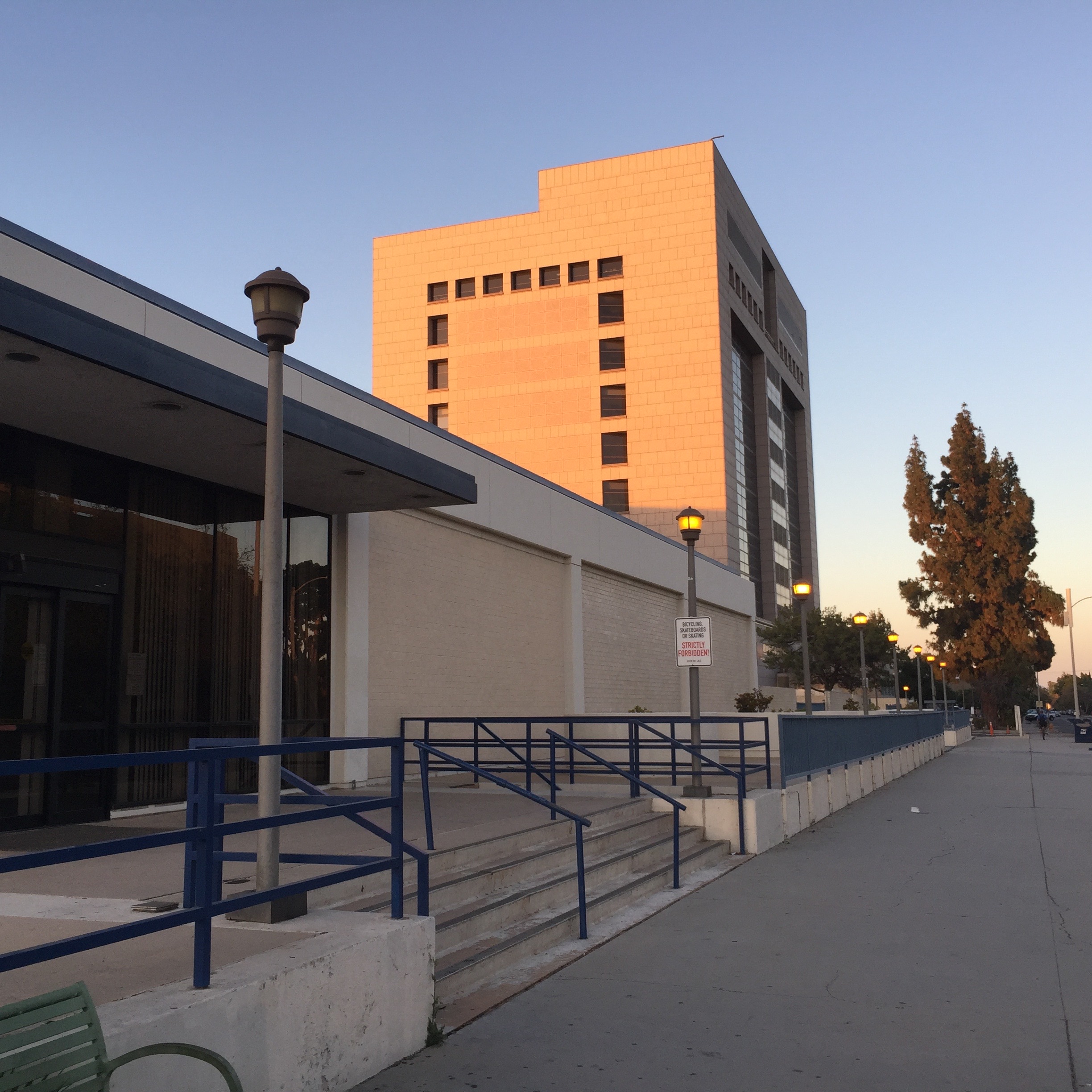
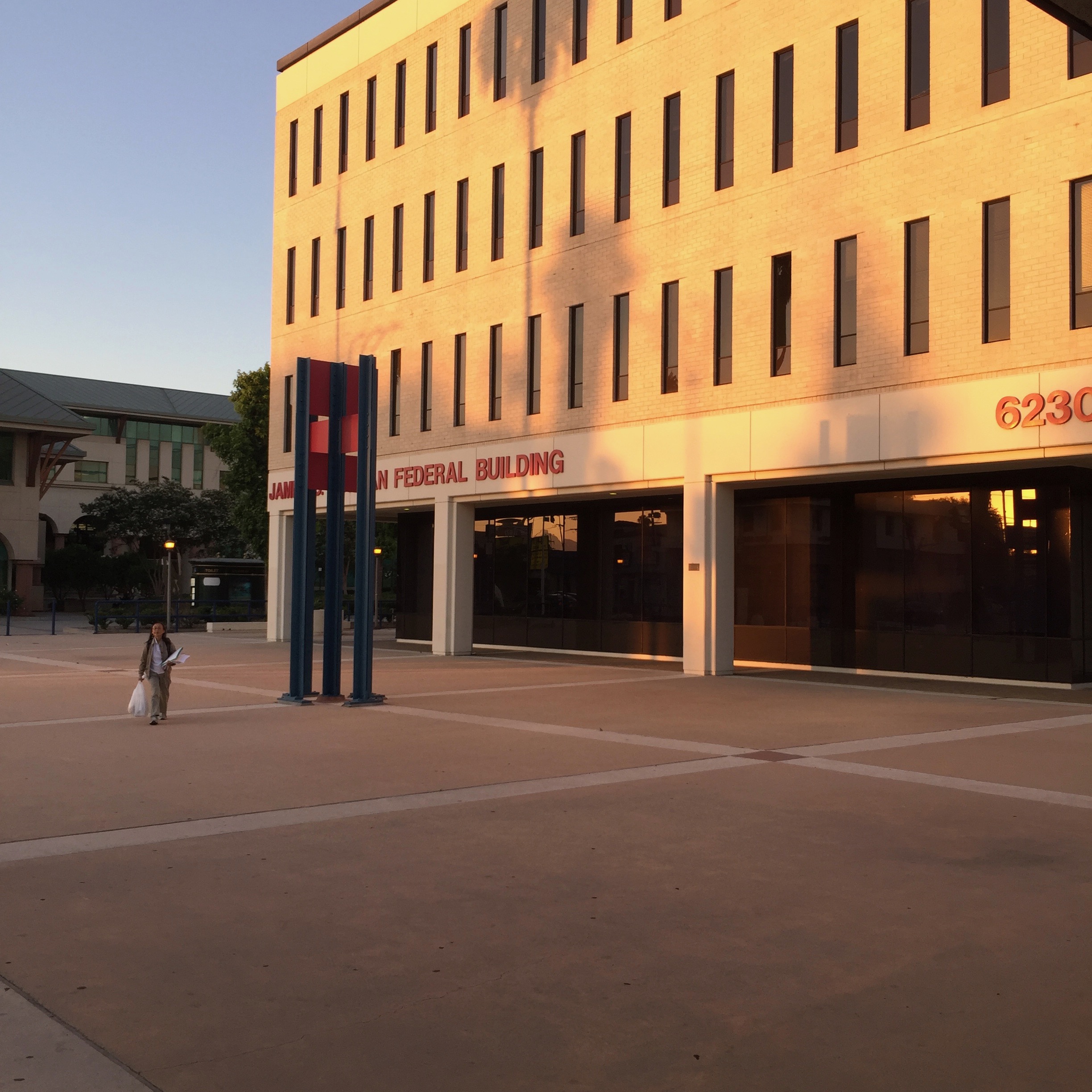

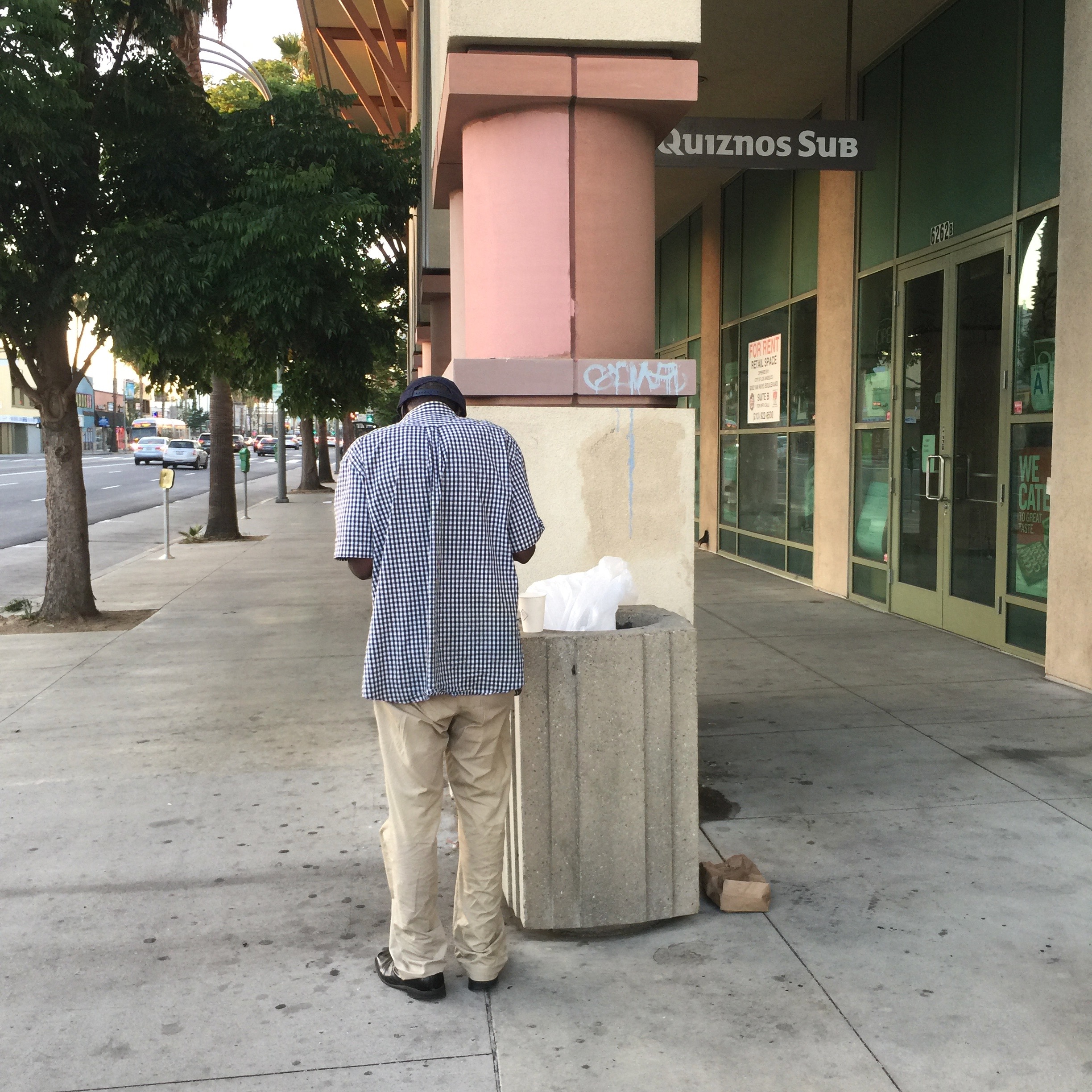
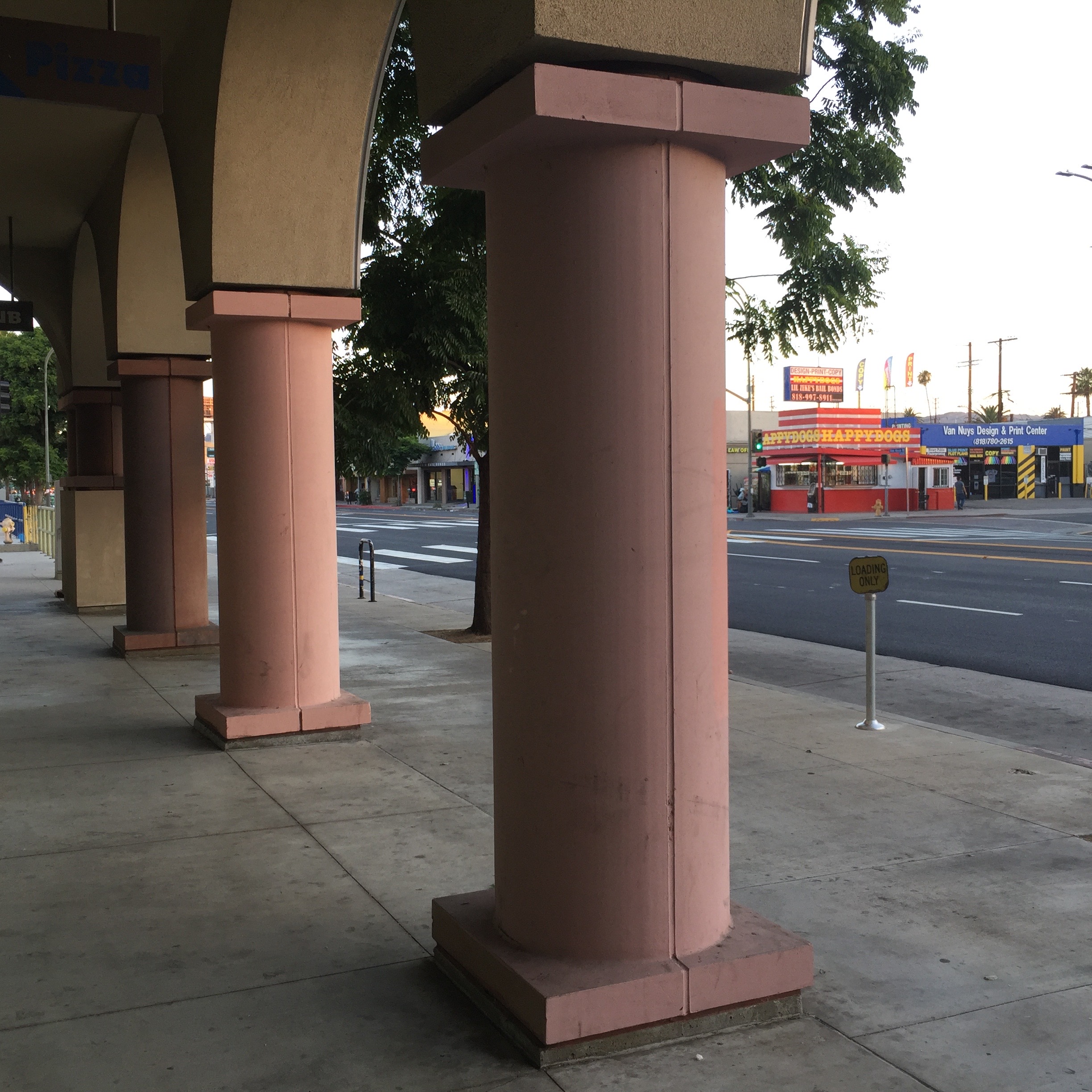
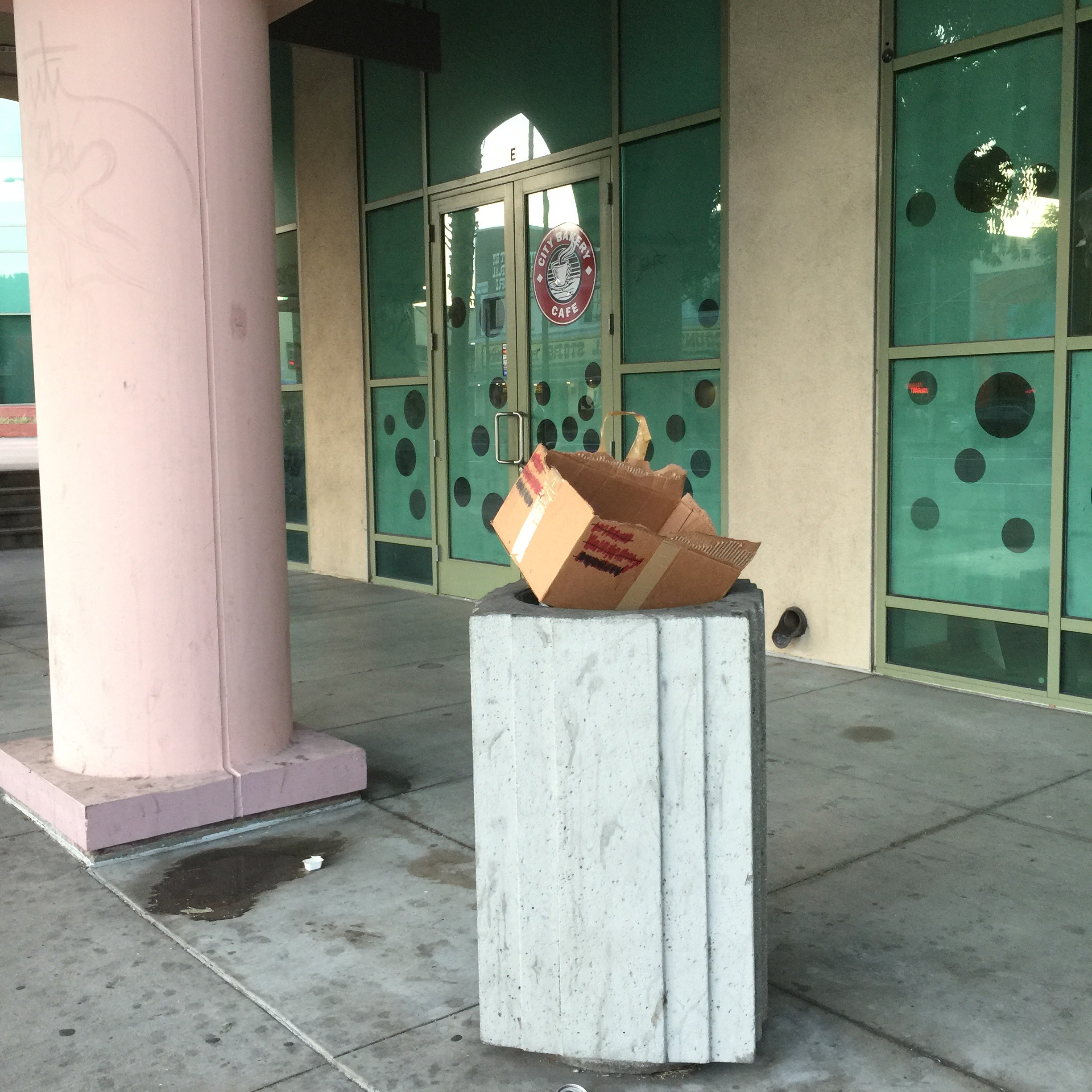
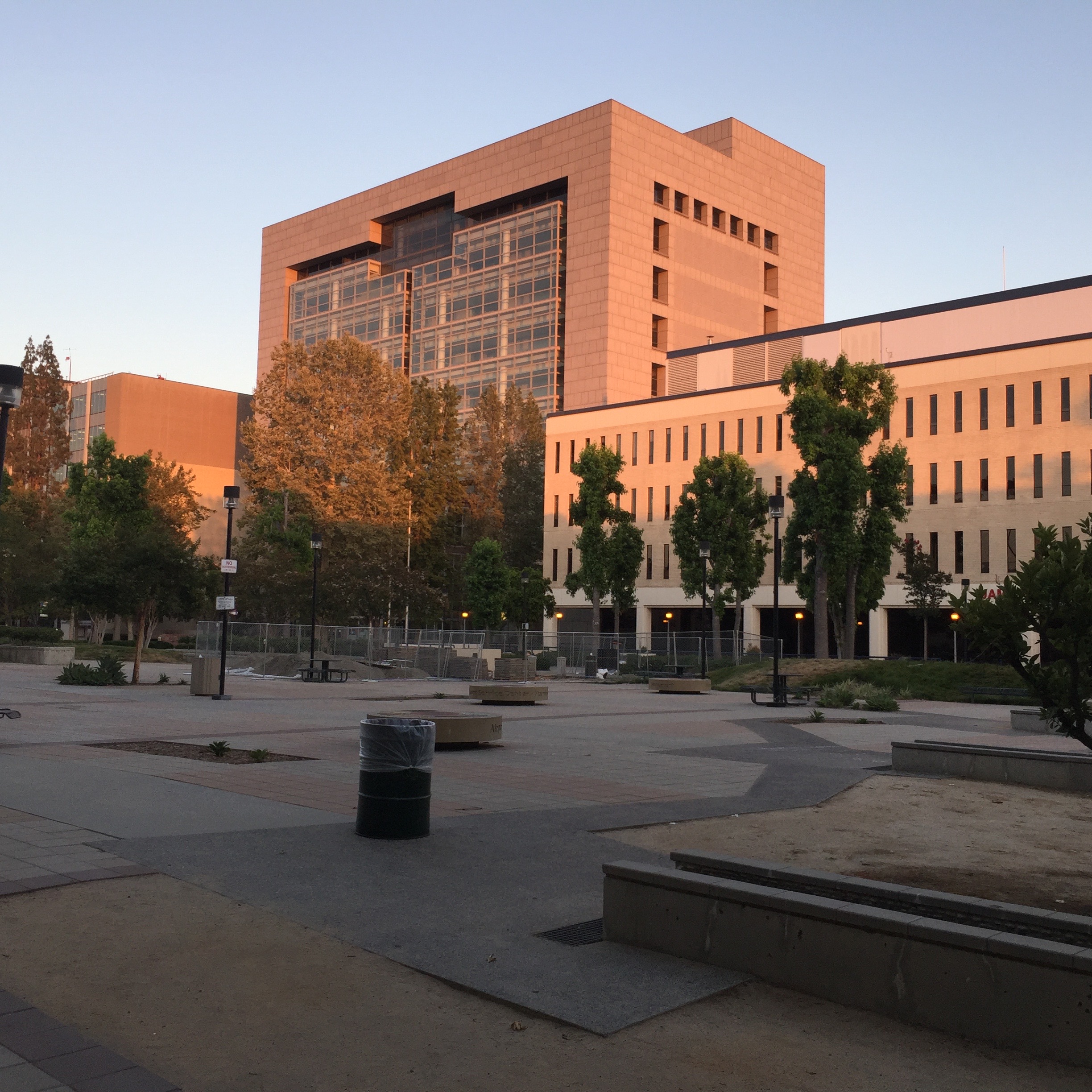
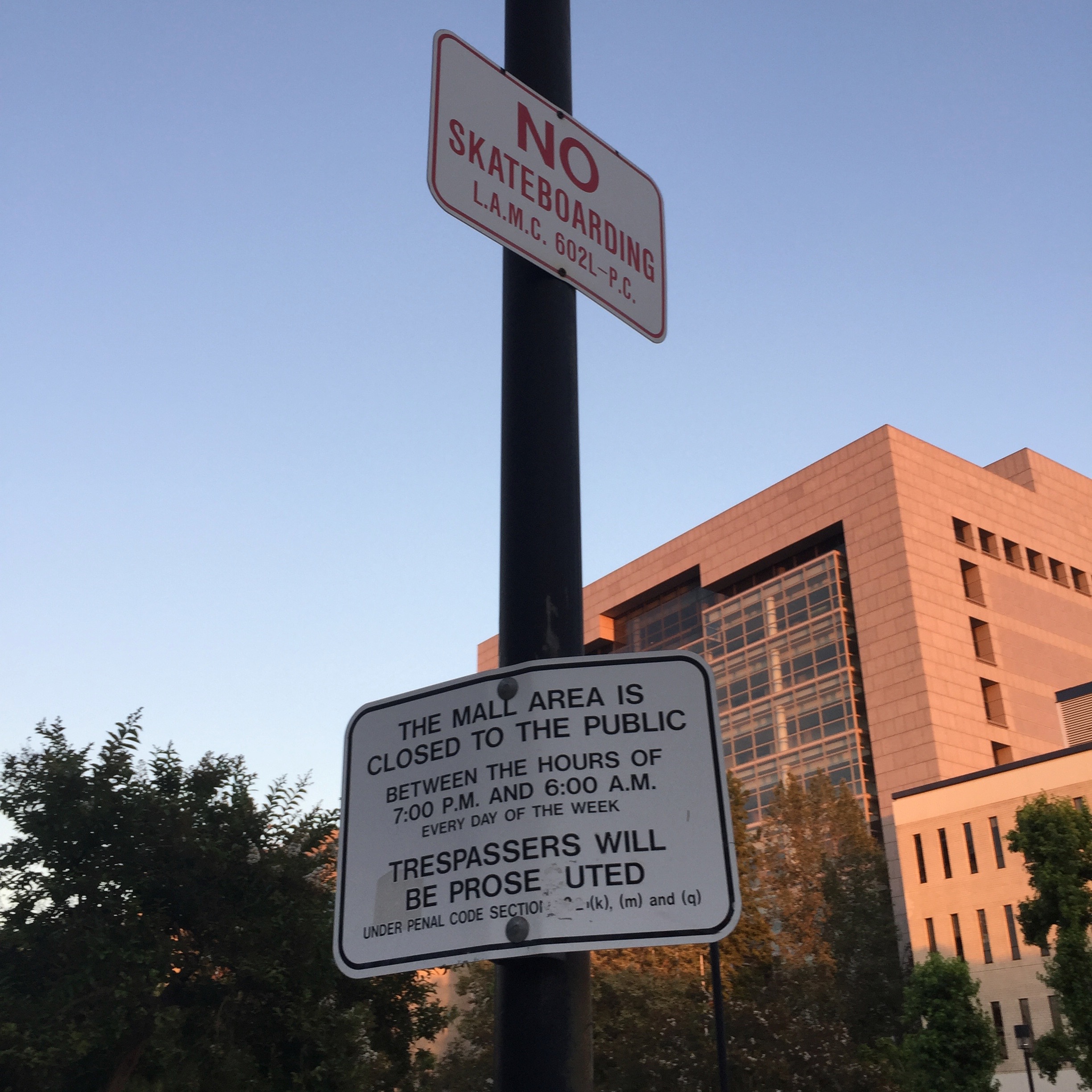

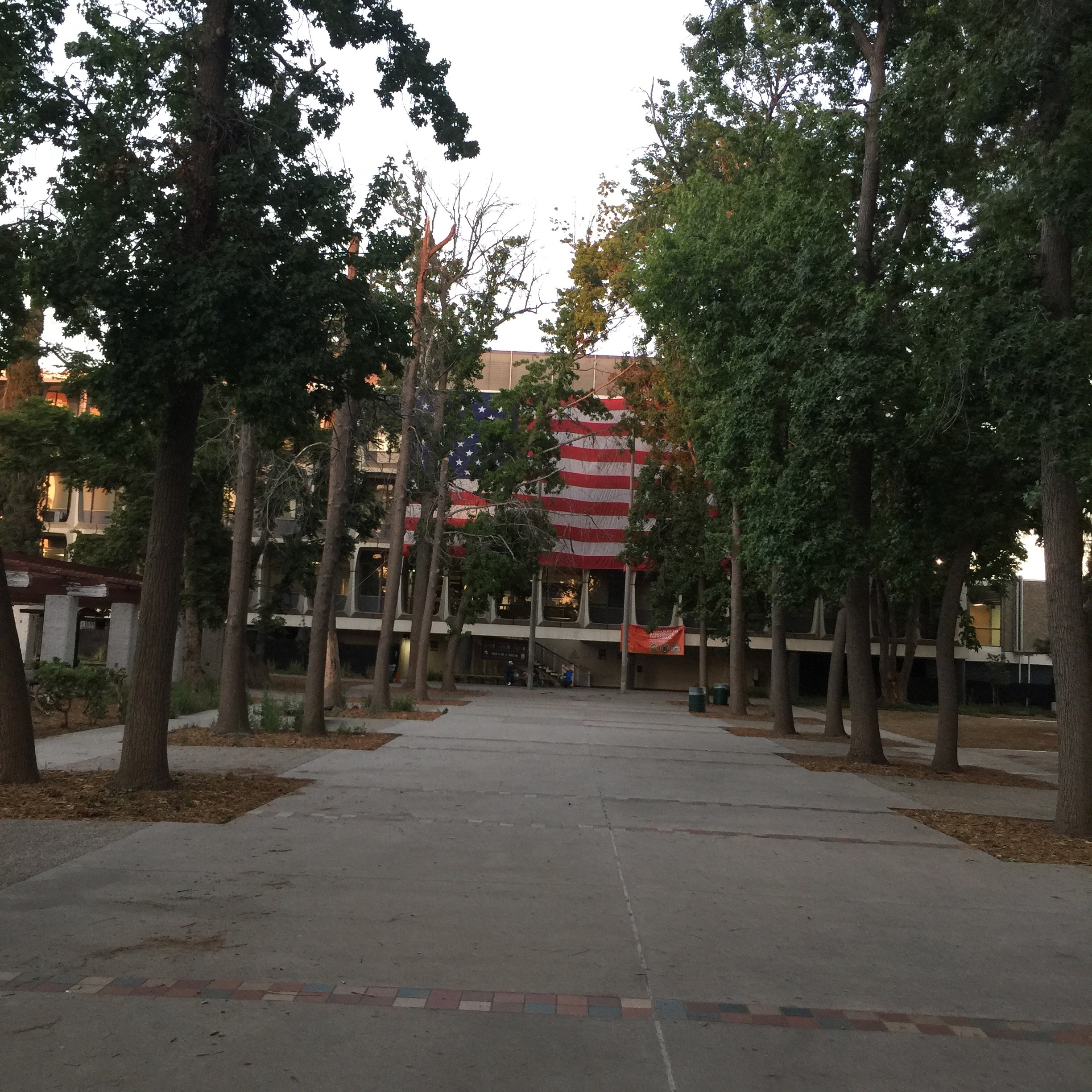






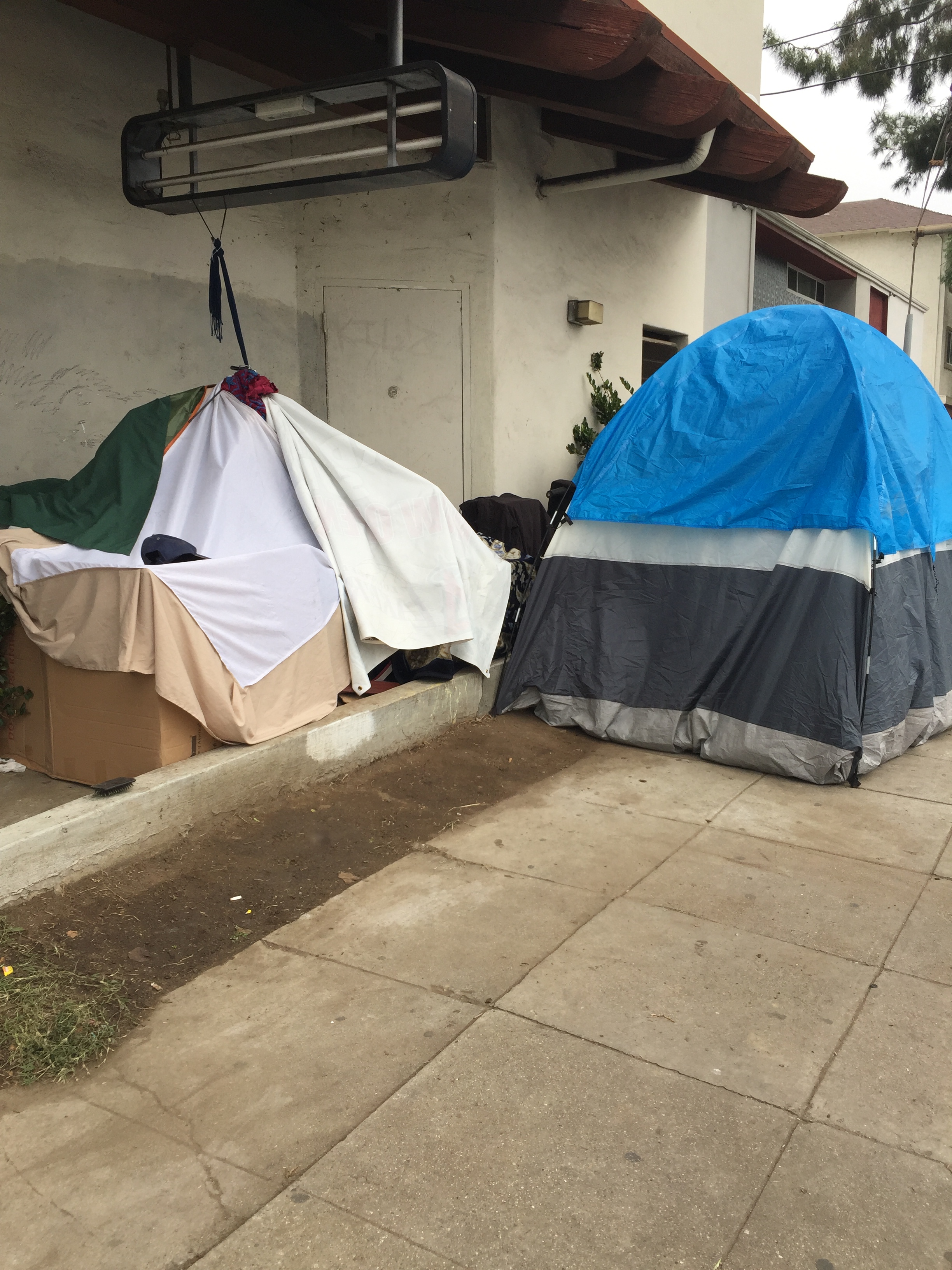
 Here in Van Nuys
You must be logged in to post a comment.