Beware of Big Promises: 1963


Community leaders, developers, planners, business people, and boosters are forever promising a brighter day tomorrow.

So it was in Van Nuys nearly 60 years ago.

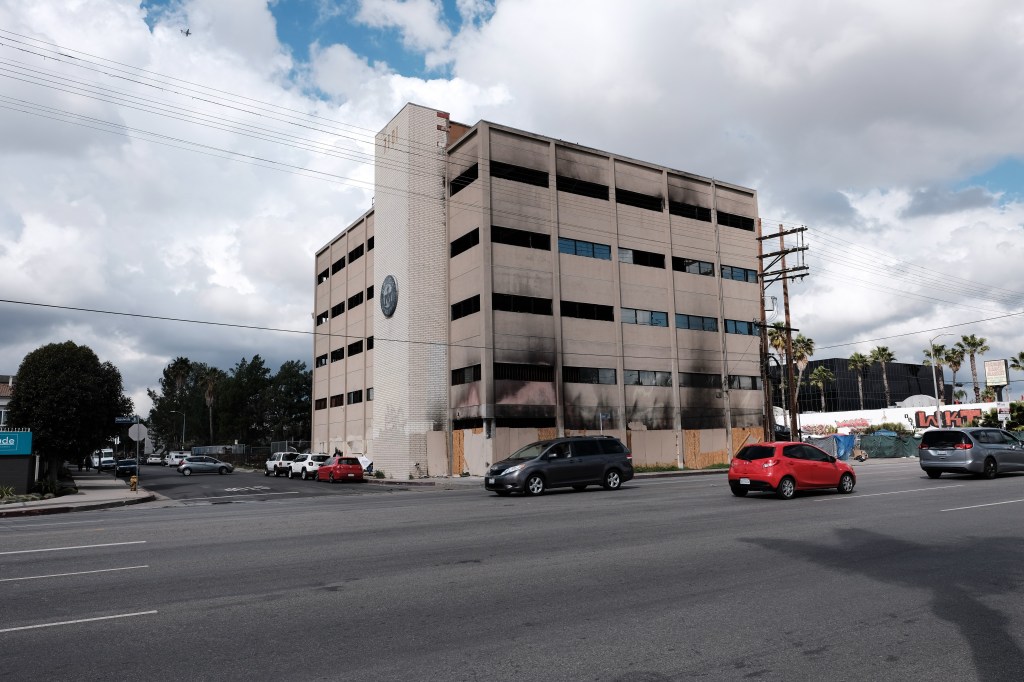
The new police station, a striking piece of $5 million dollar architecture, whose inspiration appears to be many vertically positioned Philco televisions, was nearing completion on March 29, 1963. The grand civic center, a pedestrian promenade, a library, and several court buildings would complete the ensemble.

On February 16, 1963, 400 well-groomed white people gathered at the Masonic Temple Lodge on Sherman Way to view the exciting land use plans unveiled by the Los Angeles Planning Department governing the future development of Van Nuys.

A mystery remains: Why was a law enforcement structure removed from the street and shoved way back behind a deserted pedestrian mall?

The idea that a police station, whose presence is ostensibly there to prevent crime, should be buried far from the streets where officers patrol, is one of the confounding results of architectural planning which often presents glorious schematics but fails to consider practical results. Van Nuys Boulevard today is a ghost town, except for those who are there to make crime. A cop or two might reassure diners, drinkers, and those who are out for a nighttime stroll.

And the plans for Van Nuys? What have they produced in the last six decades? Probably the largest conglomeration of urban ugliness, environmental catastrophe and social upheavals within the entire United States.

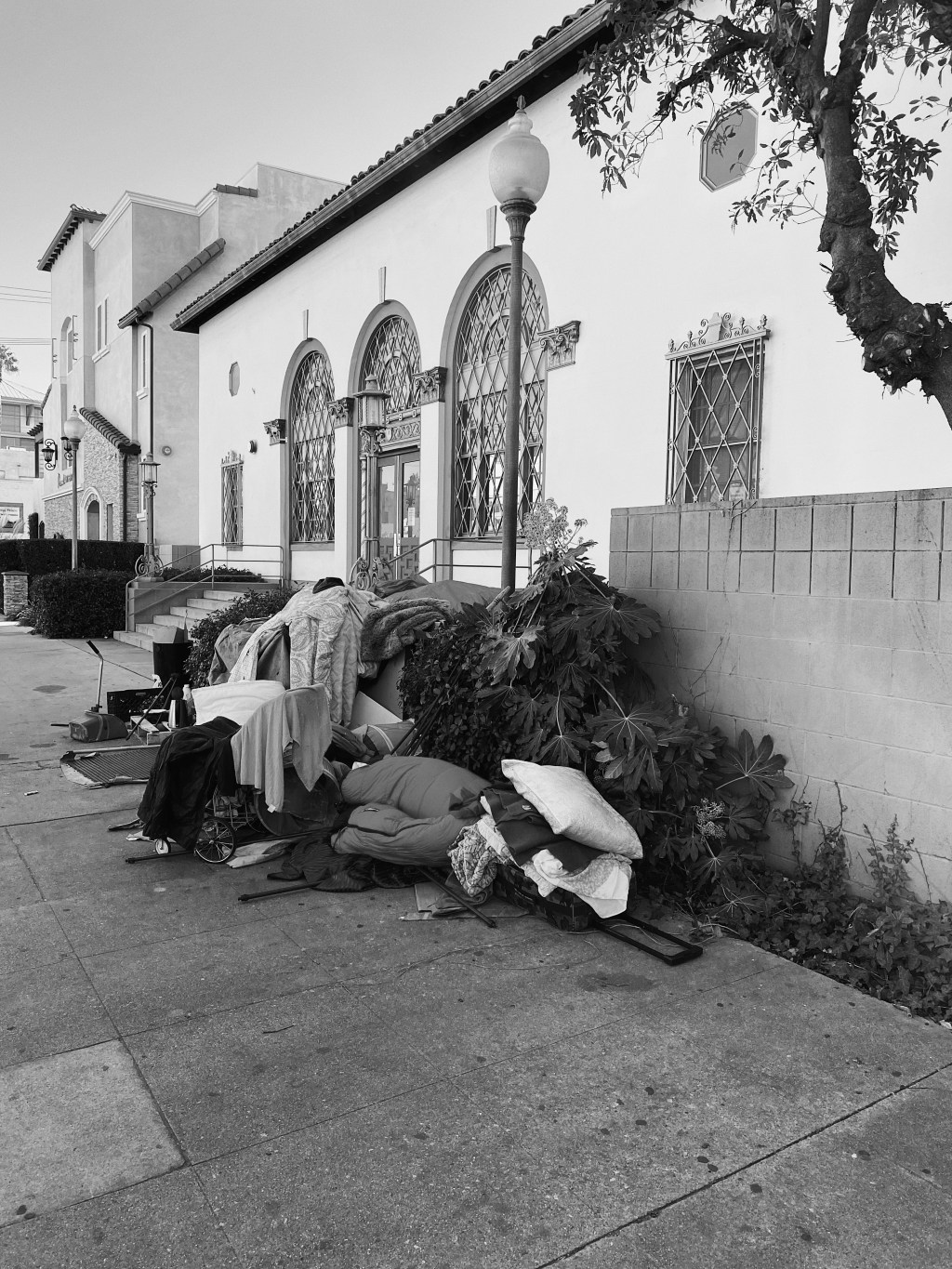
Our surroundings are here to serve only the needs of cars, our air is dirty, our parks few and overrun with garbage and homeless, and we live under the daily and nightly sounds of gunfire, fireworks, sirens and patrolling helicopters. Our rivers are concrete, our boulevards are decorated with billboards and wooden traffic poles, our corner stores are marijuana outlets or parking lots, and the sidewalks are festooned with shopping carts, discarded sofas and tents.

Though most everything along the wide streets looks like impoverished crapola, the rents are exorbitant, and a “starter” home is $800,000. Any efforts to build higher than four stories brings out the angry loudmouths on NextDoor, and developers are maligned and despised by the general public while bearing ridiculous regulations that require onerous fees and expensive construction that inflates costs and discourages new housing. The little old lady, who inherited the three bedroom ranch house from her parents, and pays $300 a year in property taxes, is usually the bitterest one of all.

“I pay taxes! Why does everything look like shit!” she screams.

What kind of city do we live in? What is wrong with us?

Our system of life on Earth is failing globally, and especially here in Van Nuys.

The lesson: beware of great promises made by the powerful for they only care about themselves.

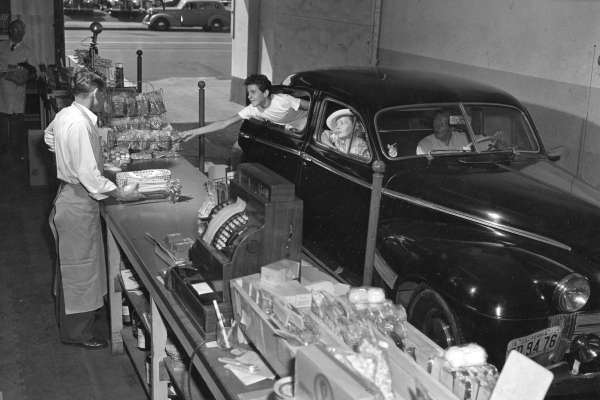
Credit: LAPL/Valley Times Photo Collection

El Crappo


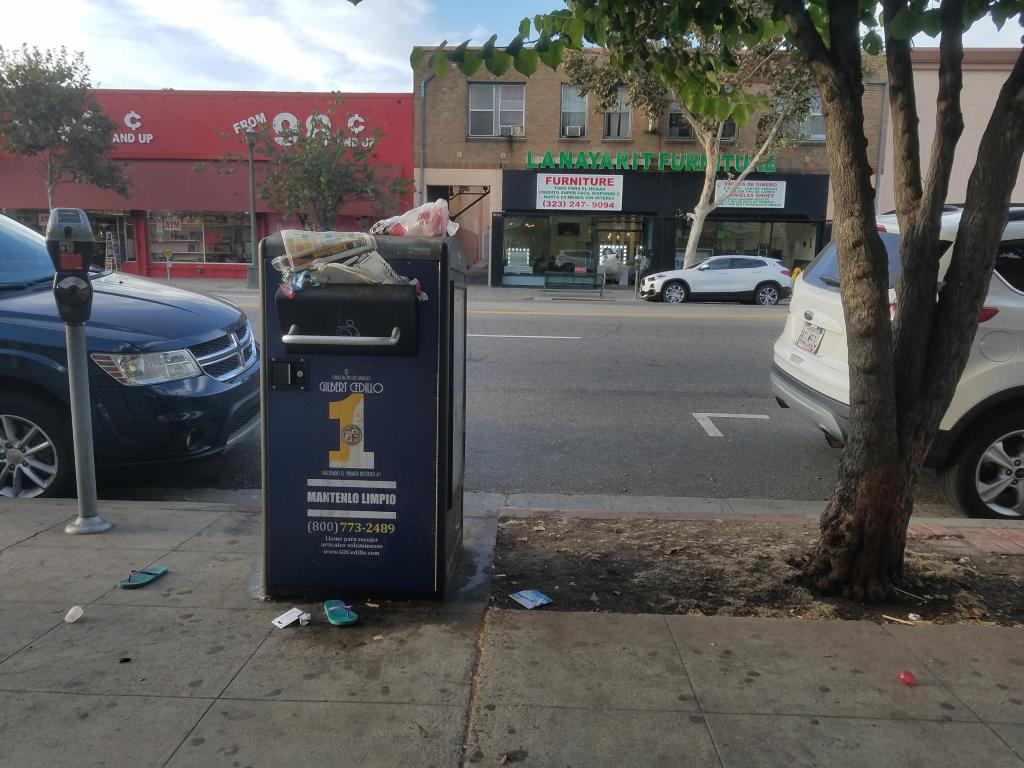
Running along the west side of Sepulveda Boulevard, from Haynes to Lemay Streets, is a traffic median, allegedly planted with trees, but mostly serving as a local dump for household refuse, a refuge for old couches, toys, luggage, mattresses, beer bottles, etc.

Nearby are new, gleaming, white paneled developments, including the rental apartments at IMT 6500, “with easy access to golf courses, tennis courts, jogging, bike paths and boating on the Balboa Lake.” With lush photographs and bucolic descriptions, one might mistake this online fantasy as Zurich, Switzerland.

Ugly before the pandemic, hideous now, it seems that the many unfortunate events of the last year will provide a generation of politician’s excuses for the deplorable environment Angelenos endure. Add in the presence of thousands of homeless, the daily fires in Balboa Park, the rancid smell of sewage, global warming, ever present violence, property crime, speeding cars and crashes, fireworks and pipe bombs,  and you have a drama that surpasses the worst conjurations of Hell.

But do not judge this district from the worst examples. There are lovely places nearby.

Just one block from here, at 15351 Haynes St. a home recently sold for almost two million dollars. 

On nearby Orion Avenue, a studio set neighborhood of picket fences, rose bushes and white houses earns many residents tens of thousands of dollars each month for commercial filming. And some of these glorious residences, worth millions, many inherited, pay less than $2,500 a year in property tax.

But few who live in the privileged homes venture out at night to stroll past Jiffy Lube, Dunn Edwards or Jack in the Box. And nobody has a picnic on the median. The pleasant events all happen behind tinted windows, in air-conditioned homes and vehicles, there is no pretty nature other than the yards dressed up for commercials.

And there is never any connection between the public, civic realities of life in Van Nuys and the private dreamscape of those fortunate enough to own a piece of paradise.

You end up in a mansion or dumped along the road.  Roll the dice.

Moonlight Walk in Seoul.


Let us go for a moonlight walk in Seoul.

Put on your mask, there is still a pandemic going on. Everyone else is wearing one, because it is a responsible and civil gesture, protecting oneself and others.

Let us go walking on spotless streets. 

See the others walk past us. Everyone is trim, they seem to take care of their health. 

Let us go into the temple grounds. 

How beautiful it looks at dusk!

See the glorious architecture, behold the trees in bloom. There are families everywhere. Nobody fears a mass shooter. Nobody is scared of homeless or mentally disturbed people. All is orderly and regulated, safe and comforting.

Let us walk through Gyeongbokgung Palace, into the gardens, along the walkways, under the trees.

There is no garbage, no litter, no trash camping, no graffiti. People are content because they live in a city and a nation of self-respect and dignity, law and order. 

Let us live in Los Angeles as one might live in South Korea.

America once saved Korea. 40,000 American soldiers died, 100,000 were wounded to protect freedom and fight communism. The prosperity and happiness of modern South Korea was built upon the sacrifices of many who died so life could be lived in liberty.

Now Seoul, if it is not too much trouble, can you please save the soul of America?

Can you import your values to Los Angeles?

We are in desperate need.

How Can This Be?


On a weekend we started again to go down to Koreatown for food.

Before the pandemic we went all over the city to find great things to eat, places to explore, neighborhoods to walk around.

Now you drive along the Hollywood Freeway and there are piles of garbage up and down the hills, tent encampments, trees set afire, just absolute utter appalling destitution.

At the Western Avenue off ramp, this trash has been like this for perhaps five years, so it pre-dates, by many years, the great excuse of the pandemic.

Last Saturday there were two men drinking beer inside the trash heap.

Yet these two photos show only a glimmer of what else exists, everywhere.

There are tents, campers, cars, RVs, trucks, along more streets in Los Angeles.

And the freeway is a camping zone, a place where hundreds are sleeping.

How can this be?

What state and what city would tolerate this?
Nobody benefits from it. Not the poor, not the homeless, not the mentally ill.

And not the 99% of Californians who live here.

“We’re Building an ADU!”


as told by John M. Thompson to Here in Van Nuys

“Just wanted to share the great news. We’ve finally taken the plunge! We’re building an ADU, a second house in our backyard.

I’m 61, and you know freelance graphic designer and the wife is on disability so we’ve been thinking how can we make money in our so-called golden years?

Looking out at our backyard, it was always on our minds. Sure, we enjoyed our lime, lemon, fig and avocado trees, and the herb garden. But we looked at our water bill, some $800 a month, and we thought we could do better with a backyard of concrete and rocks, driveway planting bed and a new 640 sf ADU.

My gardener Hector and his son Romeo have worked here for years, (expert tree trimmers too) and I struck a deal with them to design and build the house. They know how to negotiate (especially in Spanish) and they got lumber, concrete, electrical, plumbing, roofing, the whole works, and we are doing it for only $210,000.

We have tenants signed up already. Phish and his girlfriend Charmin and their two pre-school sons, Emo and Fly, are going to move in. Phish is from Philly and is a musician and works as a budsman at the dispensary on Oxnard and Kester.  Charmin is cool, very hard working, does adult films too. She wants to run a day care center out of the house and I said that’s fine. I love little kids and it will bring some excitement into our lives. Phish will work during the day and a couple nights a week his band will rehearse in their unit.   They drove out here last month from Philly and are living in their car until the ADU is finished, but they’re young and flexible. 

This ADU thing is one of the best policy changes to come to LA in years. I know the city will regulate it and make sure that renters pay on time, that there is enough parking for everyone, that utility bills aren’t exorbitant, and that the people who are in the ADU pay their rent on time.

I figure after some 20 years, by the time I’m 81, 240 months from now, I’ll want to sell my house and the ADU that I’m building. 240 months of collecting rent will be just fine, an easy way to knock on the door of my back unit and get some $2100 a month handed to me. I’m sure I’ll have no problems collecting rent, and those people who think I’ll be bothered by noise and lack of privacy and the destruction of my garden are just negative naysayers who don’t understand how to make a buck.”

Around the Neighborhood.


Since the pandemic began, in earnest, last March, one of our routines is the morning walk around our neighborhood.

The fact that most of us live and work at home, self-incarcerated by choice or duty, has produced a strange life. Beside the societal disasters that befell our nation in 2020, the ordinary existence of the citizen is to wander out and wander back in.

Wandering out, in the morning, or when the light is beautiful in the late afternoon, I captured some images of our area with my mobile and edited these on VSCO.

Kester Ridge is basically a 1950s creation of good, solid ranch houses between Victory and Vanowen, Sepulveda and Kester. On Saloma, Lemona, Norwich, Noble, Burnett, Lemay and Archwood the houses have endured, and only a few have been completely demolished or aggrandized. 

But the persistent trend is the ADU, the conversion of garages and backyards to multi-family dwellings. Many of these houses are rentals, and the ones that are owned also rent to others who may live beside the owners.

A few years ago this seemed problematic, and the idea that our backyard behind would sprout a second house four feet from our property line was unimaginable. But now we also have a gray box 4 feet behind us, 30 feet long and 15 feet high and we are OK with it, as long as the dogs, the noise, and the marijuana don’t also move in. 

Meanwhile, the ranch houses, the sidewalks, and the garages without cars stand silently and passively, unaware of their portraits.