Last year, in early 2019, before all hell swept over the Earth, I was working as a photographer.
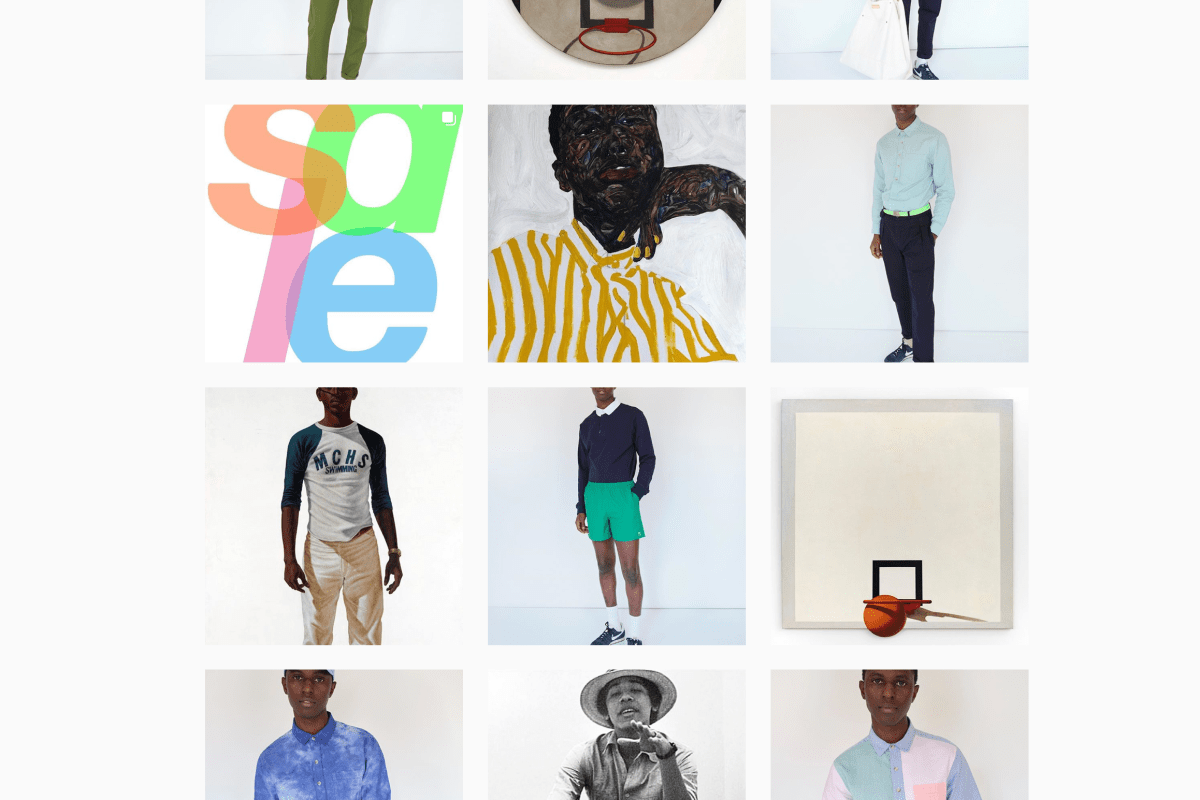
Seeking to refresh my portfolio, I contacted a model on Instagram who was a striking looking Black male. He had close to 20,000 followers. He agreed to a “trade for print” (TFP) which is just a term for a barter arrangement where a model and photographer work for free in a mutually beneficial arrangement.
I thought about how I might shoot this person, and I found a start-up clothing company that was just gearing up. The designer founder, a middle-aged white, who had 20 years of experience in fashion, had just moved from New York. He made rugby shirts, well-tailored trousers and other prep clothes that were locally manufactured in downtown Los Angeles to high quality standards.
I contacted the designer and drove down to his perfectly decorated art deco apartment in Hancock Park where he had selected and neatly folded jackets, pants, and shirts to photograph. Again, the arrangement was just to “tag” his products on Instagram and he would get credit and some free advertising and I would have loaner clothes for my model.
The model came over to my house. I shot him in the clothes as he stood in my backyard, and in a chair in my living room. And then he left. And all was fine. The Black guy with the green eyes in the colorful shirts looked wonderful. (I have erased his face to protect his identity.)
I felt some compassion for the model, who was, of course, also pursuing acting. I gave him a couple of leads of directors or producers I knew and said he should follow them online. He sent me texts of thanks. And that was the end.
Then the designer saw the gratis, no charge, promo photos.
And for whatever reason, he hated, despised, and was completely revolted by the good-looking young Black male. He gave no reasons, but it seemed that he preferred a “preppy, All-American” (WASPY) male. He was aghast at the free photographs and not at all appreciative of the pro-bono work. He told me he wished that I never put this Black man in his clothes.
A day later the model contacted me and asked why the designer had (unknown to me) blocked him on Instagram. I had no answer. My heart broke because I could not understand why. I could only guess racial animosity. But could not prove it. Why the hostility directed against this dark-skinned man? He had done nothing wrong other than wear the designer’s clothes!
I had, in my initiative, promoted a new clothing line, and an upcoming model, and all I had were some very fine photos. It had cost me nothing, except for the gasoline driving 30 miles roundtrip to Hancock Park.
Then a few months ago, about a year after the shoot, the model, whom I hadn’t communicated with, sent me a DM on Instagram. It read something like this:
“You do not have the right to TFP my name to promote your friend’s clothing company! You are OLD! Why don’t you go fuck your Chinese boyfriend!”
I didn’t answer. The attack was completely unprovoked. It did not matter to the model that he got free, edited, professional photographs that he could use to promote himself. And that my “friend” was not a friend at all, just a brand I found on Instagram. I guessed that the pandemic had made him just a bit more crazy as it had all of us.
Today, out of curiosity, I went to see whatever happened to that promising start-up company that made the very colorful rugby shirts and high-quality khakis.
I couldn’t see it. The clothing company designer had blocked me on Instagram.
I’m recounting this story because I had the best of intentions all around in producing this small shoot. Everyone was treated fairly, courteously, respectfully. Nobody was mistreated in any way.
I found an alternative way to look at the website of the designer’s IG page. He has one Black model in every single photo. And dozens of boxes of “Black Lives Matter” and all sort of salutes to racial justice and racial equality.
Of course, it’s past May 25, 2020. George Floyd is dead. Black Lives Matter. Everyone must show social media empathy for the cause. The company that sells the $200 khakis makes sure that its’ images are on the appropriate side of compassion.
I see the kind posts this year. I remember the mean actions of last year.
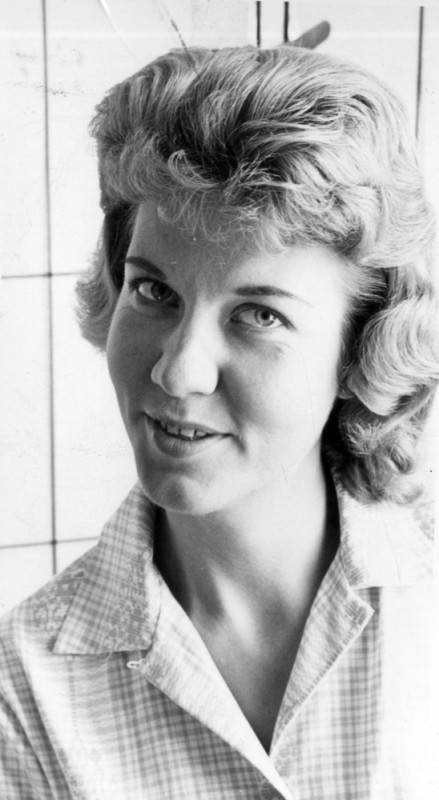
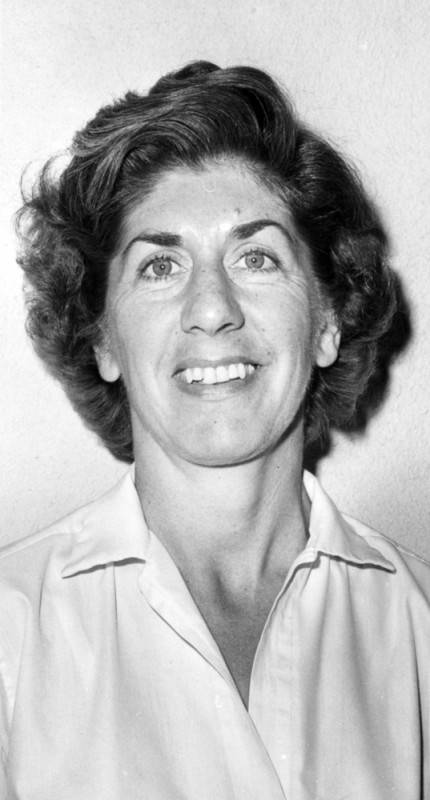
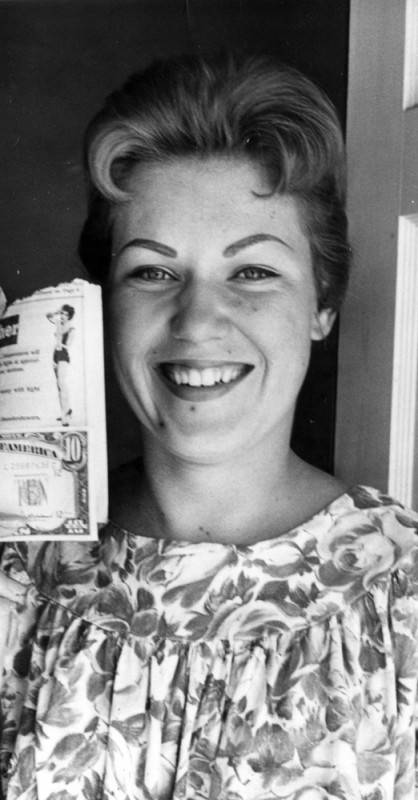
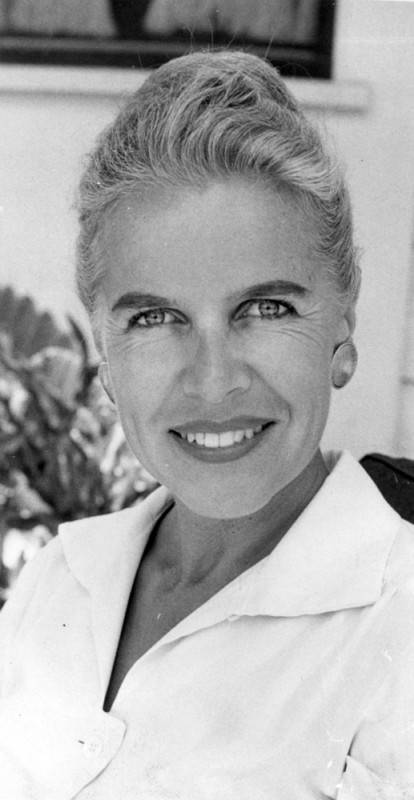
In 1961, the Valley Times newspaper ran a contest to promote a new insert, Weekend. The winners produced a clipping of Miss Weekend Weather and claimed a $10 prize if they were chosen.
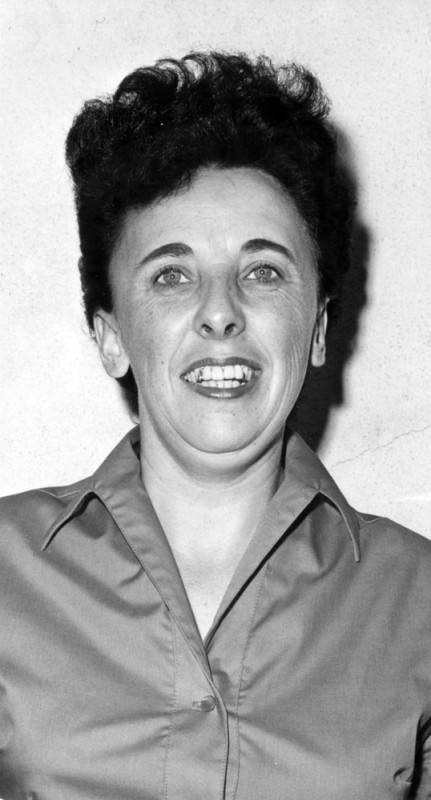
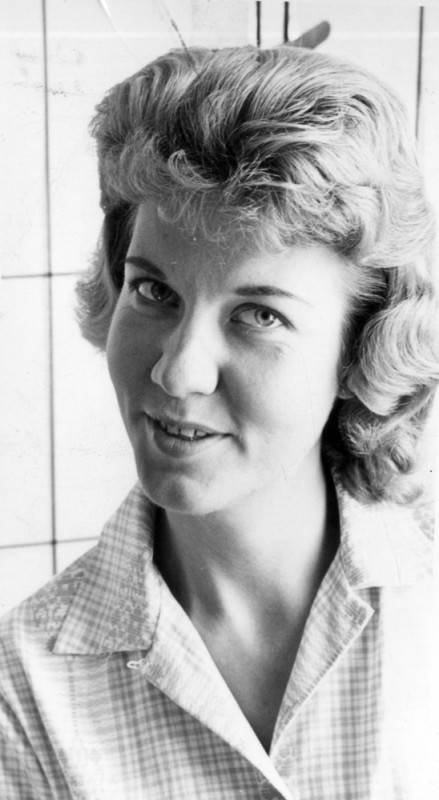
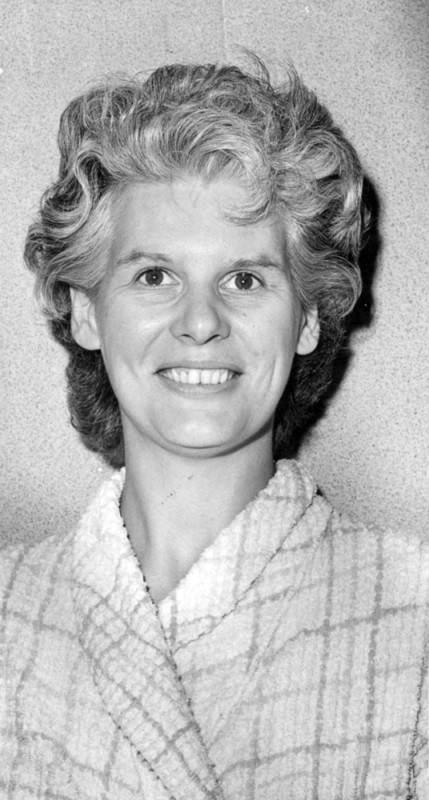
A photo essay, with pictures of the winners, entitled, “People People Envy” ran on September 3, 1961 in the Valley Times. All the women were courteously named, in the custom of that time, with their husband’s names, i.e., Mrs. Patrick McGarry.
It was an era when women were not considered complete unless they had a husband.
September 3, 1961
Mrs. William A. Rygg, 13430 Oxnard St., Van Nuys; Mrs. Walter Schulte, 8720 Hazeltine Ave., Panorama City; Mrs. Brace Gurnee, 11744 Otsego St., North Hollywood; Mrs. Jay David, 7519 Owensmouth Ave., Canoga Park; Mrs. Frank Dalton, 926 Parish Pl., Burbank; Mrs. F. W. Walpole, 17500 Minnehaha St., Granada Hills; Mrs. S. E. Meck, 9132 Yolanda Ave., Northridge; Mrs. Patrick McGarry, 5104 Woodley Ave., Encino; Ruth Fulton, 6619 Wynne Ave., Reseda, and Mrs. William Schmitt, 14201 Remington St., Pacoima.
A housing and planning blog I read, Granola Shotgun, recently had a post about how the author is hassled for taking photos in public for such elements as parking lots, buildings, encampments or anything structural connected to a human.
In the past 15 years, since I started this blog, I have had similar experiences of being confronted when diligently just recording any exterior anywhere because it captured my imagination.
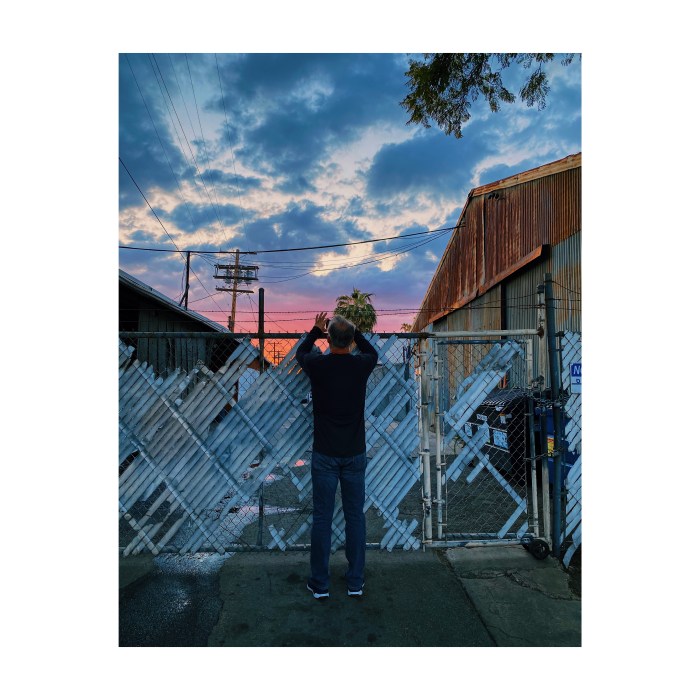
As recently as March 2020, on the last night I went out to drink at MacLeod Ale, I left the brewery. I was with a friend, who also had a camera. The sun was setting. The light was golden and glorious. I had my Fuji XE3. While walking on Calvert towards Cedros, I started photographing many things that the light was hitting, including the exterior of an auto body shop.
Several tough, menacing looking men were conversing across from the shop. One yelled at me, “Hey! Why you taking picture?” he said.
I had a few beers so I answered, “Because I want to. I’m not on private property and the sun looks beautiful on that building.”
“What building? What sun? What you talking about?” he answered.
We walked over to Bessemer St. through the trash of a block long homeless encampment, (which I wouldn’t dare shoot) which once would have been illegal and immoral, but is now normal. People living, shitting, drinking, sleeping on the street. By the tens of thousands. OK in Garbageciti.
On Bessemer, as we got into the car, a tinted window Mercedes SUV drove by slowly, eyeing us, letting us know we were under his surveillance. Nothing happened, but we drove away chilled at the implicit threat.
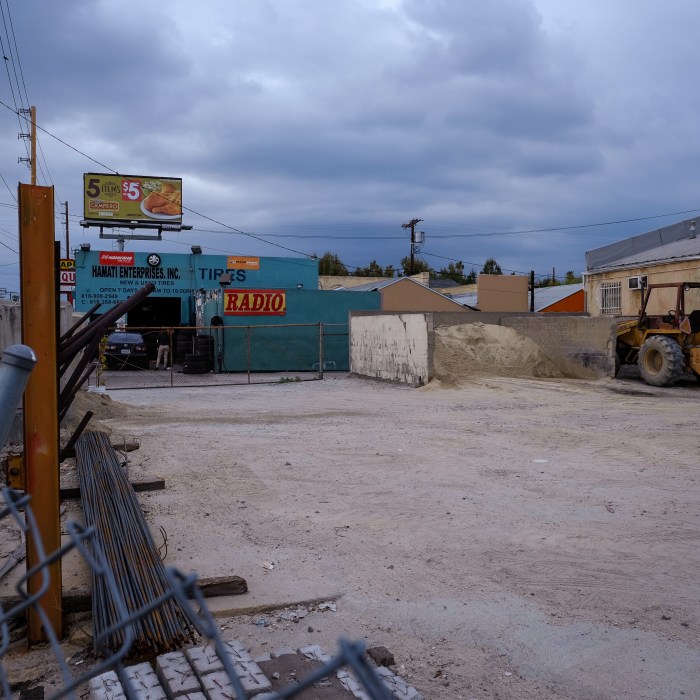
I write and photograph about the urban condition of my neighborhood. I do it with the intent of telling the truth, not to promote my product or sell a political dogma. A billboard on Kester at the golden hour is just a billboard.
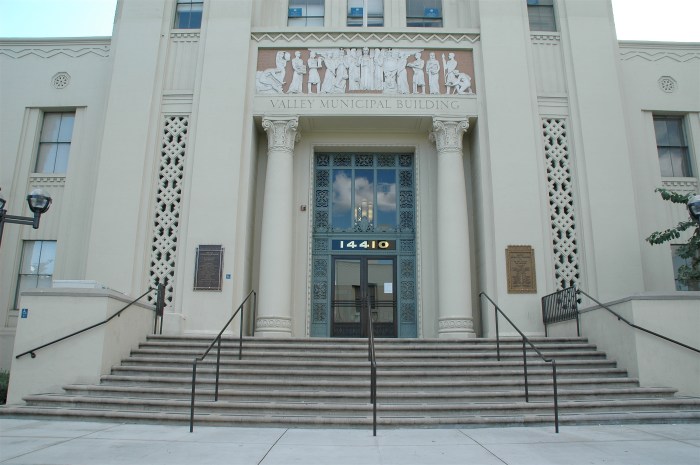
In 2006, I was photographing the exterior of the historic Valley Municipal Building on a Monday morning. An older woman came out, not a security guard, just an older woman, and she screamed, “What are you doing! Why are you shooting this building!” She had a car, and she drove up to me as I walked along Sylvan St. asking again what I was doing.
“There are people who want to harm this country!” she said through her window.
Like her. Opponents of constitutionally protected free speech.
Photography is politicized now, like everything else. A public photo in Los Angeles is assumed to be:
ICE finding undocumented people.
TMZ trailing a celebrity.
Location scouting for a porn.
A developer intent on building something.
A Karen uncovering a violation.
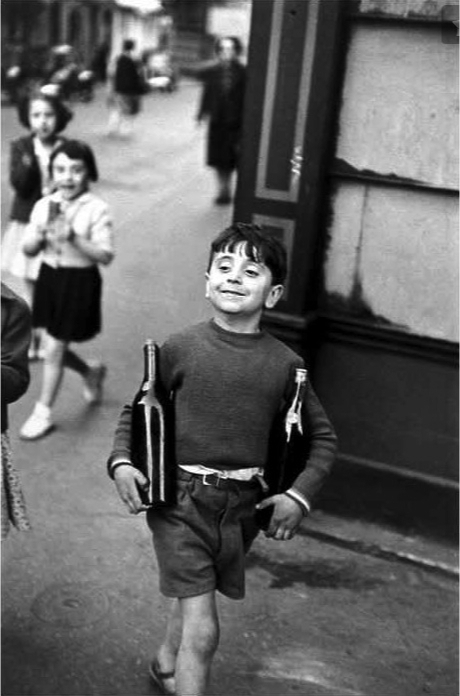
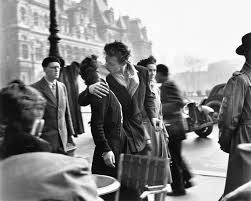
Will a photograph ever just be a photograph again? Could Robert Doisneau or Henri-Cartier Bresson shoot children on the street today? Or would they be confronted by parents or teachers or strangers asking what the hell they were doing?
How did it come to be that a joyful, celebratory, observant act, public photography, become so reviled and feared? We live in a time when every person has a camera on their phone, so anyone can really take a photo anywhere at any time, yet the deliberate, artistic, considered flaneur, strolling through the city after a few glasses of wine, can be confronted if he carries a traditional camera and aims it at strangers.
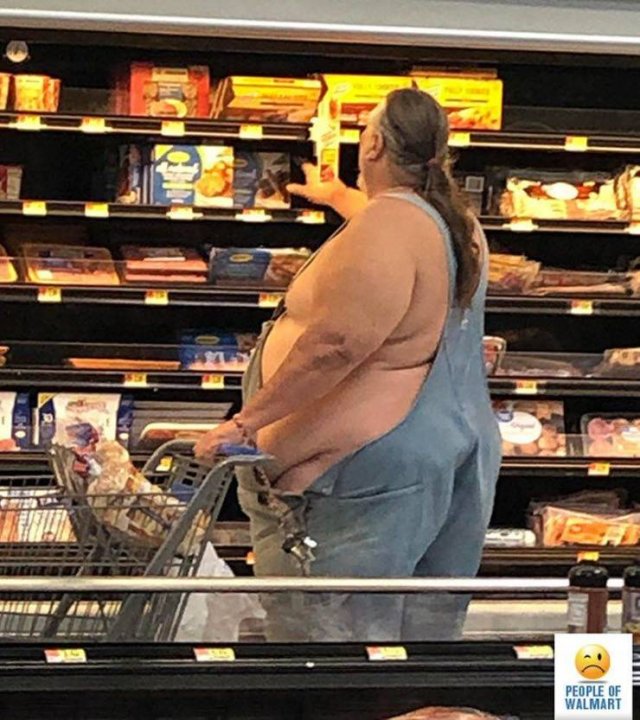
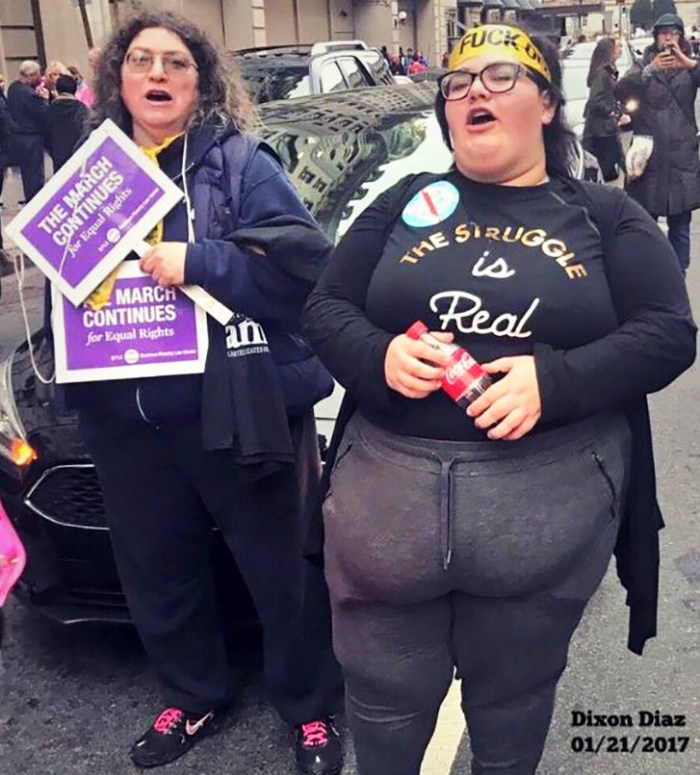
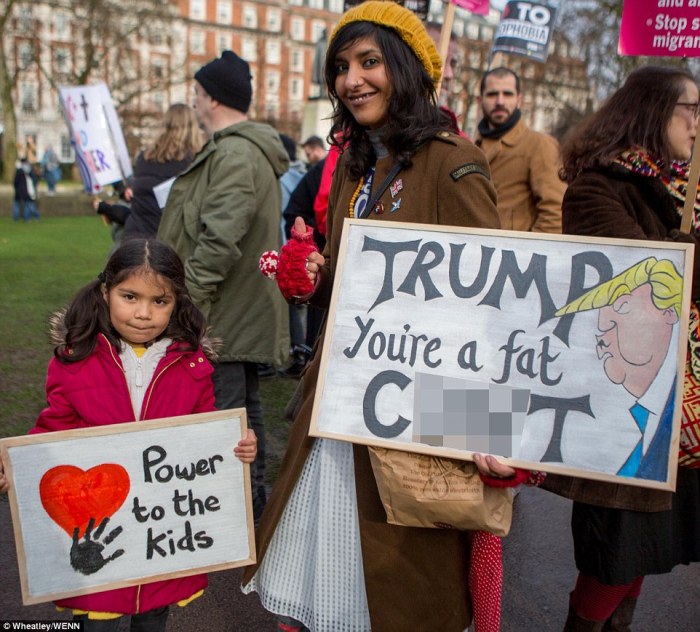
Then there is the aspect of shame. We have no public shame anymore. People dress, eat and behave in ways that would largely be considered shameful by 1945 or 1970 standards. So shame is employed as a tool by the weak, sometimes used against others who are weak, but often to gather like minded bullies together to defeat free-thinkers.
These examples of 21st C. public dress and obscene signs would have probably been against law or custom 60 years ago. Just as today it would be unthinkable for grown man with a camera going up to a children crossing the street and photographing them, as Henri Cartier Bresson did in Paris 80 years ago.
The public no longer knows what is properly public and what is not.
When private people prohibit public photography, they often think they are exercising the rule of law. Security guards fall into this category. Yet they stand on weak ground. No building, other than a military installation, has the right to not be photographed.
And we live in time of political intention. Every act is political. One can identify with a political party by wearing or not wearing a virus guarding mask, or drinking soda with a plastic straw, living in a gated McMansion, expressing sympathy for the police, or wearing a red baseball cap. All can get you harmed or doxxed.
At the 2017 Woman’s Rights March, I went out with several older neighbors and of course I had my camera. It was a historic moment. And I photographed a crowd near Universal City. Which provoked a young guy, masked in bandana, to walk up and demand to know why I was photographing.
There is nothing illegal about photographing people in public. Or buildings. Even outside a schoolyard, even families picnicking in the park, even photographing a parking lot in a poor area of Van Nuys. These are all legal and protected by law.
But no law protects against widespread public fear of freedom of speech. When enough mobs band together to ban something you can be sure it will be. Photography by photographer is on the list of once free rights that face censoring, cancelling and expulsion.
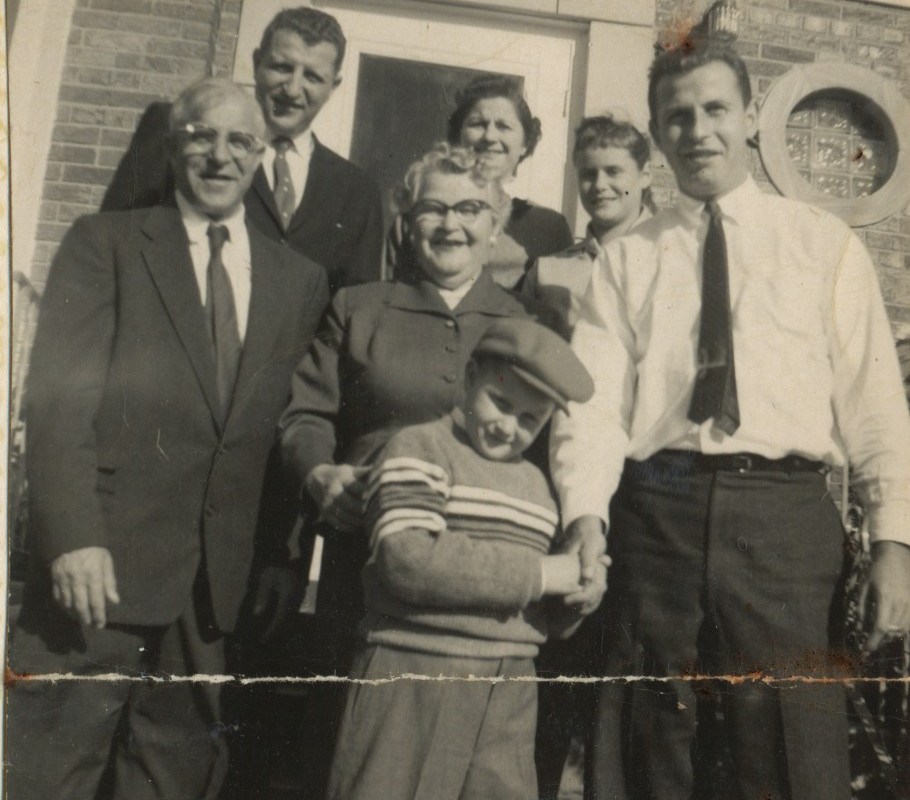
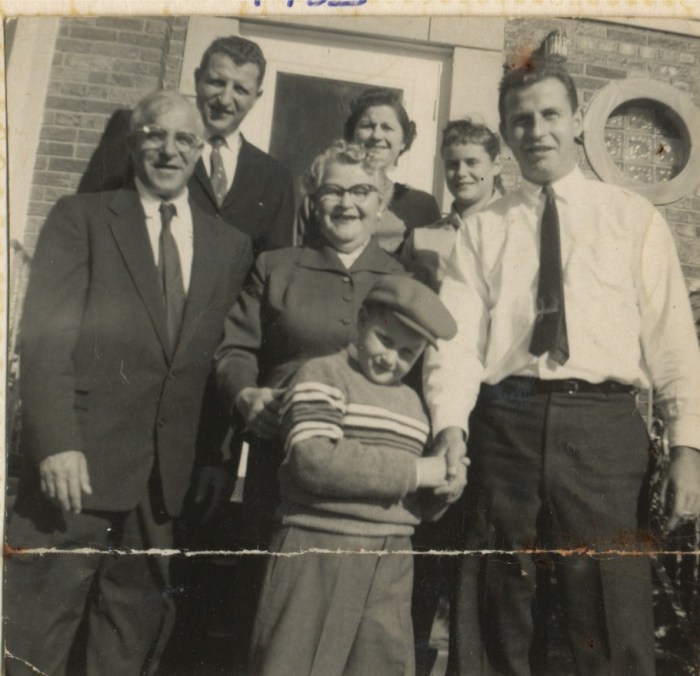
Once upon a time, my father’s family lived on the South Side of Chicago.
Grandpa Harry and Grandma Fanny had their little house on 88th and Clyde, a squat brick home built in 1950 with a back porch and a spotless kitchen.
Uncle Paul, Aunt Frances and Barry lived on Luella, not far from Grandpa Harry.
And Uncle Harold and Aunt Evie lived with their children, Adrienne, Michael and Bruce in expansive, grand old apartments overlooking Lake Michigan along the South Shore.
Harold and Paul had both been soldiers during WWII, married young, and came back home. Harold was an engineer, so he started a heating/air-conditioning company that installed systems in many buildings in Chicago. Paul (1921-), veteran of Iwo Jima and the Battle of Leyte, worked as a plumber and electrician. He is still alive at 99 and lives in Woodland Hills, CA.
In 1968, after the assassination of Martin Luther King Jr., there were nationwide riots. And the stores on the south side were burned down and looted. And my grandfather’s new 1968 Chevy Impala, parked on the street, had its antenna broken off by a vandal. That’s when everyone sold their houses and moved up north to Rogers Park and Lincolnwood, North Lake Shore Drive, Deerfield and Highland Park.
Because they were safe there.
There were federal investigations by the Kerner Commission, whose findings were released in 1968, to get to the root causes of rioting from 1967, the year before. And they found, (surprisingly!), that segregation, poverty, discrimination, poor jobs and broken families contributed to unhappy lives.
After every insurrection, after every march, after every episode of mass looting, there comes a vow to move forward and make certain that this time, this time for sure, these events will not happen again.
So the streets in major cities were renamed Martin Luther King Jr., and on television Norman Lear created “The Jeffersons” and “Good Times.” And Hollywood and the media proclaimed that justice would reign over all the land. See the diversity!
And then there is a reaction, a call for law and order, new laws for harsher sentencing, new reforms for welfare, and progressive ideas to rebuild the cities (Brooklyn, Venice, South End Boston) by making everything safe for tech and shopping and historic renovations, and guess who will be removed again?
Giuliani is the king. Love what he’s done! This city is the best it’s ever been. We’ve been through 9/11 and now we are never going to be down and out again!
Who gets shot and who goes to fight the wars and who dies in the streets and who dies on the battlefields and whose population is dying today of Covid-19 and why is it always the same answer?
Why is it still terrifying to drive through the west side of Chicago before you reach Oak Park and tour Frank Lloyd Wright’s houses? Who lives there and who kills there and who suffers there? It’s always the same answer.
Let the looting and fires and protests begin! America don’t you see what’s going on!
You are violent by custom, and this is another type of violence. How dare they smash shop windows and steal what isn’t theirs!
___________________________________
Note:
Estimated U.S. military spending is $934 billion. It covers the period October 1, 2020, through September 30, 2021. Military spending is the second-largest item in the federal budget after Social Security. Source.
That works out to about $2,838 per person in the US. Or about $236 a month for every man, woman and child in the country.
We aren’t even at war. But you could argue we are always at war.
__________________________________
People of pinker pigmentations are again woken up and made to face the suffering of some of their fellow, darker citizens. And every year the same old story is retold, just with new clothes, new celebrities, new movies, and now, a new hashtag, #oscarsowhite or #blacklivesmatter.
And a silent majority, one whose all-white room I sometime inhabit, deplores criminality, violence, and looting; and I’m locked in there in that all-white room; I can’t get out, because I like the all-white décor that tells me that some people are violent and barbaric and have the wrong values. I feel better about myself, in that all-white room, knowing I’m law abiding and that should be end of the discussion. I’m suffocating in there, I can’t breathe, but I am relaxed in my self-assurance and high self-esteem.
Because if you get in trouble you are a troublemaker.
I grew up in 1970s Lincolnwood, IL and there were no black people other than domestics who worked in people’s homes.
In 2017, Lincolnwood was racially composed of 57% whites, 30% Asian, and 6.2% Latino or other. I didn’t see a mention of African-Americans.
There was once a way to run away from troubled places, and seek refuge in a safer neighborhood, but I think we have run out of hiding spots.
They have come to Beverly Hills and Buckhead and Santa Monica, and they is us.
In 1992, I worked in the Polo Ralph Lauren mansion on 72nd and Madison in New York. There was no social media, no Twitter or What’s App, only rumor.
So as Los Angeles burned, New York City trembled, and rumors of mobs attacking Herald Square and other locations were falsely spread. There was not mass violence or destruction in New York City, that year, and it remained largely in Los Angeles, mostly, infamously, in South LA and Koreatown.
The Polo Store had wooden doors with glass windows, and the security guards pulled the cloth window shades down. They turned the lights off, and we all went home around 3pm on Friday, May 1, 1992. I walked through Central Park in my linen suit and back to my little apartment on West 96th St. to sit in the air-conditioning and wait out the troubles.
Until this past week I thought we lived in a new time of toleration and nobody was that angry and the times I saw horrendous videos of police brutality seemed the exception and not the rule. And I lived, because I am allowed to do so, in a bubble of wishful thinking and fantasy, in a country that mistreats others but not me.
I thought Barack Obama was the pinnacle of we shall overcome.
And I was wrong. Dead wrong.
I was naïve.
Me?
Naïve?
No.
Just white.
I’m protected from the injustices perpetuated by a system designed to give me a boost up, a feeling of betterment, because others are down there, and can’t be as good as me, no matter how spectacular they are, by virtue of their inherited DNA.
That’s really the truth. Because you might have an MBA, or be the CEO of a company, and if you go running as black you might be shot dead. So why bother to be the best if your country already decides you are the worst? That is the quandary of racism, it rips down the individual to a category, incarcerating her within a foul story of failure.
It takes a remarkable concentration of effort for the protagonist to overcome her role as the demon in a bad fairy tale.
Like an Obama or Oprah or any father or mother of color in North America.
We are at a point that is not only about the murder of the man by copper knee in Minneapolis.
There is the small matter of our chief executive, a corrupt ignoramus, who came to power, by questioning the birth certificate of our black president.
We are sick, we are unemployed, we are uninsured, we are scared.
We were kept home, kept in fear, brought out in mask, and indoctrinated to wash hands. We stayed home and got our groceries delivered, and got a check from the government, and some people got sick, some died, and the nation looked in vain for a leader who could not lead, a savior who could not save, and today we are waking up in the wreckage of our homeland.
A virus still stalks the Earth and lives in our saliva.
When Los Angeles was at its richest and most prosperous, three months ago, there were 100,000 homeless. And that was permitted, by the leaders, the citizens, and the public.
When Los Angeles was at its most diverse, the whitest among us drove our children to school districts that were majority white, and our morning and afternoon traffic was largely made up of children riding to and from whiter schools with their parents.
And that was toxic and unjust, racist and unfair, blatantly racist. When you think about it. Public schools where no children walk to school. Public schools, not of neighborhoods, but of magnets propelled to collect like particles to adhere with.
And what have we done to change education, health inequalities, housing shortages, racism itself? Because it all circles back to race when you ask people where they want to live or go to school.
We have an invisible problem right before our very eyes.
Our feet stand on blood-soaked soil. But we don’t see under our white sneakers.
We are striving to succeed, we want our children to succeed, but what is personal success if our nation is a failure?
So many marched, that way this week, holding up signs: impassioned, motivated, angered.
It was a religious fervor of moralism sweeping the country.
But nothing has changed, really. Stores are burned and looted, cops get down on their knees, mayors and governors call for a new dawn of tolerance and kindness.
The new plate glass windows go up, the tags scrubbed off the buildings, and surely Oprah will find a new heartwarming book to promote by a young black author.
Instagram will black out, and hash tag, and celebrities will proclaim they stand with the oppressed and the hated, and vow that a new day is here.
And new laws will get passed. And everyone will listen to great podcasts about race and police. And eventually the marchers will not march. They will go home, or get jobs, or go back to school, and the national hibernation will end, and the fast, furious ambitious race to get more for me will resume.
The next time someone dies unjustly, Our God, Lord Smartphone, will record it.
But Lord Smartphone cannot right a wrong. Only we can.
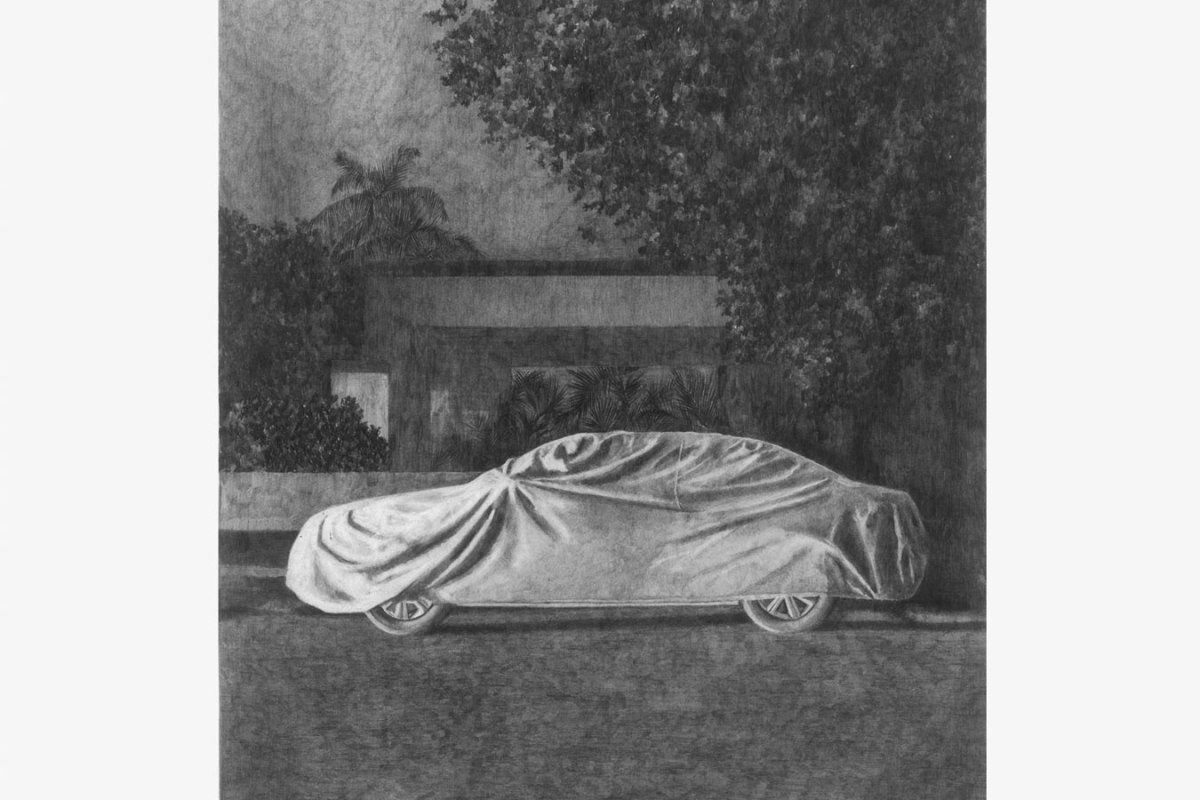
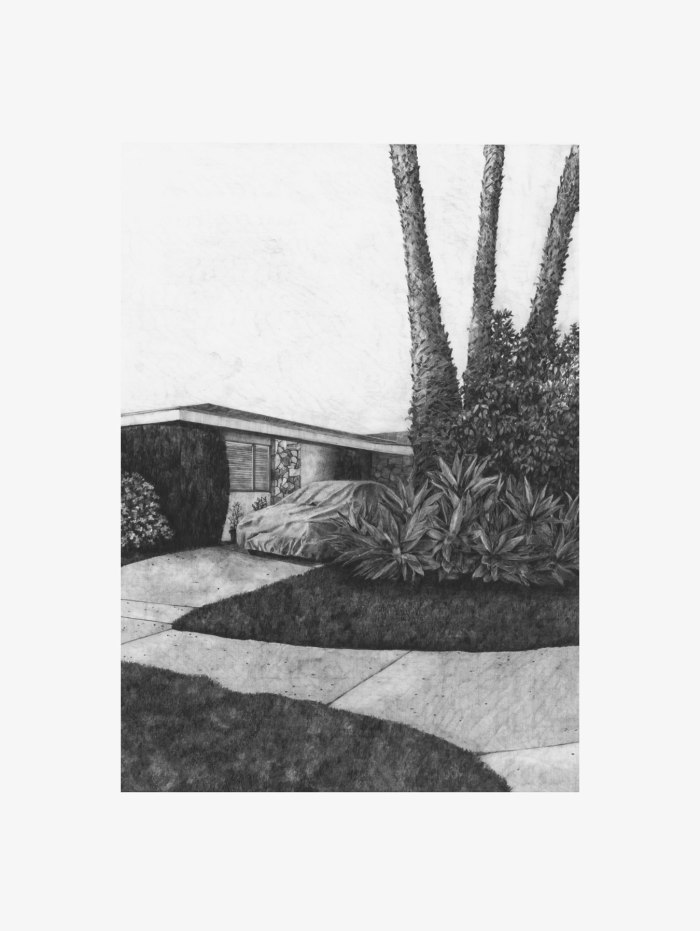
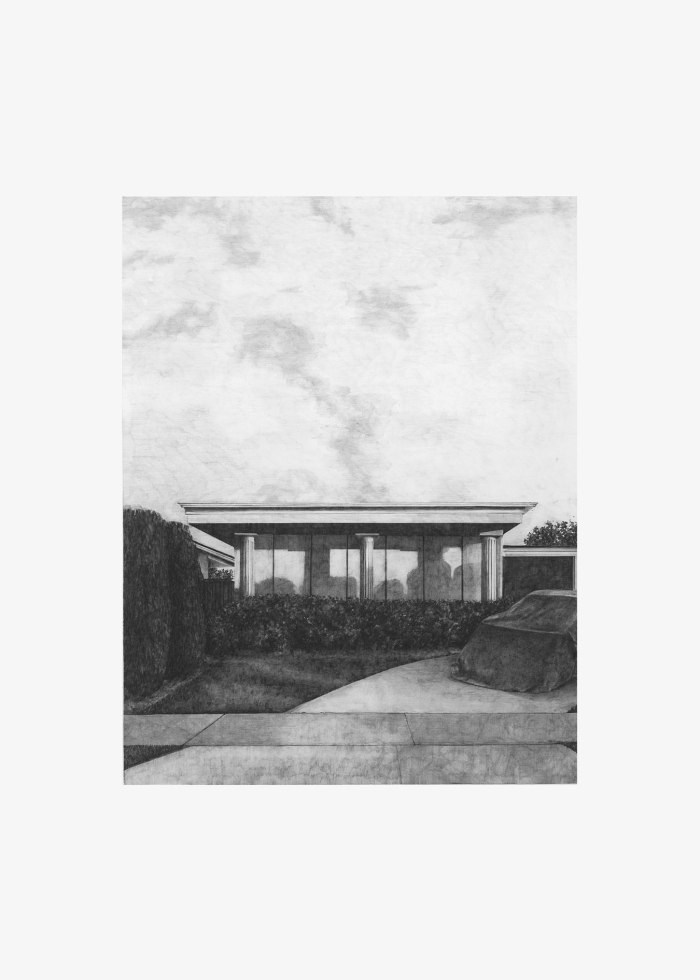
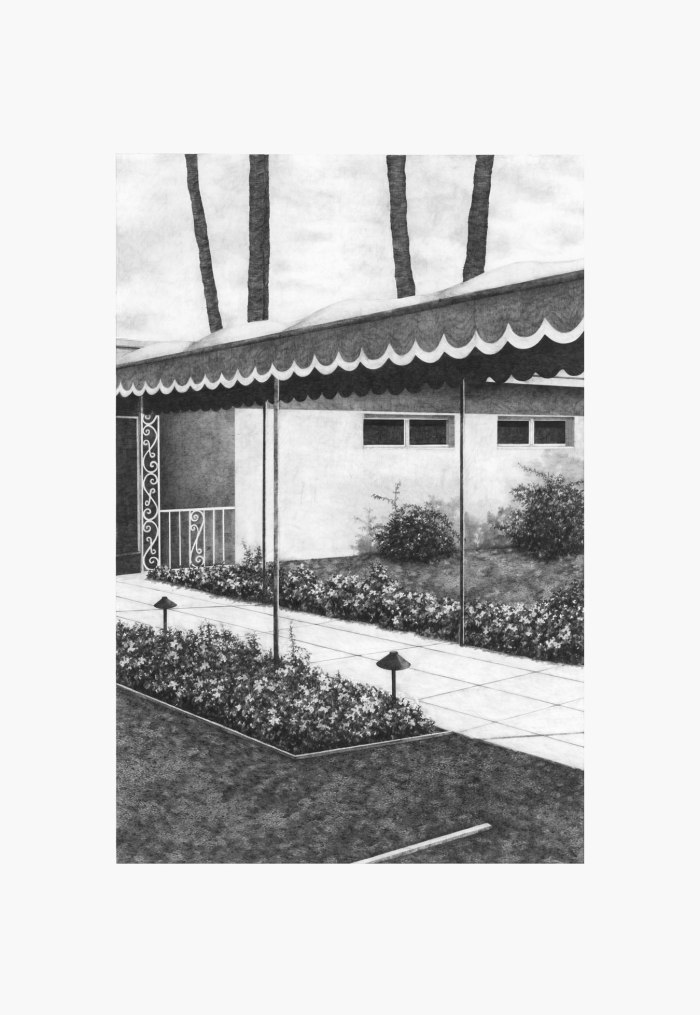
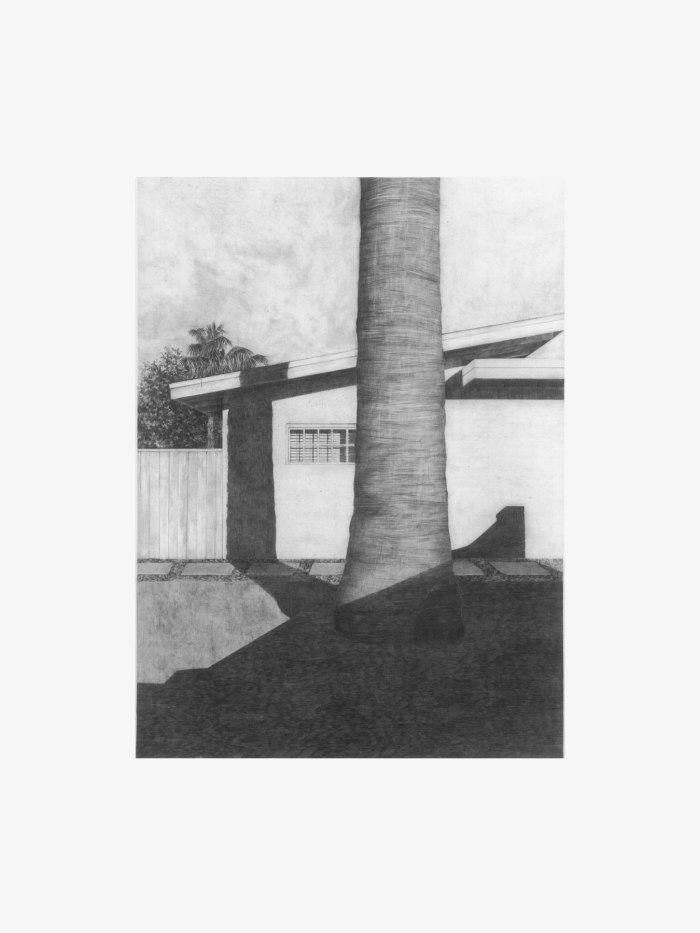
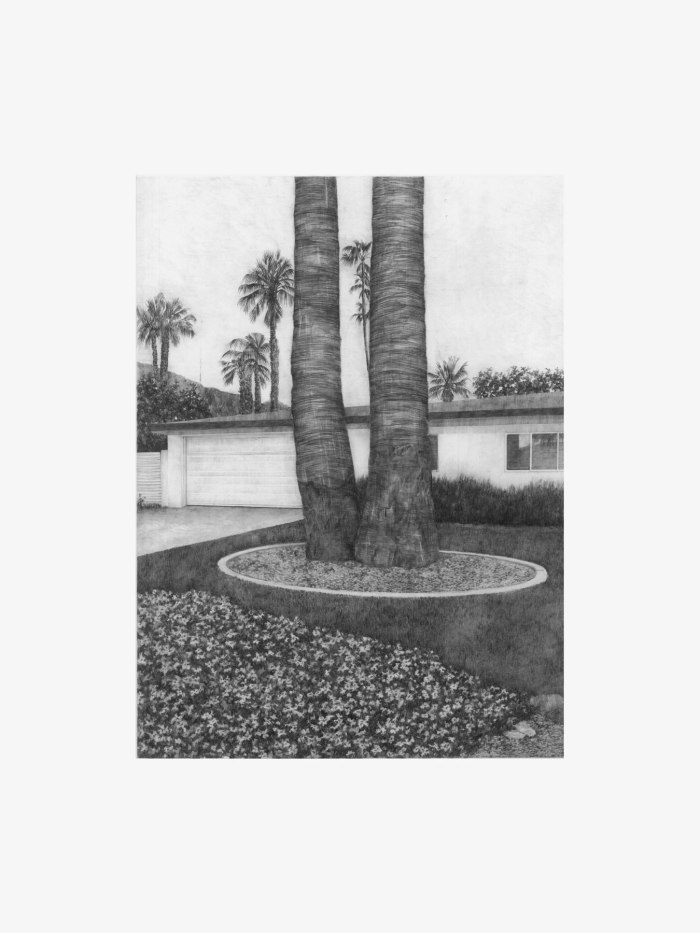
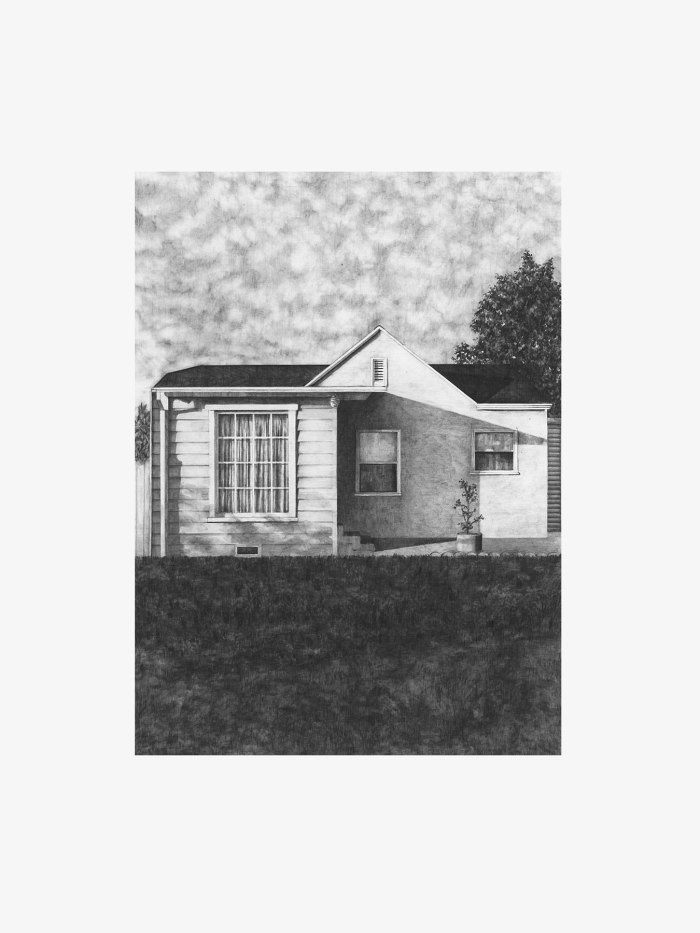
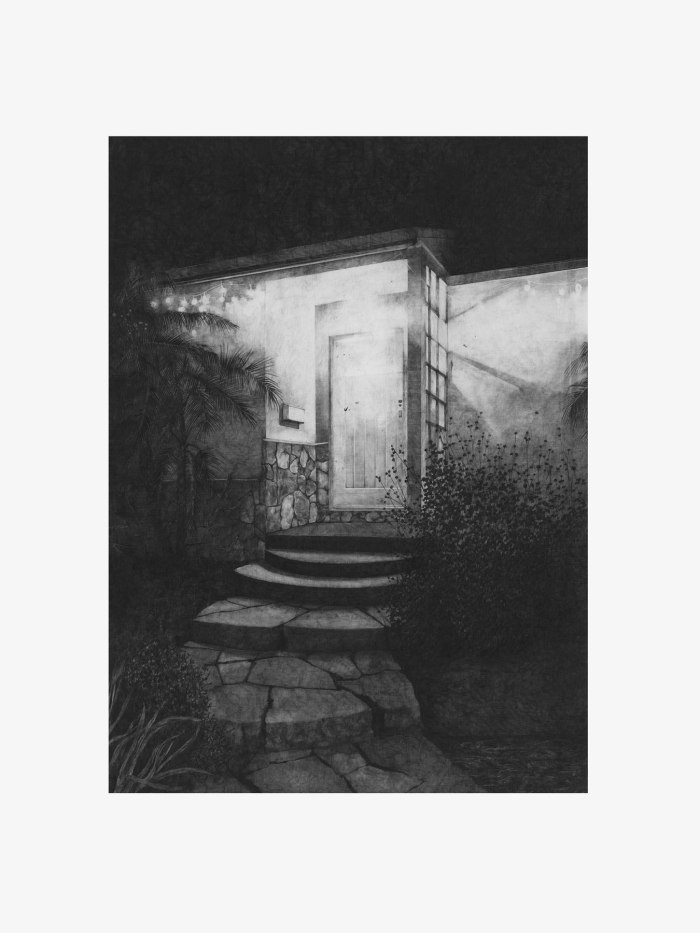
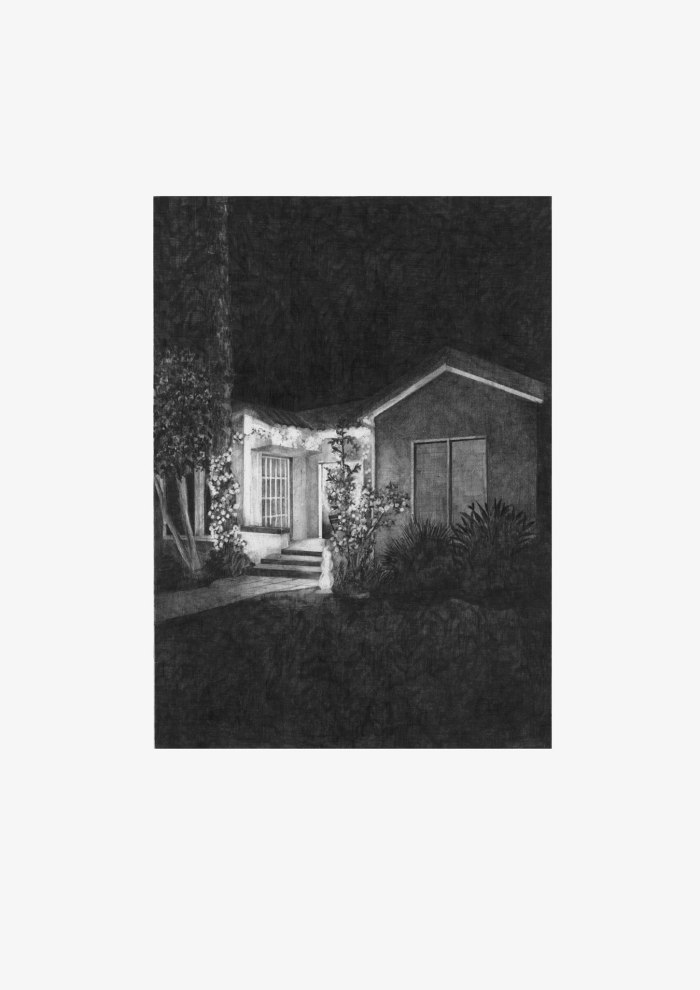
Zoé Textereau (b.1986) and Pauline Martinet (b.1987) are two artists from Paris, France whose oeuvre is composed of graphite drawings of many places they have visited, among them Los Angeles.
I found their work on Instagram. Their architectural drawings of Los Angeles find beauty in banality. Perhaps because there are no people in these images, they have an affinity with our present time of desolation and isolation.
They are all something marvelous, an illustration of our city, seen through the eyes of two French artists, a revelation of form, geometry, shadow, texture and shape.
Our built mistakes: the round driveways, the fake pillars, the long awninged walk into an apartment house, the vinyl window and vertical blinds on a stucco wall, the landscaped lake of gravel around a palm tree, the steel security door, the tarp covered car in the driveway of the deluxe house with arched porch and glued on stone walls, and the randomly laid flagstone wall illuminated at night; these are their subjects.
Los Angeles is an artificial encampment watered by imported irrigation, stitched together by freeways and endless streets, baked in sunshine, built in discordance, promoted and extolled for no good honest reason. We have no ensemble of unity in our buildings, no public squares, no grand arches, no central gathering place. Tens of thousands are camped out in trash along the roads and under the overpasses. Those who own property pave their gardens, puncture the skies with revenue producing billboards; they construct monstrosities and guard them with guns and security cameras, they venture out from patrolled properties in tinted windows, sunglasses, and breathing masks.
But Textereau and Martinet find beauty in our banality. We can too.
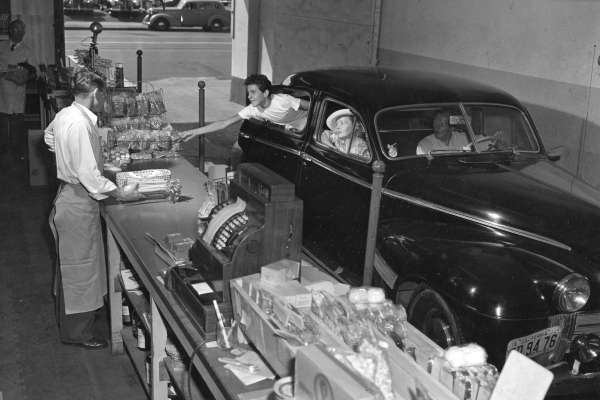
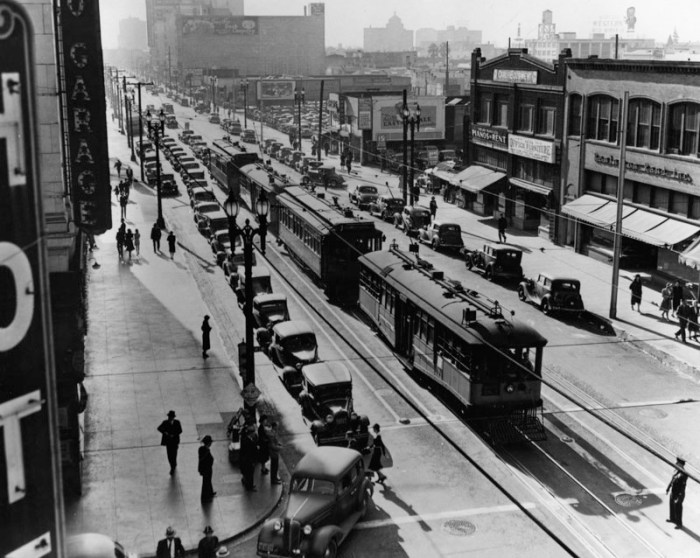
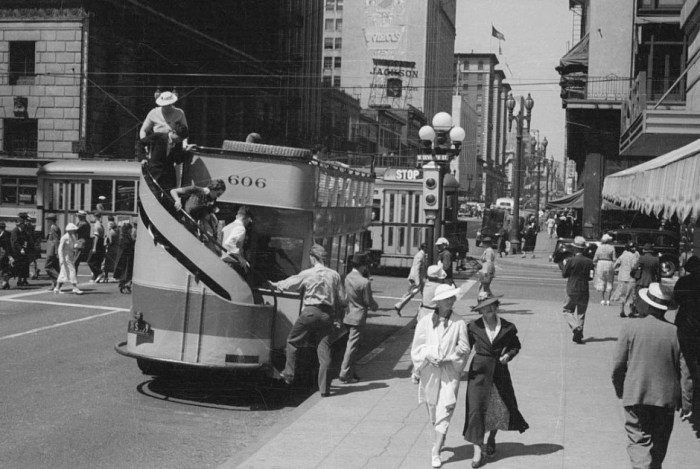
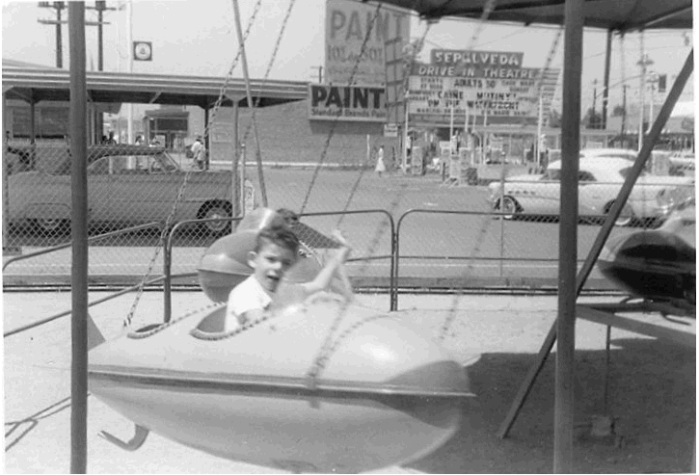
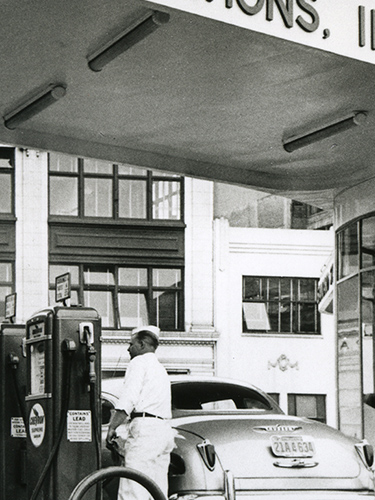
With the pandemic locking the world down until a cure is found, Los Angeles is again leading the way to find out how to do business and stay safe.
Here are some new innovations which are startling in their modernity and imaginativeness:
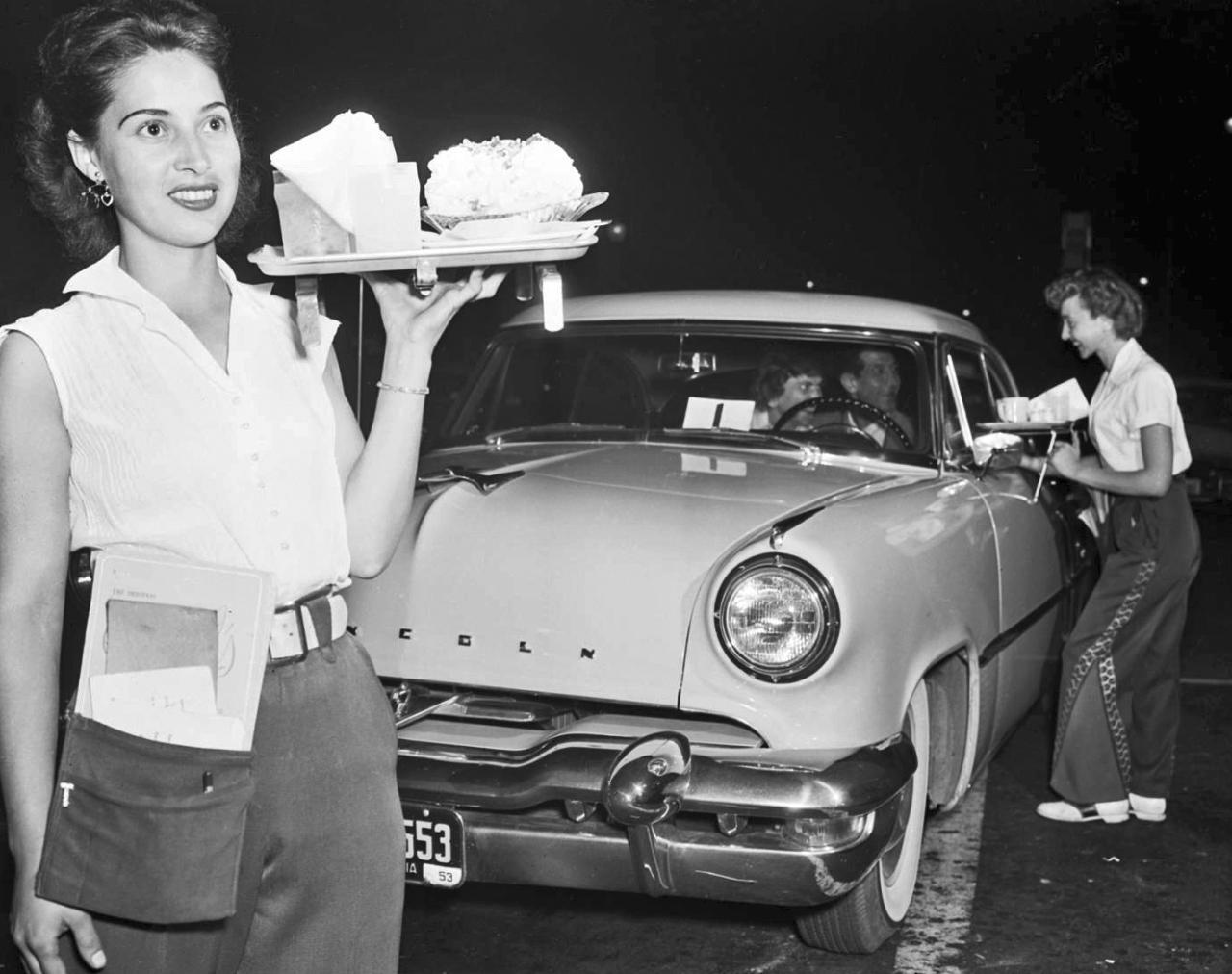
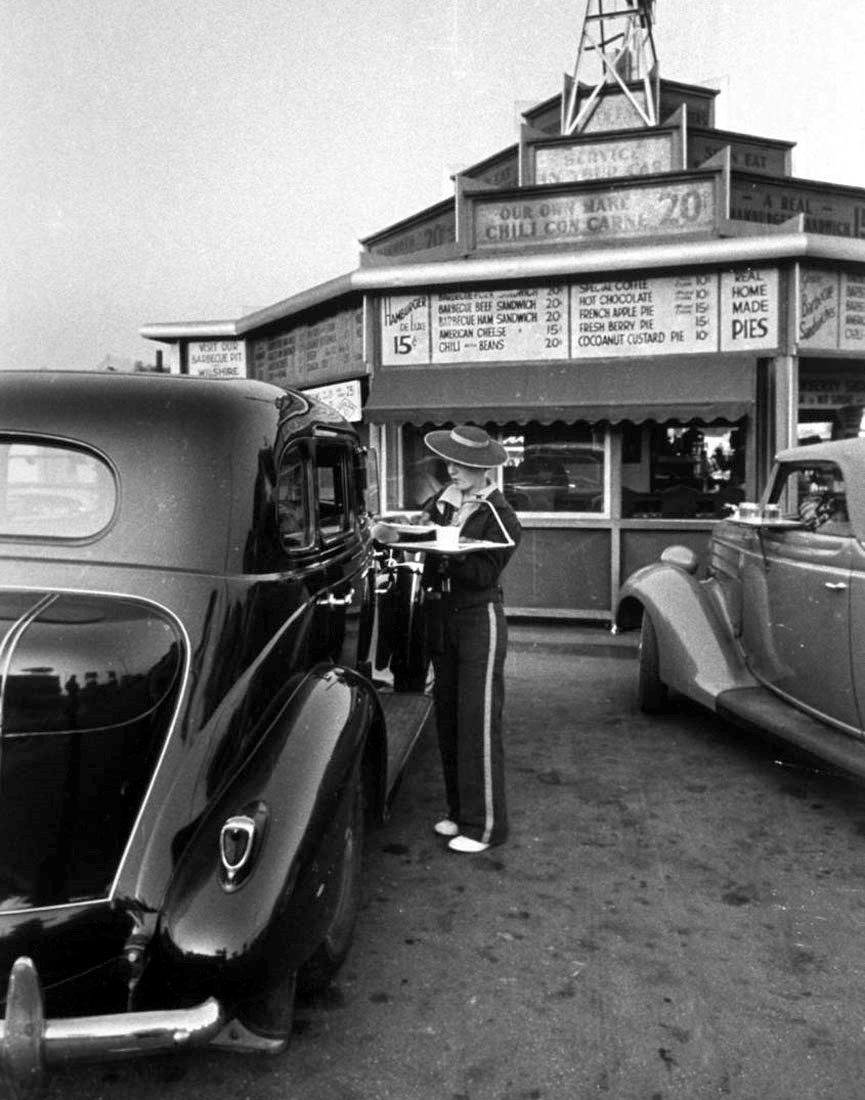
To keep patrons safe, many restaurants are now offering service directly to your vehicle by servers who are now called “carhops.”
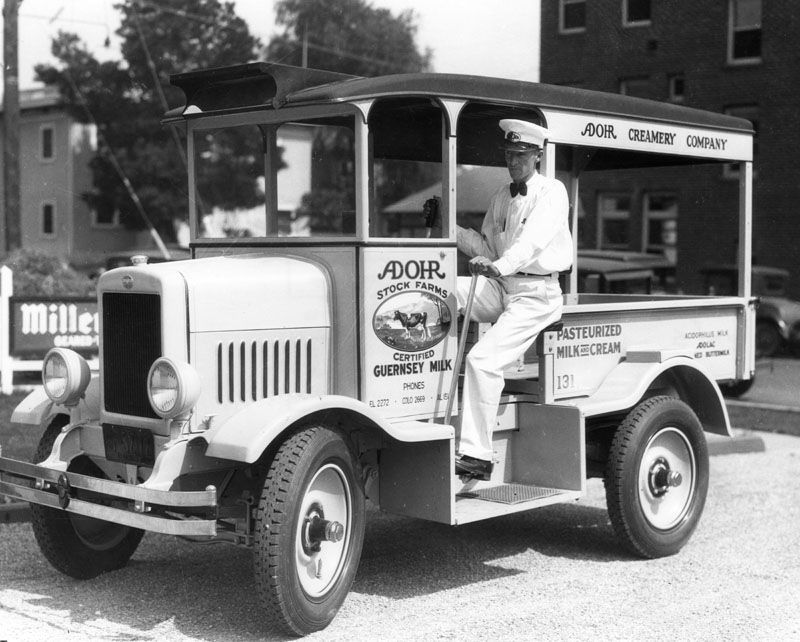
To keep customers safe at home, many companies are now delivering food and beverages directly to homes.
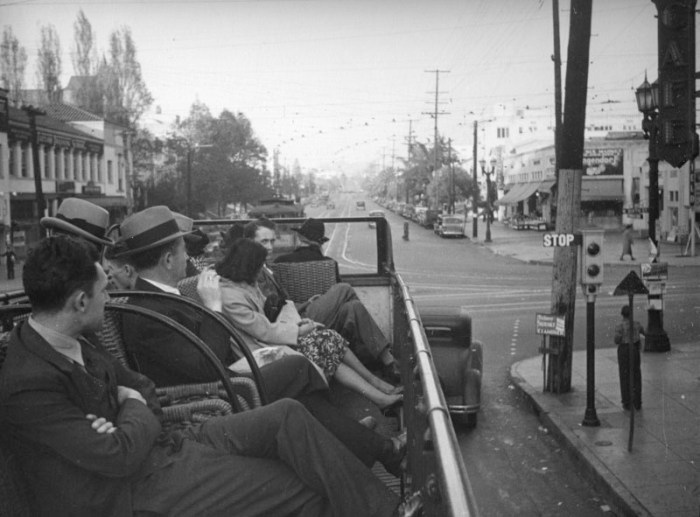
The virus is less likely to be spread outdoors than in confined, indoor spaces. With that in mind, many buses in Los Angeles now offer open windows and open air transportation to riders.
No mask for Johnny. He is safe because he stays six feet away from every other child.
The danger of pumping gas, of putting your hands on a surface touched by hundreds of strangers, is one reason why service station attendants have again been added at many locations. With unemployment rising, pumping gas has eagerly become one of the most sought after careers in Los Angeles in the Covid Era.
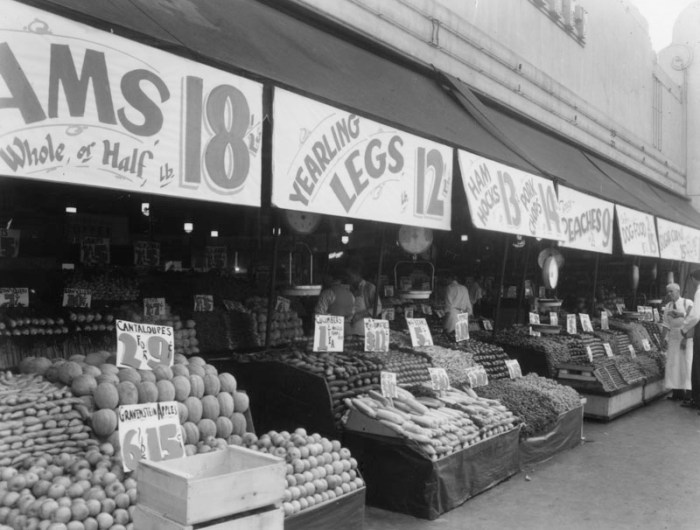
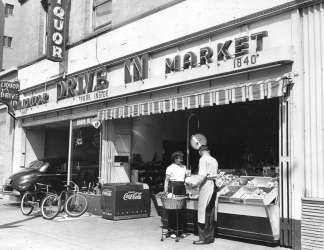
And lastly, instead of cramming into a closed store with hundreds of other contaminated people, why not put the produce out on the sidewalk where there is less chance of standing near a sneezer or cougher? Sunlight is a natural purifier of the virus too.




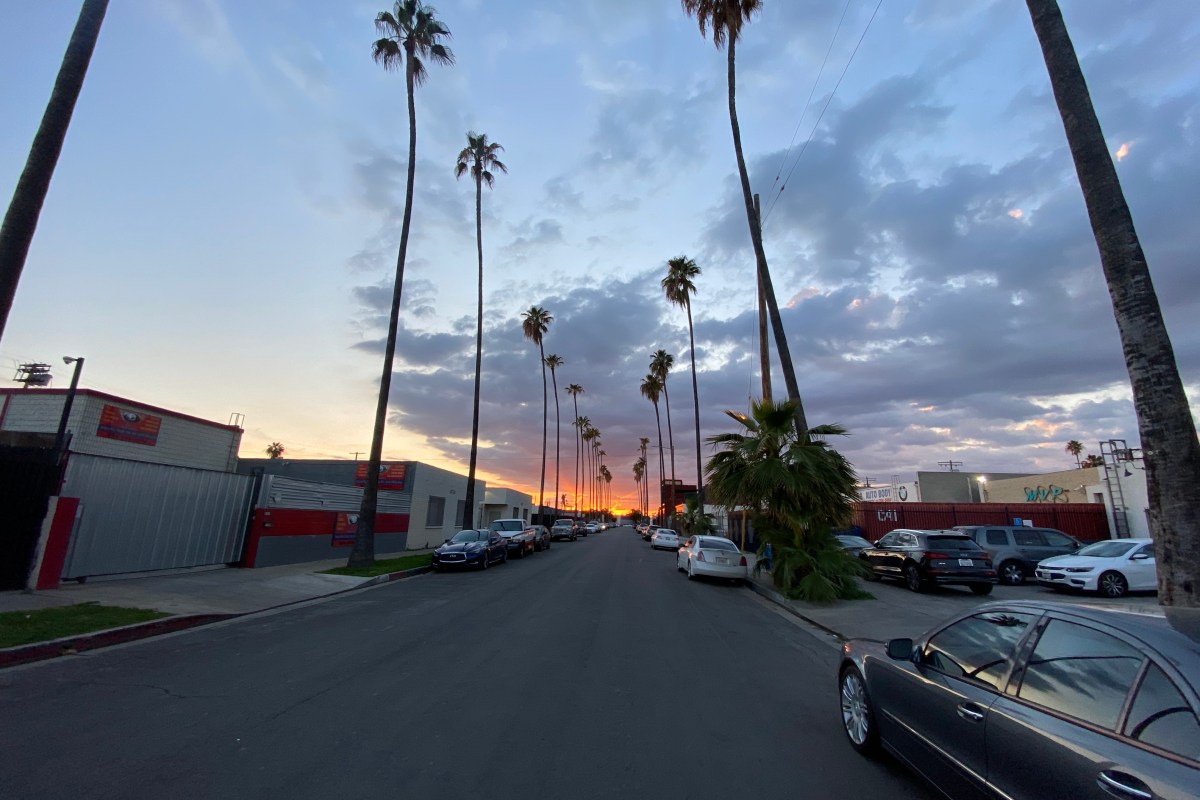

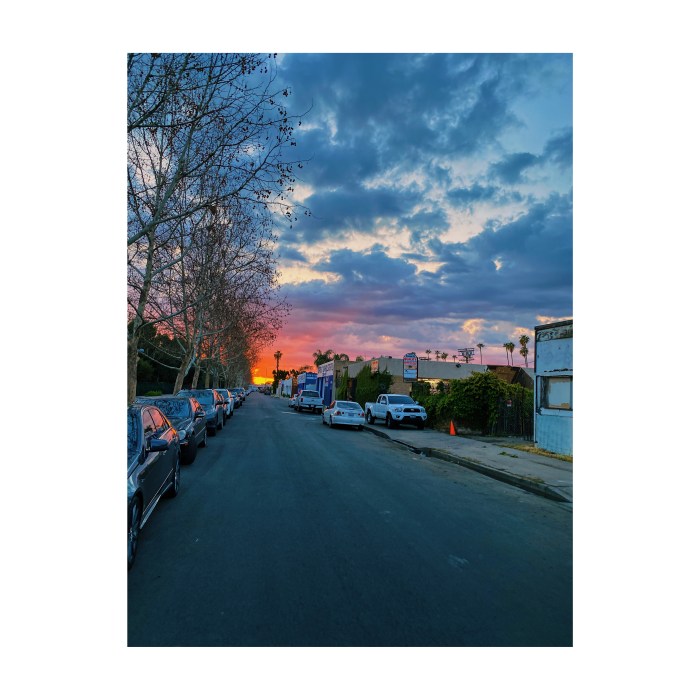










 Here in Van Nuys
You must be logged in to post a comment.