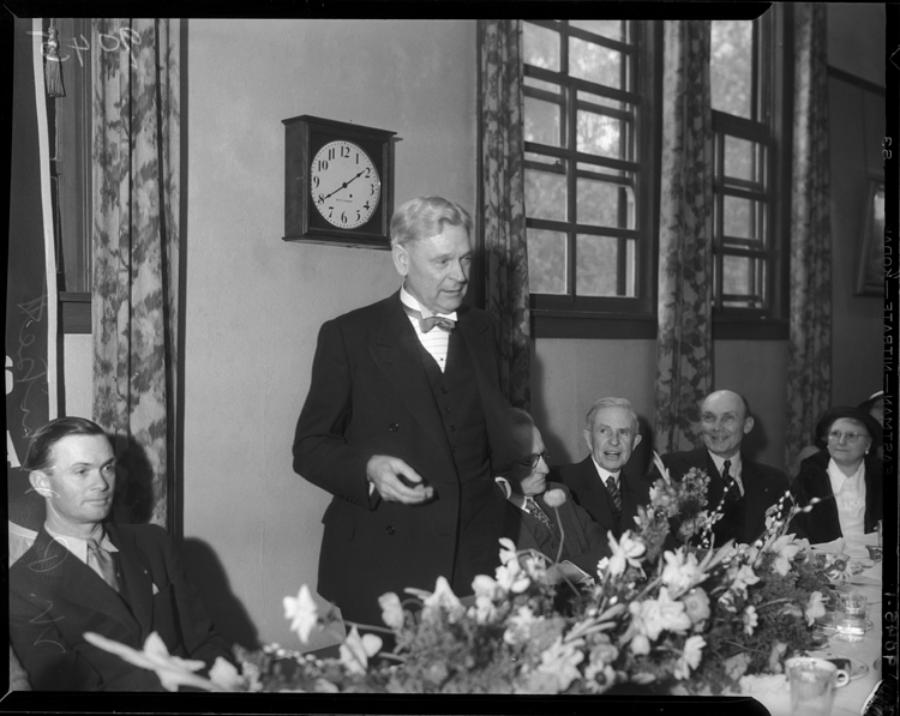
Mr. Whitsett, Van Nuys Founder, 1934


“W.P. Whitsett recounts the tale of the founding of Van Nuys at the city’s 23rd birthday party. February 22nd, 1934.”
UCLA Library, Digital Collections.

If he could only see it now, the great progress Van Nuys has made, culturally, aesthetically, economically……

Louie’s Liquor


Louie’s Liquor, originally uploaded by Here in Van Nuys.

Sometimes it seems, driving at dusk, on Reseda and Saticoy Boulevards, there is a liquor store at every corner.

When the heat has broken, people come out of their cramped homes and walk the street in waning daylight.

They are the faces of the world: Latinos, Armenians, Blacks, Koreans, women in hijab pushing baby strollers.

Reseda at dusk is a crummy beautiful place, a land of liquor stores and Dodger billboards, tacos and lotto, Corona and Cerveza, check cashing, bottled water, Marlboro and ice and Western Union moneygram.

America on TV is a white family in a white house with a white picket fence.

But here in Reseda, packed into thousands of apartments and houses, are the teeming people who work all day and take a little walk at nightfall.

“Somebodies and Nobodies”-a new short story by Andy Hurvitz


7470641644_5b65e6f7d9_o
Adrian/Hanging, originally uploaded by Here in Van Nuys.

In honor of my new short story “Somebodies and Nobodies“, which ends on the Fourth of July, I present an excerpt:

“He climbed back over the balcony rail and lowered himself, floor-by-floor, jumping onto each level and then exiting by grabbing, over the rail, swinging down, bending, moving, slithering, twisting, down and down, until his feet finally touched ground.

He was still trapped inside the compound. He held onto the twelve foot high, barbed wire fence and began to climb.

And then his movement triggered the security lights. He pulled himself up over the fence, out of the compound and into the park. Sirens started wailing. The lights shot over the fence, and he could see armed guards coming through and giving chase.

He bolted like a gazelle through the park, his thickly powerful muscled legs no match for the blue-suited, paunchy police.

He cut diagonally across Admirality and into the parking lot of Café Del Rey restaurant along the water, next to the yachts, boats and the docks.

The sky suddenly lit up in pink and orange, a brilliant colossal light show illuminating the harbor, throwing the buildings into daylight under the night sky.

He ran into a crowd of people watching fireworks, and realized as he ran that he was running on the Fourth of July.

He sprinted down the promenade, under the exploding fire show, across to Mother’s Beach, where more revelers and partiers drank and laughed on the blankets and sand.

He ran over to Washington, onto the beach and dove into the ocean. He swam out, past the pier, turning north and swimming the crawl along the shore, parallel to land.

Somewhere in the ocean near Rose Avenue, some 50 yards out, he stopped swimming and began to kick his legs and tread water. He went on his back and floated with the motion of the ocean. His heart slowed down as he rocked in the sea. And, for the first time in days, he felt free in his own capsule of calm and tranquility.

Kicking his legs and treading water, he pulled out the VHS tape from his spandex pants and released it into the ocean. He let the tide pull him in, as he collapsed onto the beach in elated and relieved exhaustion.”

THE END

Link

USC Digital Archives


USC Digital Archives

Image

“Photograph of a huge pepper tree, Lankershim Boulevard and Victory Boulevard, Van Nuys, July 1928. A man in a suit stands at right looking up at the short, wide tree. The tree reaches over the dusty, weed-spotted yard at center where a pile of wood sits at left and a covered automobile sits parked at right. Several buildings stand along the street that extends down the far left into the background. Houses stand under electrical poles and trees in the right background.”- USC Digital Archives

Title:

Huge pepper tree, Lankershim Boulevard and Victory Boulevard, Van Nuys, July 1928

Source: USC Digital Archives

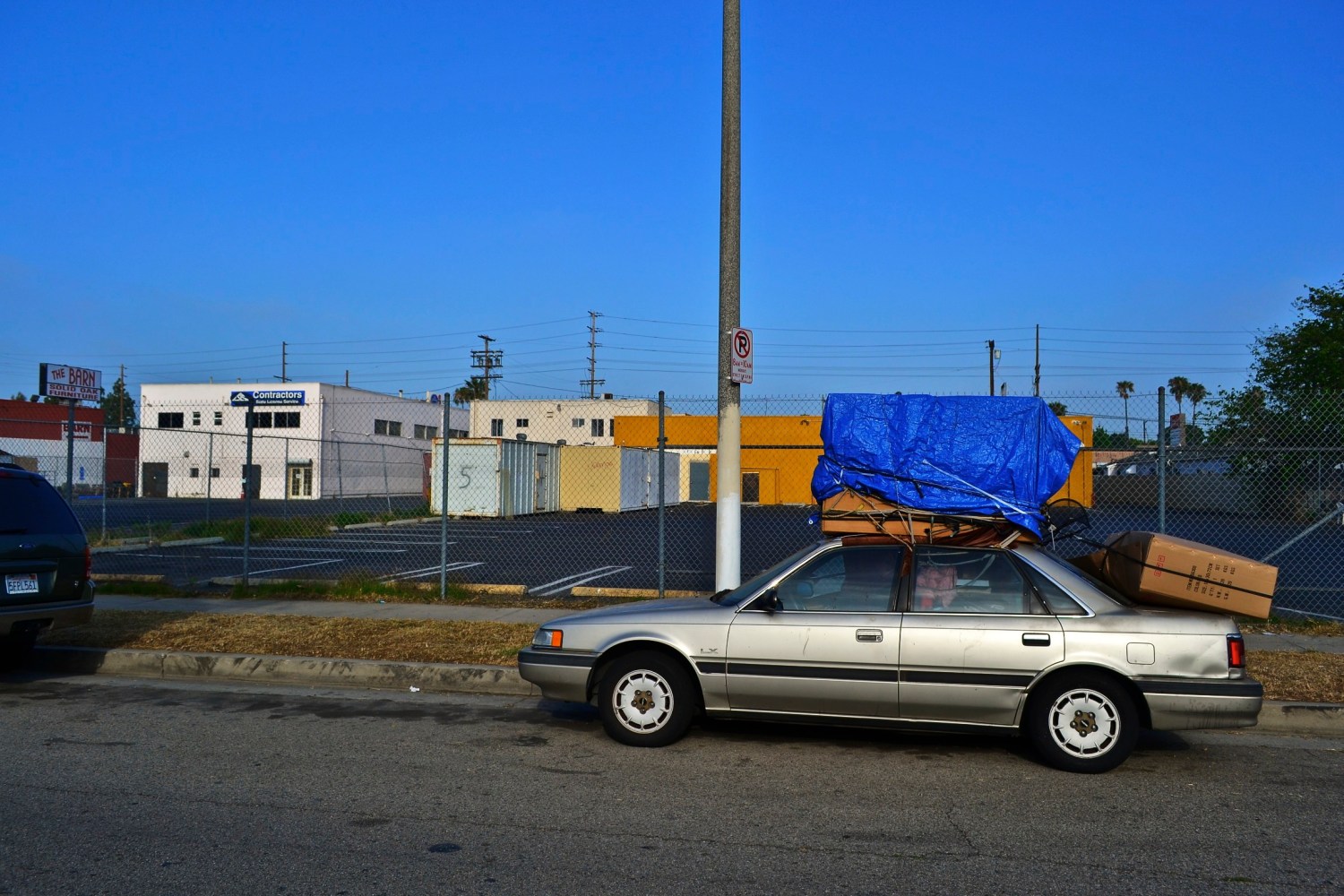
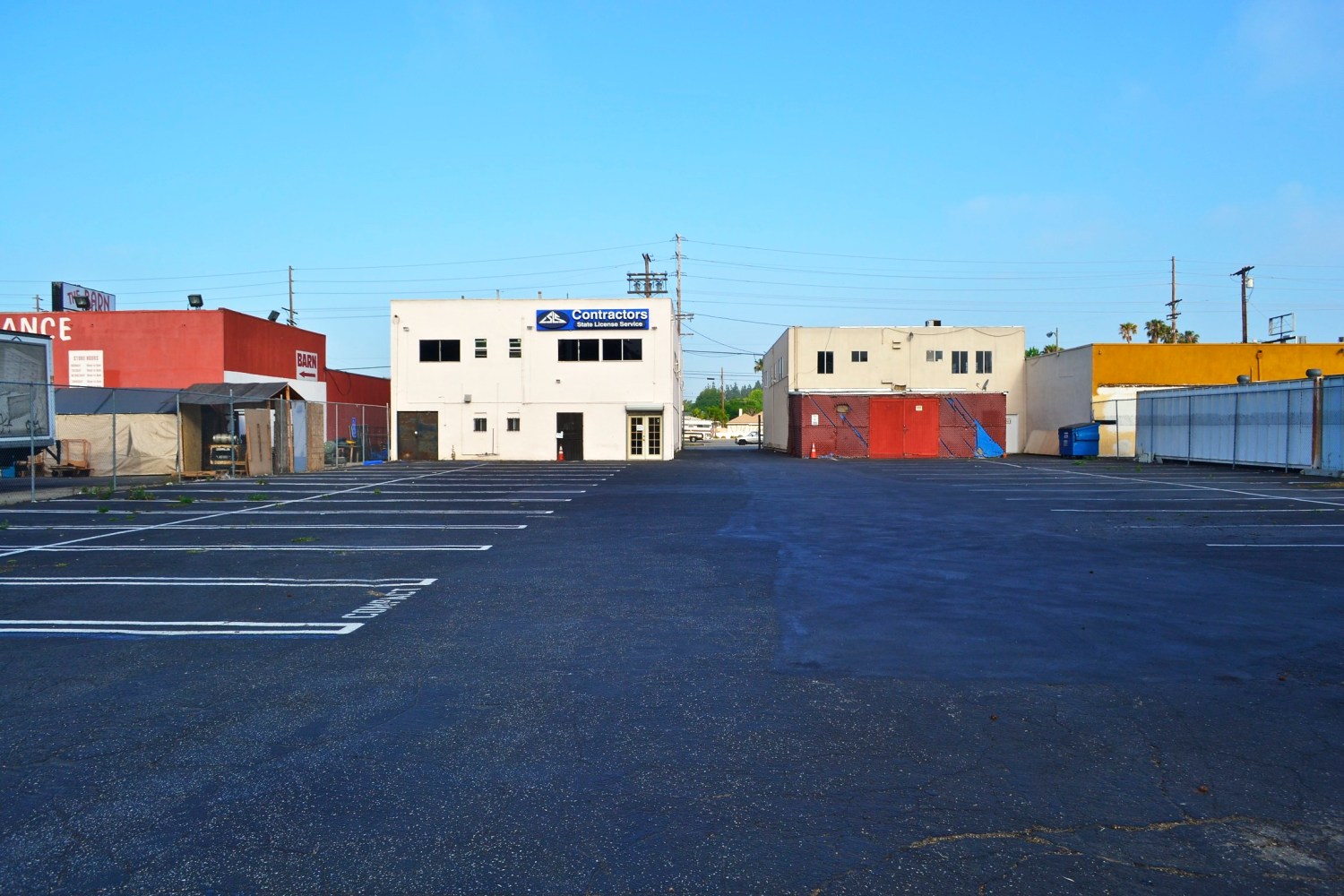
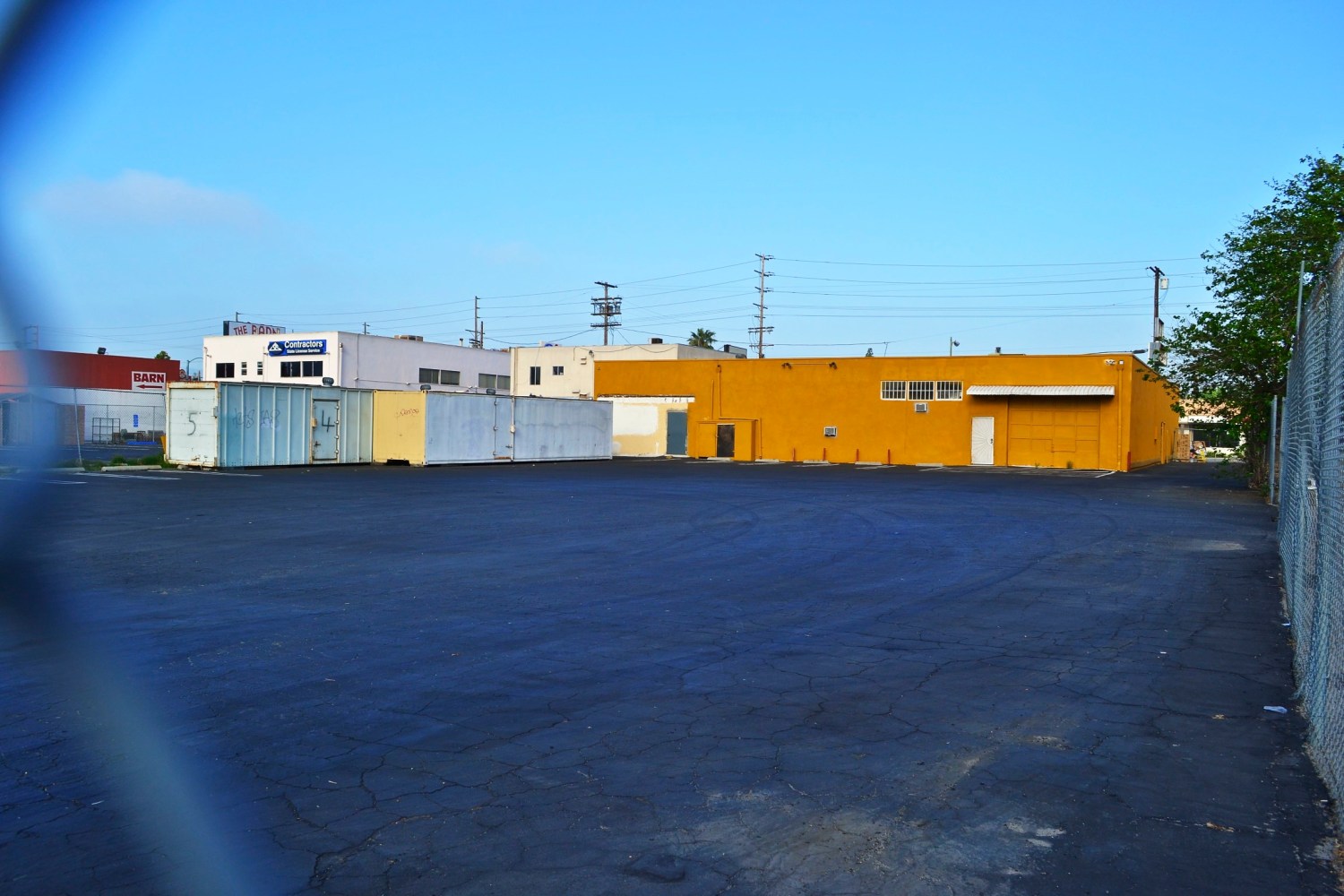
The Empty Spaces


Large expanses of asphalt and black tar bake in sun day after day. These are the parking lots behind retail stores, many untenanted, forgotten and forlorn on the west side of Halbrent,north of Erwin, east of Sepulveda.

This area is chiefly known for two businesses: The Barn, a six-decade-old, red-sided furniture store and Star Restaurant Equipment & Supply advertised for 12 hours every weekend on KNX-1070 by radio fillibusteress Melinda Lee.

The Barn uses its parking lot to store trucks. But next door to the north, lot after lot is empty.

I came here this morning with a camera, lens cap off, a provocative act in the bracero’s hood. In the shadows, undocumented workers hide behind doorways and look away when I aim my digital weapon at asphalt.  I mean the Mexicans no harm or ill will.

Blithely walking and lightly thinking, daydreaming, I forgot that I have no business here amidst the enormity of emptiness and unproductivity.

I’m looking for a story, for an angle, for a job.

So many are out of work and so much can be done to employ mind and muscle and money.

There is such a wealth and a waste of land in Los Angeles, and America in general. Imagine what Tokyo or Bangkok would do with all these unused acres!

These empty spaces are within a five-minute walk from public transportation, Costco, LA Fitness, CVS and Staples as well as two grammar schools, three banks and an Asian supermarket.

This is a walkable place.

A well-financed visionary could build a low-rise, dense, green, urban farm upon these entombed soils, plant Oak trees, create a little garden with fresh fruits and vegetables, oranges, lemons, and asparagus.

This is a place of potential.

An architect could design some functional and modern attached houses, artfully shading them with native trees.

But for now, the parking lots suffer in silence; waiting for the day that California fires up its economy, wakes up from its long slumber and pushes progress.

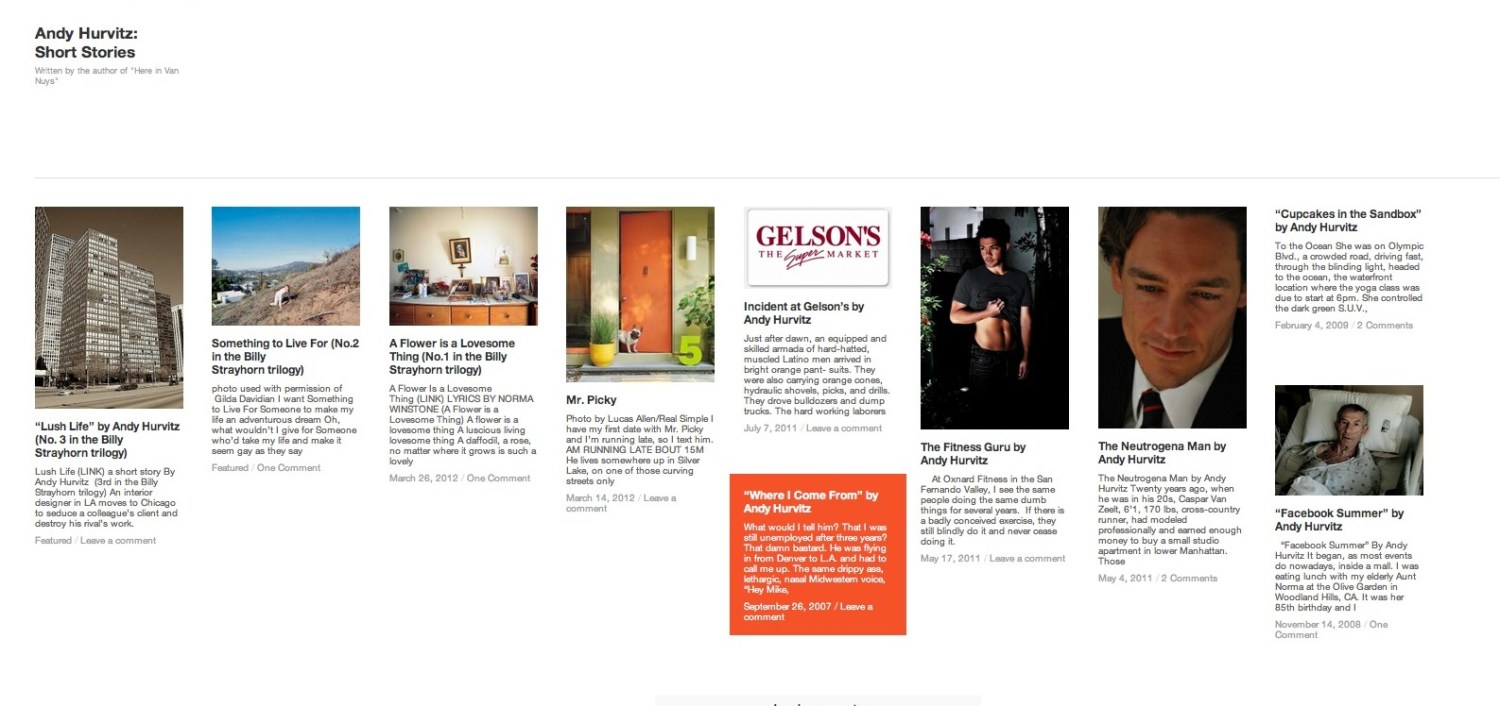
Short Stories by Andy Hurvitz


It’s tough to write and tough to get others to read my short stories. 

I recently set out to challenge myself to write three short stories based upon the music of a composer whom I admire, the late Billy Strayhorn.

Somehow the songs from “Billy Strayhorn: Piano Passion” entered my sub-conscious and inspired me to write.  I listened to the music and let my imagination breathe.

In “A Flower is a Lovesome Thing” a peaceful gardener is taunted by a neighborhood thug, a small tale that involves the Armenian genocide and a young man’s death on the streets of Los Angeles.

“Something to Live For” takes us to Woodland Hills where a department store clerk, working in a dead end job, comes to idolize a rich, older, mysterious man with a tragic past.

“Lush Life” paints a story of a sour success, a Los Angeles decorator who seeks to ruin a rival by destroying and seducing the rival’s client, and, in the process degrading and demoralizing himself and others.

In my work, I again return to familiar themes of Western anomie and people adrift online and in life, searchers and artists and wanderers who yearn for approval and recognition but often end up shamed and despised.

There is a strong urge in America to build up and build out, but there is also a corollary force of self-destruction, manifested in our long working hours, obesity, and what Mencken called “our libido for the ugly”:  the billboard, fast-food, freeway and condo wasteland.

I won’t be so arrogant as to proclaim my fiction true, only to modestly state that I hope some truth is present in my writing.

I try to entertain and create and write something of value and artistry. It is a small pin on the map.

But I would rather start with a small diamond circle of integrity than create a large circle of lies encompassing the globe.

The dehumanized environment of sprawl, the mania for fame, the race for riches, the destruction of nature and the cheapening of life, the debasement of entertainment and the loss of privacy, these are some of the themes stamped onto my work.