A Vast Wasteland: 15 Years of Facebook Messenger


Regretful, nostalgic, curious, melancholy, I recently opened my 15 years of Facebook Messenger to look at old messages, sent and received. 

2007-2022.

Who were these people? What did I want with them? What was I hoping for? 

I found a vast wasteland of forgotten names, broken connections and lost memories.

On August 9, 2012, I sent Christian L. a photo from a party. On November 3, 2016, he opened it. That was the end of our conversation. Who was Christian? What photo did I send? I’ll never know.

15 years ago, like 15 minutes ago, I was looking for work. Or thinking of sex. Or trying to connect to someone for some reason involving either reason. 

Zokai was a muscular black trainer from the gym. He was a potential protagonist in my short story, “Decline Press.” I thought I would photograph him. Have him read dialogue from the story. I sent him a message on August 14, 2016. What became of that? Nothing. Maybe I was to blame for spelling his name as “Zaikai.”

I unearthed a buried trail of dead ends, leads that lead nowhere, communications dreamt up out of my hopes, longings and imagination.

I was always thanking someone. 

On June 14, 2012, I thanked Samson whom I talked to at the Raymer Street Bridge. I have no recollection of the man or the conversation, but I do have a good friend with that last name who lives near Raymer Street. 

But he is not that Samson.

Then there was Satoshi, the hermetic, buzz cut Japanese model who brought me to a chanting worship service at his Buddhist temple in North Hollywood. I spent two hours gasping for breath as I repeated the same indecipherable chant over and over again. 

I tried to contact him after the service, but he never returned my messages. Angered, I sent him one of my petulant texts, and then attempted to apologize. I felt bad for him because his mother died. And then I met a man whose mother also died, me.

I was forever striking out and asking for forgiveness. 

I was always trying to fix what I fucked up.

I often attempted to go back in time before I offended, to find my way back to paradise before my fall.

Does everyone have a life like mine? Is it mere honesty or self-flagellation which propels me to air out long forgotten messages that don’t mean anything?

Should I even air my dirty laundry? Aren’t we all saints in our own mind? FB Messenger begs to differ.

Ambitious, directed, soul cycling, tanned and glistening fashion executive Glynis who I worked with at Ralph Lauren in 1989-90. I owed her an apology before she asked for one. That was 2013. I haven’t spoken to her in ten years, but here I was asking for her forgiveness.

I look again at 15 years of long-gone messages that went out to strangers, friends, acquaintances, co-workers,hotties, cousins, aunts, brothers, lovers, ex-friends and permanent enemies. I review notes of infinitesimal pettiness, penitential pleading, glib emotionality. 

I see myself in the mirror, cracked, crazy and unhinged. Or kind, forgiving, funny, ridiculous, self-effacing. 

My father died in 2009 at age 76. He grew up in Chicago’s Hyde Park neighborhood and his boyhood pals included Norm Jacobs, who took over Baseball Digest in 1969. Jacobs is 89 and a silent partner with Jerry Reinsdorf in the syndicate that owns the Chicago Bulls.

Norm is also a multi-millionaire publisher and owner of a sports team. His pal, my dad, spent his life going from mediocre job to job in publishing and advertising, battling epilepsy, raising a retarded kid. Norm never hired my dad, never looked after his well-being, really never knew a thing about my father’s life after 1950.

After my father died Norm was annoyed was me. I had let his teammates down.

During the pandemic death was all around. Carol had died. She was a girl, then a woman, who moved with her family from Wilmette, IL to Woodcliff Lake, NJ the same year we did. Our families were friends. I lost touch with her. Now she was dead.

I sent a condolence message to her surviving partner Katherine in Chicago who never answered.

Did it matter I cared enough to send a kind note to a grieving person I had never met, 40 years after I last spoke to their dearly departed?

Yet my condolence note on March 19, 2018, to Patrick, concerning the death of our mutual friend Trout, mattered.

I found a long-forgotten request to Councilwoman Nury Martinez to clean up a trash heap.  When the distinguished history of Van Nuys in the early 21st Century is written who will memorialize my contributions and my plaintive emails and texts to correct the filth that befouls our district?

Was the trash cleaned up? Did the trash come back? Or did it persist, like my messages, under a smoldering heap?

There are many messages to people that fell out of friendship. Chris was offended when I said his kitchen wall was hollow. Jacque, friend of 40 years, crucified me for not stopping off to say good-bye when I left Chicago after a two-day visit. “You were always selfish!” she said.

And Kristy McNichol. I sent her a FB message when I finished writing my novel about two families in 1980s Pasadena, “Exiles Under the Bridge.” Surely, she would be interested in it, having starred in a late seventies TV show, Family, which was set in that town.

How the imagination works, and tortures, and devises improbabilities, spun out of fantasy, to keep us alive and hopeful. 

Sweet Anita. We met through my blog. She lives nearby. We always laughed, she always complimented me, we had dinner at her house, she came to mine for wine and cheese. 

I pulled her off FB when we moved to opposite ends of the political fence. Yet I still miss her, wish I could crawl back into her good graces, for surely, we have done nothing to offend one another, and what happens in the voting booth, should stay in the voting booth.

I grew up when it was unspeakable to desire the same sex. Now it is blasphemous to desire a person from the other political party. 

On May 30, 2019, I waved to Christina. Who is she? I don’t know. 

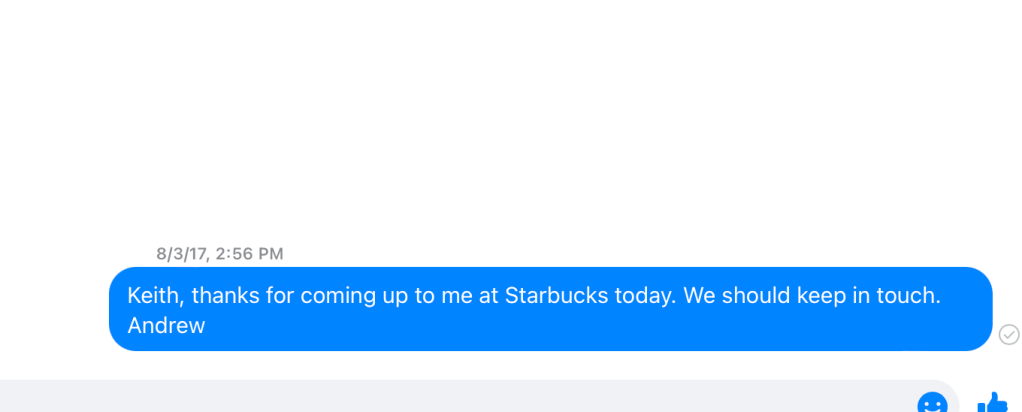
Keith B. came up to me at Starbucks on August 3, 2017. 

Cary apologized for “getting pretty boisterous” at MacLeod Ale on April 6, 2015, and how things may have gotten a bit out of hand, and damn if I don’t remember anything about it.

MacLeod’s beer and my intoxication, was another instigator of trouble when I made a joke at the brewery about Sam W.’s “$250 sweater.” He didn’t take offense.

In 2015, just like 2022, and 1994, I was wondering who an agent for my writing might be. An obscure life prepping for a recognized life that will never be.

Producer, director, writer, political activist, and Married to a Millionaire Melissa of Nyack, NY let me know my short stories had no money in it.

Brad sent me a message on October 9, 2013, asking if I knew where Matt was? (Matt was a hustler/model I photographed a few years earlier.)

I didn’t know where Matt was. 

I still don’t know where Matt is.

Reunion


Last night was a reunion at MacLeod Ale, the first time all of us had gathered since last March 2020.

Times have changed.

There was a large area outside under tents where many could gather. Let’s hope they keep this pandemic innovation.

Some pizzas are spicier, some beers are smaller, some people are larger.

After 15 months, everyone looks a few years older, including this writer.

As night fell, the place got more crowded, and that familiar loudspeaker announcement came on to have someone move a car blocking other cars on the driveway. There has never been enough parking here, which is a good thing for those who want people to walk, Uber or bike here. Bad for those who measure the quality of life in Los Angeles by how much parking there is.

Anyway, it was good to see friends. Again.

Only Yesterday


In 1931, two years into the Great Depression, Frederick Lewis Allen published his history of the 1920s, “Only Yesterday” covering the period from the end of WWI until the market crash, in October 1929, that plunged the world into poverty. The American economy would not revive until war and destruction obliterated Europe and engulfed Asia, and after the suffering and the debacle of that period, enlightened leaders vowed to never allow world war again.

So, here we are, now.

We seem, again, to be living in the most exciting of times, a moment of collapse when people are without money, in fear of their health, and watching the world outside collapse. Families and friends are unwittingly jammed up inside, fearful of intimacy, terrified of shopping, petrified about their money, unable to sleep at night, and looking for some savior vaccine to end this nightmare.

An incurable contagion devastates the lungs, drowns us, and we die alone. Please, somebody, do something.

We look up high to the presidential podium for answers. 

But we hear the cries from the asylum.

Every aspect of normal human life is now that moment in the horror movie when The Lone Girl goes downstairs into the dark basement after she hears a noise. 

7.5 billion are now The Lone Girl.

We are home with children or aged parents, or quite alone, with nobody. We are sitting at computers, trying to work or forget; obsessed over disabled relatives in group homes; monitoring children playing in the yard when the wind is blowing.

We can’t go to the gym, to the mall, to the coffee bar, to the park. We do push-ups if we can, and we lay on the couch all day until we try and sleep but we can’t. 

We are on guard receiving a package at the door, opening a letter, putting hands on a steering wheel, touching a doorknob, wiping down a mobile phone, cleaning a countertop, eating a banana with unwashed hands. We dare not open a window to let in a virus or forget to sanitize a salt shaker. 

A text message, “Call Me”, is alarming.

Everything is terror.

We are told, now, too late, to wear masks when we leave the house. Before they were of no use, now they are essential.  We are told to use hand sanitizer, but what if someone behind us, at the grocery store, unmasked, sneezes or coughs? 

In the midst of this darkness, I learned, strangely and horrifically, that one of my friends from MacLeod Ale, Drew Morlett, 37, had been stabbed to death last Sunday, by a woman, during a fistfight with a man, at a party given by a nurse (Drew’s girlfriend?) who unwittingly invited the murderer over to her apartment on Kester Street.

To attend a party during a pandemic is foolish, but just being foolish is not reason enough to justify murder. In poetic justice, all the fools at the party would catch the virus, their punishment for violating what we all know we must not do.

Though I knew Drew for five or six years, I hardly knew him at all. 

We had met at MacLeod Ale, and then we’d hang out, always by coincidence, never by intention. 

From what I knew, he lived walking distance from MacLeod, with his family, near Hazeltine and Oxnard. He had a raspy voice, with a sound almost frail and hoarse, so I nicknamed him “The Raspy.” He was a townie, like many at MacLeod, adults raised in Van Nuys who never leave Van Nuys. MacLeod was his parish.

On Saturday, June 27, 2015, The Raspy and I went to Venice, this time by intention, to take photographs and drink beer at Whole Foods, beer served by bartender Drew Murphy, an amateur expert on beer, who used to casually serve us oysters, shrimp tacos and other good foods that somehow never ended up on the tab.

That bar at Whole Foods on Lincoln had become a place I went to often, especially in the year 2014 when my mother was laid up in bed in Marina Del Rey, dying of lung cancer, and I’d go down and see her, and then stop off at Whole Foods and self-medicate, and drive home slowly in the night air, always careful to let the beer burn off before I drove, sometimes going up Beverly Glen, the long way, windows open, as Jo Stafford or Frank Sinatra played, and the profusely growing night jasmine floated in. 

The Raspy worked in computers, or fixing computers, or something like that, I never knew. He was gentle, and short, and thin, and a twin, with a twin brother. He had olive skin and wore olive t-shirts. I felt like I could have been his best friend, but we never talked about anything, really.

Others at MacLeod, people who drank nightly, or played darts, knew him better. I was not one who played darts or drank nightly, and last year I only spent some $800 dollars at MacLeod, for all of 2019, and I would guess Drew spent considerably more, though I don’t know, and to speculate is to lie, so I can’t say. 

One time I saw Drew Morlett and he said he was laid off and looking for work. Another time he said he was living with his girlfriend on Kester. One late night he called me and invited me out, and it was after 11pm and I didn’t go. He was known at other bars, other dart places, and in other drinking establishments, and it seemed he was out and about and all around the city, going out and about and all around the city. 

Until he died last weekend.

Now he is dead, dead in the way Van Nuys kills you: in obscurity, senselessly, ridiculously. That weekend, two days before he was stabbed, another man, a homeless man, Dante Tremain Anderson, 35, was killed the same way, by knife, not far away, on Burbank Boulevard in the Sepulveda Basin.

Before I learned about the identity of the second victim, Drew Morlett, I knew about the first and second murders. And in my mind, they were indistinguishable. Just anonymous and tragic and forgotten. 

Now one of the dead I had really known, and hugged, and laughed, and drank with. He had siblings, parents, friends, and they all mourn his death. I cannot feel the grief his family carries, and they have my deepest condolences.


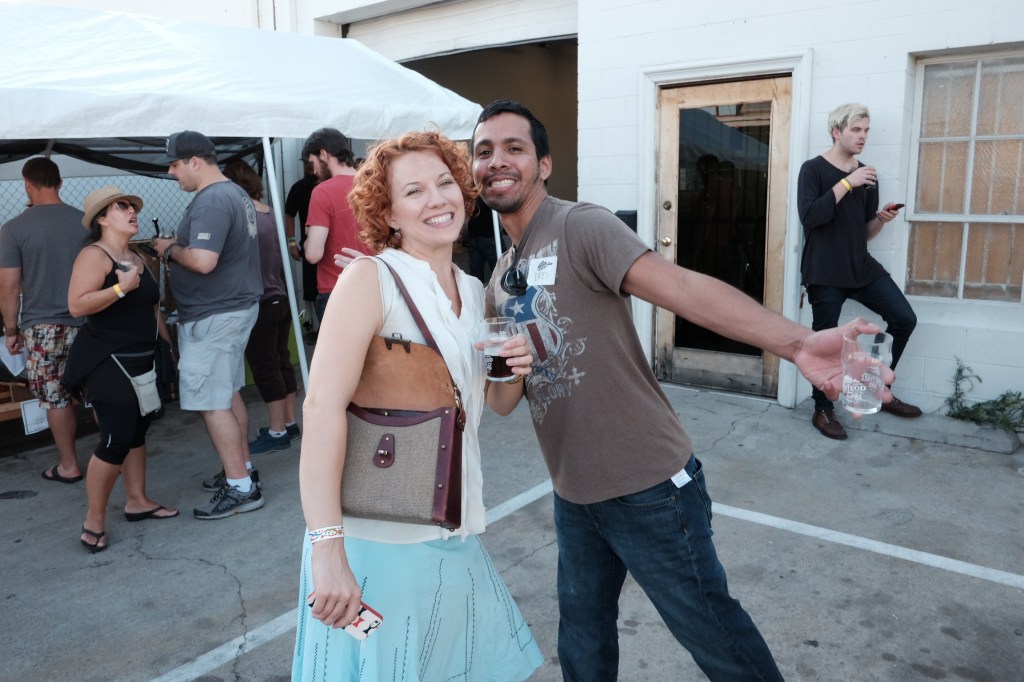
On June 21, 2015, a year after MacLeod Ale opened, that brewery held a big party. 

Drew Morlett was there, and so were hundreds of other people. They lined up to buy tickets, to sample brews from guest taps, to listen to lectures by brewers discussing brewing, to meet other enthusiasts and lovers of craft beer.

I took many photographs that day, and now they look remarkably dated. 

It is not only that we are presently, legally restricted from gathering, but that we are older. We are now incarcerated by grave and ominous fears and worries, and to drink beer in a crowd and listen to music and get drunk, that is our fondest hope for what we might do again. 

We hope, not only to be well, but to live, to be in this world, not banished from it, and to return to happiness and blithe ridiculousness, and even carelessness and stupidity. We should not have to die for our love of each other, we should not have to die because we partied, or touched our face, or went to a movie, or shopped for food, or cared for a sick person in hospital. Somewhere there is a profound lesson in all this, but I can’t quite fathom it. 

I have to go wash my hands now.