

The 10-mile long, $1 billion dollar widening of the San Diego Freeway is a monumental feat of engineering: demolition and reconstruction of bridges and roads, 27 on/off ramps, 13 underpasses and 18 miles of retaining and sound walls.
When the rebuilding stops, new car pool lanes will open.
Before that time, we, who travel or live in the Sepulveda Pass, go amidst temporary art installations. The partially built is perhaps more compelling than the finished product.
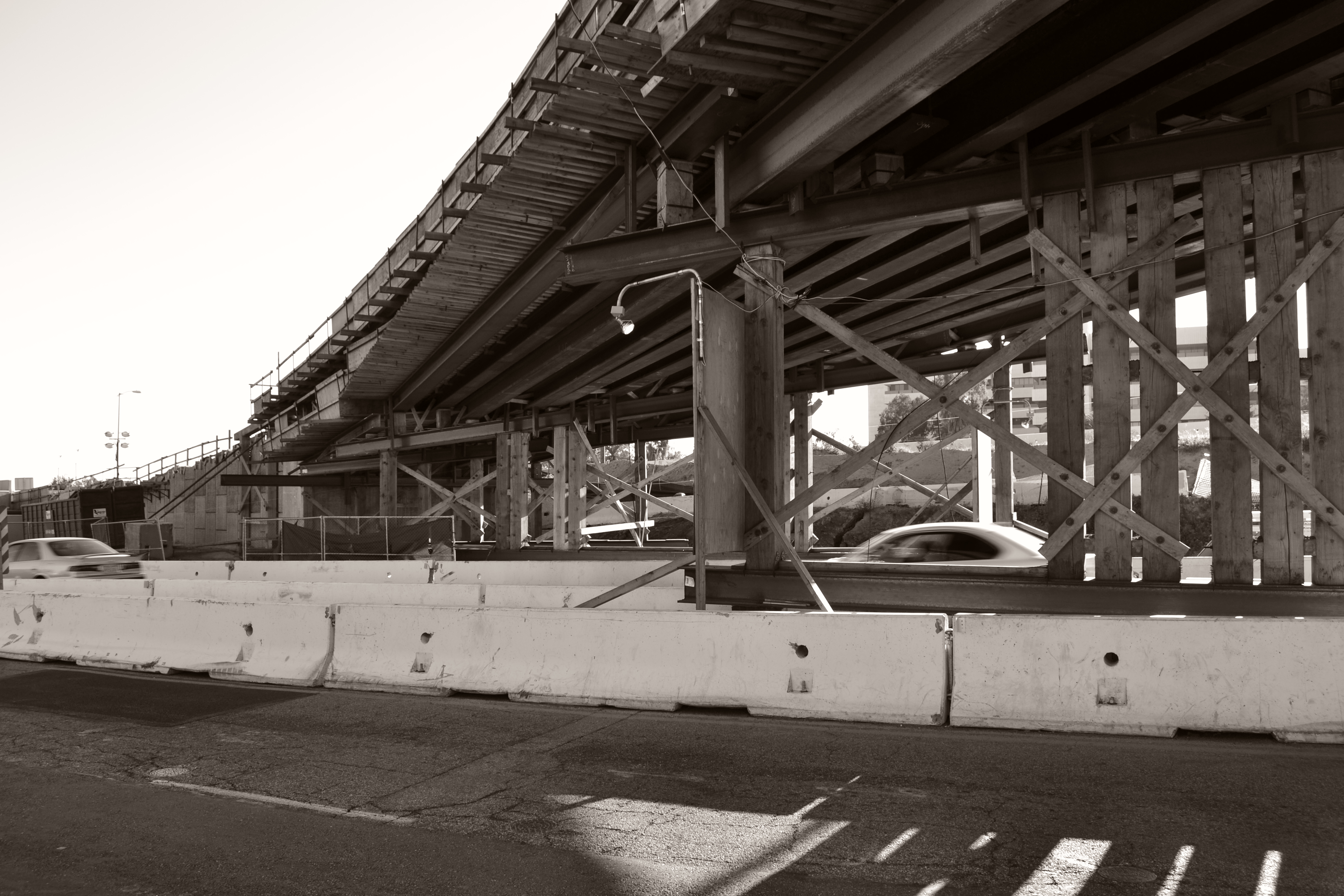

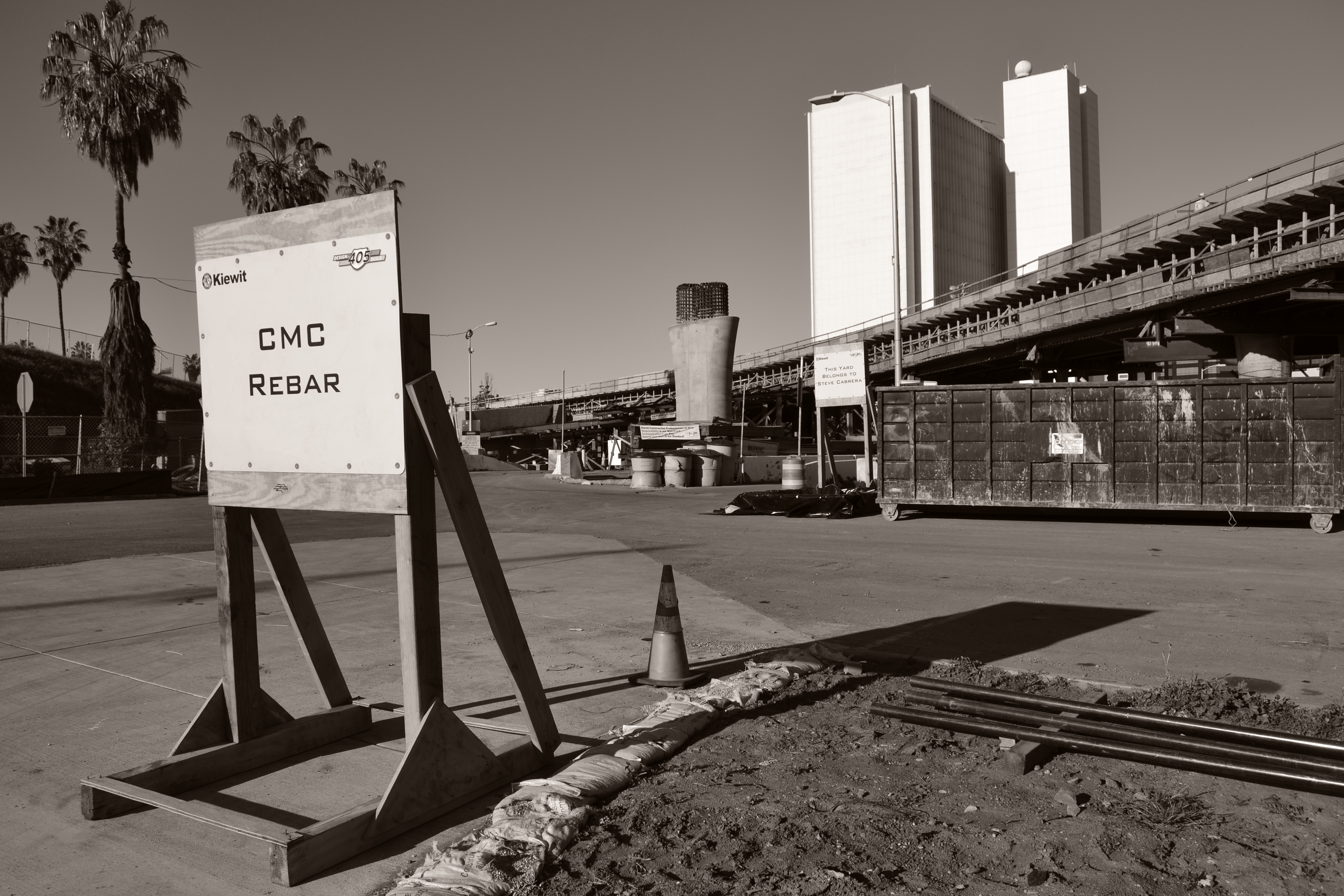
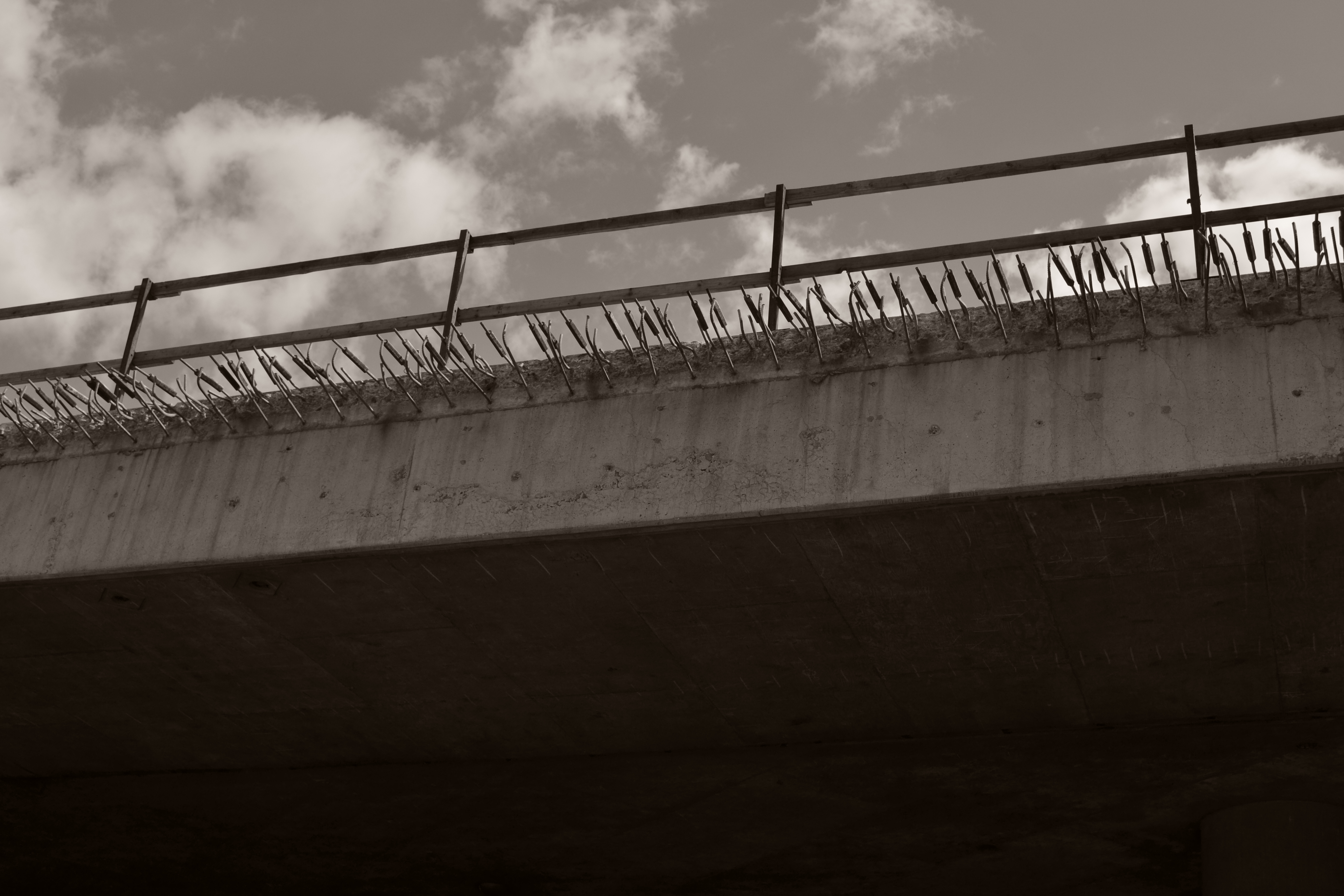
These functional components of road building are ingenious engineering and unaware artistry; choreographed, measured and precisely drawn elements of structure alive in rhythm, movement and shape.
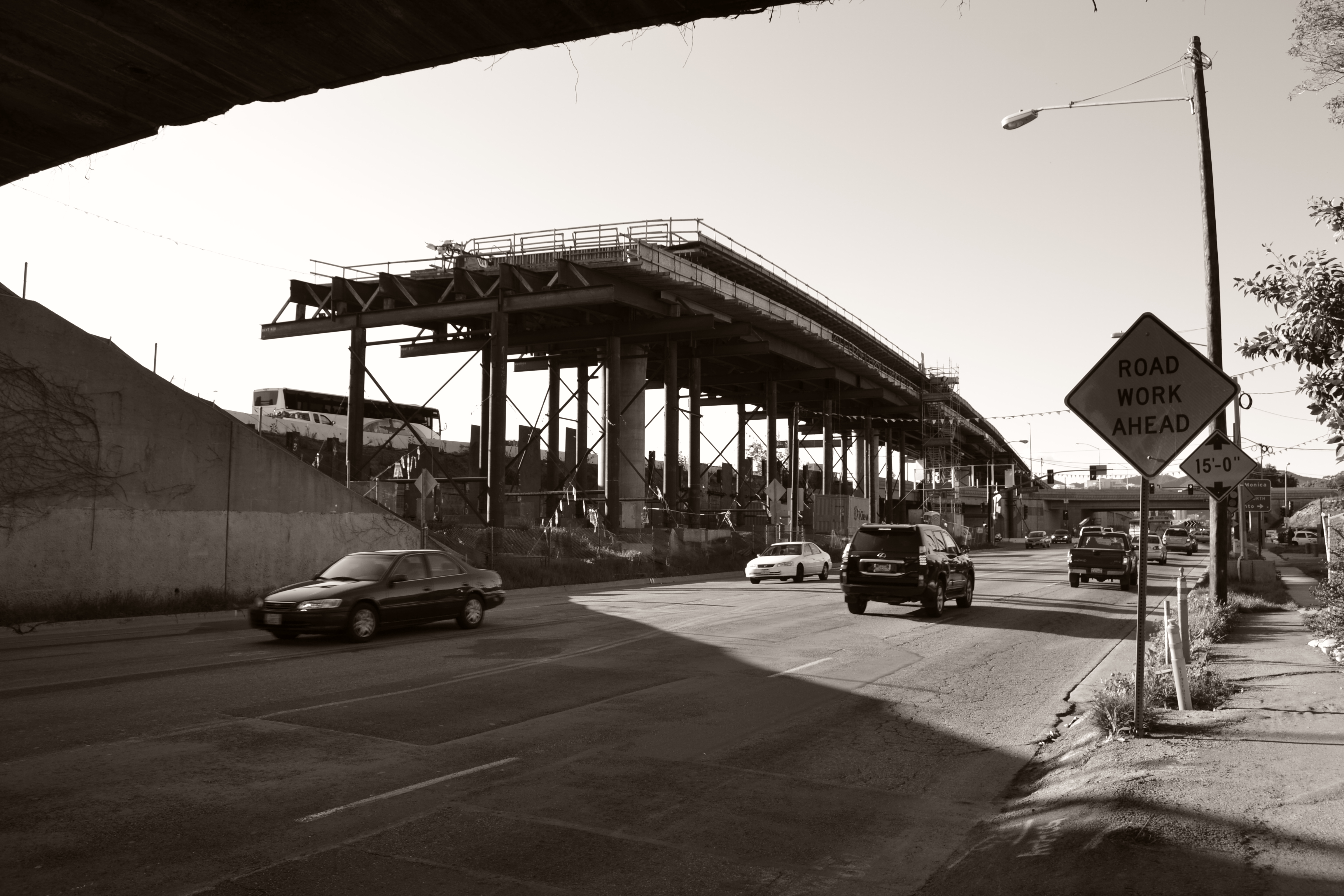
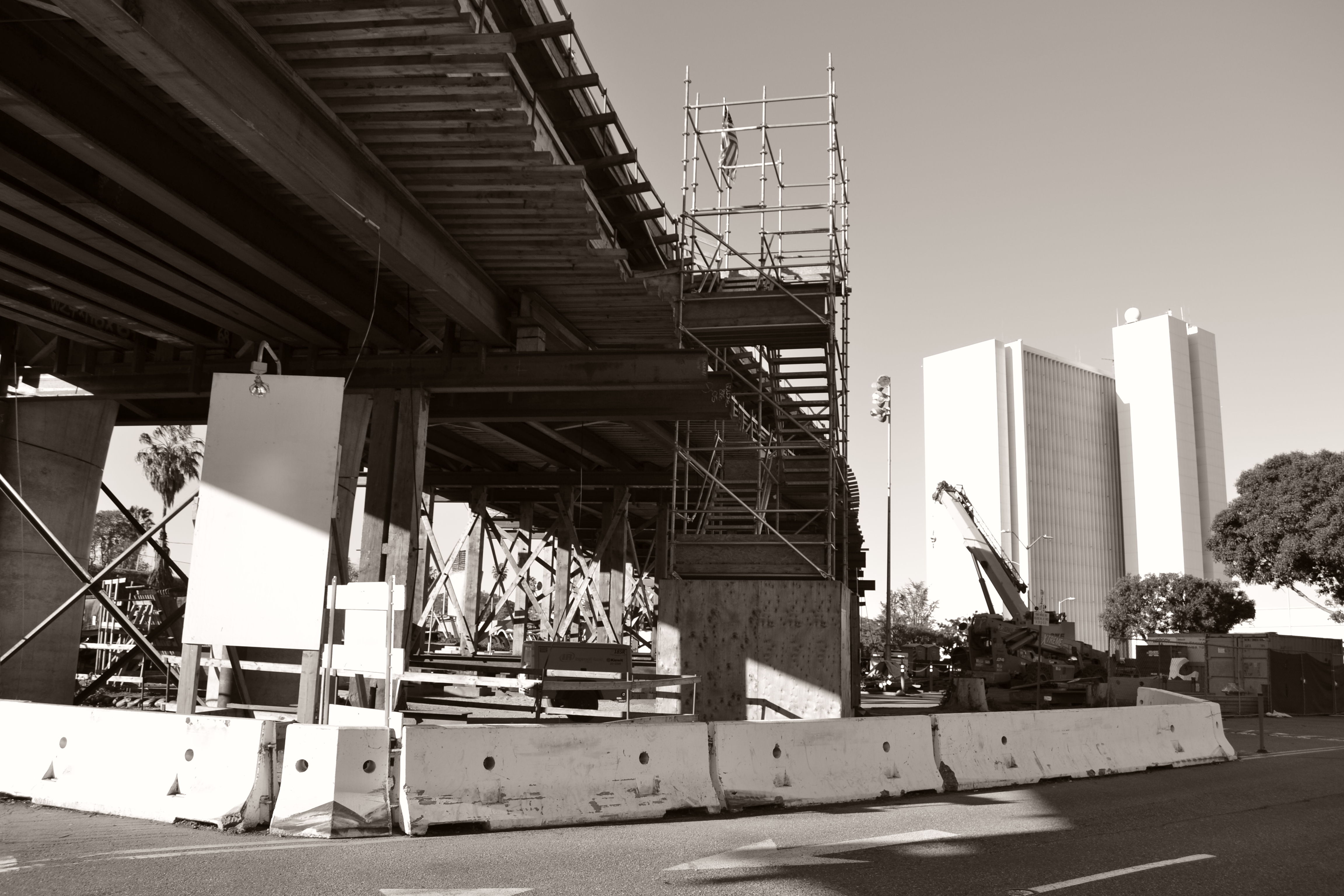
Along the west side of Sepulveda at Wilshire (above and below), skeletal underpinnings, in wood and steel, for future on/off ramps, evoking the lean, linear infancy of modernism, form following function.
High pillars of steel hold up horizontal spans along Sepulveda, near the Veterans Cemetery and the Federal Building. Perhaps unintentional, the in-progress road suggests that this flat open expanse requires something triumphant and civic to pass through to salute government workers and honored soldiers.
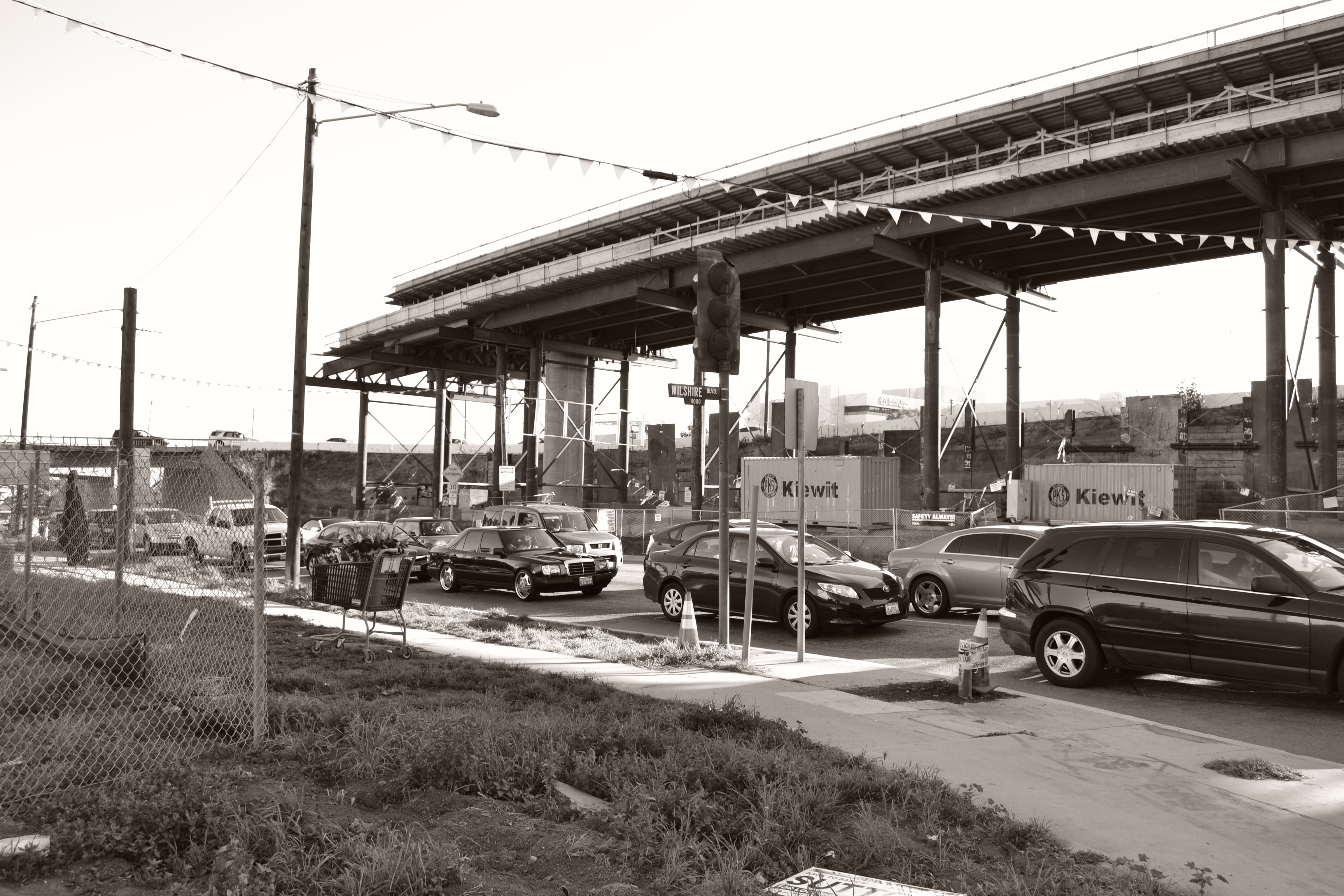
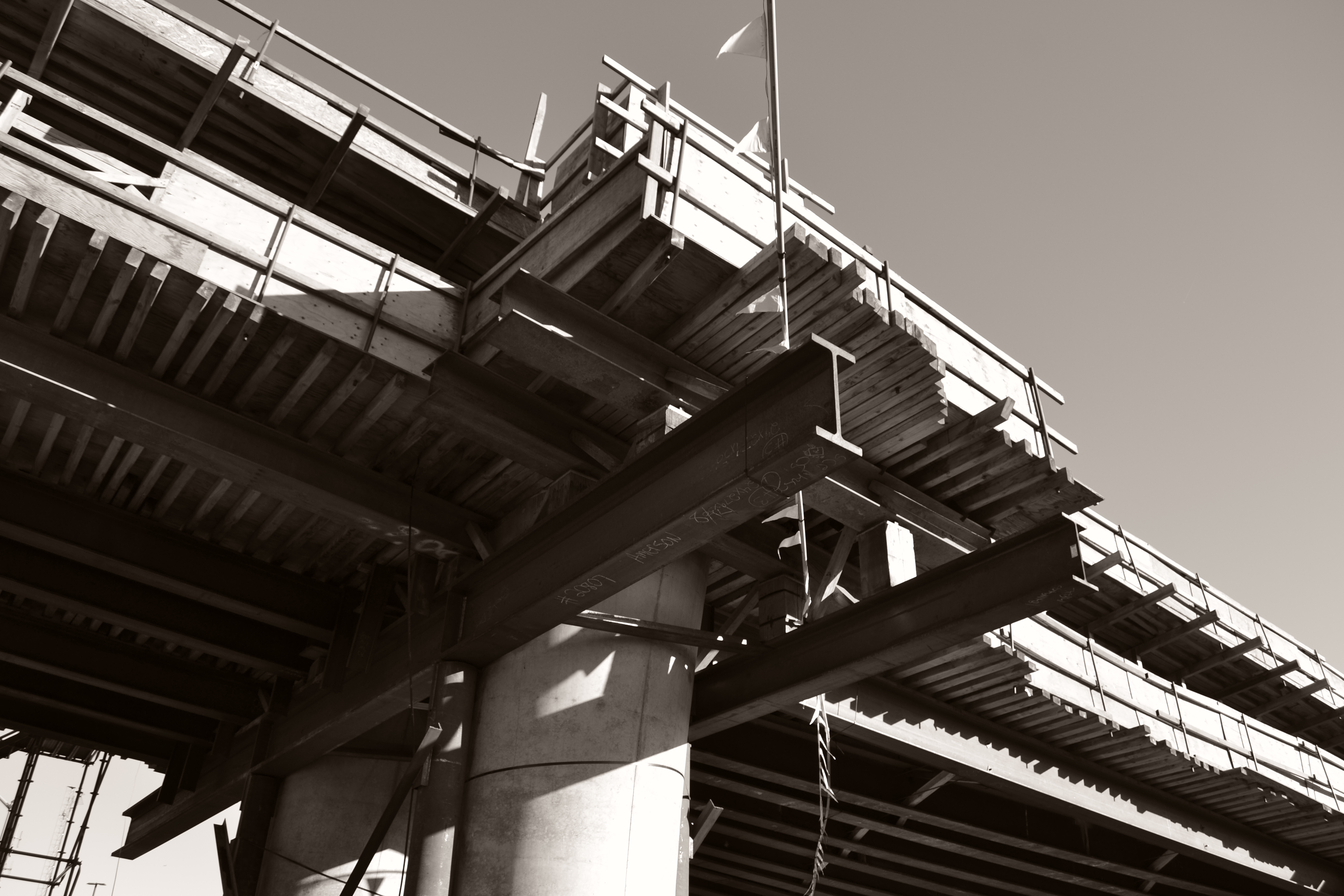
Wood slats nearby evoke the organic asymmetry of Japan, while frail wood railings conjure up jungle bridges.
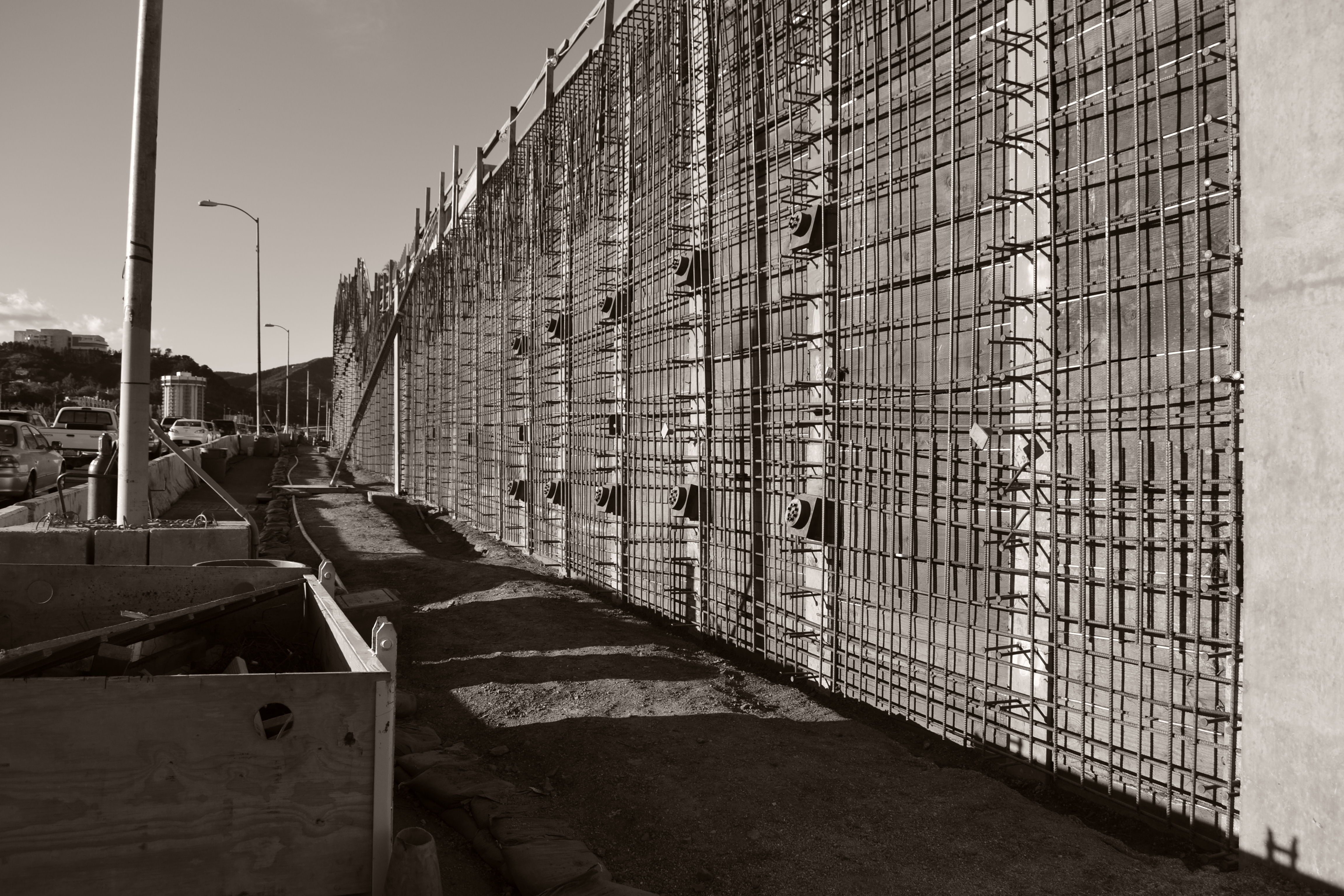
Near Montana, a tall hillside is clamped into place by ten-story tall concrete ziggurat criss-crossed by steel bars and round bolts onto which plates of facing will hang.
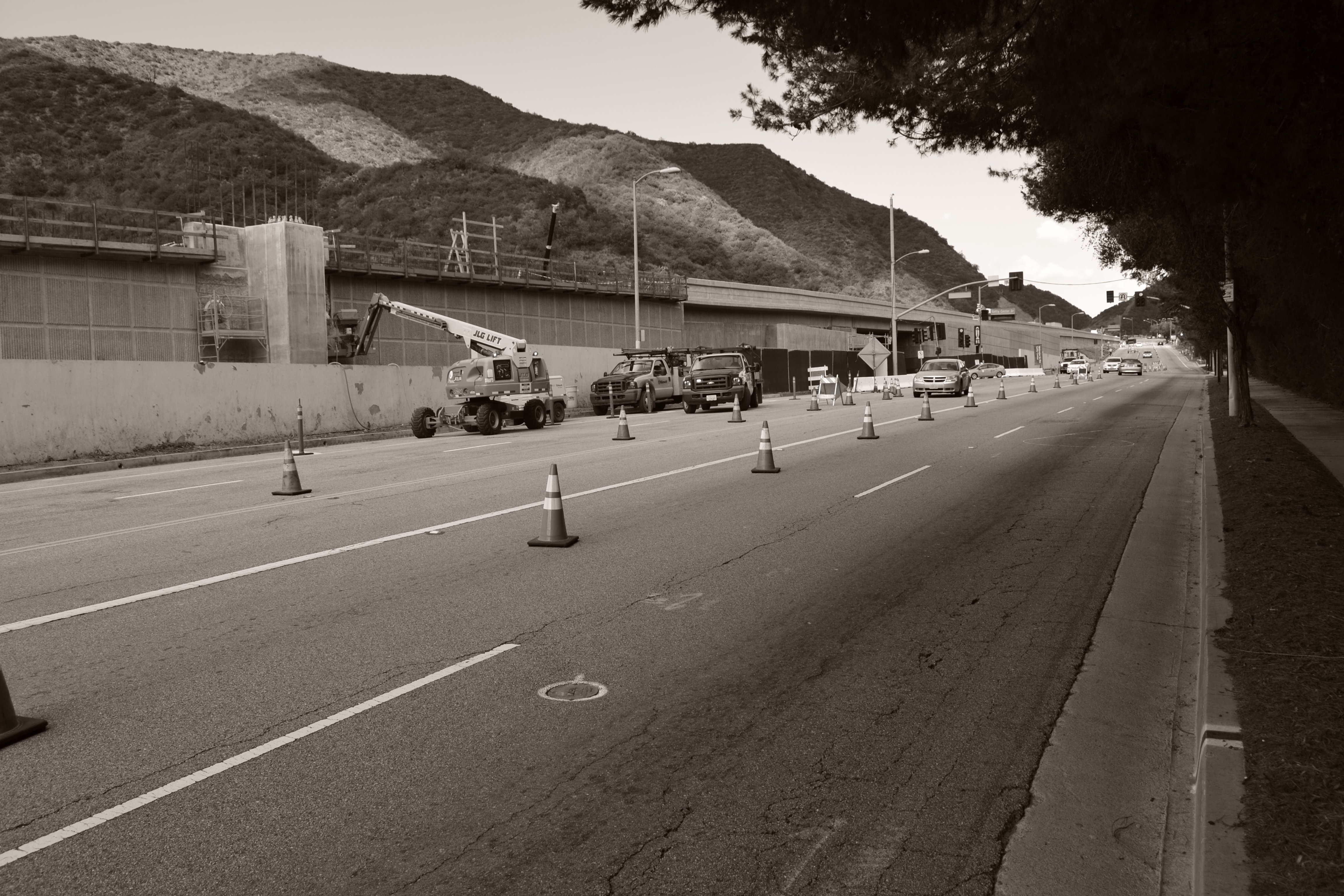
Here are dancing and unfurling materials, performing in shadow and sun, ribbons of road next to green mountains, tall walls of tapered concrete holding back tons of earth.
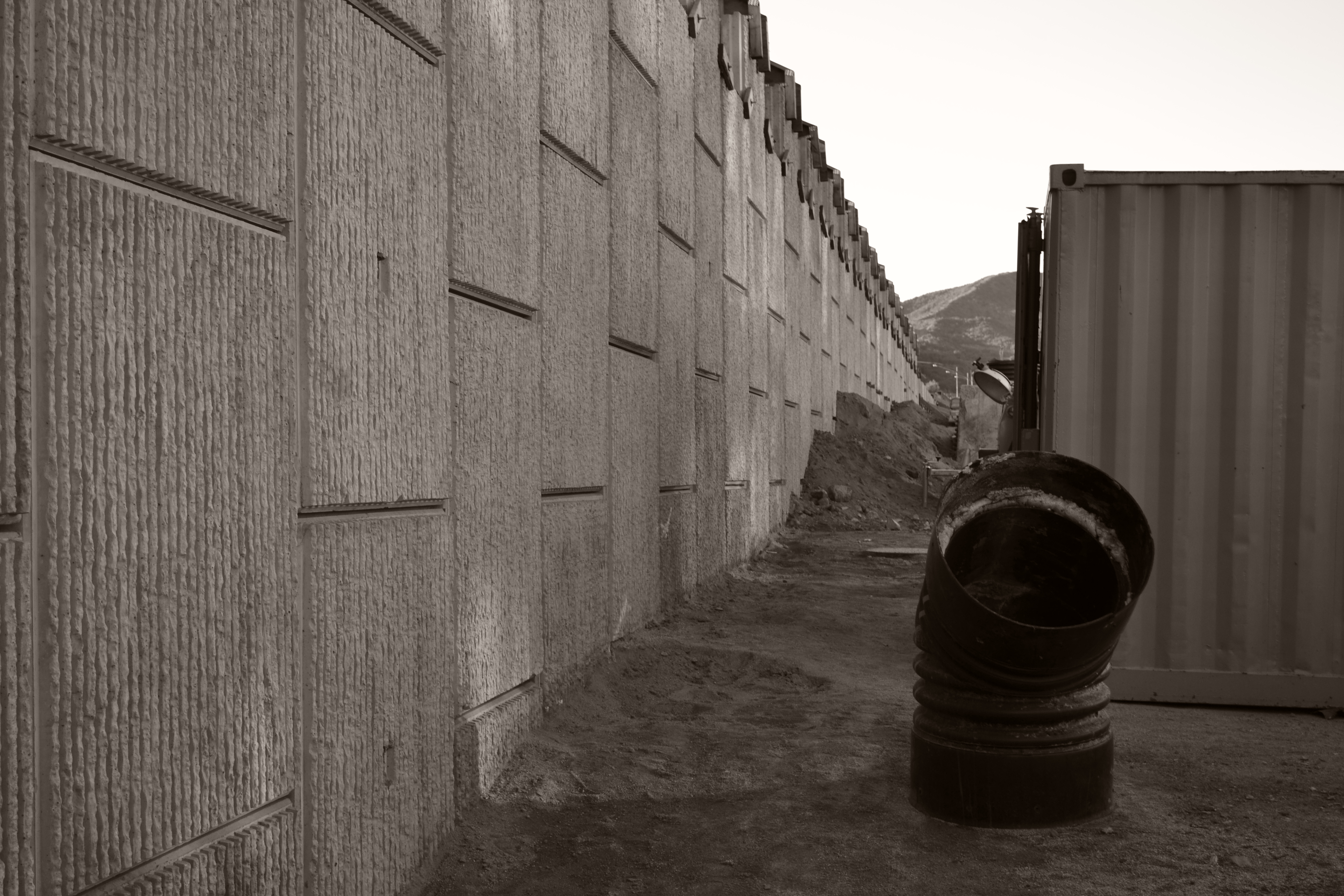

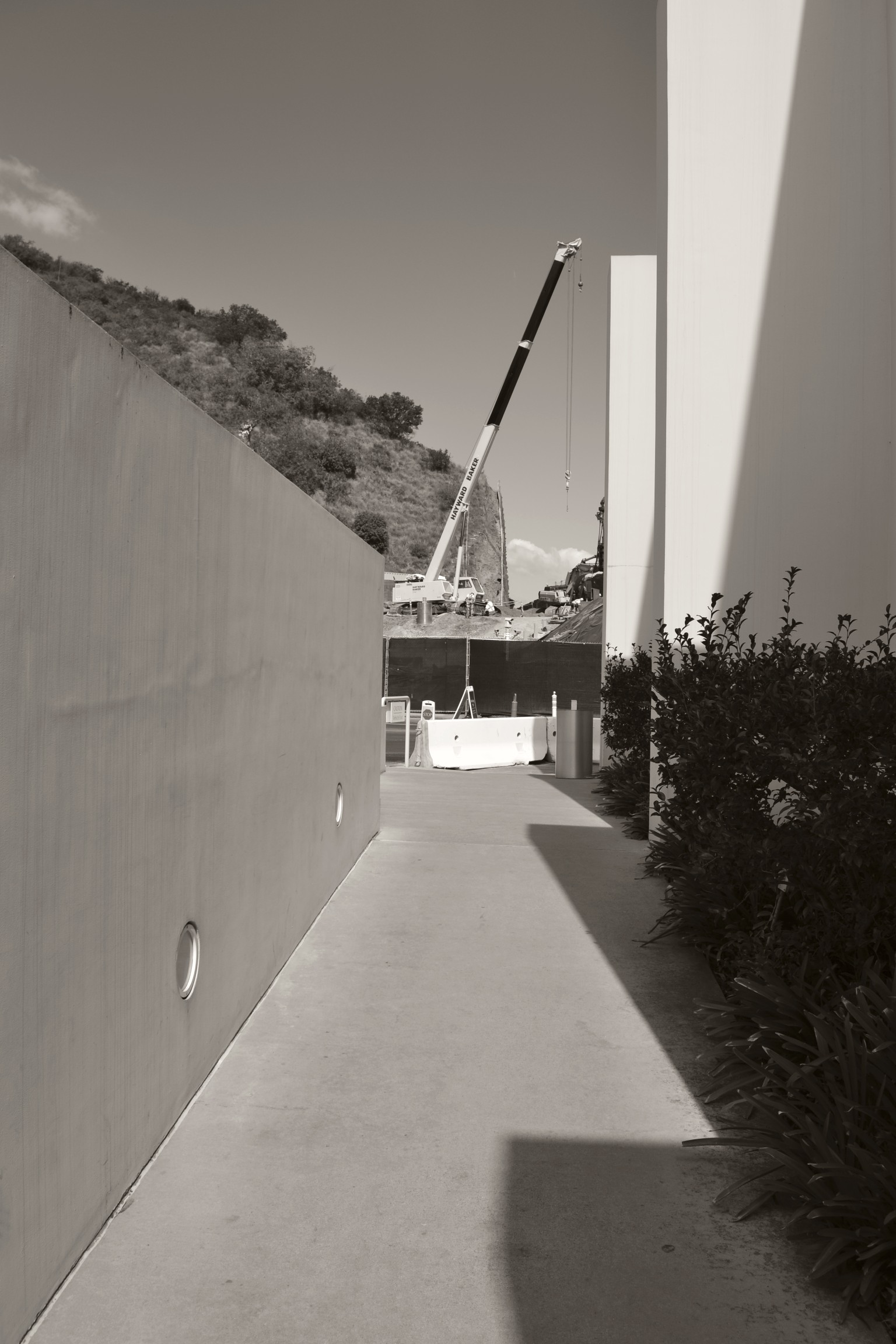
Serrated vertical lined concrete walls, go low and march along in rectangular pattern near the Getty. Parts of drain pipes sit alongside. A crane stands on the west side of the freeway near the Getty.
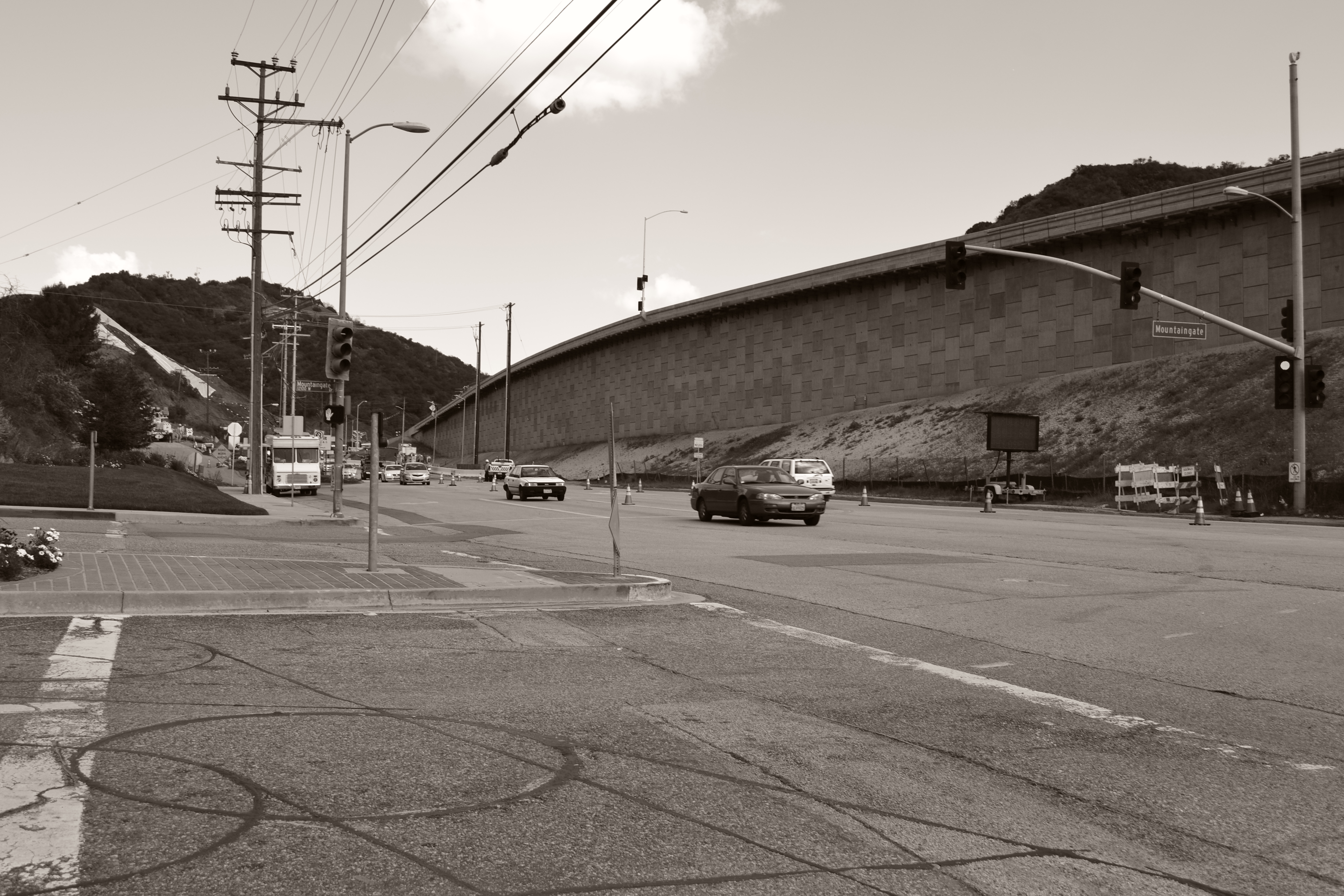
Near Mountaingate, the 405, seen from below along Sepulveda, sweeps up behind a tall wall, a freeway heard but not seen.

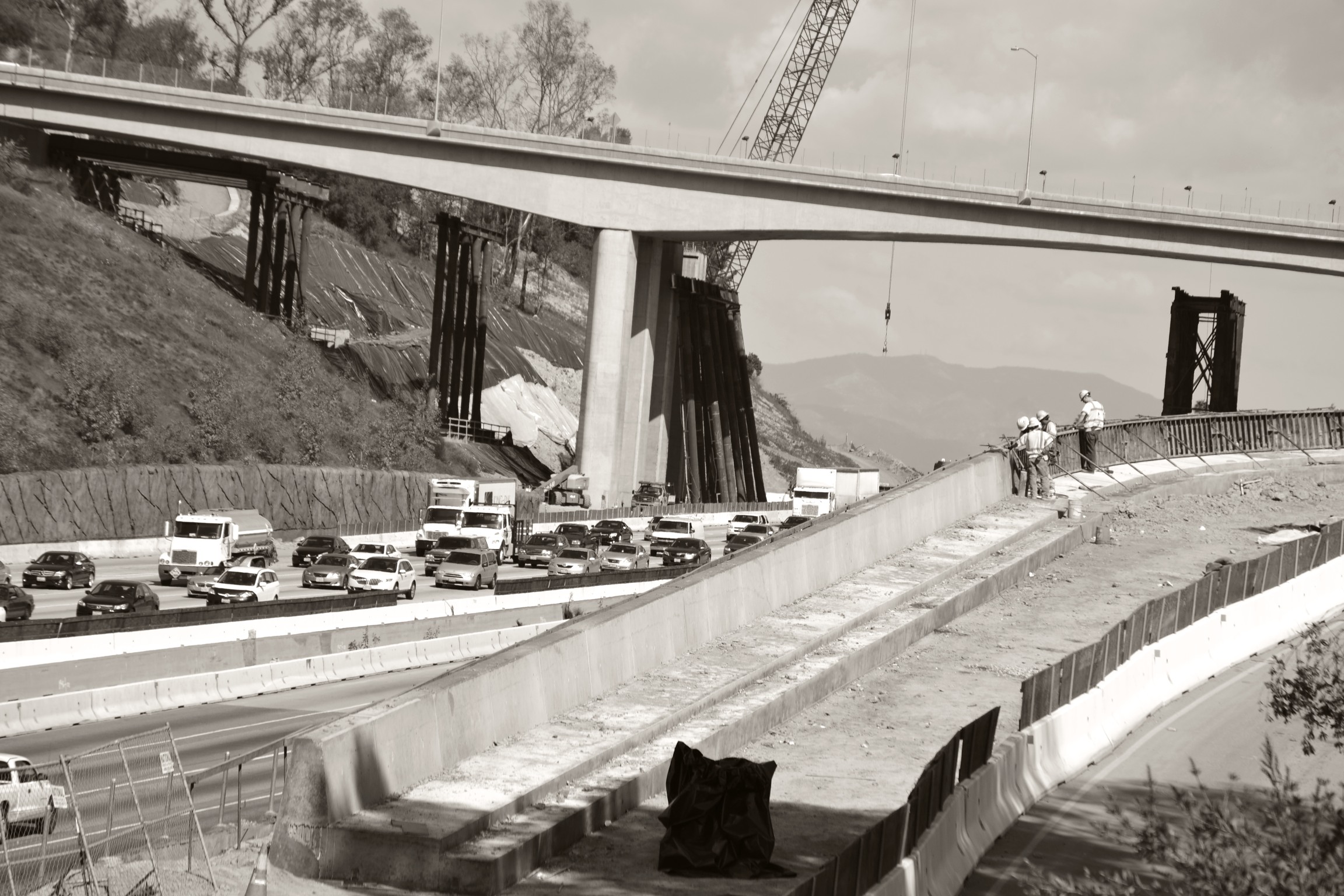
At Mulholland, the pass opens up to the Valley.
The mountains seem higher, the vistas taller and wider.
New steel spans are stacked under the old road, ready to perform their next feat of support to carry up a new bridge.
It is a penultimate, high altitude moment of reconstruction: intelligent, courageous and invigorating.
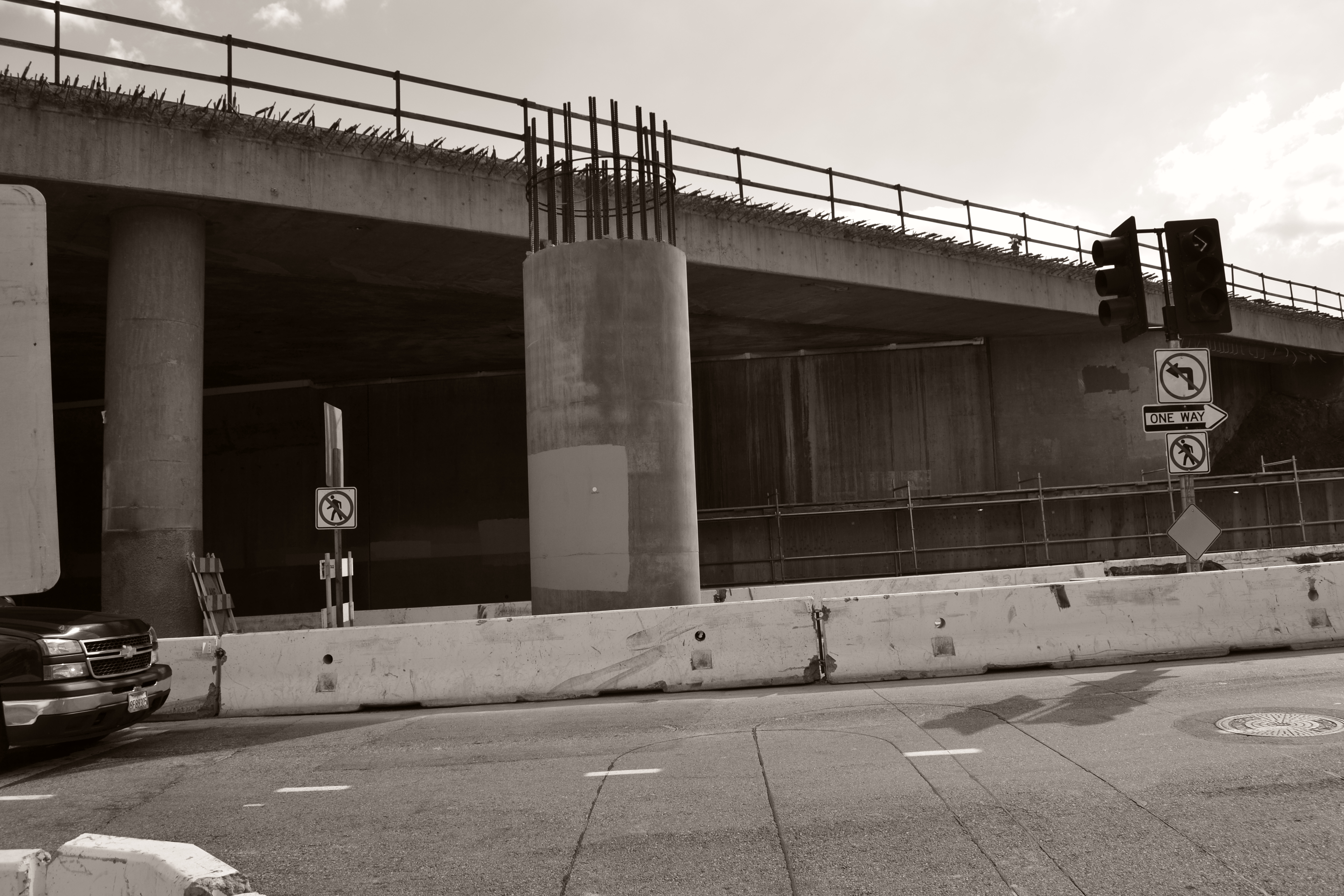
And up in Sherman Oaks, near Valley Vista, the sunny and self-satisfied homes of prosperity are caked in dust, caught in the bottom-end of the widening. The congestion is worse, the noise more constant, the torn-up streets taken over by bulldozers, trucks, fencing, excavation, speeding drivers, demolition and reconstruction.
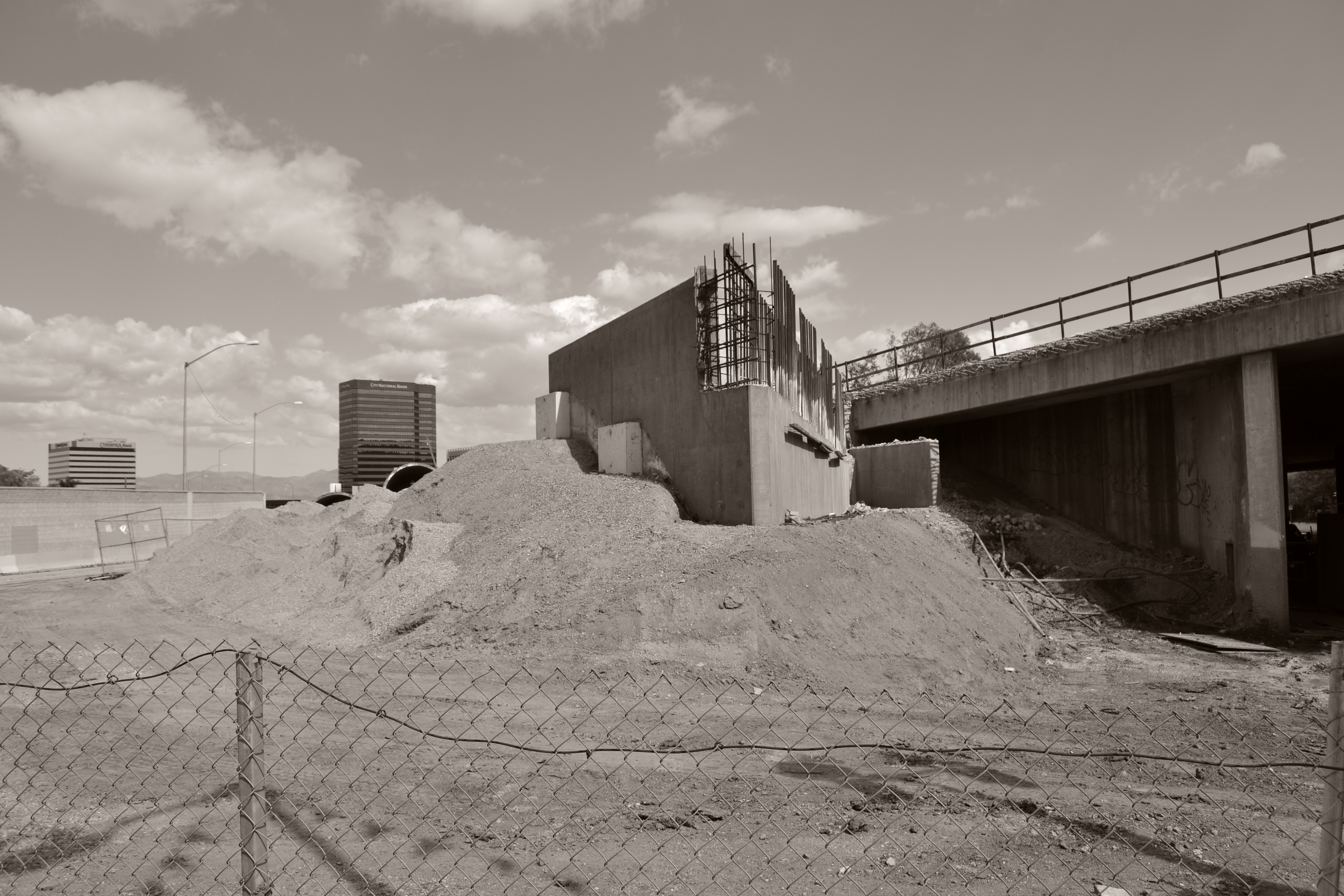
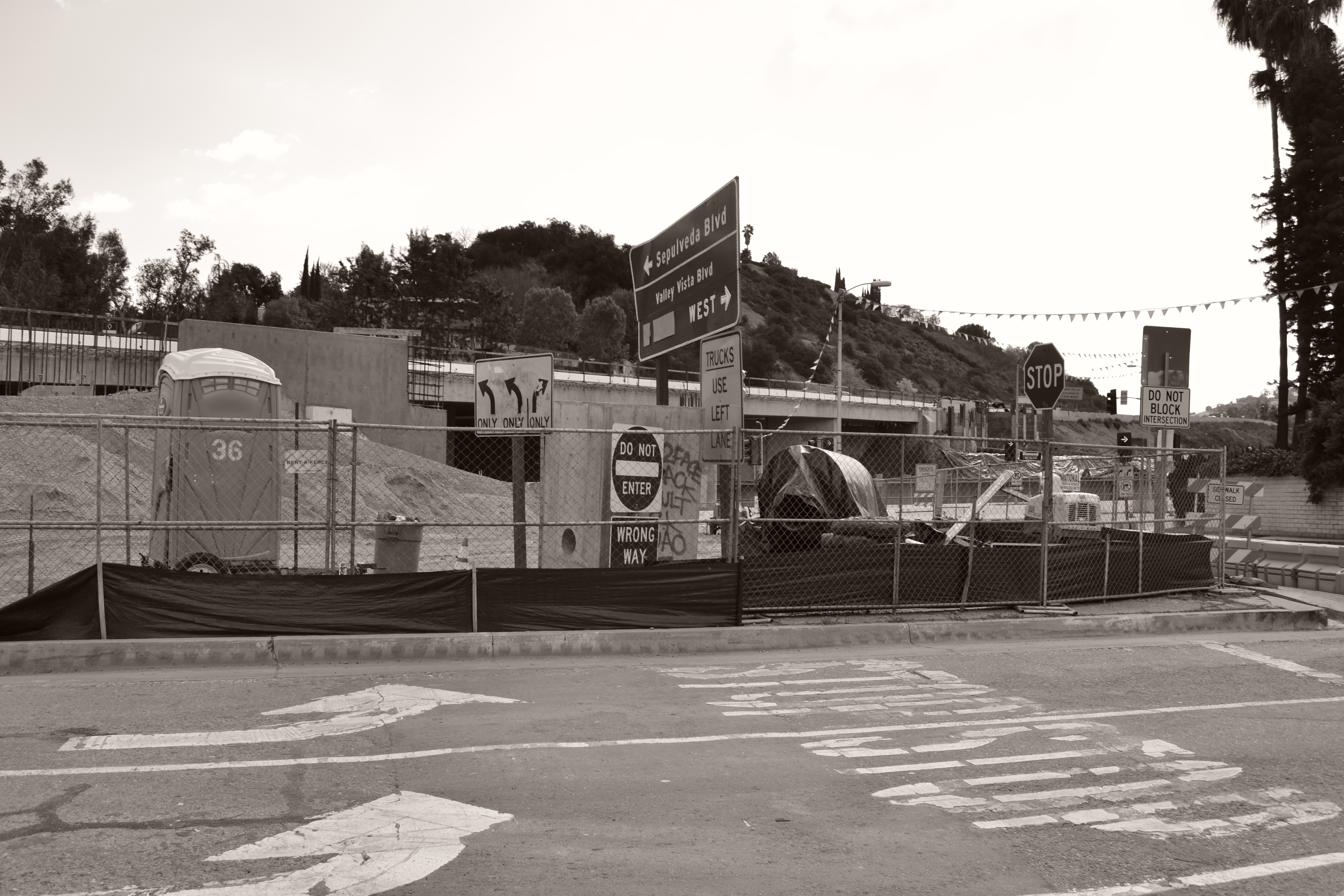
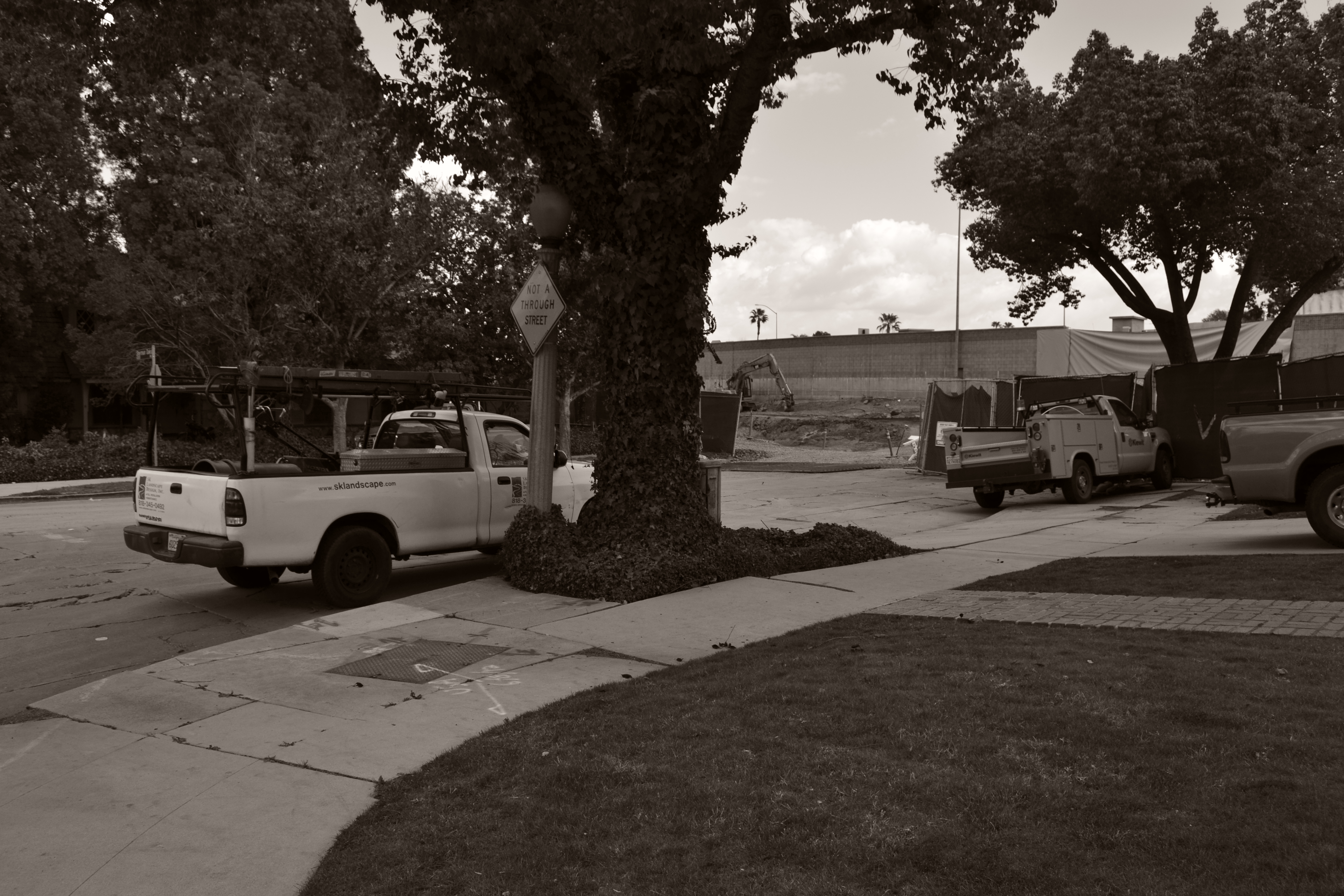
A heroic human endeavor whose energies are producing, in our backyard, a fast changing and fascinating spectacle of clashing forms, tactile tons of man-made materials, anonymous art along the 405, silently begging us, as Los Angeles often does, to open our eyes and drop our assumptions.


 Here in Van Nuys
You must be logged in to post a comment.