A Great Wall on Burbank.


“Building-to-street proportion is the relationship between the height of buildings on either side of a street and the width between those buildings. An ideal proportion between these two creates a pleasant and visually interesting public realm. The public realm, therefore, may be considered as an “outdoor room” that is shaped by 
the “walls” of the building heights and the “ floors” of the roadway.

Outdoor rooms with excessively wide roadways or short building heights tend to eliminate any sense of enclosure
 for the pedestrian.”
-Los Angeles Small Lot Subdivision Design Guide, 2014

Our city, with its sprawling boulevards and speeding cars, is often cursed with roads way too wide for pedestrians. Think of six-lane Van Nuys Boulevard, bordered by one-story high buildings, and worse, parking lots.

In some areas of the city, like on Pico Boulevard and in Studio City along Ventura Blvd. planted islands with trees now break-up the wide asphalt. New “outdoor rooms” with a sense of enclosure and protectiveness emerge. These are deliberate and designed for upgrading ugliness.

But sometimes even an ongoing construction project can enlighten and transform a bleak stretch of formerly wide street monotony.

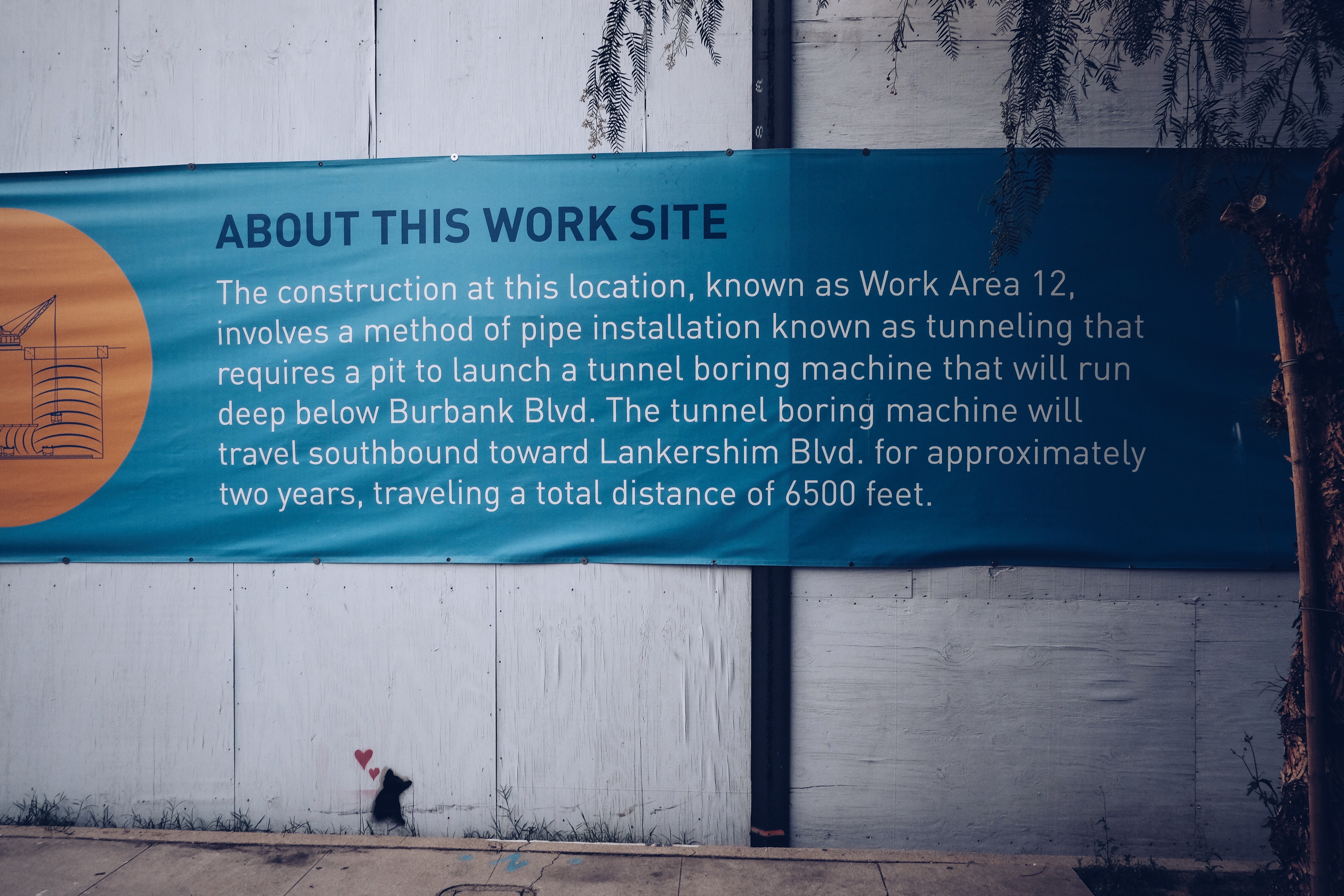
In North Hollywood, on Burbank Blvd. just east of Vineland, DWP has been tunneling and installing a new water delivery system.
Processed with VSCOcam with a5 preset Processed with VSCOcam with e2 preset

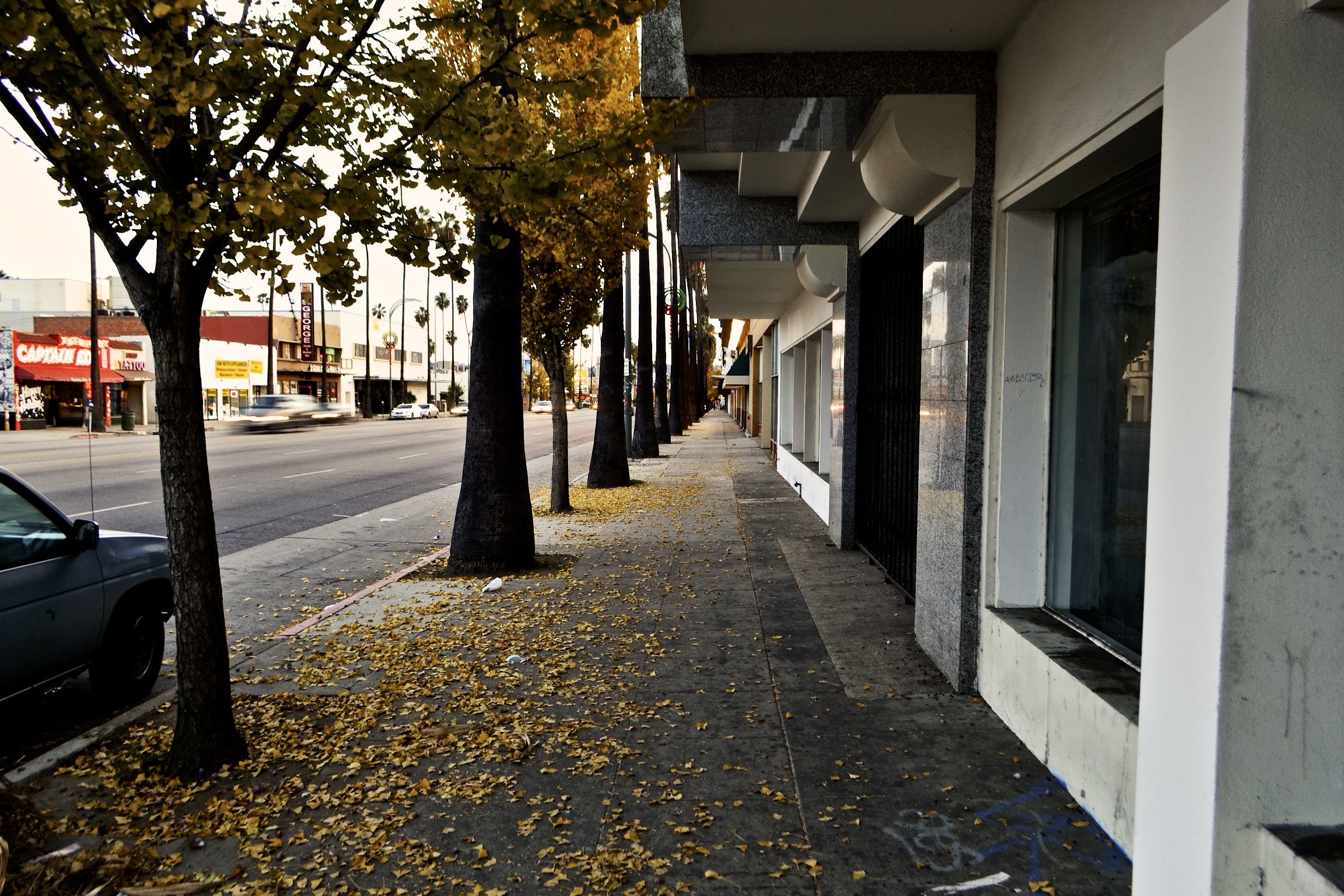
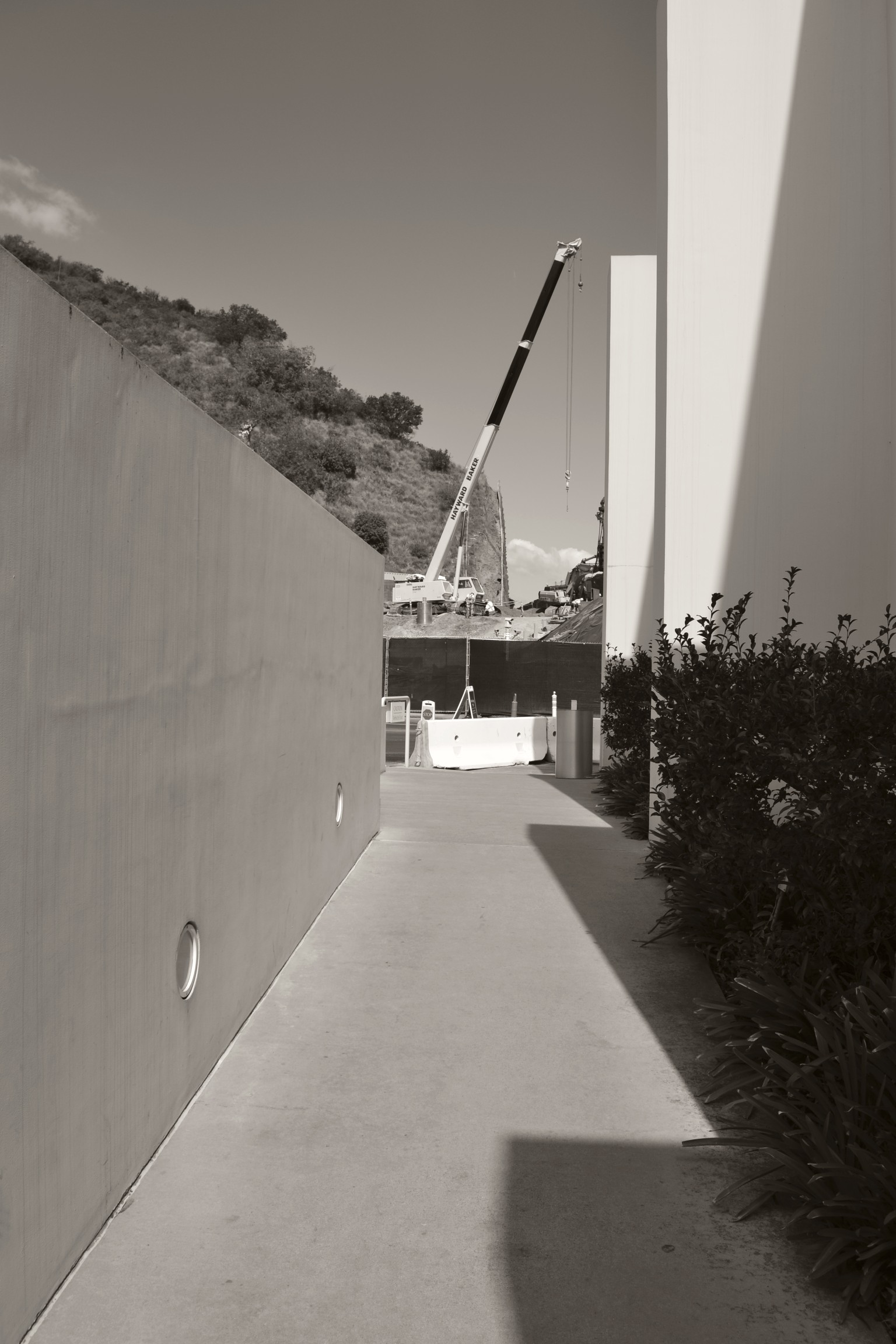
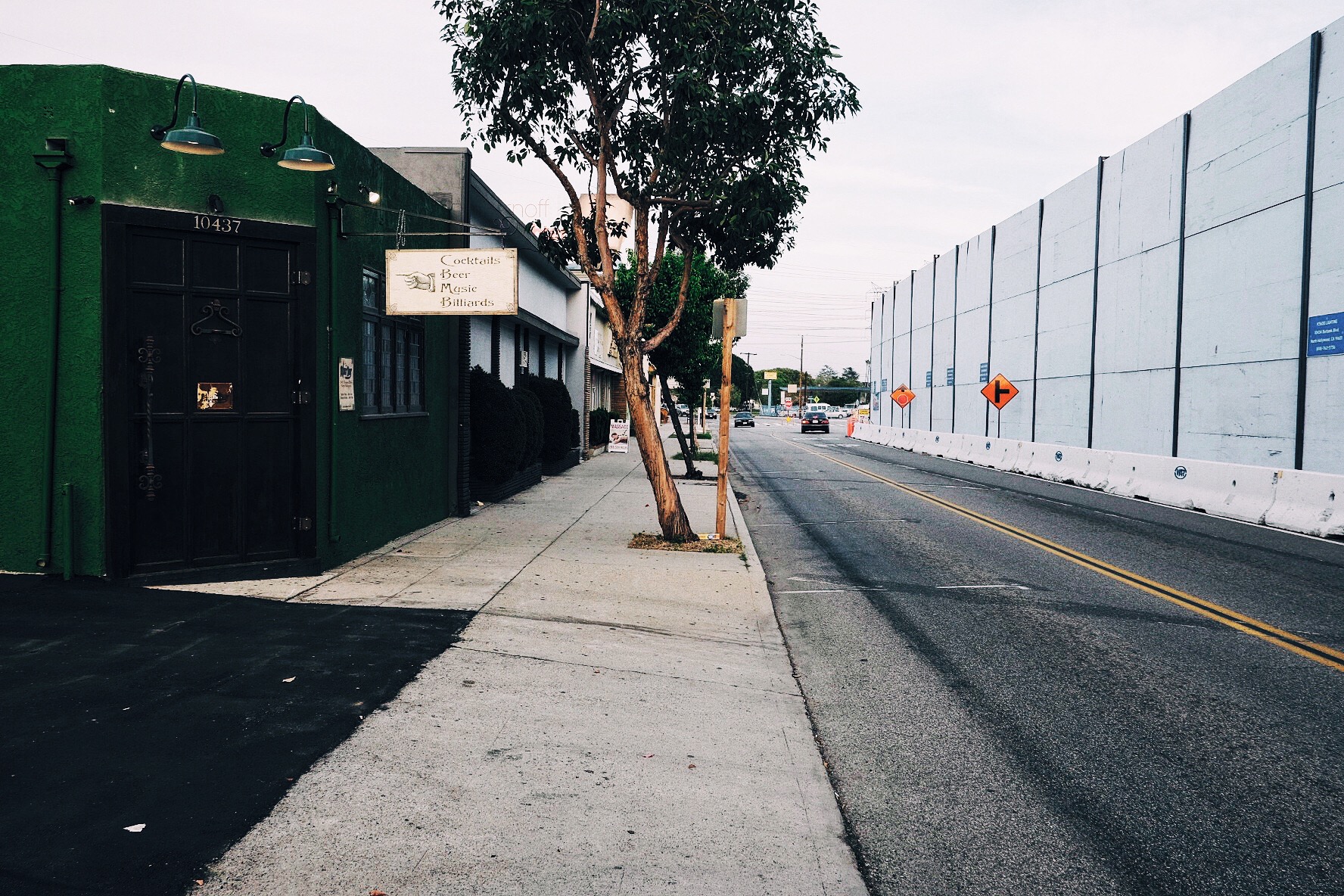
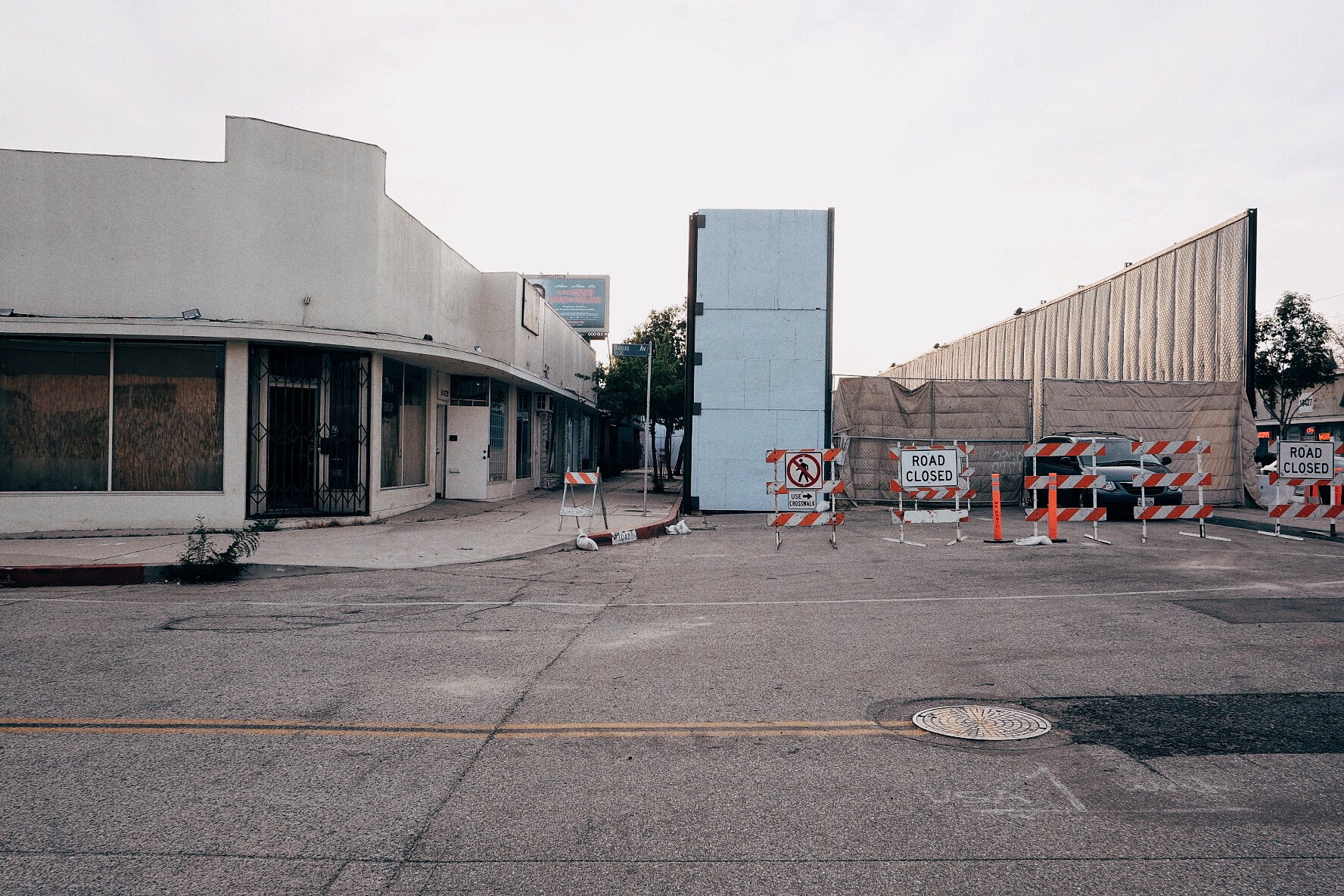
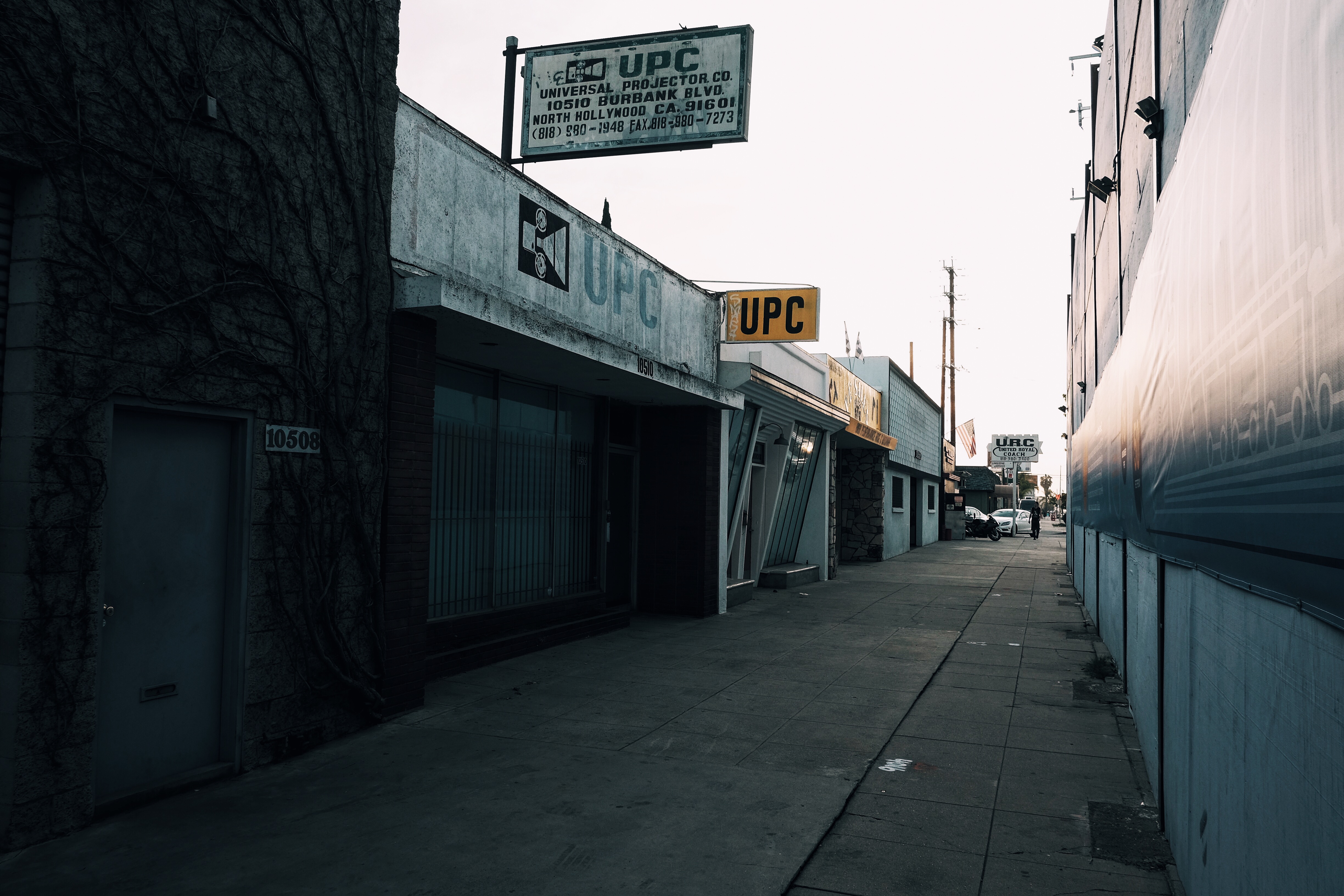
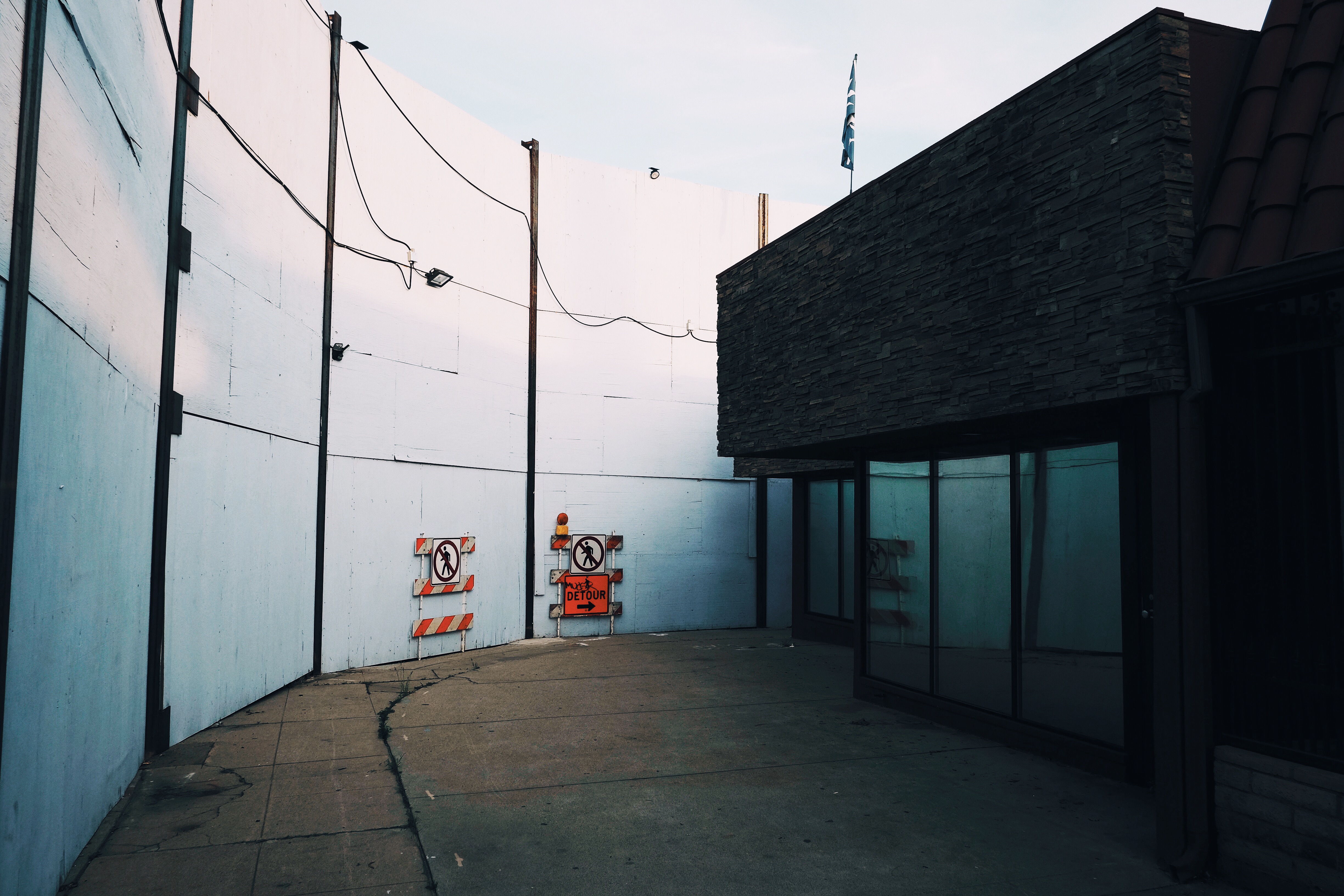
And along part of the route where a deep, underground hole was dug, DWP erected 20-foot high, wood and metal-framed walls. It has temporarily transformed the commercial district of that area by slicing the four-lane road into a two-lane and creating, along the sidewalk, a European type shaded alley.
Processed with VSCOcam with a1 preset

Work Area #12, as it is officially known, requires a pit to launch a tunnel-boring machine that will travel south, along Lankershim Blvd. for more than a mile. A new water pipeline will replace the aging 1940s infrastructure.

While the construction is going on, some streets have been closed off, which no doubt contributes to aggravation and inconvenience for some area residents and businesses. But the rerouting and reconfiguration has some pleasant side effects.

On Burbank Blvd. cars now stop twice, before proceeding slowly, down a narrow road whose borders are shaded by high walls and low buildings.
Processed with VSCOcam with e1 preset Processed with VSCOcam with a1 preset
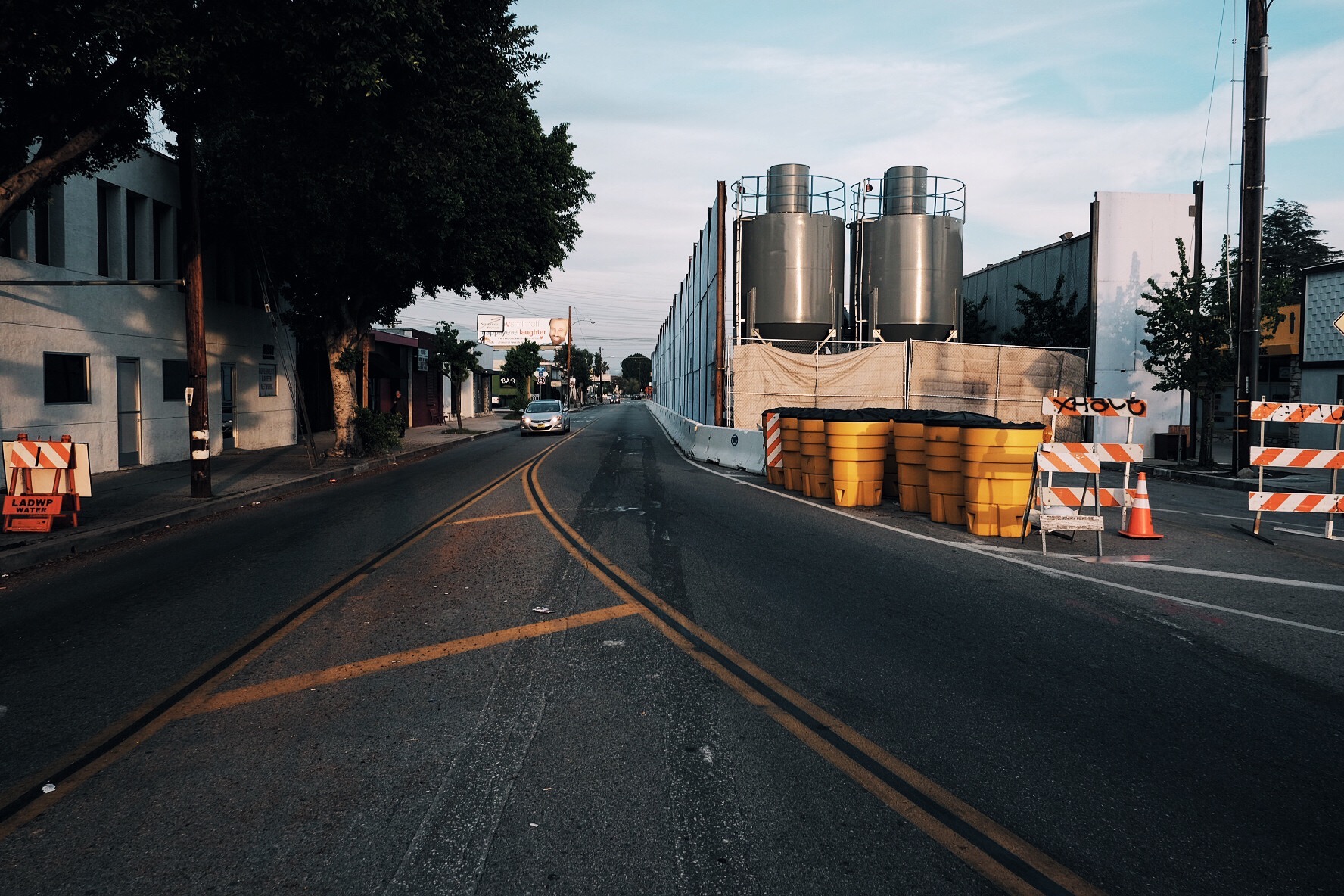
On the western edge of the excavation, two tanks tower above the road, as if heralding a ceremonial gateway into the neighborhood.

And on the south side of the street, the high walls come right up to the sidewalk, creating a shady and meandering path alongside area businesses.

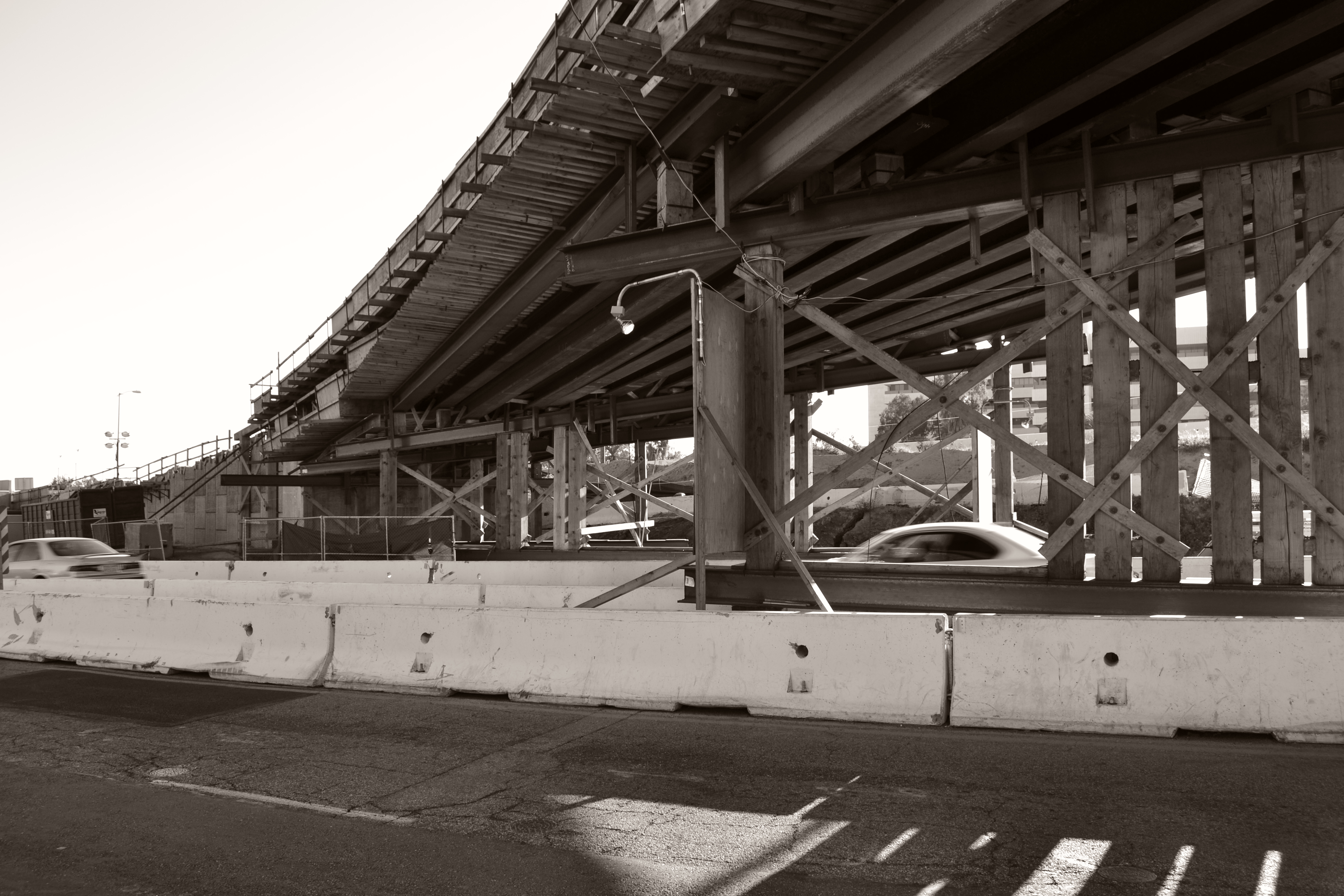
The gift of this unwelcome intrusion allows us to experience a different LA with traffic calming elements. What emerges? Less cars, slower drivers, shaded walkways; walled off from the exhaust fumes and the aggression of speeding motorists. Industrial construction materials in steel, wood and concrete function as street sculpture.

For the time being, a stretch of Burbank Boulevard is a living experiment in rezoning by accident.
Processed with VSCOcam with a1 preset Processed with VSCOcam with a1 preset

Ralph’s Sherman Oaks.


DSCF0084 DSCF0087


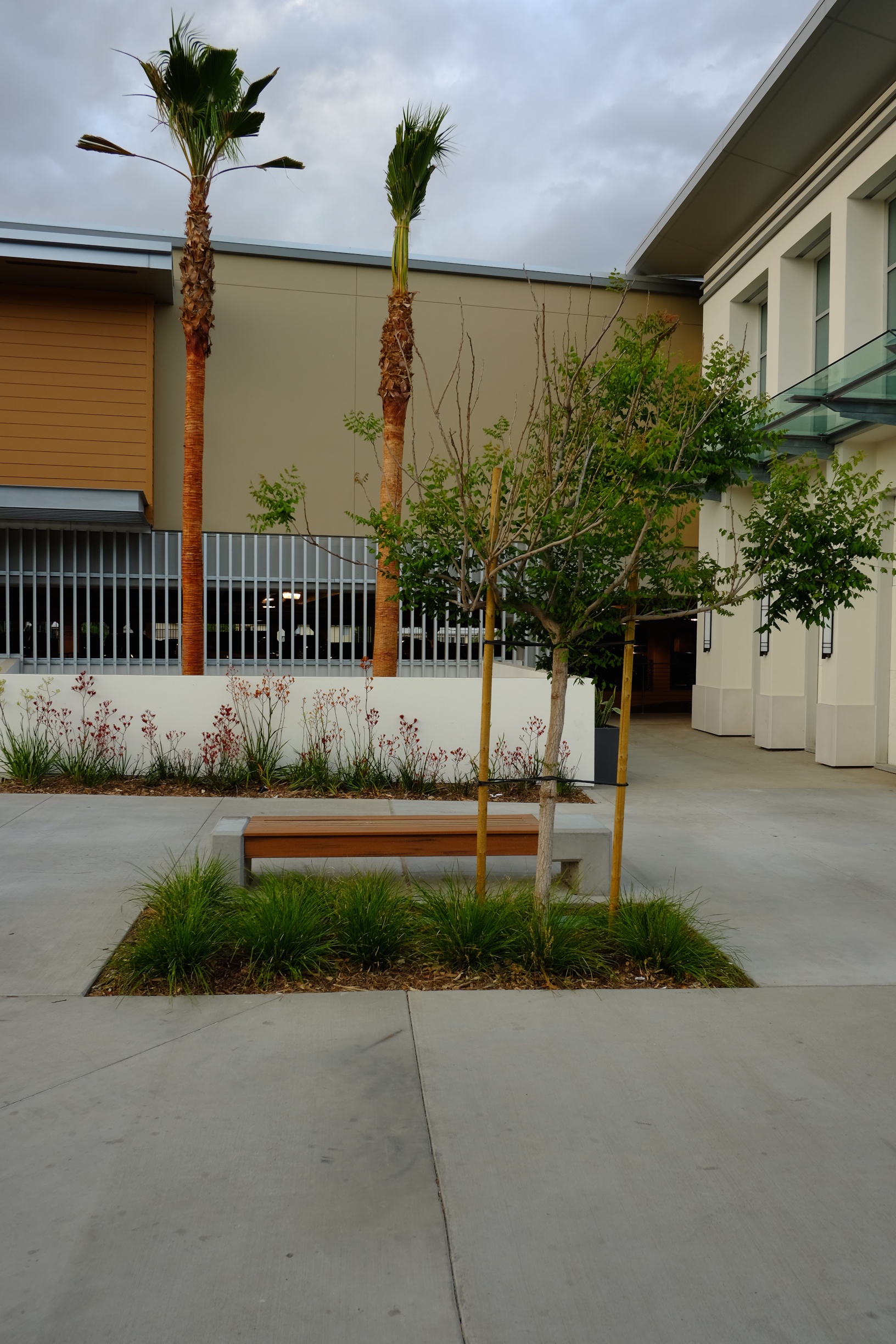
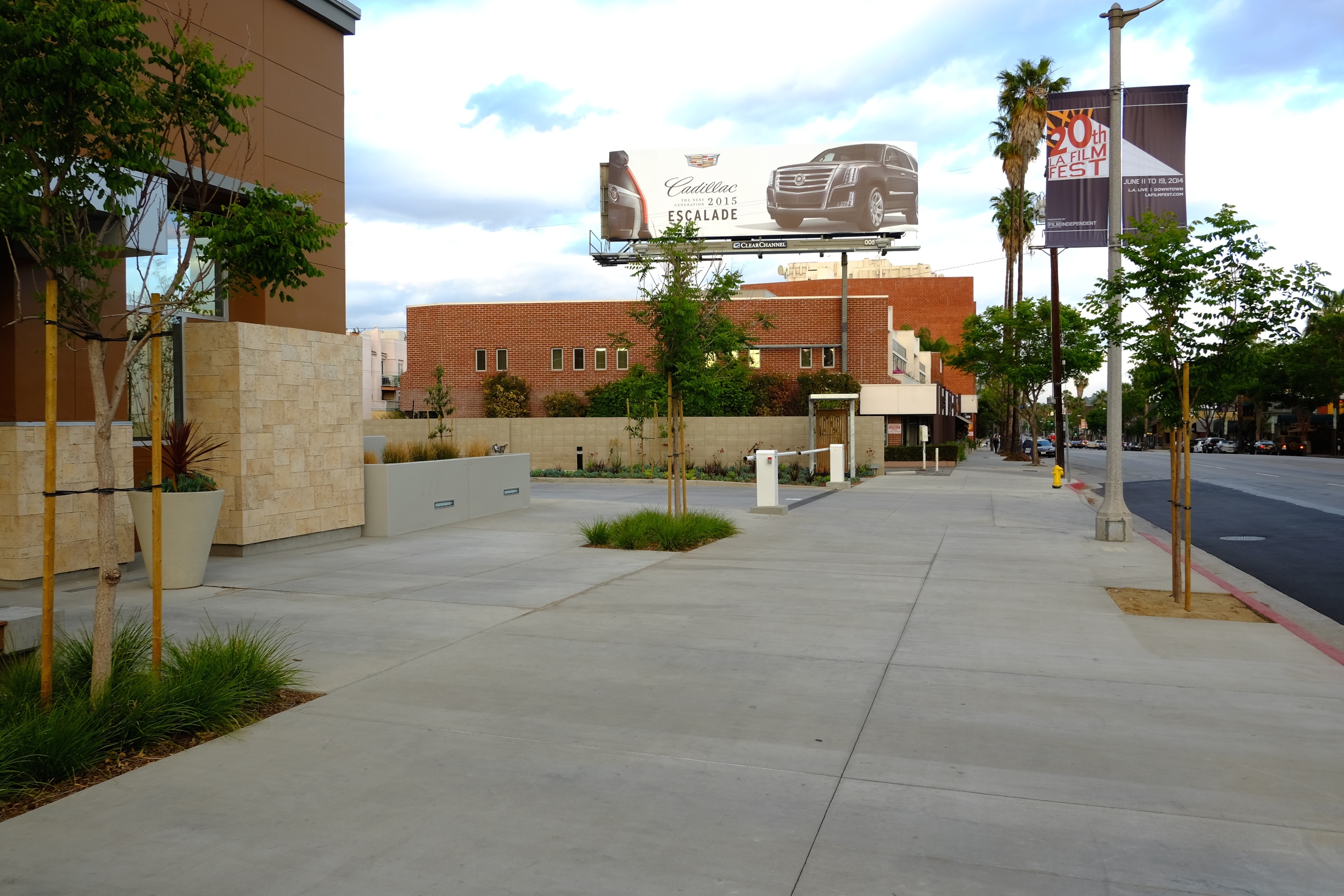
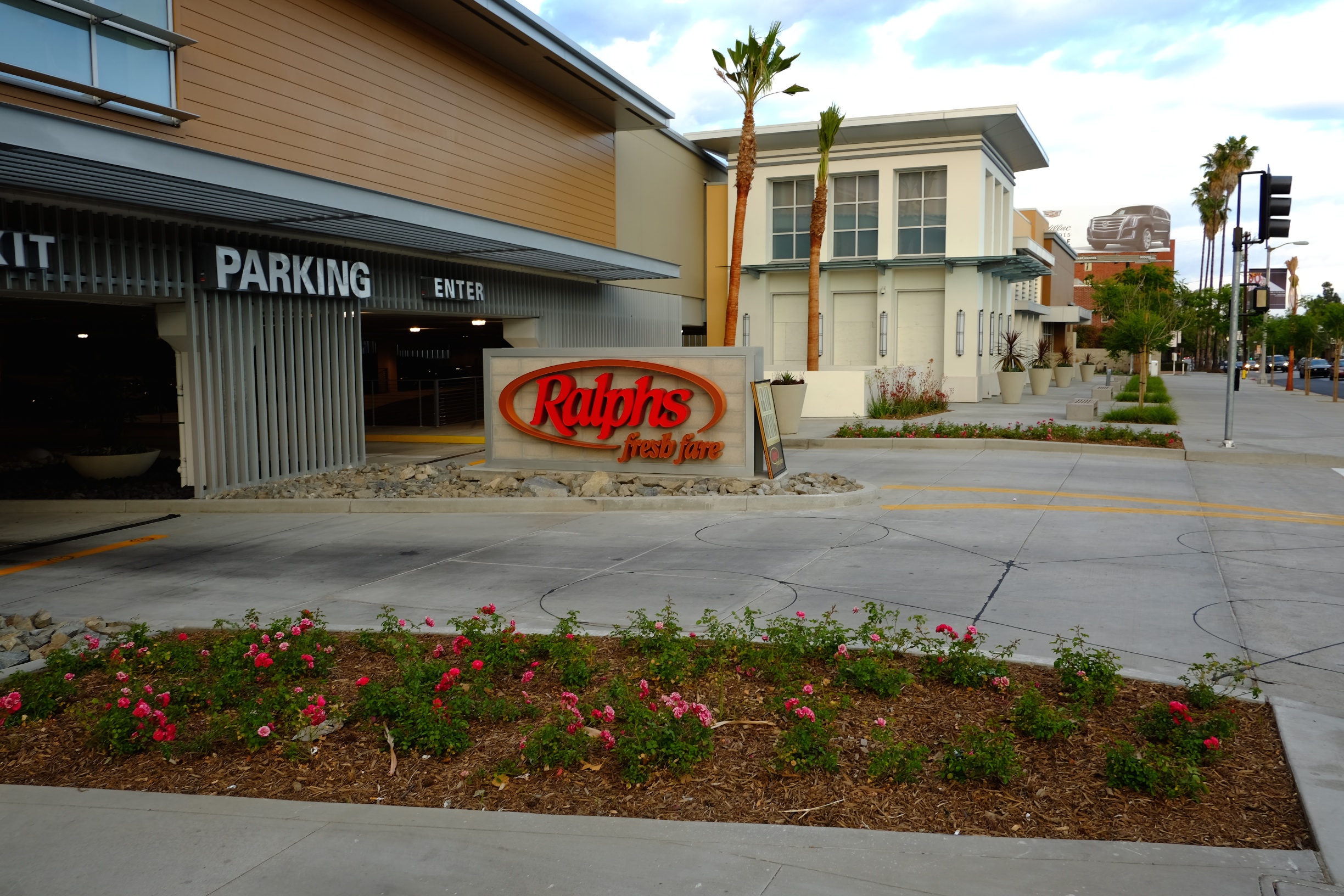
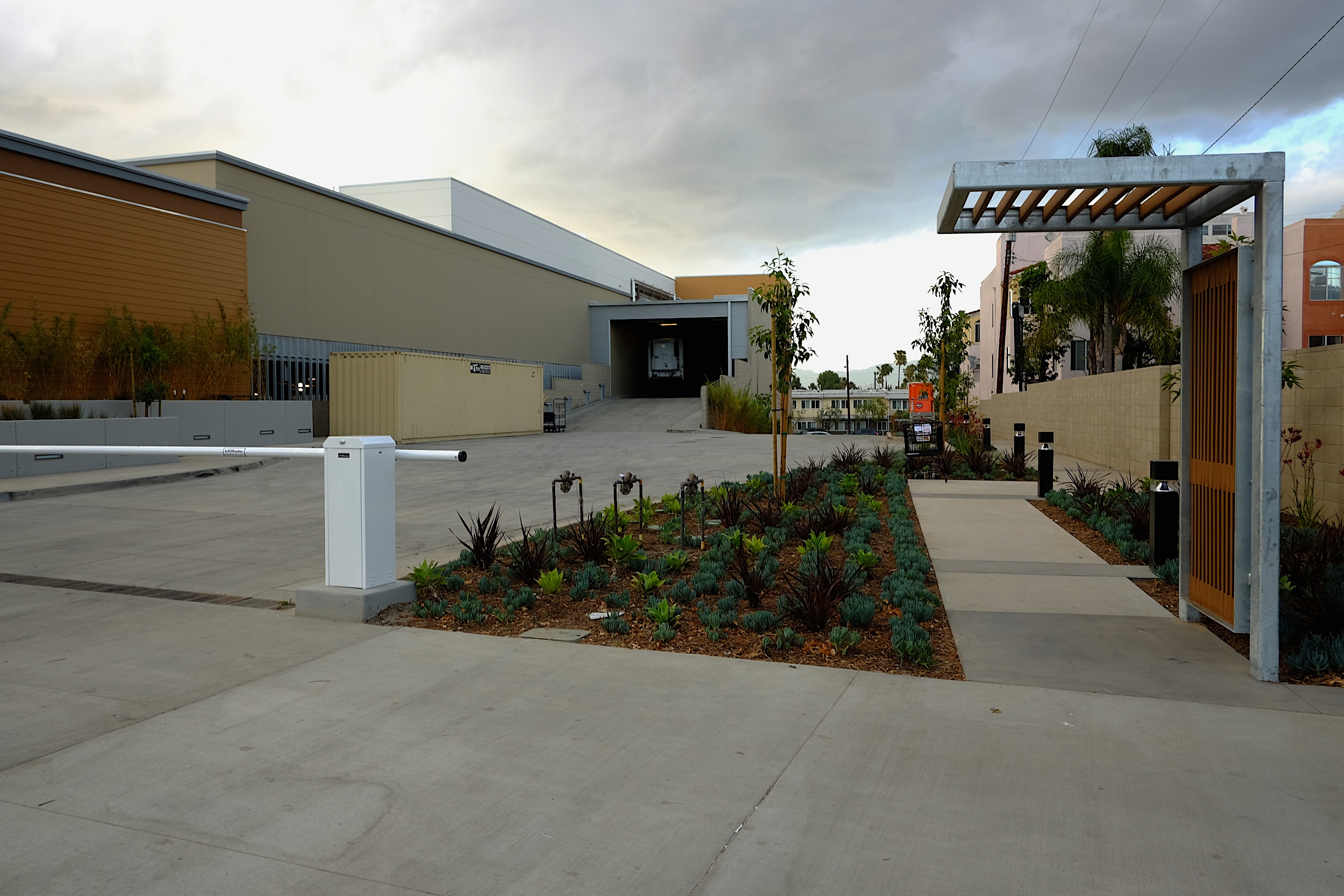
At twilight, last night, the new Ralph’s in Sherman Oaks, stood glistening under cloudy skies.


Dressed up and standing alone on the corner of Hazeltine and Ventura: metal panels and squash-colored inserts, coffee-tinted siding alongside creamy towers.


And a profusion of plants everywhere, succulents in the thousands, and grasses, and trees and roses and brown bark, bark laid down in trenches all around the building, even along the loading dock.

DSCF0089 DSCF0090

Hygienic, modern, urbane, green.


Friendly to pedestrians and the disabled.

DSCF0088

A bright RED plastic sign with the oval circle encircling RALPH’s FRESH FARE.


A new supermarket had come to Sherman Oaks, vaulting over old timers and neighborhood groups and homeowners fearing “urban” might bring the shvartze, the illegal and the hipster to this corner of the valley.


But at 7 pm last night there was no sign of humanity on the sidewalks around Ralph’s.


It had passed the Los Angeles test for a great building. It looked good and kept the streets clean and empty.

DSCF0092 DSCF0091


Sunday in Van Nuys (Part 2)


screenshot_281

Sunday in Van Nuys (Part 2)

In my writing and photography I try to stay as true as possible to my own observations and impressions.

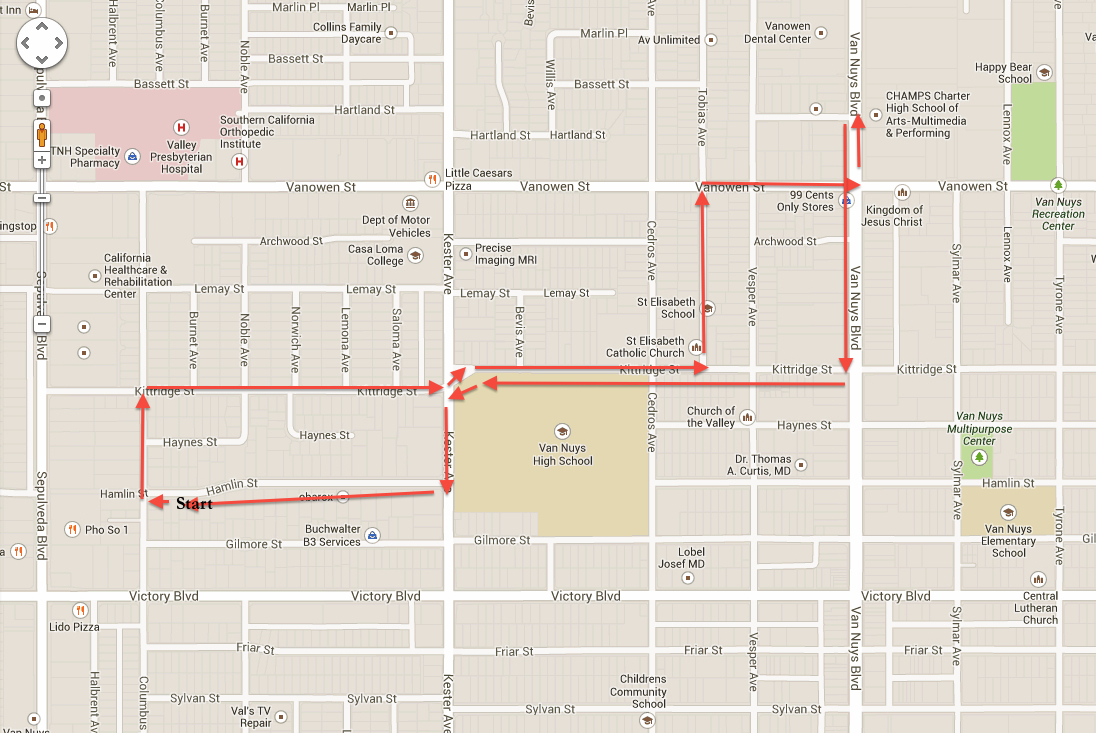
Such was the case when I took a long walk through one small portion of Van Nuys, encompassing an area roughly from Columbus on the West, Kittridge on the South, Vanowen on the north and Van Nuys Boulevard on the south.

What I write and show today is just how I saw it.

DSC_3650

DSC_3654

DSC_3656

DSC_3657

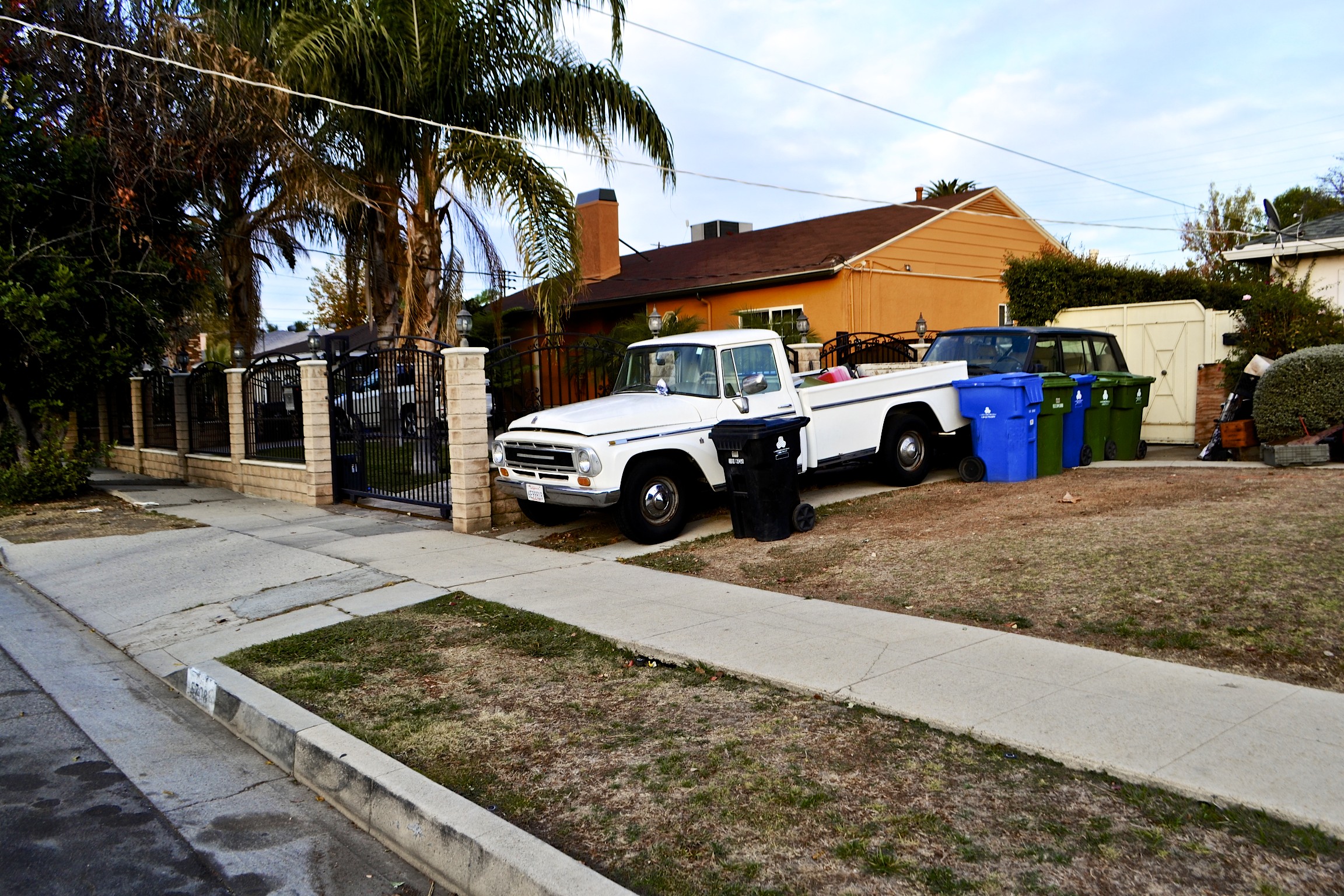
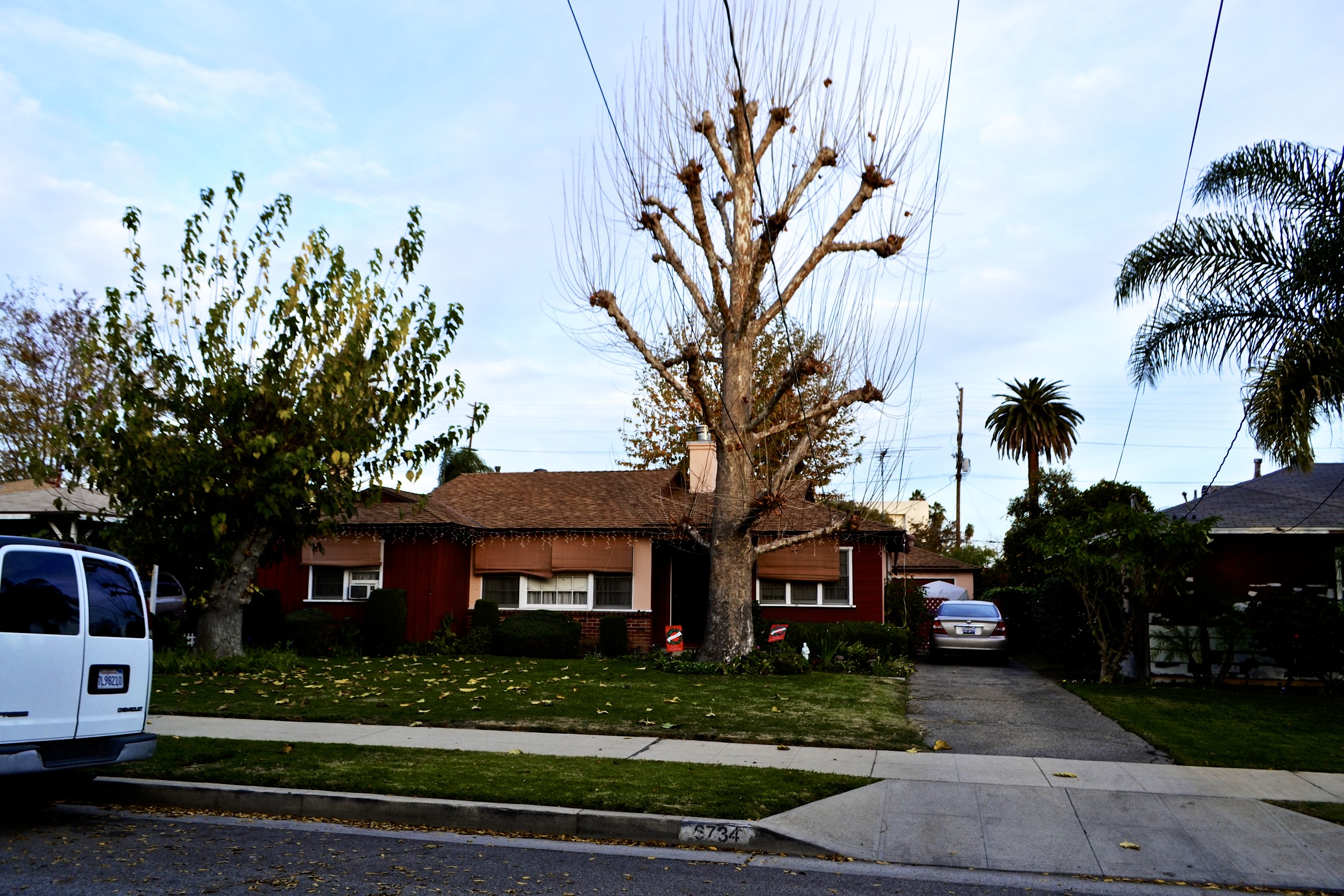
Tobias Avenue , north of Kittridge, south of Vanowen, is a not-so-shabby street of single family houses, mostly quiet and mostly homely, some with open lawns, others encased in iron and cinderblock. The population is quite diverse, with surnames that include Beasley, Bowser, Lange, Cohen, Funes, Moran, Lucas, Suh, Phung, Avetisyan and Ayanyan.
DSC_3664

DSC_3668

DSC_3672

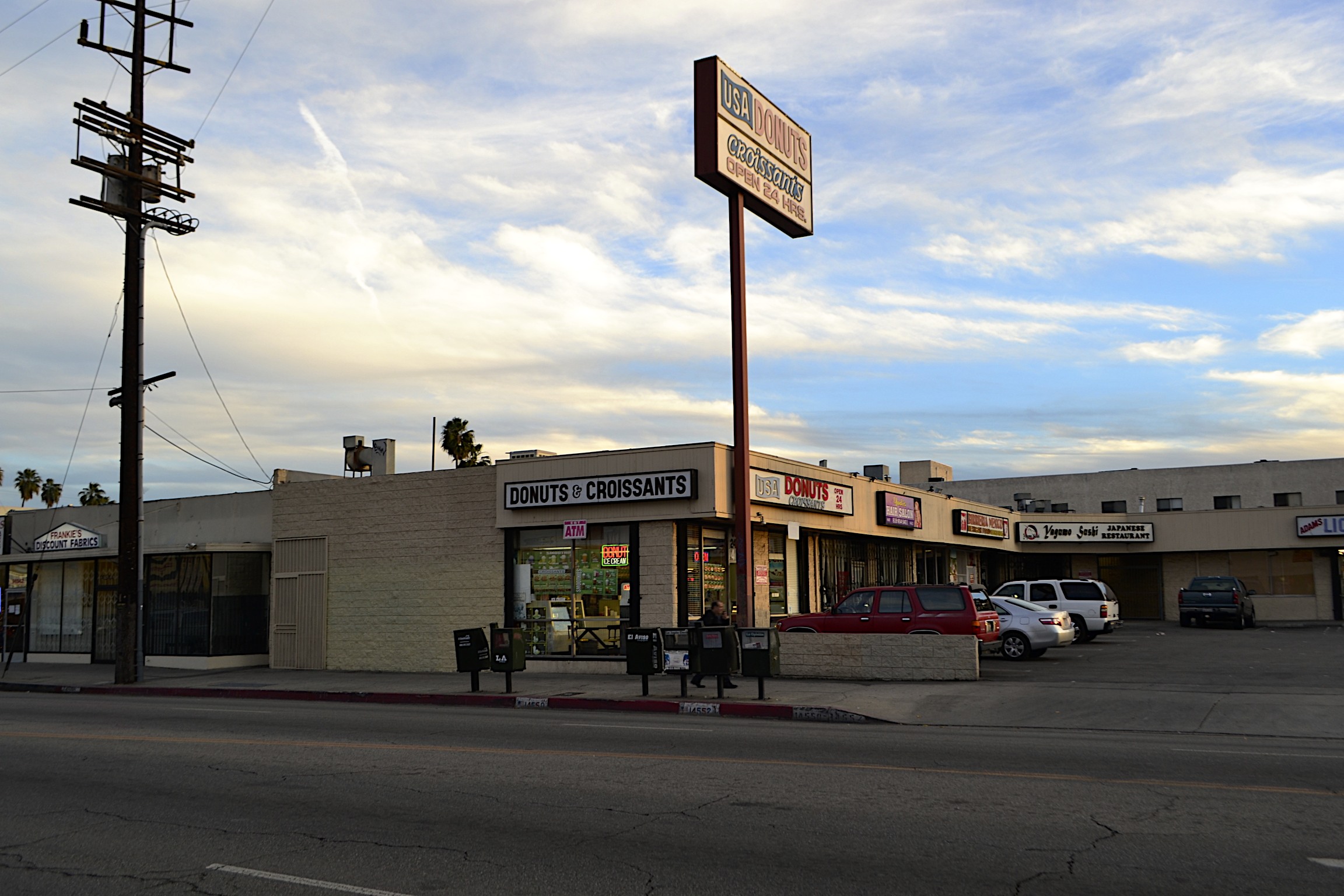
USA Donuts

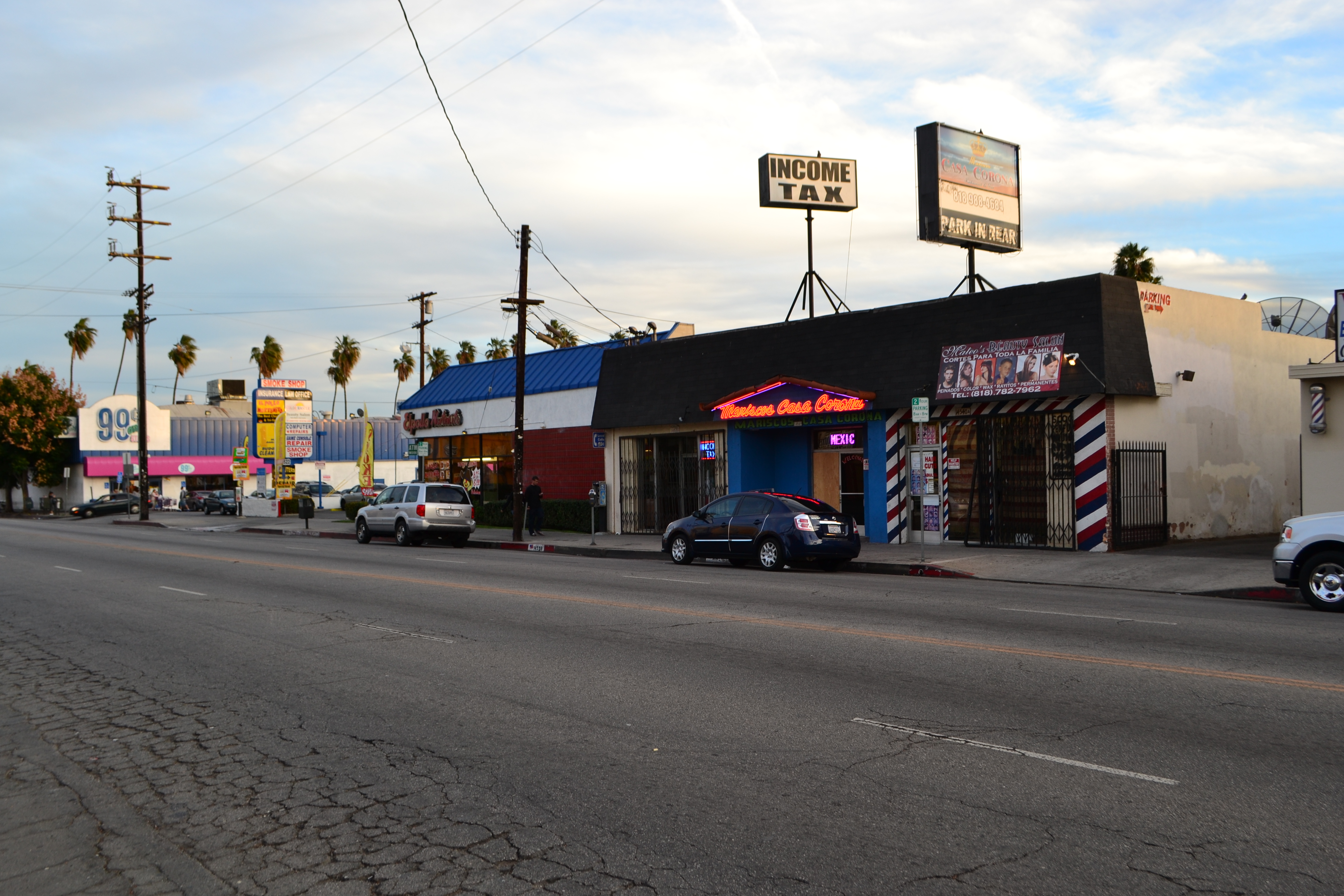
On Vanowen, between Tobias and Vanowen, the stores are packed closely together, up to the sidewalk, and commercial Van Nuys is at its epicenter.

It was Sunday afternoon, so the loudest noise was coming from the open doors of a storefront Spanish church, where the indoor parish was singing. There was little pedestrian traffic, other than those few waiting for buses at trash littered Metro stops.

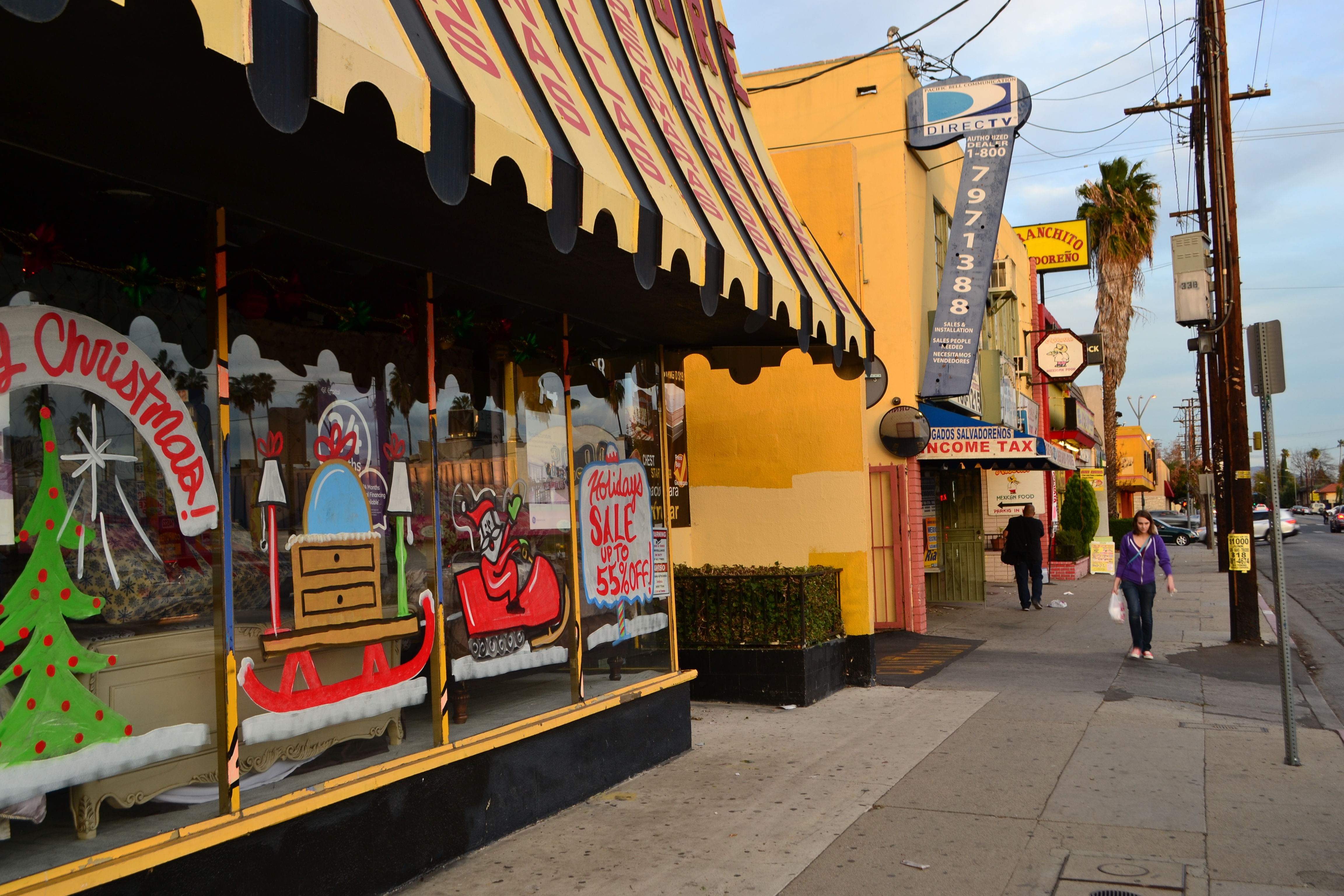
The businesses along here cater to Spanish speakers, advertising income tax for Salvadorenos, party rentals at Teffy’s Jumper, Inc. and dining at Mi Ranchito Salvadoreno (14523 Vanowen St.) Buildings are painted exuberantly in vivid sunshine yellow with red lettering.

DSC_3680

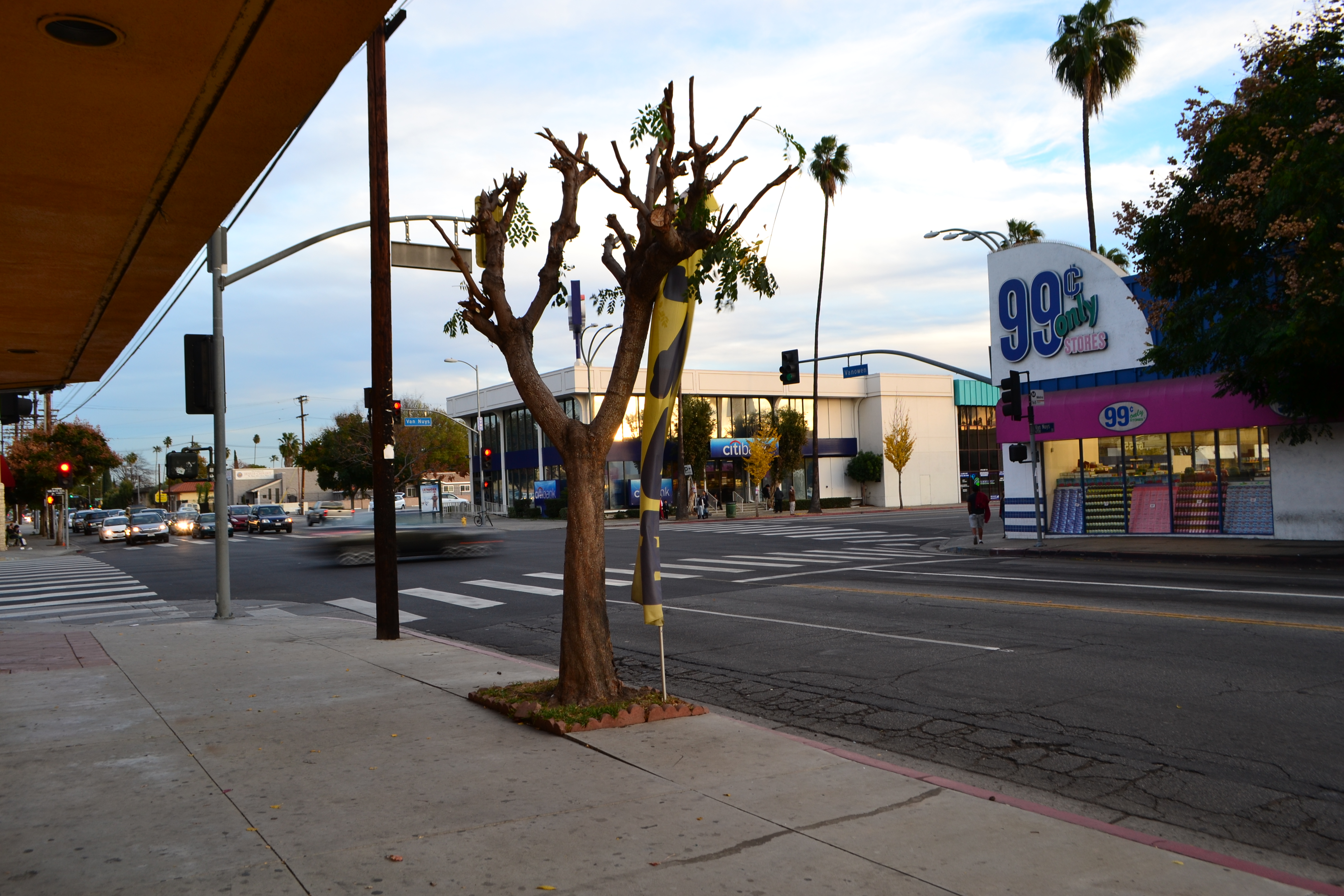
A dismembered tree, its limbs hacked off by ignorant tree trimmers, stood near the corner of Vanowen and VNB. The disfigurement of trees all over Los Angeles is characteristic of this city, an appalling sight for nature lovers and for those who respect arboreal rights.

Trees are needed most in this area of Van Nuys, for the streets are overly wide, and the sun beats down here, making the district hellish during the long hot summer.

DSC_3682

DSC_3683

6842 Van Nuys Boulevard is the new home of Champs High School of the Arts, a charter school which makes its home in a 1963 mid-century office building. The structure has been jazzed up on the exterior, with new lighting, stone and chrome to appeal to the more luxuriant expectations of modern Americans.

Hacked onto the south end of 6842 is an inexplicably ugly new structure, set back from the street, like an awkward wallflower at a high school dance.

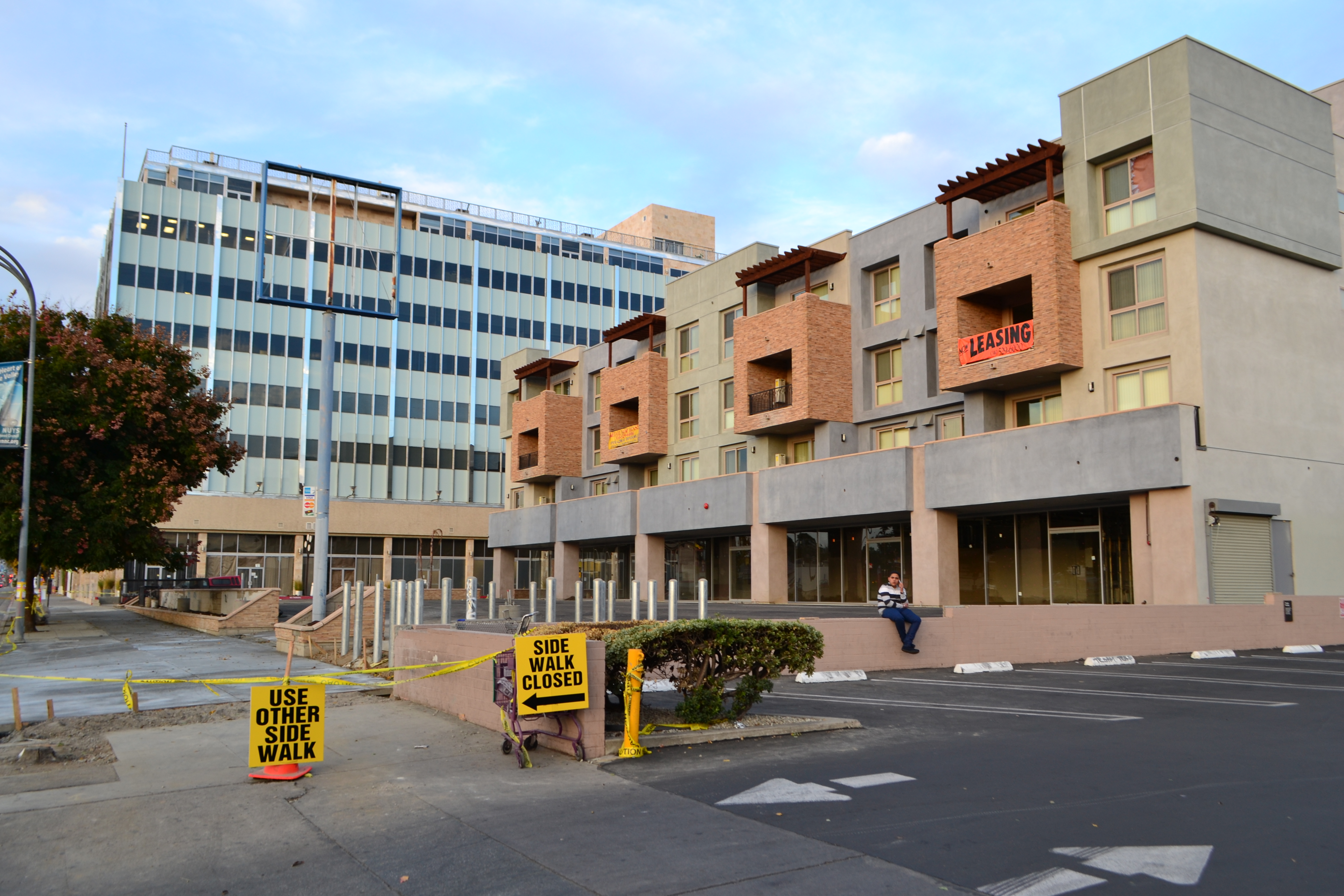
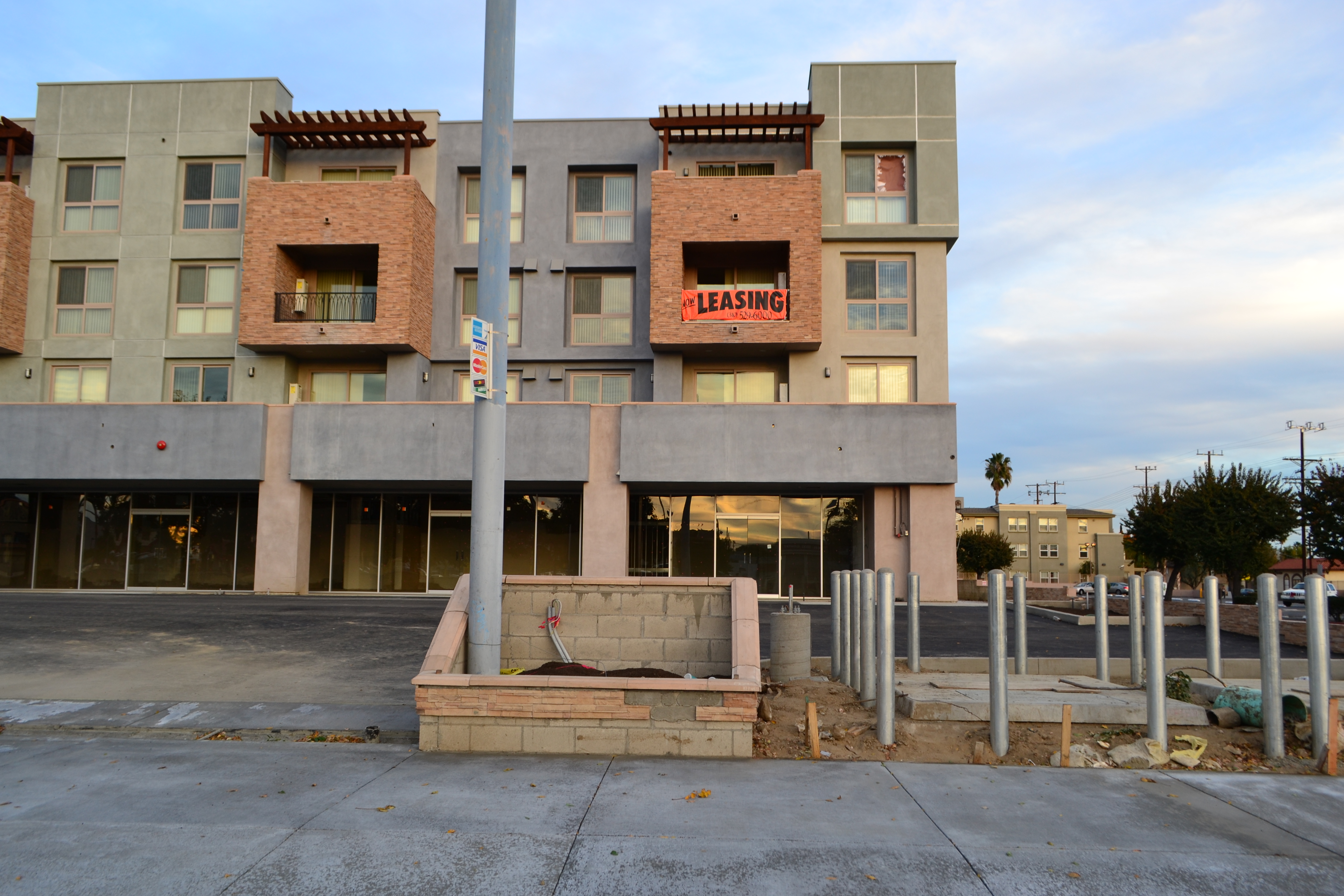
Here again is where urban Van Nuys always go wrong. Hundreds of millions of dollars were spent to erect a building that does not participate in the architecture or functioning of the boulevard at all, but rather sits back, in boxy ugliness, behind an asphalt parking lot, its untenanted stores and unoccupied apartments begging for respect, with broken and boarded up windows already advertising its failure.

Van Nuys Boulevard is six lanes wide. So setting a new building back only reinforces the funereal deadness of the street. In order to bring pedestrians back, you need to make an environment that encourages pedestrianism.

The new building is banal, striped in bands of colors that are supposed to reduce the imagined bulk of the façade, but instead reduce it to insipid sections of paint strips. All over Los Angeles, the “rule” is that every large structure has to be divided into multi-colored bands of hues. If the White House were ever rebuilt in Los Angeles it would be drenched in six Dunn-Edwards earth tones.

Van Nuys, CA

I wrapped up my daylight walk in urban Van Nuys, by going south down Van Nuys Boulevard, on the west side of the street, where empty storefronts met fallen leaves on a cloudy and cold autumn afternoon. There was not a single man or woman walking from Vanowen to Kittridge, and I did not encounter humans until I turned right, and found a lively bunch of food carts in the back parking lot.

Spanish speaking people, who now predominate in Van Nuys, prefer enclosures, such as small streets, landscaped and illuminated alleys, and places where people walk. The much sought after revitalization of Van Nuys Boulevard will never occur because the street is too wide. The plazas of Spain, Mexico, Guatemala and El Salvador, not to mention the courtyards of any place other than the US, are the gathering places of urban dwellers, who come on foot to congregate, to shop, to watch, and to walk.

And so it was on a Sunday afternoon, when Van Nuys Boulevard was dead, the life of the city was conducted in back of stores, near the church, in places where the walls and the buildings provided enclosure, safety and structure.

In any plan for the future, the planners should try to reduce the size of the streets, bring back small parks, small lanes, and narrow streets where a sense of community and walkability can be fostered.

The Art of Road Building.


DSC_5764

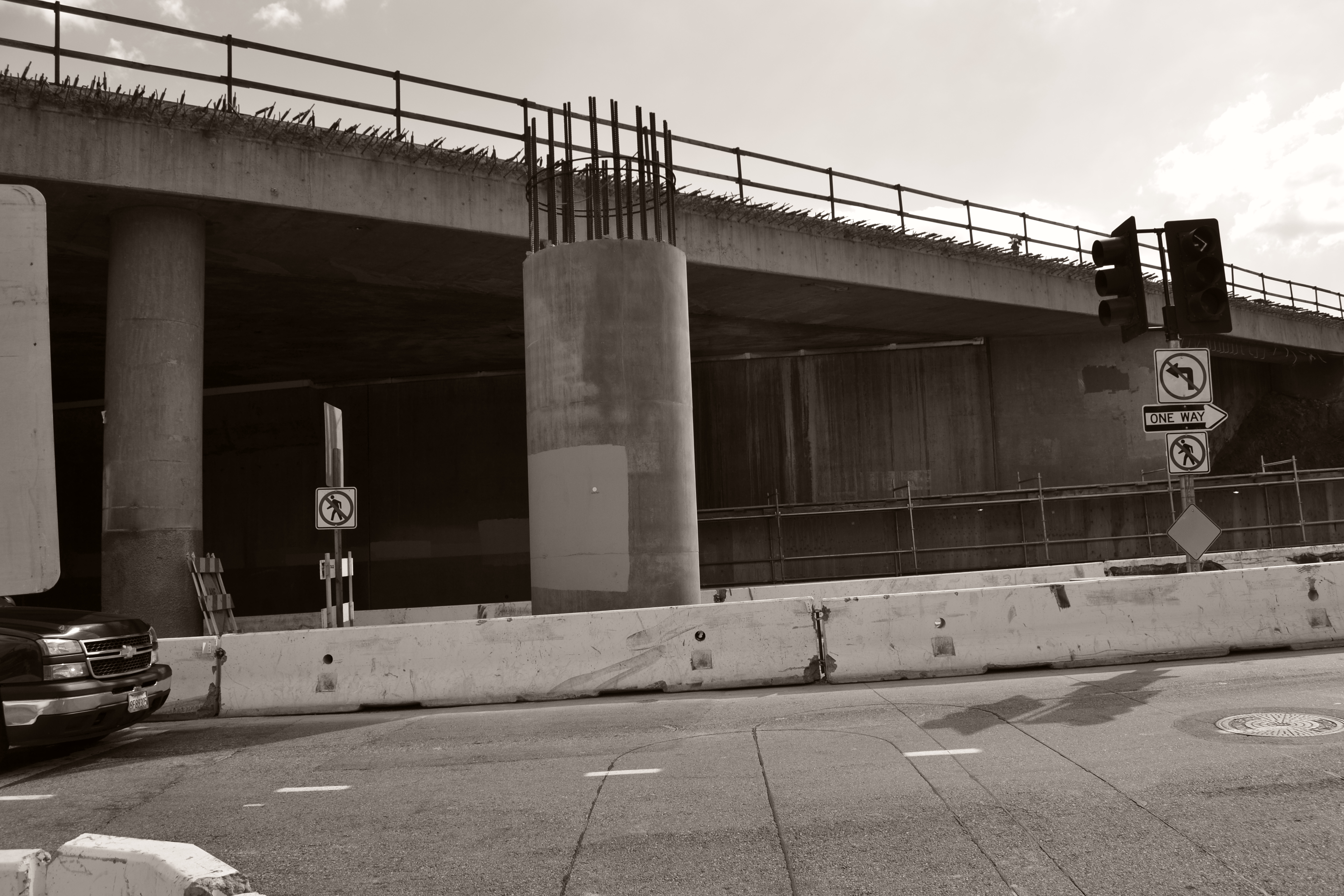
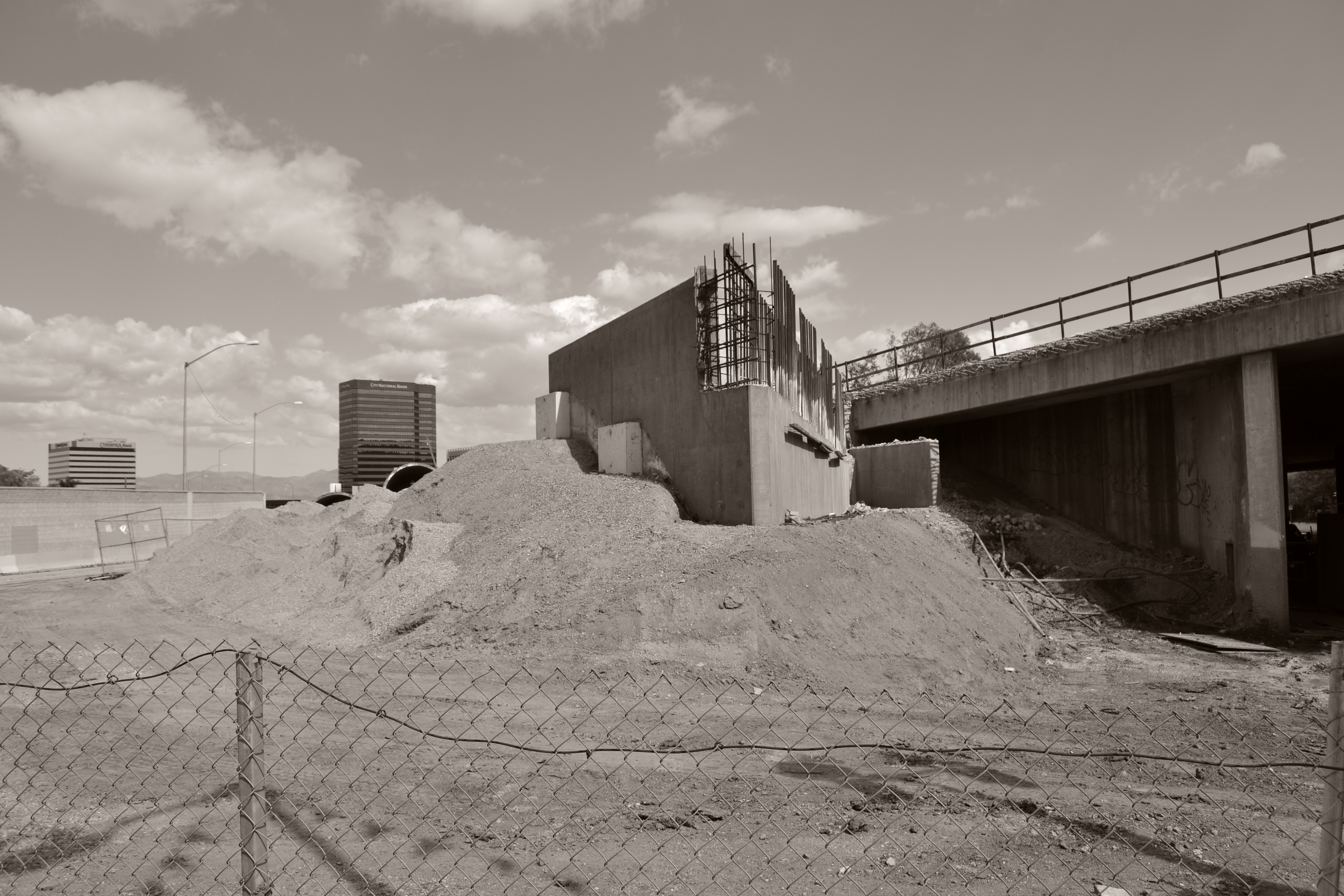
The 10-mile long, $1 billion dollar widening of the San Diego Freeway is a monumental feat of engineering: demolition and reconstruction of bridges and roads, 27 on/off ramps, 13 underpasses and 18 miles of retaining and sound walls.

When the rebuilding stops, new car pool lanes will open.

Before that time, we, who travel or live in the Sepulveda Pass, go amidst temporary art installations. The partially built is perhaps more compelling than the finished product.

1
6a
1a

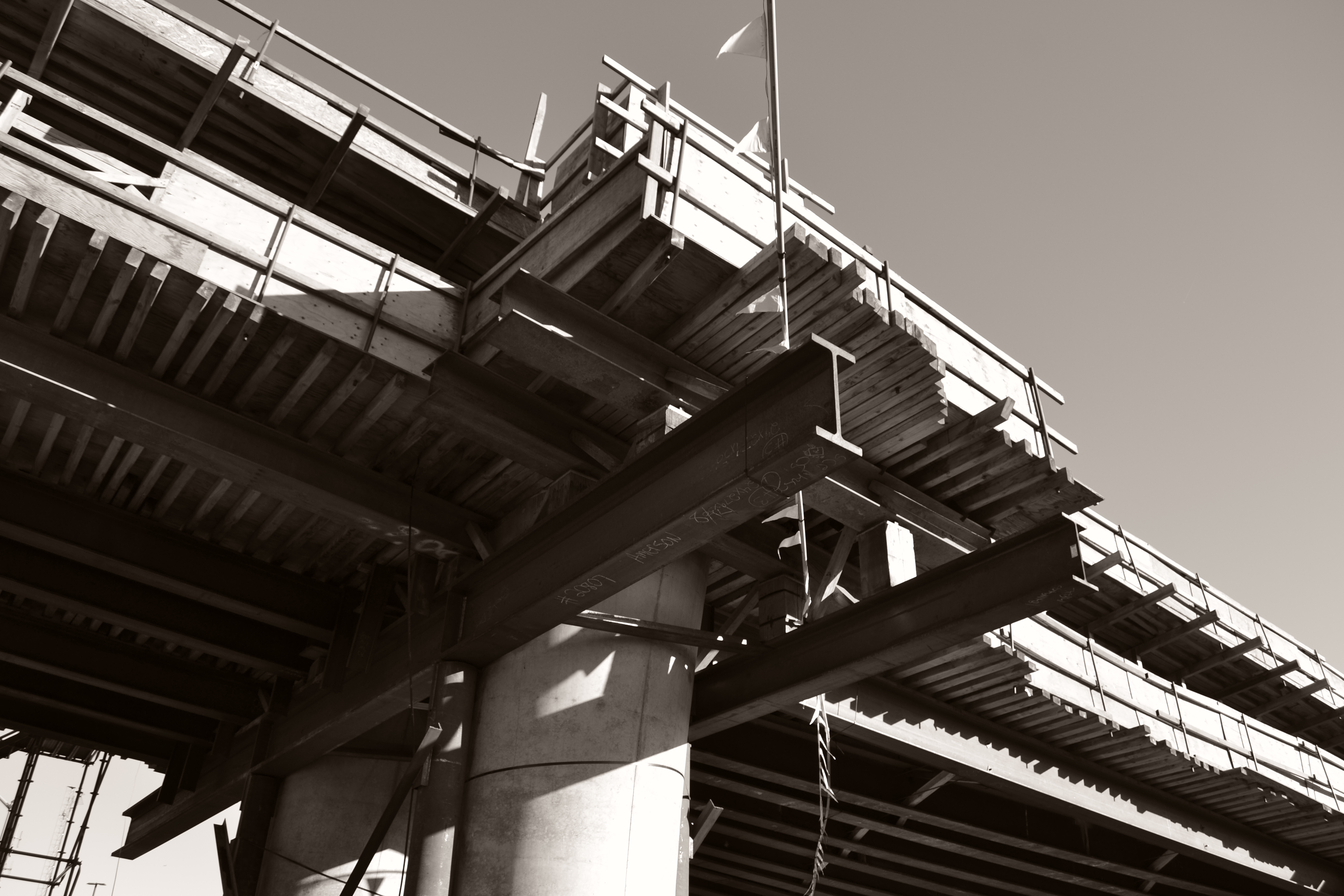
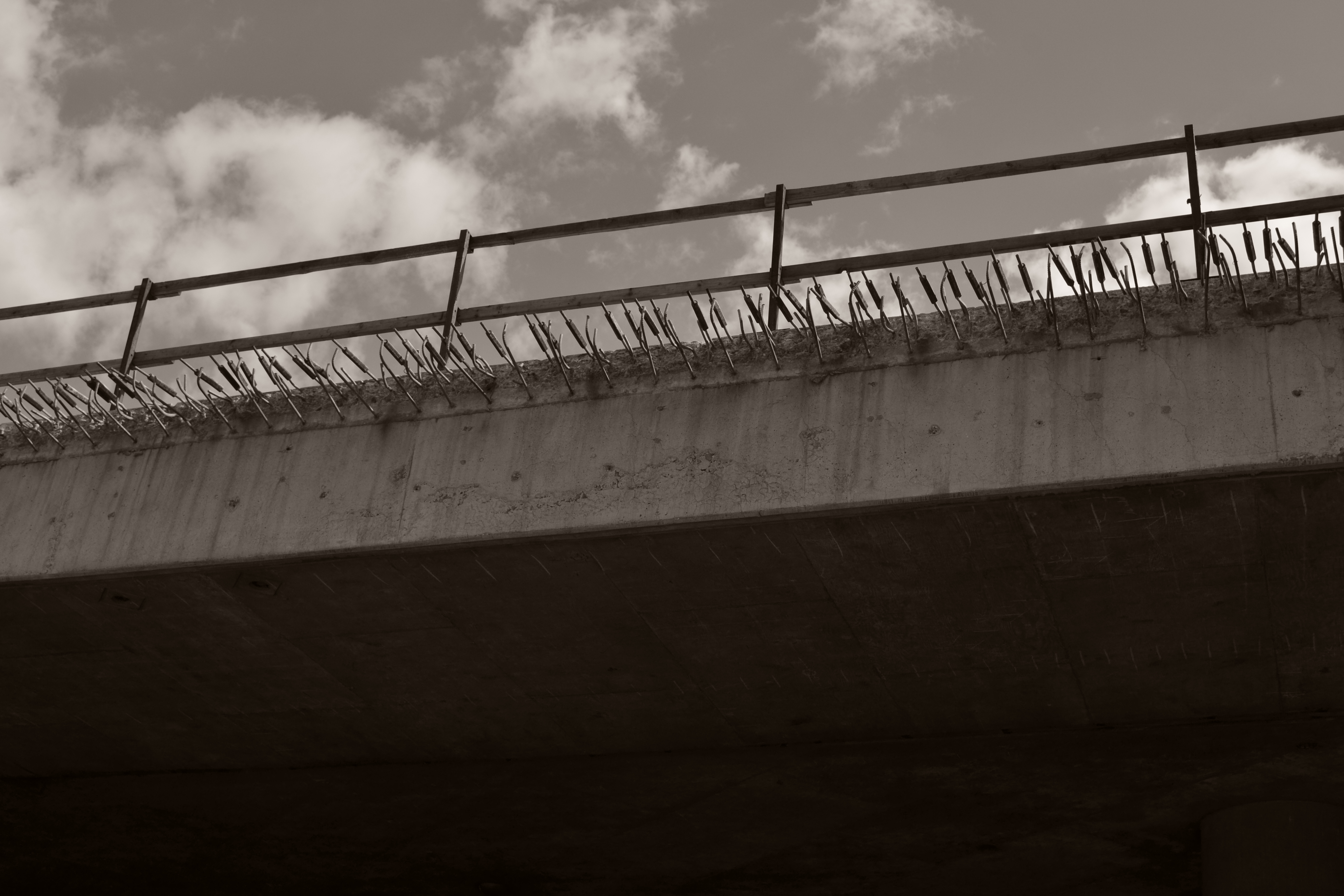
These functional components of road building are ingenious engineering and unaware artistry; choreographed, measured and precisely drawn elements of structure alive in rhythm, movement and shape.

2

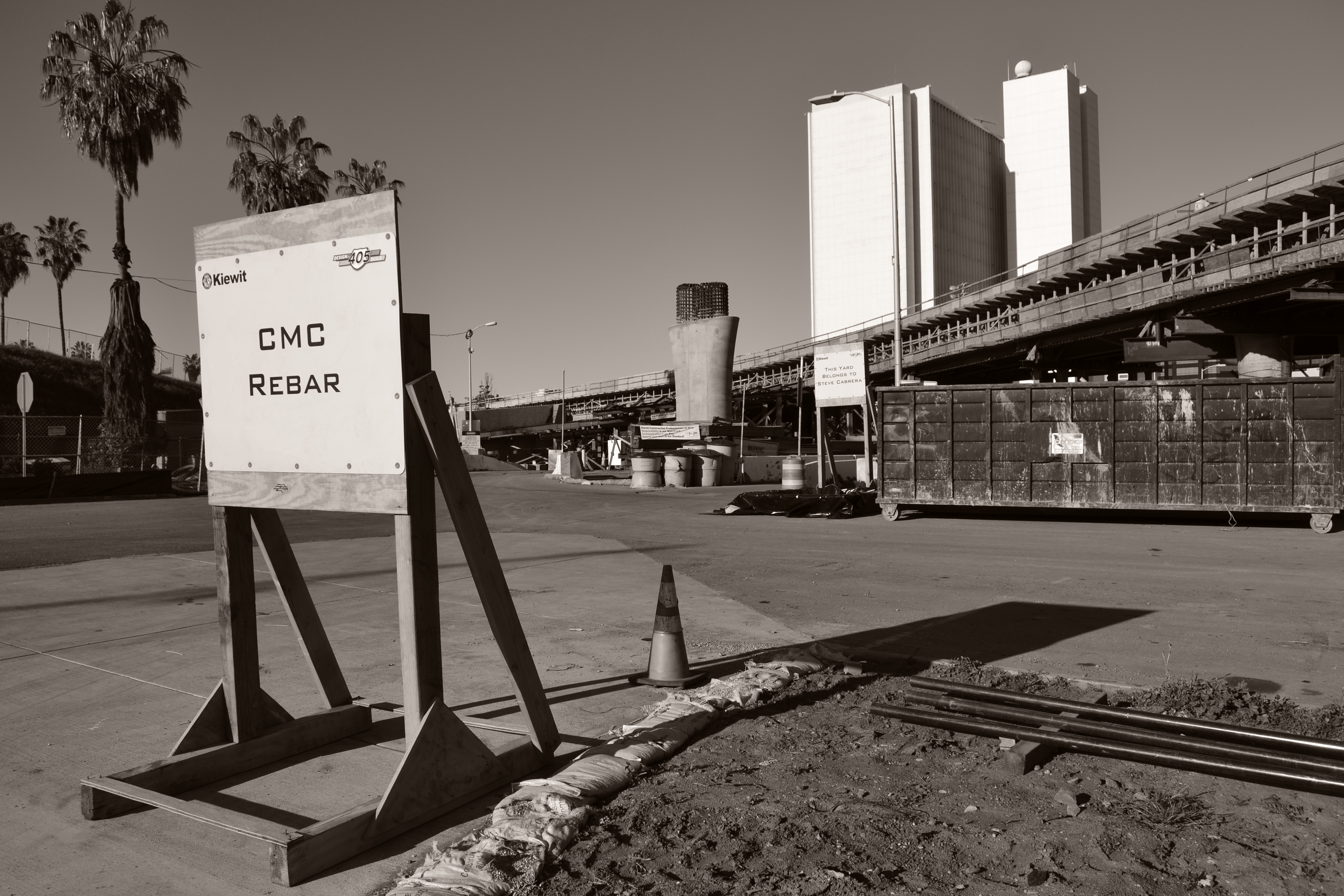
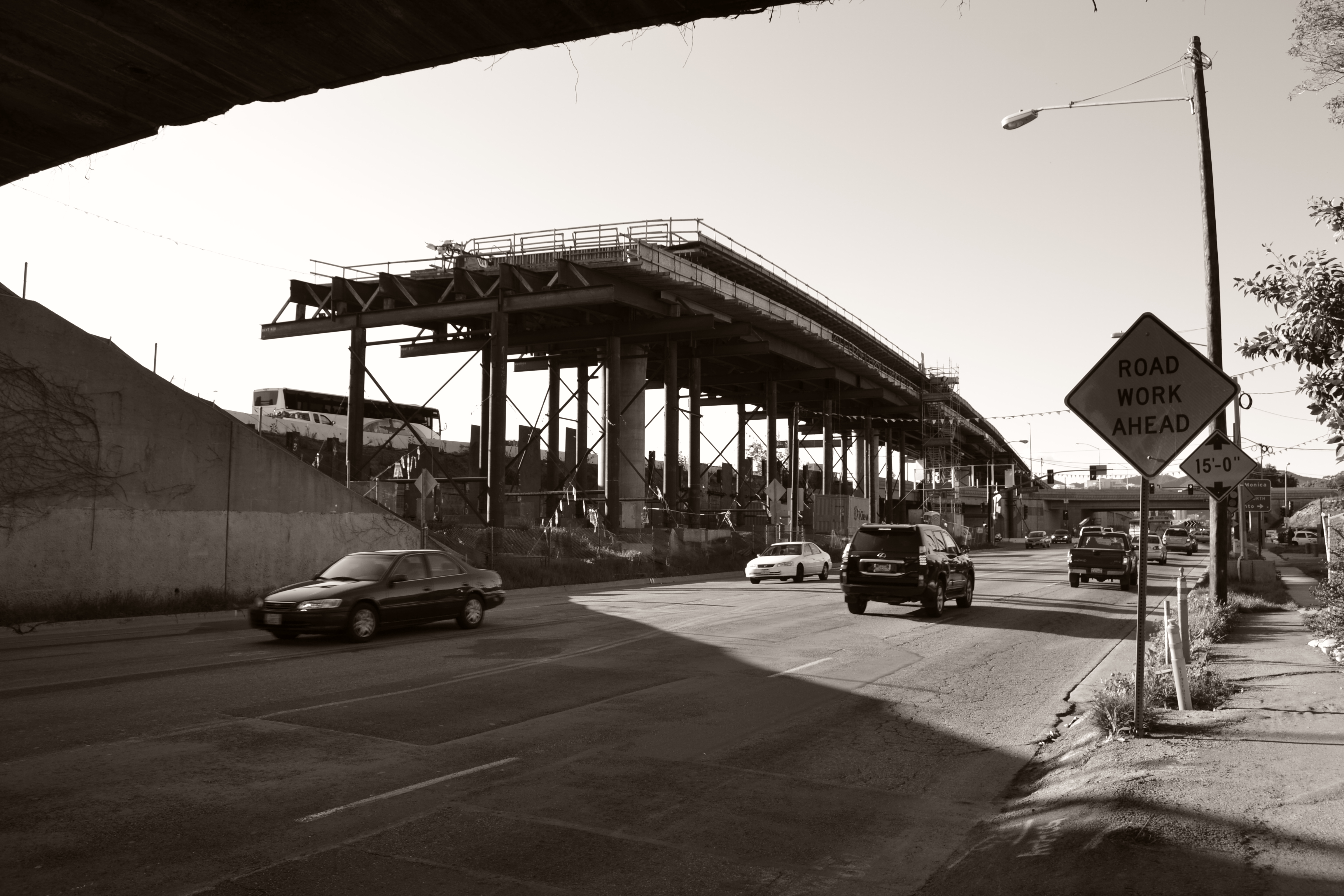
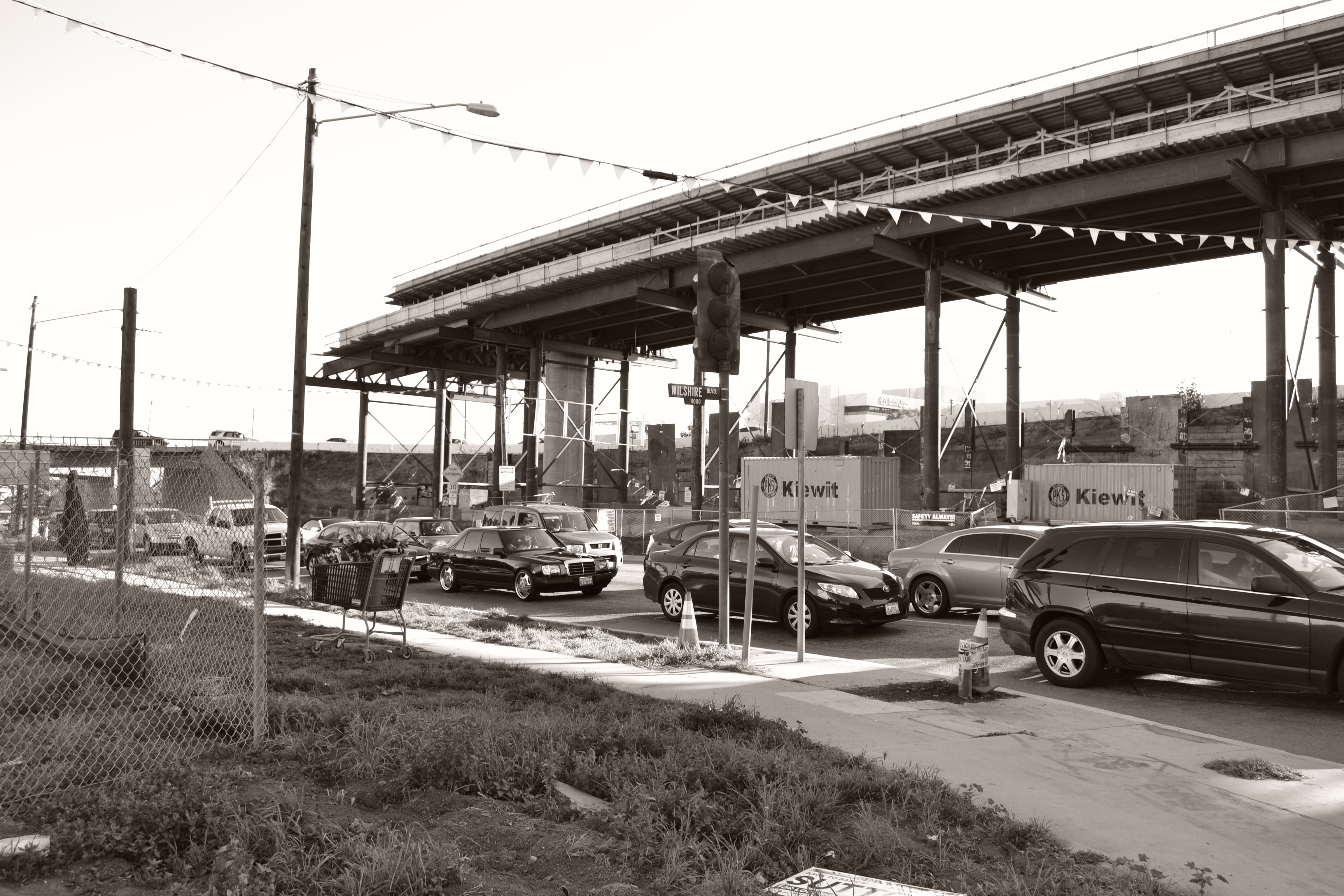
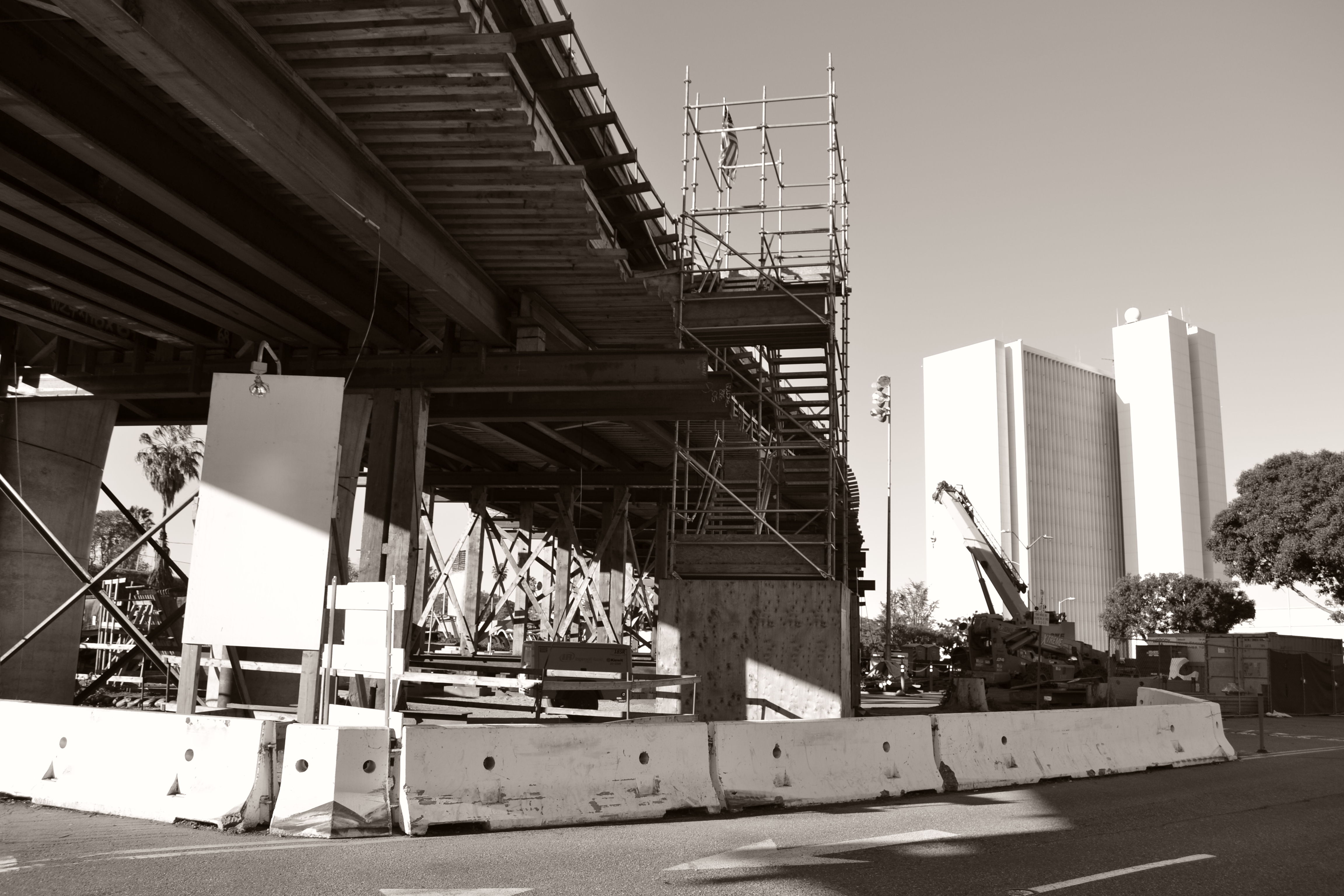
Along the west side of Sepulveda at Wilshire (above and below), skeletal underpinnings, in wood and steel, for future on/off ramps, evoking the lean, linear infancy of modernism, form following function.

High pillars of steel hold up horizontal spans along Sepulveda, near the Veterans Cemetery and the Federal Building. Perhaps unintentional, the in-progress road suggests that this flat open expanse requires something triumphant and civic to pass through to salute government workers and honored soldiers.

3a

4

Wood slats nearby evoke the organic asymmetry of Japan, while frail wood railings conjure up jungle bridges.

5

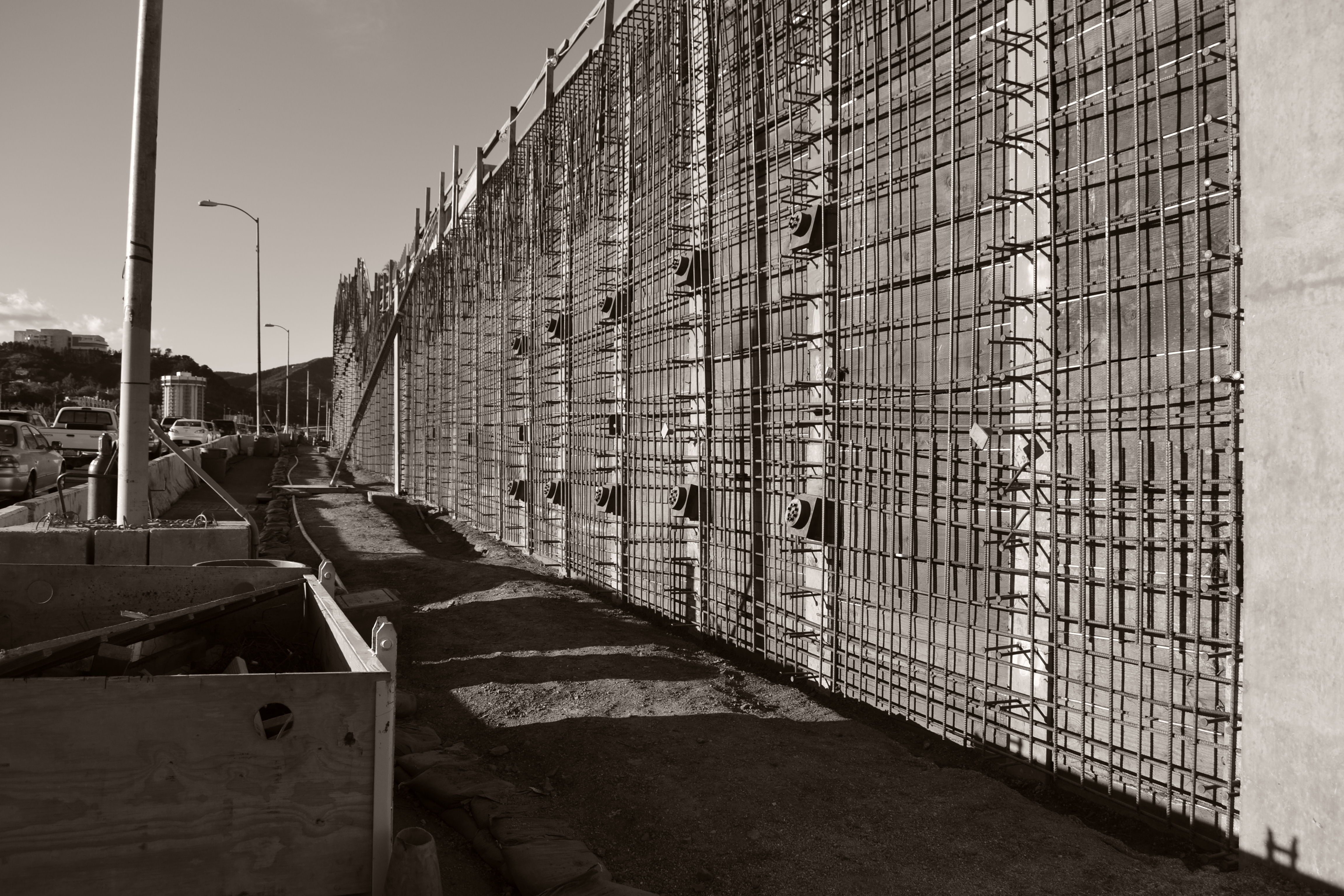
Near Montana, a tall hillside is clamped into place by ten-story tall concrete ziggurat criss-crossed by steel bars and round bolts onto which plates of facing will hang.

Near Getty Looking N

Here are dancing and unfurling materials, performing in shadow and sun, ribbons of road next to green mountains, tall walls of tapered concrete holding back tons of earth.

61b near Getty

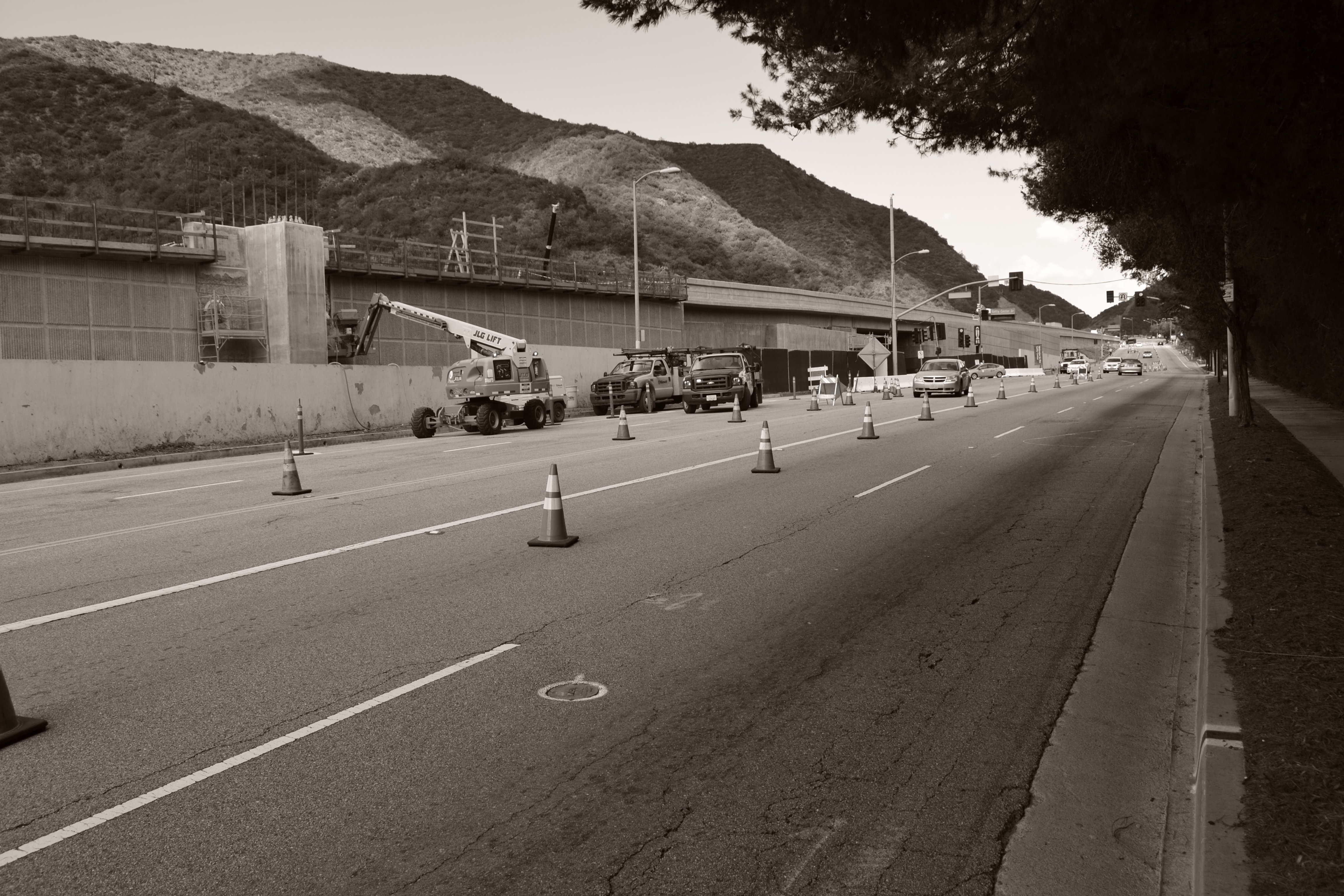
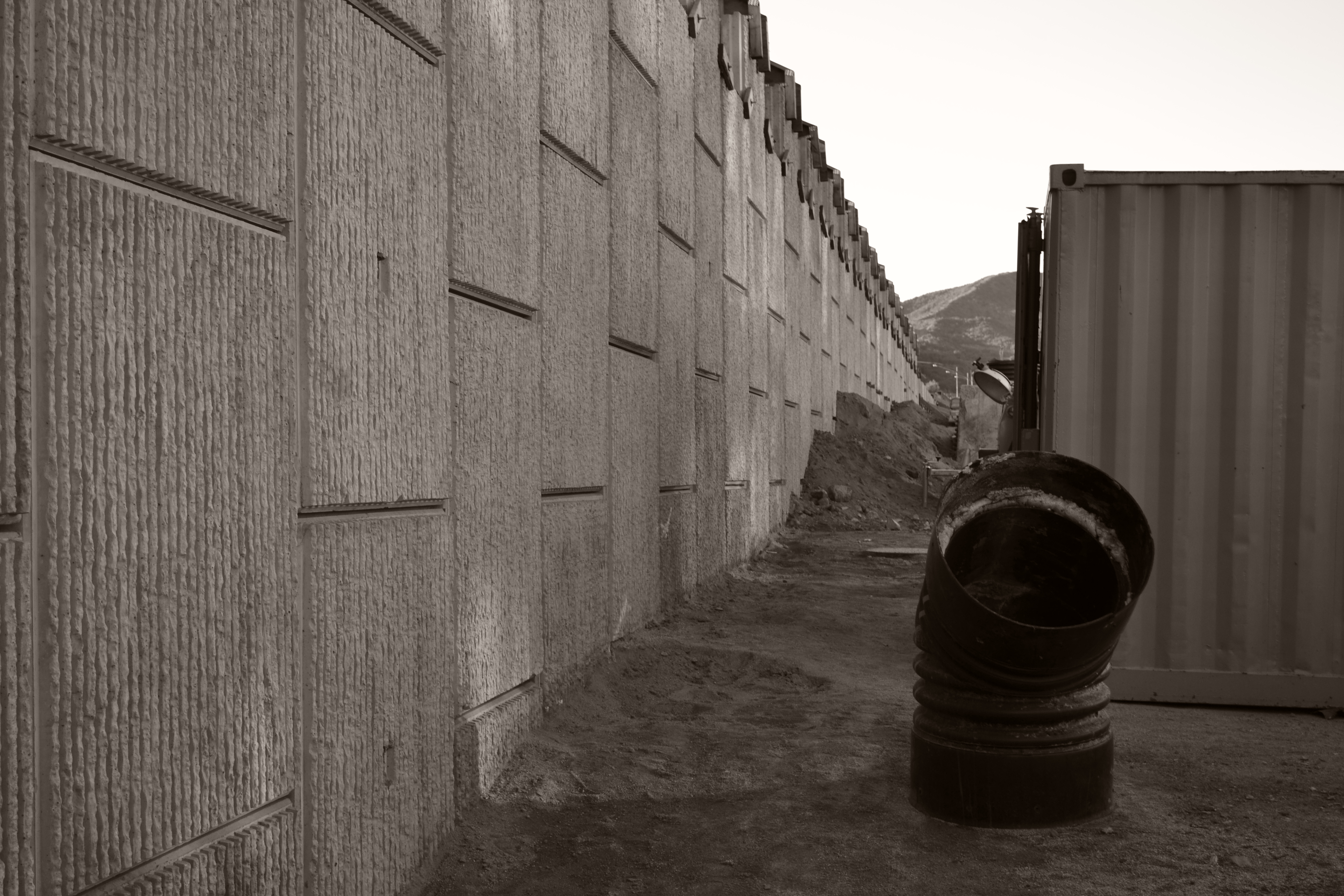
Serrated vertical lined concrete walls, go low and march along in rectangular pattern near the Getty. Parts of drain pipes sit alongside. A crane stands on the west side of the freeway near the Getty.

7

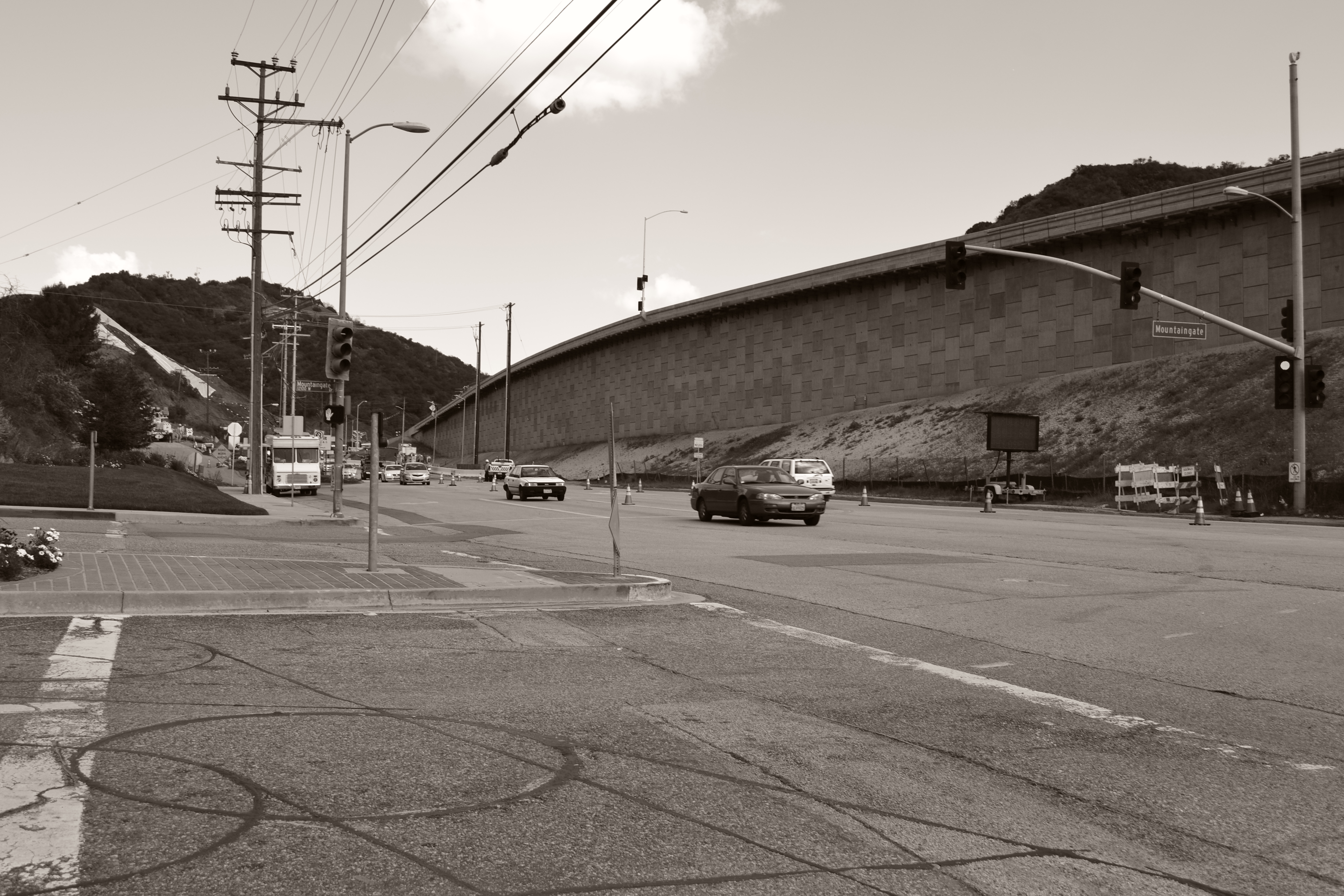
Near Mountaingate, the 405, seen from below along Sepulveda, sweeps up behind a tall wall, a freeway heard but not seen.

Valley

DSC_5766

At Mulholland, the pass opens up to the Valley.

The mountains seem higher, the vistas taller and wider.

New steel spans are stacked under the old road, ready to perform their next feat of support to carry up a new bridge.

It is a penultimate, high altitude moment of reconstruction: intelligent, courageous and invigorating.

Soaks

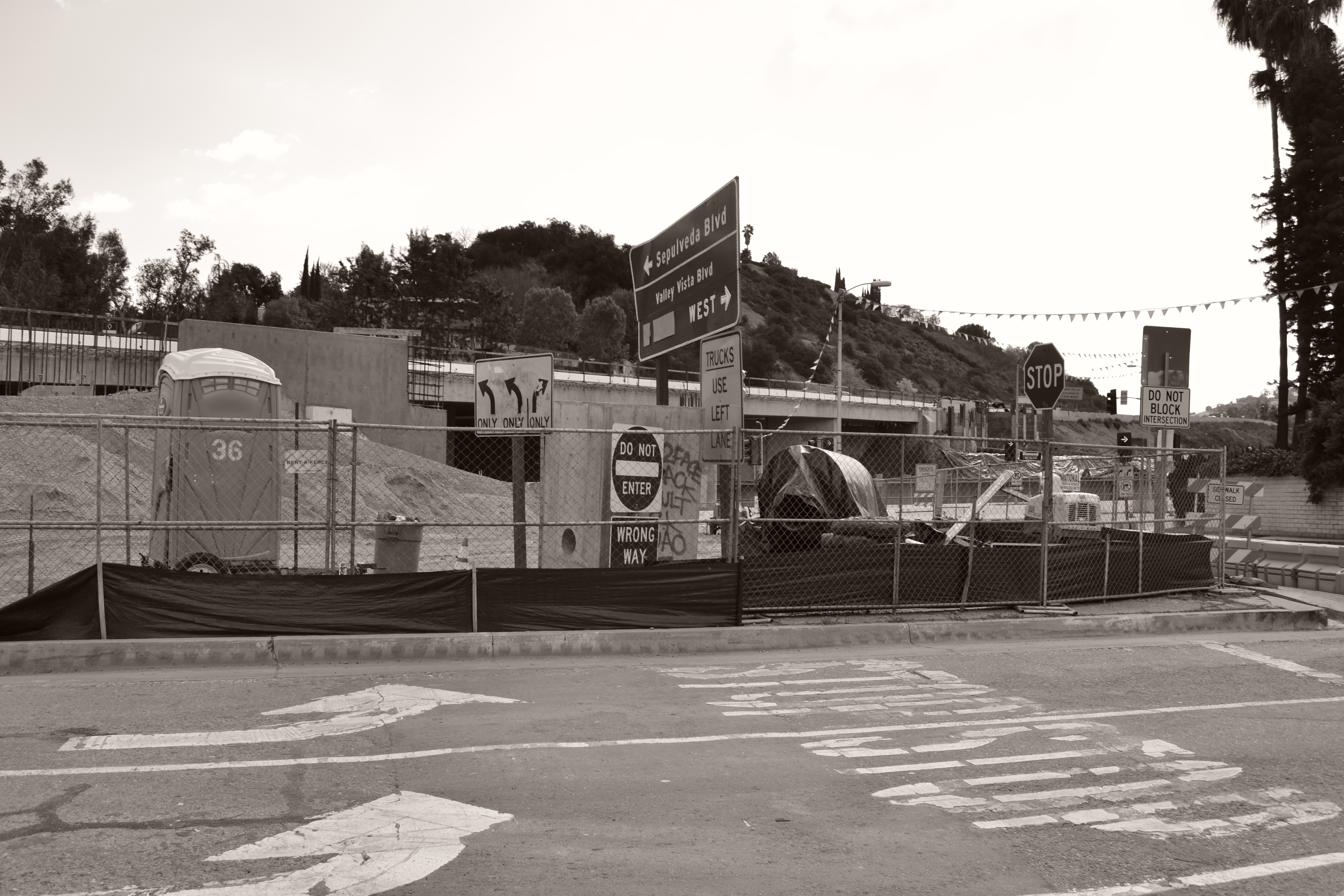
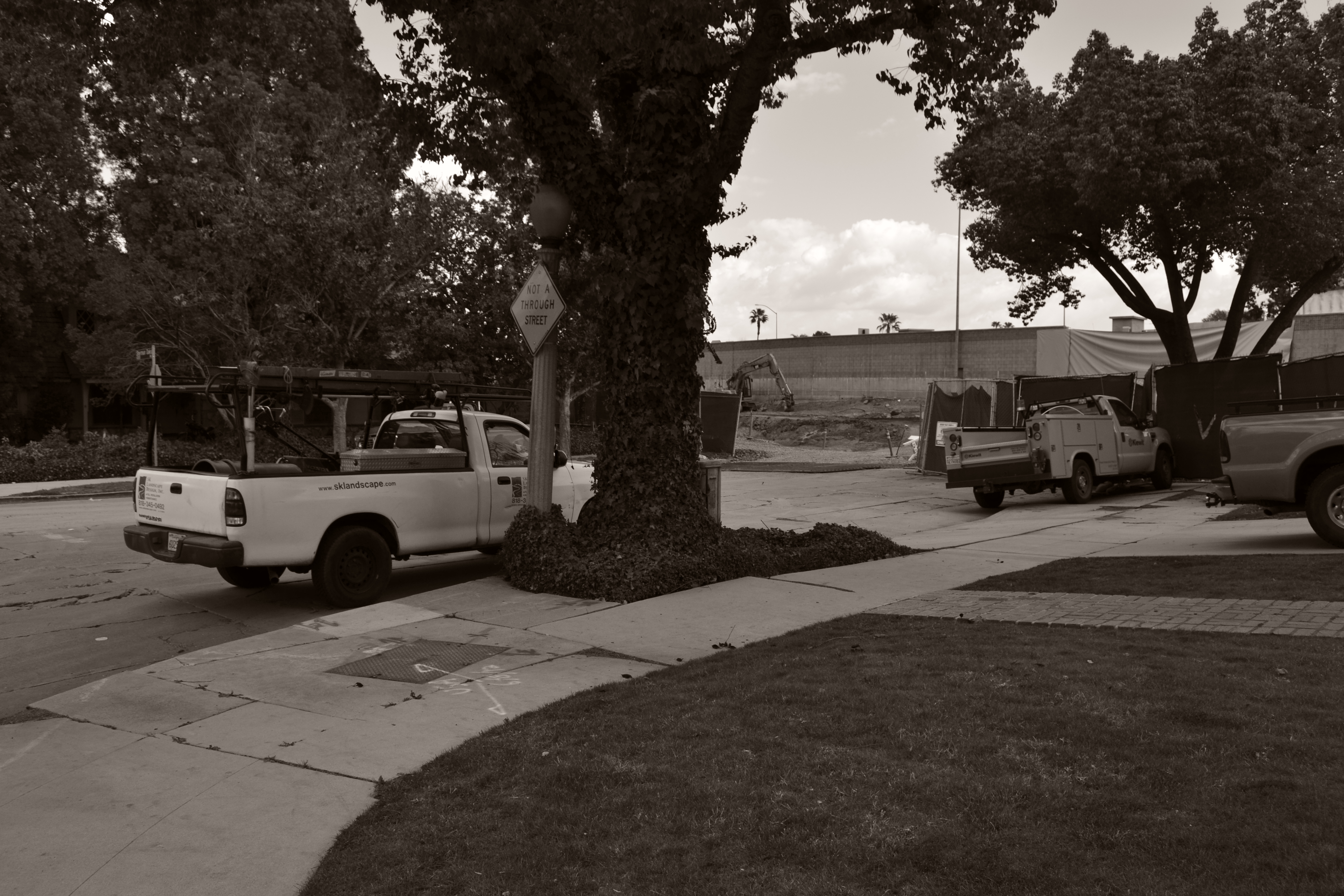
And up in Sherman Oaks, near Valley Vista, the sunny and self-satisfied homes of prosperity are caked in dust, caught in the bottom-end of the widening. The congestion is worse, the noise more constant, the torn-up streets taken over by bulldozers, trucks, fencing, excavation, speeding drivers, demolition and reconstruction.

DSC_5790

DSC_5794

DSC_5796

A heroic human endeavor whose energies are producing, in our backyard, a fast changing and fascinating spectacle of clashing forms, tactile tons of man-made materials, anonymous art along the 405, silently begging us, as Los Angeles often does, to open our eyes and drop our assumptions.

DSC_5723

DSC_5695

DSC_5781

Glassland: A Photo Essay.


I rode the bus and the train to downtown Los Angeles today. And later sat, with feigned enthusiasm, for a job interview inside a concrete-floored, high-ceilinged art gallery.

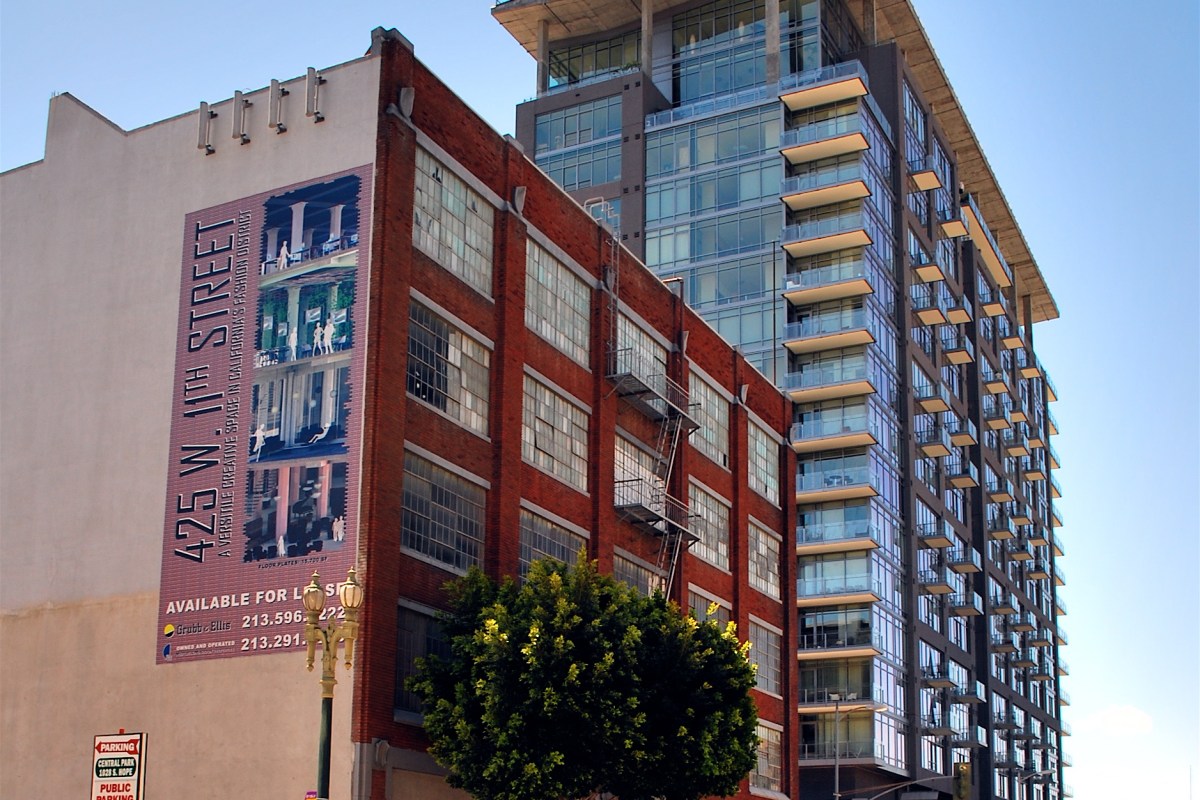
The subway exit was 7th and Hope. The weather was violently windy, blindingly sunny. White fluffy clouds tore fast across the sky. I walked into a shimmering, sparkling, glassy, washed and Windexed world of brand-new, spotless, sleek, shiny and radiant glass towers.

I was in an area east of Staples Center, south of Olympic. Yet its structural newness and callow glibness felt like jejune, milk-fed, blond-haired, salty-breezed San Diego.

Amidst the asphalt, glass, steel and aluminum, I discovered a fair-sized green-park surrounded by tall, right-angled, balcony faced skyscrapers.

Inside the grassy park: an estrogen feast.

Women students from a nearby fashion college, FIDM, smoked cigarettes as they sat along benches and on top of concrete walls. Brimming with energy and youth. A parade of citrus perfumes, vanilla scented shiny hair, shaved and polished slender legs owned by naïve young faces.

Laughing, running, hurrying.

At an empty retail space, intended for future yoga use, I stopped to talk with a workman, renovating and cleaning. He told me he stood on the sidewalk everyday and watched these gorgeous girls walk by.

“90% of them are hot,” he said.

The strong winds continued as I reached the gusty corner where the art gallery stood. Next door, I discovered a Danish bakery where the smell of butter, fruit pastries, chocolate-topped cookies and hot coffee blew out onto the sidewalk.

I arrived at the appointment an hour early, so I continued walking around the neighborhood and found more newness.

Epic spic and span newness.

This slideshow requires JavaScript.

It was Noon, here in downtown Los Angeles, and there were few cars and almost nobody on foot.

Buildings reflective, orderly, tidy: landscaped with fabulously colored flowers, prickly succulents, willowy grasses and rows of upright young trees, water fountains, and little pocket parks unpopulated with humans. Amidst this constructed urban paradise were rows of empty benches.

A wine bar, with outdoor seating, was open on a corner. And not a single person occupied any seat.

A great concept, a superb image, a winking nod to richness, that’s what they built around here.

Those great hypes, of 2004 and 2005: the unlimited prosperity, the exploding stock market, the cheap money, the hustle and con of the hucksters who sold America real estate, stocks, derivatives, credit. These empty, fresh, unfilled, immaculate, twinkling edifices of glass, these are tactile creations and hard monuments of a false and corrupt national binge. Blessed by tax breaks and corporate lies. Unpunished by Washington. Unconscionable billions for bail outs.

Now these resplendent, lustrous buildings sit here, underused and unfulfilled, their once loud voices and enthusiastic promises of urban excitement, muted.

This is just one district of downtown Los Angeles: a great glassy area of spacious, broad streets and tall, unspoiled, spotless, reflective vertical condominiums.

Like everything in this city, it starts out young and full-of-promise.