Million Dollar Living


For an estimated cost of about $6,000 a month you can live in a brand, spanking new, “single family” house constructed right on Sepulveda Boulevard, with a front entrance on the beautiful street, leading you into white walled, vertical living with enormous open plan kitchen, four bedrooms, 3.5 baths, several balconies and roof decks.

However….

You won’t have a back or front yard. Your next door neighbors will be mere inches apart from your unit. A tarp covered homeless encampment and RV is in full view across the street.

At night, you may not be able to sleep with the constant noise of ambulances, fire trucks, police cars, speeding vehicles, and intoxicated and drugged people on the sidewalk.

There is Valley Presbyterian just up the block, and several nursing homes across the street with their daily and nightly medical emergencies.

But all this may not matter to you as you worship your “enormous kitchen with Tafisa HPL custom cabinetry, quartz countertops with a waterfall island and Bertazzoni state-of-the-art Italian stainless steel gourmet appliances.”

At a mere $911,500 this single family home will require a yearly income of probably a quarter million, as you will also owe $12,000 or more in property taxes. Utilities, mortgage, HOA, that’s all extra.

If all this sounds too good to refuse, march on over to 6708 N. Royce and see if you can get into this delightful design for living.

Million Dollar (or Nearly Million Homes) For Sale in Lake Balboa


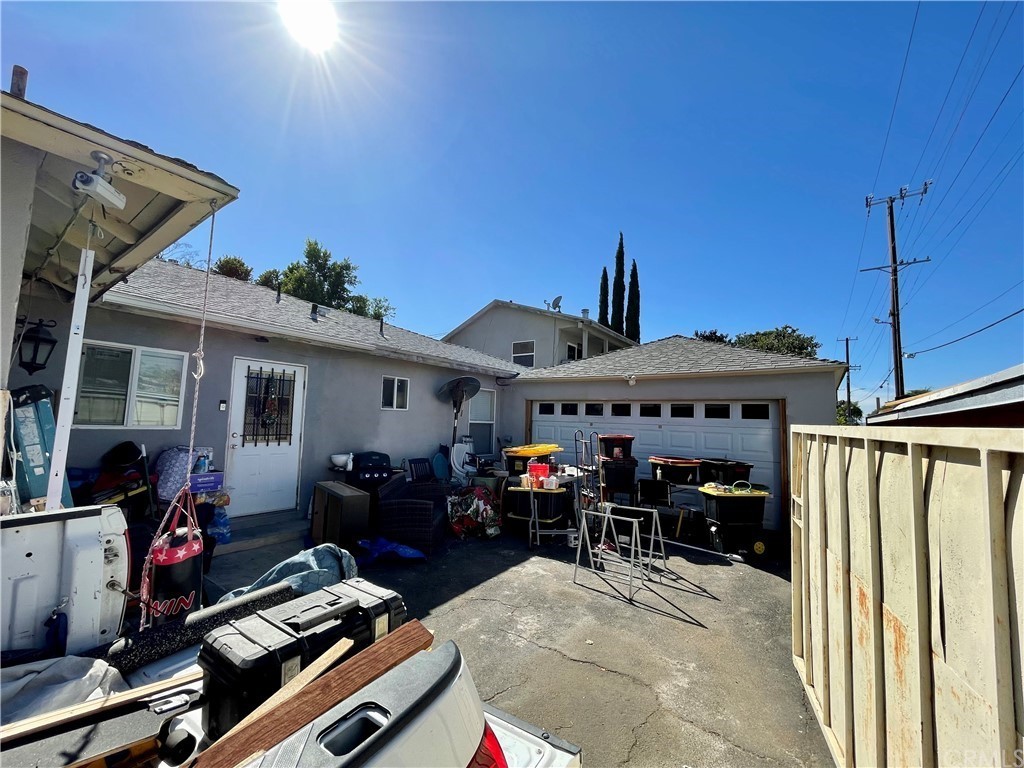
Just west of the 405, along delightful little streets nestled along the runways of Van Nuys Airport, several homes are on the market in Lake Balboa, asking price around a million dollars.

These are photos from Redfin.

7475 Shoshone Ave. 5 bedrooms, 3 baths. $905,000


7527 Louise Ave. 2 beds, 1 bath, 819 SF. $1,000,000


7555 Gloria Ave. 5 Beds, 3 baths, 1,867 SF $930,000


14720 Saticoy St. Van Nuys 5 beds, 2 baths, 1,907 SF, $1,000,000


16026 Leadwell St. Lake Balboa, CA 91406 6 beds, 3.5 baths, 1,695 SF $950,000


A Motley Crew: The New ADUs


“The Los Angeles Department of Building and Safety (LADBS) implemented the Standard Plan Program to provide LADBS customers a simplified permitting process for the design and construction of ADUs that are built repeatedly. The use of standard plans reduces the time required for plan check resulting in faster permit issuance.

Under the Standard Plan Program, plans are designed by private licensed architects, and engineers to accommodate various site conditions. Plans are then reviewed and pre-approved by LADBS for compliance with the Building, Residential, and Green Codes. When the applicant selects an approved Standard Plan, LADBS staff will review site-specific factors for your property, including compliance with the Zoning Code and foundation requirements.” -LADBS


Mayor Eric Garcetti and Christopher Hawthorne, Chief Design Officer.

Under the authority of Mayor Garcetti’s Chief Design Officer Chris Hawthorne, a whimsical man, a new menu of backyard house designs, produced by various local architects, has appeared like magic. Mr. Hawthorne was previously involved in architecture writing at the Los Angeles Times and in the re-design of our civic lampposts. He is a frequent guest speaker at international architectural events from New Zealand to Miami and a recurring guest on KCRW Frances Anderton’s radio show on design.

Rather than concentrate on coming up with emergency housing for 100,000 unhoused Angelenos who live in trash piles and tents inside parks and along freeways, mayoral efforts were waged to come up with ironic design concepts in lighting.

The International House of ADU Menu seems to be an attempt to inject some fashionable urgency, flavored with irony, into the critical need of providing housing for a city where it is expensive and rare.

Pre-designed and pre-approved, these ADU (Accessory Dwelling Units) are intended to hurry up the construction of the second house in back of the first house transformation of Los Angeles.

Let’s look at what the architects have come up with.

Welcome Projects “The Breadbox”

Is a play on the traditional mission house with an oversized arched roof. Perhaps the closest to classic of all the designs, it has a cute appeal for those who are tired of the box.


Abou

A 1967 Laurel Canyon type intoxicated with rough wood siding and a slanted roof, not especially pretty to look at, but outfitted in white interior with blond wood floors. Picture Janis Joplin in a hot tub drinking whisky out of the bottle with Abby Hoffman and Jimi Hendrix.


Taalman Architects’ IT House

Perhaps the most Bauhausian of the group, this glass and steel box will allow its inhabitants full exposure to sunshine during the day and illuminate inside activities for outside spectators and neighbors at night.


Amunátegui Valdés ADU

Los Angeles zoning allows ADU’s to be built four feet from the back of property line.

So imagine how delightful it will be for neighbors who encounter a 15’ foot high building with an outdoor roof deck allowing partygoers and drunk revelers to float above all adjoining backyards like devilish angels? Here the architect has abandoned all pretense to privacy by designing a house where dozens of people can look down other people’s backyards from the top of a badly conceived back house. Imagine a house of YouTube influencers living here. What fun!


LA Más 

“is a non-profit based in Northeast Los Angeles that designs and builds initiatives that promote neighborhood resilience and elevate the agency of working-class communities of color.”

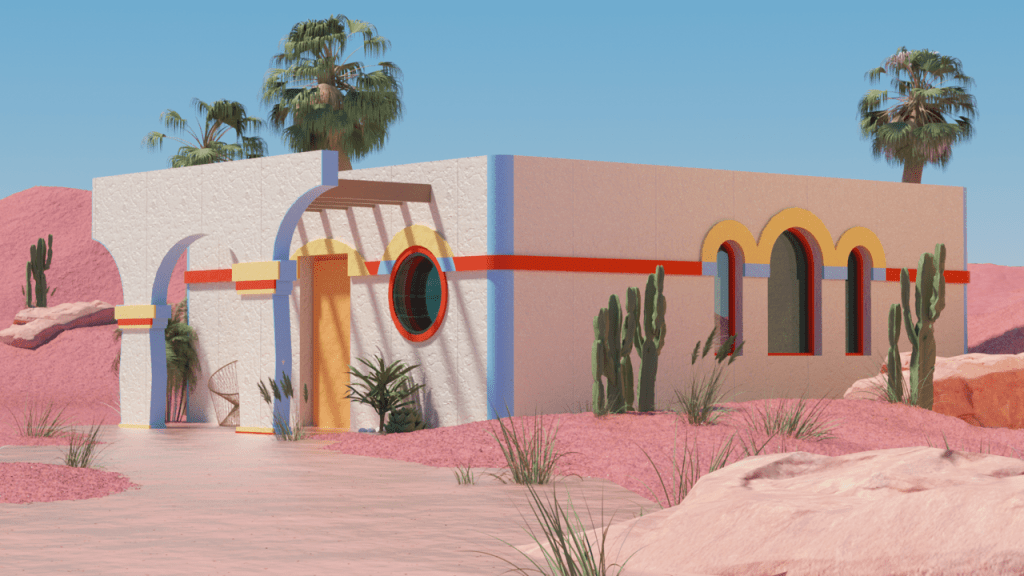
Here virtue signaling meets up with 1980s post-modernism in gaily painted houses whose designs look like fast food outlets along the boulevard. The golden arches, the multi-colored column (kids eat free?), the decorative woodwork, these are FUN places with bright colors. And even if they are not especially attractive, and look like Walmart brand doll houses, they are immune from criticism by a vaccine of political correctness. 


When Los Angeles is done bulldozing every backyard to “produce more housing” will the net effect be to put more cash in the pockets of those who already own houses?

Why not up-zone the miles and miles of one-story commercial buildings and huge parking lots that blight our city?

Why not leave in place the gardens, which are the only park system we have, and really ramp up the production of moderately priced residential units near public transportation? 

Something to think about. 

Below, in B&W, are current aerial photos of “downtown” Van Nuys.

Random Observations.


The early March air smelled quite frequently of jasmine yesterday.

The skies were cloudier, anticipating and foreshadowing the slowest, rarest event that mercurial, moody nature ever delivers to Los Angeles: rain. We want it so badly that when it comes we regret it, like so much else in life.

I walked east along Victory and stopped at 14619, where a two-story building, housing VIP Printing, caught my eye.

Built in 1960, it’s a box with a second floor of louvered windows and panels, alternating. The first floor has shops under a protruding horizontal overhang. Except for the ugly signs marring the façade, it has a plain purity and deserves better treatment.

On the corner of Van Nuys Boulevard and Victory, the symbol of Van Nuys: an overflowing trashcan.

Also at that intersection: decrepit one-story buildings.

In a finer city, these prominent parcels might be five, six, seven, or eight stories tall and contain many apartments on each corner. This is Van Nuys, stuck in 1966, perpetuating wasteful land use, wasted because housing is desperately needed. We need one less pawnshop and 500,000 more apartments.

The Q Bargain Store at 6351 Van Nuys Bl. was built as Sontag Drugstore in the 1940s. It still has the streamlined look of its youth. Like all of Van Nuys Boulevard north of Oxnard, it got old, it got poor, and we all got fucked.

Norvald Bldg, 1940, 1953, 2018.

Deformed beyond belief is the decapitated 6314 Van Nuys Boulevard, which in its decorative heyday was called the Norvald Building. Prominent people and institutions:  realtor/developer Harry Bevis, Bank of America and DWP were tenants in the 1940s and 50s. A 1953 photograph shows Van Nuys Stationery store, Whelan Drugs and Bill Kemp Sportswear for Men.

Van Nuys, it is not fiction to say, once had businesses supported by letter writers and men who wore well-tailored sportswear.  They used the word “amazing” a few times a year to describe space travel, or volcanic eruptions, never as an adjective for avocado toast or their little dog Zoe.

Diagonal parking was available along with a streetcar running down Van Nuys Boulevard. Imagine that!

The Country General Store at 6279 Van Nuys Blvd is a very fine country/western clothing store with a large selection of boots, ornate belts, and men’s Western hats, jeans, and sport shirts.

Unfortunately, the façade is cheap vinyl and fakery, obscuring a neo-classical California Bank that once anchored this corner with respectable, solid architectural forms and operable windows. A decorative clock and a traffic light with moving Stop/Go arms embellished and celebrated an urbane, safe, and tidy young town.

The future, seen through the past, is waiting for its revival. We send our thoughts and prayers to Van Nuys, a critically ill patient wounded by fatal liberalism and self-destructive policies.