Navigating Public Space in Marina Del Rey.


In the 1960s, the swamps of south Venice became a multi-million dollar building project that culminated in what we now call Marina Del Rey.

Pleasure boats, yacht clubs, nautical facilities, circular high rises with balconies overlooking the harbor, landscaped roadways with palm trees, office buildings, pharmacies, tennis courts, a hospital, a fire station, a library; and many restaurants overlooking the yachts, sailboats and motor boats.

A district devoted to tanning, drinking, carousing, love making, and living the good life amongst airline pilots, stewardesses, restaurant workers, aspiring actors, and retirees. The 1960s dream of accessible pleasure for anyone white with a convertible.

They even built the 90 Freeway to get people in fast, before the boat left the dock. Imagine the high quality of life 60 years ago, when a new freeway was affordable and considered the highest and best use of land.

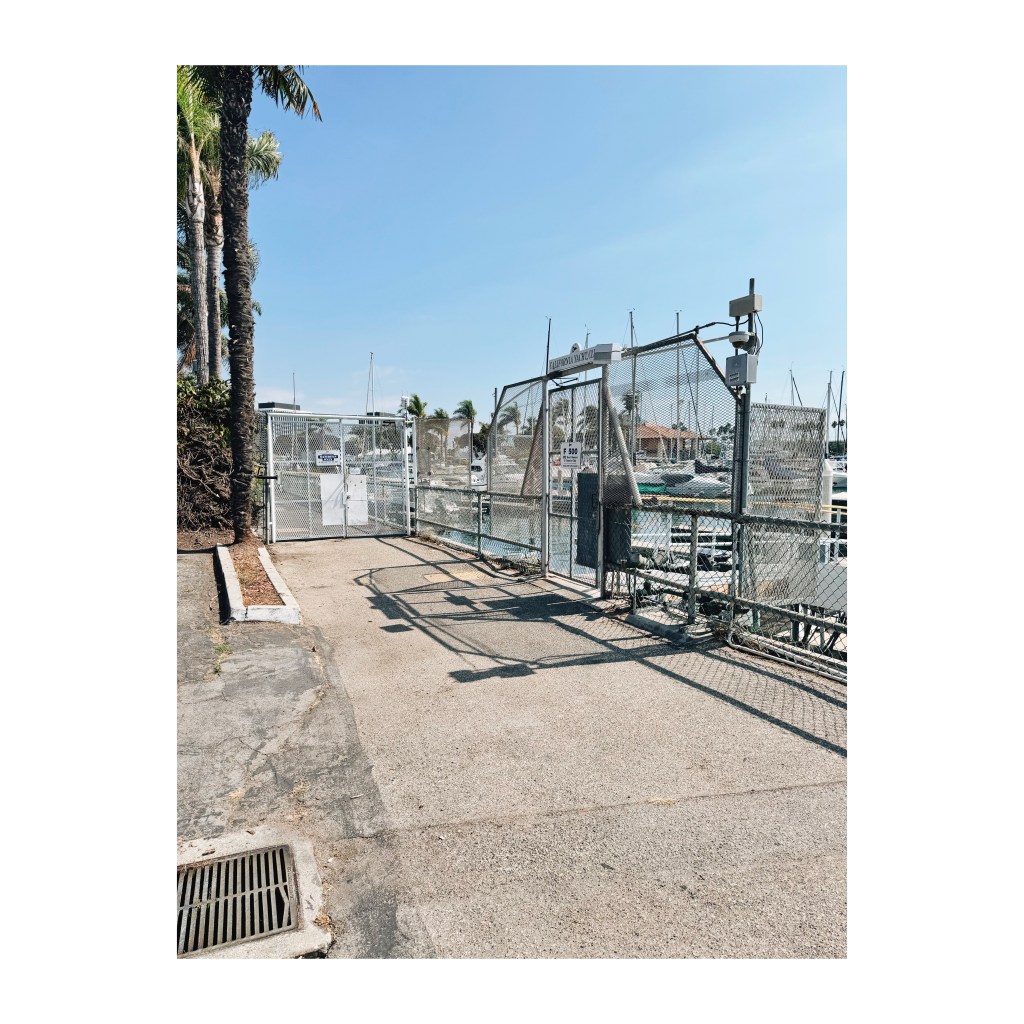
From its inception, Marina Del Rey feigned a public purpose while raking in the dollars fencing off the best parts for private use of yacht clubs and apartment dwellers. Docks are locked up and there are many barriers to prevent the use of the harbor for the general public unless you are there to purchase a dinner and drinks on a boat, bar or restaurant.

Over the years, there have been community projects to create usable public space, such as Yvonne B. Burke Park on the north side of Admiralty Way which has athletic equipment, bike roads and jogging paths. That park too has recently been incarcerated when Bay View Management built a cinder block wall that closed a public access point behind a Ralph’s store on Lincoln Boulevard. 

God forbid a pedestrian in a park might access a supermarket on foot.

Other luxury apartments, understandably fearful of crime, vagrancy and violence, have illegally built obstructions along their land to prevent the park from becoming a way to enter their properties.

Every few hundred feet, the green parks become parking lots. An athlete running, riding a bike or rolling skating will eventually stop at a busy road where vehicles speed by at 60 miles an hour. And other cars and trucks will be entering the parking lots or exiting, creating additional hazards for the non-driver.

The big, popular restaurants, anchored in seas of asphalt, offering seafood, steak, alcohol, valet parking, and private parties to corporate diners and red nosed, melanomatous men in Tommy Bahama, have all gone out of business. Café Del Rey and Tony Ps with their crumbling, dated, Brady Bunch style restaurants are empty. The cigarettes, cigars, Aramis and lounge singers gone with the wind.

The great pandemic meltdown which has stolen our lives, taken our movie theaters, pillaged our department stores, and defecated upon our civic dignity, has now obliterated the big dining establishments of Marina Del Rey.

These popular places, that seemed immune to time, forever serving enormous plates of grilled lobster, prime rib, baked potatoes, cheesecake, ice cream sundaes and voluminous cocktails are now dead. Silent as Hiroshima after the bomb, these outposts of high on the hog, intoxicated living were ailing, out of fashion, and are now exiled from our spartan, self-consciously healthy era.


For a pedestrian who is trying to stroll one mile of the harbor west from Bali Way to Palawan Way, with the boats in view along the south walkway, there are several private obstructions that make it impossible to complete the walk.

I speak from experience as my friend Danny and I did the walk today.

The California Yacht Club locks up the walkway with their own use of the property. 

One is forced to detour to Admiralty Way with the unused parking lots of the long-gone restaurants on one side, and the near-death experience of speeding cars on the other.

To reenter the harbor walkway, you find the Los Angeles County Fire Department Station #110 (4433 Admiralty Way) and walk behind the building to rejoin the path along the water to once again enjoy the public recreational qualities that are supposedly there for everyone to enjoy, not just yacht members.

The Marina City Club encompasses three early 1970s high rises which are entered securely by several guarded driveways on Admiralty Way. This complex has swimming pools, tennis courts, a convenience store, but is threatened by similar structural defects that brought down the Surfside, Florida condominium in 2021, killing 98 persons.

For now, residents who own property there pay high HOA fees, and even those who bought in cheaply face repairs that will surely cost collectively in the hundreds of millions of dollars to make these three, 55-year-old buildings safer in a location where tsunamis and earthquakes are always visiting unexpectedly.  

Concluding the walk today, we went north along a dirt path on the west side of the Oxford Basin “Wildlife Refuge” which connected to Washington Boulevard.

As we passed a vagrant man sprawled on wall, shopping cart and garbage nearby, my friend Danny shouted, “Get going, walk faster.”

Danny had spotted a handgun in the vagrant’s hand.  

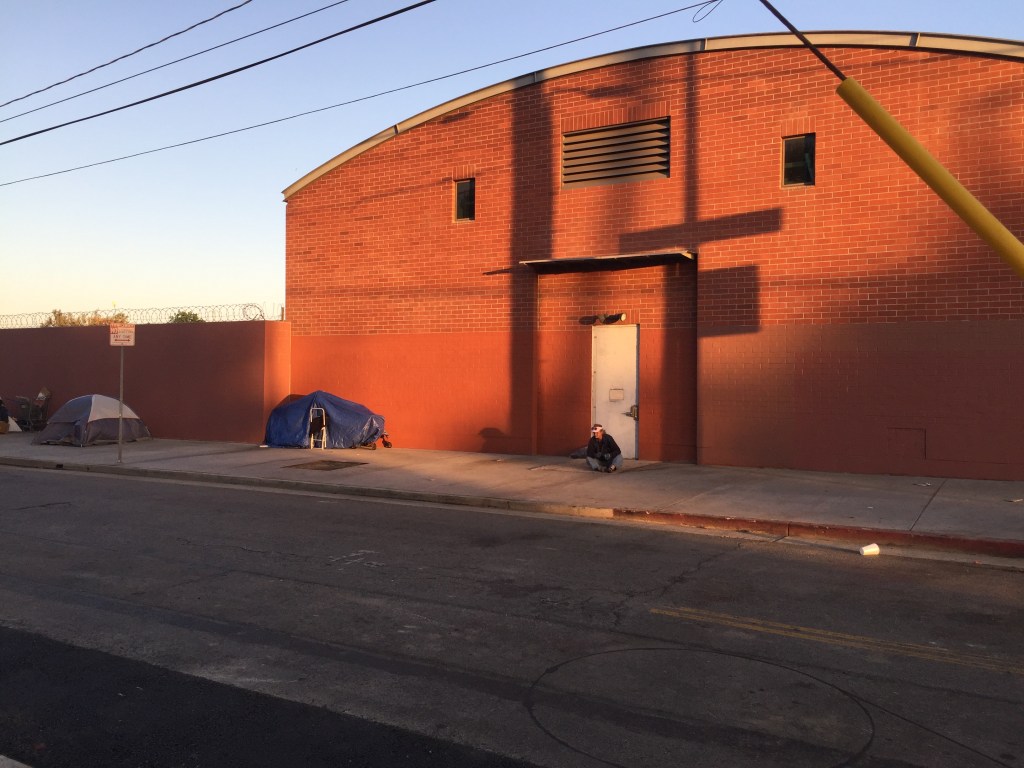
Just another reminder, if any is needed, that nobody should assume that this is a safe area, regardless of how much homes sell for. The demoralizing and unsanitary aspects of Los Angeles are all around, because we live in perhaps the dirtiest metropolis in the United States, one that believes public trash camping is a civil right and mental illness is only a danger after it kills.

How this city will present during the 2028 Olympics is something Orwell would have pondered.

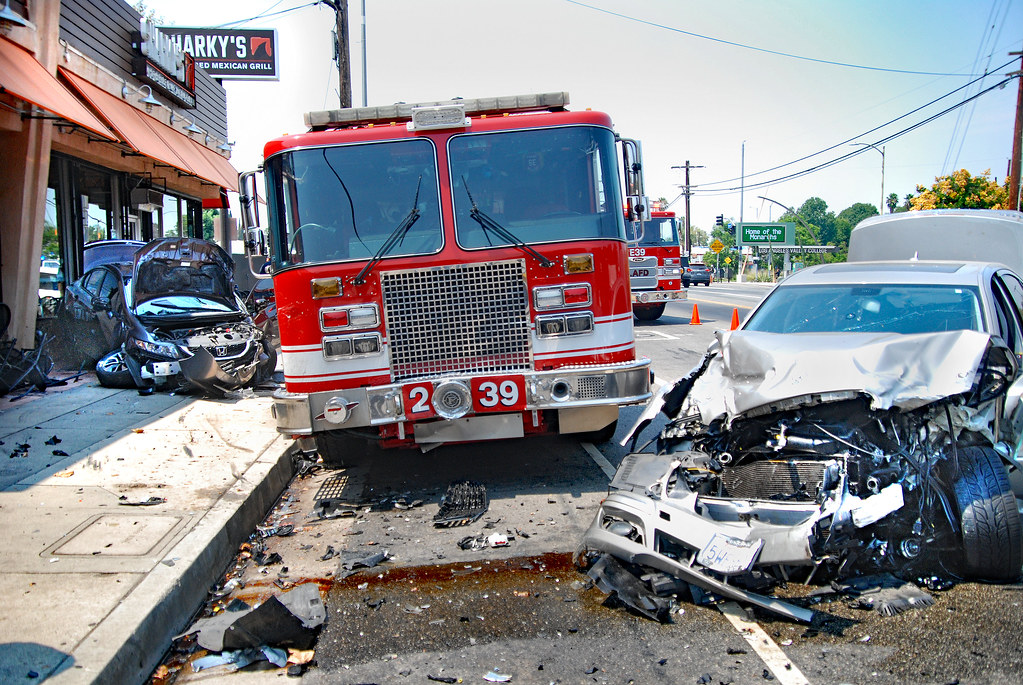
Speeding, eight lane wide streets, bike accidents, car accidents, injuries and death.


© Photo by Mike Meadows via Flickr.

Essay reprint.

Why Do Firefighters Oppose Safe Streets?

By Josh Stephens  

February 25, 2024

Ballot Measures StreetsWalkability

A few days ago, I drove from west Los Angeles to Whittier, a leafy suburb founded by Quakers on the eastern edge of Los Angeles County. Just east of downtown Los Angeles, I got on the 60 Freeway and took it to the 605.

I kid you not, every single billboard along this route advertised one of two things: insurance or accident attorneys.

I lost count of the latter. There was Jacob Imrani, Anh Phoong, Sweet James, Morgan & Morgan, and the dean of Los Angeles accident attorneys, Larry H. Parker, who’s been “fighting for you” seemingly since the days of covered wagons. Pirnia Law sponsors UCLA athletics and appeals to the fraternity crowd with the most bro-y slogan in legal history: “putting the ‘lit’ in litigation.” The Pirnia billboard I saw on Friday promised, “We run L.A.,” whatever that means.

(An aside: if you’re going to be an accident attorney in Los Angeles, it is, apparently, mandatory for you or your avatar to have facial hair, ideally a goatee.)

These billboards all make for an ugly drive. Granted, it wouldn’t have been any less ugly if they advertised something else, like soda pop, cigarettes, or, well, cars. What’s remarkable is that, in a county with a $750 billion GPD, these are the only businesses that seem willing to spend money on outdoor advertising. Sadder still: there is a robust market for their services.

Our society is as litigious as it is dangerous.

Between 2013 and 2022, Los Angeles County averaged around 54,000 fatal or injury crashes annually (the vast majority being injury-only crashes). I’m pretty sure the only people who celebrate those statistics are the attorneys. And yet, the crashes persist.

One city in Los Angeles County is attempting to do something about car accidents and, especially, the hazards they pose for pedestrians. On March 4, voters in the City of Los Angeles will consider Measure HLA, an initiative that would force the city to implement its Mobility Plan 2035, which was adopted in 2015. Backers of Measure HLA say that the city has implemented as little as 5% of the plan. Meanwhile, some 300 deaths take place annually on the city’s streets.

HLA promises a revolution in active transportation and the pedestrian realm. We’re talking about enhanced sidewalks and crosswalks; street furniture; trees; dedicated bus lanes and upgraded transit stops; bike lanes; traffic calming; and more. It’s the sort of mobility bonanza that activists and progressive planners have dream about. It could turn at least a few of Los Angeles’s ugly, dangerous thoroughfares into places that people where people just might want to hang out.

HLA will not be cheap. A recent analysis by Los Angeles City Administrator Matt Szabo estimates it will require $3.1 billion. Supporters dispute that number and, of course, argue that the promise of lives saved and streets beautified justifies a major investment.

Now, our friends on the billboards haven’t come out against Measure HLA, as far as I know. Even they aren’t brazen enough for that. And yet, someone else has — the firefighters of the Los Angeles Fire Department.

Let that irony sink in for a moment.

The firefighters claim that many of these street improvements could interfere with emergency responses. “Every second counts. The road diets slow down our firefighters,” Freddy Escobar, president of the United Firefighters of Los Angeles City Local 112, told the Los Angeles Times. “And it will be so much worse with HLA.” In other words: we don’t want a hook-and-ladder truck getting hung up on a bulb-out or squeezed by a bike lane.

I give due respect to emergency responders, and I get that the firefighters have their priorities–especially when it comes to saving lives. But the mobility plan isn’t merely about aesthetics. Its point, in fact, is to save lives: not by responding to accidents but by preventing them in the first place.

In 2023, 336 people died in traffic-related deaths in the City of Los Angeles (half were pedestrians). Meanwhile, between 2014 and 2019, the average number of deaths from accidental structure fires was 14. I hardly want to pit one sort of tragedy against another. But, let’s face it, governance is always about priorities.

And, indirectly, Measure can improve public health by promoting walking and biking and even by fostering social relationships. It’s a lot easier for neighbors to get to know each other when they’re walking down the same sidewalk than when they’re both racing to make the yellow light. And, however harrowing a fire may be, at least most of them are accidental and isolated. Measure HLA attempts to undo an entirely intentional, nationwide disaster.

The firefighters thus miss the city for the buildings.

It’s not the first time, though. Many cities’ street dimensions are already dictated by the size and performance of fire trucks. And, last year’s successful AB 835 made the case that fire codes that require most multistory buildings to include two stairways (for emergency egress) severely constrain the way residential buildings can be designed and, indirectly, make California cities uglier and more expensive than they’d be if buildings were allowed to have only one stairway.

I’m not an expert on emergency response. But I’ve been involved in urban planning long enough to know that, in too many instances to cite, the very people who are trained, paid, and empowered to design our cities somehow get shoved aside. Meanwhile, veneration for emergency responders — much of it well earned — has often given them, and their unions, unduly loud voices in the civic discussion.

Not this time, though.

What’s especially bonkers about the firefighters’ opposition to HLA is that they are almost alone. The list of groups that have endorsed it is not just long — it’s also among the most diverse you could ever imagine in Los Angeles. Plenty of other unions support it, including the SEIU and the teachers union. Elected officials have lined up in favor of it. Seemingly every mobility, environmental, and social justice organization has too. Democratic groups support it, and so does the Los Angeles County Business Federation. If ever a group could be expected to oppose a measure that de-emphasizes the use of cars, it would be the United Autoworkers — but, no, they’re on the list too.

For all of this enthusiasm, I’m not sure that the mobility plan will cure all that ails Los Angeles’s streets, even if it’s supercharged by Measure HLA. And I certainly don’t know if $3.1 billion — or whatever the true amount is — would be a sound investment. But, the fact that concepts once as obscure and forlorn as “complete streets” and “active transportation” are on the ballot in a famously car-centric city has to be good news, for planners and pedestrians alike. It has at least a chance of making the city safer and more attractive.

Of course, I don’t expect those billboards to come down any time soon, and we’re probably stuck with the freeways too. But we can at least hope that some of those attorneys go out of business.

Walking Along the 6th Street Bridge.


I finally made it down to the 6th Street Bridge.

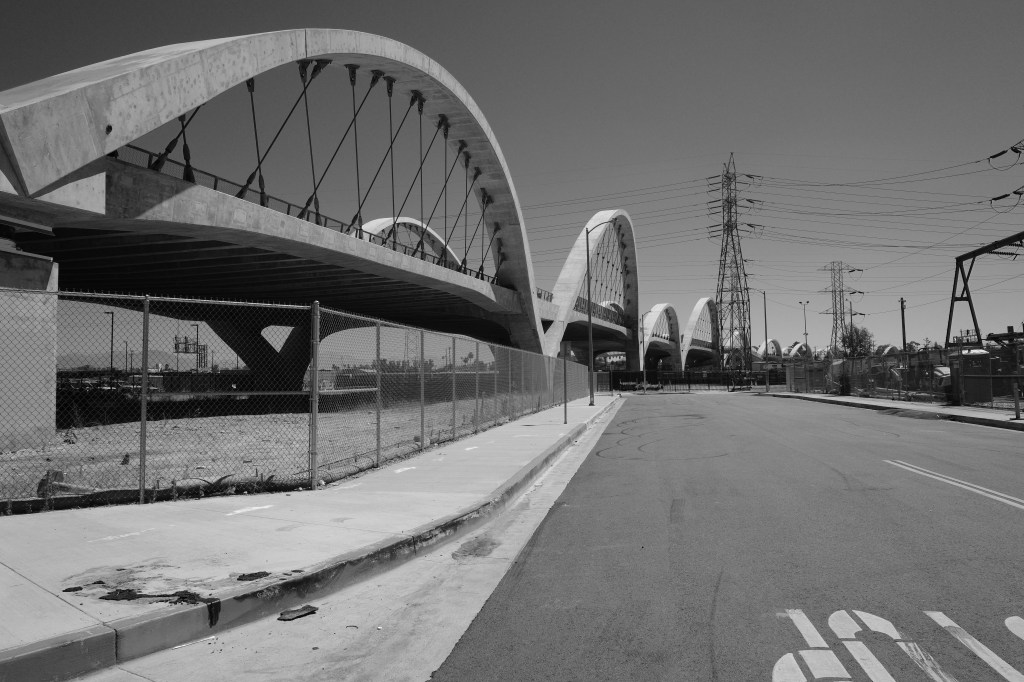
It’s an impressive structure that leaps and struts and flies over rail tracks and factories, electric yards and the river. It is startlingly plain, almost crude in its sculpted mass and bending arches. There are raw bolts attaching the cables to the concrete. Steel fences stretch along the pedestrian walkway. Dark shadows and blinding sun mark the bridge from beginning to end.

Unyielding in substance, rigid, unforgiving, brutal; it is a stage for fast cars, reckless driving and unintentional suicide. But also a balletic performance of geometric shapes and unexpected revelations along the way.

Mute yet expressive, untested in the long term, it is a baby of this metropolis. And born to a city that abandoned it to a wasteland which one day may be remade with trees, parks and apartments; or left behind to become yet another great, unfulfilled California promise.

Walking here last Saturday, August 26th, I thought of the late Mike Davis (City of Quartz) who wrote brutally and trenchantly about Los Angeles.

I don’t have his exact words, but in that book he described an architecture of barbed wire, steel gates, security cameras, the way this city is set up like a penitentiary with hostile inmates surrounded by deterrents, police and threatening lethality.

The 6th Street Bridge, ironically, has earned a reputation for criminal mayhem: daredevil driving and people who climb upon the arches to show off. I saw no rowdiness, in fact the road was remarkably empty and we only passed a few pedestrians. But in all directions artificial and man made structures are the entirety. Absolutely nothing is natural. The lone exception I saw was a cellphone tower who identified as a palm tree.

Looks Like Yet Another Redevelopment Plan for Van Nuys.


In Urbanize LA “Revamp in the works for Van Nuys Civic Center.

“In a motion entitled “Building a Livable City,” Martinez instructs the Planning Department and LADOT to take stock of the number of parking spaces needed to serve Van Nuys City Hall and other government functions in the Van Nuys Civic Center, and lay out a plan for consolidating parking onto a smaller footprint. This would clear the path for redevelopment of the complex’s remaining parking lots with a mixture of affordable housing, open space, retail, and other community serving uses. Likewise, Martinez proposes that any scheme also incorporate amenities for pedestrians and cyclists.”

Must we endure these promises again? Here is what they were writing 31 years ago this month:

Downtown Van Nuys, due to 70 years of misguided “redevelopment”, has obliterated itself and now crawls along at the lowest condition in its history.  Homelessness, abandoned storefronts, and an eight lane wide highway are what it looks like.  

Ms. Martinez has occupied her office, figuratively and literally, for over 7 years and during that time she has spoken up about all the ills of Van Nuys and the NE SFV: human trafficking, crime, housing, drugs, homelessness.  

Yet, still the tent cities remain. The shopfronts are no more. The entire area looks like hell.

And at the center is the 1958 planned Van Nuys Civic Center, a ghost land of courthouses, library and police station all populated by vagrants, trash, emptiness and hopelessness. Surrounding the area are many tens of thousands of parking lots, enormous concrete fiascos erected 50 years ago to provide dignified places for vehicles to live. They are mostly empty now, and should be destroyed and replaced with housing, housing, housing!

But this requires a plan, an architectural plan, and there is never, ever any architectural thought put into any structures that go up in Van Nuys. Instead, a crooked and semi-literate group of grifters with dough show up at planning board meetings and offer up the shit boxes that are shoved into the poor streets nearby. And VNB remains the center of dysfunctional governance in the SFV. 

In past “great plans”, the Orange Line bus and and bike path was supposed to revive Van Nuys. But next to the path, are parking lots, rented out by nearby car dealers to store their unsold vehicles. This land, paid for with public tax dollars, is instead being exploited by for profit auto dealerships.

So I’m cynical.

Our present condition as a city, due to the horrendous tenure of Mayor Garcetti, normalized everything wrong, illegal, dirty and dangerous.

But let’s try again. Keep trying. We have nothing to lose. But our minds.

Neighborhood Safety Meeting.


Van Nuys, 1952.

Last night, I attended a small neighborhood safety meeting with a group of perhaps seven neighbors and our LAPD Senior Lead Officer.

It was held at a home of the new liason between the cops and the community, a woman who speaks up and speaks often on issues affecting her street such as lighting, crime and people who don’t retrieve their trash cans after pickup.

I usually avoid these meetings out of trepidation. The ones I’ve gone to at the local school or hospital are full of anger and irrationality.

Not last night, but on other nights, I heard:

“Someone put a stoplight on my street at Vanowen and Columbus and now we have more traffic!”

 “They planted these oak trees along the curb to provide shade and now they have cars parked there with people smoking and drinking. I say cut down the trees!”

 “I’m completely against providing transitional housing for homeless veterans in our neighborhood. They get enough free stuff!” says the 65-year-old woman who inherited a 4-bedroom house from her WWII veteran father and pays $1,300 a year in 1967 rated property taxes.

 “These developers are putting up apartments everywhere. I didn’t move to Los Angeles to be surrounded by crowds!”

Yet, last night, the mood was polite. A well-fed group of rouged and perfumed women from the Eisenhower Era gathered in an early American style den where dainty finger sandwiches with the crusts cut off were served.

Period references, for example, to Mrs. Kravitz from “Bewitched” (1964-72) were understood and appreciated.

Our petite and pomaded Sr. Lead Officer, wore a dark navy uniform and a very big silver badge, holster, gun and unobtrusive body camera. She spoke intelligently and sometimes ironically about the insoluble issues plaguing our community.

She broke the news that we seven folks in the den were probably not going to solve 100,000 homeless on the streets of Los Angeles or 10 million illegal aliens inhabiting our state of 40 million.  Our system is so broken, so wrecked, our state so adrift in chaos and bad governance, that India, Nigeria and Pakistan seem models of order and stability.

She admitted that even her own husband often speeds down side streets, even as she enforces the laws against speeding while on duty.

She told us that 80% of major crimes such as assaults, murders, rapes and burglaries now come from the homeless community. She said that because Van Nuys has the only jail in the San Fernando Valley, when convicts are released they stay local.

She talked about Proposition 47, a voter passed initiative from 2014, to reduce penalties for certain non-violent crimes that now makes it nearly impossible to lock up the heroin user who shoots up in front of the grammar school. It’s now a misdemeanor to inject narcotics.

She said the homeless issue, which has now supplanted the prostitution issue, is a bigger problem than just our community. She advised electing officials above Councilwoman Nury Martinez, who would be devoted to law and order.

Whether her inference spells Democrat or Republican she did not say, but she seems to have a distaste for taggers, gang bangers, felons, and mentally ill murderers roaming the streets.

Mayor Garbageciti are you listening?

The host who invited us then passed out sheets of paper on which were shown our individual streets and the addresses that every block captain is assigned.

“Mona Castor Doyle[1], you have Columbus. Serena Pimpel you have Kittridge. Becky Shlockhaus you have Noble from Lemay to Kittridge. Miranda Beagle-Pinscher you have Lemona. Maria Copay you have Norwich. Sarah Choakhold you have Lemay!”

The methods advised were to go door to door and introduce oneself and say to each resident: “I am Zoe Bluddhound, your block captain and here is my LAPD letter and my contact information.”

Other methods of crime prevention were to send out group texts, say if you were home and heard an alarm, thus alerting your neighbors to a nearby illegality.

Living in Van Nuys requires a full time commitment to staying home and guarding your property 24/7.

Looking around the room I realized that everyone is trapped in their lives. These are women, now middle-aged or older, many of whom came here 30, 40 or 50 years ago and chose, for whatever reason, to stay here in Van Nuys. Some bought cheap, some inherited, nobody could afford to buy here now.

For some living here is an economical proposition when you bought your home for $35,000 or $126,000 and your yearly taxes are less than someone pays for the average ($2800 a month) two-bedroom rental in Los Angeles.

Yes, the environment beyond the little pockets of ranch houses is demoralizing, dirty, unsafe, ugly, violent, hideous, un-walkable and un-breathable. There are dumped couches, mattresses, fast food wrappers, cars and trucks speeding by, running red lights; there are grotesque billboards, car washes, parking lots, dog dumpings, discarded condoms and donut shops.

Nobody dines al fresco on Sepulveda Boulevard or drinks wine at an outdoor café on Van Nuys Boulevard.  The Van Nuys Neighborhood Council, alive like a corpse, ensures that no progress is ever made on any community improvement and that all members are backstabbing  one another.

So the community meeting, between neighbors, low-key and humble, without ego, is seemingly a better way to self-govern.

Last night, under the spiritual leadership of the Senior Lead Officer, an attempt at normality, order, safety, reassurance and camaraderie was attempted.

This is not Paris or Zurich or even Cleveland Heights. But we are not yet Aleppo.

[1]Personal names, not streets, have been changed.

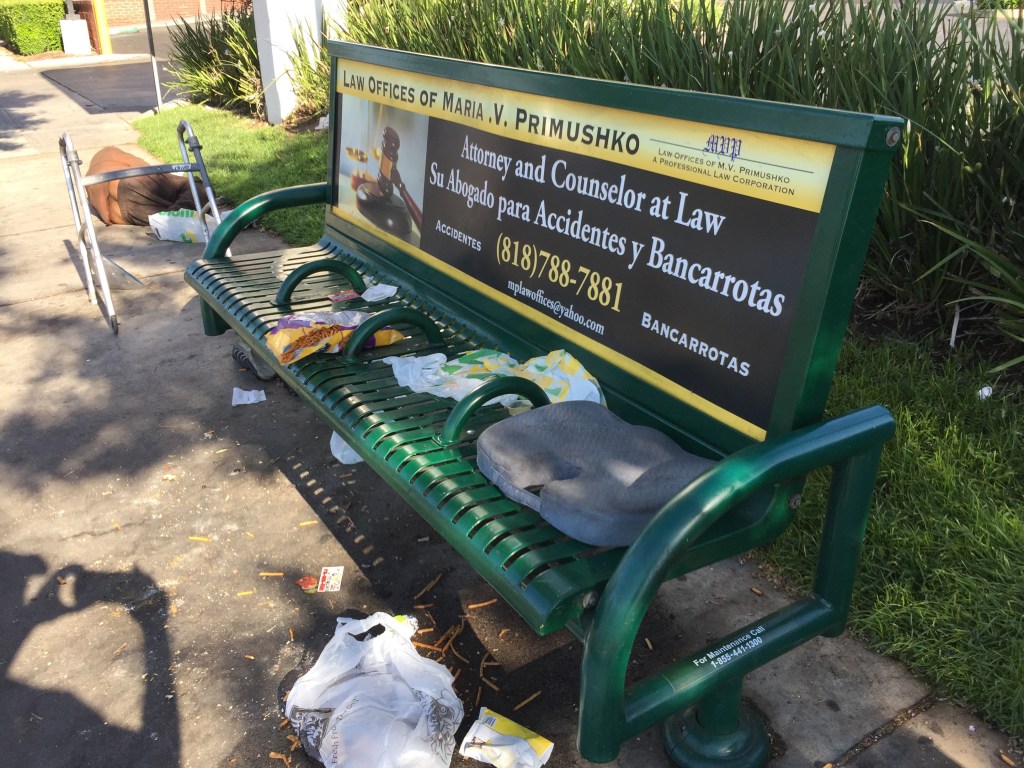
The Bus Bench


“Despite a growing population and a booming economy, the number of trips taken on Los Angeles County’s bus and rail network last year fell to the lowest level in more than a decade.

Passengers on Metropolitan Transportation Authority buses and trains took 397.5 million trips in 2017, a decline of 15% over five years. Metro’s workhorse bus system, which carries about three-quarters of the system’s passengers, has seen a drop of nearly 21%.”- Los Angeles Times, Jan. 25, 2018.


Let’s imagine a 62-year-old woman, Berta Gonzales, who lives in Van Nuys, near Victory and Sepulveda, who still works, as she has for the last 55 years, doing whatever she can to bring in cash for herself, her husband,  her two adult children and six grandchildren.

She works as a housekeeper, and she takes the #164 bus, every morning, at 7am, from Victory/Sepulveda to her job near Warner Center, a commute of 33 minutes.

When she gets off the bus in Woodland Hills, the temperature these days is around 80, but when she leaves her job, after cleaning bathrooms and vacuuming floors, doing laundry and dusting, around 2pm, the thermometer might be 110.

Last year she twisted her ankle when she slipped on a freshly mopped floor.  She hobbled around on a special shoe, using a crutch to walk, and she tried to stay off her feet if she could. She has no medical insurance, of course.

In the morning, when she waits for the bus, next to the bench without any sun protection, she is made to stand. Because there is a drunken, sick, filthy man sleeping on the bench, with all of his dirty clothes, his smell of urine, feces, body odor and beer, as well as half eaten and discarded food such as spaghetti, pizza, and empty alcoholic cans.

This is his spot. All the legitimate and necessary uses of the bus bench must be thrown out because his sickness and his selfishness, whether deliberate or accidental, is the most important thing catered to.

He has been here for months, if not years. Last year he fell down on the sidewalk and paramedics came to gurney him away. Then he came back for good.

This homeless person, multiplied by thousands, living on bus benches, is not an inducement for increasing bus ridership. Thousands of potential riders will see this lawless, unsanitary and unsafe barbarism all over LA and make up their minds to do anything to NOT TAKE A BUS.

Berta is like dozens, if not thousands of people who encounter this situation every single day. They are hard-workers, struggling to earn money, riding public transit as their well-meaning, liberal political servants wish them to do.

But put yourself in Berta Gonzales’s shoes and ask yourself: if you had a choice would you want to ride a Metro bus when this is the first sight you see every single morning?

Because Los Angeles does not enforce quality of life laws, there is a cascading affect impacting every other activity: traffic, air pollution, and longer commutes.

It is surprising that the plight of bus riders, many of whom are Latino, has not seized the identity politic podiums of those in city government who are always screaming loudest about injustices suffered by whatever is trending on Twitter that day.

Does grotesque, citywide neglect of sick people and working people and commuting people merit no outrage?

Who is responsible for keeping mentally ill people in dire need of treatment off bus benches and getting them into permanent hospitalization and shelter?

Who?

I know it’s not this blog.