A Controlled Destination


I hadn’t been to ROW DTLA/ SmorgasburgLA since the pandemic. 

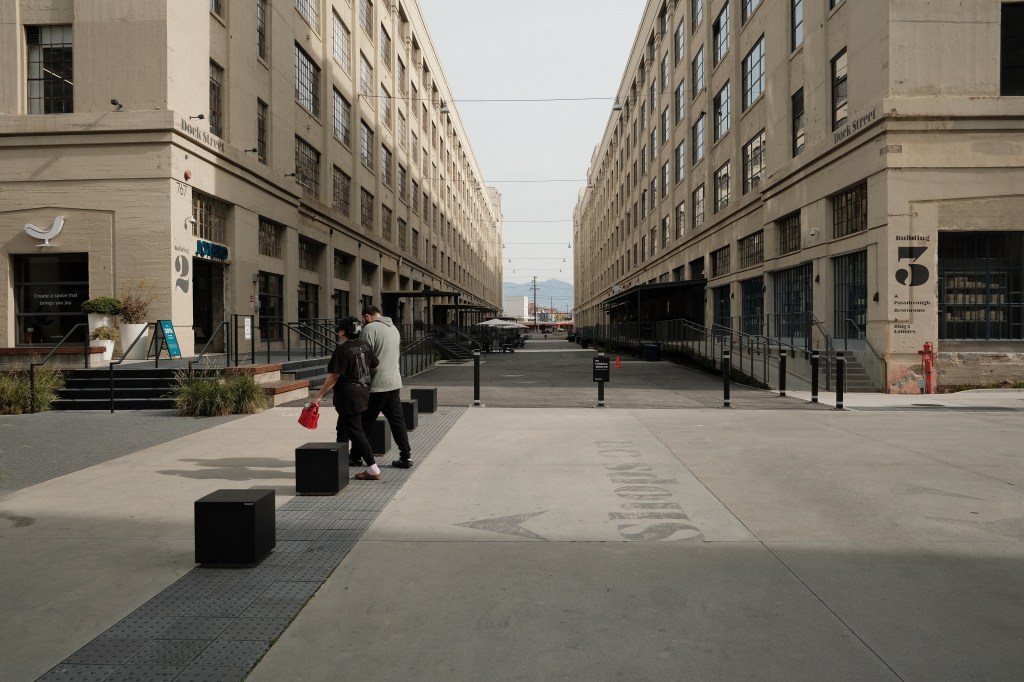
This past Sunday was cool and it seemed like a good day to go down there, so we drove to the weekly event, parked in the commodious and well-ordered concrete car park, and walked across to the food trucks and cheerful carnival of Smorgasburg.

I ate a type of goat cheese and beet Chivadilla (a mulita style Quesadilla)  from The Goat and later had pulled pork on a roll at Battambong BBQ, a Cambodian American joint. I tried a fresh fruit drink from another Cambodian seller, Sweet Grass. Everything was delicious and affordable (to a point).

The crowd was varied, and dressed colorfully, some pushing baby strollers. 

I stopped to speak to one man at Lost in LA, selling embroidered knitwear. He had recently returned from Japan which he had visited a few times. We both admired the public civility of that nation and wished we had more of it here.

“Their kids clean their own classrooms!” he said.

Later we walked along the landscaped, manicured and well-swept symmetrical street of shops where they sell luxury perfumes, furniture, clothes, liquors, coffee drinks, pottery and jewelry.  This is a kind of “downtown” you might find in Zurich or Singapore, a controlled destination where crime is rare and all the social ills are absent.

But this is Los Angeles, so we make do with an artificial representation of urbanity other cities take for granted. Because we don’t have civilized choices downtown or in Hollywood where our safety is sacrosanct. We instead find walkable and safe spaces under private ownership, guarded by for hire security forces.

On the route back home, we drove along Alameda and past tents where human beings reside along old railroad tracks next to shuttered industrial buildings that are awaiting new, more profitable uses. Piles of garbage and debris lined the road. And this wasn’t even the worst example of vagrant life in our city. There are many worse places nearby, skid rows by the dozens all over the Southland and a paucity of humanity and public policy to house and minister to people who are down on their luck and their circumstances.

There is not a park, a freeway underpass, a river, bus stop, library, 7/11 or a major street without RVs, tents, shopping carts, and piles of garbage. Wilshire Boulevard from downtown to Wilton for example.

Wilshire Boulevard! The once prime and pristine example of the glory of this city! Can it be that Los Angeles will soon host the 2028 Olympics? What can this city do in 48 months to become what it should be and disavow what it should not be? 

Six Decades Ago Along Sepulveda Bl. in Van Nuys.


Automobiles travel in both directions on Sepulveda Boulevard where it crosses Saticoy Street in Van Nuys; direction shown is unknown. A billboard advertises Signal Gas, pumped next door at the service station (left).

Six decades or more along Sepulveda Bl in Van Nuys, life was very different than today.

People conducted all their daily activities, from work to shopping, in automobiles. They were frustrated by traffic, and there were many accidents. This started early in the morning, before sunrise, and continued long after dark, in a slow, honking, and impatient parade of tens of thousands of trucks, cars and buses.

Photograph caption dated January 5, 1961 reads, “This modern supermarket at the corner of Sepulveda and Victory boulevards in Van Nuys is the latest addition to the expanding Dale’s Market chain which now operates 10 stores in the Valley.” (LAPL)

The buildings along Sepulveda were a motley, junky collection of fast food, auto repair, filling stations, car washes, cheap motels, hardware, liquor and supermarket businesses dropped down between billboards and wooden power poles.

There was nowhere that was pleasant, in the sense of a community, with proper landscaping, trees, amenities, or aesthetic zoning regulating signs or advertising. 

There was no trace of grace, of history, of the old Spanish missions, the orange and walnut groves, the spectacular trees, flowers, and natural beauty that characterized California. Everything was garish, commercial, toxic, selling everything that polluted and sickened human beings in a circus of raucous, blind, aggressive hucksterism.

Photograph caption dated March 9, 1959 reads, “Hub Furniture Stores newest location on Sepulveda and Nordhoff in Van Nuys marks the 14th Hub Store in the greater Los Angeles area. March 14 is the opening day.”
Photograph caption dated March 3, 1961 reads, “Sherman Way and Sepulveda.” This intersection tied with Century and Airport boulevards for fifth worst intersection, each with 20 accidents in 1959.;

Even with many new, lovely ranch homes, built after the war, on the residential blocks nearby, the general appearance of Sepulveda was ratty, unappealing, low class and frightening.

Mr. and Mrs. Audie Murphy and son, 6233 Orion Ave. Van Nuys, CA, 1953

Holdups at liquor stores, kidnappings, harassment of women by men driving past, littering, dumping, intoxicated drivers; in every respect related to civilized life, mid-20thCentury Sepulveda Bl. was so very different than today.  

Billboard: Sepulveda at Victory, 2018.
Photograph caption dated May 19, 1955 reads “All State Carpets, 5900 Sepulveda Blvd., is one of the many stores participating in Van Nuys Friday and Saturday Dollar Day sales event. This is the home of All State Carpets where fine quality carpeting is available.”
Photograph caption dated March 3, 1961 reads, “Cars whiz through the Valley’s most dangerous intersection. Victory and Sepulveda boulevards listed 22 collisions.


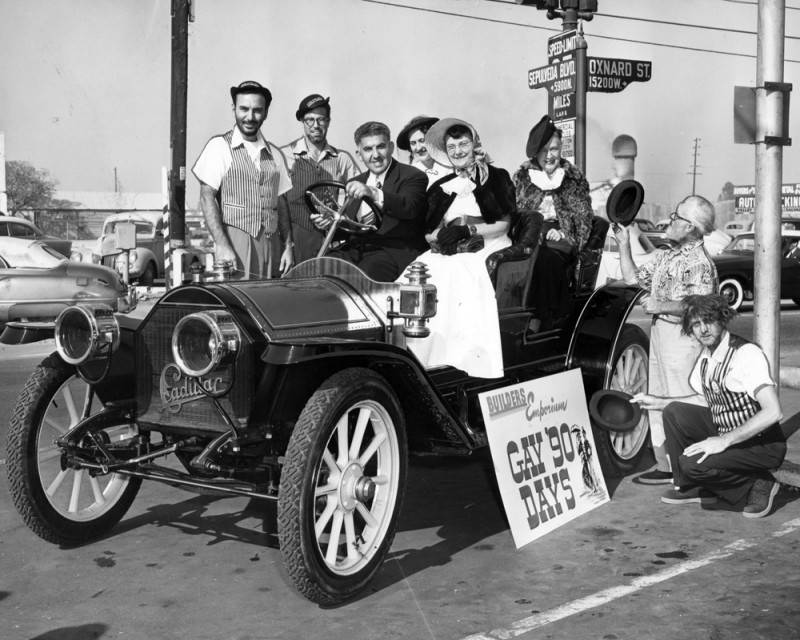
The only thing that remains the same is the presence of openly gay events, something that was even advertised on a sign in 1954.

Photograph caption dated October 20, 1954 reads “‘Gay Ninety Days’ at Builders Emporium, Van Nuys, is opened by Victor M. Carter, at driver’s seat of early-day Cadillac, firm’s president. Featuring month-long event is ‘good old fashioned prices,’ bearded salesmen, and 5,000 derbies to be given customers. In picture, left to right, are Jay Delia, Mel Goodman, Carter, Margaret Porth, Marthie Ferderer, Helen Ireland, George Blum and Lou Johnson.”

Post WWII North Hollywood


The development of North Hollywood started in the early 1900s and was one of the earliest coherent towns in the San Fernando Valley.

Its commercial district, along Lankershim Blvd. was lively, prosperous, and safe.

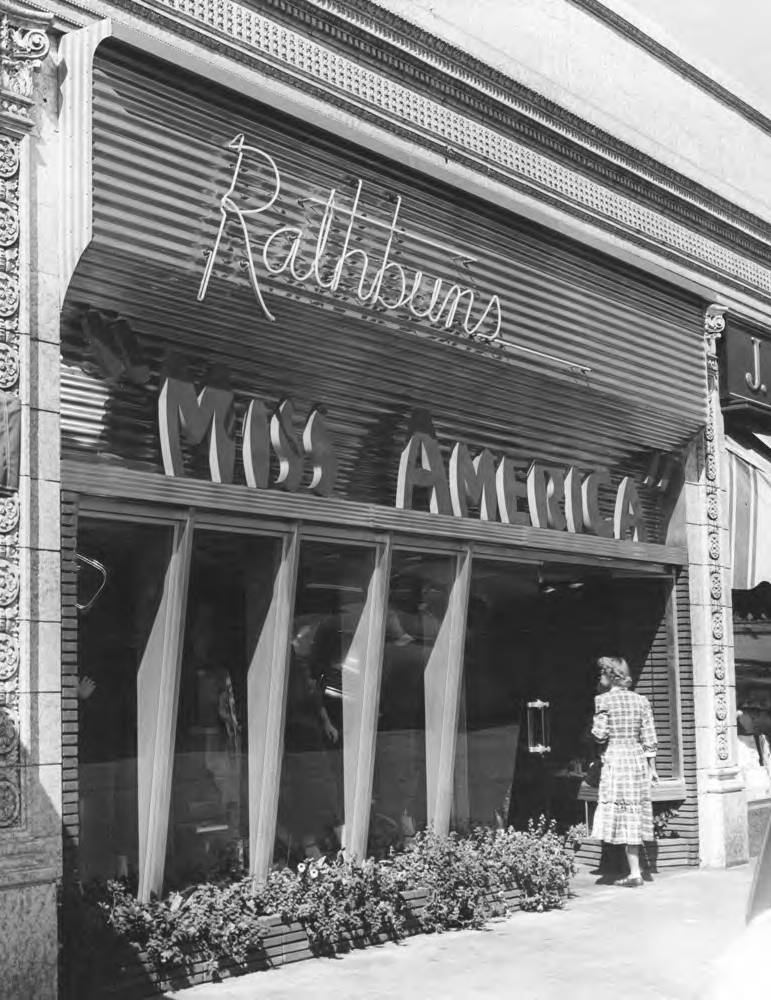
After WWII, there was a brief flowering of progressive design along the commercial strip which sought to upgrade buildings and attract new customers.

In these photos, taken from the LAPL archives of the Valley Press, one can see a healthy and happy environment that, sadly, could not compete against large department stores and huge parking lots that were built, starting in the 1950s, near Victory and Laurel Canyon.

Ironically, the return of the Red Line subway to North Hollywood has spurred the renovation and rebirth of the Lankershim area into an arts district which is far more sustainable than an auto-oriented shopping mall.  Sears and the Valley Plaza are now the blighted ones who are on the verge of being redeveloped.

It takes a village to make a community, not just 3,000 parking spaces.

So here we look, with wonder and envy, at the North Hollywood that once existed.

Van Nuys Boulevard, Circa 1940


Van_Nuys_ca1940

From the Department of Water and Power photo archives, comes this photograph of the Norvord Building at  6420 Van Nuys Boulevard, just north of Victory, circa 1940.

Van Nuys Boulevard, before it was widened in 1954, had diagonal parking, as Brand Boulevard in Glendale does today.

In looking at the above photograph, one can see that the 1920s building, had, by 1940, undergone some modernist facade renovations with curved glass at Mode O’Day and streamline signage at Arnold W. Leveen Hardware.  The simple and lovely “Van Nuys Stationary Store” had a discreet sign and an awning to shade the interior from the sun.

Van Nuys Boulevard was a walkable, civilized, clean and prosperous street in the heart of the San Fernando Valley.  Locals shopped here and patronized small businesses who in turn watched over the community.  That was Van Nuys 74 years ago.

And what is it today?

Frantic Time at the Mall.


I went over to Fashion Square in Sherman Oaks just to kill time.

It’s Thanksgiving weekend and the retail stores are in an absolute panic about falling sales.

The mall hired professional dancers to put on a show. A crowd watched a man and woman swing around like Astaire and Rogers.  Anything to get the masses back into the stores.

Every single window of every single store had a markdown, or sale sign. “50% OFF!”. There was not a single retailer who wasn’t trying their damnest to move merchandise.

Walking around Bloomingdales’ Mens department was sad. Here were racks and racks of $150, $295, $330 denim jeans with 60% off signs. The jeans were cheap and ugly. The prices were obscene and even the sale prices were a rip-off.  How long have these stores been scamming the public with t-shirts and jeans that will set one back $500?  Are these retailers living in the same world where people cannot afford to make their mortgage, college tuition or medical insurance payments?

Lunatic fragrance and Kabuki masked cosmetic salespeople rushed up to us in an attempt to sell us their utterly useless overpriced snake oil.  Bloomingdales has a block long wall of fragrance that never goes on sale. I wonder how they are going to sell it all.

And only the Apple Store seemed to be packed. It didn’t have a SINGLE THING discounted. They only sell great products for full price.

Maybe all the department stores with their crappy denim should study Apple and ask themselves if perhaps quality does matter after all.