Mementos From a 1950s Girlhood in Van Nuys


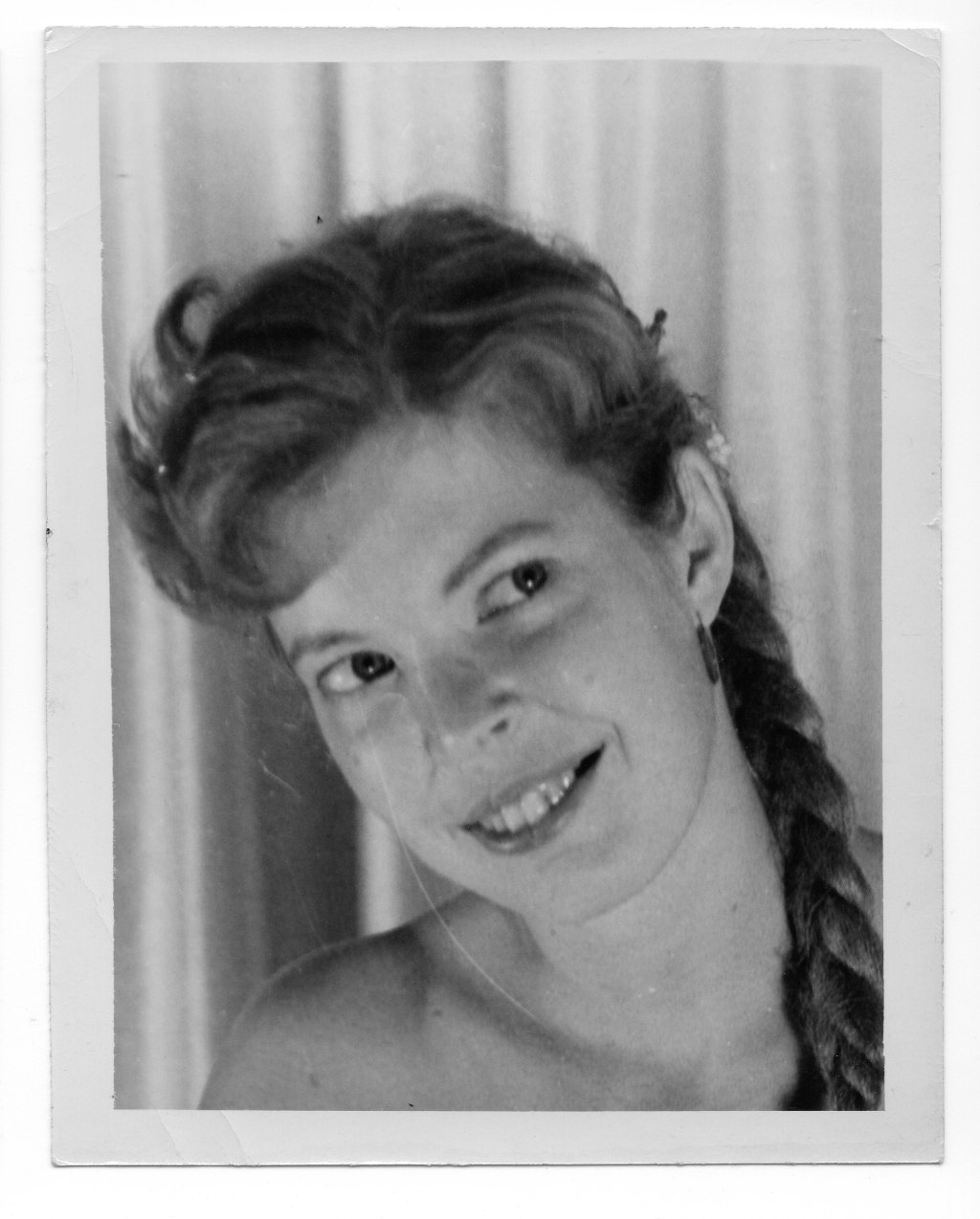
Anne Clark Seidel (1936-2018) was born in Ft. Smith, AR and moved with her parents to Los Angeles in 1942.  The family owned a house at 14936 Camarillo in Sherman Oaks where Anne grew up. 

An obituary from 2018 summarized her life.

Her son, Dave Cox, is a vintage dealer of antiques, cameras, and thrift store items and now lives in Maine and Florida. He graduated from Valley College. He has a Flickr page which I found years ago and in it he has archived thousands of photos, including his mom’s scrapbooks from her days as a teenager in 1950s Van Nuys and greater Los Angeles. 

There is a lot to look at in the sentimental and wonderful notes, photographs and souvenirs she saved from that time.

These include: a 1955 Van Nuys High School Graduation Commencement, a 1950 award for “Am I My Brother’s Keeper” from B’nai Brith, her 1954 interim California Driver’s License, a “Grease Monkey’s” membership card from Van Nuys High School, a ticket from “Crew Cut and Curls” a musical comedy performed at VNHS, a typed up sheet of rah-rah yells from that school, and a May 27, 1953 poster from “The Man Who Came to Dinner” also performed by the Van Nuys High School Drama Department.

Anne had nicknames too: Butch, Clark, Corkey and Muggsy. Her 9/15/52 book cover is emblazoned with them. 

It was a corny time of ridiculous humor, intentionally juvenile, feather-brained, nitwit, amusingly dumb and G-rated, naughty jokes that would pass the test of censors.

“They do say,” John said, “that kisses are the language of love.” 

“Well speak up!”

There were heartfelt, self-correcting mottos Anne wanted to embody: 

When I have lost my temper, I have lost my reason too. I’m never proud of anything that angrily I do.

It was an era of apologies, given by children to adults, students to teachers. There was morality in movies and songs, and wrongdoing and scandal were wrong and scandalous. 

She had a crush on hazel-eyed, curly-haired Richard Walter Peck, 6’2, whose favorite foods included ham and eggs and minced meat pie and whose hobby was model airplanes. He drove a ’41 Buick and worked at Hammond Electronics in Studio City, CA.

There are clippings from newspapers with advertisements for stores in Van Nuys such as Ceil Miller at 15243 Victory Bl.(STate 07921) which sold dresses, suits and gifts; and the Ru-Mae Shoppe at 14511 Sylvan St. with plaid, print or plain short, long or sleeveless dresses.  

There was Easter at Central Christian Church on April 2, 1953 with cut out photos of Minister RL Pryor and Youth Director Daniel M. Immel. There is the 1956 Van Nuys Mirror paper with presidential candidates Dwight D. Eisenhower and Adlai E Stevenson as headliners, and another story explaining plans for the upcoming conversion of Birmingham Hospital into a Junior High School.

There was Johnson’s Ice Cream Store, newly located at 6127 Sepulveda Bl. in Valley Market Town which was next to the Sepulveda Drive-In Theater. All of this was on the site of our present day LA Fitness and Orange Line Metro (Keyes Storage) Parking Lot. 

Those days are full of colorful events: sports, theater, holidays, miniature golf, friends, clubs, work, and crushes. The times were rambunctious and goofy, young and exciting. 

And Van Nuys was its epicenter, it contained everything needed for a happy and fulfilling life, its promises were delivered in productivity, positivity, and personalities.

I will let the visuals speak for themselves. And show more of Anne Clark Seidel’s life in future posts. 

My gratitude and appreciation to Dave Cox for his permission to use these images from his mom’s life in this blog.

Valley Feed and Fuel


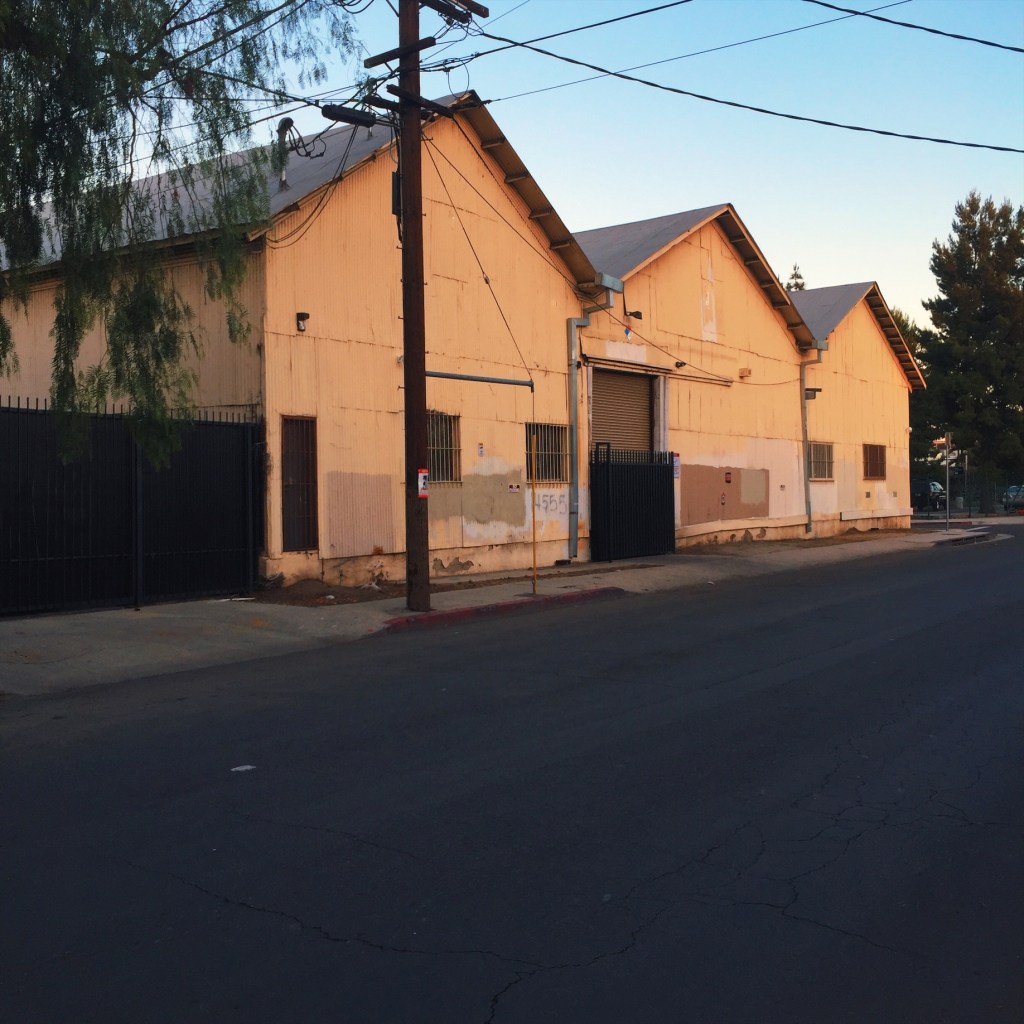
14551 Bessemer St. (Photo by Andrew B. Hurvitz)
Map 14551 Bessemer

On the NE corner of Bessemer and Vesper, here in Van Nuys, there is a steel walled storage warehouse with three pitched roofs.

Unmarked with any signs, it seems to have been there many years, and is characteristic of structures that once stood alongside rail lines to receive and to send out produce, grains, and manufactured products to faraway markets.

I dug up information from the city and found that “14551 Bessemer St.” was built in 1922, at a cost of $4,000, for the Fernando Feed and Fuel Co. It stood alongside the freight lines and was serviced by a dedicated Southern Pacific rail spur that went right into the property.

6/22/1922: 14551 Bessemer St. Van Nuys, CA Dept of Buildings Application

By 1925, chicken ranches were a big business in the San Fernando Valley, with an estimated 1,000,000 laying hens in the valley producing some 12 million eggs at a gross return of $5 million dollars. (In 2019 dollars, about $72 million.)

A 1925 LA Times article said that the Fernando Feed and Fuel Company started in 1916 as a feed store, but grew, in nine years, to 1,500 customers, large and small. Several other facilities for warehouse storage were located in Owensmouth and Van Nuys with a crew of 45 men and 15 trucks delivering feed and other orders to customers.

Chicken ranches, on one, two or five acres were a type of housing development that sprung up all around Southern California. They allowed families to feed themselves and also make a living selling chickens and eggs. At that time, other orchards grew oranges, walnuts, lemons, avocados, asparagus, and strawberries. 

A 1916 LA Times article praised “rose lined Sherman Way” (later renamed VNB) and the white feathered leghorns that dotted recently established (1911) Van Nuys.

“White Feathered Leghorn” Chicken. (source unknown)

Scientific work to bolster the agriculture industry and  promote poultry farming was often shown. 

In 1920, a four-day poultry institute was given at Van Nuys High School, by Prof. Dougherty, head of the poultry division, college of agriculture at U of CA, under the auspices of the LA County Farm Bureau and the Van Nuys Poultry Association.  A vaccination to fight chicken-pox was demonstrated there. 

Entrepreneurs and peripatetic innovators flocked to Van Nuys to raise chickens in advanced ways.

At a five-acre ranch on Woodman Avenue, in 1925, a recently transplanted Englishman, JCF Knapp, who had run plantations in Sumatra and India, had finally realized his lifelong dream to become a poultry farmer in Van Nuys. His operation had the capacity for 4000 chicks, and Mr. Knapp confidently asserted that he had not only a successful business model but a new kind of assembly line efficiency [for producing Grade A chickens on the scale of Model A’s.]

Also in 1925, WW Todd Realty Co. reported that a new set of chicken farms, totaling five acres, were to be built on Ranchito Av. near Tulare St. in Van Nuys. Some 100,000 laying Leghorn hens were expected to arrive in the valley within six months. 

[Ranchito Av., for the geographically ignorant, runs parallel to Woodman and Hazeltine, halfway between both. I found no modern maps with a Tulare St. however]

A 1920s aerial photograph of downtown Van Nuys shows the Fernando Feed and Fuel storage warehouse and the combination of commercial buildings along “Sherman Way” (renamed in 1926 Van Nuys Bl.) and orchards that were planted right inside the middle of town. VNHS is in the upper center/right of the photo. (below)

Van Nuys Feed and Fuel 1925, view NW

The chicken farms of the 1920s, which boosters never stopped boosting, gradually died out when the Great Depression hit after 1930 and sank agricultural prices.  By the late 1930s, suburban development came to the San Fernando Valley, and during the war (1941-45), industrial and defense plants, soldiers, military hospitals and the urgencies of war supplanted the rural way of life raising chickens. 

After 1945, the San Fernando Valley was the fastest growing place in the world, and every acre of land was transformed by housing developments, shopping centers, and car centered designs. 

The chicken farm, with its odors and mosquitos was now a menace, and housewives in Reseda were scared to let their children play outside.

Lost in the stories about the chicken farms is an old America that valued challenges and thought itself capable of surmounting them.  Poor, barely educated and hard-working people came here and somehow transformed Los Angeles into an advanced city that also grew its own food and sold off the surplus to an amazed and grateful nation.

Van Nuys, once a proud and admired center of advanced agricultural innovations, committed civic suicide. It destroyed its downtown by ripping up diagonal parking, widening the road to freeway widths, removing the streetcar, tearing down old buildings and replacing them with empty plazas and zombie moonscapes of trash and concrete. It embarked upon decades of laying down asphalt and laying out the red carpet for criminals, malcontents and derelicts.

Porn, marijuana, prostitution, bail bonds and slumlords were the largest industries by year 2000. Hopelessness replaced optimism and dystopia seized this district like an incurable disease. 

And politicians were thought worthy, not for their works, but only if their last names ended in the letters S or Z.

At least we have the Internet to thank for a glimmer of what it once was.

Kester, the Underachiever.


He has low self-esteem. He thinks he is too skinny, too short, too overlooked.

He blames his parents, near Raymer, for spawning him into the world from an obscure and ugly industrial spot near the concrete walled Los Angeles River.

On hot days, which are frequent, he told me hardly anyone drives up to his northernmost reaches. He looks at the homeless carts, the empty parking lots behind Target, and he thinks he is like an orphan among roads in Van Nuys and vicinity.

He told me he is jealous of Sepulveda named for an explorer, and of that “pompous” boulevard hosting such notables as Bevmo, OSH and LA Fitness. “What do I have except a couple junky liquor stores where they sell malt liquor? Sepulveda is arrogant. He has money and history and power. He was born near The Mission, holier than thou, and rams his way all through the San Fernando Valley and even has a pass named after him. He has Getty and Skirball and two Zankou Chickens. He gets to go all the way to LAX and beyond. He is well-travelled too!”

“I’m only 4.7 miles long. And people use me. They know I have no ramps to or from the 101 so they travel on me as a shortcut of necessity. They don’t really want to visit me. They would rather be on Van Nuys Bl.,” he said tearfully.

I told him I had respect for him, as he, evoked in me, a sweet nostalgia.

I said I liked Valley Builder’s Supply at Oxnard, especially the piles of sand and rock. And the place next door where they put bald tires on cars as a stray, three-legged, bandana-necked dog dances in the dust and dirt around the jacked-up vehicles. I tried to cheer him up and mentioned the braceros who gather for work everyday, smiling, rubbing their stomachs, itching for opportunity. “This is the real city. This is you, Kester!” I said.

I thought he would be thrilled at the two, new, white, glistening apartments on Kester between Delano and Erwin. “Big deal,” he said. “One of the buildings has just painted a big orange tongue on the front like a Pez dispenser. It’s like they want to make me look ridiculous instead of elegant. I’m always put into the low-class category!”

He said that even churches ignored him. La Iglesia En El Camino at Sherman Way just gives me a parking lot. And then there is that lousy self-service car wash across from the church. On Sepulveda, they have new, automatic car washes with flashing colored lights and lots of suds. On Kester, people still spray their cars by hand!”

He talked about his bitterness towards Van Nuys High School which turns its playing field bleachers away from him.

He ridiculed the remodeled Kester Palace apartments south of Victory as “refried beans” and “tacky.”

Most angrily he attacked the mini-mall on the NE corner of Victory where the trash and the shopping carts full of garbage are always left on the Kester side of the building.

I tried to change the subject.

“What about MacLeod Ale? I know it’s not on Kester but so many of its patrons drive down you to get there!” I said.

“Don’t mention MacLeod. They have it easy on Calvert Street. That street is twice as ugly as I am but they still get crowds of fans. Life is really unfair!” he said.

Then I had to, unfortunately, break the news to him that Metro is planning to demolish 58 buildings from Kester to Cedros along Aetna and Bessemer to accommodate a future light rail storage and maintenance yard.

“What? That’s crazy. Why would they destroy all those small businesses where people make a living? This is madness! Why does Van Nuys keep shooting itself in the foot? Do you mean to tell me that part of Kester will be taken away and devoted to floodlit rail yards right in the middle of old Van Nuys?”

“Yes. The great new transportation future of Van Nuys, with light rail, requires the dismemberment of one of its solid, dense, walkable districts. That is always how it works in Los Angeles. You must wipe out the old to create the new!”

He started to cry.

“It’s not part of my family but do you mean they will also knock down the old metal-sheeted, pitched roofed, fruit packing houses on Cedros and Calvert? Those go back to before WWII. Those are really lovely reminders of old Van Nuys,” he said.

“Yes. I’m afraid they will demolish those too,” I said.

After spending time travelling, walking, and observing Kester, I understood that he was, truly, different from the louder, noisier, bigger, wider roads. He struggled to voice his own identity. He watched as less deserving streets around him got more and more action, and he slipped, quite often, into self-pity.

In other cities, perhaps in Italy or Mexico, a Kester might find love with his shadows and frumpiness. His shy virtues of walkability and modesty, independence and eccentricity, could give him a solid living and self-respect outside the US. Poets would write of Kester, painters would paint him. The monogram “BVN”, sprayed so artfully, so often, on the walls of Kester, would be stitched into the world’s finest garments.

But cruelly, in Los Angeles, in the San Fernando Valley, the majority stamps him only as Kester, the Underachiever.


When John Wayne Came to Van Nuys High School.


john-wayne-1

jw2

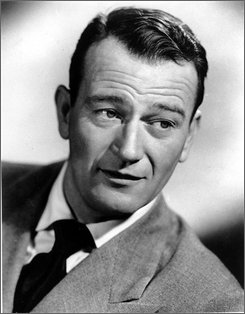
John Wayne, 42, actor, father of four school age children, went to Van Nuys High School in November 1949 to get a tour of one of the city’s first mandatory driver’s ed programs.

In a November 28, 1949 LA Times article, Mr. Wayne learned that Van Nuys was equipped with a fleet of driving school automobiles, donated by local dealers. 285 students in their sophomore year were enrolled in the instruction program. The school was in the vanguard of teaching drivers ed, the first to do so.

It was a time when education in Los Angeles partially derived its pedagogy from auto dealers. They supplied the tools. The schools provided the teachers and the students.

The driving instruction course was now mandatory across the city of Los Angeles, which was the most automotive centric place on Earth.

Mr. Wayne’s appearance at the school caused fluttering female hearts to beat faster, and provoked admiration from the boys.

So complete was the coming transformation of Los Angeles that eventually all the streetcars would be ripped out and replaced with wide boulevards and freeways and we would all get to breathe that brown air and sit in traffic for the next 80 years.

General Motors, Ford, Chrysler, Packard Studebaker and Hudson were like Honda is today: they made it their mission to help the community advance towards gridlock, smog and sprawl.

And Van Nuys, once a walkable little town with nice little shops, would find its instructional lessons applied in destructive ways.


Sunday Afternoon on Kittridge St.


It was late Sunday afternoon in December, here in Van Nuys.

The air was brisk, the sun was low, a pork butt simmered in the slow cooker.

This is the time of the year when you can see the mountains beyond the orange trees.

Days are brief and what gets done gets done quickly. The Christmas season is sewn in living threads joyous and melancholy, lonely and familial; aching, sad, reverent and intoxicating.

Football, films, electronics envy; shopping, eating, packing presents; drinking orange beer under red lights where the smell of pine, vanilla and chocolate is pervasive, these are some of the elements placed here annually.

DSC_3617

DSC_3615

I walked yesterday, in waning light, along Kittridge, a neat and well-kept street of homes between Columbus and Van Nuys Boulevard.

West of Kester, Kittridge is a ranch house neighborhood entirely built up after World War Two. Within living memory of some, this area was once entirely agricultural. What lay west of Van Nuys High School was the vast beyond of walnut and orange trees, ranch lands and open spaces. Within 15 frantic years it was developed or destroyed, depending on your viewpoint. And by 1960, it was the Valley we know today, structurally, not demographically, of course.

The homes here are solid, the lawns (mostly) cut. The flat streets and sidewalks recall a Chicago suburb, a place where American flags are flown, and bad news and bad behavior is kept quietly behind drawn drapes.

Van Nuys, CA 91405

Two friendly eccentrics were outside yesterday: a man who looked like Fidel Castro with an engraved “RICK” metal belt buckle, and his beer mug holding friend. They stood on the corner of Kittridge and Lemona as workmen re-sodded Rick’s lawn.

I spoke to them briefly, repeating my infernal line. “I write a blog about Van Nuys called Here in Van Nuys.”

“Here in what?” asked the beer mugger.

Here in Van Nuys,” I said.

“You work for the government?” he asked.

“No. Let me take your photo,” I said.

“No. You got a card?” he asked.

I handed him my printed business card.

“So you write what?” he asked.

“A blog, called Here in Van Nuys,” I said.

The older man with the Fidel Castro beard knew exactly what a blog was. He also complimented my camera and my quilted jacket.

I moved on after that, and crossed to the east side of Kittridge.

DSC_3627

DSC_3629

DSC_3630

DSC_3632

DSC_3634

On the east side of Kittridge, north of Van Nuys High School, the street is grounded in civic and religious solidity by the presence of St. Elisabeth’s Catholic Church and the enormous VNHS.

Rod Serling might have come here to film an episode of The Twilight Zone, so awash in normalcy and Americanism that one could be dropped here and think that nothing had changed in Van Nuys since the Eisenhower administration.

Notably eccentric and interesting collections of houses line the street, ranging from neat bungalows to sprawling pre-war ranches. They are placed on long, narrow lots, going back far, into deep yards, but they seem to have been immunized from the decline into squalor infecting some older streets in Van Nuys.

I stopped and stood in the parking of St. Elisabeth’s across from a tall white spire bathing in the remaining daylight. People were gathered, under umbrellas, for an event involving food and prayer.

And the second part story of my Sunday walk will continue in another essay….

DSC_3638

DSC_3648

Street Treats.


IMG_0685

IMG_0684

One of the delights of living near Van Nuys High School is watching a car full of kids park nearby, hang out for a while, and then deposit bottles and drug paraphernalia curbside before driving off.