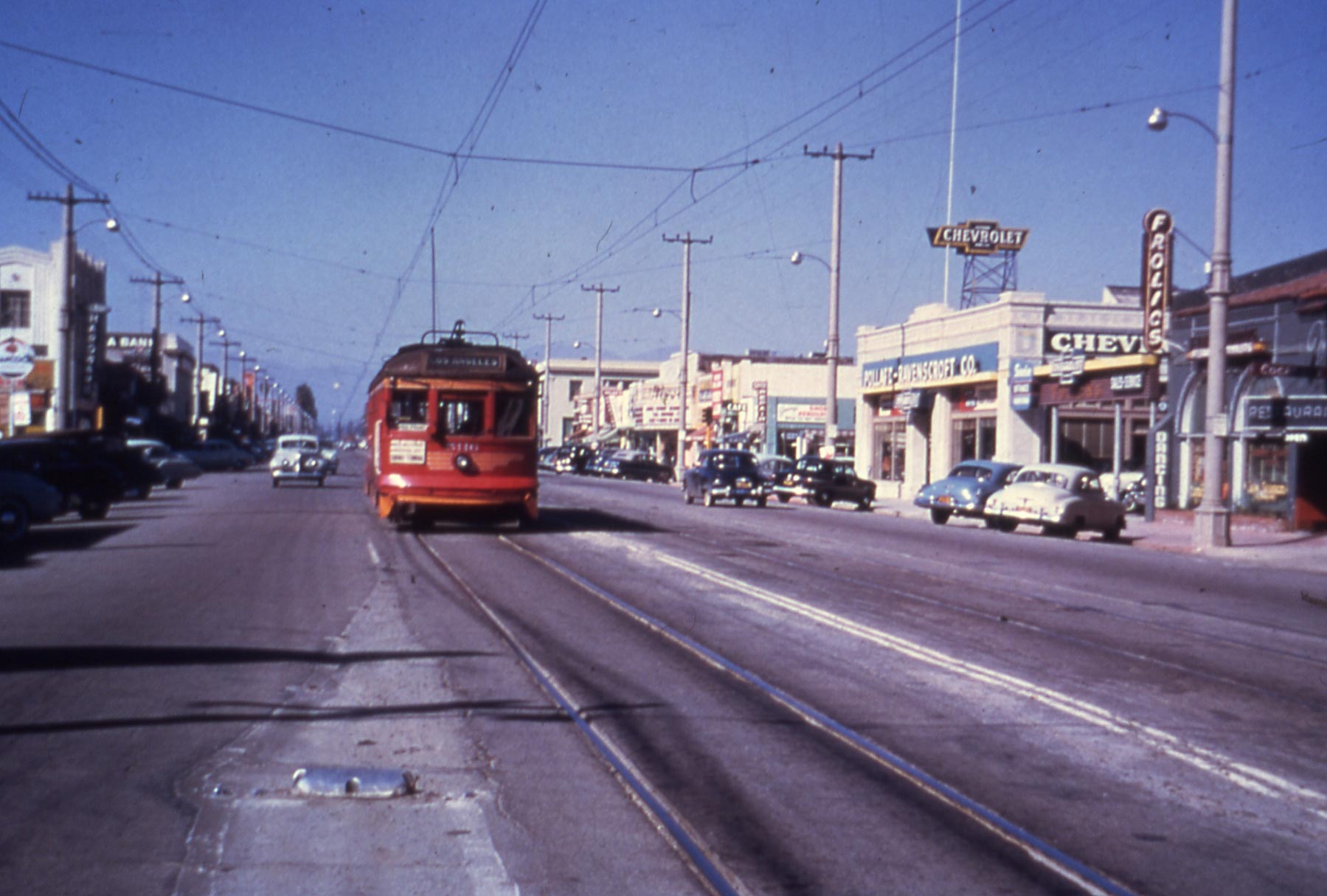
Van Nuys Blvd., March 1952 (view north)


Image

Ralph Cantos Collection

Pacific Electric car no. 5110 rolls along the “Central Business District” of Van Nuys in July 1952.

Frolics Restaurant (seen on right) was at 6216 Van Nuys Blvd.


While it is not a fancy street by any means, it is an arguably bustling and more interesting boulevard than present day. There is diagonal parking along the street, the road has not yet been widened (1954), there is a bright red streetcar going past and the buildings lining the road have windows and doors that “look out” onto the sidewalk.

All of this has been obliterated by the government monstrosities along the east side of the street whose blank walls and banality forever keep Van Nuys in a hellish 1975 architectural limbo.

17367 Parthenia Street, Northridge, 1945


Image

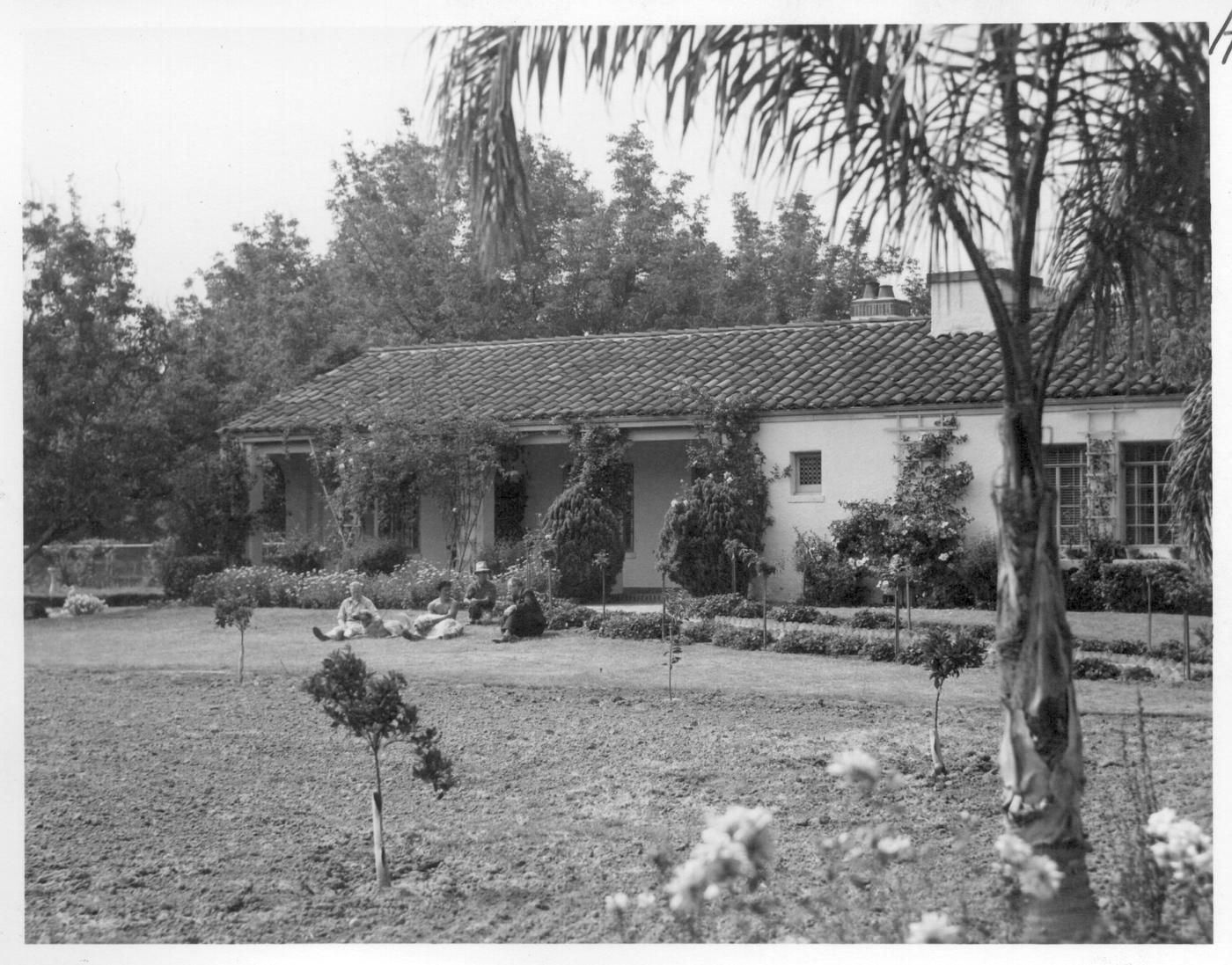
“This is the main dwelling on the beautiful walnut grove estate of Dr. Sidney Walker, 17367 Parthenia Street, Northridge, in the San Fernando Valley.

Dr. Walker has employed Yokichi Oyakawa, his son, Evan, and his daughter, Lily, who left Heart Mountain [internment camp] the end of February. Walker is a retired eye surgeon from Chicago and a veteran of World War I.

He is a real champion of the Japanese Americans and will go to bat with anybody and everybody who would deny evacuees the right to return to their homes. He is enthusiastic in his praise of the Oyakawas and allows them practically all the privileges of his estate even to the use of his beautiful swimming pool. Oyakawa is head gardener and his son, Evan, helps when not attending classes at UCLA, where he is a student. The daughter, Lily, holds the position of maid. The family occupies their own modern home just a few yards from that of the doctor and his wife. — Photographer: Mace, Charles E. — Northridge, California. 6/2/45

Contributing Institution:

UC Berkeley, Bancroft Library

Los Angeles in the 1950s


LINK 

Modernity and Kitsch.


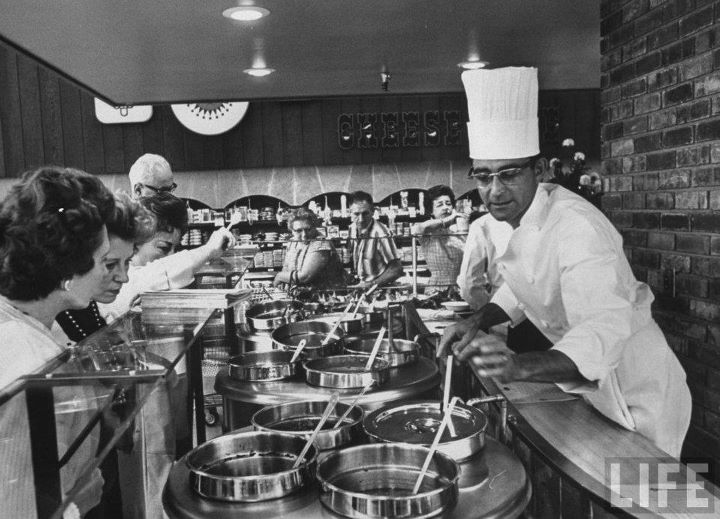
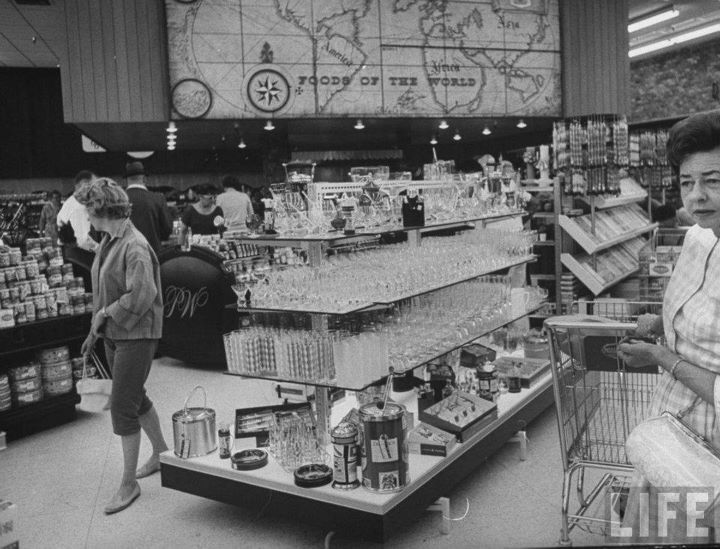
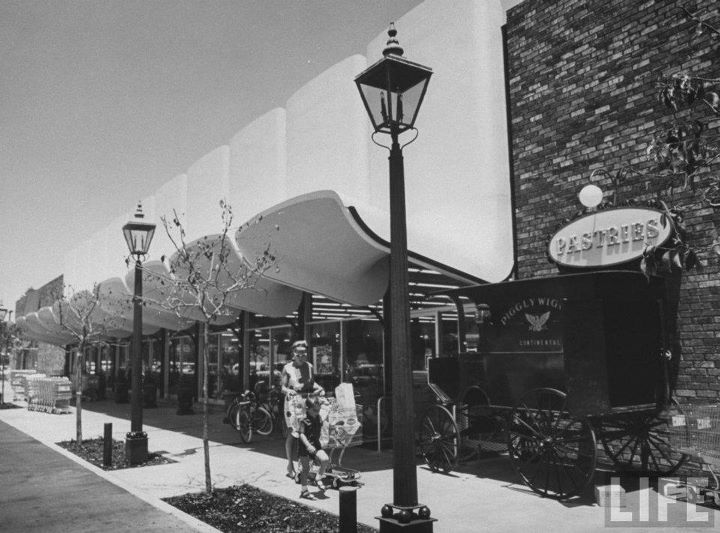
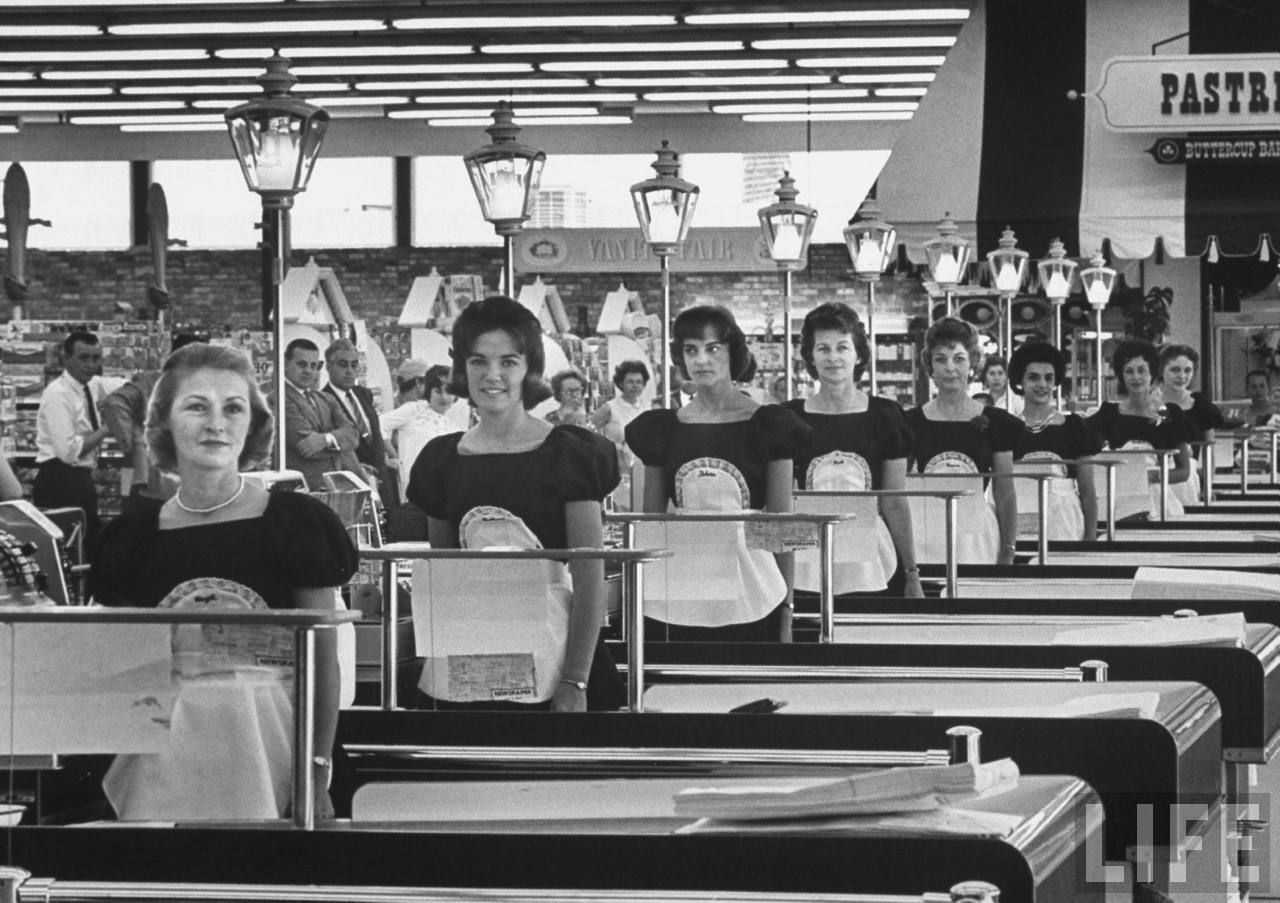
I recently came across these 50-year-old photographs by Allan Grant that were published in the November 23, 1962 Life Magazine.

They show a brand new supermarket, Piggly Wiggly,that had recently opened at 15821 Ventura Blvd. in Encino. The structure is now gone, replaced by a long, white office building.

What surprised me most was seeing the blend of modernity and kitsch, an architectural and marketing precursor to present day Gelson’s.

There is a view of the exterior, decorative concrete canopies, very 1962. But in front are also 19th Century street lamps, an old wagon, and even trees.

Signs are in decorative fonts.

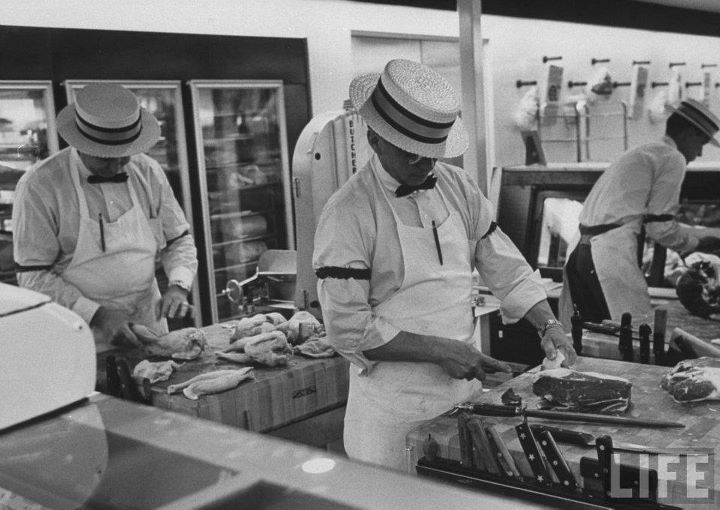
Inside there is the astonishing sight of butchers in straw hats and bow ties; in another photo is a large sign: “Foods of the World”; and in one image… diagonally stacked shelves of barware: highball, martini and wine glasses, ice buckets, long tapered candles and ash-trays.

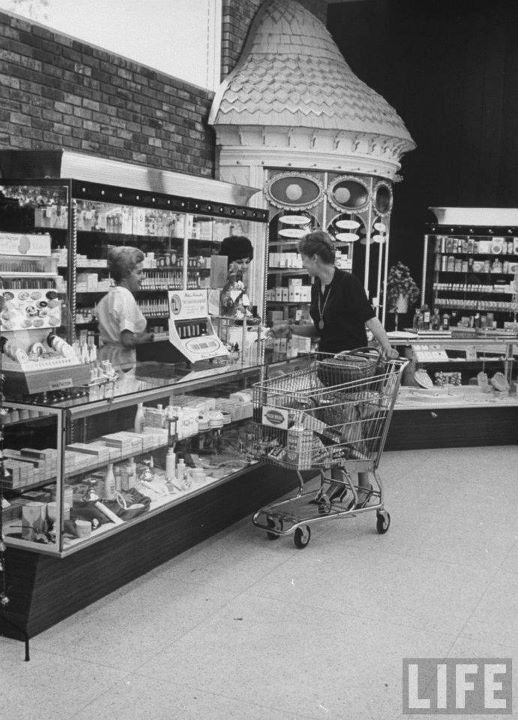
Female clerks, done up in beehive hairdos and made up faces, sell cosmetics beside a Victorian wood turret front display case. Lady shoppers (were there any other kind?) could stop off here, pick up a bottle of Shalimar and run home to take a dip in the backyard pool, then broil some lamb chops, and have the table set before Leonard or Irv pulled up in the driveway.

And behind a glass counter, a behatted chef shows off pots of soups to women in pearls and old retired gentlemen peering over.

A lineup of cashiers, stand in formation under the watchful eyes of their male bosses, next to carriage lamp lit checkout lanes. The girls wear puffy shouldered, black and white dresses with their names embroidered on lace.

These photos are fine testament that they had perfected, half a century ago, the California ideal, blending kitsch fantasy with cold, hard business acumen.

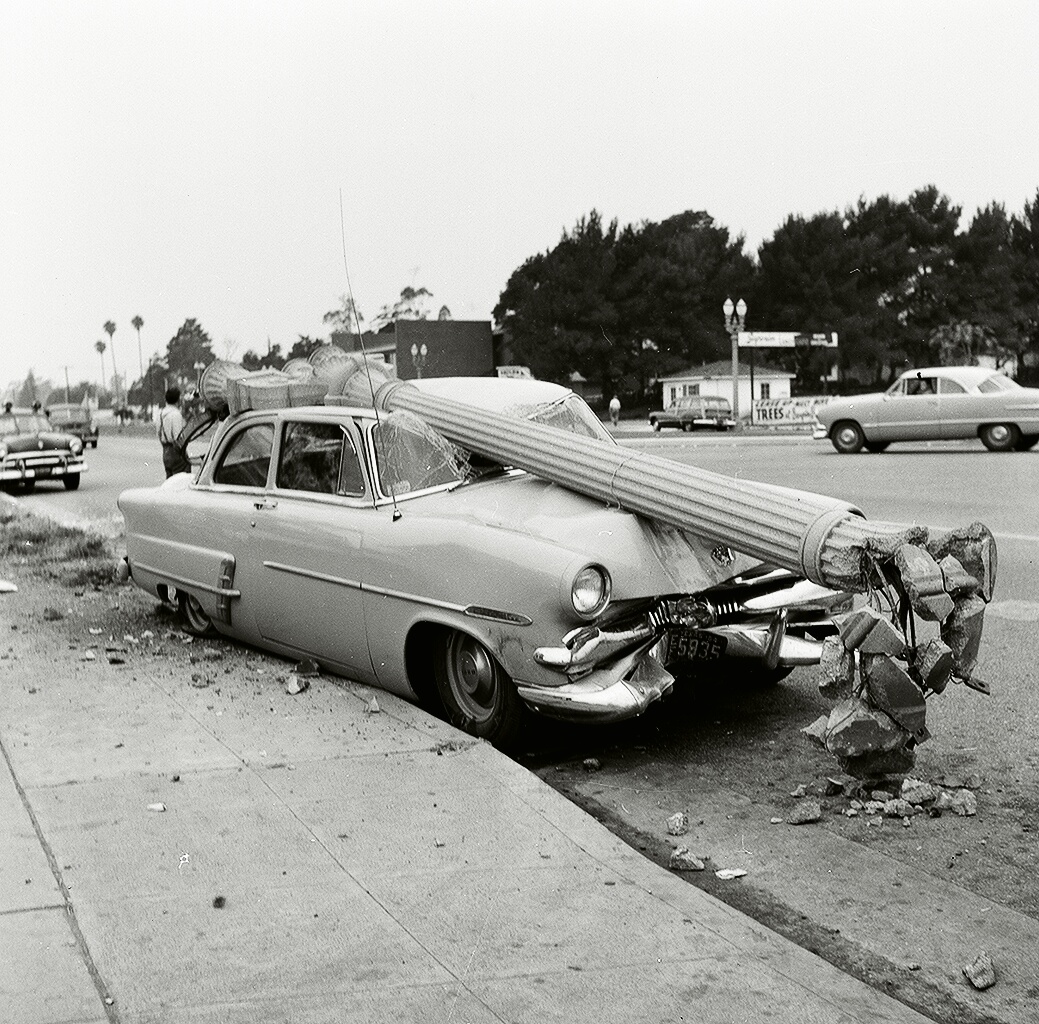
1950s Traffic Accident on San Vicente, Los Angeles, CA.


From the whimsical collection of Shorpy, I found this 1950s photograph of a car, on San Vicente, which hit a light pole.

Most likely, the driver was not texting while driving.

1956: Construction of the San Diego Freeway


This slideshow requires JavaScript.

In 2011, we are living amidst a big construction project on the San Diego Freeway which will add new lanes and which has also torn up vast sections of Westwood near Wilshire and Sunset along Sepulveda.

The USC Digital Archives has photographs of the 1956 beginnings of the San Diego Freeway, when bulldozers and explosives tore through the Sepulveda Pass and made it possible to eventually travel the nine miles from Encino to Westwood in less than two hours.