Often I, as do others, think of Van Nuys as some sort of dystopian jungle, full of illegal and unsavory human behavior.
It is an impression easily made after driving along the wide ugly boulevards packed with stucco slums, billboards, wooden power lines, discarded couches, and mini-malls. Cars speed through red lights. Whores walk smiling down Sepulveda. Undocumented workers hang out as if they were breaking no law.
But to walk down side streets, with curiosity and a camera, as I did a few weeks ago, reveals neighborhoods that still have ethical moorings and architectural promise.
Van Nuys, CA.
One such area is just east of Van Nuys Boulevard and north of Victory. Along Hamlin and Gilmore are a number of low-slung buildings, built 50, 60, 70 or more years ago, all within walking distance of churches, schools, drug stores and family run restaurants.
There is grace, integrity, artistry, and civility in places where the people of Van Nuys worshipped , learned math, had their teeth cleaned, or once filled a prescription.
But something massive and dysfunctional came along, a force of economics, social change and governmental malfeasance. It utterly destroyed the normality of Van Nuys, distorting cordial and friendly interaction, the bedrock of any community.
We live now in a shattered and terrifying environment of anonymity and aggressiveness where a knock on the front door, a strange car parked in front of our house, and the sirens in the distance unnerve and disturb our private safety and public freedom.
Van Nuys will be 100 years old in 2011. But there is no sense of civic celebration. We have no town square to gather in. No “oldest house in Van Nuys” to bear witness. The activity here that engages the largest amount of people at one time is being awakened at night by the LAPD helicopters.
Who will marshal brain and bulldozer, money and manpower, power and politic to transform this area into something better? One man named Van Nuys did more a century ago than thousands of us do today.
Walk along the old streets of Van Nuys, as I did a few weeks ago, and see the architectural ghosts of our dearly departed community.
Note: Photographer Paul Jasmin (1935-2025) died on May 21, 2025 in his Los Angeles home. I wrote an essay related to his work in 2010. Here it is:
There is a world of old houses on winding streets that wends its way behind Franklin up in Hollywood. I was there yesterday to assist a photographer in styling a shoot with a male model.
I am a photographer myself, but have worked in the fashion industry and love clothing. So my photographer friend and I went shopping on Saturday, down at the Beverly Center, and pulled together handsome wool sweaters, tight plaid pants, exquisitely tailored dress shirts, artful caps, and patterned scarves.
The location was his home: a 1925 Spanish style house with high ceilings, wood beams, and a warren of rooms, balconies, green tiled bathroom; art deco, sunlit and ornate, overlooking the south-facing brightness of Hollywood.
The photographer possessed a fine and expensive array of lights, various strobes, reflectors, electrical voltage devices, screens, flashes, lenses. Expensive illumination I could only dream of.
Around 10am, a young, tall, lean, polite blond man with close-cropped hair showed up. He reminded me of Brad Pitt. He had a slight twang. I asked him where he was from and he said, “Springfield, MO, Sir.” And it turned out he was from Pitt’s same town. “My mom and Brad went to high school together,” he said.
The model talked, as many do, about his busy life.
Suddenly, he was actor, not just a model, and getting parts in various shows. No college for him. He just got in his car and drove to LA and stuff started happenin’. He had a girl, also a model, and she was makin’ lots of money. Good stuff.
We two men, photographer and stylist: bruised, jaded, wiser, middle-aged; heard it from him and hoped it was true. The trajectory of success, the dream of making it, the hope of security, the lure of fame, the imagined life ahead: anything can happen at 23.
I had laid out the various looks and set about getting him into the clothes.
There is only one moment in our lives when we are young, and we do our best to rush through it, blithely unaware and carelessly ignorant of its temporal nature.
So with my admiration and envy, the tall, thin, agile man with the smooth face, metal dog tag, shaved chest and icy blue eyes, slipped into a spread-collared Tattersall shirt, wool tie, blue cardigan, driving cap, brown cords. And then he stepped in front of the camera, while 100 flashes of strobe and lens captured his every microsecond of movement.
He feigned facial expressions of aggression, longing, innocence, passion, anger. He danced around a white-walled backdrop: arms flaying, knees bending, chest puffing.
What followed were his transformations into Klub Kid, English School Boy, American Prep Student, and something that looked like gay Berlin with black combat boots and a high-waisted, tummy tucking, black spandex underwear get-up.
A few hours later, I left the house.
It was a Sunday: cool, clear, crisp, with rain-washed air.
High, white, puffy cumulus clouds floated over red-tiled roofs and magenta tinted Bougainvillea.
I had been working in a Bruce Weber/Paul Jasmin photographic fantasy inside the house. And now I was living one outside. (contd.)
Photograph by Paul JasminPhotos by Paul JasminPhoto by Paul Jasmin
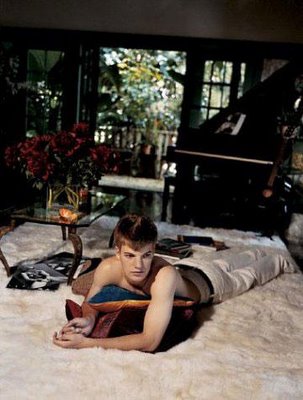
Years ago, Paul Jasmin shot some gorgeous photos inside the home of designer Kevin Haley. As I remember it, the house was somewhere in this same neighborhood. A book, Lost Angels, showed a young man on a white rug in the Haley home. There were other photographs in a room of Chinese painted wallpaper, and romanticized young men and women in front of bamboo gardens.
And I had wanted, so badly, to get inside that house, the same way I had imagined that walking up to 1164 Morning Glory Circle might lead me into the Darrin Stephen’s home and into Samantha’s kitchen.
But those are fantasies, illusions– idiotic tricks—which our media and movie saturated minds play on visitors and residents of Los Angeles.
I think I had once sent a card, the kind with a postage stamp, delivered by a postman to a mailbox, addressed to the famed designer on Pinehurst Road. I wrote him that I admired his work. I had hoped to be invited inside. But he never responded.
“Open House, Sunday 1-4” read the sign at the bottom of Pinehurst Road.
Could this be the Haley House? I walked up the road.
And like some wonderful moment from “Miracle on 34th Street”, the one where Chris Kringle left his cane inside a Cape Cod house destined to be the future home of a young Natalie Wood, the cane was left at my door and the Haley House was for sale ($999,000), and the front gate was open.
I walked up the stairs. On my left, the same shaded garden with the bamboo.
There were two levels to the house, and on the lower level, rentable apartments with old-fashioned casement windows, 1940 stoves, painted in bright colors. I walked in and said, “Hello” but nobody answered.
And then I realized that there was a second floor, and up I walked, and entered into the house where a realtor sat, glumly, looking at his laptop and muttering a tired hello to someone who didn’t matter to him.
But I didn’t care. Because there, in front of me, was the dining room with turquoise painted Chinese wallpaper and the blue woodwork. Just like the photograph! The white, fluffy area rug sat in the middle of the living room, just as it had in Paul Jasmin’s picture, absent the shirtless young man.
On the second floor: exotically painted and intriguingly wallpapered bedrooms, in deep, dark, saturated colors set off with various Oriental lamps, black and white photographs and casually strewn pillows on tufted sofas.
I had, maddeningly, left my own camera in the trunk of my car, not knowing that I would soon walk inside a photograph and tour a fantasy that existed for me only inside a book.
It was only one Sunday in Los Angeles, somewhere in Hollywood, up in the hills, but I saw enough beauty yesterday to keep me awake, long into the night.
Pulling into my favorite falafel restaurant’s parking lot in Studio City today, I noticed that a corner store had been converted in a medical marijuana dispensary.
The storefront had frosted glass windows, a white cross inside a green square sign and a reassuring slogan: “healing the community since 1996.”
With every new dispensary and with every sign that marijuana is being normalized I feel sad.
I voted for the recently defeated Proposition 19, which would have made some possession of marijuana legal and under state jurisdiction. I did it because prosecution and enforcement of marijuana is truly a waste of time and money.
But Marijuana is still a grand waster of humans, nonetheless.
I grew up in 1970s, when smoking pot was a badge of coolness for many a non-student, non-jock. Around 8th Grade, many unpopular, un-athletic, un-achieving kids gathered in friend’s basements or along the railroad tracks and smoked reefer. Perhaps that is a grand stereotype, but smoking pot was the anti-hero way of gaining admission to a bad club.
Many of my friends smoked, and I occasionally got high. And in those days of high metabolism when I could eat anything and still have a six-pack, the brownies, potato chips, ice cream and Oreos were consumed guiltlessly and eaten ravenously.
One winter break, I flew from NJ to Southern California and visited a friend who kept a bong in his bedroom. While his parents watched TV out in the Living Room, we took hits inside his room.
Suddenly, I felt like I was out of my body. My heartbeat shot up. My head was flush. I was dizzy and I was terrified. I walked out of the bedroom and into the other room and told his parents what we had been doing. I collapsed onto the couch and started screaming and demanded they call the paramedics.
The next day, I recovered and slept. But for years afterward, I had a visceral fear and hatred of pot. I thought that the drug had caused my panic attack, but my panic actually was induced by my own mind.
Marijuana doesn’t endanger lives. But it degrades them. Daily smoking erases the sharp outlines of a personality and softens and stupefies language, laughter and alertness. There is a dull and amorphous sound in a pot smoker’s voice after he is high. The half-open eyes, the dragging feet, the slouching posture come as naturally to a pothead as broad shoulders do to gymnasts.
And pot smokers ignore how the harsh smoke might poison lungs, or contribute to lung cancer. They deny the bad and the ill effects because their pro-pot ideology demands a religious adherence to pro-drug dogma. Yet, we need to be on honest terms with pot because it is here to stay.
The worst part of the medicalization of marijuana is the hypocrisy of pretending that the clinics are a type of pharmacy. 98% of the people who go there are not sick. They want to get high. So why pretend that a doctor needs to write a prescription for it? Why continue with the quackery that marijuana is medical? It is a recreational substance that coincidentally helps some sick people feel better.
The sad feeling that comes over me when I see a marijuana store is the triumph of a lie. Why can’t we just use it and admit it and just be done with it?
We don’t need smoke and mirrors. We just need honesty.
A statewide bill, authored by Assemblywoman Julia Brownley, D-Santa Monica, could make California the first state in the US to ban plastic bags in grocery, drug and many convenience stores.
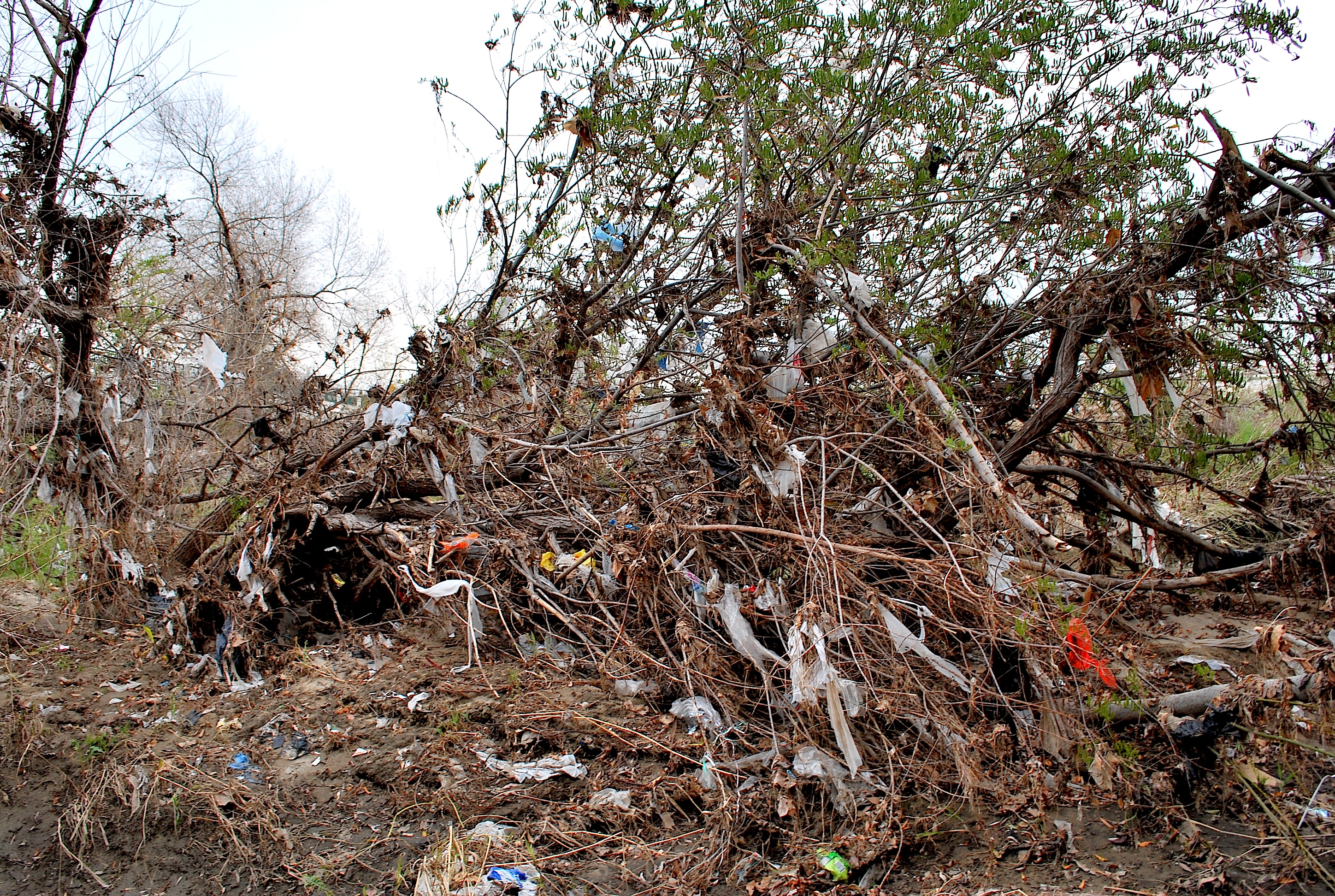
On this blog, back in February, I took a trip over to Woodley Park and walked along the LA River where I found a sea of plastic bags hanging on trees, floating along the river bank, and covering the ground.
One of the most prominent bag labels belonged to the Ranch Market, an Asian supermarket with a local store on Sepulveda and Victory. On many shopping trips there, I have been shocked at the amount of plastic bags that are used by the store. If a shopper buys six items, the store will often use six bags to package the goods.
Of course, a ban on plastic bags is opposed by oil companies, Republicans and anybody connected to the petroleum and plastic industries. In the San Jose Mercury News, this quote: “The governor has signaled he’s interested in signing a bill like this,” said Tim Shestek of the American Chemistry Council, a coalition of plastic manufacturers and corporations including Chevron, Dow and ExxonMobil. “So our focus right now is on the Senate and hoping common sense prevails and the bill does not reach the governor.”
The council estimates the ban will threaten 1,000 state manufacturing jobs due to decreased demand. And Shestek said grocery costs will grow “because people are going to have to pay for grocery bags they currently receive for free.”
The council’s ad campaign — dubbed “Stop the Bag Police!” — features a baton-wielding officer and warns the bill “is equivalent to an estimated $1 billion tax increase.””
But any common sense person who sees the environmental damage of plastic bags, would understand that there must be a better and more environmentally safe way to wrap a carton of eggs, a can of deodorant, and a pound of ground beef.

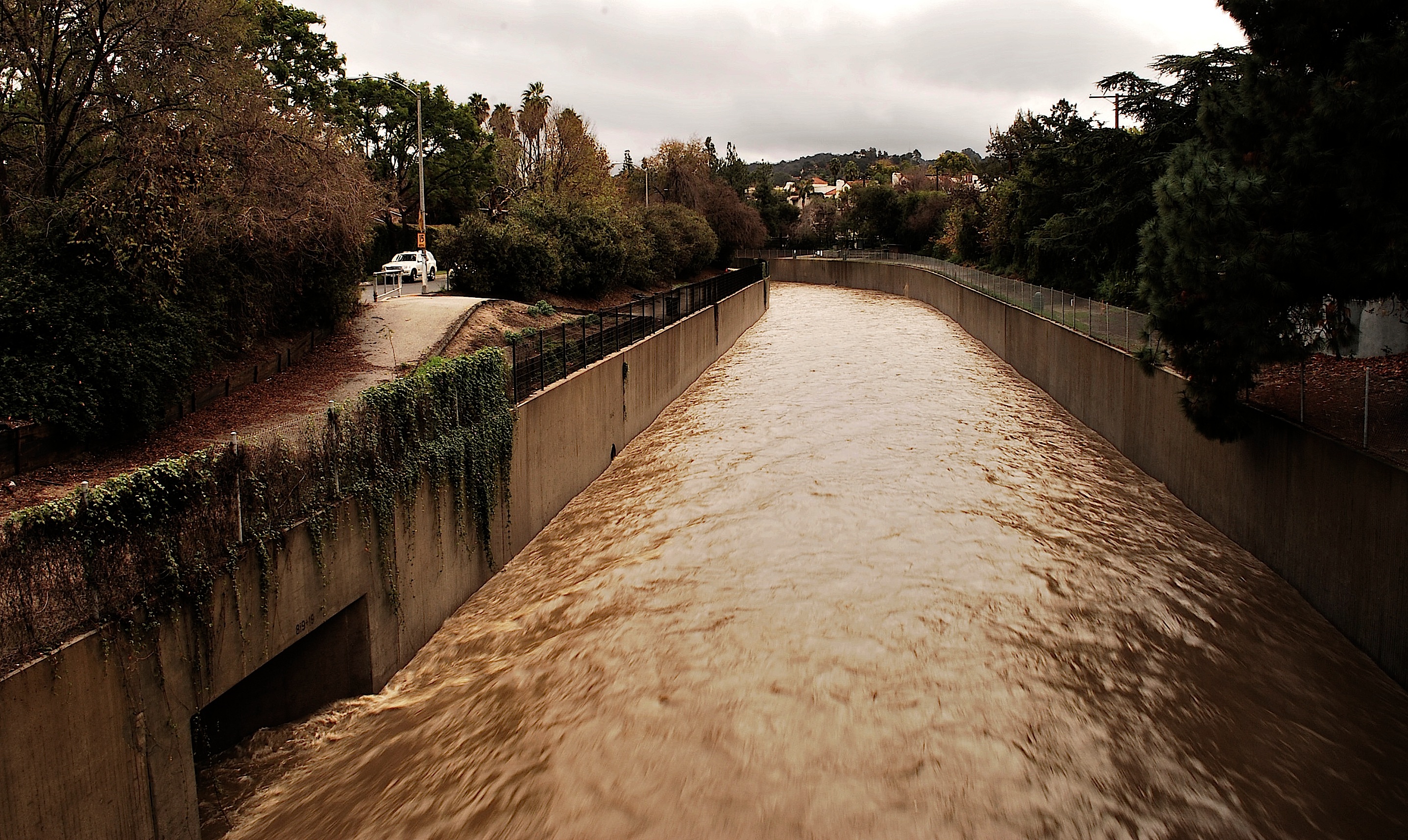
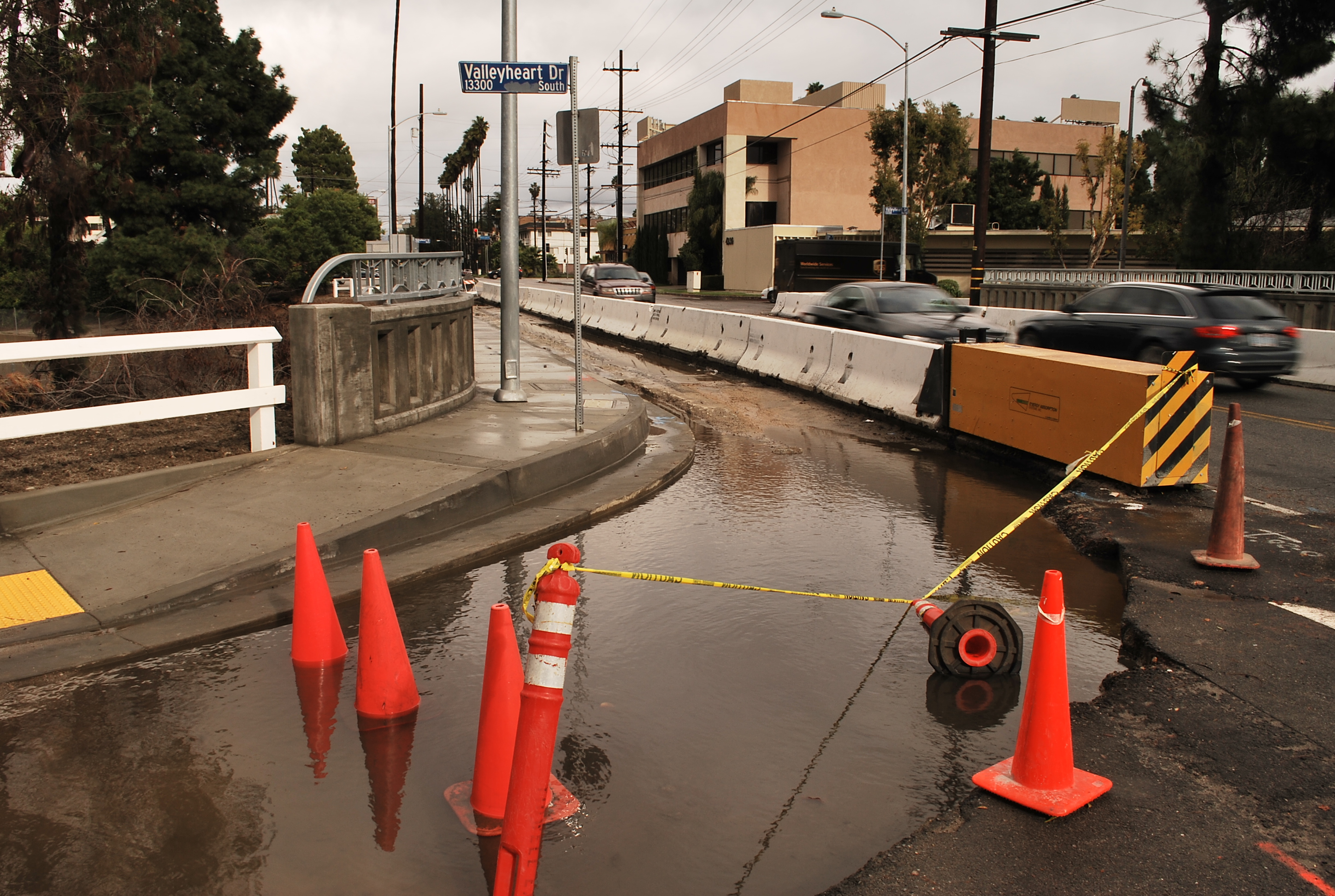
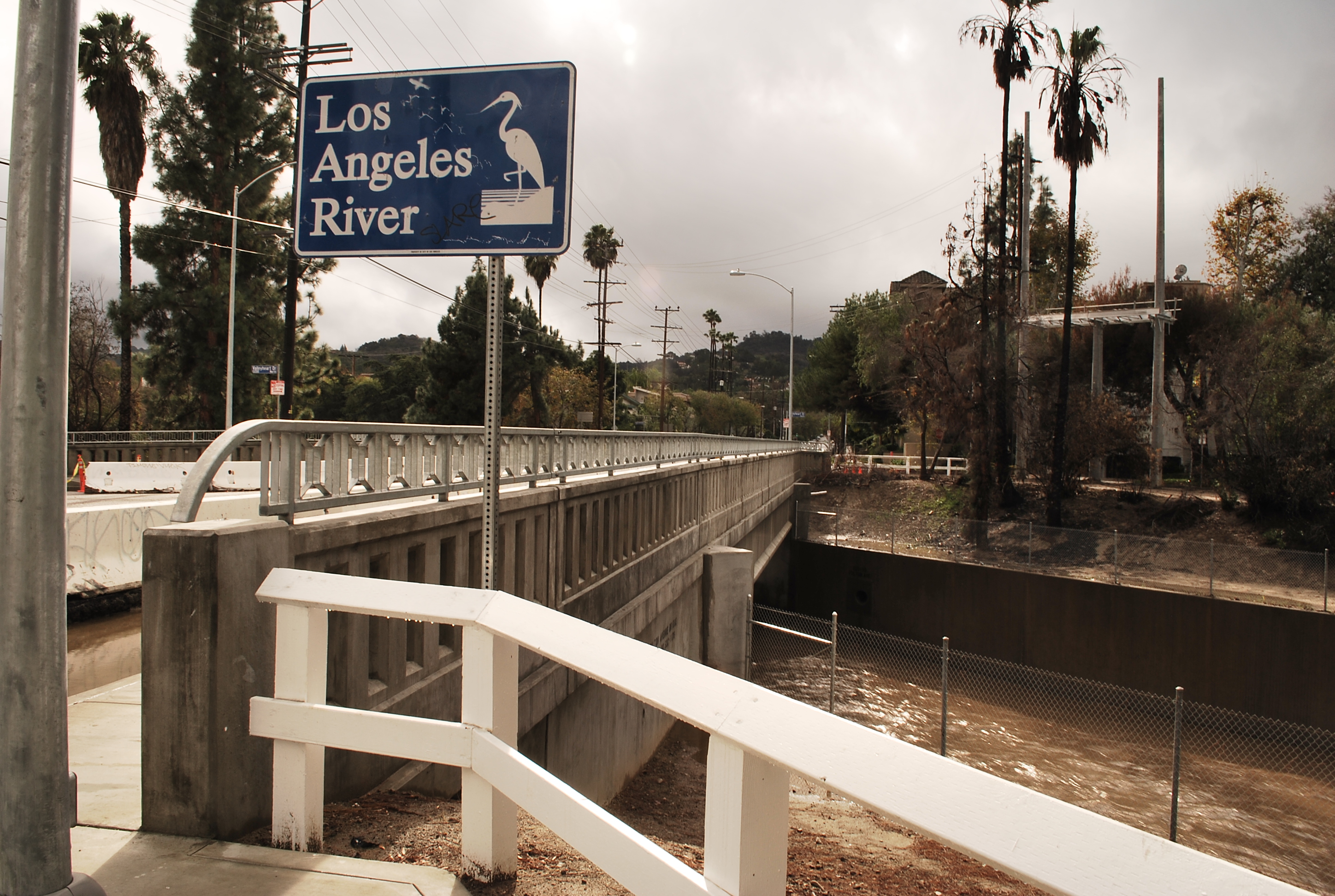







 Here in Van Nuys
You must be logged in to post a comment.