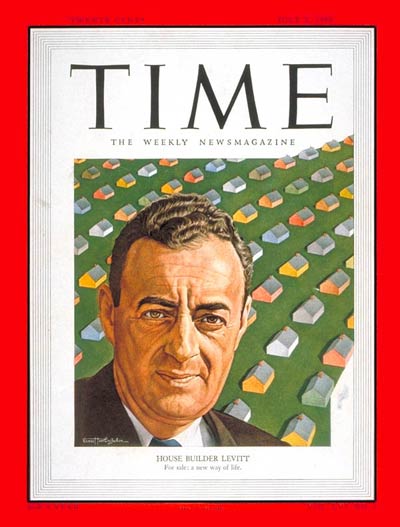
Housing Values May Not Increase in Coming Years.


Builder William J. Levitt/Time Magazine/ July 3, 1950

The NY Times speculates that speculation in housing today may not produce future gains, such as those enjoyed by our parents and ourselves over the last 40 years.

In Los Angeles, housing is extremely overpriced in a few areas of the city, mostly near the beach. And there are factors that will keep some areas very affordable for many years, undesirable facts that include: bad schools, unsafe streets, illegal immigration, hot weather, bad air and sparse public transportation.

If the economy was healthy, and unemployment was lower (it is now 12.5%, third highest in the US), the housing market might be OK.

But real estate reflects an unethical past. Loans were handed out regardless of income. Lying was built into the system. A fake, subsidized increase in values, brought on by mortgage-backed securities, produced a bubble.

And now we are living in the morning after.

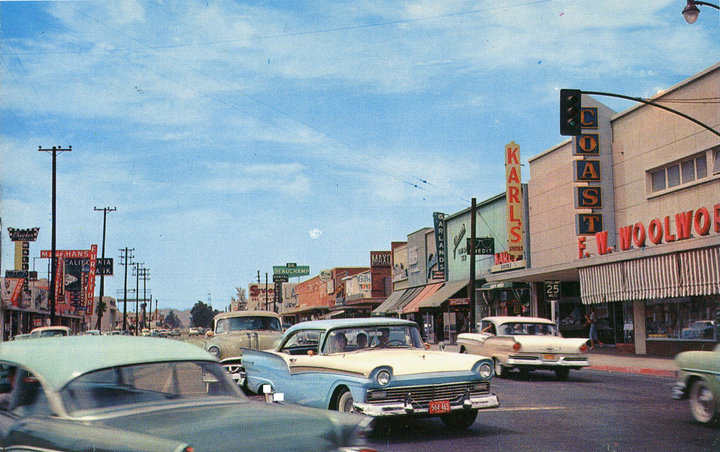
Reseda and Sherman Way/Late 1950s.


Reseda and Sherman Way/Late 1950s/ Photo Credit: Valley Relics on FB

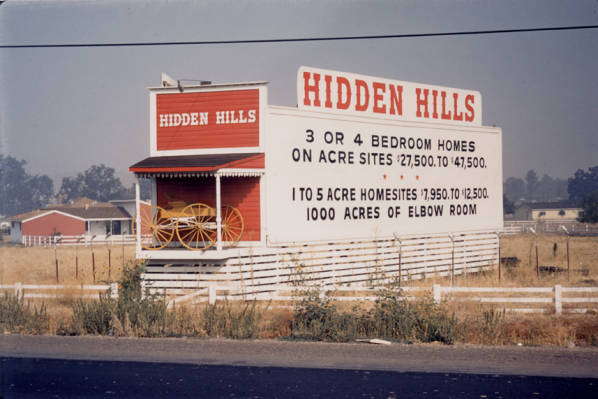
Hidden Hills: 1957.


Hidden Hills, CA/1957

From the fantastic archives of CSUN’s Oviatt Library Digital Archives are two color photographs, by Bob Copsey, of Hidden Hills, under development, in 1957.

The exclusive horse and ranch-oriented neighborhood, west of Woodland Hills, was offering home sites from $7950 to $12,500 and 3-4 bedroom homes from $27,500-$47,500.

Today, homes in this gated area have sold for $1.6-$5.7 millions.

Adjusted for inflation, $30,000 in 1957 would be worth $226,000 today.

$226,000 is probably what some homeowners in Hidden Hills have spent to remodel their kitchen.

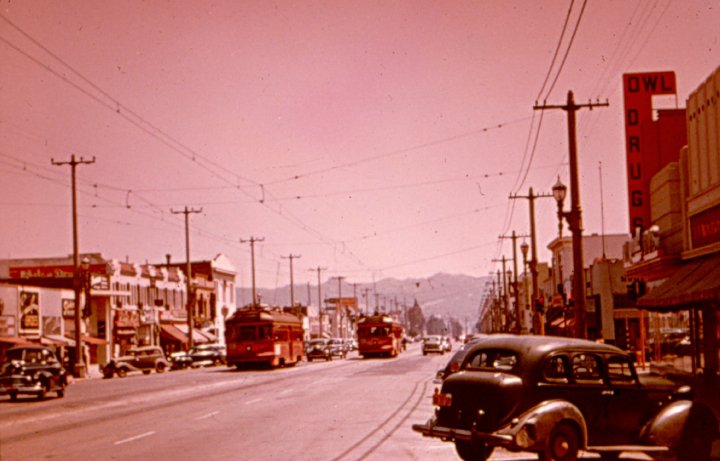
Van Nuys Bl. Circa 1940


Van Nuys Blvd. Circa 1940 (courtesy Valley Relics)

Valley Relics posted this circa 1940 color photograph of Van Nuys Blvd. facing south (towards Sherman Oaks) near Victory Blvd.

Two things in the photo stand out that are different from today: the streetcar running up the center of the street and the diagonally parked cars.

For many years, people have spoken about the loss of the streetcar as a viable way of transportation around the Southland.  Many think that the sprawl of this city makes streetcars irrelevant and automobiles the only solution.

But streetcars traversed the sprawl of Los Angeles from the beginning, going across hundreds of miles, even when much of the land was undeveloped. They brought the Pasadenan to Venice and transported the Hollywoodian to Chatsworth.  They were above ground and had open windows.   No city of millions of people can be without a viable public transport. And cars–polluting, crowding, noisy, inefficient, expensive, deathly–are the most self-centered and self-destructive machines ever put inside a city. Los Angeles has been demonstrably more dysfunctional since the Red Car tracks were torn up.

Diagonal parking is a way of making shopping more convenient and serves to slow down traffic and discourage speeding. While current day Councilman Cardenas proposes raising metered parking rates in the midst of the Great Recession, the old photo above shows a thriving and much more appealing Van Nuys, with free diagonal parking,  than exists today.

Betty White Lived Here: 1930.


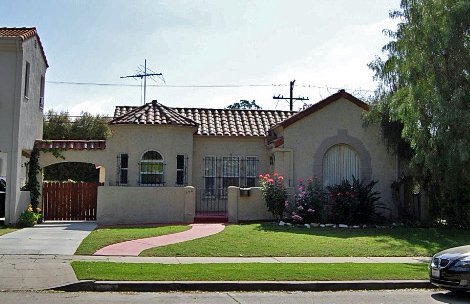
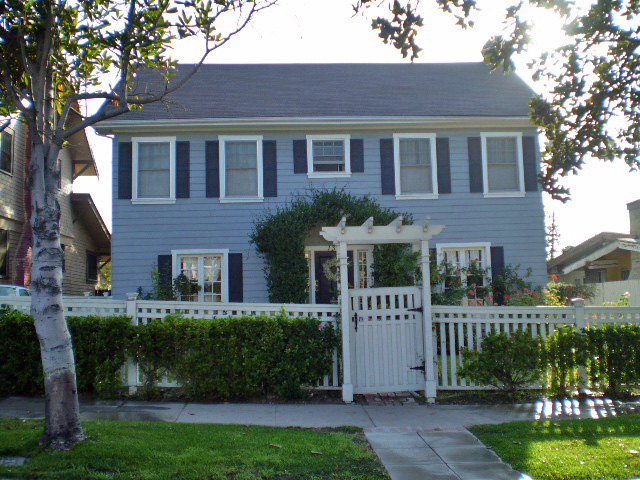
454 N. Harper Ave.

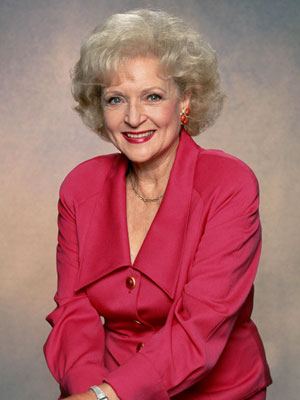
In 1930, 8-year-old Betty White lived at 454 N. Harper Ave. in Los Angeles.

According to the fascinating book, “Celebrities in the 1930 Census” (author: Allen R. Ellenberger), Ms. White lived in the $10,000 home with her parents:

  1. Horace L. White (head), 36 / Michigan / Salesman / Electrical.
  2. Tess White (wife), 30 / Illinois / None.
1146 N. Hudson

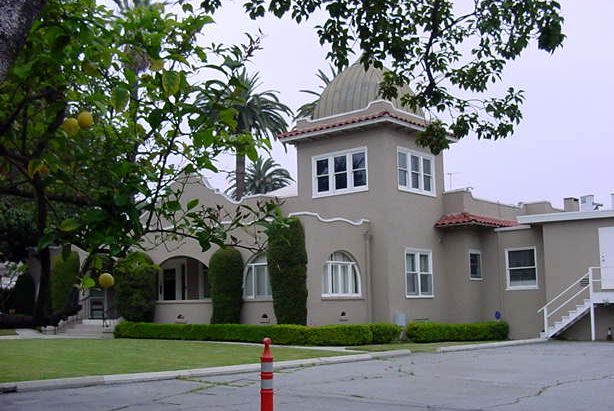
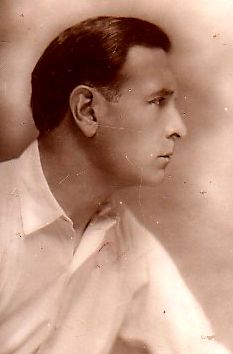
Bela Lugosi (“Dracula”) rented a $40 a month home at 1146 Hudson Ave.

138 N. Wilton Place
Carole Lombard

Carole Peters (later Lombard),21, actress, comedienne and eventually Clark Gable’s girlfriend, lived at a $100 a month home at 138 N. Wilton Place. with her mother and two older brothers.

1784 N. Orange Dr.
Conway Tearle

And famed actor, Conway Tearle, 42, who was born as Frederick Levy, owned a $37,500 home at 1784 N. Orange Drive which he shared with:

  1. Adele Tearle [Adele Rowland] (wife), 39 / District of Columbia / None.
  2. Abe Rowland (father-in-law), 73 / Pennsylvania / None.
  3. Joe Muchizuki (servant), 45 / Japan (1896) / Cook / Private family.
  4. Sakayu Muchizuki (servant), 42 / Japan (1896) / General maid / Private family.
  5. Henry C. F. Hackbush (lodger, Rent, $14),  29 / divorced / Civil engineer / Construction.

More Hollywood history can be found at the blog, Hollywoodland by Allen Ellenberger.

A Remnant of Ruralism.


This slideshow requires JavaScript.

The Santa Monica Mountains cross the southern part of the Valley. They are often green, hydrated by Pacific mists, and shielded from sunlight along their northern flank.

But up in Chatsworth, one can still occasionally find a brown, rocky, and barren land where horses, ranches, hay bales, and fences predominate. Here, far from the ocean, there is hardly any fog, and the south-facing mountains bake year round in blistering sun.

Near Canoga Avenue and Chatsworth Street, there is a surviving remnant of equine ruralism. I drove here, quite accidentally, on a search for open land beyond the last cul-de-sac in Los Angeles.

In mid-morning heat, pushing 98 degrees, an old man was walking his white dog near a working horse stable. A Metrolink train passed by. In the distance were those dry, mysterious mountains.

Along Canoga, behind a row of olive trees, stood some old, tired wood-frame shacks; weather-beaten, paint-peeling, weed-covered. Only a satellite dish atop a roof gave some clue of present day life.