Why You Taking Picture?


A housing and planning blog I read, Granola Shotgun, recently had a post about how the author is hassled for taking photos in public for such elements as parking lots, buildings, encampments or anything structural connected to a human.

In the past 15 years, since I started this blog, I have had similar experiences of being confronted when diligently just recording any exterior anywhere because it captured my imagination.

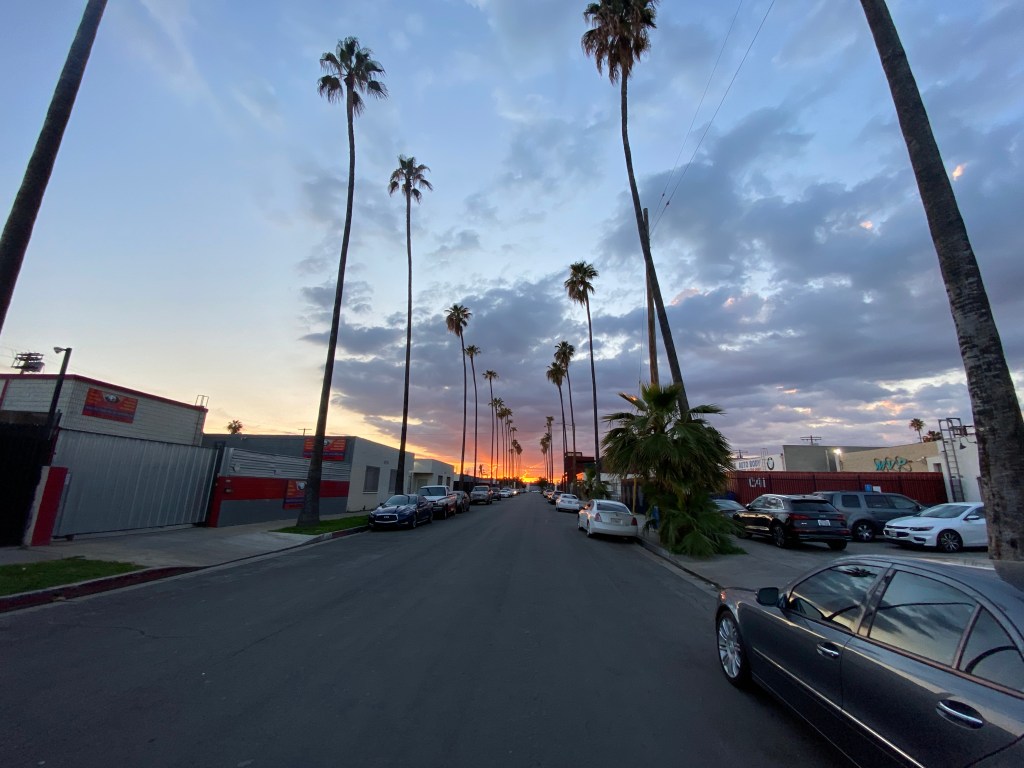
As recently as March 2020, on the last night I went out to drink at MacLeod Ale, I left the brewery. I was with a friend, who also had a camera. The sun was setting. The light was golden and glorious. I had my Fuji XE3. While walking on Calvert towards Cedros, I started photographing many things that the light was hitting, including the exterior of an auto body shop. 

Several tough, menacing looking men were conversing across from the shop. One yelled at me, “Hey! Why you taking picture?” he said.

I had a few beers so I answered, “Because I want to. I’m not on private property and the sun looks beautiful on that building.”

“What building? What sun? What you talking about?” he answered.

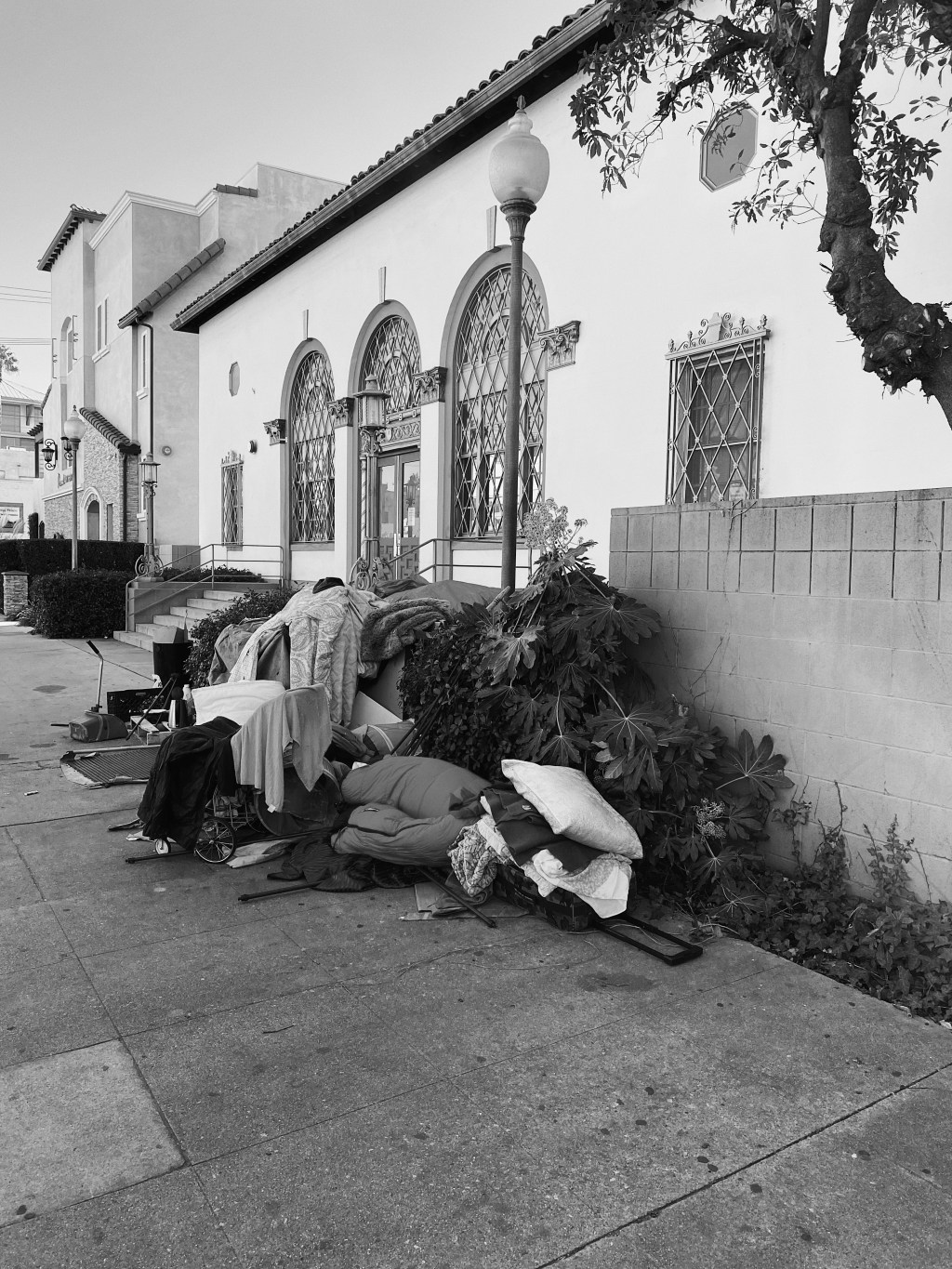
We walked over to Bessemer St. through the trash of a block long homeless encampment, (which I wouldn’t dare shoot) which once would have been illegal and immoral, but is now normal. People living, shitting, drinking, sleeping on the street. By the tens of thousands. OK in Garbageciti.

On Bessemer, as we got into the car, a tinted window Mercedes SUV drove by slowly, eyeing us, letting us know we were under his surveillance. Nothing happened, but we drove away chilled at the implicit threat. 

I write and photograph about the urban condition of my neighborhood. I do it with the intent of telling the truth, not to promote my product or sell a political dogma. A billboard on Kester at the golden hour is just a billboard.

In 2006, I was photographing the exterior of the historic Valley Municipal Building on a Monday morning. An older woman came out, not a security guard, just an older woman, and she screamed, “What are you doing! Why are you shooting this building!” She had a car, and she drove up to me as I walked along Sylvan St. asking again what I was doing. 

 “There are people who want to harm this country!” she said through her window.

Like her. Opponents of constitutionally protected free speech.

Photography is politicized now, like everything else. A public photo in Los Angeles is assumed to be:

  1. ICE finding undocumented people.
  2. TMZ trailing a celebrity.
  3. Location scouting for a porn.
  4. A developer intent on building something.
  5. A Karen uncovering a violation.

Will a photograph ever just be a photograph again? Could Robert Doisneau or Henri-Cartier Bresson shoot children on the street today? Or would they be confronted by parents or teachers or strangers asking what the hell they were doing?

How did it come to be that a joyful, celebratory, observant act, public photography, become so reviled and feared? We live in a time when every person has a camera on their phone, so anyone can really take a photo anywhere at any time, yet the deliberate, artistic, considered flaneur, strolling through the city after a few glasses of wine, can be confronted if he carries a traditional camera and aims it at strangers.

Then there is the aspect of shame. We have no public shame anymore. People dress, eat and behave in ways that would largely be considered shameful by 1945 or 1970 standards.  So shame is employed as a tool by the weak, sometimes used against others who are weak, but often to gather like minded bullies together to defeat free-thinkers.

These examples of 21st C. public dress and obscene signs would have probably been against law or custom 60 years ago. Just as today it would be unthinkable for grown man with a camera going up to a children crossing the street and photographing them, as Henri Cartier Bresson did in Paris 80 years ago.

The public no longer knows what is properly public and what is not.

When private people prohibit public photography, they often think they are exercising the rule of law. Security guards fall into this category. Yet they stand on weak ground. No building, other than a military installation, has the right to not be photographed.

And we live in time of political intention. Every act is political. One can identify with a political party by wearing or not wearing a virus guarding mask, or drinking soda with a plastic straw, living in a gated McMansion, expressing sympathy for the police, or wearing a red baseball cap. All can get you harmed or doxxed.

At the 2017 Woman’s Rights March, I went out with several older neighbors and of course I had my camera. It was a historic moment. And I photographed a crowd near Universal City. Which provoked a young guy, masked in bandana, to walk up and demand to know why I was photographing.

There is nothing illegal about photographing people in publicOr buildings. Even outside a schoolyard, even families picnicking in the park, even photographing a parking lot in a poor area of Van Nuys. These are all legal and protected by law.

But no law protects against widespread public fear of freedom of speech. When enough mobs band together to ban something you can be sure it will be. Photography by photographer is on the list of once free rights that face censoring, cancelling and expulsion. 

Progress Report.


On a brief walk, after dropping off a package at the UPS on Van Nuys Bl. I walked west on Sylvan, south on Vesper, ending this set of photos at the new fire station on Oxnard.

There is a small but significant amount of new apartments going up. They are pleasant additions to the neighborhood and are all in the currently popular white style, blindingly white, with dark windows.  They add some upgraded cleanliness to an area which has long been the sad kingdom of slumlords. 

On Sylvan, the former post office, built during the 1930s by the WPA, in a classical style, was later a home for Children of the Night, a non-profit created to fight childhood sexual exploitation. They have since moved out, so the sidewalk outside the gracious building is now a trash camp.

The new fire station (2019) is a great asset for the neighborhood and has significant architectural beauty that recalls the 1930s Streamline Era, and is also conversant with the first fire station on Sylvan (1939) as well as the former DWP building on Aetna and Vesper (1938) just behind the new edifice.

Just to the east of the fire station, Aetna is closed, with a high fence, between Vesper and Van Nuys Boulevard, most likely due to the trash campers who took over the area. They are banished to fly somewhere else, probably to the bird sanctuary in Woodley Park.

Councilwoman Nury Martinez has jurisdiction over this area, and her office is nearby in the Valley Municipal Building. She is now the head of the city council, and the first Latina to hold that position in city history.

We can applaud the justice of diversity, the idea that anyone from any background can ascend the ladder of politics and achieve leadership.

We cannot applaud the failures of Ms. Martinez, and her predecessor Tony Cardenas (who is now a congressman in Washington, DC) for they have had over 20 combined years of allowing Van Nuys to fall into utter disintegration, filth, homelessness and blight. 

Their ethnicity has pushed them up into the spotlight even as their academic records in elected office should be graded D- or F.

The idea that one’s identity deserves praise rather than one’s achievements is a new chapter in our American conversation. If Van Nuys should fall further into the gutter, which seems unimaginable, we will think of the paucity of Ms. Martinez’s and Mr. Cardenas’ accomplishments and recall this verse from Matthew 7:16 “Ye shall know them by their fruits.”

Rotten.

Option A: “Where Will We Go?”


A new mural, painted by Guy Ellis, on the side of Showcase Cabinets at 14823 Aetna St. Owner Peter Scholz (L) and Artist Guy Ellis.

The proposed Metro Los Angeles scheme (“Option A”) desires, through eminent domain, to flatten 186 small businesses employing some 1,500 workers just steps from downtown Van Nuys.

The 33-acre area extends from Oxnard St on the south to Calvert St on the north, Kester St. on the west and Cedros on the east. In this area, rows of shops straddling the Orange Line will be extinguished by 2020.

Light rail is coming, the trains need a place to freshen up, and here is their proposed outdoor spa.

The engine of public relations is roaring. Mayor Garcetti needs to remake LA for the 2028 Olympics. He has gotten the city into full throttle prepping for it.

It is comforting to think that property owners will be reimbursed for their buildings, that businesses “can relocate”, that the city will take care of those who pay taxes, make local products, and employ hundreds.

But most of these lawful, industrious, innovative companies only rent space. Yes, they are only renters, and they face the dim, depressing, scary prospect of becoming economic refugees, chased out by their own local government. Some of these men and women have fled Iran, Armenia, Guatemala, El Salvador, and Mexico, places where war, violence, corruption, drugs and religious persecution destroyed lives and families.

Others were born in Van Nuys, those blue-eyed, blonde kids who went to Notre Dame High School and grew up proud Angelenos, driving around the San Fernando Valley, eating burgers, going to the beach, dreaming of making a good living doing something independently with their hands.

They all expressed shame, disappointment, anger, and betrayal against Councilwoman Nury Martinez and the Metro Los Angeles board for an action of insurmountable cruelty: pulling the rug out from profitable enterprises and turning bright prospects into dark.

Scott Walton, 55, whose family purchased the business Uncle Studios in 1979, said, “I think I’d sell my house and leave L.A. if this happens. I would give up on this city in a blind second.” His mother is ill and his sister has cancer. His studio now faces a possible death sentence.

What follows below are profiles of three men, who come from very different industries, but are all under the same threat.


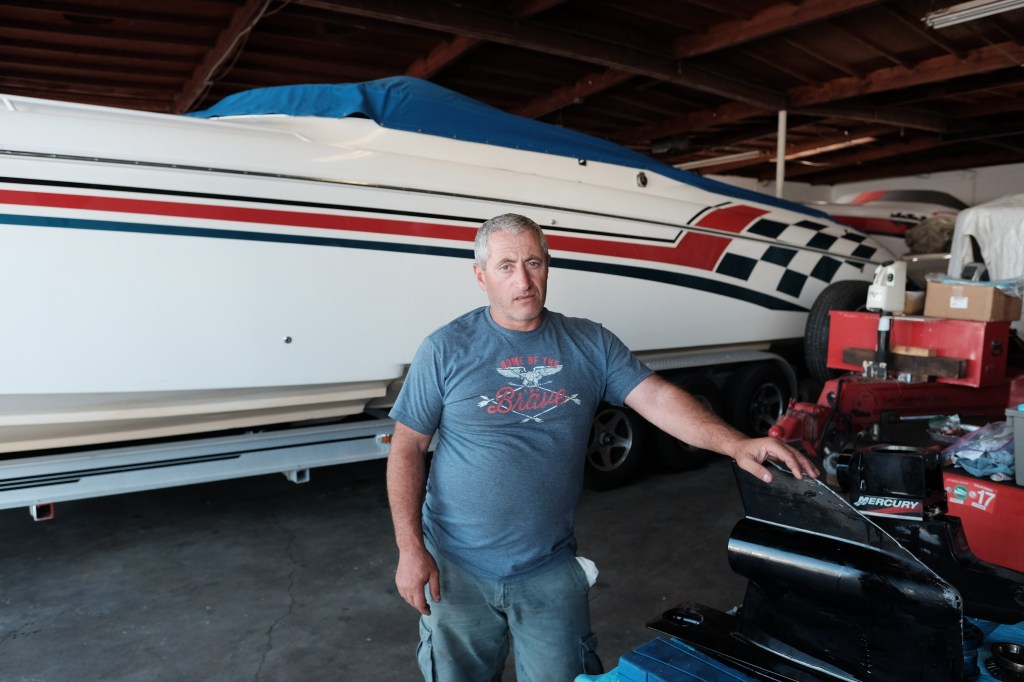
Bullied at the Boatyard: Steve Muradyan

Steve Muradyan

At BPM Custom Marine on Calvert St., Steve Muradyan, 46, services and stores high performance boats at a rented facility. Here are dozens of racing craft costing from $500,000-$1 million, owned by wealthy people in Marina Del Rey and Malibu. The boats winter in Van Nuys, where they are expertly detailed, inside and out.

Mr. Muradyan, a short, broad-shouldered, sunburned man with burning rage, threw up his hands at the illogic of his situation. He takes care of his wife, two children, and aging parents. He pays 98 cents a square foot in 5,000 SF and he cannot fathom where he might go next. A wide driveway accommodates the 50 and 70-foot long boats. And he can work late into the night drilling and towing, without disturbing others.

He once ran an auto repair shop on Oxnard. Later he had a towing service. Then he started his boat business in 2003. He had raced boats as a young man, and this was part of his experience and his passion. Why not?

He deals with all the daily stress of insurance, taxes, payroll, equipment breakdowns, deadlines, customer demands, finding parts, servicing the big craft. He worries about his business, his family, his income. And now this impending doom, dropped from the skies by Metro. He prays it will not happen to him. He cannot fathom losing it all, again.


Art and Soul in Stained Glass: Simon Simonian 

Over at Progressive Art Stained Glass Studio, 70-year-old architect and craftsman Simon Simonian rents a small unit on Aetna where he designs and molds exquisite stained glass for expensive homes, churches, synagogues and historic buildings.

He knows all the local businesses, and often he sends customers to the cabinetmakers and metal honers steps away. There is true collaboration between the artisans here.

A kind, creative man with a penetrating gaze, Mr. Simonian, with his wife and young son, came from Tehran in 1978 to study in Southern California and escape the impending revolution in Iran. He speaks Farsi, English and Armenian.

He is an Armenian Christian and his family was prosperous and made wine. His father had escaped the turmoil in Armenia when the Communists took over after WWII, which was also preceded by the massacre by Turkey of 1.5 million. His people have suffered killing, expulsion, persecution, and the loss of dignity in every decade of the 20th Century.

The Simonian Winery was doing well in Iran in 1979. And then the Islamists came to power and burned it down. By that time Simon and his wife and son were in Southern California. He begged his father to come but the old man stayed in Tehran and died five years later.

Tenacity, survival, and intelligence are in his genes.

“I love what I do. I have loyal customers. The location is excellent. I know all my neighbors here. I want to stay rooted. I don’t want to have to start all over again. Where can I find space like this? Where will I go?” he asks with the weary experience of a man who has had to find another way to proceed.


The Man from Uncle: Scott Walton

55-year-old Scott Walton looks every bit the rocker who runs the recording studio. He is longhaired and lanky. With a touch of agitation and glee, he slips in and out of the dark, windowless rehearsal spaces of Uncle Studios, where he has worked since 1979.

His father, with foresight, loaned $50,000 to his two sons, Mark, 20, and Scott, 17 to buy a recording studio. Here the boys hosted thousands of aspiring musicians including Devo, The Eurythmics, Weird Al Yankovic, Weather Report, Yes, Black Light Syndrome, No Effects, The Dickies, Stray Cats, and Nancy Sinatra.

When Scott first started he didn’t play any music. He learned keyboard, classical piano and he also sings. He went on the road, for a time, in the 1980s, playing keyboard for Weird Al Yankovic. He also plays in Billy Sherwood’s (“Yes”) current band.

Despite the proximity to fame, talent, money and legend, Uncle Studios is still a rental space where young and old, rich and poor, pay by the hour to record and play music. Something in the old wood and stucco buildings possesses a warm, acoustic richness. Music sounds soulful, real and alive here, unencumbered by the digital plasticity of modern recordings.

But Scott Walton is also a renter. He does not own the building bearing his business name. If his structure is obliterated, he will lose the very foundation of his life, his income, and his daily purpose. He will become an American Refugee in the city of his birth.


This is only a sampling of the suffering that will commence if Metro-Martinez allows it. The Marijuana onslaught is also looming.

On the horizon, Los Angeles is becoming dangerously inhospitable to any small business that is not cannabis. Growers are paying three times the asking rental price to set up indoor pot farms for their noxious and numbing substance. There may come a time when the only industry left in this city is marijuana.

The new refugees are small craftsmen running legitimate enterprises. Some may not believe it. But I heard it and saw it on Aetna, Bessemer, and Calvert Streets.

The pain is real, the fear is omnipresent and the situation is dire.

SaveSave

SaveSave

SaveSave

6100 N. Cedros Ave.


Van Nuys, CA 91401 Photo by Andy Hurvitz

A corrugated metal building with pitched roof, concrete floor and whirlybird ventilation, one of three structures in a row, stands at the corner of Cedros and Calvert.

The neighborhood is a mix of immigrants living in old houses and apartments, as well as light industrial companies: air conditioning, auto repair and body shops, marble and stone wholesalers, pest control and towing companies. There are many children nearby mixing moms with guns and gangs, the toxic air of auto paint, the rumbling beats of mariachi, the sounds of shopping carts and glass making their way to the recycler, dogs barking behind iron fences in concrete-paved front yards.

But a few doors down, at 14741 Calvert, later this year, MacLeod’s Ale Brewing Company will open and serve home brews in the British style, an exotic addition to a neighborhood where gasoline and tequila are the liquids of choice.